“BUDGET 2022: Biden Proposes Flat Budget for Coast Guard” –National Defense, I have a different take

National Defense provided the first report I saw on the Presidents FY2022 budget request for the Coast Guard, reporting it as flat relative to the FY2021 budget as enacted.

The Navy League Magazine, Seapower, on line edition has a pretty good summary of what is included.

I found the budget justification document here, all 445 pages of it.

Actually I find the proposed budget encouraging. $13.1B is only 0.3% larger than the enacted budget for 2021, but that is only because the Congress loves the Coast Guard and has added on to the Administration’s budget every year I have followed the budget process. This 2022 budget request is actually 6.5% greater than the corresponding initial 2021 administration request.

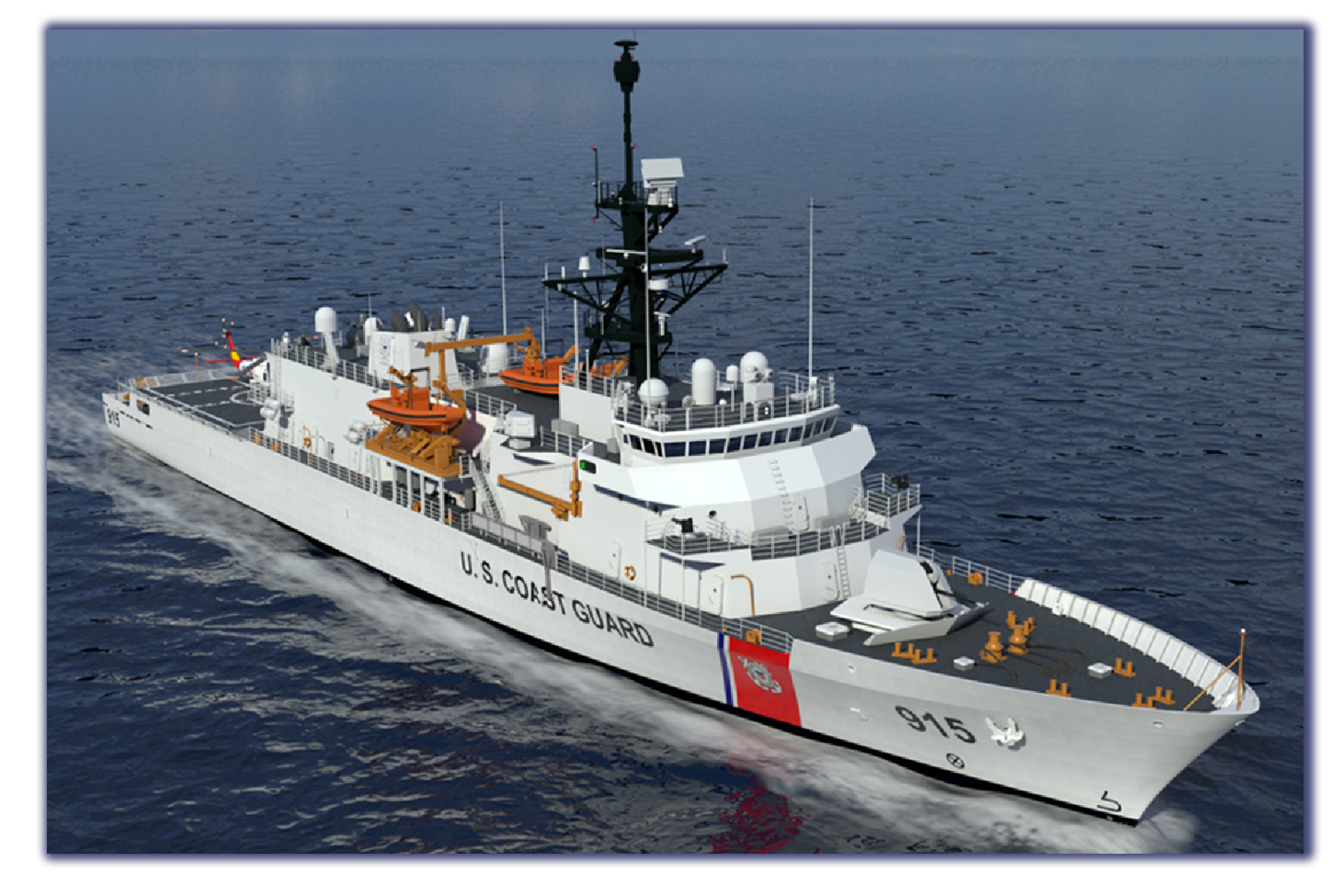
The Procurement, Construction, and Improvement budget is down compared to 2021 enacted budget, but it does include everything we would expect, given the end of the FRC program and the expected pace of Polar Security Cutter and Offshore Patrol Cutter procurement. On the other hand there is a substantial increase in Operations and Support.

“Under Biden’s budget, the service would see a significant boost in operations and support funding in 2022. The $9.02 billion for O&S would be $535 million, or 6.3 percent, more than it received for 2021.”

This includes substantial increases to reduce the maintenance backlog for aircraft and cutters. If you would like to check out the “Program Changes,” follow the link to the full budget document. There are 37 program changes on 20 pages, beginning on the 72nd page of the pdf. The page is labelled USCG–O&S–34.

One of these (#17) indicates new homeports for Webber class in Saint Petersburg, Sitka, and Boston expected in FY2022.

I would not be surprised to see the Congress make some additions. I’ll venture a guess, that about $300M will be added, including a C-130J and three more Webber class to counter Illegal, Unregulated, and Unreported fishing in the South Pacific. If that happens, the resulting $13.4B budget would be a three percent increase over 2021.

After the new administration has had more time to look at the Coast Guard’s programs, I hope they will see fit to accelerate the building of the Offshore Patrol Cutters and/or perhaps add a class of cutters between the OPC and the FRC.

Not directly Coast Guard related but the Army Corp of Engineers is getting a big boost for maritime related work that impacts safety of navigation and risks of flooding.

Information on MARAD’s budget request here.

“Iranian Warship Thought to be Headed to Venezuela Left Port with 7 High-Speed Missile Boats Aboard” –USNI

USNI News Photo Illustration. Satellite image ©2021 Maxar Technologies used with permission

The US Naval Institute News Service has a report that may be of interest because of the potential for interaction with Venezuelan forces in the Caribbean.

“The seven missile craft aboard Makran are each approximately 57 feet (17.5 meters) long and match the Peykaap family of medium-sized fast attack craft operated by Iran. There are several variations of these craft in Iranian service, although all are generally similar. The latest Peykaap-II type (also known as the Bavar class) is 57 feet long and can carry two anti-ship missiles and two 12.75 inch torpedoes. The missiles could be of the Kowsar or Nasr types, which are derived from Chinese models with a quite modest range of around 18 nautical miles.”

An 18 nautical mile range may be “quite modest” to the Navy, but it is twice that of anything the Coast Guard has.

How Many 110s are left?

The Coast Guard Cutter Naushon (WPB 1311) 110-foot Island-class patrol boat and crew conduct training in Kachemak Bay near Homer, Alaska, Feb. 16, 2018.(Picture source U.S. Defense Visual Information)

Had a question from a reader, how many 110s are still in commission with the USCG?. Figured I could get a quick answer here. We know about the four still with PATFORSWA. Looking at District web sites, I am not sure they are up to date.

The FY20222 budget anticipates decommissioning five more. So how close are we to seeing the last of these cutters in the USCG?

Looking at the Wikipedia page for “Sentinel Class Cutters,” which seems to have been kept up to date, at this point there are 20 Webber class that have not yet been delivered to the Coast Guard. Future homeports have not been associated with 17 of these.

If you know of 110s still in commission please add a note.

V-BAT Improvements

V-BAT Vertical takeoff and landing UAV. Photo by Mass Communication Specialist 2nd Class Anderson W. Branch
V-Bat from Martin UAV

Martin UAV has announced improvements to their V-BAT unmanned aircraft, including increased payload and endurance.

Claimed characteristics include a 25 pound payload and an eleven hours endurance. While that endurance does not equal that of the ScanEagle, the payload is about three times greater.

A second announcement reported,

“The Navy selected Martin UAV’s V-BAT for a VTOL UAS prototyping and development effort in order to fulfill new technological requirements driven by the changing nature of threats in austere operating environments.

“The V-BAT was selected to meet these requirements as a result of its minimal logistic support requirements and maximum versatility. The system offers vertical takeoff with a single-engine ducted fan, automatic transition to straight and level flight, easily commanded hovers and stares, interchangeable payloads, and an open architecture.”

The Coast Guard conducted tests of the V-BAT aboard USCGC Harriet Lane in August 2020.

It looks like this system might be able to provide the 270s with the same sort of advantages the National Security Cutters have enjoyed with the use of Scan Eagle despite their much smaller hangar, because it does not need catapult launch or recovery equipment.

The Manufacturer claims that the V-BAT requires only a 12 x 12 foot area for take-off and landing, so a 270 foot WMEC should have plenty of space, even if it also has a helicopter inside a fully extended hangar. We can expect all the 270s to be with us for at least another 13 years, some are expected to remain in commission for at least another 17 years. It is still worthwhile to try to make them as effective as possible.

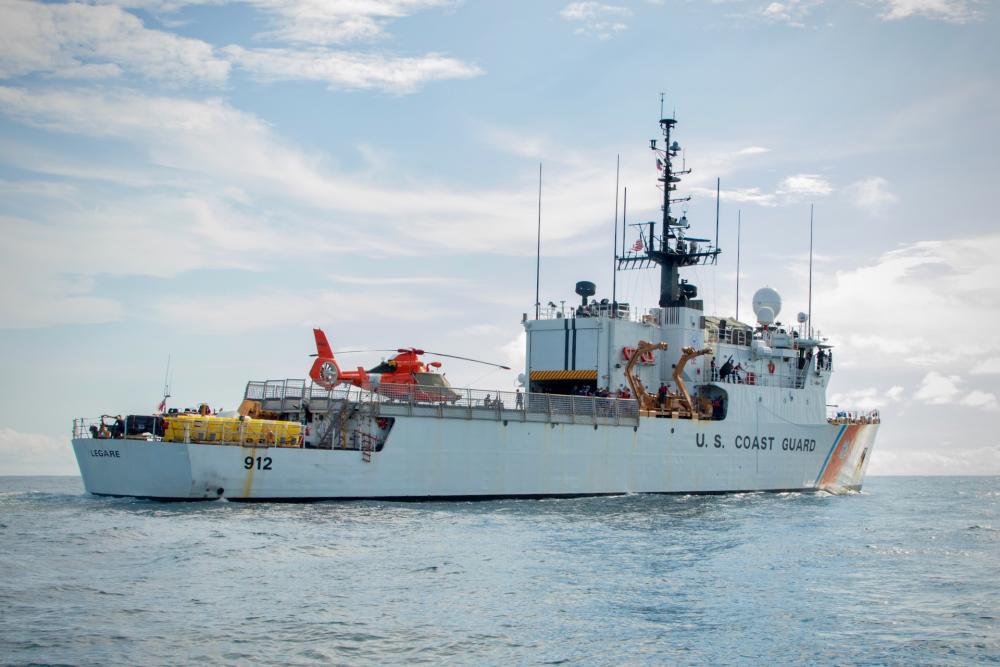
USCGC Lagare, for reference, beam of this class cutters is 38 feet.

“Backing The White House, Senator Wicker Introduces New Coast Guard Funding Bill” –Forbes

US Capital West Side, by Martin Falbisoner

Forbes brings us some good news, that people in Congress are trying to help the Coast Guard.

This is apparently only one of several bills, but it has some good things, money for the Coast Guard Yard and for the backlog of shoreside infrastructure, also assurance that Coast Guard personnel will continue to be paid if there is a government shutdown.

But it also includes something cheap that I have been advocating repeatedly, a new Fleet Mix Study. It has been 13 years, far too long since the last one was done. (Follow the link to see what we thought would happen in 2012.) Much has changed. The OPCs were long delayed, do we still want to go with the slow pace of construction currently planned? Should we consider something like “Cutter X?” More NSC were built than planned. We still have no shore based UAS. The MH-65s are becoming unsupportable. “Future Vertical Lift” aircraft are with the planning horizon. We got far fewer C-144s than planned. C-27 became available, replacing some C-144s, but also perhaps replacing some C-130s. The 87 foot Marine Protector WPBs are reaching the end of their lives, what do replace them with, a large motor lifeboat, an interceptor, or both? A new Tri-Service Strategy has been published. International Illegal Undocumented Unreported (IUU) fisheries has become a hot topic. Capacity building with friendly nations is becoming a major goal. Arctic presence, law enforcement, and SAR has become a concern.

Unlike the previous Fleet Mix Study we need to consider alternatives, not just preselected solutions.

Churchill is reputed to have said, “Gentlemen, We Have Run Out Of Money; Now We Have to Think.” In this case if we think, we might make a case for getting money. Too often it seems the Congress has been willing to give us money, but the Coast Guard did not have a wish list, e.g. unfunded priorities. We need a new vision of what the Coast Guard can be.

“Future Coast Guard: Think Special Operators, Not a Less Capable Navy” –Real Clear Defense

Real Clear Defense has an interesting article that ask decision makers to think about the special talents the Coast Guard brings to international relations.

Part of the reason this article is perhaps significant is the position held by the author.

Jason Smith currently serves on the faculty at the National War College.  He has served in the U.S. Coast Guard and the U.S. Army, as an advisor to the Commandant of the Coast Guard, as Senior Policy Advisor in the U.S. Senate and on the staff of the National Security Council.

The author draws parallels between the way special forces should be used and the way the Coast Guard should be used internationally. This particular point is something that I have come to believe.

Frequently require discriminant and precise use of force. This often requires development, acquisition, and employment of equipment not standard for other Department of Defense forces.

The author seems to be thinking Gray Zone Ops, but I am thinking counter terrorism missions. To do our missions the Coast Guard may need equipment and weapons that are not in the Navy inventory. We need light weight anti-surface torpedoes to forcibly stop larger vessels, regardless of their size. We need small missiles to stop small, fast, highly maneuverable terrorist controlled vessels (manned or unmanned) while avoiding collateral damage.

I also believe the Navy will need similar weapons if there is a major naval conflict, to enforce blockades and counter coast wise infiltration, but these weapons are not sufficiently sexy to warrant career making attention within the Navy.

The Coast Guard also has the unusual job of enforcing flight restrictions over the National Capital. Conventional fighter aircraft are not appropriate for this. On the other hand the helicopters we currently use are not really fast enough to keep up with high performance general aviation aircraft. (Plus it seems we may be phasing out the MH-65s.) The aircraft special operations is considering for armed overwatch look like a good fit for the mission and linking Coast Guard procurement with that of the Air Force Special Operations Command could provide cost savings.

“Covert Shores Guide To Mozambique Navy: New, Fast, and Stuck In The Mud” –Covert Shores

Three WP-18 Tactical Strike Craft (see arrows) in a yard in Mozambique after delivery. The other boats are DV-15 Interceptors

Covert Shores brings us an interesting, but ultimately sad story of Mozambique’s attempts to provide a naval/coast guard force. There are interesting classes of patrol and interceptor classes here, all let down by inadequate support.

“PATFORSWA receives 2 new Sentinel-class U.S. Coast Guard fast response cutters” –LANTAREA

210524-G-N0146-0094 ARABIAN GULF (May 24, 2021) – Fast response cutters USCGC Robert Goldman (WPC 1142) and USCGC Charles Moulthrope (WPC 1141), and patrol boats USCGC Maui (WPB 1304) and Adak (WPB 1333) transit the Arabian Gulf en route to Bahrain, May 24. Robert Goldman and Charles Moulthrope are the newest additions to Patrol Forces Southwest Asia (PATFORSWA), which is comprised of six 110′ cutters, the Maritime Engagement Team, shore side support personnel, and is the Coast Guard’s largest unit outside of the U.S. playing a key role in supporting Navy security cooperation, maritime security, and maritime infrastructure protection operations in the U.S. 5th Fleet area of operations. (U.S. Coast Guard photo by Seaman Logan Kaczmarek) More Photos here.

Below is a news release reporting the arrival of two Webber class WPCs to their new homeport as they join PATFORSWA.

united states coast guard 
News Release 
U.S. Coast Guard Atlantic Area

PATFORSWA receives 2 new Sentinel-class U.S. Coast Guard fast response cutters 

MANAMA, Bahrain — U.S. Coast Guard Sentinel-class fast response cutters USCGC Charles Moulthrope (WPC 1141) and Robert Goldman (WPC 1142) arrived at their new homeport onboard Naval Support Activity Bahrain, May 25.

The FRCs are two of six planned to be attached to Patrol Forces Southwest Asia, forward-deployed to Bahrain with Commander, Task Force 55. They will replace the existing Coast Guard Island-class patrol boats USCGC Aquidneck (WPB 1309) and USCGC Adak (WPB 1333).

“These crews have shown that they are more than ready for the mission at hand in this region through numerous successful engagements with partner maritime forces during port visits and bilateral exercises,” said Capt. Willie Carmichael, commander of PATFORSWA. “I am extremely proud of the high performance they have displayed during their transit to Bahrain.”

Aquidneck and Adak are set to decommission in Bahrain later this year and are being replaced as part of the Integrated Deepwater System Program, the Coast Guard’s 25-year program to replace most of the branch’s equipment. The IDSP plans to have 64 fast response cutters, with Charles Moulthrope and Robert Goodman being the 41st and 42nd, commissioned into service on Jan. 21 and Mar. 12, respectively.

The FRCs are designed to patrol coastal regions and perform expeditionary operations.

They feature advanced command, control, and communications systems and improved surveillance and reconnaissance equipment. They are also capable of launching and recovering small boats from the stern.

“The addition of the FRCs to our task force has been highly anticipated, and the team here is excited to work with these outstanding crews,” said Capt. Christopher Gilbertson, commander of Destroyer Squadron 50 and CTF 55. “The advanced capabilities of these cutters greatly enhances our ability to provide high-end support to regional and coalition partners throughout the area of operations.

”PATFORSWA, attached to CTF 55, comprises six patrol vessels, shoreside mission support personnel, and the Maritime Engagement Team. They play a crucial role in maritime security, maritime infrastructure protection, and theater security cooperation in the region. The unit also supports other U.S. Coast Guard deployable specialized forces operating throughout the U.S. Central Command area of responsibility.

CTF 55 operates in the U.S. 5th Fleet area of operations, supporting naval operations to ensure maritime stability and security in the Central Region, connecting the Mediterranean and Pacific through the western Indian Ocean and three critical chokepoints to the free flow of global commerce.

FRP WPC

Rodman 138 Condor 

Seawaves reports delivery of a new 43 meter patrol boat,

May 13, 2021 – Rodman Polyships S.A.U., a shipyard of the Rodman Group specialized in the building of all types of FRP (Fiberglass Reinforced Polyester) vessels, finishes this April the delivery of a new vessel to the Spanish Tax Administration Agency (Agencia Estatal de Administración Tributaria). This is the new Rodman 138, the longest offshore patrol vessel in Fiberglass Reinforced Polyester that has been built in Europe and probably worldwide, so far, which is already part of the Customs Surveillance fleet to carry out missions at sea and provide coastal patrol service, covering large surveillance areas.

Specifications describe a vessel slightly smaller than the Webber class WPC.

Length: 43 meters, Speed 26 knots, range 2000 nautical miles, Crew 18

The remarkable characteristic is the performance on what appears to be relatively low power. For the claimed 26 knots top speed “Propulsion is provided by two 1,500 kW four-stroke diesel engines.” That is about 4000 HP, about on third of the power the Webbers require to reach 28 knots.

“USCGC Hamilton concludes operations with U.S. Navy Sixth Fleet” –LANTAREA

MEDITERRANEAN SEA – 210508-G-ID129-1166 BLACK SEA (May 8, 2021) USCGC Hamilton (WMSL 753) and Ukrainian Sea Guard vessel Kuropiatnikov (BG 50) conduct underway maneuvers in the Black Sea while Hamilton’s MH-65 Dolphin helicopter detachment aircrew conducts flight operations, May 8, 2021. Hamilton is on a routine deployment in the U.S. Sixth Fleet area of operations supporting U.S. national interests and security in Europe and Africa. (U.S. Coast Guard photo by Petty Officer 3rd Class Sydney Phoenix) More photos here.

Below is an Atlantic Area news release that provides a wrap up of USCGC Hamilton’s very much not routine deployment to the 6th Fleet. We can expect two more similar deployments, in the Fall and again early in 2022. The third FRC to be stationed in Guam, Frederick Hatch (WPC-1143), followed the first two Bahrain bound ships that deployed with Hamilton in the construction sequence and was accepted in February. PATFORSWA FRC#3 has already been busy. While as a pre-commissioning unit Glen Harris was deployed to assist the Seacor Power. Glen Harris arrived on the scene within 30-minutes and was able to rescue one of the six people to survive the incident.

united states coast guard 
News Release 
U.S. Coast Guard Atlantic Area

USCGC Hamilton concludes operations with U.S. Navy Sixth Fleet  

MEDITERRANEAN SEA — The Legend-class national security USCGC Hamilton (WMSL 753) transited out of the Mediterranean Sea, concluding the crew’s recent operations in the U.S. Navy Sixth Fleet’s area of responsibility, May 24, 2021.

Hamilton entered the Mediterranean Sea on April 15 and the Black Sea on April 27 to support NATO Allies and partners. Hamilton was the first U.S. Coast Guard Cutter to visit the Black Sea since 2008. The last U.S. Coast Guard cutter to visit the Black Sea was USCGC Dallas (WHEC 716) and sailed to the Black Sea twice, in 2008 and 1995.

Since leaving the Black Sea on May 14, Hamilton’s crew visited Valletta, Malta, and conducted engagements at sea with the armed forces of Malta. They also conducted a brief logistics stop in Rota, Spain, on May 23.

“By operating with Sixth Fleet, we expand the Coast Guard’s global reach and advance our Nation’s Tri-Service Maritime Strategy,” said Capt. Timothy Cronin, commanding officer of USCGC Hamilton (WMSL 753). “This deployment also reinforced our commitment to freedom of navigation in international waters while building capacity and partnerships with nations that have shared interests and threats in the maritime domain.

”After departing North Charleston, South Carolina, on February 28, the crew of Hamilton stopped in Puerto Rico and then headed toward Rota, with two Sentinel-class fast response cutters, USCGC Charles Moulthrope (WPC 1141) and USCGC Robert Goldman (WPC 1142). After escorting the fast response cutters and departing Spain, Hamilton then visited Italy, Georgia, Ukraine, and Malta. The crew conducted various operational exercises with the maritime components of each country and Turkey, Romania, and Bulgaria.

“The relationships we build are fundamental for establishing maritime safety and security worldwide,” said Lt. Cmdr. Taylor Kellogg, operations officer of USCGC Hamilton (WMSL 753). “Working together with our NATO Allies and partners, we advance the rule of law on the sea, ensuring free and open access to the maritime domain.

”The U.S. Navy and U.S. Coast Guard operate forward, from the littoral to the open ocean, ensuring stability and open sea lanes across all maritime domains. U.S. Coast Guard operations in U.S. Sixth Fleet demonstrate the Service’s commitment, flexibility, and capability to operate and address security concerns throughout Europe and Africa.

The U.S. Coast Guard is conducting a routine deployment in U.S. Navy Sixth Fleet, working alongside Allies, building maritime domain awareness, and sharing best practices with partner nation navies and coast guards.

Hamilton is the fourth national security cutter and is the fifth named for the father of the U.S. Coast Guard – Alexander Hamilton, the first Secretary of the Treasury and advocate for creating the U.S. Revenue Cutter Service.

The U.S. Coast Guard remains operational during COVID-19, following all COVID-19 safety precautions and regulations.

U.S. Sixth Fleet, headquartered in Naples, Italy, conducts the full spectrum of joint and naval operations, often in concert with allied and interagency partners, to advance U.S. national interests and security and stability in Europe and Africa.