“ABS Issues Full Class for Saildrone Surveyor Deep-water, Ocean-going USV” –Naval News

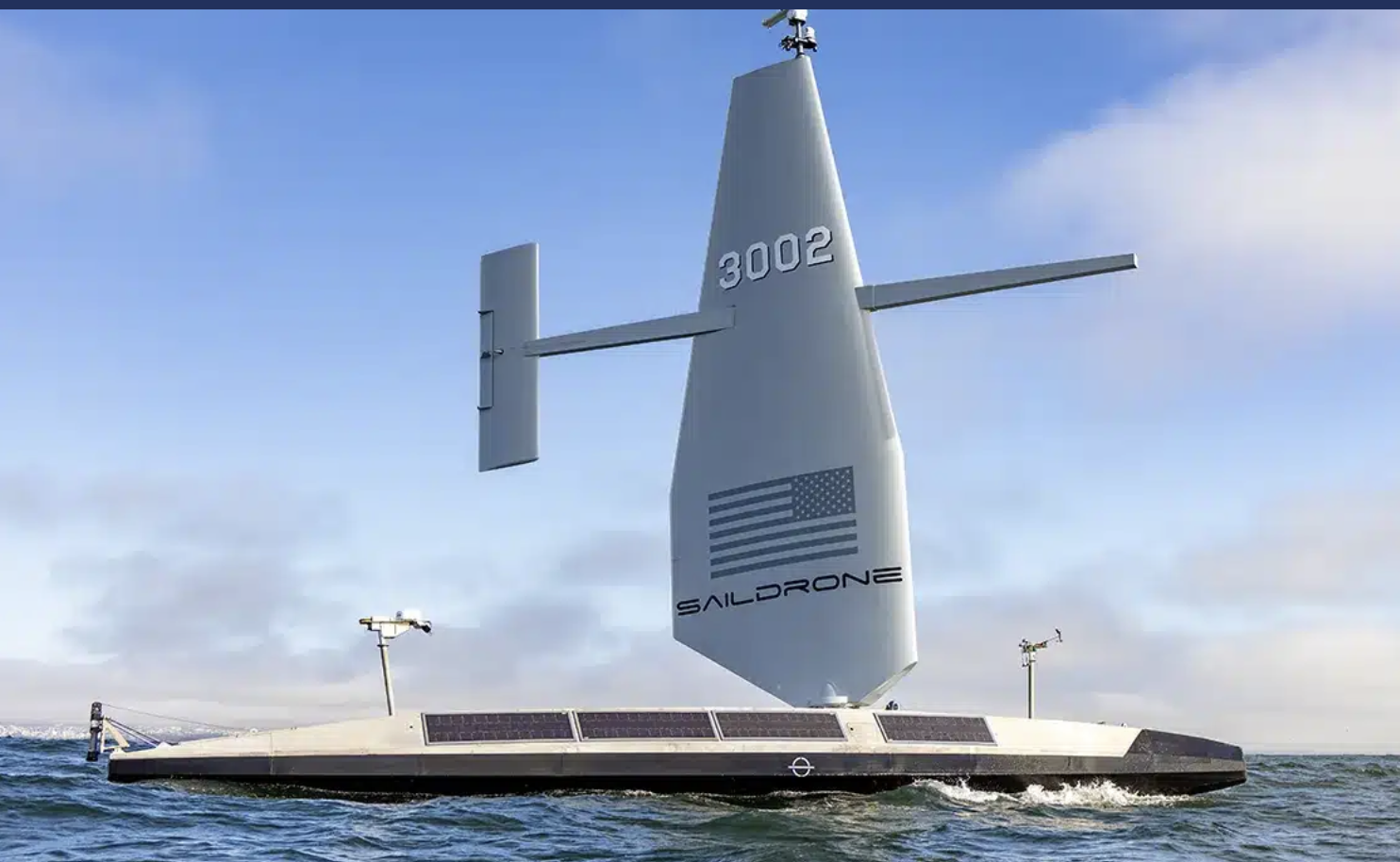
The Saildrone Surveyor is a 20-meter USV capable of long-endurance missions in the open ocean, collecting deep-ocean bathymetry and performing a wide range of maritime domain awareness tasks—from anti-submarine warfare (ASW) to trans-ocean cable route surveys. (Saildrone picture)

Naval News reports that,

“Saildrone announced that its Surveyor-class of unmanned surface vehicle (USV) has received full classification from the American Bureau of Shipping (ABS). This milestone follows the Voyager, Saildrone’s coastal and near-shore USV, which received ABS class in 2023.”

This is the first unmanned to do so.

“Colombian Navy captures unmanned narco submarine in Caribbean Sea” –Naval News

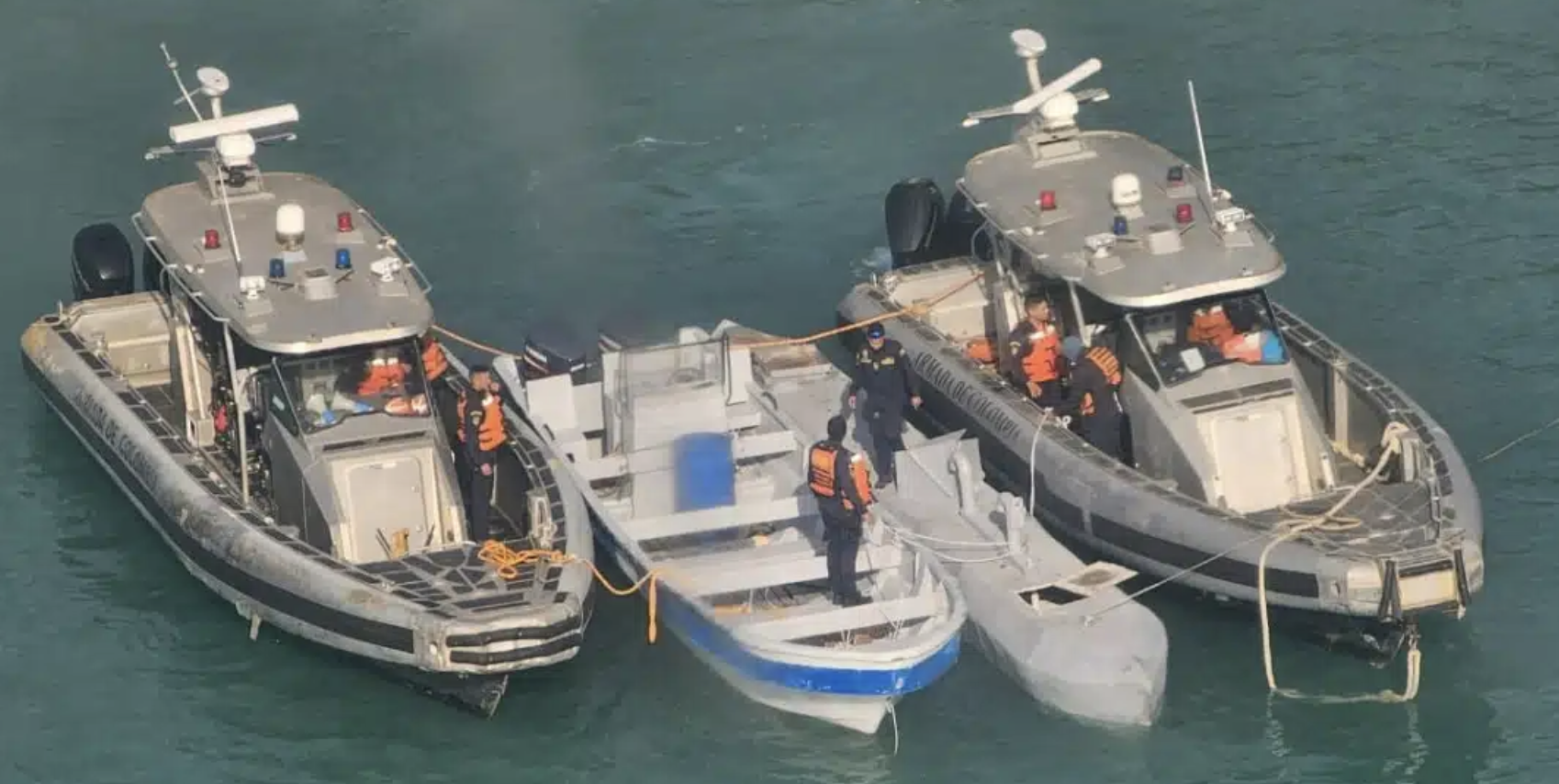
Unmanned Narco-submarine seized by the Colombian Navy boats (Credit: Colombian Navy)

Naval News reports the seizure of an unmanned low profile, semi-submersible that was used to transport illegal drugs.

Not only would semi-autonomous operation eliminate the cost of hiring a crew and the space requirements for accommodations to support the crew, it would also eliminate the possibility of a captured crew becoming a source of intelligence for law enforcement.

It also means that upon boarding there is no one to tell to stop the engines, meaning boardings may be more dangerous than ever.

I would not be surprised to see a remote scuttling option incorporated into future designs.

German Navy Adopting 30x173mm Air Burst Weapons / So Should the Coast Guard

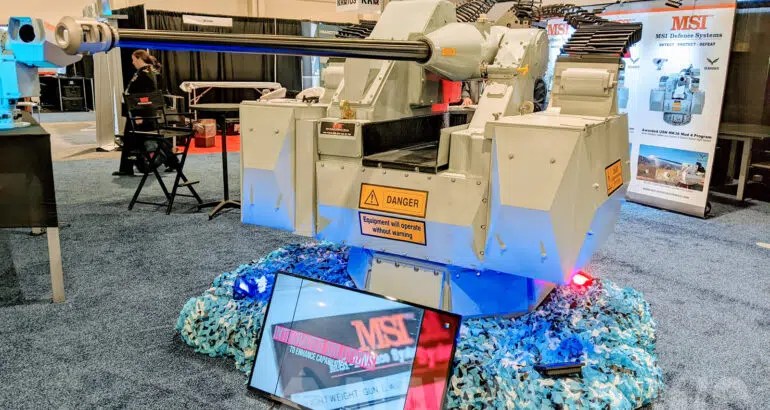
The new Mark 38 Mod 4 30mm naval gun system on display on MSI Defence stand at Sea Air Space 2022. Photo: Naval News

Army Recognition’s Navy News reports,

“…on 11 June 2025 … a public tender released via the official German e-procurement platform marks the beginning of a strategic modernization effort in the German Navy’s close-range defense capabilities. In a context where drones and asymmetric threats are playing an increasingly prominent role in contemporary conflicts, the Bundeswehr is initiating a structural transformation of its naval weapons systems.

“At the core of this reform is the introduction of a new 30×173 mm caliber, intended to progressively replace the currently deployed 27 mm light naval guns. This development aims to improve effectiveness against light aerial targets, especially drones, but also surface and land-based threats, by using programmable airburst munitions. The doctrinal shift reflects operational requirements and signals a lasting change in the defensive posture of German naval vessels.”

The gun that is being replaced is in some respects a better weapon than the 25mm the Coast Guard currently uses. It fires a heavier projectile, over a greater distance and has a much higher rate of fire, but apparently they have decided that an airburst projectile is necessary to deal with the drone threat.

The Coast Guard should probably come to the same conclusion. It now appears that an attack by unmanned air or surface craft is the most likely form of terrorist attack. Air burst projectiles are the best available, reasonably priced, hard kill systems for both self-defense and close in force protection.

Unlike the German Navy, the 30x173mm round is already in service with the US Navy and is expected to arm the Polar Security Cutter.

The new large cutters are getting 57mm guns which should be effective, but the FRCs are the units most likely to encounter this threat. The 30 mm would also be more effective against larger threats. We have been told that it is possible to replace a few parts and upgrade existing 25mm mounts to 30mm mounts. If so, we should be doing this.

Maritime Domain Awareness, “Denmark to field unmanned vessels for monitoring busy shipping routes” –Defense News

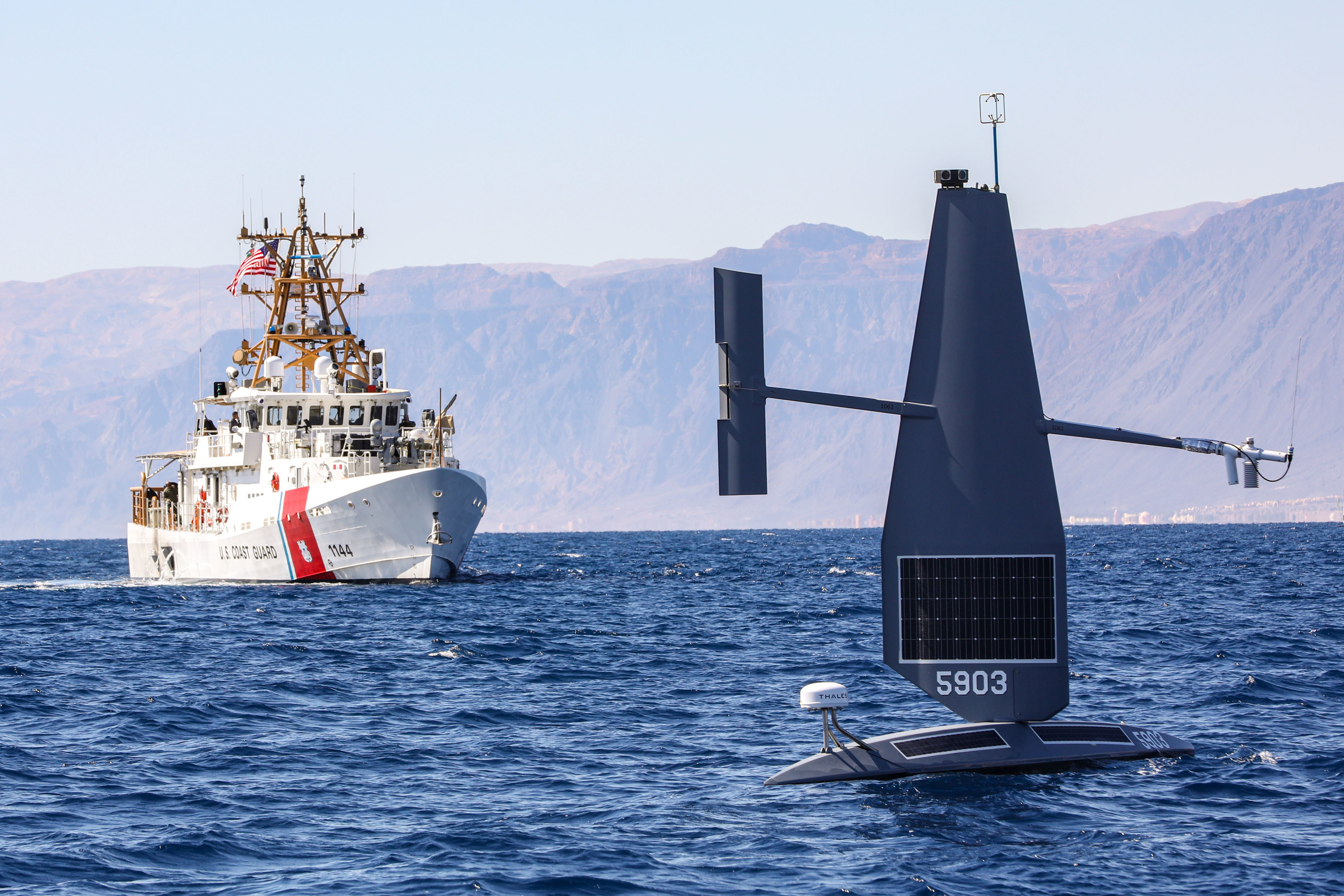
GULF OF AQABA (Feb. 13, 2022) The U.S. Coast Guard Sentinel-class cutter USCGC Glen Harris (WPC 1144) sails near a U.S sail drone explorer during the International Maritime Exercise/Cutlass Express (IMX) 2022, Feb. 13, 2022. IMX/CE 2022 is the largest multinational training event in the Middle East, involving more than 60 nations and international organizations committed to enhancing partnerships and interoperability to strengthen maritime security and stability. (U.S. Army photo by Cpl. DeAndre Dawkins)

Defense News reports,

“U.S.-based Saildrone will deploy four large unmanned surface vessels in Danish waters next month to conduct maritime surveillance missions and help protect critical undersea infrastructure…Four 10-meter Voyager USVs equipped with a suite of intelligence-gathering sensors and AI data fusion will be sent to Denmark to support the Danish military gain better maritime awareness.”

“Operation Southern Spear: Latest Development in Operationalizing Robotic and Autonomous Systems” –4th Fleet

Commercial operators deploy Saildrone Voyager Unmanned Surface Vessels (USVs) out to sea in the initial steps of U.S. 4th Fleet’s Operation Windward Stack during a launch from Naval Air Station Key West’s Mole Pier and Truman Harbor, Sept. 13, 2023. (U.S. Navy photo by Danette Baso Silvers/Released)

Below is a news release from U.S. Naval Forces Southern Command/U.S. Fourth Fleet.

This involves the Coast Guard and the opposing forces are drug smugglers.


Jan. 27, 2025

By U.S. Naval Forces Southern Command/U.S. 4th Fleet Public Affairs

U.S. Naval Forces Southern Command/U.S. 4th Fleet is advancing the Navy’s Hybrid Fleet Campaign through Operation Southern Spear, which will start later this month in U.S. Southern Command Area of Responsibility (USSOUTHCOM AOR) and at U.S. 4th Fleet Headquarters at Naval Station Mayport.

“Southern Spear will operationalize a heterogeneous mix of Robotic and Autonomous Systems (RAS) to support the detection and monitoring of illicit trafficking while learning lessons for other theaters,” said Cmdr. Foster Edwards, 4th Fleet’s Hybrid Fleet Director. “Southern Spear will continue our (4th Fleet’s) move away from short-duration experimentation into long-duration operations that will help develop critical techniques and procedures in integrating RAS into the maritime environment.”

Specifically, Operation Southern Spear will deploy long-dwell robotic surface vessels, small robotic interceptor boats, and vertical take-off and landing robotic air vessels to the USSOUTHCOM AOR. 4th Fleet will operationalize these unmanned systems through integration with U.S. Coast Guard cutters at sea and operations centers at 4th Fleet and Joint Interagency Task Force South. Southern Spear’s results will help determine combinations of unmanned vehicles and manned forces needed to provide coordinated maritime domain awareness and conduct counternarcotics operations.

U.S. 4th Fleet is conducting Operation Southern Spear in support of our Navy’s Project 33 targets to operationalize RAS. Using RAS to increase presence in, and awareness of, strategically and economically important maritime regions will help decision-making, strengthen sovereignty, and facilitate regional cooperation.

“Operation Southern Spear is the next step in our Hybrid Fleet Campaign,” said Rear Adm. Carlos Sardiello, Commander, U.S. Naval Forces Southern Command/U.S. Fourth Fleet. “We look forward to the results of Southern Spear. Hybrid Fleet operations increase our collaboration with partners in the region while furthering the Navy’s tactics, techniques, procedures, and processes.”

U.S. Naval Forces Southern Command/U.S. 4th Fleet is the trusted maritime partner for Caribbean, Central and South America maritime forces leading to improved unity, security and stability.

“Ukraine Claims Its Drone Boat Shot Down A Russian Mi-8 Helicopter With A Surface-To-Air Missile” –The War Zone

In May we had a report that the Ukrainians had equipped at least one USV with R-73 IR homing Air to Air missile.

Now The War Zone reports that Ukraine has claimed one of their Unmanned Surface Vessels (USV) had shot down a Russian Mi-8 Helicopter and damaged a second using this missile.

This is reportedly the first time in history a USV has destroyed an aircraft.

Helicopters have been one of the Russia’s most effective weapons against USVs. Ukraine seems to have found a counter.

This is a cautionary tale for anyone who expects to use helicopters against USVs.

Perhaps more importantly, it is also a demonstration that even the smallest marine platforms can have an AAW missile system. (The MAGURA V5 USV is only 5.5 meter (18 feet)-long.) The US developed AIM-9 Sidewinder is the Counterpart of the R-73 (NATO designation AA-11 Archer) and could be used in the same way. The AIM-9 also has a proven anti-surface capability making these weapons doubly useful.

“Research and Development Center projects continue to enhance Coast Guard mission success” –CG-9

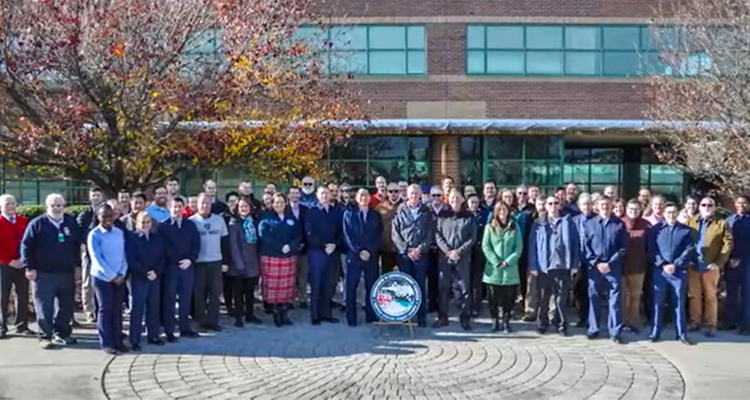
The Coast Guard Research and Development Center workforce is based in New London, Connecticut. U.S. Coast Guard photo.

Below is a news release from the Acquisitions Directorate (CG-9). If you follow the links there is a huge amount of information.

There is a lot of ongoing work, including cooperation with 4th Fleet in their efforts to operationalize unmanned systems. I had hoped the Coast Guard was doing that, and it’s gratifying to see they in fact are.

The projects listed are wide ranging and may potentially impact every mission area.

Perhaps the biggest surprise was that they are working on detect and avoid systems for small UAS. It appears they are looking at beyond visual line of sight UAS that could be used by the Fast Response Cutters and other vessels that do not have a flight deck. Apparently, they are also looking at using Unmanned Surface Vessels (USVs) to fire warning shots, presumably to stop drug runners. Would that mean they would also use USVs for disabling fire?

They are also looking at counter UAS alternatives, at ways to operate more effectively in polar regions, maritime domain awareness, and a lot more. It’s very impressive, especially when you consider how little the Coast Guard spends on R&D.


In fiscal year 2023, the Coast Guard Research and Development Center in New London, Connecticut, supported a research portfolio of 54 projects, covering the full scope of the Coast Guard’s missions. This video highlights a few of those projects, including beyond visual line of sight unmanned aircraft system detect and avoid technology, cutter-based unmanned systems integration with the Ship Control and Navigation Training System, International Maritime Organization polar code validation through advanced simulation modeling, and laser corrosion removal.

View video here.

Related: FY24 RDT&E Project Portfolio

For more information: Research and Development Center page and Research, Development, Test & Evaluation and Innovation Program page


“Ukraine Sinks Russian Navy Missile Corvette In Drone Boat Attack” –The War Zone

The War Zone reports,

“A dramatic new view released by the Ukrainian Defense Intelligence Directorate (GUR) shows several of its uncrewed surface vessels (USVs) strike and sink the Russian Tarantul-III class missile corvette Ivanovets. The attack took place Wednesday night local time on the Black Sea near Lake Donuzlav in western Crimea, the GUR said on its Telegram channel.

“A 128-second video posted on Twitter shows what appears to be a complex attack on the Ivanovets by what Lt. Gen. Kyrylo Budanov, commander of GUR, told us were Maritime Autonomous Guard Unmanned Robotic Apparatus (MAGURA V5) USVs operated by the GUR’s Group 13 drone unit.”

Tarantul-class corvette

The vessel in the video is a Tarantul class missile corvette. These vessels are powered by four engines totaling 32,000 HP making them very fast (42 knots). The hot gas turbine exhausts on either side of the transom glow brightly early in the video.

They have a pair of 30mm gatling guns on the aft superstructure with a clear field of fire aft.

This ship appears well equipped to defeat an unmanned surface vessel (USV) attack.

The Drive post analyses the attack, but I would point out that I don’t see as many splashes as I would have expected, if the 30mm guns were functioning. I don’t see muzzle flashes. What I did see appeared to be from heavy machine guns (12.7 or 14.5mm) rather than 30mm.

Many USVs were involved in this attack. The Ukrainians claimed six USVs hit the little corvette. Still other USVs filmed the ultimate explosion and sinking.

Perhaps the 30mm guns had run out of ammunition engaging other USVs by the time the drone in the first video recorded attack gets as close as seen in the video.

The report included this statement,

““The Ivanovets MRK sank while repelling a night attack by the Ukrainian Armed Forces on Sevastopol,” the Russian VoenkorKotenok Telegram channel wrote.”

The Russians have historically stationed a “guard ship” off their ports to prevent surprise attack. Ivanovets may have been stationed off Sevastopol specifically as a counter to a drone attack.

“Navy’s 4th Fleet sets sights on command center upgrades for drone ops” –Defense Scoop

Commercial operators deploy Saildrone Voyager Unmanned Surface Vessels (USVs) out to sea in the initial steps of U.S. 4th Fleet’s Operation Windward Stack during a launch from Naval Air Station Key West’s Mole Pier and Truman Harbor, Sept. 13, 2023. (U.S. Navy photo by Danette Baso Silvers/Released)

Defense Scoop reports,

“We have the robots and we’re making lots of progress there, but in terms of what we have at the headquarters and how we actually manage the command for it [and] how we manage that data — it’s overwhelming,” Rear Adm. Jim Aiken said.
I have been a bit disappointed, we have heard so little from 4th Fleet about their effort to integrate uncrewed systems into their operations.
4th Fleet is particularly important to the Coast Guard since it manages drug interdiction operations in the Caribbean and Eastern Pacific. There are also a significant number of Coast Guard personnel on the 4th Fleet staff, so there is an opportunity to learn a lot from their experience with uncrewed systems.
From what we had heard, 4th Fleet has had a good picture of drug smuggling traffic but were short of surface assets to do the actual intercepts and boardings. The uncrewed assets are obviously not helping with that. While they almost certainly provide some good data, they are also introducing a lot of noise into the system that 4th Fleet was not ready to filter out.

“U.S. 4th Fleet’s Maritime Synchronization Symposium: Focus on China and Scaling the Hybrid Fleet”

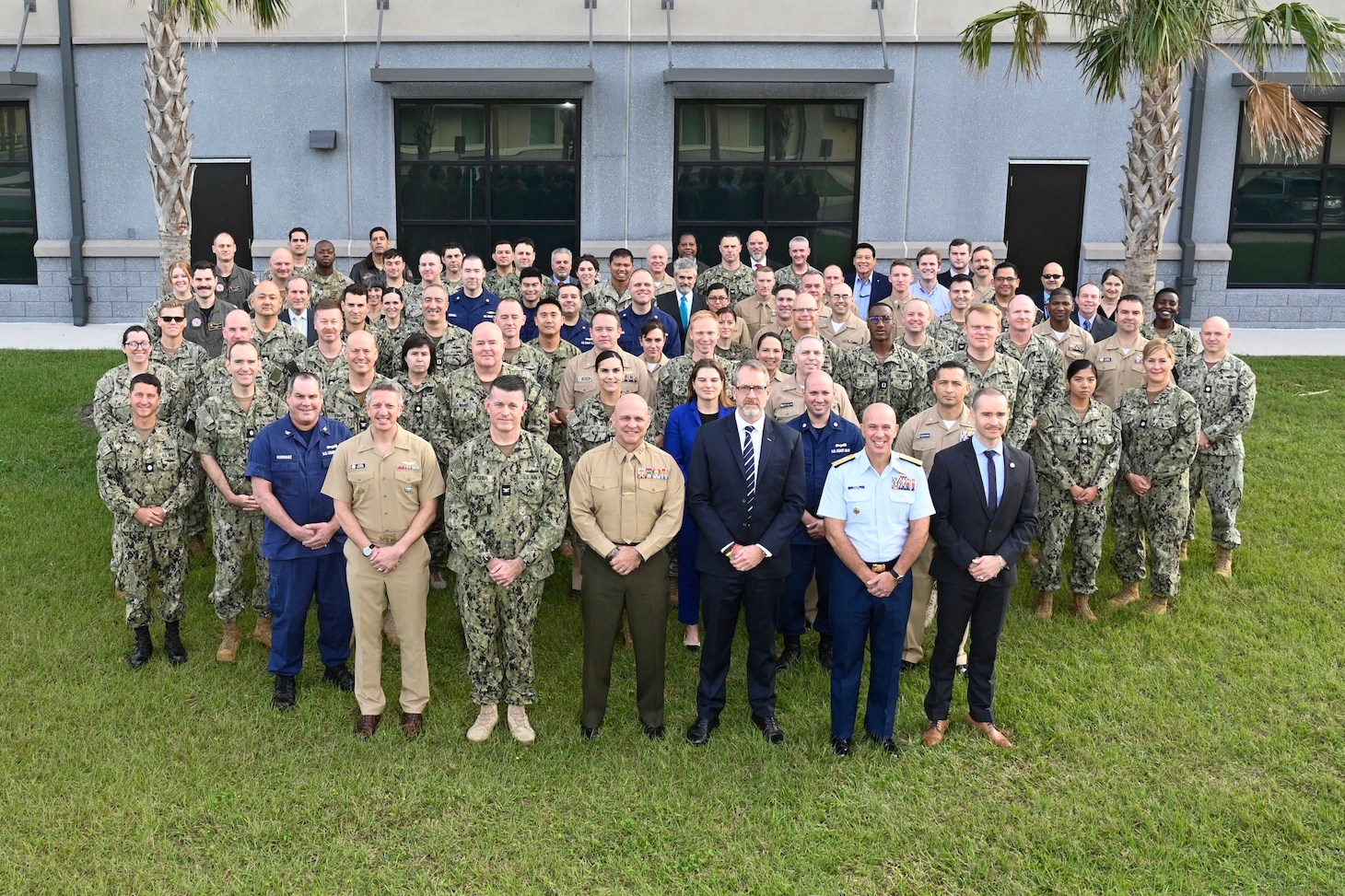
U.S. 4th Fleet’s Maritime Synchronization Symposium: Focus on China and Scaling the Hybrid Fleet

Below is a USNAVSOUTH/4TH FLEET PUBLIC AFFAIRS news release.

It does not mention the Coast Guard specifically, but the uniforms are recognizable in the photo above.

Surprising news is that USS George Washington (CVN 73) will deploy to the area next year. Presumably some escorts will come with her. Maybe they will do some drug interdiction along the way. (Wonder if this might be a signal to Venezuela.)

Significantly, 4th Fleet is now a center for experimentation with manned/unmanned hybrid operations that hopefully will ultimately also benefit the Coast Guard.


Dec. 12, 2023
U.S. Navy Attachés and U.S. Navy Section Chiefs serving in partner nations in the Caribbean, Central and South America gathered at Naval Station Mayport Dec. 5-8, 2023, for the annual U.S. Naval Forces Southern Command/U.S. 4th Fleet Maritime Synchronization Symposium.

This year’s symposium featured four guest speakers, expert panels, and question-and-answer sessions for the region’s Foreign Area Officers (FAOs) to discuss mutual challenges and opportunities, get the latest information on strategy, operations and exercises, and learn more about the Navy’s strategic competition with the People’s Republic of China and U.S. 4th Fleet’s campaign to inform the hybrid fleet.

The first guest speaker was Ambassador James Story, who most recently served as U.S. Ambassador for the Venezuela Affairs Unit, located at the United States Embassy in Bogotá, Colombia, and is currently a State Department Fellow at Georgetown University. Other guest speakers included Dr. Miles Yu, Professor of East Asia and Military History at the U.S. Naval Academy, Lt. Gen. David Bellon, Commander, U.S. Marine Corps Forces Reserve and U.S. Marine Corps Forces South, and Mr. Chris Diaz, Secretary of the Navy Carlos Del Toro’s Chief of Staff.

“We brought in dynamic speakers who gave our Navy Foreign Area Officers (FAOs) much to think about as they return to their respective countries,” said Cmdr. Stephanie Lastinger, U.S. 4th Fleet Theater Security Cooperation (TSC) Director. “They serve on the front lines of strategic competition and are successfully advancing American interests abroad.”

Participants were able to learn more about and provide input to staffers planning the upcoming Southern Seas and Continuing Promise deployments, which will feature USS George Washington (CVN 73) and USNS Burlington (T-EPF 10) deploying to the region next year. They also heard from Cmdr. David Edwards, U.S. 4th Fleet’s Technology and Innovation Director, who briefed Operation Windward Stack, the Fleet’s current operation in the Caribbean.

We are operationalizing technology in a campaign of learning where sometimes we win and sometimes we learn,” said Cmdr. Edwards. “We are sharing our results with the other fleets already and look forward to integrating hybrid fleet information with our partners.”

“This year’s symposium provided all of our FAOs, service providers, and stakeholders an opportunity to spend time together and develop relationships which will help them get better as members of their respective U.S. country teams,” said Rear Adm. Rich Lofgren, USNAVSOUTH/FOURTHFLT Reserve Vice Commander. “We know the critical work our FAOs perform in making the U.S. the maritime partner of choice in the Caribbean, Central and South America.”

U.S. Naval Forces Southern Command/U.S. 4th Fleet supports U.S. Southern Command’s joint and combined military operations by employing maritime forces in cooperative maritime security operations to maintain access, enhance interoperability, and build enduring partnerships in order to enhance regional security and promote peace, stability and prosperity in the Caribbean, Central and South American region.

Learn more about USNAVSOUTH/4th Fleet at https://www.fourthfleet.navy.mil, https://www.facebook.com/NAVSOUS4THFLT and @NAVSOUS4THFLT.