“Coast Guard Cutter Alert returns home to Astoria for the last time” / Change of Homeport –News Release

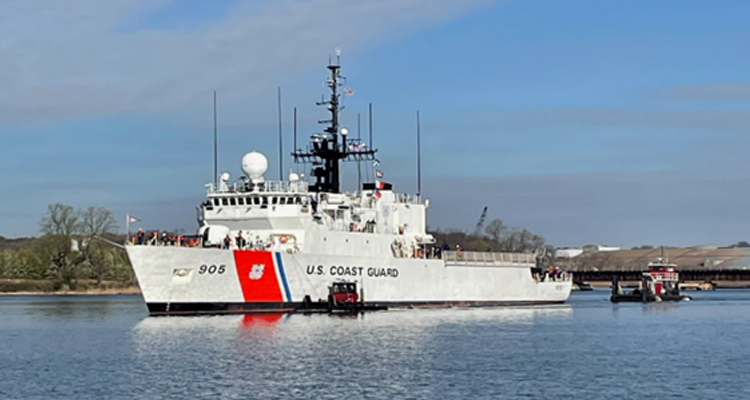
02.02.2024, Crewmembers of the Coast Guard Cutter Alert (WMEC 630) stand behind cocaine bales seized from a drug smuggling vessel in Eastern Pacific waters during the cutter’s last patrol out of its current homeport of Astoria, Oregon, Feb. 7, 2024. The 4,950 kg of cocaine seized is estimated to be valued at more than $143 million. (U.S. Coast Guard photo)

Note, I made an error in my original commentary. USCGC Active is still in commission and homeported in Port Angeles, Washington. I have made corrections to the text. 

Below is a U.S. Coast Guard Pacific Area news release. The news release is significant because it demonstrates that 210s are still doing useful work, despite being almost 55 years old in this particular case.

But the news release also notes that, “… the cutter will shift homeport in June to be stationed in Cape Canaveral, Florida.” After the transfer, Pacific Area will have only three WMECs, USCGC Alex Haley in Kodiak, the newly arrived 270 USCGC Harriet Lane in Hawaii, and USCGC Active in Port Angeles, WA.

When I retired in 1991 PACAREA had ten WHECs and I believe seven WMECs. With Alert’s departure, they will be down to 9 large patrol cutters, 6 NSCs and three MECs.

The first four Offshore Patrol Cutters are expected to be assigned to the Pacific Area, but they have been substantially delayed.

The next two Fast Response Cutters USCGC David Duren (WPC-1156) and USCGC Florence Finch (WPC-1157) will be homeported in Alert’s old homeport of Astoria. I would expect that the first will arrive in Astoria about the same time Alert departs.


Feb. 26, 2024

Coast Guard Cutter Alert returns home to Astoria for the last time

ASTORIA, Ore. – The U.S. Coast Guard Cutter Alert (WMEC 630) and its crew returned to their homeport, Monday, after a 59-day counter-narcotics patrol in the Eastern Pacific Ocean.

This patrol is scheduled to be the cutter’s last patrol out of its current homeport of Astoria, Oregon.

During the patrol, the Alert’s embarked helicopter crew from, the Helicopter Interdiction Tactical Squadron (HITRON), based out of Jacksonville, Florida, sighted a suspected “go-fast” vessel driving on a northerly course and alerted the cutters crew. The crew responded and launched both of its small-boat pursuit teams. Due to the vessel’s refusal to stop when ordered, the HITRON helicopter disabled the engines of the “go-fast” and monitored until the pursuit crew gained control of the vessel. Simultaneously, the second small boat team recovered dozens of bales of cocaine jettisoned into the ocean by the suspected smugglers. The crew then worked tirelessly through the night to haul in and account for all 4,950 kg of cocaine, valued at more than $143 million.

The interdiction is among the Coast Guard’s largest single interdictions in the Eastern Pacific and represents a major blow to the criminal organizations attempting to smuggle illicit narcotics through the maritime domain. Additionally, it serves as the capstone in Alert’s time in Coast Guard Pacific Area, as the cutter will shift homeport in June to be stationed in Cape Canaveral, Florida as part of the larger Coast Guard Force Alignment Initiative.

“The crew worked in the margins, and we won big in the margins,” said Cmdr. Lee Crusius, commanding officer Coast Guard Cutter Alert. “The return on investment from the Coast Guard to the American people continues to be demonstrated by our ability to project capabilities and rule of law within the maritime domain. Day in and day out, the women and men of our service are doing important business, protecting vital international interests from those who wish to subvert order.”

The smuggling of cocaine represents a large threat to not only the health of nations and rule of law, but destruction of fragile ecosystems in its manufacturing and movement.

The cutter Alert was commissioned in 1969 and is the newest of three 210-foot Reliance-class Medium Endurance cutters stationed on the West Coast. It performs a variety of missions to protect Americans and American interests in the Northern and Eastern Pacific Ocean.

For information on how to join the U.S. Coast Guard, visit GoCoastGuard.com to learn about active duty and reserve, officer, and enlisted opportunities. Information on how to apply to the U.S. Coast Guard Academy can be found at USCGA.edu.

“Hawaii-based ‘Indo-Pacific Support Cutter,’ focused on Oceania, is on its first Pacific deployment”- Stars and Stripes

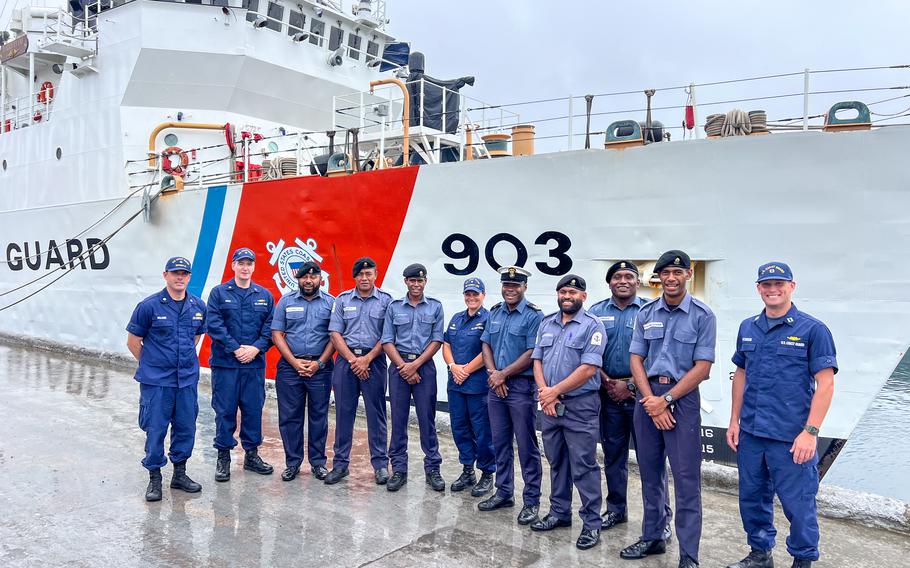
U.S. Coast Guard and Fiji Navy personnel stand in front of the U.S. Coast Guard Cutter Harriet Lane while moored in Suva, Fiji, Feb. 19, 2024. (Charly Tautfest/U.S. Coast Guard)

Stars and Stripes has a nice long article about USCGC Harriet Lane’s first Pacific deployment.

It also suggests we may have been pushing the Guam and Hawaii based Fast Response Cutters (FRS) beyond their limits for long term operation.

“But the small vessels are also limited in both how far and how long they can operate. While they can island hop, they struggle with sustained operations on the high seas, and a high operation tempo has strained the vessels. Some are in need of serious maintenance soon.” (emphasis applied–Chuck)

There is also no mention of the fact that frequently a buoy tender that is larger than Harriet Lane accompanies the FRCs on these expeditionary patrols.

While the article talks about getting new medium sized ships in the Pacific. “…Lane is a “stop gap“ until the service can send a newer, better medium-size ship to the Pacific,” the new Offshore Patrol Cutters (OPC) (more than twice as large as Harriet Lane) will not directly replace the 40 year old cutter in Hawaii. The OPCs are to be based in Long Beach and Kodiak. so rather, it will be that the OPCs relieve the two Hawaii based National Security Cutter of any need to do Alaska Patrols and frees them to do patrols in the Western Pacific.

(Forgive me for being nit picking, but the “Over the Horizon boats” are not “inflatable” even if we do call them RHIBs. For the uninitiated “inflatable” conjures up an entirely different picture.)

USCGC Steadfast (WMEC-623) Decommissioned

The crew of USCGC Steadfast holds a decommissioning ceremony for the cutter in Astoria, Oregon, Feb. 1, 2024. Steadfast was commissioned in 1968 and spent nearly 30 years in Astoria.

From the Coast Guard Pacific Area Facebook page.

Yesterday, the commissioning pennant was lowered for the final time, as U.S Coast Guard Cutter Steadfast (WMEC 623) conducted her decommissioning ceremony in Astoria, Ore.
The Steadfast proudly served the people of the United States for over five decades. Since commissioning in 1968, she has completed over 340 Search and Rescue cases, interdicted over 1.276 million pounds of marijuana and 209, 470 pounds of cocaine, and conducted 251 living marine resource boardings. Steadfast was the first, and one of only two cutters, awarded the gold marijuana leaf, symbolizing one million pounds of marijuana seized.
We are now down to 12 WMEC210s of the original 16.

“Indian Navy Repels 3 Somali Pirate Hijackings” –USNI

INS Sumitra during her trials, 27 August 2014, Indian Navy photo.

The US Naval Institute News Service reports.

The Indian Navy thwarted three hijackings by Somalian pirates in a two-day period from Sunday to Monday, with one warship rescuing separately two hijacked ships off the east coast of Somalia, while a second ship participated in a multinational operation with Sri Lanka and the Seychelles to rescue a hijacked ship, according to releases by the service.

So, what was this hero warship? — An Indian Navy counterpart of a USCG medium endurance cutter, like a WMEC 270 but a little larger, faster. and a lot newer.

INS Sumitra (P-60) is one of six Saryu class offshore patrol vessel, four for the Indian Navy and two for the Sri Lanka Navy.

(It is not the Indian Navy OPV pictured in the X report included in the USNI report. That is INS Sharda (P-55) commissioned in 1991, which participated in the third rescue. Also much like a WMEC270, only slightly larger, faster, and newer.)

Ships of the Saryu class displace 2,230 tons full load, are 344′ (105 m) in length, with a beam of 42′ (12.9 m), a draft of 16′ (4.9 m). They have two engines producing 21,428 HP (15,979 kW) (1,908 HP more than the OPC) for a speed of 25 knots. They have an endurance of 6,000 nmi at 16 knots, with a crew of 118. They are armed with a 76mm gun and two 30mm guns.

We seem to be seeing a reemergence of Somali pirates. When Somali piracy was at its height, the US Navy was using Burke class destroyers, about four times larger, to do the same sort of thing INS Sumitra did. Even the National Security Cutters and OPCs are twice as large.

I suspect that the new Fleet Mix Study, which has not been made public (why?) would show that the Coast Guard needs more patrol cutters with aviation facilities and more endurance than the FRCs. Currently, we have 38 large patrol cutters, 1000 tons and larger. The program of record will leave the Coast Guard with 36, all 4,500 tons or larger.

This is, I believe, the smallest number of large patrol cutters the Coast Guard has had since at least 1948. Yes, we might build more than 25 OPCs, but we might do well to trade off some of the out year OPC construction for more numerous smaller vessels about the size of INS Sumitra. It would be especially useful if we could start getting them ASAP, at least before 2038 when the last OPC is due. We might be able to build one OPC and two MECs annually for about the same cost as two OPCs. Of course, total operating costs would probably be higher.

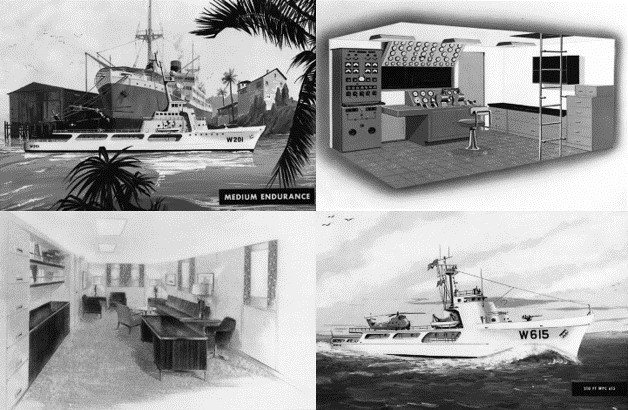
WMEC 210s in Retrospect

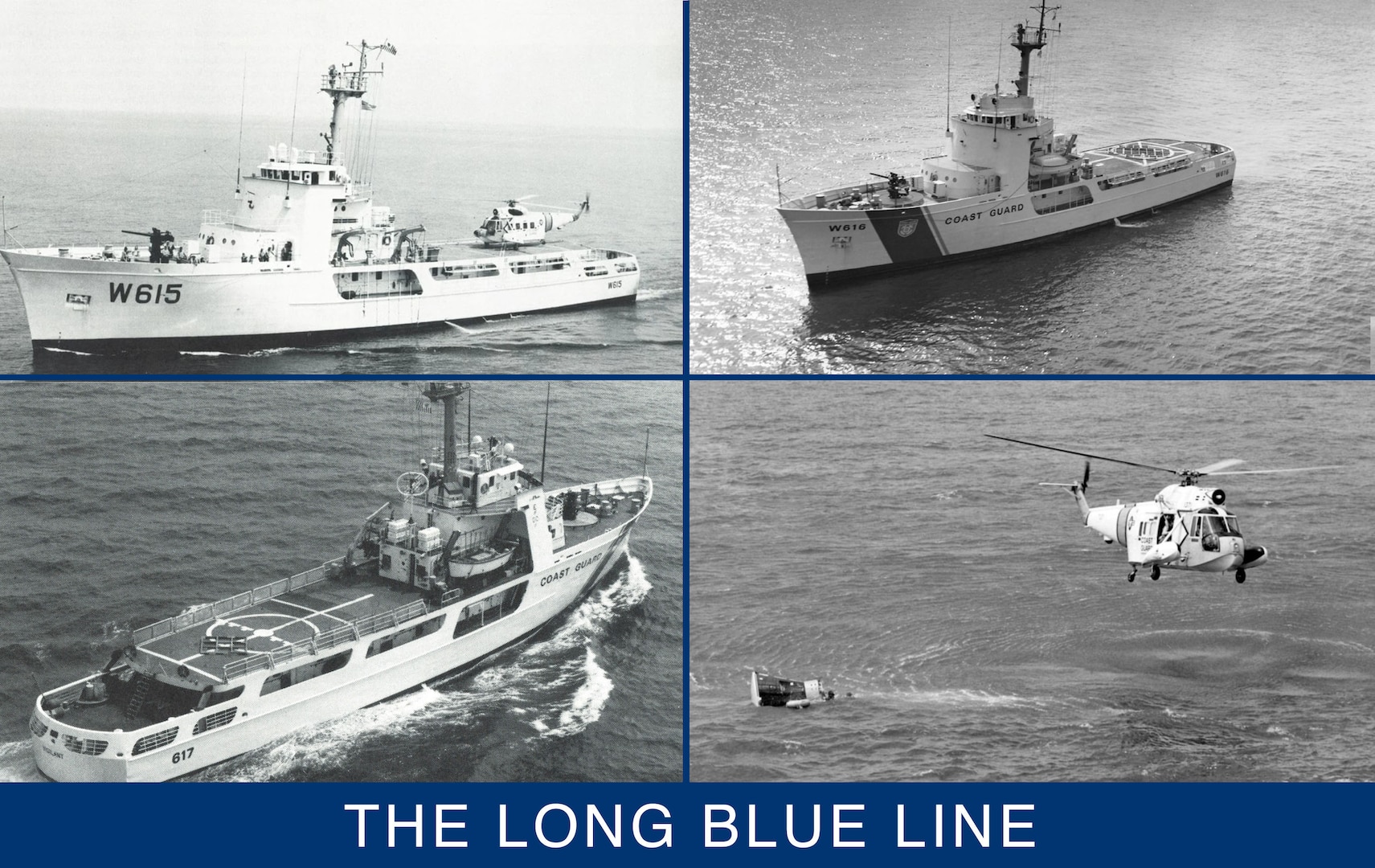
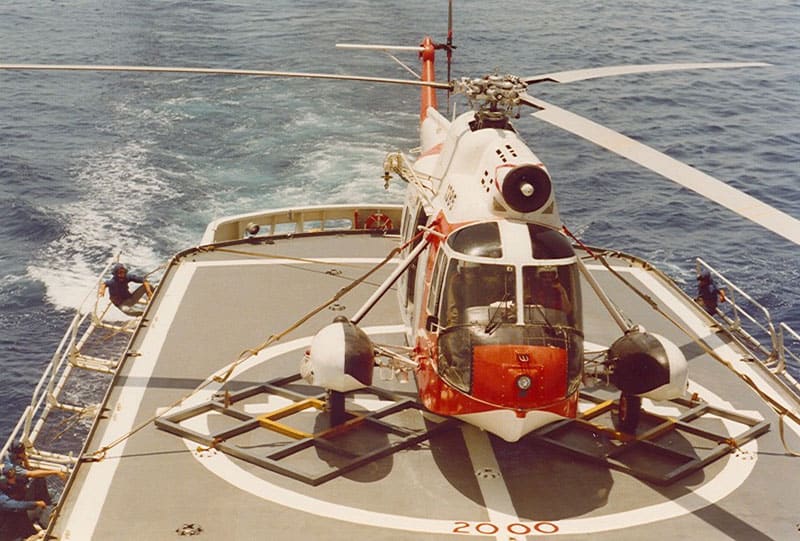
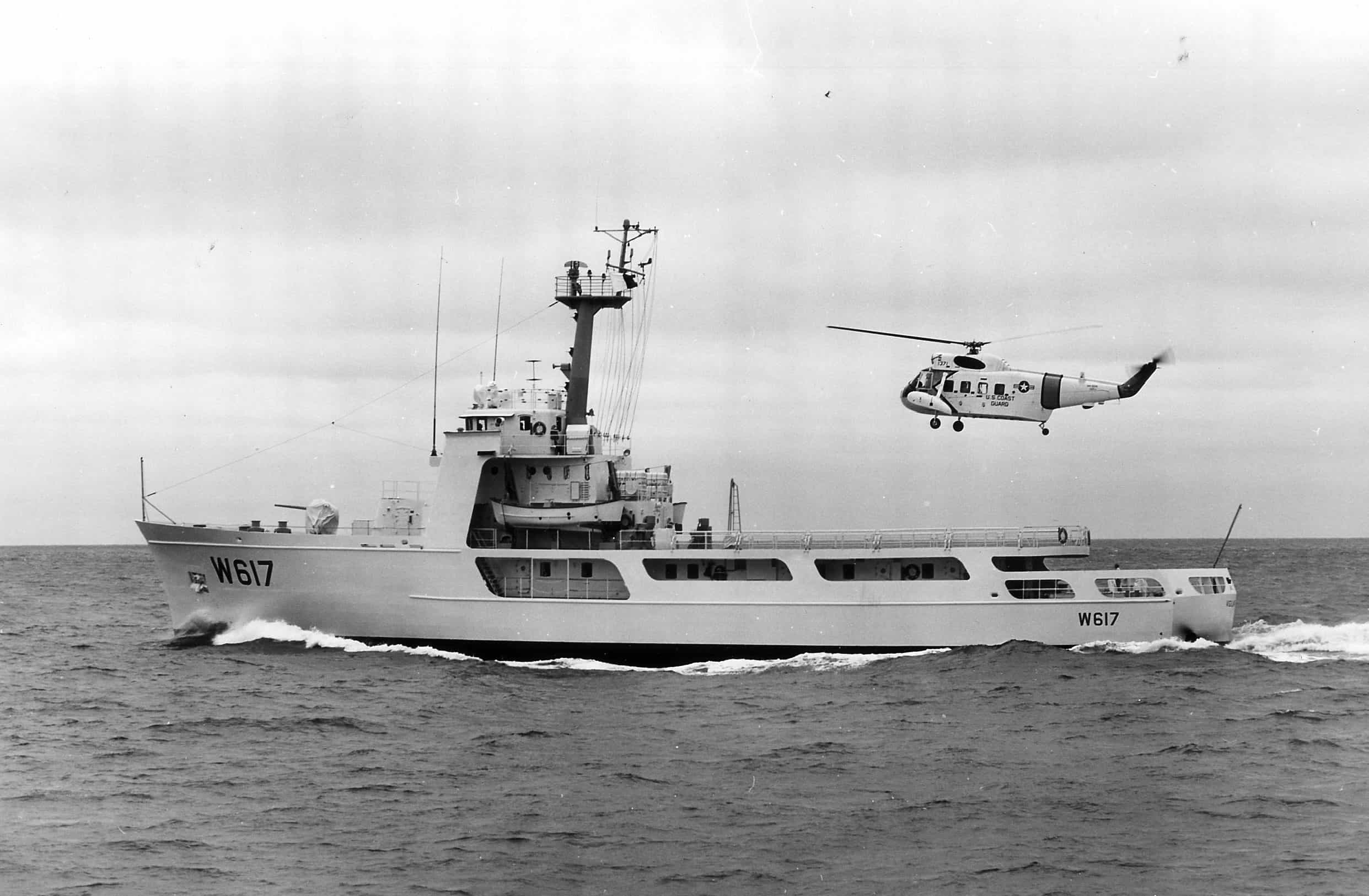
Coast Guard cutter Reliance conducting helicopter operations circa 1964. (U.S. Coast Guard photo).

Coast Guard cutter Diligence shown with the prototype “racing stripe” painted on the bow in December 1966. (Coast Guard Historian’s Archive).

The extensive accommodation for helicopter operations is shown by this photo of third-in-class 210 cutter Vigilant. (U.S. Coast Guard photo)

A Coast Guard HH-52A launched from Diligence hovers over the Gemini III space capsule in 1965. (U.S. Navy National Museum of Naval Aviation photo)

“U.S. Coast Guard Cutter Harriet Lane arrives at new homeport in Pearl Harbor” –News Release

USCGC Harriet Lane arrives Pearl Harbor. USCG Photo.

Below is a news release from CG News (more photos there). As part of the prototype SLEP, her 76mm Mk75 gun and Mk92 fire control system have been removed. The AN/SLQ-32 has been retained. It appears there are now additional communications antenna in place of the fire control system, and a 25mm Mk38 gun weapon system is mounted on a bandstand in place of the 76mm.


Dec. 13, 2023

U.S. Coast Guard Cutter Harriet Lane arrives at new homeport in Pearl Harbor

HONOLULU – U.S. Coast Guard Cutter Harriet Lane (WMEC 903) and crew arrived at its new homeport at Joint Base Pearl Harbor-Hickam, Wednesday, after transiting more than 8,000 nautical miles over 36-days from Portsmouth, Virginia.

The Harriet Lane is U.S. Coast Guard Pacific Area’s newest Indo-Pacific support cutter and spent more than 15 months in a Service Life Extension Program (SLEP) in Baltimore, Maryland, to prepare for the transition in missions and operations. Following reconstitution of the crew in July and returning to Portsmouth in August, the crew went through an extensive dockside period, ensuring the cutter was ready for the transit from the Atlantic Ocean to the Pacific Ocean.

“Re-homeporting U.S. Coast Guard Cutter Harriet Lane is indicative of the Coast Guard’s commitment to the Indo-Pacific – the most dynamic region in the world,” said Rear Admiral Brendan McPherson, deputy commander, U.S. Coast Guard Pacific Area. “Harriet Lane will work by, with, and through allies and partners within the Indo-Pacific region to promote capacity building and model good maritime governance.”

“The crew and I look forward to building partnerships in Oceania to enhance our capabilities, strengthen maritime governance and security while promoting individual sovereignty,” said Cmdr. Nicole Tesoniero, commanding officer of the Harriet Lane. “We plan to build upon many decades of enduring support, operating in concert with the needs of our partners.”

Harriet Lane and crew departed Coast Guard Base Portsmouth, November 2023, and during the transit, the crew conducted trainings for upcoming operations along with professional development for crewmembers. Harriet Lane transited through the Panama Canal, and had port calls in Golfito, Costa Rica and San Diego.

Harriet Lane, commissioned in 1984, is a 270-foot medium endurance cutter now homeported in Honolulu to support Coast Guard missions in the Pacific region. The service’s medium endurance cutter fleet supports a variety of Coast Guard missions including search and rescue, law enforcement, maritime defense, and protection of the marine environment.

“Coast Guard to SLEP, Expand MH-60T Helicopter Fleet as Sikorsky Delivers First New Airframe” –Seapower / Implications for Cutters

Coast Guard to SLEP, Expand MH-60T Helicopter Fleet as Sikorsky Delivers First New Airframe

The Navy Leagues on line magazine, Seapower, reports,

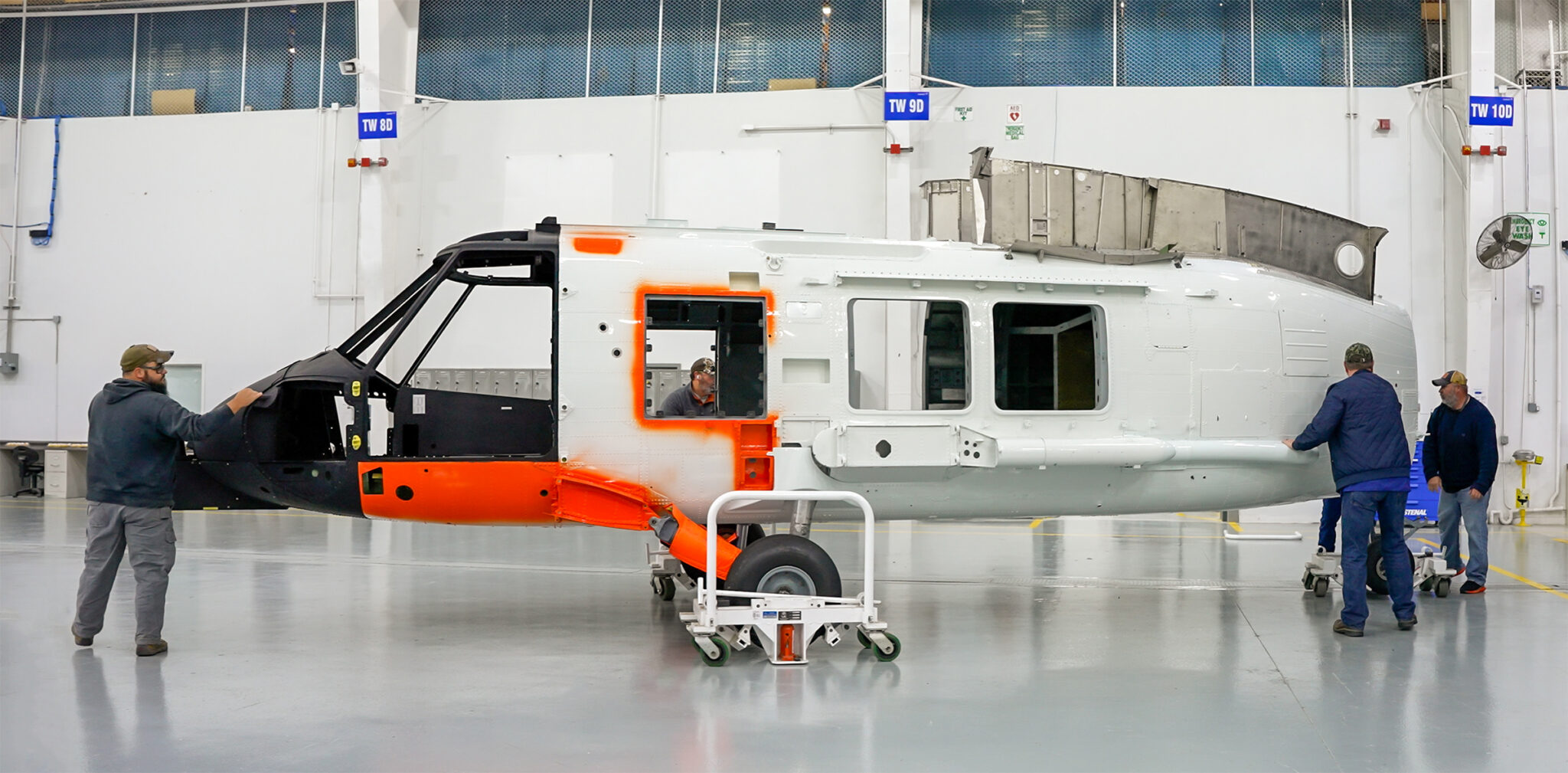
“The U.S. Coast Guard has confirmed plans to expand is MH-60T Jayhawk helicopter fleet and make it the standard service-wide helicopter. The service life-extension of the current MH-60T fleet is being highlighted as Sikorsky, a Lockheed Martin company, delivers the first of 45 replacement MH-60T airframes to the Coast Guard.”

There is a lot of information here.

  • The Coast Guard currently has 48 MH-60T.
  • Generally, six are being overhauled.
  • 45 of these will receive new hulls.
  • 12 new hulls will be delivered annually.
  • Electric tail folding will be added to MH-60s beginning in 2024.

That suggests the SLEP program for the existing Fleet will go through FY 2027, but there is also an intent to replace all H-65s with H-60s. Ultimately the Service expects to have 127 H-60s. That is 79 additional H-60s. Growth will involve both new construction and additional Navy conversions. Sounds like we may still be as much as 13 years from full conversion to a full H-60 fleet, about 2036, but perhaps earlier.

H-65s will continue to operate from cutters for some time.

So, what about the H-65s and the smaller cutters that may not be able to operate the H-60? The nine “B class” 270s should be able to operate H-60s, but the 210s and four “A Class” 270s cannot. The last of those will probably be decommissioned about 2032, certainly no later than 2035.

Aviation Logistics Center (ALC), CGAS Elizabeth City should be wrapping up the MH-65E SLEP program about now, having begun full rate production in November 2019 at a rate of 22 aircraft a year. The SLEP reportedly added 10,000 hours to the life of each aircraft, so the H-65s will probably outlast the cutters that can only operate the smaller helicopter.

“Coast Guard Yard removes two 27-ton engines as part of medium endurance cutter service life extension program” –CG-9

Coast Guard Cutter Spencer approaches the pier at Coast Guard Yard in Baltimore. Service life extension program work on the medium endurance cutter will last 15 months. U.S. Coast Guard photo.

Below is a news release from the Acquisitions Directorate (CG-9). Included is a statement that USCGC Campbell will be the next WMEC to undergo SLEP. Check out the video linked below.


Workers at Coast Guard Yard in Baltimore remove a 27-ton main diesel engine from Coast Guard Cutter Spencer. U.S. Coast Guard photo by Lt. Charles Lortz, In-Service Vessel Sustainment Project Residence Office Baltimore.

On Nov. 8, personnel at Coast Guard Yard in Baltimore achieved a milestone in the 270-foot medium endurance cutter service life extension program (SLEP) by safely removing the two main diesel engines from Coast Guard Cutter Spencer. The engines each weigh 54,000 pounds – or 27 tons – and this is the first lift of this weight that has been conducted at Coast Guard Yard in more than a decade. This also is the first time Yard personnel have removed an engine from a 270-foot medium endurance cutter.

To gain the necessary access, workers removed the extendable aircraft hangar and cut through two decks. View a time-lapse video of the process here.

While Coast Guard Cutters Seneca and Harriet Lane served as prototypes for the electrical and structural work and installation of a new gun weapons system, Spencer is the first Coast Guard Famous-class medium endurance cutter to receive all major SLEP work items, including replacement of the main diesel engines. The SLEP work will sustain the cutters’ capabilities, enabling them to meet mission needs until they are replaced by offshore patrol cutters. This program is part of the In-Service Vessel Sustainment (ISVS) Program, the Coast Guard’s strategic class-by-class evaluation of its vessels to determine what major maintenance and upgrades are necessary for each class of cutters to reach or extend their service lives.

Spencer has been in service since June 1986, and the original engines provided nearly 90,000 hours of operational service prior to their removal.

As the next phase in the SLEP, two new ALCO 251 engines will be installed. The engines removed from the Spencer will be remanufactured by Fairbanks Morse Defense and installed on the next medium endurance cutter to go through the SLEP, Coast Guard Cutter Campbell.

Coast Guard Yard is the service’s sole shipbuilding and major repair facility and part of the Coast Guard’s core industrial base and fleet support operations.

For more information:In-Service Vessel Sustainment Program page

“Coast Guard Cutter Procurement: Background and Issues for Congress, Updated Oct 19, 2023” –CRS

US Capital West Side, by Martin Falbisoner

The Congressional Research Service has again updated their “Report to Congress on Coast Guard Cutter Procurement”. (This link will always take you to the most recent edition of the report.) My last post on this evolving document was in reference to a August 30, 2022 update. I have reproduced the one-page summary in full below. It gives a good picture of where we are.

I will try to provide a little more detail after I get a chance to read the full report. Until then, remember that the full price of the ships includes much more than just the shipyard’s building costs. In addition to government furnished equipment, it includes the crew cost before the ship is accepted, their accommodations at the building site, and their training and travel. It may also include supporting shoreside infrastructure.


Summary
The Coast Guard’s program of record (POR), which dates to 2004, calls for procuring 8 National Security Cutters (NSCs), 25 Offshore Patrol Cutters (OPCs), and 65 Fast Response Cutters (FRCs) as replacements for 90 aging Coast Guard high-endurance cutters, medium-endurance cutters, and patrol craft.

National Security Cutters are the Coast Guard’s largest and most capable general-purpose cutters; they are replacing the Coast Guard’s 12 Hamilton-class high-endurance cutters. NSCs have an estimated average procurement cost of about $670 million per ship. Congress has fully funded the procurement of 11 NSCs—three more than the 8 in the Coast Guard’s POR—including the 10th and 11th in FY2018, which (like the 9th NSC) were not requested by the Coast Guard. The Coast Guard’s proposed FY2024 budget requests $17.1 million in procurement funding for the NSC program for post-delivery activities for the 10th and 11th NSCs, and for class wide activities. Nine NSCs have entered service; the Coast Guard accepted delivery of the 10th on October 13, 2023, and plans to commission it into service in 2024. The 11th is under construction.

Offshore Patrol Cutters are intended to replace the Coast Guard’s 29 aged medium-endurance cutters. Coast Guard officials describe the OPC program and the Polar Security Cutter (PSC) program (which is covered in another CRS report) as the service’s highest acquisition priorities. The first four OPCs are being built by Eastern Shipbuilding Group (ESG) of Panama City, FL. The Coast Guard held a full and open competition for a new contract to build the next 11 OPCs (numbers 5 through 15). On June 30, 2022, the Coast Guard announced that it had awarded a fixed-price incentive (firm target) contract to Austal USA of Mobile, AL, to produce up to 11 offshore patrol cutters (OPCs). The Coast Guard’s proposed FY2024 budget requests $579.0
million in procurement funding for the construction of the sixth OPC, the procurement of Long Lead Time Materials (LLTM) for the seventh OPC, and other program costs.

One oversight issue for Congress concerns substantial cost growth and schedule delays in the OPC program. A June 2023 Government Accountability Office (GAO) report on the OPC program states “The OPC’s total acquisition cost estimate increased from $12.5 billion to $17.6 billion between 2012 and 2022. The program attributes the 40 percent increase to many factors, including restructuring the stage 1 contract [for OPCs 1 through 4] and recompeting the stage 2 requirement [for OPCs 5 through 15] in response to a disruption caused by Hurricane Michael, and increased infrastructure costs for homeports and facilities, among other things. In addition, the program incurred a 1.5-year delay in the delivery of the first four OPCs due to Hurricane Michael and issues related to manufacturing the cutter’s propulsion system. GAO also found indicators that the shipbuilder’s significant level of complex, uncompleted work may lead to further delays.”

Fast Response Cutters are considerably smaller and less expensive than OPCs; they are replacing the Coast Guard’s 49 aging Island-class patrol boats. The Coast Guard’s FY2020 budget submission estimated the total acquisition cost of the 58 cutters intended for domestic use at $3.748 billion, or an average of about $65 million per cutter. A total of 65 FRCs have been procured through FY2023. As of August 10, 2023, 53 FRCs have been commissioned into service. The Coast Guard’s proposed FY2024 budget requests $20.0 million in procurement funding for the FRC program; this request does not include funding for procuring any additional FRCs. The Coast Guard’s FY2024 Unfunded Priorities List (UPL) includes, as one of its items, an unfunded priority for procuring four more FRCs (which would be the 66th through 69th in the program) for a combined procurement cost of $400.0 million, or an average of $100 million per
cutter, to provide increased Coast Guard presence and engagement with allied and partner countries in the Indo-Pacific region

“US Coast Guard Cutter Forward returns home following 78-day deployment in the high northern latitudes” –News Release + Second Look at Harriet Lane

Below is a news release reporting an unusual 270 foot East Coast WMEC deployment including a high latitude multi-national exercise, deployment of a Navy Unmanned Underwater Vessel (UUV), enforcing fisheries on behalf of an international organization, hosting 40 international guests at the 2023 U.S.-Pacific Island Country Summit, and helping U.S. Navy’s Afloat Training Group Atlantic develop their Arctic training program. (Note–more photos at the link above.)

In the photo above and particularly at the end of this video of the homecoming, you can also see USCGC Harriet Lane (WMEC-903), second from the left in the photo, fresh from its Service Life Extension Program (SLEP) refit, with its Mk92 firecontrol removed and her 76mm Mk75 replaced by a 25mm Mk38 (presume she did not get the newer 30mm). I think I was mistaken earlier, in thinking her AN/SLQ-32 electronic warfare system had been removed. I believe I see it still installed on the video. Harriet Lane is expected to assume duties as a dedicated Central and Western Pacific asset in the near future.

Sept. 26, 2023

US Coast Guard Cutter Forward returns home following 78-day deployment in the high northern latitudes

PORTSMOUTH, Va. – The crew of the U.S. Coast Guard Cutter Forward (WMEC 911) returned to their homeport in Portsmouth, Tuesday, following a 78-day deployment in the North Atlantic Ocean.

Throughout the deployment, Forward supported the U.S. Coast Guard’s Arctic Strategy and partnered with allied nations and agencies during Operation Nanook 2023, an annual Canadian-led military exercise to strengthen maritime objectives in the high northern latitudes.

Alongside Canadian and French forces navigating the waters of the North Atlantic Ocean, Forward’s crew performed training evolutions including towing and formation steaming, replenishment at sea, visual communications tactical signaling, and cross-deck exercises. In addition, an attached team from Coast Guard Tactical Law Enforcement Team Pacific conducted a boarding exercise with French Navy vessel BSAM Garonne to demonstrate at-sea capabilities and assist in enhancing partner training curriculums.

During the deployment, Forward also completed two living marine resources enforcement patrols. The first was carried out in support of the First Coast Guard District’s living marine resources mission. The second, conducted alongside international partners, was focused on commercial fishing vessels inspections as part of the Northwest Atlantic Fisheries Organization. The NAFO fisheries patrol ensured compliance with international fishing norms while safeguarding natural resources and preserving fish stocks, all reinforcing U.S. dedication to combatting illegal, unregulated, and unreported fishing.

Forward collaborated with embarked U.S. Navy personnel from the Unmanned Undersea Vehicle Flotilla-1 team to launch their Razorback UUV. The undersea vehicle, equipped with mapping and sonar capabilities, deployed deeper than any U.S. Navy submersible and traveled to a depth of nearly 2,000 feet (600 meters).

Members from the U.S. Navy’s Afloat Training Group Atlantic were also embarked aboard Forward to help build their service’s Arctic Vision Initiative, which will serve to inform U.S. Navy training entities of seamanship, navigation, engineering, and medical considerations necessary for operating naval vessels in the polar regions.

Forward sailed more than 10,500 nautical miles while the crew liaised with international partners through a series of port calls. Forward visited Halifax, Nova Scotia, Canada, during their Natal Day celebration to observe the province’s birthday. Crew members then traveled to Nuuk, Greenland, and completed a short visit to St. John’s, Newfoundland, Canada, before transiting back to the United States.

Forward ended the deployment by hosting several Indo-Pacific heads of state who were participating in the 2023 U.S.-Pacific Island Country Summit in Baltimore, Maryland. Approximately 40 international guests joined Forward for a tour and reception ahead of the transfer of U.S. Coast Guard Cutter Harriet Lane (WMEC 903) to a Pacific Ocean homeport.

“We had the opportunity to advance objectives of the Arctic Strategy and support the IUU Fishing Strategic Outlook,” said Cmdr. Staci Rutsch, commanding officer of Forward. “Acting as true ambassadors, we represented the nation in diplomatic engagements with NATO partners, reinforcing U.S. interests and solidifying the USCG as being the partner of choice. This crew’s ability to shift to perform highly in our non-standard missions leaves me impressed and motivated every day.”

For information on how to join the U.S. Coast Guard, visit www.GoCoastGuard.com to learn more about active duty and reserve officer and enlisted opportunities. Information on how to apply to the U.S. Coast Guard Academy can be found here.

For more, follow us on FacebookInstagram and Twitter.