Coast Guard Patrol Forces Southwest Asia, PATFORSWA, Three FRCs, Three Drug Seizures in Four Days

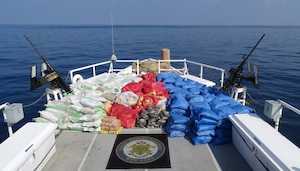
ARABIAN SEA (Dec. 28, 2023) Bags of illegal narcotics seized from a vessel are stacked on the deck of the U.S. Coast Guard Sentinel-class fast response cutter USCGC Robert Goldman (WPC 1142) in the Arabian Sea, Dec. 28. Robert Goldman was operating under Combined Task Force 150, one of five task forces under Combined Maritime Forces, the largest multinational naval partnership in the world. CTF 150 focuses on maritime security operations outside the Arabian Gulf. (Photo by U.S. Coast Guard courtesy photo)

Below is a U.S. Naval Forces Central Command – Combined Maritime Forces – U.S. 5th Fleet news release, followed by a second earlier news release. Something puzzling is that there seems to be a relatively new “catch and release” policy regarding the smugglers and smuggling vessels. 

CMF-assigned Cutter Seizes Hashish and Methamphetamines in North Arabian Sea | January 02, 2024, MANAMA, Bahrain

A U.S. Coast Guard cutter patrolling under the command of Combined Task Force 150 of the Combined Maritime Forces seized hashish and methamphetamines with a total estimated street value of $24.3 million Dec. 28 in the North Arabian Sea.

It was the third seizure by a CMF-assigned cutter in four days, following seizures by USCGC Clarence Sutphin Jr. (WPC 1147) and USCGC John Scheuerman (WPC 1146) of hashish, heroin, methamphetamines and pills with a total estimated street value of $24.5 million Dec. 24 and Dec. 26 in the Gulf of Oman.

A team from USCGC Robert Goldman (WPC 1142), a Sentinel-class cutter, boarded a dhow at approximately 6:30 a.m. local time Dec. 28 after it displayed indicators consistent with illicit drug trafficking.

Aboard, the team discovered over 300 bags of drugs containing 3,514 kilograms of hashish and 417 kilograms of methamphetamines.

The Robert Goldman team released the dhow and disposed of the illicit drugs.

The mission of Combined Task Force 150 is to disrupt the ability of non-state actors to move weapons or drugs, or engage in other illicit activities, in the Gulf of Oman, Arabian Sea and Indian Ocean.

This interdiction marked the twelfth time Combined Task Force 150 assets have seized illegal narcotics at sea since France took command in July 2023.

Combined Maritime Forces is a multinational maritime partnership committed to disrupting criminal and terrorist activities by restricting their freedom of maneuver across approximately 3.2 million square miles of international waters encompassing some of the world’s most important shipping lanes.

Since 2021, units assigned to the Combined Maritime Forces have seized more than $1 billion in illegal drugs while patrolling waters across the Middle East.


CMF Forces Seize Illegal Drugs in Gulf of Oman, January 02, 2024, MANAMA, Bahrain

U.S. Coast Guard cutters assigned to the Combined Maritime Forces seized illegal drugs with a total estimated street value of $24.5 million on Dec. 24 and Dec. 26 from vessels in the Gulf of Oman.

GULF OF OMAN (Dec. 26, 2023) Bags of illegal narcotics seized from a vessel are stacked on the deck of the U.S. Coast Guard Sentinel-class fast response cutter USCGC John Scheuerman (WPC 1146) in the Gulf of Oman, Dec. 26. John Scheuerman was operating under Combined Task Force 150, one of five task forces under Combined Maritime Forces, the largest multinational naval partnership in the world. CTF 150 focuses on maritime security operations outside the Arabian Gulf. (Photo by U.S. Coast Guard courtesy photo)

At approximately 2 p.m. local time (10 a.m. Greenwich Mean Time) on Dec. 24, a team from USCGC Clarence Sutphin Jr. (WPC 1147), a Sentinel-class cutter patrolling under the command of Combined Task Force 150 of the Combined Maritime Forces, boarded a dhow after it displayed several indicators consistent with illicit drug trafficking.

Aboard, the crew discovered 90 kilograms of heroin with an estimated street value of $3.2 million.

After testing and seizing the narcotics, the team disembarked the dhow, allowing it to continue on its journey.
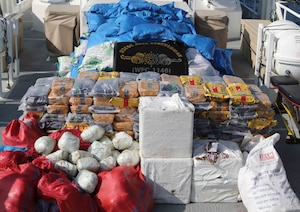
GULF OF OMAN (Dec. 26, 2023) Bags of illegal narcotics seized from a vessel are stacked on the deck of the U.S. Coast Guard Sentinel-class fast response cutter USCGC John Scheuerman (WPC 1146) in the Gulf of Oman, Dec. 26. John Scheuerman was operating under Combined Task Force 150, one of five task forces under Combined Maritime Forces, the largest multinational naval partnership in the world. CTF 150 focuses on maritime security operations outside the Arabian Gulf. (Photo by U.S. Coast Guard courtesy photo)

At approximately 5 a.m. local time (9 a.m. Greenwich Mean Time) on Dec. 26, a team from USCGC John Scheuerman (WPC 1146), a Sentinel-class cutter patrolling under the command of Combined Task Force 150 of the Combined Maritime Forces, boarded a dhow after it also displayed several indicators consistent with illicit drug trafficking.

Aboard, the team discovered 261 kilograms of methamphetamines, 2,936 kilograms of hashish, 142 kilograms of heroin and 75,000 pills with the potential to be abused as opium substitutes, with a total estimated street value of more than $21.3 million.

The John Scheuerman team released the dhow’s crew and disposed of the illicit drugs.

The mission of Combined Task Force 150 is to disrupt the ability of non-state actors to move weapons or drugs, or engage in other illicit activities, in the Gulf of Oman, Arabian Sea and Indian Ocean.

These interdictions marked the tenth and eleventh times Combined Task Force 150 assets have seized illegal narcotics at sea since France took command in July 2023.

Combined Maritime Forces is a multinational maritime partnership committed to disrupting criminal and terrorist activities by restricting their freedom of maneuver across approximately 3.2 million square miles of international waters encompassing some of the world’s most important shipping lanes.

Since 2021, units assigned to the Combined Maritime Forces have seized more than $1 billion in illegal drugs while patrolling waters across the Middle East.
Five members of Japan Coast Guard Aircrew Die in Runway Collision

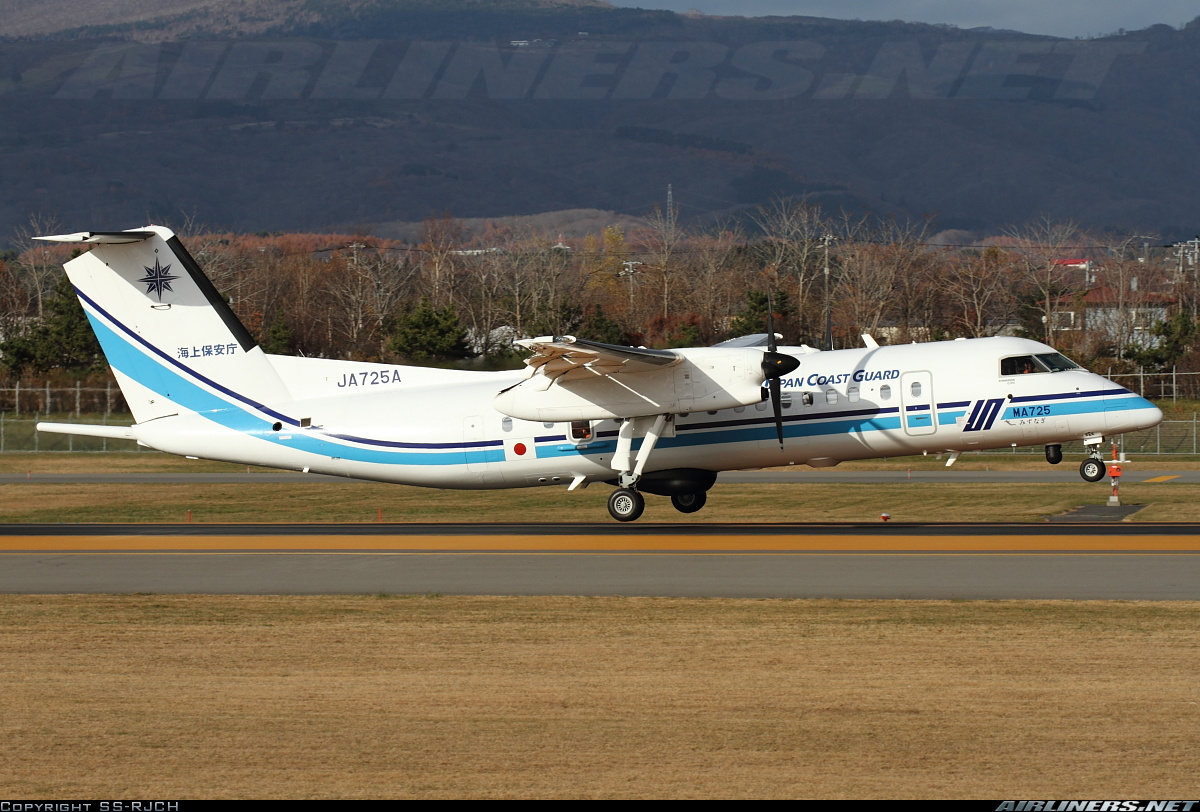
Japan Coast Guard DASH-8-315

A fatal runway collision between a Japan Airlines Airbus A350 and Japan Coast Guard aircraft is being widely reported.

The Japan Coast Guard Bombardier Dash-8 aircraft was heading to western Japan to deliver aid to those caught up in the New Year’s Day earthquake that has killed at least 48 people.

The airliner landed on a runway the JCG aircraft was using as it prepared to take off.

All aboard the JAL aircraft were successfully evacuated. The five of the six crewmembers of the JCG aircraft were killed. One is seriously injured.

“Inside the U.S. Coast Guard patrols off Peru in mission to stop overfishing” –NBC News

NBC News reports on Coast Guard efforts to counter Illegal, Unregulated, Unreported fishing off Peru. The report is not really very clear in that it states the Chinese vessels are outside Peru’s territorial waters but is not clear if they are saying they are outside the 12 mile limit or they are outside the EEZ. The way it was phrased it sounded like they were referring to the 12 mile limit, but the distinction is frequently poorly understood by the media.

Previous Operation: PERU, 10.07.2023, Courtesy Photo, USCG District 11
The Coast Guard Cutter Alder approaches a squid fishing vessel while CG-2007, a C-130 from Air Station Barbers Point in Hawaii, flies over (upper left) during Operation Southern Shield 2023, October 2023. The Coast Guard recently completed the first high-seas boardings and inspections off the coast of Peru under a newly adopted multi-lateral agreement to monitor fishing
and transshipment operations within the South Pacific Regional Fisheries Management Organization (SPRFMO)Convention Area. (U.S. Coast Guard photo)

It is clear that USCGC Alder is off Peru. This is the second time the Pacific Area has used this buoy tender to conduct a distant fisheries patrol, having completed a previous similar patrol 29 November 2023. During the earlier patrol, enforcement was under the auspices of the South Pacific Regional Fisheries Management Organization (SPRFMO). That is probably the case here as well.

Thanks to Paul for bringing this to my attention.

“Australian Border Force crackdown nets 30 foreign fishers, destroys three boats off Kimberley coast” –ABC.net.AU

Map showing the Kimberley Marine Park. The shaded area is a National Park Zone (‘no take’ zone).

ABC.net.au reports the Australian Border Force has seized 30 Indonesian fishers and destroyed three boats in a crackdown against illegal fishing in the 74,469 km2 (28,753 sq mi) Kimberley Marine Park, established in 2018, off Northwestern Australia. The combined catch of the three fishing vessels was over a ton of trepang (sea cucumber).

Australian sea cucumber sells for about $350 (presumably Australian $) per kilogram.(ABC Midwest & Wheatbelt: Chris Lewis)

In addition to the loss of marine catch, there is fear that the fishermen, who frequently come ashore, may bring with them livestock diseases common in Indonesia but not present in Australia.

An illegal fishing vessel is destroyed at sea.(Supplied: Australian Border Force)

Australia has been seeing a resurgence of illegal fishing in their EEZ including Marine Parks, and there have been calls for more vigorous enforcement.

“RNLN Patrol Ship Hull Vane Retrofit Matches Predicted Performance” –Naval News

Naval News reports,

The first Royal Netherlands Navy (RNLN) warship to be fitted with a novel hydrodynamic ‘wing’ is demonstrating efficiency and performance improvements in line with forecasts, according to both the Dutch Command Materiel and IT (COMMIT) and the company responsible for the modification.

I have been following this innovation for over eight years. Previous posts are listed below. This is at least the third patrol vessel equipped with this system. It has been used on French, Dutch, and Danish government vessels. Apparently previous applications have performed as advertised.

In addition to an overall 10% or better fuel savings, additional advantages include reduce air pollution, better seakeeping, quieter operation, and reduced motion that allows reduced crew stress and safer boat and flight operations.

It is certainly worth asking current users about their experience with Hull Vane, effect of marine growth, operation in ice, cleaning and maintenance requirements?

“Top Stories 2023: U.S. Coast Guard” –USNI

The US Naval Institute News Service lists their five top Coast Guard stories for 2023.

  • “Doing Less with Less” –closures and decommissionings
  • “Argus Among Us” –christening and launch of the first OPC
  • “Polar Security Cutter Delayed” –now three years behind schedule
  • “The Search for Titan” –search for the civilian deep diving submersible
  • “Operation Fouled Anchor” –handling of report on response to sexual assault allegations at the Coast Guard Academy, 1988 to 2006

Navy Plans Surface Combatants Smaller Than FFG, an Opportunity?

200430-N-NO101-150
WASHINGTON (April 30, 2020) An artist rendering of the guided-missile frigate FFG(X). The new small surface combatant will have multi-mission capability to conduct air warfare, anti-submarine warfare, surface warfare, electronic warfare, and information operations. (U.S. Navy graphic/Released)

Defense News has a short post, “Surface navy emphasizes frigates in its latest modernization plans.”

It includes a couple of statements by the Navy’s director of surface warfare that I think might be significant.

“We want to build a lot of frigates and [have] somewhat smaller, very capable ships being proliferated out through the fleet,” Rear Adm. Fred Pyle told Defense News on Dec. 7. (emphasis applied–Chuck)

and

But also of importance, he added, will be the ability to remain on station longer and require less help from fleet tankers and other logistics ships.

Ships, somewhat smaller than the 7,291 ton FFG but with long endurance. Bet it will have space for unmanned systems. Sounds like might make a decent cutter. Perhaps a dual service ship. Build the cutters with fewer weapon systems, but with the option to add them on if needed.

I may be a bit prejudiced in favor of dual service ships, because of my experience on Duane, a Treasury class cutter, a ship based on a Navy gunboat design. Because of its origin, it was better than it had to be, and outlived ships completed ten years after the 327s.

Very curious what they will come up with.


PATFORSWA Photo from USNI

Five U.S. Coast Guard Sentinel-class fast-response cutters and two Avenger-class mine countermeasures (MCM) ships sail together in the Gulf of Oman, Nov. 3, 2023. Click on the photo to enlarge. US Navy Photo

An unusual photo from the December 28 edition of the US Naval Institute News Service’s Fleet and Marine Tracker. The Avenger class, like the cutters, are based in Bahrain.

Why this get together? I presume this is an exercise in which the FRCs protect the MCM ships from Iranian drones or small craft swarm tactics. Alternately the exercise may have been for the cutters to protect high value units, with the MCM ships simulating larger ships, but FRCs already routinely escort high value units, though I don’t think I have seen this many involved in a single operation.

Late addition: 

“India orders six next-gen offshore patrol vessels from Mazagon Dockyard” –Naval Today

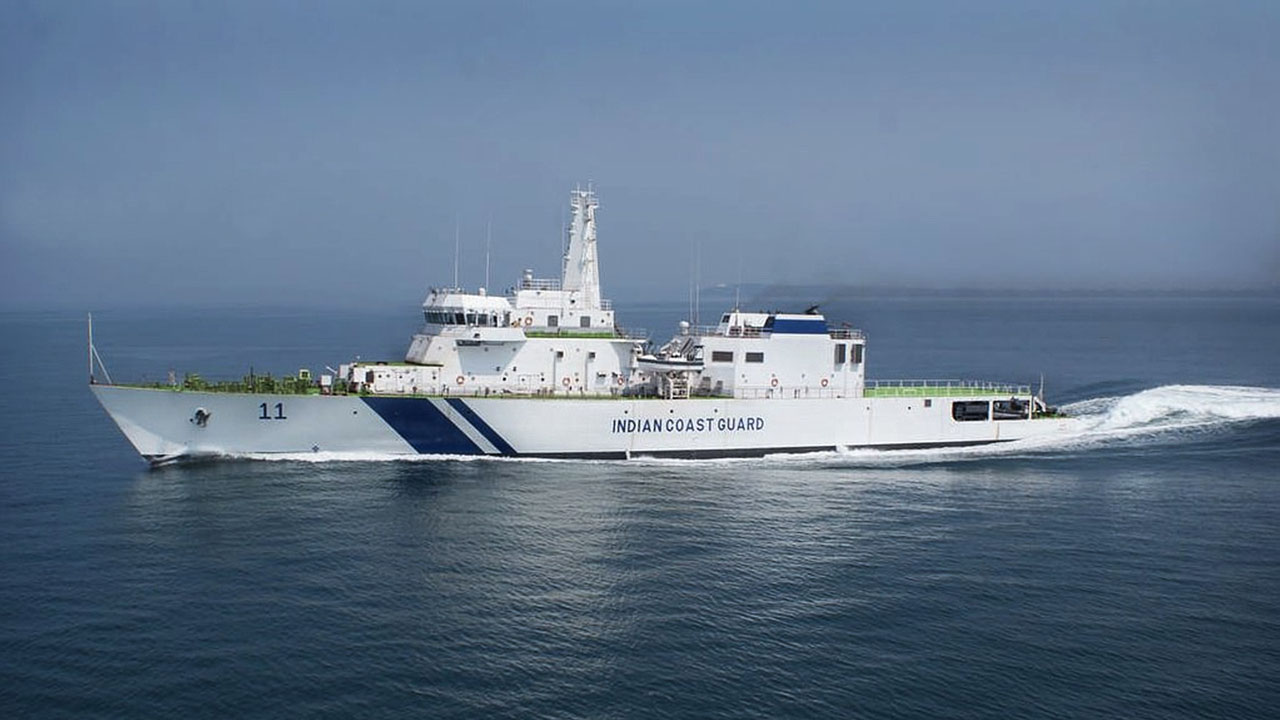
105 meter, Off Shore Patrol Vessel (OPV) ICGS Samarth, 10 November 2015, lead ship of a class of 11, photo Indian Coast Guard

Naval Today reports, “The Indian Ministry of Defence has signed a contract with Mazagon Dockyard Shipbuilders (MDL) for the construction of six next-generation offshore patrol vessels (OPVs).”

The six new ships are to be 115 meters (377′) in length, about the size of the Hamilton class cutters. I have not been able to find any additional information on their characteristics, but historically, Indian CG OPVs evolve from preceding designs, so I expect they will share many characteristics with the preceding 105 meter class pictured above and the 97 meter Vikram class; e.g. speed 23 to 26 knots; powered by two diesel engines; armed with a 30mm gun; hangar and flight deck for at least a five ton helicopter.

As for what they change, “Along with several high-tech advanced features and equipment, these 115m OPVS would be equipped with multipurpose drones, AI capability, and wirelessly controlled remote water rescue craft lifebuoy.”

The six ships are to be designed and delivered in 66 months. From contract to completion of six ships in five and a half years may sound like a tight schedule considering the US Coast Guard’s recent experience. Looking back on the previous class of eleven ships, procured in two batches, it looks possible. A $400M contract to build six vessels was awarded to GSL on 9 May 2012. All six were commissioned by 21 December 2017, less than 68 months after contract award. A follow-on contract for five ships was awarded in August 2016. The fifth ship was commissioned 16 March 2022, about 67 months from award to completion of five ships.

India benefits from the near continuous construction of Offshore Patrol Vessels (OPVs). Over the last ten years, 22 Indian built OPVs were commissioned, 18 for the Indian Coast Guard, two for the Indian Navy, and two for export.

In addition to these six OPVs, the Indian Navy is also building eleven similarly named but different 105 to 110 meter “Next Generation Offshore Patrol Vessels.