Chuck Hill's CG Blog

Chuck Hill's CG Blog

“GAO denies bid protest of waterways commerce cutter award” –Marine Log

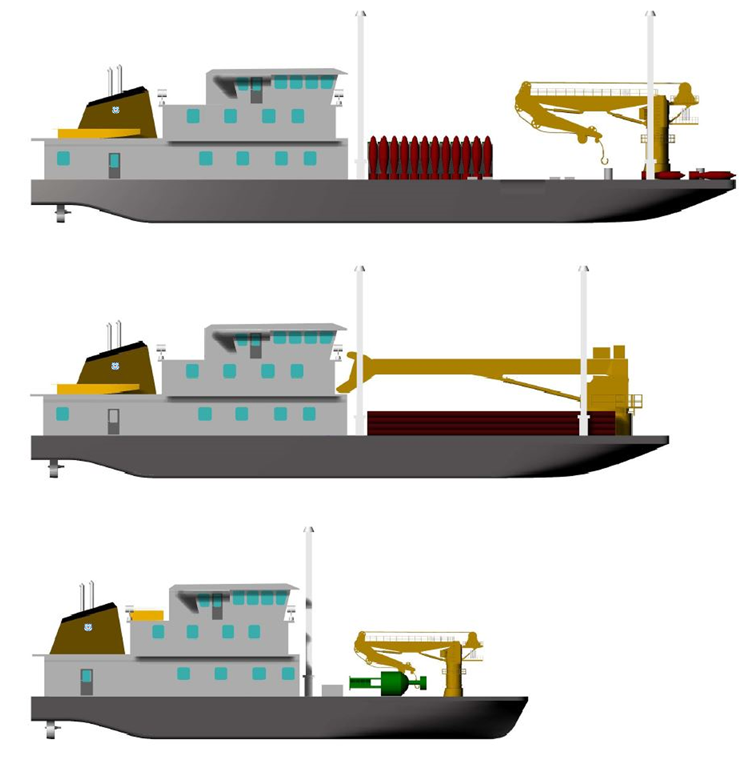
Shown above are Coast Guard indicative designs of a river buoy tender, inland construction tender and inland buoy tender.

Marine Log reports,

The Government Accountability Office (GAO) has rejected a bid protest filed by Steiner Construction Company, Inc., a small business of Bayou La Batre, Alabama, against the continued performance of a contract awarded to Birdon America, Inc. under solicitation No. 70Z02321RPRT00300, issued as a small business set-aside by the Department of Homeland Security, United States Coast Guard (USCG) for the design and production of 27 vessels for its waterways commerce cutter program.

Footwear Fashion for Boarding Drug Subs

Members of the Coast Guard Cutter Waesche (WMSL-751) law enforcement boarding team inspect a self-propelled semi-submersible (SPSS) in international waters of the Eastern Pacific Ocean, Nov. 20, 2023. The interdiction of the SPSS yielded more than 5,500 pounds of cocaine. In November 2023, Waesche crewmembers seized approximately 18,219 pounds of cocaine, with an estimated street value of over $239 million, during four separate suspected drug smuggling vessel interdictions or events off the coasts of Mexico and Central and South America. (U.S. Coast Guard photo)

It is a small thing but must be slippery boarding one of these at sea. Took a close look at their footwear. Was a bit surprised, but this would make sense. (Click on the photo to enlarge)

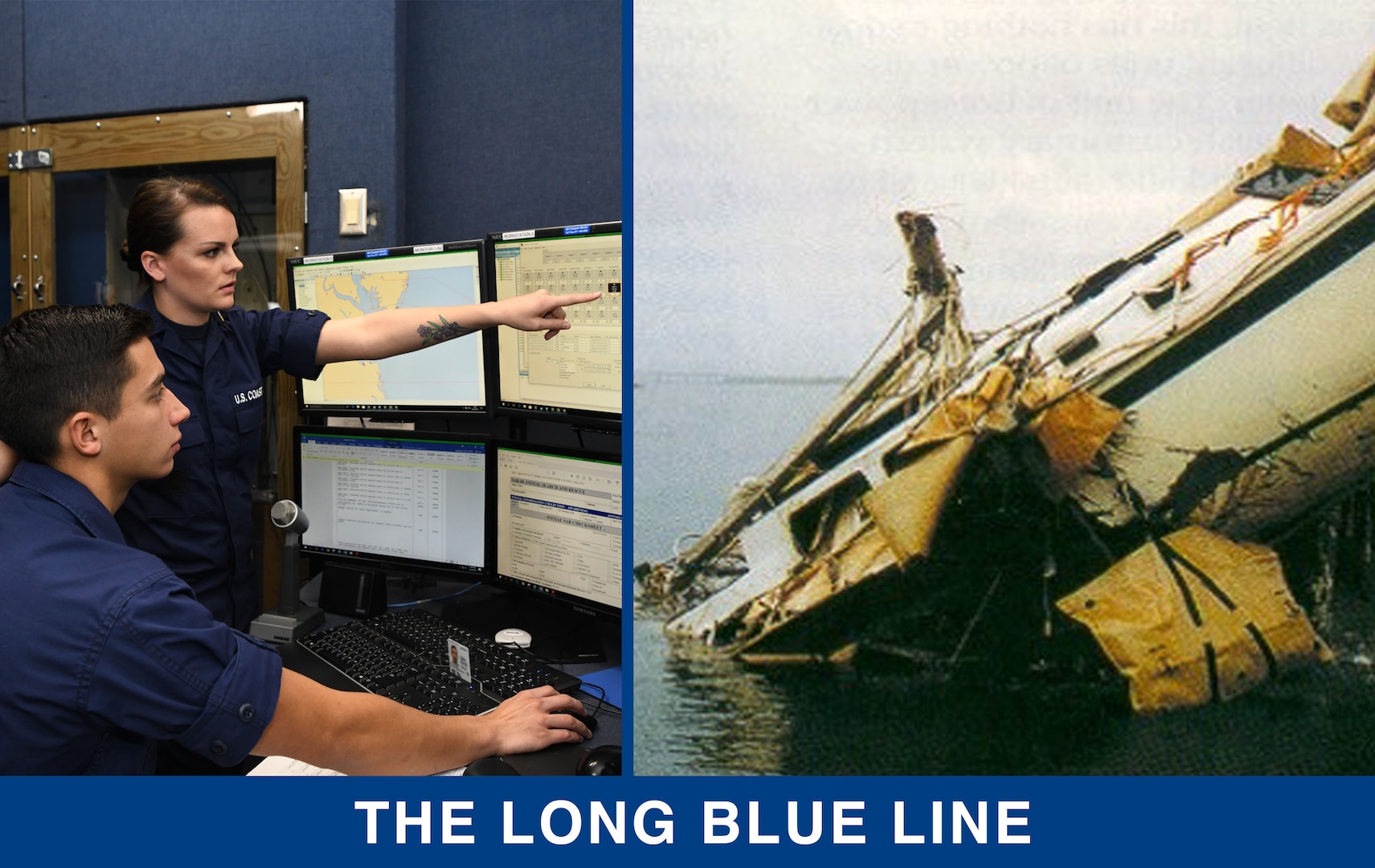
“The Long Blue Line: The loss of Morning Dew and genesis of Rescue 21” –MyCG

This is from MyCG. I am very proud that the Coast Guard did not simply say, “With as many calls as we get, it is inevitable that we will miss few.” Yes, we are human, but we can recognize and account for that. No call should go unanswered.

Dec. 8, 2023

The Long Blue Line: The loss of Morning Dew and genesis of Rescue 21

By Capt. W. Russell Webster (Ret.), United States Coast Guard

The Long Blue Line blog series has been publishing Coast Guard history essays for over 15 years. To access hundreds of these service stories, visit the Coast Guard Historian’s Office’s Long Blue Line online archives, located here: THE LONG BLUE LINE (uscg.mil) 

It was low tide in Charleston Harbor at 1:55 a.m. on Dec. 29, 1997 when 13-year-old Daniel Cornett’s anguished voice slashed the quietude of Coast Guard Group Charleston’s Watch Center:

“May … Mayday, U.S. Coast Guard, come in,” on Channel 16 (the distress channel) on VHF-FM marine radio.

The Sailing Vessel Morning Dew had just crashed into Charleston’s North Jetty. Daniel, his brother and cousin were jolted from a sound sleep. Daniel’s father, 49-year-old Michael Cornett, who had been steering the boat under engine power for the last eight hours, was ejected from the vessel, according to government reports.

At Coast Guard Group Charleston (later Sector Charleston), the regional maritime rescue headquarters, this particular four-second mayday radio call by the youngest Cornett family member was heard and automatically recorded by Stancil technology, a device designed to preserve critical radio messages. Unfortunately, the Coast Guard’s sole radio watchstander, a twenty-three-year-old petty officer, was 17-feet away from the radio console refilling his coffee mug as an otherwise quiet late-night shift drew on.

In his later testimony with the National Transportation Safety Board (NTSB), the petty officer said he heard only the tail end of the heavily garbled distress message, “U.S. Coast Guard, come in.” The radio watchstander had completed telecommunications school just a few months prior and only recently been qualified to stand watches without supervision. Despite what the NTSB would later call an extraordinary training program, he was unprepared for the circumstances that were about to unfold.

Following standard radiotelephone protocol, the watchstander responded fourteen seconds later: “Vessel calling Coast Guard, this is Coast Guard Group Charleston, over.” He then repeated his call using multiple radio transmission towers in different locations along the South Carolina shore. He also invited conversation on VHF-FM channel 16. But there would be no two-way interactive radio calls from the 34-foot sailboat Morning Dew on this fateful night.

Despite the odd time of night and prevailing weather conditions, the group’s radio watchstander quickly returned to the normal humdrum of off-season and late-night routine. This included monitoring as many as ten different frequencies that, during busy times, sometimes blared from an equal number of speakers mounted throughout the communications center. In the summer, radio watchstanders were constantly managing their time and involved in various conversations, often near simultaneously.

 Four minutes later, at 2:21 a.m., the crackle of an unintelligible burst of static was recorded on Group Charleston’s Stancil recorder. The watchstander, believing the earlier call and this one might be from the same source, again tried the radio without success. “Vessel calling Coast Guard, this is Coast Guard Group Charleston, over.” There was no response, and no log entries were made of the calls.

Given the state of the Coast Guard’s National Distress System network of VHF-FM near-shore system in late 1997, the Morning Dew’s only chance at this point in the distress would have been if the watchstander had been looking directly at the Direction-Finding equipment at the exact moment when the first distress call and the second follow-up static burst were heard. Even so, rewinding the tape and determining the word Mayday had been used would have only elevated awareness and mandated a call to his supervisor, the group duty officer (GDO) who was seeking authorized rest. Not hearing the initial word Mayday and theorizing a mariner was just testing his radio or the call had “skipped” from many miles away, and not following procedure to rewind the tape to conduct further investigation, the watchstander returned to other duties.

The radio watchstander would soon become involved with the Morning Dew again when he took a call from the local harbor pilot’s organization about four hours later, relaying a report from an inbound vessel of shouts being heard from the vicinity of Charleston Channel Buoy #22. He quickly relayed the information to his 17-year experienced GDO, who asked a pilot boat to investigate on behalf of the Coast Guard. Tragically, no additional assets were dispatched, and the GDO suspended further efforts before sunrise.

Around 11 a.m., tourists visiting from Atlanta would find bodies from the sailing vessel Morning Dew as two of the teenage boys washed ashore on a nearby beach. The Coast Guard then responded in full force, only to find a third body. Weeks later, the body of Morning Dew’s operator would wash ashore on a nearby island.

Within weeks, amid the growing hue and cry of the grieving family members, a major 18-month-long search and rescue analysis would be undertaken and begin to address difficult shortcomings in human behavior, procedures, and technology. Key gaps were the failings of the VHF-FM National Distress System (NDS) radio system, the backbone of the Coast Guard’s near-shore (20 miles) rescue communications system. Coast Guard Commandant James Loy would later go on to publicly speak about the Morning Dew case at a search and rescue conference entitled The Value of a Life. He would later say that, “there are two capstone issues that must be addressed by our service. There are issues of leadership and communications systems.”

 The original NDS in use for the Morning Dew case was built in the 1970’s, and was designed to provide Very High Frequency–Frequency Modulated (VHF-FM) radio coverage of 95,000 miles of coastline and connect mariners in distress to each other, point-to-point, and Coast Guard rescue services. After 25 years, the NDS’s problems were well known and documented in a Mission Needs Statement that, “formally acknowledged that a materiel solution is required to address the capability gaps.”

At the time of the Morning Dew case, there were as many as 68 known coverage areas where service was either poor quality or non-existent. The NDS was also supported by an antiquated tape-recording system that was both manually intensive and cumbersome. Additionally, the direction-finding system at the time had no recording capability. This meant that if a watchstander was not looking at the direction indicating compass rose at the time of the distress call and a different call came in, only the new call’s direction would be displayed.

According to Coast Guard sources, the Morning Dew case, “validated the need for a new VHF-FM system for the Coast Guard.”

The Morning Dew case was a collection of human and technological errors. Despite the original early morning call not having enough information to launch a rescue, the relatively junior Telecommunications Specialist failed to rewind the audio tape, make required log entries, or notify his supervisor. He also could not note the bearing of the call because he was recharging his coffee cup. Even if he had done all of that, the quality of the recording and in the insufficiency of locating information still might not have made a difference at that moment.

It would have, however, put rescuers on alert that they were dealing with an unresolved Mayday call, perhaps altering their response to the later cries heard from the Charleston channel area. The Coast Guard would eventually develop a new procedure in 2005 called, “range ring analysis” based on signal strength that could have provided a rough estimate of the caller’s position and a start point for a searchable area. But the Morning Dew case was in 1997.

Significant procedural changes would later be made. Among them, adding new watchstanders, always providing for at least three personnel on watch, on average. Additionally, experienced, permanent civilian search and rescue personnel would be provided in every sector for continuity and training purposes. Today’s watch centers still, however, feature a single communications operational specialist in a booth, but there are always more senior people around to discuss issues if there is any doubts about what to do.

The single most significant technological change the Coast Guard would make is the replacement of the NDS with the Rescue 21 (R21) near shore communication system. The system, an advanced command, control, and direction-finding communications system, was created to better locate mariners in distress and save lives and property at sea and on navigable rivers.

By harnessing state-of-the-market technology, Rescue 21 enables the Coast Guard to execute its search and rescue missions with greater agility and efficiency. Rescue 21 helps identify the location of callers in distress via towers which generate lines of bearing to the source of VHF radio transmissions reducing search time. It extends coverage to a minimum of 20 nautical miles from the coastline, improves information sharing and coordination with the Department of Homeland Security and other federal, state, and local first responders, and can also help watchstanders recognize potential hoax calls by identifying discrepancies between what a caller is reporting in distress and the actual transmission site, thus conserving, and reducing risk to valuable response resources.

 Relative to its predecessor systems, R21 can provide reliable and redundant capabilities to determine where some calls originate, rapid retrieval and position fixing, and ruling out the need for searches for obvious hoax callers. It also facilitates near shore distress cases in areas where the Coast Guard performs 90% of its rescues.

According to the Coast Guard’s Joe Ayd from the Office of C5I Capabilities, today’s Rescue 21 system implements, “the Coast Guard’s ability to receive VHF-DSC [Digital Selective Calling], which allows a vessel like the Morning Dew to simply press a button on their radio to [digitally] transmit a distress call and provide a position [if connected to the boat’s GPS] to the Coast Guard command center.” VHF-FM DSC took coastal rescue communications from a point-to-point system (distressed mariner – Coast Guard) to a virtual paging system where any boat receiving the DSC distress call is duty bound to digitally relay it to a Coast Guard shore rescue facility on behalf of the troubled mariner.

Ayd added that, “R21 made significant improvements to the ability of the watchstander to not only retrieve the audio of a call, but to also conduct some basic cleanup of the call to better understand what is being said through all the noise or garble.”

This means that an already busy Coast Guard watchstanders can economize on the effort to scan the recording within the confines of an already busy environment with the best chance of understanding the content of the call.

It took an 18-month exhaustive search and rescue system investigation, a 20/20 television expose and a $19.5 million-dollar civil judgment and more than two decades to complete R21 along U.S. coastlines and in Alaska’s remote and rugged areas. “The final tower in the Rescue 21 system was accepted in October 2017, completing a design and installation process spanning more than 20 years.”

The Coast Guard has made significant progress with the R21 VHF-FM system since the 1997 Morning Dew case. However, the venerable service faces new challenges and opportunities to improve near shore rescue communications. For example, over the last two years (Fiscal years 22 and 23), the Coast Guard has annually responded to between 15,000 and 16,000 calls for assistance with just over half being received by phone. During that same time, only between 1,200 and 1,500 rescues were initiated each year with radio notifications. Over the last decade, the number of rescue calls initiated by radio has declined while phone and other smart technology notifications have increased.

Captain Webster writes about contemporary Coast Guard rescues. Readers may contact him and access or order his published works, including Lost in Charleston’s Waves, detailing the Morning Dew tragedy, at https://www.wrussellwebster.com

“COAST GUARD Asset, Workforce, and Technology Challenges Continue to Affect Law Enforcement Missions” –GAO

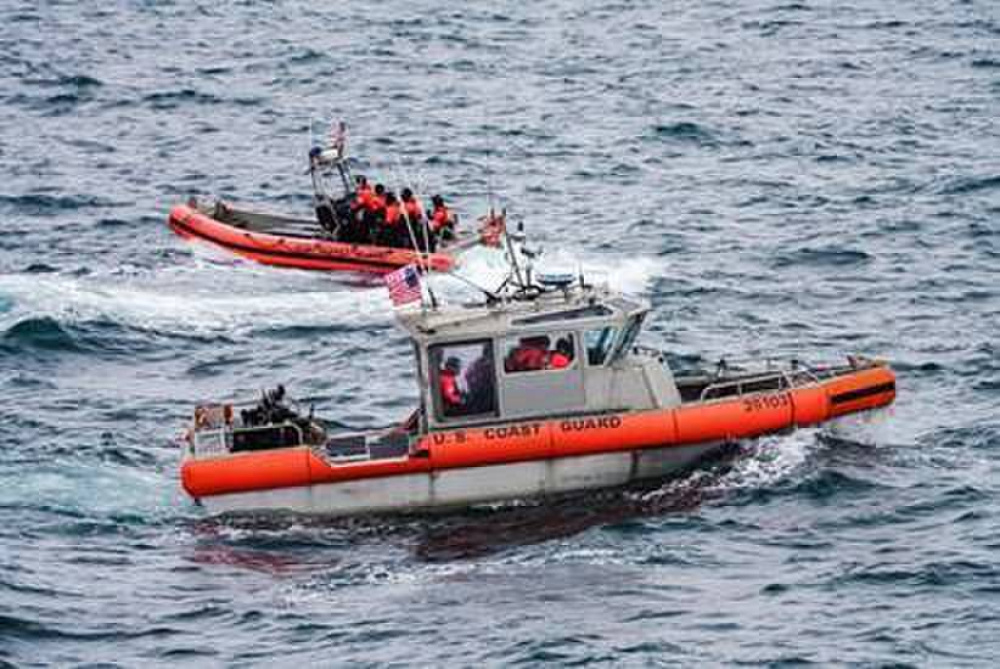
Two small boat crews from Coast Guard Cutter Stratton are underway for operations in the Bering Sea, April 30, 2021. Cutter crews use the small boats to conduct a variety of missions including search and rescue and law enforcement. U.S. Coast Guard photo courtesy Ensign Molly Dolan.

As if we did not know, the GAO is telling us the Coast Guard (unlike the rest of the Government) is having problems–OK I will stop being snide.

I really have not read any more than the highlights of this report, but there is something troubling here that might be turned to an opportunity.

GAO has found that the Coast Guard has not adequately determined its workforce needs. The Coast Guard has reported to Congress that it faces challenges meeting its daily mission demands because of workforce shortfalls. For example, in February 2020, GAO found that the Coast Guard had assessed a small portion of its workforce needs. GAO recommended that Coast Guard update its workforce plan with timeframes and milestones to meet its workforce assessment goals. As of May 2023, Coast Guard officials said they had not yet taken these steps but indicated it could be feasible to develop a rough estimate of how many positions it plans to assess in the next five years.

What I think this means is that not only has the Coast Guard been unable to fill its authorized billets, but the number of billets may be less than it should be. It may also mean the distribution of personnel may put too many people in some places and too few in others.

I think we have all seen this happen, no matter where we work.

But GAO is saying tell us what you really need. No doubt we should have been doing that all along, but it’s hard, and apparently it will take years to get an approximation.

“Arctic Security: Patrolling NATO’s High North” –YouTube

Thought I would share this video. Found it on a SeaWaves post, Patrolling Greenland on Denmark’s HDMS Triton. HMDS Triton a Thetis class patrol frigate. These ships do Coast Guard type work in or near the Arctic. It is a type of ship that you will not find in the Coast Guard fleet, but one that we may want to add in the future. It is ice strengthened. As a ship that operates in an area where icing is common. its ground tackle (anchor handling equipment) is below the foc’sle deck, and its boats and boat handling gear can be enclosed. The crew is relatively small (I think they are double crewed to get more underway time), but additional berthing is available, and weapons can be added using the Stanflex system.

Arctic (orthographic projection) with national borders and land highlighted. Credit Heraldry, Isochrone, via Wikipedia, 23 July 2023.

The Thetis class ships are now over 30 years old. They are to be replaced by a new class, currently referred to as MPV-80 (multi-purpose vessel, 80 meter).

OMT MPV-80 technical specifications

Below is the narrative that accompanied the YouTube video.


The Arctic region is the gateway to the North Atlantic. For NATO and its Allies, maintaining a strong presence here is vital to protect trade, transport and communication links between North America and Europe.

As climate change causes the polar ice caps to melt and the sea levels to rise, new sea routes are beginning to emerge, which could present a threat to Euro-Atlantic security. Greenland is considered by scientists to be ground zero for climate change. Along with the Faroe Islands, it forms part of the Kingdom of Denmark and is therefore under Danish military protection. That protection falls to the Joint Arctic Command, or JACO, a Danish-led operational command with a central headquarters in Nuuk, Greenland’s capital.

Join the Danish Armed Forces in Greenland, at sea, in the air and on land, to discover more about how security might be affected in this region and learn about the capabilities and experience NATO Ally Denmark has in the North Atlantic area.

NAVAIR Providing VAMPIRE APKWS Counter UAS System to Ukraine

The Drive has a new post, “Our Best Look At A VAMPIRE Counter Drone System For Ukraine.”

We have known for a while that APKWS was being used by Ukraine and that it was being mounted on vehicles along with Electro-Optic fire control systems to counter unmanned air systems (drones). (More here.)

What surprised me most in the new “The Drive” article was that the systems were developed my NAVAIR. That means this is a Navy developed system. Since the Coast Guard gets all of its weapons, other than small arms, from the Navy, that may mean the Coast Guard may be more likely to be able to get the system.

The Vampire combination of APKWS, Electro-Optic Sensors, and Firecontrol seems to be the easiest way for the Coast Guard to protect high value targets from potential air and surface suicide drone attacks without spraying bullets that may cause collateral damage. It is also flexible enough to be used against small, fast, highly maneuverable surface threats. It might even be useful against larger targets. It certainly seems to be exceptionally effective for its cost, weight, support requirements, and minimal footprint.

I would like to see them on all cutters, but getting this sort of capability for the cutters in PATFORSWA is most urgent.

“Structural Cracks Ground All U.S. Coast Guard C-27J Spartan Patrol Aircraft” –Forbes

A Coast Guard C-27J Spartan crew, assigned to Coast Guard Air Station Sacramento, flies over San Francisco, California, during area of responsibility familiarization training, Monday, Feb. 6, 2018. The C-27Js are outfitted with weather radar and communications equipment capable of supporting transport and other Coast Guard missions. Coast Guard photo by Lt. Scott Handlin

Forbes reports,

“Structural cracking has forced the U.S. Coast Guard to ground its entire fleet of 14 C-27J Spartan maritime patrol aircraft…”

“Coast Guard to SLEP, Expand MH-60T Helicopter Fleet as Sikorsky Delivers First New Airframe” –Seapower / Implications for Cutters

Coast Guard to SLEP, Expand MH-60T Helicopter Fleet as Sikorsky Delivers First New Airframe

The Navy Leagues on line magazine, Seapower, reports,

“The U.S. Coast Guard has confirmed plans to expand is MH-60T Jayhawk helicopter fleet and make it the standard service-wide helicopter. The service life-extension of the current MH-60T fleet is being highlighted as Sikorsky, a Lockheed Martin company, delivers the first of 45 replacement MH-60T airframes to the Coast Guard.”

There is a lot of information here.

  • The Coast Guard currently has 48 MH-60T.
  • Generally, six are being overhauled.
  • 45 of these will receive new hulls.
  • 12 new hulls will be delivered annually.
  • Electric tail folding will be added to MH-60s beginning in 2024.

That suggests the SLEP program for the existing Fleet will go through FY 2027, but there is also an intent to replace all H-65s with H-60s. Ultimately the Service expects to have 127 H-60s. That is 79 additional H-60s. Growth will involve both new construction and additional Navy conversions. Sounds like we may still be as much as 13 years from full conversion to a full H-60 fleet, about 2036, but perhaps earlier.

H-65s will continue to operate from cutters for some time.

So, what about the H-65s and the smaller cutters that may not be able to operate the H-60? The nine “B class” 270s should be able to operate H-60s, but the 210s and four “A Class” 270s cannot. The last of those will probably be decommissioned about 2032, certainly no later than 2035.

Aviation Logistics Center (ALC), CGAS Elizabeth City should be wrapping up the MH-65E SLEP program about now, having begun full rate production in November 2019 at a rate of 22 aircraft a year. The SLEP reportedly added 10,000 hours to the life of each aircraft, so the H-65s will probably outlast the cutters that can only operate the smaller helicopter.

“Analysis: Royal Navy deploys seven ships on underwater infrastructure patrols” –Navy Lookout

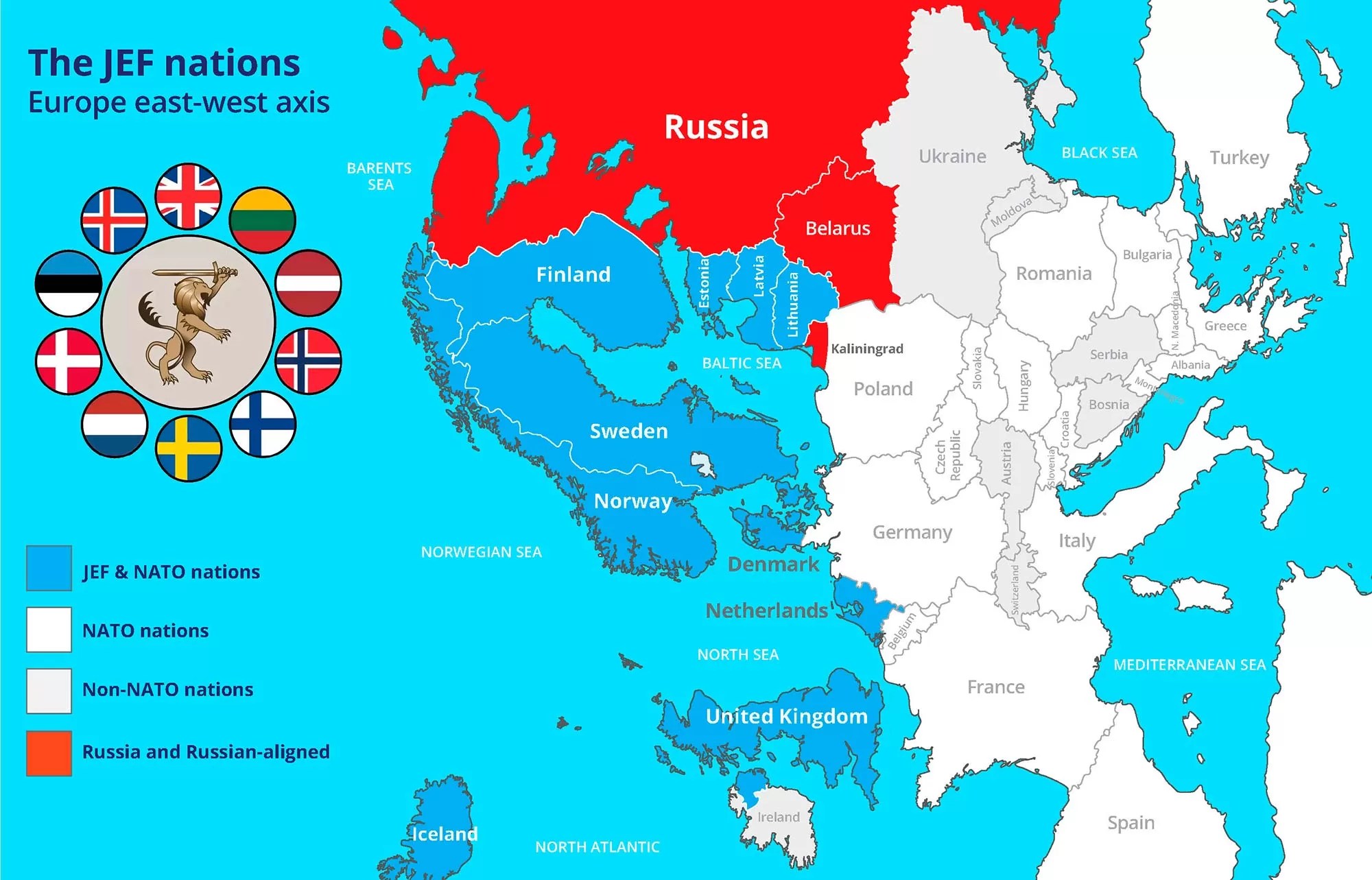
Joint Expeditionary Force nations.

Ever since the Nord Stream pipelines were damaged, in September 2022, there has been a lot of talk about the need to protect Critical Undersea Infrastructure (UCI) including concern about the possibility of damaging or surreptitiously tapping into undersea cables.

Some US agency is likely to get this job. Frankly I don’t see this as a job for the Coast Guard since we have very little underwater surveillance capability, but I may be wrong. The Coast Guard would probably at least be asked to report suspicious activity that might be recognized by Maritime Domain Awareness systems and if there is damage to a pipeline, the Coast Guard would certainly be called in to deal with the pollution.

Still, it may be interesting to see what the Europeans are doing. Navy Lookout reports,

“On 28th November Defence Ministers from the Joint Expeditionary (JEF) nations agreed to activate a ‘Response Option’. This will take the form of a Royal Navy-led effort to bolster the security of undersea infrastructure and deter hybrid threats. Since the destruction of the NordStream pipeline in September 2022 and the attack on the Baltic Connector pipeline in October 2023, there has been increasing concern about underwater Russian activity. The Defence Secretary described this as “This historic and unprecedented agreement”. It has certainly been a long time since the UK conducted multi-lateral military activity in the European area that was not done under the auspices of NATO.”

Interestingly, the effort will include two Royal Navy River class Batch One Offshore Patrol Vessels, HMS Severn and HMS Tyne, that are the British equivalent of US Coast Guard Medium Endurance Cutters, except that they do not include flight decks. There was no mention of whether they might be equipped with Unmanned Undersea Vehicles.

Thanks to Lee for bringing this to my attention. 

“Coast Guard Cutter Calhoun arrives to new homeport in Charleston” –News Release CG News

USCGC Calhoun 759 arrives Charleston.

Below is a news release from Coast Guard News. Once again, a new cutter is put to work even before commissioning.

Dec. 3, 2023

Coast Guard Cutter Calhoun arrives to new homeport in Charleston

NORTH CHARLESTON, S.C. — The crew of the U.S. Coast Guard Cutter Calhoun (WMSL 759) arrived at their homeport in North Charleston, Sunday, after delivery from Ingalls Shipbuilding and supporting missions throughout the Coast Guard’s Seventh and Eighth districts.

The Coast Guard accepted the delivery of the 10th national security cutter (NSC) on Oct. 13, 2023, after the initial christening ceremony in Pascagoula, Mississippi, June 4, 2022.

Calhoun is the fourth Legend-class NSC to be homeported in North Charleston, joining Coast Guard Cutters Hamilton (WMSL 753), James (WMSL 754), and Stone (WMSL 758).

Calhoun’s crew began deploying to Pascagoula in March 2023. Following an intense 37-day post-delivery period, Calhoun supported the Coast Guard’s Eighth District in response to an oil discharge approximately 20 miles northeast of the mouth of the Mississippi River in the Gulf of Mexico. Calhoun remained on scene for 48 hours, providing key offshore command and control capability to the multi-agency response.

“Our crew members have more than earned their time back home,” said Capt. Timothy Sommella, commanding officer of Calhoun. “Most of our crew has surged the past 18 months in support of other Coast Guard units to meet global commitments. The most recent deployment of over 120 days to the Gulf Coast for the cutter’s delivery and acceptance was particularly challenging but tremendously satisfying. We finally sailed away as a crew for the first time with the same commitment to excellence and determination that the ship’s namesake, the first Master Chief Petty Officer of the Coast Guard, Charles L. Calhoun, displayed during his distinguished Coast Guard career. We are incredibly thankful this time of year for the personal and professional support from our friends and loved ones who stood with us, and we will continue to forge those bonds, whether at sea or ashore.”

During the remainder of Calhoun’s first patrol, Calhoun provided a forward presence in support of Homeland Security Task Force-Southeast and Operation Vigilant Sentry within the Coast Guard Seventh District’s area of responsibility to deter irregular migration and save lives in the South Florida Straits while testing its vital equipment, systems, and completing required training.

“It is a privilege to be a part of such an amazing team of professionals,” said Senior Chief Petty Officer Aaron Deluca, Calhoun’s command senior enlisted leader. “Having completed the challenges of acceptance, training, and sailing one of the most technologically advanced assets in the Coast Guard, I am excited to bring cutter Calhoun to its homeport and the community of Charleston.”

Calhoun is named to honor the first Master Chief Petty Officer of the Coast Guard, Charles L. Calhoun, who was from Ocean City, Maryland. During Calhoun’s tenure, he was responsible for improving and developing many of the Coast Guard’s administrative and people-focused programs, resulting in better communications and retention efforts within the enlisted community.

Calhoun is the newest 418-foot, Legend-class cutter to join the Coast Guard fleet. The Legend-class cutter program leads the Coast Guard’s ongoing surface fleet recapitalization and, when combined with the future offshore patrol cutters, will comprise the Coast Guard’s offshore response capability for decades to come. The cutter’s primary missions are counterdrug operations, migrant interdiction, living marine resources, defense readiness, and command and control in support of U.S. Coast Guard operations worldwide and here at home.

For information on how to join the U.S. Coast Guard, visit GoCoastGuard.com to learn about active duty, reserve, officer, and enlisted opportunities. Information on how to apply to the U.S. Coast Guard Academy can be found here.