“First Details Of Hamas’ New Submarine Drone Weapon” –Naval News

Click to enlarge. Hamas has revealed a new torpedo-like weapon which it claims has been used against Israel.

Naval News reports on a new naval weapon reportedly used by Hamas against Israel. It is a type of weapon that might be used in a terrorist attack on a port, so perhaps the Coast Guard should be interested. It is not particularly sophisticated, but as we have seen in Ukraine, unsophisticated weapons can work in some circumstances.

I will take a wag (wild ass guess) at its size and weight. Looks about six feet long and about twelve inches in diameter. The way it is being carried, I would say it is probably less than 300 pounds, probably closer to 200. That makes it about half the weight of a light weight ASW torpedo like the Mk46 which weighs 508 pounds and has 96.8 lb (43.9 kg) warhead. This probably means the weapon is buoyant while torpedoes are typically negatively buoyant. The proportion of the weapon’s weight devoted to warhead may be more than the case of the Mk46, so warhead weight might be more than 50 pounds, but almost certainly less than 100 pounds. That is far less powerful than typical WWII torpedoes, but even 50 pounds exploded against the hull would probably mission kill or sink any small vessel. The Mk27 torpedo, a small passive acoustic homing torpedo with a 95 pound warhead, used by US submarines against Japanese escort vessels in the latter part of WWII, scored 33 hits and 24 of those resulted in a sinking.

“Media Availability: USA’s largest icebreaker to visit Charleston following Arctic deployment, interviews available” –CG News

I am just passing along this news release from Coast Guard News. Charleston has become a major base for Coast Guard cutters with five NSCs to be based there. The first of the new icebreakers will go to Seattle, but there are clear indications that the Coast Guard also hopes to have icebreakers based on the Atlantic side. This visit might also serve as a preliminary look at Charleston as the future base for Coast Guard icebreakers. They may also be getting some minor maintenance done.


Nov. 1, 2023

Media Availability: USA’s largest icebreaker to visit Charleston following Arctic deployment, interviews available

CHARLESTON, S.C. — The crew of the U.S. Coast Guard Cutter Healy is scheduled to participate in a media availability Friday during the ship’s port call in Charleston.

The Healy conducted an Arctic deployment to provide U.S. surface presence, high-latitude research in support of international cooperation, and engagements with Arctic partner nations. During the deployment, Healy conducted joint operations in the Barents Sea with the Norwegian Coast Guard, as well as joint operations with Danish and Icelandic sea services while operating in the North Atlantic. The cutter also hosted a science roundtable with researchers from the U.S., Norway, and other nations.

WHO: Capt. Michele Schallip, commanding officer of Healy

WHAT: Healy’s commanding officer will be available to speak with media members regarding the unit’s current deployment, scientific efforts, and international engagements.

WHERE: 2 Charlotte St., Charleston, SC 29403, Berth One

WHEN: Friday, 9 a.m., Nov. 3, 2023.

Editor’s Note: Media are asked to RSVP by 5 p.m., Thursday, with the Coast Guard’s Public Affairs Detachment Jacksonville at 786-393-4138 or by emailing D7PADETNorth@gmail.com. Interested media are requested to arrive by 8:30 a.m., Friday, with a valid driver’s license and proof of insurance to be processed through port security.

Homeported in Seattle, Washington, Healy is the Coast Guard’s only icebreaker designed specifically to support research and is the nation’s sole surface presence routinely operating in the Arctic Ocean. The platform is ideally specialized for scientific missions, providing access to the most remote reaches of the Arctic Ocean, areas barricaded by pack ice and unreachable by most research vessels. Since its commissioning in 1999, Healy has served as one of two active polar icebreakers and is the largest and most technologically advanced icebreaker in the Coast Guard. Healy accommodates a crew of 84 with a primary mission of scientific support. As a Coast Guard cutter, Healy is also a capable platform for supporting other missions in the polar regions, including logistics, search and rescue, ship escort, environmental protection, and enforcement of laws and treaties.

Media Kit resources:
U.S. Coast Guard Cutter Healy webpage and Unit Facebook page
Links:
DVIDS B-roll for deployment coverage:  DVIDS – U.S. Coast Guard Cutter Healy departs Tromsø, Norway
News Room for press releases:  USCG News
Follow PACAREA on Facebook:  @uscgpacificarea
Follow PACAREA on X (formerly Twitter):  @USCGPACAREA
Follow PACAREA on Instagram:  @uscgpacarea
Follow LANTAREA on Facebook: @USCoastGuardAtlanticArea
Follow LANTAREA on X (formerly Twitter): @USCGLANTAREA
Follow LANTAREA on Instagram: @uscglantarea

-USCG-

“Coast Guard adjusts operations plan to mitigate 2024 workforce shortage” –MyCG

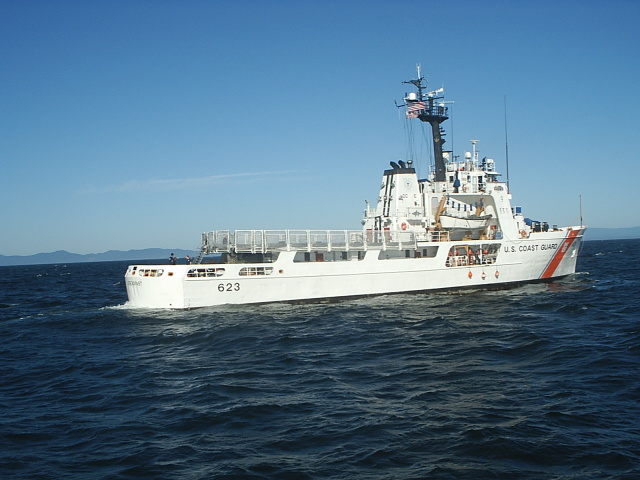
USCGC Steadfast is the next WMEC to be decommissioned. The 55 year old cutter is homported in Astoria, Ore.

The Coast Guard is acting decisively to deal with the current personnel shortage. I have reproduced the announcement below. The result will significantly affect the cutter fleet. Three 210s will be placed in layup pending decommissioning and seven 87 foot WPBs will be placed in layup pending reactivation.

The choice to decommission Steadfast rather than another 210 may have been influenced by the fact that the first two OPCs are to be homeport on the West Coast (San Pedro) and two Webber class cutters (WPC-1156 and 1157) are expected to be based in Astoria. Both WPCs will probably arrive in the next six to eight months.

Not surprisingly cutters are being decommissioned before their replacements come on line. This situation is likely to get worse before the last OPC is delivered (planned for 2038).

Of the sixteen 210 foot Reliance class cutters, three are no longer in Coast Guard service. USCGC Decisive was decommissioned on 2 March 2023. USCGC Courageous was donated to Sri Lanka in 2004, and USCGC Durable was decommissioned in 2001 and commissioned into the Colombian Navy in 2003.


Oct. 31, 2023

Coast Guard adjusts operations plan to mitigate 2024 workforce shortage

By AJ Pulkkinen, MyCG writer

Coast Guard mission demands are growing while our Service faces a significant workforce shortage. The Coast Guard is short nearly 10% of the entire enlisted workforce and cannot continue to operate as we have historically with fewer people.

To mitigate the workforce challenge risk in a deliberative and strategic fashion, the Vice Commandant, Adm. Steven Poulin, has provided specific temporary operational guidance to adapt our operations while prioritizing lifesaving missions, national security and protection of the marine transportation system.

There will be no loss of search and rescue (SAR) capabilities. However, we will temporarily adjust operations to prioritize our lifesaving missions, national security and protection of the Marine transportation System.

The Commandant and Master Chief Petty Officer of the Coast Guard (MCPOCG) today e-mailed the workforce to outline the service’s mitigation strategy.

“The Coast Guard cannot maintain the same level of operations with our current shortfall – we cannot do the same with less. Conducting our missions is often inherently dangerous, and doing so without enough crew puts our members and the American public at increased risk,” wrote Adm. Linda Fagan and MCPOCG Heath Jones.

What does this mean for you? 

The Commandant has given Assignment Officers unprecedented flexibility this assignment season to work with members impacted by these force alignment changes.

Enlisted Personnel Management (EPM) and Officer Personnel Management (OPM) staff will start visiting the impacted units this week. They’ll answer questions and address members’ individual concerns. Some visits will be in person, others virtual.

“We understand the extra stress and anxiety these unforeseen changes create for our members and their families,” said Rear Adm. Rusty Dash, Commander of Personnel Service Center. “EPM and OPM will directly engage with each affected command to discuss individual situations and concerns.”

EPM’s priority is to assign affected members to the same geographic area (if possible and if that is what the member desires) while keeping their original tour completion dates. If that’s not possible, EPM will increase the member’s assignment priority and reassign the member based on their desire and service needs.

OPM will offer officers one-on-one counseling prior to eResume submission. OPM will work to tailor assignments to best meet officers’ professional and personal needs.

With your CAC, you can access the AY 2024 Force Alignment Initiative SharePoint site for full details.

Detailed Changes 

As cutter crews are not scalable, the only way to reduce the workforce of the cutter fleet is to reduce the number of operating cutters.

Previously planned cutter decommissionings will continue, including the Coast Guard Cutter Steadfast.

Some cutters will be placed in a special status awaiting either decommissioning or future reactivation. In some cases, the crews will do a hull swap to layup the cutter with the largest pending maintenance requirement.

  • Three 210′ Medium Endurance Cutters (WMEC) will be placed in layup, pending decommissioning.
  • ​Seven 87′ Patrol Boats (WPB) will be placed in layup, pending reactivation.
  • Five 65′ Harbor Tugs (WYTL) will temporarily not be continuously manned but will be kept in a ready status in case icebreaking is needed.
  • Two 154′ Patrol Crafts (WPC) will commence uncrewed Recurring Depot Availability Program (RDAP) at the Coast Guard Yard in Baltimore, Maryland. The next 154′ Patrol Craft (WPC) scheduled for RDAP will deliver the hull to the Coast Guard Yard and swap hulls with a cutter that has completed drydock.

Shoreside changes are also necessary. There are 44 stations and 36 aids to navigation teams (ANTs) that currently have more billets than their staffing standards allow in the activity-based staffing model (ABSM). The stations will be reduced to their staffing standards and the ANTs to one billet below their staffing standards. Other shoreside changes include, but are not limited to:

  • Crews at all 23 seasonal station smalls will transfer to their parent command.
  • The six non-response units (boat forces units without SAR responsibilities) will suspend operations and their crews will be reassigned in assignment year (AY) 2024.
  • The identified 19 stations whose SAR response capabilities are redundant will be deemed Scheduled Mission Units. Three of these 19 stations will be ports, waterways and coastal security (PWCS) level one-Scheduled Mission Units.

Mission support units will also be part of the solution.

  • In AY 2023, the Deputy Commandant for Mission Support (DCMS) identified positions to go unfilled with minimum disruption in providing customer service. In AY 2024, EPM will continue to not assign members to vacancies identified in AY 2023 at bases and training centers.
  • DCMS and EPM will identify additional positions to be left vacant for AY 2024.

What’s Next? 

These risk-based adjustments for AY 2024 will mitigate our shortage, but we will still have some gapped positions. More mitigation efforts may be needed as we continue to evaluate Service readiness. This strategic approach to temporarily adjust operations will best position the Coast Guard for future operational capabilities.

And the future is coming quickly. The first offshore patrol cutter, CGC Argus (WMSM-915) was launched just last week.

“The ‘Trackline to 10,000,’ to have ten thousand members assigned to afloat units, is still the goal for our future fleet and we will get there,” said Capt. John Driscoll, the Chief of the Office of Cutter Forces. “We need to adjust our operating capacity now so we can prepare for the future. We will gradually grow fleet capacity back through continued construction of ships with the latest technology and the best crew habitability. Our cutter fleet is in demand globally, and I can see our cuttermen continuing to explore new locations as our ship operations are dedicated to the highest priority missions.”

The Coast Guard has always answered the call when faced with incredible challenges. We will take this challenge head-on and use it as an opportunity to prepare for the future.

Resources

“USNI News Fleet and Marine Tracker: Oct. 30, 2023” / “U.S. Naval Forces in Middle East Interdict $29 Million in Illegal Drugs”

Total Battle Force Deployed Underway
291
(USS 232, USNS 59)
107
(USS 74, USNS 33)
85
(57 Deployed, 28 Local)

The US Naval Institute’s news service’s latest Fleet and Marine Tracker only mentions two Coast Guard Units, The USCGC Healy and Patrol Forces Southwest Asia (PATFORSWA). They are respectively reported in the Western Atlantic and the Persian Gulf. Healy is pictured stopped in Reykjavík, Iceland on Oct. 24, 2023. From there, looks like she headed SW. No info on where she will stop next. They do have a photo from a drug bust by PATFORSWA cutter Charles Moulthrope (WPC 1141) on Oct. 12 that I have not seen reported elsewhere. I have included the news release I found as a result below.

The usual data indicating how many Navy units are operating under the various Fleet Commanders was not included, so we don’t know how many Navy ships are operating under 4th fleet.

It does look like the Navy is busier than usual with five carrier strike groups underway including four deployed, two in the Med and two in the Pacific.


U.S. Naval Forces in Middle East Interdict $29 Million in Illegal Drugs

13 October 2022

From U.S. Naval Forces Central Command Public Affairs

MANAMA, Bahrain – A U.S. Coast Guard fast response cutter seized an estimated $29 million worth of illicit narcotics from a fishing vessel while patrolling the Gulf of Oman, Oct. 12, two weeks after another sizable interdiction.

USCGC Charles Moulthrope (WPC 1141) confiscated 2,980 kilograms of opium and 400 kilograms of methamphetamines as the fishing vessel transited international waters. The Coast Guard cutter was operating in support of Combined Task Force 150, which oversees maritime security operations for Combined Maritime Forces in the Arabian Sea, Gulf of Oman and Gulf of Aden.

“A success like this is a team effort. I am proud of each and every member of our crew,” said Lt. Cmdr. Stephen Hills, Charles Moulthrope’s commanding officer. “We remain committed to countering the flow of illegal contraband and promoting security and stability across the region.”

Hills’ crew previously interdicted another fishing vessel Sept. 27 while patrolling the Gulf of Oman, which led to the seizure of $85 million worth of illegal drugs.

Charles Moulthrope arrived in the Middle East in May and operates from the U.S. Navy base in Bahrain where U.S. Naval Forces Central Command, U.S. 5th Fleet and Combined Maritime Forces are headquartered.

“Coast Guard Cutter Procurement: Background and Issues for Congress, Updated Oct 19, 2023” –CRS

US Capital West Side, by Martin Falbisoner

The Congressional Research Service has again updated their “Report to Congress on Coast Guard Cutter Procurement”. (This link will always take you to the most recent edition of the report.) My last post on this evolving document was in reference to a August 30, 2022 update. I have reproduced the one-page summary in full below. It gives a good picture of where we are.

I will try to provide a little more detail after I get a chance to read the full report. Until then, remember that the full price of the ships includes much more than just the shipyard’s building costs. In addition to government furnished equipment, it includes the crew cost before the ship is accepted, their accommodations at the building site, and their training and travel. It may also include supporting shoreside infrastructure.


Summary
The Coast Guard’s program of record (POR), which dates to 2004, calls for procuring 8 National Security Cutters (NSCs), 25 Offshore Patrol Cutters (OPCs), and 65 Fast Response Cutters (FRCs) as replacements for 90 aging Coast Guard high-endurance cutters, medium-endurance cutters, and patrol craft.

National Security Cutters are the Coast Guard’s largest and most capable general-purpose cutters; they are replacing the Coast Guard’s 12 Hamilton-class high-endurance cutters. NSCs have an estimated average procurement cost of about $670 million per ship. Congress has fully funded the procurement of 11 NSCs—three more than the 8 in the Coast Guard’s POR—including the 10th and 11th in FY2018, which (like the 9th NSC) were not requested by the Coast Guard. The Coast Guard’s proposed FY2024 budget requests $17.1 million in procurement funding for the NSC program for post-delivery activities for the 10th and 11th NSCs, and for class wide activities. Nine NSCs have entered service; the Coast Guard accepted delivery of the 10th on October 13, 2023, and plans to commission it into service in 2024. The 11th is under construction.

Offshore Patrol Cutters are intended to replace the Coast Guard’s 29 aged medium-endurance cutters. Coast Guard officials describe the OPC program and the Polar Security Cutter (PSC) program (which is covered in another CRS report) as the service’s highest acquisition priorities. The first four OPCs are being built by Eastern Shipbuilding Group (ESG) of Panama City, FL. The Coast Guard held a full and open competition for a new contract to build the next 11 OPCs (numbers 5 through 15). On June 30, 2022, the Coast Guard announced that it had awarded a fixed-price incentive (firm target) contract to Austal USA of Mobile, AL, to produce up to 11 offshore patrol cutters (OPCs). The Coast Guard’s proposed FY2024 budget requests $579.0
million in procurement funding for the construction of the sixth OPC, the procurement of Long Lead Time Materials (LLTM) for the seventh OPC, and other program costs.

One oversight issue for Congress concerns substantial cost growth and schedule delays in the OPC program. A June 2023 Government Accountability Office (GAO) report on the OPC program states “The OPC’s total acquisition cost estimate increased from $12.5 billion to $17.6 billion between 2012 and 2022. The program attributes the 40 percent increase to many factors, including restructuring the stage 1 contract [for OPCs 1 through 4] and recompeting the stage 2 requirement [for OPCs 5 through 15] in response to a disruption caused by Hurricane Michael, and increased infrastructure costs for homeports and facilities, among other things. In addition, the program incurred a 1.5-year delay in the delivery of the first four OPCs due to Hurricane Michael and issues related to manufacturing the cutter’s propulsion system. GAO also found indicators that the shipbuilder’s significant level of complex, uncompleted work may lead to further delays.”

Fast Response Cutters are considerably smaller and less expensive than OPCs; they are replacing the Coast Guard’s 49 aging Island-class patrol boats. The Coast Guard’s FY2020 budget submission estimated the total acquisition cost of the 58 cutters intended for domestic use at $3.748 billion, or an average of about $65 million per cutter. A total of 65 FRCs have been procured through FY2023. As of August 10, 2023, 53 FRCs have been commissioned into service. The Coast Guard’s proposed FY2024 budget requests $20.0 million in procurement funding for the FRC program; this request does not include funding for procuring any additional FRCs. The Coast Guard’s FY2024 Unfunded Priorities List (UPL) includes, as one of its items, an unfunded priority for procuring four more FRCs (which would be the 66th through 69th in the program) for a combined procurement cost of $400.0 million, or an average of $100 million per
cutter, to provide increased Coast Guard presence and engagement with allied and partner countries in the Indo-Pacific region

“The Christening and Launch of U.S. Coast Guard Offshore Patrol Cutter ARGUS” –Video

Above we have a video of the christening and launch of the future USCGC Argus. Below my comments is Eastern’s news release.

The video is just over an hour. Preliminaries are over at about minute 10.

  • 17:30 Remarks by RAdm. Chad Jacoby, CG-9
  • 23:00 Admiral Fagan, Commandant
  • 31:45 Sponsor, Capt. Beverly Kelley, USCG (ret.)
  • 40:00 Christening
  • 56:00 Launch

Between the christening and the launch there is some explanation of the launch process.

It is a very large cutter and a good looking ship, but she is still months from delivery. Just to review how we got this far.

As to the follow-on ships:


EASTERN SHIPBUILDING GROUP CHRISTENS AND LAUNCHES U.S. COAST GUARD’s FIRST HERITAGE CLASS OFFSHORE PATROL CUTTER

PANAMA CITY, FL – Today, Eastern Shipbuilding Group christened and launched USCGC ARGUS (WMSM-915), the U.S. Coast Guard’s first Heritage-class Offshore Patrol Cutter (OPC). The ceremony was held at Eastern’s Nelson St. Shipyard in front of more than 3000 dignitaries and guests. Admiral Linda Fagan, Commandant of the U.S. Coast Guard, delivered the keynote address.

Ship Sponsor, Captain (Ret.) Beverly Kelley, had the honor of Christening the vessel. In her distinguished military career, Captain (Ret.) Kelley was the first woman to command a U.S. military vessel as the Commanding Officer of the 95-foot patrol boat, USCGC CAPE NEWAGEN and was the first woman to command both a medium endurance cutter and a high endurance cutter in USCGC NORTHLAND and USCGC BOUTWELL respectively.

“We are proud to christen this first of class national security asset in front of her crew today,” said Joey D’Isernia, CEO of Eastern Shipbuilding Group, Inc. “With each milestone we reach, our employees are constructing the most advanced and capable ship the U.S. Coast Guard has ever seen.”

“The Offshore Patrol Cutter (OPC) is one of the Service’s highest acquisition priorities and is absolutely vital to recapitalizing the capability provided by our legacy fleet of 210-foot and 270- foot Medium Endurance Cutters (MEC),” said Adm. Linda Fagan.

“We have overcome unprecedented challenges to arrive at this pivotal moment to witness this spectacular vessel enter the water for the very first time. People are only just beginning to see what this vessel is truly capable of and like the steel forged on her, we will not compromise,” said Joey.

Senator Rick Scott said, “It’s truly a monumental occasion in enhancing our national security as Eastern Shipbuilding Group’s Nelson Shipyard officially christens and launches the U.S. Coast Guard Offshore Patrol Cutter ARGUS (WMSM-915). Over the past few decades the need for our Coast Guard as grown globally with operations spanning the Artic, Antarctic, Middle East and Indo-Pacific, all while it continues to protect our valuable United States shoreline. This first-in-its-class vessel is a testament to the great coordination between Eastern Shipbuilding and the Coast Guard that now gives the service a much needed upgrade with the tools and capabilities needed for the great women and men of the Coast Guard to take the service even further in the future. As Florida’s U.S. Senator, I am fighting every day to support the continued success of Florida businesses and our Coast Guard as they work to ensure to safety and wellbeing of Americans across the nation.”

“The story of Offshore Patrol Cutter Argus is one of perseverance. Eastern Shipbuilding started working on Argus prior to Hurricane Michael. In the days that followed the storm, the Eastern Shipbuilding team returned to their yard ready to do their part,” said Congressman Dunn. “Despite the challenges of recovering from a catastrophic hurricane, this team stuck together to see this project through. This offshore patrol cutter means so much more than many realize. Argus is a reminder of not only how proud Eastern Shipbuilding and Florida’s Second Congressional District should be of their hard work and determination, but it is also a crucial asset to maintaining national security dominance.”

Over 1500 highly skilled craft employees and program professionals at Eastern Shipbuilding Group and 200 businesses from over 25 states are supporting the production of the first four Offshore Patrol Cutters in Panama City. The OPC is designed to conduct an array of missions including law enforcement, drug and migrant interdiction, search and rescue, disaster relief, and other homeland security and defense operations in support of the nation’s maritime security and border protection. The OPC design includes the capability of carrying an MH-60R or MH-65 helicopter and three operational over-the-horizon small boats.  The vessel is also equipped with a highly sophisticated Command, Control, Computers, Communications, Cyber, Intelligence, Surveillance, and Reconnaissance (C5ISR) suite that will greatly enhance the U.S. Coast Guard’s mission capabilities.

The first OPC is named for the Revenue Cutter Argus, which was one of the first 10 ships assigned to the U.S. Revenue Cutter Service, a predecessor service to the U.S. Coast Guard. Revenue Cutter Argus began 13 years of service to the newly formed United States of America in 1791.

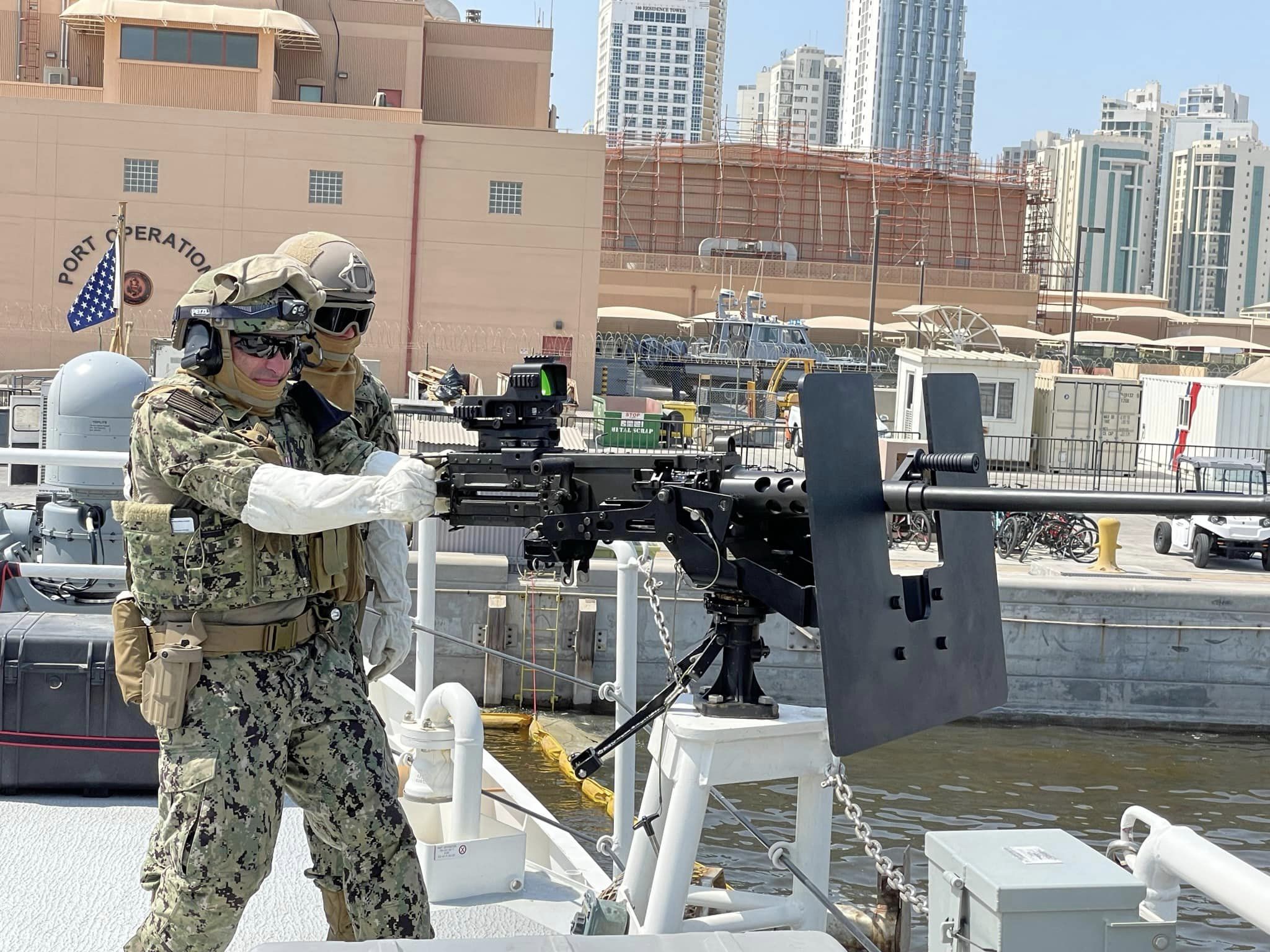
PATFORSWA has sophisticated gun sight on .50 cal.

I ran across the photo above on the PATFORSWA Facebook page. (The photo was posted in Oct. 2022.) For some time, I have been advocating for improvements over our existing crew served .50 caliber mounts, if not outright replacement, then at least better protection and greater accuracy. When I saw this photo, I was pleased to see this more sophisticated gun sight. I believe this is the sight I did a 2017 post about. The post was in reference to a report from Defense News. There is a night vision version of this sight.

I don’t have any knowledge about the extent of the use of this sight. It may have been a one-of-a-kind evaluation, but I found it encouraging. It is perhaps, something to look for. Would not hurt if these became standard on all cutters.

Late addition:

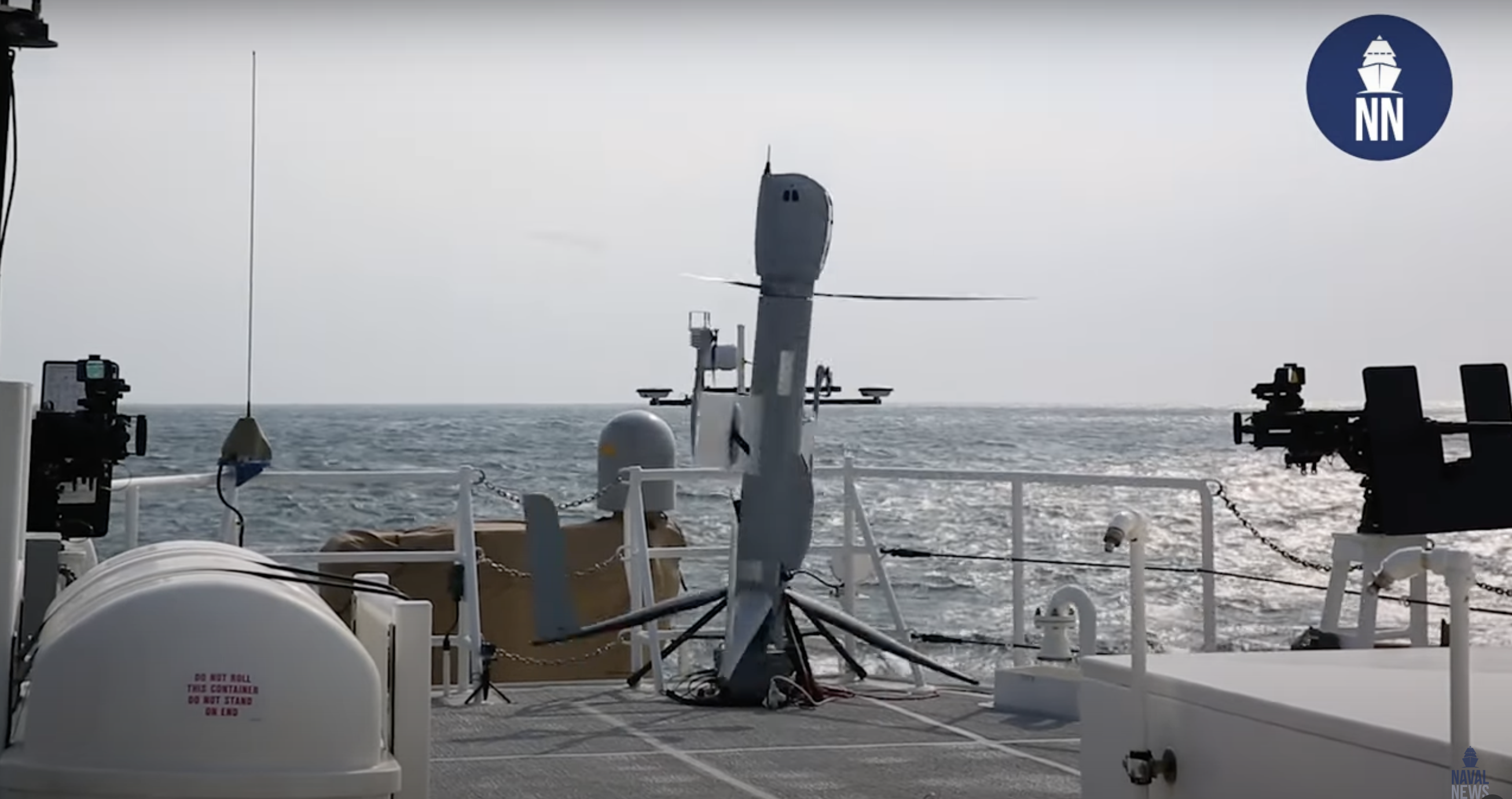
Screen grab. Flexrotor launching from USCGC Emlen Tunnell (WPC 1145). Also note the sight on the M2 .50 caliber machine gun mounts.


“Coast Guard Cutter Munro returns home following 118-day, 23,000-mile Western Pacific patrol” –CG News

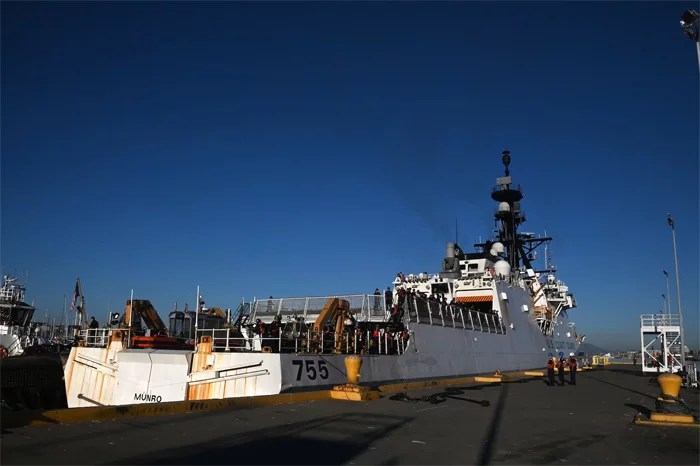
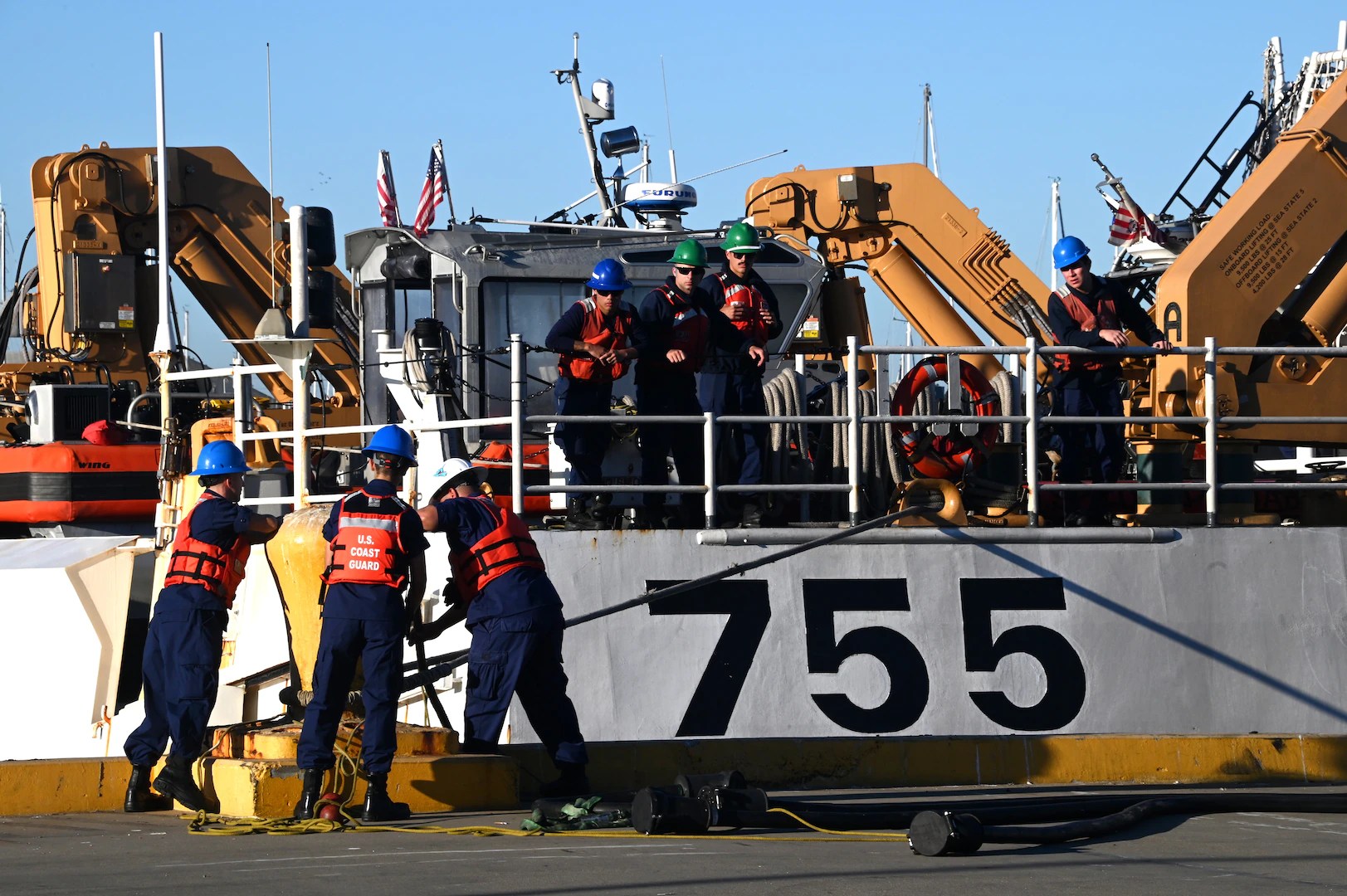
USCGC Munro returns to Alameda after Western Pacific deployment in support of the Seventh Fleet. USCG photo. 

Below is a Coast Guard News release. Notably this is the third National Security Cutter WestPac deployment this year. It provides a good summary of the cutter’s activities and touches on some interesting things happening in the Western Pacific including the Information Fusion Center in Singapore and the growing cooperation with the Japanese and S. Korean Coast Guards.

The link above includes lots more photos but I think the ones above and immediately below give a good view of the revised boat handling arrangement on the stern.

USCGC Munro, October 2023. USCG photo.

The photos below are from earlier reports linked in the news release.

Royal Navy vessel HMS Spey (P234) (foreground) conducts coordinated ship maneuvers with U.S. Coast Guard Cutter Munro (WMSL 755) Sept. 17, 2023, in the South China Sea. Munro is deployed to the Indo-Pacific to advance relationships with ally and partner nations to build a more stable, free, open and resilient region with unrestricted, lawful access to the maritime commons. (U.S. Navy photo by Chief Petty Officer Brett Cote)

(From left) U.S. Coast Guard Cutter Munro (WMSL 755), Royal Thai Navy ship HTMS Pattani (511), and Royal Thai Navy ship HTMS Klongyai (522) steam in formation during an at-sea engagement Sept. 1, 2023, in the South China Sea. Munro is deployed to the Indo-Pacific to advance relationships with ally and partner nations to build a more stable, free, open and resilient region with unrestricted, lawful access to the maritime commons. (U.S. Navy photo by Chief Petty Officer Brett Cote)


Oct. 18, 2023

Coast Guard Cutter Munro returns home following 118-day, 23,000-mile Western Pacific patrol

ALAMEDA, Calif. — The crew of U.S. Coast Guard Cutter Munro (WMSL 755) returned to their Alameda homeport Wednesday following a 23,000-mile, multi-month Western Pacific patrol operating in support of U.S. Navy’s Seventh Fleet by conducting multiple engagements with partner nations promoting a free and open Indo-Pacific.

Munro departed Alameda in June and was the Coast Guard’s third national security cutter deployed to the Indo-Pacific region this year.

The Indo-Pacific region stretches from the United States Pacific coastline to the Indian Ocean; it is home to over half of the world’s population and accounts for two-thirds of the global economy.

Throughout the 118-day patrol, Munro participated in international engagements in Japan, Republic of Korea, Malaysia, Singapore, and Brunei, and with ships at sea from the Royal Thai Navy and United Kingdom Royal Navy.

“This opportunity to work with our allies and partners throughout the Indo-Pacific increased our regional interoperability and sharpened our seamanship,” said Capt. Rula Deisher, Munro’s commanding officer. “We thoroughly enjoyed conducting professional exchanges, improving maritime capabilities, and strengthening maritime governance in the region by fostering global connectivity, facilitating cohesion and steps taken towards ensuring a free and open Indo-Pacific.”

While in Yokosuka, Japan, Munro hosted a luncheon aboard with several key members of the Japan Coast Guard to discuss Operation Solid Alliance for Peace and Prosperity with Humanity and Integrity on the Rule of law-based Engagement (SAPPHIRE). SAPPHIRE is a joint agreement between the U.S. and Japan Coast Guards signed in 2022 to enhance cooperation between the two sea services.

Munro’s crew had the opportunity to engage with members of the Korea Coast Guard (KCG) and tour the KCG’s Academy and training ship while in Gwangyang, Republic of Korea. At sea, Munro and the Korea Coast Guard vessel KCG 3011 (Badaro) conducted a joint harbor sail, including ship maneuvers and small boat operations.

Munro conducted a port call in Malaysia, the U.S. Coast Guard’s first cutter to visit the country since 2020. While there, crewmembers interacted with the Malaysian Maritime Enforcement Agency (MMEA) and conducted several subject matter expert exchanges at the MMEA’s training academy. Additionally, Munro hosted key leaders aboard for a luncheon and tour aboard the cutter.

At sea, Munro participated in the Southeast Asia Maritime Law Enforcement Initiative (SEAMLEI) in the Gulf of Thailand with Royal Thai and Malaysian Navies. SEAMLEI included mock boardings, flight operations, and formation steaming.

In Singapore, crewmembers engaged with members from the Information Fusion Center, U.S. Navy League, and Singapore Maritime & Port Authority personnel, as well as serving in a community relations event where the crew constructed desks and other furniture for a local school.

Munro’s last port call in the region was in Brunei, where the crew participated in Cooperation Afloat Readiness and Training (CARAT), the first U.S. Coast Guard asset to do so in 23 years. Munro worked with the Royal Brunei Navy, Royal Brunei Air Force, Brunei Department of Fisheries, Brunei Military Police, U.S. Marine Corps, and U.S. Navy, conducting subject matter expert exchanges and exercises. During the at-sea portion of CARAT, Munro trained with a Royal Brunei Navy Patrol Vessel, Royal Brunei Air Force S-70 helicopter, and U.S. Navy P-8, conducting shipboard maneuvers and search and rescue exercises.

Named after Signalman First Class Douglas Munro, Munro is one of four Coast Guard national security cutters homeported in Alameda. The cutter’s namesake is the Coast Guard’s only Medal of Honor recipient. He was awarded for his actions and sacrifice in the defense, rescue, and evacuation of a U.S. Marine battalion from Point Cruz at Guadalcanal in the Solomon Islands in 1942.

National security cutters are the largest and most technologically sophisticated cutters in the Coast Guard’s white-hull fleet. National security cutters can operate in the most demanding open ocean environments, including the North Pacific’s hazardous fisheries and the Southern Pacific’s vast approaches, where much of the American narcotics trafficking occurs. With robust command, control, communication, computers, intelligence, surveillance, and reconnaissance equipment, stern boat launch and aviation facilities, as well as long-endurance station keeping, national security cutters are an afloat operational-level headquarters for complex law enforcement and national security missions involving multiple Coast Guard and partner agency participation.

“US Navy LCS Successfully Fires SM-6 From MK 70 Payload Delivery System” –Naval News

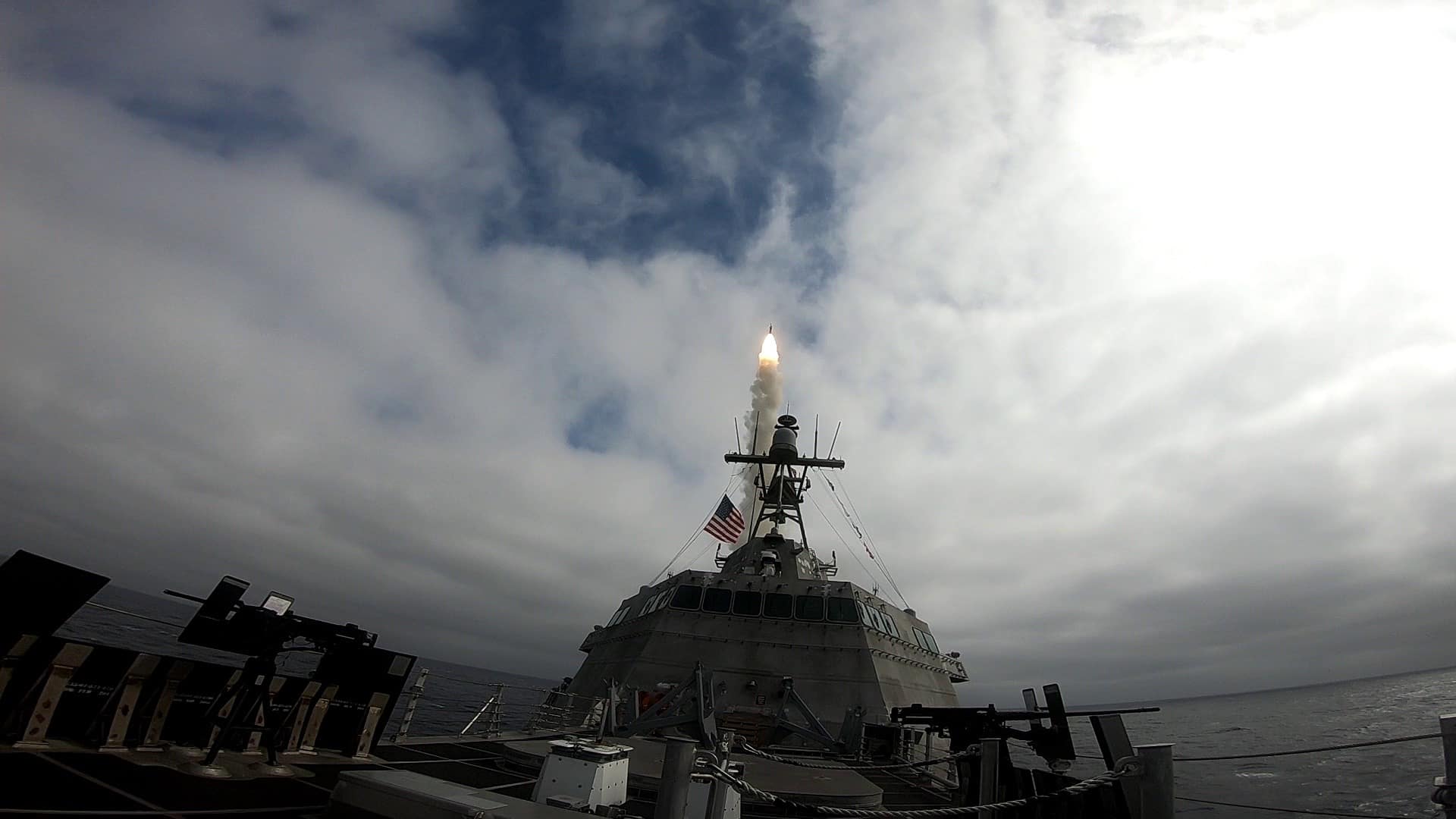
“USS Savannah (LCS 28) conducts a live-fire demonstration in the Eastern Pacific Ocean utilizing a containerized launching system that fired an SM-6 missile from the ship at a designated target. The exercise demonstrated the modularity and lethality of Littoral Combat Ships and the ability to successfully integrate a containerized weapons system to engage a surface target. The exercise will inform continued testing, evaluation and integration of containerized weapons systems on afloat platforms.” (I note this LCS, unlike Coast Guard cutters, has ballistic protection for the crews of its .50 caliber machine guns)

Naval News reports,

US Navy Littoral Combat Ship USS Savannah (LCS 28) successfully launched an SM-6 missile from a MK 70 Mod 1 Payload Delivery System placed on the ship’s helicopter deck.

This is significant for the Coast Guard, in that this could just as easily been a cutter. In fact, in some respects the cutters are better equipped than the LCS. It could give Coast Guard cutters a wartime role that would not require a lengthy refit in the yard, assuming the Navy could provide the expertise to augment the cutter’s crew with the necessary expertise.

There are other considerations that might be limiting, but the flight decks on the National Security Cutters are 50 by 80 feet and those of the Offshore Patrol Cutters will be a similar size, so there is sufficient deck space to host several 40x8x8 foot Mk70 containers, each with four cells each of which can contain up to four missiles (ESSM and possibly others).

In this particular exercise, an SM-6 was used against a surface target. The SM-6 was originally intended to be used for long range anti-air warfare (AAW) including terminal phase ballistic missile defense. but it also has a proven capability against surface targets, including an anti-ship capability.

The Mk70 can launch any of the weapons that can be launched from Mk41 vertical launch systems, meaning they can be used against ships, aircraft, submerged submarines, or targets on land.

The system could certainly be used on cutters acting alone to attack fixed facilities ashore. Already installed sensors might permit short range use against ships and aircraft.

But perhaps more importantly, there is concern for the depth of magazines on Aegis combatants and the difficulty of underway rearming. Cooperative Engagement Capability would allow missiles mounted in Mk70 launchers on cutters and/or other vessels to be launched by Aegis capable combatants against any threat they can target. This would allow relatively unsophisticated ships armed with the Mk70 systems to serve as offboard magazines for the Aegis combatants. 

The Australians might also be looking at this for the Arafura class Offshore Patrol Vessels (OPVs) as well. In fact, it could be applied to virtually any allied OPV or ship with a flight deck more than 40 feet in length.

“CHINA IS FIGHTING THE THIRD OPIUM WAR WITH FISH” –CIMSEC

Chinese fishing vessel fleet (Photo: The Maritime Executive)

CIMSEC has an interesting take on China’s use of its Distant Waters Fishing Fleet (DWF).

“If the U.S. is serious about “Great Power Competition,” it at least needs to stop scoring “own goals” by funding and emboldening the main competitor. But from the standpoints of both defense and security, these issues cannot be overlooked or marginalized. China is using its DWF globally in a manner that accrues tremendous benefits to the Chinese armed forces.”

The US Coast Guard is certainly trying to help other nations protect their EEZs from unauthorized exploitation by Chinese Fishing Vessels, but currently many nations license Chinese exploitation of their EEZ and there is no way we can prevent the Chinese from fishing in the waters beyond national boundaries. Even if the US stopped buying Chinese caught fish, there are other ready markets. The only result would be raising the cost of fish to US consumers.

What we need are alternative competitive provider of seafood. 

We could have a true win/win by helping the Compact of Free Association States, (Federated States of Micronesia (FSM), the Republic of the Marshall Islands (RMI), and the Republic of Palau) develop distant waters fishing fleets of their own. This would help keep their interests aligned with ours. Motivate them to keep the Chinese out of their EEZ, and direct more cash flow into these small, friendly and strategically important nations.