“Ukraine’s New Maritime Drone Is A Jet Ski” –Covert Shores

Click to enlarge. Photo credit: hisutton.com

Covert Shores reports,

Both Ukraine and Russia have developed ‘maritime drones’ (USVs – uncrewed surface vessels) with explosive charges. These one-way attack USVs, aka ‘kamikaze’ drones, have been used to attack ships and bridges. The initial design, first seen in September 2022, already employed jet ski parts. However the hull was bespoke. This latest USV is a minimally modified commercial jet ski.

Based on the blurred imagery, the jet ski used appears to be a Kawasaki STX type. The seats, handlebars and some unnecessary casings have been stripped off. Then some communication and control devices have been added.

This seems to show how easy it would be for terrorists to field an offensive unmanned surface kamikaze drone.

“US Coast Guard Seeks Bigger Role to Search, Board Vessels in Pacific” –gCaptain

The USCGC Oliver Henry (WPC 1140) crew arrives in Manus, Papua New Guinea, on Aug. 14, 2022, from Guam as part of a patrol headed south to assist partner nations in upholding and asserting their sovereignty while protecting U.S. national interests. The U.S. Coast Guard is participating with partners to support the Pacific Islands Forum Fisheries Agency-led Operation Island Chief and the larger Operation Blue Pacific through patrols in the Western Pacific in August and September 2022. (U.S. Coast Guard photo by SW3 Victor Villanueva, NMCB-FOUR)

gCaptain reports,

“The United States Coast Guard is in talks with Pacific Island countries to expand its maritime law enforcement role by allowing U.S. officers to board and search vessels suspected of illegal activity within their economic zones, officials said.”

This is about expanding and streamlining the shiprider program. In one case the Coast Guard already have permission to work with a national command center and act on behalf of another nation, Federated States of Micronesia, even if there is no shiprider physically aboard the cutter.

“More specifically, the agreement provides a coordinating mechanism and process for U.S. law enforcement personnel to work with the FSM National Police through command centers to receive approval from the FSM to act.”

Thanks to Lee for bringing this to my attention. 

“GAO Report on Coast Guard Disaster Preparedness” –USNI

The US Naval Institute’s news service reports a GAO study that looked at the Coast Guard’s provision of emergency food and water for their units.

“GAO is making three recommendations, including that the Coast Guard clarifies (1) emergency food and water requirements, and (2) procurement policies and procedures; and (3) ensures that its field units assess and document their emergency food and water needs. The Department of Homeland Security concurred with these recommendations.”

My thought is that this should be a part of a look by the Department of Homeland Security at where emergency food and water should be stored that would include all their agencies along with a catalog of water making and storage resources like ships that might be used in an emergency.

UNITAS 2023

I had expected that at least some Coast Guard units would participate in UNITAS 2023, July 11-21, given the Coast Guard’s prominent role in 4th Fleet, but I find no mention of CG participation.

Also bit disappointed we don’t have a listing of non-US units participating too.

Below is SOUTHCOM’s summary of the event. The incorporation of unmanned systems should have been very interesting.


Overview

UNITAS is an annual exercise conducted in Atlantic and Pacific waters around Central and South America. UNITAS LXIV included maritime and amphibious phases and, for the first time ever, included integrated operations of unmanned systems in the exercise. The exercise was held July 11-21, 2023, in Colombia.

The exercise develops and sustains relationships that increase the capacity of our emerging and enduring partners’ maritime forces to achieve common desired effects.

Training Scenarios

UNITAS’ challenging training addresses key aspects of multinational and combined operations such as technology standardization and common operating procedures. Training included scenarios addressing electronic warfare, anti-air warfare and air defense, anti-surface warfare, live fire, maritime interdiction, littoral operations, and amphibious operations.

UNITAS LXIV consisted of two concurrent phases: at sea and amphibious. The maritime domain included the littorals which incorporates not only the ocean, but also the area inland from the shore that can be supported and defended directly from the sea. The majority of the amphibious training took place along the coast where marines and naval infantry trained in support of greater naval operations. The amphibious phase consisted of riverine operations and culminated in a landing from naval vessels.

Unmanned Systems training: In April the Secretary of the Navy and the Chief of Naval Operations announced that the Navy will scale unmanned systems to the fleet level by operationalizing unmanned systems in the U.S. 4th Fleet area of operations. Specific to UNITAS LXIV, the Navy deployed and exercised several unmanned systems to enhance maritime domain awareness, conduct battle damage assessment in support of the UNITAS LXIV live-fire sink exercise, or SINKEX, and integrate unmanned system operations with partner nation navies. The deployment of multiple unmanned systems is new to UNITAS but will become the standard as NAVSOUTH/4th Fleet takes lessons learned to inform the Navy’s hybrid fleet coming in the next decade. Additionally, the U.S. Marine Corps employed unmanned systems in support of its Force Design 2030 concept and will refine tactics, techniques, and procedures (TTPs) to inform the service on operational employment.

Women, Peace and Security Symposium: UNITAS LXIV featured a forum on the topic of women, peace and security. The forum is part of a global effort to support the contributions of women in the defense and security sectors around the world. The program is a cornerstone to SOUTHCOM’s mission of promoting security partnerships across the Western Hemisphere.

Participating Countries

UNITAS LXIV featured 20 participating countries: Belize, Brazil, Canada, Chile, Colombia, Dominican Republic, Ecuador, France, Germany, Honduras, Jamaica, Mexico, Panama, Paraguay, Peru, Spain, South Korea, United Kingdom, Uruguay, and the United States.

Participating U.S. Forces

  • USS New York (LPD 21)
  • USS Cole (DDG 67)
  • USS Little Rock (LCS 9)
  • USS Pasadena (SSN 752)
  • USNS Burlington (T-EPF 10)
  • Patrol Squadron Five (VP 5)
  • Mobile Diving and Salvage Unit (MDSU) 2
  • Explosive Ordnance Disposal Mobile Unit (EOD) 612
  • Mine Countermeasures Group 3 (MCMGRU 3)
  • Expeditionary Mine Countermeasures EOD Company 61 (EODMU 61)
  • Helicopter Sea Combat Squadron 22 (HSC 22)
  • Helicopter Maritime Strike Squadron 70 Detachment 2 (HSM 70 Det 2)
  • Joint Communications Support Element (JCSE)
  • Fleet Surgical Team (FST) Eight
  • Meteorological Environmental Team (MET)
  • 3rd Battalion, 23rd Marine Regiment (3/23)
  • 4th Amphibious Assault Battalion (4th AABn)
  • 8th Combat Logistic Battalion (CLB 8)
  • 4th Combat Engineer Battalion (4th CEB)
  • Marine Medium Tiltrotor Squadron 774 (VMM 774)
  • Marine Light Helicopter Attack Squadron 775 (HMLA 775)
  • Marine Aerial Refueler Transport Squadron 234 (VMGR-234)
  • Marine Aircraft Control Group – 48 (MACG-48)
  • Marine Fighter Attack Squadron 112 (VMFA-112)
  • Commander, Destroyer Squadron 40 (COMDESRON 40)
  • Commander, Amphibious Squadron Four (COMPHIBRON FOUR)
  • U.S Marine Corps Forces South (MARFORSOUTH)
  • Special Operations Command South (SOCSOUTH)
  • U.S. Naval Forces Southern Command/U.S. 4th Fleet
  • U.S. Southern Command (USSOUTHCOM)

Background

UNITAS I took place in 1960 with forces from Argentina, Brazil, Chile, Colombia, Ecuador, Peru, Uruguay, the United States, and Venezuela. This year marks the 64th iteration of the world’s longest-running annual multinational maritime exercise. Additionally, this year Colombia celebrated the bicentennial of its navy, a historical milestone commemorating 200 years of the country’s maritime forces.

WMEC 210 Makes Three Drug Busts, Seizing 11,550 Pounds of Cocaine–Additional Observations on Eastern Pacific Drug Interdiction

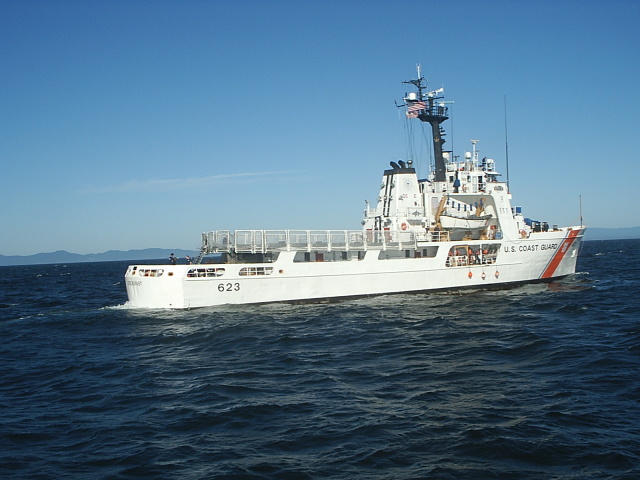
USCGC Steadfast (WMEC-623)

Below is a Coast Guard News Release. It is in fact a pretty typical news release. There are lots of these, and I usually don’t bother to publish them, but this one has prompted me to make some observations.

USCGC Steadfast had a very successful patrol. In fact, she did as well as any National Security cutter might have done despite the fact, she is less than a quarter the size of an NSC. Despite her age, size, and relatively slow speed, she has the critical assets necessary for success–good boats, an airborne use of force helicopter, and a crew that knew how to use them. Conclusion: It is a numbers game. Not every cutter needs to be 4500 tons, because we need numbers and smaller cutters can do the job. (I do like the fact that the newer cutters are faster.)

Looking back on six months’ worth of Coast Guard News reports (60 pages) it looks like a disproportionate part of the Eastern Pacific drug interdiction patrols are being done by PACAREA cutters. It is counter intuitive, but LANTAREA ships are actually much closer to the patrol areas and LANTAREA has many more large patrol cutters (NSCs and MECs: LANT 25 / PAC 9).

PACIFIC AREA CUTTERS: 

ATLANTIC AREA CUTTERS:

LANT Cutters do all the drug interdiction in the Caribbean and Migrant interdiction as well but, in addition to the 25 large ships, LANTAREA also has something like 35 Webber class cutters (in addition to the six in PATFORSWA), with 19 or 20 in the 7th District alone. By comparison, PAC AREA, with 84% of the entire US EEZ, has only 13 Webber class, four in the 11th District, six in the geographically huge 14th District that must also assist the nations of the Compacts of Free Association, and three in the 17th District (Alaska). The 13th District, where PACAREA’s three 210s, that are apparently doing most of the Eastern Pacific drug interdiction work are based, has not a single Webber class. Conclusion: PACAREA needs more ships than currently assigned or planned. The Webber class have probably made it possible to move more MECs to the Pacific. In the meantime, LANTAREA should be sending more ships to the Eastern Pacific drug transit zone.


July 23, 2023

U.S. Coast Guard Cutter Steadfast returns home after 70-day counternarcotics patrol in Eastern Pacific

ASTORIA, Ore. – The U.S. Coast Guard Cutter Steadfast (WMEC 623) and crew returned to homeport, Friday, after a 70-day counternarcotics patrol in the Eastern Pacific.

Steadfast’s crew disrupted the flow of illegal narcotics on three separate occasions during their patrol, preventing a combined total of more than 11,550 pounds of cocaine from reaching the U.S.

The crew steamed more than 16,000 nautical miles conducting training, law enforcement missions, providing search-and-rescue coverage, and conducting helicopter operations while patrolling the waters between their Astoria homeport and the international waters off the coasts of Central and South America.

While patrolling in the Eastern Pacific, June 9, Steadfast’s cutter boat crew detected a suspected narcotics-smuggling panga-style vessel. Coast Guard personnel conducted a boarding on the vessel, resulting in the interdiction of 2,200 pounds of cocaine.

On June 18, Steadfast was notified by a Customs and Border Protection Maritime Patrol Aircraft and crew (MPA) of another suspected narcotics-smuggling vessel. Steadfast personnel launched the helicopter, which was able to visually detect the target. Steadfast’s boarding team interdicted the 50-foot low profile vessel (LPV), a type of vessel specifically designed for avoiding radar detection, which make them difficult to detect. Steadfast personnel were able to interdict and seize 6,864 pounds of cocaine from the vessel.

During routine operations on July 9, Steadfast personnel were notified by MPA crew of a suspected narcotics-smuggling vessel transiting international waters. Steadfast launched a cutter boat with a boarding team and HITRON helicopter and aircrew to interdict the vessel. The target vessel attempted to evade the pursuit crew and began jettisoning suspected packaged narcotics overboard. The gunner aboard the HITRON helicopter used disabling fire to stop the engines of the smuggling vessel, ending the pursuit. Steadfast personnel recovered the jettisoned contraband, resulting in the seizure of another 2,464 pounds of cocaine.

The seized contraband was offloaded in San Diego during Steadfast’s transit home.

The ongoing battle against drug cartels in the Eastern Pacific theater demands united efforts on all fronts. Between initial detection, gathering intelligence, interdiction, and case prosecution, the Coast Guard works closely with partner nations and other U.S. agencies to interrupt the flow of illegal narcotics and chip away at the influence of cartels.

“This patrol marked another epic adventure for the crew of Steadfast,” said Cmdr. Brock Eckel, Steadfast’s commanding officer. “The crew’s teamwork and dedication were key to our operational success and their camaraderie made memories of a lifetime at sea and in exotic foreign ports. In keeping with the traditions of the sea services, I am also proud to have inducted 55 pollywogs into the glorious realm of Neptunus Rex’s Kingdom as Honorable Shellbacks.”

Notably, Steadfast became the second known U.S. military vessel to cross the equator on the 4th of July, earning 55 crew members the title of “Star-Spangled Shellbacks.” Steadfast’s crew was able to participate in a line crossing ceremony that solidified crew camaraderie and upheld the long-practiced traditions of seagoing services.

In addition to the ship’s successes in the counternarcotics arena, Steadfast and crew enjoyed several new and exciting experiences in other areas. During their port call in Panama City, Steadfast crew members spent time bolstering relationships with the Panamanian Navy, participating in a volleyball tournament and a barbeque. One of the ship’s small boat crews also rescued a sea turtle that had been entangled in fishing gear, cutting it free and releasing it back to the sea.

Commissioned in 1968, Steadfast is a 210-foot Reliance-class medium endurance cutter homeported on the Oregon coast. The cutter and crew deploy along the western seaboard from North America to South America conducting missions such as living marine resource law enforcement, counter-narcotics and migrant smuggling, and search-and-rescue operations.

“Navy orders 24 unmanned aerial vehicles (UAVs) and 62 sensor payloads in $32 million deal to Boeing Insitu” –Military+Aerospace Electronics

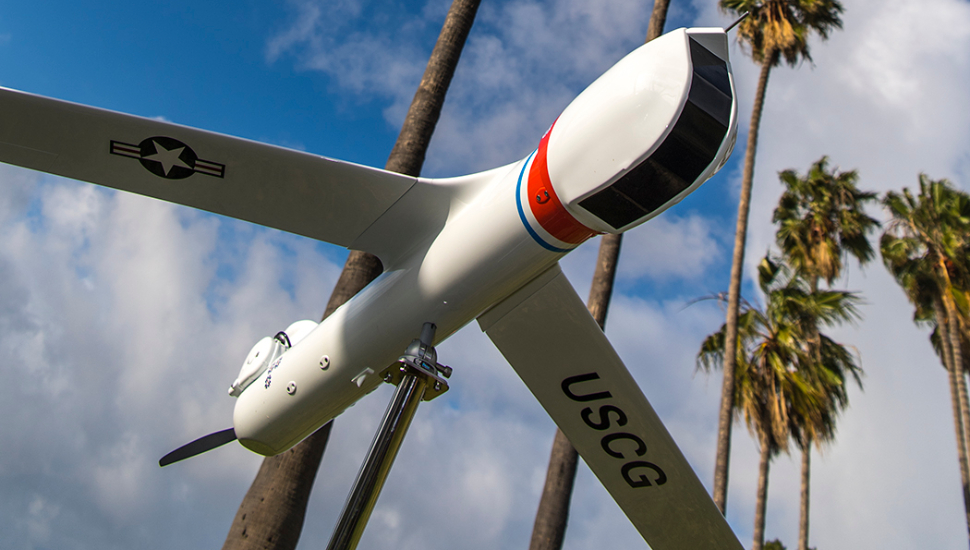
Insitu Scan Eagle in Coast Guard colors

Military+Aerospace Electronics reports,

Officials of the Naval Air Systems Command at Patuxent River Naval Air Station, Md., announced a $32 million order late last month to Boeing Insitu Inc. in Bingen, Wash., for four RQ-21A Blackjacks, 20 ScanEagles, 62 ScanEagle payloads and turrets, as well as support equipment and spare parts.

Could some of these systems be going to the Coast Guard? And, if not, why not? The Coast Guard regularly buys equipment, including aircraft, by adding on to DOD contracts.

The Coast Guard is, I believe, still contracting for vendor operated Scan Eagles. It’s about time they were integrated into the service and operated by enlisted Coast Guardsmen.

I suggested the Coast Guard should take a look at this system in 2011. Probably not because of my suggestion, but the Coast Guard started testing the systems at least as early as 2014. Scan Eagle was flown from USCGC Bertholf and made its “first bust” in 2014, nine years ago. The decision to put Scan Eagle on the National Security Cutters was made in 2020. Presumably Scan Eagle or something similar will be on the Offshore Patrol Cutters as well. The Coast Guard still needs long range shore based UAS, and I think there is a good case for small shore based UAS at the group level.

Point being, we are passed the initial research stage. We know there will be UAS operated by the Coast Guard for the foreseeable future. The number of unmanned systems in the Coast Guard should grow rapidly.

Scan Eagle was developed to be operated by commercial fishermen from Tuna boats. It’s not rocket science. It should be obvious the Coast Guard needs to own the equipment and develop in house unmanned system expertise.

Buy the equipment. Make unmanned operation and maintenance a rating or a special qualification and career path. At least follow the Navy/Marine Corps lead.

“US Navy ‘operationalizes’ drones in 4th Fleet’s UNITAS event” –Defense News

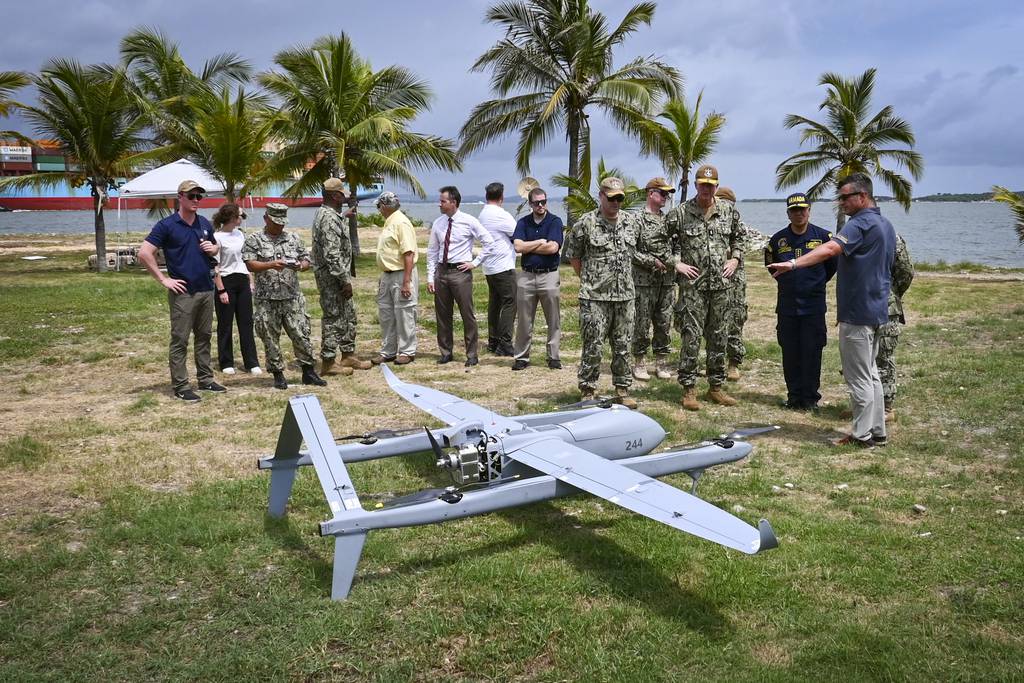
Personnel from the U.S. and Colombian navies attend a demonstration of Aerosonde MK4.7 Hybrid Quad drone during UNITAS on July 16, 2023. (MC1 Hunter Harwell/U.S. Navy)

Defense News reports,

“The U.S. Navy leveraged air and surface drones throughout its two-week UNITAS 2023 naval exercise near Latin America, the first major event since service leadership announced the region would host the sea service’s second unmanned operations hub.”

The Coast Guard certainly has an interest in 4th Fleet’s use of unmanned systems since their area of responsibility (AOR) includes the Eastern Pacific drug transit zones and the Caribbean.

Apparently, not all the systems are in place yet.

“Some of the same systems will return this fall for operations and exercises in the Caribbean and Eastern Pacific Ocean, he added.”

Importantly 4 Fleet is developing a “mesh network that compiles a detailed common operating picture of the region — then AI tools could help flag areas where potentially problematic activities are happening.”

Hopefully we will see video of the SINKEX as recorded by the UAS.

“Navy’s New 381-Hull Fleet Plan Recommits To Big Amphibious Warfare Ships” –The Drive

Five white 311-foot cutters of Coast Guard Squadron Three, assigned to support Operation MARKET TIME tied up alongside Navy repair ship USS Jason (AR-8) at Naval Station Subic Bay in the Philippines, 4 August 1967. From inboard to outboard:
USCGC Half Moon (WHEC-378);
USCGC Yakutat (WHEC-380);
USCGC Gresham (WHEC-387);
USCGC Barataria (WHEC-381) and
USCGC Bering Strait (WHEC-382)
U.S. Coast Guard Historian’s Office. Photo by CDR Richard Morse, USCG, Commanding Officer USCGC Barataria (WHEC-381)

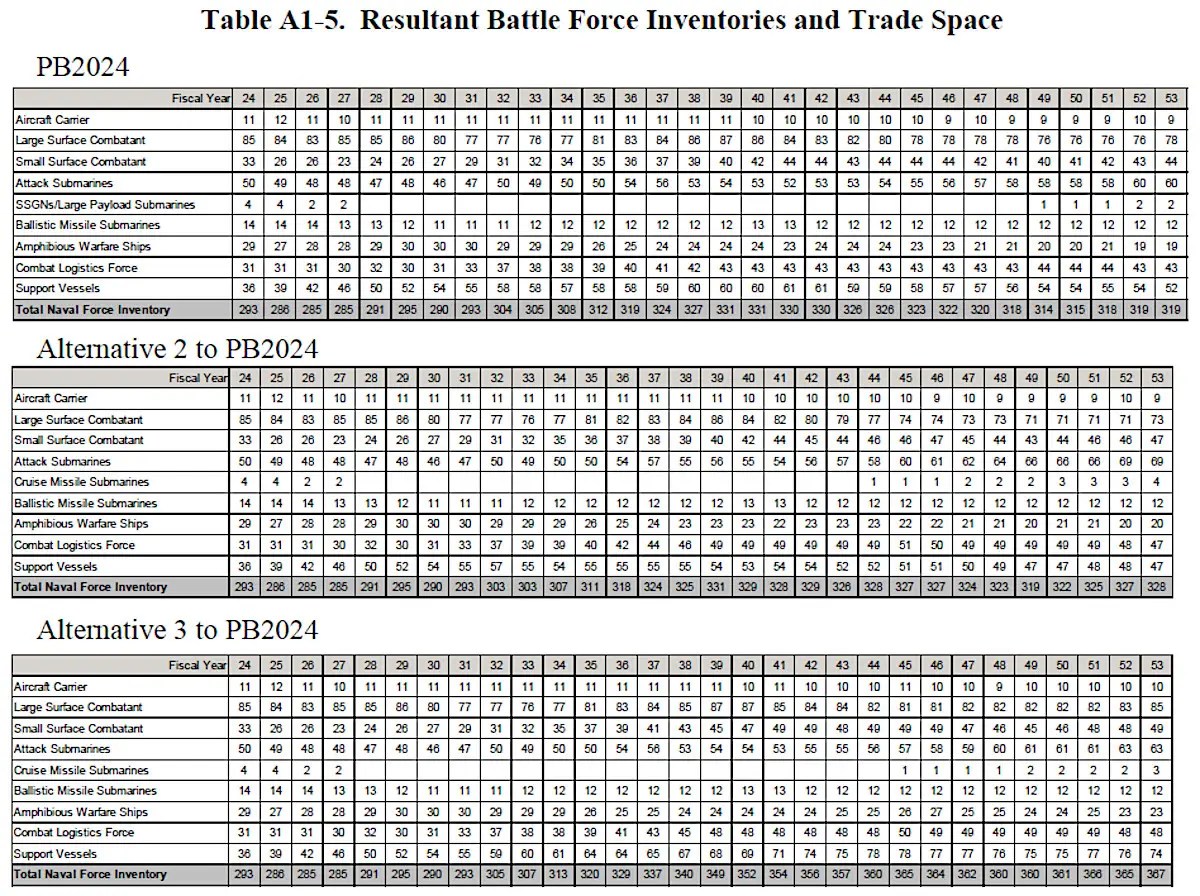
The Drive has one of several posts reporting on the new Navy Fleet Plan and Shipbuilding projections. The US Naval Institute News report is here.

This brings to mind two of my favorite grips:

  • First that he Coast Guard has no similar long-term plans, and second,
  • Coast Guard assets are not considered in as part of the “Battle Force.”

A good part of the reason our ships soldier on long after they should have been replaced may be because we have not been informing the executive branch and congress about our long-term needs.

I can imagine an adverse reaction to my suggestion that cutters should be part of the “Battle Force”, but you need to understand what the Navy includes in that category. These are not all high-powered warships. Currently the US Navy “Battle Force” is 299 ships. Of those, 59 are USNS ships that are almost completely unarmed, have civilian crews, and no electronic countermeasures. They include oilers, logistics ships, expeditionary fast transports, towing salvage and rescue ships, and ocean surveillance ships. In addition, it includes some commissioned ships that are not really warships, like command ships and expeditionary base ships. The relatively small future Landing Ship Medium is expected to be included as well.

If we have a naval conflict with a major power (e.g., China) the Navy is going to need the Coast Guard’s help. Cutters will help enforce blockades, round up hostile merchant shipping and fishing vessels, rescue crews from sunken ships, play host to unmanned systems, provide harbor defense and force protection, and probably ultimately be equipped as second line warships.

Cutters count, so they should be counted.  

Vessels I would include in the count would include at least all the Icebreakers, National Security Cutters, Offshore Patrol Cutters, and Medium Endurance Cutters and possibly ocean-going buoy tenders and Webber class WPCs.

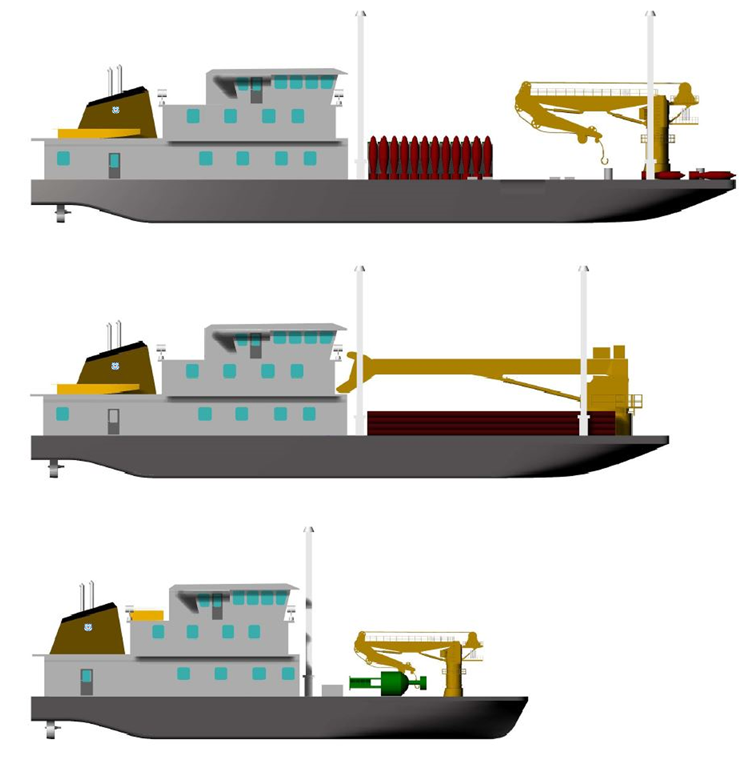
“Birdon America awards first Waterway Commerce Cutter (WCC) subcontracts” –Marine Log

Shown above are Coast Guard indicative designs of a river buoy tender, inland construction tender and inland buoy tender.

Marine Log reports,

Denver-based Birdon America, Inc. a subsidiary of Australia’s Birdon Pty Ltd, reports that it has awarded a first round of major subcontracts in support its $1.187 billion contract to design and build 27 Waterways Commerce Cutters (WCC) for the U.S. Coast Guard.

Follow the links to previous reporting.

Thanks to Paul for bringing this to my attention.

“AIS: Harnessing state of the art maritime solutions to uncover hidden fishing vessel movements in the Pacific” –a webinar

For those who might be interested

I am passing along this announcement. This does not constitute and endorsement. I have no idea who these people are.

Illegal, unreported and unregulated (IUU) fishing for tuna in the Pacific region is estimated to amount to almost 200,000 tonns annually. Fisheries are of critical importance to the region with many nations working collaboratively to combat IUU fishing and increase traceability.

Learn how Starboard Maritime Intelligence and Spire Maritime have joined forces to help tackle this issue in the Pacific Ocean, using real-time AIS, AIS Position Validation, algorithms, and machine learning. AIS Position Validation is the new and unique data set from Spire Maritime that independently calculates a vessel’s location at the time of AIS transmission, even when AIS messages do not include valid GPS data.

Join our webinar on 9th August 11AM UTC with Iain Goodridge, Senior Director of RFGL at Spire, and Joseph Corbett, Chief Data Scientist at Starboard to find out how you can partner with our solutions to combat this growing concern. Learn how real-time AIS, and AIS Position Validation along with algorithms and machine learning, can be used to:

  • Understand fishing vessel manoeuvres and confirm compliance with measures to combat IUU fishing.
  • Uncover more intel on the location of fishing vessels that have gone dark.

AIS Position Validation:

Uncover vessel behavior anomalies and spoofing, in real time.

If you are interested to learn more about all the capabilities of AIS Position Validation, and how this unique data set allows you to independently validate a vessel’s reported position, detect vessels not reporting a validated GPS position or detect vessels reporting an incoherent position, then don’t hesitate to get in touch with us.

Best regards,

Spire Maritime team