“Beware the Explosive Vessels” –Real Clear Defense

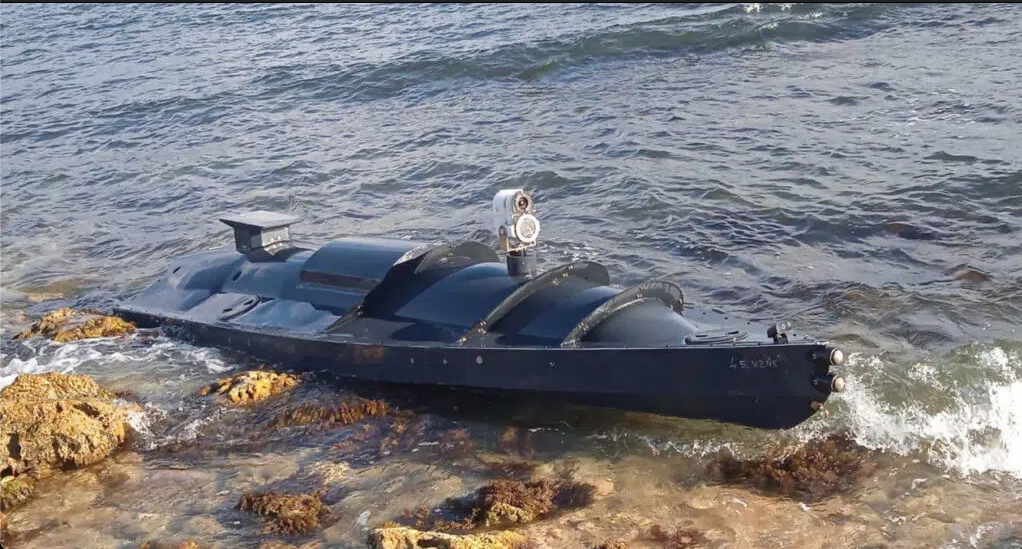
Image of the suspected Ukrainian USV circulating on Russian social media. Image via Naval News

Real Clear Defense suggests that the damage to the Kerch bridge connecting Crimea to Russia may have been done by an Unmanned Surface Vessel (USV) like the one reportedly found aground earlier.

They go on to talk about explosive laden surface vessels of all sizes, both as potential weapons and potential threats, and how hard they can be to counter.

We have talked about this threat several times, but this post offered an example I had not previously mentioned.

“…when a ship filled with explosives bound for Europe during World War I collided with another vessel in Halifax Harbor in 1917 and caught fire, the resulting explosion obliterated everything within a half-mile radius, inflicted copious damage at greater distances, and created a 60-foot tsunami that wiped out whole communities. That vessel had about 2% of the cargo capacity of today’s largest cargo ships.”

“Japan starts operations with SeaGuardian drone…” –Defense News

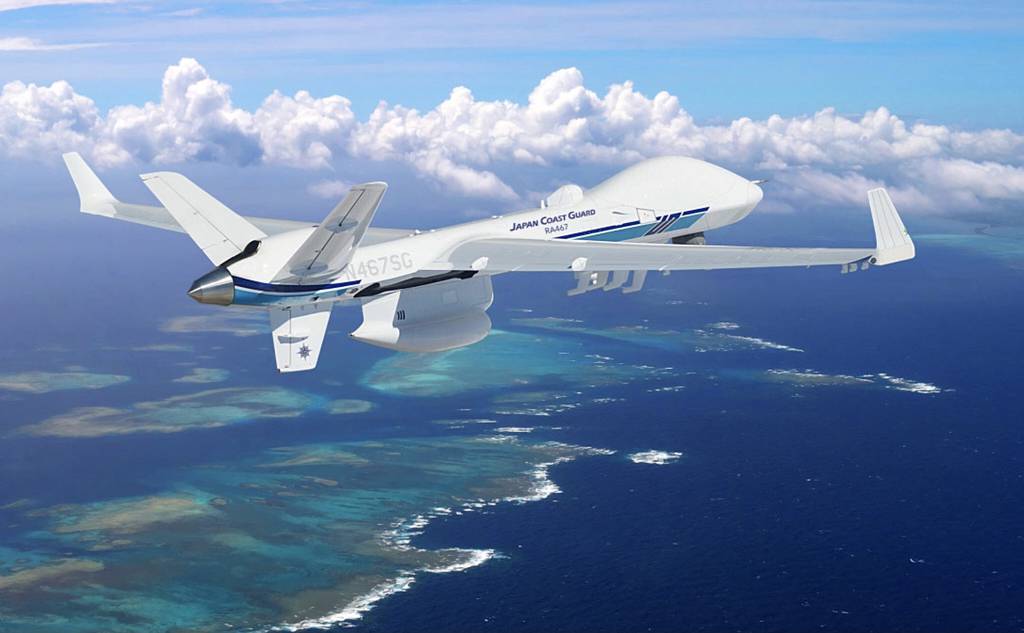
An artist’s rendering shows the Japan Coast Guard’s SeaGuardian drone. (General Atomics Aeronautical Systems)

Defense News reports that the Japanese Coast Guard has begun operational use of the MQ-9B Sea Guardian UAS.

The SeaGuardian features a multimode maritime surface-search radar with an inverse synthetic-aperture radar imaging mode, and an automatic identification system receiver. It is fully compliant with STANAG-4671, which is NATO’s airworthiness standard for unmanned aircraft, and it features a collision-avoidance radar to enable operations in civil airspace.

Combined Maritime Forces

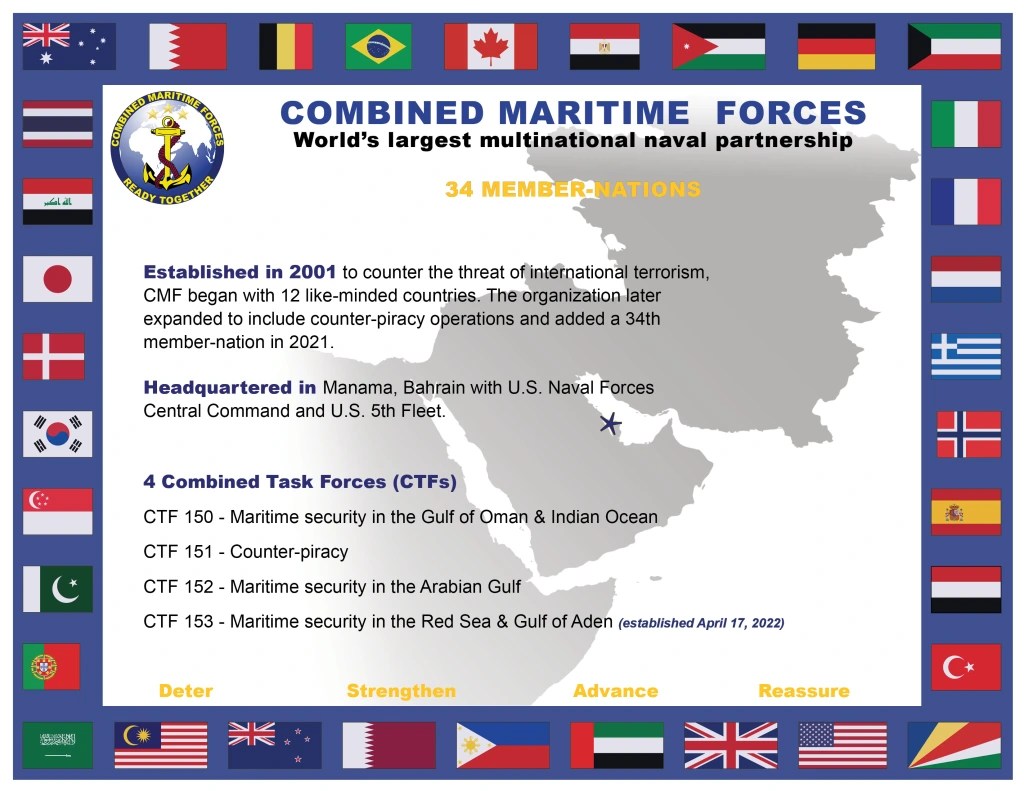
Thought it would be worthwhile to take a look at the Combined Maritime Forces (CMF) website, not just because of what they have been doing, but also because of what they could be, a model for multilateral maritime law enforcement organizations in other areas as well.

Recently we have had reports of Webber class FRCs doing drug interdiction under CTF150.

The CMF News portion of their website has even more USCG stories. These are from only the last six months.

Earlier I proposed a “Combined Maritime Security Task Force Pacific.” CMF could provide a model for creation of similar maritime law enforcemernt task forces in several locations.

CMF is a creation of Fifth Fleet. It has different task forces for different geographic areas. Potentially other geograph fleets could form similar organizations.

  • 7th Fleet might sponsor one CMF task force for the South China Sea and another for Oceania
  • 4th Fleet might sponsor a task force for the Eastern Pacific drug transit zone and another for the Caribbean
  • 6th Fleet one for the Gulf of Guinea

These would be law enforcement alliances which should be more welcomed than military alliances. They might be extended to include SAR, disaster response, and Marine Environmental Protection.

“Eastern Shipbuilding Group Cuts Steel for Fourth U.S. Coast Guard Offshore Patrol Cutter” –Eastern Shipbuilding Group

Below is a news release from Eastern Shipbuilding group.

FOR IMMEDIATE RELEASE, October 18, 2022

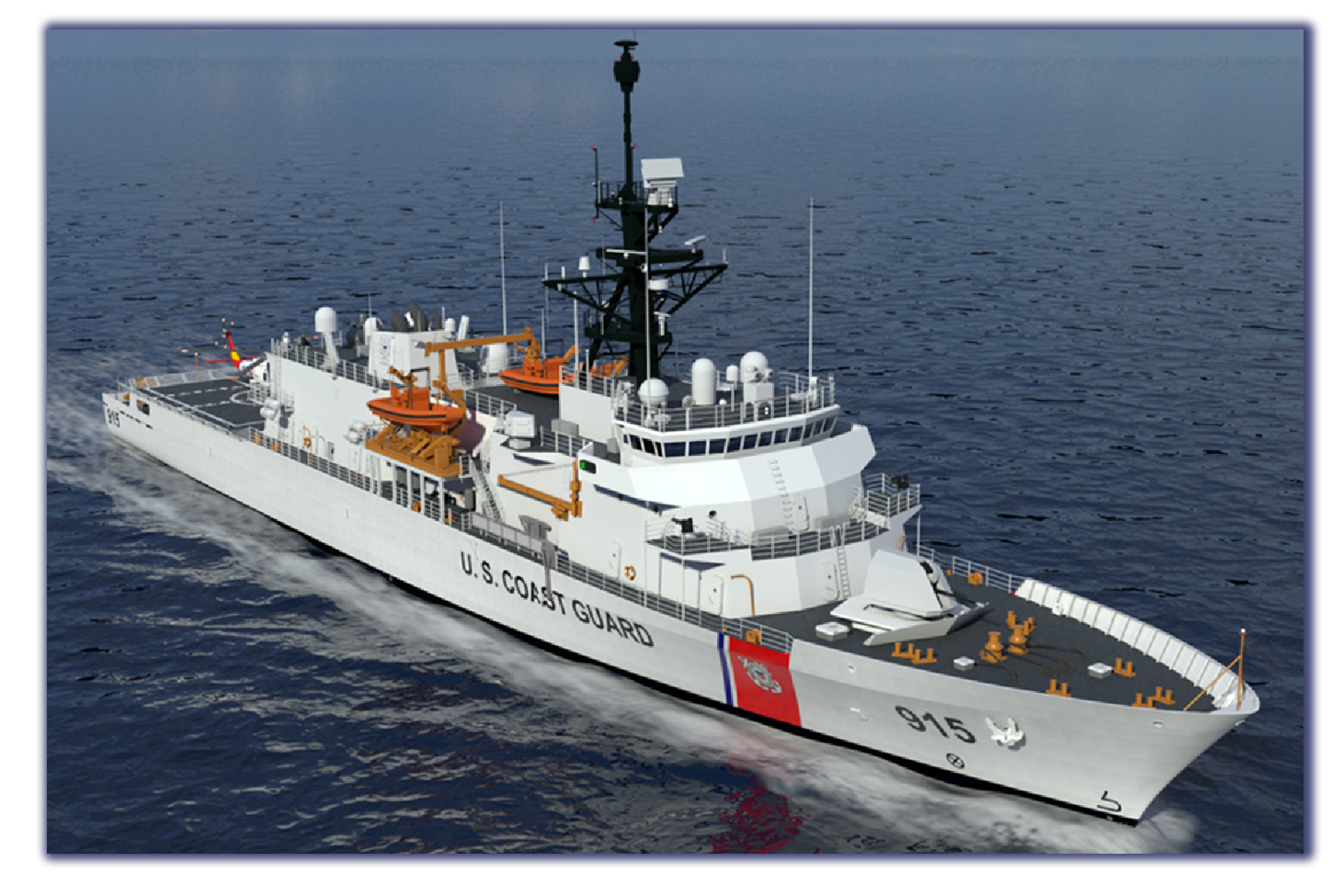
Eastern Shipbuilding Group Cuts Steel for Fourth U.S. Coast Guard Offshore Patrol Cutter

PANAMA CITY, FL – On Monday, October 17, 2022, Eastern Shipbuilding Group, Inc. (ESG) commenced construction of United States Coast Guard Cutter (USCGC) RUSH (WMSM-918) – Hull 4 of the Heritage Class Offshore Patrol Cutter (OPC) program. The occasion was observed by leaders of the United States Coast Guard Project Resident Office at ESG’s Allanton Shipyard where the first steel plates were cut by ESG personnel in the state-of-the-art 103,000 sq ft steel and aluminum processing facility.

“The first four offshore patrol cutters are fully under production for the U.S. Coast Guard thanks to the steadfast commitment of our skilled professionals and partners,” said Joey D’Isernia, President of Eastern Shipbuilding Group. “USCGC RUSH is part of a class of ships that boast multi-mission capabilities and the endurance to carry the men and women of the USCG for more than half a century. With more than 45 years of steel shipbuilding experience we promise the highest quality control, and we look forward to delivering the lead vessel of the class next year.”

In addition, the U.S. Coast Guard modified the contract “with Eastern Shipbuilding Group (ESG) on May 20 so installation of the Athena combat weapons system and multi-mode radar system will be completed during the production phase of the OPC. The Athena system, radar and armament of the OPC are provided to the Coast Guard as Navy type-Navy owned government furnished equipment.

“Prior to this modification, installation of both systems was to occur after contract delivery while each cutter was in its homeport. The Navy has completed development, integration and testing of the Athena and radar systems, enabling the Coast Guard to shift to production-phase installation. Performing this work prior to delivery reduces the technical risks associated with post-delivery installation and delivers mission-ready OPCs to the fleet as soon as possible.”

By implementing these modifications now, ESG expects that it will deliver capability years ahead of a post-delivery integration strategy which is a massive benefit to taxpayers and national security. This additional scope of work results in a new delivery date in 2023 for the lead cutter Argus which is 75% complete. The second OPC is approximately 50% complete, and the third is 25% complete. The fourth OPC is scheduled for delivery in 2026.

USCGC Healy Propulsion Motor Replacement

On Aug. 18, 2020, the U.S. Coast Guard Cutter Healy (WAGB-20) suffered a fire in the ship’s main propulsion motor while on a deployment to the Arctic. The Healy was taken to a dry dock in Vallejo, California, for repair. A replacement motor was stored at the Coast Guard Yard in Baltimore. The spare motor was removed from its storage facility, craned onto a barge and sent through the Panama Canal to the dry dock. Installation of the propulsion motor took approximately a month and required removal of the ship’s dual hulls to complete. U.S. Coast Guard video by Petty Officer 2nd Class Jordan Akiyama and Senior Chief Petty Officer NyxoLyno Cangemi

An interesting video if you have not seen it before. Shows replacement of one of Healy’s main propulsion motors after a fire. Fortunately the Coast Guard had bought a spare when the ship was built. Work was done in Vallejo, CA, in the same yard that has been working on Polar Star.

Thanks to Bill for bringing this to my attention. 


The AN/SPQ-9B X-band pulse-Doppler radar

The AN/SPQ-9B radar. (Photo: Northrop Grumman)

Military Aerospace Electronics reports, “DRS Laurel to build missile-defense radar systems to protect Navy surface warships from anti-ship missiles”,

U.S. Navy missile-defense experts are asking the DRS Laurel Technologies segment of Leonardo DRS in Johnstown, Pa., to provide AN/SPQ-9B shipboard anti-ship missile defense (ASMD) radar systems to help protect U.S. Navy surface warships from enemy anti-ship missiles.

Officials of the Naval Sea Systems Command in Washington announced a $8.7 million order to DRS Laurel last month to build AN/SPQ-9B radar systems and support equipment.

Bertholf class NSCs mount the AN/SPQ-9B and I suspect this order may include the system for NSC#11. It is one of the things that has made them better equipped than the Littoral Combat Ships. I had been under the impression the AN/SPQ-9B was a fire control radar, it is associated with weapon systems, but reading the description I decided to look for a better information and found the Navy’s description here.

Description
The AN/SPQ-9B is an X-Band, pulse Doppler, frequency agile radar which was designed specifically for the littoral environment. It has a very high clutter improvement factor supporting a very low false track rate in the littorals and in high clutter environments.

The AN/SPQ-9B scans out to the horizon and performs simultaneous and automatic air and surface target detection and tracking of low flying Anti-Ship Cruise Missiles (ASCMs), surface threats and low/slow flying aircraft, UAVs and helicopters.

It now almost 30 years old, but is apparently still being upgraded and put on new construction.

The radar is installed on CVN-68, LPD-17, CG-47, WMSL-750, LHD-1 and LHA-6 ship classes. The radar is also to be installed on DDG-51 class, DDG 39, 41, 42 (AUS), DDG AMOD, CG MOD (CG 63 and follows). CVN-68, DDG-51, LPD-17, CG-47, LHD-1, LHA-6 ship classes will receive PDD (periscope detection and discrimination–Chuck) Upgrade.

I have seen nothing to indicate the OPCs will have this system.

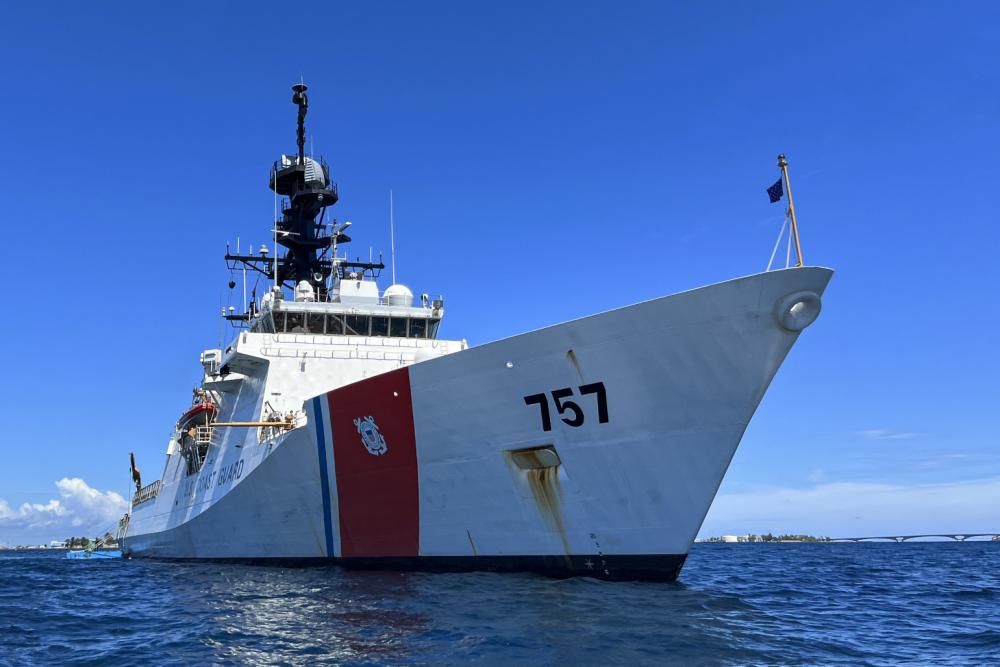
U.S. Coast Guard Cutter Midgett (WMSL 757) sits anchored near Malé, Maldives, on Sept. 24, 2022. The cutter spent several days in the Maldives for a port-call. (U.S. Coast Guard photo by Petty Officer Steve Strohmaier)

In the photos, the AN/SPQ-9B is visible on the forward side of the mast near the top. The multimode radar, the Hensoldt TRS-3D (AN/SPS-75) is higher and on the aft side of the mast. The multimode radar is used for helicopter control, so it needs to look aft.

US Coast Guard cutter Munro transits the Taiwan Strait with US Navy destroyer USS Kidd in August. US Navy

Boom Defense, Everything Old is New Again

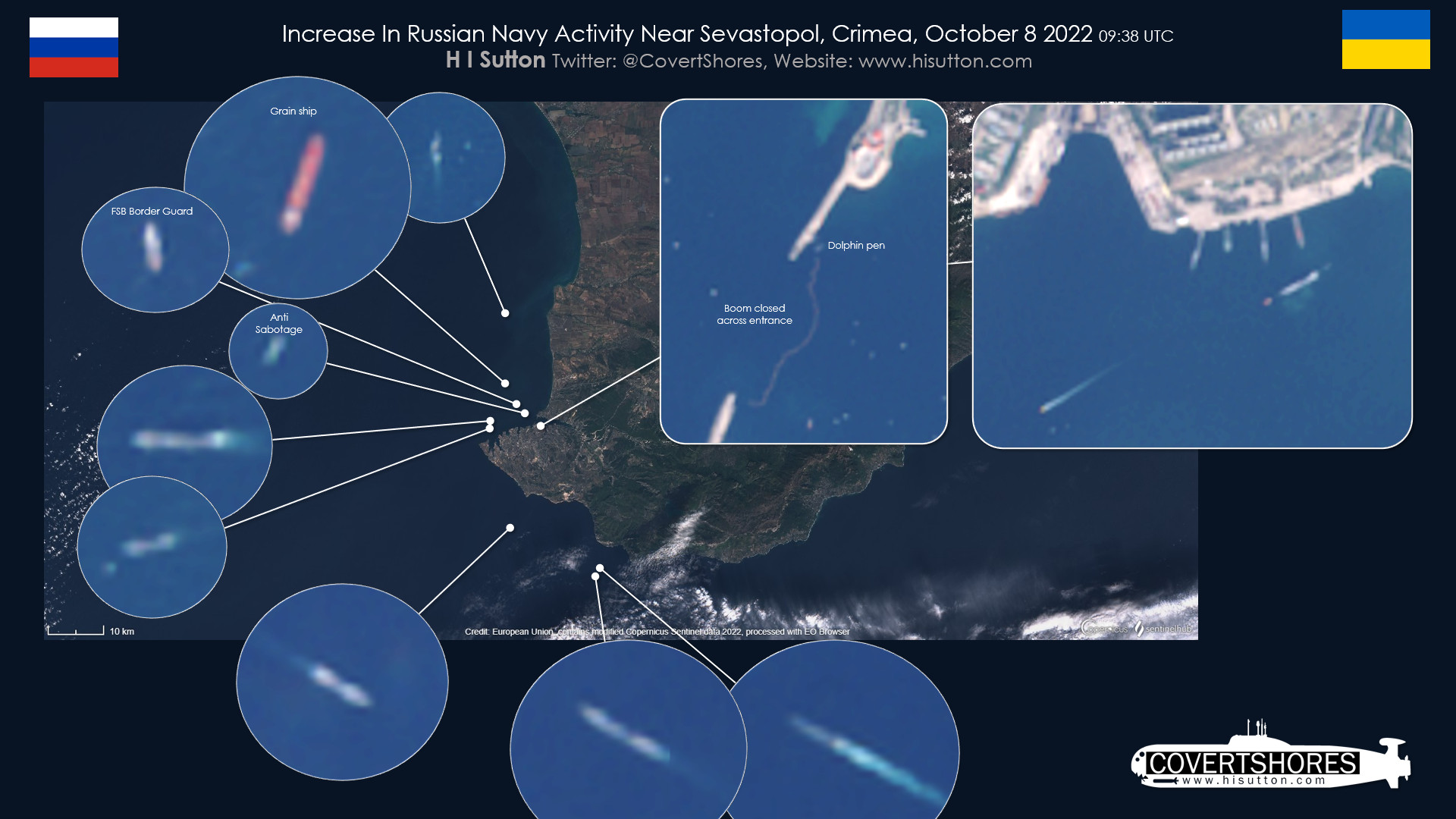
A little footnote on the War in Ukraine. This is from Covert Shores “Attack On Kerch Bridge: Initial Geolocation Of Damage.” A section at the bottom of the post is a look at increased Russian activity after the attack on the bridge.

Take a look at the detail picture of the harbor, above, top, near the center, second from the right. The thin wavy line is a boom or net accross the entrence to Sevastopol harbor.

Steel floats for anti-submarine nets, 1953

Anti-submarine nets were common during WWII, and booms go back to at least the American Revolution if not to antiquity. This may be in response to Ukraine’s apparent use of unmanned surface vessels. I have seen some barriers deployed around aircraft carriers moored at North Island in San Diego.

What does this have to do with the Coast Guard? Buoy tenders were commonly used as Net Tenders during WWII, opening and closing the anti-submarine nets.

Armed unmanned surface and subsurface vehicles are providing a new reason to deploy nets and barriers. We may see a return of these systems.

“U.S. Naval Forces in Middle East Interdict $29 Million in Illegal Drugs” –Seapower

USCGC Charles Moulthrope arrives at Naval Station Rota, Spain. After a two-week transit across the Atlantic Ocean, the cutter arrived in-port to resupply.

The Navy League’s on-line magazine, Seapower, reports,

A U.S. Coast Guard fast response cutter seized an estimated $29 million worth of illicit narcotics from a fishing vessel while patrolling the Gulf of Oman, Oct. 12, two weeks after another sizable interdiction, U.S. Naval Forces Central Command Public Affairs said in an Oct. 13 release.

This is getting to be routine. The same ship seized a fishing vessel on Sept 27 with $85M in illegal drugs, presumably the “sizable interdiction” referred to above, and USCGC Glen Harris (WPC 1144) , an another PATFORSWA cutter, has already made three drug interdictions.

“Damen Lays Keel Of First OPV 2600 For Pakistan Navy” –Naval News

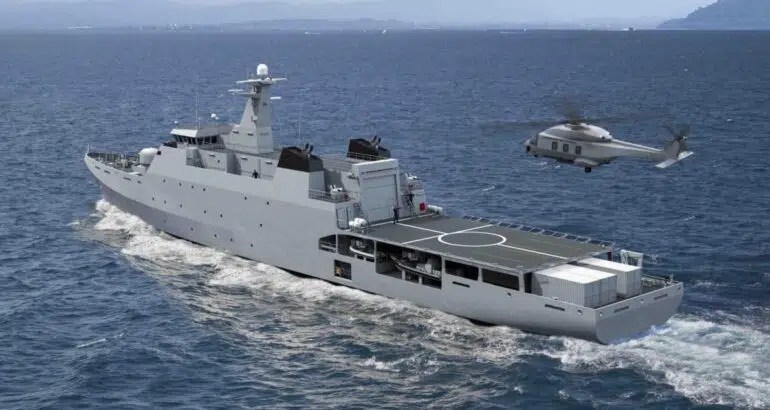
OPV 2600 multi-mission patrol vessel rendering (Source: Damen)

Naval News reports,

On October 12, 2022, Damen Shipyards ceremonially laid the keel of the first multi-purpose patrol vessel OPV 2600 for the Pakistan Navy. At the same ceremony, the first steel plates were cut for the construction of the second OPV 2600.

This is only the latest in a long line of Damen OPVs. Details of this 98 meter, 2600 ton, 24 knot design can be found here. Get an overview of their OPV programs here.

A New Kind of Shiprider Agreement–Virtual / “U.S., Federated States of Micronesia sign expanded shiprider agreement”

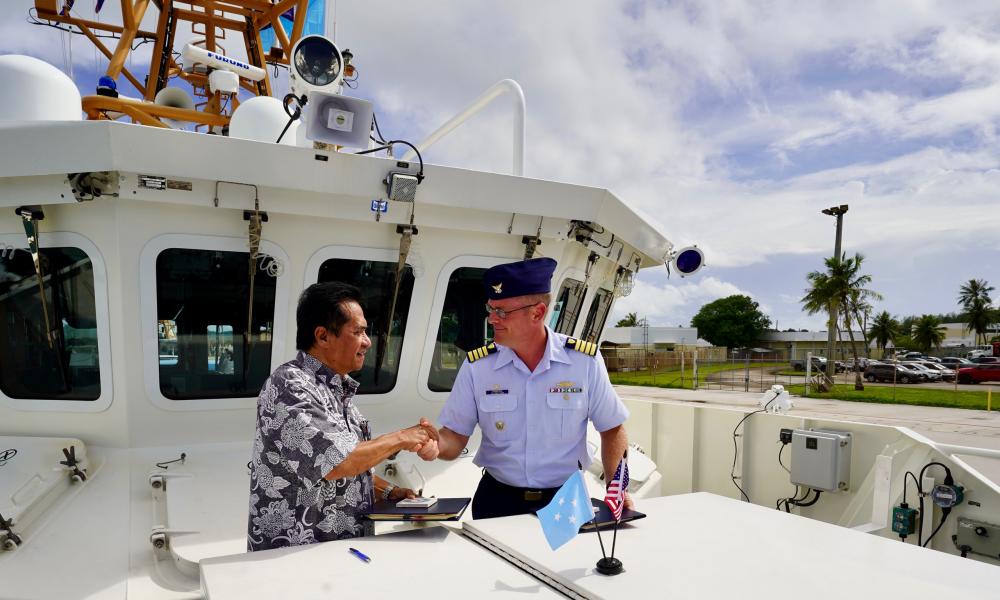
U.S. Coast Guard Forces Micronesia Sector Guam Commander Capt. Nicholas R. Simmons and the Honorable Joses R. Gallen, Secretary of Justice, Federated States of Micronesia, signed an expanded shiprider agreement allowing remote coordination of authorities, the first of its kind aboard the USCGC Myrtle Hazard (WPC 1139) in Guam, on Oct. 13, 2022. The agreement will enable to U.S to act on behalf of the FSM to combat illicit maritime activity and to strengthen international security operations. (U.S. Coast Guard photo by Chief Warrant Officer Sara Muir)

This is a lot more of a leap than it might seem from the news release. It is a huge vote of confidence from the Federated States of Micronesia.

More specifically, the agreement provides a coordinating mechanism and process for U.S. law enforcement personnel to work with the FSM National Police through command centers to receive approval from the FSM to act.

In all previous shiprider agreements, the Coast Guard team enforced the laws of the assisted nation under the authority of an agent of that nation, that accompanied the ship. What we have here is a virtual shiprider (my choice of words). Not only is it easier logistically, it means the decision by the nation assisted is probably being made at a higher level than would have been the case with a dedicated on-scene shiprider.

It also means that a cutter can begin acting on behalf of the Federated States of Micronesia as soon as the cutter enters their EEZ, rather than having to wait until the shiprider comes aboard. The cutter will also not have to drop the shiprider off before departing the area, or arrange other transportation that might delay the agent’s return to duty. It is a win-win.


News Release

U.S. Coast Guard Forces Micronesia / Sector Guam

U.S., Federated States of Micronesia sign expanded shiprider agreement
U.S., Federated States of Micronesia sign expanded shiprider agreement U.S., Federated States of Micronesia sign expanded shiprider agreement
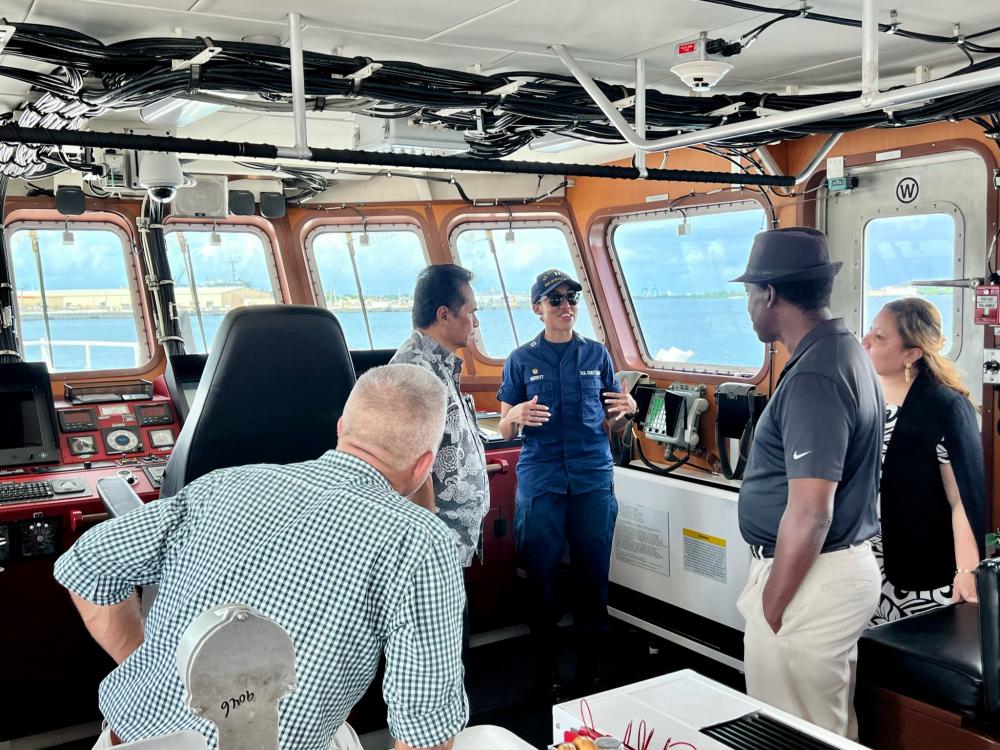
Editor’s Note: Click on the images above to view or download more.

SANTA RITA, Guam — To overcome complex challenges to maritime enforcement in the Federated States of Micronesia (FSM), a nation with over six hundred islands, representatives of the United States and the FSM signed a remote shiprider agreement on Oct. 13, 2022, during a Joint Committee Meeting hosted by Joint Region Marianas.

Through remote coordination, this agreement, the first of its kind, will enable the U.S. to act on behalf of the country to combat illicit maritime activity when an FSM law enforcement officer is not present. More specifically, the agreement provides a coordinating mechanism and process for U.S. law enforcement personnel to work with the FSM National Police through command centers to receive approval from the FSM to act.

Shiprider agreements allow maritime law enforcement officers to observe, board, and search vessels suspected of violating laws or regulations within a designated exclusive economic zone (EEZ) or on the high seas. These law enforcement activities bolster maritime law enforcement operations and maritime domain awareness and provide a mechanism to conduct integrated operations within the Pacific.

“We’re thrilled to cooperate with our Federated States of Micronesia partners on this initiative that will reap benefits for FSM’s economic, environmental, and national security in the maritime domain,” said Alissa Bibb, Chargé d’affaires at the U.S. Embassy in Kolonia.

The dynamic nature of detecting, deterring, and suppressing illegal activity in the Pacific, like fisheries offenses and illicit maritime drug trafficking, requires creative and collaborative solutions. This agreement builds on the enduring partnership and long-standing shiprider agreement between the two nations by providing a new framework to conduct maritime operations and relies on the professionalism and expertise of U.S. and FSM maritime law enforcement officers.

The U.S. Coast Guard regularly exercises 13 bilateral fisheries law enforcement agreements with countries throughout the Pacific islands. These agreements enable U.S. Coast Guard personnel and U. S. Navy vessels with embarked U.S. Coast Guard law enforcement personnel to work with host nations to protect critical regional resources. Shiprider efforts greatly enhance host-nation sovereignty by enabling Pacific Island Nation partners to enforce their laws and regulations using U.S. assets.

The U.S. Coast Guard maintains strong partnerships with the maritime forces in the region through extensive training and subject matter expert exchanges. FSM, also known as the Big Ocean State, has one of the world’s largest EEZs, with waters rich in sea life. FSM consists of four states — Pohnpei, Chuuk, Yap, and Kosrae — each with a mix of unique peoples, languages, and cultures. FSM is a signatory to a Compact of Free Association with the United States. They are also a Pacific Islands Forum Fisheries Association member and a party to the South Pacific Tuna Treaty.

“This historic agreement significantly strengthens presence and enforcement options to counter illicit maritime activity in the region. It is only made possible by the deep and abiding relationships and respect between the Coast Guard and our FSM partners, “Capt. Nick Simmons, Commander of U.S. Coast Guard Forces Micronesia. “FSM has the 14th largest EEZ in the world and only two patrol boats. Our crews spend ample time within the region but getting a shiprider aboard our vessels can be a real logistical challenge. This agreement dramatically increases the capacity of available resources to act on FSM’s behalf to protect their living marine resources and sovereignty. We appreciate their continued trust and confidence as we work together.”

The USCGC Oliver Henry (WPC 1140) hosted Chargé d’affaires Bibb and her team aboard in Pohnpei in September. They met with several key officials, and members of the cutter’s engineering team conducted a subject matter exchange with the crew of FSS Palikir, the last active Pacific-class patrol boat, on shipboard repairs and assisting with preventative maintenance.

In May, USCGC Myrtle Hazard (WPC 1139) made a contactless crew rest and re-fueling stop in FSM during their expeditionary patrol across Oceania. In December 2021, USCGC Sequoia (WLB 215), working alongside the Navy’s Underwater Construction Team Two (UCT-2), conducted operations to widen the channel at Kapingamarangi Atoll. U.S. Coast Guard Forces Micronesia/Sector Guam also provides search and rescue support to FSM, with several successful cases in the last year, resulting in ten lives saved.

The shiprider program supports regional coordination and aligns with the National Security Strategy, U.S. Indo-Pacific Command efforts, and the U.S. Coast Guard’s Operation Blue Pacific. The bilateral agreements enacted in the Pacific are the bedrock of regional maritime law enforcement partnership. They convey the United States’ ongoing investment in protecting shared resources and interest in maritime safety and security, including fair and reciprocal trade, while standing against a current of aggressive and coercive influence in the region.

The U.S. is devoted to ensuring greater unity and a free and open Indo-Pacific for all nations who observe the rule of law. The U.S. Coast Guard continues to demonstrate our enduring presence in the Pacific and help facilitate increased regional stability, security, and resilience for U.S. partners.

For more U.S. Coast Guard Forces Micronesia/Sector Guam news, visit us on DVIDS or subscribe! You can also visit us on Facebook or Instagram at @USCGForcesMicronesia.