China, Ready to Pick the Low Hanging Fruit?

Taiwan Coast Guard cutter KAOSHIUNG

BairdMaritime has a column suggesting China is training for an  “…invasion of Pratas Reef (Dongsha), a Taiwanese-garrisoned outcrop, situated some 170 nautical miles southeast of Hong Kong.” Possibly “…followed by an attack upon another Taiwan-manned islet, namely Taiping (Itu Abu), the largest and most habitable of the Spratly islands in the SCS. The two Taiwanese outposts, which are manned by Taiwan Coast Guard Administration (TCGA), retain some strategic value, particularly as both feature airfields, but the main advantage to be reaped by the PRC by their seizure would probably be political.”

That they feel the US will not intervene because, “the US Congress’ Taiwan Relations Act requires the US to come to the aid of Taipei in the event of a PRC attack on Formosa, or the Pescadores (Penghu), situated in the Taiwan Straits, but excludes Taiwan’s more distant territories.” 

Certainly any such attack, if successful, and unopposed by the US would seriously undermine American credibility as an ally, regardless of the specifics of US formal obligations to Taiwan.

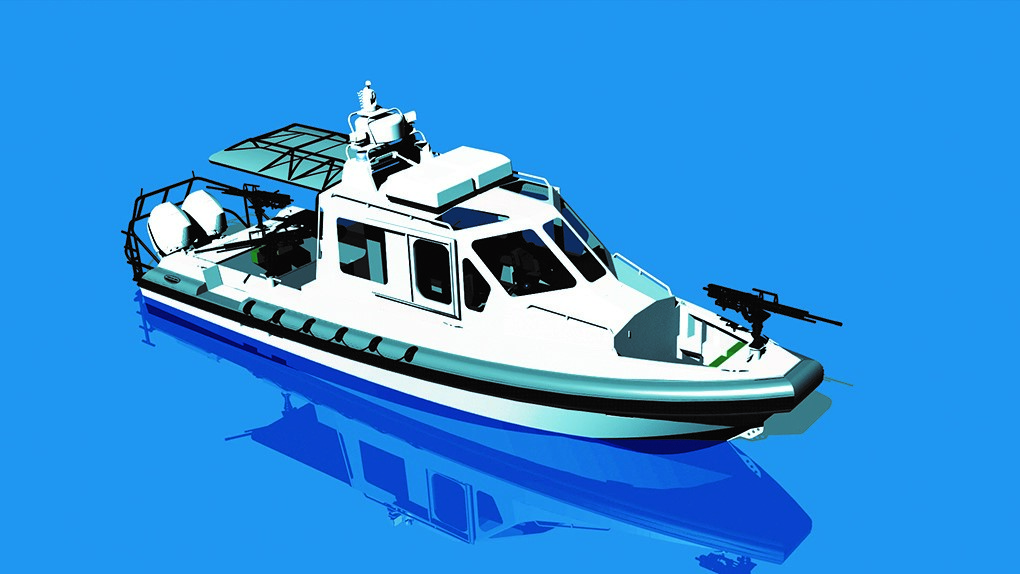
“Lake Assault Boats Selected by U.S. Navy for 5-Year Force Protection-Medium Boats Contract”

“Lake Assault Boats has been chosen to produce up to 119 Force Protection-Medium (FP-M) patrol boats by the U.S. Navy. The five-year contract carries a maximum value of $56 million, and the first deliveries will begin in November 2020.” (Note there is access to the bow by a hatch, not included on this illustration–Chuck) 

Below is a press release from Lake Assault Boats. This is about $470,600 per boat if all 119 are completed :

SUPERIOR, Wis. (Feb 24, 2020) ­– Lake Assault Boats, part of Fraser Shipyards and a leading manufacturer of fire, patrol, and rescue craft, has been chosen to supply up to 119 Force Protection-Medium (FP-M) patrol boats to the U.S. Navy. The five-year Indefinite Delivery Indefinite Quanity (IDIQ) contract carries a maximum value of $56 million, and the first deliveries will begin in November 2020.

The FP-M patrol boats will provide security for U.S. Navy Ships and personnel from waterborne threats in and outside of Navy ports around the world. “We are honored to be chosen by the U.S. Navy to supply it with these versatile and powerful FP-M patrol craft,” said Chad DuMars, Lake Assault Boat vice president of operations. “Our FP-M vessels will be engineered and built to the same high manufacturing and quality control standards as our patrol and fire boats currently in service throughout North America.”

An operational requirement for the boats is to provide Anti-Terrorism/Force Protection patrols for U.S. Navy Installations, which includes; patrol, interrogation of other waterborne assets, and escorting large vessels in and out of port in various weather and water conditions throughout the year, day and night. Each of the 33-foot long craft will have a 10-foot beam and feature a full cuddy cabin. Twin 225-hp outboard motors will power each boat, which will carry four weapon mounts capable of accommodating up to .50 caliber machine guns. The aluminum V-hull boats are protected by a polyurethane foam collar wrap.

“Our selection, after a long and rigorous competitive bid process, represents a significant accomplishment for Lake Assault Boats and our sister company, Fraser Shipyards,” explained DuMars. “Our entire team is very excited and prepared to provide these boats to serve with the U.S. Navy.”

Thanks to Lee for bringing this to my attention. 

The Coast Guard in the WWII Battle of the Atlantic

A look back at Coast Guard participation in the Battle of the Atlantic, with a short excursion into the Mediterranean.
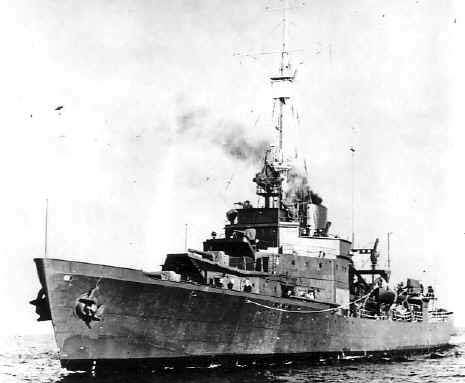
USCGC Alexander Hamilton (WPG-34)

January 29, 1942, Shortly after dropping the tow of a disabled merchant ship, USCGC Alexander Hamilton was torpedoed on the starboard side by the German submarine U-132, which had been patrolling the Icelandic coast near Reykjavík. The explosion killed twenty men instantly and the total death toll was 26. Hamilton capsized and sank Jan. 30. U-132 would sink 10 ships (39,496 tons) and damage one (6,690 tons). The U-boat would destroyed by the explosion of her last victim, 4 Nov. 1942, with the loss of all 47 aboard.
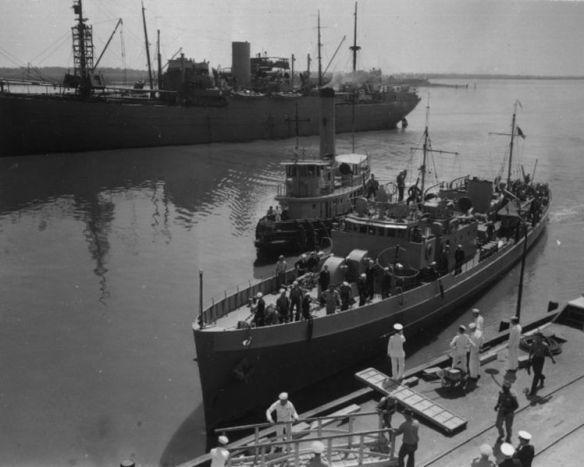
USCGC Icarus (WPC-110) arriving at Charleston Navy Yard with prisoners of war from the U-boat U-352, 10 May 1942, US Navy photo

May 9, 1942, USCGC Icarus sank U-352 south of Cape Hatteras, 15 dead and 33 survivors. The Navy did an extensive intelligence report on the U-352 and its sinking which is still available on line.
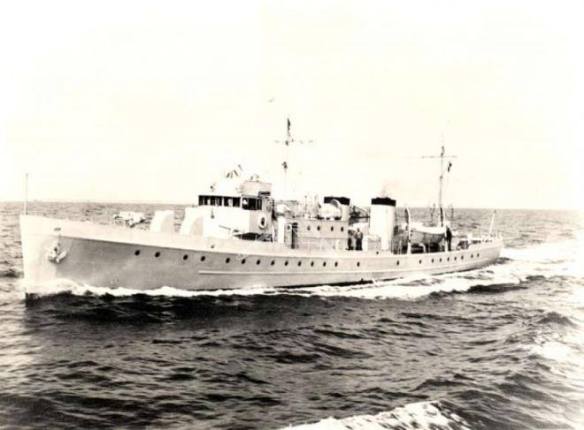
USCGC Thetis (WPC-115)

June 13, 1942, USCGC Thetis, Icarus’ sister ship, sank U-157 in the Gulf of Mexico north of Havana, Cuba with all hands. 52 dead. U-157 had sunk one ship, an American Tanker named Hagen, two officers and four crewmen were lost and three more injured.

Dec. 17, 1942 USCGC Ingham was credited with sinking U-626, but that now seems unlikely. U-626 went missing 14 December 1942 in the North Atlantic south of Iceland. There is no explanation for its loss. 47 dead (all hands lost). She had been underway a total of only 14 fruitless days.
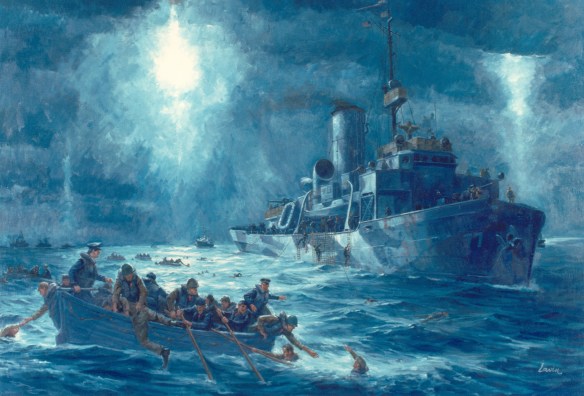
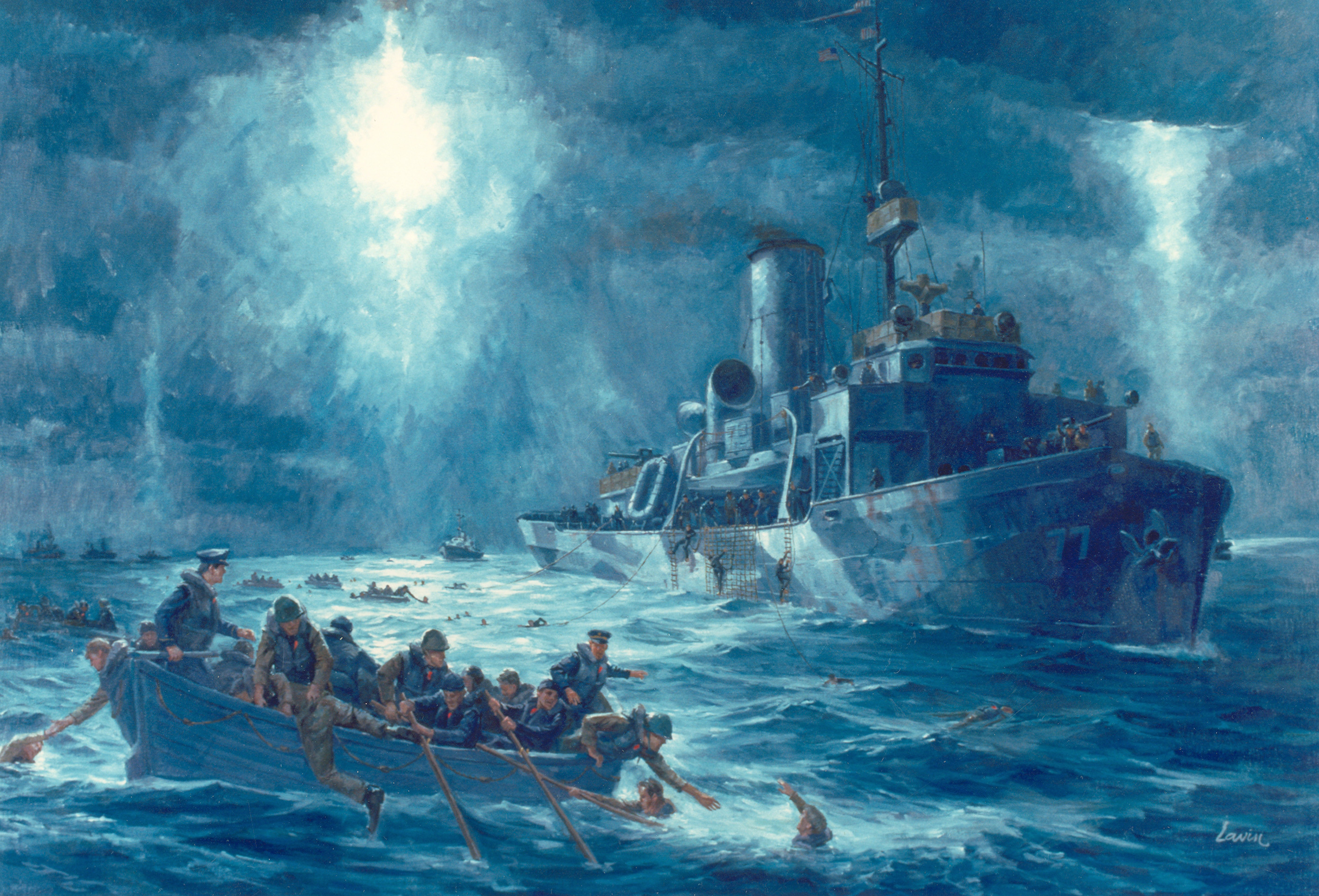
Escanaba rescuing survivors from USAT Dorchester. USCG Image.

Feb. 3, 1943 The Army Transport Dorchester being escorted by the 240 foot Tampa (WPG-48) and two 165 foot “A” class cutters, Escanaba (WPG-77) and Comanche (WPG-76), is torpedoed and sunk by U-223. Despite extraordinary effort by the escorts, of the 904 aboard, there were 675 dead and only 229 survivors.  And U-223? She would sink for otherwise destroy two more merchant vessels, a Canadian frigate, and, on the last day of her existence, sink a Royal Navy destroyer, HMS Loferey, using an acoustic homing torpedo (189 dead). U-223 was

Sunk on 30 March 1944 in the Mediterranean Sea north-east of Palermo, in position 38.48N, 14.10E, by depth charges from the British destroyers HMS Laforey and HMS Tumult and the British escort destroyers HMS Hambledon and HMS Blencathra. 23 dead and 27 survivors.
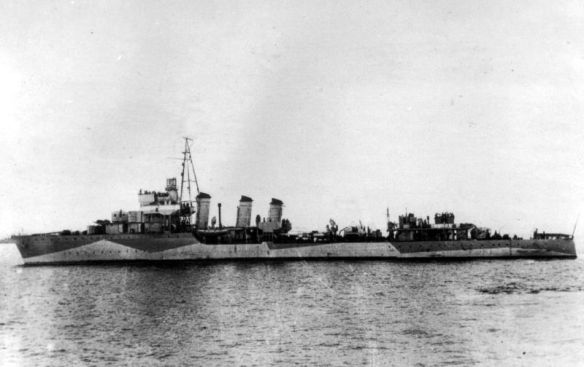
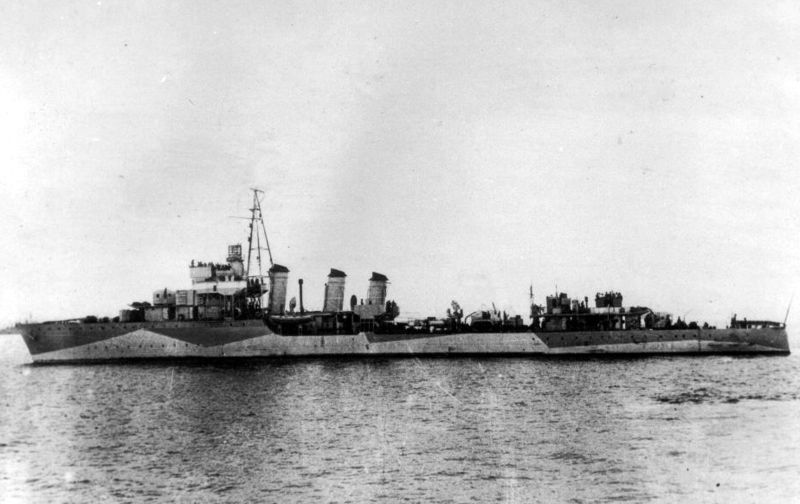
Polish destroyer en:ORP Burza in 1940 in Great Britain. Republic of Poland, Polish Government in Exile.Ministry of Information War Photo Service, London 1940. Press released by Polish Government 1940. Source: Jerzy Pertek Morze w ogniu 1939-1945 : na frontach i za kulisami wojny morskiej T. 1-2. 2nd Edition Poznań 1975

Feb. 22, 1943, Polish destroyer ORP Burza depth charged and force to the surface U-606. USCGC Campbell rammed U-606 sinking the sub in the North Atlantic east of Newfoundland. Campbell was damaged when a diving plane pierced the hull at the engineroom, leaving her dead in the water. Burza protected her until she was taken in tow. U-606, 36 dead and 11 survivors.
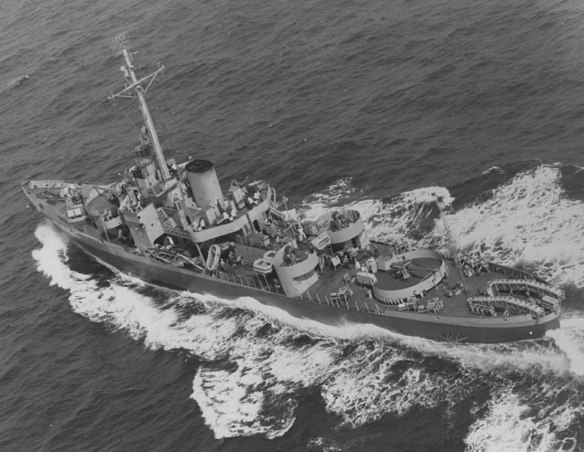
USCGC Campbell (WPG-32) heading to port at Norfolk Navy Yard. 26 July 1943. US National Archives, photo 80-G-76569

Mar. 8, 1943, USCGC Spencer sank U-633 in the North Atlantic south-west of Iceland. All hands (43) were lost with the U-boat.  U-633 had only one war patrol and had sunk one ship, the British merchant steamer Guido of 3,921 tons.

At 08.55 hours on 8 March 1943 the Guido was torpedoed and sunk by U-633 about 450 miles east-southeast of Cape Farewell. The vessel was a romper (it had left the convoy and running ahead–Chuck) 10 miles off the starboard bow of convoy SC-121. Eight crew members and two gunners were lost. The master, 28 crew members and six gunners were picked up by USCGC Spencer (WPG 36) and landed at Londonderry.
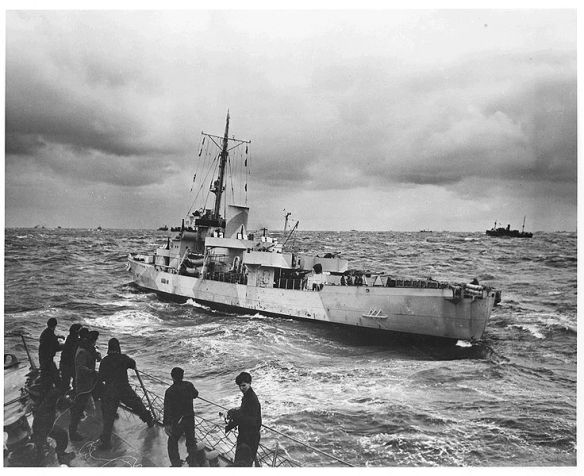
USCGC Spencer (WPG-36) in 1942 or 1943. Spencer sank U-175 with assistance of USCGC Duane, on April 17, 1943.

April 17, 1943, USCGC Spencer sank U-175 in the North Atlantic south-west of Ireland. The U-boat suffered 13 dead and had 41 survivors. U-175 had had three war patrols and had sunk 10 ships, total tonnage 40,619 GRT, including four US flag and two US owned of Panamanian registry. 65 crewmember or armed guard died in these ten sinkings.

USCGC Escanaba explodes and sinks off Ivigtut, Greenland, probably as a result of a torpedo. There were only two survivors out of a crew of 103 rescued by the USCGC Raritan.

Jan. 12, 1944 USCGC Duane goes into yard for conversion to an Amphibious Force Flagship, all the remaining 327s will soon follow, ending their career as anti-submarine escorts.

Mar. 9,1944, Coast Guard manned Destroyer Escort, USS Leopold (DE-319) is torpedoed and sunk by an acoustic homing torpedo (GNAT–German Navy Acoustic Torpedo) launched by U-255. U-255 survived the war, having completed 15 war patrols and sinking 12 ships totaling 56,031 tons including seven American merchant ships in addition to USS Leopold.

On 9 March 1944 the US Coast Guard manned USS Leopold (Cmdr. Kenneth Coy Phillips, USCG) was on her second voyage and escorting the convoy CU-16, when she got an acoustic contact about 400 miles south of Iceland and turned to investigate it. But before the destroyer escort reached the U-boat, she was hit at 22.00 hours by a Gnat from U-255 and was abandoned. The vessel broke in two and remained afloat, but both parts sank early the next morning in position 58º44’N, 25º50’W. 172 died which includes all 13 officers and only 28 ratings survived who were picked up by USS Joyce (DE 317).

Apr. 16, 1944, USS Gandy (DE-764) and Coast Guard manned Destroyer Escorts USS Joyce (DE-317) and USS Peterson (DE-152) sank U-550, 70 miles south of Nantucket, Mass, 44 dead and 12 survivors. Some two hours after the attack USS Joyce and USS Peterson together pick up 56 survivors from the American tanker Pan Pennsylvania that was the first and only ship sunk by U-550. 25 were lost with Pan Pennsylvania.
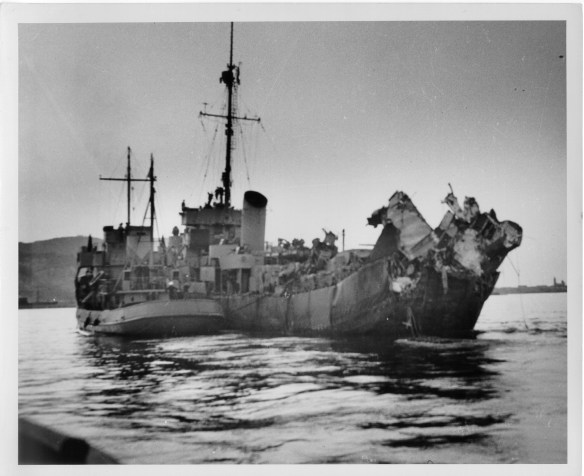
Coast Guard manned Destroyer Escort USS Menges, victim of a German Acoustic Homing Torpedo, May, 1944

May 3, 1944, Coast Guard manned Destroyer Escort, USS Menges is torpedoed off the Mediterranean coast of North Africa, by U-371 using a GNAT but survived. 31 were killed and 25 wounded. A 95′-long section of the stern portion of Navy manned sister ship USS Holders hull was used to repair USS Menges

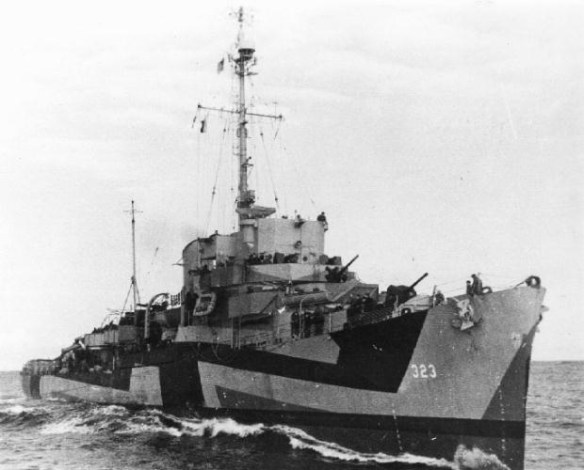
USS Pride DE-323

USS Pride (DE-323), Coast Guard manned destroyer escort

May 4, 1944 U-371 is sunk by Coast Guard manned Destroyer Escorts USS Pride and USS Joseph E. Campbell, the French destroyer escort Sénégalais and the British escort destroyer HMS Blankney sank U-371 (3 dead and 49 survivors) in the Mediterranean Sea north-east of Bougie but not before U-371 also put a torpedo (GNAT)  into the Free French Destroyer Escort Sénégalais (built as USS Corbesier (DE-106) damaging her as well. U-371 had made 19 war patrols and sank or damaged 19 ships.
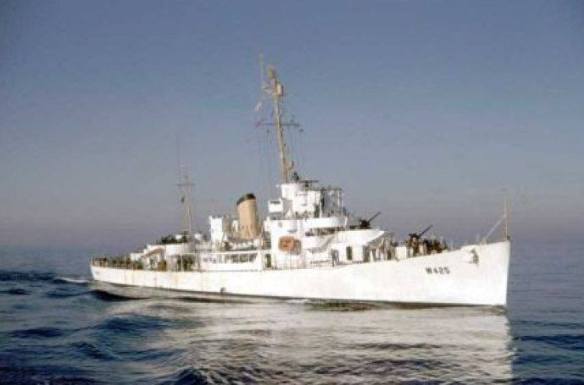
USS Lowe (DE-325) as USCGC Lowe (WDE-425)

USS Lowe (DE-325) in its later guise as USCGC Lowe (WDE-425)

March 18, 1945, Coast Guard manned Destroyer Escorts Menges, Pride, Mosley, and Lowe sank U-866 South East of Halifax, 55 dead (all hands lost). U-866 spent a total of 50 days at sea and had not damaged any allied shipping.

On 18 Mar 1945, U-866 was sunk by the only hunter-killer group in the North Atlantic manned completely by US Coast Guard personnel, consisting of four destroyer escorts, USS Pride (DE 323), USS Mosley (DE 321), USS Lowe (DE 325) and USS Menges (DE 320).
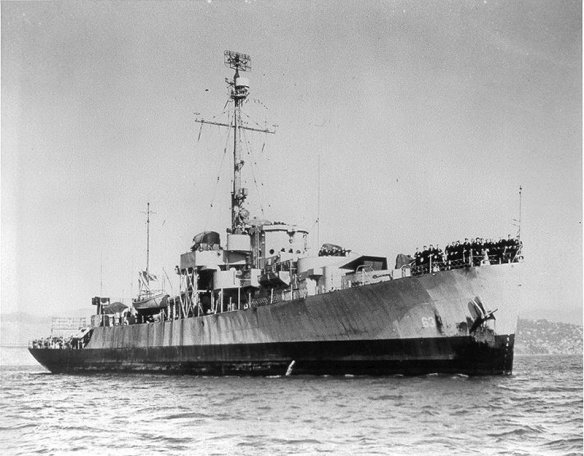
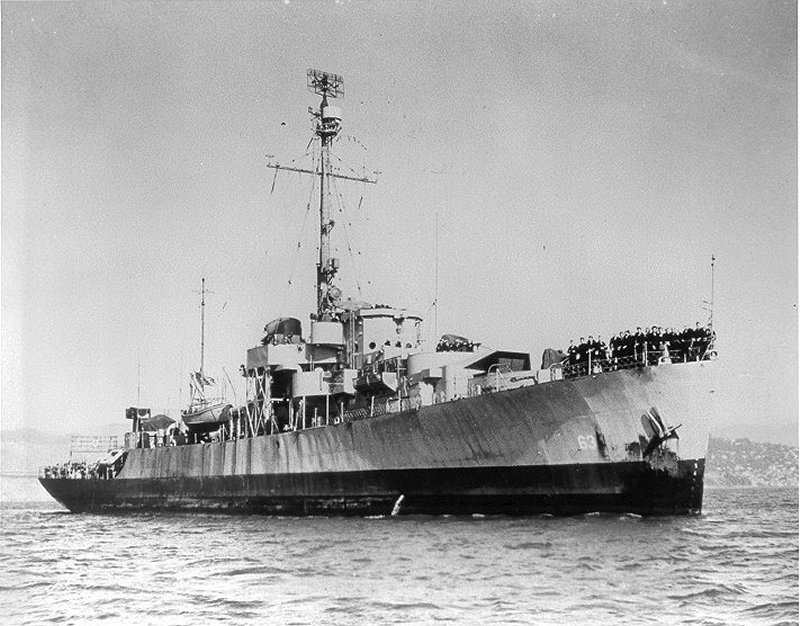
USS Moberly (PF-63) Off San Francisco, CA in early 1946.
Naval Historical Center photo NH 79077

May 7, 1945, USS Atherton (DE-169) and Coast Guard manned Frigate USS Moberly (PF-63) sank U-853 in the North Atlantic south-east of New London. 55 were lost with U-853. The U-boat had sunk two ships, totaling 5,783 tons. 61 died on the two ships sunk by U-853.

—-

Overall the Germans lost 768 U-boats (reported losses vary). Some were lost to accidents or mine, but in general about 200 were lost to US aircraft, about 200 to allied aircraft, and about 200 to allied surface vessels. US surface vessels sank 38 (last I heard). US surface ships also, of course, sank a large number of Japanese and some Italian submarines.

In terms of human lives, 28,000 German U-boat crew of the total 40,900 men recruited into the service lost their lives and 5,000 were taken prisoners of war. Some 30,000 men of the allied merchant service died, in addition to an unknown number of Allied naval personnel.

You may have heard that a Coast Guard aircraft had sunk a U-boat. This was U-166, previously credited to a J4F-1 Grumman Goose (USCG V-212/Y). When the wreck was found, it was determined that it had been destroyed by depth charges from the US patrol craft USS PC-566. 52 dead (all hands lost).

In this short retelling of selected engagements, I cannot help but notice five escort vessels fell victim to German Navy Acoustic Torpedoes (GNATs). Two sank, one total constructive loss. and two badly damaged, but repaired.

New Multi-Mission Very Light Weight Torpedo

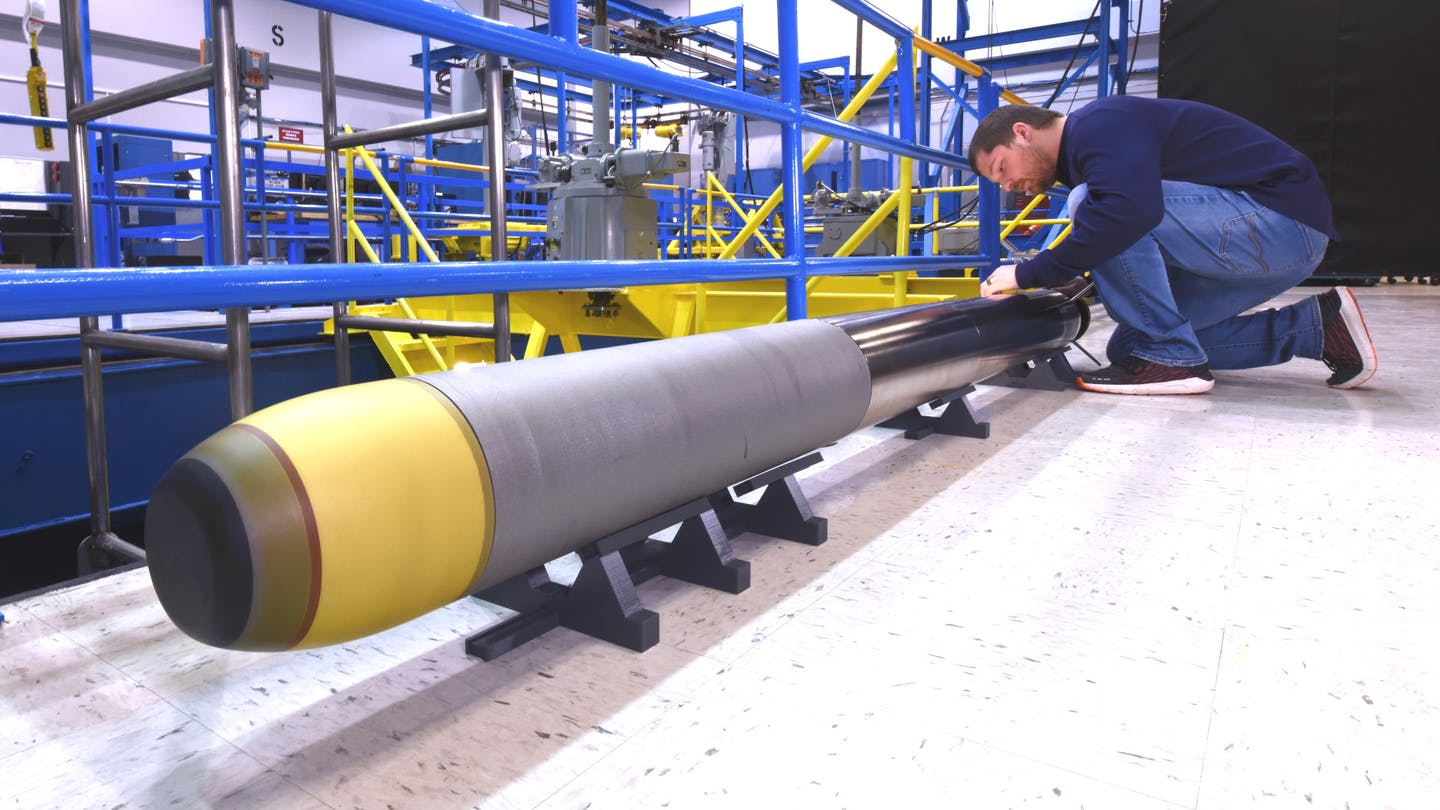
Very Light Weight Torpedo

In 2013, when I first heard that the Navy was developing an Anti-Torpedo Torpedo, I had hopes it might be the basis for a ship stopping system for the Coast Guard. In 2019, we learned that the systems which had been deployed on five of the Navy’s aircraft carriers were being removed. It seemed the program was dead. In fact, it appears very much alive, and apparently the Navy has targets other that adversary torpedoes in mind. If the Coast Guard is ever to have this weapon it may be important to understand what the Navy might see in the system.

Northrop-Grumman press release quoted in part:

Northrop Grumman has successfully manufactured and tested the first industry-built Very Lightweight Torpedo (VLWT) for the U.S. Navy. The prototype torpedo is based on the Pennsylvania State University Applied Research Laboratory’s (PSU-ARL) design that was distributed to defense industrial manufacturers in 2016. Northrop Grumman, which independently funded the research and development, will offer the design-for-affordability improvements to this VLWT as Northrop Grumman’s response for the Navy’s Compact Rapid Attack Weapon program.

Applying its engineering and manufacturing expertise, Northrop Grumman improved upon the VLWT baseline design to replace high-cost components and drive overall affordability, reproducibility and reliability. Those altered sections were built and tested using PSU-ARL’s own test equipment for confidence.

“The successful testing of the torpedo nose on the first try is a testament to Northrop Grumman’s design-for-affordability approach, which will significantly reduce cost without sacrificing operational performance,” said David Portner, lead torpedo program manager, undersea systems, Northrop Grumman.

TheDrive dug into this a bit further and found the supporting FY2021 budget line items  and justification under the name Compact Rapid Attack Weapon (CRAW), significantly it is a program of record.

The thing I find interesting is, this is touted a multi-platform, multi-mission weapon. The primary capability being talked about is as a hard kill anti-torpedo weapon, but apparently it is a modular weapon that may be reconfigured for different missions.

There is more information in an earlier TheDrive article.

These weapons could offer added offensive firepower, as well as an all-new anti-torpedo defense interceptor capability. The mini-torpedoes use a common body and future variants might also arm unmanned ships or submarines, as well as flying drones, act as naval mines, and more.

A Navy briefing slide showing the internal components and describing the various features of the PSU_ARL Common Very Light Weight Torpedo (CVLWT) design

The Common Very Light Weight Torpedo design that the weapon is based upon is reportedly 6.75″ in diameter, about 85″ in length, and weighs about 220 pounds (100 kilos). If it is truly modular its length and weight may vary somewhat. It might be possible to make a version with an enlarged warhead.

The familiar Mk46 light weight torpedo is more than twice as large. The newer Mk 50 and Mk54 torpedoes are similarly sized.

  • Length: 8 ft 6 in (2.59 m), 102 in
  • Weight: 508 lb (230 kg) (warshot configuration)
  • Diameter: 12.75 in (323.8 mm)
  • Range: 12,000 yd (10,973 m)
  • Warhead: 96.8 lb (43.9 kg)

The Navy’s standard heavy weight torpedo, the Mk48, is 16 times larger than the Common Very Light Weight Torpedo design.

  • Length: 19 feet (5.8 meter) or 228 in
  • Weight: 3,695 lb (1,676 kg) (ADCAP)
  • Diameter: 21 in

Advantages of small size: Small size can convey several advantages.

  • More weapons
  • Smaller cross section
  • Lower noise
  • Use by smaller platforms

A smaller weapon allows a greater number of weapons in a given magazine space. Space for torpedoes on submarines is limited and the Mk48 costs $10M each, so there are good reasons not use too many on one target or to use them on small targets . The VLWT could be used to swarm larger targets or individually against small craft including unmanned surface and subsurface vessels. As a rough estimate it looks like about 14 of these smaller weapons could fit in the space currently required for one Mk48 torpedo.

A helicopter could probably carry at least twice as many VLWT compared to the current light weight torpedoes. 

The frontal area of a 6.75″ torpedo is only 10.3% that of a 21″ torpedo meaning that it would be harder to detect using active sonar.

The power required to propel such a small torpedo is significantly less that that of a 21″ torpedo. Consequently it should put much less noise in the water, making it harder to detect by passive means

Being harder to detect means these weapons could probably get closer to a target before it becomes aware it is under attack.

Light weight and small size also means these weapons might be deployed from platforms that currently cannot support heavier weapons. These might include the Common Unmanned Surface Vehicle (CUSV) or the MQ-8C Fire Scout drone helicopter. It might also arm the MQ-4C Triton.

Textron Systems’ CUSV with Surface Warfare payload at SAS 2019

Parallels from above water missiles: What we are seeing here has parallels to what has already happened in the field of guided missiles above water.

  • Smaller but more numerous missiles
  • Simultaneous or closely sequenced attack
  • Multi-Packed missiles
  • Anti-Radiation missiles

The Russian Navy is putting smaller missile on their ships but in greater numbers. We see them moving from four very large missiles to 16 smaller missile. It is perhaps less obvious, in the US Navy, but they are using the smaller Naval Strike Missile in applications where they would previously used the larger Harpoon missile, and it appears the new frigate will be equipped to carry 16 of these. The reasoning is understandable. With increasingly robust anti-missile defenses, there is a need to swam the defenses with numerous missiles arriving simultaneously or in closely sequenced attacks. As torpedo countermeasures become more effective there may be a similar move to launch a swarm of smaller torpedoes.

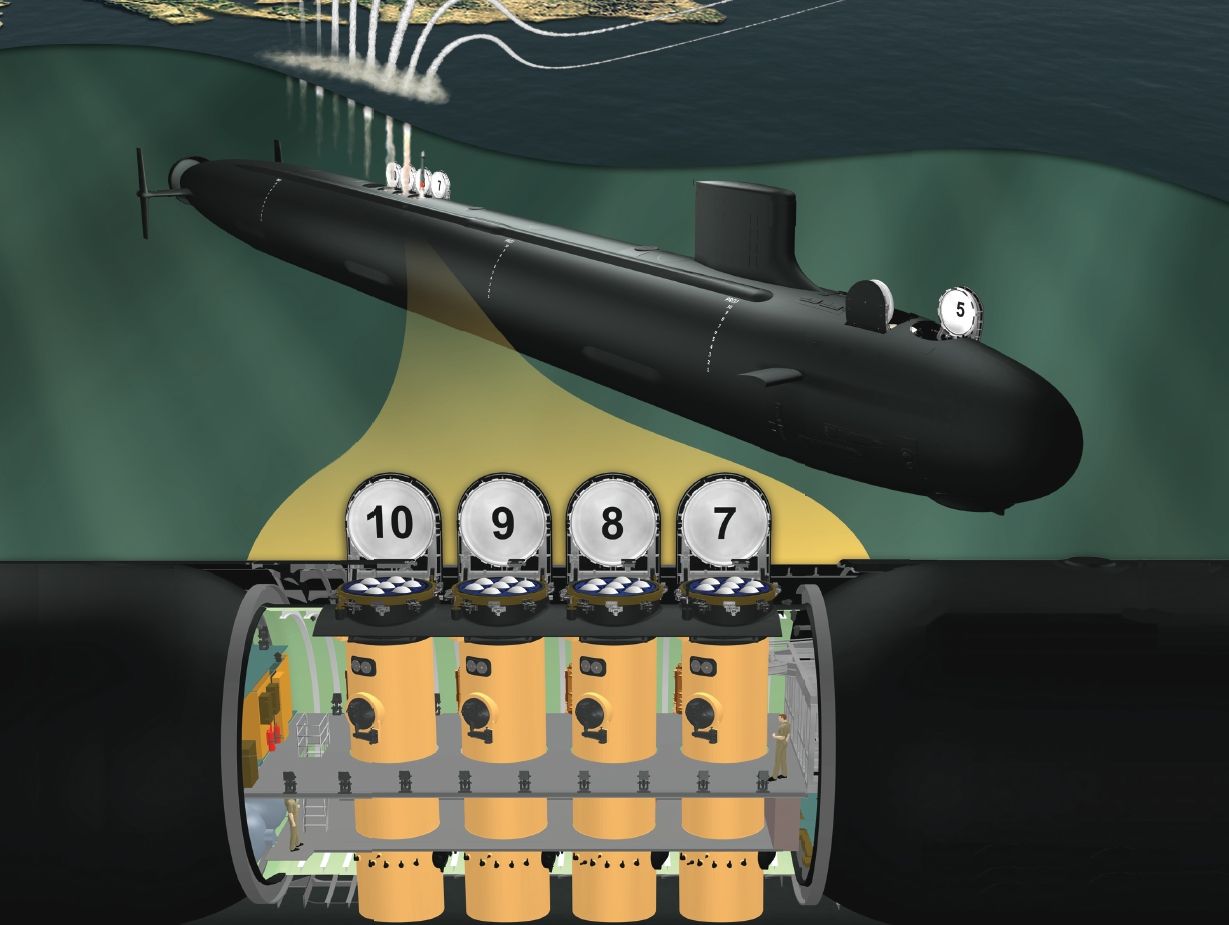
We have begun to see more than one missile housed in a single VLS. The Evolved Sea Sparrow Missile (ESSM) is commonly packed four to a canister in Mk41 VLS and the larger launch tubes like the Virginia Payload Module may house even more missile in a single tube. Similarly, it appears that it might be possible to use a canister to launch as many as seven of the VLWT from a single torpedo tube without the need to reload.

The concept of the Virginia Payload Module

Since at least the Vietnam war, we have seen anti-radiation missiles used to attack sensors controlling countermeasures systems including missile control radars. We may see the use of VLWT to attack active sonar systems that might cue torpedo countermeasures prior to arrival of a larger torpedo.

Submarine Attack on Surface Ship Scenario:

VLWT might be used as follows to attack a surface combatant.

The enemy vessel is, for the scenario, a Project 22350 Admiral Gorshkov class frigate with both hull mounted and towed active/passive sonars, a towed torpedo decoy system, and a PAKET-NK hard-kill anti-torpedo defense system.

The US submarine launches seven VLWT and a single Mk48 torpedo in a sequenced attack. The VLWT are launched first to arrive earlier than the Mk48. The first VLWT sacrificially destroys the towed decoy. The remaining six target first the active sonar sources and then the ship itself. With six targets inbound, the PAKET-NK hard kill system has only four ready rounds. If it works perfectly, it will destroy four of the six remaining VLWT, but the other two will destroy the two active sonars including the one in the bow. When the Mk48 arrives it will have no distractions to deal with and will detonate under the frigate, breaking its back.

For the Coast Guard:

It appears these Very Light Weight Torpedoes may be adequate for what I see as the Coast Guard’s requirement to be able to forcibly stop any vessel regardless of its size. It would need to be able to target the ships propellers, but this has been possible since WWII. Given their size and weight, and apparently relatively low cost, even WPCs and WPBs should be able to carry more than one or two to provide redundancy.

Coast Guard manned Destroyer Escort USS Menges, victim of a German Navy Acoustic Torpedo, 3 May, 1944

“Growing Missions, Shrinking Fleet” –USNI

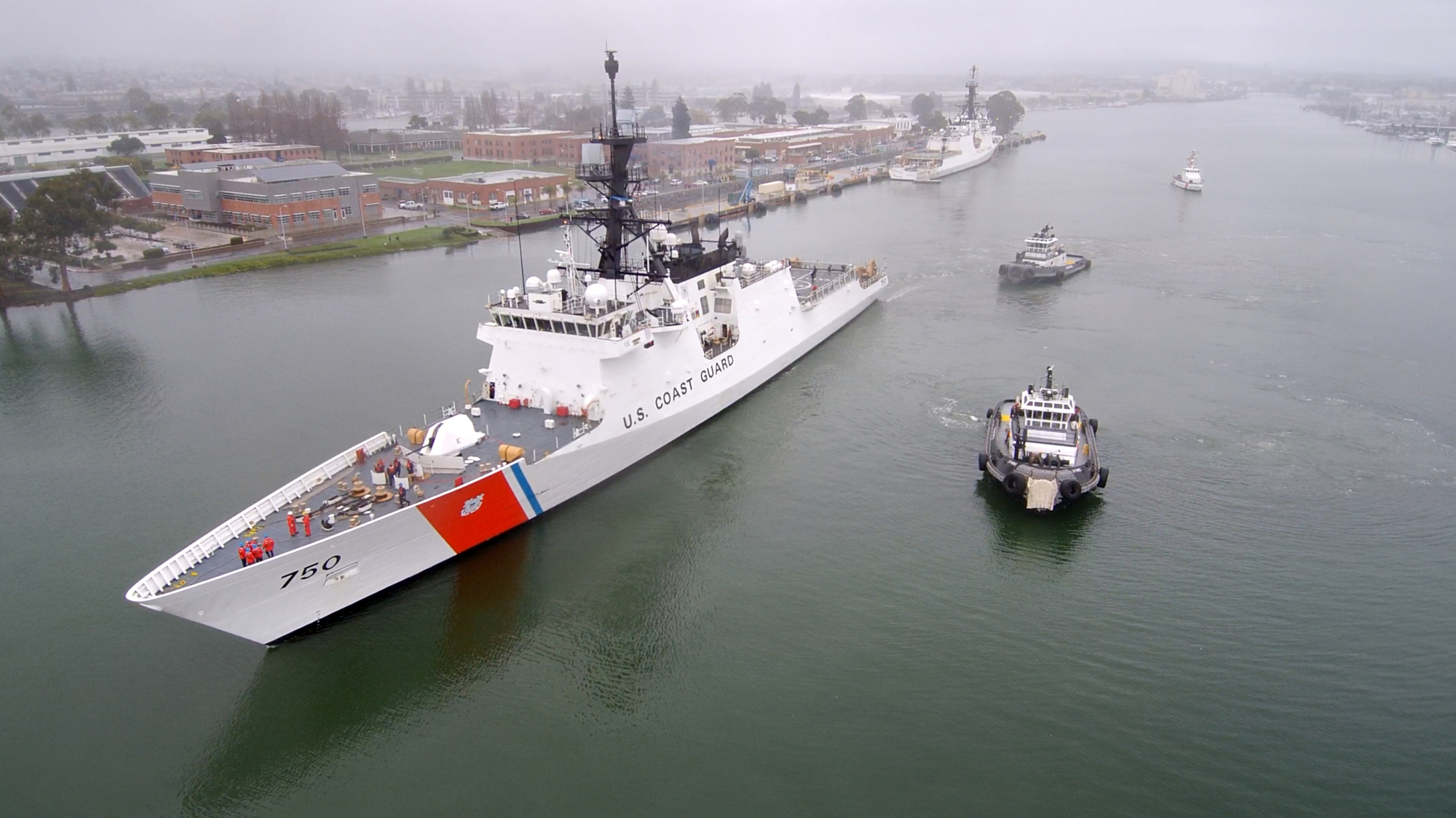
The US Naval Institute has an argument in favor of funding National Security Cutter #12

The author talks about the shortage of ships both because of the failure of the crew rotation concept and because of the shortfall revealed in the Fleet Mix Study. This has been discussed in the Congressional Research Service report on Cutter Acquisition.

What I found new, was information about SOUTHCOM interceptions,

In congressional testimony last year, Admiral Craig Faller, Commander, U.S. Southern Command, noted: “The Coast Guard’s presence any given day is six to eight cutters. . . . But, keep in mind, we’re talking about covering areas the size of the United States—with from six to 10 ships. And so, the interdiction percentage with the current assets we have is about 6 percent of the detections. So, we need more ships.”

that is a lower interception rate than previously reported, and impact on jobs,

The NSC is an indispensable national asset. The economic impact of the NSC production line touches nearly 500 suppliers across 39 states. An additional ship order would help jumpstart the U.S. economy and have an immediate and profound effect on a host of U.S. suppliers, who stand ready to deliver. Moving forward with a 12th NSC is low risk.

If we had been further along with the Offshore Patrol Cutter (OPC), I would say, just build another OPC instead of a twelth NSC, but we were way behind in starting the OPC program and the difficulties at Eastern put us even further behind.

The OPC program is so far behind, that the Bertholf is likely to be 30 years old before the 25th OPC is ready for its first operational mission. Plus we really do need more than 36 large patrol cutters, but the fact we have not done a new Fleet Mix Study in almost ten years does not help our case.


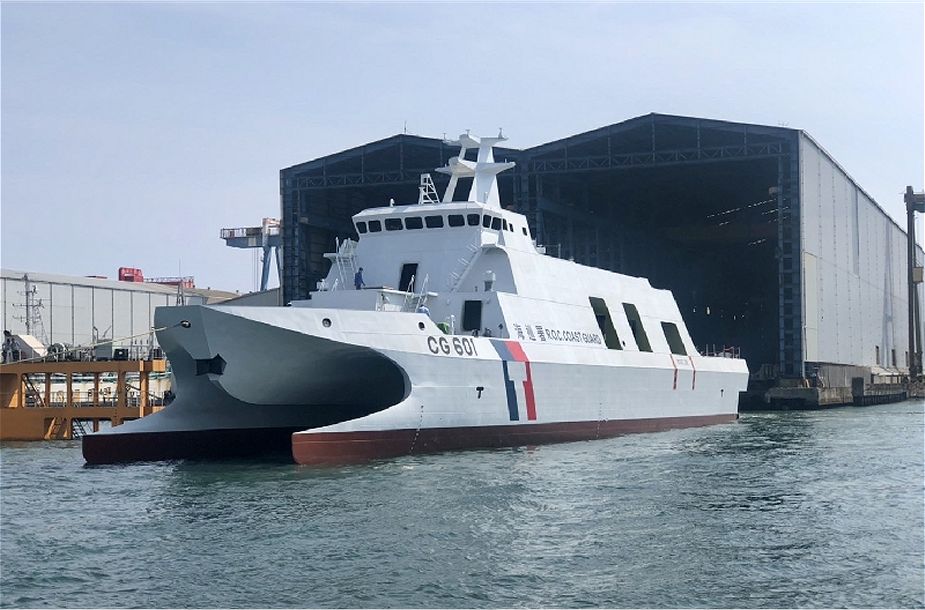
“Launch of 600-ton catamaran-hull patrol vessel Anping CG601 for Taiwanese Coast Guard” –Navy Recognition

New patrol vessel Anping CG601 for the Taiwanese Coast Guard launched. (Picture source Jong Shyn Shipbuilding Group)

NavyRecognition reports that,

“…on April 28, 2020, the first 600-ton catamaran-hull patrol vessel, Anping (CG601) for the Taiwanese Coast Guard was launched in the southern port city of Kaohsiung.”

This is the first of twelve ordered for the Taiwanese Coast Guard. The design is based on the Tuo Chiang-class stealth missile corvette in service with the Republic of China Navy.

An earlier post, from 2014, talked about these cutters and included a video of the Navy version of the design underway.

I am a bit surprised this program is not moving more rapidly. According to Wikipedia, work did not begin on these cutters until 2019. It appears the Taiwanese Navy still only has one of the 12 Corvettes planned. They may have had some problems.

Model of Tuo Chiang-class corvette armed with 76mm gun, Palanx CIWS, 8 × Hsiung Feng II and 8 × Hsiung Feng III, and 2 × Mark 32 triple torpedo launchers . Photo credit: Solomon203

Arctic Smorgasbord

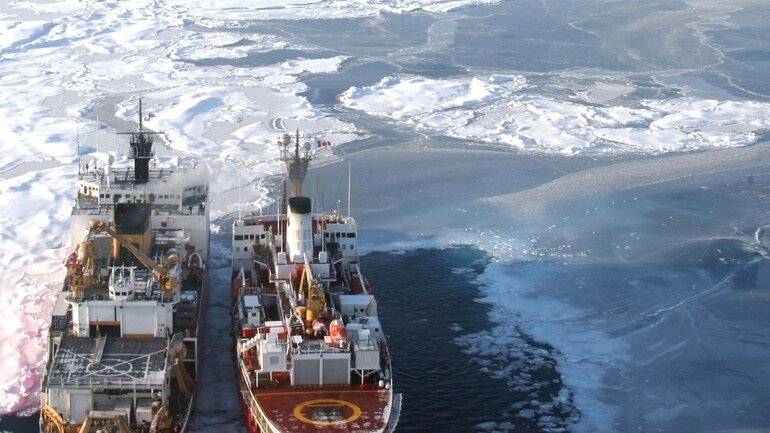
USCGC Healy and CCGC Louis S St-Laurent  (Photo by Jessica Robertson, US Geological Survey)

Defense News’ Early Bird Brief has, for some reason, provided us with a whole series of stories related to the Arctic. For Convience I have linked them below.

Frozen Pathways
The US Navy returns to an increasingly militarized Arctic
(Defense News) The U.S. Navy’s Barents Sea patrol is the latest sojourn into an increasingly militarized Arctic, where questions of international law are becoming proliferating.
Failure to communicate: US Navy seeks faster data transfers amid Arctic ice
(Defense News) Research in the Arctic Ocean is no small feat. The area can prove inaccessible at times, and sensors can fail to communicate data from under the ice or get crushed by slabs of ice.
Sen. Sullivan of Alaska talks military strength and strategy in the Arctic
(Defense News) When it comes to boosting the U.S. Defense Department’s role in the frigid Arctic, nobody in Congress seems hotter under the collar than Sen. Dan Sullivan, R-Alaska.
SpaceX could fill the US military’s Arctic communications gap by the end of this year
(C4ISRNET) The U.S. Defense Department relies on a mixture of military and commercial satellites to connect its war fighters all over the world. And while users can complain that terminals are too bulky or that they should have the roaming capability exhibited in commercial cellphone technology, the system largely works.
China’s strategic interest in the Arctic goes beyond economics
(Defense News) In its Arctic policy published in 2018, China proclaimed itself as a “near-Arctic state,” a label that has since invited controversy.
A view from Finland: Security and defense in the Arctic
(Defense News) Just by looking at the map, it is evident why the Arctic region matters so much to Finland.
Sweden adjusts to rising tensions in the High North
(Defense News) When I look at the map, it is obvious that the North Atlantic, the Artic and the Baltic regions are strategically connected — and of considerable importance to trans-Atlantic security.
NATO’s Camille Grand on the alliance’s Arctic tack
(Defense News) Though the Arctic falls outside the Western military alliance’s traditional focus, NATO officials have begun paying closer attention to the region.
Gallery: Great power competition in the Arctic
(Defense News) Reports of increasing temperatures around the world are proliferating. But amid the heat, great military powers are eyeing the Arctic Circle, where in July 2019 at Canadian military post CFS Alert, the temperature hit 69.8 degrees Fahrenheit.

Leslie B. Tollaksen, USCGC Chelan, USS Moberly, and the Last Battle in the Atlantic, May 5/6, 1945

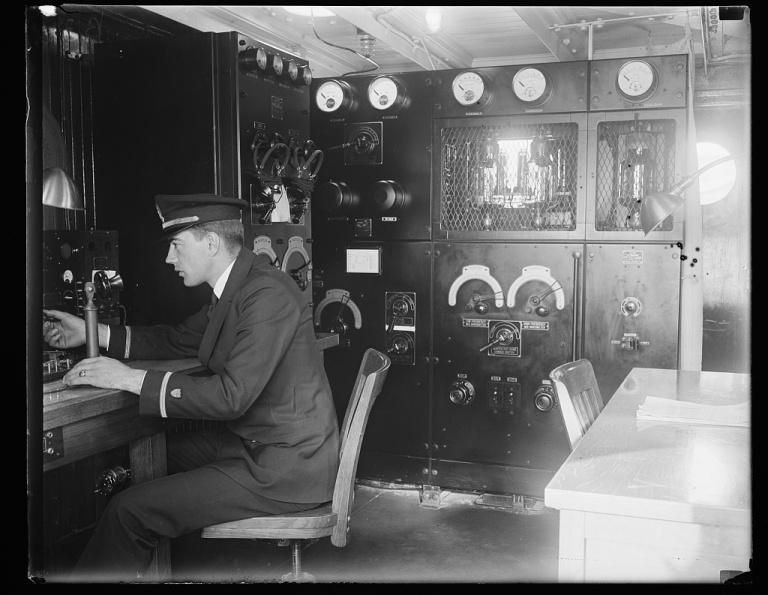
Caption: Biggest and costliest yet. This is the radio room on the U.S. Coast Guard Cutter Chelan, the newest cutter of the service now anchored at the Navy Yard, Washington D.C. This radio room houses three transmitters and three receiving sets. On the maiden trip, she picked up an SOS and towed schooner 1,500 miles, a record tow. Ensign Leslie B. Tollaksen, is shown in the photograph. Harris & Ewing, photographer. 1928 November 26. LOC LC-H2- B-3101 [P&P]

While looking into the sinking of U-853, the next to last U-boat sunk during World War II, I learned about the career of a largely unrecognized Coast Guard Officer, Leslie Bliss (Tolley) Tollaksen (1903-1973), Cdr., USCG. The story also links the next to last US warship sunk in the Battle of the Atlantic, USS Eagle 56, the last US merchant ship sunk in the Battle of the Atlantic, SS Black Point, and a cutter, USCGC Chelan, turned Royal Navy sloop that sank an Italian submarine in the Atlantic.

It also brought to mind a couple of possible names for future Offshore Patrol Cutters.

Commander Leslie B. Tollaksen:

We see Tollacksen in the photo above as a fresh caught ensign aboard USCGC Chelan. From a genealogy page:

Tollaksen “attended the University of Washington for two years before going and graduating from the US Coast Guard Academy in New London, Connecticut. He graduated from The USCG Academy in the Class of 1927, a year early to man the ships chasing down rum runners.

As a young Lieutenant, he was assigned to the US Coast Guard HQ in Washington, DC. He helped establish “Radio Washington” the telegraph station on Telegraph Road in Washington, DC, and also served as Aid to the Secretary of the Treasury, Henry Morgenthau, Jr. (At that time, his sister worked in the typing pool for President Franklin D. Roosevelt’s White House).

Leslie, about 1937 was the first US Coast Guard Officer selected for Post Graduate School at MIT.

Leslie, during WWII, and in command of the USS Moberly, sank the LAST German U-Boat U-853. U-8533 was a Type IXC/40 U-Boat, and lays on the bottom off Block Island…”

USCGC Chelan

USCGC Chelan was one of ten Lake Class cutters loaned to the British as part of the Lend Lease program.

USCGC Chelan as she looked in WWII in service with the Royal Navy as HMS Lulworth (Y60)

From Wikipedia:

On 14 July 1942, Lulworth was escorting Convoy SL 115 when she depth charged the Italian submarine Pietro Calvi and forced her to surface. She then open gunnery fire on Pietro Calvi, further damaging her, and Pietro Calvi’s crew scuttled her and abandoned ship; 35 members of Pietro Calvi’s crew survived.

The Italian submarine, Pietro Calvi, had previously sunk six Allied vessels, totaling 34,193 gross tons, including two American tankers.

U-853 

U-853 was a Type IXC/40 long range U-boat commissioned 25 June 1943. In July 1944 it had been fitted with a new device, a Dutch invention, a snorkel that allowed it to run its diesels and recharge its batteries while submerged, with only a small mast protruding above the water. U-853 had not been particularly successful. It had been attacked twice by Allied aircraft on 25 March 1944 and 17 June 1944. It had had two fruitless war patrol of 67 and 49 days, before the new commanding officer took over, 1 Sept. 1944.

Oberleutnant zur See Helmut Frömsdorf

It may be an indicator of the state of the German Navy that the new U-boat commander, Helmut Frömsdorf, was only 23 when he departed for his first and final patrol as CO on 23 Feb. 1945. He had served on U-853 for four years prior to being selected for command. From the time he had assumed command, including ten days moving from ports in Germany to Stavanger, Norway, the U-boat had been underway a total of only 83 days when U-853 and the crew of 55 was lost with all hands.

Hitler committed suicide on 30 April 1945. His successor was Admiral Donitz.

On 4 May, he issued orders that all Germans forces would surrender and, as part of the surrender process, U-Boat Headquarters sent the following message that same evening:

ALL U-BOATS. ATTENTION ALL U-BOATS. CEASE-FIRE AT ONCE. STOP ALL HOSTILE ACTION AGAINST ALLIED SHIPPING. DÖNITZ.

The order was to become effective at 0800 the following morning.  However, of the 49 boats then at sea, several were submerged and would not receive the message.  Among them was the U-853.

She is now a dive site:

This boat lies in 130 feet (42m) deep waters roughly 6 miles north east of Block Island and south of Newport, USA. The boat still contains remains of most of the 55 men who perished when she was sunk on May 6, 1945, in the last U-boat action as such in WWII.

USS Eagle 56 (PE-56), 430 tons, Commissioned 26 Oct. 1919. Sunk 23 Apr. 1945.  Automaker Henry Ford built 60 Eagle Boats for World War I, but none arrived before the Armistice and the Navy had discarded all but eight of them by WWII. (Navy)

Eagle 56:

Eagle 56 was nominally a subchaser, but an old and obsolete one. It was being used to tow targets when U-853 attacked and sank it.

At noon on 23 April 1945, Eagle 56 exploded amidships, and broke into two pieces 3 mi (4.8 km) off Cape Elizabeth, Maine. The destroyer Selfridge was operating near Eagle 56 and arrived 30 minutes after the explosion to rescue 13 survivors from the crew of 62. Selfridge obtained a sharp, well-defined sonar contact during the rescue and dropped nine Mark IX Mod 2 depth charges without obvious result.  According to a classified Navy report, U-853 had been operating in the waters off Maine.  At a Naval Board of Inquiry in Portland the following week, five of the 13 survivors claimed to have seen a submarine. Several spotted a red and yellow emblem on the submarine’s sail.

The Board of inquiry, however, concluded that the sinking had been the result of a boiler explosion. The record was not corrected until 2001.

In June 2001, Purple Heart medals were awarded to three survivors and the next of kin of those killed.

The wreck was located in June 2018, five miles (8.0 km) off the coast of Maine.

A commemorative plaque was erected on the grounds of Fort Williams Park near Portland Head Light.

“Seen from an airship from ZP-11, SS Black Point steams off the east coast of the U.S., some 10 miles east of the entrance to the North River on 22 September 1944. A sailor on her foc’sle is probably watching the K-ship from which the picture was taken. The SS Silver Star Park steams in the background, both ships’ hulls reflecting hard service
National Archives photo 80-G-208086″

SS Black Point:

The SS Black Point was a 5,353 ton collier (coal carrying ship). She was 395′ (112.35 meters) long, with a beam of 66′ (16.82 meters) and a draft of 27′ (9.3 meters). She was the last US Flag vessel sunk during World War II. She was torpedoed 1740 May 5, 1945. She capsized and sank 25 minutes later, with the loss of 12 of her crew of 46. The torpedoing was observed by the crew of Judith Point Lighthouse and reported immediately.

“”COAST GUARD DEPTH CHARGES SCORE IN LAST U-BOAT KILLING: Off Point Judith, Rhode Island, crewmen of the Coast Guard-manned frigate watch the surface boil as a pattern of depth charges scores the final kill in the long, uphill battle against Nazi U-boats in the Atlantic. Working in teamwork with three Navy vessels, the Coast Guard ship destroyed the submarine on Sunday, May 6, 1945. The Moberly operates as a unit of the Atlantic Fleet.” Moberly has just fired a hedgehog pattern as the charges drop in a circular pattern ahead of the frigate.
U.S. Coast Guard photo 4557″

USS Moberly (PF-63) Off San Francisco, CA in early 1946.
Naval Historical Center photo NH 79077

USS Moberly was one of 75 Tacoma class patrol frigates manned by Coast Guard crews.

The only anti-submarine unit in the immediate vicinity was the remnants of a task group, TG 60.7 that had left New York at 1200 hours that day. It had arrived earlier after safely escorting the remaining vessels of GUS-8446, an 80-ship convoy that had originated in Oran and Casablanca. Several of the task group members were bound for the Charlestown Naval Base where the ships were scheduled to undergo extensive overhaul: destroyer Ericcson (DD-440), destroyer-escorts Amick (DE-168) and Atherton (DE-169), and the patrol frigate Moberly (PF-63). Accordingly, Eastern Sea Frontier headquarters issued dispatch 052223 diverting TG 60.7 to the sinking site and ordering various support activities to assist in discovering the intruder as needed.

Destroyer Ericcson, with the task group commander, Cdr. Francis C.B. McCune, aboard, was then under the control of a Coast Guard pilot in preparation for entering the Cape Cod Ship Canal and could not reach the scene for some time. Thus, Coast Guardsman Tollaksen found himself the Senior Officer Present and de facto commander of TG60.7.

A blow by blow of the search for, and attacks on, U-853 can be found here.

USS Moberly and USS Atherton share credit for the sinking.

For Consideration:

The Offshore Patrol Cutters are to be named after famous cutters. We have eleven names so far, but there are at least 14 to go. Perhaps we might name one for Moberly as representative of the 75 ships manned by Coast Guard crews.

We might also consider naming one for the Lowe (DE-325/WDE-425) to represent the 30 destroyer escorts the Coast Guard manned during WWII. 18 March 1945: Lowe, in company with Coast Guard manned destroyer escorts Menges (DE 320), Mosley (DE 321), and Pride (DE 323) sank the German submarine U-866, south of Nova Scotia. Lowe was primarily responsible for the sinking. Not only was she Coast Guard manned during WWII, but she also served as a Coast Guard cutter for almost three years, 20 July 1951 to 1 June 1954.


“SECNAV Nominee Commits to Advancing Navy’s Arctic Presence” –Seapower

Kenneth J. Braithwaite, U.S. ambassador to Norway and the nominee to become the next Navy secretary, in 2018. During his Senate Armed Services Committee confirmation hearing on May 7, Braithwaite spoke of the importance of the U.S. foothold in the Arctic to counter “Great Power Competitors” China and Russia. U.S Navy/Mass Communication Specialist 1st Class Theron J. Godbold

The Navy League on-line magazine is reporting that the current nominee for Secretary of the Navy, a former Navy P-3 patrol plane commander, is saying that he will be a strong advocate for a Navy presence in the Arctic.

Braithwaite also told Sen. Dan Sullivan (R-Alaska) that he would be a strong advocate for a strategic Arctic port large enough to handle destroyers and icebreakers. The nearest such port is Anchorage, Alaska, which is 1,500 miles from the Arctic Circle, Sullivan added.

“The great news is the United States Navy has been up there for many, many years,” Braithwaite said. “You may not see them, but they’re up there. As it begins to become more navigable on the surface, we also need to make sure that our presence is noted.”

“We continue to need to be vigilant,” he added. “We continue to need to be present. That requires an adequate-size Navy to be there.”

“It will be a priority of mine.”

We talked about Arctic port development earlier: