“Japan Coast Guard protects fishing boat from Chinese vessels near Senkaku islands” –Stars and Stripes

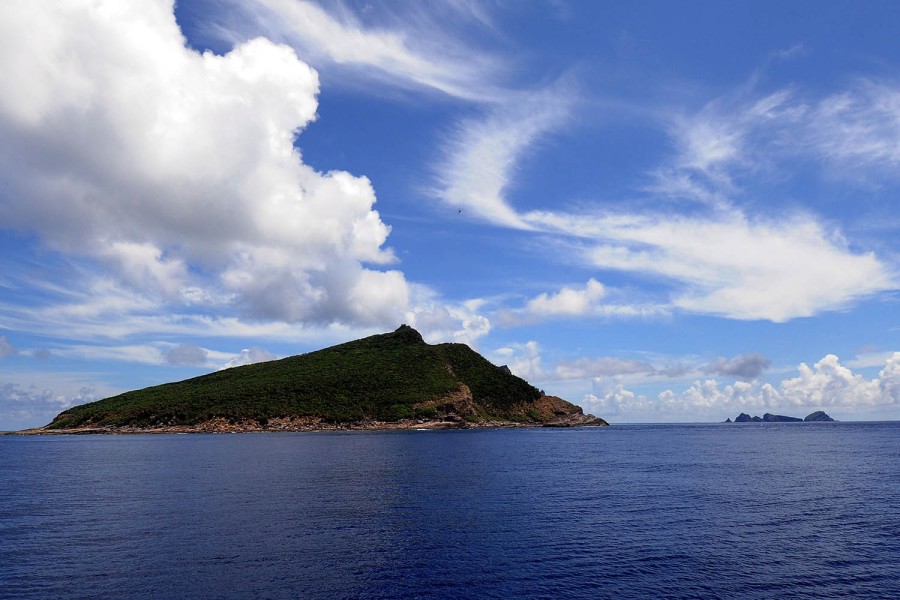
The Senkaku islands in the East China Sea are administered by Japan but also claimed by China and Taiwan. CABINET SECRETARIAT OF JAPAN

Stars and Stripes reports the latest of an increasingly frequent series of incursions by the Chinese in an attempt to intimidate Japanese interests in the Senkaku islands.

The report identified the Chinese vessels only as “naval vessels.”

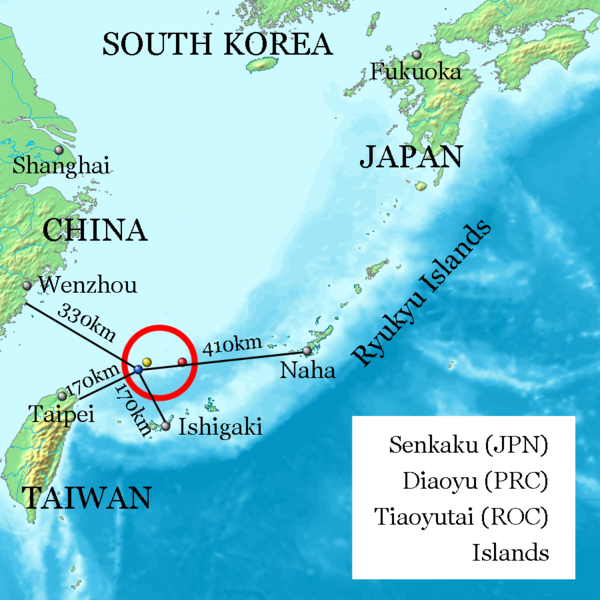
Uotsuri-shima / Diaoyu Dao (Blue, west end and nearly south end, 25°44′33″N 123°28′17″E at Mount Narahara), Kuba-shima / Huangwei Yu (Yellow, north end, 25°55′24″N 123°40′51″E at Mount Chitose), Taishō-tō / Chiwei Yu (Red, east end, 25°55′21″N 124°33′36″E at the peek) referenced on Geospatial Information Authority of Japan and distances referenced on Ministry of Foreign Affairs of Japan. Every distances of the map show coast to coast, but distances of the coast of Okinawa Island and Naha City, and the coast of Ishigaki-Island and Ishigaki City are quite near on the map. Author: Jackopoid, from Wikipedia.

“Autonomous vessel operations in the Arctic: Lessons learned from the Summer 2020 Mapping Mission” –NOAA

Three of six saildrones getting ready for deployment from Dutch Harbor, AK, on the 2019 Arctic mission. Photo Credit: Saildrone, Inc.

Since the Coast Guard is currently testing the “Saildrone,” thought the experience reported by NOAA on this 6,000 mile mission was very interesting.

Autonomous vessel operations in the Arctic: Lessons learned from the Summer 2020 Mapping Mission

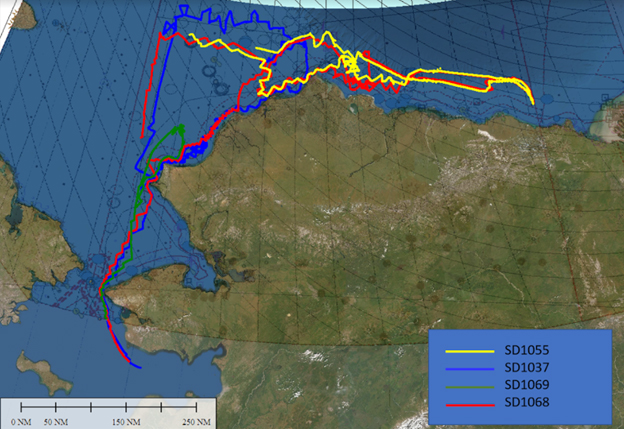
Navigation tracks of all four saildrones during the nearly two-month deployment as part of the North Slope Arctic mapping mission. Credit: TerraSond.

Thanks to Mike B for the link. 

“Coast Guard, pleasure craft collide near Manatee Pocket” –News Release

See the source image

Photo: Coast Guard 33 foot Special Purpose craft like the one involved

We will probably hear more about this

united states coast guard

News Release

U.S. Coast Guard 7th District Southeast
Contact: 7th District Public Affairs
Office: 305-415-6683
After Hours: 786-367-7649
7th District online newsroom

Coast Guard, pleasure craft collide near Manatee Pocket

MIAMI — A Coast Guard Station Fort Pierce 33-foot Special Purpose Craft—Law Enforcement boat crew and a 23-foot pleasure craft with five people aboard were involved in a collision Saturday near Manatee Pocket. 

The people aboard the pleasure craft were embarked by the Coast Guard boat crew onto the Station Fort Pierce small boat and taken to Sandsprit Park. One person from the pleasure craft was reported to be injured and was transported to Martin County Memorial Hospital for treatment. No other injuries were reported. 
As a result of the collision, the pleasure craft began taking on water and became submerged in the channel. The Martin County Sheriff’s Office is working with commercial salvage providers to remove the pleasure craft from the water.

The Coast Guard is working with the Florida Fish and Wildlife Conservation Commission to conduct a thorough investigation into the incident.

“Seeing Below The Surface: Ladar Trials Promise Enhanced Vessel Safety” –Maritime Executive

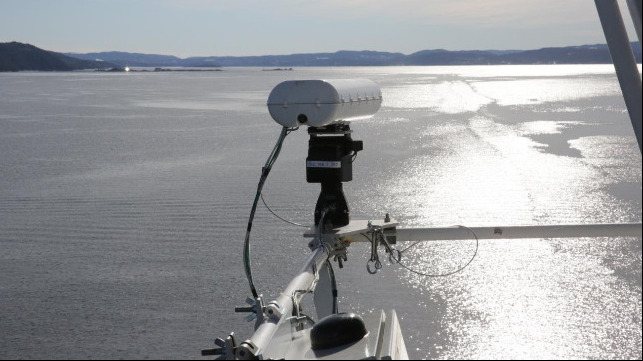
Ladar allows Color Line’s officers to perform safe deviation from the set course, maximizing fuel efficiency without increased risk of grounding.

Maritime Executive reports that,

Norwegian operator Color Line has been trialing Ladar, a light-based laser technology anti-collision system designed to identify floating objects on or under the surface of the water, including drifting fishing nets, logs, containers and ice, as well as plastic and other flotsam.

Wonder if this might be useful in finding people in the water, especially in rough weather and at night?

“The system we tested was better at detecting smaller items than we had anticipated, but not as good on metal objects in still water.”

The reason for this: waves caused by wind increase disturbance in the water around an object, making it easier to detect. “This includes up to storm level winds,” Dokken confirms. “The more activity in the water, the better.”

Frequently we need to go close to shore to execute a rescue. This could conceivably allow us to get closer without running aground, than we would using charts alone.

Might also be useful for the Waterways Commerce Cutters that operate in rivers with shifting bottom contours.

Really the Navy and Marines should be interested in this too.

Sounds like a good project for the R&D Center.

“The Value of an Extra C – The New C5ISC” –MyCG

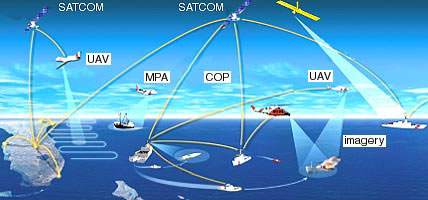
An old Deepwater Concept illustration, but you get the idea

Passing this along, because it looks like an important reorganization. It appeared on the MyCG website that I recently added to the “Recommended Blogs” list. This seems to be putting a greater emphasis on cyber. The “Brochure” linked at the bottom of the story gives a nice breakdown of the organization and responsibilities.


The Value of an Extra C – The New C5ISC

By Shana Brouder, MyCG Writer

The Coast Guard has completed the single largest organizational restructuring of a unit in the past decade. In June, the Command, Control, Communications, Computers, Cyber, and Intelligence Service Center (C5ISC) was established. It replaced its counterpart, the Command, Control, Communications, Computers, and Information Technology Service Center (C4ITSC) as well as assimilated the three centers of excellence: the Command, Control, and Communications Engineering Center (C3CEN), Telecommunication and Information Systems Command (TISCOM), and the Operations Systems Center (OSC).

The reorganization encompasses over 800 military and civilian personnel. The alignment promises to improve the Coast Guard’s ability to deliver technology solutions at the “speed of need” for mission success. The functional structure of this new unit will underpin and enable the Coast Guard’s Technology Revolution’s five lines of effort: Cutter Connectivity; Modernizing C5I Infrastructure; Cyber Readiness; Software, Mobility and Cloud; and Data for Decisions.

“The commissioning of the new C5I Service Center represents the culmination of over six years of effort from personnel across the Coast Guard to transform the C4ITSC into an organization that will more effectively and efficiently deliver technology solutions for mission success,” explained Capt. Russell Dash, the new C5ISC commander. “Our new structure supports the Coast Guard directly through our six Product Lines, which serve as the focal point and center of gravity for our service delivery. Our robust Shared Service Divisions are designed to make our Product Line Managers successful by providing consistent, standard support including business operations, engineering and infrastructure services, workforce and facilities management, budget and finance, and asset and logistics services. The new organization is now poised to make the Commandant’s Tech Revolution a reality and deliver C5I mission support at the speed of need.”

By standardizing processes and creating intentional mission alignment with other Coast Guard units who also work in the informational technology space (e.g. Surface Forces Logistics Center [SFLC], Aviation Logistics Center [ALC], Shore Infrastructure Logistics Center [SILC], Health, Safety and Work-Life Service Center [HSWL], and Coast Guard Cyber Command [CGCYBER]), the new C5ISC structure enables faster, more nimble responses to technology-related problems.

This fundamental shift in how the Coast Guard delivers C5I capabilities, unifies efforts under a single leadership structure and follows industry-proven standard processes, which will drive efficiency and consistency in every action moving forward.

The few months since the C5I Service Center’s establishment have already reaped successes. For example, the Fleet Logistics System Mobile Asset Manager (FLS-MAM), the supply management tool used by cutter maintenance and supply personnel, was rewritten to ensure this vital program would stay safe and secure from outside threats, such as spyware or other malicious software. Another example includes the delivery of essential satellite communications equipment to the medium endurance Coast Guard Cutter Bear. Members of the C5ISC worked with other offices to provide the Bear, the important backup Military Satellite Communications (MILSATCOM) system it needed to deploy on-time, despite tight time constraints.

Additionally, the C5ISC shared services divisions and product lines partnered with cyber operations and the Eighth District to provide a unified C5I response, which supported contingency operations for Hurricanes Isaias, Laura, Sally, and Tropical Storm Beta.

The C5ISC workforce has been aggressively working to improve the Coast Guard’s information technology infrastructure. More specifically, they have been working to identify the constraints within our external network connections that impact our capacity in the information technology arena and overall cyber resiliency. This became even more apparent during the COVID-19 pandemic and the subsequent increase the Coast Guard workforce’s teleworking. This dramatic increase in using the Coast Guard’s external network highlighted gaps that the C5ISC is now better placed to resolve, thanks to a more streamlined and cohesive set up. Through various partnerships, including Cyber and the Defense Information Systems Agency (DISA), the C5ISC has made significant headway improving the Coast Guard’s ability to meet missions and strategic goals as outlined in the Technology Revolution Roadmap.

If you have access to the Portal, more information on the C5I Service Center can be found here.

Resources:

Coast Guard Vice Commandant tests positive for COVID-19

Vice Admiral Charles W. Ray

This is just an FYI in case somehow you missed it. Apparently this has resulted in almost the entire upper echelon of the US military going into quarantine. At least it does show that the Coast Guard does meet with top US Pentagon leadership including CJCS, the CNO, the Deputy Commandant of the Marine Corps, and the heads of the Air Force, Army, Cyber Command, and NSA.

News Release:

U.S. Coast Guard Headquarters
Coast Guard Vice Commandant tests positive for COVID-19
WASHINGTON – On Monday, the Vice Commandant of the Coast Guard, Admiral Charles Ray, tested positive for COVID-19. He was tested the same day, after feeling mild symptoms over the weekend.
The Coast Guard is following established policies for COVID, per CDC guidelines, to include quarantine and contact tracing. According to CDC guidelines, any Coast Guard personnel that were in close contact will also quarantine.
In accordance with established Coast Guard COVID policies, Admiral Ray will be quarantining from home.
Since April, the Coast Guard has been following CDC, DoD and DHS guidelines for temperature testing, social distancing to the greatest extent possible, and the wearing of masks when social distancing is not possible. The Coast Guard remains ready to ensure our Nation’s maritime safety, security and stewardship.

Coast Guard will begin testing unmanned surface vehicles off Hawaii

At left, a concept photo of the unmanned surface vehicle that will be demonstrated by Spatial Integrated System in the maritime domain awareness technology evaluation by the Coast Guard Research and Development Center this summer. At right, the technology evaluation will also include a SailDrone, shown here during a project with the National Oceanic and Atmospheric Administration Ocean Climate Stations.

Just passing this new release along, in view of possible future significance and unusual nature. More info here.

united states coast guard 
News Release U.S. Coast Guard 14th District Hawaii and the Pacific

Coast Guard will begin testing unmanned surface vehicles off Hawaii 
HONOLULU — The U.S. Coast Guard Research and Development Center, in partnership with local Coast Guard units, will be conducting test and evaluation of unmanned surface vehicles off the south shore of Oahu from October 7th through November 5th.

The tests will focus on autonomous vessel systems from Saildrone and Spatial Integration Systems, in addition to a USCG owned autonomous research vessel made by Metal Shark.

This evaluation will examine each vessels’ ability to provide persistent maritime domain awareness, especially in remote areas of the oceans. While potentially applicable to many Coast Guard missions, there is potential these technologies will help enable the Coast Guard to better protect critical natural living marine resources from Illegal, Unreported, and Unregulated (IUU) fishing and other illicit activities.

RADM Eric Jones’ Comments on the U.S.C.G.’s D7 Operations and the Fast Response Cutter at Virtual SNA 2020 –by Peter Ong

Guest Author Peter Ong is back, to give us a taste of the 2020 Surface Navy Association comments from Seventh District Commander Eric Jones.

The surprise here for me, was that they are looking for a way to provide an airborne use of force package to support the Webber Class WPC. The system they need may have already been developed as a palletized system for the airframe the Coast Guard designates the HC-144. There are currently HC-144s based in Miami. 


“To be Battle-Ready is to always be ready.”—RADM Eric Jones (U.S.C.G.) at SNA 2020

 United States Coast Guard’s District Seven Operations and Assessment

At the Surface Navy Association 2020 (SNA 2020) in August 25, 2020, virtual due to COVID-19, RADM Eric Jones (U.S.C.G.), stressed Readiness and Responsiveness in his Question and Answer session on-screen with “Battle-Ready Cutters.”  He emphasized, “Battle-Ready Cutters are more than ships. They’re the right team; the right training; the right partnerships; the right authorities; the right technology,” said Jones. “Frankly, the right Force Package. Battle-Ready Cutters are greater than the sum of their parts to meet both National Security and Regional Demands across the full spectrum of military operations, law enforcement, environment response, and Humanitarian Assistance.”
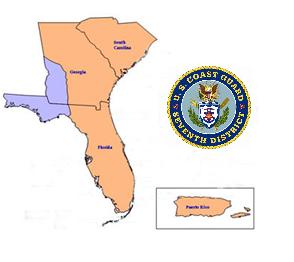
U.S.C.G. Area of Operations District Seven covers waters around South Carolina,
Georgia, Florida, the Caribbean, and Puerto Rico–Map: U.S.C.G. D7 Homepage
(Area in blue is part of District 8. District 7/8 boundary in the Gulf of Mexico extends 199 degrees true from the coastal boundary to the Mexican coast–Chuck)

RADM Jones is responsible for District Seven’s (D7) Atlantic Area of Operations that cover the Southeastern United States, the Caribbean, and the (Eastern–Chuck) Gulf of Mexico.  Headquarter in Miami, Florida, D7’s District details and operational duties include:

  • 8 million square miles with 18,000 miles of coastline from South Carolina to South America
  • Covers and patrols 34 foreign nations and territories
  • Interfaces with four Combatant Commands (COCOMs)
  • Has 3,600 Active Duty personnel
  • Has 745 Reservists
  • Has 173 Civilians
  • Has 4,400 Auxiliary personnel
  • Icebreaking excepted (not covered at SNA 2020)
  • Provides protection for Cape Canaveral rocket launches
  • Provides U.S. Navy Ballistic Missile Submarine protection, but that is outside the scope of the Rear Admiral’s discussion at Virtual SNA 2020
  • District 7 has aging Medium Endurance Cutters (WMEC) of the Famous-class and Reliance-class Cutters, and new FRCs. D7 possess the largest fleet of 19 Fast Response Cutters in the U.S. Coast Guard. (Soon to be 20 FRCs–Chuck)
  • Duties include combating the Drug War, pursuing and apprehending Human smugglers, Search and Rescue, and responding to disasters.”1

“We have several countries worried about the flow of weapons and bulk cash from the U.S.A. into their nations,” RADM Jones said. “That is where having SOUTHCOM [Southern Command] as a local and very strong partner helps.” Jones stated that in a given year, there are around 20 to 30 Coast Guard operations in the Caribbean.

During the COVID-19 pandemic, D7 Cutters conducted 1,200 ship boardings for illegal fishing inspections and issued numerous citations when many at-sea fishermen thought no one in the U.S. government was looking for, policing, or paying attention because of the pandemic and shelter-in-place Lockdown.

Coast Guard Cutters and crews are going 40, 50, and even 70 days at sea even with COVID.  “This is what it takes to remain Battle-Ready,” said Jones.

“District Seven Cutters and crew interdicted 1,500 migrants at the Southeastern region of the United States at sea [north of the Greater Antilles]. In addition, Cutters and crews also interdicted 116 migrants off of Florida, and over 500 migrants bound for Puerto Rico.”

RADM Jones said that SOUTHCOM was boosted in the past five months with an infused force of, “17 Coast Guard Cutters and 7 Navy ships with embarked Coast Guard Law Enforcement Detachments, as well as four Allied ships in the Caribbean region, and continues to support ongoing U.S. government as well as internationally supported government operations, reducing the availability of illicit drugs and saving countless lives in the United States and throughout the region.”  The Allied ships in the region have Flight-Decks and are from the United Kingdom and the Netherlands.

RADM Jones continued, citing that the joint “Battle-Ready Coast Guard and Navy fleet in the Caribbean have interdicted 14 suspected smuggling vessels, seizing 6,200 kilograms of cocaine and 7,900 pounds of marijuana and detaining 47 suspected narco-traffickers.  In addition, this fleet has disrupted an additional 10,400 kilograms of cocaine and 6,400 pounds of marijuana.  All told, interdiction of these drugs has placed a $600 million dent in drug profits.”
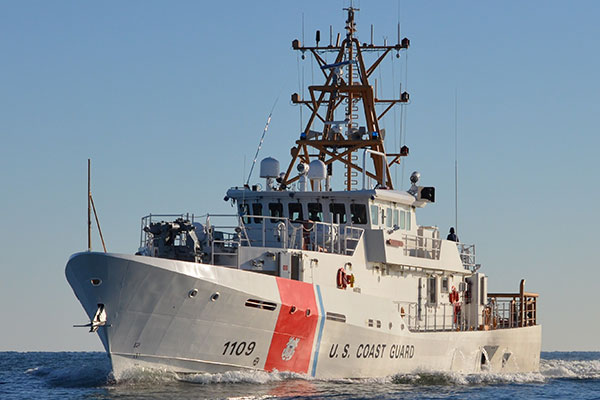
USCGC Kathleen Moore (WPC-1109)

The U.S.C.G. Fast Response Cutter, Sentinel-class

According to the United States’ official Coast Guard website, “The fast response cutter is capable of deploying independently to conduct missions that include port, waterways and coastal security; fishery patrols; search and rescue; and national defense.”

Characteristics

  • Number Planned: 64
  • Length: 154 feet
  • Beam: 25 feet
  • Draft: 9 feet 6 inches
  • Displacement: 353 long tons
  • Maximum Speed: 28+ knots
  • Range: 2,500 nautical miles
  • Endurance: Five days
  • Crew: 24

Features

  • Enhanced response time with a minimum top speed of 28 knots
  • Ability to conduct missions on moderate seas up to transit speed for eight hours in all directions
  • Ability to survive in very rough seas up to loiter speed for eight hours in all directions
  • Armed with a stabilized 25-mm machine gun mount and four crew-served .50-caliber machine guns
  • Fully interoperable command and control systems with Coast Guard existing and future assets and with the departments of Homeland Security and Defense.”2

RADM Eric Jones was asked a question at Virtual SNA 2020 about his thoughts on the Coast Guard’s Sentinel-class (WPC) Fast Response Cutter (FRC) now that all 19 are in the D7 Area of Operations and mature with sailing and the FRC crews’ working experience.

“They’re fantastic assets. They’re very capable. But we/they do want to use them as interceptors and pouncers so we’re always looking for the best way to provide maritime patrol aircraft and intelligence to make sure that we got them in the right spot to intercept the cases as they come across. Very capable crew; it is not a 110 [110-foot Island Class patrol boat] . It has over twice the tonnage of a 110.  Its endurance is well beyond what a 110 can do. Far more comfortable for the crew and having that stern-launched small boat allows them to do intercepts.  And as we were discussing earlier, we’re looking for ways to provide airborne use-of-force at a similar Force Package to what you see in the deep Caribbean or Eastern Pacific to allow the AUF [Airborne Use of Force] to combine forces with the FRCs to successfully prosecute cases that move across the Central Caribbean from the north coast of Columbia and Venezuela to the south coast of Puerto Rico and the Dominican Republic.”

—RADM Eric Jones (U.S.C.G.) at SNA 20203

References:

1 Informative slide about U.S.C.G. D7 Operations at RADM Eric Jones presentation at Virtual SNA 2020.

2 WPC-1101. U.S.C.G. Sentinel-class Fast Response Cutter.  Referred from https://www.dcms.uscg.mil/Our-Organization/Assistant-Commandant-for-Acquisitions-CG-9/Programs/Surface-Programs/Fast-Response-Cutters/

3 RADM Eric Jones, U.S.C.G. at Virtual Surface Navy Association, August 25, 2020

Modern Merchants Can Be Very Big, and Very Hard Targets

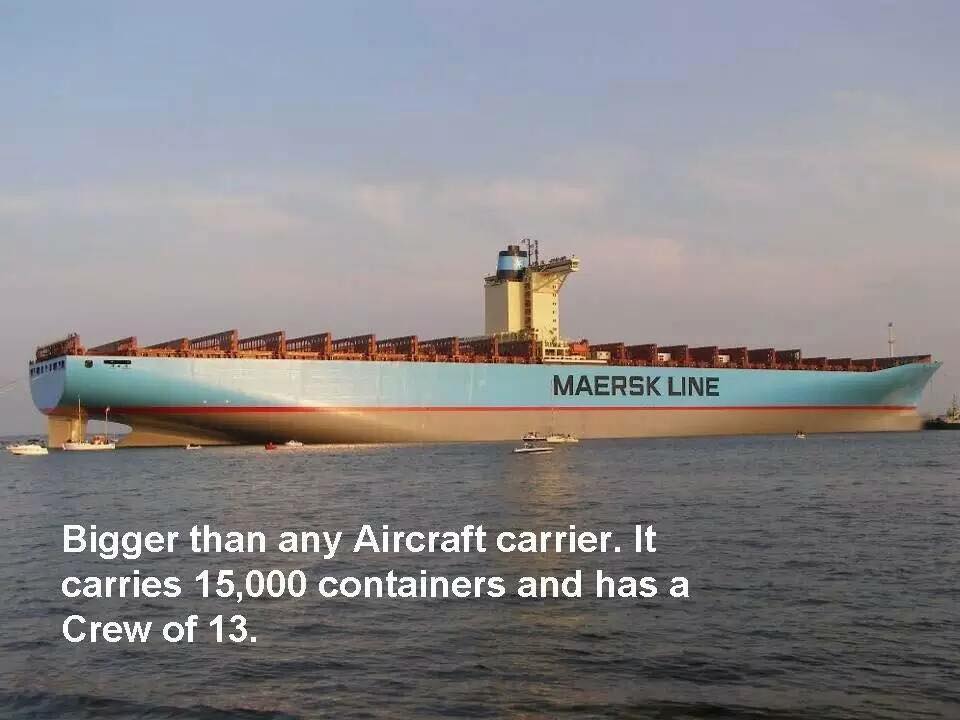
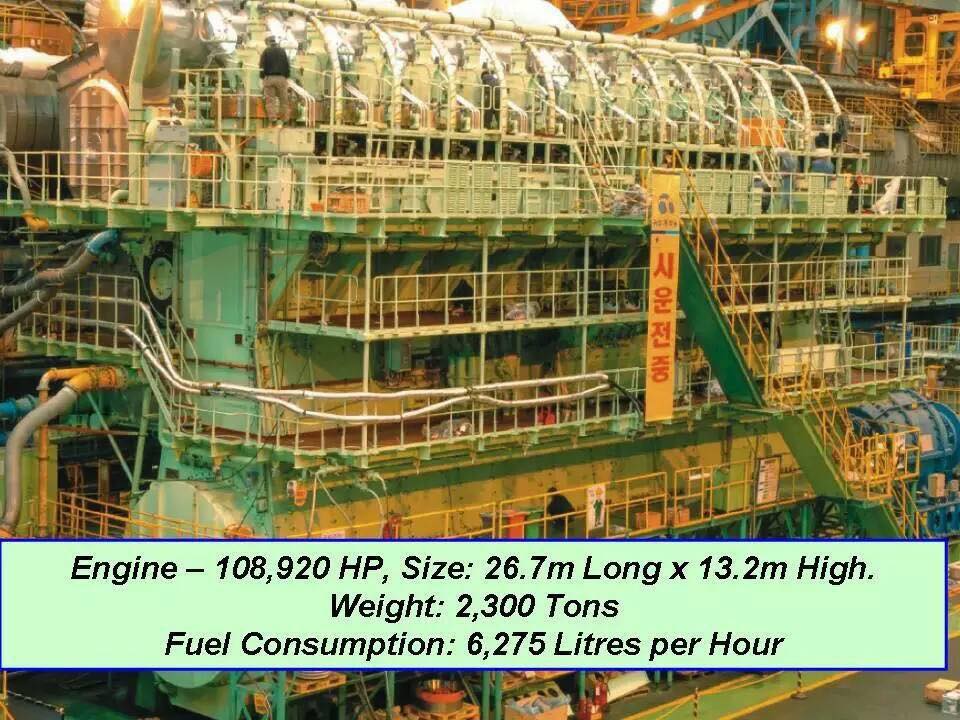
Just wanted to pass along some photographs I ran across recently, to show why the Coast Guard might have a hard time stopping a modern merchant ship with our 25 and 57mm guns.

This is an extreme example, but it is the way the industry is going. The ship is 1302 ft in length, 207 ft of beam, and has a maximum speed of 31 knots. That means it can transit the 200 nautical miles from the edge of the EEZ to the coast in less than 6.5 hours.

Thanks to James Udan for bringing this to my attention.

“Coast Guard fields new Glock pistols” –UPI, Departure from DOD Standard

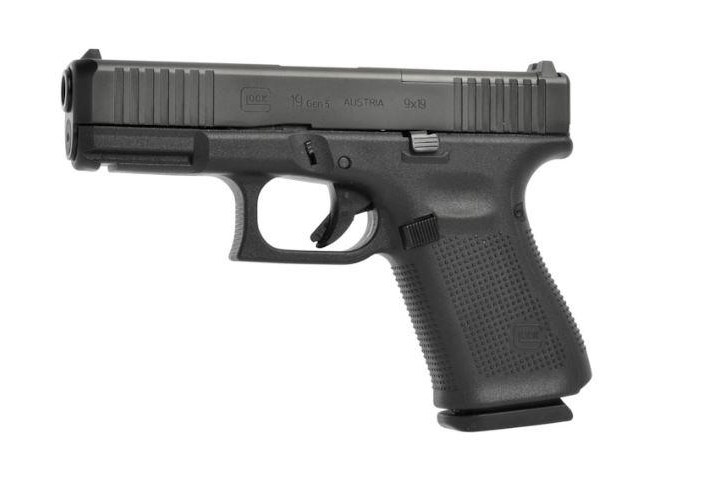
The U.S. Coast Guard began fielding the new Glock 19 Gen5 MOS pistol this week, according to the company. Photo courtesy of Glock Inc.

UPI is reporting that the Coast Guard is introducing a new pistol,

The Glock Gen5 MOS pistol will replace the .40mm Sig Sauer P229 DAK which the Coast Guard has used since 2006. The Army, Navy and Marines chose to replace the aging handgun with Sig Sauer’s M18 Modular Handgun System, and have begun rolling out the new weapons to

units around the world.

Cannot help but wonder if departing from the DOD standard is a good idea.