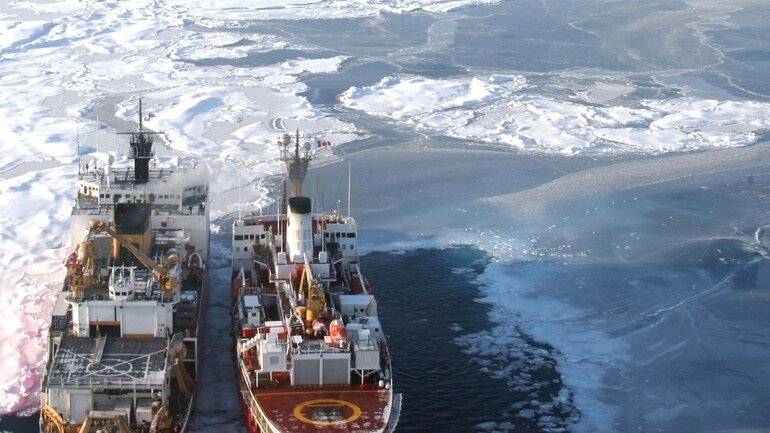
USCGC Healy and CCGC Louis S St-Laurent (Photo by Jessica Robertson, US Geological Survey)
Defense News’ Early Bird Brief has, for some reason, provided us with a whole series of stories related to the Arctic. For Convience I have linked them below.
|
|
|
|
|
|
|
|
|

USCGC Healy and CCGC Louis S St-Laurent (Photo by Jessica Robertson, US Geological Survey)
Defense News’ Early Bird Brief has, for some reason, provided us with a whole series of stories related to the Arctic. For Convience I have linked them below.
|
|
|
|
|
|
|
|
|
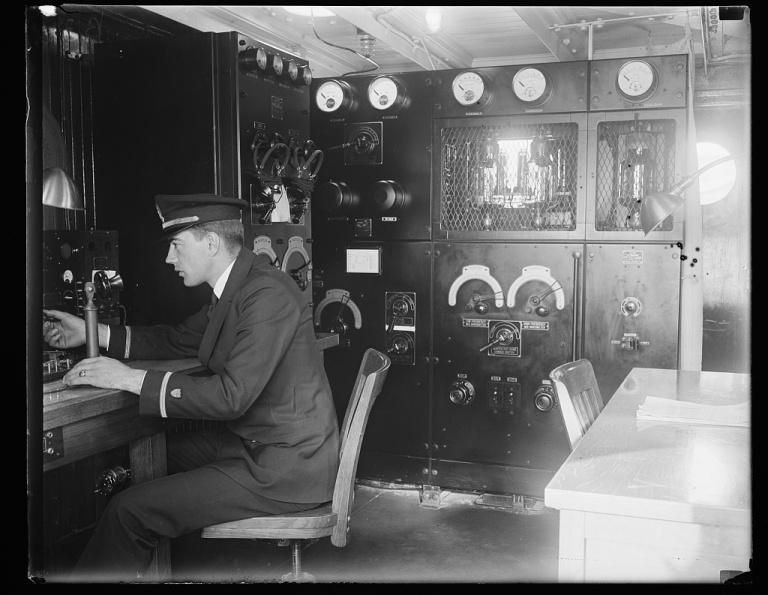
Caption: Biggest and costliest yet. This is the radio room on the U.S. Coast Guard Cutter Chelan, the newest cutter of the service now anchored at the Navy Yard, Washington D.C. This radio room houses three transmitters and three receiving sets. On the maiden trip, she picked up an SOS and towed schooner 1,500 miles, a record tow. Ensign Leslie B. Tollaksen, is shown in the photograph. Harris & Ewing, photographer. 1928 November 26. LOC LC-H2- B-3101 [P&P]
It also brought to mind a couple of possible names for future Offshore Patrol Cutters.
We see Tollacksen in the photo above as a fresh caught ensign aboard USCGC Chelan. From a genealogy page:
Tollaksen “attended the University of Washington for two years before going and graduating from the US Coast Guard Academy in New London, Connecticut. He graduated from The USCG Academy in the Class of 1927, a year early to man the ships chasing down rum runners.
As a young Lieutenant, he was assigned to the US Coast Guard HQ in Washington, DC. He helped establish “Radio Washington” the telegraph station on Telegraph Road in Washington, DC, and also served as Aid to the Secretary of the Treasury, Henry Morgenthau, Jr. (At that time, his sister worked in the typing pool for President Franklin D. Roosevelt’s White House).
Leslie, about 1937 was the first US Coast Guard Officer selected for Post Graduate School at MIT.
Leslie, during WWII, and in command of the USS Moberly, sank the LAST German U-Boat U-853. U-8533 was a Type IXC/40 U-Boat, and lays on the bottom off Block Island…”
USCGC Chelan
USCGC Chelan was one of ten Lake Class cutters loaned to the British as part of the Lend Lease program.

USCGC Chelan as she looked in WWII in service with the Royal Navy as HMS Lulworth (Y60)
From Wikipedia:
On 14 July 1942, Lulworth was escorting Convoy SL 115 when she depth charged the Italian submarine Pietro Calvi and forced her to surface. She then open gunnery fire on Pietro Calvi, further damaging her, and Pietro Calvi’s crew scuttled her and abandoned ship; 35 members of Pietro Calvi’s crew survived.
The Italian submarine, Pietro Calvi, had previously sunk six Allied vessels, totaling 34,193 gross tons, including two American tankers.
U-853
U-853 was a Type IXC/40 long range U-boat commissioned 25 June 1943. In July 1944 it had been fitted with a new device, a Dutch invention, a snorkel that allowed it to run its diesels and recharge its batteries while submerged, with only a small mast protruding above the water. U-853 had not been particularly successful. It had been attacked twice by Allied aircraft on 25 March 1944 and 17 June 1944. It had had two fruitless war patrol of 67 and 49 days, before the new commanding officer took over, 1 Sept. 1944.

Oberleutnant zur See Helmut Frömsdorf
It may be an indicator of the state of the German Navy that the new U-boat commander, Helmut Frömsdorf, was only 23 when he departed for his first and final patrol as CO on 23 Feb. 1945. He had served on U-853 for four years prior to being selected for command. From the time he had assumed command, including ten days moving from ports in Germany to Stavanger, Norway, the U-boat had been underway a total of only 83 days when U-853 and the crew of 55 was lost with all hands.
Hitler committed suicide on 30 April 1945. His successor was Admiral Donitz.
On 4 May, he issued orders that all Germans forces would surrender and, as part of the surrender process, U-Boat Headquarters sent the following message that same evening:
ALL U-BOATS. ATTENTION ALL U-BOATS. CEASE-FIRE AT ONCE. STOP ALL HOSTILE ACTION AGAINST ALLIED SHIPPING. DÖNITZ.
The order was to become effective at 0800 the following morning. However, of the 49 boats then at sea, several were submerged and would not receive the message. Among them was the U-853.
She is now a dive site:
This boat lies in 130 feet (42m) deep waters roughly 6 miles north east of Block Island and south of Newport, USA. The boat still contains remains of most of the 55 men who perished when she was sunk on May 6, 1945, in the last U-boat action as such in WWII.

USS Eagle 56 (PE-56), 430 tons, Commissioned 26 Oct. 1919. Sunk 23 Apr. 1945. Automaker Henry Ford built 60 Eagle Boats for World War I, but none arrived before the Armistice and the Navy had discarded all but eight of them by WWII. (Navy)
Eagle 56:
Eagle 56 was nominally a subchaser, but an old and obsolete one. It was being used to tow targets when U-853 attacked and sank it.
At noon on 23 April 1945, Eagle 56 exploded amidships, and broke into two pieces 3 mi (4.8 km) off Cape Elizabeth, Maine. The destroyer Selfridge was operating near Eagle 56 and arrived 30 minutes after the explosion to rescue 13 survivors from the crew of 62. Selfridge obtained a sharp, well-defined sonar contact during the rescue and dropped nine Mark IX Mod 2 depth charges without obvious result. According to a classified Navy report, U-853 had been operating in the waters off Maine. At a Naval Board of Inquiry in Portland the following week, five of the 13 survivors claimed to have seen a submarine. Several spotted a red and yellow emblem on the submarine’s sail.
The Board of inquiry, however, concluded that the sinking had been the result of a boiler explosion. The record was not corrected until 2001.
In June 2001, Purple Heart medals were awarded to three survivors and the next of kin of those killed.
The wreck was located in June 2018, five miles (8.0 km) off the coast of Maine.
A commemorative plaque was erected on the grounds of Fort Williams Park near Portland Head Light.

“Seen from an airship from ZP-11, SS Black Point steams off the east coast of the U.S., some 10 miles east of the entrance to the North River on 22 September 1944. A sailor on her foc’sle is probably watching the K-ship from which the picture was taken. The SS Silver Star Park steams in the background, both ships’ hulls reflecting hard service
National Archives photo 80-G-208086″
SS Black Point:
The SS Black Point was a 5,353 ton collier (coal carrying ship). She was 395′ (112.35 meters) long, with a beam of 66′ (16.82 meters) and a draft of 27′ (9.3 meters). She was the last US Flag vessel sunk during World War II. She was torpedoed 1740 May 5, 1945. She capsized and sank 25 minutes later, with the loss of 12 of her crew of 46. The torpedoing was observed by the crew of Judith Point Lighthouse and reported immediately.

“”COAST GUARD DEPTH CHARGES SCORE IN LAST U-BOAT KILLING: Off Point Judith, Rhode Island, crewmen of the Coast Guard-manned frigate watch the surface boil as a pattern of depth charges scores the final kill in the long, uphill battle against Nazi U-boats in the Atlantic. Working in teamwork with three Navy vessels, the Coast Guard ship destroyed the submarine on Sunday, May 6, 1945. The Moberly operates as a unit of the Atlantic Fleet.” Moberly has just fired a hedgehog pattern as the charges drop in a circular pattern ahead of the frigate.
U.S. Coast Guard photo 4557″
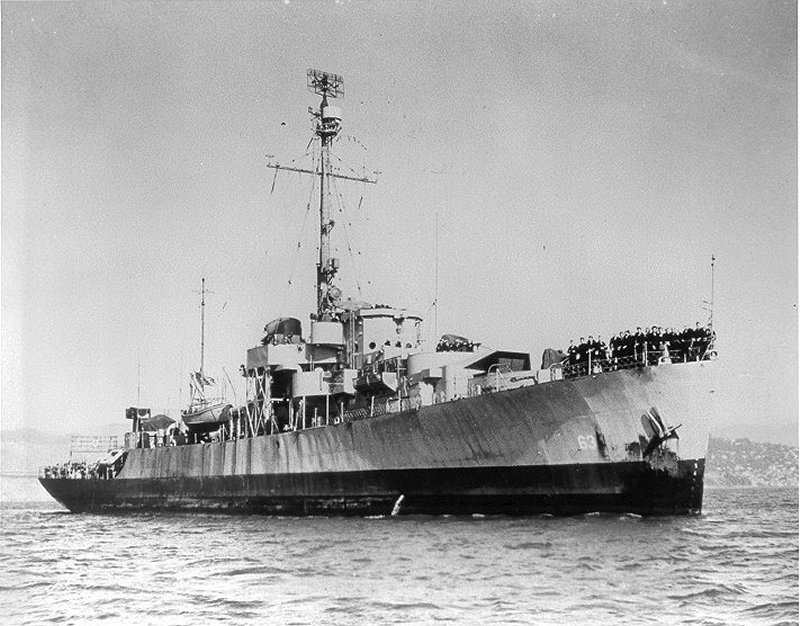
USS Moberly (PF-63) Off San Francisco, CA in early 1946.
Naval Historical Center photo NH 79077
USS Moberly was one of 75 Tacoma class patrol frigates manned by Coast Guard crews.
The only anti-submarine unit in the immediate vicinity was the remnants of a task group, TG 60.7 that had left New York at 1200 hours that day. It had arrived earlier after safely escorting the remaining vessels of GUS-8446, an 80-ship convoy that had originated in Oran and Casablanca. Several of the task group members were bound for the Charlestown Naval Base where the ships were scheduled to undergo extensive overhaul: destroyer Ericcson (DD-440), destroyer-escorts Amick (DE-168) and Atherton (DE-169), and the patrol frigate Moberly (PF-63). Accordingly, Eastern Sea Frontier headquarters issued dispatch 052223 diverting TG 60.7 to the sinking site and ordering various support activities to assist in discovering the intruder as needed.
Destroyer Ericcson, with the task group commander, Cdr. Francis C.B. McCune, aboard, was then under the control of a Coast Guard pilot in preparation for entering the Cape Cod Ship Canal and could not reach the scene for some time. Thus, Coast Guardsman Tollaksen found himself the Senior Officer Present and de facto commander of TG60.7.
A blow by blow of the search for, and attacks on, U-853 can be found here.
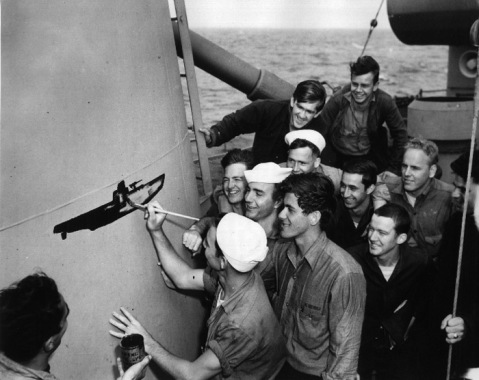
USS Moberly and USS Atherton share credit for the sinking.
For Consideration:
The Offshore Patrol Cutters are to be named after famous cutters. We have eleven names so far, but there are at least 14 to go. Perhaps we might name one for Moberly as representative of the 75 ships manned by Coast Guard crews.
We might also consider naming one for the Lowe (DE-325/WDE-425) to represent the 30 destroyer escorts the Coast Guard manned during WWII. 18 March 1945: Lowe, in company with Coast Guard manned destroyer escorts Menges (DE 320), Mosley (DE 321), and Pride (DE 323) sank the German submarine U-866, south of Nova Scotia. Lowe was primarily responsible for the sinking. Not only was she Coast Guard manned during WWII, but she also served as a Coast Guard cutter for almost three years, 20 July 1951 to 1 June 1954.

Kenneth J. Braithwaite, U.S. ambassador to Norway and the nominee to become the next Navy secretary, in 2018. During his Senate Armed Services Committee confirmation hearing on May 7, Braithwaite spoke of the importance of the U.S. foothold in the Arctic to counter “Great Power Competitors” China and Russia. U.S Navy/Mass Communication Specialist 1st Class Theron J. Godbold
The Navy League on-line magazine is reporting that the current nominee for Secretary of the Navy, a former Navy P-3 patrol plane commander, is saying that he will be a strong advocate for a Navy presence in the Arctic.
Braithwaite also told Sen. Dan Sullivan (R-Alaska) that he would be a strong advocate for a strategic Arctic port large enough to handle destroyers and icebreakers. The nearest such port is Anchorage, Alaska, which is 1,500 miles from the Arctic Circle, Sullivan added.
“The great news is the United States Navy has been up there for many, many years,” Braithwaite said. “You may not see them, but they’re up there. As it begins to become more navigable on the surface, we also need to make sure that our presence is noted.”
“We continue to need to be vigilant,” he added. “We continue to need to be present. That requires an adequate-size Navy to be there.”
“It will be a priority of mine.”
We talked about Arctic port development earlier:

Sonardyne Vigilent. Compact in size and with mounting options for both new build and retro-fit. (Photo: Sonardyne)
MarineLink has an interesting press release concerning a forward looking navigational sonar. Since cutters must frequently depart established traffic areas and venture into shallower areas for SAR or law enforcement, this might be useful.
“Vigilant FLS offers mariners subsurface situational awareness, providing live and past vessel track, detailed 3D bathymetry out to 600 meters and automated warnings of unseen collision hazards on and beneath the waterline out to 1.5 kilometers.”
Coast Guard Compass is “the official blog of the U. S. Coast Guard,” but the Compass is broken. While it appears to welcome comments, in fact they do not seem to work. Over the past three weeks I have attempted to comment three times on two different stories, but they never showed up. All the stories currently visible on the blog end with the notation, “no comments.”

Drawing of future 10,000-ton cutter for China Maritime Safety Administration. (Picture source China Blog)
NavyRecognition is reporting that China is building an over 10,000 ton cutter for their Maritime Safety Administration (MSA). MSA is the only one of the five Chinese Maritime coast guard like organizations that was not incorporated into the China Coast Guard.
“According to information published by the Guangdong Maritime Safety Administration, the new cutter will have a total length of 165 meters, a width of 20.6 meters, a depth of 9.5 meters, and a displacement of 10,700 tons.”
That is 541 feet in length, 67.6 feet of beam, and 31.2 feet of draft. The displacement is probably light displacement rather than full load.
The China MSA appears less militant than the China Coast Guard. No weapons are evident, but that does not mean they don’t have a plan of how to use the ship in wartime. Like some of the large China Coast Guard cutters, this looks like it could be used as an attack transport.

The Liancourt Rocks, known as Dokdo (or Tokto, 독도/獨島, literally “solitary island”) in Korean, as Takeshima (竹島, Takeshima, literally “bamboo island”) in Japanese., Author: 머찐만두 at Naver
Why two nations that should be allies cannot get along.
Baird Maritime has a short feature on the background of the dispute between Korea (both North and South) and Japan over 0.072415 square miles of rocks in the Sea of Japan. Also known as the Liancourt Rocks, they are Dokdo to the Koreans and Takeshima to the Japanese. The post also talks about other sources of bad feeling.
The US would very much like to see more defense cooperation between the two, but history and pride keep getting in the way. As an indicator of how strongly the South Koreans feel about this, they named their largest warship Dakdo after the island group.
Japan should take their case to the international tribunal and then accept the result.

A typical day on the Imperial Star Destroyer Kimball. (stolen from Kimball’s Facebook page)
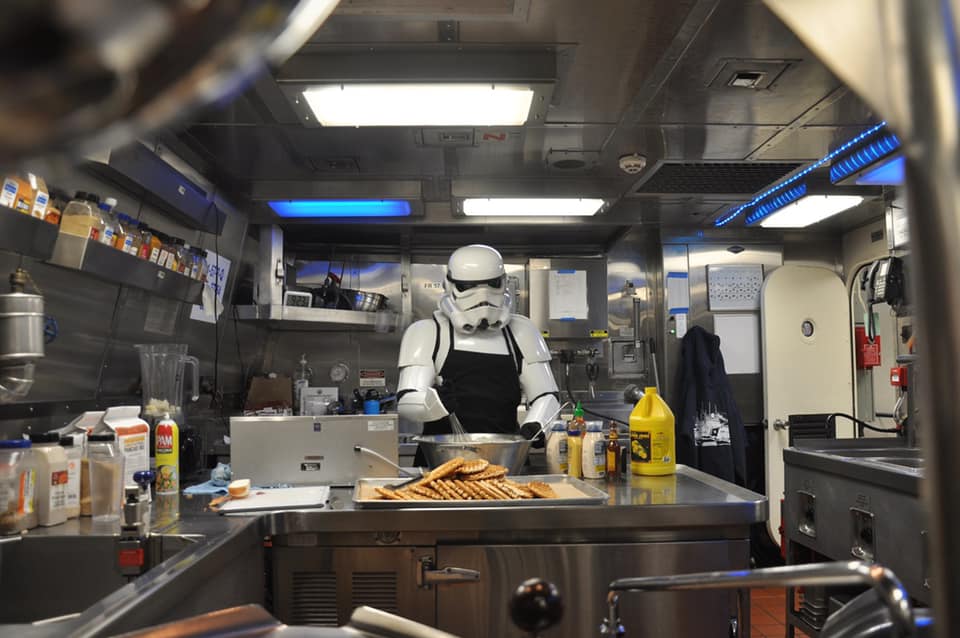
Yummm…waffles!
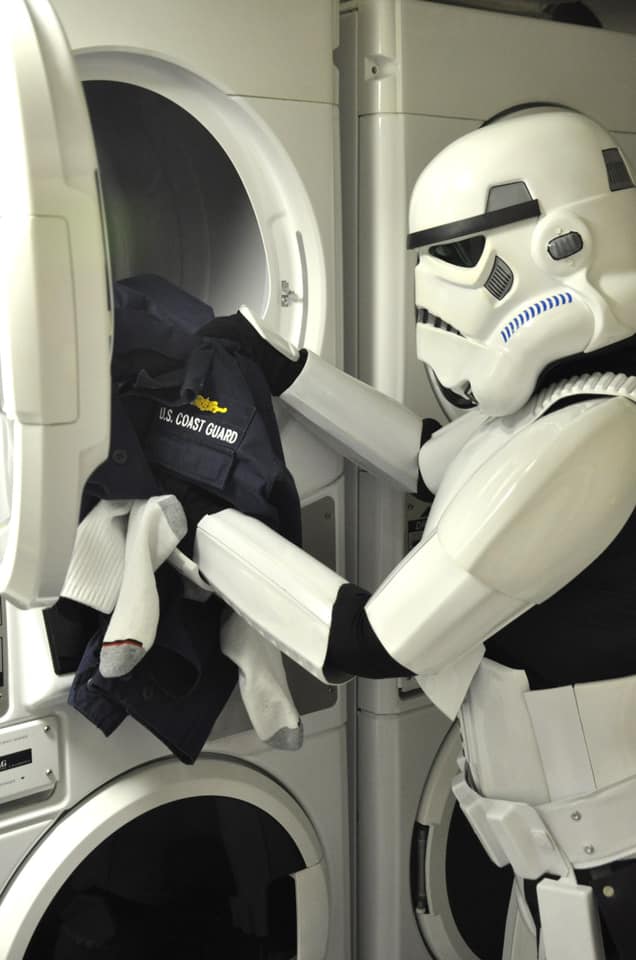
“This isn’t my laundry?!”
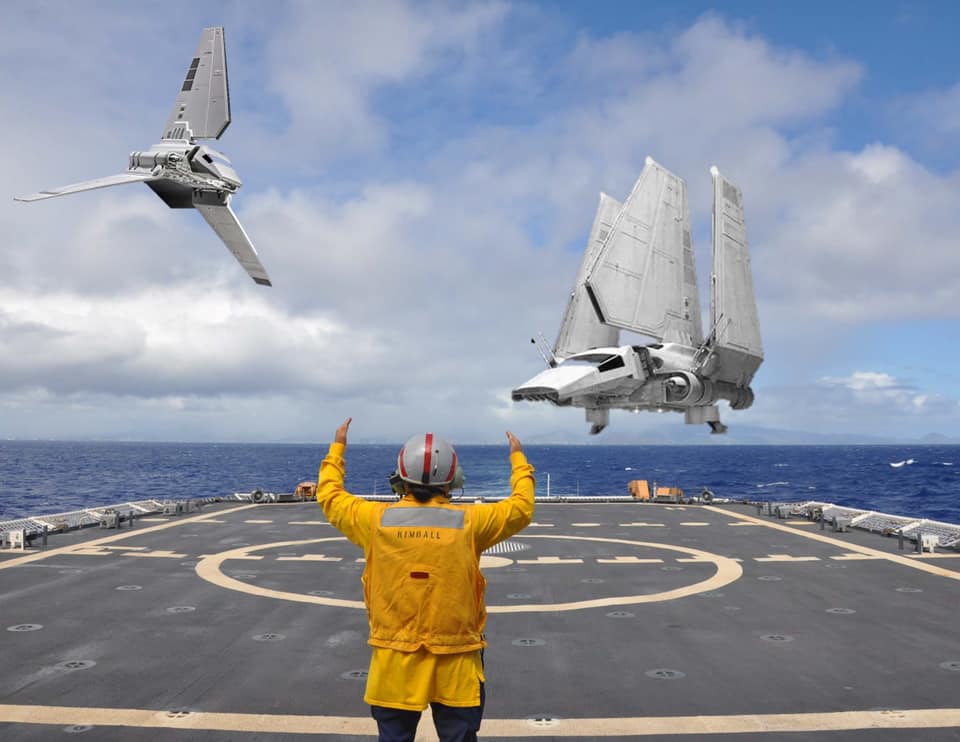
Touch and Goes
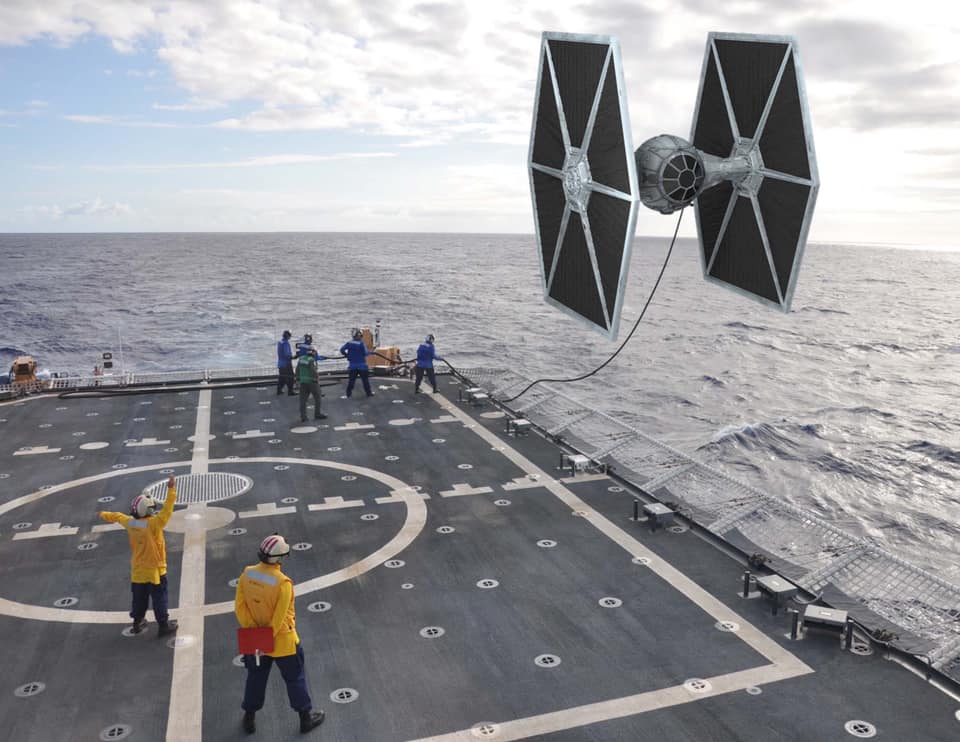
HIFR (Hot In Flight Refuel)
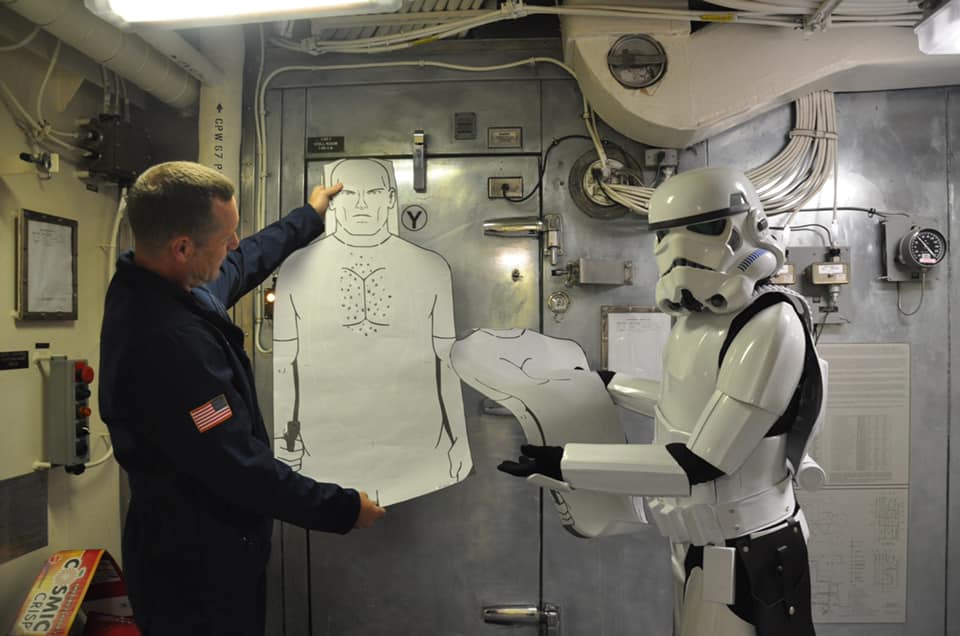
All hands qualified at the range, except for TK-0756 (…again)
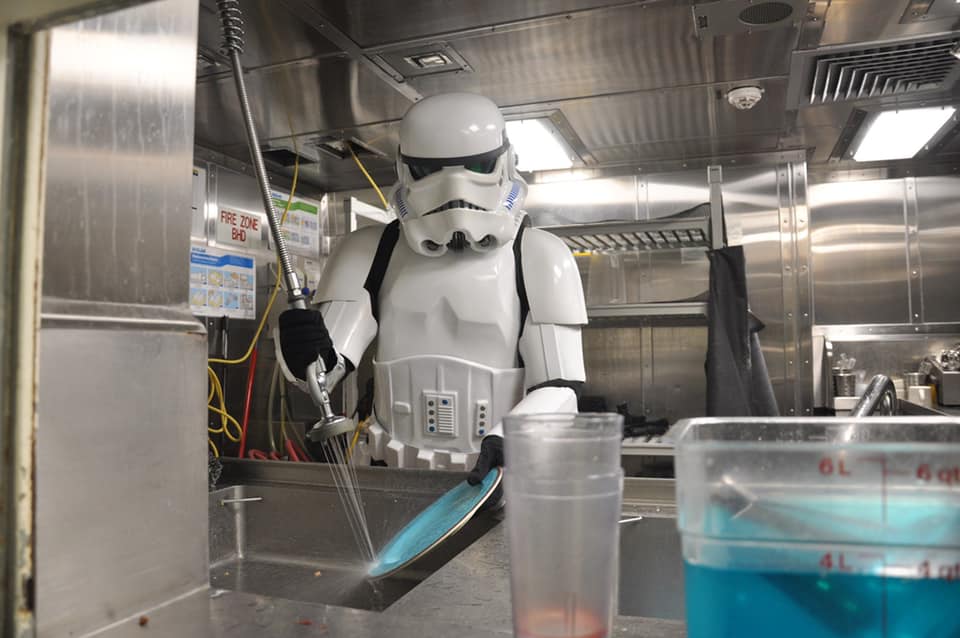
TK-0756 on Messcook duty
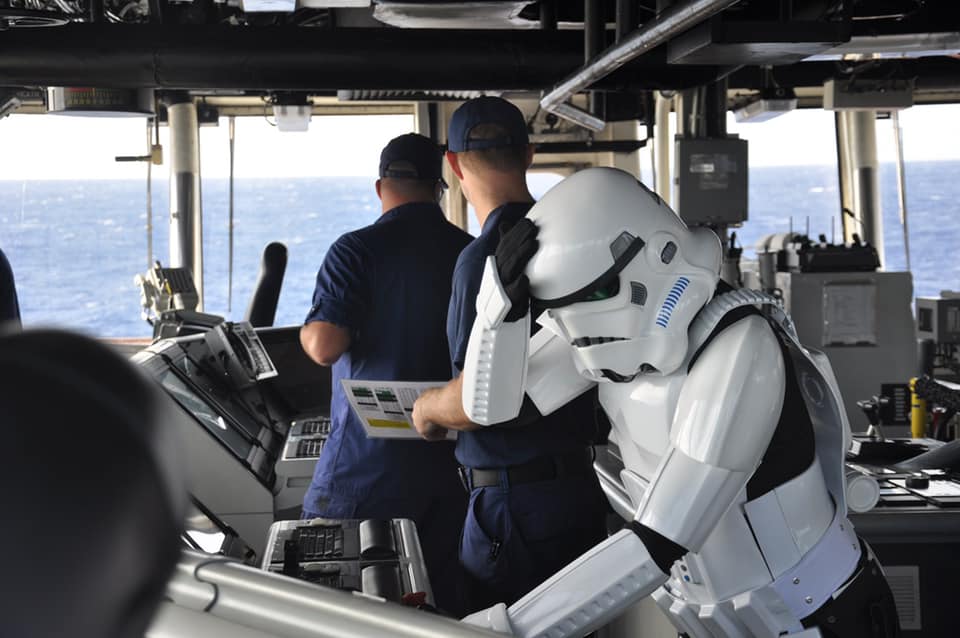
“What is the password to unlock the Detention Block!?”

Main Control

“Conn, Lookout. Rebel X-wing fighters inbound!”
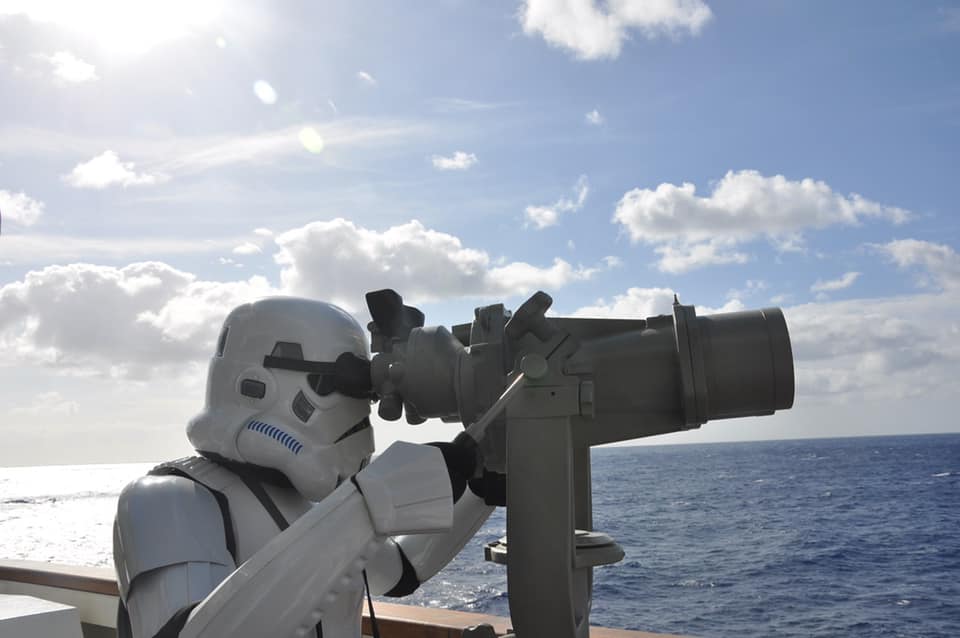
“Contact bears 115 degrees relative, position angle 2”
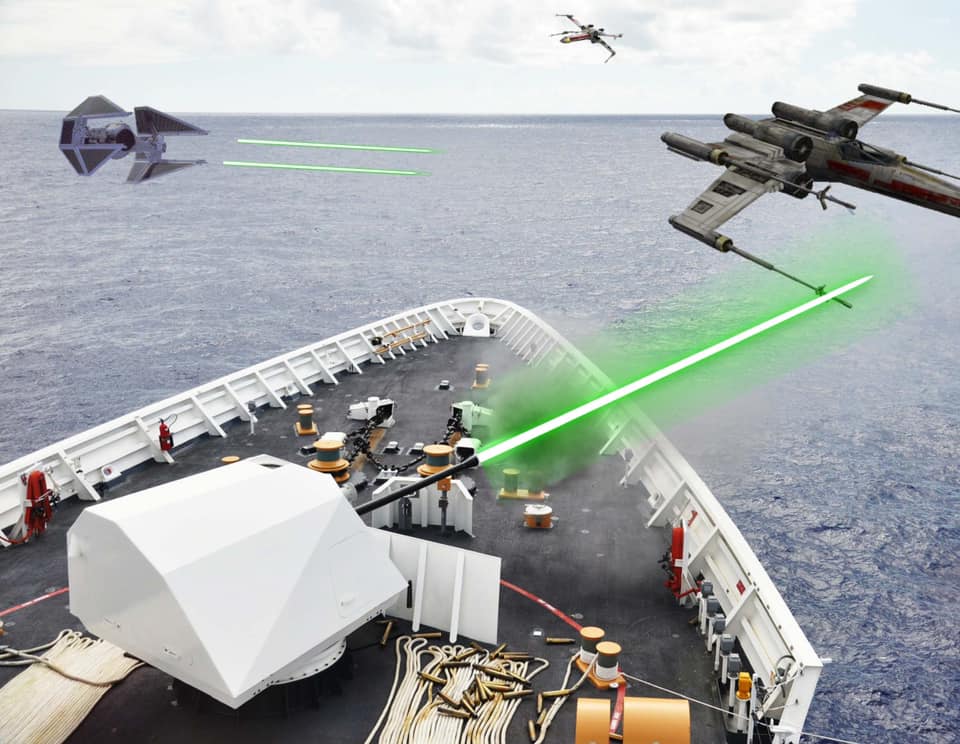
General Quarters!

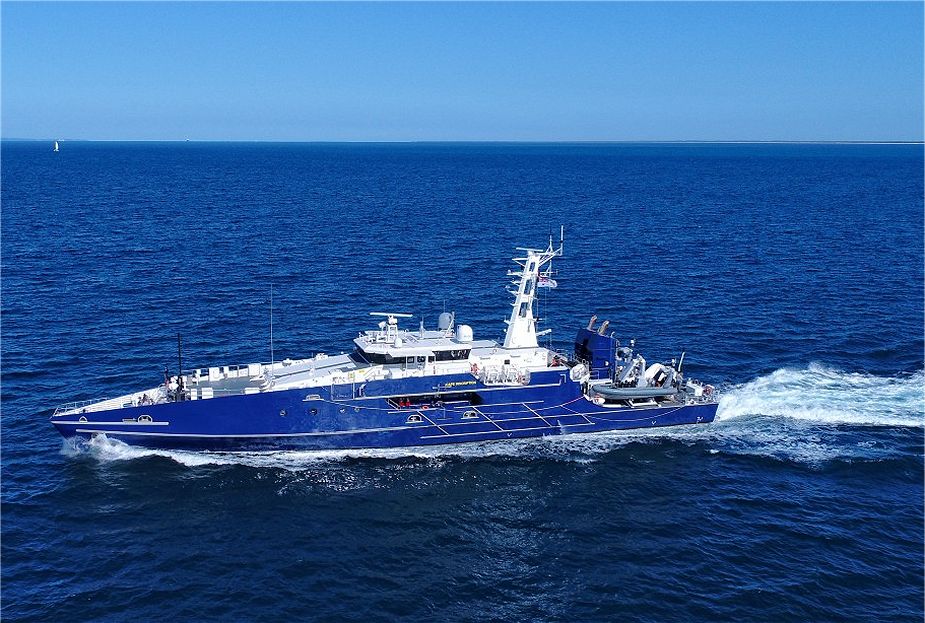
The six new Cape-class patrol boats will extend the fleet of ten ships currently operated by the Australian Border Force and Royal Australian Navy around Australia (Image: ADV Cape Inscription operating with the RAN)
Austal Limited is pleased to announce that Austal Australia has been awarded an A$324 million contract to design and construct six evolved Cape-class Patrol Boats (CCPBs) for the Royal Australian Navy.
These “Cape Class” patrol vessels are a bit unusual in size, slotting between typical “inshore” and “offshore” patrol vessels. We talked about this class when Trinidad and Tobago ordered two of them.
This is the information we had on the class earlier, compared to the Webber class.
These new ships will have some upgrades including accommodation for 32.
I was a little surprised by this procurement. Not too long ago, Australian Navy’s patrol force consisted of only thirteen 300 ton Armidale class patrol boats. These are being replaced by twelve 80 meter OPVs. None of these larger vessels have been completed so far. In the interim they leased two of these Cape Class. Now they are getting six more, improved versions. Presumably they will retain these even after the larger OPVs are completed, giving them 20 vessels.

200430-N-NO101-150
WASHINGTON (April 30, 2020) An artist rendering of the guided-missile frigate FFG(X). The new small surface combatant will have multi-mission capability to conduct air warfare, anti-submarine warfare, surface warfare, electronic warfare, and information operations. (U.S. Navy graphic/Released)
The Navy has announced that the contract for the first of the new FFG(X) class frigates has been awarded to Marinette Marine.
“Navy awarded a contract to design and produce the next generation small surface combatant, the Guided Missile Frigate (FFG(X)) today. The contract for detail design and construction (DD&C) of up to 10 Guided Missile Frigates (consisting of one base ship and nine option ships) was awarded to Marinette Marine Corporation (MMC) of Marinette, Wisconsin, officials announced. “
One of the arguments for continuing the construction of the National Security Cutters (NSC) has been that it kept a production line open that might roll into production of the FFG(X). That is now no longer the case. The argument that we are replacing 12 ships, so we should build 12 is still valid to a degree.
Currently eleven NSCs are seen as replacing 12 WHECs, but we have yet to hear that 25 OPCs are not enough to replace 32 WMECs: 13 WMEC 270s, 16 WMEC210s, Alex Haley, Acushnet, and Storis. Maybe what we need is 33 OPCs, to make up for the shortfall in replacing both 12 WHECs and 32 WMECs, 44 ships to replace 44.
Thanks to Secundius for bringing this to my attention.
 Chuck Hill's CG Blog