Funding an Icebreaker

In thinking about how to fund a new icebreaker, it is apparent, (1) Congress, the administration, and the department have the (unrealistic) idea that ship building budgets need to be consistent from year to year (they never have been). (2) Cost of a single icebreaker is so high, funding it from the Coast Guard’s customary shipbuilding budget would disrupt ongoing programs and result in higher costs in out years to restart these disrupted programs.

The Navy is facing a similar, though as a percentage, less severe problem with the Ohio SSBN replacement program. The proposed solution is to fund the new submarines outside the Navy’s shipbuilding budget. This way the additional money does not establish a precedence for a higher Navy shipbuilding budget, and Congress has the illusion of holding the line on spending.

The advantage the Navy has here, is being part of the Defense Department. Nuclear Deterrence is obviously a DOD mission. On the other hand it is hard to make the case that icebreaking is a Homeland Security mission, so we are unlikely to be able to kick the funding requirement upstairs to the DHS.

Still it might be possible for some interested Congressional delegation to sponsor a separate special appropriation, outside the Coast Guard’s normal (inadequate) shipbuilding budget to cover the cost of a new icebreaker. After all, $1B is only .033% of an annual three trillion dollar budget. Maybe no one will notice.
Largest Ship

You have to see this. Makes aircraftcarriers look small.

gCaptain reports the arrival of the largest ship in the world at Rotterdam. There are different ways to measure ships, but this is 382 meters (1,253 feet) in length and 124 meters wide (407 feet) of beam, anyway you look at it, this thing is big. It is made for picking up and moving offshore drilling rigs.

Dutch Mothership?

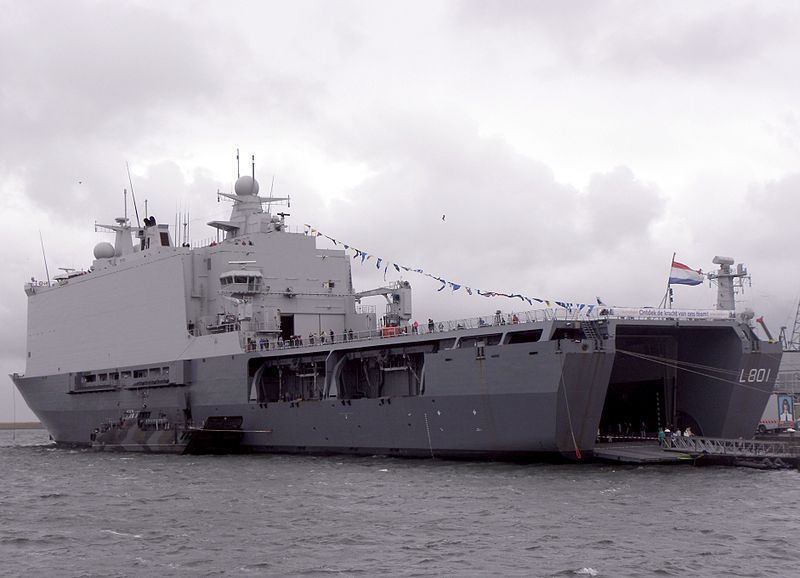
L 801 Johan de Witt Uploaded by Oxyman

L 801 Johan de Witt Uploaded by Oxyman

The following was reported by the German Navy blog Marine forum, “8 January, PIRACY–Anti-Piracy Forces: Sweden is preparing for another mission (M-04) in support of EU operation “Atalanta”, this time working jointly with the Netherlands navy … COMBAT BOAT 90 fast interceptor craft, helicopters and 70 personnel to embark on Netherlands Navy dock landing ship JOHAN DE WITT.”

As you may recall, I have advocated using WPCs supported by a mother ship to supplement the larger cutters for distant drug interdiction operations.

We have done cooperative counter drug operations with the Netherlands Navy in the past. Early last year, the Netherlands OPV Zeeland embarked both a CG LEDET and a CG helo det.

Perhaps we could run a test using the Johan de Witt or her sistership Rotterdam to try out the mothership concept. Their crew size is similar to that of the National Security Cutters (less than that of the Hamilton class), but they have berthing for hundreds more. They have aviation facilities for up to six helicopters. They can handle boats from both davits and a well deck. They have excellent Command and Control facilities.

“The ships have a complete Class II hospital, including an operating theater and intensive care facilities. A surgical team can be stationed on board.” That could make them welcome in a lot of ports.

Would the Dutch be interested? The Dutch Navy has already demonstrated its commitment to counter drug trafficing. They have used these ships several times for counter-piracy. Counter drug operations are not that much different, and piracy seems to be in decline. When it was being finished, there were reports that the Dutch wanted to sell the Johan de Witt. Operating off Latin America might be seen as an opportunity to demonstrate both this class and the Netherlands’ ship building expertise in an international market.

What might the experimental effort include. In addition to the mothership, perhaps three MH-65s, add a mix of Webber class WPCs, WPBs, Response Boat Mediums (RB-M), and Navy Riverine Command Boats (the US Navy version of the Combatboat 90).

In addition to its counter drug objectives, the deployment might be seen as a partnership station effort, training as well as working with the locals, and if there should be a natural disaster while they are in the area, it will be a ready made Coast Guard response.

CBP Drones not Meeting Expectations–DHS IG

FierceHomelandSecurity is reporting that the Department Inspector General (IG) has found that the U.S. Customs and Border Protection Agency’s eight year effort to use Unmanned Air Systems (UAS) commonly called drones, has failed to live up to expectations and should not be expanded finding that money proposed for expansion of the program “could be put to better use by investing in alternatives such as manned aircraft and ground surveillance.”

“Although CBP anticipated increased apprehensions of illegal border crossers, a reduction in border surveillance costs, and improvement in the U.S. Border Patrol’s efficiency, we found little or no evidence that CBP met those program expectations,” the report said.

The Coast Guard has been cooperating with CBP in evaluating use of land based UAS. According to the IG, CBP has failed to establish evaluation criteria, the drones are flying only 22% of anticipated flight hours, the cost per flight hour has been significantly underestimated, and the program has not demonstrated any improvement in capability.

New French OPV for the Western Hemisphere

FrenchLightPatrolGuiana

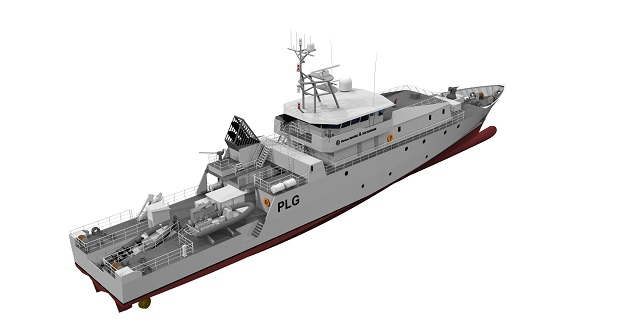
NavyRecognition is reporting that two 60 meter (197 foot) 21 knot French Navy patrol vessels are being built for operation in French waters in the Western Hemisphere including the French West Indies and Guiana on the North Atlantic Coast of South America.

They are expected to have a crew of 24, support two RHIBs, and have an endurance of 12 days.

Among their duties will be policing waters in the vicinity of the Guiana Space Centre, now the European Space Agency’s primary launch site near the equator.

The Coast Guard may have an opportunity to work with these vessels.

2014 Polar Shipping Review–The Maritime Executive

The Maritime Executive has an excellent article reviewing what has been happening relative to shipping in the Polar regions, including some not too favorable comments on the recently released “Polar Code,” resource exploitation, ice breaker and ice capable vessel construction, the variability of polar weather, and the much lower than expected traffic in the Arctic last year.

End of an Era, Last Frigate Cruise for USN & LEDET

800px-USS_Kauffman_FFG-59

Photo: USS Kauffman (FFG-59) Defense Visual Information Gallery photo ID DN-SC-90-04968

The Navy Times is reporting that USS Kauffmann (FFG-59) is departing for what is expected to be the last deployment for a US Navy Oliver Hazard Perry class frigate, and it will be a “Counter Transnational Organized Crime/Counter Illicit Trafficking mission” meaning it will almost certainly have a Coast Guard team aboard.

The 51 ships of this class have frequently supported USCG Coast Guard Law Detachments and operated under Coast Guard authority. Ultimately Littoral Combat Ships (LCS) and Joint High Speed Vessels (JHSV) will replace them in these missions, but right now, the decommissionings seem to be coming much faster than the replacements. Meanwhile far fewer assets are available than required to move on actionable intelligence despite of the fact that this is the most efficient method of interdicting drug traffic.

Puddle Pirates in SW Asia

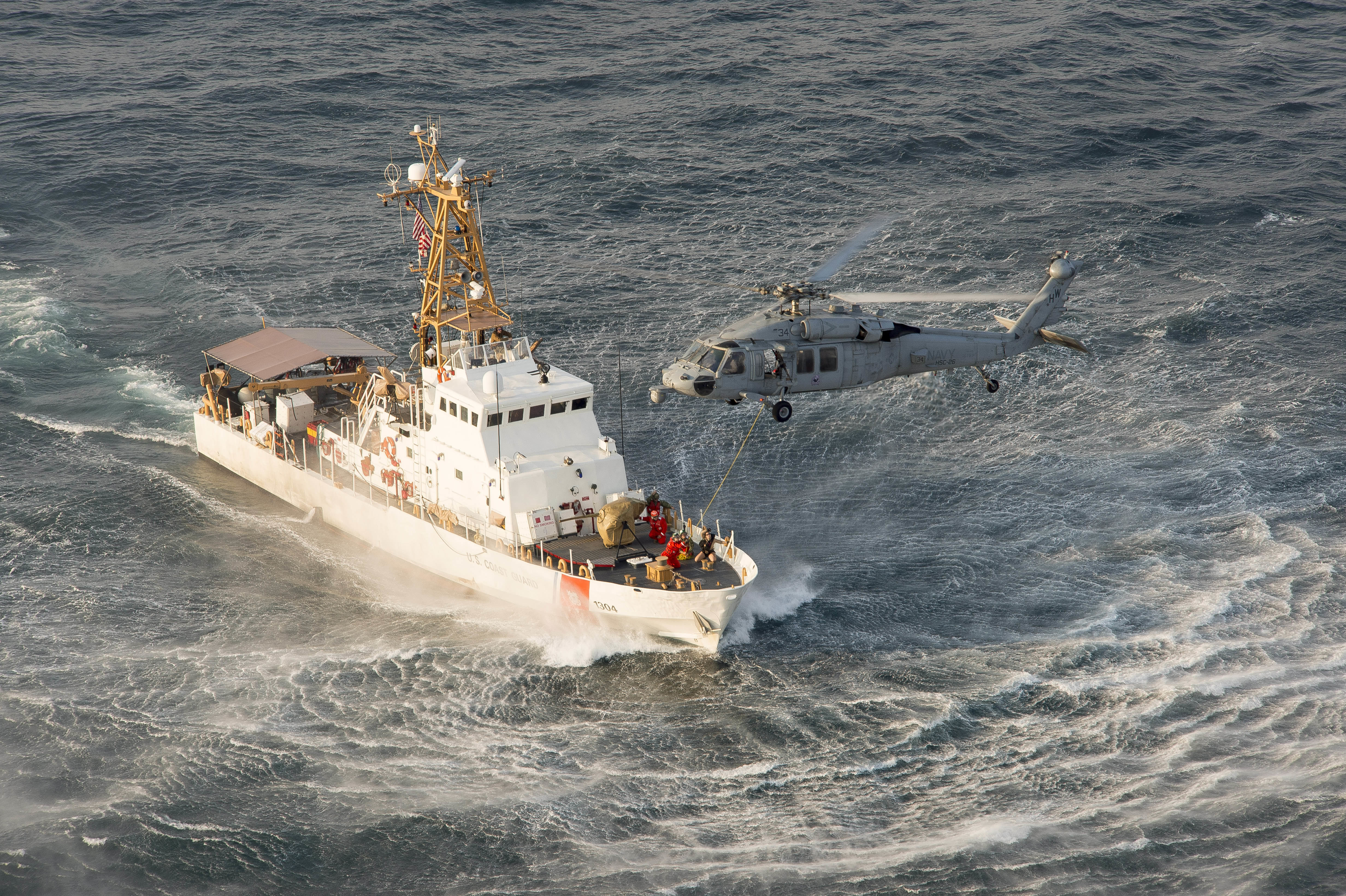
141219-N-DX365-258   BAHRAIN (Dec. 19, 2014) Helicopter Sea Combat Squadron (HSC) 26, Det. 1, conducts a vertical onboard delivery with the U.S. Coast Guard Cutter Maui (WPB 1304). HSC-26 is a forward deployed naval force asset attached to Commander, Task Force 53 to provide combat logistics and search and rescue capability throughout the U.S. 5th Fleet area of responsibility. (U.S. Navy photo by Mass Communication Specialist 1st Class Joan E. Jennings/Released)

141219-N-DX365-258
BAHRAIN (Dec. 19, 2014) Helicopter Sea Combat Squadron (HSC) 26, Det. 1, conducts a vertical onboard delivery with the U.S. Coast Guard Cutter Maui (WPB 1304). HSC-26 is a forward deployed naval force asset attached to Commander, Task Force 53 to provide combat logistics and search and rescue capability throughout the U.S. 5th Fleet area of responsibility. (U.S. Navy photo by Mass Communication Specialist 1st Class Joan E. Jennings/Released)

Just an unusual photo–and a reminder of where some of our people are.

Fisheries Enforcement Taken Seriously

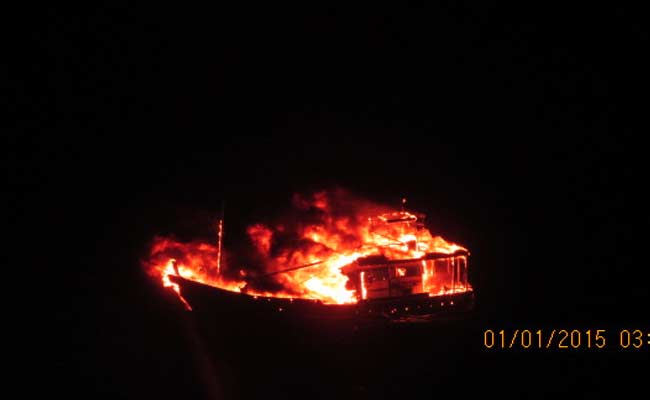
Indian Government Photo: Pakistani F/V self-destructs after intercept by Indian Coast Guard

Indian Government Photo: Pakistani F/V self-destructs after intercept by Indian Coast Guard

gCaptain has a report of an odd incident during which an Indian Coast Guard cutter, the RajRatan (similar in concept to the Webber class WPCs), acting on intelligence, approached a Pakistani fishing vessel and after attempting to stop it, including an hour long chase and warning shots, the crew of the F/V set it afire resulting in an explosion and apparently the deaths of all aboard. Other reports suggest this may in some way have been connected to the expected visit of President Obama to India on Jan. 26.