The MarineLog is reporting that the Coast Guard authorization bill is out of committee. Labeled the “Howard Coble Coast Guard and Maritime Transportation Act of 2014 (H.R. 5769),” it is certainly not the final word on the Coast Guard budget, but it is a start, and it contains some interesting provisions. The MarineLog story includes a link to the bill, by all means check it out, but I will briefly discuss some salient sections.
Improves acquisition activities: In order to save time and money, the legislation requires the Coast Guard to develop plans and use current authorities to reduce the cost and accelerate the delivery of new assets under its $25 billion major systems acquisition program.
I don’t see a lot that will accelerate delivery of new assets except that Sec. 220 “extends through fiscal year 2017 the authority of the Commandant of the Coast Guard to hire experienced acquisition personnel on an expedited basis,” and Sec. 223 again provides authority for multiyear procurement of the Offshore Patrol Cutter (OPC). It may be that they anticipate funding more than the two Webber Class the administration has requested–as has been done in previous years. Buying six rather than only two would add very roughly $240M.
Sec. 101. Authorization of Appropriations
This section authorizes $8.7 billion in discretionary funds for the Coast Guard for fiscal year 2015. This funding will support military pay raises for Coast Guard servicemembers at a level consistent with servicemembers of the other armed forces.
That is a 6.95% ($565M) increase if it in facts makes it through budget process.
Sec. 215. Mission Need Statement
This section directs the Coast Guard to submit to the Committee a single, new Mission Need Statement (MNS) covering all of its major acquisition programs with the submission of the budget request to Congress for fiscal years 2016 and 2019 and every four years thereafter. It further requires the Coast Guard to base the MNS on the funding provided in the Capital Investment Plan submitted for the fiscal year in which an MNS is required to be submitted. Finally, the Coast Guard is required to describe which missions it will not be able to achieve for any year in which the MNS identifies a gap between the mission hour targets and projected mission hours from new and legacy assets.
I found this a bit confusing, but it sounds like the report would only be required every four years. This would be an opportunity to highlight shortfalls in equipment.
Sec. 219. Active Duty for Emergency Augmentation of Regular Forces
Under current law, the Secretary of Homeland Security may call Coast Guard reservists to active duty to prepare for and respond to a natural or manmade disaster. The Secretary’s authority is limited to a call up of not more than 60 days in any four-month period and not more than 120 days in any two-year period. This limitation hampers the ability of the Coast Guard to respond to large-scale or multiple disasters. There is no similar limitation on other reserve components called up by the Secretary of Defense. This section would eliminate the “not more than 60 days in any four-month period” limitation on the call up of Coast Guard reservists
More movement toward making it easier to call on Reservists–for better or worse. Makes it easier to cut out any resiliency in the active forces.
Sec. 224. Maintaining Medium Endurance Cutter Mission Capability
This section requires the Secretary of Homeland Security to provide the Committee with a plan for decommissioning the 210-foot Medium Endurance Cutters (MEC), extending the life of the 270-foot MECs to ensure the Coast Guard can maintain mission capability through the OPC acquisition, identifying the number of OPCs necessary to maintain historical sea state five capability, and acquiring OPCs that maintain historical sea state five capability, as well as OPCs that do not maintain such capability.
I think they may be asking if all MECs really need to be replaced by OPCs (sea state five capability) or if some of them could not be replaced by something less capable and less expensive (like cutter X?). It also seems to say they do not believe they need a fleet more capable than the current (historical) one. If 210s and 270s do not in fact have sufficient life remaining to wait for the currently planned gradual replacement through 2034 (as I doubt they do), it might argue for accelerated procurement.
Sec. 226. Gaps in Writings on Coast Guard History
This section requires a report to Congress on any gaps that exist in writings on the history of the Coast Guard.
This ought to make Bill Wells heart glad, but I doubt he will be pleased with the official response.
Sec. 229. e-LORAN This section ensures certain navigation infrastructure is not dismantled until the Secretary of Homeland Security determines whether it is needed and authorizes the Coast Guard to enter into agreements with public and private entities to develop a GPS back-up system.
There is recognition of the potential vulnerability of GPS and a desire to keep options open for reestablishing loran as an alternative.
Sec. 230. Analysis of Resource Deficiencies with Respect to Maritime Border Security
This section requires a report to Congress on any deficiencies that exist in Coast Guard resources relating to maritime border security
Not sure why this is needed separately if you are going to have a Mission Need Statement (Sec. 215) but a lot of people seem to be very concerned about border security. For most this seems to be alien interdiction. I would point out how poorly prepared we are to actually stop a terrorist attack in progress once detected. The Coast Guard needs specific capabilities to deal with these threats that must be both highly effective and precise enough to avoid collateral damage including missiles for small fast targets and possibly light weight torpedoes for stopping large vessels. Machine guns or even 57mm guns do not answer the need.
Sec. 505. Icebreakers
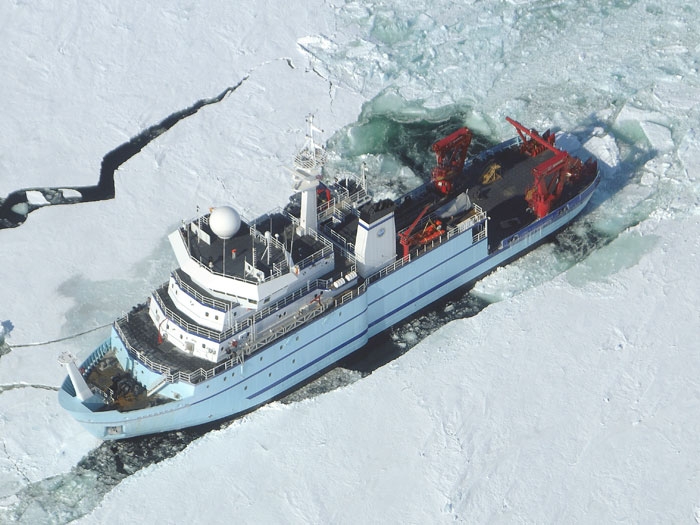
This section requires the Coast Guard to provide Congress with a strategy to maintain icebreaking capabilities in the Polar Regions that includes an analysis of the cost effectiveness of acquiring or leasing new icebreaker assets. The section also prohibits the Coast Guard from spending any of its funds to pay for the capabilities of a new Polar Class icebreaker that are requested by other federal agencies. The Coast Guard is authorized to use funds transferred from other agencies pursuant to an agreement to address such requests. Finally, the section authorizes the Coast Guard to conduct a service life extension of the POLAR SEA after it provides a previously mandated report to Congress concerning the icebreaker.
It appears they are telling the Coast Guard not to do missions for other agencies without getting paid for it. So does the Coast Guard have an missions of its own that require Polar Icebreakers? There is SAR, fisheries, and MEP to be done in the Arctic, but do they require a heavy icebreaker? The authorization to do a life extension for the Polar Sea seems to be recognition that it seems to be the only option affordable in the near term. Hopefully they will think beyond restoring the problematic systems they have plagued this class.
Sec. 506. Icebreaking in Polar Regions
This section ensures that Coast Guard statutory missions are included as priorities when the administration budgets for activities in the Polar Regions.
Here I think the Committee is reminding the administration that the Coast Guard does in fact need to do missions like SAR, fisheries, and MEP in the Arctic and that necessary resources need to be provided.


 Chuck Hill's CG Blog