Cruise Ship in the Arctic Raises SAR Fears

NorthWestPassageCruise

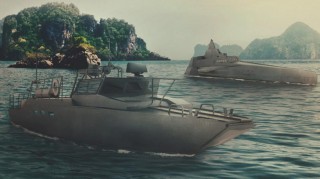
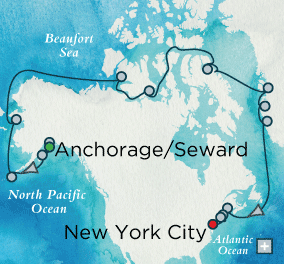
CBCNews reports that a cruise ship with a crew of 600 and an expected 1000 passengers is planning to make a cruise from Anchorage to New York City via the North West Passage, August 16 to September 17, 2016, and it is raising the specter of a mass casualty event far from any rescue assets.

I think the Russians require an escort for passage through the Northern Sea Route, for which they charge a fee.

“Plus, introducing our brand new Crystal Unexpected Adventures—your chance to explore this magnificent region on truly spontaneous excursions! This is the ultimate expedition for the true explorer!”

“Adventures make one late for dinner.”–Bilbo Baggins.

Thanks to Ken for bringing this to my attention.

9th NSC as D17 Flagship–CIMSEC

The Coast Guard Cutter Stratton from Alameda, Calif., steams near an ice floe in the Arctic Ocean during Operation Arctic Shield 2014 Sept. 14, 2014. (Coast Guard photo courtesy of Cutter Statton)

CIMSEC has a post, “DESIGNATE THE 9TH NATIONAL SECURITY CUTTER AN ARCTIC FLAGSHIP,” which suggest essentially two related actions regarding the recently funded ninth Bertholf class National Security Cutter (NSC).

  • Homeport it in Kodiak, and
  • Ice-strengthen the hull.

As usual, the benefits of cutting transit time by basing ships in Kodiak are overstated because the need to transit south for training and yard period is neglected. Individual training is also easier and less expensive if the ship is located near training facilities.

I find the case for ice strengthening a bit more interesting, but do we really want to redesign a ship that now benefits from the maturity of its design?

The author also touts the advantages of light icebreaking done by an ice-strengthened NSC, perhaps not realizing that icebreaking is already done by 225 foot buoy tenders, four of which are homeported in Alaska, including one in Kodiak.

It really looks like the OPC would be a better choice for homeporting in Alaska, being simpler and already planned to be ice-strengthened, but it is also true that the ninth NSC will be finished at least a couple of years before the first OPC and probably several years before an OPC will be homeported in Kodiak.

Centennial of Coast Guard Aviation–DefenseMediaNetwork

jayhawk-helo-Centinnial

Photo: A Coast Guard MH-60 Jayhawk helicopter with a special yellow paint scheme lands at Coast Guard Air Station Astoria, Ore., Jan. 15, 2016. (Coast Guard/Jonathan Klingenberg)

DefenseMediaNetwork has published an excellent article commemorating the Coast Guard Aviation history in honor of its Centennial. I’ve looked around a bit, and I have not found a better one.

SOUTHCOM CG PATRON

WPC Kathleen_Moore

SouthCom, actually two SouthComs in a row, and the Commandant have noted that while they have excellent intelligence on drug smugglers in the transit zone, they simply do not have adequate numbers of vessels to respond.  (Here, here, and here) There were never enough, but after decommissioning the Perry class frigates, the Navy’s contribution appears to have declined significantly. The Coast Guard seems to have upped their game, possibly more than making up for the Navy’s absence, but still–not enough ships.

There may be a way at least partially address this problem.

We now have 16 Webber class WPCs in three homeports in the Seventh District, six in Miami, six in Key West, and four, soon to be six, in Puerto Rico. These may be “Fast Response Cutters,” but clearly they are not all sitting in homeport waiting for SAR cases. These are law enforcement assets and they are meant to patrol. Could we perhaps, maintain as many as four in the Eastern Pacific by rotating cutters from the 7th District to fill this role in the transit zone? Obviously, it is not impossible, since the Navy is sending their similar sized Cyclone class PCs to the Eastern Pacific, but what would it take to make it work well?

Obviously they would need additional fuel and supplies while deployed. There is a good chance between Colombia, Panama, and Costa Rica, we could find a port willing to host these little white ships.

Aside from “beans and black oil” they might also need some administrative, maintenance, or medical support.

The Navy might make itself useful here by providing a simple MSC manned support vessel that could be as basic as an Offshore Support Vessel loaded with containerized offices and logistical support to provide support that the port cannot. The Navy has already chartered a number of ships of this type and could charter another.

We could start this small. First study the results of the Navy’s Cyclone class deployment. Then send a single ship from say Miami, a month later we get a second ship from Key West. Let them figure out what they need and how the problems they will inevitably encounter can be solved.

Because they cannot embark a helicopter, they will need a complementary fixed wing support, but this is already being done at least to some extent.

Once we get to a total of 18 Webber class in these three home ports, we could keep four ships assigned to SouthCom by sending two ships each month and rotating them back after two months. Seventh district would still four ships assigned to each home port, which would mean that even if two are down for maintenance they would still have two for SAR and local law enforcement.



Document Alert: Changes in the Arctic: Background and Issues for Congress

ice-breakers-540688_1280

The Congressional Research Service has issued another study, this one on the Arctic (pdf). It was authored by their Naval Expert Ronald O’Rourke, who has authored several reports on the Coast Guard, so you can be sure he has an understanding of the Coast Guard’s situation.

It is pretty long, but here is the summary.

“The diminishment of Arctic sea ice has led to increased human activities in the Arctic, and has heightened interest in, and concerns about, the region’s future. The United States, by virtue of Alaska, is an Arctic country and has substantial interests in the region. On January 21, 2015, President Obama issued an executive order for enhancing coordination of national efforts in the Arctic. The United States assumed the chairmanship of the Arctic Council on April 24, 2015, and will serve in that capacity for two years.

“Record low extents of Arctic sea ice over the past decade have focused scientific and policy attention on links to global climate change and projected ice-free seasons in the Arctic within decades. These changes have potential consequences for weather in the United States, access to mineral and biological resources in the Arctic, the economies and cultures of peoples in the region, and national security.

“The five Arctic coastal states—the United States, Canada, Russia, Norway, and Denmark (of which Greenland is a territory)—have made or are in the process of preparing submissions to the Commission on the Limits of the Continental Shelf regarding the outer limits of their extended continental shelves. The Russian submission includes the underwater Lomonosov Ridge, a feature that spans a considerable distance across the Arctic Ocean.

“The diminishment of Arctic ice could lead in coming years to increased commercial shipping on two trans-Arctic sea routes—the Northern Sea Route and the Northwest Passage. Current international guidelines for ships operating in Arctic waters are being updated.

“Changes to the Arctic brought about by warming temperatures will likely allow more exploration for oil, gas, and minerals. Warming that causes permafrost to melt could pose challenges to onshore exploration activities. Increased oil and gas exploration and tourism (cruise ships) in the Arctic increase the risk of pollution in the region. Cleaning up oil spills in ice-covered waters will be more difficult than in other areas, primarily because effective strategies have yet to be developed.

“Large commercial fisheries exist in the Arctic. The United States is currently meeting with other countries regarding the management of Arctic fish stocks. Changes in the Arctic could affect threatened and endangered species. Under the Endangered Species Act, the polar bear was listed as threatened on May 15, 2008. Arctic climate change is also expected to affect the economies, health, and cultures of Arctic indigenous peoples.

“Two of the Coast Guard’s three polar icebreakers—Polar Star and Polar Sea—have exceeded their intended 30-year service lives, and Polar Sea is not operational. On May 12, 2011, representatives from the member states of the Arctic Council signed an agreement on cooperation on search and rescue in the Arctic.

“Although there is significant international cooperation on Arctic issues, the Arctic is increasingly being viewed by some observers as a potential emerging security issue. Some of the Arctic coastal states, particularly Russia, have announced an intention or taken actions to enhance their military presences in the high north. U.S. military forces, particularly the Navy and Coast Guard, have begun to pay more attention to the region in their planning and operations.”

LRASM for Ports, Waterways, and Coastal Security

Lockheed Martin supplied Navy Recognition with the first image showing a deck-mounted quadruple Long Range Anti-Ship Missile (LRASM) launcher. According to our source, this "top side" launcher graphic is a notional concept that could be used on an appropriately sized surface vessel, such as the Arleigh Burke class (DDG 51) or Littoral Combat Ship (LCS) classes.

Discussion on an earlier post suggesting the Coast Guard might want to fit our new major cutters “for but not with” Long Range Anti-ship Missiles (LRASM) has prompted me to rethink the suggestion and advocate for equipping them with the missile in peacetime.

One of the Coast Guard’s peacetime missions is of course Ports, Waterways and Coastal Security (PWCS).

“The PWCS mission entails the protection of the U.S. Maritime Domain and the U.S. Marine Transportation System (MTS) …prevention and disruption of terrorist attacks… Conducting PWCS deters terrorists from using or exploiting the MTS as a means for attacks on U.S. territory, population centers, vessels, critical infrastructure, and key resources.”

I have been concerned that the Coast Guard has not had adequate weapons to deal with a terrorist attack using a medium to large sized merchant ship, and currently I don’t believe there is any other organization capable of answering this threat in the 30 or more port complexes terrorists might find worthwhile targets, in a timely manner. Navy surface forces are too geographically concentrated. The over 200 nautical mile range and the ability to strike selected locations on a target ship suggest LRASM could possibly provide an answer.

If we had LRASM on all National Security Cutters (NSC) and Offshore Patrol Cutters (OPC), in perhaps a dozen ports on the Atlantic, Pacific, and Gulf coasts, Honolulu and Kodiak, its over 200 mile range fired from cutters, including possibly those in port, could cover all of these ports (except Guam), and have a weapon on target within about 20 minutes of launch.

To effectively counter the threat, I think we need to get a weapon on target within an hour of positive identification of the threat. This would require improved coordination between units. In addition to providing a datum, course, and speed, presumably an intercepting unit, boat or aircraft, would need to transmit a photograph of the target to be incorporated in the missiles memory and aim points would be chosen some time during mission planning. We would need to coordinate with air traffic control. A command decision to authorize use of the weapon and updates on the target position course and speed would also be needed. Because we might have 40 minutes or less from threat identification to launch, these steps would likely have to proceed in parallel with mission planning progressing prior to authorization.

New units appear to be on the way to developing the kind of common tactical picture we need to facilitate both decision making and targeting. We could start developing the capability with the National Security Cutters based at Alameda (San Francisco Bay) and Charleston, SC, even if the system could not be completed until the last OPCs are delivered in about 2034.

LRASM Topside Launchers

Just a brief note on what is happening in the broader world of Naval warfare preparation. NavyRecognition provides conceptual drawings of topside launch tubes for the Long Range Anti-Ship Missile (LRASM).

Significantly the launchers for this much more capable missile are not expected to require any more space or support than the Harpoon missile and with upgrades it is expected to also incorporate a land attack capability.

As I have noted, the Coast Guard does not seem to have been considered in the Navy’s plans to increase “distributed lethality,” but should the need arise it looks like these would fit well between the Bridge and the 57mm on the National Security Cutters. We might also find a place for them on the Offshore Patrol Cutter. It should be possible to provide the supporting wiring, piping, control systems, etc. to support these relatively easily, even if the missiles and launchers themselves are not mounted, allowing rapid upgrade. (Cutters on Alaska Patrol have to be among the closest US units to Russian Pacific bases.)

AN-SPQ-9B, the NSC’s Air-Search Radar/Firecontrol Gets New Capability

Defense Industry Daily reports that the AN-SPQ-9B, the firecontrol system and secondary air-search on the Bertholf class National Security Cutters, is being modified to provide a Periscope Detection and Discrimination (PDD) capability.

The post also provides additional background information on the sensor.

Interestingly, the post also notes that the radar has a “Cooperative Engagement Capability” or CEC (See the April 24/12: CEC entry) which means that ships and aircraft can share a common tactical picture and weapons launched from one unit can be controlled by a different unit. If we ever get long range missiles, this could be useful.

Hopefully the Offshore Patrol Cutter will have either this system or a better replacement.


A Combined Air/Surface Search Radar for Boats

Saabs-Sea-Giraffe-small-boat-radar-debuts-in-USA-320x179

The illustration here appears to show the system on a Combat Boat 90 (CB90) which is only a 52 foot long boat. 

I don’t see an immediate need for this, but it is an interesting new type of radar sensor.

Naval Today reports Saab is offering, “…a 3D, active electronically scanned array (AESA) radar offering simultaneous surface and air surveillance capabilities,” and “…the entire system weighs less than 650 pounds (294 kilograms) in total, which makes it suitable for smaller patrol ships.”

Apparently they are thinking UAVs, “To combat the growing UAV (Unmanned Aerial Vehicle) threat, Sea Giraffe 1X features Saab’s Enhanced Low, Slow and Small (ELSS) surveillance function. This feature allows the radar system to detect and classify small, low-flying, slow-moving air targets.”

I suppose this might also be used to control small UAVs, putting them over surface targets of interest. The Coast Guard is looking at small UAVs.