Chuck Hill's CG Blog

Chuck Hill's CG Blog

“Ordering the Selected Reserve and Certain Members of the Individual Ready Reserve of the Armed Forces to Active Duty” –the President

This image is available from the United States Library of Congress’s Prints and Photographs division
under the digital ID highsm.04919

Just saw this. It is not a large recall, but it is unusual, and I have not yet seen an explanation. One should be forthcoming and if so, I will add the explanation in the comments. (See the link for proper format.)

I doubt it would have mentioned the Coast Guard, as it did, if there was not an intention to call up at least some Coast Guard Reservists.

By the authority vested in me as President by the Constitution and the laws of the United States of America, including sections 121 and 12304 of title 10, United States Code, I hereby determine that it is necessary to augment the active Armed Forces of the United States for the effective conduct of Operation Atlantic Resolve in and around the United States European Command’s area of responsibility.  In furtherance of this operation, under the stated authority, I hereby authorize the Secretary of Defense, and the Secretary of Homeland Security with respect to the Coast Guard when it is not operating as a service in the Navy, under their respective jurisdictions, to order to active duty any units, and any individual members not assigned to a unit organized to serve as a unit of the Selected Reserve, or any member in the Individual Ready Reserve mobilization category and designated as essential under regulations prescribed by the Secretary concerned, not to exceed 3,000 total members at any one time, of whom not more than 450 may be members of the Individual Ready Reserve, as they deem necessary, and to terminate the service of those units and members ordered to active duty.

This order is not intended to, and does not, create any right or benefit, substantive or procedural, enforceable at law or in equity by any party against the United States, its departments, agencies, or entities, its officers, employees, or agents, or any other person.

JOSEPH R. BIDEN JR.

THE WHITE HOUSE,
July 13, 2023.

“UNITAS LXIV to begin in Colombia” –USNAVSOUTH/4TH FLEET PUBLIC AFFAIRS

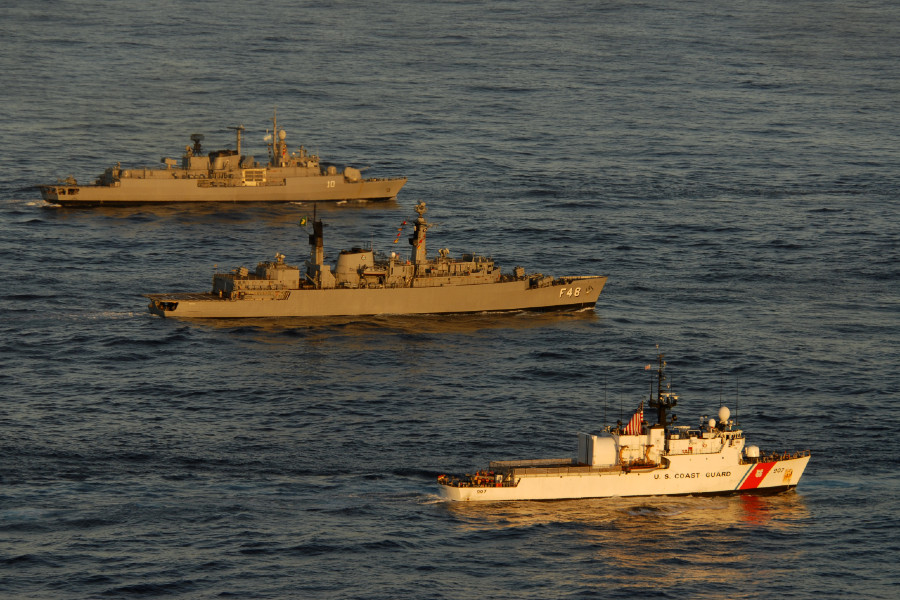
The US Coast Guard cutter USCGC Escanaba (WMEC 907), Brazlian Navy ship BNS Bosisio (F 48) and Argentinian navy ship ARA Almirante Brown (D-10) move into formation for a photo exercise during the Atlantic phase of UNITAS 52 on May 4, 2011. The formation included a total of ten ships from the US, Brazil, Mexico and Argentina. (Photo: US Navy/Mass Communication Specialist 1st Class Steve Smith)

Below is a news release announcing the start of exercise UNITAS LXIV (64 if you are not up on your Roman numerals). There is no mention of Coast Guard participation, but maybe they “simply forgot us.” Think we can bet there are some Coasties involved.

Britain’s Royal Navy also sent one of their highly regarded destroyers, HMS Dauntless.

With 26 surface vessels and three submarines participating, I think this is larger than most of the recent UNITAS exercises. In 2022 it was 19 ships, one submarine, 21 aircraft, accounting for approximately 5,500 total military personnel.

This year will see an attempt at large scale integration of unmanned systems into the exercise by 4th Fleet.


July 11, 2023

UNITAS LXIV to begin in Colombia

By USNAVSOUTH/4TH FLEET PUBLIC AFFAIRS

– U.S. Navy and Marine forces are set to arrive in Cartagena in support of UNITAS LXIV, the world’s longest-running multinational maritime exercise in the world, scheduled to start July 11, 2023.

The Colombian navy will host this year’s UNITAS, which will feature 26 warships/vessels, three submarines, 25 aircraft (fixed wing/helicopter), and approximately 7,000 people from 20 partner nations. Forces will conduct training operations off the coast of Cartagena, Colombia, and ashore in Covenas and Barranquilla, Colombia, through July 21. This year marks the 64th iteration of the exercise. Additionally, this year Colombia will celebrate the bicentennial of its navy, a historical milestone commemorating 200 years of the country’s maritime forces.

“UNITAS is so much more than a two week exercise. All participating nations have given much time, energy and effort into the months of planning leading up to what will be one of the most complex UNITAS to date,” said Rear Admiral Jim Aiken, commander U.S. Naval Forces Southern Command/U.S. 4th Fleet. “Utilizing air, surface, sub-surface, and unmanned assets, and land units, UNITAS will provide the multinational force a challenging environment in which to conduct training across the full spectrum of maritime operations. UNITAS strengthens maritime partnerships, enhances proficiency and improves interoperability of the participating forces, which is why so many partner nations are taking part this year.”

As part of the U.S. Navy’s future hybrid fleet, the Chief of Naval Operations has tasked U.S. 4th Fleet to scale unmanned platforms to the fleet level. An addition to this year’s UNITAS will include the integrated operations of unmanned air, surface, and subsurface systems into the exercise. UNITAS’ challenging training address key aspects of multinational and combined operations such as technology standardization and common operating procedures.

“This is our first opportunity to integrate unmanned systems into our operations at sea,” said Rear Adm. Aiken. “UNITAS has often served as a test bed for technology, so it is appropriate that we begin our unmanned integration campaign to operationalize the hybrid fleet here in UNITAS.”

In addition to the United States, UNITAS LXIV will bring together 19 nations from all over the world to train forces in joint maritime operations that enhance tactical proficiency and increase interoperability. Participating nations include Belize, Brazil, Canada, Chile, Colombia, Dominican Republic, Ecuador, France, Germany, Honduras, Jamaica, Mexico, Panama, Peru, Paraguay, Spain, South Korea, United Kingdom, United States, and Uruguay.

Following the UNITAS LXIV Opening Ceremony on July 12, the in port phase of the exercise will feature subject matter expert exchanges, professional symposia, ship rider exchanges, and operations meetings. During this time, Marines and Sailors will conduct expeditionary training events in Covenas to include riverine operations and diving and salvage operations.

During the UNITAS LXIV Underway Phase, forces will participate in events testing all warfare operations, to include live-fire exercises such as a SINKEX and an amphibious ship-to-shore landing and force retraction.

“Marines and Sailors from across the United States will travel to Colombia to not only train alongside our partner nations’ militaries, but to hone the skills required to operate as part of a larger maritime force focused on sea control and sea denial,” said Lt. Gen. David G. Bellon, commander, U.S. Marine Corps Forces, South, and U.S. Marine Corps Forces, Reserve. “We will be exercising command and control from a forward position as Marines set up and employ Expeditionary Advanced Base Operations to enhance naval capabilities as part of UNITAS.”

U.S. forces participating in UNITAS LXIV include USS New York (LPD 21), USS Cole (DDG 67), USS Little Rock (LCS 9), USS Pasadena (SSN 752), and USNS Burlington (T-EPF 10). Other U.S. participants include Patrol Squadron Five (VP 5), Mobile Diving and Salvage Unit (MDSU) 2, Explosive Ordnance Disposal Mobile Unit (EOD) 612, Mine Countermeasures Group 3, (MCMGRU 3), Expeditionary Mine Countermeasures EOD Company 61 (EODMU 61), East-coast based Naval Special Warfare units, Helicopter Sea Combat Squadron 22 (HSC 22), Helicopter Maritime Strike Squadron 70 Detachment 2 (HSM 70 Det 2), Joint Communications Support Element (JCSE), Fleet Surgical Team (FST) Eight, and the Meteorological Environmental Team (MET). U.S. Marine forces include 3rd Battalion, 23rd Marine Regiment (3/23), 4th Amphibious Assault Battalion (4th AABn), 8th Combat Logistic Battalion (CLB 8), 4th Combat Engineer Battalion (4th CEB), Marine Medium Tiltrotor Squadron 774 (VMM 774), Marine Light Helicopter Attack Squadron 775 (HMLA 775), Marine Aerial Refueler Transport Squadron 234 (VMGR-234), Marine Aircraft Control Group – 48 (MACG-48), and Marine Fighter Attack Squadron 112 (VMFA-112). Finally, Commander, Destroyer Squadron 40, (COMDESRON 40), Commander, Amphibious Squadron Four (COMPHIBRON FOUR), U.S Marine Corps Forces South (MARFORSOUTH), Special Operations Command South (SOCSOUTH), USNAVSOUTH/FOURTHFLT, and U.S. Southern Command (USSOUTHCOM) are participating in UNITAS LXIV.

UNITAS, which is Latin for unity, united, or oneness, was conceived in 1959 during a previous era of strategic competition when representatives at the first Inter-American Naval Conference in Panama agreed to conduct an annual maritime exercise with one another. Prior to UNITAS I in 1960, U.S. Chief of Naval Operations Adm. Arleigh Burke reviewed preparations for the multinational exercise. He commended planners for their progress, especially in building compatible communication systems among navies, and predicted that UNITAS would build strong relationships among Sailors of the Western Hemisphere.

U.S. Naval Forces Southern Command/U.S. 4th Fleet supports U.S. Southern Command’s joint and combined military operations by employing maritime forces in cooperative maritime security operations to maintain access, enhance interoperability, and build enduring partnerships in order to enhance regional security and promote peace, stability and prosperity in the Caribbean, Central and South American region.

U.S. Marine Corps Forces, South is the Marine Corps component to U.S. Southern Command, is responsible for planning exercises, operations, and overall Marine Corps support for the SOUTHCOM assigned area of responsibility.

“Coast Guard icebreaker departs for months-long Arctic deployment” –Coast Guard News

Passing this along from Coast Guard News.

July 12, 2023

Coast Guard icebreaker departs for months-long Arctic deployment

SEATTLE — The Coast Guard Cutter Healy (WAGB 20) departed Seattle, Tuesday, for a months-long Arctic deployment.

The crew aboard Healy, a 420-foot icebreaker, will provide U.S. surface presence in the Arctic, conduct high latitude science and research missions, engage in exercises and professional exchanges with foreign partners, and conduct other operations as directed throughout the deployment.

Healy’s deployment supports the Coast Guard’s Arctic Strategy while providing critical training opportunities for Polar sailors and future operations in the Arctic.

“We’re excited to begin our Arctic deployment to the high latitudes,” said Capt. Michele Schallip, Healy’s commanding officer. “Our deployment will support scientific exploration to increase understanding of the changing Arctic environment and associated impacts. We’ll also have opportunities to deepen the Coast Guard’s cooperation with our allies, and partner nations through engagements and joint exercises to promote regional stability, security and strengthen our collaborative partnerships.”

Schallip assumed command of the Healy in June, having previously served as the cutter’s executive officer.

The Healy deploys annually to the Arctic to support multiple science missions and Operation Arctic Shield, the service’s annual operation to execute U.S. Coast Guard missions, enhance maritime domain awareness, strengthen partnerships, and build preparedness, prevention, and response capabilities across the Arctic domain.

Commissioned in 2000, Healy is one of two active polar icebreakers in the Coast Guard’s fleet. The Seattle-based Coast Guard Cutter Polar Star (WAGB 10) is a Polar icebreaker commissioned in 1976.

The Coast Guard is recapitalizing its Polar icebreaker fleet to ensure continued access to both Polar regions and support the country’s economic, commercial, maritime, and national security needs.

“Japan amplifies maritime security amid rising regional tensions” –Indo-Pacific Defense Forum

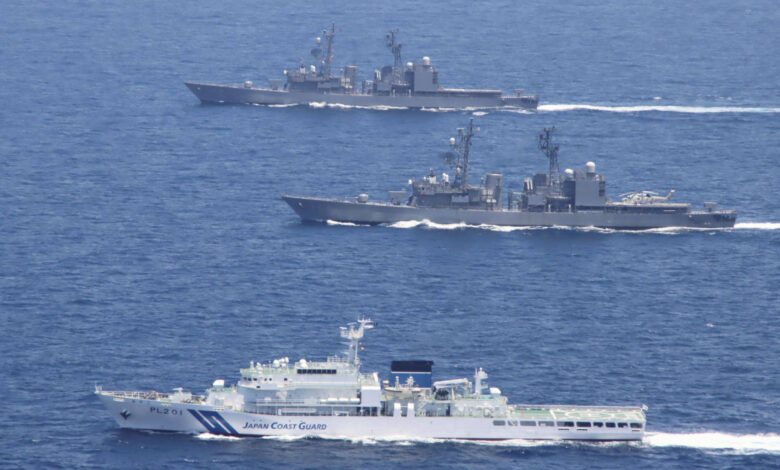
The Japan Coast Guard and Japan Maritime Self-Defense Force conduct a joint drill. IMAGE CREDIT: JAPAN COAST GUARD

Indo-Pacific Defense Forum reports Japan is attempting to increase coordination between their Maritime Defense Force (navy) and Coast Guard.

“Japan’s economic security is wedded to stable sea lines of communication (SLOC) that stretch through the East China Sea to waters around Taiwan, from the South China Seas to the Malacca straits into the Indian Ocean,” Stephen Nagy, professor at the Department of Politics and International Studies at the International Christian University in Tokyo, told FORUM. “The recently announced five-year ocean policy plan aims to bring stability to these SLOCs through more operational synergy between the [J]MSDF and Japan’s Coast Guard.”

There is little doubt this is in response to Chinese misbehavior. Still, until recently there has been little coordination between the two services.

The Japan Coast Guard has a long association with the US Coast Guard. From Wikipedia,

 “…in March 1946, USCG Captain Frank M. Meals was invited to consider the situation. Captain Meals suggested the establishment of a comprehensive coast guard organization based on the USCG. In response to this, the Maritime Safety Agency (MSA) was established as an external station of the Ministry of Transportation in 1948. Its English name was changed to Japan Coast Guard in April 2000.”

The Japan Coast Guard has never had the close association with the Maritime Defense Force that the US Coast Guard enjoys with the US Navy. It appears that is changing.

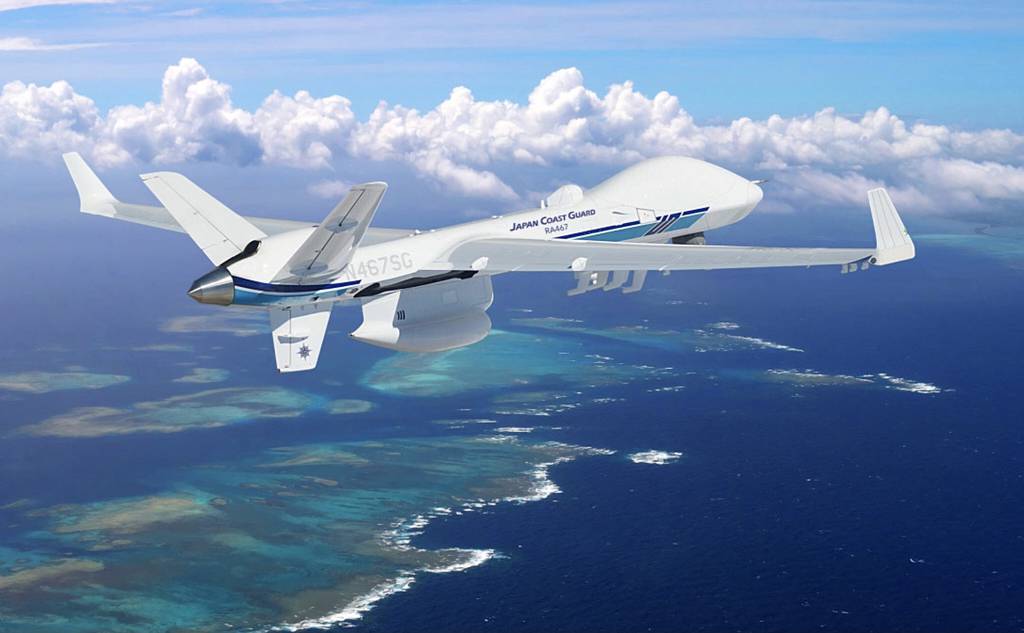
An artist’s rendering shows the Japan Coast Guard’s SeaGuardian drone. (General Atomics Aeronautical Systems)

As noted, the Japan Coast Guard has fielded MQ-9B long endurance, medium altitude, unmanned aircraft, a capability the Japan Maritime Self Defense Force does not yet have.

Seems the Japanese now view the Japan Coast Guard as a trip wire. That if the Chinese make an aggressive move, the Japan Coast Guard is likely to be the first to detect–and feel it.

“Speed, Blind Spots Cited as Contributing Factors in Deadly Accident Involving Coast Guard Cutter” –Military.com

The U.S. Coast Guard Cutter Winslow Griesser, homeported in San Juan, Puerto Rico, transits toward the pier in Bridgetown, Barbados, June 7, 2017. (U.S. Coast Guard photo by Petty Officer 1st Class Melissa Leake)

Military.com reports the results of an investigation into a Aug. 8, 2022 collision between USCGC Winslow Griesser and a 22-foot center console recreational boat that resulted in a fatality.

I was surprised by this,

As the Winslow Griesser left San Juan, it revved up to 29 knots — a normal practice at Coast Guard Sector San Juan to save time, limit crew fatigue and relieve other cutters on duty — even as the operational plan called for 16 knots, according to the Coast Guard.

Transiting at 29 knots does seem a bit excessive, if only because of fuel costs.

Going 29 instead of 25 gets you there 16% faster but burns about 70% more fuel, fuel that could keep you on patrol longer.

Going 29 instead of 21 knots gets you there 38 percent faster but burns almost three times the fuel.

Going 29 knots instead of 16 gets you there 81% faster but uses more than four times the fuel.

“French, Canadian, U.S. Forces collaborate with local responders in successful rescue operation off Rota, CNMI”

French Air Force A400

Below is a U.S. Coast Guard Forces Micronesia/Sector Guam news release, I don’t normally pass along reports on SAR cases, but this one was extremely unusual. 

This probably does show another reason we need some Coast Guard fixed wing aircraft out there. 

July 11, 2023

French, Canadian, U.S. Forces collaborate with local responders in successful rescue operation off Rota, CNMI

SANTA RITA, Guam — French, Canadian, and U.S. Forces, with local responders, successfully conducted a search and rescue operation to save the operator and passengers of a distressed vessel off the coast of Rota, Commonwealth of the Northern Mariana Islands, on July 10.

Thanks to the coordinated efforts of local partnerships and the utilization of aircraft resources, all 11 people from the center console fishing vessel are safely in Rota.

At 5:05 p.m. on July 10, Watchstanders at U.S. Coast Guard Forces Micronesia/Sector Guam’s Joint Rescue Sub-Center Guam received a distress call on VHF channel 16 from the operator of the 21-foot vessel Full 20 Horizon, stating the vessel was disabled and adrift in 6-foot seas and 12 mph winds with 11 people aboard, approximately 30 nautical miles northwest of Rota. Due to the lack of GPS onboard and the inability to use a cell phone to acquire a GPS position, the situation became even more critical.

In response, the watchstanders promptly issued an Urgent Marine Information Broadcast, alerting mariners in the area to be aware of the distressed vessel. They also established a 15-minute communications schedule with the vessel operator and instructed the passengers to wear their flotation devices for safety.

Watchstanders initiated coordinated efforts with the CNMI Department of Public Safety in Rota, who launched their 27-foot vessel to aid in the rescue operation. Additionally, partnerships with the U.S. Air Force 36th Wing and U.S. Navy Helicopter Sea Combat Squadron 25 at Andersen Air Force Base proved invaluable in securing the assistance of multiple aircraft crews for the response.

Capt. Nick Simmons, commander of U.S. Coast Guard Forces Micronesia/Sector Guam, emphasized the importance of aircraft in search and rescue operations at sea, stating, “Aircraft crews play a crucial role in our efforts to save lives in challenging maritime situations. Using aerial assets, combined with our local partnerships, ensures a swift and effective response to distress calls, ultimately increasing the chances of a successful rescue.”

A French Air and Space Force A400 Atlas military transport aircraft and crew were the first aircrew to respond, launching from Andersen Air Force Base and locating the vessel at about 8 p.m. after running a search pattern. They worked to vector in the Department of Public Safety crew.

Unfortunately, the initial rescue attempt by the Department of Public Safety’s crew was hindered by severe sea conditions as winds increased to 18 mph and seas built to 8 feet, forcing them to abort the mission. However, the French Air and Space Force A400 crew remained on the scene and maintained visual contact with the disabled vessel. Recognizing the severity of the situation, the crew of USCGC Myrtle Hazard (WPC 1139), on a port call in Saipan, was recalled, and watchstanders reengaged with HSC-25 to address the evolving circumstances.

Watchstanders also requested additional overhead support from the U.S. Air Force 36th Wing, who offered a Royal Canadian Air Force HC-130 airplane and crew to replace the French crew due to fuel constraints. At 11:15 p.m., the Canadian crew then on scene informed watchstanders that the lights on the distressed vessel went out, but they maintained visual contact with its position.

The U.S. Navy MH-60 Nighthawk helicopter and crew launched to aid the rescue efforts further. After a swift transit, the Nighthawk crew arrived at approximately 1 a.m. and immediately commenced hoisting the operator and passengers. The aircrew transported those rescued to the Rota airport, where local emergency responders and law enforcement met them. The passengers did not report any injuries, and the aircrew did not observe any.

The Nighthawk and Canadian aircrews returned to Andersen Air Force Base at 2:40 a.m., successfully concluding their part in the rescue operation. Meanwhile, the Myrtle Hazard crew continued their search for the vessel relocating it around 10 a.m. Weather conditions improved, and they will take the vessel in tow to deliver it to Rota.

Nine of the 11 people rescued are reportedly citizens the People’s Republic of China. Local law enforcement in Rota is currently addressing these matters. The U.S. Coast Guard remains committed to working closely with local authorities to ensure the safety of those at sea and the security of our maritime borders.

Notably, the French and Canadian aircraft crews participating in Exercise Mobility Guardian 2023 are contributing their expertise to this successful rescue operation. Exercise Mobility Guardian, Air Mobility Command’s largest full-spectrum readiness exercise, involves seven participating countries and supports over 15,000 U.S. forces, Allied, and partner participants in the Indo-Pacific region.

For more information or media inquiries about the multilateral rescue operation, please contact CWO Sara Muir at 671-688-6096 or sara.g.muir@uscg.mil. For information about the vessel or the disposition of the those rescued, please contact the CNMI Department of Public Safety at (670) 664-9035 or pio@dps.gov.mp.

-USCG-

About U.S. Coast Guard Forces Micronesia/Sector Guam:
U.S. Coast Guard Forces Micronesia/Sector Guam is responsible for ensuring U.S. waters’ safety, security, and stewardship and enforcing maritime laws in the Pacific region. With a steadfast commitment to protecting lives at sea, preserving the marine environment, and promoting maritime safety, the Coast Guard collaborates closely with local, federal, and international partners to serve the community and safeguard our nation’s interests.

“Our Best Look Yet at the Marines’ New Loitering Munition Toting Drone Boat” –MSN

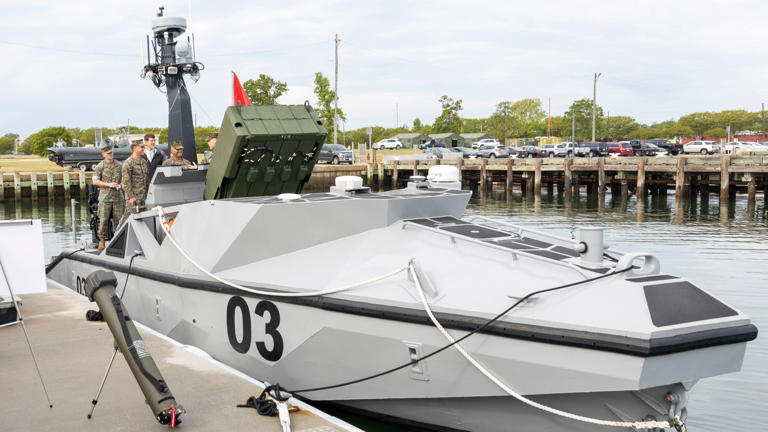
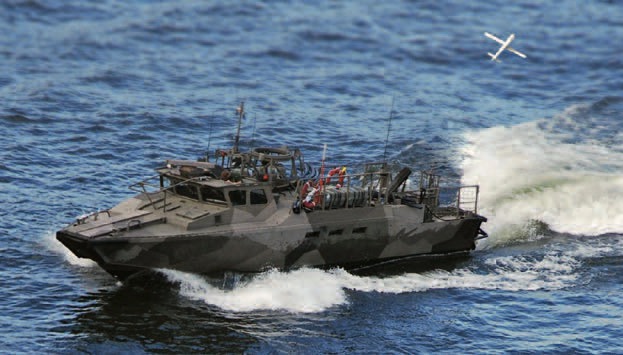
HERO 120 launcher on Long Range Unmanned Surface Vessel (LRUSV)

We talked about the HERO 120 loitering munition before. I noted it might be just what the Coast Guard needs to deal with the potential threat of small, fast, highly maneuverable craft.

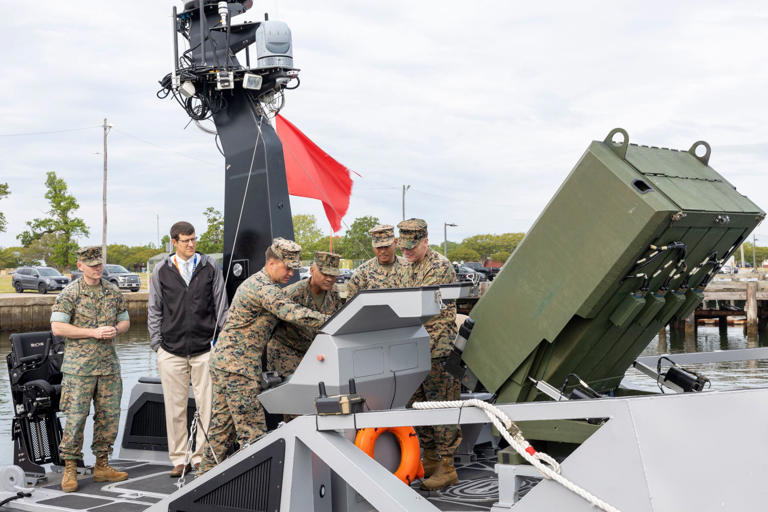
While man portable single round launchers are probably all Coast Guard units might need (other than perhaps Bahrain based PATFORSWA Webber class cutters), we now have photos of an eight-cell launcher mounted on a Metal Shark optionally manned 40-foot, Long Range Unmanned Surface Vessel (LRUSV).

The Hero 120 is the largest offering in UVision’s “tactical” line of loitering munitions, weighing around 27 and a half pounds, including a 10-pound warhead. It uses an electric motor to drive a propeller at the rear and has a maximum endurance of around 60 minutes.

U.S. Marine Corps Lt. Gen. Brian W. Cavanaugh, the commanding general of Fleet Marine Force, Atlantic, Marine Forces Command, Marine Forces Northern Command, and Marines with 3d Marine Littoral Regiment, 3rd Marine Division, examine the manual controls to the Long Range Unmanned Surface Vessel, Joint Expeditionary Base Little Creek-Fort Story, Virginia, April 27, 2023. A LRUSV is an optionally manned vessel capable of extended travel and transporting loitering munitions that accurately track and destroy targets on sea or land. Metal Shark is designing, building, testing and implementing the LRUSV system under another transaction authority agreement with Marine Corps Systems Command to primarily serve as an intelligence, surveillance, and reconnaissance platform.
© Provided by The Drive

While it looks increasingly likely this system will become common in the Navy/Marine Corps inventory, it is perhaps important to remember that this eight-round launcher is not necessary to launch these. Loaded single round launchers are small enough to be man portable and would impose no heavy loads on the platform at launch. Certainly, some training would be required, but they could be stored in a group, station, or ship’s armory and be issued when needed.

“Israeli Navy reveals Reshef corvette plans” –Naval News

An illustration and infographic of the Reshef class corvette (Credit: Israeli Navy)

Naval News reports,

The Israeli Navy is looking to have the first of its new Reshef class corvettes in service at the start of 2027…Speaking at the CNE 2023 conference in Farnborough on 24 May, Commander Yonatan Kudish also revealed that the Reshef vessel will be assembled from hull modules built overseas by a US shipbuilder.

Eight ships are planned to replace eight Sa’ar 4.5 missile boats currently in service with the Israeli Navy. In addition to a 76mm gun, a pair of 30mm remote weapon stations, and anti-ship missiles (presumably Gabriel V), they are expected to have C-Dome missiles, the naval version of Iron Dome as well.

It appears the Israelis are rebranding their helicopter deck as a “multi-purpose mooring deck.” There does not seem to be a hangar.

Compared to the Sa’ar 4.5s they are replacing, they are more than twice the displacement, and 3 or 4 knots slower.

These will be marketed internationally as Offshore Patrol Vessels (OPV) as well as Missile Corvettes depending on how they are equipped, though they seem to be a little small for an OPV on most of the world’s oceans. A 1,000 ton displacement as shown in the graphic would suggest they are smaller than the Coast Guard’s 210 foot WMECs despite a greater length (about 250 feet), but that might not be their full load displacement.

The fact that they are slower than the vessels they replace seems to reflect the diminished value of a high maximum speed since long range missiles and aircraft have replaced other surface vessels as the primary threat. On the other hand, seakeeping, endurance, range, and high cruise speed are probably more important now. Even so the Sa’ar 4.5s had very good cruising range for such small ships (4,800 nautical miles (8,900 km) at 19 knots). Their replacements may not offer any improvement.

First of Ten Turkish Hisar-class OPV is ready to launch

A rendering showing the design of the Hisar-class OPV (ASFAT image)

Naval News reports,

The Turkish Navy’s first-ever offshore patrol vessel (OPV), the Hisar-class project’s lead ship was spotted at the Istanbul Naval Shipyard. The future TCG Akhisar (P-1220) is ready for launch.

The Hisar-class OPV is being built using the “fitted for but not with” concept, which allows for the integration of newly developed indigenous weapon and sensor systems. The OPV, which can accommodate a total of 104 people, will have a range of 4500 nautical miles with its CODELOD (COmbined Diesel-eLectric Or Diesel) main propulsion system.

Specifications:

  • Overall length: 99,56 meters
  • Beam: 14,42 meters
  • Draft: 3,77 meters
  • Maximum speed: 24 knots
  • Displacement: 2300 tons

Türkiye has begun to be a significant arms exporter including the export of warships. These are likely to be well received when offered for export.

Depending on how it is equipped, these could also fill the role of a corvette or light frigate.

Developed as a variant of the MİLGEM-class corvettes, the Hisar class OPV has been redesigned with a different main propulsion system and a different structural and general layout concept, allowing it to be built in a shorter time and at a lower cost.

I have come to see ships of about 2500 tons, 100 meter (328′) in length, and 25 knots as something of an ideal modern OPV. This is very close to that. Personnel accommodations allow a reasonable crew size and range is adequate. Its CODELOD (COmbined Diesel-eLectric Or Diesel) main propulsion system sounds like current best practices. It has a helicopter deck and hangar. What is not clear, is how good the accommodations for boat launch and recovery are–critical because boats are a primary tool for OPV missions, and if it can also accommodate a UAS system in addition to the helicopter. This is rapidly becoming a highly desirable capability.

“Editor’s Notes: Why the Coast Guard Lags When It Comes to Unmanned Systems” –National Defense

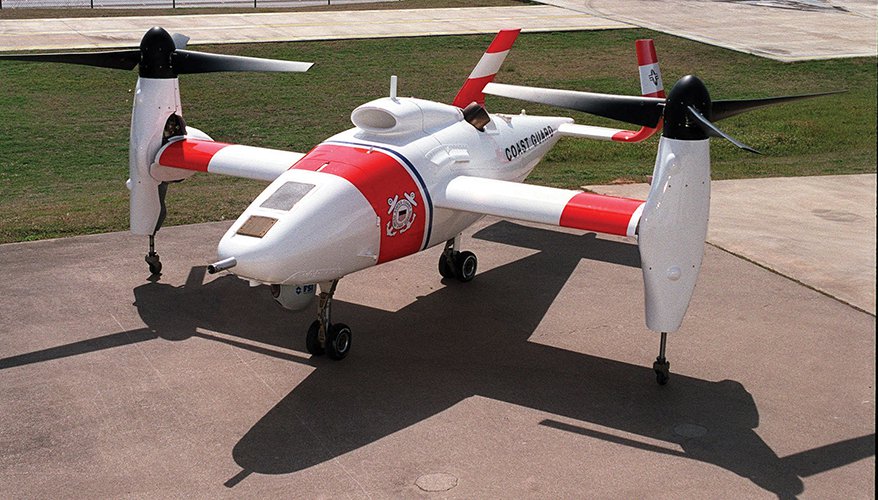
Eagle Eye UAS, part of the “Deep Water” Coast Guard recapitalization plan.

National Defense has a post that traces the Coast Guard’s two-decade effort to put unmanned aircraft on cutters.

But here is where I confess that this article is not really about the Eagle Eye. Sorry to say that it was all a bit of misdirection, because this article is really about one of the nation’s greatest but chronically underfunded assets: the United States Coast Guard.

National Defense since the Eagle Eye’s cancellation has written dozens of articles about the service’s effort to deploy UAVs. Over and over again, the only reason cited for the Coast Guard being the “have-not” of the services when it comes to drones was funding.

It is a good article, but I think the conclusion of the article is wrong. To paraphrase Jimmy Buffett (“wasting away in Margaritaville”) it’s our own damn fault.

Too long we seemed to glory in doing more with less. Too many years we went without bothering to submit an unfunded priorities list. We really haven’t changed our program of record since the rethink prompted by 9/11 more than two decades ago. We fired the Deepwater program contractors in 2012, but we are still working on their program. There have been changes around the edges, more NSCs, more FRCs, but those changes were not the result of a Coast Guard masterplan. They were ad hoc and frequently driven by Congressional interests.

Congress keeps telling us our planning is out of date. We have not done a fleet mix study since 2011 and even that one only considered the types of platforms already in the program of record without any consideration of alternative types.

Despite repeated Congressional calls for a new Fleet Mix Study, there is none.

Despite repeated Congressional calls for a 20- or 30-year ship building plan, there is none.

We still have not reached the number of medium range fixed wing search aircraft that were in the Program of Record and apparently have not plan to do so.

The Coast Guard has not been transparent in publicly reporting their measures of effectiveness. We don’t see reports like this one anymore. I have not been able to make reports like these (here, here, and here) since 2010.

We have failed to field any shore based maritime search UAS system, a capability that was included in the Deep Water program, while Japan, Thailand, India, the Netherlands, Belgium, and the UK have already done so. This in spite of the fact that we have been piddling around with CBP’s MQ-9 program for well over a decade.

Regional Maritime Domain Awareness programs are being implemented all over the world, but if we have such a program with Mexico and Canada no one seems to know about it.

Planning for the medium Icebreakers could have proceeded in parallel with planning for the heavy icebreakers. We know we need them, but I have seen no indication that we have started looking seriously at the possibilities.

We have not talked about the possibly devastating effects the delays in the OPC program are going to have, that would justify increasing the pace of construction to more than two per year.

We still have not adequately addressed the water borne terrorist threat to our ports. Since we never have its easy to continue to ignore.

Despite demands for reports from field units, for whatever reason, the “puzzle palace” is not making public the kind of analytics required to justify significant departures from what we did last year, so we keep stumbling along from one budget to the next.