“Chinese Submarine’s Torpedo Destroys Amphibious Landing Ship During Exercise” –The War Zone / More on Why the CG Needs Torpedoes

The War Zone has an article including the video above that appears to be a wake homing torpedo exploding under the stern of a small (800 tons, 191′) LST (Landing Ship Tank).

It also includes a discussion of wake homing torpedoes and their capabilities. This is assumed to be a typical heavy weight (21″/533mm) torpedo. Russia and China also have much larger 25.6″/650mm torpedoes. Of course, they have or have had smaller (450, 400, 355, and 330mm) torpedoes too.

Wake homing torpedoes are problematic for the defense because decoys and acoustic countermeasures like Nixie don’t work against wake homing torpedoes. The Navy has been working on developing a hard kill countermeasure.

How is this related to the Coast Guard?

As I have contended the Coast Guard’s missions, particularly counter terrorism, require the ability to forcibly stop any ship regardless of size. For medium to large ships, getting a “mobility kill” with a gun is very difficult since most of the propulsion machinery is below the waterline and large marine diesels are extremely tough.

A torpedo that destroys the propellers and/or rudder may be the answer. It could be either wake or acoustic homing, as long as it blows up under the stern, like the one in the video above.

It is not like the Coast Guard is going to use a lot of torpedoes. A marine terrorist attack is an unlikely event, but the consequences of a successful attack could be catastrophic, perhaps leading to a war as happened after 9/11.

By my calculations, we have 31 individual ports or port complexes that might be targeted. The Webber class WPCs appear the most appropriate asset to arm for the purpose of protecting those ports, since they, are most likely to be underway or at least ready to move, and near the ports that might be threatened. We expect to build a total of at least 67. Assuming two torpedoes per WPC, that would be 134 torpedoes and probably less, since some cutters will not be in a position to use them, and some will be in maintenance status.

This is important.

The Navy does not have to buy torpedoes for the Coast Guard, they just need to loan the Coast Guard torpedoes from war reserve stock, and if a war starts the Navy can have their torpedoes back.

We don’t need the most expensive torpedoes. 

The standard US Navy heavy weight torpedo, the Mk 48, is very large, heavy, and extremely expensive, and the Navy can’t make enough of them, but we don’t necessarily need a large warhead or great range, nor do we need a torpedo that can operate at great depth against submarines.

There are three possibilities for torpedoes that the Coast Guard might use, existing light weight torpedoes, new very light weight torpedoes, or new heavy weight torpedoes.

New Heavy Weight Torpedo: Reportedly the Navy is fast tracking a new heavy weight torpedo with a target price of $500,000, much less than the cost of the Mk48 ($4.2M) and even less than the cost of the Mk54 light weight torpedo ($839,320 in 2014). They don’t say so, but this may be explicitly a wake homing anti-surface vessel torpedo. It might also be smaller than the Mk48. If the torpedo is made significantly shorter than the Mk 48, it might permit Submarines to carry more torpedoes. More war shots would be an advantage.
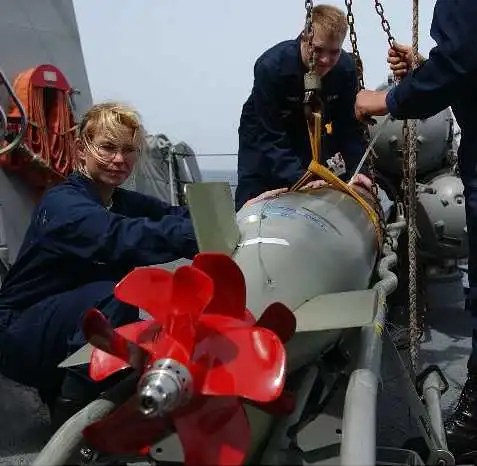
Mk 46 Light Weight Torpedo

Light Weight Torpedo: For at least three decades as many as 36 US Coast Guard WHECs (aka WPGs) were equipped with light weight torpedoes. Throughout their lives, the 378s had two sets of triple light weight torpedo tubes and a torpedo magazine in the superstructure for additional torpedoes, so the Coast Guard has had these in the past.  At least some Light Weight ASW torpedoes, beginning with the Mk46 Mod5 (1984), still a NATO standard, are reported to have an anti-surface capability. Reportedly 26,000 Mk46 torpedoes, including more than 6000 Mod 5s have been produced. The Navy has also produced more capable Mk50 and Mk54 light weight torpedoes, but for the counter terrorism mission the Coast Guard does not need their additional ASW capabilities.
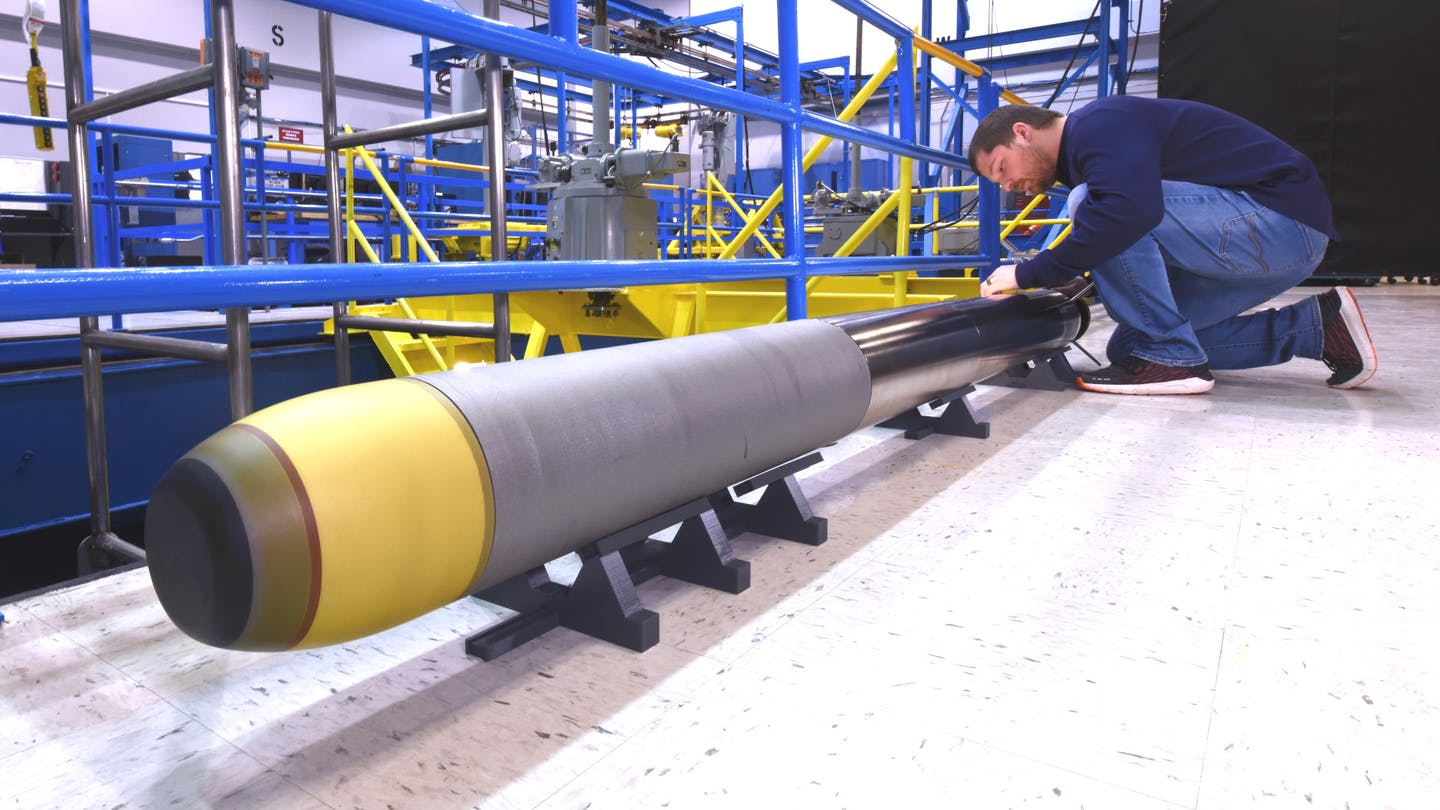
Very Light Weight Torpedo

Very Light Weight Torpedo: 

The Navy has contracted Raytheon for a new class of torpedo, 6.75″ in diameter (171.45mm), about 85″ in length, and weighing about 220 pounds (100 kilos). More here.

While this Common Very Light Weight Torpedo (CVLWT), also known as Compact Rapid Attack Weapon (CRAW), is reportedly effective in both defense (as an anti-torpedo torpedo) and offense against both surface and subsurface targets, by submarines, surface vessels, and aircraft, the initial purchase is only for US submarines.

We may see additional applications for this weapon. There may be good arguments for increasing the production to include defense for surface vessels and offensive use by ASW helicopters and Unmanned surface and subsurface systems.

While the warhead is only half the size of that for the Mk46 and about one twelfth that of the Mk48, it is probably enough to disable even large ships and its small size means more can be carried in the same space.

A Navy briefing slide showing the internal components and describing the various features of the Penn State University’s Applied Research Lab (PSU/ARL) Common Very Light Weight Torpedo (CVLWT) design

It seems the Navy, after a long period of apparently coasting, is showing renewed interest in developing torpedoes and torpedo countermeasures. In addition to the Common Very Light Weight Torpedo, and the new Heavy Weight Torpedo, the Navy is also developing an improved Light Weight ASW torpedo, the Mk54 Mod2.

New weapons may provide an opportunity to repurpose older weapons.
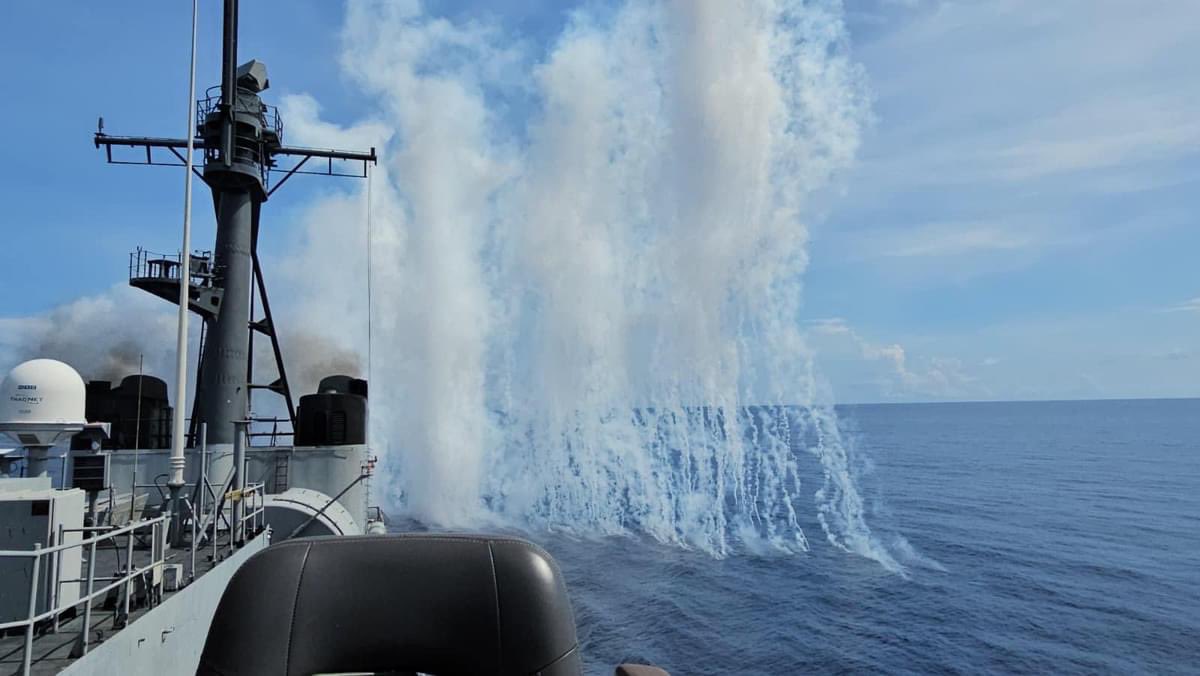
Philippine Navy Upgraded WHEC

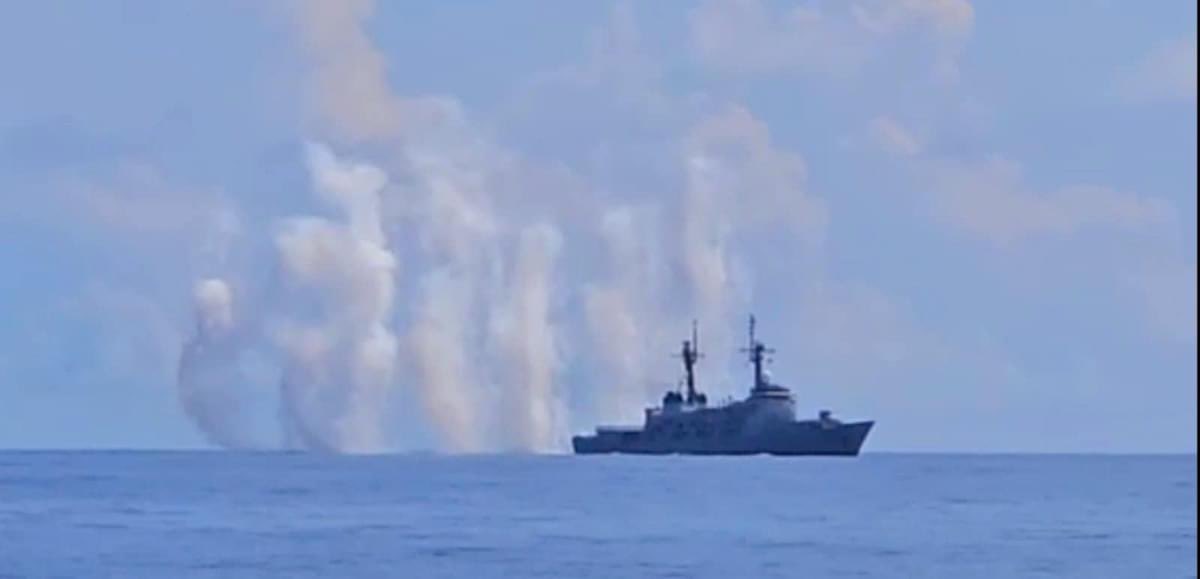
Sharing something I found on Facebook, BRP Andres Bonifacio (PS-17), former USCGC Boutwell, testing their recently added Mark 36 Super Rapid Bloom Offboard Countermeasures Chaff and Decoy Launching System. Upgrades to the Philippine Navy’s three former USCG WHECs are discussed here.

BRP Andres Bonifacio (PS-17) deployed its newly installed Mark 36 Super Rapid Bloom Offboard Countermeasures Chaff and Decoy Launching System during a gunnery exercise in the SCS on June 19. Note modern multimode radar on main mast. Photo from Aaron-Matthew Lariosa.

BRP Andres Bonifacio (PS-17) deployed its newly installed Mark 36 Super Rapid Bloom Offboard Countermeasures Chaff and Decoy Launching System during a gunnery exercise in the SCS on June 19, 2024. Photo from Aaron-Matthew Lariosa.

Thanks to Buddy Stewart who provided link to the source. 

“US Coast Guard Cutter Dauntless celebrated for 56 years’ service during heritage recognition ceremony” –Having Done More than Ever Anticipated

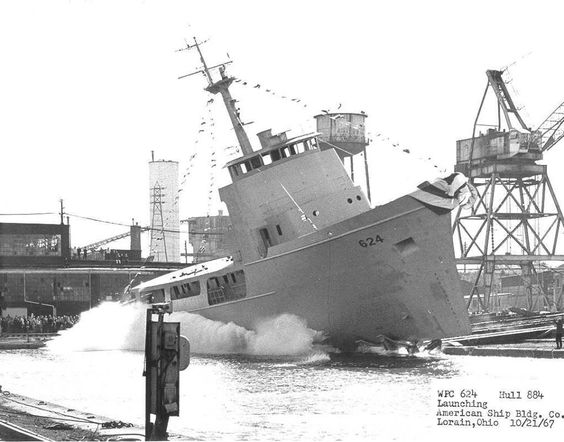
USCGC Dauntless being launched on 21 October 1967.

Below is a press release marking the effective decommissioning of USCGC Dauntless. (Go to the link for photos.) (My comments have been modified from the original publication.)

I have to take issue with a statement in the news release,

“These cutters were designed for search and rescue, law enforcement missions such as counterdrug and migrant interdiction, as well as national defense and international engagement.”

This reflects what the ship has done, but it is a misrepresentation of what was envisioned when the 210s were designed more than 60 years ago. SAR was the primary mission, law enforcement (fisheries) was secondary, but drug and migrant interdiction and international engagement were not the radar at all.

The flight deck was to be used as a “lily pad.” They were not expected to deploy with a helicopter attached.

There is an important lesson here, that adaptability and flexibility are important in the design of an asset that will be used for decades.

Where did I get this?”

I did a post in 2011, “The Coast Guard Shipbuilding Program, 1964” that referenced  an article, “Developments and Problems in Coast Guard Cutter Design,” that appeared in the 1964 US Naval Institute Naval Review (published at that time as a separate hard bound book, copyright 1963, United States Naval Institute, Annapolis, MD, Library of Congress Catalog Card Number 62-21028) that discussed the then new generation of Coast Guard Cutters.

There was no clue drug enforcement would become important. In contrast to the prohibition era the authors noted, “…nor are they (cutters) much concerned with the apprehension of smugglers.”

Intended to replace twenty five 125 ft WSCs, 165 ft WPCs, 143 ft ATAs, 205 ft ATFs, and 213 ft ARS, the considerations that drove the design of the 210s were relatively straight forward, to make “A better rescue ship.” LE was secondary. Military readiness, a distant third, was still considered. The 3″/50 fitted for SAR and Law Enforcement was to be “…augmented for the ship’s wartime role as a coastal patrol vessel….Although their peacetime armament is minimal, space and weight compensation have been provided  for sonar, hedge hog projectors, ASW torpedoes, and additional guns, small rockets, or other armament as may be required.”

We have been repeatedly told the Coast Guard is now in the greatest period of recapitalization since World War II. That is not really true, the Coast Guard commissioned 12 WMECs between 1967 and 1972, 16 WMECs between 1964 and 1969, 79 WPBs between 1960 and 1970, and five WLMs between 1964 and 1971. That is 112 vessels in 13 years 1960 to 1972.

In the last 16 years we have commissioned ten National Security Cutters and 56 Fast Response Cutters, a total of 66 ships. We are planning to add 11 more FRCs and 25 OPCs, for a total of 102 ships, but in the 60s we had planned to build 36 WHEC378s and 29 WMEC210s, which would have brought that total to 149 vessels.

Replacing all of our ships in huge programs 40 years apart is not a good idea. Where we really need to get to, is building ships continually with constant progressive improvements overseen by an organic design staff.

Since we seem to be dragging out the Offshore patrol cutter program, we may get there for patrol cutters since we really need more than the 36 large patrol cutters and the Bertholf will be 30 years old when the last planned OPC is finished in 2038. We may just continue to build one or two a year indefinitely.

The oldest FRC was commissioned in 2012 and the 67th will probably be commissioned in 2027, so we will not need to replace them for a while, but we have already started decommissioning 87 foot “Marine Protector” class WPBs, nominally because they can be replaced in some roles by the FRCs and Response Boat, Mediums, but in any case, they are reaching the end of their useful lives, the first having been commissioned 26 years ago. We should be designing their replacements now.

To make this work we really need a long-term ship building plan. The Navy already does one. Congress is used to the idea of 30 year plan. That time horizon is not an accident. We should not be keeping ships for more than 30 years. Once they reach that point, they should be passed over to the foreign military sales program to help our friends and allies. Replacing ships at a predictable, realistic threshold will help both the Coast Guard and the shipbuilding industry that is essential for national security. 


PRESS RELEASE | June 21, 2024

NAVAL AIR STATION PENSACOLA, Fla. — The Coast Guard held a heritage recognition ceremony, Friday, in Pensacola to honor the U.S. Coast Guard Cutter Dauntless (WMEC 624) and recognize its 56 years of exemplary service.

The ceremony was presided over by Vice Adm. Nathan Moore, Atlantic Area commander, and served to celebrate Dauntless’ contributions to the service and Nation in the presence of cutter leadership, current and former crew members, families and friends.

The event also marked the ship’s exit from active-duty service for an indeterminate time, placing it in commission, special status. The 210-foot Dauntless operated as a Coast Guard Atlantic Area command asset, based in Portsmouth, Virginia, and was most recently homeported in Pensacola.

Dauntless was built in Lorain, Ohio and commissioned in 1968. The cutter is the 10th of 16 vessels built in the Reliance-class of medium endurance cutters that have operated in the Coast Guard’s fleet. These cutters were designed for search and rescue, law enforcement missions such as counterdrug and migrant interdiction, as well as national defense and international engagement.

Dauntless was named after the inspirational trait, which means to persevere fearlessly. It’s motto, “Sin Miedo,” translated as “Without Fear,” also underscores the same spirit valued by the cutter’s crews. It is the first Coast Guard cutter to bear its name.

Dauntless spent its first 25 years assigned in the Coast Guard Seventh District area of responsibility and was homeported in Miami Beach.

Throughout the cutter’s storied career, it has earned a reputation as one of the nation’s preeminent drug-busting vessels. Of note, Dauntless has over 85 illegal narcotics interdictions to its credit, executing more busts than any other cutter.

On March 8, 1973, Dauntless became the first cutter in history to seize one ton of marijuana after its crew boarded the fishing vessel Big L. The boarding team arrested the master and crew.

Dauntless was also the second cutter in Coast Guard history to seize one million pounds of marijuana, following in the footsteps of U.S. Coast Guard Cutter Steadfast (WMEC 623). This milestone accomplishment earned Dauntless the large gold marijuana leaf painted on its superstructure.

Dauntless responded to the mass Cuban exodus known as the Mariel Boatlift in 1980. Between April 23 and May 13, crew members towed over 25 vessels to safety, rescued eight persons adrift at sea, and conducted 55 search and rescue cases.

President Ronald Reagan visited the cutter on November 17, 1982, and awarded Dauntless with the Coast Guard Unit Commendation. It was the first time in almost 20 years that a sitting U.S. president had visited a Coast Guard cutter.

Dauntless’ most publicized search and rescue case occurred in January 1986. The cutter was first to arrive during the response to the NASA space shuttle Challenger disaster. Serving as the on-scene commander for over a week, crew members tended to safety management and debris recovery.

During the 1980s, Dauntless appeared in two motion pictures. In “The Island,” the cutter is portrayed as a fictitious ‘U.S. Coast Guard Cutter New Hope,’ which is boarded and seized by Caribbean pirates. Dauntless was also featured later in the James Bond film, “License to Kill.”

In June of 1993, Dauntless was decommissioned and underwent an 18-month-long Major Maintenance Availability at the Coast Guard Yard in Baltimore. After its completion, Dauntless relocated to the Coast Guard Eighth District area of responsibility and reported to its new home port of Galveston, Texas in March of 1995.

On November 24, 1995, crew members rescued 578 migrants from a grossly overloaded 75-foot coastal freighter. It was the largest number of migrants rescued from a single vessel in Coast Guard history.

In 2009, Dauntless underwent a second drydock availability at the Coast Guard Yard. During the 10-month period, the cutter received an increase in its long-term capability through equipment upgrades, habitability improvements and structural repairs to improve reliability and drive down costs.

Dauntless relocated to its current home port in July 2018.

In 2022, the cutter received a six-month drydock availability at the Brooklyn Navy Yard in New York City. Dauntless underwent hull restoration and preservation projects, prolonging the ship’s life further.

Recently working alongside the Royal Netherlands navy, Dauntless’ crew seized approximately 8,500 pounds of cocaine and apprehended 13 suspected drug smugglers with Dominican Republic and Colombian nationalities following a 45-day patrol in the Caribbean Sea.

During the cutter’s final patrol this year, Dauntless completed a 61-day deployment in the Windward Passage and Florida Straits. On March 8, crew members conducted a search and rescue case on a moonless night. After searching for several hours, the crew located an unlit, overloaded and disabled sail freighter with 65 Haitian migrants on board, including several children. The crew safely rescued all 65 migrants.

“To the crew, thank you all for the work you put forth in maintaining and operating the Dauntless,” said Vice Adm. Nathan Moore, Atlantic Area commander. “Your work is the heart of what we do as a sea-going service, and your collective energy, work ethic, character and sacrifice is what sets the tone for the sailors that will follow in your footsteps. Although your time on Dauntless is coming to an end, I look forward to your continued leadership and contributions to our Service’s missions and culture as you move on to your next assignments.”

The Dauntless now transitions into an inactive shipyard status as part of the Coast Guard’s greater “AY24 Force Alignment Initiative,” a program to temporarily adjust operations to better reflect the approximate 10% shortage of enlisted members while the Service reassigns personnel and assets to ensure the essential mission readiness demanded by the American public.

This initiative will enable the Coast Guard to meet growing demands for the service’s unique capabilities and authorities during the workforce recruitment and retention challenges facing all U.S. military service branches.

“The Coast Guard cannot maintain the same level of operations with our current shortfall – we cannot do the same with less,” said Coast Guard Commandant Adm. Linda Fagan and Master Chief Petty Officer of the Coast Guard Heath Jones in a joint statement. “Conducting our missions is often inherently dangerous, and doing so without enough crew puts our members and the American public at increased risk.”

Once back at the Coast Guard Yard, Dauntless’ current crew will transfer to different units both ashore and afloat, a step taken to help ensure the Coast Guard’s ability to prioritize lifesaving missions, national security, and protection of the Maritime Transportation System with no degradation to these critical services.

“It has been the honor of a lifetime to have served with the men and women that comprise the exceptional crew of Dauntless,” said Cmdr. Aaron Kowalczk, commanding officer of Dauntless. “This crew embodies the Coast Guard’s Core Values of Honor, Respect, and Devotion to Duty; their dedication to their shipmates, ship, and country is inspiring. In my 13 months on board, I have seen them serve with distinction, protecting the homeland, enforcing our laws at sea, and saving lives. Every day they remind me of our cutter’s motto, “Sin Miedo,” as they face every challenge and obstacle ‘Without Fear’. They have written an epic final chapter to close Dauntless’ 56 historic years of dedicated service to America.”

Dauntless is a 210-foot, Reliance-class medium endurance cutter with a crew of 62. Since commissioning in 1968, Dauntless has executed counterdrug and migrant interdiction operations, supported national defense and homeland security missions, and conducted search and rescue missions in support of Coast Guard operations throughout the Western Hemisphere.

More information about the U.S. Coast Guard’s AY24 Force Alignment Initiative can be found here.

For information on how to join the U.S. Coast Guard, visit GoCoastGuard.com to learn about active duty, reserve, officer and enlisted opportunities.

Information on how to apply to the U.S. Coast Guard Academy can be found here.

“Coast Guard starts fourth phase of work to extend Polar Star’s service life” –CG-9

Below is a news release from the Acquisitions Directorate (CG-9).


Coast Guard starts fourth phase of work to extend Polar Star’s service life

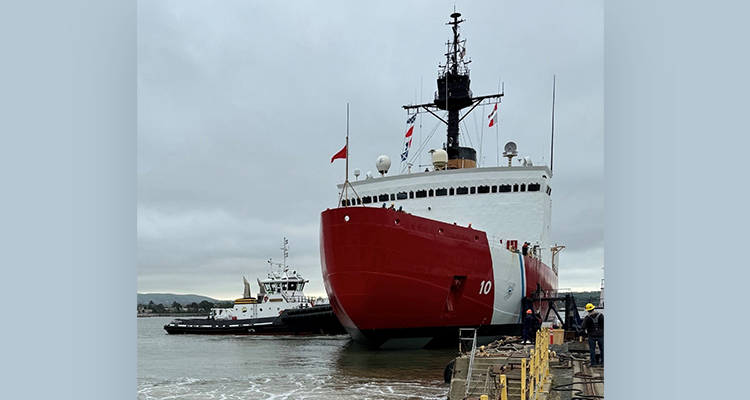
Coast Guard Cutter Polar Star docks at Mare Island Dry Dock in Vallejo, California, on April 3, 2024, for the fourth phase of its service life extension program. U.S. Coast Guard photo.


The Coast Guard has initiated the fourth of five planned phases of Coast Guard Cutter Polar Star’s service life extension program (SLEP). The work is part of the In-Service Vessel Sustainment Program and is being completed at Mare Island Dry Dock in Vallejo, California.

The SLEP is being conducted in phases to take advantage of the planned maintenance availabilities that follow the cutter’s annual deployment to the polar regions. Polar Star completed a 138-day deployment to Antarctica, including operating for 51 days below the Antarctic Circle, in support of Operation Deep Freeze 2024, the annual joint military logistics mission to support the National Science Foundation, the lead federal agency with responsibility for management of scientific research that comprises the U.S. Antarctic Program. Polar Star and crew contribute to this yearly effort through icebreaking to clear the channel for supply vessels.

Phase 4 work began on April 1, 2024, and targets three systems:

  • The heating, ventilation and air conditioning system is undergoing a refurbishment/overhaul of the ventilation trunks, fans and heaters that supply berthing areas of the ship.
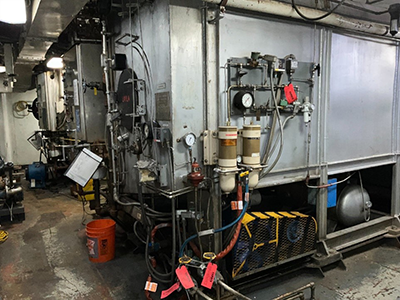
  • All of the boiler support systems will be recapitalized/redesigned, including the electrical control station that is used to operate them.

A complete recapitalization/redesign of the flooding alarm system will occur from bow to stern to monitor machinery spaces for flooding.

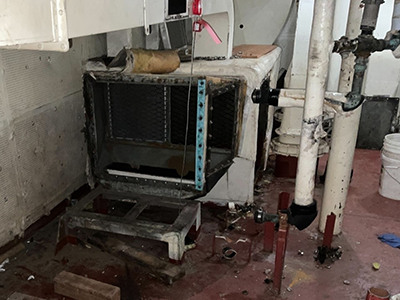
The boiler system of Coast Guard Cutter Polar Star, which will receive a recapitalization/redesign. U.S. Coast Guard photo.


A section of the heating, ventilation and air conditioning system, which is undergoing a refurbishment/overhaul of the ventilation trunks, fans and heaters that supply berthing areas of the ship. U.S. Coast Guard photo.


This phase of the SLEP is scheduled to be completed by August 2024 to enable Polar Star to meet its commitment to Operation Deep Freeze 2025.

The Polar Star SLEP addresses targeted systems such as propulsion, communication and machinery control systems for recapitalization. Major maintenance extends the service life of Polar Star beyond that of its original design. By replacing obsolete, unsupportable or maintenance-intensive equipment, the Coast Guard is mitigating the risk of lost operational days due to unplanned maintenance or system failures. The contracted SLEP work items and recurring maintenance is taking place within a five-year, annually phased production schedule running from 2021 through 2025.

Polar Star is the Coast Guard’s only active heavy polar icebreaker. The Coast Guard is investing in a new fleet of polar security cutters that will sustain the service’s capabilities to meet mission needs in both the Arctic and Antarctic regions.

For more information: In-Service Vessel Sustainment Program page and Polar Security Cutter Program page.

“First Look At Houthi Kamikaze Drone Boat That Struck Cargo Ship In Red Sea” –The War Zone

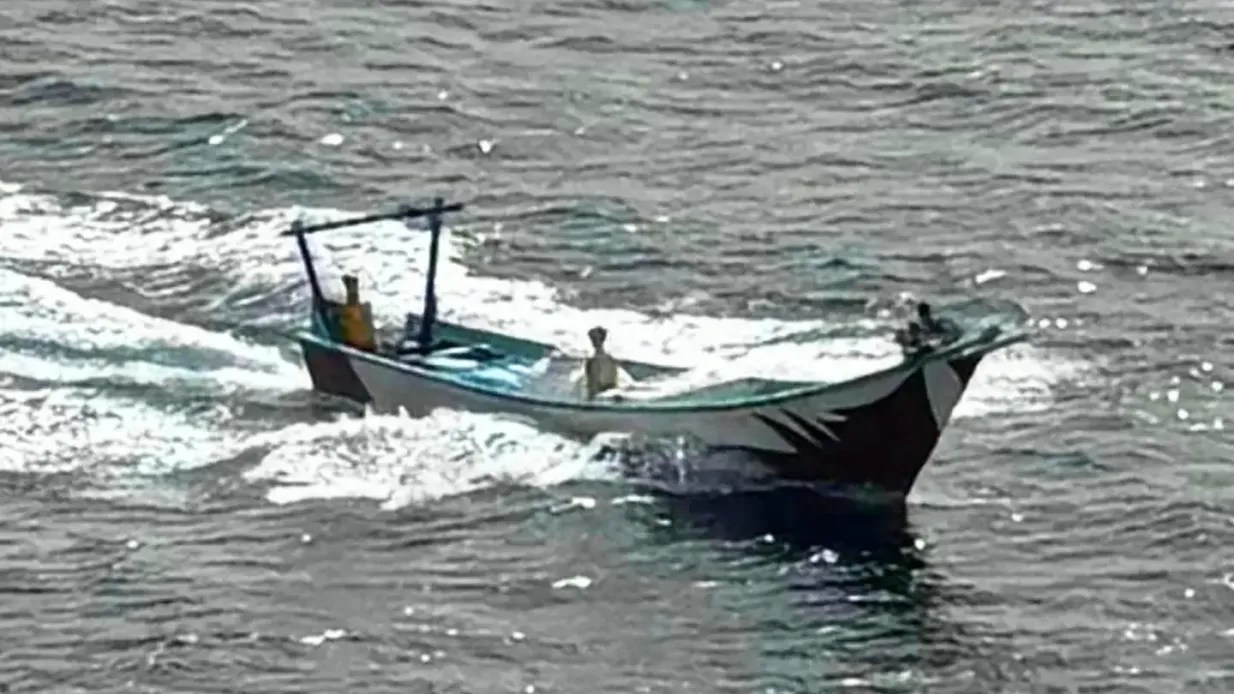
Houthi Kamikaze Drone Boat That Struck Cargo Ship in Red Sea, peopled with dummies. 

The War Zone reports,

“The Houthi’s crude uncrewed surface vessel…featured human dummies and approached the ship while security took no defensive action.”

While the Houthi have made several attempts to use kamikaze Unmanned Surface Vessels, this is their first successful in a long time. Deception was the key to success. The attack craft was not small, fast, or highly maneuverable. The attack was not made under cover of darkness. It just looked like all the other local traffic. There is probably a lesson here.

“MEDIA ADVISORY: Coast Guard to hold ribbon-cutting/ commissioning ceremony for new Air Station Ventura” –First New Air Station in More Than 25 Years

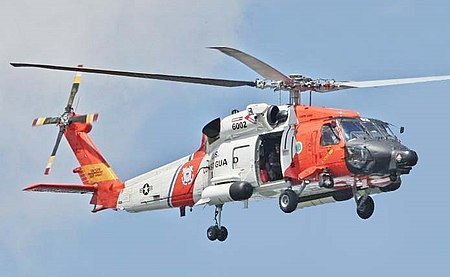
Below is a District 11 press release. This is also an upgrade from H-65s to H-60s. Quoting a 2021 news release

“Previously, the Coast Guard operated Air Station Los Angeles out of the Los Angeles International Airport for more than five decades until it lost its lease in May 2016. The Coast Guard officially closed the air station and shifted aviation operations to a Forward Operating Base (FOB) located at Naval Base Ventura County supported by Coast Guard Air Station San Francisco. The Point Mugu FOB operates out of a leased hangar facility and leased berthing space from the Navy. Currently, 13 permanent service members and approximately 11 rotating crewmembers from San Francisco fly two MH-65 Dolphin helicopters out of Point Mugu.”

The new airstation will be a tenant command of Naval Base Ventura County.


June 17, 2024

MEDIA ADVISORY: Coast Guard to hold ribbon-cutting/commissioning ceremony for new Air Station Ventura

POC: Petty Officer 3rd Class Richard Uranga 310-781-0619

WHO: Congressman Salud Carbajal, Representative of California’s 24th District, Congresswoman Julia Brownley, Representative of California’s 26th District, Rear Admiral Andrew Sugimoto, commander, U.S. Coast Guard District Eleven, Capt. Neal Armstrong, commander U.S. Coast Guard Facilities Design and Construction Center and Cmdr. Amanda Sardone, commander, U.S. Coast Guard Air Station Ventura.

WHAT: Ribbon-cutting/Commissioning ceremony for the new U.S. Coast Guard Air Station Ventura.

WHEN: June 18, 2024 at 1000.

WHERE: Naval Base Ventura County: 190 3rd St, Point Mugu, CA 93042.

SAN PEDRO, Calif. — The U.S. Coast Guard is scheduled to hold a ribbon cutting and commissioning ceremony for its newest air station at Naval Base Ventura County, Point Mugu. The ceremony will take place on Tuesday, marking the establishment of the newest Coast Guard air station in more than 25 years.

Air Station Ventura features a $70 million state-of-the-art, 43,000 square foot hangar and a 12,000 square foot administration facility, ensuring that Coast Guard personnel have the resources needed to carry out their vital missions. This new facility will house three MH-60 Jayhawk helicopters and approximately 100 personnel, significantly enhancing the Coast Guard’s capabilities in the region.

The air station will serve a crucial role in protecting the busy maritime region from Orange County to San Luis Obispo County including the vital ports of Los Angeles and Long Beach. The permanent presence of the Coast Guard in Ventura County will provide enhanced security and quicker response times to emergencies, benefiting both the local community and maritime industries.

For more information or to RSVP to the event, please contact Public Affairs Detachment Los Angeles/Long Beach at padetla@uscg.mil.

EDITOR’S NOTE: Media are asked to RSVP by June 17 by emailing Coast Guard Public Affairs Detachment Los Angeles/Long Beach at PADETLA@USCG.MIL.


“Coast Guard accepts 57th fast response cutter, Florence Finch–This Women Really Deserved to Have a Cutter Named After Her

Coast Guard Cutter Florence Finch, the service’s 57th fast response cutter, was accepted in Key West, Florida, on June 13, 2024. After the cutter is commissioned into service, it will be homeported in Astoria, Oregon. U.S. Coast Guard photo by Petty Officer 1st Class Brandon Giles

Below is a news release.


The Coast Guard accepted delivery of the 57th fast response cutter (FRC), Florence Finch, June 13 in Key West, Florida. Florence Finch will be the second FRC to be homeported in Astoria, Oregon.

Florence Finch was one of the first Asian-American women to don a Coast Guard uniform, joining the Coast Guard’s Women’s Reserve (SPARs) in 1945. Finch was born in Santiago, Philippines, in 1915 to an American father and Filipino mother. After completing school, Finch worked at the Army/Navy YMCA and later in the office of the assistant chief of staff (Intelligence) for the U.S. Army in Manila, where she assisted Lt. Col. Edward Engelhart. Finch married U.S. Navy Chief Petty Officer Charles Smith in 1941, just prior to the start of World War II. Smith, a crew member on a Navy PT boat, was killed in action in 1942.

Finch was in Manila when the Japanese military invasion and subsequent occupation of the Philippines began in 1941. Though Finch’s father was a U.S. veteran of the Spanish-American War, she concealed her American connections to avoid imprisonment. Finch was eventually given a job managing fuel distribution vouchers from a Japanese-controlled fuel company. Finch used this position to secretly supply Philippine resistance forces with fuel and assist them in sabotaging Japanese military supplies. Finch also managed to remain in contact with Engelhart, her former U.S. Army supervisor who was by that time a Japanese prisoner of war. Engelhart described to Finch the dire conditions to which prisoners of the occupation were subjected. Finch became instrumental in smuggling food and medicine into the prison camps. In 1944, Finch was caught and arrested for her activities; she endured torture and received a sentence of three years of hard labor.

When Allied forces liberated the Philippines in 1945, Finch moved to New York to be closer to her American family members. Motivated by her experience in the Philippines and the wartime death of her husband, Finch enlisted as a SPAR soon after her arrival in the United States. When Finch’s Coast Guard leadership learned of her resistance activities in the Philippines, she was awarded the Asiatic-Pacific Campaign Ribbon, the first woman to be so decorated. Engelhart also testified to Finch’s actions, resulting in her being awarded the Medal of Freedom in 1947. Finch passed away in 2016 at the age of 101.

FRCs perform a multitude of missions that include drug and immigrant interdictions, joint international operations and national defense of ports, waterways and coastal areas. These cutters possess 21st century command, control, communications, computers, intelligence, surveillance and reconnaissance equipment, with improved habitability and seakeeping. Each FRC is named after an enlisted Coast Guard hero who performed extraordinary service in the line of duty.

The Coast Guard has ordered 67 FRCs to date. Fifty-five are in service: 13 in Florida; seven in Puerto Rico; six each in Bahrain and Massachusetts; four in California; three each in Alaska, Guam, Hawaii, Texas and New Jersey; and two each in Mississippi and North Carolina. In addition to Astoria, future FRC homeports include Kodiak and Seward, Alaska.

For more information: Fast Response Cutter Program page

Taiwan Coast Guard Vessel Arrives in Hawaii

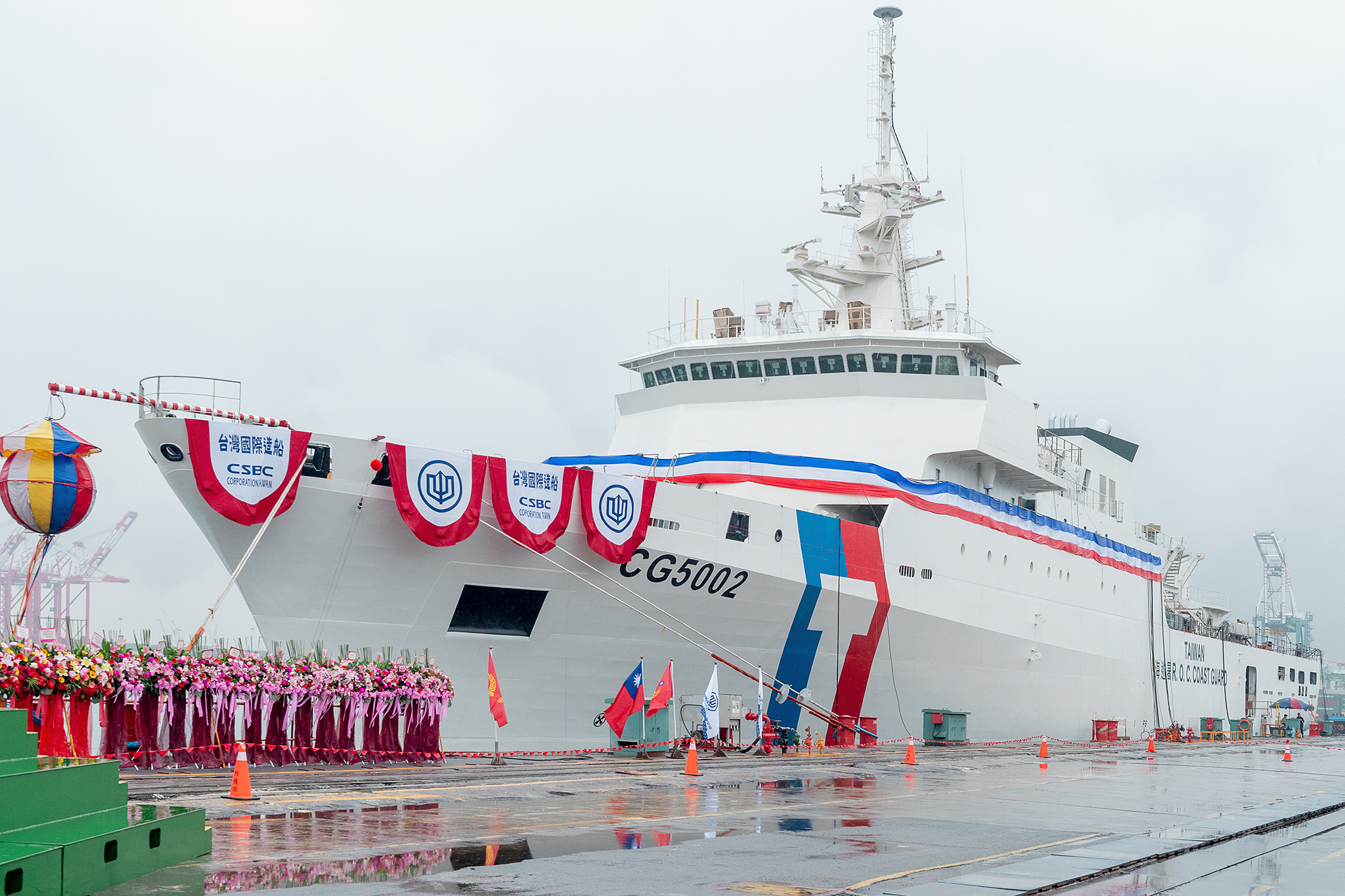
Patrol vessel of Coast Guard Administration CG 5002 Hsinchu at the launching ceremony. Official Photo by Makoto Lin / Office of the President, 28 April 2021

We have a report that a Taiwanese Coast Guard Cutter arrived in Hawaii on June 11. The vessel, Hsinchu (CG5002), one of a new class of four 5,044 ton cutters, was commissioned in December 2022.

This may be just a stop for supplies and liberty, but I suspect there will be some interaction with the US Coast Guard. Despite speculation, there was a denial that the ship would participate in RIMPAC scheduled June 26 to Aug. 2. Taiwan was not listed as a participant in a May 21 Third Fleet announcement of the exercise.

Reportedly the cutter will be engaged in fisheries management. This is well outside Taiwan’s EEZ, so I presume they will be policing and supporting the Taiwanese fishing fleet.

This background from Wikipedia,

In March 2021 the CGA and the US Coast Guard announced that they had signed a cooperation agreement, the agreement was promptly denounced by China. In May 2021 US President Joe Biden praised the cooperation agreement while speaking at the commencement of the United States Coast Guard Academy. The first bilateral meeting under the agreement occurred in August 2021.

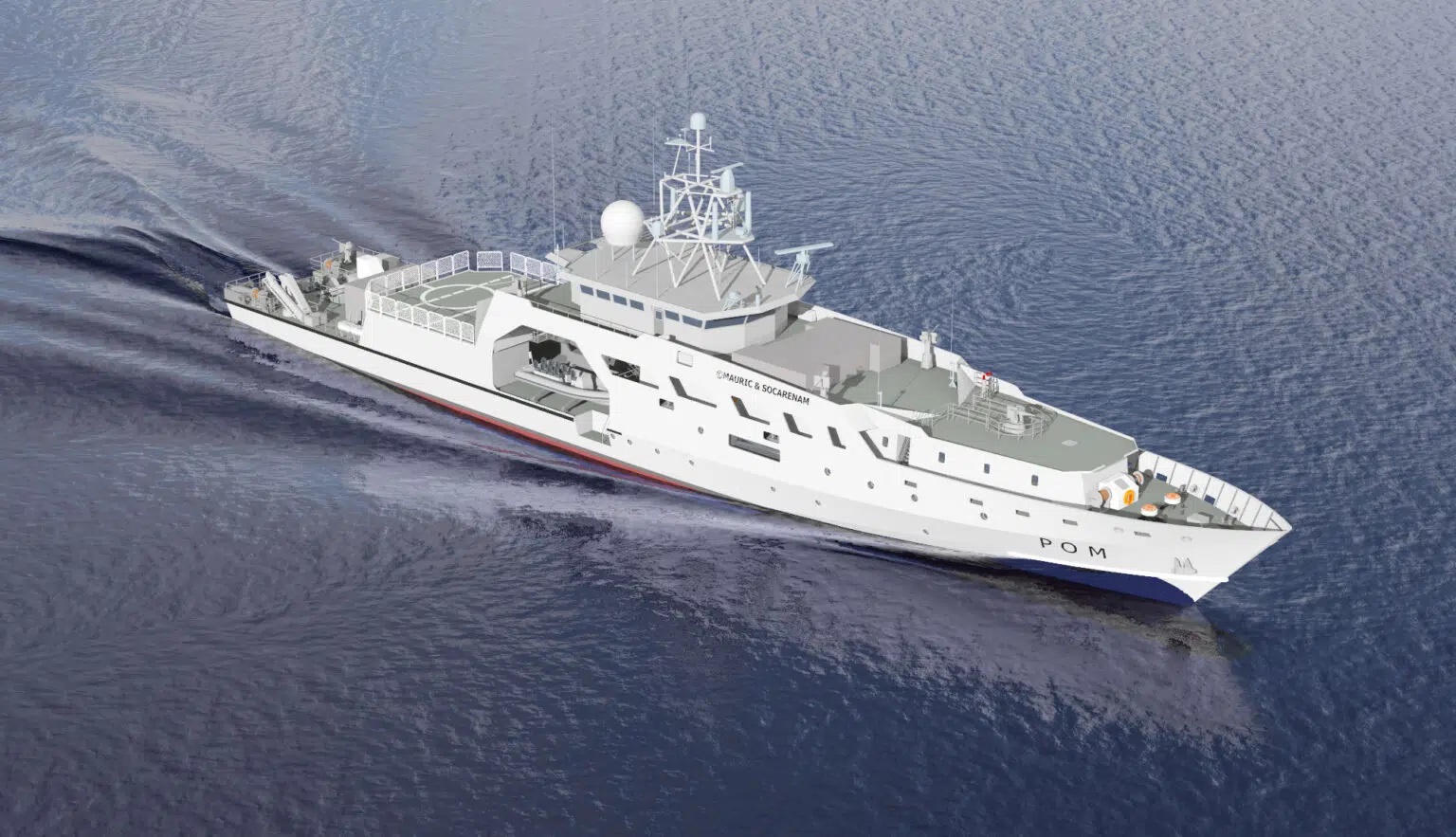
The Félix Éboué class, a Modern, Minimalist, Medium Endurance Cutter

An artist’s rendering, Félix Éboué class or Patrouilleurs Outre-mer (POM)

The Offshore Patrol Cutter (OPC) is described as, “…a capability bridge between the national security cutter, which patrols the open ocean in the most demanding maritime environments, and the fast response cutter, which serves closer to shore.”

That may have been the intention, but that is not what we got.

While the National Security Cutter is better than the WHECs they replaced in almost every way, the OPCs are not only better than the WMECs they will replace, but they are also, in every way except maximum speed, better than the WHECs as well. Instead of a high/low mix of cutters, they all turned out high end. We should not be surprised the OPCs construction and operating costs approach those of the NSCs.

Construction costs are typically proportional to displacement. The OPCs’ displacement is 98% that of the NSC and 1232.8% (more than 12 times) that of the Fast Response Cutters.

This would not be a bad thing, if we had enough NSCs and OPCs to meet our large patrol cutter needs, but I don’t think we will ever get there.

We are expected to ultimately end up with only 36 large patrol cutters, fewer than we have had in decades and fewer than other Coast Guards with far smaller EEZs.

A new fleet mix study has been completed, but the results have not been made public (Why not? This is not transparency). I suspect it shows a need for substantially more than 36 large patrol cutters.

If we look at the previous “Fleet Mix Study,” now over a dozen years old, which minimized requirements because it did not consider “High Latitude regions of the ice shelf and Deployable Operations Group (DOG),” and assumed that NSCs would use the “Crew Rotation Concept” that was expected to allow them to operate 230 days per year, to meet all statutory requirements, the study indicated the Coast Guard needed 66 large cutters, 30 more than currently planned, and 91 FRCs.

If we want significantly more large patrol cutters than currently planned, perhaps we need a smaller, cheaper alternative to the OPCs that requires a smaller crew and are more economical to operate. In previous posts, I have referred to this alternative as (Cutter X).

Thinking Ahead: 

Getting funding for more than two OPCs per year is probably unrealistic. The last OPC is not expected to be commissioned until 2038, 14 years from now. If we continue to build only two large patrol cutter a year, will not be able to grow the fleet until after 2038 and then it will grow slowly because the National Security Cutters will start aging out.

We might not be able to continue to build OPC sized patrol cutter after 2038. The Coast Guard will want to build Arctic Security Cutters (or perhaps Arctic Patrol Cutters). Both the Juniper class WLBs and Keeper class WLMs will need to be replaced.

(Where is our long-range shipbuilding plan?)

If we started in the next year of two, we could be producing true medium endurance cutters in significant numbers before the planned completion of the OPC program. On a 3 for 1 or even 2 for 1 exchange for the last few OPCs, if we tried, we could start to grow the fleet perhaps as early as 2032.

That is why the Félix Éboué class is worth a look. It is, what I believe may be, the absolute minimum fully capable Offshore Patrol Vessel. It covers all the bases. It is good enough for most operating areas. That is not to say, there are no good reasons for some add–ons, but I think it is a kind of benchmark. It is also a good representation of Cutter X. There are reasons we might want to go bigger, but before you increase the quality of the individual cutters, first we need to have enough.


The French Experience

France, like the US has a huge Exclusive Economic Zone (EEZ), the largest in the world, 11,691,000 km2 (4,514,000 sq mi). The US EEZ is 11,351,000 km2.

Unlike the US, the French don’t have a coast guard that operates ocean going ships to enforce laws and protect sovereignty. The French Navy does this, and uses a fleet of Offshore Patrol Vessels, some of which are referred to as frigates.

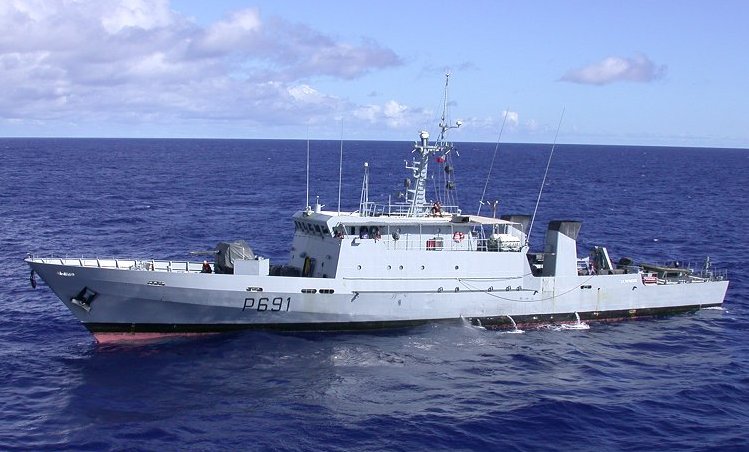
The Félix Éboué class is their newest class of OPVs. They are intended specifically to patrol the waters of French overseas territories in the Pacific and Indian Oceans. They will be based, two each, at NouméaTahiti and La Réunion. They replace the P400 class, which are slightly larger than the Webber class WPC, which were found to be inadequate.

I have found some very good photos of the second ship of the class being fitted out, that show details I had not seen before, and would like to share them. I will also bring forward some of my earlier commentary with updates, so as to consolidate information on this interesting class.

Comparison with Webber class WPC (FRC):

Below is a comparison between the FRC and the Félix Éboué class (POM) that was included in an earlier post, updated with information about the propulsion system on the French ships.

French overseas patrol vessel (POMs) Auguste Bénébig. Photo: http://www.meretmarine.com

Like an FRC:

I always thought these looked like oversized Webber class, the proportions are similar, and the much larger POM is not much more complicated than the Webber class. The crew of the POM is 30, only six more than that of the FRC. Both have a bridge with a 360-degree view positioned well aft, minimizing vertical acceleration. Both have an 8 meter boat in a stern ramp. The armament is similar with four .50 cal. machine guns and a single medium caliber gun in the bow, a 20mm on the POM and a 25mm on the FRC. The POM uses slightly less powerful diesel engines, 2x ABC 16V DZC medium speed diesels 3.7MW each @ 1,000rpm, for a total of about 9924 HP compared to 11,600 for the FRC. (I am told the POM’s engines are also more economical and simpler to maintain.) But the French ships still manage to make 24 knots, a couple of knots more than claimed for the OPC. With similar crew and systems, they should not cost much more than the FRCs to operate.

Unlike an FRC:

P400 patrol ship Tapageuse at sea near Tahiti (18 June 2003). Photographer: Jean-Michel Roche

While they would have been thinking of their existing 373 ton P400 class pictured above, it might appear to us that they wanted a ship to do the same sorts of missions the Webber class Fast Response cutters (FRC) are doing out of Guam, but they recognized that these ships would be far from any major naval base and that they would need to travel great distances and would be exposed to extreme weather conditions, so they needed to be larger (1300 tons vs 353 tons for the FRC) and have greater range (5500 miles vs 2500) and endurance (30 days vs 5 days).

Having chosen a larger hull, they took advantage of the greater volume and deck space to add a second RHIB, a multimode radar, space for 29 passengers (roughly a platoon of Marines), a sickbay, a dive locker, space for a 20 foot containerized mission module, a flight deck and hangar for a 700-kilogram-class rotor-blade drone (not yet deployed), and a holding area for up to six prisoners.

Some sources also indicate the French ships also have electric motors that would allow them to cruise on the ship’s service generators and secure the main propulsion engines, but I have seen no specifics.

The Photographs: 

The second of the French Navy’s six new overseas patrol vessels (POM), the Teriieroo a Teriierooiterai, which will be based in French Polynesia and has been named in tribute to a Companion of the Liberation native of this Pacific territory, Photo: http://www.meretmarine.com

The Teriieroo at Teriierooiterai fitting out at the end of July, 2023 in Boulogne. Photo: http://www.meretmarine.com

Stern ramp for 8 meter RHIB. French Navy overseas patrol vessel (POM), Teriieroo a Teriierooiterai, fitting out 2023. Photo: http://www.meretmarine.com

Second 8 meter RHIB and davit (only) on starboard side. French Navy overseas patrol vessel (POM), Teriieroo a Teriierooiterai, fitting out 2023. Photo: http://www.meretmarine.com

Aliaca aerial drone on its launch catapult. French Navy overseas patrol vessel (POM), Teriieroo a Teriierooiterai, fitting out 2023. Photo: http://www.meretmarine.com

Recovery System for Unmanned Air System, French Navy overseas patrol vessel (POM), Teriieroo a Teriierooiterai, fitting out 2023. Photo: http://www.meretmarine.com

Navy Issues Large Contract for Development of Unmanned Surface Vehicles

A U.S. Navy L3 Harris Arabian Fox MAST-13 drone boat and the U.S. Coast Guard cutter USCGC John Scheuerman transit the Strait of Hormuz on April 19, 2023. (Information Systems Technician 1st Class Vincent Aguirre/U.S. Coast Guard)

Below the break is a quote from DOD “Contracts for June 14, 2024.”
This is a big step toward procurement of an “Unmanned Surface Vehicle Family of Systems.” There can be little doubt the Coast Guard will exploit some of these developments and will probably participate in some of the testing, as they have done with 4th and 5th Fleet. 
Of the 49 partners mentioned, Bollinger is the only one I recognize as a ship builder. Could this mean we will see a Fast Response Cutter emerge as an Optionally manned or Unmanned Surface Vehicle? Probably not, but…
The funding structure is interesting. This is potentially an almost one billion dollar contract, but the initial commitment is only $49,000, $1,000 to each of the contractors. Sounds like they built in a lot of flexibility.

A multiple-award contract to support current and future unmanned surface vehicle family of systems and subsystems is awarded to the following 49 industry partners: Anduril Industries Inc.,* Costa Mesa, California (N0002424D6306); Applied Research Associates Inc., Albuquerque, New Mexico (N0002424D6307); Asymmetric Technologies LLC,* Dublin, Ohio (N0002424D6308); AT&T Corp., Oakton, Virginia (N0002424D6309); Atlas Technologies Inc.,* North Charleston, South Carolina (N0002424D6313); Autonodyne LLC,* Boston, Massachusetts (N0002424D6315); Beast Code LLC,* Fort Walton Beach, Florida (N0002424D6316); Bigelow Family Holdings LLC, doing business as Mettle Ops,* Sterling Heights, Michigan (N0002424D6317); Bollinger Shipyards Lockport LLC, Lockport, Louisiana (N0002424D6318); CACI Inc. – Federal, Chantilly, Virginia (N0002424D6319); Carnegie Robotics LLC, doing business as CR Tactical,* Pittsburgh, Pennsylvania (N0002424D6320); Cydecor Inc.,* Arlington, Virginia (N0002424D6361); DELTA Resources Inc., Alexandria, Virginia (N0002424D6363); Fairbanks Morse LLC, Beloit, Wisconsin (N0002424D6364); Teledyne FLIR Surveillance Inc., North Billerica, Massachusetts (N0002424D6365); General Atomics Aeronautical Systems Inc., Poway, California (N0002424D6366); GIRD Systems Inc.,* Cincinnati, Ohio (N0002424D6367); Herren Associates Inc.,* Washington, D.C. (N0002424D6368); Honeywell International Inc., Clearwater, Florida (N0002424D6369); IERUS Technologies Inc.,* Huntsville, Alabama (N0002424D6370); Integer Technologies LLC,* Columbia, South Carolina (N0002424D6371); KIHOMAC Inc.,* Reston, Virginia (N0002424D6372); Leonardo Electronics US Inc., Huntsville, Alabama (N0002424D6373); MAK Technologies Inc., Cambridge, Massachusetts (N0002424D6374); Marine Ventures International Inc.,* Stuart, Florida (N0002424D6375); Marinette Marine Corp., Marinette, Wisconsin (N0002424D6376); Metron Inc.,* Reston, Virginia (N0002424D6378); Microsoft Corp., Redmond, Washington (N0002424D6379); Murtech Inc.,* Glen Burnie, Maryland (N0002424D6380); NewSat North America LLC,* Indian Harbour Beach, Florida (N0002424D6381); Noblis MSD LLC, Philadelphia, Pennsylvania (N0002424D6382); Novetta Inc., McLean, Virginia (N0002424D6383); Ocean Specialists Inc.,* Stuart, Florida (N0002424D6384); PACMAR Technologies LLC,* Honolulu, Hawaii (N0002424D6377); Persistent Systems LLC,* New York, New York (N0002424D6385); Physical Sciences Inc.,* Andover, Massachusetts (N0002424D6386); Prescient Edge Corp.,* McLean, Virginia (N0002424D6387); Programs Management Analytics & Technologies Inc.,* San Diego, California (N0002424D6388); Reliability & Performance Technologies LLC,* Dublin, Pennsylvania (N0002424D6389); Saab Inc., East Syracuse, New York (N0002424D6390); Scientific Systems Co. Inc.,* Woburn, Massachusetts (N0002424D6391); Secmation, LLC,* Raleigh, North Carolina (N0002424D6392); SES Government Solutions Inc., Reston, Virginia (N0002424D6393); SIMIS Inc.,* Portsmouth, Virginia (N0002424D6394); Sparton DeLeon Springs LLC, De Leon Springs, Florida (N0002424D6395); Systems and Proposal Engineering Co.,* Manassas, Virginia (N0002424D6396); Systems Technology & Research Inc.,* Huntsville, Alabama (N0002424D6397); TDI Technologies Inc.,* King of Prussia, Pennsylvania (N0002424D6398); and Triton Systems Inc.,* Chelmsford, Massachusetts (N0002424D6399), are each awarded a firm-fixed-price, fixed-price-incentive-firm-target, cost-plus-incentive-fee, cost-plus-fixed-fee, and cost only, indefinite-delivery/indefinite-quantity contract for the procurements involving one or more functional areas, i.e. payloads, non-payload sensors, mission support systems, autonomy and vehicle control systems, ashore and host platform elements, and logistics and sustainment for the Unmanned Surface Vehicle Family of Systems. The maximum dollar value for all (total number) contracts combined is $982,100,000. Each awardee will be awarded $1,000 (minimum contract guarantee per awardee) at contract award. Work will be performed in various locations in the contiguous U.S. and is expected to be completed by February 2025. These contracts include a five-year ordering period option which, if exercised, will continue work through February 2030. Fiscal 2024 research, development, test and evaluation (Navy) funding in the amount of $49,000 will be obligated at the time of award and will expire at the end of the current fiscal year. All other funding will be made available at the delivery or task order level as contracting actions occur. These contracts were competitively procured via SAM.gov and there were 55 offers received. Naval Sea Systems Command, Washington Navy Yard, D.C., is the contracting activity.