“Support Pay Parity for our Coast Guard servicemembers!” –Navy League

USCGC Northland (WMEC 904) approaches the pier, March 30, 2023 in Portsmouth, Virginia. Northland conducted a 62-day maritime safety and security deployment in the Florida Straits and Windward Passage while patrolling in support of Homeland Security Task Force – Southeast and Operation Vigilant Sentry. (U.S. Coast Guard video by Senior Chief Petty Officer Melissa Leake)

Just passing this along. Remember what happened last time we had a delay in approval of an increase in the debt ceiling?


Hello everyone,

Please take a moment to join our Rapid Response email campaign in support of Congresswoman Scholten’s “Pay Our Coast Guard Parity Act of 2023”.

The Coast Guard is vital to America’s national and economic security, yet they are not covered by the same paycheck protections as other members of the armed forces. With the very real possibility of a government shutdown in the near future, it is imperative that we provide the men and women of the Coast Guard with the financial security that they and their families have earned!

Please use the link below to learn more about this issue and to send a letter directly to your Members of Congress by just clicking send! Let’s get to work!

Thank you,

Luke Lorenz, Senior Director, Legislative Affairs, Navy League of the United States

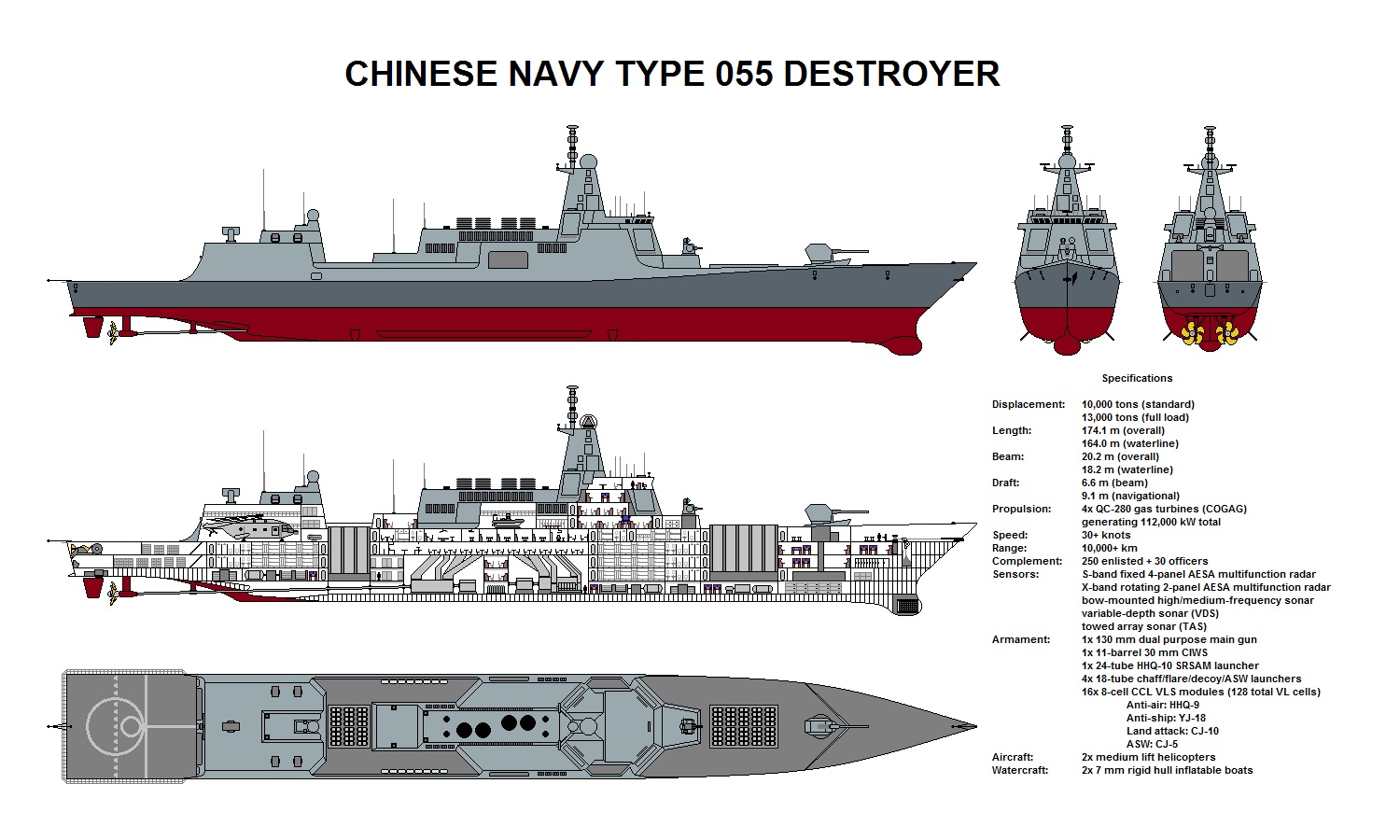
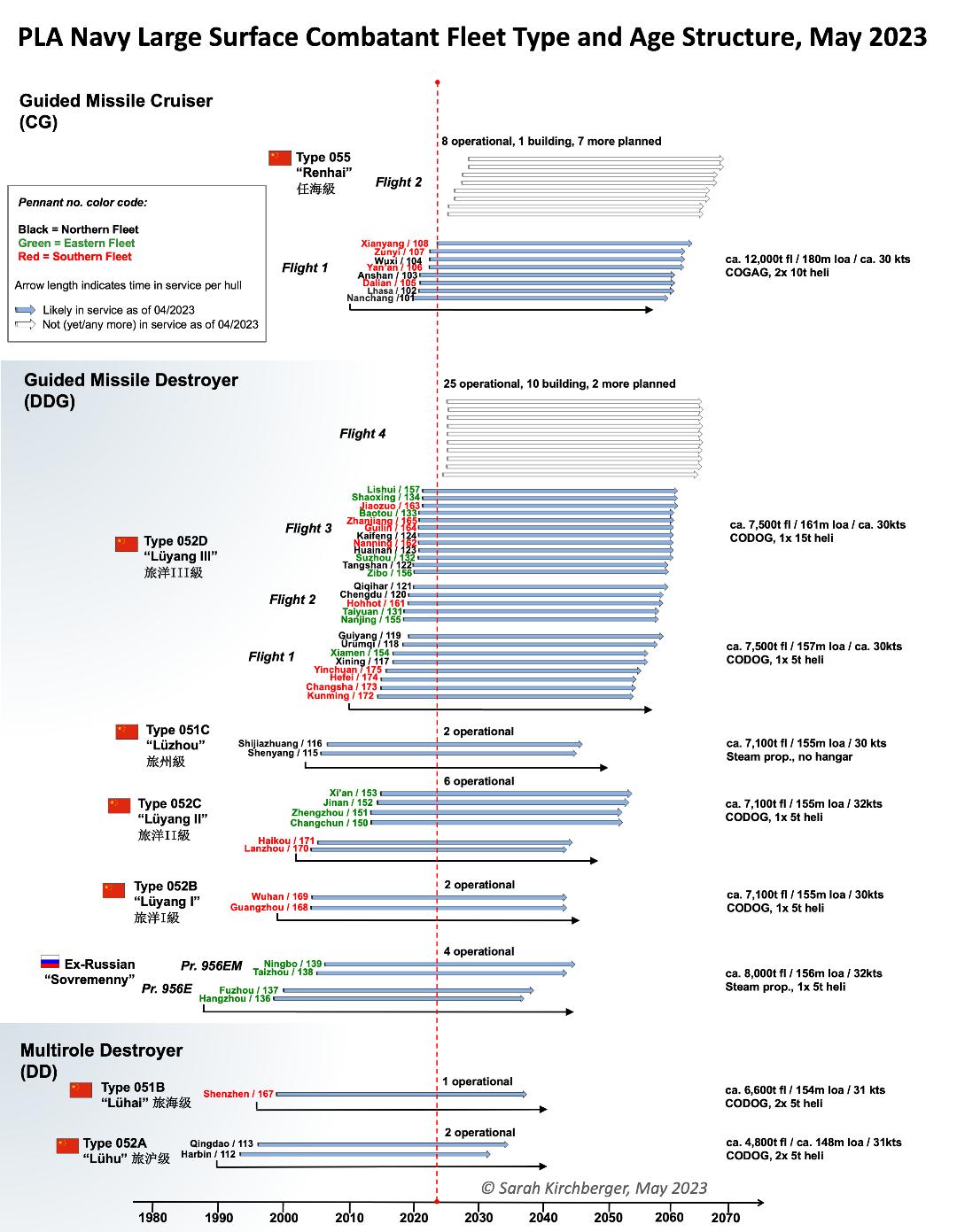
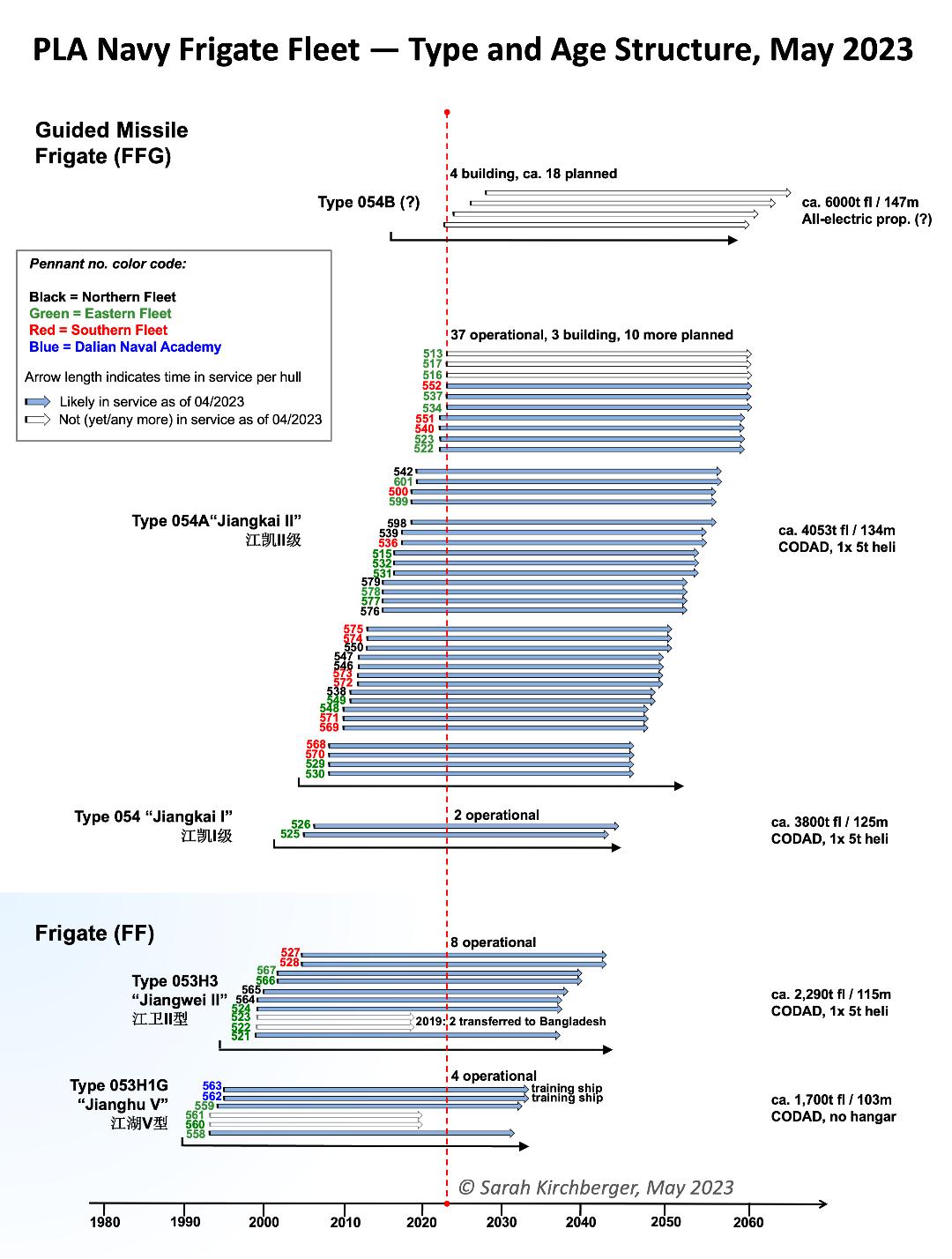
China’s PLAN Surface and Sub Order of Battle

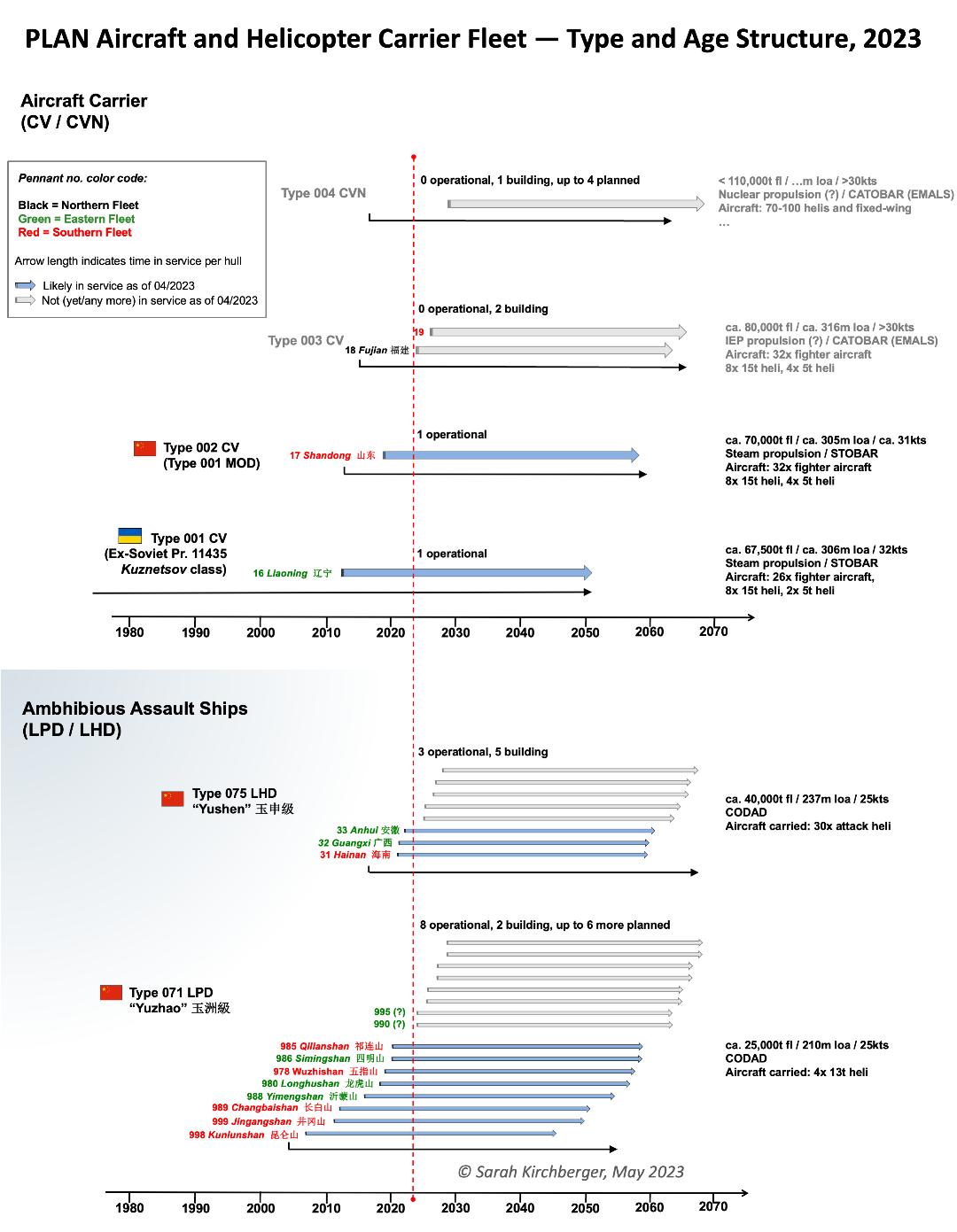
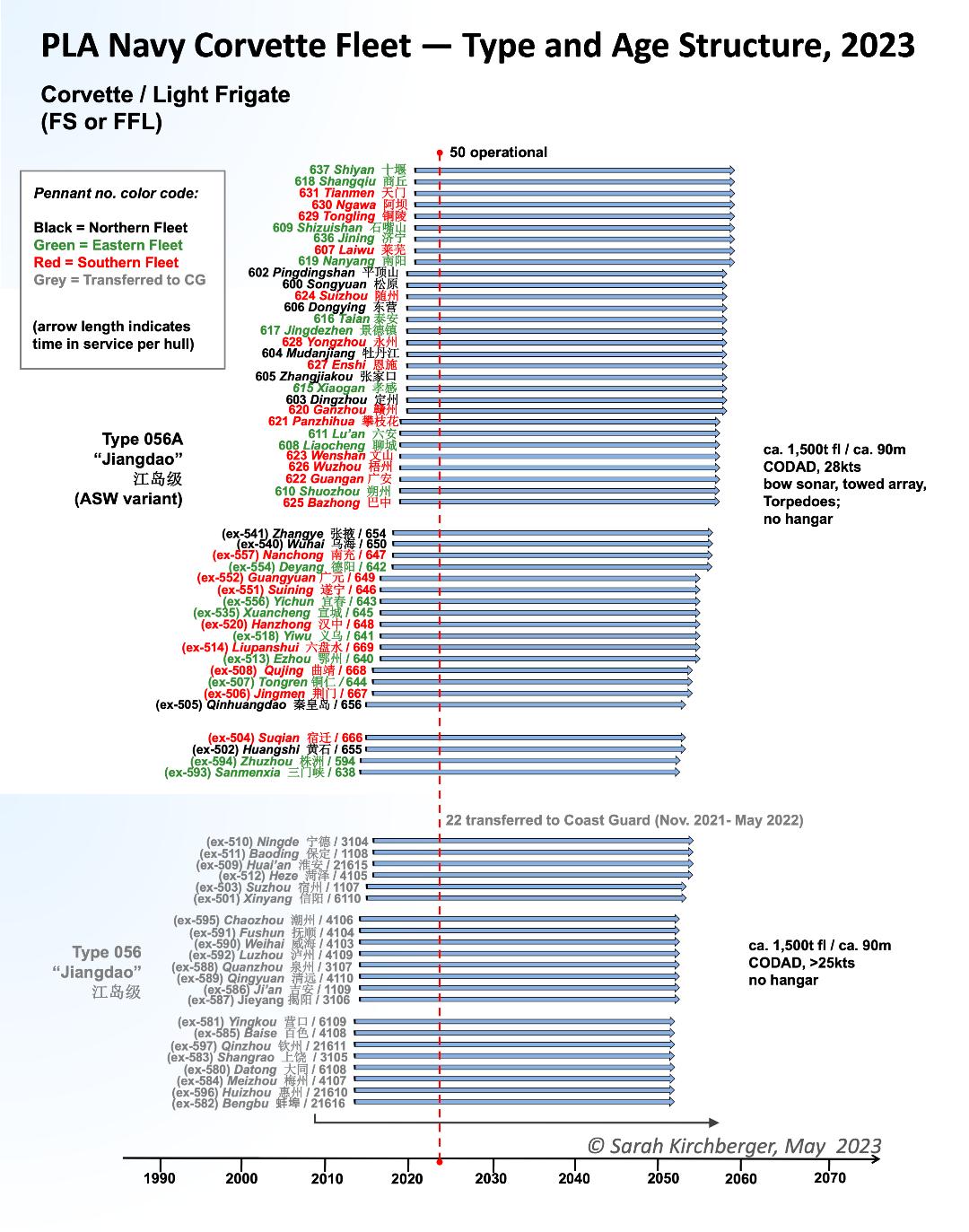
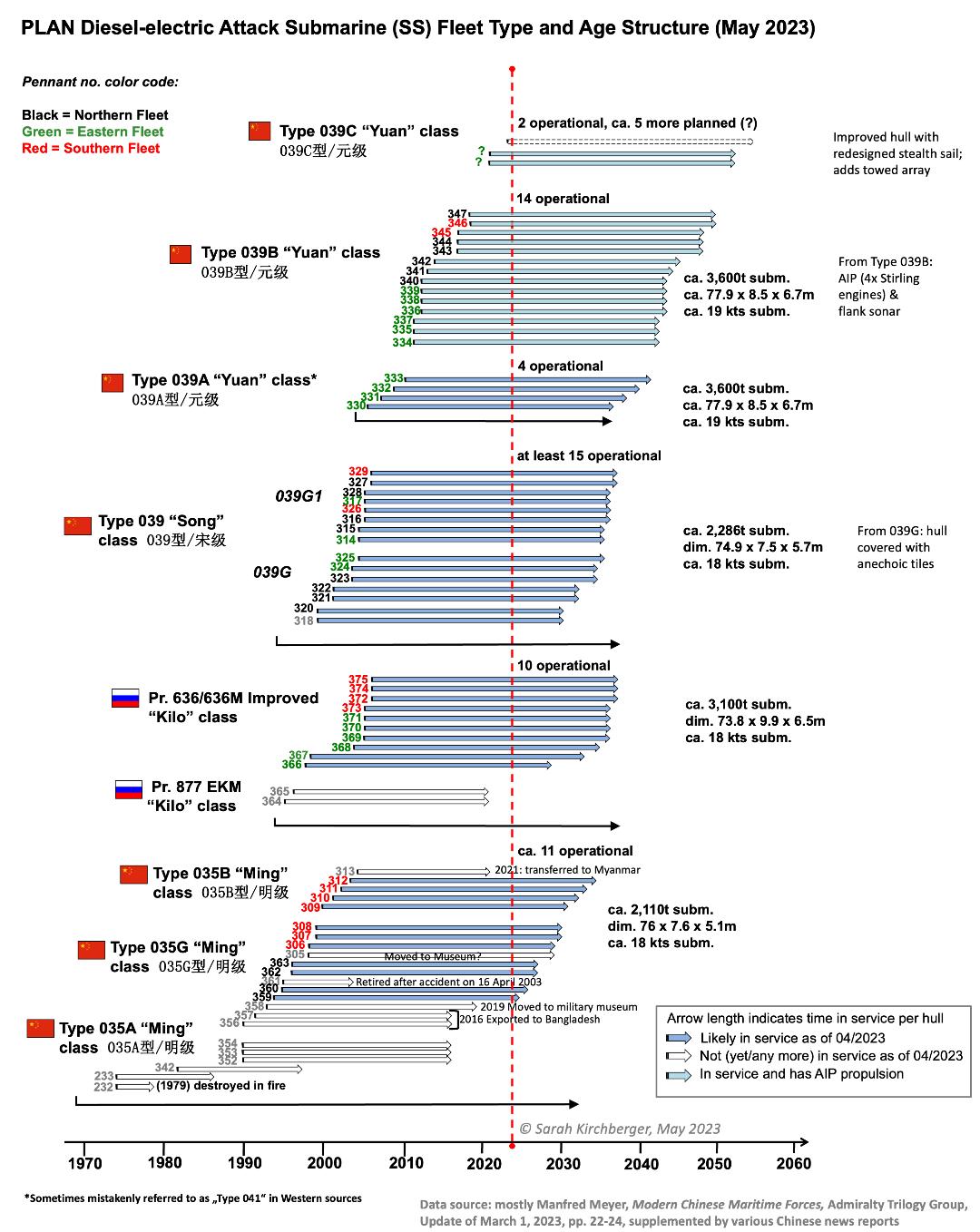
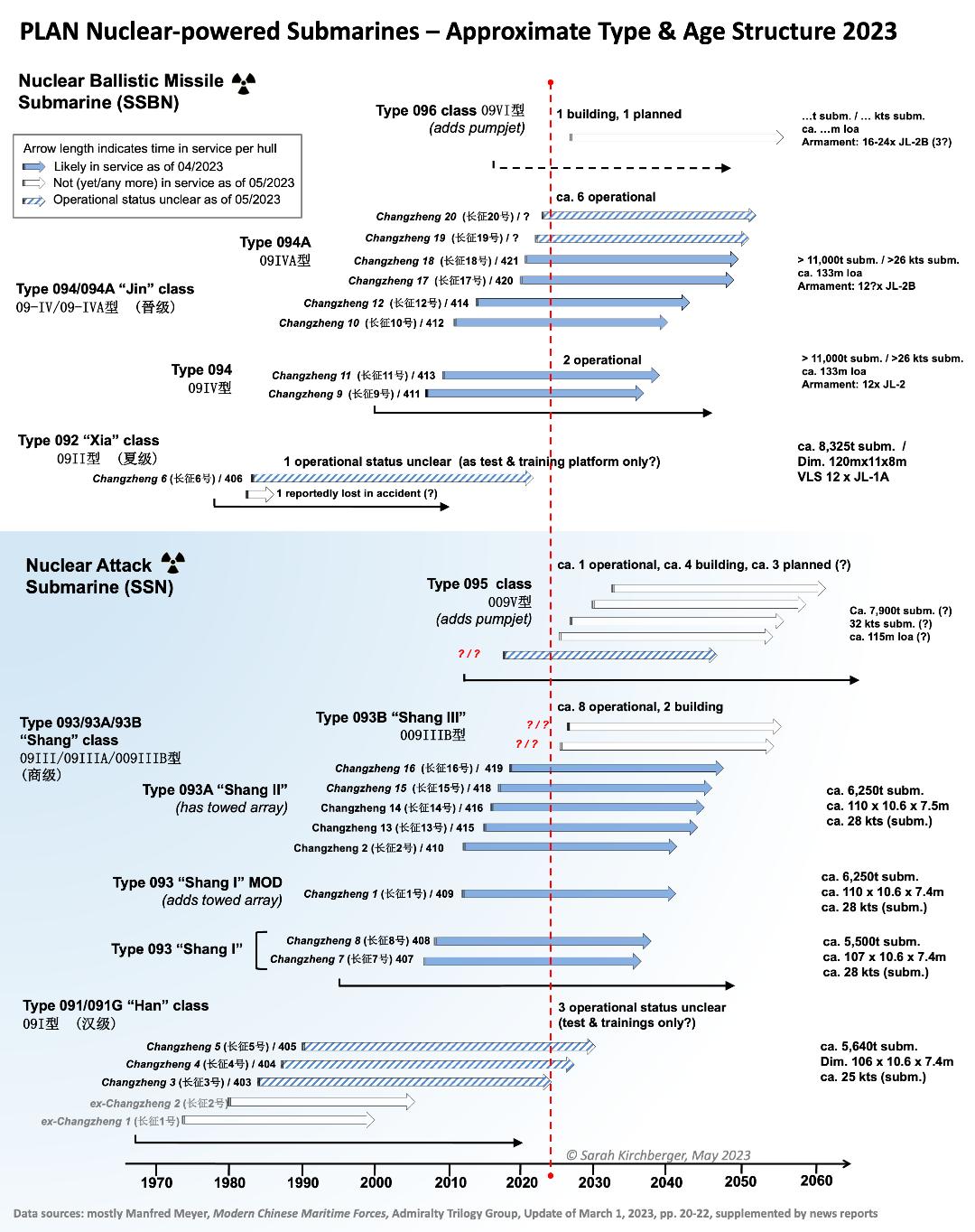
Earlier I published “Chinese Navy Submarine and Major Surface Ship Order of Battle,” that included three infographics prepared by Dr. Sarah Kirchberger that I found on the CIMSEC Internal Discussions Facebook page. At the time I noted that they did not include Chinese aircraft carriers, amphibs, and numerous frigates, corvettes, and other small combatants.

Dr. Kirchberger recently emailed me additional and updated infographics that provide a more complete picture of the People’s Liberation Army Navy’s rapid growth. I have included them all below, including updated versions of the three previously published.

Another resource available is the “Office of Naval Intelligence’s Chinese People’s Liberation Army Navy, Coast Guard, Ship Identification Guide.”

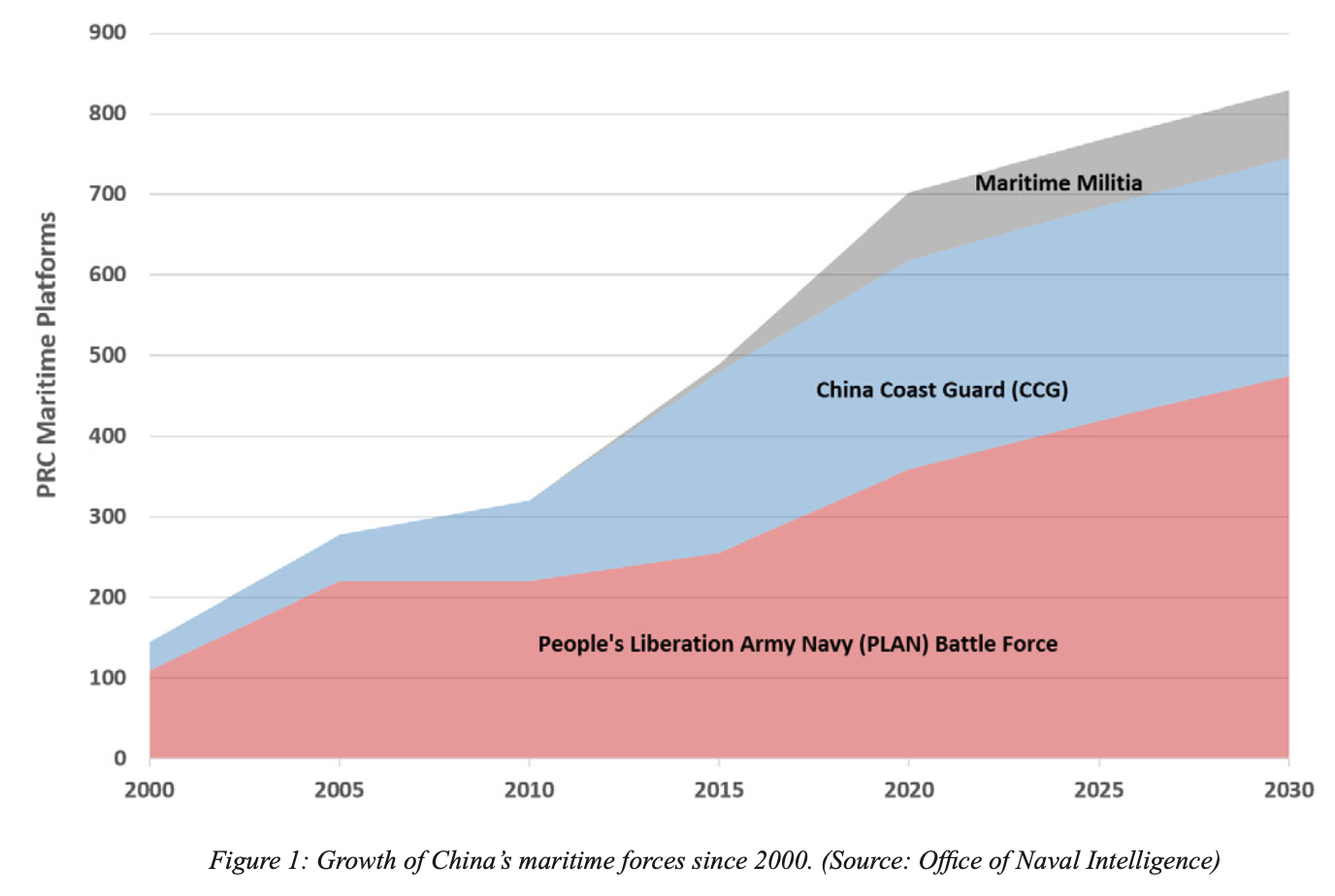
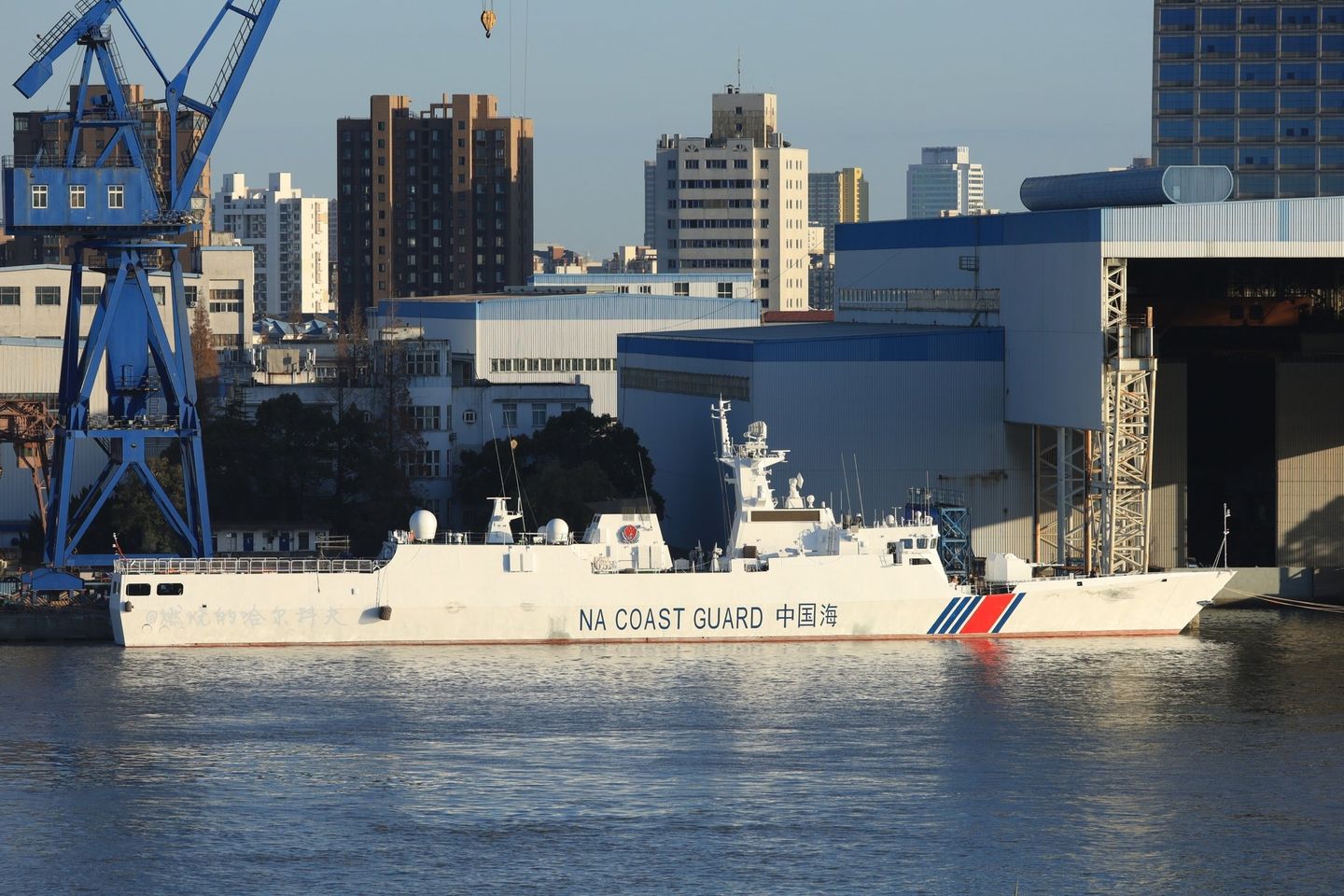
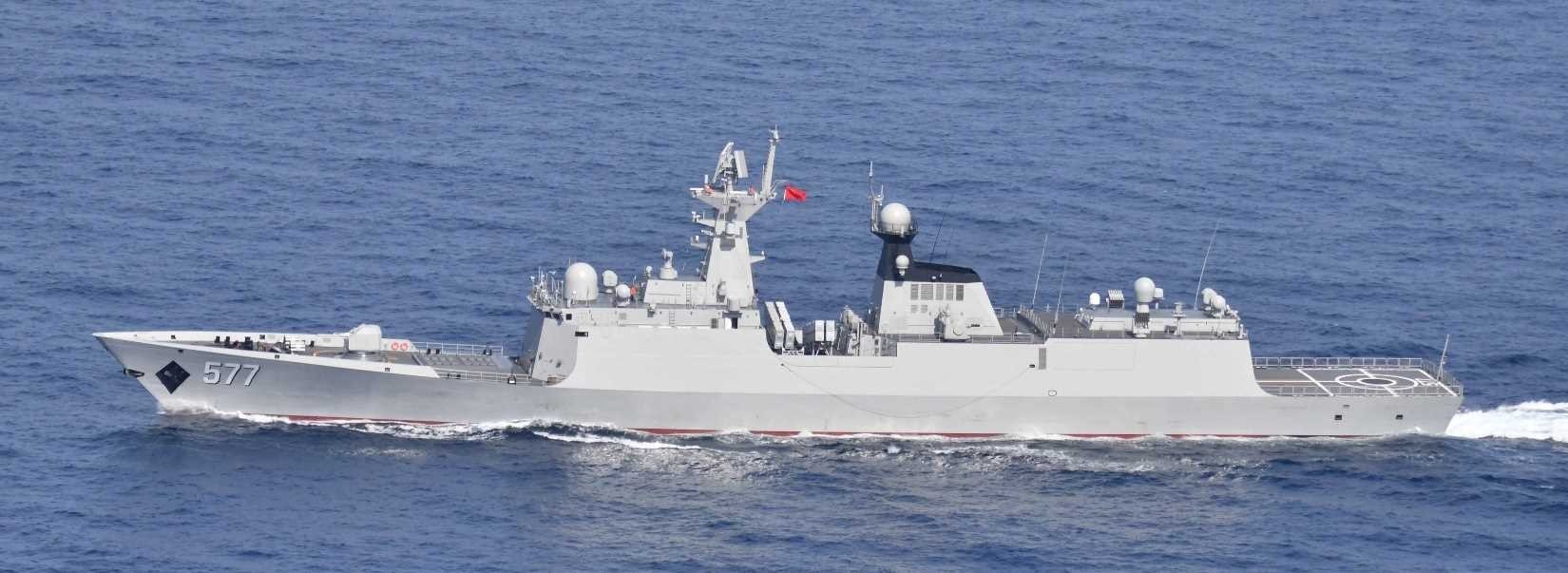
From a Coast Guard perspective, the most interesting development sighted below was the transfer of 22 Type 056 corvettes {photo above) from the Navy to the China Coast Guard. This follows the earlier transfer of four type 053H2G frigates (NATO designation Jiangwei I). In both cases heavier weapons were removed but significant gun armament remained. These added significantly to the China Coast Guard’s close in firepower. When the new China Coast Guard was formed in 2013, very few of their ships were armed with anything larger than 14.5mm machine guns.

Chinese H/PJ-17 30mm

That has changed, particularly since the China Coast Guard was absorbed into the country’s Central Military Commission (CMC), effective July 2018. The standard fit now seems to be a 76m gun and one or two 30mm H/PJ-17.

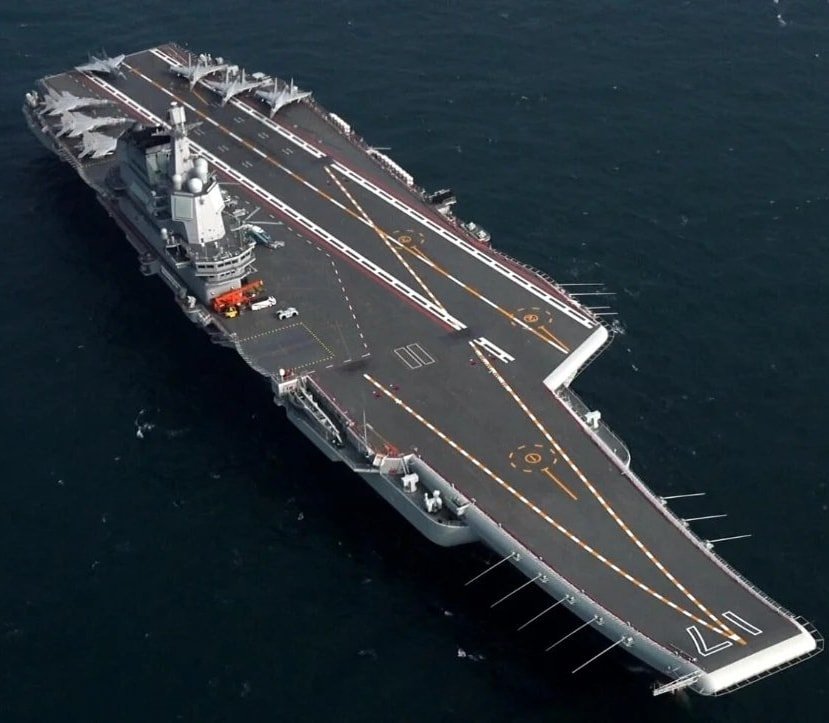
Undated photo of carrier Shandong. PLA Photo

Type 055 Destroyer (Cruiser) SeaWave.com image

PLAN Type 054A Huanggang (FFG-577), Japanese Self Defense Force photo.

Type 056 corvette, credit 樱井千一

Image: Creative Commons.

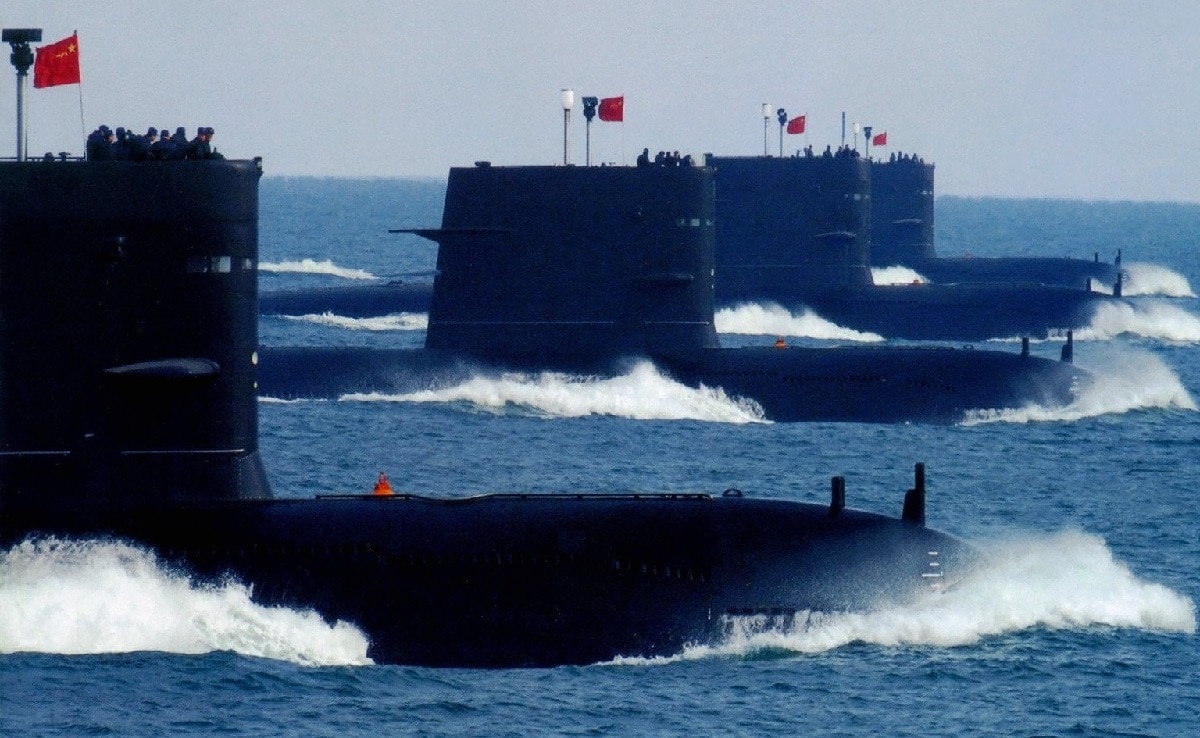
CSR Report RL33153 China Naval Modernization: Implications for U.S. Navy Capabilities—Background and Issues for Congress by Ronald O’Rourke dated February 28, 2014. Page 8 – Figure 1. Jin (Type 094) Class Ballistic Missile Submarine Source: Photograph provided to CRS by Navy Office of Legislative Affairs, December 2010.

Silicon Valley Innovation Program (SVIP), Coast Guard Language Translation Without Internet

Above is a Department of Homeland Security, Science and Technology, video release. Below is the accompanying narrative.

Incidentally, the underway replenishment ship seen in the video is the New Zealand Navy’s HMNZS Aotearoa . She is unique in being ice-strengthened and winterized for operations in the Antarctic environment.

“Coast Guard releases summary of 2022 recreational boating statistics”

Feco, a single-purpose bomb dog assigned to a Coast Guard maritime safety and security team, when boating, he always wears a lifejacket. (Air National Guard photo / Master Sgt. Ray Aquino)

Below is a news release from the Coast Guard News website. Continued slow improvement, and much improved over 1971, when the Safe Boating Act was first passed.

May 17, 2023

Coast Guard releases summary of 2022 recreational boating statistics

WASHINGTON — During the National Boating Safety Advisory Committee meeting on May 11, 2023 (NBSAC), the U.S. Coast Guard released a summary of statistics on calendar year 2022 recreational boating incidents, revealing that there were 636 boating fatalities nationwide in 2022, a 3.3 percent decrease from the 658 deaths in 2021.

From 2021 to 2022, the total number of accidents decreased 9 percent (4,439 to 4,040), and the number of non-fatal injured victims decreased 15.9 percent (2,641 to 2,222).

Alcohol continued to be the leading known contributing factor in fatal boating accidents in 2022, accounting for 88 deaths, or 16 percent of total fatalities.

The data also shows that in 2022:

  • The fatality rate was 5.4 deaths per 100,000 registered recreational vessels.  This rate represents a 1.8 percent decrease from last year’s fatality rate of 5.5 deaths per 100,000 registered recreational vessels.  (In 1971, when the Safe Boating Act was first passed, the fatality rate was 20.6 deaths per 100,000 registered recreational vessels.)
  • Property damage totaled $63 million.
  • Operator inattention, operator inexperience, improper lookout, excessive speed, and machinery failure ranked as the top five primary contributing factors in accidents.

Where the cause of death was known, 75 percent of fatal boating incident victims drowned. Of those drowning victims with reported life jacket usage, 85 percent were not wearing a life jacket.

“Most incidents occur in benign conditions—calm waters, light wind, and good visibility—under which you may least expect to end up in the water, which is why it is critical to wear a life jacket and engine cut-off switch at all times as they are designed to save your life,” stated Captain Troy Glendye, Chief of the Coast Guard’s Office of Auxiliary and Boating Safety.  The Coast Guard reminds boaters to ensure life jackets are serviceable, properly sized, correctly fastened, and suitable for your activity.

Where boating instruction was known, 74 percent of deaths occurred on vessels where the operator had not received boating safety instruction.  The Coast Guard encourages all boaters take a boating safety course that meets the National Boating Education Standards before they go boating.

The most common vessel types involved in reported incidents were open motorboats, personal watercraft, and cabin motorboats.  Where vessel type was known, the vessel types with the highest percentage of deaths were open motorboats (47 percent), kayaks (14 percent), and personal watercraft and pontoons (9 percent).

The data is based on incidents that resulted in at least one of the following criteria:  death, disappearance, injury that required medical treatment beyond first aid, damages to the vessel(s) or other property that equaled or exceeded $2,000, or a loss of vessel.

In addition to wearing a life jacket and taking a boating safety course, the Coast Guard recommends all boaters to attach the engine cut-off switch, get a free vessel safety check, and boat sober.

“We thank our partners in boating safety who have all made it their mission to prevent incidents through educational outreach and enforcement,” said Glendye.

The full 2022 Recreational Boating Statistics report should be available to the public on 1 June 2023 at  http://www.uscgboating.org.  The report will be accessible under the “Statistics” menu selection and the “Accident Statistics” submenu selection.

“VIDEO: Colombian Navy intercepts largest narco sub yet” –Marine Log

MarineLog reports,

“…On May 12, the Columbian Navy reported it had intercepted the largest narco sub seized since its first capture of one of the semi-submersible low profile vessels in 1993…the substances seized were cocaine hydrochloride and had a net weight of 3,058 kilograms.

“To put that in perspective, in one of the largest narco sub interdictions by U.S authorities, in April 2021 a U.S. Customs and Border Protection (CBP) Air and Marine Operations (AMO) aircraft assisted the U.S. Coast Guard seizure of approximately 2,500 kilograms of cocaine from a semi-submersible vessel.”

PATFORSWA’s USCGC Glen Harris, 2 Busts, May 8 and May 10, Heroin and Meth

Below are a pair of news releases from NAVCENT.


NEWS | May 10, 2023

U.S. Seizes $80 Million Heroin Shipment in Gulf of Oman

By U.S. Naval Central Forces Command Public Affairs

A U.S. Coast Guard fast response cutter seized $80 million worth of heroin from a fishing vessel transiting the Gulf of Oman, May 10, during the ship’s second drug bust this week.

USCGC Glen Harris (WPC 1144) was operating in support of Combined Task Force (CTF) 150 when a boarding team discovered 1,964 kilograms of heroin on a vessel transiting international waters after departing Chah Bahar, Iran. Glen Harris also seized $30 million worth of methamphetamine and heroin two days ago from another fishing vessel that departed the same port.

“I’m very proud of my crew and all we’ve been able to accomplish as a team this week,” said Lt. Nick Jabs, Glen Harris’s commanding officer. “We’re out here to work with regional partners and disrupt any destabilizing maritime activity at sea. We will continue getting after it.”

Glen Harris’s previous seizure on May 8 included 580 kilograms of methamphetamine and 35 kilograms of heroin.

The ship arrived in the Middle East last year as part of a contingent of U.S. Coast Guard cutters that are forward-deployed to the region under Patrol Forces Southwest Asia.

CTF 150 is one of four task forces that form the world’s largest multinational naval partnership, Combined Maritime Forces. Naval forces supporting CTF 150 have now seized illegal drugs worth a combined estimated U.S. street value of more than $250 million in 2023. These efforts help ensure legitimate commercial shipping transits the region free from non-state threats.


NEWS | May 8, 2023

U.S. Coast Guard Seizes $30 Million in Drugs with International Task Force

By U.S. Naval Central Forces Command Public Affairs

A U.S. Coast Guard fast response cutter seized more than $30 million of heroin and methamphetamine from a fishing vessel transiting the Gulf of Oman, May 8.

Operating in support of Combined Task Force (CTF) 150, USCGC Glen Harris (WPC 1144) seized 580 kilograms of methamphetamine and 35 kilograms of heroin from a vessel transiting international waters after departing Chah Bahar, Iran.

CTF 150 is one of four task forces that form the world’s largest multinational naval partnership, Combined Maritime Forces. Naval forces supporting CTF 150 have seized illegal drugs worth a combined estimated U.S. street value of nearly $200 million in 2023.

Glen Harris arrived in the Middle East last year and operates from the U.S. Navy base in Bahrain where CMF is headquartered with U.S. Naval Forces Central Command and U.S. 5th Fleet.

The fast response cutter is part of a contingent of U.S. Coast Guard ships forward-deployed to the region under Patrol Forces Southwest Asia (PATFORSWA). PATFORSWA deploys Coast Guard personnel and ships alongside U.S. and regional naval forces throughout the Middle East.

“The dedication and expertise of Glen Harris’s leadership and crew embody our commitment to interdict and remove illicit narcotics from the sea, denying malign actors the ability to destabilize the region,” said Capt. Eric A. Helgen, PATFORSWA’s commander. “I could not be more proud of our fast response cutter crews.”

Currently led by the United Kingdom, CTF 150 conducts maritime security and counter-terrorism operations in the Gulf of Oman and Indian Ocean to disrupt criminal and terrorist organizations and their related illicit activities, including the movement of personnel, weapons, narcotics and charcoal. These efforts help ensure legitimate commercial shipping transits the region free from non-state threats.

U.S. and international naval units in the Middle East seized illegal drugs totaling $1 billion in value from 2021 to 2022.

“U.S. to Increase International Coordination, Presence in Strait of Hormuz” –NAVCENT

A U.S. Navy L3 Harris Arabian Fox MAST-13 drone boat and the U.S. Coast Guard cutters USCGC John Scheuerman and USCGC Charles Moulthrope transit the Strait of Hormuz on Wednesday, April 19, 2023. (Information Systems Technician 1st Class Vincent Aguirre/U.S. Coast Guard)

Below the break, I have reproduced a U.S. Naval Forces Central Command (NAVCENT) news release

Meanwhile, Defense One reports the remarks of a Pentagon spokesman on the subject,

In the meantime, Ryder said, the U.S. military will be increasing the “rotation of in-theater assets patrolling the Strait of Hormuz with the intent of bolstering our vigilance and our presence at this location.” Those assets include “manned and unmanned aerial platforms, as well as surface naval vessels from the Navy, [and] the Coast Guard, to help enhance our maritime surveillance.”

Would love to know the rules of engage for both NAVCENT and Islamic Revolutionary Guard Corps Navy. Move, counter-move, counter-counter-move.

PATFORSWA is sure to be front and center.


NEWS | May 12, 2023

U.S. to Increase International Coordination, Presence in Strait of Hormuz

By U.S. Naval Forces Central Command Public Affairs

U.S. 5th Fleet is working with regional allies and partners to increase the rotation of ships and aircraft patrolling in and around the Strait of Hormuz following Iran’s recent unlawful merchant vessel seizures.

The increased force presence supports multinational efforts to deter threats to commercial shipping and reassure regional mariners. In addition to heightened patrols, U.S. 5th Fleet is bolstering international maritime security collaboration among the International Maritime Security Construct and European Maritime Awareness in the Strait of Hormuz.

“Iran’s unwarranted, irresponsible and unlawful seizure and harassment of merchant vessels must stop,” said Vice Adm. Brad Cooper, commander of U.S. Naval Forces Central Command, U.S. 5th Fleet and Combined Maritime Forces. “U.S. 5th Fleet and our partners are committed to protecting navigational rights in these critical waters.”

Iran has harassed, attacked or interfered with the navigational rights of 15 internationally flagged merchant vessels over the past two years. This pattern of destabilizing behavior is contrary to international law and disruptive to regional security.

“IMDEX Asia 2023” –Naval News

Below are four videos produced by Naval News, reporting aspects of the IMDEX Asia 2023 Trade Show, some of which included paid sponsorship. 

I have also reproduced the commentary that accompanied each video where it was posted on YouTube.

Day 1 at IMDEX Asia 2023. In this video, we focused on the MRCV (multi-role combat vessel) program of the Republic of Singapore Navy (RSN).

We interviewed Saab, the prime contractor for the basic design phase, ST Engineering, prime contractor for the detailed design, and Thales who will provide multi-function radars for the these vessels. The RSN shared an animated video with us which we comment.

The design of the MRCVs incorporates the ’mothership’ concept, where a manned vessel is able to operate multiple unmanned systems to expand its surveillance and influence over a large area. The MRCVs will support the operations of unmanned drones and vessels, which will be key force multipliers for the RSN’s operations. It will be configurable to be fitted with modular mission modules so that it can conduct a wide range of missions from peace to war. In addition, we will incorporate automation and data analytics into our combat and platform systems to enhance situational awareness, accelerate decision-making, and improve efficiencies in logistics and engineering support.

The ’mothership’ concept is a natural progression from the RSN’s unmanned journey since the early-2000s. We incorporated the lessons learnt from past shipbuilding projects, including the locally designed littoral mission vessels. We also leveraged technology, such as 3D modelling and detailed model testing, to test and evaluate the design. At the same time, our RSN operators and engineers work closely with the Defence Science and Technology Agency (DSTA) engineers during the design stage to ensure that operational, logistics and maintenance requirements are properly incorporated.

Day 2 at IMDEX Asia 2023 in Singapore. In this video, we discuss the Mine Counter Measure (MCM) vessel built by German shipyard Abeking & Rasmussen for the Indonesian Navy (TNI AL). We also meet with Kraken of Canada to find out more about their KATFISH High-Speed Towed Synthetic Aperture Sonar system. Last but not least, we learn all the details about the MU90 lightweight torpedo (and a key future feature: hard kill counter-torpedo) with Eurotorp.

  • 00:36 – Abeking & Rasmussen MCM Vessel and USVs
  • 03:21 – Kraken’s KATFISH High-Speed Towed Synthetic Aperture Sonar system
  • 05:43 – Eurotorp’s MU90 LWT torpedo
  • 01:03 – BARAK MX Integrated Air & Missile Defense System
  • 01:40 – Gunnery solution / weapon control computer
  • 02:02 – MF-STAR digital AESA radar
  • 02:53 – LAHAT advanced lightweight laser homing missile
  • 03:10 – LORA Long Range Artillery Precision Strike Tactical Missile
  • 03:41 – Mini HARPY Multi-Purpose Tactical Loitering Munition
  • 04:57 – VTOL UAV
  • 05:18 – Containerized solution

At IMDEX Asia 2023, Rafael Advanced Defense Systems highlighted for the first time the IRON BEAM’s naval application and unveiled the new C-DOME Mission Module. =====================

Rafael’s NAVAL IRON BEAM is designed to quickly and effectively engage and neutralize a variety of threats, including short-range ballistic rockets, drones and UAVs of various sizes. Like its land-based variant, the naval application can be integrated into an existing air defense system such as the IRON DOME, thus constituting a complementary, cost-effective defense solution, in addition to the kinetic air defense capability. The company also showcased its newest configuration of the naval application of IRON DOME, known as the C-DOME Mission Module. With C-DOME already tested and operational in the Israeli Navy, RAFAEL has developed the C-DOME Mission Module concept for local defense applications, providing advanced solutions for OPVs, auxiliary ships, and other naval support ships and assets, enabling them with advanced air defense capabilities, without the need for deck penetration, vessel hull retrofit or complex platform integration.


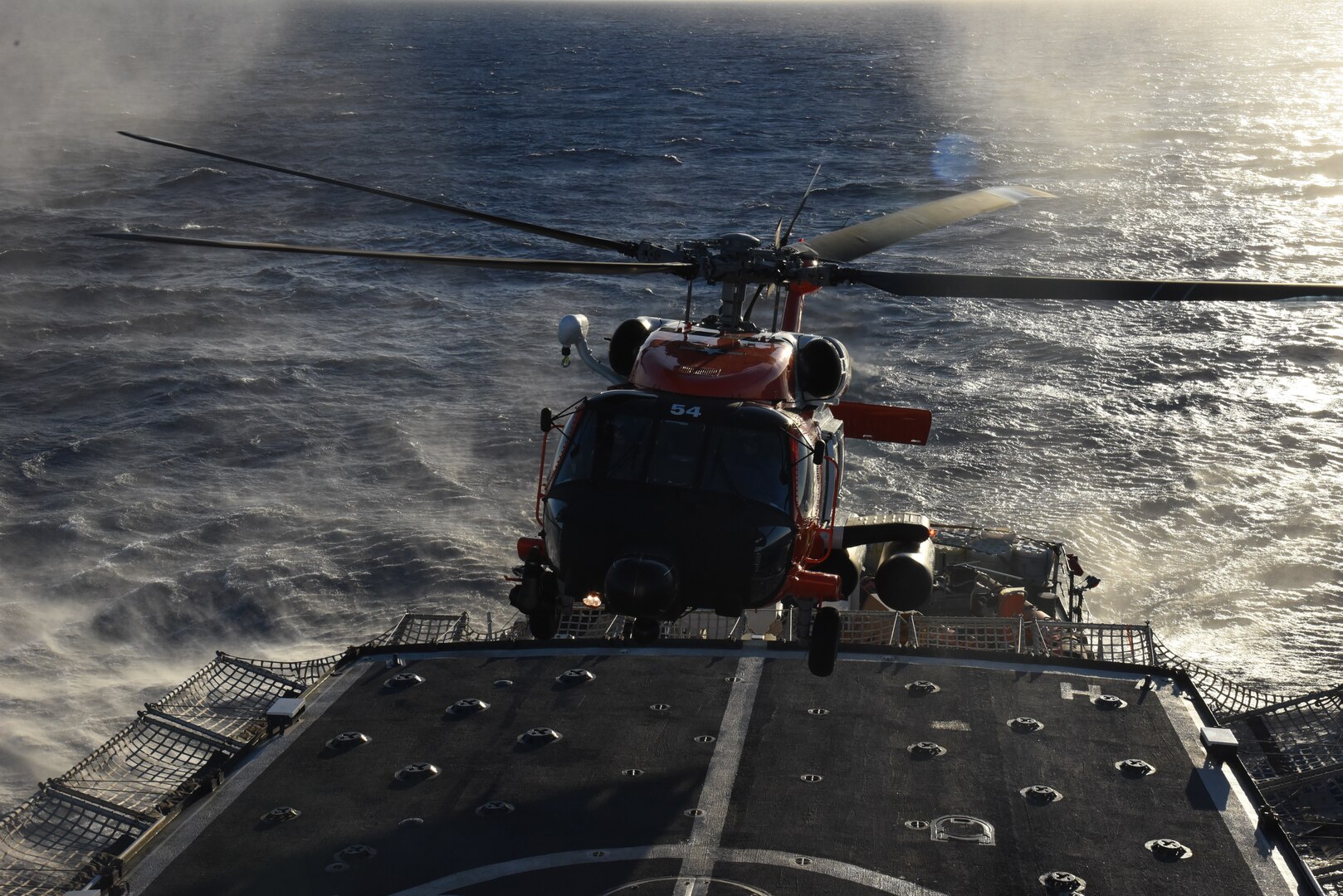
MH-60 on WMECs?

The photo above accompanied the press release reproduced below. There is no caption or credit attached to the photo (I hate that). There is no mention of flight ops in the news release. The helicopter may not actually be landing, but that’s what it looks like. This may have just been a training flight with no aviation detachment embarked. The 270s were designed to operate H-60 size helicopters, but it has been very rare. As the service moves to a homogeneous rotary wing fleet of all MH-60s, it should become common.

Doesn’t look like the 210s could operate H-60s at all. That is a mighty small flight deck. My understanding is that the first four 270s had a design flaw that meant that while an H-60 could land on the ships, they could not traverse the deck and be hangared. That means only ten of the 27 currently commissioned WMECs (Haley, 13 x 270s, 13 x 210s) will be able to operate MH-60s. (I assume Haley has the capability.)

The other 17 ships are not going to be replaced anytime soon. Unless they are decommissioned without replacement, it looks like the last 210 will not go out of service until 2031 (at least 62 years old at that point); the four earliest 270s not before 2033 (at least 49 years old); and the last WMEC not until 2038 (Really looks like 2039 to me).

If the Coast Guard wants to continue operating helicopters from these less capable ships, they may have to keep at least a few H-65s for another ten years. The CG has put a lot of money and effort into upgrading these aircraft, reportedly increasing their service life by 10,000 hours. That is a lot of hours. The conversions to MH-65E are not even completed yet. As of 27 April, 2023, 63 of 98 have been completed. It looks like enough MH-65s could be maintained to support the WMECs that cannot support the MH-60 until they are decommissioned, but the service may choose not to do so.

We are seeing a lot of 210s and even 270s operated without an embarked helicopter, particularly while operating in the Caribbean where fixed wing support is readily available and where the flight decks are often used as a holding area for migrants.

There is also the possibility that the ships would be better served by replacing the helicopter with an Unmanned Air System. At least in terms of search capability, a UAS is probably a better choice, but we haven’t seen a UAS capable of HITRON’s airborne use of force/armed overwatch function so essential for the drug interdiction mission.


May 11, 2023

USCGC Thetis returns home following 66-day multi-mission Caribbean Sea patrol

KEY WEST, Fla. – The crew of the USCGC Thetis (WMEC 910) returned to their home port in Key West, Thursday, following a 66-day patrol in the Florida Straits and Caribbean Sea.  

Thetis’ crew contributed to the interdiction, care and repatriation of 125 migrants from Haiti and Cuba while patrolling the Seventh Coast Guard District’s area of responsibility in support of Operation Vigilant Sentry and Homeland Security Taskforce — Southeast.

During the patrol, Thetis’ crew rescued 31 Cuban migrants from an overcrowded, adrift and homemade vessel in the South Florida Straits. The boarding team safely embarked the migrants aboard Thetis, where Petty Officer 1st Class William Ice, a health services technician assigned to Thetis, provided a lifesaving emergency procedure for one of the migrants. During another case, Thetis watch standers spotted a Haitian sailboat in distress and provided rescue assistance to the 13 Haitians.

Additionally, working with Bahamian Customs Department, Thetis safely returned 54 Haitian migrants to their point of departure in the Bahamas after their overcrowded and unseaworthy vessel was intercepted in transit to West Palm Beach, Florida.

“I am so proud of the crew’s hard work and professionalism this patrol,” said Cmdr. Gavin Garcia, commanding officer of Thetis. “It takes a great deal of teamwork within the ship as well as coordination with other organizations to meet the demands of two of the Coast Guard’s main missions in the South Florida Straits: search and rescue and maritime law enforcement.”

Thetis is a 270-foot Famous-class medium endurance cutter. The cutter’s primary missions are counter-narcotics operations, migrant interdiction, living marine resources protection, and search and rescue in support of U.S. Coast Guard operations throughout the Western Hemisphere.