This Day in Coast Guard History, October 5

Based on the Coast Guard Historian’s timeline, https://www.history.uscg.mil/research/chronology/
With inspiration from Mike Kelso

October 5


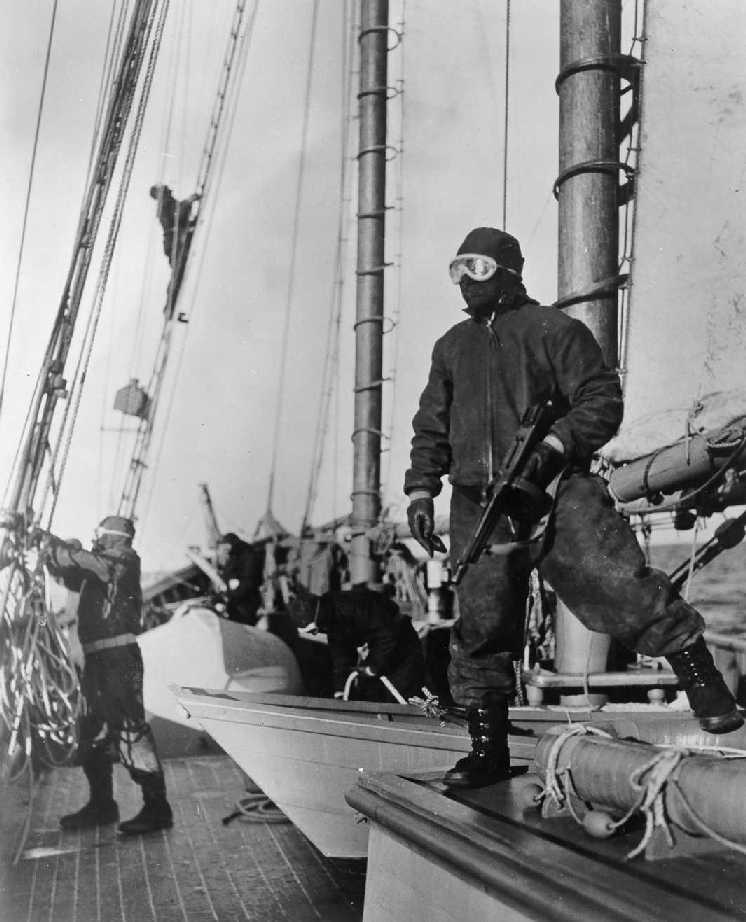
Members of the US Coast Guard Auxiliary anti-submarine forces, colloquially referred to as the “Corsair Fleet”

1938  The newly established “Coast Guard Reserve” (what would become the Coast Guard Auxiliary) enrolled its first members.

Consolidated PBY-5A Catalina. US Navy photo.

1943  Patrol Squadron 6 (VP-6 CG) was officially established.  This was an all Coast Guard unit.  Its home base was at Narsarssuak, Greenland, code name Bluie West-One.  It had nine PBY-5As assigned.  CDR Donald B. MacDiarmid, USCG, was the first commanding officer.  As additional PBYs became available, the unit’s area of operation expanded and detachments were established in Argentia, Newfoundland and Reykjavik, Iceland, furnishing air cover for Navy and Coast Guard vessels.   Hundreds of rescue operations and aerial combat patrols were carried out during the 27 months the squadron was in operation.

1969  For extreme and heroic daring on the morning of October 5, 1969, while on authorized leave, Coast Guardsman James P. Grier rescued two persons and attempted to rescue a third from drowning in the waters of the Atlantic Ocean at Rockport Harbor, MA.  For his actions the Coast Guard awarded Petty Officer Grier a Gold Life-Saving Medal.

This Day in Coast Guard History, October 4

Based on the Coast Guard Historian’s timeline, https://www.history.uscg.mil/research/chronology/
With inspiration from Mike Kelso

October 4

1918  There was an explosion at the T.A. Gillespie Company munitions yard in Morgan, New Jersey. Coast Guardsmen from Perth Amboy responded.  When fire threatened a trainload of TNT, these men repaired the track and moved the train to safety, thus preventing further disaster.  Two Coast Guardsmen were killed in this effort.

“Before retiring October 1, 1951, Rear Admiral Joseph E. Stika, USCG, nears the end of over 43 years service in the Coast Guard as he makes one of his last official military appearances at the re-commissioning of the world’s largest, strongest, and fastest battleship, the USS IOWA, in San Francisco, August 25. Admiral Stika (extreme left), who is both Commander Western Area and Commander Twelfth Coast Guard District, is shown here with (left to right) Fleet Admiral Chester W. Nimitz, USN; Mrs. William S. Beardsley (wife of and representing Governor Beardsley of Iowa); Mrs. William R. Smedberg III (wife of the USS IOWA’s captain); and Captain William R. Smedberg III, USN, Commanding Officer of the USS IOWA (BB-61).”; photo dated 28 August 1951.

From Wikipedia: Among many others involved in rescue operations were US Coast Guardsmen stationed across the Raritan River in Perth Amboy. Twelve received Navy Crosses for their heroic actions in the aftermath of the explosion, and two died in the effort. The award citations indicate that during the conflagration, they risked death when they moved a train loaded with TNT that was threatened by the fire. One Navy Cross recipient was Joseph Stika, who later became a vice admiral.

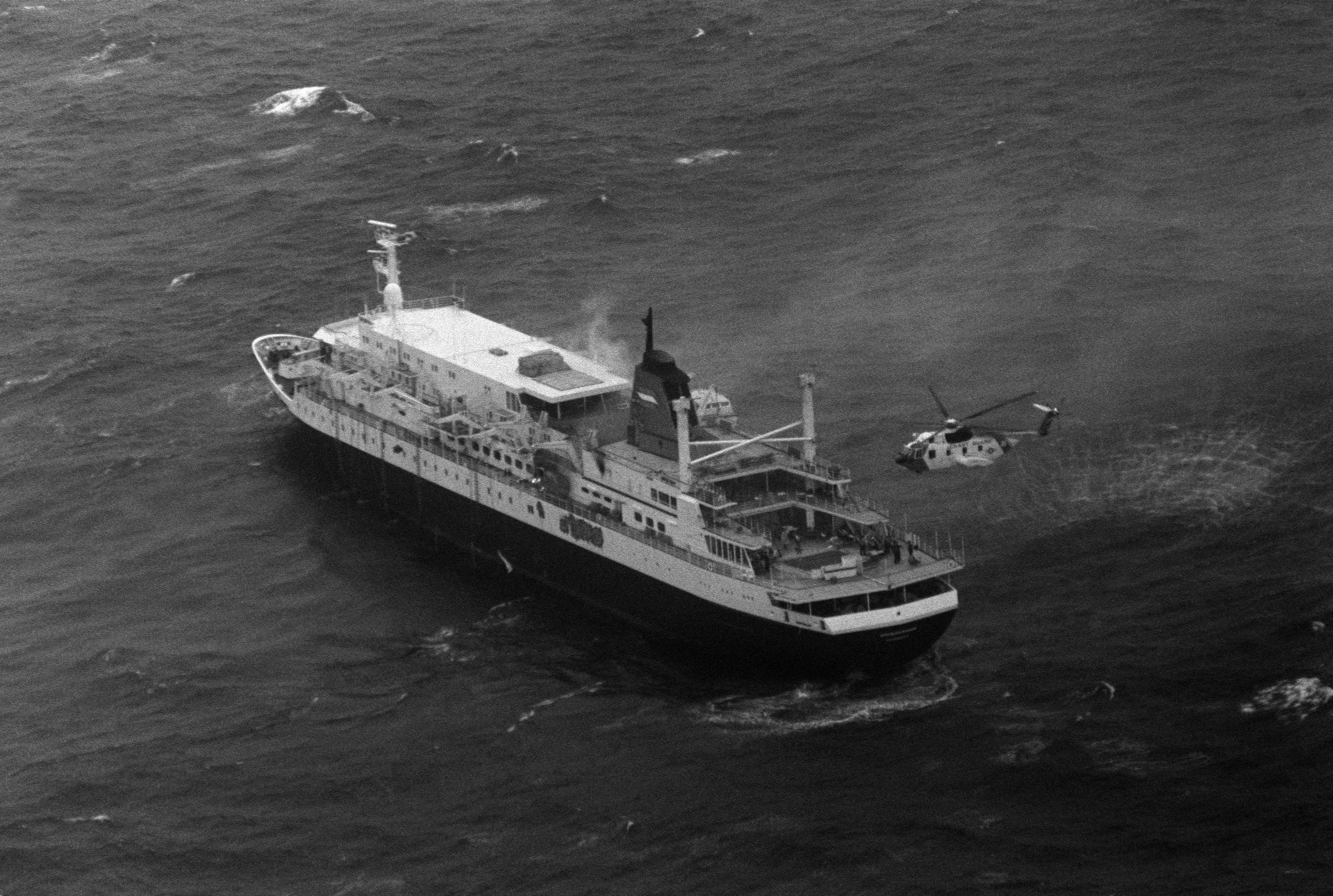
A US Coast Guard HH-3F Pelican helicopter hovers near the stern of the luxury liner PRINSENDAM in the Gulf of Alaska.

1980  A fire broke out on the Dutch cruise vessel Prinsendam off Ketchikan, Alaska.  Coast Guard helicopters and the cutters BoutwellMellon, and Woodrush responded in concert with other vessels in the area and rescued all of the passengers and crew without loss of life.

“The rescue is particularly noteworthy because of the distance traveled by the rescuers, the coordination of independent organizations, and the fact that all 520 passengers and crew were rescued without loss of life or serious injury.”

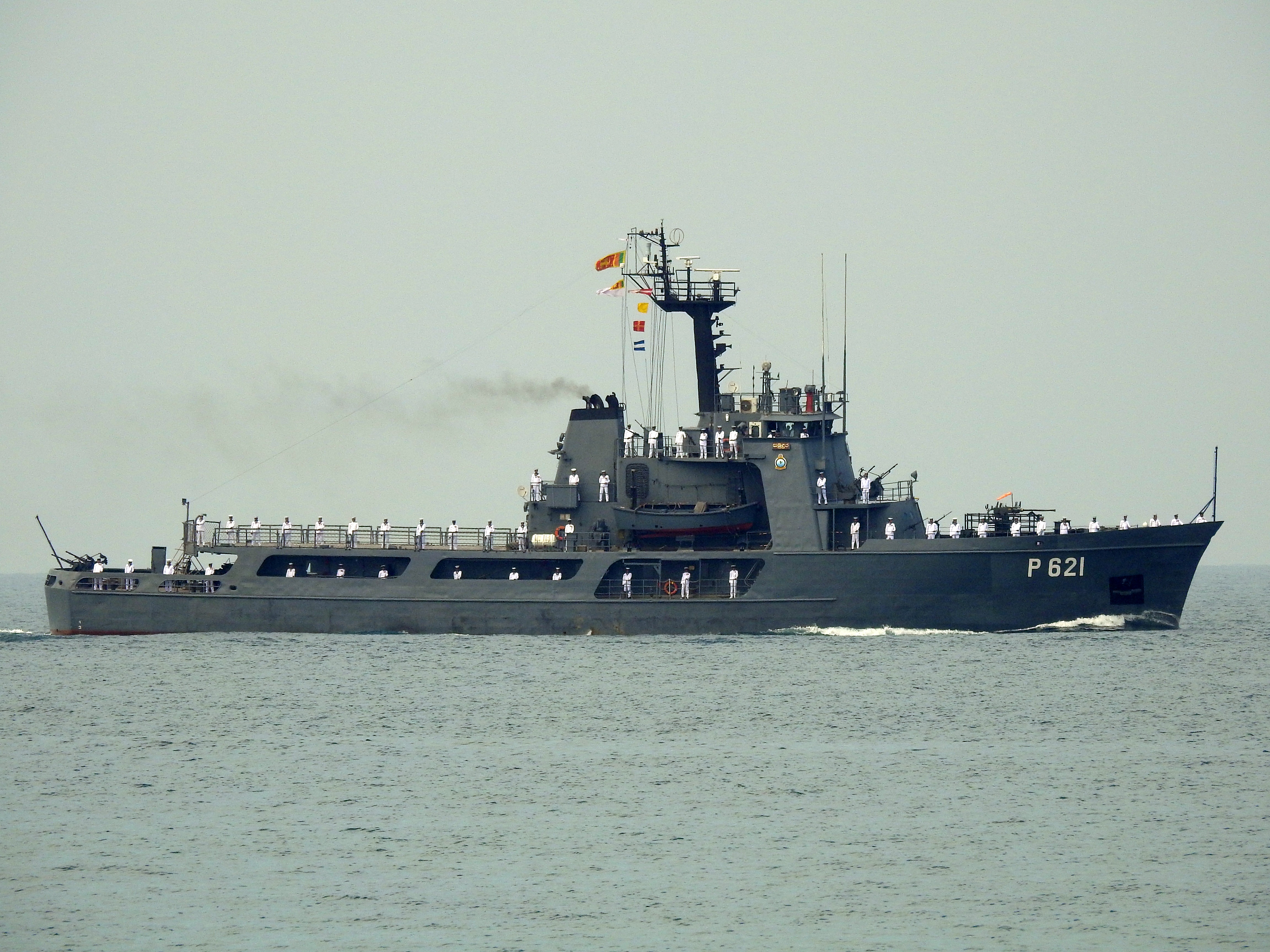
Former USCGC Courageous, now Sri Lanka Navy Ship Samudura P621. Photo by Rehman Abubakr

1995  Hurricane Opal swept through the Gulf of Mexico and made landfall in Destin, Florida.  Coast Guard units provided relief efforts, surveyed damage, and restored aids to navigation.  The CGC Kodiak Island (WPB1341) contacted the CGC Courgeous and requested assistance.  The Kodiak Island was battling 10 to 12-foot waves 100 miles west of Gasparilla, Florida, and experiencing flooding and a loss of steering control due to a hydraulic fluid leak.  A HC-130 from AIRSTA Clearwater flew to the scene to provide assistance and the Courageous went to escort the Kodiak Island to Group St. Petersburg.

2014  CG District Seven reported an individual in a self-propelled homemade hydro-pod bubble craft activated his Emergency Position Indicating Radio-beacon and SPOT device. An Air Station Clearwater HC-130 aircraft vectored in an MH-60 helicopter that hoisted the individual, and an Automated Mutual-Assistance Vessel Rescue System vessel recovered his craft. The individual was treated at Air Station Clearwater by Emergency Medical Services for extreme fatigue and released.

U.S. Coast Guard crews stopped Reza Baluchi (seen sticking his head out of his bubble craft) during his journey from Florida to Bermuda. 25 April 2016

This was not the last we would hear of this guy.

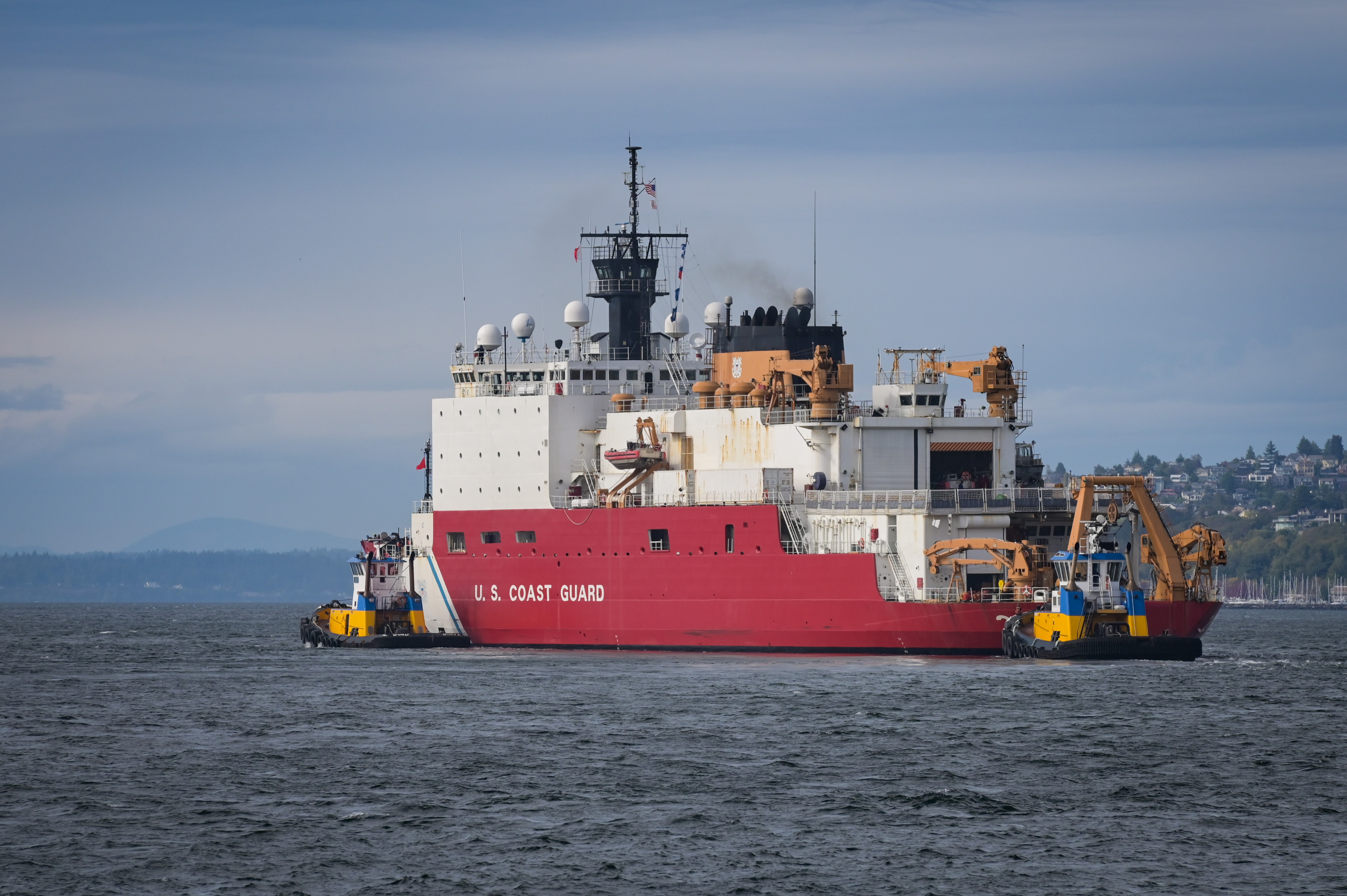
“U.S. Coast Guard Cutter Healy departs Seattle for fall 2024 Arctic deployment” –CG News

U.S. Coast Guard Cutter Healy (WAGB 20) transits with assist tugs through Elliott Bay near Seattle following its departure from Base Seattle, Oct. 1, 2024. The crew of the Healy are scheduled to resume their scientific mission that was cut short due to an onboard fire in late July. (U.S. Coast Guard photo by Petty Officer 1st Class Steve Strohmaier)

Below is a Coast Guard New release. (More photos at the link.)

Oct. 2, 2024

SEATTLE — U.S. Coast Guard Cutter Healy (WAGB 20) departed Seattle Tuesday, beginning their months-long Arctic deployment. Healy’s earlier science mission was cut short due to an onboard electrical fire. The Healy returned to Seattle for a thorough inspection and repairs.

The crew will support scientists conducting three distinct science missions during Healy’s fall 2024 Arctic deployment. Other science of opportunity across a broad spectrum of disciplines will also be supported as time and weather allow.

The first mission supports the Arctic Port Access Route Study (PARS). During this mission, the cutter will perform bathymetric mapping in the Chukchi and Beaufort Seas. The Coast Guard has initiated an Arctic PARS to analyze current vessel patterns, predict future vessel needs, and balance the needs of all waterway users by developing and recommending vessel routing measures for the Arctic. The Arctic PARS may lead to future rulemaking or international agreements that consider coastal communities, fishing, commercial traffic, military needs, resource development, wildlife presence and habit, tribal activities, and recreational uses.

For the second mission, Healy will embark 20 early career polar scientists and their mentors on an Arctic Chief Scientists Training Cruise sponsored by the National Science Foundation and University-National Oceanographic Laboratory System. These early career scientists will conduct multidisciplinary research, including mapping to fill critical bathymetric gaps and scientific sampling across various disciplines, in addition to developing skills in shipboard leadership, coordination, and execution.

The final mission of the deployment will support other science of opportunity to include sea floor mapping for the National Oceanic and Atmospheric Administration Office of Coast Survey.

“We are thrilled to support numerous diverse research objectives in the northern polar region this fall. In an era of increasing vessel traffic, our work will contribute to navigation safety in a region where existing soundings are sparse,” said Capt. Michele Schallip, Healy’s commanding officer. “We are elated to have been able to reschedule our opportunity to help inspire future principal investigators in the Early Career Scientist mission. Healy’s crew, port engineering staff, and General Electric Verona worked diligently during our inport to ensure the cutter is ready to safely operate in the remote, unforgiving Arctic environment.”

Healy is the United States’ largest polar icebreaker and the Coast Guard’s only icebreaker explicitly designed to support Arctic research. The platform is ideally specialized for scientific missions, providing access to the most remote reaches of the Arctic Ocean. Healy is designed to break 4.5 feet of ice continuously at three knots and can operate in temperatures as low as -50 degrees Fahrenheit.

This Day in Coast Guard History, October 3

Based on the Coast Guard Historian’s timeline, https://www.history.uscg.mil/research/chronology/
With inspiration from Mike Kelso

October 3

1898  The American barkentine, Wanderinq Jew lost her sails and sprung a leak during the severe hurricane of October 2, approximately 11 miles east by south from the station at Sullivans Island, South Carolina.  On account of distance and frequent heavy rain squalls, she was not sighted by station lookout until 3:30 pm on the following day.  A surfboat was launched and the ship was found abandoned by her crew.

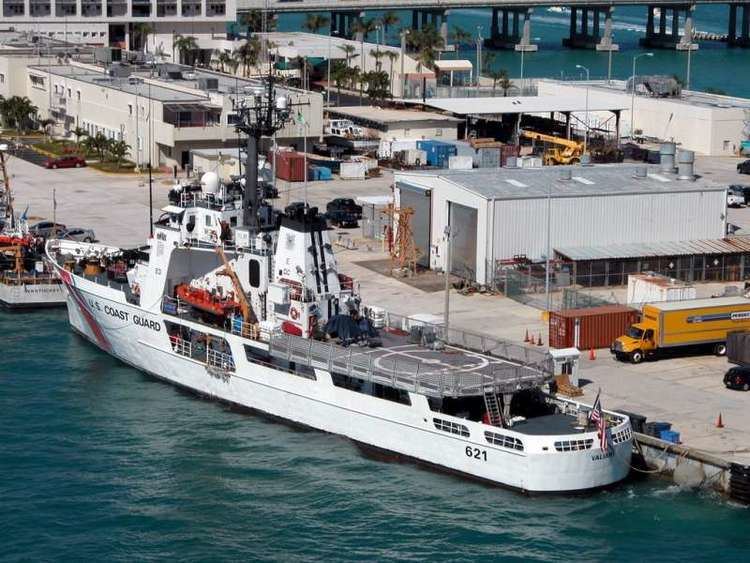
USCGC Valiant (WMEC-621)

2014  CGC Valiant returned to their homeport Friday at Naval Station Mayport, in Jacksonville, Florida.  During the 52-day deployment, Valiant sailed throughout the Windward Passage and the North Caribbean Sea in support of Operation Southeast Watch.  One port call was made at Port-au-Prince, Haiti. While anchored, Valiant crew hosted the U.S. Ambassador to Haiti, the Honorable Pamela White; the Deputy Chief of Mission to the U.S. Embassy in Haiti, the Honorable Brian Shukan; the Chief of the Haitian Coast Guard, Commissaire Joseph Jean-Marie Wagnac; and other government representatives.  Valiant also responded to a search and rescue case involving a 55-foot fishing vessel, which was adrift and taking on water in the Old Bahama Channel. Valiant escorted the vessel over 100 nautical miles to Ragged Island, Bahamas where it transferred the vessel to a Royal Bahamian Defense Force patrol vessel.  Valiant repatriated 24 Haitian migrants to Cap Haitien, Haiti, and embarked 11 Cuban migrants that had been rescued by the crew of the cruise ship Carnival Liberty. The cutter also patrolled the Windward Passage to prevent overloaded Haitian migrant vessels from taking to sea.

“Coast Guard to send 3 more cutters to Guam, has no plans to escort Philippine ships” –Stars and Stripes

A U.S. Coast Guard boat crew and boarding team from U.S. Coast Guard Cutter Oliver Berry (WPC 1124) approaches a foreign fishing vessel to conduct a joint boarding inspection with members of the Western and Central Pacific Fisheries Commission on the high seas in Oceania, Sept. 22, 2024. U.S. Coast Guard Cutter Oliver Berry’s crew recently completed a 45-day patrol in Oceania in support of Operation Blue Pacific, promoting security, safety, sovereignty, and economic prosperity in the region.

Stars and Stripes reports,

The Coast Guard will double its Guam fleet to six cutters but doesn’t plan to accompany the Philippine coast guard as it struggles to maintain territorial claims in the South China Sea, the service’s Pacific-area commander said Friday.

This is based on a video news conference by Pacific Area Commander Vice Adm. Andrew Tiongson speaking from Japan.

“The Coast Guard will not escort Philippine resupply missions to the BRP Sierra Madre, a grounded warship garrisoned by Filipino troops at the Second Thomas Shoal in the South China Sea, according to Tiongson.”

The Philippines has not asked for escorts, Tiongson said. “We do advise, and we do assist,” he said. “We provide what we would do in this situation.”

He also said, “It’s possible we may get another Indo-Pacific support cutter,” using the description applied to USCGC Harriet Lane, recently arrived in the Pacific Area to support operations in the Western Pacific.

There is more in the article.

“U.S. Coast Guard encounters joint Chinese Coast Guard, Russian Border Guard patrol in Bering Sea” –Coast Guard News

Russian Okean class Patrol Ship. This is the larger of the two Russian ships. “An HC-130J Super Hercules airplane crew from Coast Guard Air Station Kodiak observes two Russian Border Guard ships and two Chinese Coast Guard ships approximately 440 miles southwest of St. Lawrence Island Sept. 28, 2024. This marked the northernmost location where Chinese Coast Guard vessels have been observed by the U.S. Coast Guard. (U.S. Coast Guard courtesy photo)”

Below is a CG news release, presumably from District 17 (Alaska).

An earlier post reported joint Russian/Chinese Coast Guard exercises and the formation of this four-ship combined task force.

They are in the Bering Sea. Will be interesting to see if they go up into the Arctic. It is a period of near minimal ice.

There is an interesting contrast between the two Russian ships and the two Chinese ships. In spite of the fact that this is happening in Russia’s back yard, the Chinese ships clearly outclass the Russian ships, being newer, larger, and faster.

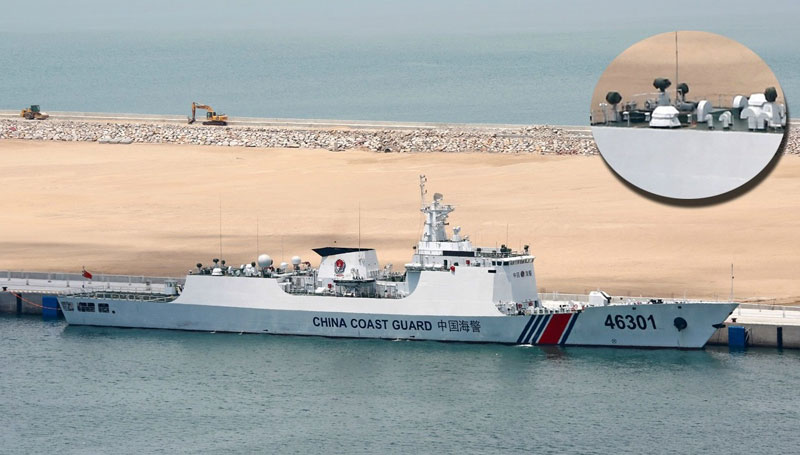
China Coast Guard type 818 cutter like the two deployed with the Russian Coast Guard

Why four ships hanging together when the US Coast Guard does Alaska Patrols in the Bering with only one ship? The Chinese tend to operate in groups. We haven’t seen this with the Russian Coast Guard, but I really haven’t seen much from them anyway.

Could the Chinese be teaching the Russians how to do gray zone operations, or is it just that totalitarian regimes need someone to do the work and someone to watch them?

On the other hand, the China Coast Guard has lots of ships but relatively few aircraft, and they operate primarily in two heavily trafficked, contested areas, the South and East China Seas.

News Week also has a good report on this.


Oct. 1, 2024

JUNEAU, Alaska – The U.S. Coast Guard located four vessels from the Russian Border Guard and Chinese Coast Guard conducting a joint patrol in the Bering Sea, Saturday.

While patrolling the maritime boundary between the United States and Russia on routine patrol in the Bering Sea, a HC-130J Super Hercules airplane crew from Coast Guard Air Station Kodiak observed two Russian Border Guard ships and two Chinese Coast Guard ships approximately 440 miles southwest of St. Lawrence Island.

The vessels were transiting in formation in a northeast direction, remaining approximately five miles inside the Russian Exclusive Economic Zone. This marked the northernmost location where Chinese Coast Guard vessels have been observed by the U.S. Coast Guard.

 “This recent activity demonstrates the increased interest in the Arctic by our strategic competitors,” said Rear Adm. Megan Dean, commander of the 17th Coast Guard District. “The demand for Coast Guard services across the region continues to grow, requiring continuous investment in our capabilities to meet our strategic competitors’ presence and fulfill our statutory missions across an expanding operational area.”

The HC-130 aircrew operated under Operation Frontier Sentinel, an operation designed to meet presence with presence when strategic competitors operate in and around U.S. waters. The Coast Guard’s presence strengthens the international rules-based order and promotes the conduct of operations in a manner that follows international law and norms.

This Day in Coast Guard History, October 2

Based on the Coast Guard Historian’s timeline, https://www.history.uscg.mil/research/chronology/
With inspiration from Mike Kelso

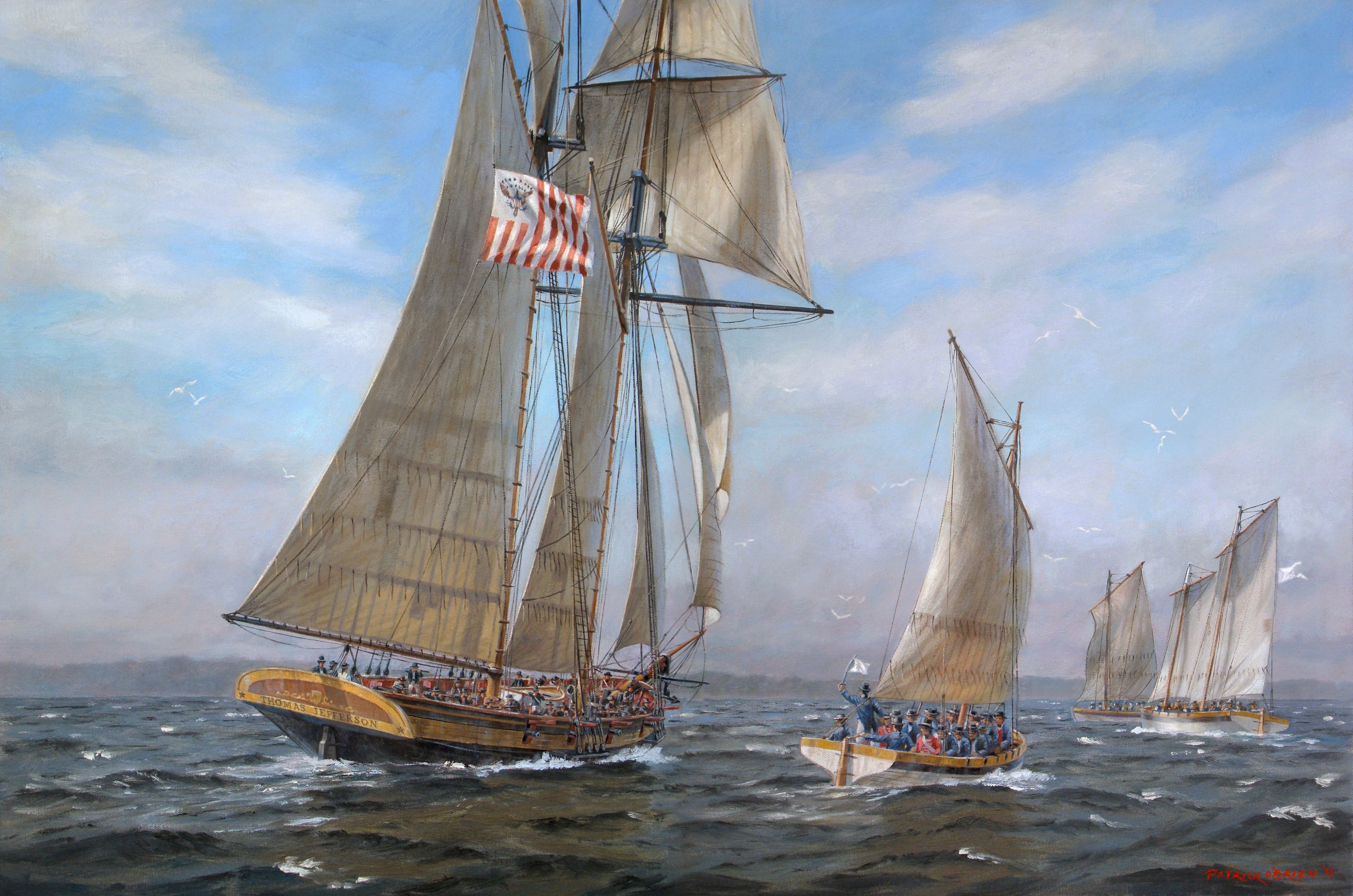
Revenue Cutter Thomas Jefferson captures three Royal Navy barges and personnel in Hampton Roads. US Coast Guard Collection.

1789  Secretary of the Treasury Alexander Hamilton asked collectors of customs to report on expediency of employing boats for the “security of the revenue against contraband.”  Hamilton’s interest in such vessels led to his request to Congress to fund the construction of 10 such revenue “boats” the following year, leading to the creation of what is now the U.S. Coast Guard.

2014  The Coast Guard launched several assets in response to a report of a fire on board a natural gas drill platform in Cook Inlet, Alaska.  The Coast Guard diverted a Coast Guard Hercules HC-130 crew and an MH-60 Jayhawk helicopter crew to conduct an overflight of the Baker Platform in Cook Inlet, near Nikiski.  The Coast Guard also launched the CGC Mustang and the diverted CGC SPAR to the location.  A five-mile, no-fly safety zone at 5,000 feet and a two-mile safety zone were established around the platform.  All four people aboard the platform were safety evacuated.

This Day in Coast Guard History, October 1

Based on the Coast Guard Historian’s timeline, https://www.history.uscg.mil/research/chronology/
With inspiration from Mike Kelso


These are the remnants of Transcontinental Air Mail Route Beacon 37A, which was located atop a bluff in St. George, Utah, U.S.A. With concrete arrows indicating the direction to the next beacon, a rotating light tower, and a shed that usually held a generator and fuel tanks, these beacons were once situated every 10 miles on air routes across the United States beginning around 1923.

1926  An airways division, headed by a chief engineer, was set up as a part of the Lighthouse Service, its work covering the examination of airways and emergency landing fields and the erection and maintenance of aids to air navigation.

1943  Coast Guard-manned USS LST-203 was stranded in Southwest Pacific but there were no casualties. While on the beach, a storm caused her to broach. Declared total loss. Struck from the Naval Register, 6 March 1944.

1976  Coast Guard personnel were required to change to the new “Bender Blues” uniforms by this date.
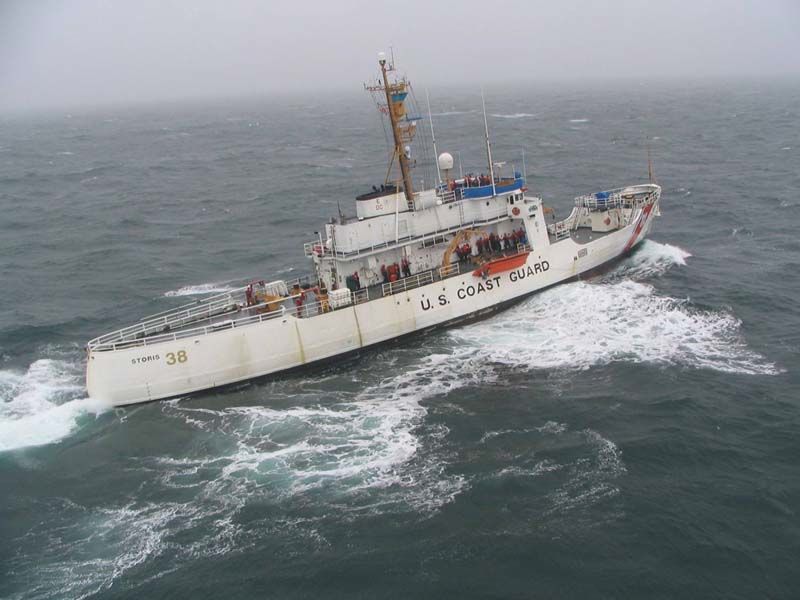
USCGC Storis (WMEC-38)

1991  CGC Storis became the oldest commissioned cutter in the Coast Guard when the CGC Fir was decommissioned.  Storis‘s crew painted her hull number “38” in gold in recognition of her status.

1996  Operation Frontier Shield commenced. It was the largest counter-narcotics operation in Coast Guard history to date.
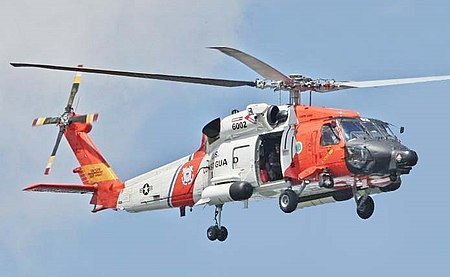
HH-60J Air Station Astoria

2009  The U.S. Coast Guard Acquisition Directorate’s HH-60 Conversion Project held a ribbon cutting ceremony at Coast Guard Air Station Elizabeth City, North Carolina, in honor of the Medium Range Recovery Helicopter achieving Initial Operational Capability (IOC).

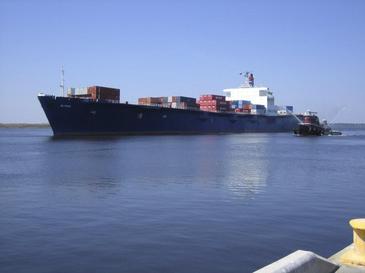
2015  El Faro, a 735-foot ro-ro cargo ship, was en-route to San Juan, Puerto Rico, from Jacksonville, Florida with a crew of 33 on board. At approximately 0730, watchstanders at the Coast Guard Atlantic Area command center in Portsmouth, Virginia, received an Inmarsat satellite notification stating El Faro was beset by Hurricane Joaquin, had lost propulsion and had a 15-degree list.  The crew reported the ship had previously taken on water, but that all flooding had been contained.  Watchstanders at CG 7th District command center in Miami immediately launched an HC-130 out of Air Station Clearwater to search for El Faro while two Hurricane Hunter aircrews attempted to locate and establish communications with the merchant vessel on October 2.   Ultimately, Coast Guard assets used in the search included aviation assets from Air Stations Clearwater and Elizabeth City, CGC NorthlandResolute, and Charles Sexton, along with Navy and Air Force assets and three commercial tugboats.  The search was called off on October 7 after search crews located a deceased person in a survival suit in the water and a heavily damaged lifeboat with markings consistent with those on board El Faro. Additional items located by search crews included a partially submerged life raft, a survival suit, life jackets, life rings, cargo containers, Styrofoam, packaged food, and an oil sheen.

Fisheries Enforcement from a Littoral Combat Ship

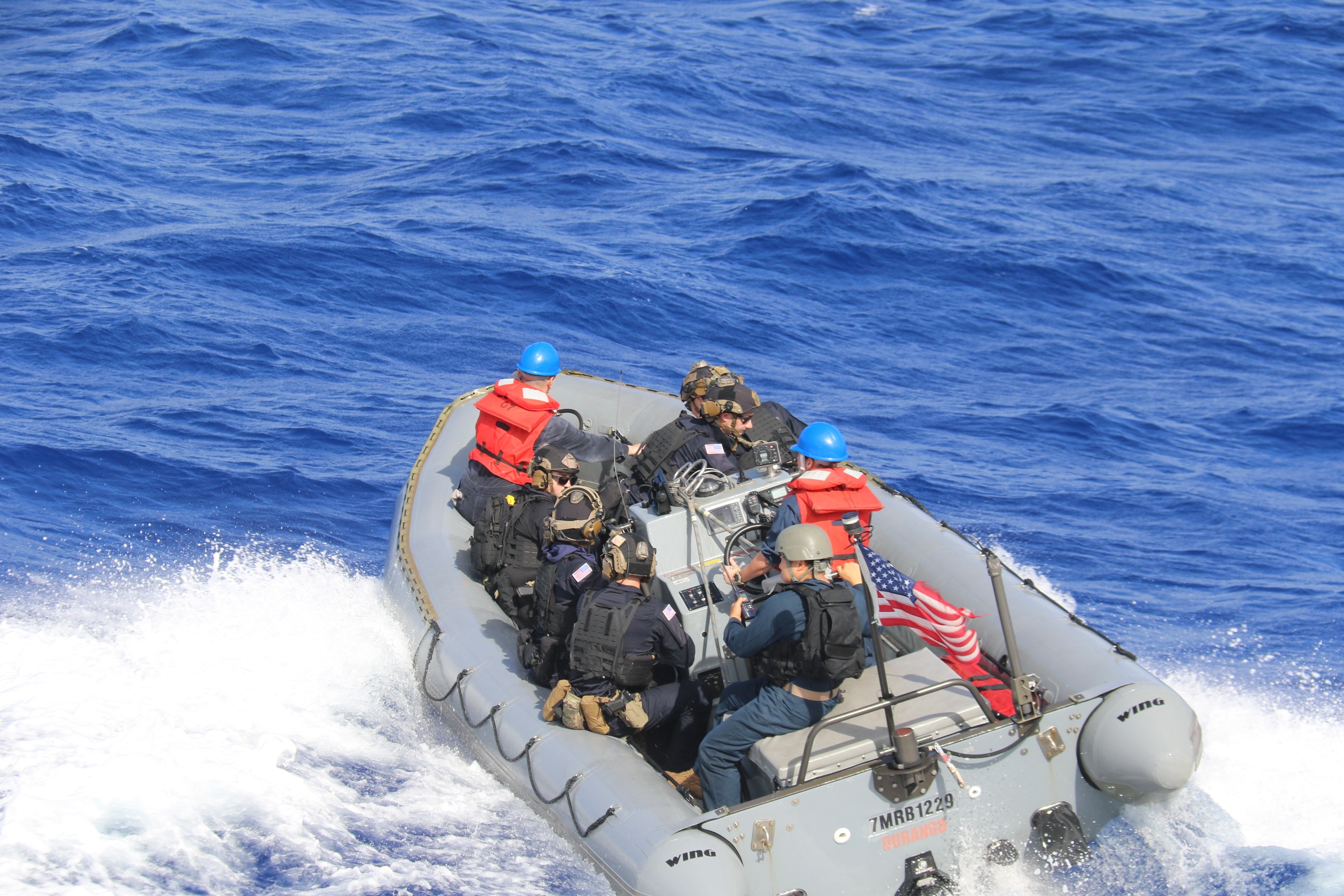
PACIFIC OCEAN – Sailors from USS Omaha (LCS 12), along with five U.S. Coast Guard law enforcement members, transit in a rigid-hull inflatable boat to a foreign flagged fishing vessel in support of the Oceania Maritime Security Initiative (OMSI) in the Pacific Ocean, Sept. 12. Omaha, assigned to U.S. 3rd Fleet, is operating in support of OMSI in the Indo-Pacific region. A U.S. Coast Guard law enforcement detachment from the Pacific Tactical Law Enforcement Team embarked aboard Omaha is supporting maritime fishery law enforcement operations for U.S. and Pacific Island nations in Oceania. OMSI is a Secretary of Defense program that leverages Department of Defense assets to increase U.S. Coast Guard maritime security and maritime domain awareness support in Oceania through operations in remote U.S. Exclusive Economic Zones and bilateral maritime law enforcement agreements with Pacific Island nations. (U.S. Navy photo by Hospital Corpsman First Class Weiju Lai)

Below is a news release from 3rd Fleet. TACLET taking the opportunity to use a Navy unit’s transit time to do some fisheries enforcement. Photo below for reference.

PACIFIC OCEAN (Aug. 8, 2021) The Independence variant littoral combat ship USS Omaha (LCS 12) simulates a refueling-at-sea with the aircraft carrier USS Abraham Lincoln (CVN 72). (U.S. Navy photo by Mass Communication Specialist 3rd Class Javier Reyes)


Sept. 20, 2024

USS Omaha participates in Oceania Maritime Security Initiative

By Commander, Littoral Combat Ship Squadron 1

The Independence-variant littoral combat ship USS Omaha (LCS 12), with an embarked detachment from Helicopter Maritime Strike Squadron (HSM) 35 and a law enforcement detachment from U.S. Coast Guard Tactical Law Enforcement Team Pacific, began operations in support of Oceania Maritime Security Initiative (OMSI) Sept. 8.

A Secretary of Defense program, OMSI is aimed at diminishing transnational illegal activity on the high seas in the Pacific Island nations of Oceania’s Exclusive Economic Zones (EEZ), as well as increasing interoperability with partner nations.

Omaha’s range and capabilities allow the embarked U.S. Coast Guard law enforcement detachment the ability to access the remote U.S. and Pacific Island nations’ EEZs.

“We embrace the opportunity to work closely with the U.S. Coast Guard as we help enforce economic policies among some of our closest partners in the Western and Central Pacific,” said U.S. Navy Cmdr. Kevin Smith, commanding officer of Omaha. “It is rewarding to work with these island nations to patrol their waters, maintaining a free and open region.”

The objective of OMSI is to reduce and eliminate illegal, unregulated and unreported fishing, combat transnational crimes in EEZs of the Western and Central Pacific region and enhance regional security.

“The partnership between the U.S. Navy and U.S. Coast Guard plays an integral role in the OMSI mission,” said Coast Guard Chief Maritime Enforcement Specialist Kyle Smouse. “Deploying U.S. Coast Guard law enforcement detachments aboard U.S. Navy vessels allows the Coast Guard to have a greater presence and impact in enforcing Western and Central Pacific Fisheries Commission (WCPFC) regulations. These areas of operation would be difficult to reach without the support of the U.S. Navy.”

The WCPFC international fisheries agreement focuses on the long-term conservation and sustainable use of fish stocks in the Western and Central Pacific Ocean. The WCPFC seeks to address problems in the management of the high seas fisheries in the Western and Central Pacific Ocean, where there is unregulated fishing and vessel re-flagging to evade controls.

Omaha, homeported in San Diego and assigned to U.S. 3rd Fleet, is on a scheduled deployment in the Pacific Ocean. Littoral combat ships are fast, optimally manned, mission-tailored surface combatants that operate in near-shore and open-ocean environments, winning against 21st-century coastal threats.

This Day in Coast Guard History, September 30

Based on the Coast Guard Historian’s timeline, https://www.history.uscg.mil/research/chronology/
With inspiration from Mike Kelso.

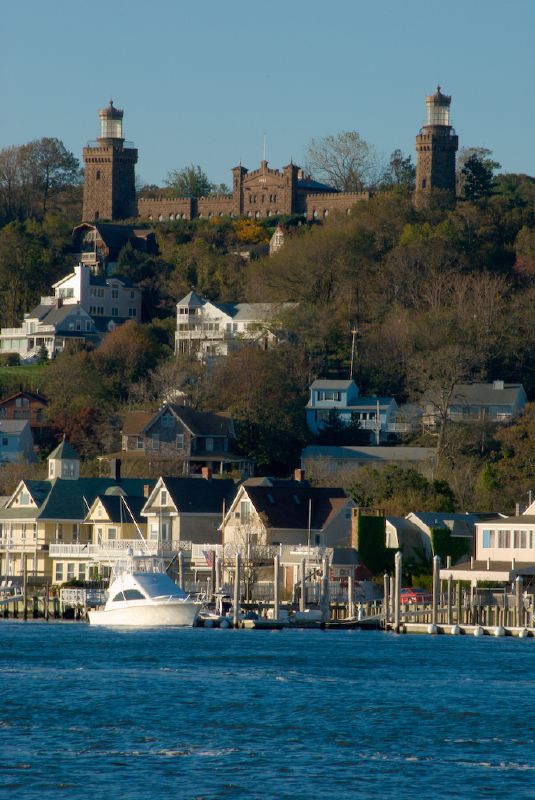
Twin Lights of the Navesink

1899  First Navy wireless message was sent via the Lighthouse Service Station at Highlands of Navesink, New Jersey.

1943  CGC E.M. Wilcox foundered off Nags Head, North Carolina. One crewman was lost.

1949  The rank of commodore, established in 1943 as a wartime measure, was terminated by the President under the provisions of an Act of Congress approved July 24, 1941.

Former USCGC Taney now a Museum Ship in Baltimore

1977 CGC Taney departed Ocean Station (OWS) Hotel on September 30, 1977 when the station was closed and replaced by a buoy.  This was the final ocean station patrolled by a Coast Guard cutter.  OWS Hotel, located 200 miles east of the Maryland/Virginia coast was first established in 1970 as part of a supplemental weather warning program for the tracking and improved forecasting of East Coast storms and hurricanes.  OWS Hotel was manned by the Coast Guard from August 1st through April 15th each year.  The termination of OWS Hotel marked the end of the Coast Guard’s participation in the manned ocean station program which began on February 10, 1940 when CGCs Bibb and Duane occupied stations Number 1 and 2 in the North Atlantic and continued through the end of the U.S. participation in the North Atlantic Ocean Station Program of the World Meteorological Organization and the International Civil Aviation Organization in 1974.

Marcus Island

1994  The crew of Coast Guard LORAN Station Marcus Island decommissioned their station and turned it over to the Japanese Maritime Safety Agency.  This was the last station in the Northwest Pacific LORAN chain to be decommissioned and turned over to the Japanese under a 1992 agreement between the two countries.

1997  Omega Navigation Station Hawaii ceased operation, coinciding with the end of worldwide Omega transmissions.

Coast Guardsmen from Port Security Unit 307 conduct seaward security for Department of Defense assets and personnel at Naval Station Guantanamo Bay, Cuba, April 25, 2022. During the nine-month deployment, unit operations focused on maritime defense, providing more than 30,000 hours of around-the-clock waterside and shore side anti-terrorism and force protection. U.S. Coast Guard by photo by Lt. Cmdr. Glenn Sanchez.

2015  Coast Guard Port Security Unit 308, based in Kiln, Mississippi, returned home from a nine-month deployment to Guantanamo Bay, Cuba in support of Operation Enduring Freedom and the Global War on Terrorism.  During the deployment, PSU 308 members maintained a continuous maritime anti-terrorism/force protection presence in the Naval Defensive Sea Area of Guantanamo Bay, Cuba, directly supporting the commander of Joint Task Force Guantanamo Bay Naval reservation and adjoining waters.  PSU 308 was commissioned September 16, 1998.  It has been mobilized five times to this point since its inception, twice to Kuwait in 2003 and 2010, once to Bahrain in 2002, and once previously to Guantanamo in 2007.  It was compromised of 142 selected reservists and six active duty personnel.  PSU 308 was an expeditionary warfare unit specializing in maritime anti-terrorism/force protection and port security in support of military or humanitarian operations worldwide.  PSU 308 maintained garrison facilities as a tenant command of Coast Guard Pacific Area Command in Kiln.