“HMS Tamar Makes Rare Port Call to Diego Garcia” –SeaWaves Magazine

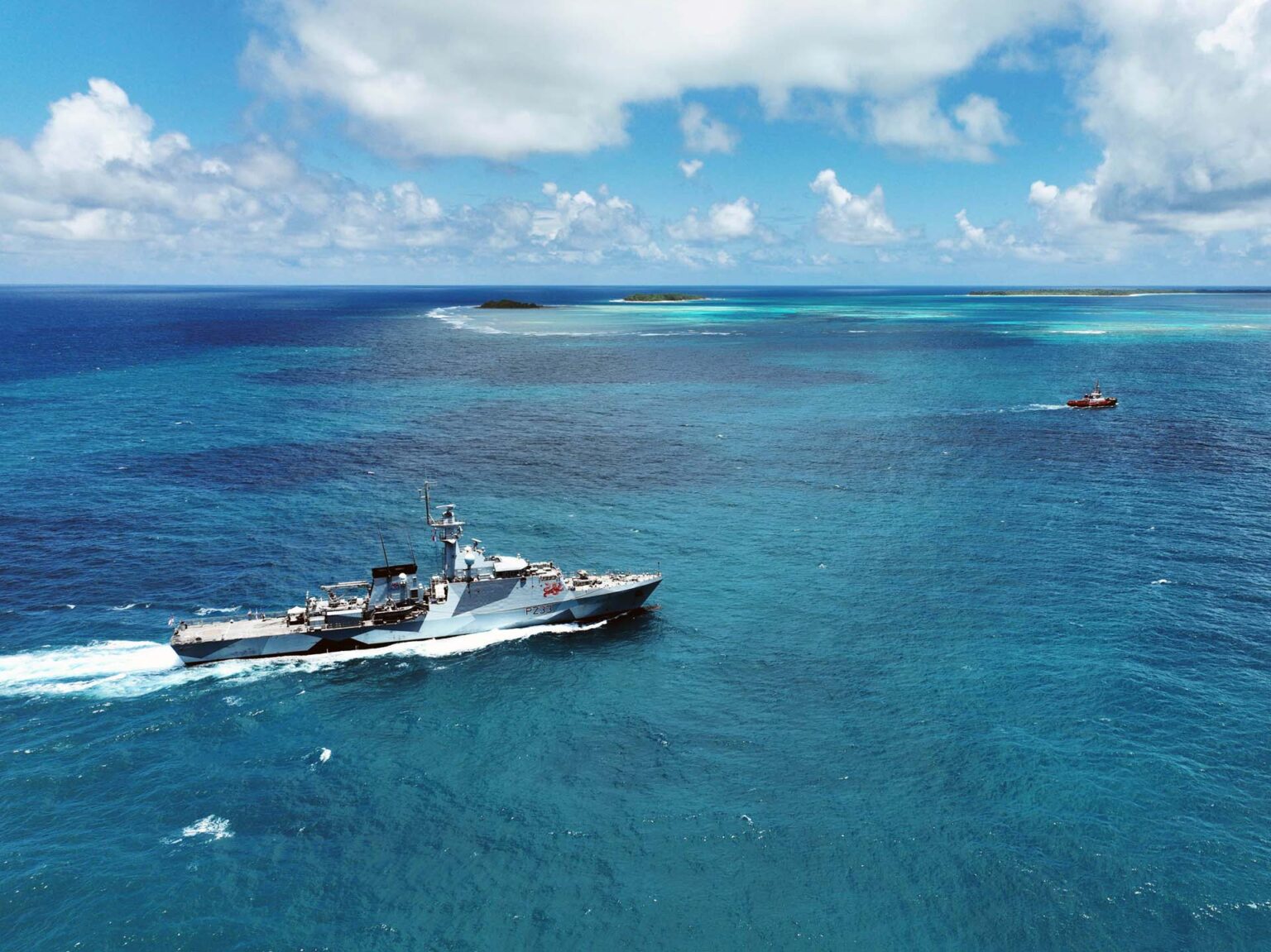
HMS Tamar arriving into Diego Garcia

SeaWaves Magazine reports on a visit by Royal Navy Offshore Patrol Vessel Tamar to the Island of Diego Garcia, an important US and Allied base in the Indian Ocean.

“Crew of the patrol ship concentrated on safeguarding the environment in the British Indian Ocean Territory, ensuring the remote island chain’s rare wildlife was not disturbed by the illegal actions of humanity.

“They found its shores littered with tonnes of rubbish and fishermen flouting international law, trawling the territory’s expansive, protected waters – roughly the size of Texas – for its rich stocks of rare fish.”

I would note two things, first this visit is much too rare and second that while HMS Tamar has a flight deck, it virtually never has an embarked helicopter or capable UAS.

The UK has a vast overseas EEZ. They have never had a large number of OPVs. Generally, they have kept one ship in the Western North Atlantic/Bermuda/Caribbean and one ship in the South Atlantic/Falklands/New Georgia regions, not always an OPV. Their overseas territories in the Indian, Pacific, and Mid Atlantic Oceans seldom, if ever, see a patrol vessel. It does seem the British are starting to recognize the utility of these little ships, but I don’t expect them to build any more.

When operating in these overseas EEZs, patrol vessels are generally not supported by land based maritime patrol aircraft.

The River class Batch 2 are large enough to support a helicopter but have no hangar. A helicopter can help search over the horizon, but they are not as helpful as might be thought, because it is difficult to get more than four hours a day search time (two, two hour sorites). While on WHEC-726 I once calculated the embarked helicopter was increasing our effective area searched by about 40%.

Though it would lack some of the operational flexibility of an embarked helicopter, a robust UAS detachment could provide an even better search capability at a relatively low cost.

“AN ALLIED COAST GUARD APPROACH TO COUNTERING CCP MARITIME GRAY ZONE COERCION” –CIMSEC

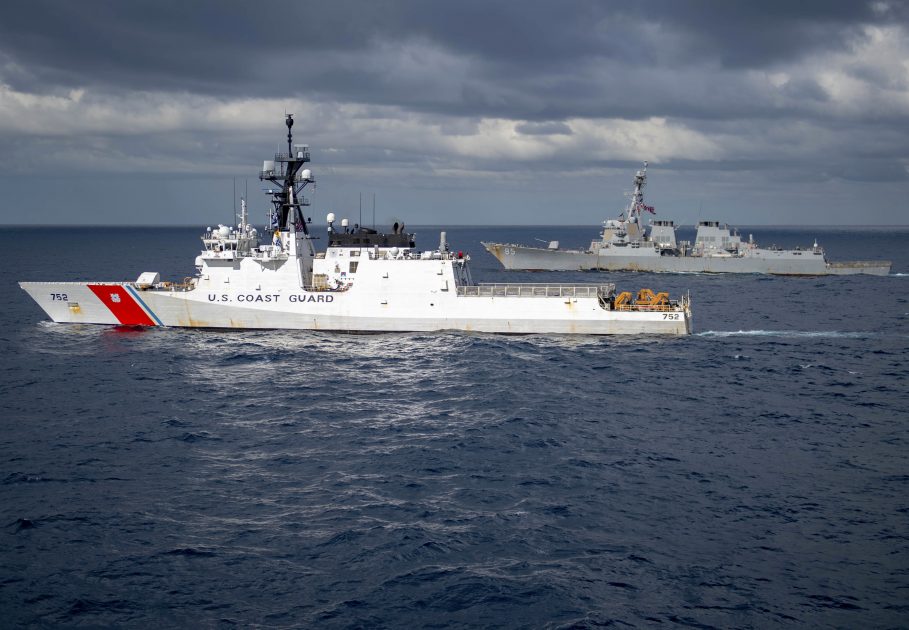
U.S. Coast Guard Cutter Munro and Japan Coast Guard Patrol Vessel Large Aso, transit together in formation during a maritime engagement in the East China Sea Aug. 25, 2021. U.S. Coast Guard members aboard the Munro deployed to the Western Pacific Ocean to strengthen alliances and partnerships and improve maritime governance and security in the region. (Photo courtesy of Japan Coast Guard)

CIMSEC has an interesting post discussing US and Japan Coast Guards response to China’s Gray Zone activities in the South and East China Seas.

The information on changes to the Japan Coast Guard is valuable, but the author does not seem to be aware of the existing close relationship between the US Navy and Coast Guard.

She advocates that the US Coast Guard follow the Japan Coast Guard model when really it is more a case of Japan Coast Guard organization becoming more like that of US Coast Guard’s organization.

The Japan Coast Guard is not a military service. I have even heard that JCG ships do not use the same fuel as the Japanese Maritime Defense Force. There was a bright line separating the two services.

Her lack of understanding of the USN/USCG relationship is clear. For instance, she states, “RIMPAC has hosted USCG participation on the rare occasion” when in fact Coast Guard participation is the norm. I believe the Coast Guard has participated in every RIMPAC. She also does not seem to be aware of the Coast Guard’s participation in the national intelligence system, that Coast Guard units are frequently trained and inspected by Navy personnel, or that much of the US Coast Guard’s equipment is US Navy standard supplied by the Navy.

There are some interesting bits in post.

“Last year, the Japan-U.S. ACSA (Acquisition and Cross-Servicing Agreement) was applied to the USCG for the first time to enable a JMSDF supply shop to replenish a USCG patrol vessel.”

Clearly the Japan Coast Guard, which has more cutters than the US Coast Guard (but far fewer aircraft), is getting a lot of attention.

Since 2012, the JCG budget and personnel have seen annual increases and the Kishida administration intends to more than double the budget by 2027.

The Indian Coast Guard when through a similar period of rapid growth after the Mumbai terrorist attack.

Finally, with the Kishida administration’s plan to raise defense spending to 2 percent of GDP by FY27, budgetary calculations will now include expenditures on Japan’s Coast Guard as a defense budget line item. Unlike NATO countries, Japan has historically not classified JCG spending as a defense expenditure. While this reform may seem entirely bureaucratic in nature, Japan is the textbook example of how seemingly esoteric organizational reforms can have remarkable impacts on foreign and security policy. By including JCG spending in the defense budget, the government is opening itself up to criticism and pressure to strengthen the coast guard’s role in Japan’s national security and national defense strategies.

Making the Japan Coast Guard’s budget part of the Defense budget may ultimately tie it more closely to the Japanese Maritime Self Defense Force (Navy) than the US Coast Guard is tied to the US Navy, though they have a very long way to go to reach even that degree of cooperation.

Japan has been a remarkable partner in maintaining the rules based order in Asia. They have helped equip the coast guards of the Philippines and Vietnam. They are also committed to helping the smaller island nations of Oceania.

Last WHEC 378, Mellon, Finds a New Home

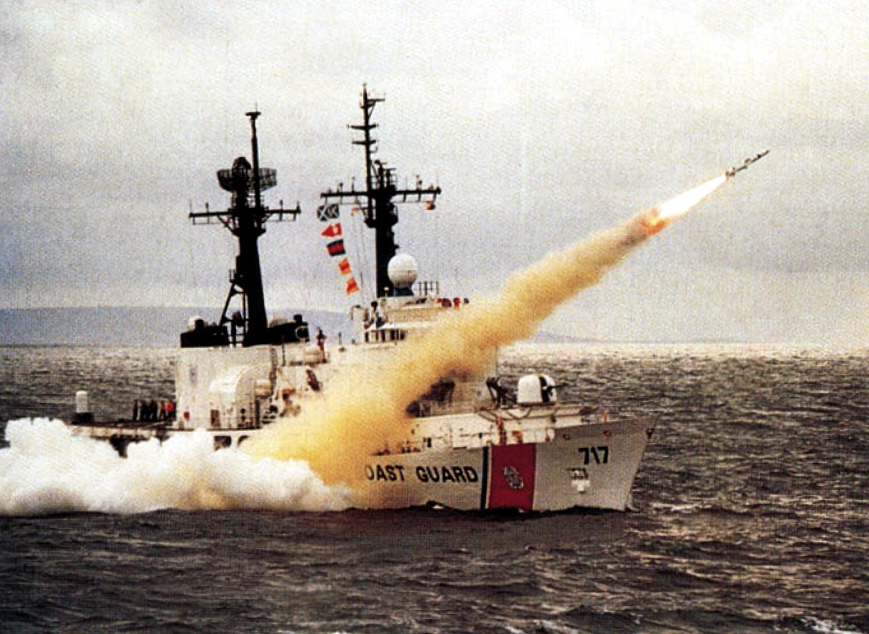
USCGC Mellon seen here launching a Harpoon anti-ship cruise missile in 1990.

After a long period in which she was expected to be transferred to Bahrain, the former USCGC Mellon is now expected to join two of her sisters in service with the Vietnam Coast Guard.

To recap, the twelve Hamilton class cutters, all over 51 years old, are now in service with five nations.

  • The Philippine Navy has three, former USCGC Hamilton (WHEC-715), Dallas (716), and Boutwell (719).
  • The Vietnamese Coast Guard has two, Morgenthau (722) and Midgett (726) and will get Mellon (717).
  • The Nigerian Navy has two, Chase (718) and Gallatin (721).
  • The Sri Lanka Navy has two, Sherman (720) and Munro (724).
  • The Bangladesh Navy has two, Rush (723) and Jarvis (725).

More info including new names here.

Thanks to Mark R. C. for bringing this to my attention.

“Coast Guard to Send Additional Cutter to Hawaii” –Military.com

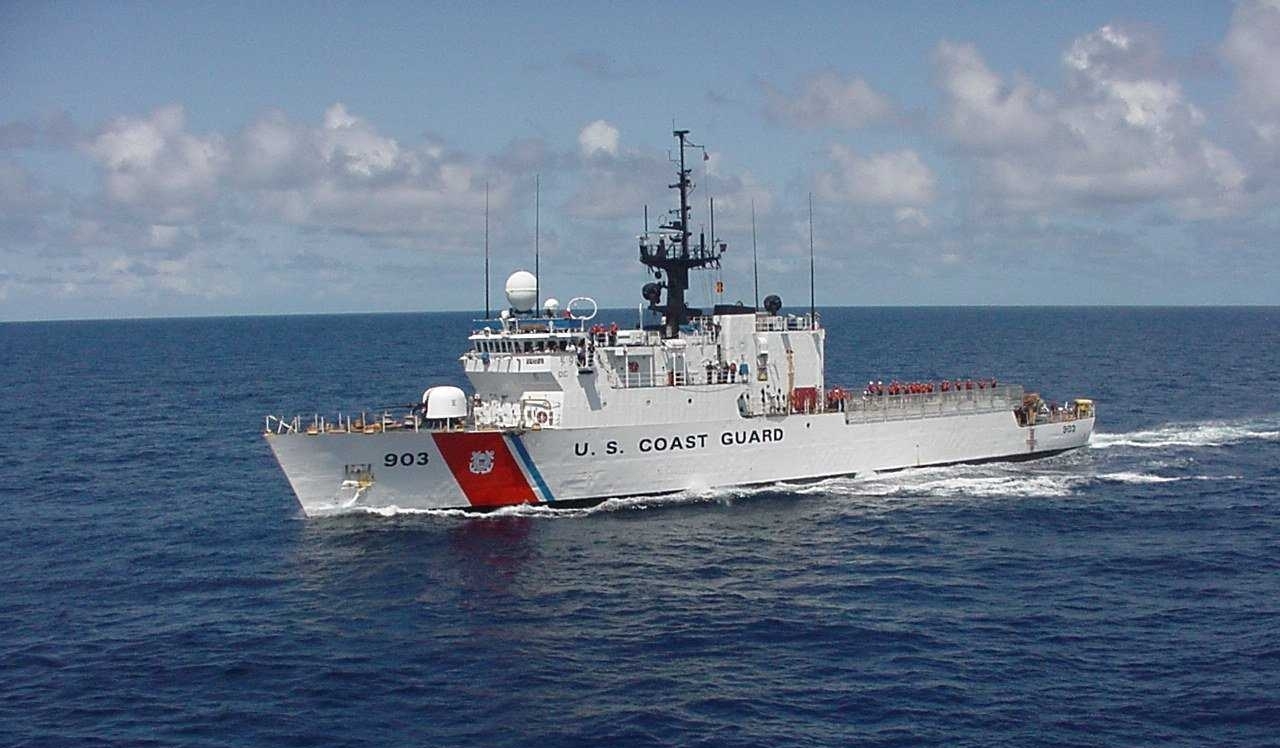
USCGC Harriet Lane (WMEC-903), March 17, 2009. US Coast Guard photo. She may look a little different now having gone through the Service Life Extension Program.

Military.com reports USCGC Harriet Lane is to be the new “Indo-Pacific Support Cutter,” and that she will be based in Honolulu beginning early FY2024. This is a change of homeport from Portsmouth, VA.

We knew this was coming, and Harriet Lane was the likely candidate. She will be the only WMEC 270 in the Pacific and will be used to counter Illegal, Unregulated, Unreported (IUU) fishing in the US EEZ and that of our friends and allies. They will also probably do a lot of training with friendly maritime law enforcement agencies. Her capabilities are a good match for the role. WMEC270s have been doing similar tasks off West Africa for years.

Thanks to Walter, a former dirt dart, for bringing this to my attention.

“China Coast Guard’s New ‘Monster’ Ship Completes Maiden Patrol in South China Sea” –The Diplomat

Photo credit: China Defense Blog

The Diplomat reports the maiden patrol of China Coast Guard’s second monster 12,000 ton cutter.

The patrol was only 19 days, but no telling how quickly they will come out again.

When you want to play bumper boats, size really does matter and the Chinese have raised the stakes considerably. Meanwhile the Japan Coast Guard (and here) and South Korean Coast Guard also have some very large cutters.

“Coast Guard Cutter Kimball returns home following Western Pacific patrol” –CG News

Following is from the Coast Guard News Page. Not only does this show the increasing cooperation between the US and Japan coast guards, it also explains how a Barbers Point H-65 made it to Guam. (“U.S. Coast Guard, Guam Fire Department conduct rescue hoist training in Guam” –Forces Micronesia / Sector Guam)

March 14, 2023

Coast Guard Cutter Kimball returns home following Western Pacific patrol

HONOLULU — The Coast Guard Cutter Kimball (WMSL 756) and crew returned to their Honolulu homeport, Friday, following a 42-day, 10,000 nautical mile Western Pacific patrol.

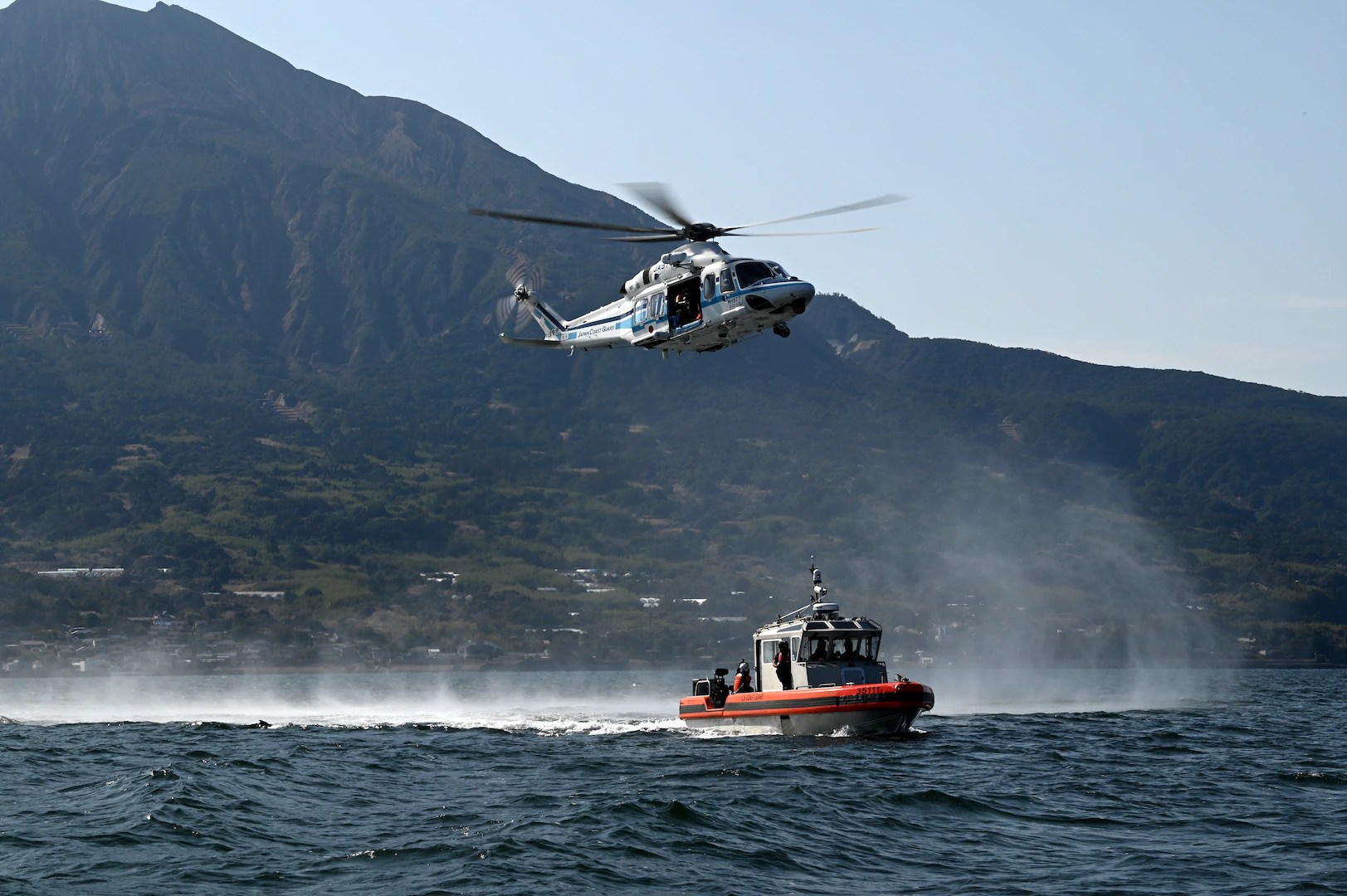
Kimball was the first U.S. military ship in recent history to visit the port city of Kagoshima, Japan, where the crew partnered with servicemembers from Japan Coast Guard’s 10th District to plan and conduct combined operations and search-and-rescue exercises.

Kimball’s crew met with Japan Coast Guard senior leadership and hosted Japan Coast Guard servicemembers, U.S. Consulate Fukuoka staff, community leaders and local media aboard the cutter during the port visit in support of Operation SAPPHIRE.

Operation SAPPHIRE is a joint agreement between the U.S. and Japan Coast Guards signed in 2022 for enhancing cooperation between the two sea services. SAPPHIRE is an acronym for the ‘Solid Alliance for Peace and Prosperity with Humanity and Integrity on the Rule of law-based Engagement.’

“By collaborating with Japan Coast Guard members and conducting evolutions that enhanced communication and inter-operability during the patrol, the crew continued to strengthen a solid foundation for the positive and productive relationship with the maritime service of a like-minded nation,” said Captain Tom D’Arcy, Kimball’s commanding officer.

Kimball’s crew demonstrated proficiency in the ship’s aviation program by working with an air operations inspection team to conduct a biennial Shipboard-Aviation Standardization Inspection (AVSTAN). By achieving their AVSTAN certification, Kimball can continue deploying with aviation detachments during future patrols.

Kimball also supported U.S. Coast Guard efforts to increase its presence in the Indo-Pacific. Kimball’s crew delivered a MH-65 Dolphin helicopter from Air Station Barber’s Point to Santa Rita, Guam, to enable forward operations that extend the service’s air coverage in the region.

During the patrol, the cutter’s engineering department was presented with the Rear Admiral R. S. Lucas Plaque Award for their outstanding contributions to the Coast Guard’s naval engineering program. Members from Kimball’s engineering department were cited for excellence and ingenuity during recent patrols and for completing three extensive industrial periods encompassing significant maintenance, contractual repair projects, and casualty repairs valued at over $4.4 million.

“I am extremely proud of our crew’s accomplishments,” said D’Arcy. “Kimball continues to remain on the front lines of the Coast Guard’s strategic plan. Our engagements in Japan strengthened our existing relationships with international partners who uphold good maritime governance. Kimball’s patrol re-affirmed the U.S. Coast Guard’s commitment to facilitating a free and open Indo-Pacific.”

Commissioned in 2019, Kimball is the Coast Guard’s seventh national security cutter and one of two homeported in Honolulu. National security cutters are 418-feet-long, 54-feet-wide and have a displacement of 4,500 long-tons. With a range of 12,000 nautical miles, the advanced technologies of Legend-class national security cutters are designed to support the national objective to maintain the security of America’s maritime boundaries and provide long range search-and-rescue capabilities.

“U.S. Coast Guard Is Helping Southeast Asians Protect Their Seas” –Foreign Policy

U.S. Coast Guard Forces Micronesia Sector Guam Commander Capt. Nicholas R. Simmons and the Honorable Joses R. Gallen, Secretary of Justice, Federated States of Micronesia, signed an expanded shiprider agreement allowing remote coordination of authorities, the first of its kind aboard the USCGC Myrtle Hazard (WPC 1139) in Guam, on Oct. 13, 2022. The agreement will enable to U.S to act on behalf of the FSM to combat illicit maritime activity and to strengthen international security operations. (U.S. Coast Guard photo by Chief Warrant Officer Sara Muir)

Foreign Policy reports,

 “…the United States has increasingly looked to its Coast Guard as an option to assist regional states with their maritime challenges, advance security partnerships, and serve as a potent soft-power tool. As agencies focused primarily on law enforcement and safety, coast guards are perceived as an increasingly useful regional tool because they can assert national interests without being overtly militaristic and escalatory.”

The post is an excellent look at what the Coast Guard has been doing in the Western Pacific as well as the challenges of dealing with the tyranny of distance. There is not a lot here we have not heard, but there are several links to earlier documentation. This one is interesting, and we did not discuss it earlier, “Rebalance U.S. Coast Guard Cutters to Help Advance a ‘Free and Open’ Indo-Pacific.”

There is reference to the Medium Endurance Cutter to be deployed to the Western Pacific that may clarify its mission.

“The narratives surrounding these commitments have strongly focused on the deployment of Coast Guard cutters. One of the key announcements regarding the Coast Guard at the U.S.-ASEAN summit, for example, was that a Coast Guard vessel would be assigned to the region to operate as a “training platform,” providing multinational crewing opportunities and participating in cooperative maritime engagements.”

“U.S. Coast Guard, Guam Fire Department conduct rescue hoist training in Guam” –Forces Micronesia / Sector Guam

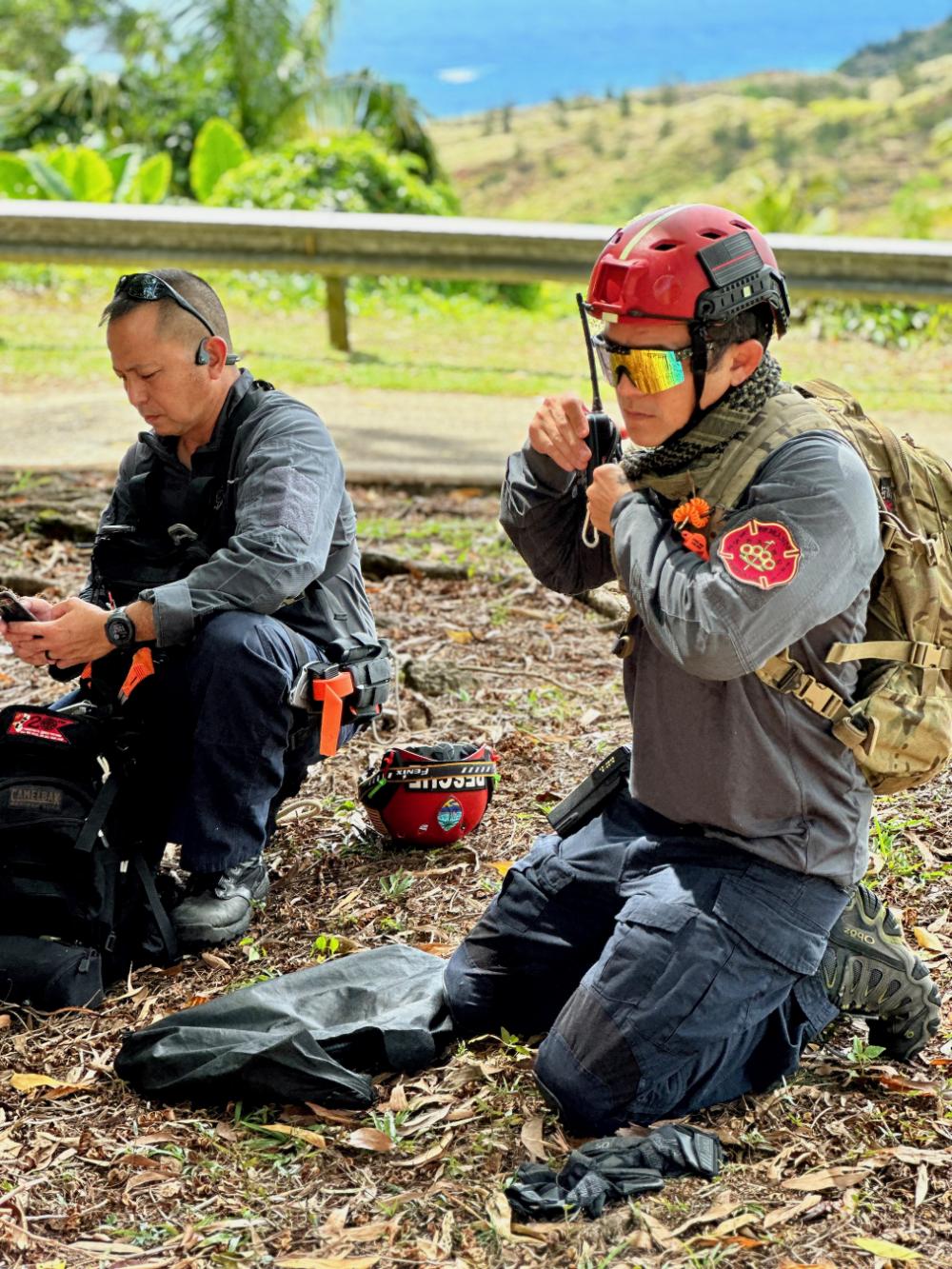
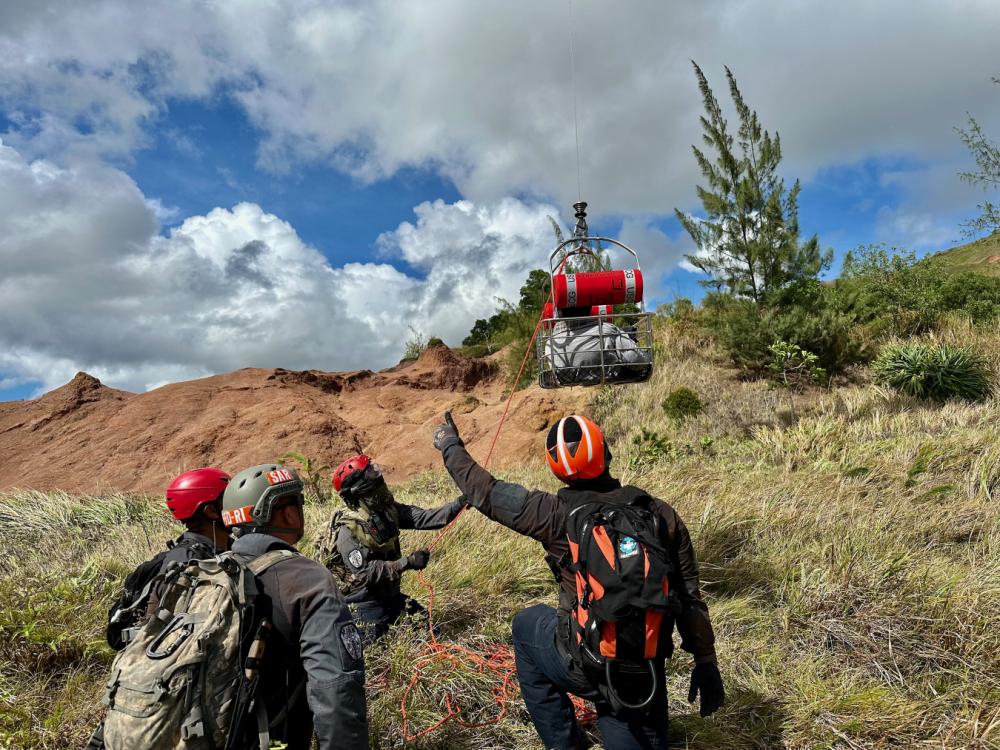
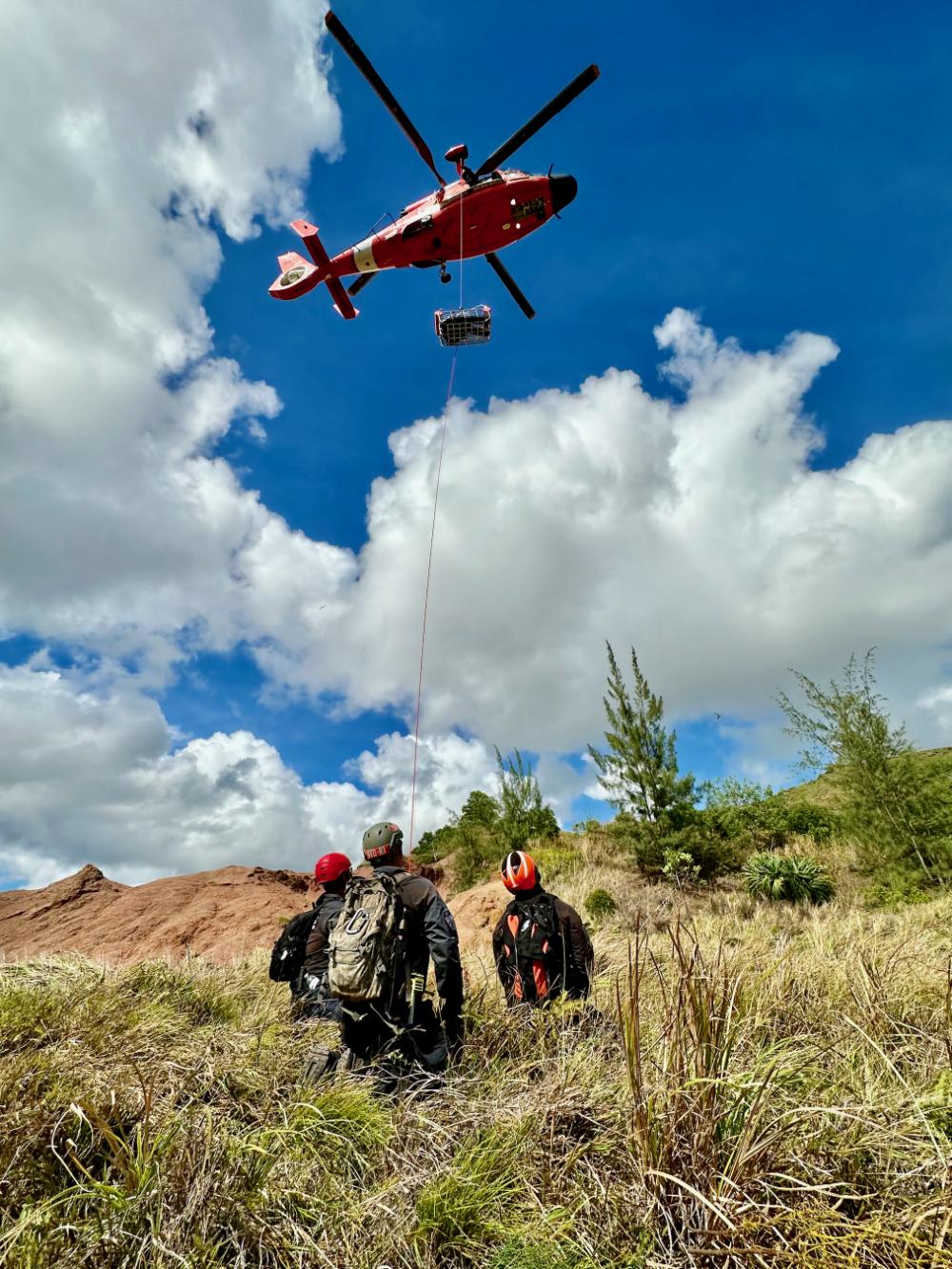
Guam Fire Department and U.S. Coast Guard members conduct rescue hoist training at Sella Bay Overlook in Guam on March 8, 2023. The exercise allowed the crews to assess the procedures each agency is familiar with and practice hoisting a rescue basket and a rescue swimmer from the aircraft. For the aircrew, it also served as an area familiarization to better understand the terrain and winds common on Guam’s southwest coast. (U.S. Coast Guard photo by Petty Officer 2nd Class Ethan Bray)

The news release below is surprising and raises some questions. A helicopter from Barbers Point, Hawaii conducts training with the Guam Fire Department. How did the Helicopter get there? There is currently no Coast Guard airstation in Guam. A Navy helicopter squadron provides SAR coverage for Guam, so what was the point? Is the Coast Guard going to establish an aviation facility of some kind in Guam?

News Release

U.S. Coast Guard Forces Micronesia / Sector Guam

U.S. Coast Guard, Guam Fire Department conduct rescue hoist training in Guam
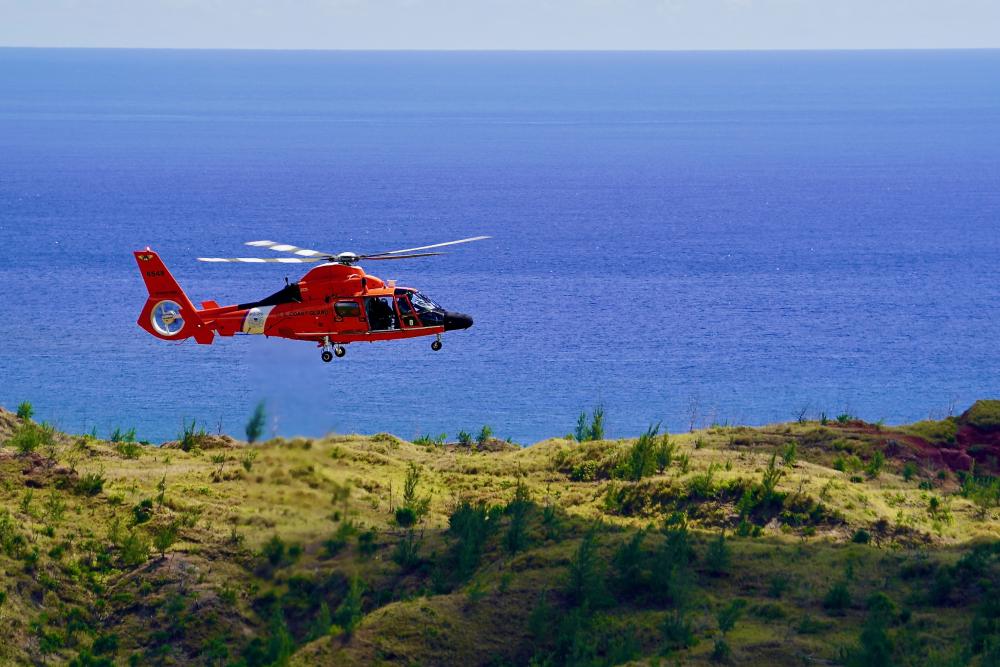
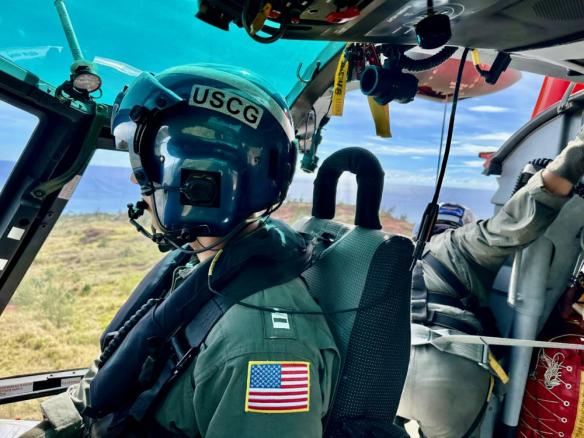
An MH-65 Dolphin helicopter crew deployed to Guam from U.S. Coast Guard Air Station Barbers Point in Hawaii flies patterns to assess winds and terrain before conducting rescue hoist training at Sella Bay Overlook in Guam on March 8, 2023. Members of the Guam Fire Department prepare to hike down from Sella Bay Overlook for rescue hoist training in Guam with a deployed MH-65 Dolphin helicopter crew from Hawaii on March 8, 2023.  Guam Fire Department and U.S. Coast Guard members conduct rescue hoist training at Sella Bay Overlook in Guam on March 8, 2023.  Guam Fire Department and U.S. Coast Guard members conduct rescue hoist training at Sella Bay Overlook in Guam on March 8, 2023.

Editor’s Note: Click on the images above to view more or download high-resolution photos and b-roll videos.

SANTA RITA, Guam — Guam Fire Department and U.S. Coast Guard members conducted rescue hoist training at Sella Bay Overlook in Guam on March 8, 2023.

“We appreciate the ongoing strong relationship with Guam Fire and are eager to bring any capability to bear that benefits the people of Guam and our partners,” said Capt. Nick Simmons, commander of U.S. Coast Guard Forces Micronesia/Sector Guam. “As the U.S. Coast Guard continues to adapt our approach to service in the region, we are working closely with U.S. Coast Guard District 14 and the team from the Air Station at Barbers Point to find the best ways to employ our aircrews and increase the amount of organic aviation support we have for search and rescue and law enforcement missions here.”

Eight members of GFD’s Battalion A worked with the aircrew of an MH-65 Dolphin helicopter deployed to Guam from U.S. Coast Guard Air Station Barbers Point in Hawaii and personnel from the U.S. Coast Guard Forces Micronesia/Sector Guam response department. Guam Fire Department crews execute the majority of on-land search and rescue operations. They also maintain the best capability for on-land response with a wealth of experience regarding the terrain and conditions.

“Our partnership with the U.S. Coast Guard on Guam has expanded dramatically over the years. The increase in U.S. Coast Guard assets assigned to Guam extends our potential for positive outcomes in search and rescue missions benefiting our island community,” said Battalion Chief Roderick Meno, GFD rescue commander. “The opportunity to train together provided an avenue to test capabilities and share best practices. The U.S. Coast Guard helicopter’s availability gives us another valuable resource to conduct the diverse array of missions we perform here on Guam.”

The training allowed the crews to assess the procedures each agency is familiar with and practice hoisting a rescue basket and a rescue swimmer from the aircraft. For the aircrew, it also served as an area familiarization to better understand the terrain and winds common on Guam’s southwest coast. This training occurred near the location of a recent case of a missing hiker, a common place for foot traffic. The trail quickly descends from the trailhead into the jungle with steep ravines and many trip hazards, and it is very hot whether people are under tree cover or exposed to the sun. The conditions may easily overcome inexperienced hikers.

The MH-65 Dolphin helicopter is a short-range recovery helicopter used by the crew to perform search and rescue, law enforcement, and homeland security missions. It is certified for all-weather and night-time operations, except for icy conditions, and it routinely deploys aboard certified cutters providing manned airborne surveillance and interdiction capabilities. The airframe was first added to the Coast Guard inventory in 1984 and has undergone several upgrades.

In recent memory, these operations mark the first deployment of a Dolphin helicopter crew to Guam. The District 14 assigned aircraft are primarily used as a search and rescue platform in the Main Hawaiian Islands and as an augment aboard major cutters on deployment to extend their range for search and rescue, law enforcement, and surveillance while at sea. The aircrews frequently participate in community relations events and subject matter exchanges to build awareness for service capabilities and encourage interest in the aviation career field.

“This asset is not a replacement for any other agency but another resource to help us accomplish our missions and serve the people of Guam and the Commonwealth of the Mariana Islands,” said Simmons. “They are currently here on a six-week deployment as we field test the feasibility of their operating here in a greater capacity. This approach is an innovative way to employ aircrews in the Indo-Pacific for increased presence and value. We hope to get them out here more frequently and are pleased to have the support of the Air Station and the District 14 command.”

The operations have precedent. In 1947 the service established a Coast Guard air detachment consisting of one PBY-6A Catalina, an amphibious aircraft, and crew at the Naval Air Station in Agana, Guam, to provide aerial logistics support for LORAN stations in the southern Marianas and Western Caroline Islands. The Catalina was well suited to operations in the islands, able to haul cargo but also land in the shallow lagoons and offload to skiffs. The primary mission of the air detachment was to resupply the Marianas section LORAN stations, although they did assist in search and rescue missions when needed. The need for Coast Guard air support decreased as the LORAN mission shifted over time and commercial aviation services became more readily available. The Coast Guard air detachment, by then called an air station, was disestablished in 1972.

U.S. Coast Guard Forces Micronesia/Sector Guam comprises nearly 300 personnel throughout the response, prevention, administrative, and logistics departments supporting the Joint Rescue Sub-Center, three fast response cutters, a small boat station, and a marine safety detachment in Saipan. The unit provides a significant portion of the U.S. Coast Guard’s enduring regional presence serving the people of the Pacific by conducting our six major operational mission programs: maritime law enforcement, maritime response, maritime prevention, marine transportation system management, maritime security operations, and defense operations.

For more U.S. Coast Guard Forces Micronesia/Sector Guam news, visit us on DVIDS or subscribe! You can also visit us on Facebook or Instagram at @USCGForcesMicronesia or Twitter @USCGFMSG. 

“U.S. Coast Guard delivers 4,500 lbs of supplies to Federated States of Micronesia atolls” –U.S. Coast Guard Forces Micronesia / Sector Guam

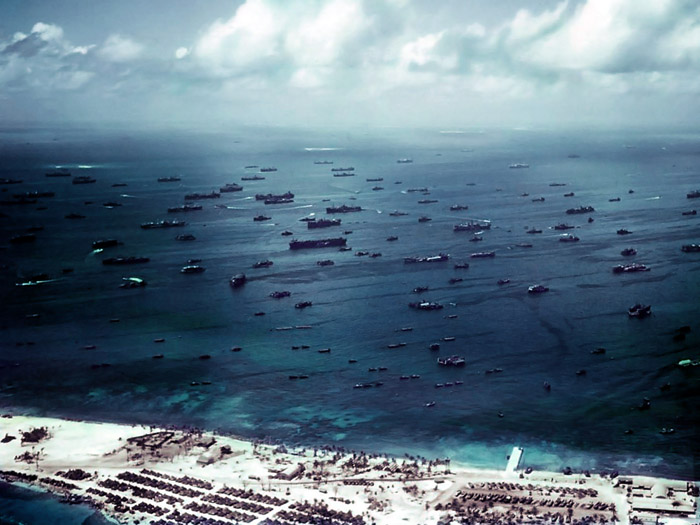
Ulithi Atoll north anchorage and Sorlen Island, late 1944.

Coast Guard out there doing good work. I added the photo above to show how important Ulithi was as an advanced base during WWII.

News Release

U.S. Coast Guard Forces Micronesia / Sector Guam

U.S. Coast Guard delivers 4,500 lbs of supplies to Federated States of Micronesia atolls

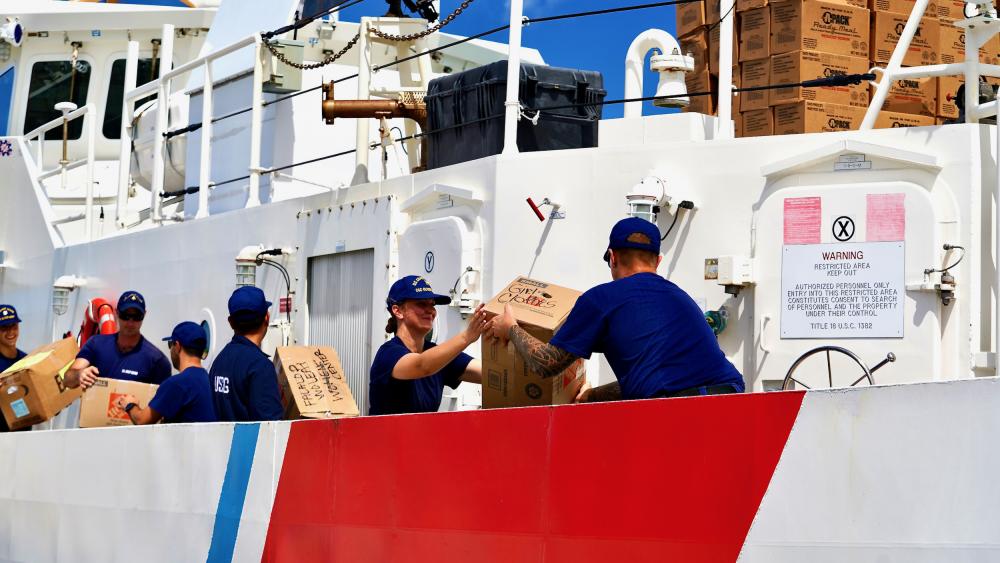
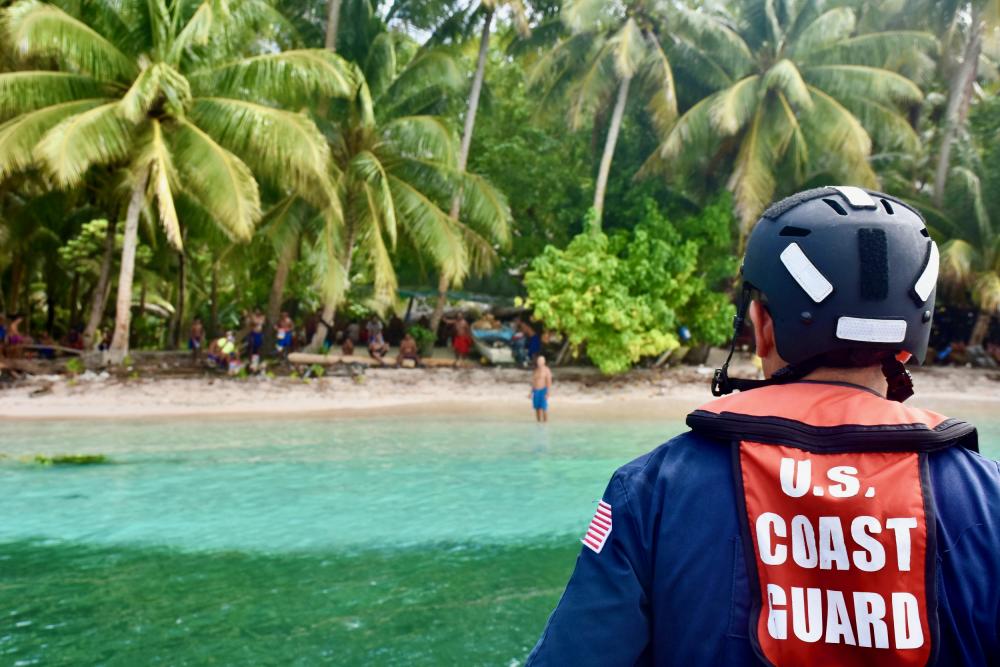
The crew of USCGC Oliver Henry (WPC 1140) loads more than 4,500 pounds of donations from the Ayuda Foundation bound for Yap State The crew of USCGC Oliver Henry (WPC 1140) loads more than 4,500 pounds of donations from the Ayuda Foundation bound for Yap State Petty Officer 1st Class Ikaia Ruiz looks out to Falalop Island, Woleai, on the small boat’s first approach
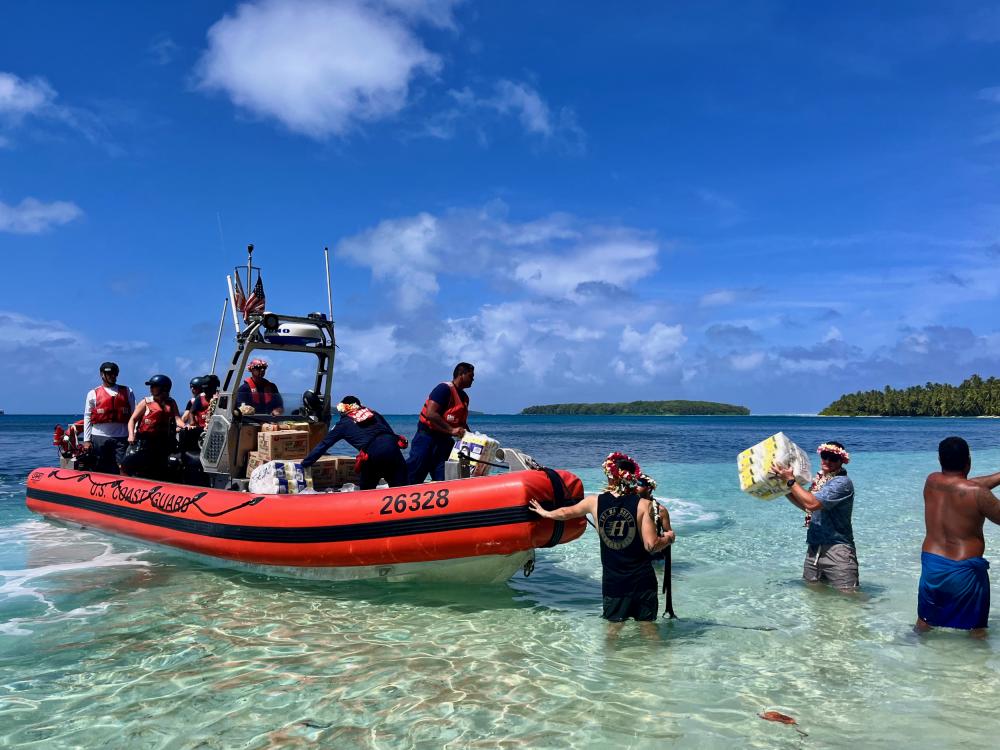
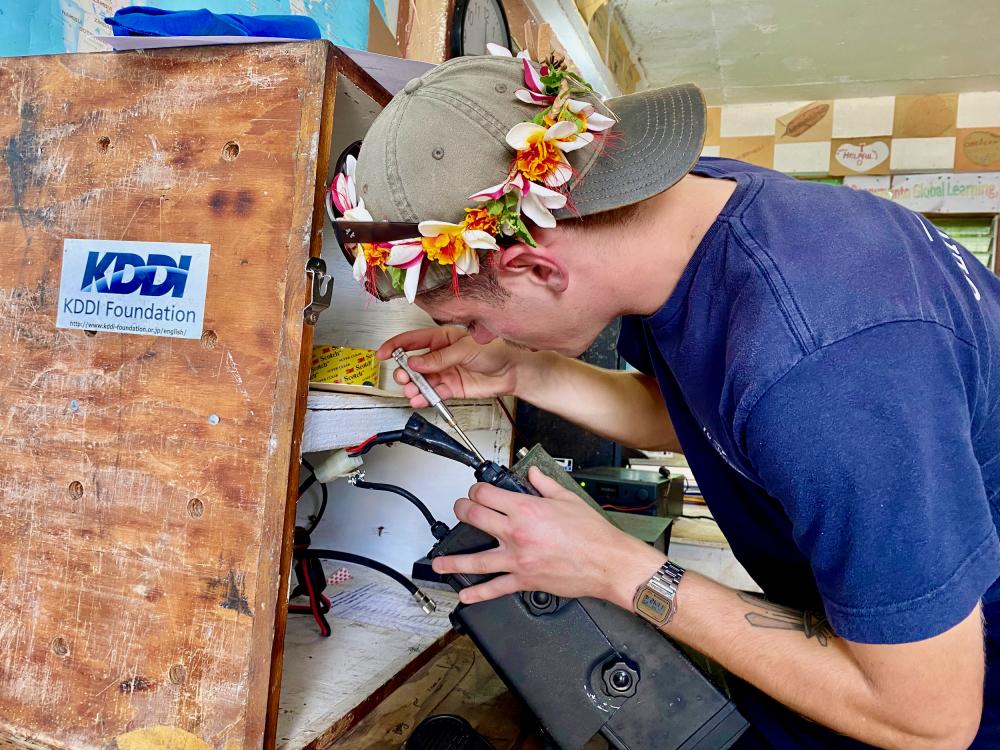
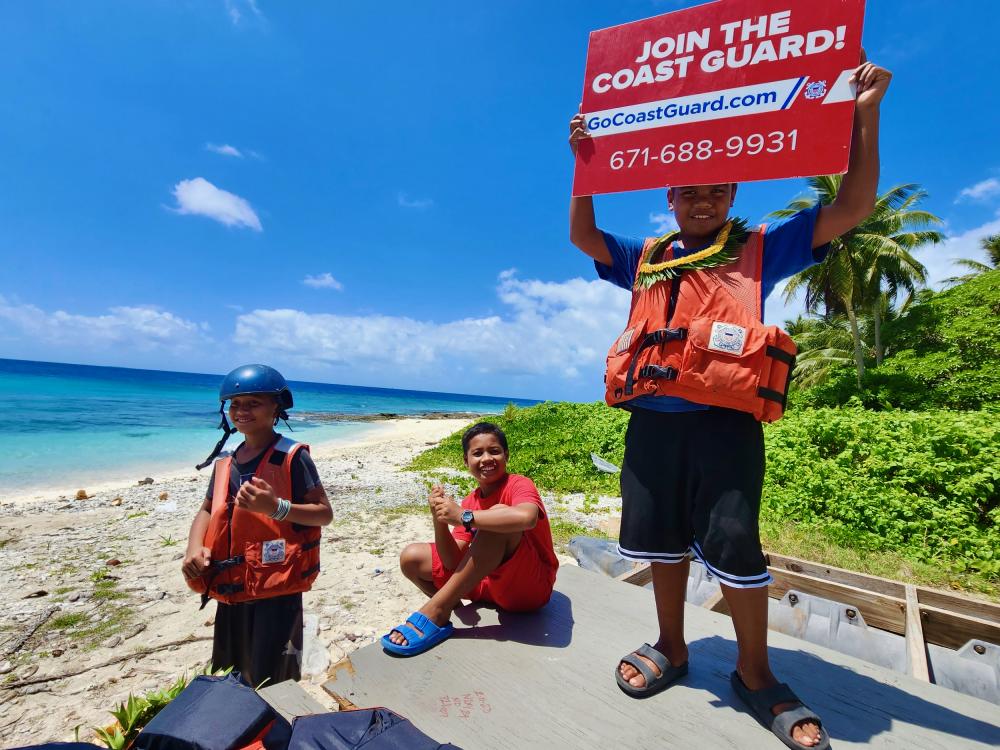
USCGC Oliver Henry (WPC 1140) crew offload donated supplies in Falalop Island, Ulithi Petty Officer 2nd Class Van Dinter-Frydemberg troubleshooting a faulty marine radio in Falalop Island, Woleai, Prospective U.S. Coast Guard recruits on Falalop Island, Ulithi,

Editor’s Note: Click on the images above to view more or download high-resolution versions.

SANTA RITA, Guam — The crew of USCGC Oliver Henry (WPC 1140) returned to Guam on Monday, Feb. 27, 2023, following a week-long deployment to the Federated States of Micronesia countering illegal fishing and strengthening partnerships with the local island communities of several Yap outer island atolls, part of the ongoing Operation Rematau.

During the patrol, the crew supported partners in the Federated States of Micronesia, completing four port calls and four community relations events. They also provided underway training opportunities for eight members assigned to temporary duty on the ship. They enhanced the ongoing U.S. Coast Guard and U.S. Navy partnership, embarking two medical personnel from U.S. Naval Hospital Guam.

Partnering with the Ayuda Foundation, the Oliver Henry crew onloaded more than 4,500 lbs. of supplies generously donated by local businesses and community members in Guam for future transport to remote islands in Ulithi and Woleai atolls. Donated supplies included educational material, clothing, kitchenware, fishing gear, toys, shelf-stable meals, interior paint, marine-grade orange paint, marine fiberglass repair kits, and water pumps. Water pumps were specifically requested to divert standing water from the airfield on Falalop Island, Woleai, to nearby taro fields to facilitate uninterrupted flight services from mainland Yap.

Oliver Henry’s first stop was Ulithi Atoll, the second time a fast response cutter visited the atoll. Ulithi was a central U.S. staging area during World War II, and home to a U.S. Coast Guard Loran-C communications station from 1944 to 1965 before operations relocated to Yap and ultimately shuttered in 1987. During the visit, the Oliver Henry crew met with community members on the islands of Mogmog and Falalop and participated in a friendly basketball game with Outer Islands High School students in Falalop, Ulithi.

Their second stop was Woleai Atoll, which marked the first-ever visit by a fast response cutter to this remote atoll. Ten five-gallon buckets of orange paint were delivered to Woleai and will be further distributed to the outer islands for use on skiffs and small vessels. The Orange Paint Initiative seeks to improve the visibility of small vessels by making their hulls more visible, which is vital to responders in search and rescue instances. In addition to offloading donated supplies and meeting with community members, the Oliver Henry crew also rendered assistance by troubleshooting issues with a solar power supply unit and marine radio communications equipment. Further, the Oliver Henry crew also deployed an aerial drone to capture imagery of infrastructure on the principal island of Falalop, Woleai.

“Nothing is more heartwarming for the crew than to experience what we just completed during our visits to Ulithi and Woleai. It was evident the island communities reciprocated these feelings,” said Lt. Freddy Hofschneider, commanding officer of Oliver Henry. “They welcomed us with smiles, flower leis, and open arms, and we truly enjoyed their hospitality. Transporting supplies to these remote atolls is nothing new for the Coast Guard, and we are honored to join in on the tradition spanning several decades for Guam-based Coast Guard cutter crews. We thank the Ayuda Foundation for spearheading donation collection efforts and look forward to continued opportunities to strengthen relationships with our brothers and sisters across Micronesia in a manner that supports their way of life.”

The Oliver Henry is the 40th 154-foot Sentinel-class fast response cutter named for Oliver T. Henry, Jr., an enlisted African American Coast Guard member first to break the color barrier of a then-segregated Service. During World War II, Henry served under Lt. Cmdr. Carlton Skinner. The latter became the first civilian Governor of Guam and played a critical role in developing the Organic Act in 1950. Henry blazed a trail for minorities in the U.S. military as he climbed from enlisted ranks while serving on ten Coast Guard cutters, finally retiring as a chief warrant officer in 1966.

Operation Rematau is how U.S. Coast Guard Forces Micronesia/Sector Guam supports the overarching Coast Guard endeavor Operation Blue Pacific to promote security, safety, sovereignty, and economic prosperity in Oceania. Rematau means people of the deep sea. It recognizes the wisdom of the Pacific Island Forum leaders in that securing the future requires long-term vision and a carefully considered regional strategy for the Blue Pacific Continent. Op Rematau reinforces U.S. commitment to working together to advance Pacific regionalism based on the Blue Pacific narrative. This action supports U.S. national security objectives, bolstering regional maritime governance and security.

For more U.S. Coast Guard Forces Micronesia/Sector Guam news, visit us on DVIDS or subscribe! You can also visit us on Facebook or Instagram at @USCGForcesMicronesia or Twitter @USCGFMSG. 
“Philippine Coast Guard Set For Personnel Boost” –Naval News

BRP Teresa Magbanua during sea trials off Japan (Photo: Philippine Coast Guard)

Naval News reports,

“The Philippine Coast Guard (PCG) is set to receive an additional 4,000 personnel this year, in order to reach a total of 30,000 by year-end.”

Some things to note:

That is almost 75% the size of the US Coast Guard, while the Philippine EEZ is less than 20% of the US.

The Philippine Coast Guard will be considerably larger than the Philippine Navy which has 24,500 active-duty members including 8,300 Marines.

BRP Batangas (SARV-004) in between USCGC Bertholf (WMSL 750) and BRP Kalanggaman (FPB-2404) in an Exericse held in 2019. For many years, the Australian San Juan and Ilocos Norte vessels were the only major patrol assets in PCG service.
(U.S. Coast Guard photo by Chief Petty Officer John Masson)

Until 2020 the Philippine Coast Guard had no large patrol cutters. Their largest ships were two buoy tenders including the former USCGC Redbud, first commissioned in 1944. In fact, they mark the founding of their Coast Guard Fleet only as of 2007.

Beginning in 2020 the Philippine Coast Guard has obtained their first large patrol cutter, the 83 meter BRP Gabriela Silang. In 2022 they obtained two Japanese built 97 meter cutters of the Teresa Magbanua-class (see lead photo). They hope to get many more.

This build-up is obviously in response to Chinese intrusions into the Philippines’ Exclusive Economic Zone.

It appears the Philippine Coast Guard still has no weapons larger than .50 caliber machine guns. It will be interesting to see if this changes.