“US, Philippines, Japan to tackle South China Sea incidents in trilateral summit, says Manila official” –Reuters

Philippine Coast Guard vessels join Japanese and U.S. Coast Guard ships during joint exercises off the coast of Bataan, Philippines, in June 2023. IMAGE CREDIT: Philippine Coast Guard

Reuters reports,

A trilateral summit between the United States, Japan, and the Philippines will include a discussion of recent incidents in the South China Sea, Manila’s foreign ministry said on Friday.

The summit begins April 11.

Can’t help but think this may result in some additional tasking for the Coast Guard.

“Stateless Cargo Ship De Yi Detained: South Korea’s Bold Move Against North Korea” –Regtechtimes via MSN

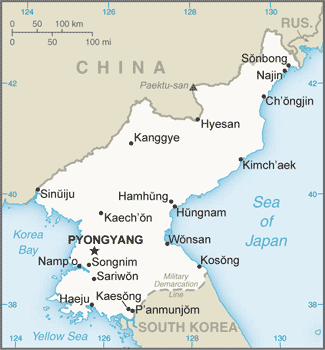
North Korea

MSN reports,

“A cargo ship called De Yi was recently detained by South Korea as it was traveling between Korea and Japan and was berthed close to the port of Yeosu. The ship’s detention is a component of South Korea’s stepped-up unilateral measures against North Korea, which also include sanctioning ships that trade arms with Russia and stepping up monitoring for sanctions violations… The South Korean Coast Guard acted quickly after the vessel’s crew—13 people total—refused to cooperate with orders to stop, including a Chinese captain and crew members from China and Indonesia. For further investigation, the ship was escorted to the port of Busan… Authorities from South Korea and the United States (emphasis applied–Chuck) are closely examining the ship to make sure it is not carrying any illegal goods.”

South Korea Seizes Chinese Fishing Vessels –Newsweek

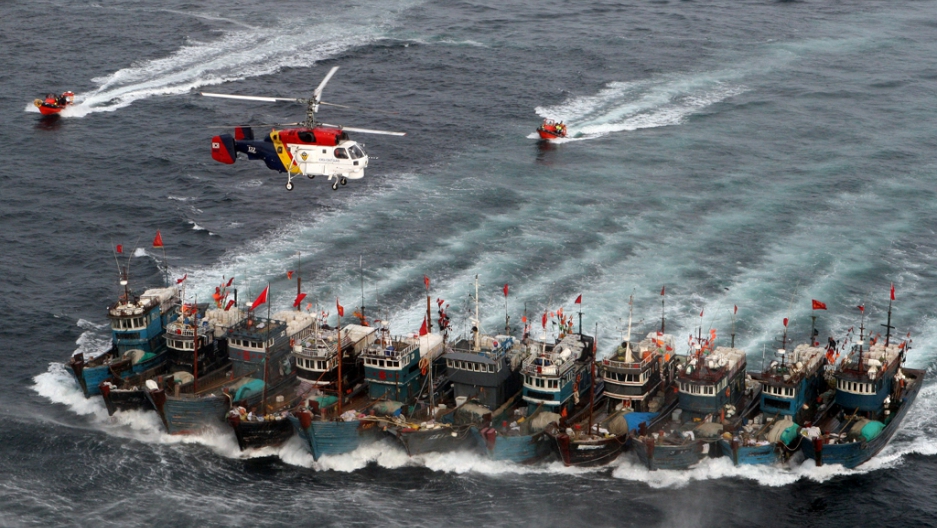
A picture taken on November 16, 2011 from a South Korean helicopter shows Chinese fishermen wielding sticks to stop an attack by South Korean coastguard commandoes armed with clubs aboard rubber boats during a crackdown on alleged illegal fishing in South Korean waters in the Yellow Sea off the southwestern coast county of Buan. South Korea’s coastguard mobilized 12 ships, four helicopters and commandoes for a special three-day crackdown on illegal fishing by Chinese boats this week. REPUBLIC OF KOREA OUT AFP PHOTO / DONG-A ILBO (Photo credit should read DONG-A ILBO/AFP/Getty Images)

Newsweek reports,

“South Korea’s Coast Guard seized five Chinese vessels for allegedly fishing illegally in the country’s waters late last month, confiscating boats and deporting several crew members…The joint patrol’s 30 participating vessels and three aircraft waters were operating in the vicinity of Jeju Island from March 25-31, Korea JoongAng Daily reported.

“The country’s coast guard said that, on average, 300 Chinese vessels fish illegally in the country’s exclusive waters each day, with that figure dropping to an estimated 140 during periods of intensified crackdowns.”

As you can see from the photo above and below. This is not a new problem.

A picture taken on November 16, 2011 from a South Korean helicopter shows Chinese boats banded together with ropes, chased by a coastguard helicopter and rubber boats pacted with commandoes, after alleged illegal fishing in South Korean waters in the Yellow Sea.
Credit: Dong-A-Ilbo

In many cases these encounters have become violent. The South Koreans have not been afraid to seized Chinese fishing vessels, but on the other hand they have not been successful in stopping large scale illegal fishing.

“The huge, resource rich territory China will snatch while the West dithers” –The Telegraph

The Telegraph has an opinion piece by retired Royal Navy Commander and former CO of the Ice Patrol Vessel HMS Endurance, Tom Sharpe OBE.

He feels, as I do, that we are headed for conflict over claims to Antarctica. It is after all, the last land area on earth where no nation exercises sovereignty.

China’s presence in the Antarctic is growing rapidly and, as they have shown in the South China Sea, they may choose not to accept the decisions of international courts.
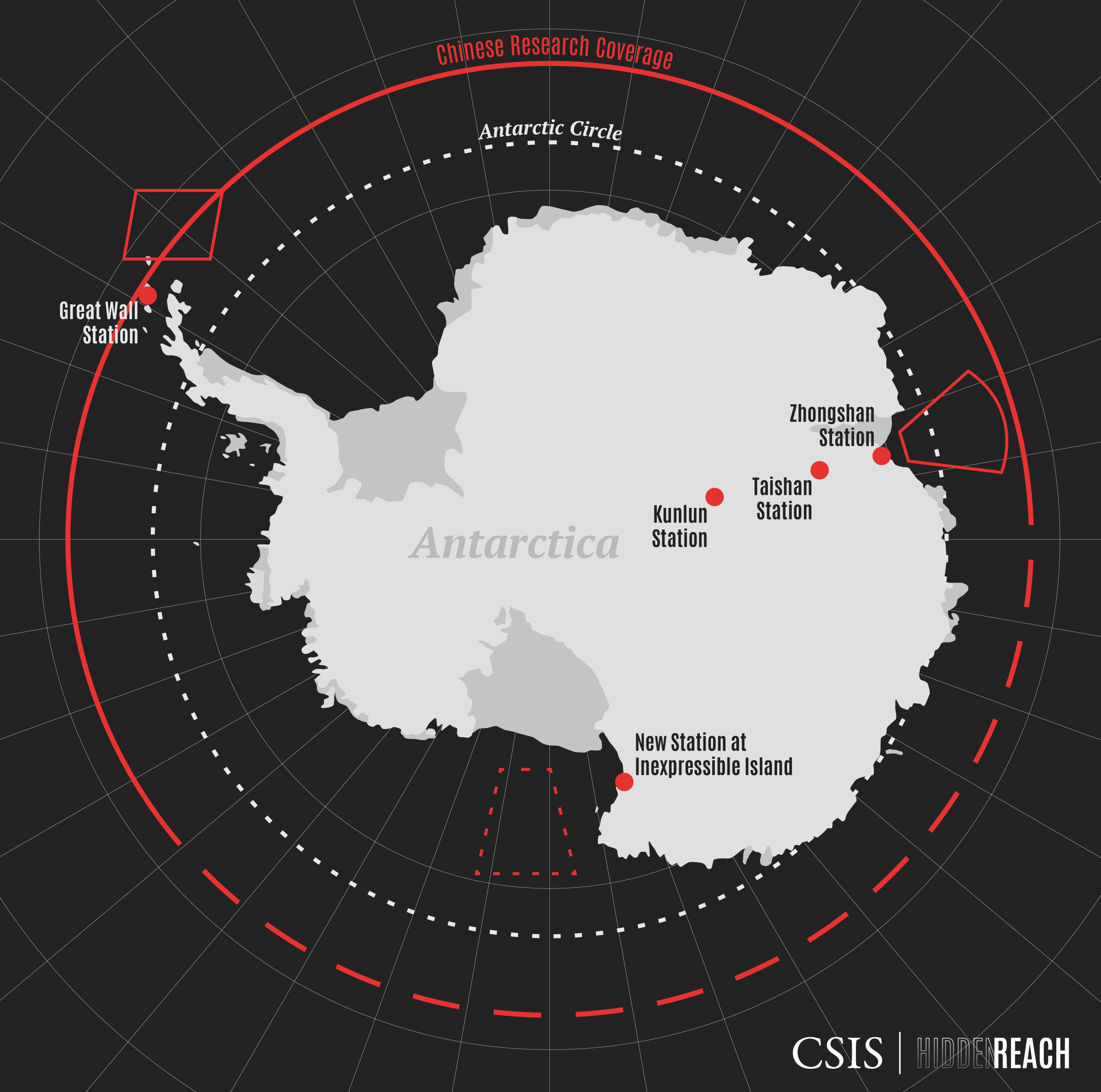
Adapted from a 2021 Chinese environmental evaluation report submitted to the Secretariat of the Antarctic Treaty. Source CSIS

What this boils down to is that, after courts make their decisions, we may have to fight in Antarctic to make those decisions stick.

We don’t seem to have given much thought to the possibility of combat in and around Antarctica, but I believe it is a real possibility, perhaps not soon, but beginning in 2048 when the Antarctic Treaty comes up for renegotiation. 24 years may seem to be a long way off, but we are building now the assets that will be available in 2048.

By then the rapidly growing Chinese presence in Antarctic, as well as their Navy are likely to be in a very strong position. We are already seeing the Chinese apparently establishing dual use (civilian and military) facilities in Antarctica.

In the interim, we can expect China and perhaps others to try to skirt the rules to strengthen their presence. We need to monitor and challenge any gray zone operations.

Command Structure:

These are the Unified Combatant Commander’s Areas of Responsibility.

There is an obvious reason that Antarctica does not seem to be on anyone’s radar. Looking at who is potentially responsible for operations in the Antarctic, it is a hodgepodge. Various parts of the Continent might fall under SOUTHCOM, AFRICOM, and INDO-PACOM.
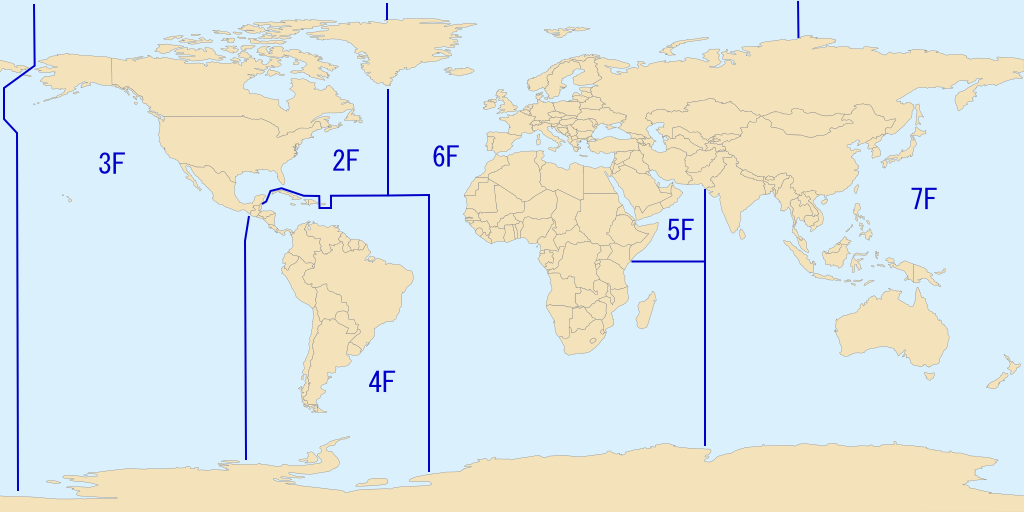
US Navy Fleet Organization

3rd Fleet, 4th Fleet, 6th Fleet, and 7th Fleet all have a nominal slice, but none of these commands consider the area their primary concern.
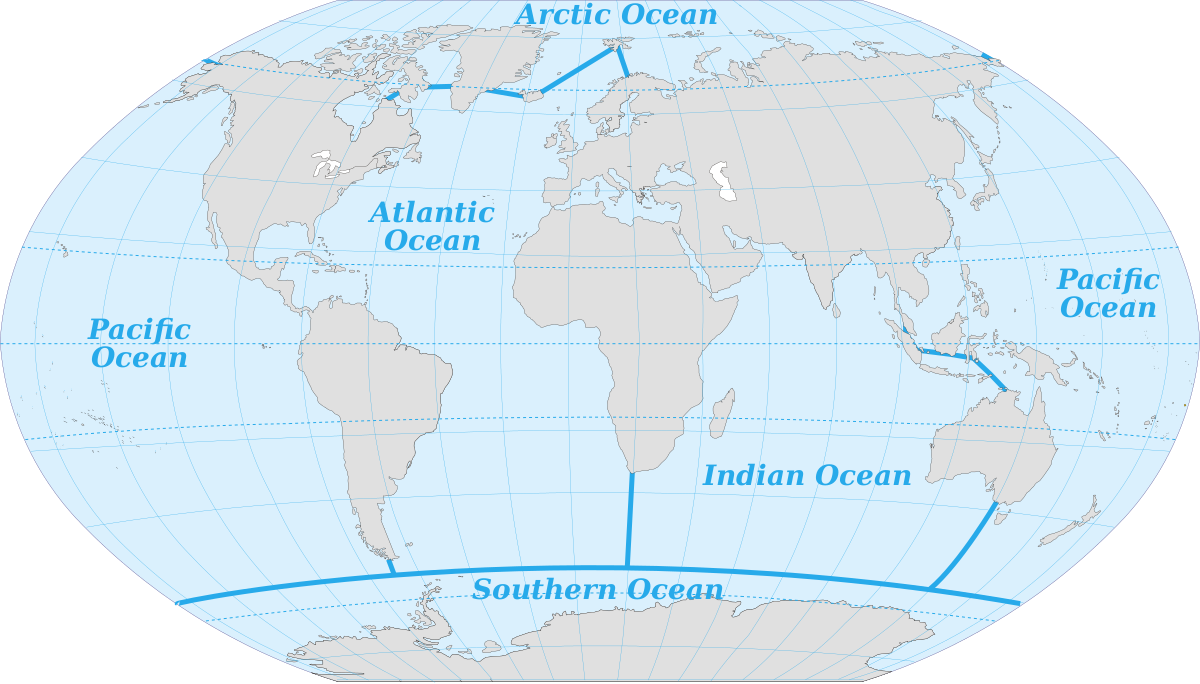
World map of oceans : English version. By Pinpin via Wikipedia.

There is no single national command authority that covers all of Antartica or the Southern Ocean. Really no one is in responsible for the area below 60 degrees South.

It seems likely that in the near term, Southern Ocean fisheries will require some protection. The only nation I have heard of doing fisheries protection in the Southern Ocean outside their own EEZ is New Zealand.

The Coast Guard currently operates the only US polar icebreakers. At some point the Coast Guard may become involved in fisheries protection in the Southern Ocean. If there is conflict in Antarctica, Coast Guard assets will likely be needed to gain access.

Related: 

“U.S., Indian Coast Guards Drill Against Drone Attacks In Sea Defenders 2024” –Naval News

USCGC Bertholf and an ICG offshore patrol vessel sail together during Sea Defenders 2024.

Naval News reports,

U.S. and Indian Coast Guards held this year’s Sea Defender with recent events in the Red Sea in mind, training against both drone and piracy threats…Taking place off the Malacca Strait off the Andaman and Nicobar Islands, USCGC Bertholf (WMSL-750) and Indian Coast Guard vessels and aircraft held several maritime security activities in port and at sea over four days. This exercise also marked the first time a U.S. Coast Guard vessel visited New Delhi’s southernmost territory, strategically located at the entrance to the Malacca Strait between the Indian and Pacific oceans. 

The Indian Navy and Coast Guard both operate large numbers of Offshore Patrol Vessels. Established in 1978, the Indian Coast Guard has been growing rapidly and is now one of the largest in the world. Following the 2008 Mumbai Terrorist Attack, which came by sea, the Indian Coast Guard grew even more rapidly.

The Indian Coast Guard now operates 27 Offshore Patrol Vessels (OPV), all commissioned within the last 28 years, 18 within the last ten years. The Indian CG has ordered six more. The Indian Navy also operates ten OPVs, all commissioned in the last 35 years, four commissioned within the last eleven years. The Indian Navy has ordered eleven more OPVs.

The US Coast Guard operates, I believe, 36 OPVs now, soon to be 34. Only six of those have been commissioned in the last ten years. 26 of the USCG OPVs are over 33 years old.

The NSCs are doing things we would have never expected when they were conceived.

As included in this exercise, it appears there is an emerging requirement for the Coast Guard to be prepared to counter unmanned systems of various types, both for self defense and for the defense of maritime assets. Unmanned systems are likely the weapon of choice for future terrorist attacks.

Of all Coast Guard assets, the large cutters are currently the most capable against the various types of one-way attack unmanned systems, but they are unlikely to be involved in the most likely scenarios. Attacks on passenger ships, submarines, or aircraft carriers, during transit from port to open sea seem most probable. Here we are decidedly unprepared, but perhaps PATFORSWA is leading the way.

“Sri Lanka Holds Fleet Review in Trincomalee,” Two Former Coast Guard Cutters Participate

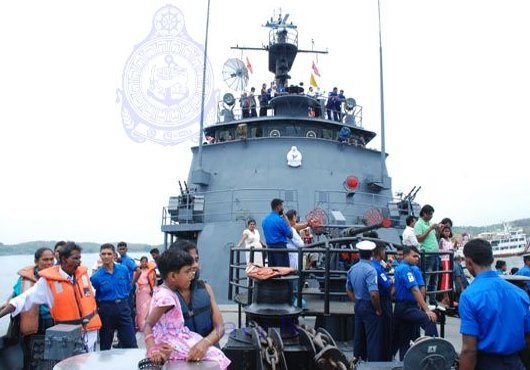
SLNS Gajabahu (P626) (the former USCGC Sherman), SLNS Sayurala (P623) and SLNS Sindurala (P624) during 2022 Colombo Naval Exercise. SLNS Samudura (P261) (the former USCGC Courageous) also visible in the distance. Photo defence.lk

SeaWaves Magazine reports,

Hon. Ranil Wickremesinghe, the President and Commander – in – Chief of the Armed Forces of Democratic Socialist Republic of Sri Lanka visited Trincomalee 1st March to review the naval fleet stationed there. Accompanied by Commander of the Navy, Vice Admiral Priyantha Perera, the President inspected the naval fleet, which included a variety of ships. Governor Eastern Province Hon. Senthil Thondaman, State Minister of Defence Premitha Bandara Tennakoon, Chief of Staff to the President and Senior Adviser to the President on National Security Sagala Ratnayaka, Defence Secretary General Kamal Gunaratne (Ret’d) and Chief of Defence Staff General Shavendra Silva and a group of distinguished invitees were also present on this occasion.

Two of the ships were former US Coast Guard cutters, SLNS Gajabahu (P626) (the former USCGC Sherman, transferred to the Sri Lankan Navy in 2019) and SLNS Samudura (P261) (the former USCGC Courageous, transferred to the Sri Lankan Navy in 2005).

The Sri Lankan Navy includes a third former US Coast Guard cutter, SLNS_Vijayabahu_(P627) (the former USCGC Munro, transferred to the Sri Lankan Navy in 2022).

SLNS-Samudura, the former USCGC Courageous

Why the “J-model” C-130s Make Such a Difference

LIMA, PERU, 10.06.2023, Courtesy Photo, USCG District 11
The aircrew of the Coast Guard 2007, an HC-130 based out of U.S. Coast Guard
Air Station Barbers Point, Hawaii, poses for a picture with observers from the Peruvian Navy and Air Force, in Lima Peru, October 2023. During the course of two weeks, Peruvian observers accompanied the USCG aircrew as they conducted overflights of the fishing fleet on the high seas during Operation Southern Shield 2023. (U.S. Coast Guard photo by pilot-in-charge, Lt. Zachary Hunter.) Note the six bladed props that identify the C-130J. 

Below is a news release, “Coast Guard accepts 16th missionized HC-130J into fleet,” from the Acquisitions Directorate (CG-9). There is more here than the announcement of a newly missionized aircraft. The post goes on to talk about the advantages the C-130Js bring to the service, particularly in the Pacific.

The C-130Js provide a 20 percent increase in speed and a 40 percent increase in range over the HC-130H, as well as much improved avionics. The Coast Guard is moving to a fleet of 22 HC-130Js and retiring all their C-130Hs.

The Coast Guard also has 14 HC-27Js and 18 HC-144s all being equipped with Minotaur.

HC-130J Characteristics

  • Length: 97 feet 9 inches
  • Wingspan: 132 feet 7 inches
  • Height: 38 feet 11 inches
  • Maximum Weight: 175,000 pounds
  • Cruise Speed: 320 knots true airspeed
  • Range: 4,900 nautical miles
  • Endurance: 20+ hours

HC-130J Features

  • Standardized Minotaur mission system across all Coast Guard fixed-wing aircraft
  • Real-time tracking and Rescue 21 integration to enhance common operating picture and maritime domain awareness
  • Advanced radar and electro-optical/infrared sensors for search and rescue, law enforcement and intelligence gathering missions; the Coast Guard’s Super Hercules is the first HC-130 aircraft in the world with a 360-degree, belly-mounted, multimode surface search radar
  • Commonality of command, control, communication, computers, cyber, intelligence, surveillance and reconnaissance components and capabilities with those on the Coast Guard’s medium range surveillance aircraft

Minotaur Features

  • Commonality of command, control, communications, computers, cyber, intelligence, surveillance and reconnaissance components and capabilities across all Coast Guard fixed-wing surveillance aircraft
  • Interoperability with multiple Defense and Homeland Security department platforms
  • Real-time tracking and Rescue 21 integration to enhance common operating picture and maritime domain awareness
  • Automatic Dependent Surveillance – Broadcast technology to receive traffic and weather broadcasts and information about other aircraft, including identification, position and altitude
  • Tactical screen replay to review a target’s entire flight in seconds and track the target via its trajectory, even if the target stops broadcasting information or otherwise evades the sensors

The Coast Guard has nine air stations operating fixed wing search aircraft. There are six in the Atlantic Area, which includes the Gulf of Mexico.

  • Cape Cod, MA (C-144)
  • Elizabeth City, NC (C-130, C-27, C-144)
  • Miami, FL (C-144)
  • Clearwater, FL (C-130)
  • Mobile, AL (C-144)
  • Corpus Christi, TX (C-144)

There are only three Coast Guard air stations operating fixed wing search aircraft in the Pacific Area.

  • Sacramento (C-27)
  • Barbers Point, HI (C-130)
  • Kodiak, AK (C-130)

Kodiak and Barbers Point certainly needed the additional range and on-station time that the C-130Js provide.

Barbers Point is the only Coast Guard air station in the 14th District, despite the fact that the 14th District includes 48% of the entire US’s Exclusive Economic Zone (EEZ), and has additional responsibilities to assist the Federated States of Micronesia (FSM), the Republic of the Marshall Islands (RMI), and the Republic of Palau under the Compact of Free Association which together have an EEZ total equal to more than 49% that of the US.


Coast Guard accepts 16th missionized HC-130J into fleet

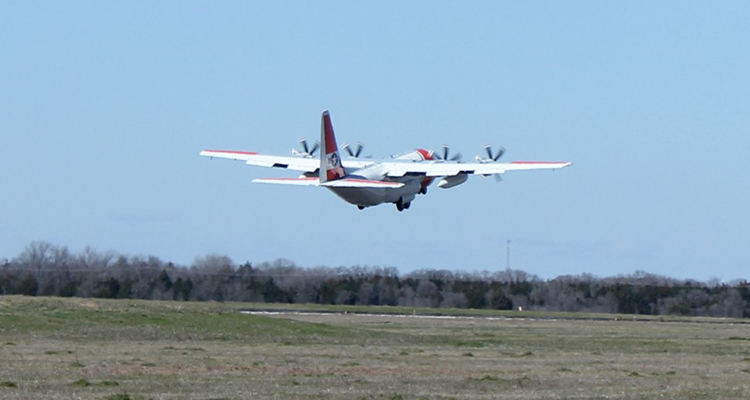
The Coast Guard’s 16th fully missionized HC-130J takes off for its first test flight following the year-long missionization and Block Upgrade 8.1 modification at L3Harris in Waco, Texas. U.S. Coast Guard photo.


The Coast Guard accepted delivery of its 16th fully missionized HC-130J long range surveillance aircraft, CGNR 2016, Feb. 19 following completion of Minotaur mission system integration and Block Upgrade 8.1 installation at L3Harris in Waco, Texas.

The aircraft was delivered to Air Station Elizabeth City in Elizabeth City, North Carolina, returning that air station to its full complement of five HC-130J aircraft. The air station was temporarily operating with four aircraft while an Elizabeth City HC-130J was assigned to Air Station Barbers Point, Hawaii, to complete the transition of that facility to HC-130J operations.

The more advanced engines, six-blade propellors and Minotaur-integrated sensors of the HC-130J enable the Coast Guard to better respond to mariners in peril by improving response times, extending time on scene for search and rescue and law enforcement patrols, and increasing effectiveness and versatility. Regarding the latest air station transition, the improvements are ideally suited for Barbers Point’s vast jurisdiction – 12.2 million square miles of open ocean, atolls and island chains, which make up the Coast Guard’s Fourteenth District.

Three recent natural disasters in Air Station Barbers Point’s area of responsibility have highlighted the value of the improved aircraft, especially the 26% increase in patrol range over the legacy HC-130H.

  • A Barbers Point HC-130J flew 2,300 miles to be the first aircraft on scene after Typhoon Mawar struck Saipan in May 2023, performing overflight assessments and delivering critically needed relief supplies. Over a week, the aircraft flew over 97 flight hours and dispatched 400,000 pounds of cargo and 169 passengers.
  • Barbers Point aircrews responded when wildfires burned thousands of acres in Maui, Hawaii, in August 2023, providing search and rescue and damage assessment along with moving passengers and cargo for disaster relief.
  • Barbers Point HC-130J aircrews answered the call when Tropical Cyclone Lola slammed the island nation of Vanuatu in October 2023, assessing the damage to ports, airports and critical infrastructure. Aircrews also delivered over 80,000 pounds of relief supplies.

The HC-130J and its Minotaur system also play a vital role in identifying and monitoring illegal fishing by providing surveillance and gathering intelligence on suspicious fishing activities. That information is shared with local and national authorities and aids in determining what vessels need to be boarded for inspection.

The service’s Super Hercules aircraft carry out many Coast Guard missions, including search and rescue, drug and migrant interdiction, cargo and personnel transport, and maritime stewardship, as well as providing critical support to Department of Homeland Security partners. The aircraft also can serve as a command and control or surveillance platform capable of identifying and classifying objects and sharing that information with operational forces.

For more information: HC-130J Long Range Surveillance Aircraft Program page and Minotaur Mission System page

“Vanuatu police, aided by US Coast Guard, say Chinese vessels violated fishing laws” Reuters

USCGC Harriet Lane arrives Pearl Harbor. USCG Photo.

Reuters reports,

“Six Chinese fishing boats were found to be violating Vanuatu’s fisheries law after being inspected by local police who were on board the first U.S. Coast Guard boat to patrol the waters of the Pacific Islands nation, Vanuatu police and officials said.”

Nice to see positive results from USCGC Harriet Lane‘s first Pacific law enforcement deployment. (In just over a month, Harriet Lane will turn 40 years old.)

Notably,

“Last year, a Coast Guard vessel on patrol for illegal fishing was refused access to Vanuatu’s port.”

“Coast Guard Cutter Bertholf arrives in Singapore”

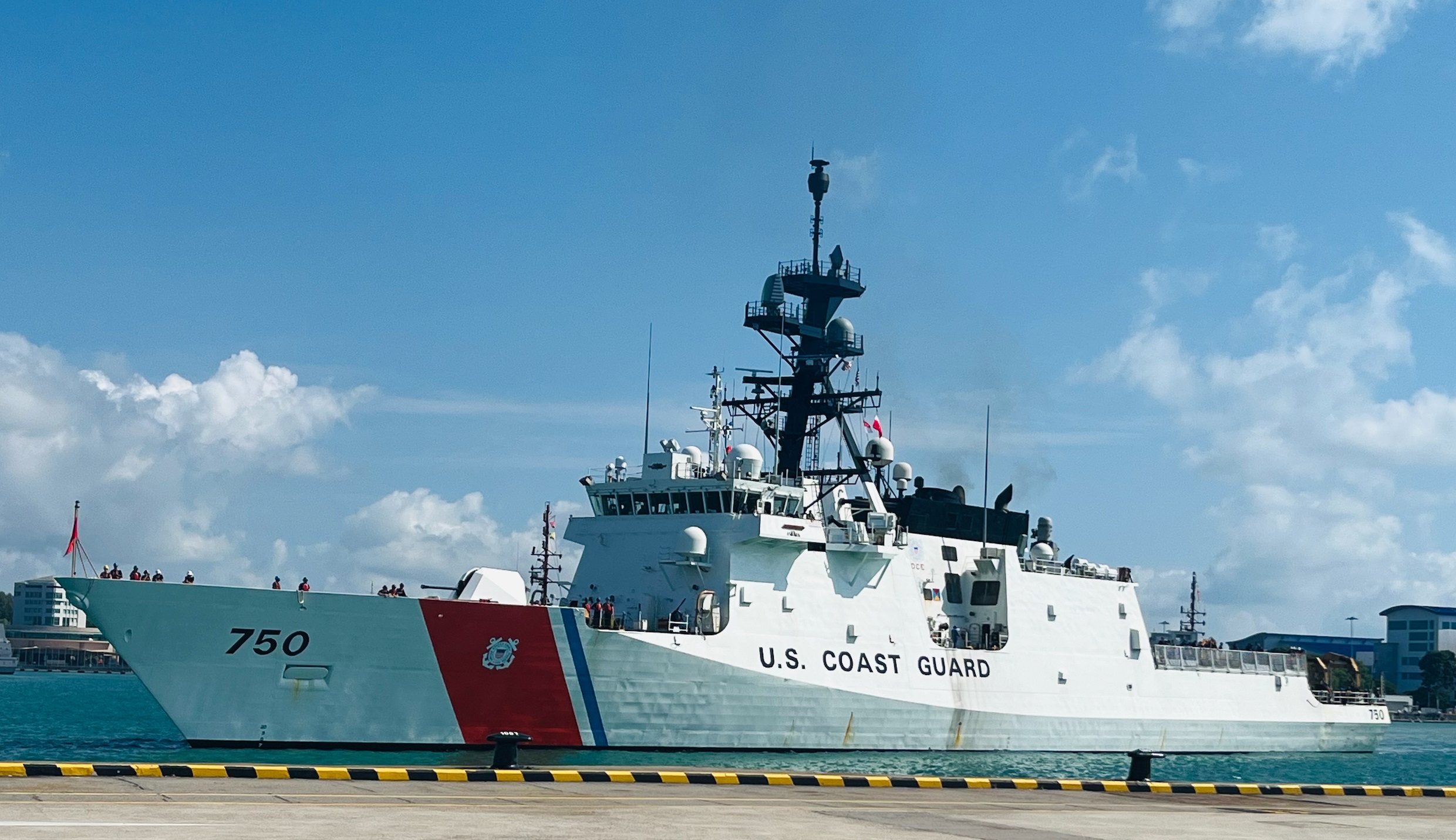
U.S. Coast Guard Cutter Bertholf (WMSL 750) arrives at Changi Naval Base in Singapore, Feb. 25, 2024. The Bertholf moored next to USS Gabrielle Giffords (LCS 10), a U.S. Navy Littoral Combat Ship, also in the region to support an open Indo-Pacific region. (U.S. Coast Guard photo by Cmdr. Trevor Parra)

Below is a US Coast Guard news release. You can find more photos at the link. 


March 5, 2024

Coast Guard Cutter Bertholf arrives in Singapore

SINGAPORE – U.S. Coast Guard Cutter Bertholf (WMSL 750) and crew arrived in Singapore, Feb. 25, after transiting more than 8,000 nautical miles over 30 days from San Diego, Calif.

During the visit to the Republic of Singapore, the crew of the cutter is scheduled to participate in several professional engagements and at-sea exercises.

The two-day professional meetings will allow for collaboration, exchanges of best practices, and operational planning for the scheduled two-day exercises at-sea with the Republic of Singapore Navy vessel, Guardian. In addition to the Republic of Singapore Navy, the crew of the Bertholf intend to work with the Singapore Police Coast Guard and Malaysia Maritime Enforcement Agency.

“The crew of the Bertholf is excited to be in Singapore and looking forward to the many events with the crew of the Republic of Singapore Navy, Police Coast Guard, and Malaysia Maritime Enforcement Agency,” said U.S. Coast Guard Capt. Billy Mees, commanding officer of the Bertholf. “The Indo-Pacific region is a dynamic environment and fostering partnerships with our allied nations helps ensure we improve maritime governance in these crucial economic waterways.”

Bertholf is one of four National Security Cutters homeported in Alameda. The U.S. Coast Guard currently maintains 10 National Security Cutters. Bertholf is operating as part of Commander, Task Force (CTF) 71, U.S. 7th Fleet’s principal surface force, promoting a free and open Indo-Pacific, strengthening partner networks, and enhancing maritime safety and security.

Bertholf is the first legend-class national security cutter and has a range of 12,000 nautical miles, endurance of up to 90 days and can hold a crew of up to 170. Coast Guard Cutter Bertholf is homeported in Alameda, Calif.

“Manipulated images do not show US-China maritime ‘clash'” –AFP Philippines

Manipulated images do not show US-China maritime ‘clash’
© Provided by AFP Fact Check

MSN reports an Armed Forces Philippines story,

YouTube videos viewed tens of thousands of times in the Philippines do not show a military confrontation between the United States and China in the South China Sea, a hotly contested waterway that has long been a source of tension in Asia Pacific. The videos included compilations of old warship photos — some of which were manipulated — and there have been no official reports of a US-China spat.

“US Coast Guard aggressively confronts a Chinese warship circling near Ayungin,” reads the title of a YouTube video posted on February 7, 2024

The video is no longer on YouTube, but undoubtably, it is still out there somewhere.

Someone created a video reporting an incident between the US Coast Guard and the China Coast Guard that never happened.

The story shows how the images were manipulated.