Polar Star is Home–Finally

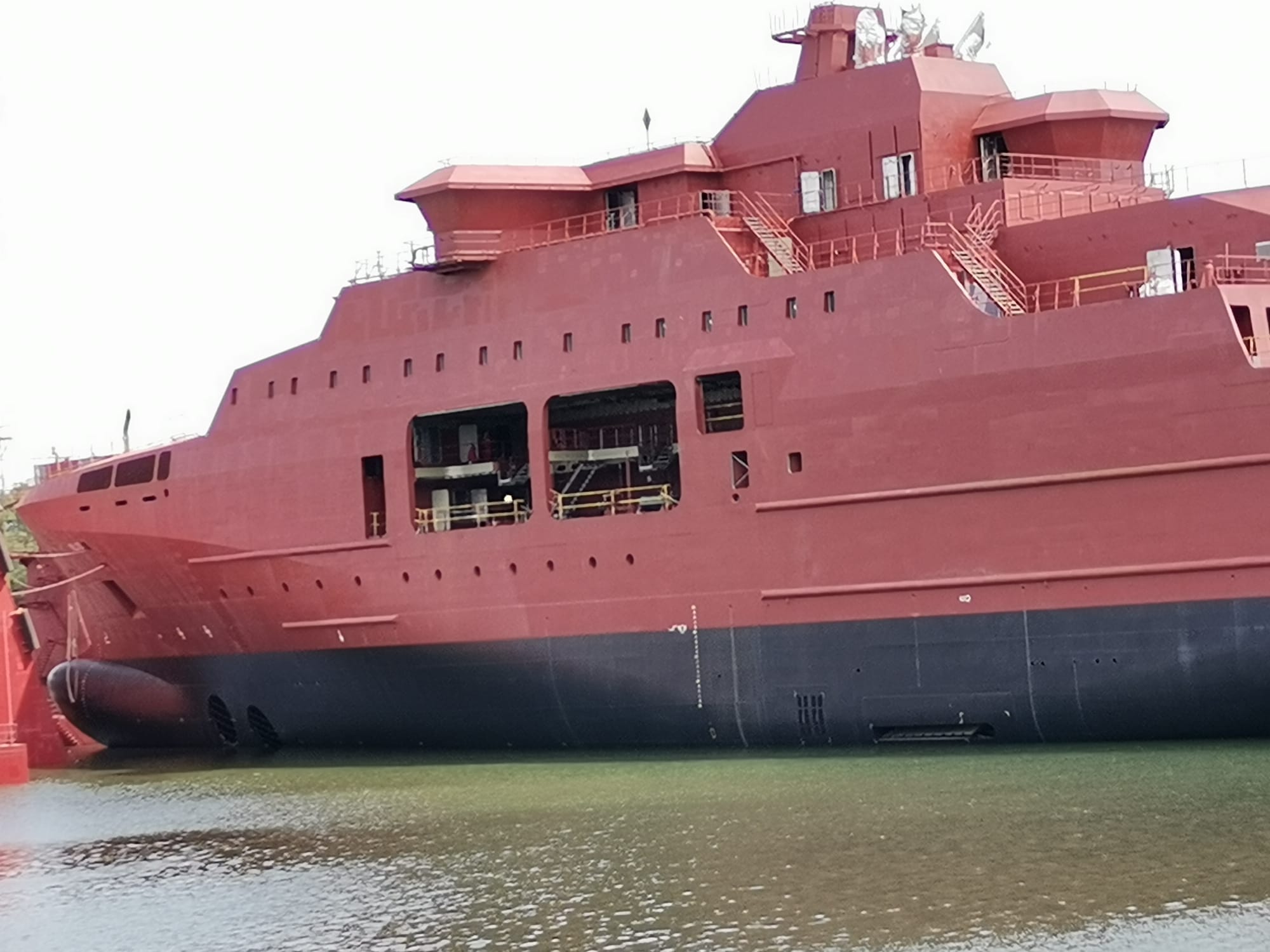
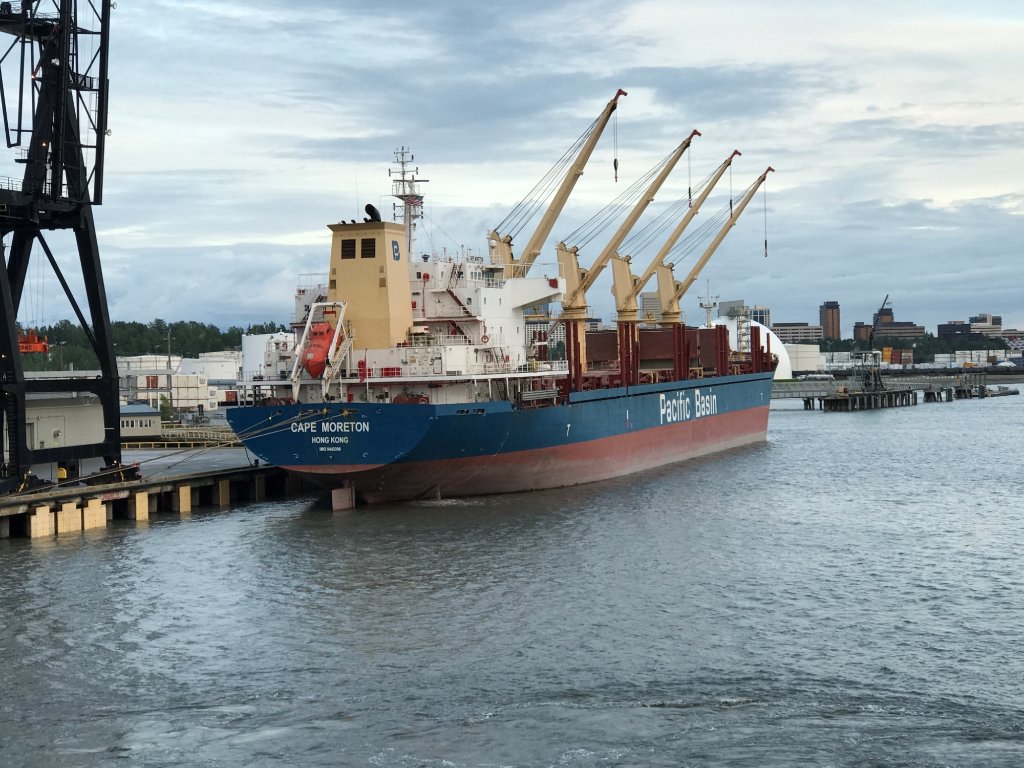
Polar Star at Mare Island Dry Dock LLC undergoing the fourth phase of its five-year Service Life Extension Project. U.S. Coast Guard photo by Cmdr. Jeremy Courtade.

Below are two news releases, first one from Coast Guard News, the second from the Acquisitions Directorate (CG-9).

The Coast Guard has been working very hard to make sure that Polar Star can meet her annual commitment to open a path for resupply of the Antarctic Base at McMurdo, but it has to have been hard on the crew. They just completed the fourth phase of a five-part Service Life Extension Program (SLEP), but unlike the single phase SLEPs and MMAs we are seeing with the buoy tenders and medium endurance cutters at the Coast Guard Yard, here the crew stays aboard. After 138 days on the resupply mission, instead of returning to Seattle, their homeport, they went to Vallejo, California, where they spent about 140 days. Altogether, 285 days away from homeport, and over a one-year period, more days in Vallejo than in homeport.

Polar Star has only one more of these to go, but it looks like the Crew of USCGC Healy is going to go through the same 5-year SLEP cycle, where they will spend more time in Vallejo than in their homeport. This is just wrong. There are only two yards on the West Coast that can accommodate ships of this size. The Navy, with its huge presence, is a strong competitor for the use of the one in Seattle. By contrast the Bay Area has virtually no Navy presence. It is likely the Icebreakers will have to use the yard in Vallejo for almost all their drydocking. Maybe it is time to change their homeport to somewhere in the San Francisco Bay Area, maybe even Vallejo.

Improvements are planned for Base Seattle, largely on the assumption that the Polar Security Cutters (PSC) will be based there, but they can expect to run into the same problem. Given the greater size of the PSCs and the long-term probability the Navy presence in Seattle will remain large and may well increase, the problem is not going away. The dry dock in Vallejo was built to accommodate battleships. It is big enough.


U.S. Coast Guard Cutter Polar Star (WAGB 10) (left) sits moored next to U.S. Coast Guard Cutter Healy (WAGB 20) at Coast Guard Base Seattle, Aug. 25, 2024. The Polar Star and Healy are routinely deployed to Arctic and Antarctic locations to support science research or help resupply remote stations. (U.S. Coast Guard photo by Lt. Chris Butters)

Aug. 28, 2024

Coast Guard heavy icebreaker returns to Seattle following Antarctic deployment, months-long Service Life Extension Project in California

SEATTLE — The U.S. Coast Guard Cutter Polar Star (WAGB 10) and crew returned to Seattle, Sunday, after 285 days away from the cutter’s home port.

Following a 138-day deployment to Antarctica supporting Operation Deep Freeze 2024, the Polar Star reported directly to Mare Island Dry Dock (MIDD) LLC. in Vallejo, California, to commence the fourth phase of a five-year Service Life Extension Project (SLEP).

The work completed at MIDD is part of the in-service vessel sustainment program with the goal of recapitalizing targeted systems, including propulsion, communication, and machinery control systems, as well as effecting significant maintenance to extend the cutter’s service life.

Polar Star’s SLEP work is completed in phases to coordinate operational commitments such as the cutter’s annual Antarctic deployment. Phase four began on April 1, 2024, targeting three systems:

  • Boiler support systems were recapitalized, including the electrical control station that operates them.
  • The heating, ventilation and air conditioning (HVAC) system was refurbished through the overhaul of ventilation trunks, fans and heaters that supply the cutter’s berthing areas.
  • The flooding alarm system was redesigned, providing the ability to monitor machinery spaces for flooding from bow to stern.

Additional work not typically completed every dry dock included removing and installing the starboard propulsion shaft, servicing and inspecting both anchor windlasses, inspecting and repairing anchor chains and ground tackle, cleaning and inspecting all main propulsion motors and generators, installation of an isolation valve to prevent seawater intrusion into the sanitary system, and overhauling the fuel oil purifier.

Phase four of Polar Star’s SLEP took place over approximately 140 days and represented a total investment of $16.8 million. By replacing outdated and maintenance-intensive equipment, the Coast Guard will mitigate lost mission days caused by system failures and unplanned repairs. The contracted SLEP work items and recurring maintenance is taking place within a five-year, annually phased production schedule running from 2021 through 2025.

The Coast Guard is investing in a new fleet of polar security cutters (PSC) that will sustain the service’s capabilities to meet mission needs in both the Arctic and Antarctic regions. The SLEP allows Polar Star to continue providing access to the Polar regions until the PSCs are operational and assume the high latitude missions. Polar security cutters will enable the U.S. to maintain defense readiness in the Polar regions; enforce treaties and other laws needed to safeguard both industry and the environment; provide ports, waterways and coastal security; and provide logistical support – including vessel escort – to facilitate the movement of goods and personnel necessary to support scientific research, commerce, national security activities and maritime safety.

“Completing a dry dock availability is a positive milestone, and despite challenges due to being away from home port, our crew’s energy and resilience inspires me every day,” said Capt. Jeff Rasnake, Polar Star’s commanding officer. “The amount of time and effort put into Polar Star and its mission is truly remarkable. The dedication and teamwork displayed across all stakeholders exemplifies the Coast Guard’s flexibility and commitment to ensuring the continued success of Operation Deep Freeze as well as strengthened partnerships among nations invested in the Antarctic latitudes. I look forward to observing how this crew will continue to grow as a team and to discovering what we can accomplish together.”

Along with the rigorous maintenance schedule, Polar Star held a change of command ceremony on July 8, 2024, in Vallejo, where Rasnake relieved Capt. Keith Ropella as the cutter’s commanding officer. Rasnake served as the deputy director for financial management procurement services modernization and previously served as Polar Star’s executive officer. Ropella transferred to the office of cutter forces where he will oversee the management of the operational requirements for the cutter fleet and develop solutions for emerging challenges facing the afloat community.

Polar Star is the Coast Guard’s only active heavy polar icebreaker and is the United States’ only asset capable of providing year-round access to both polar regions.

Commissioned in 1976, the cutter is 399 feet, weighing 13,500 tons with a 34-foot draft. Despite reaching nearly 50 years of age, Polar Star remains the world’s most powerful non-nuclear icebreaker with the ability to produce up to 75,000 horsepower. Polar Star’s SLEP is important to the survival of the Antarctic mission and crucial to the well-being and success of Polar Star and crew during these long missions.


Coast Guard completes fourth phase of service life extension work on Polar Star

Coast Guard Cutter Polar Star completed the fourth phase of its five-year Service Life Extension Project (SLEP) at the Mare Island Dry Dock LLC in Vallejo, California. The cutter departed the San Francisco Bay Area on August 22, for its homeport in Seattle.

The SLEP, a key initiative within the Coast Guard’s In-Service Vessel Sustainment (ISVS) Program, aims to extend the service life of the Polar Star by modernizing targeted systems, including propulsion, communication, and machinery control systems. Concurrent with the SLEP work, crews conducted significant maintenance efforts to ensure the cutter remains capable of operating within some of the most extreme environmental conditions on earth.

SLEP work on the Polar Star is conducted in phases to align with the cutter’s operational commitments, such as the cutter’s annual Antarctic deployment. Phase four began on April 1, 2024, focusing on the following systems:

  • Heating, ventilation and air conditioning systems were refurbished with ventilation trunks, fans and heaters to improve air circulation and maintain comfortable living environment for the ship’s crew during extended deployments.
  • Boiler support systems were recapitalized, including the electrical control station that operates them to generate reliable heating and steam supply to the water maker.
  • The flooding alarm system was redesigned to enable the crew’s ability to monitor the ship’s machinery spaces for flooding from bow to stern.

Additional work completed during this phase, beyond routine dry dock maintenance, was critical to ensuring the Polar Star’s operational readiness. This included significant overhauls and inspections of key propulsion and anchoring systems that are essential for the cutter’s operational performance.

Kenneth King, Program Manager for the ISVS Program, commented on the milestone, saying, “I am tremendously proud of the joint In-Service Vessel Sustainment Program, the Long Range Enforcer Product Line team and their significant efforts in completing Phase 4. Our dedicated professionals continue to exemplify our service’s core values to ensure Polar Star meets its multifaced missions in the polar regions until the arrival of the Polar Security Cutter Fleet.”

For more information:In-Service Vessel Sustainment Program page and Polar Security Cutter Program page.
“Russia’s war on Ukraine stalls PRC’s Arctic momentum” –The Watch

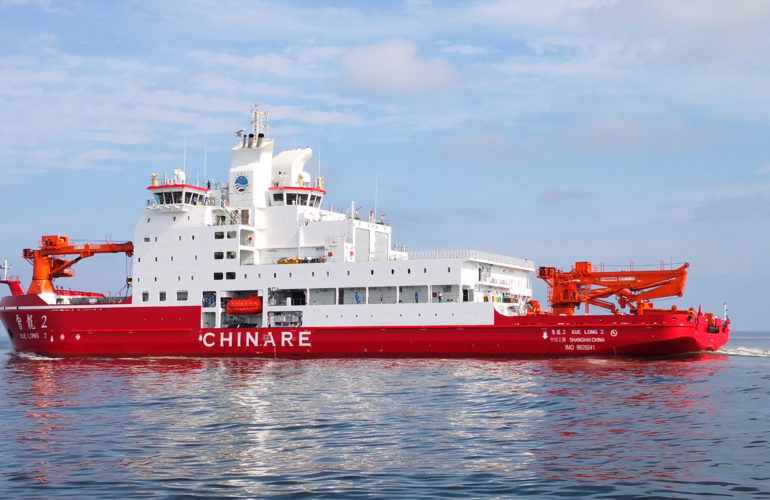
Xue Long 2 on sea trials. Photo by PRIC.

This is about a year old, but somehow, I apparently missed commenting on it when it first came out.

The Watch Reports,

As the largest non-Arctic country, and one which has often referred to itself as a near-Arctic state, the People’s Republic of China (PRC) finds itself in a more precarious position in the region as compared to five years ago when it launched its ambitious white paper, which proclaimed Chinese interests in being a key stakeholder in the far north. Beijing’s plans for the Arctic assumed that the region would be open and amenable to the development of three main pillars of Chinese Arctic policy, namely scientific diplomacy, economic partnerships and participation in regional governance initiatives. All three of these pillars are now under pressure, which has underscored the PRC’s limitations in the Arctic and will inevitably force a rethinking and likely a retrenchment of the country’s far-northern interests.

The report notes,

Despite hopes in Beijing that the PRC’s Polar Silk Road initiative would emerge as an integral part of the overall Belt and Road framework, many centerpiece projects of the infrastructure initiative have either failed or are in doubt because of financial constraints, political opposition or some combination thereof.

The “no limits” partnership between China and Russia has always been one of opportunism. There is a natural antipathy between the two countries. China has never forgotten the unequal treaties imposed on them by European powers including Russia, that stripped away Chinese territory, including important parts of what is now Russia’s Asian holdings.

Facing frustration in the Arctic. Do not be surprised to see China double down on its efforts in Antarctica.

USCGC Alex Haley Encounters Russian AGI

The Navy League’s on-line magazine, Seapower, reports,

While patrolling the Aleutian Islands, the crew of U.S. Coast Guard Cutter Alex Haley (WMEC 39) detected the vessel 30 nautical miles southeast of Amukta Pass, Alaska.

The Russian vessel was transiting in international waters but inside the U.S. Exclusive Economic Zone, which extends 200 nautical miles from the U.S. shoreline. The Alex Haley did not communicate with the Russian vessel. The Alex Haley confirmed it to be a Russian Federation Vishnya-class naval vessel and followed the vessel as it transited east. An HC-130 air crew from Coast Guard Air Station Kodiak also observed the vessel.

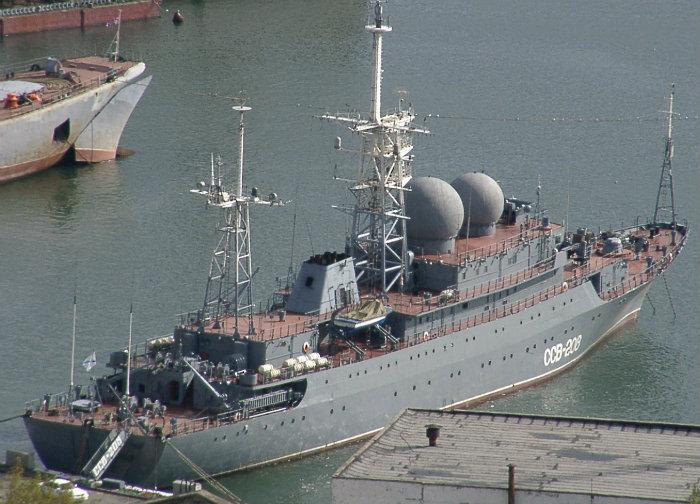
The Vishnya class are intelligence gathering ships completed in the late 1980s, like the one pictured above.

The detection was made 30 miles SE of Amukta Pass (52°27′31″N 172°00′55″W). This is well East of Eareckson Air Force Base (52°42′44″N 174°06′49″E) on Shemya and the former US Naval Air Facility, Adak (51°52′41″N 176°38′46″W).

Distances from Dutch Harbor (53°54′10.5″N 166°31′06.2″W):

  • Shemya 802 miles
  • Adak 446 miles
  • Amukta Pass 242 miles

The report seems to say that Haley simply stumbled across this Russian vessel. This suggests that it had been inside the US EEZ for at least two days before it was detected. That probably is not something to get excited about, but there may, of course, be more to this than we are aware.

USCGC Alex Haley moored in Nome, AK.

Are We Going to do the Same Thing to the Crew of Healy that was done to the Crew of Polar Star?

The spouse of a Coast Guard Cutter Healy (WAGB 20) crewmember waves goodbye as the cutter departs Base Seattle for a multi-month deployment to the Arctic, June 12, 2024. (U.S. Coast Guard photo by Petty Officer 3rd Class Annika Hirschler)

Having recently reread the Acquisition Directorate’s In-Service Vessel Sustainment web page, I found this.

Service life extension program for Coast Guard Cutter Healy will occur in a five-year phased production between 2026 and 2030. Healy is a 420-foot cutter, the service’s only active medium polar icebreaker, which was commissioned in 1999. When completed, the SLEP effort will recapitalize a number of major systems and extend the service life of the cutter until the polar security cutters are operational.

This sounds an awful lot like what was done to Polar Star over a five year period. Healy, like Polar Star, is based in Seattle, but Polar Star’s five year rolling Service Life Extension Program was not done in Seattle, it was done in Vallejo, CA. Vallejo is 776 miles from Seattle. These five phased Yard periods were extremely long, so the ship spent about half its down time far from home. I know they tried to mitigate the effect on the crew, but it had to be bad for crewmembers whose families were in Seattle.

I can’t help but think it would have been a good idea to change Polar Star’s homeport to Vallejo or Alameda (water depth at the Support Center permitting). Vallejo is a lower priced area than Seattle and there is property there from the old Navy shipyard that the city is still trying to develop. Pretty sure the city would be happy to have Healy homeported there.

If Vallejo was not possible, it is 31 miles from Vallejo to Alameda. That is not a particularly long commute in the Bay area, for the relatively short time the ship would be in Alameda, and there are relatively affordable places to live in between.

Is it going to be different for Healy?

I also notice this, that the SLEP is intended to “extend the service life of the cutter until the polar security cutters are operational.” Since Healy is nominally a medium icebreaker, I would have thought the Coast Guard would keep her in service until replaced by an Artic Security Cutter (medium icebreaker). Healy was commissioned in 1999, so I would have thought she would remain in service 40 years, until 2039. A SLEP ending in 2030/31 also suggests another ten years of life. Are we going to have to wait until 2039 for the Polar Security Cutters to be completed?

“U.S. Coast Guard Cutter Healy departs Seattle for Arctic deployment” –News Release

The spouse of a Coast Guard Cutter Healy (WAGB 20) crewmember waves goodbye as the cutter departs Base Seattle for a multi-month deployment to the Arctic, June 12, 2024. The Healy was commissioned in 2000 and is one of two active polar icebreakers in the Coast Guard’s fleet. (U.S. Coast Guard photo by Petty Officer 3rd Class Annika Hirschler)

Below is news release.


June 13, 2024

U.S. Coast Guard Cutter Healy departs Seattle for Arctic deployment

SEATTLE — U.S. Coast Guard Cutter Healy (WAGB 20) departed Seattle Wednesday, beginning their months-long Arctic deployment.

The crew will support scientists conducting three distinct science missions during Healy’s 2024 Arctic deployment.

The first mission is supporting the Arctic Observing Network, funded by the U.S. National Science Foundation (NSF). During this mission, the cutter will service subsurface moorings in the Beaufort Sea, north of Alaska, and conduct a broad-scale survey of the boundary current system from the Bering Strait to the western Canadian Arctic. This program has been ongoing for more than two decades to improve understanding of the Pacific Arctic ecosystem in a changing climate. Ancillary programs include measurements of harmful algae blooms and a variety of biogeochemical parameters.

For the second mission, Healy will embark 20 early career polar scientists and their mentors on a Polar Chief Scientist Training Cruise sponsored by the NSF and University-National Oceanographic Laboratory System to conduct multidisciplinary research. During a transit of the Northwest Passage, these early career scientists will conduct mapping to fill critical bathymetric gaps and scientific sampling across various disciplines, in addition to developing skills in shipboard leadership, coordination, and execution.

The final mission of the deployment will support the Global Ocean Ship-Based Hydrographic Investigations Program (GO-SHIP), where they aim to make the first ever single ship, single season, high-resolution transect of hydrographic observations across the Arctic basin. This global effort builds on data from as far back as the 1990s to collect repeat oceanographic data from a series of ocean basin transects around the world. The high-resolution surface-to-bottom multidisciplinary observations the team collects during this mission will be compared to earlier partial datasets to better understand the Arctic environment.

“We are excited to support three significant missions in the northern high latitudes,” said Healy’s Commanding Officer Capt. Michele Schallip. “Two of these missions are part of long-standing data collection projects, aimed at enhancing our understanding of a changing Arctic. The third mission is dedicated to inspiring future principal investigators who will continue this important work. At a time when scientific interest in the Arctic Ocean Basin is intensifying, Healy substantially enhances the American Arctic research capability. Healy’s crew have been unwavering in their efforts during our in-port maintenance period, ensuring the cutter is ready to meet the demands of these missions.”

Healy is the United States’ largest and most technologically advanced polar icebreaker and the Coast Guard’s only icebreaker designed and equipped with scientific instrumentation by the NSF to support Arctic research. The platform is ideally specialized for scientific missions, providing access to the most remote reaches of the Arctic Ocean. Healy is designed to break 4.5 feet of ice continuously at three knots and can operate in temperatures as low as -50 degrees Fahrenheit.

Arctic Patrol Cutter, State of the Art–Revisited (Revised)

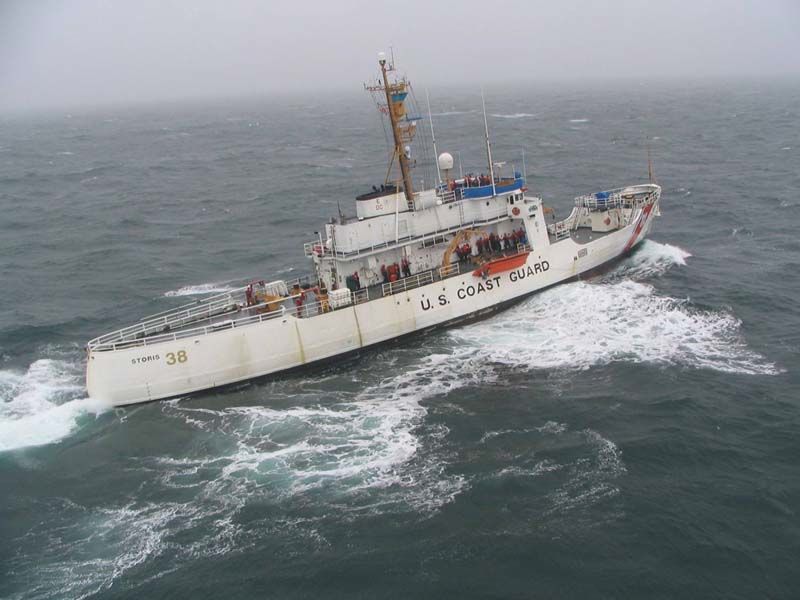
USCGC Storis, 2,030 ton Arctic Patrol Cutter (1942 to 2007).

A recent discussion in the comments of an earlier post, Canadian Coast Guard Multi-Purpose Vessel Recapitalization, led me to a sudden realization that every nation with a coastline in the Arctic, except the US, is building new ice strengthened patrol vessels.

Are we missing something?

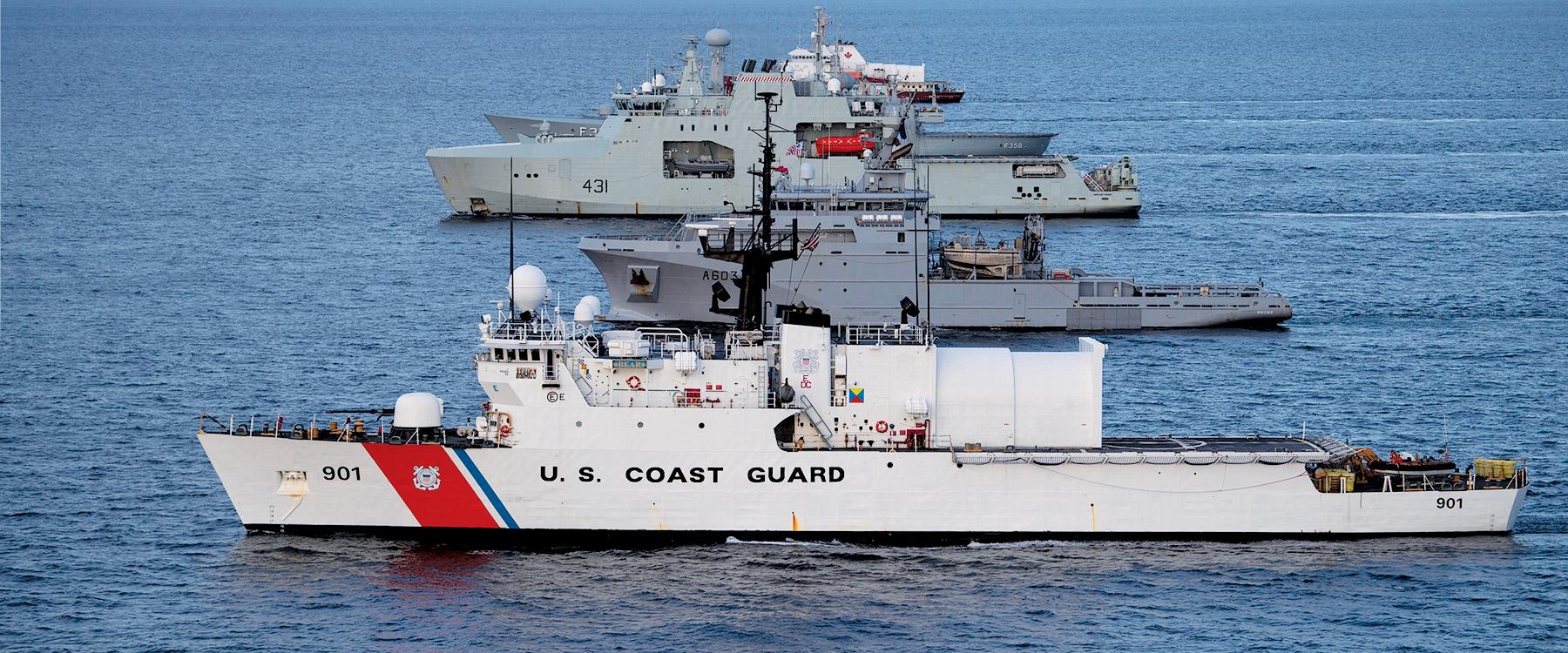
The USCGC Bear (WMEC-901) and allied ships from Canada, Norway, France, and Denmark steam in formation in the North Atlantic Ocean during Operation Nanook in August 2022.

These vessels may have some of the characteristics of icebreakers, but while intended to operate in an icy environment, they would be expected to spend a lot of time on solitary patrol rather than being used primarily to open ice covered waterways for other ships.

In 2011 I did a small survey, “Arctic Patrol Cutter, State of the Art.” The 2011 post looked at four classes, a total of nine ships:

(OK, the New Zealand ships are really Antarctic Patrol Vessels. Perhaps I should also note that New Zealand laid up her two “Protector” class patrol ships, as well as another vessel in 2022 because of personnel shortages.)

Now Canada, Denmark, Norway, and Russia–every nation with an Arctic Ocean coast except the US–are building ice-capable patrol vessels.

New programs, built, building or planned, are expected to produce five classes, a total of 25 ships (14 for Canada alone) that might be considered Arctic patrol vessels.

Canada:

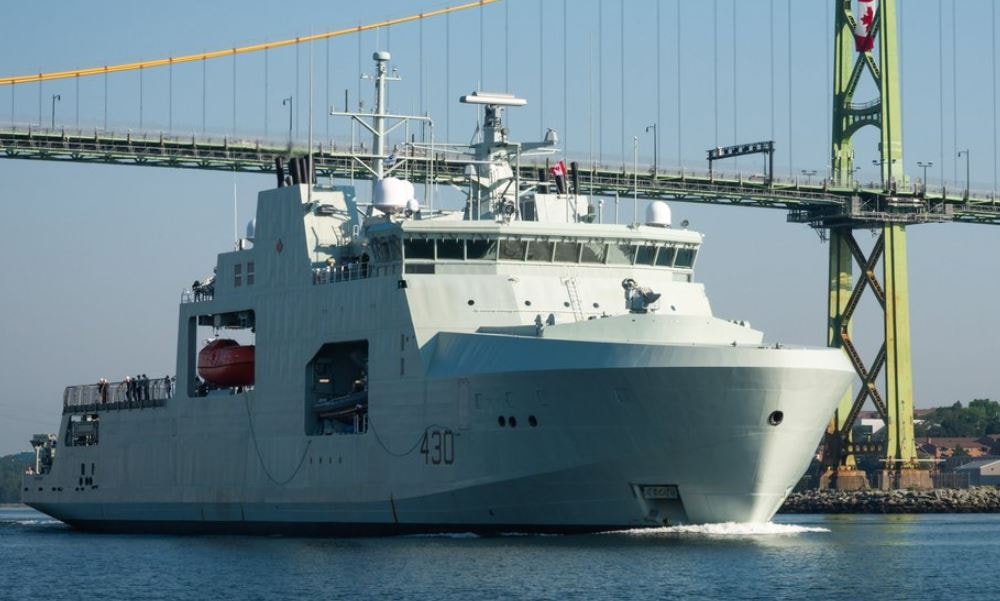
HMCS Harry DeWolf, leaving HMC Dockyard in Halifax and steaming under Angus L. Macdonald
suspension bridge crossing Halifax Harbour in Nova Scotia, Canada

Canada is building a class of eight “Arctic Offshore Patrol Ships,” the Harry DeWolf class, six for their Navy and two for their Coast Guard. First of class was laid down in 2017. Four ships have been completed.

  • Displacement: 6,615 tons (full load)
  • Length: 103.6 m (339 ft 11 in)
  • Beam: 19 m (62 ft 4 in)
  • Draft: 5.7 m (18 ft 8 in)
  • Propulsion: Diesel electric, 4 × 3.6 MW generators, two 2 × 4.5 MW, twin shaft drive, total 12,000 HP.
  • Speed: 17 knots

They are Canadian Polar Class 4, meaning can maintain a speed of 3 knots through ice 4 feet thick.

Canadian CG MPV. Credit Aker Arctic.

Canada is also building six “Multi-Purpose Vessels” for the Canadian Coast Guard, that the USCG would probably classify as light icebreakers. I have no information on their speed or horsepower. They are also Canadian Polar Class 4 (speed of 3 knots through ice 4 feet thick. (I will refer to these as CCG MPV.) It might be debated that these are not really patrol vessels since the Canadian Coast Guard is neither a military nor a law enforcement agency. Their primary missions are icebreaking, buoy tending, and cargo, but the Canadian Coast Guard does provide transportation for Canadian law enforcement agencies.

  • Displacement: about 8,500 tons
  • Length, overall: 99.9 meters (328′)
  • Beam: 20.3 meters (66.7′)
  • Draft: 6.2 meters (20’4″)
  • Propulsion: diesel-electric; two azimuthing propulsion units
  • Range 12,000 nautical miles

Russia:

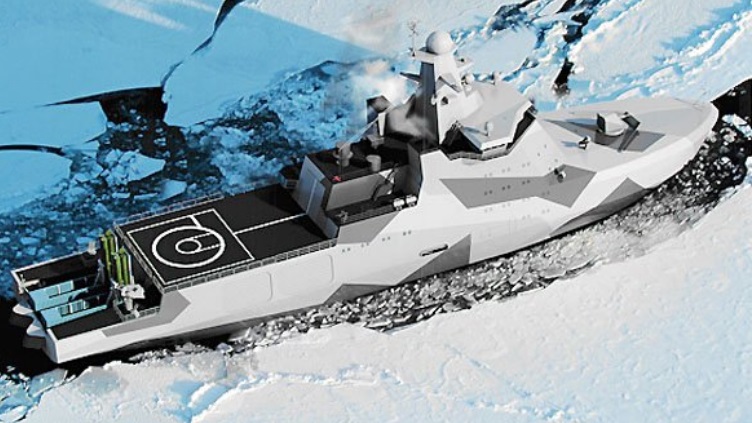
Project 23550, Ivan Papanin class icebreaking patrol vessel with towing capability and containerized cruise missiles.

Russia is building a class of small armed icebreakers, Project 23550. Four ships are planned, two for the Navy and two for the Russian Coast Guard. The first ship was laid down in 2017. None of the class have been completed.

  • Displacement: 8,500 tons (full load)
  • Length: 114 m (374 ft 0 in)
  • Beam: 18 m (59 ft 1 in)
  • Draft: 6 m (19 ft 8 in)
  • Propulsion: two 6,300-kilowatt propulsion motors for 16,800 HP
  • Speed: 18 knots

They are diesel electric with conventional twin shaft drive. They are designed to break ice up to 1.7 meters (5 ft 7 in) thick.

These ships have gotten a lot of press because they have been associated with use of containerized cruise missile systems. Such systems were also associated with the Project 22160 patrol ships, but in spite of the fact that all Project 22160 ships are based in the Black Sea, I have seen nothing to indicate they have actually been used as missile launchers.

The patrol, rather than icebreaker, character of this class is reflected in its length to beam ratio (6.33:1) which is greater than that of any of the other ships looked at here, with the exception of the Thetis class (7.8:1). That is also substantially greater than the length to beam ratios of Glacier (4.18:1), Healy (5.12:1), the Polar class (4.79:1), or Polar Security Cutter (5.19:1).

Otherwise, the Project 23550 ships seem to be logical successors of the Ivan Susanin class of eight small military icebreakers that date back to the 1970s.

Norway: 

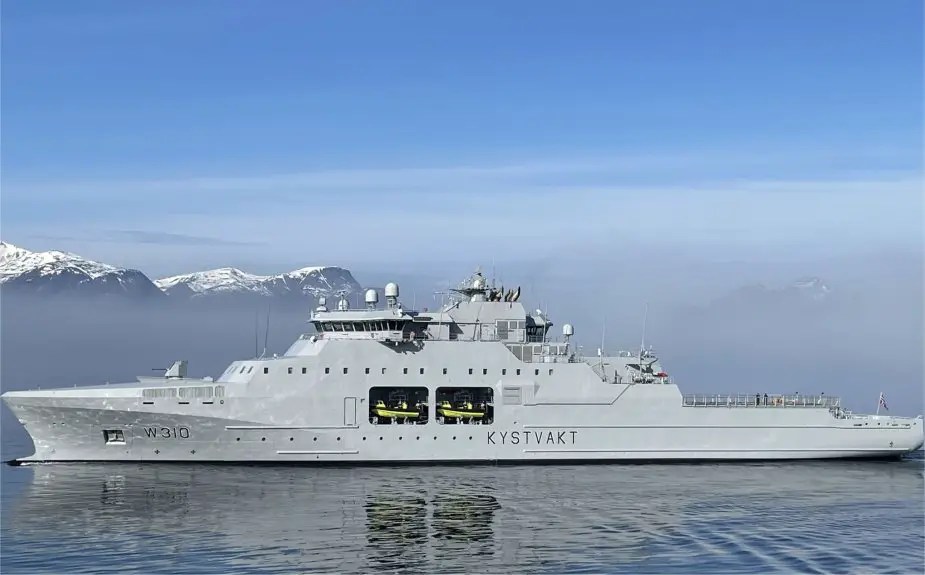
Jan Mayen class Offshore patrol vessel Jan Mayen. (Picture source: Vard)

Norway is completing a three-ship class of ice capable Offshore Patrol Vessels, the Jan Mayen class. The first was laid down in 2020 and at least two are already commissioned, with the third expected this year.

  • Displacement: 9,800 tons (Standard, full load will be greater. These are big OPVs.)
  • Length: 136.4 meters (447.4 ft) loa
  • Beam: 22 meters (72.16 ft)
  • Draft: 6.2 meter (20.3 ft)
  • Speed: 22 knots.

They are expected to hangar two NH90 helicopters (10,600 kg/23,370 lb max take-off weight) with deck space to land an AW101 (14,600 kg/32,188 lb max TO weight). They are expected to have an endurance of eight weeks, accommodations for 100, collective CBRN protection, and space for containers on deck. (See late addition at the end of the post for more details.)

More photos here.

Denmark:

OMT MPV-80 technical specifications

Denmark is in the preliminary stages of designing a replacement for their Thetis class ice capable frigates. Earlier reports had indicated a consortium has been selected to design and build vessels of a new class (pictured above) referred to as the MPV-80, a design intended to be “future proof” by the incorporation of modular systems. Later information seems to indicate no particular design has been chosen.

Trends:

I was curious to see if there were evolutionary changes over time in this type of ship. Chronologically, based on the “laid down” date of the first ship of class, from earliest to latest for which we have data, the order is:

First Group

  • Thetis (Denmark), 1988
  • Svalbard (Norway), 2000
  • Knud Rasmussen (Denmark), 2005
  • Protector class (New Zealand), 2005

Second Group

  • Harry DeWolf (Canada), 2016
  • Project 23550 (Russia), 2017
  • Jan Mayen (Norway), 2020
  • Canadian CG MPV, TBD
  • Thetis class replacement (Denmark), TBD

We have four new designs to look at. As with the earlier group, some seem more closely related to icebreakers (Svalbard, Harry DeWolf, Project 23550, and CCG MPV classes) while others are more conventional OPVs with adaptations for operating in ice.

Let’s look at how the new members of the two groups compare with their older counterparts.

Size

There has not been a lot of change in size between Svalbard (Norway), 6,375 tons, the only near icebreaker in the earlier group, and her newer Canadian and Russian counterparts. In fact, the Harry DeWolf class is, in some ways, a simplified version of the Svalbard design. The CCG MPV and Russian Project 23550 ships will be about 28.5% larger than the Svalbard. On the other hand, the Project 23550s and CCG MPV can be seen as 229% larger than the Ivan Susanin class of the late 70s, about 30% larger than the Wind class icebreakers of the 1940s, or almost exactly the same size as USS/USCGC Glacier, commissioned in 1955. They are only a little over half the size of USCGC Healy, and about 37% the size of the Polar Security Cutter.

Norway’s 9,800 ton Jan Mayen class, as the only new non-icebreaker example we have for an Arctic Patrol Cutter, represents a big jump in size from the earlier group, 2.8 times as large as the Thetis class, 5.2 times as large as the Protector class, and 5.7 times larger than the Knud Rasmussen class. Also, about 15% larger than the largest of the icebreaker style designs, the Project 23550s and CCG MPV. It should be noted that the Jan Mayen class will not replace the Svalbard, they are replacements for the Nordkapp class ice-strengthened patrol frigates, which were 3,200 tons full load. (See the late addition note at the end of the post. The Jan Mayen class bow does seem to have been designed to break ice.)

Speed

Here we see significant differences between the icebreaker group and the rest. All the icebreaker patrol ships have speeds between 17 and 18, with almost no difference between Svalbard (Norway, 2000) 17.5 knots, Harry DeWolf (Canada, 2016) 17 knots, and Project 23550 (Russia, 2017) 18 knots.

With the exception of the Knud Rasmussen class, (Denmark, 2005) 17 knots, which is a minimalist design, the non-icebreaker patrol ships show remarkable consistency, Thetis (Denmark, 1988), Protector class (New Zealand, 2005), and Jan Mayen (Norway, 2020) all have top speeds of 22 knots.

Propulsion

All the icebreaker designs are diesel electric, but while the Svalbard is powered by Azipods, the newer Harry DeWolf and Project 23550 designs use twin conventional shafts. The CCG MPV seem to replicate the Svalbard’s basic design.

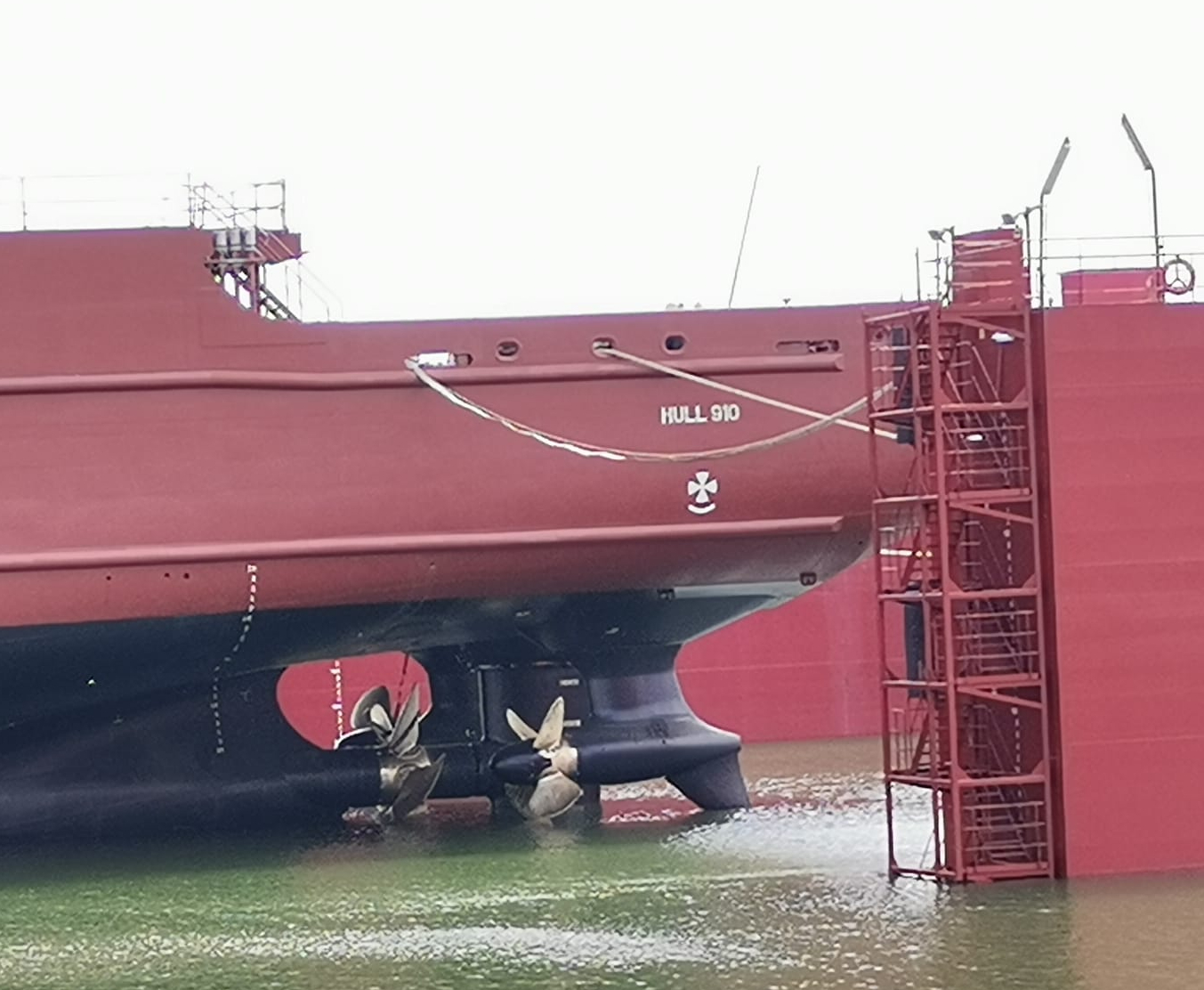
All the older non-icebreaking patrol ships use geared diesel propulsion. The Danish Thetis and Knud Rasmussen classes using single shaft propulsion; the Protector class has twin shafts. The newer, much larger Jan Mayen class have three screws including a center shaft and what appear to be Azipods providing the outer propellers.

Norwegian Jan Mayen class OPV under construction showing its three propellers, a conventionally shafted prop on the centerline and two rotating units. In addition, there is a rudder behind the centerline pro to allow directional control when the trainable units are idling.

Aviation

All eight of the classes of ships have flight decks and only the small Knud Rasmussen class lack a hangar. Only the newest and largest, the Jan Mayen class has provision for hangaring two helicopters (NH-90s). The Jan Mayen class also has a torpedo magazine for storage of helicopter weapons.

Weapons and Add-On Systems

There seems to be no particular trend in how they are armed as built. Three classes are equipped with 76mm guns, the Thetis and Knud Rasmussen classes from the earlier group and the Russian Project 23550 class from the newer group. Two classes are equipped with 57mm guns, the Norwegian Svalbard and Jan Mayen classes. Two classes are equipped with 25mm guns, the older New Zealand Protector class and the newer Canadian Navy Harry Dewolf class. The Canadian Coast Guard Harry DeWolf and CCG MPV classes, like all Canadian CG cutters is essentially unarmed.

Most of these ships include some provision for upgrades using modular or containerized systems. Even the oldest Danish ships incorporated the StanFlex system, that allowed addition of weapons including AAW and ASuW missiles and ASW torpedoes. The Russian Project 23550 has the reported ability to accept containerized cruise missiles. The Canadian Harry DeWolf class have tested use of a “Towed Reelable Active Passive Sonar” TRAPS. It appears that when Denmark does choose a design for their next class, it will incorporate even more flexibility using the SF Defense “Cube” system.

It should be noted that all of these designs, with the exception of the CCG MPV, were done before the Russian invasion of Ukraine set Europe on edge and before China became a “near Arctic power.” It appears, Denmark is determined that their Arctic Patrol Ship will be upgradable to a credible combatant.

Conclusions: 

While the US plans to build medium icebreakers for Arctic patrol, the other four Arctic nations, that have been patrolling Arctic waters for decades are building different types of ship.

We still see both Arctic patrol vessels that include strong icebreaker characteristics and some that do not. (See the late addition note at the end of the post. All the new arctic patrol vessels have icebreaker characteristics.) Maximum speeds have not materially changed, ranging from 17 to 22 knots. Clearly, they value good aviation facilities with preferably at least two aircraft, at least one helicopter and a UAS or second helicopter.

I have to believe the Norwegian Jan Mayen and the Russian Project 23550 represent the latest thinking on an Arctic patrol ship. The Canadian Harry Dewolf class is not much of a departure from the Norwegian Svalbard, and patrol was not a primary driver in the design of the CCG MPV.

The Norwegians have had a decade and a half experience with the Svalbard and apparently decided one icebreaker was enough. They had almost four decades of experience with the Nordkapp class before designing the Jan Mayen.

The Jan Mayen will certainly be able to go anywhere fishing vessels or other non-icebreakers will be able to go in the Arctic.  Still, I think they may regret not giving the ships an icebreaker bow. (A second look shows that the Jan Mayen does have a bow designed for icebreaking. See late addition note at the foot of the post.)

The Jan Mayen design might have been a bit different if it had been designed after the Russians attacked Ukraine.

The Project 23550 design is fairly conservative and probably relatively inexpensive. Compared to the preceding Ivan Susanin class, it is more than twice as large, 8,500 vice 3,710 tons; much longer, 374 vice 230 ft; faster, 18 vice 15.4 knots; but perhaps not as well armed if not equipped with containerized cruise missiles. While the project 23550 has a single 76mm gun, the older ships were armed with a twin 76mm and two 30mm Gatling guns. Notably the project 23550 has no credible defense against cruise missile or even UAS. Like all these ships, it was designed before the Russian Navy experienced combat in the Black Sea against Ukraine.

Reflection: 

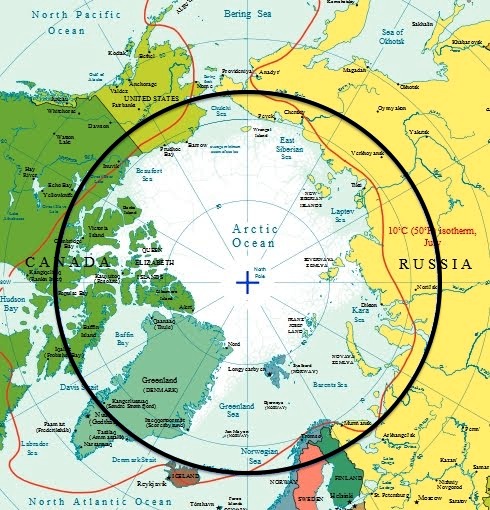
(In the comments below, when I say Arctic, I refer to the area North of the Arctic Circle. There are other definitions.)

The US icebreaker fleet is frequently compared to that of Russia, but the economic case for icebreakers for service in the Arctic for those two nations is completely different. The Russian economy is heavily dependent on mineral extraction from the Arctic. They have a relatively large population in the Arctic. They have several ports in the Arctic from which the minerals are shipped. They need icebreakers to keep those ports open and keep the minerals moving to export markets. Most of their icebreakers operate for commercial purposes. The Russian Navy and Coast Guard operate only a few light icebreakers.

If we compare our icebreaker fleet to that of other Arctic nations, we see an entirely different picture.

Canada has more interests in the Arctic than the US, though much less than Russia. They have a lot more area, and I believe a larger population in the Artic than the US. Their fleet of Polar icebreakers is nowhere near as large as large as that of the Russians. While they have a fairly large number of what the USCG would call light icebreakers, some of which operate in the Arctic during the summer, they have only a couple of what the USCG would call medium icebreakers. They do intend to build a couple of what the USCG would call heavy icebreakers, but currently they have none.

The Mainland of Norway extends about as far north as the Northern most parts of Alaska (71degrees 17′ 26″N). In addition, they administer the Arctic island archipelagoes of Jan Mayen (71 degrees N) and Svalbard (74-81 degrees N), but the Norwegian Navy and Coast Guard operate only one icebreaker, the Svalbard, which the USCG would consider a light icebreaker.

Denmark administers Greenland, most of which is in the Arctic. Cape Morris Jesup, the most northerly point in Greenland is only 383.4 nautical miles (710 km) from the North Pole, while the most northerly point in Alaska, Utgiagvik (formerly Pt. Barrow) is 1127 nautical miles from the Pole, but the Danish Navy has no icebreakers at all.

What does this mean for the US Coast Guard?

The US Coast Guard has not built nor operated any patrol vessels specifically for the Arctic since USCGC Storis was decommissioned in 2007 (commissioned 1942). Storis was one of the ships intended to be replaced by the Deepwater Program of Record.

The Coast Guard has sent at least one National Security Cutter to patrol of the North coast of Alaska.

The Coast Guard has recognized a growing need for presence in the Arctic for SAR, fisheries protection, and potentially pollution response. Currently it appears these missions will go to the planned new class of medium icebreakers, the “Arctic Security Cutters.”

The Arctic Security Cutters are likely to be large, complex, and expensive ships similar to Healy, but I have also seen reference to the need for shallow draft.

For fisheries protection and SAR, the Coast Guard needs the ability to go wherever fishing vessels are likely to go. On the other hand, significant frequent commercial traffic over the length of the Northwest Passage is unlikely, and if it develops, that would be primarily Canada’s responsibility.

It seems we could build two or three light icebreaking Arctic Patrol Cutters of less than 10,000 tons for the price of one medium icebreaker. It is true that they might not be able to go everywhere a medium icebreaker could go, but they could go where most of the missions require. Even light icebreakers can be remarkably capable. Svalbard has made it to the North Pole several times and took over recovery of research buoys for Healy when she had a major machinery casualty. Even little Storis, with only 1,800 HP, transited the Northwest Passage. A Harry DeWolf class also transited the Northwest Passage as part of a circumnavigation of North America.

Perhaps the Coast Guard should consider if perhaps one more Heavy Icebreaker and a number of Arctic Patrol Cutters with light icebreaking capability might be both cheaper and more effective than a new class of medium icebreakers. Given the difficulties we have had with the Polar Security Cutter program, it might also be quicker way to get more Arctic presence.


Late addition: 

I ran across a diagram of the Knud Rasmussen class after writing the post above and found that the class has the cutaway bow typical of icebreakers. That made me wonder if perhaps I had misjudged the shape of the Jan Rasmussen class bow, so I took another look. If you click on the photo below and look closely at the bow below the waterline you will see that while it is a bulbous bow, the bottom of the bulb is the spoon shape typical of modern icebreakers. 

The USCG might do well to buy and build the Jan Mayen design with minimal changes. They may actually have enough horsepower to be considered medium icebreaker, though they are probably much different from what the Coast Guard has been thinking of for their Arctic Security Cutter. 

I would also hope that we would apply a sense urgency to the program and not wait until the Polar Security Cutter program is finished. 

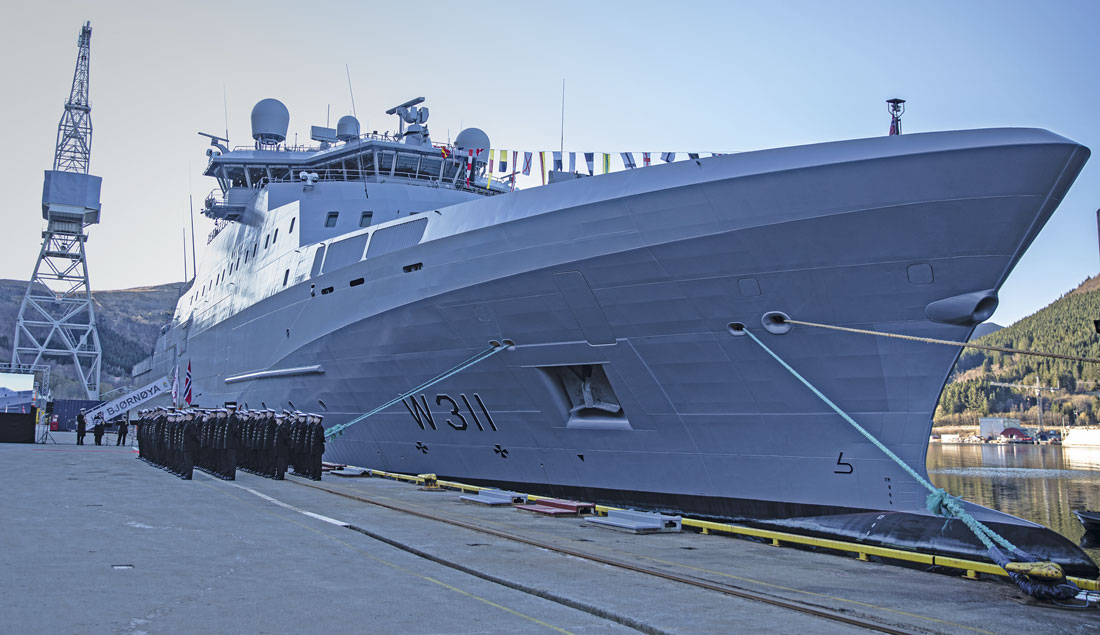
Jan Jayen forward.
“Another photograph of Bjørnøya shows how there’s a sharp “ridge” on top of the bulbous bow. That should help splitting the floes before they come in contact with the stem.” –Tups

“How Does Sweden and Finland Joining NATO Affect the U.S. Coast Guard?” –By Peter Ong

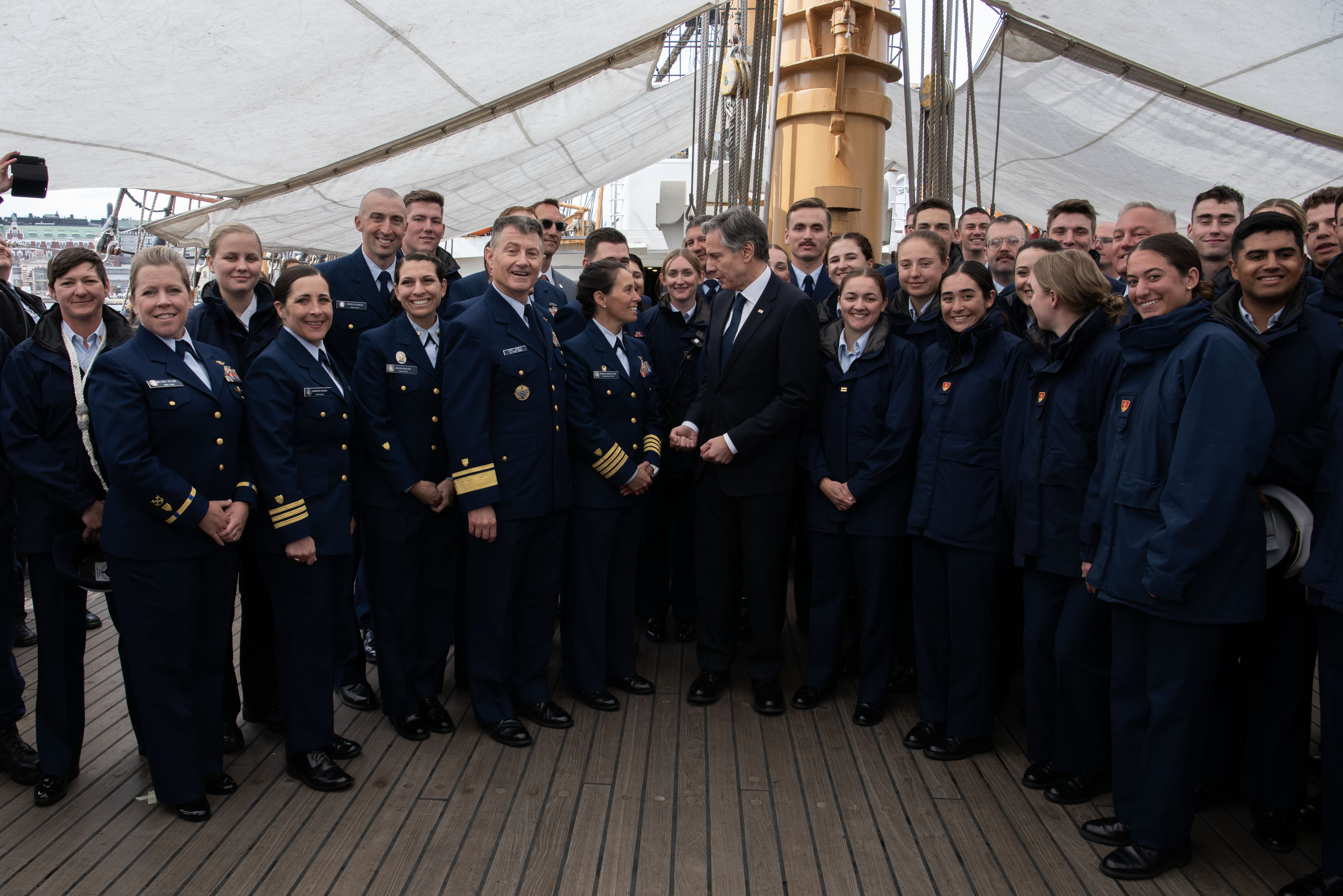
U.S. Secretary of State Antony Blinken, middle, takes a photo with the USCGC Eagle’s crew during a reception aboard the cutter, June 2, 2023, in Helsinki, Finland. Eagle is a tall ship used as a training platform for future Coast Guard Academy officers as well as a vessel utilized for establishing and maintaining domestic and international relationships. (U.S. Coast Guard photo by Petty Officer 3rd Class Carmen Caver)

Guest author Peter Ong provides a look at the continuing relationship between the Coast Guard and new NATO members Sweden and Finland. 

With the war in Ukraine affecting current economic and security situations in 2022-2024 Europe, the North Atlantic Treaty Organization (NATO) welcomed its two newest members, Finland and Sweden, both Arctic nations. Finland became a member of NATO on 4 April 2023. Sweden joined NATO on 7 March 2024.

NATO’s European members and when they joined the NATO alliance. Source: Wikipedia

I sent a media inquiry to the USCG’s Headquarters, Public Affairs Office, Washington D.C., asking how Sweden and Finland becoming NATO’s newest members might influence the U.S. Coast Guard in terms of icebreaking, cutter designs, exercises, training, enforcement, and maritime security.

The USCG replied, “From a regional perspective, this will increase cooperation and improve interoperability.  Information sharing, exercises, and operations will be much easier to coordinate with all the Nordics now in NATO.”


U.S. Coast Guard Petty Officer 1st Class Arthur Flaherty, a boatswain’s mate assigned to the USCGC Hamilton (WMSL 753), prepares to transfer Hamilton crewmembers onto the Swedish Coast Guard vessel Amfitrite in the Baltic Sea, Oct. 31, 2022. Hamilton was on deployment in the U.S. Naval Forces Europe area of operations. (U.S. Coast Guard photo by Petty Officer 3rd Class Alejandro Rivera)

The United States Coast Guard has a history of visiting and working with partner Baltic nations to improve relationships, training, interoperability, communications, intelligence, and coordination. Even before they entered NATO the US Coast Guard had a long-standing relationship with Sweden and Finland through the Arctic Coast Guard Forum.

U.S. Coast Guard Lt. Cmdr. Tanya Kuprak, engineering officer aboard USCGC Hamilton (WMSL 753), gives a tour of the engine room to Swedish Coast Guard members while underway in the Baltic Sea, Oct. 30, 2022. Hamilton was deployed with U.S. Naval Forces Europe and U.S. Sixth Fleet. (U.S. Coast Guard photo by Petty Officer 3rd Class Alejandro Rivera)

Recent interactions include:

United States’ relationship with Finland has benefitted in the area of model testing and consulting on the current Great Lakes icebreaker, Mackinaw, regarding its design and Azipod propulsion.

“Embracing opportunities for resilient logistical infrastructure in the Arctic” –The Watch

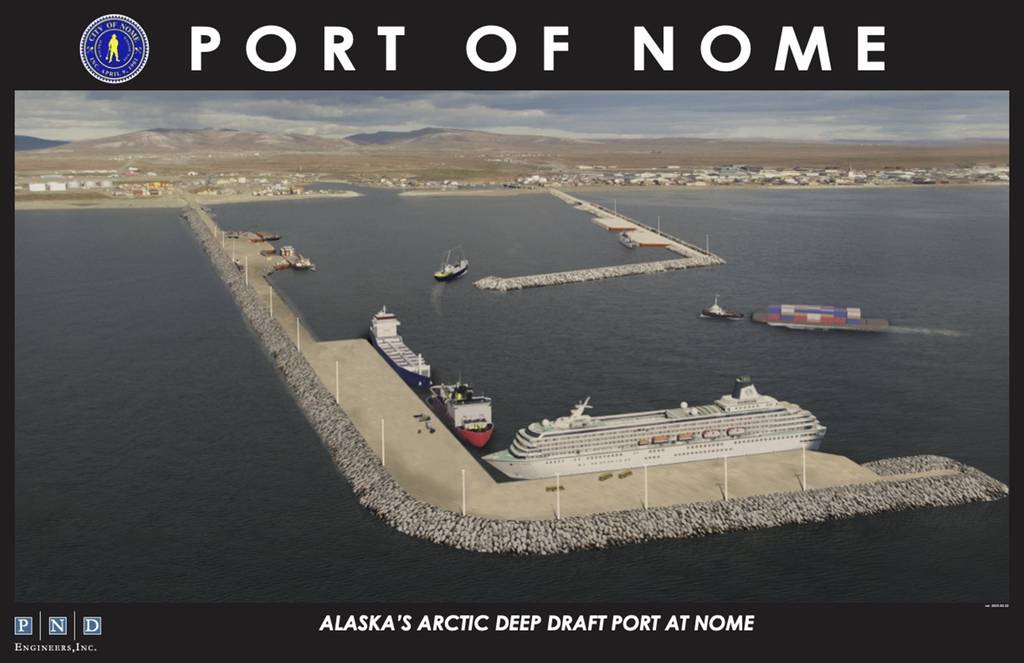
This rendering provided by the City of Nome shows how the Port of Nome, Alaska, will appear following an expansion project that will cost more than $600 million. Shipping lanes that were once clogged with ice for much of the year along Alaska’s western and northern coasts have relented thanks to global warming, and the nation’s first deep water Arctic port should be operational in Nome by the end of the decade. (PND Engineers Inc./City of Nome via AP)

Without offering much detail, the NORTHCOM on-line magazine “The Watch” reports the intention to invest in improvements in three Alaska ports, Port of Alaska (Anchorage), Valdez, and Nome.

None of these ports are above the Arctic Circle, but Nome is very close.

Only the development of a deepwater port at Nome appears to be driven by national security considerations, though modernization in Anchorage and Valdez may offer incidental logistical benefits.

We have been talking about a deepwater port in or near Nome since 2018.

I would not be surprised to see Nome as a future Coast Guard buoy tender homeport and seasonal air station.

Nome’s proximity to the Bering Strait and Russia, all within 150 miles, makes it strategically important.

Port of Alaska (Anchorage). Traveler photo submitted by 2013TravelinFool (Jul 2017)

Port of Alaska (Anchorage) is the only designated Strategic Port in Alaska.  It appears the upgrades are replacements for existing facilities including updated technology.

There is a comprehensive, 121-page plan for Valdez on-line here. It includes some upgrades of the container port but envisions minimal Corps of Engineers support and involvement. Most of the work seems to be in support of tourism, fishing, and local marine industry.

“US Claims Huge Chunk of Seabed Amid Strategic Push For Resources” –gCaptain/Bloomberg

gCaptain reports the US has made its claim to Continental Shelf beyond its Exclusive Economic Zone.

Much of the area is in the Arctic. I am sure research conducted by scientists operating from USCGC Healy had a lot to do with researching this area.

There are overlaps in areas also claimed by Canada, the Bahamas and Japan that will have to be resolved.

“Head of Royal Canadian Navy Outlines Ottawa’s Pacific Strategy” –USNI

This is starting to get a little old, but I am trying to catch up.

US Naval Institute reports on a Center for Strategic and International Studies (CSIS) interview with Vice Adm. Angus Topshee, Commander, Royal Canadian Navy, Chief of the Naval Staff, that discusses their Navy’s increased emphasis on the Pacific.

I have included the video of the interview above.

Three AOPSs at pier before the commissioning ceremony for HMCS Margaret Brooke (AOPV-431). Canadian Navy photo

He discusses operating with the Coast Guard for drug interdiction, icebreaking, and fisheries beginning about time 9:00. The new Arctic Offshore Patrol Ships are expected to play important roles in these activities.

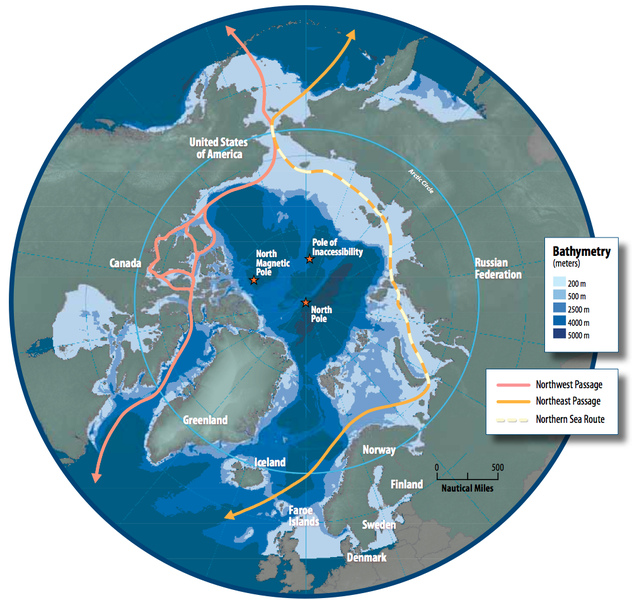
Map of the Arctic region showing shipping routes Northeast Passage, Northern Sea Route, and Northwest Passage, and bathymetry, Arctic Council, by Susie Harder

He explains why he does not see the NW Passage (which includes Alaskan waters) as a future international trade route (12:30).

He anticipates an end to the moratorium on fishing in the Arctic (14:30).

Discusses response to “Gray Zone” threats to undersea infrastructure (15:30).

Discussed war in Ukraine (19:00). Re sinking of Moskva, “Cruise missiles should not sink ships” (20:30). Drones (21:00). AI (24:50).

Where will they concentrate their efforts–Indo-Pacific (27:00). AOPS will be used for Fisheries in the Western Pacific.

Artic is an expeditionary theater, you have to bring everything with you, because there are no port facilities (29:00). Looking to create dual use facilities.

Recruiting (31:30). National Shipbuilding program (35:30), Technology sharing.