“USS Minneapolis-Saint Paul Makes Multiple Drug Busts” –4th Fleet

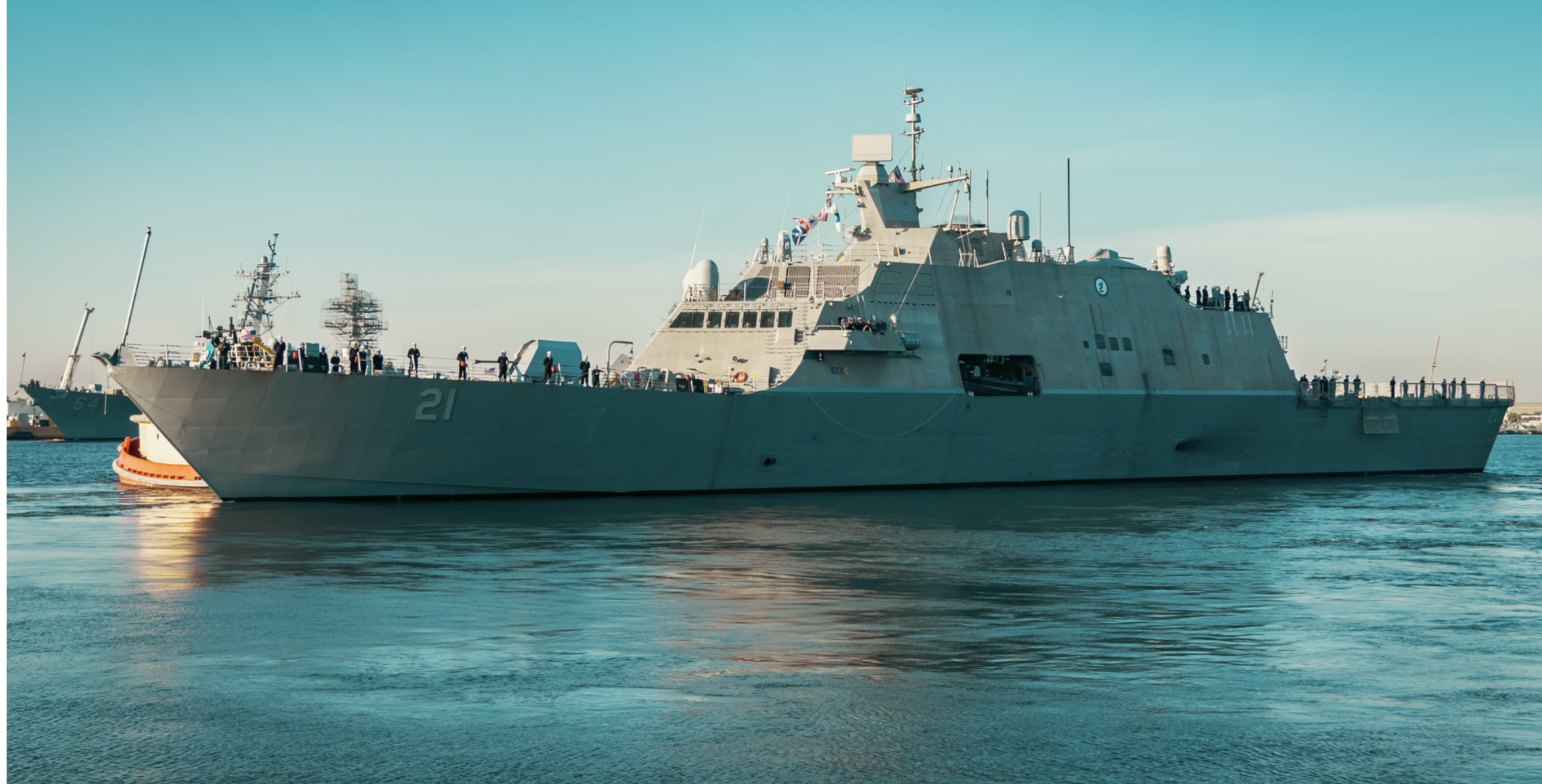
250326-N-OZ224-3072 NAVAL STATION MAYPORT, Fla. (Mar. 26, 2025) – The Freedom-class littoral combat ship USS Minneapolis-Saint Paul (LCS 21) departs Naval Station Mayport for her maiden deployment, Mar. 26, 2025. LCS 21 is deploying to the U.S. 4th Fleet area of operations is support of counter-illicit drug trafficking operations. (U.S. Navy photo by Mass Communication Specialist 1st Class Brandon J. Vinson)

Below is a news release from USNAVSOUTH/4TH FLEET

Good to see Navy participating, and doing so with their units most appropriate for the drug interdiction mission.

The additional USN assets that have seen much press coverage lately are positioned primarily to intercept migrants rather than drugs.

Patrols in the Caribbean, like this one, can certainly help with drug interdiction, but the Caribbean is pretty well covered. The area of greatest need for additional larger, sea-going, drug interdiction assets is in the Eastern Pacific. The Navy does not seem eager help in this area.

USS Minneapolis-Saint Paul (LCS 21) was commissioned 21 May, 2022. This was her first deployment.


April 17, 2025

USS Minneapolis-Saint Paul Makes Multiple Drug Busts

Minneapolis-Saint Paul, with an embarked U.S. Coast Guard (USCG) Law Enforcement Detachment (LEDET) and Helicopter Maritime Strike Squadron (HSM) 50, Detachment Three, made the two busts in the Caribbean, taking out vessels through a combination of air and surface operations.

The busts resulted in the confiscation of 580 kilograms (1,278.9 lbs; $9,463,860) of cocaine and 2,480 pounds of marijuana. ($2,807,360). “The USS Minneapolis-Saint Paul executed their duties seamlessly in the combined effort to protect the homeland from illicit maritime trafficking.” said Rear Adm. Carlos Sardiello, commander of U.S. Naval Forces Southern Command/U.S. 4th Fleet. “Working in coordination with the Coast Guard and our joint partners, we look forward to seeing continued measurable impact delivered by the professional and talented crew of the USS Minneapolis-Saint Paul across the region.”

“We train diligently and stand ready to execute interdiction missions at moment’s notice, said Minneapolis-Saint Paul commanding officer Cmdr. Steven Fresse, “To be able to make an immediate impact so early on during our maiden deployment is a testament to the hard work and skills of the ship’s crew.”

USS Minneapolis-Saint Paul is currently assigned to Commander, Task Force 45 (CTF 45). CTF-45 is the 4th Fleet surface task force charged with executing combined naval operations, building and strengthening Latin American, south of Mexico, and Caribbean maritime partnerships, and acting as a DoD ready service provider to Joint Interagency Task Force – South in support of counter illicit-drug trafficking operations in the Central and South American waters.

The U.S. Coast Guard is simultaneously a military service and the United States’ lead federal maritime law enforcement agency with authority to enforce national and international laws on the high seas and waters within U.S. jurisdiction. Coast Guard LEDETs regularly deploy aboard U.S. Navy and foreign allied navy ships, and during these deployments the LEDETs, under U.S. law, board vessels, seize illegal drugs and apprehend suspects. These forces also work closely with other regional partner nation coast guards and naval forces to provide support to visit, board, search and seizure operations within partner nation territorial waters. Once an interdiction becomes imminent, the law enforcement phase of the operation begins, and control of the operation shifts to the U.S. Coast Guard for the interdiction and apprehension phases. Interdictions in the Caribbean Sea are performed by members of the U.S. Coast Guard under the authority and control of the Seventh Coast Guard District, headquartered in Miami.

U.S. Naval Forces Southern Command/U.S. 4th Fleet supports U.S. Southern Command’s joint and combined military operations by employing maritime forces in cooperative maritime security operations to maintain access, enhance interoperability, and build enduring partnerships in order to enhance regional security and promote peace, stability and prosperity in the Caribbean, Central and South American region.
Fisheries Enforcement from a Littoral Combat Ship

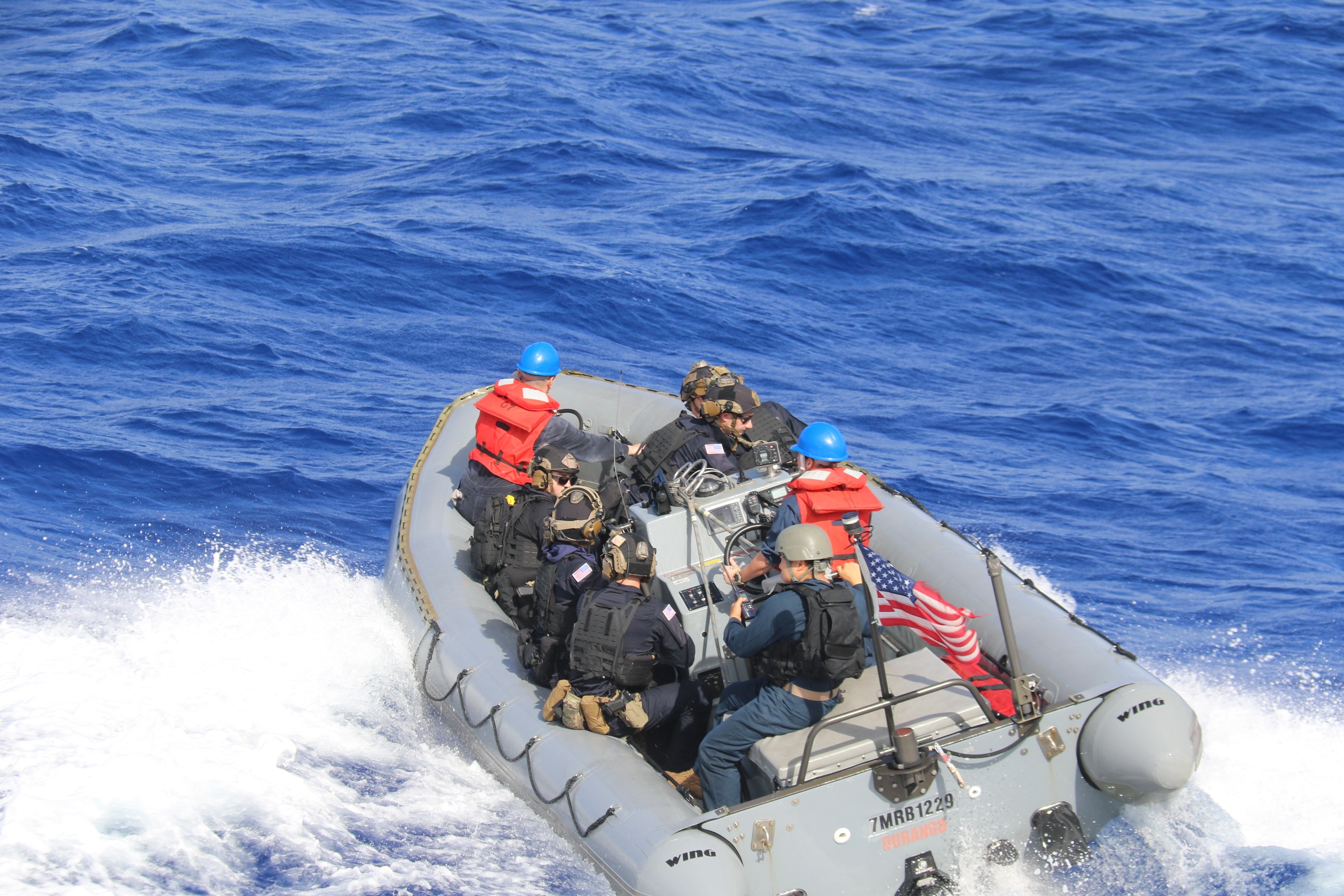
PACIFIC OCEAN – Sailors from USS Omaha (LCS 12), along with five U.S. Coast Guard law enforcement members, transit in a rigid-hull inflatable boat to a foreign flagged fishing vessel in support of the Oceania Maritime Security Initiative (OMSI) in the Pacific Ocean, Sept. 12. Omaha, assigned to U.S. 3rd Fleet, is operating in support of OMSI in the Indo-Pacific region. A U.S. Coast Guard law enforcement detachment from the Pacific Tactical Law Enforcement Team embarked aboard Omaha is supporting maritime fishery law enforcement operations for U.S. and Pacific Island nations in Oceania. OMSI is a Secretary of Defense program that leverages Department of Defense assets to increase U.S. Coast Guard maritime security and maritime domain awareness support in Oceania through operations in remote U.S. Exclusive Economic Zones and bilateral maritime law enforcement agreements with Pacific Island nations. (U.S. Navy photo by Hospital Corpsman First Class Weiju Lai)

Below is a news release from 3rd Fleet. TACLET taking the opportunity to use a Navy unit’s transit time to do some fisheries enforcement. Photo below for reference.

PACIFIC OCEAN (Aug. 8, 2021) The Independence variant littoral combat ship USS Omaha (LCS 12) simulates a refueling-at-sea with the aircraft carrier USS Abraham Lincoln (CVN 72). (U.S. Navy photo by Mass Communication Specialist 3rd Class Javier Reyes)


Sept. 20, 2024

USS Omaha participates in Oceania Maritime Security Initiative

By Commander, Littoral Combat Ship Squadron 1

The Independence-variant littoral combat ship USS Omaha (LCS 12), with an embarked detachment from Helicopter Maritime Strike Squadron (HSM) 35 and a law enforcement detachment from U.S. Coast Guard Tactical Law Enforcement Team Pacific, began operations in support of Oceania Maritime Security Initiative (OMSI) Sept. 8.

A Secretary of Defense program, OMSI is aimed at diminishing transnational illegal activity on the high seas in the Pacific Island nations of Oceania’s Exclusive Economic Zones (EEZ), as well as increasing interoperability with partner nations.

Omaha’s range and capabilities allow the embarked U.S. Coast Guard law enforcement detachment the ability to access the remote U.S. and Pacific Island nations’ EEZs.

“We embrace the opportunity to work closely with the U.S. Coast Guard as we help enforce economic policies among some of our closest partners in the Western and Central Pacific,” said U.S. Navy Cmdr. Kevin Smith, commanding officer of Omaha. “It is rewarding to work with these island nations to patrol their waters, maintaining a free and open region.”

The objective of OMSI is to reduce and eliminate illegal, unregulated and unreported fishing, combat transnational crimes in EEZs of the Western and Central Pacific region and enhance regional security.

“The partnership between the U.S. Navy and U.S. Coast Guard plays an integral role in the OMSI mission,” said Coast Guard Chief Maritime Enforcement Specialist Kyle Smouse. “Deploying U.S. Coast Guard law enforcement detachments aboard U.S. Navy vessels allows the Coast Guard to have a greater presence and impact in enforcing Western and Central Pacific Fisheries Commission (WCPFC) regulations. These areas of operation would be difficult to reach without the support of the U.S. Navy.”

The WCPFC international fisheries agreement focuses on the long-term conservation and sustainable use of fish stocks in the Western and Central Pacific Ocean. The WCPFC seeks to address problems in the management of the high seas fisheries in the Western and Central Pacific Ocean, where there is unregulated fishing and vessel re-flagging to evade controls.

Omaha, homeported in San Diego and assigned to U.S. 3rd Fleet, is on a scheduled deployment in the Pacific Ocean. Littoral combat ships are fast, optimally manned, mission-tailored surface combatants that operate in near-shore and open-ocean environments, winning against 21st-century coastal threats.

“Navy, Coast Guard Begin Oceania Maritime Security Initiative Patrol” –DVIDS

USS Mobile (LCS 26), an Independence-class littoral combat ship, was commissioned in 2021 and is homeported in San Diego. (U.S. Navy photo by Eric Parsons/Released)

Below is a press release from the Defense Visual Information Distribution Service (DVIDS). This may not be much different from the previous times Coast Guard Law Enforcement Detachments (LEDETs) were assigned to Navy units transiting to the Western Pacific. It is not at all clear how long they will be doing IUU fisheries enforcement.

SAN DIEGO— The U.S. Navy and U.S. Coast Guard began their joint patrol in the Western Pacific under the Oceania Maritime Security Initiative (OMSI) to reduce and eliminate illegal, unregulated, unreported fishing, combat transnational crimes, and enhance regional security, March 20.

“OMSI is imperative to ensure that the Western and Central Pacific Fisheries Commission Convention (WCPFC) agreement is upheld within the Indo-Pacific region,” said Cmdr. Richard Skinnell, commanding officer of the Navy’s primary participating unit, the Independence-variant littoral combat ship USS Mobile (LCD 26). “This initiative allows us the opportunity to work jointly with other branches of the military as well as our allies and partners.”

OMSI, a Secretary of Defense program, improves maritime security and domain awareness by enabling Coast Guard law enforcement personnel to conduct maritime law enforcement operations from Navy ships. These joint and combined operations ensure the U.S. military honors its security commitments to allies, partners, and friends.
“Collaborating with our partners throughout Oceania is essential in ensuring a free and open Blue Pacific,” said Cmdr. Jeff Bryant, chief of enforcement, U.S. Coast Guard District Fourteen. It is a privilege and we are proud to support the Federated States of Micronesia through dedicated partnership in the effort to maintain maritime governance and preserve maritime sovereignty.”

The WCPFC international fisheries agreement prioritizes the long-term conservation and sustainable use of highly migratory fish stocks in the Western and Central Pacific Ocean.

“The U.S. Coast Guard is always ready and looking forward to executing the OMSI mission alongside our U.S. Navy partners,” said Bryant.

Independence-variant littoral combat ship USS Mobile (LCS 26), with an embarked Coast Guard law enforcement detachment from the Pacific Tactical Law Enforcement Team, supports maritime law with partner nations by enforcing the WCPFC agreement and by suppressing illicit activities. Independence-variant LCS is the platform of choice for this mission due to its fast and agile maneuvering capabilities, large flight deck with manned and unmanned aviation assets and surface warfare mission set.

An integral part of U.S. Pacific Fleet, U.S. 3rd Fleet operates naval forces in the Indo-Pacific and provides the realistic, relevant training necessary to flawlessly execute our Navy’s role across the full spectrum of military operations–from combat operations to humanitarian assistance and disaster relief. U.S. 3rd Fleet works together with our allies and partners to advance freedom of navigation, the rule of law, and other principles that underpin security for the Indo-Pacific region.

I only saw this press release because this was buried in this US Naval Institute News Service article, “Makin Island ARG Docks in Busan, 3 LCS Now Underway in Indo- PACOM,”

“Meanwhile, a third U.S. Littoral Combat Ship, USS Mobile (LCS-26), is now deployed to the Indo-Pacific, joining USS Charleston (LCS-18) and USS Oakland (LCS-24), according to a 3rd Fleet release on Thursday.

The LCSs are taking part in U.S. Navy and U.S. Coast Guard joint patrol in the Western Pacific under the Oceania Maritime Security Initiative (OMSI) to reduce and eliminate illegal, unregulated, unreported fishing, combat transnational crimes and enhance regional security with the patrol being conducted by Mobile with an embarked Coast Guard law enforcement detachment from the Pacific Tactical Law Enforcement Team. Charleston is currently operating around the Indian Ocean while Oakland is around the South China Sea.”

The USNI article may give the impression that all three LCS have Coast Guard LEDETs aboard and that all three are countering IUU, but the referenced news release only mentions USS Mobile. 

It may be significant that USS Mobile is conducting these operations under 3rd Fleet rather than 7th Fleet. Recently 3rd Fleet, which previously was primarily a training and readiness organization, has been taking on more operational responsibility. We may start seeing more of this kind of activity. 

“Coast Guard begins multi-month fisheries enforcement operation with Bermuda” –News Release

Below is a 5th District news release concerning a new level of cooperation between the USCG and Bermuda to counter Illegal, Unreported, Unregulated (IUU) fishing. This certainly makes sense, since the Bermuda and the US share the same fish stocks. No matter where overfishing of that stock occurs, it hurts both US and Bermudian fishermen and our economies.

This seems to be the latest in a trend toward pooling resources, using the ship-rider program and Law Enforcement Detachments, to enforce norms for mutual benefit. Bermuda is a British Overseas Territory that lies 559 nautical miles (1,035 km) ESE of North Carolina. Britain, along with Canada, the Netherlands, and France, has been helping the USCG’s drug interdiction efforts.

(Bermuda is a great liberty port. I have found memories. Took my family back recently. I am sure the crews will enjoy Bermudian hospitality.)

The Bermuda Coast Guard was formed in February 2020.

News Release

U.S. Coast Guard 5th District Mid-Atlantic

Coast Guard begins multi-month fisheries enforcement operation with Bermuda

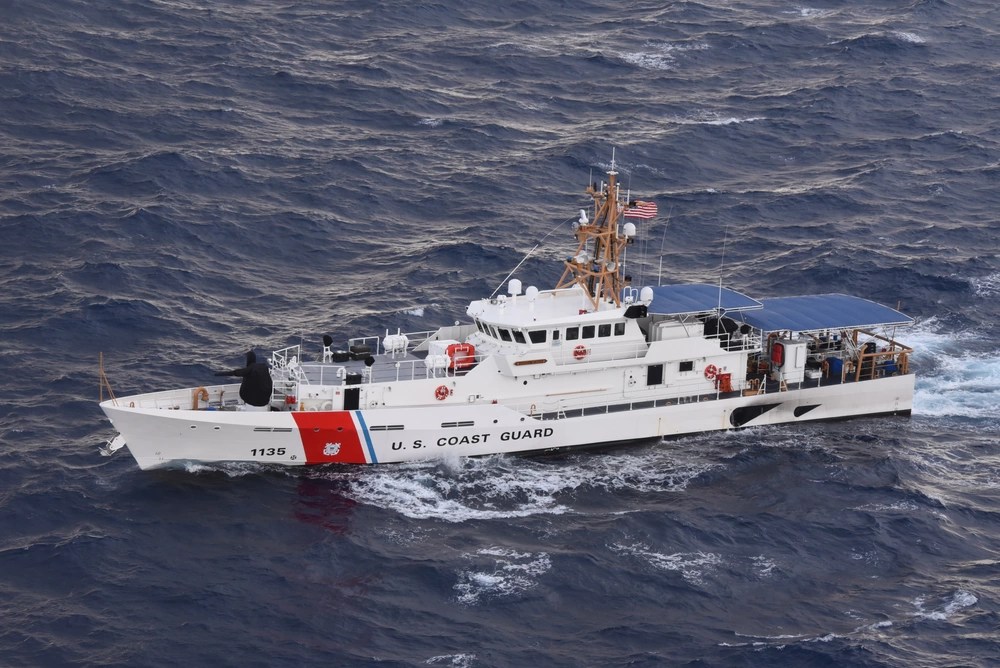
USCGC Angela McShan (WPC-1135)

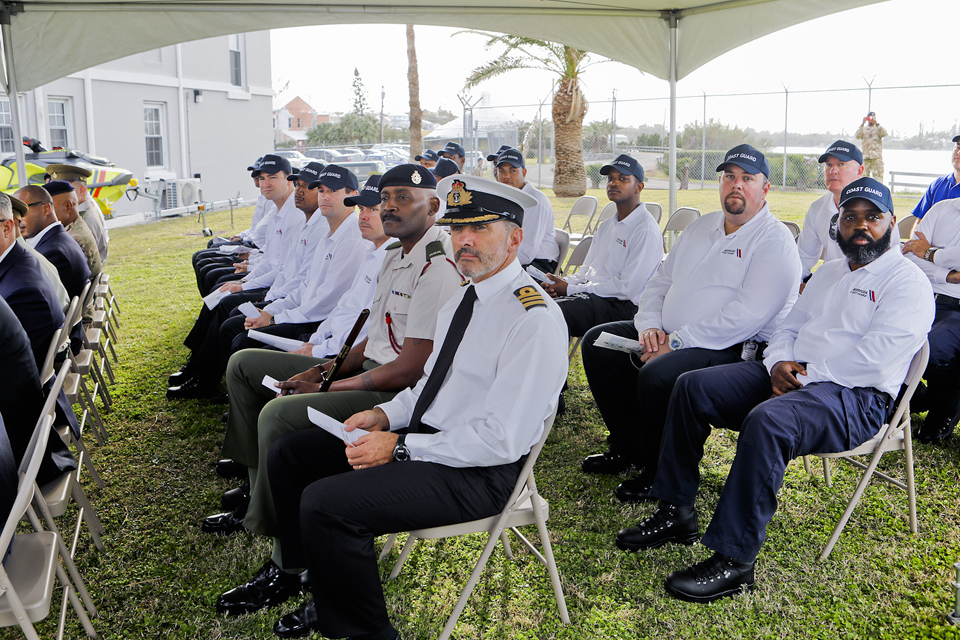
PORTSMOUTH, Va. — U.S. Coast Guard Cutter Angela McShan (WPC-1135) is scheduled to arrive in Bermuda on April 6 as part of a multi-month fisheries enforcement operation in concert with the Bermuda Department of Environment and Natural Resources, Royal Bermuda Regiment, Bermuda Coast Guard, and Bermuda Police Services. 

The cutter will be the first of four Coast Guard ships that will patrol seaward of the Bermuda Exclusive Economic Zone (EEZ), which extends 230 miles from shore. The joint operation will expand upon the long-standing U.S.-Bermuda partnership, as well as emphasize protection of the environment and living marine resources in this region. 

The operation is a result of recent meetings between Bermuda’s Deputy Governor Alison Crocket, Deputy Premier Walter Roban, Permanent Secretary in Bermuda’s Ministry of Home Affairs Rozy Azhar, United States Consul General in Bermuda Karen Grissette and Rear Admiral Laura Dickey, the U.S. Coast Guard Fifth District Commander.  The professional exchange focused on increasing efforts to counter illegal, unreported and unregulated (IUU) fishing, a global issue recently detected in the Mid-Atlantic.  

“It was an honor to meet Rear Admiral Dickey and her staff, along with the U.S. Consul and her staff,” noted Deputy Premier Roban.  “This operation begins a new chapter of cooperation with the U.S. Government in supporting illegal, unreported fishing and other unacceptable activity in our waters.  All is as a result of a meeting held with the National Climate Advisor to U.S. President Biden, Gina McCarthy, at COP26 where we discussed matters important to Bermuda and the United States.  The willingness of the United States to support Bermuda in our effort to oversee our EEZ is in step with our centuries’ long relationship as neighbors.  My gratitude on behalf of the people of Bermuda extends to the U.S. Consul’s Office in Bermuda for facilitating these meetings and the support we will get from the United States Coast Guard.”

As the worldwide demand for fish as a protein source continues to grow, IUU fishing will have a profound impact on the security of all countries with a maritime boundary. Left unenforced, IUU fishing will threaten global geo-political security, undermine maritime governance, and impact a nation’s ability to achieve domestic food security.

“We’re excited to join with Bermuda to help detect and monitor potential IUU fishing in the region,” said Rear Admiral Dickey.  “As we each work to safeguard our respective Exclusive Economic Zones, we’re fortunate to build on our long-standing relationship to partner together in this effort to protect global fish stocks and promote adherence to international rules.”

“The United States is proud to partner with Bermuda to promote security and lawful conduct in the Atlantic region,” added U.S. Consul General Karen Grissette.  “Reinforcing the United States’ security partnership with Bermuda is one of my top priorities, so I am proud to welcome these U.S. Coast Guard cutters to advance our shared interests.  This important operation is one more tangible demonstration of the close security collaboration between Bermuda and the United States.”  

The Sentinel-class fast response cutter (WPC) is a key component of the Coast Guard’s offshore fleet that is capable of deploying independently to conduct missions that include port, waterways and coastal security, fishery patrols, search and rescue, and national defense.

Navy to Decommission Cyclone Class Patrol Craft

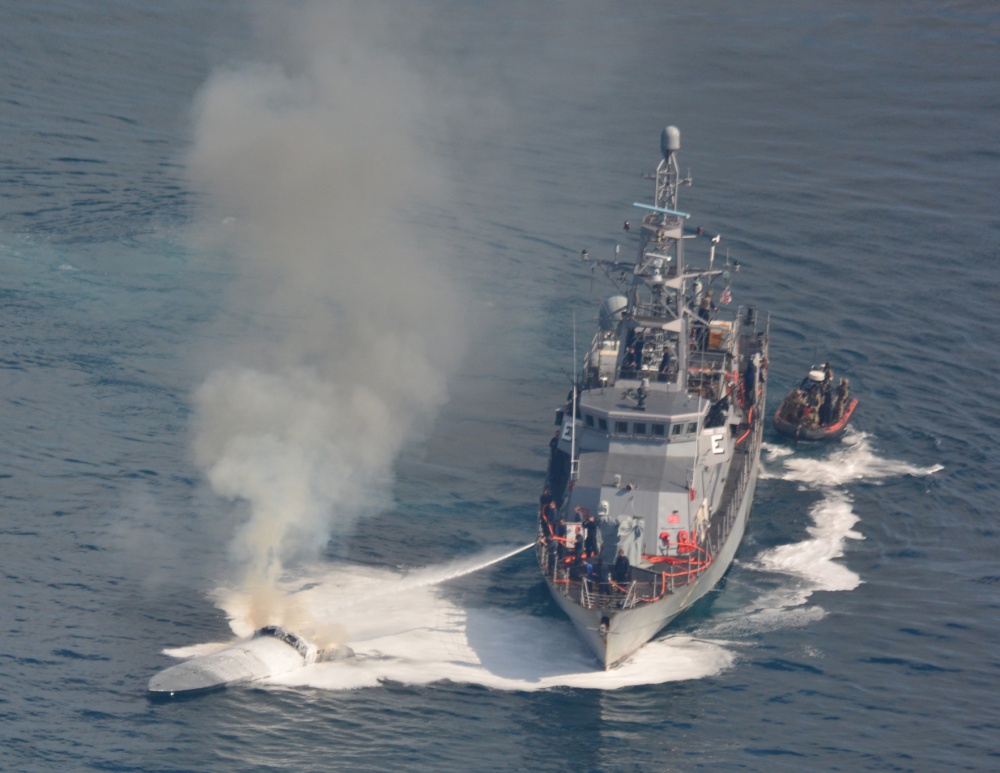
Cyclone-class patrol coastal USS Zephyr (PC 8) crew conducts ship-to-ship firefighting to extinguish a fire aboard a low-profile go-fast vessel suspected of smuggling in international waters of the Eastern Pacific Ocean April 7, 2018. Photo by Petty Officer 1st Class Mark Barney

I learned recently that the Navy expects to decommission their 13 Cyclone class patrol craft in FY2021. This is significant for the Coast Guard for a couple of reasons.

The three based in Mayport have consistently been used to augment Coast Guard vessels, hosting Law Enforcement Detachments for drug enforcement (a recent example). .

Second, these vessels frequently partner with Coast Guard patrol boats of PATFORSWA based in Bahrain. Their decommissioning may put a greater load on the Coast Guard unit as it begins to receive Webber class as replacements for the existing six Island class patrol boats.

ARABIAN GULF (Sept. 16, 2018) A MK-60 Griffin surface-to-surface missile is launched from coastal patrol ship USS Thunderbolt (PC 12). (Photo by MC2 Kevin Steinberg)

For the Island class cutters in the Persian Gulf, the Cyclone class have served as better armed, big brothers, adding a bit of muscle to escort missions where Iranian Fast Inshore Attack Craft might be encountered. While the Webber class, that will be replacing the Island class, are a bit better armed than the 110s, unless they are extensively modified, they will not come close to replacing the missile armed Cyclone class. LCS are supposed to replace the Cyclone class, but they still have not demonstrated the ability to sustain a reasonable number of vessels in a remote theater. LCS are also too large to go many of the places the Cyclone class were able to.

USS Hurricane (PC-3)

These little ships have seemed to count for very little to the Navy. Regularly we see a count of “Battleforce ships”“Battleforce ships” that includes everything from aircraft carriers down to civilian crewed, unarmed fleet tugs (T-ATF), salvage ships (T-ARS), and high speed intra-theater transports (T-EPF, really aluminum hulled, high speed ferries). The Cyclone class were only included in the count one year (2014), so their loss will be largely invisible. (Significantly, this count of what many must assume is the National Fleet also makes no mention of Coast Guard assets either.)

Until ten of the class found a home in Bahrain, the Navy seemed to have had a hard time figuring out what to do with them. Originally intended to support the special warfare community, they were considered to large for that mission. Of the original fourteen one was transferred to the Philippine Navy. Five had been temporarily commissioned as Coast Guard cutters.

Other than the far larger LCS, the navy has no plans to replace these little ships, that have reportedly been the busiest ships in the Navy.

DAHLGREN, Va. (Nov. 6, 2004) Coast Guard Cutter Shamal (WPC-13) . USCG photo by Joseph P. Cirone, USCG AUX

Navy Ships to Return to the Drug War

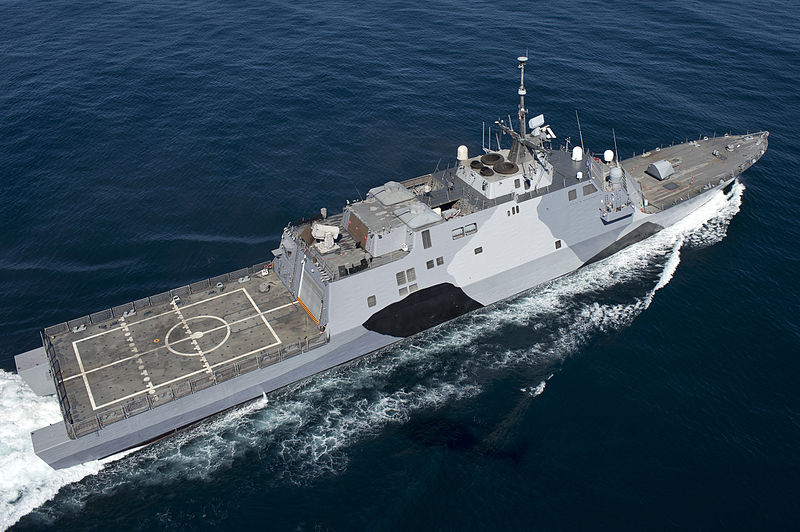
USS Freedom (LCS-1)

The US Naval Institute reports, “SECNAV Memo: Navy Won’t Reactivate Perry Frigates for SOUTHCOM Mission; Will Send Ships to Fight Drug War in 2018.”

The Navy has not been providing ships in support of the SouthCom drug interdiction mission since the last USN Oliver Hazard Perry class frigate was decommissioned in 2015, but it looks like the Navy will return to the mission.

SecNav has directed the Navy provide four ship years in the form of either LCS or Spearhead-class expeditionary fast transports (T-EPF)(formerly called the Joint High Speed Vessel).. In addition, they will be bringing with them an unmanned air system, probably Scan Eagle.

They will certainly need Coast Guard Law Enforcement Detachments aboard, but the mention of Scan Eagle makes me wonder about the aviation support planned. No mention of helicopter or the larger MQ-8 UAS. Are they going to want a Coast Guard Airborne Use of Force helicopter detachment?

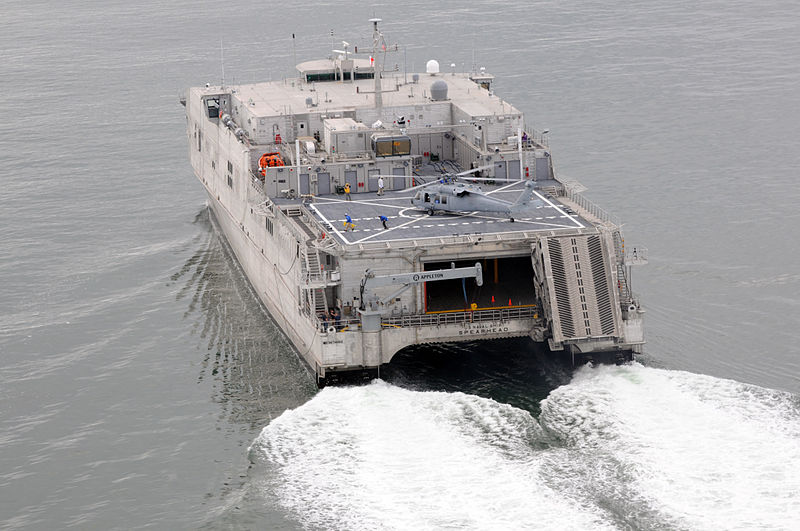
The Military Sealift Command joint high-speed vessel USNS Spearhead (JHSV 1) (Now T-EPF-1)conducted high-speed trials, reaching speeds of approximately 40 knots off the coast of Virginia. (U.S. Navy photo by Mass Communication Specialist 1st Class Phil Beaufort/Released) 130820-N-ZO696-135