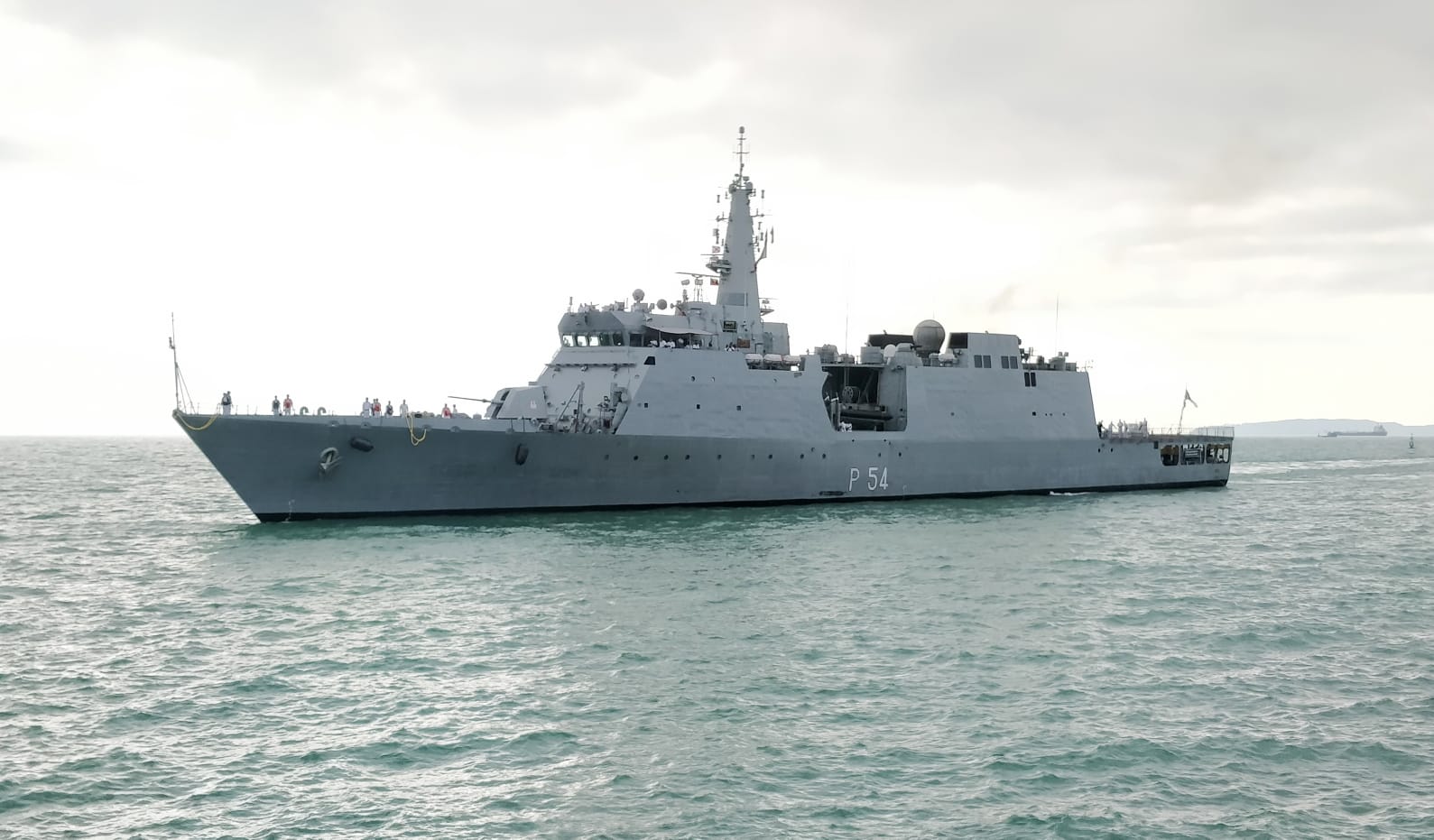
“HMS Tamar Makes Rare Port Call to Diego Garcia” –SeaWaves Magazine

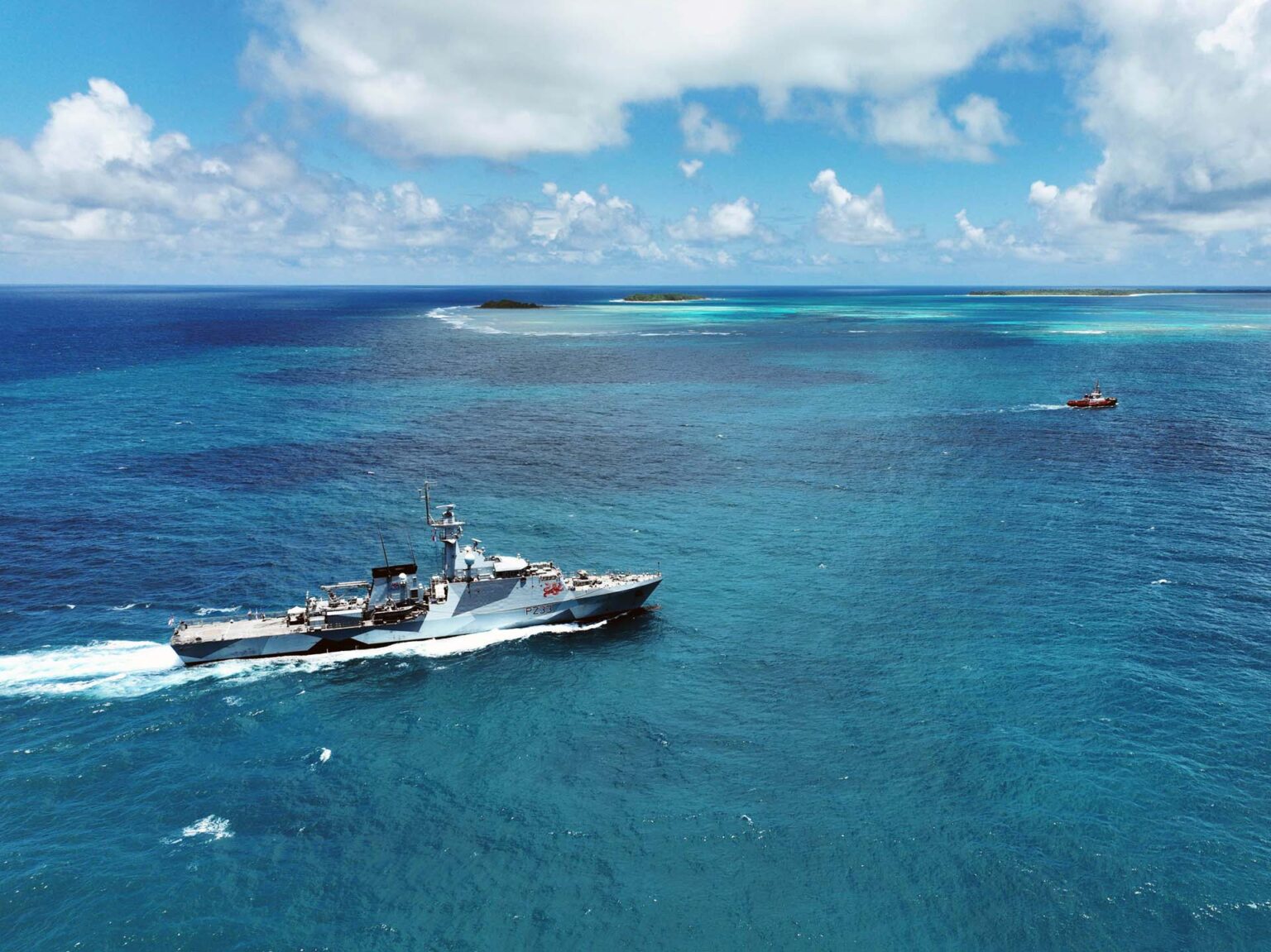
HMS Tamar arriving into Diego Garcia

SeaWaves Magazine reports on a visit by Royal Navy Offshore Patrol Vessel Tamar to the Island of Diego Garcia, an important US and Allied base in the Indian Ocean.

“Crew of the patrol ship concentrated on safeguarding the environment in the British Indian Ocean Territory, ensuring the remote island chain’s rare wildlife was not disturbed by the illegal actions of humanity.

“They found its shores littered with tonnes of rubbish and fishermen flouting international law, trawling the territory’s expansive, protected waters – roughly the size of Texas – for its rich stocks of rare fish.”

I would note two things, first this visit is much too rare and second that while HMS Tamar has a flight deck, it virtually never has an embarked helicopter or capable UAS.

The UK has a vast overseas EEZ. They have never had a large number of OPVs. Generally, they have kept one ship in the Western North Atlantic/Bermuda/Caribbean and one ship in the South Atlantic/Falklands/New Georgia regions, not always an OPV. Their overseas territories in the Indian, Pacific, and Mid Atlantic Oceans seldom, if ever, see a patrol vessel. It does seem the British are starting to recognize the utility of these little ships, but I don’t expect them to build any more.

When operating in these overseas EEZs, patrol vessels are generally not supported by land based maritime patrol aircraft.

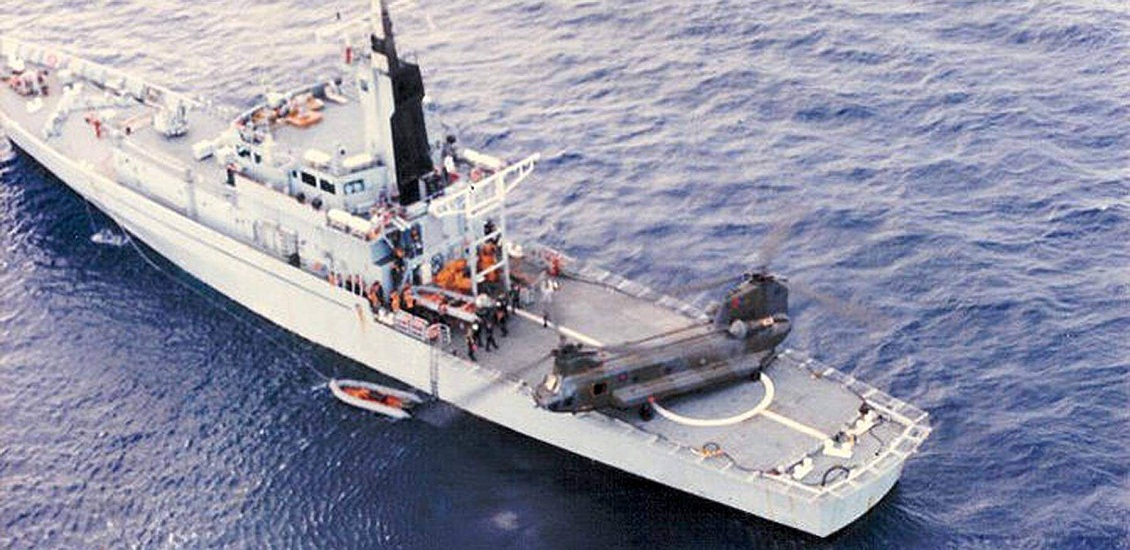
The River class Batch 2 are large enough to support a helicopter but have no hangar. A helicopter can help search over the horizon, but they are not as helpful as might be thought, because it is difficult to get more than four hours a day search time (two, two hour sorites). While on WHEC-726 I once calculated the embarked helicopter was increasing our effective area searched by about 40%.

Though it would lack some of the operational flexibility of an embarked helicopter, a robust UAS detachment could provide an even better search capability at a relatively low cost.

How Long Should an OPV be? Is There a Minimum?

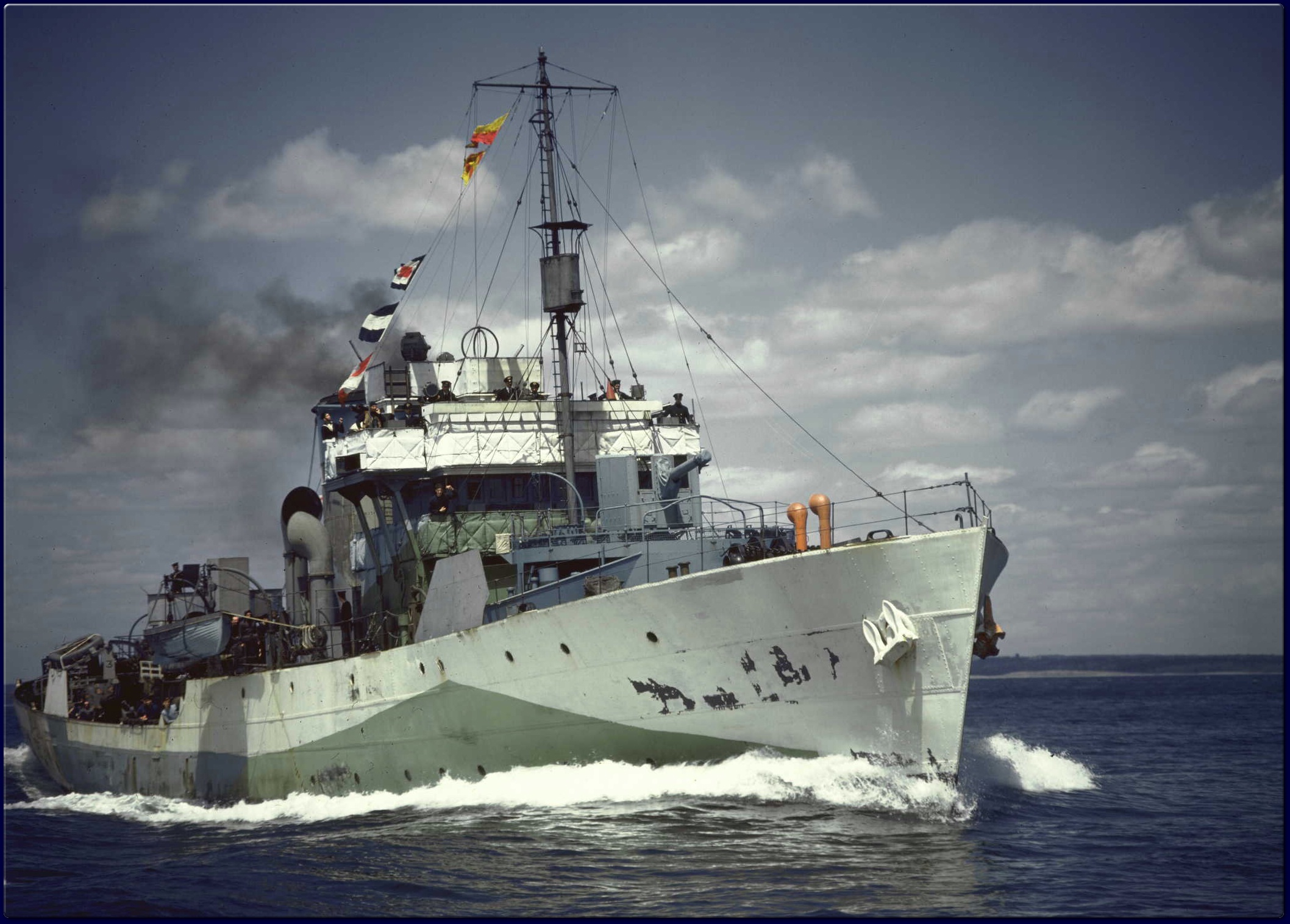
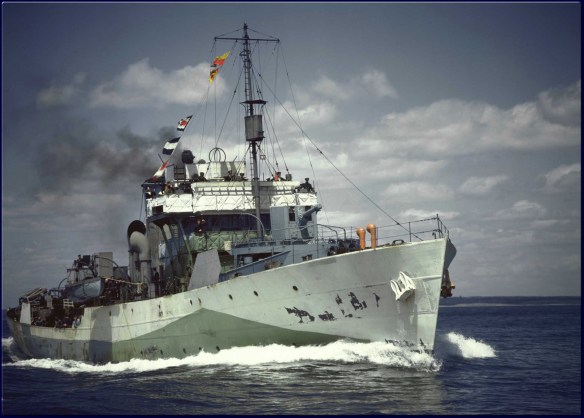
Flower class corvette HMCS REGINA (K234) circa 1942 – 1943
Source:Canadian Navy Heritage website. Image Negative Number CT-252

Decades ago, I read a Royal Navy research paper that asked essentially, “What is the proper length for a corvette?” A balance of adequate seakeeping and minimum cost? The report had originated shortly after World War II when the British had operated hundreds of 205 foot (62.5 meter) long Flower class and 252 ft (77 m) Castle class corvettes. Their answer was 270 feet (82.3 meters, probably they were talking waterline length. In this post, I will be using length overall (loa) and full load displacement (fl)), but there was a caution, that while that was appropriate for the Atlantic, operation in the Pacific would require a larger ship because of the longer swells prevalent in the Pacific.

This introduced me to the idea that there might be a step function in effectiveness based on length, and that it might vary with the environment.

A very pleasant experience with the 327 foot (100 meter) cutter Duane also seemed to suggest there might be a sweet spot where ships become much more seaworthy.

Is there a minimum length for a vessel to function effectively as an Offshore Patrol Vessel? There is room for some scholarly research into the question.

Lacking a naval engineering background, I approach the question in a different way. On the assumption that given experience, OPV users move toward an optimum balance of capability and cost, let’s look at the experience of navies and/or coast guards of five nations that have created more than one class of OPV over the last 30 or so years, the US Coast Guard, French Navy, UK Royal Navy, Japan CG, and Indian Navy and Coast Guard. We will look at the ships created about 30 years ago and the ships they have chosen to build most recently.

FRANCE

France has the largest EEZ of any nation, 11,691,000 km2, about 103% that of the US, most of it in the Pacific and Indian Oceans.

The Old
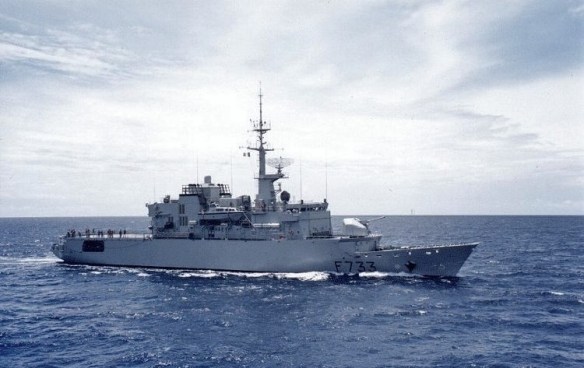
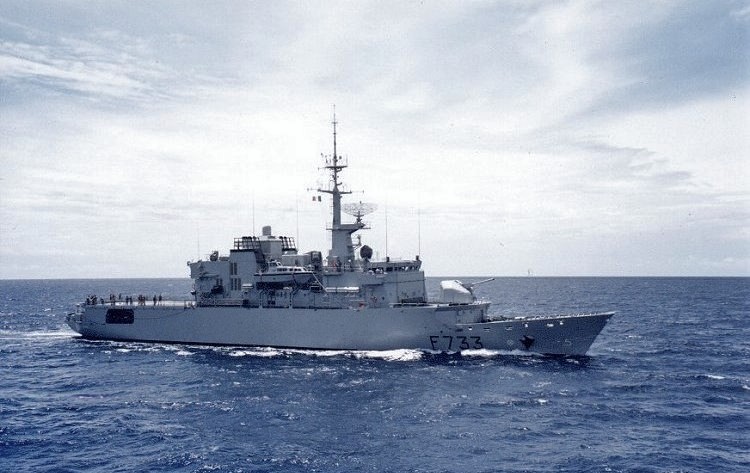
Floreal class. Six ships (plus two for Morocco) commissioned 1992-1994: 93.5 meter, 307 feet, 3000 ton, 20 knots. FS Ventose pictured. 

The New
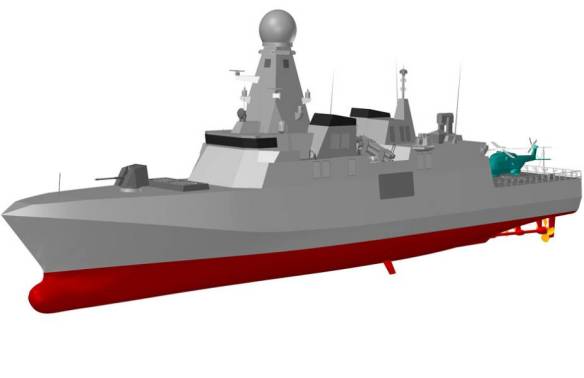
Artist drawing of the future Modular and Multirole Patrol Corvette MMPC. (Picture source: Navy Recognition)

European Patrol Corvette. First Delivery expected 2030: 110 meters. 361 feet. 3,000 tons, 24+ knots.

France has their open ocean coast guard functions performed by their navy. In 1992 the French Navy commissioned the first of six Floréal class “surveillance frigates” pictured above. These are expected to be replaced by a version of the 110 meter, approx. 3,000 ton, 24 knot European Patrol Corvette.

The Old
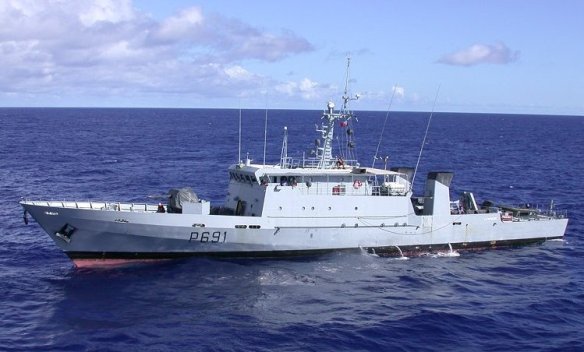
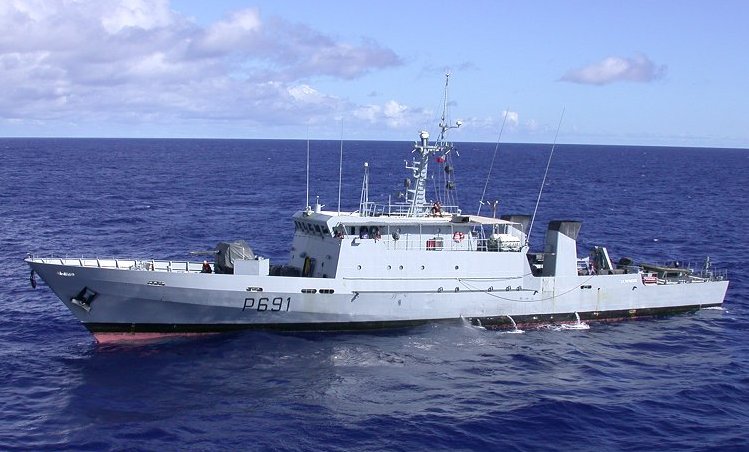
Patrol ship Tapageuse at sea near Tahiti (18 June 2003). Photographer: Jean-Michel Roche

P400 class of ten vessels. Commissioned 1986-88, 54.8 m (179 ft 9 in). 480 tons fl. 24 knots. 

The New
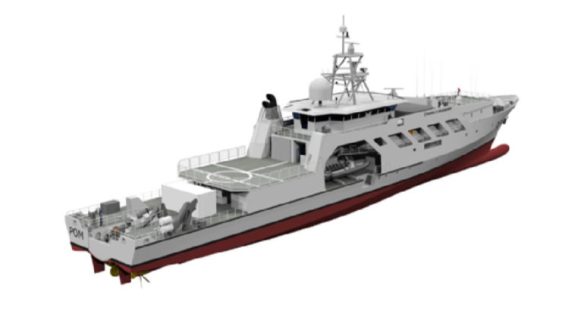
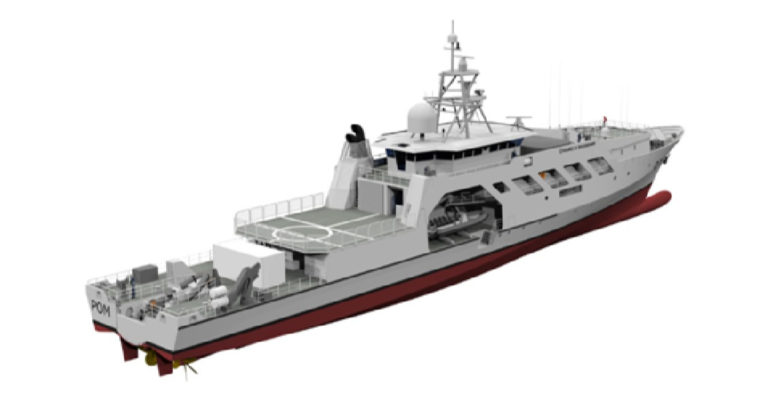
Rendering of the future “POM” OPV of the French Navy

Patrouilleurs Outre-mer (POM), or Félix Éboué class: Six ships to be commissioned 2023-25, 80 m (262’6″), 1300 tons fl.

Their latest acquisitions are six 80 meter Offshore Patrol Vessels (Patrouilleur d’Outre-Mer – POM).

They replace the P400 class. Like the Floreals, these ships and their replacements are of simple design intended to operate for long periods from austere bases in French overseas territories. Most of the P400s were operating in the Western Pacific in the same environment where we currently operate the smaller Webber class FRCs. Significantly, “Since late 2008, ships of the D’Estienne d’Orves class, with their heavy armament removed, were planned to replace the P400 in the high sea patrol role, a task for which the P400 class have proved to be underweight.” This was 20 years after the the vessels were commissioned but clearly the French thought they were “going to need a bigger boat.” The replacement POM class turned out to be very similar to the D’Estienne d’Orves class in length and displacement, 80 m and 1,300 tons.
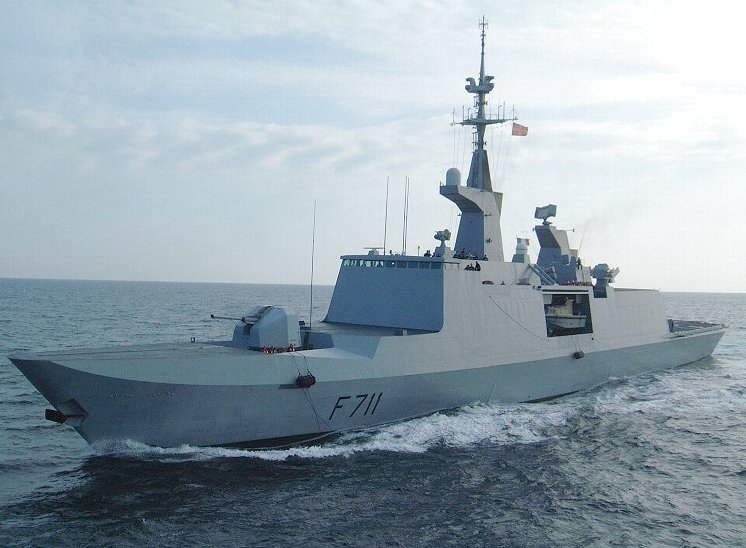
File:FS Surcouf.jpg

La Fayette class Frigate Surcouf 

In 1996 France commissioned the first of five nominally general purpose 125 m (410 ft 1 in), 3,800 ton, 25 knot La Fayette class frigates, but as built, they had no ASW capabilities, so they were more high performance OPVs not unlike the USCG Hamilton class WHECs. France’s EEZ is widely distributed and varied. The French seem to have a wide array of solutions to their patrol requirements. They seem to produce designs for specific outposts. In addition to those discussed above they have built these relatively unusual OPVs: here and here.
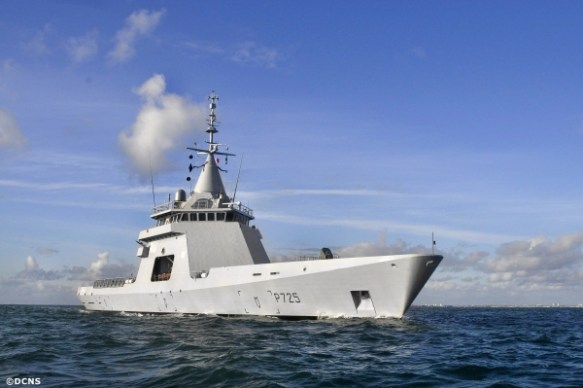
The former French Ship L’Adroit, now the Argentinian OPV, ARA Bouchard (P-51)

Perhaps it is telling that, when French shipbuilder Naval Group built an OPV on speculation for a world market, the result was the 87 meter L’Adroit, which after service with the French Navy was sold to Argentina along with three new construction near sisters. Recently France contracted for ten Offshore Patrol vessels that have been reported to be 90 meters in length. I suspect these will be similar to L’Adroit

US Coast Guard:

The US EEZ, the second largest, is very nearly as large as that of France at 11,351,000  km2.

The Old
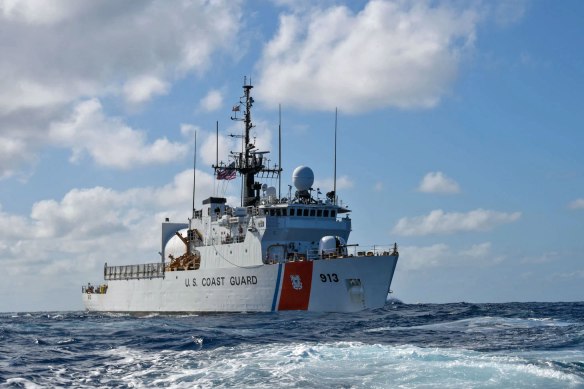
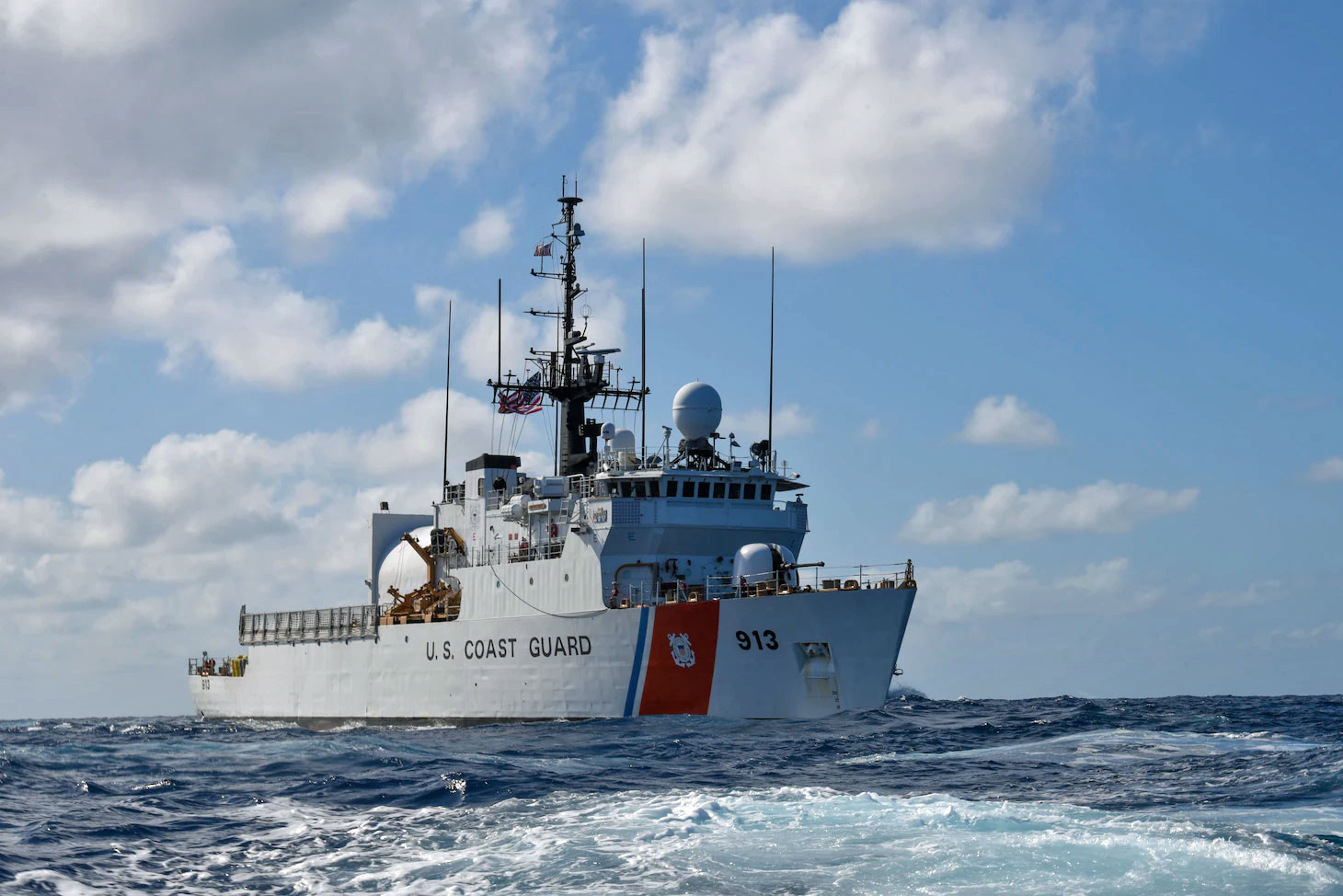
Bear class Medium Endurance Cutters, class of 13, commissioned 1984-1991, 82 m (270′), 1800 tons, 19.5 knots.

The New
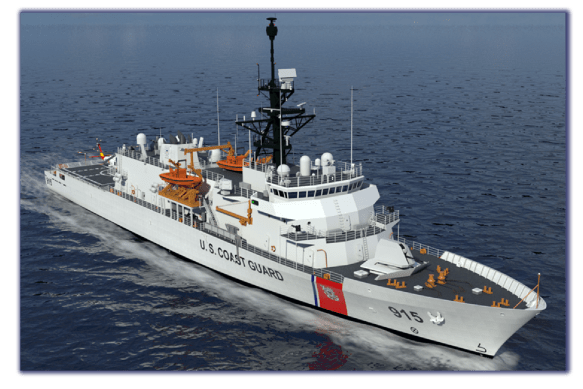
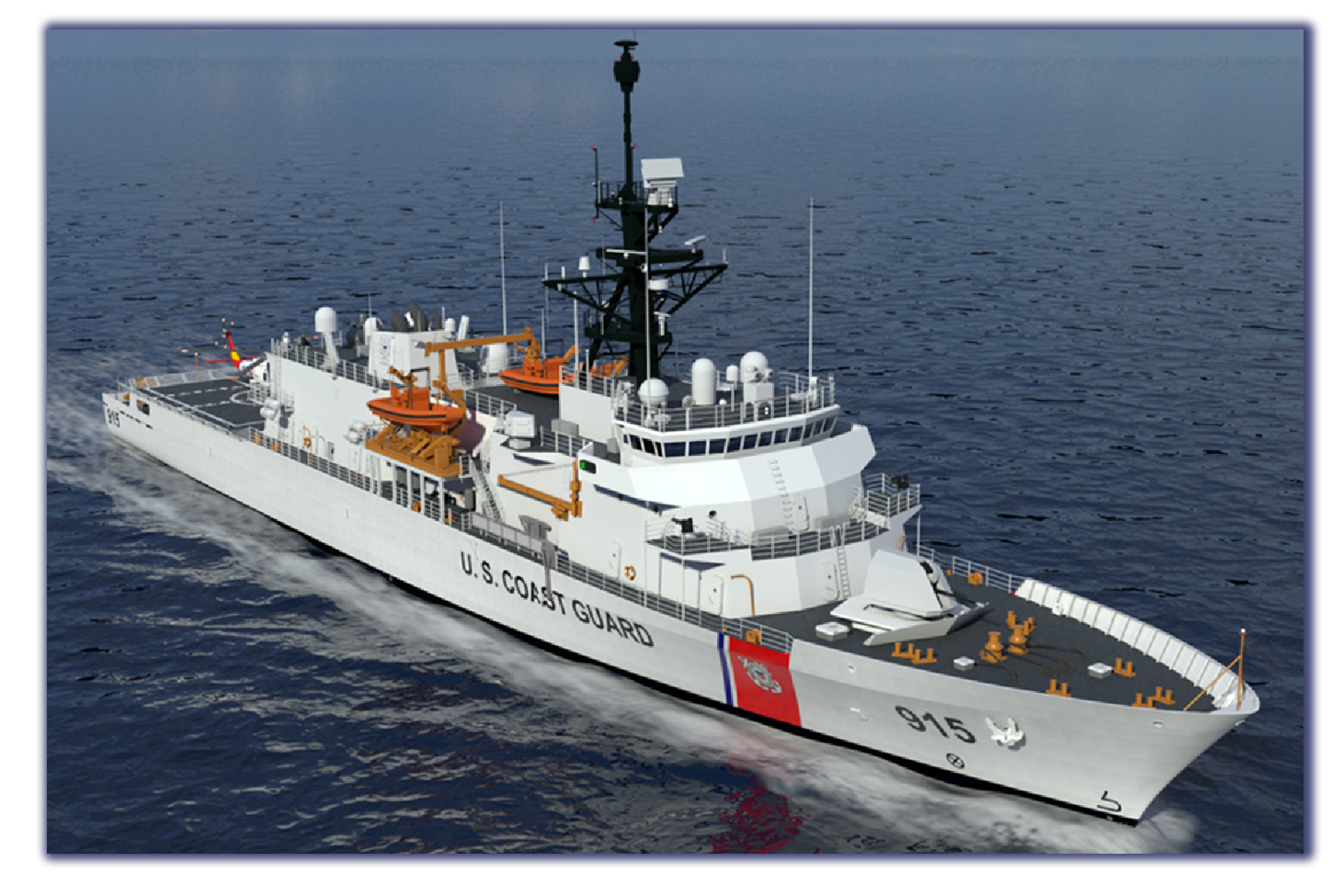
Offshore Patrol Cutter, Artist’s Rendering, Credit Eastern Shipbuilding

Offshore Patrol Cutter, projected class of 25, projected delivery 2025-2038, 110 m (360′), 4,500 tons, 22+ knots

Thirty years ago, the US Coast Guard had just completed the 82 meter, 270 foot, 1,800 ton, 19.5 knot Bear class, the first of which was commissioned in 1984, the newest, Mohawk in 1991. They replaced 143-, 205-, 213-, 311-, and 327-foot cutters built during and before the Second World War.

The US Coast Guard would not build any additional Offshore Patrol vessels until the 127 meter, 4,500 ton Bertholf class National Security Cutters (NSCs), the first of which was commissioned in 2008. Despite the age difference, the NSCs were not replacements for the WMEC270s, but rather the twelve 115 meter (378-foot) Hamilton class commissioned 1967 to 1972.

The direct replacement for the Bear class WMEC270s (as well as the 64 meter, 210 foot Reliance class) is the 110 meter Argus class Offshore Patrol Cutter, (OPC).

The relatively large size of both the NSC and the OPC, displacing at least 4,500 tons full load, reflect demanding requirements for launch and recovery of boats and helicopters in heavy weather.

These requirements seem to reflect experience on Alaska Patrol. While the Bear class seem to have served well in the Atlantic and the equatorial Eastern Pacific they were found to be inadequate for operations in Alaskan waters.

The 64 meter Reliance class were never really designed to be offshore patrol cutters in the modern sense. Designed before the United Nations Convention on the Law of the Sea, when the territorial sea was still three miles, and before the advent of the 200 mile Exclusive Economic Zone, they were only expected to go out 50 miles offshore.

Meanwhile, the relatively small 47 meter Webber class have proven remarkably capable but are operated with an eye on their endurance and weather limitations.

Looking at the large cutters that were in the fleet when I entered the service in the ’60s, we had three classes of ships that stood weather station patrol, demanding long open ocean patrols. Of these, the 100 meter Secretary class 327s were considered the most successful. The 95 meter Casco class “311s” were also successful and their huge fuel capacity allowed great operational flexibility. The 77.7 meter Owasco class “255s” operated at significant disadvantage, in that they were rough riding and their limited fuel capacity forced them to drift when being able to maintain a favorable heading would have been desirable.

United Kingdom’s Royal Navy: 

The UK’s EEZ is the fifth largest in the world at 6,805,586 km2 (60% that of the US).

The Old
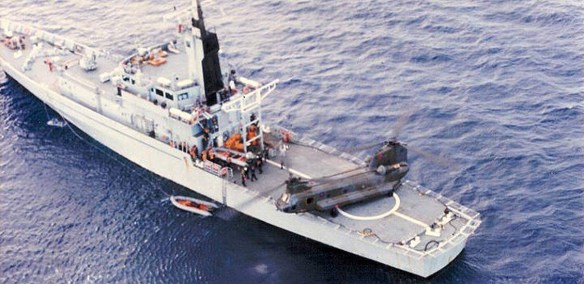
HMS Leeds Castle during the Falklands War.

Castle Class, two ships, commissioned 1981 and 1982, 81 m (266′), 1,550 ton fl, 20 knot 

The New
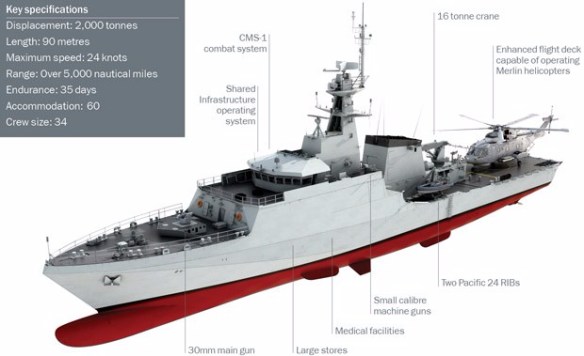
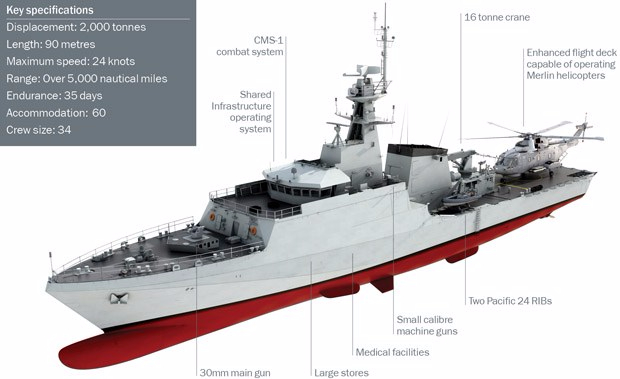
River Class (Batch II), 5 ships, commissioned 2017 to 2021, 90.5 m (297′), 2,000 tons fl, 25 knots

The Royal Navy has never had a great many OPVs. They currently have eight in commission. They have tended to use frigates and MCM vessels to perform coast guard duties.

The Castle class were designed to replace the 61.1 m (200′), 1,280 ton, 16 knot Island class OPVs commissioned 1977 to 1979, that were criticized as unseaworthy, too slow, and lacking a flight deck. Originally it was to have been a class of six, but only two were completed and the Island class soldiered on into the 21st century. The two Castle class served the Royal Navy for 28 and 29 years before being sold to Bangladesh in 2010 where they still serve.

The Castle class was followed by three 79.5 m (261′), 1,700 ton, 20 knot River class (Batch I) and a forth modified, slightly longer River class the 81.5 m (267 ft 5 in) HMS Clyde that unlike the earlier ships included a flight deck. Initially the River class Batch 1 ships were leased, but the first three were subsequently purchased and continue to serve as fisheries protection vessels. HMS Clyde has been sold to Bahrain.

These were followed by five 90 m River class Batch II ships. Despite the similar nomenclature, these are an entirely different class.

Japan Coast Guard: 

Japan’s EEZ is 4,479,388  km2 (39.5% that of the US) and is the eighth largest in the world. Their entire EEZ is in the North Pacific, which can be a challenging environment.

The Old
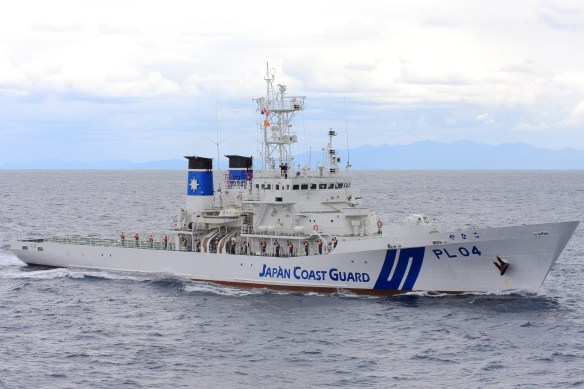
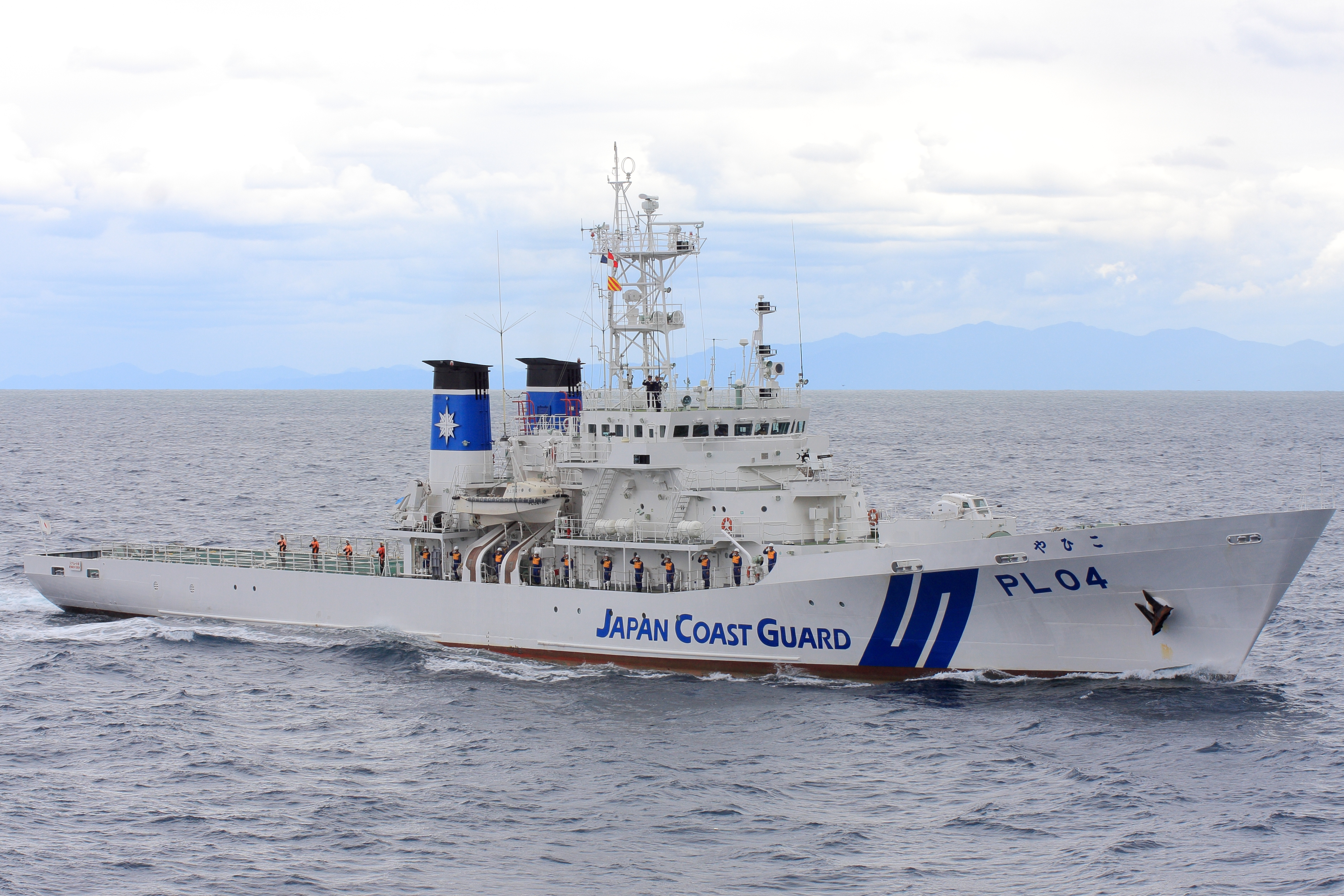
Ojika-class patrol vessel Yahiko (PL-04). First of clasPhoto credit: Cp9asngf though Wikipedia

Ojika class, seven ships, commissioned 1991 to 2000, 91.5 m (300′), 2,006 tons fl, 20 knots

The New
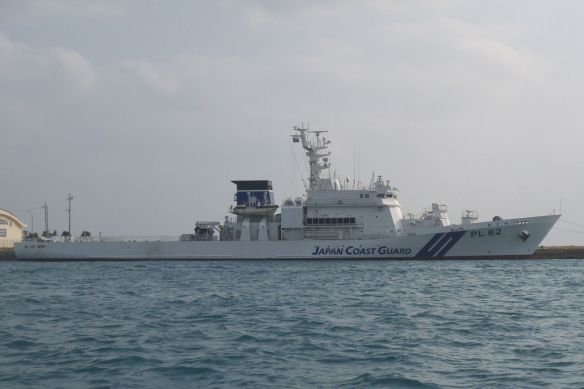
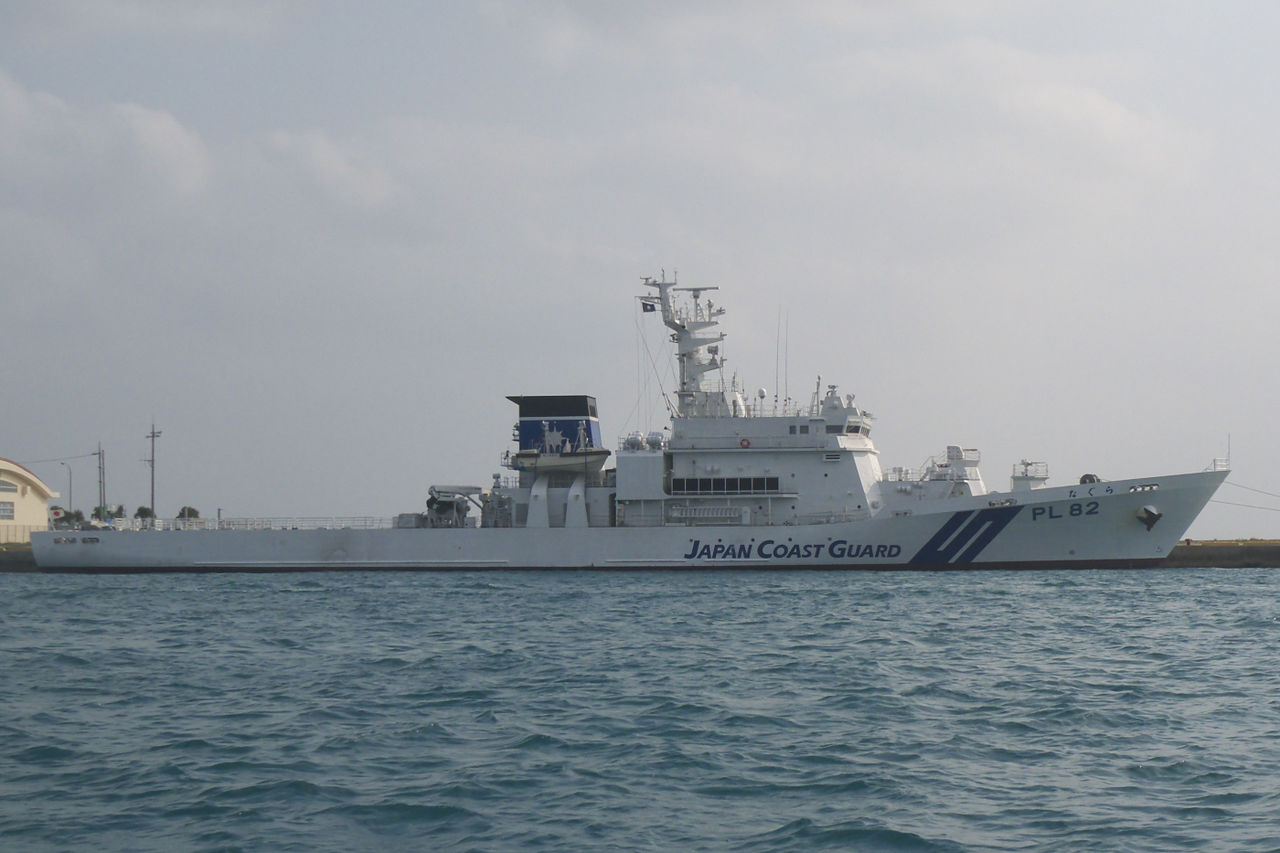
JCG Kunigami class cutter PL82 Nagura. Photo from Wikipedia Commons, by Yasu

Kunigami-class, 20 ships+1 building (+ 2 for the Philippine CG, commissioned 2012 to 2020, 96.6 m (317′}, 2260 tons, 25 knots

Unlike the US Coast Guard, the Japan Coast Guard produced “High Endurance Cutters” (PL and PLH) continuously over the last 30 years, 62 ship in 13 classes, including some very large cutters, some up to 150 meters and approaching 10,000 tons.

Thirty years ago, the Japan Coast Guard was building the Ojika class, seven ships commissioned 1991 to 2000. Six of the seven are still in service, they are 91.5 meters (300 feet) in length, with a full load displacement of 2,006 tons, a max speed of 20 knots, and a crew of 34.

The most recent, general-purpose “High Endurance Cutters” built by the Japan Coast Guard have been the 96.6 m (317 ft) Kunigami-class. There are currently 20 of these cutters in service with three more on the way. In addition, Japan has built two modified versions of this class for the Philippine Coast Guard. With no end in sight for their construction, these may become the most produced OPVs of the 21st century.

These are relatively simple ships, not much different from the Ojika class.
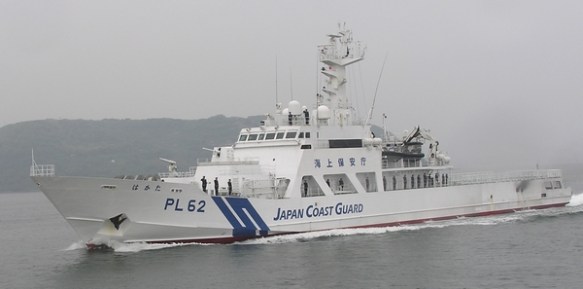
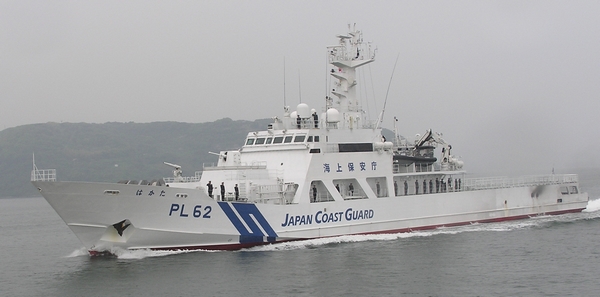
JCG Hateruma class cutter Plhakata. One of a class of nine commissioned 2008-2010. 89.0 m (292.0 ft) loa. 1350 tons fl. 30 knots max speed. Crew of 30. Photo by Takaaki.

Frequently cutters of different classes have been built concurrently rather than consecutively.  Aside from three 79 meter Aso class, commissioned 2005/2006, designed as high-speed interceptors of North Korean spy ships, the smallest “high endurance cutters” built in the last 30 years are the nine ship, 89 meter Hateruma class pictured above, commissioned 2008 to 2010.

The JCG cutters discussed here, unlike their larger PLH cutters, have no hangar, only basic weapon and sensor suites. Their size is not determined by features incorporated in the design. It appears their size is a reflection of the environment where they operate, the North Pacific.

India:

India’s EEZ is 2,305,143 km2, 20.3% that of the US, but still more than the entire EEZ under the Atlantic Area.

In 1986 the Indian Coast Guard had 80 officers and 400 men. They have come a long way. The Indian Coast Guard got a big boost after the 2008 Mumbai Terrorist Attack, which came by sea. The Indian Coast Guard operates 27 Offshore Patrol Vessels, all commissioned within the last 28 years, 18 since 2015.

The Old
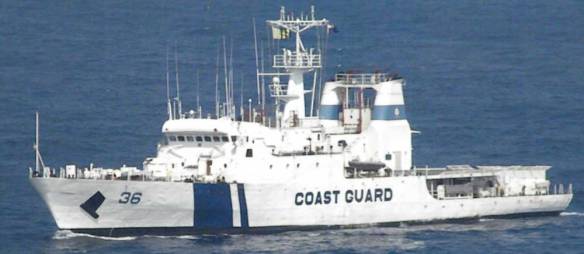
Indian Coast Guard Ship Varuna. Indian Government photo.

Vikram-class offshore patrol vessels, nine ships commissioned 1983-92, 74 m (243′), 1,224 tons, 22 knots.

The New
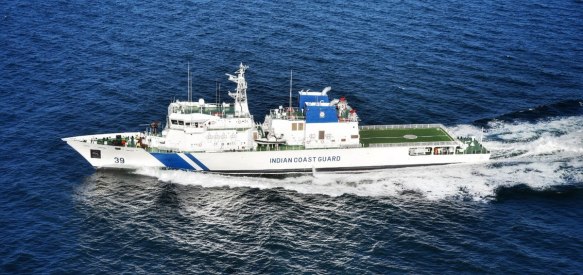
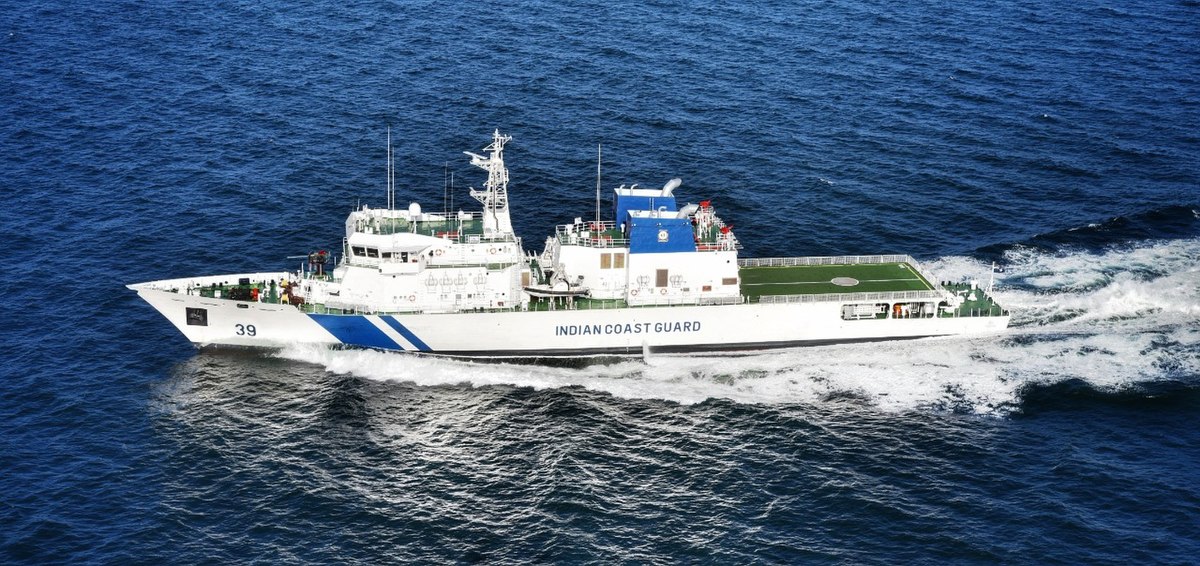
ICGS Vigraha (39) during sea trials, 28 August 2021, Indian Coast Guard photo.

Vikram-class (different Vikram class) offshore patrol vessels, Class of seven ships commissioned 2018-2021, 97 m (318’3″), 2140 tons, speed 26 knots.

And
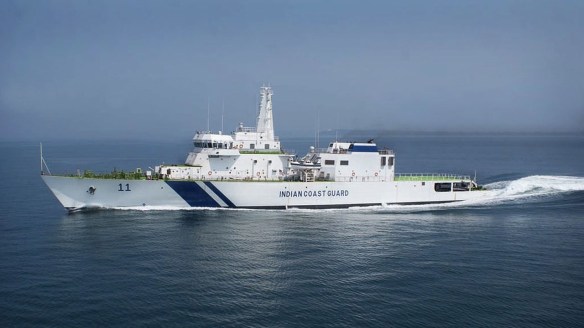
105 meter, Off Shore Patrol Vessel (OPV) ICGS Samarth, 10 November 2015, photo Indian Coast Guard

Samarth-class, 11 ships, commissioned 2015 to 2022, 105 m (344.5′), 2450 tons fl, 23 knots

The first Vikram class was not considered entirely successful because they could not operate helicopters in heavy weather because of the ships’ roll characteristics. The class is no longer in service with the Indian Coast Guard, but two ships were transferred to Sri Lanka.

Since 1990 the Indian CG has not commissioned an OPV of less than 93 meters. Their largest are 105 meters. None of their smaller patrol craft (WPCs) exceed 51.1 meters so there is a clear distinction between OPVs and Inshore Patrol Vessels.

INDIAN NAVY

The Indian Navy operates 12 Offshore Patrol Vessels, six of each of the two class below.

The Old
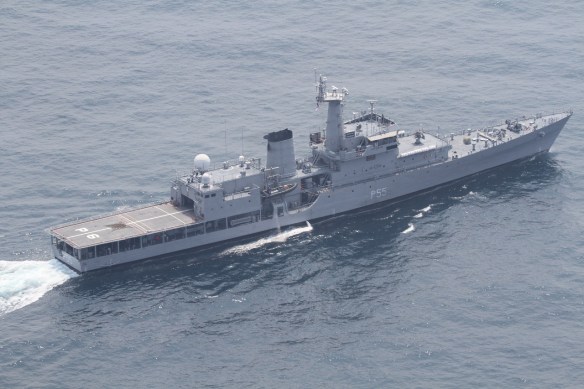
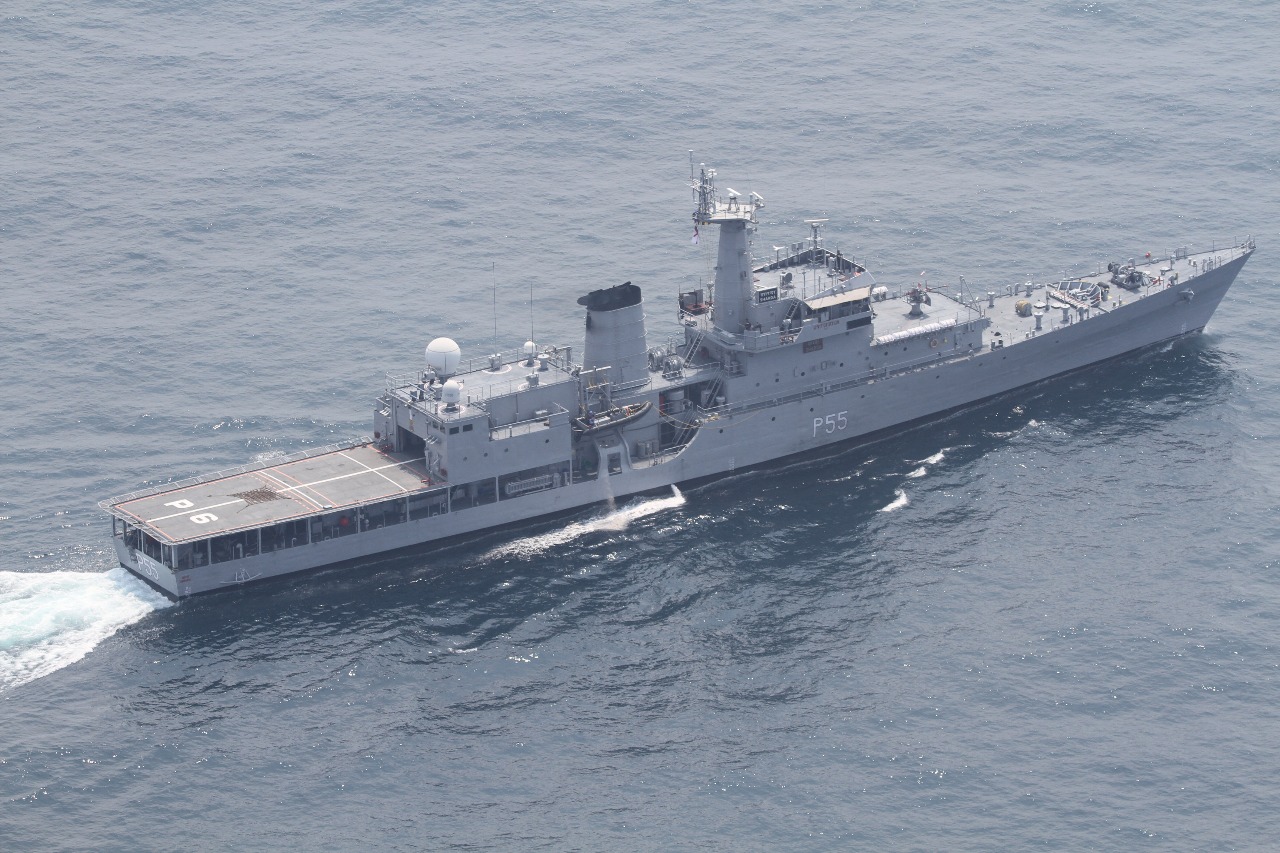
Sukanya class OPV INS Sharda (P55). Indian government photo.

Sukanya-class, seven ships, commissioned 1989 to ’93, 101 m (332′), 1,890 tons fl, 21 knots

The New
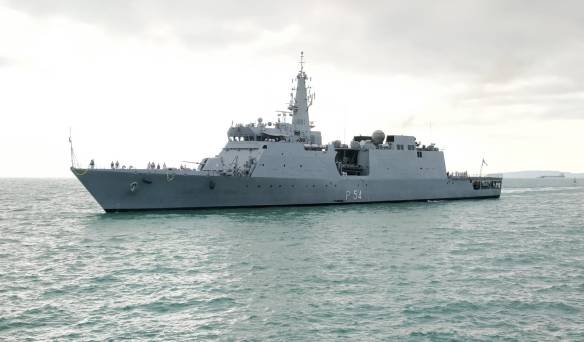
INS Saryu. Indian Government phot

Saryu class, six ships, commissioned 2013-2018, 105 m (344′), 2,230 tons, 25 knots

OBSERVATIONS

Speed: Speed has typically increased by about four knots. The trend seems to be to a maximum speed of 24-26 knots. Increasing speed is made easier by increasing waterline length. It may not be an accident that a waterline length of 97.8 m (320.8′) provides a hull speed of 24 knots, typical max speed for a modern OPV, while 20 knots, the typical speed for an OPV 30 years ago, only required a waterline length of 67.9 m (222.8′).

There is now little or no difference between the speeds of OPVs and corvettes or light frigates. For warships, except those that have to be able to keep up with nuclear powered carriers, the value of absolute top speed has diminished while the value of high sustained cruising speed has increased. This is apparent if you compare the Oliver hazard class FFGs with the new Constellation Class. Top speed is down 3-4 knots to 26 knots, but range is up with a powerplant designed for economical cruising.

Aircraft: Flight decks are now ubiquitous. Hangars are common but are not included in every new design. Designs that support two embarked helicopters are still the exception. The French POM, which seems to be a minimalist approach, bucks the trend and includes aviation facilities for only unmanned air systems.

Length: Of the current generation OPVs, none of those discussed is less than 80 meters (262,4) and only the minimalist French POM was that small.

The Royal Navy study I mentioned seems to have gotten it right, that 270 feet (82.3 m) is a reasonable minimum and in some environments, length should be greater. Desire for greater capabilities (e.g., greater speed, better aviation facilities, more weapons and sensors} may to be driving designs of greater length than would be required simply for seakeeping, but the choices made by the Royal Navy and Japan and Indian Coast Guards tend to confirm that about 90 meters or more and at least 2,000 tons is the new norm.

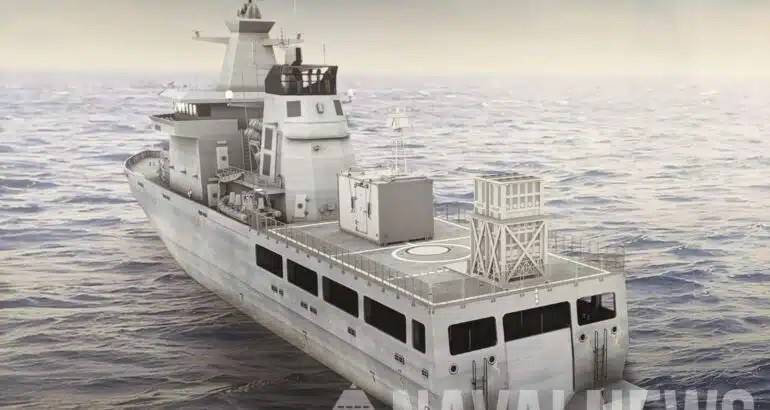
“Philippine Coast Guard Set For Personnel Boost” –Naval News

BRP Teresa Magbanua during sea trials off Japan (Photo: Philippine Coast Guard)

Naval News reports,

“The Philippine Coast Guard (PCG) is set to receive an additional 4,000 personnel this year, in order to reach a total of 30,000 by year-end.”

Some things to note:

That is almost 75% the size of the US Coast Guard, while the Philippine EEZ is less than 20% of the US.

The Philippine Coast Guard will be considerably larger than the Philippine Navy which has 24,500 active-duty members including 8,300 Marines.

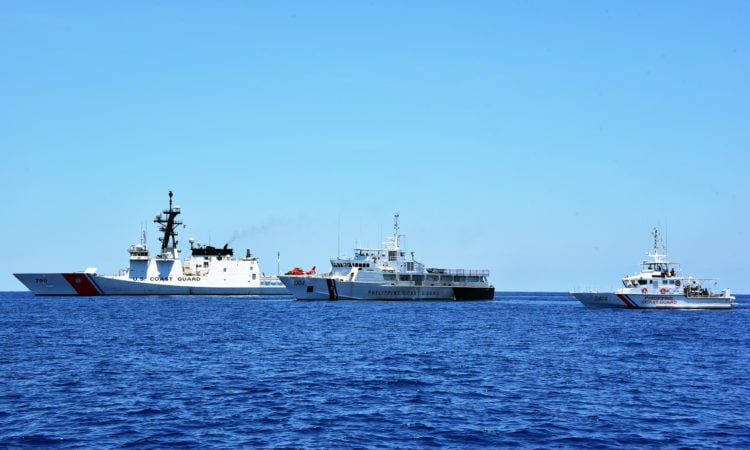
BRP Batangas (SARV-004) in between USCGC Bertholf (WMSL 750) and BRP Kalanggaman (FPB-2404) in an Exericse held in 2019. For many years, the Australian San Juan and Ilocos Norte vessels were the only major patrol assets in PCG service.
(U.S. Coast Guard photo by Chief Petty Officer John Masson)

Until 2020 the Philippine Coast Guard had no large patrol cutters. Their largest ships were two buoy tenders including the former USCGC Redbud, first commissioned in 1944. In fact, they mark the founding of their Coast Guard Fleet only as of 2007.

Beginning in 2020 the Philippine Coast Guard has obtained their first large patrol cutter, the 83 meter BRP Gabriela Silang. In 2022 they obtained two Japanese built 97 meter cutters of the Teresa Magbanua-class (see lead photo). They hope to get many more.

This build-up is obviously in response to Chinese intrusions into the Philippines’ Exclusive Economic Zone.

It appears the Philippine Coast Guard still has no weapons larger than .50 caliber machine guns. It will be interesting to see if this changes.

Portugal to Build a New Type of Ship–UxS Carrier

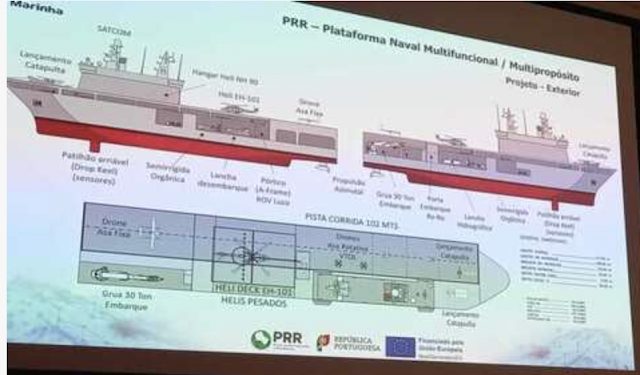
The “plataforma naval multifuncional” (multifunctional naval platform). Portuguese Navy image.

It is not often an entirely new category of ship emerges, but this seems to be the case. Perhaps it was inevitable, but it looks like the Portuguese may be the first to make it happen–a specialized, built for purpose, unmanned systems mothership.

Wish the specs in the lower right above were readable. 

First heard about this ship from Cdr. Salamander. He has some interesting ideas about how such a ship could be used. It is part research ship, part disaster response vessel, and, significantly for the Coast Guard, part Offshore Patrol Vessel. There is more about the ship from Naval News. It is not particularly large, with a crew of about 90 and accommodations for another 100. The cost is reportedly about $100M US, much less than the cost of the Offshore Patrol Cutter. Judging by the size of the helicopter (reportedly an NH-90) on the model, it appears to be 100 to 110 meters (328-360 feet) in length, about the length of the OPC, maybe less. It must be pretty broad if that is an MQ-1C Gray Eagle on the deck. The Span of the Gray Eagle is 56 ft (17 m), but it just does not look like it is in scale. Maybe they have a European sourced UAS in mind. Beam looks to be about 20 to 22 meters based on my presumptions about the length, that is 66 to 72 feet. Those proportions are similar to those of the 6,615 ton Canadian Harry DeWolf class Arctic Offfshore Patrol Ship, 103.6 m (339 ft 11 in) long and a beam of 19 m (62 ft 4 in). By comparison, the beam of both the NSC and OPC is 16m or 54 feet.

The thing that makes this ship totally unique is the runway and ski-jump designed expressly for fixed wing unmanned air systems.

Artist rendering of MQ-9B STOL landing on a big-deck amphibious assault vessel. Photo: Courtesy of General Atomics Aeronautical.

What might make this very useful is the newly developed STOL version of the MQ-9B with shorter span, high lift, folding wings.

Not sure I like this particular design. It is not clear how many UAS and helicopters can be carrier or if there is hangar space. The island is unnecessarily thick and looks too far forward. No indication of speed or endurance. The speed in unlikely to exceed 20 knots, between 16 and 18 knots seems likely, but the concept is novel. Look forward to seeing the ship in final form.
Late Addition: 

After posting this on Facebook, I got some additional information. This is a Google translate from Portuguese. Thanks to Pedro Mateus.

MULTI-PURPOSE PLATFORM SHIP Lisbon, Portugal June 20, 2022 On June 20, 2022, the Portuguese Navy launched a tender limited by simplified prior qualification, via procedure no. of a Multipurpose Vessel/Platform (N-PM), with an execution period of up to 3 years (with delivery until December 2025), for a base price of 94.5 million Euros.

This Multipurpose Ship/Platform (N-PM) will have a total length, between perpendiculars, of 100 meters, a maximum beam (at flight deck level) of 20 meters and a maximum draft of 7.5 meters. It will follow STANAG 4154 (Ed 3) standards and will be able to maintain the operation of lowering and hoisting vessels in sea state 5 on the Douglas Scale. Its garrison will be composed of 1 commander, 7 officers, 8 sergeants and 29 soldiers, in a total of 45 elements. It has accommodation sized up to 28 officers, 30 sergeants and 32 enlisted men, for a total of 90 elements (in addition to the commander). It will be dimensioned for a range of 45 days at a cruising speed of 10 knots.

The N-PM shall comprise a set of aviation facilities including, among others, a flight deck (a ski-jump runway, a spot for helicopter operation, with lighting system, GPI, etc.), hangar for a helicopter (with support for hydraulic maintenance stations, overhead crane, technical lighting, etc.) and a hangar for unmanned aircraft. In terms of organic helicopter, it should support the Lynx MK95A and NH90 aircraft (either in “spot” or in hangar) and EH101 (“spot”). The flight deck must allow the operation of different types of unmanned aircraft, commonly known as “drones” (Ogassa OGS42, Tekever AR3, etc.), as well as all the support required for vertical refueling operations (VERTREP).

Within the scope of semi-rigid vessels, the N-PM will have 3 vessels: a vessel with
SOLAS (“Safety of Life at Sea”) certification for operation as “Fast
Rescue Boat”, with a power of not less than 250 hp; and two non-cooperative approach vessels, with capacity for 8 equipped soldiers, with a maximum speed of 35 knots or higher and a minimum autonomy of 60 nautical miles, for inspection missions , policing, combating drug trafficking, assault and support for a small embarked force.

Following the good practices and installation and operation recommendations of the “Alliance of European Research Fleets” (EUROFLEET), in terms of support systems for scientific research, the N-PM will be designed to be able to operate subsurface Unmanned Vehicles (VENTs) and remotely operated vehicles – “Remotely Operated Vehicle” (ROV). It will have a sensor pavilion (“drop keel”) for the installation of scientific and acoustic sensors; a large volume “Rosette” CTD system (for deep water sampling, with probe capable of operating up to 6,000 m); an MVP system, “Moving Vessel Profiler”, capable of operating up to 700 meters deep with the ship sailing at 8 knots; an “Acoustic Doppler Current Profiler” (ADCP); a “Global Acoustic Positioning System” (GAPS), capable of operating up to 4,000 meters deep. In addition to these organic systems, the N-PM will have the capacity and integration for several other non-organic systems (Piston Corer – Calypso, Vibrocorer, Box Corer, Multi Corer, etc.) as well as all operating and support winches.

Under an integrated architecture of command and control, platform management, and digital information processing and management systems, this N-PM will have a set of navigation systems (IBS, DDU, TACAN, Secure GPS, etc.), with navigation radar surveillance systems, combined warning radar (ARPA capability, “Automatic Radar Plotting Aid” and IMO certification; ECM and Anti-Jamming) and IFF/W-AIS identification systems, as well as underwater surveillance systems (bathythermograph; support for XBT/XSV probe used in the Navy (XBT4, XBT5, XBT7 and MK-8 XBT/XSV) or CTD type probes). In terms of external communications, it will have, among others, satellite communication systems SATCOM and MILSATCOM, GMDSS, submarine telephone, SART, EPIRB and ICCS.

In terms of armament, the N-PM will be equipped, at least, with 4 “softmounts” for a Browning M2 .50 heavy machine gun, with a firing range limiter and respective accessories, and a base, with ballistic protection for the Browning part and respective operator; and with 2 pieces of Hotchkiss salvo. The N-PM will be equipped with magazines and armories capable of storing various portable weapons, ammunition, pyrotechnic material and demolition material and respective detonators.

Technical drawing and 3D model via the Portuguese Navy Ships Directorate
Editing and composition by “Espada & Escudo”

Indonesia Building Two 90 meter OPVs

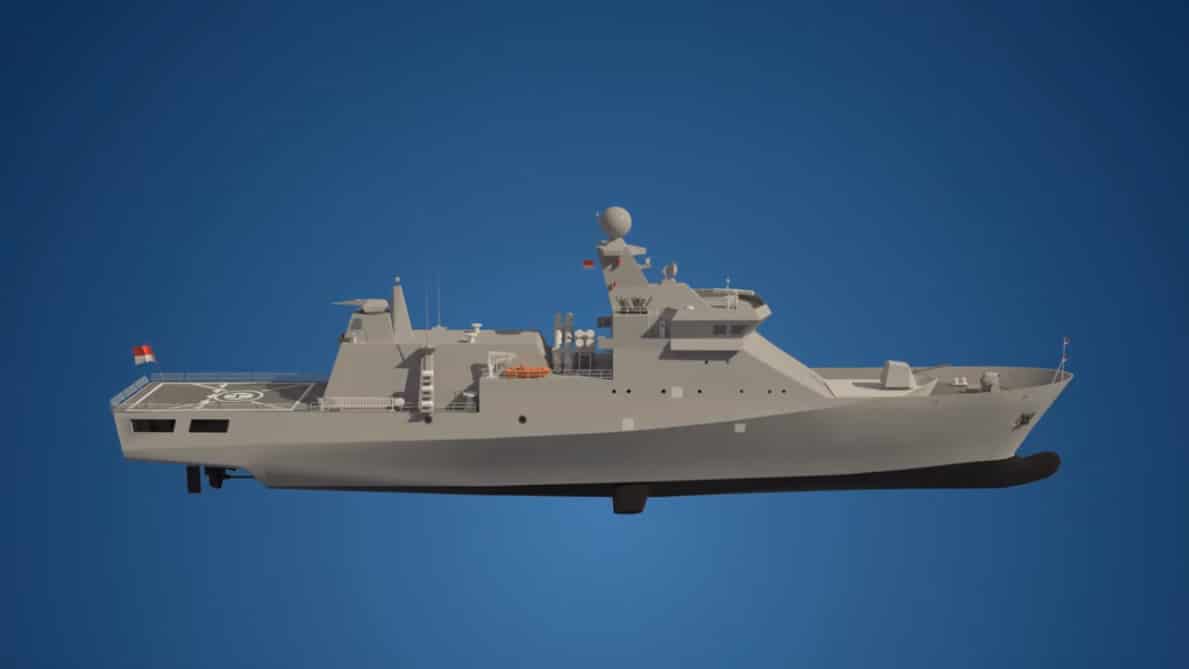
Indonesia 90 meter OPV

A recent Naval News report of the choice of an Electronic Warfare System for new Indonesian OPVs, with the illustration above, prompted me to find out more about these unusually fast and apparently well armed OPVs being built for the Indonesian Navy.

Steel was cut for the first of class on 26 August, 2021. (This report may be a bit confusing in that steel was cut for two OPVs of two different classes.) This report indicates these ships will be powered by four Diesel engines developing 7,280 kW (29,120KW total). That would equate to about 39,000 HP which sounds about right for 28 knots. It is not clear from any of the illustrations where the air intakes and engine exhausts are.

Defense Indonesia provides some specifications:

  • Length: 90 meters
  • Beam: 13.5 meters
  • Draft: 4 meters
  • Speed: 28 knots
  • Accomodations: 70 + 24 troops

A 2021 Janes report provides information on their weapons, combat management system, and ASW capability. If they emerge fully armed as illustrated, with an ASW capability, some would consider them corvettes or even light frigates.

“Damen Lays Keel Of First OPV 2600 For Pakistan Navy” –Naval News

OPV 2600 multi-mission patrol vessel rendering (Source: Damen)

Naval News reports,

On October 12, 2022, Damen Shipyards ceremonially laid the keel of the first multi-purpose patrol vessel OPV 2600 for the Pakistan Navy. At the same ceremony, the first steel plates were cut for the construction of the second OPV 2600.

This is only the latest in a long line of Damen OPVs. Details of this 98 meter, 2600 ton, 24 knot design can be found here. Get an overview of their OPV programs here.

“Turkish Dearsan Lays Keel Of First Of Two OPVs For Nigeria” –Naval News

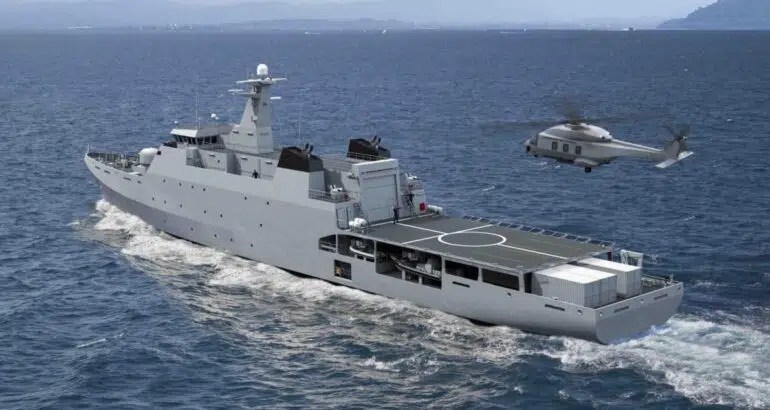
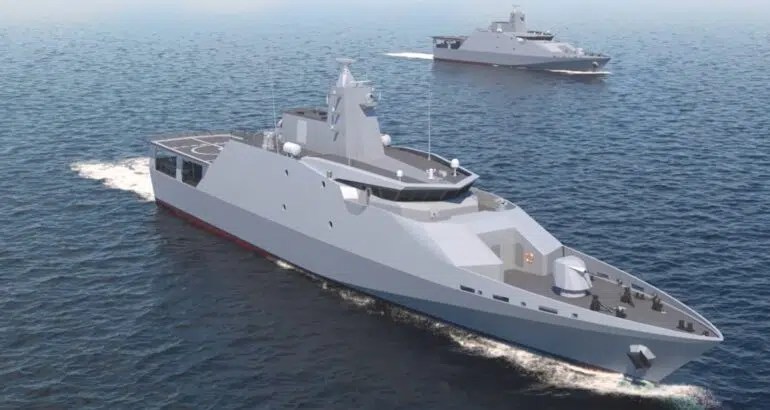
Rendering of HE OPV-76 vessels (Screenshot from Dearsan video–via Naval News)

Naval News reports,

Turkish Dearsan Shipyard laid the keel of the first of two high-endurance offshore patrol vessels (HE OPV 76) for the Nigerian Navy during a ceremony held at Dearsan’s facilities in Istanbul on September 16, 2022.

Turkey is becoming an increasingly capable and respected arms supplier and shipbuilder.

With a population of over 218 million, Nigeria is the most populous country in Africa and the sixth most populous in the world.

The Nigerian Navy and Coast Guard has an eclectic fleet sourced from the US, Europe, China, and Israel, along with some locally built small craft. They currently operates two of the former USCG 378 foot high endurance cutters which are their largest fully operational ships. Reportedly they also have four former USCG 180 foot buoy tenders and 15 USCG type “Defender class” Response Boat, Small.

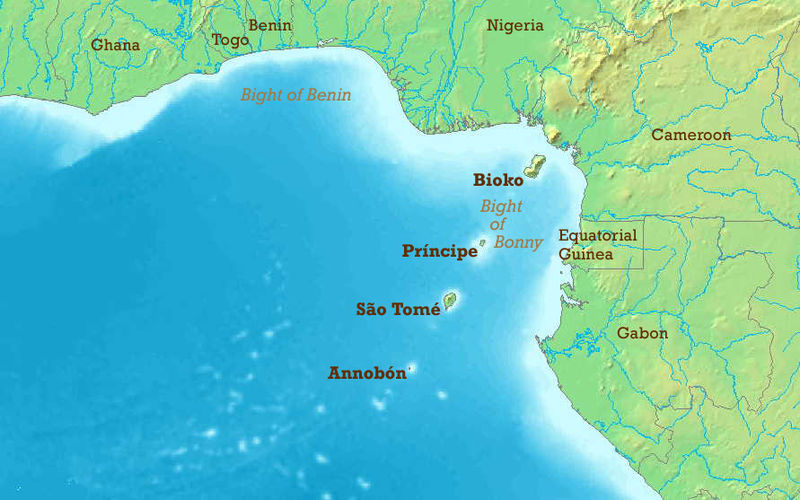
Gulf of Guinea, from Wikipedia

Nigeria’s territorial sea and EEZ is relatiely small, less than 2% that of the US, but their marine environment is complex with a history of piracy and smuggling, with many countries in and around the Gulf of Guinea complicating jurisdiction.

The New OPVs:

We talked about these ships earlier.

There have been some, mostly minor changes in the specs:

The reported displacement is likely to be light displacement since, these ships are considerably larger than the 1,127 ton full load Reliance class and nearly as large as the 1,800 ton Bear class. Given their range, they don’t carry a lot of fuel, so I would expect about 1,500 tons full load.

The armament is lighter than initially reported (earlier reports indicated 76mm + 40mm +  MBDA Simbad RC systems for Mistral short range surface to air missiles). The electronics also appear to have been simplified. This was probably a cost saving measure, but the ships remain better armed than most OPVs of comparable size, in that they have two medium caliber guns rather than just one, probably a good idea. The provision for at least three, probably four, electro optic devices mounted on the weapon stations mean they are particularly well provided for in this respect.

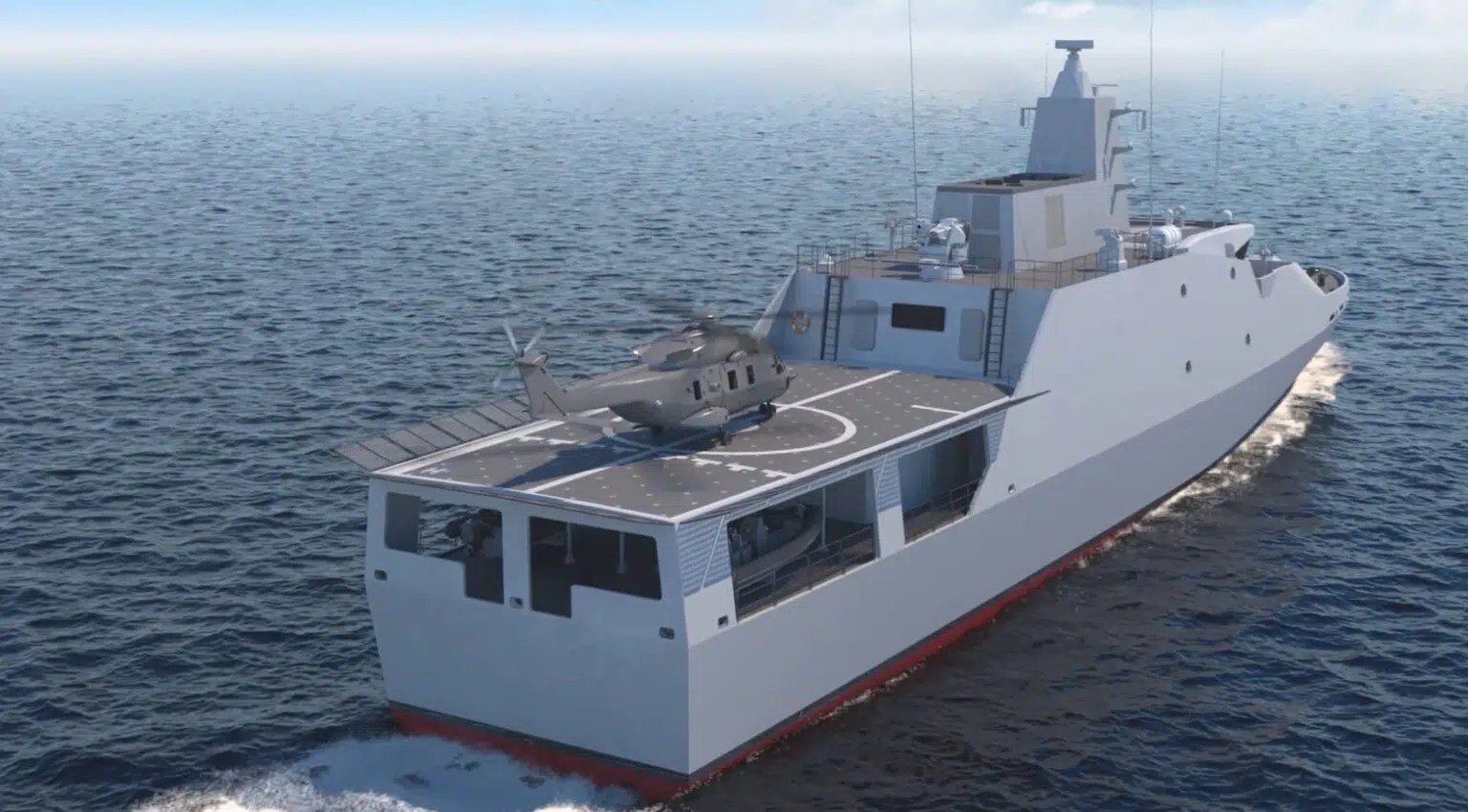
Back view of the HE OPV-76 rendering while conducting helo ops (Screenshot from Dearsan video–via Naval News)

We see an illustration of what the stern of the ship looks like. No hangar is provided.

There might be an issue with the boat handling arrangement. Boats are visible under the flight deck, but neither davits nor stern ramps are really visible. Looks like stanchions and the centerline support at the transom preclude a single centerline boat launch ramp like the NSCs have.

Twin launch ramps also appear unlikely. There no visible ramp doors, and the RHIBs we can see do not appear to be on an incline.

Arms might extend outward from under the flight deck to act as davits. If that is the case, with the boats so far aft of the center of pitch, there may be difficulties when the ship is pitching. That may require them to seek a heading that will minimize pitch, just as cutters with stern ramps do, when the boat returns to the cutter, but with the boats being suspended during launch and recovery, they would also want to minimize roll.

“U.S. Coast Guard participates in multilateral search and rescue drill off Palau” –News Release

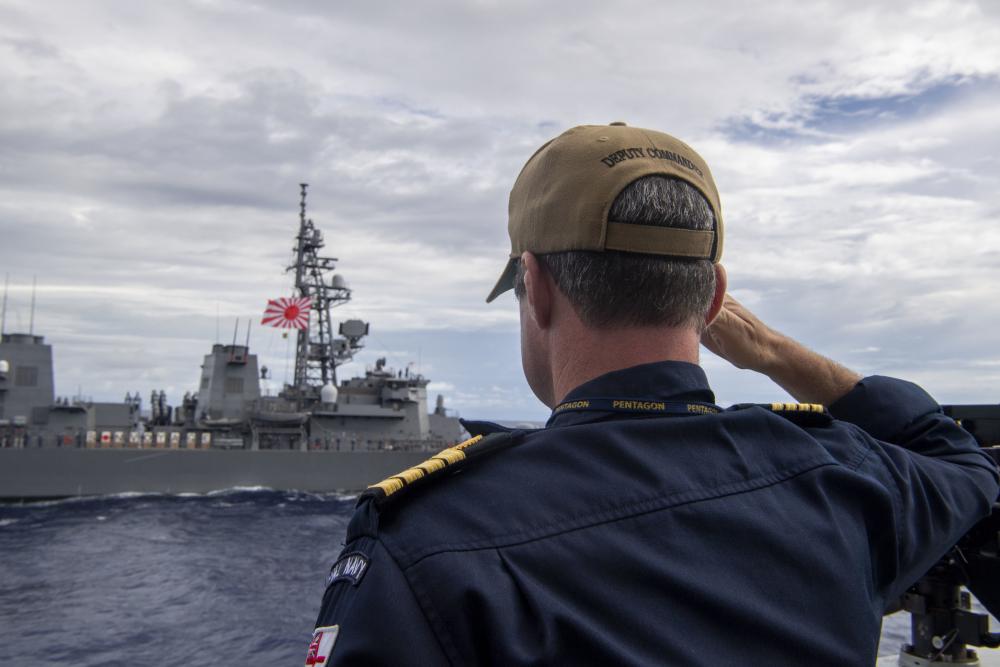
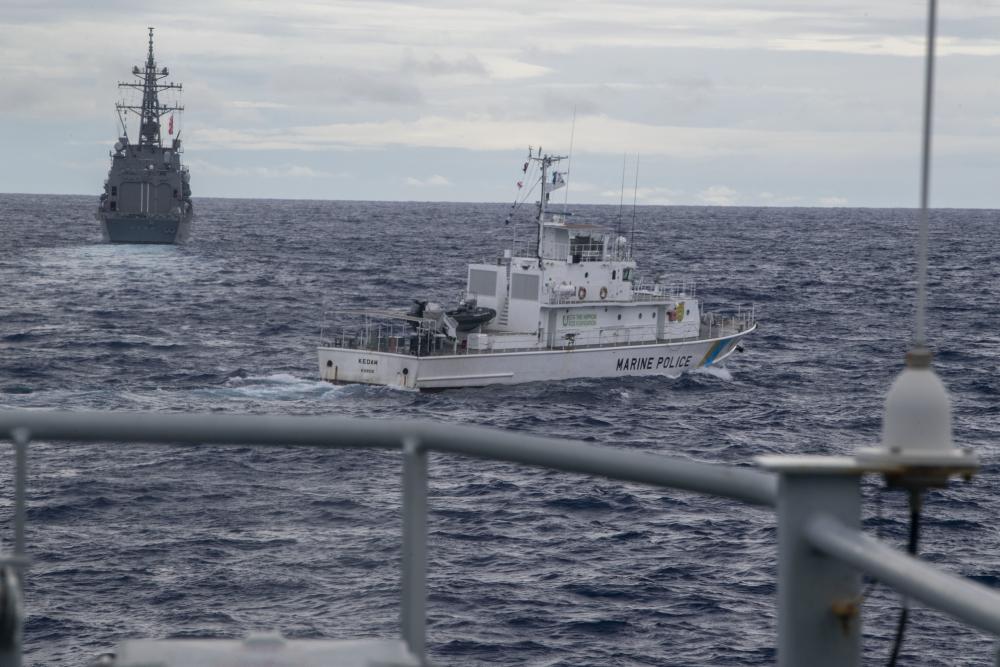
PACIFIC OCEAN (July 19, 2022) – Capt. Charles Maynard of the Royal Navy, serving as deputy mission commander of Pacific Partnership (PP22), renders honors as Japan Maritime Self-Defense Force (JMSDF) ship JS Kirisame (DD 104) passes Navy River Class vessel HMS Tamar (P233) during a multilateral search and rescue exercise (SAREX) coordinated with the U.S. Navy, Republic of Palau, U.S. Coast Guard, Japan Maritime Self-Defense Force and Royal Navy in support of PP22. Now in its 17th year, Pacific Partnership is the largest annual multinational humanitarian assistance and disaster relief preparedness mission conducted in the Indo-Pacific. (U.S. Navy photo by Mass Communication Specialist 2nd Class Brandie Nuzzi)

Below is a press release reporting a multinational SAR exercise involving units from the United Kingdom, Japan, and the Republic of Palau as well as the US Navy and Coast Guard. (46 photos here)

There are some noteworthy aspects to this exercise.

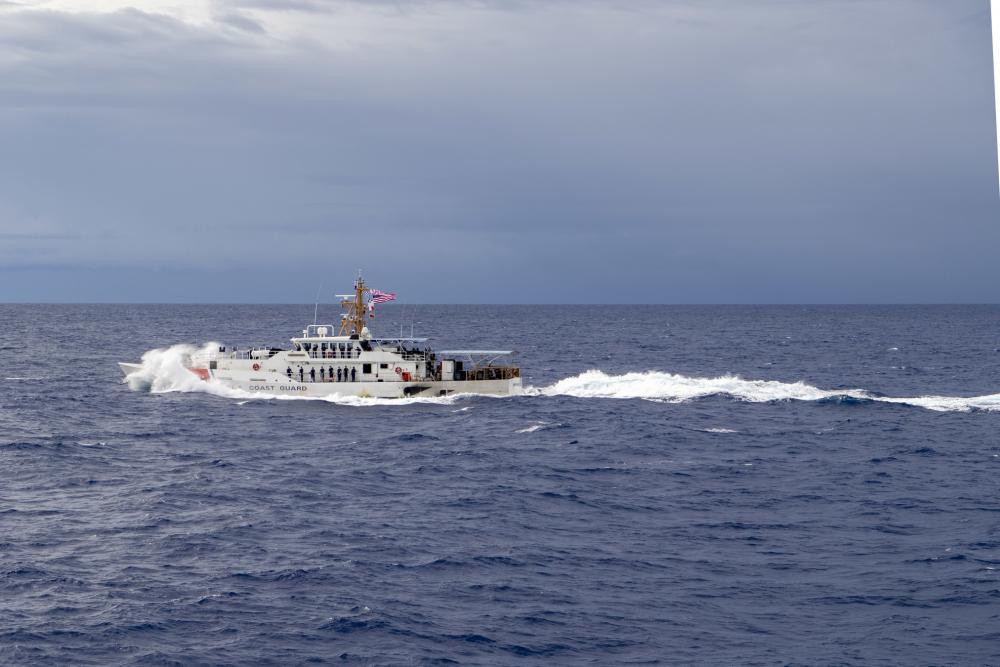
Re the USCG: First that there is a Coast Guard liaison officer to the Compact of Free Association States, Lt. Cmdr. Field Cassiano. Second, USCGC Myrtle Hazard, commissioned just over a year ago has conducted “sovereignty and fisheries patrols with five Pacific island nations.” She has been very busy. 

Re growing Allied interest: The participation of Britain and Japan is relatively new.

The UK has recently shown renewed interest in the Pacific after decades with virtually no forces in the Pacific. The Royal Navy vessel in the exercise, HMS Tamar, is one of two River Class Batch II Offshore Patrol Vessels that have embarked on a five year deployment to the Indian and Pacific Oceans. There are plans to permanently deploy a task force to the area and there is also a growing partnerships between the UK and Japan.

Since WWII, Japan has generally kept a low profile in international affairs but with the emergence of an agressive and overtly hostile China, Japan has started to assume a leadership role in the region. She has transferred offshore patrol vessels to several nations in SE Asia. For the first time, Japan is starting to maket weapons internationally. I found it interesting that the Japanese participant in the SAR exercise was a destroyer rather than a Japan Coast Guard vessel. I have yet to see any evidence, the Japan Coast Guard is taking on an expeditionary role, as the US Coast Guard has done.

News Release

U.S. Coast Guard Forces Micronesia / Sector Guam

U.S. Coast Guard participates in multilateral search and rescue drill off Palau

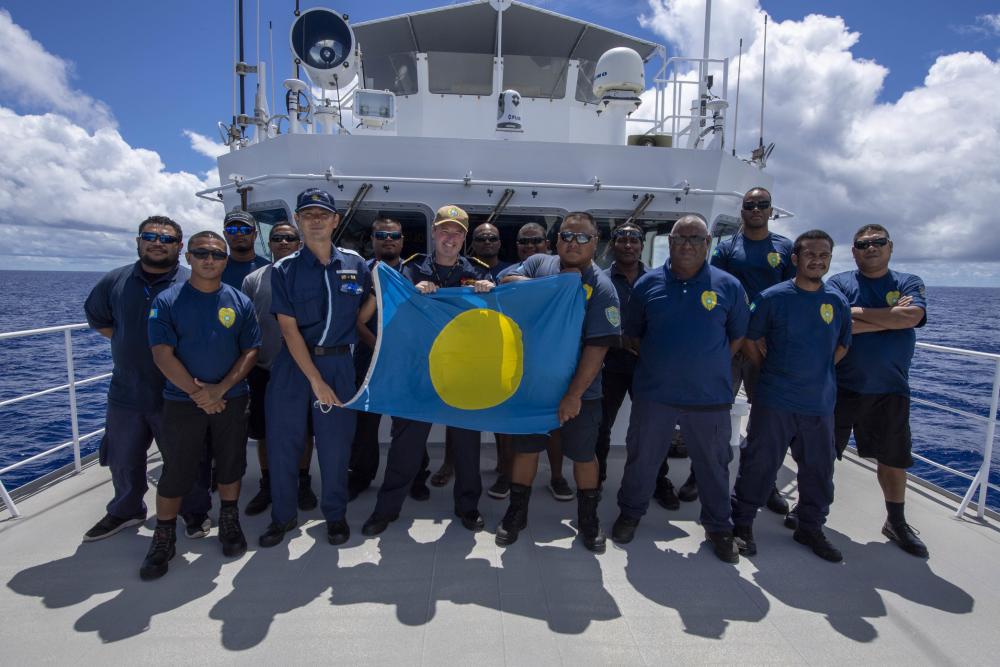
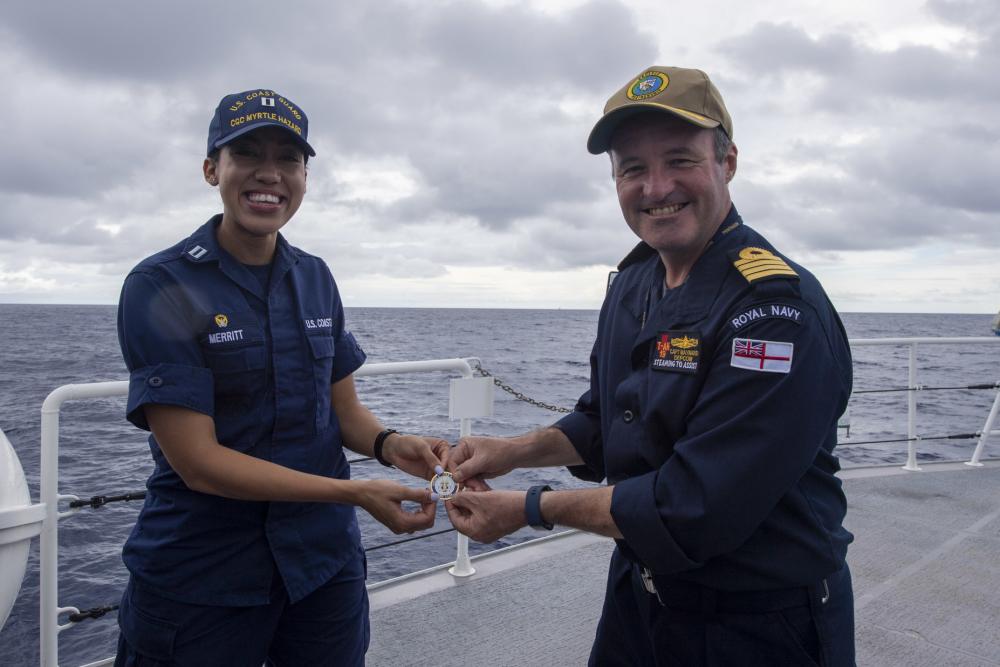
Royal Navy River Class vessel HMS Tamar (P233) sailors conduct boat operations with the USCGC Myrtle Hazard (WPC 1139)  Charles Maynard of the Royal Navy, serving as deputy mission commander of Pacific Partnership (PP22), center left, takes a photo with the crew of Palau Patrol Ship PPS Kedam Capt. Charles Maynard of the Royal Navy, serving as deputy mission commander of Pacific Partnership (PP22), renders a honors as Japan Maritime Self-Defense Force (JMSDF) ship JS Kirisame (DD 104) passes
Japan Self-Defense Force (JMSDF) ship JS Kirisame (DD 104), front left, Palau Patrol Ship PPS Kedam, center, and Royal Navy River Class vessel HMS Tamar (P233) transit the Pacific Ocean during a multilateral search and rescue exercise (SAREX) Capt. Charles Maynard of the Royal Navy, serving as deputy mission commander of Pacific Partnership (PP22), right, receives a U.S. Coast Guard challenge coin from Lt. Jalle Merritt, commanding officer of USCGC Myrtle Hazard (WPC 1139)  USCGC Myrtle Hazard (WPC 1139) transits the Pacific Ocean during a multilateral search and rescue exercise (SAREX) coordinated with the U.S. Navy, Republic of Palau, U.S. Coast Guard, Japan Maritime Self-Defense Force and Royal Navy in support of Pacific Partnership 2022

Editors’ Note: To view more or download high-resolution photos click on the images above. Photos courtesy Petty Officer 2nd Class Brandie Nuzzi, USN.

SANTA RITA, Guam — In a bid to strengthen relationships and interoperability, the U.S. Coast Guard conducted a multilateral search and rescue drill alongside longtime partners from the United Kingdom, Japan, and the Republic of Palau in late July.

“We thrive on these opportunities, and we all came away with a deepened appreciation for the work of our respective agencies,” said Lt. Cmdr. Field Cassiano, Coast Guard liaison officer to the Compact of Free Association States. “Anyone who spends time in the Pacific is no stranger to the region’s vast distances and limited resources. Evolutions like this provide invaluable face-to-face interaction and enable us to work through challenges before an incident or crisis.”

Such events range from something akin to the search for Amelia Earhart to the far more common activity of a small skiff of fishers gone missing. It could also include a large-scale response for a disabled cruise ship or search and rescue of the crew of a commercial vessel like the car carrier Cougar Ace which heeled over at sea before being towed into port in 2008.

In this drill, the USCGC Myrtle Hazard (WPC 1139) crew, with support from the U.S. Coast Guard Fourteenth District and U.S. Coast Guard Forces Micronesia / Sector Guam, worked with the crews of the Palau Patrol Ship PPS Kedam, the Japan Maritime Self-Defense Force ship JS Kirisame (DD 104), and Royal Navy River Class vessel HMS Tamar (P233).

“Thoughtful planning led to realistic scenarios that were positively challenging, which demanded teamwork, shared vision, and high-level navigational expertise,” said Lt. Jalle Merritt, commanding officer of USCGC Myrtle Hazard. “It is fully in the realm of possibility that our partners and we will be called upon to support those in need, in heavy weather, near reefs, with a limited time to respond. Through drills such as those conducted this week, our multinational maritime response team remains ready to not only meet but exceed the needs of those our team serves.”

With decades of experience and one of the largest maritime rescue regions in the world, the U.S. Coast Guard in the Pacific works together with partners and neighbors to provide life-saving coverage throughout the region. The United States maintains several formal agreements with partners under strict compliance with international laws and regulations. These agreements include Search and Rescue (SAR) agreements with Japan, Australia, and the Republic of Palau, among other regional nations.

Historically, the U.S. Coast Guard and Palau hold regular search and rescue engagements to improve cooperation and processes between the Service and counterparts in Palau. This drill, one facet of Pacific Partnership 22, comes on the heels of a very successful humanitarian assistance and disaster relief workshop with 120 personnel trained.

Charles Maynard of the Royal Navy, serving as deputy mission commander of PP22, was on hand to oversee the exercise, part of PP22’s Palau phase.

The coordination between partner nations during PP22 enhanced understanding and cooperation and prepared those involved to respond in the case of a natural disaster or other humanitarian assistance and disaster relief scenario. Pacific Partnership contributes to regional stability and security through exchanges that foster enduring partnerships, trust, and interoperability between nations.

Now in its 17th year, Pacific Partnership is the most extensive annual multinational humanitarian assistance and disaster relief preparedness mission conducted in the Indo-Pacific.

The Myrtle Hazard is the 39th Sentinel-class fast response cutter. The ship arrived in Guam and commissioned along with its sister ships, Oliver Henry and Frederick Hatch, in July 2021. In the time since, the crew has participated in Operation Blue Pacific, conducting sovereignty and fisheries patrols with five Pacific island nations.

For more U.S. Coast Guard Forces Micronesia/Sector Guam news visit us on DVIDS or subscribe! You can also visit us on Facebook at @USCGSectorGuam.
-USCG-

Fincantiari of Italy Builds Two Small but Powerful OPVs

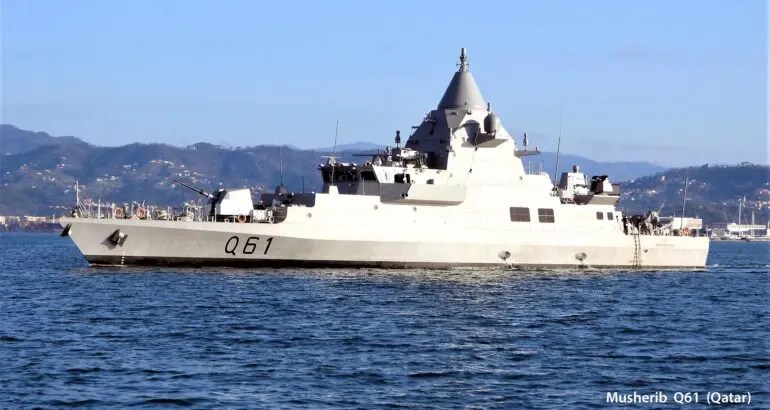
The Qatari Navy OPV is about 63 meters long, 9.2 meters wide, with a maximum speed of 30 knots. Giorgio Arra picture.
Naval News has done a couple of posts on a pair of Offshore Patrol Vessels (OPV) built in Italy for the Qatar Emiri Naval Forces by Fincantieri (owner of Marinette Marine in Wisconsin):

These are not your typical OPV. They look more like FAC(M) i.e fast attack craft, missile, but they trace their linage back through the UAE’s Falag 2 class to the Italian Coast Guard’s Diciotti class. Let’s compare to a typical OPV and talk about why they are so different.

First what is a typical OPV?

  • Displacement: at least 1,500 tons full load, typically less than 3,000
  • Length: at least 75 meters (246 ft), typically less than 100 meters (328 ft)
  • Range: at least 3500 nautical miles, typically 5,000 or more
  • Endurance: at least three weeks
  • Speed: 20-25 knots
  • Aviation: At least flight deck for medium helicopter
  • Boats:  at least two RHIB of 7 meters or larger
  • Weapons: one deck gun of 76mm or less plus two to four guns .50 cal to 30mm guns with one or two typically mounted in remote weapon stations. Anti-Ship Cruise missiles are rare and Anti-Aircraft missile systems more capable than MAPADS rarer still.

Examples include ships building or in service with Argentina, Australia, Britain, India, Japan, Malta, the Philippines, Singapore, Türkiye, the Fassmar designs used by Chile, Colombia, and German, and Damen designs used by Malaysia, the Netherlands, Pakistan, and Vietnam.

The 270 foot Bear class WMECs fit the profile pretty well, if you ignore the fact they can’t quite reach 20 knots. In some respects they are still more sophisticated that some of the newer OPVs.

The 210 foot Reliance class WMECs fall outside the current norm, being smaller and slower than typical, but they otherwise fit the profile. Of course even the newest is 53 years old.

Now let us compare the new Qatar OPV.

Range/Endurance:

Their range is only 1500 nautical miles at 15 knots, that is even less than that of the smaller Webber class cutters’ 2500 at 14 knots. Their seven day endurance is more typical of the smaller Inshore Patrol Vessel class. As a patrol vessel, it is closer to the Webber class WPCs than even the Reliance class.

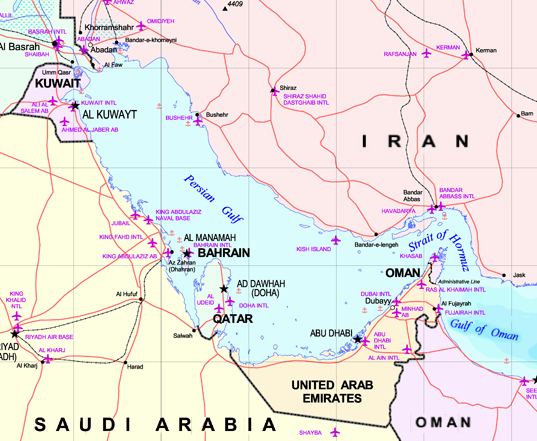
Persian Gulf. US Government work product in the public domain.

Geography is the reason. Qatar’s coast line is only 563 km and its EEZ is 31,819 sq km (that of the US is 11,351,000 sq km, 357 times greater). They just don’t have to go very far. It may also be that these ships will be used more in reaction than as actual patrol vessels.

Size:

Full load displacement is 725 tonnes, with a length of 63.80 (209 feet) (59.60 meters or 195.5 feet between the perpendiculars) and a beam of 9.20 meters/30 feet. This makes them smaller than the Reliance class and only about half the size of the smallest of the typical OPVs. Rough seas are probably less of a concern than in more open areas.

Speed:

Their speed of 30 knots, rather than the typical 20 to 25, also seems to suggest their role is one of rapid reaction rather than persistant patrolling.

Aviation:

Unlike most modern OPVs, there is no apparent provision for supporting aviation assets, not even UAS. That is presumably because land based air is always close.

Starboard quarter of second Musherib-class OPV “Sheraouh” for the Qatar Emiri Naval Forces. Visible are the ship’s boat, two twin Exocet launchers and two 30 mm Marlin-WS secondary gun systems. Picture by Luca Peruzzi

Boats:

The OPV has a stern area with crane for launch and recovery of a RHIB. This is not an arrangement that suggests the boat would be used frequently or that boat ops is a high priority.

The second Musherib-class OPV “Sheraouh” for the Qatar Emiri Naval Forces. Fincantieri picture.

Amaments:

“…in addition to the NA-30S Mk2 FCS for the Leonardo Super Rapido 76/62 mm Multi-Feeding main calibre gun, the Leonardo-provided  EO/IR suite also includes two SASS IRSTs and a single Medusa Mk4B FCS for the two 30 mm Marlin-WS secondary gun systems. The missile armament package also includes two four-cell VLSs for the MBDA VL MICA surface-to-air system in the bow area and two twin-launchers for the MBDA Exocet MM40 Block 3 anti-ship missiles in the stern area.”

The Persian Gulf is a rough neighborhood. Qatar faces Iran across the relatively narrow Gulf. Potentially hostile craft are always close. Shore based anti-ship cruise missiles are always within range. Iranian surface units are at most only hours away, aircraft and missiles only minutes.

The vertical launch MICA missile system and Super Rapid 76mm gun provide credible defense against aircraft and cruise missiles.

While normally I would not feel four Exocets would be enough to provide two salvos of adequate size, against the potential Iranian opposition, four are probably adequate for two engagements.

It is not surprising these ships are better armed than any US Coast Guard cutter, including the more than six times larger National Security Cutters. They may be the most heavily armed “OPVs” in the world.

Two four-cell VLSs for the MBDA VL MICA surface-to-air system mounted between the bridge and a Leonardo 76mm gun forward. Picture by Luca Peruzzi

“Japan Awards Contract to Shipbuilder JMU for 12 New Offshore Patrol Vessels” –The Diplomat

A concept image of a next-generation offshore patrol vessel (OPV) for the Japan Maritime Self-Defense Force (JMSDF) made by JMU. Image courtesy of Japan’s Acquisition, Technology, and Logistics Agency.

The Diplomat reports,

The Japanese Ministry of Defense announced on June 30 that it has awarded a contract to shipbuilding company Japan Marine United (JMU) Corporation to build a next-generation offshore patrol vessel (OPV) for the Japan Maritime Self-Defense Force (JMSDF).

We had an earlier report about this project.

The project is for 12 Offshore Patrol Vessels of 1920 tons standard displacement. Their full load displacement will be higher, probably in the neighborhood of 2,200 to 2,400 tons.

  • Length: 95 meters  (312 feet)
  • Beam: 12 meters (39’4″)
  • Speed: 20 knots (slower than the 25+ knots reported earlier)
  • Crew: 30
  • Average Cost: $66.6M

The design is said to offer modular adaptability.

Combined diesel-electric and diesel (CODLAD) propulsion promises very economical slow cruising.

Presumably these will be used to shaddow the movements of potentially hostile vessels transiting in or near Japanese waters.

They might also be used to provide counter piracy protection off the Horn of Africa. This would free more capable (and much more expensive) warships to be in position to deal with more significant threats.

The design looks to be almost ideal for export as part of Japan’s on going program to strengthen the maritime law enforcement capabilities of friendly Asian nations.

It does appear there might be some overlap between the missions of this class and those of the Japan Coast Guard.

This combination of sea worthy hull, simple systems, and small crew sounds a lot like my Cutter X proposal to put the machinery, equipment, and crew of the Webber class cutters in a larger, more seaworthy, and longer range hull.