Craig Hooper’s “NextNavy” blog has some thoughts on Antarctica, including some thoughts on new construction icebreakers. He’s thinking 25 years ahead, but I think it is worth a look.
Thinking About Antarctica?
1

Craig Hooper’s “NextNavy” blog has some thoughts on Antarctica, including some thoughts on new construction icebreakers. He’s thinking 25 years ahead, but I think it is worth a look.

Our Friend at Navy Recognition was good enough to provide a copy of an artist’s concept of the BIW proposal he had found. We talked about the other two contenders for the OPC contract here.
The proposal is a variation of the the Navantia BAM (Buque de Acción Marítima) (more here).
The BAM has provision for carrying up to six containers. Hopefully this feature has been retained. It looks like all of the proposals may have this feature to some degree.
Presumably the ship will include the BAM’s hybrid propulsion system, with electric motors (two motors of approximately 1,000 HP) run off the ship’s service generators for slow to moderate cruising. The BAM’s main propulsion engines (12,240 HP total providing 21 knots) would probably need to be upgraded to meet the Coast Guard’s speed requirement (22 to 25 knots), but that should be fairly easy. Using the same diesels that are used in the Bertholf Class National Security Cutters (19,310 HP total) would supply the necessary power and simplify training and logistics. Alternately a four engine power plant similar to that used in the closely related Navantia built Venezuelan Guaiqueri class (approx 24,000 HP for 24 knots) would provide the necessary additional power and additional flexibility and redundancy.
In some respects the Bath proposal looks more like the Guaiqueri class with its larger central funnel, although the Bath proposal has a smaller funnel and a small additional stack presumably for the main generators to starboard.
The BAM’s length, beam, and draft are 93.9×14.2×4.2 meters (308×46.6×13.8 feet) their displacement is 2,900 tons, the Venezuelan Guaiqueri class are 98.9×13.6×3.75 (324.4×44.6×12.3 feet) and just over 2,400 tons.
It may only be that the conceptual drawing is slightly distorted, but I am a little concerned that it appears the hangar may not be long enough to take an H-60 sized helicopter. Even if we don’t need that now, we may in the future. The ship is as beamy as an FFG, so it could certainly accommodate a large double hangar.
Like the Eastern design, it looks like the Mk38mod2 on the top of the hangar is going to have a limited field of fire on one side. It does look like there is room for a second mount on top of the bridge. The 57mm, on the other hand, is up out of the green water that will inevitably washs over the bow, and has excellent fields of fire, including the ability to engage contacts close aboard, even when the ship rolls away from the target.
Both the BAM and Guaiqueri class have fewer accommodations than are expected to be provided in the OPC. So some changes were necessary there.
It appears the step-down from the flight deck to the fantail is less than a full deck. If so, then the ship is almost flush decked. e.g. the foc’sle is on the main deck. If that is the case, then the bridge would be on the O-3 deck just as it is on the 210s, 270s, 378s, and NSCs and the ship is really not as tall as it appears in the illustration. On the other hand if the step-down is a full deck (and it is on the BAM), the ship is going to feel unusually tall (but it will give a greater visible horizon).
The Acquisitions Directorate has announced the three winners of contracts to develop preliminary and design contracts for the Offshore Patrol Cutter (OPC) intended to replace all existing medium endurance cutters.
“The U.S. Coast Guard today awarded three firm fixed-price contracts for preliminary and contract design (P&CD) for the Offshore Patrol Cutter (OPC) acquisition project. The contracts were awarded to Bollinger Shipyards Lockport LLC (Lockport, La.), Eastern Shipbuilding Group Inc. (Panama City, Fla.), and General Dynamics, Bath Iron Works (Bath, Maine). The total value of the award is approximately $65 million.”
We talked about what we knew about the concepts earlier. I still have not seen any information on Bath Iron Works’ proposal, but they do have an excellent reputation for building destroyer types, and it is gratifying to see them among the selectees.

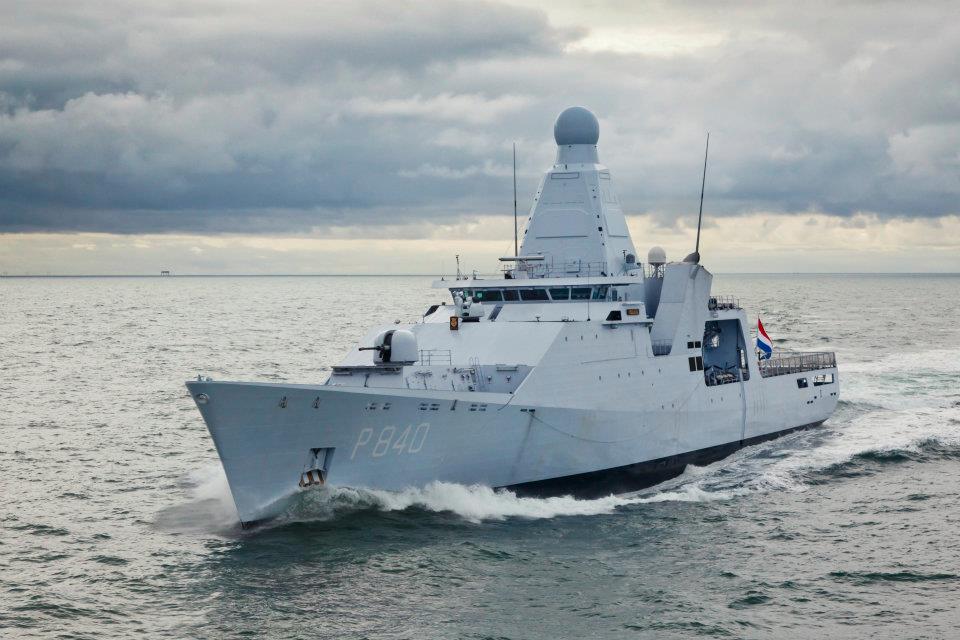
Presumably Bollinger will be modifying a Damen design, possibly related to the Vietnamese OPV we discussed here.
As noted earlier, it appears Eastern’s concept may be a modification of an STX design, the New Zealand Protector Class, that we recently saw in operation off Antarctica.
NavalToday reported on HMNZS Otago recently returned from an almost three month voyage doing Coast Guard style operations, including fisheries enforcement, in the Ross Sea, near Antarctica. Interesting they feel an obligation to do fisheries 2000 miles frim New Zealand.
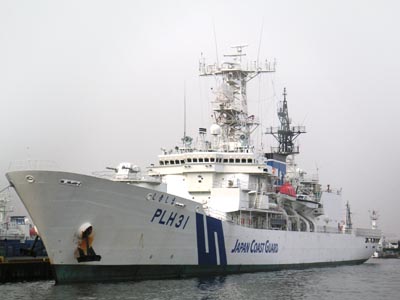
HMNZS Otago is a ship similar in concept to the Offshore Patrol Cutter, being an ice strengthened medium sized (1,900 ton, 85 meter) offshore patrol vessel. The class was discussed along with a few other potential Arctic Patrol Cutters here and to a limited extent as the basis for a potential OPC design here.
This is a post I prepared for CIMSEC. It reiterates material we’ve already discussed, but also adds some additional thoughts.
The US Naval Institute’s News Service has a summary of Admiral Papp’s testimony before the House’s Homeland Security Subcommittee on Border and Maritime Security. He outlines what he sees as the effect of budget cuts and sequestration.
He connected the cuts to a general decline in patrol activity,
“Papp acknowledged the sequestration’s impact in another way in answering a question about why the Coast Guard’s patrols in the air and on the water declined by more than 6,000 hours last year because of “asset failures,” in the words of a Department of Homeland Security inspector general’s report.”
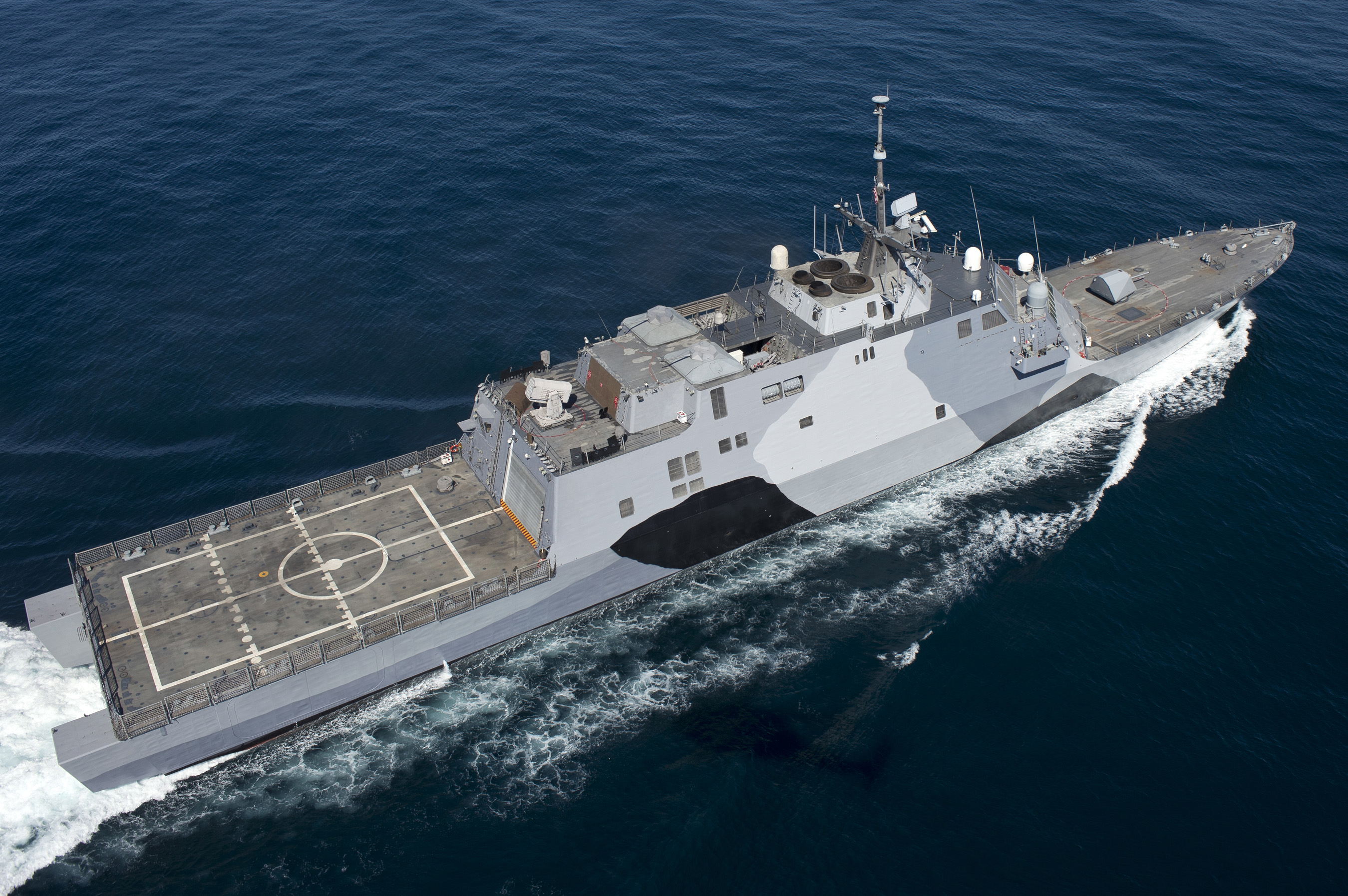
Photo: 130222-N-DR144-367 The littoral combat ship USS Freedom (LCS 1), Mass Communication Specialist 1st Class James R. Evans
This is a rather radical proposal, one that I never thought I would make, but the situation with the Coast Guard’s cutter fleet is almost certain to go from bad to worse as increasing age, budget cuts, and sequestration take effect. It is a long term problem and will take a long term solution.
The Eighth NSC should be funded in FY 2015 and hopefully, we will see this last ship of the class completed by 2019. But the NSCs only replace the 378 foot High Endurance Cutters (and only on an 8 for 12 basis). The Medium Endurance Cutters, some older than any of the 378s, still need replacement and the current plan is very slow to do so.
The first of the Offshore Patrol Cutters (OPCs), destined to replace the existing medium endurance cutters (WMECs), is not expected until 2020, followed by one in 2021, one in 2022, and two per year for the following years until a total of 25 are delivered, presumably in 2033.
The normal life for ships like WMECs is assumed to be 30 years. If we assume no change of plan, the last 210 should be replaced when the 14th OPC is completed. That will, presumably, be in 2028, and the last 210 will be at least 59 years old.

USCG photo, USCGC Reliance (WMEC-615), 210 foot cutter
If we assume that the last 270 is decommissioned when the 25th OPC is delivered, about 2033, then the last 270 will be at least 43 years old at that time.

USCG photo, USCGC Harriet Lane (WMEC-903), 270 foot cutter
I propose that the Navy start lending the Coast Guard half of their Littoral Combat Ships (LCSs) as they are completed. They would be used as interim replacements for the Coast Guard’s oldest medium endurance cutters, until there are sufficient Offshore Patrol Cutters (OPCs) to replace them all. There is ample precedence both for the Navy transferring ships to the Coast Guard and for Coast Guard manning of Navy ships.
I am not suggesting the Coast Guard keep them, because they are not the ship we want ultimately, but they would be an improvement over the ships we have now.
The LCS Program:
The Navy has already bought or contracted for 24 LCS. Multi-year contracts awarded in FY 2010 fund the building of 20 LCS of two classes, over five years, in addition to the four previously funded, two Freedom class and two Independence class annually. Originally the intention was to build 55, the Navy cut that to 52 and now it looks like DOD may stop the program at 32 ships. The jury is still out on the final number, and congressional support, particularly from the states where they are built has been strong. Even at only 32 that is an additional 28 ships yet to be completed.
Defense Industry Daily has an excellent summary of the LCS program you can access here.
The proposal:
Beginning as soon as possible, perhaps beginning with LCS 5, man half the LCSs with Coast Guard crews and put them under Coast Guard control, while continuing construction of the NSCs and OPCs as planned.
What’s in it for the Coast Guard:
Compared to the existing 210, 270, and 282 foot WMECs, the Coast Guard will be operating newer, larger, more capable ships, with much improved aviation facilities. LCSs are capable of hangaring and supporting both helicopters and UAVs, while the 270 is limited to a single helicopter in a retractable hangar and the 210s have no hangar at all. The LCSs are also much more capable of dealing with large numbers of Alien Immigrants, particularly if holding facilities are provided in the reconfigurable space. They are also much more capable of running down fleeing drug suspects in go-fast boats. The LCS are designed to operate with relatively small crews. Currently the “core crew” is 50. In all probability, Coast Guards operating concepts would result in a crew similar in size to that of a 210 (75). So the crew costs should not be substantially different from those of the 210s, and might be lower than those of the 270s.
Most importantly, these newer ships will be supportable while this will become increasing difficult as the older cutters age.
What’s in it for the Navy:
The Navy will be able to call on the ship in wartime, but will not have the operating cost associated with running the ships on a daily basis. The navy will save on manning, fuel, and maintenance. If they are looking for a way to reduce operating costs while preserving wartime capability, this is a viable option.
The Navy already sees these ships as contributing to the counter narcotics effort. Handing them over to the Coast Guard would result in direct benefit to the drug enforcement effort without the Navy having to divert manpower and other resources.
The Timeline:
The program might work like this:
Vessels delivered to the CG: Totals under Coast Guard control: LCSs returned USN
FY LCS OPC LCS OPC
2016 2 2
2017 2 4
2018 2 6
2019 2 8
2020 2 1 10 1
2021 2 1 12 2
2022 2 1 14 3
2023 2 2 16 5
2024 2 2 18 7
2025 2 16 9 2
2026 2 14 11 2
2027 2 12 13 2
2028 2 10 15 2
2029 2 8 17 2
2030 2 6 19 2
2031 2 4 21 2
2032 2 2 23 2
2033 2 0 25 2
If this program were implemented as described, the last 210 could be replaced seven years earlier than currently planned, in 2021 instead of 2028, so that when replaced it will be “only” 52 years old. The last 270 could be replaced in 2024, instead of 2033, nine years earlier than planned, when the last 270 is 34 years old.

U.S. Navy photo by Naval Air Crewman 2nd Class Nicholas Kontodiakos, USS Independence (LCS-2) showing her large flight deck
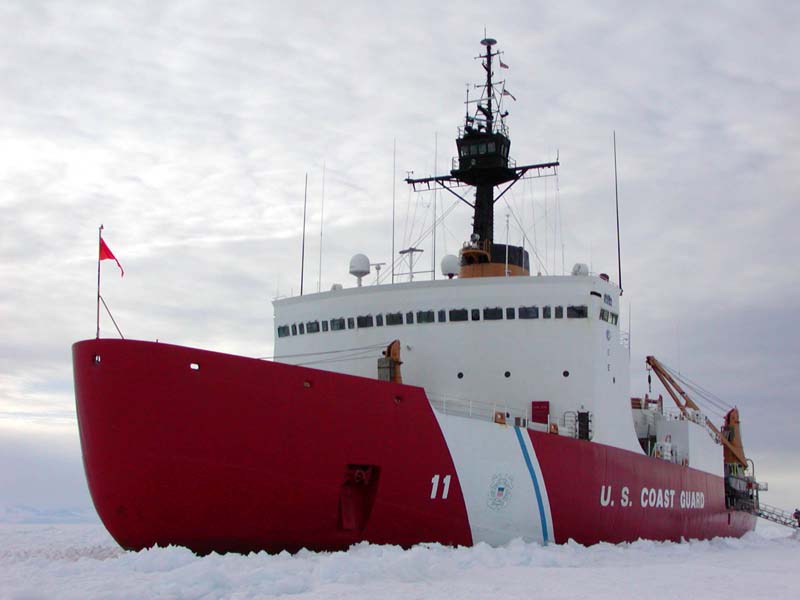
“Although a second heavy icebreaker would provide redundancy, the cost of this redundant capability would come at the expense of more pressing and immediate operational demands.
“A total of 43 mission critical systems in five general categories were assessed and assigned a condition rating. Overall, Propulsion, Auxiliary and Prime Mission Equipment are rated Poor to Fair, while Structure and Habitability are rated Fair to Good. POLAR SEA reactivation is estimated to cost $99.2 million (excluding annual operations and support costs) to provide 7-10 years of service to the Coast Guard. Given the age of the icebreaker, operations and support costs are projected to rise from $36.6 million in the first year of operation to $52.8 million in the tenth year of operation. Combining reactivation costs and point estimates for operating costs, reactivation would cost $573.9 million. Accounting for operational and technical uncertainties, using a 90% Confidence Level Risk Analysis, the total potential cost rises to $751.7 million.
“Arctic seasonal icebreaking demands through 2022 can be met with existing and planned Coast Guard assets, as current requirements do not justify the need for heavy icebreaking capability in the Arctic. Heavy icebreaker capability is needed to perform Operation Deep Freeze in Antarctica, but Coast Guard assets may not be the only option available to the National Science Foundation to support this activity. Although a second heavy icebreaker would provide redundancy, the cost of this redundant capability would come at the expense of more pressing and immediate operational demands. POLAR STAR, when fully reactivated, will provide heavy icebreaker capability until a new icebreaker can be delivered to meet both current and emerging requirements.”
It does not take much reading between the lines to see that the real issue here is not the one time renovation cost, it is the high annual cost of maintaining a complex plant that is increasingly unsupportable. Congress might fund the renovation costs, but the annual maintenance costs are likely to be taken out of hide and the projected $36.6M to $52.8M per year is just too much for the increased capability. The conclusion that restoring her to her original configuration is not a viable option is probably reasonable, but it is the only alternative. Because
Polar Sea’s basic structure is sound. Quoting the analysis,
“Based on the results of the inspection, the structure is rated EXCELLENT and the average remaining service life for the structure remains 25+ years. No significant wastage or corrosion was noted and no major repairs have been necessary since the last report.”
Maine Engines and Propellers:
“The CPPs are rated POOR.–
“The following discussion is quoted from the Polar Service Life Extension Project (SLEP), Option A, Scope and Feasibility Analysis submitted by M. Rosenblatt and Son! AMSEC LLC, May 2006 and is an excellent description of the challenges that still confront the CPP system: Controllable Pitch Propellers and Associated Hydraulic Systems. This remains the most significant problem that must be solved if the cutters are to continue to provide reliable service. The propellers are subject to particularly severe conditions during heavy icebreaking conditions and a significant failure may lead to cancellation of a mission, as well as presenting the potential for leakage of hydraulic fluid to the environment. There are issues relating both to the propeller hubs themselves and the internal hydraulic system components. The following discussion will continue to address the propeller hubs separately from the rest of the CPP system for three reasons: 1) their current condition is different than the rest of the system, 2) the likelihood for a known fix is different, and 3) the propeller hubs cannot be repaired while the ship is deployed or while in the water which vastly impacts operational availability.–“Propeller Hubs. The hubs are rated POOR. In recent years, it has been necessary to dry dock the cutters and inspect the propeller hubs after every heavy icebreaking deployment. Throughout the 50 years of experience with the two Polar Class ships, the interval between hub overhauls has never been more than two heavy icebreaking missions. According to the Coast Guard Technical Point of Contact for the CPP hub overhaul contract, every time the hubs have been overhauled there has been some unusual wear, scoring, cracking, leaking, broken parts or other indicator that it was appropriate that the hubs be overhauled before an additional heavy icebreaking mission was attempted. In other words, there has been no indication that overhauls were unnecessarily being performed at too short an interval. Over the past 25 years, dozens of modifications have been made to the hubs attempting to eliminate the negative conditions found. Typically corrections in one spot have lead to new symptoms in another location. Sizes, clearances, and material strengths are in critical balance. While the hubs have undoubtedly been improved over the past 25 years, their service life without overhaul remains relatively short.
German Navy blog Marine Forum reports,
“27 Jan….KENYA
“The government has announced plans to establish a coast guard to supplement the Kenya Navy … will patrol Kenya’s territorial waters and safeguard marine interests in its exclusive economic zone … money set aside for an offshore patrol vessel (no details) already under construction in India.”
I have to think most smaller countries don’t really need a Navy–they do need a Coast Guard.
Kenya is in East Africa. They have been helpful in countering piracy primarily based in Somalia.
 Chuck Hill's CG Blog
