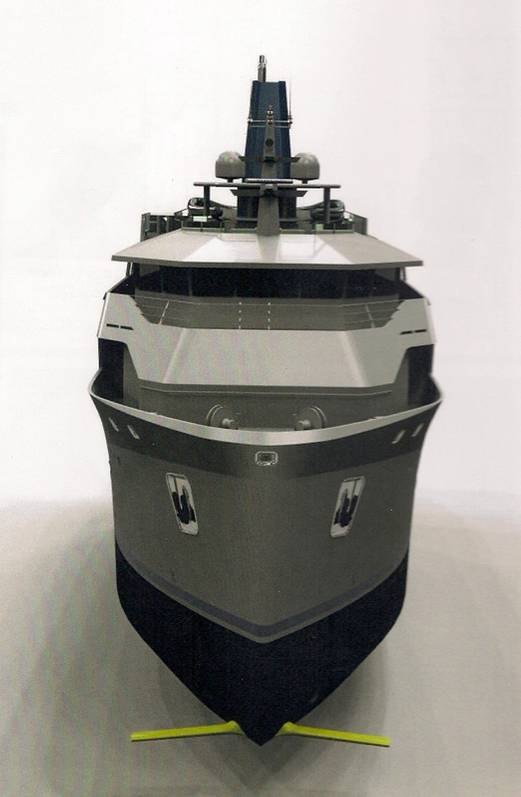
Coastal-steamer-sized, retractable Wavefoil installation. Credit Wavefoil
Marine Link reports on an innovation that promises a better ride, fuel savings, and lower emissions.
If it works nearly as well as reported, its worth a look.

Coastal-steamer-sized, retractable Wavefoil installation. Credit Wavefoil
Marine Link reports on an innovation that promises a better ride, fuel savings, and lower emissions.
If it works nearly as well as reported, its worth a look.

Launch of USCGC Mackinaw (WLBB-30) on April 2, 2005. Photo by Peter J. Markham.
US Senators from Great Lakes states are again pushing for second icebreaker on the Great Lakes at least as capable as USCGC Mackinaw. A letter jointly signed by U.S. Senators Tammy Baldwin (D-WI), Gary Peters (D-MI), Debbie Stabenow (D-MI), Rob Portman (R-OH) Chuck Schumer (D-NY), Amy Klobuchar (D-MN), Tina Smith (D-MN), Dick Durbin (D-IL), Kirsten Gillibrand (D-NY), Sherrod Brown (D-OH), and Todd Young (R-IN) has been mailed to the Commandant and the acting Secretary of Department of Homeland Security.
Full text of the letter can be found below:
Dear Director Mulvaney, Acting Secretary Wolf, and Admiral Schultz;
As the Administration works to finalize its FY 2021 budget request to Congress, we urge you to include adequate funding to support the Coast Guard’s acquisition of a Great Lakes icebreaker.
Icebreaking capacity supports the movement through the Great Lakes of more than 90 million tons of cargo annually. According to a study commissioned by the Lake Carriers’ Association, businesses that depend upon the Great Lakes maritime industry lost over $1 billion in revenues because of delays caused by inadequate icebreaking during the 2018-2019 ice-season. Vessel delays also resulted in the loss of 5,421 jobs dependent upon the efficient delivery of cargo throughout the Great Lakes Region.
The Coast Guard is required by law to maintain a heavy icebreaking capability on the Great Lakes to keep our region’s ports and harbors open and facilitate our nation’s free flow of commerce. However, the current maintenance condition of the existing icebreaking fleet has resulted in 182 lost operating days last winter primarily due to engine failures. To this end, Congress has authorized the Coast Guard to acquire a new Great Lakes icebreaker at least as capable as the heavy icebreaker the MACKINAW (WLBB-30), and has directed and provided funding for the Coast Guard to establish a major program acquisition office to support the design and procurement of a vessel.
We respectfully request adequate funding for the acquisition of a Great Lakes icebreaker in your FY 2021 budget request. Thank you, in advance, for your consideration of our views.
Their concern is easy to understand. There is no redundancy for the USCGC Mackinaw. If she has a catastrophic failure, it could be disastrous for the economics of the Lakes area. Even with her, shortfalls in capability have cost area a great deal.
We have discussed this before.
The Lake Carriers’ Association claims economic loses cost the Federal Government enough in taxes to pay for a new icebreaker in as little as two years.
Thanks to Fred for bringing this to my attention.
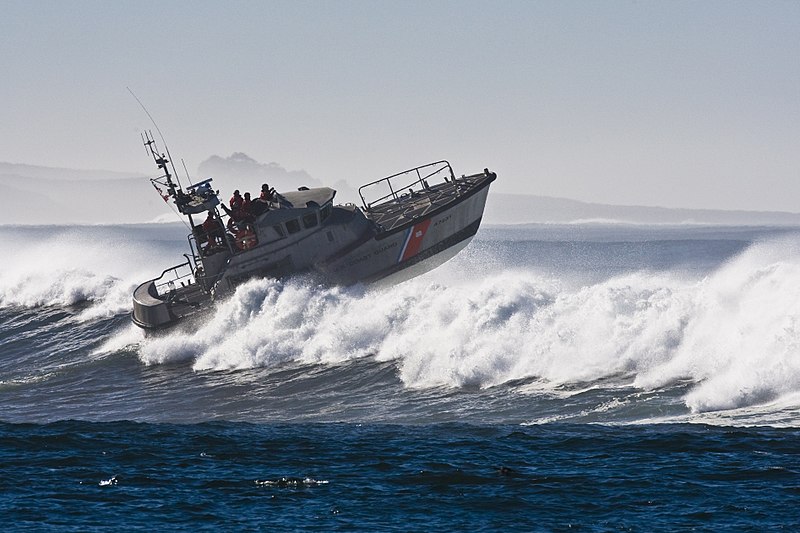
47-Foot Motor Life Boat (MLB) 47231 from Station Morrow Bay, 4 Dec 2007. Photo by Mike Baird
Marine Log reports that,
Birdon America, Inc. has named All American Marine, Inc. (AAM), Bellingham, Wash., as the West Coast shipyard for Phase I of the U.S. Coast Guard 47-foot motor lifeboat (MLB) Service Life Extension Program (SLEP).
Last August, Birdon America was awarded the prime contract to perform SLEO work on 107 of the 117 MLBs in the USCG fleet.
Regarding the scope of work.
Birdon America developed and proposed a solution to meet the Coast Guard’s SLEP requirements and included system replacements, performance enhancements in the areas of noise, seating, and reliability and addressed structural issues.
The main work will be on systems experiencing technical obsolescence: the main propulsion, electrical, steering, towing and navigation systems, as well as replacement of areas of the hull and structure that have demonstrated high failure rates. Additionally, efforts to enhance human system integration will be made where practical to do so.

French “POM” Offshore Patrol Vessel. Credit: Socarenam
Naval News reports that the French Navy has ordered six Offshore Patrol Vessels (Patrouilleur d’Outre-Mer – POM). with the intention of basing two each in New Caledonia (Nouméa) and French Polynesia (Papeete) in the Western Pacific and la Réunion (Port-des-Galets) in the Indian Ocean.
The POM will have an endurance of 30 days without refueling. Each ship will accommodate a crew of 30 sailors and 23 passengers and operate an unmanned aerial vehicle. Their armament will include a 20mm caliber remote-controlled turret (Narwhal by Nexter), as well as 12.7 mm and 7.62mm machine guns. The POM vessel will be 80 meters (262.4′) long and 11.8 meters (38.7′) wide, with a draft of 3.5 meters (11.5′). (I provided the conversion to feet–Chuck)
These ships will replace 180 foot long P400-class patrol boats.
We talked about these ships and also discussed the French Navy’s coast guard type missions and other French OPV projects here. Incidentally all the previous reporting indicated that these would be 70 meters (230′) in length. These really do not look like 80 meter ships. I would prefer a flight deck and hangar suitable for a medium sized helicopter like on L’Adroit, but in any case, it is bigger and, at 22 knots, faster than a 210 with a crew less than half as large.
These ships certainly could be considered as candidates for “cutter X,” taking the crew and equipment of the Webber class cutters and putting them in a larger, more seaworthy hull. Looking at these new CGI images, they look like a supersized Webber class, with the gun on the main foc’sle just forward of the super structure and four crew served .50 calibers sited almost exactly as they are on the Webber class; a very similar 360 degree view pilot house mounted well back where it will experience less vertical acceleration; and a boat launch ramp notched in the stern. Taking advantage of the larger hull it also incorporates a davit launched RHIB starboard, space for a 20 foot containerized mission module, a flight deck and hangar for a 700-kilogram-class rotor-blade drone more berthing, and a holding area for up to six prisoners.
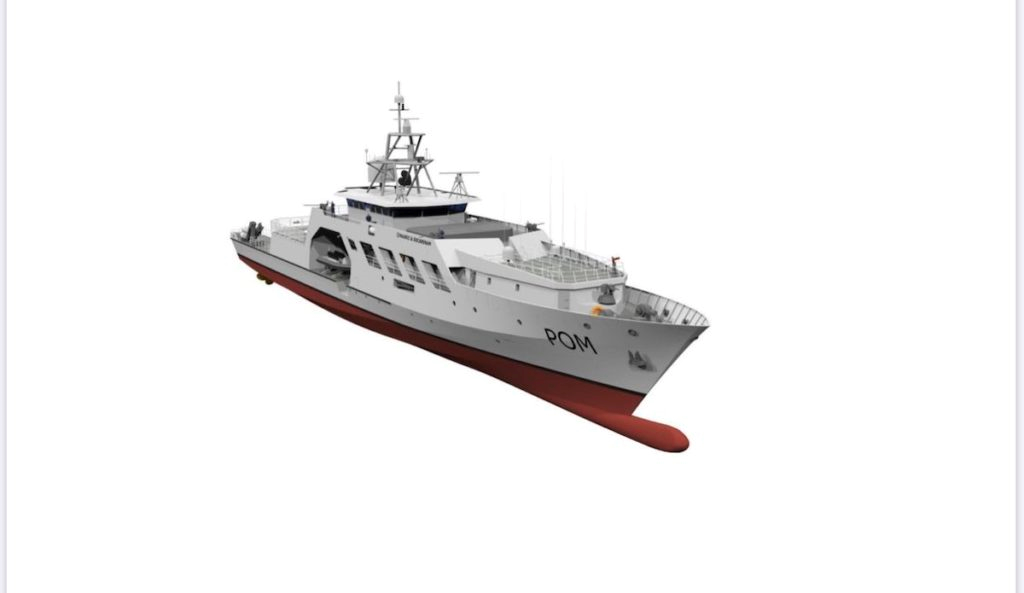
A CGI of the French Navy’s future POM OPVs (Credit : Socarenam)
It is now extremely unlikely the OPCs will be obtained at the low price initially bid by Eastern. They are now seen to be as large as the Bertholf class National Security Cutters. Perhaps if we look ahead to the time when Polar Security Cutter funding will have been completed, we should think about building a true “bridge” between the over 4,000 ton NSCs and OPCs and the under 400 ton Webber class. We might choose to continue building one OPC a year and build three Cutter X for about the same price as a second OPC. We could replace the WMECs that much quicker and perhaps build to a total of over 50 truly ocean going cutters. (11 NSCs, 14 OPC, and 30 Cutter X for about the same price as 11 NSCs, and 25 OPCs)
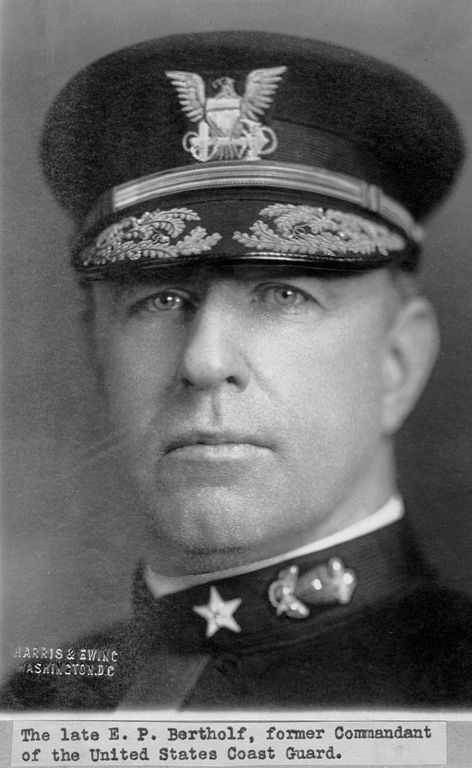
Photograph of Ellsworth P. Bertholf, Commandant of the U.S. Revenue Cutter Service from 1911 to 1915 and Commandant of the U.S. Coast Guard from 1915 to 1919. Coast Guard photo.
Today mark the 105th Anniversary of the formation of the US Coast Guard. “An Act to Create the Coast Guard” (Public Law 239) was signed into law on 28 January 1915.
Credit for this should go to Ellsworth Price Bertholf. First he saved the Revenue Cutter Service from being disassembled and then after WWI saved it from being absorbed by the Navy. He was one of three heroes of the Overland Relief Expedition. He died at age 55.
Did you know he was court marshalled and dismissed while a midshipman at the Naval Academy?
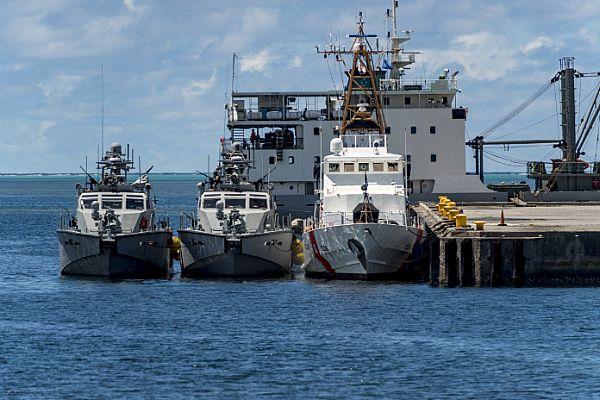
COLONIA, Yap (July 4, 2019) The U.S. Coast Guard Island-class patrol boat USCGC Kiska and Mark VI patrol boats assigned to Coastal Riverine Squadron (CRS) 2, Coastal Riverine Group 1, Detachment Guam, moored in the Micronesia port of Yap. CRG 1, Det. Guam’s visit to Yap, and engagement with the People of Federated States of Micronesia underscores the U.S. Navy’s commitment to partners in the region. The Mark VI patrol boat is an integral part of the expeditionary forces support to 7th Fleet, capability of supporting myriad of missions throughout the Indo-Pacific. (U.S. Navy photo by Mass Communication Specialist 2nd Class Jasen Moreno-Garcia/Released)
CIMSEC has issued a call for articles regarding the CNO’s recently issued “Design for Maintaining Maritime Superiority” the document does not mention the Coast Guard, but I think we have a part to play.
This is a good opportunity for some of those who follow this blog to try your hand at writing for a professional readership.
Again, I as many of you, was not able to attend the Surface Navy Symposium. Fortunately a number of videos are available to give us a taste of what went on.
Below are three videos from Naval News followed by a video of a panel discussion provided by Defense News.
The “Day 1” video includes:
01:09 – Austal HSSV high speed support vessel
03:55 – Update on the Littoral Combat Ship program with NAVSEA
05:40 – NSM firing from USS Gabriele Giffords
06:58 – Northrop Grumman SEWIP Block 3 EW system
09:47 – Raytheon SPY-6 family of radars
The “Day 2″ video covers:
00:57 – Fincantieri Marine Group FFG(X) Frigate based on Italian Navy FREMM
04:34 – Fujitsu collaborative table for JMSDF AEGIS destroyers & Japan AEGIS Ashore
05:53 – Raytheon SM-3 Block IIA ballistic missile interceptor
The “Day 3” video reports on:
00:59 – BAE Systems double docking of Arleigh Burke-class destroyers
01:54 – BAE Systems precision guided munition for 5 Inch gun: Hyper Velocity Projectile & Vulcano
02:31 – Fincantieri Marinette Marine shipyard expansion plan for FFG(X) frigate
06:08 – L3Harris FVR-90 future vertical lift VTOL UAV
08:26 – General Dynamics NASSCO John Lewis-class TAO 205
09:23 – Titanium 3D printing
The panel discussion, “Building the Future Fleet” is a bit over 90 minutes. Most of it is Navy of course. If you are a regular reader here, I don’t think you will hear much new about the Coast Guard. Rear Admiral Douglas M. Schofield (CG-9) is on the panel and began speaking at time 6:00–11:00. He also speaks briefly at 1:00:30 and answers the last question at about 1:28:30.
Huntington Ingalls still provided no information on their proposal for the FFG(X) program.

Unfortunately the source of this artwork was not available.
The US Naval Institute’s Naval History Magazine, February 2020 edition, has an interesting article about the many changes that the Coast Guard went through as a result of Prohibition. You can read it online here.The section on code breaking is perhaps the most surprising.
During Prohibition, in its largest law enforcement mission ever, the Coast Guard made thousands of apprehensions. It also experienced its largest fleet expansion outside the world wars. And the service saw many firsts, including the first time Coast Guard crews manned Navy warships, and the permanent establishment of an aviation branch. It also saw extensive use of the radio and RDF and the founding of the Coast Guard Intelligence Office, one of the day’s leading federal intelligence branches. All these factors shaped the service into a force better prepared for its next great challenge—World War II.
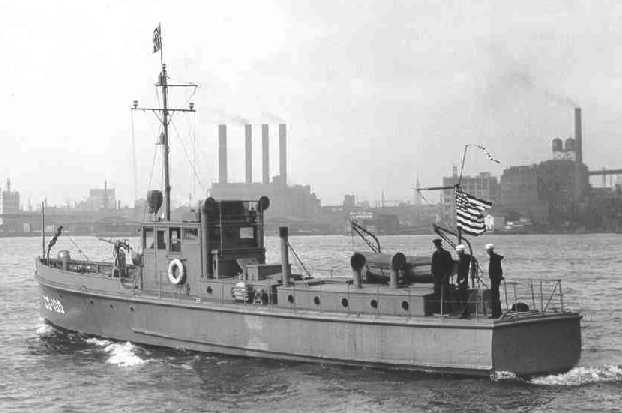
A Coast Guard Sixbitter, 75 foot patrol boat.
This from the Acquisitions Directorate (CG-9):
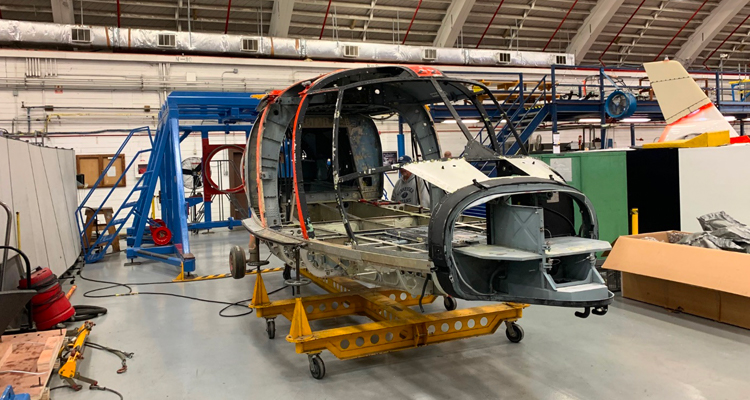
The Coast Guard MH-65 short range recovery helicopter program began full rate production of the MH-65E configuration in November 2019. CGNR 6522 was the first MH-65 to enter the composite shop phase in the program depot maintenance overhaul. U.S. Coast Guard photo.
The Coast Guard MH-65 short range recovery helicopter program began full rate production of the MH-65E configuration Nov. 21, 2019, with the transfer of CGNR 6522 to the Aviation Logistics Center (ALC) in Elizabeth City, North Carolina. Two additional aircraft – CGNR 6514 and CGNR 6593– were transferred to the ALC production line in December 2019 and one – CGNR 6507 – was transferred in January 2020. The program is executing concurrent Service Life Extension Program (SLEP) work and avionics upgrades for the MH-65E conversion on the entire fleet.
Full rate production means that the ALC will transition to producing MH-65Es at a rate of 22 aircraft per year.
The avionics upgrades include reliability and capability improvements for the Automatic Flight Control System; installation of a digital cockpit display system and an upgraded digital weather/surface search radar; integration of a robust command, control, communications, computers, intelligence, surveillance and reconnaissance suite; and modernization of the digital flight deck with Common Avionics Architecture System, common with the Coast Guard H-60 medium range recovery helicopter and similar Department of Defense aircraft. Once the upgrades are complete, the helicopter is redesignated an MH-65E.
At the same time, the Coast Guard is completing SLEP activities to replace five major structure components: the nine-degree frame, canopy, center console floor assembly, floorboards and side panels. These mission-critical improvements are designed to extend the service life of the helicopter by 10,000 flight hours.
The avionics upgrades and SLEP are being completed at the same time to achieve schedule and cost efficiencies.
The Coast Guard plans to convert all 98 aircraft to the MH-65E configuration by fiscal year 2024.
For more information: MH-65 program page

The Coast Guard Cutter Healy breaks ice around the Russian-flagged tanker Renda 250 miles south of Nome Jan. 6, 2012. The Healy is the Coast Guard’s only currently operating polar icebreaker. The vessels are transiting through ice up to five-feet thick in this area. The 370-foot tanker Renda will have to go through more than 300 miles of sea ice to get to Nome, a city of about 3,500 people on the western Alaska coastline that did not get its last pre-winter fuel delivery because of a massive storm. If the delivery of diesel fuel and unleaded gasoline is not made, the city likely will run short of fuel supplies before another barge delivery can be made in spring. (AP Photo/US Coast Guard – Petty Officer 1st Class Sara Francis) NY112
The US Naval Institute news service based on comments by Vice Commandant Charles Ray, during the 2020 Surface Navy Association Symposium, reports that the Coast Guard is putting more emphasis on addressing long standing short falls in shore-side facilities. They are also attempting to improve communications with particular reference to communications in the Arctic.
The Arctic comms issue definitely caught the eye of commenters. Don’t overlook the comments.
 Chuck Hill's CG Blog