What Might a Wartime OPC Weapons Fit Look Like?

opc-eastern

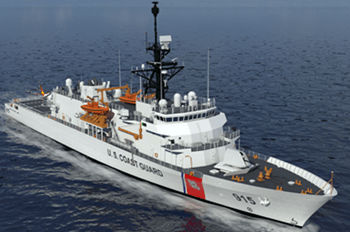
Four years ago I wrote a post suggesting that the Offshore Patrol Cutter might be designed from the start for a wartime weapons fit, but then fit them out with only those systems required for their peacetime missions, which might have included only its helicopter, UAS, and 25 mm Mk38 Mod2 gun(s).

I started with the assumption that the OPC should be able to mount a weight of weapons at least equal to those mounted on the 255 foot Owasco class cutters as built during World War II (140-150 tons). This figure did not include ammunition other than depth charges, consequently, nearly all the weight was above the main deck. This now appears very conservative in that the Eastern OPC design is about twice the size of the Owasco Class. (For another data point, when built, the USS Fletcher, first of a class of 175 destroyers with a design displacement of 2,700 tons, had 161.8 tons of armaments and 190.8 tons of ammunition.)

In the earlier post, a possible wartime outfit that I believed might be used for designing the ship (and the weights I used) included:

Total 124.4 tons

Since we now have a notional design for the cutter and my own views have changed somewhat, I thought it might be worthwhile to revisit how this class might be armed in wartime. The design may have ruled out some of the systems above, but the surprisingly large size suggest it should be fairly adaptable.

In fact it looks like the OPC could be turned into a credible warship adding only deck mounted systems that require only minimal deck penetration for cabling and the like.

What’s already there?:

Based on earlier information, as built, the design will includes provision for

For a total of 28.55 tons

Anti-Ship Cruise Missile:

 LRASM_TSL_Concept_Lockheed_Martin
LRASM topside launcher concept. The size and weight are comparable to launchers for Harpoon. Photo: Lockheed Martin.
Currently there are three potential anti-ship cruise missiles that might be used, Harpoon, LRASM, and Naval Strike Missile. Harpoon weighs 1,523 lb (691 kg) with a 488 pounds (221 kg) a warhead. Naval Strike missile is smaller, longer ranged, and more intelligence with a weight of 900 lbs (410 kg) with a 276 (125 kg) warhead. LRASM is the newest and supposedly the most “intelligent.”
As I posted earlier, I think the Coast Guard could use a couple of LRASM on each of their NSCs and OPCs even in peacetime as a means of addressing the threat of a terrorist attack using a medium or large ship. It is the missile’s range (about twice the others) and purported ability to target specific parts of a specific target rather than its larger warhead, that made the LRASM the system of choice for this role.
Reportedly the LRASM deck mount is comparable in size and weight to the Mk141, which is the standard quad deck launcher for Harpoon. The only source I could find, indicated that the weight of a quad Mk141 with missiles is 27,126 lbs or 13.6 tons, or 27.2 tons for an eight missile battery. Still I can’t believe the LRSM will not weigh a bit more than Harpoon, seeing its warhead is twice as large. I will assume a quad deck mount weighs about 15 tons, or 30 tons for an eight missile outfit. In any case, if other types of missiles were used, they would weigh less.
These might be positioned either on the fantail or on the platforms aft of the 57mm and below the bridge, one deck above the foc’sle where it appears they plan to mount .50 caliber machineguns possibly in Mk49 ROSAM.

RGM-84 Harpoon SSM was fired from a Mk-141 missile launcher aboard USS Shiloh (CG 67). The Shiloh’s beam is only one foot more than that of the Offshore Patrol Cutter. Looking at the photo, you can see that the launchers take up well under half the width of the fantail.

opcplacemat

Photo: Click to enlarge

 Evolved Sea Sparrow Missile:
It appears it may be possible to equip the OPCs with ESSM (Evolved Sea Sparrow Missile). A new version of the missile, the ESSM block II, will obviate the need for illuminators that have been required for earlier versions. These would allow the cutter to provide limited local area AAW protection for ships that the cutter might be escorting out up to 25 miles. Additionally they can be used against surface targets.
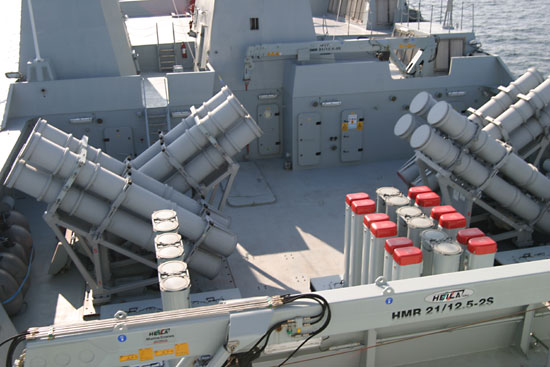
Using the Mk56 VLS a loaded 12 missile module weighs 11.5 tons. Physically it is not very large. 3.66 m (12 ft) x 2.71 m (9 ft) x 4.65 m (15’3″) high. We could locate one or perhaps two of these on top of the superstructure where they apparently intend to store the third boat.  This may seem relative high in the ship, but it is the same position where the Oliver Hazard Perry (FFG-7) Class frigates mounted their 76mm gun and the OPC is considerably beamier (54 vis 45 foot).
harpoonmk56

Photo: Click to enlarge. The relatively small foot print of the Mk56 VLS system (pdf) can be seen here on a Danish Absalon-class command and support ship (beam 64 feet, by comparison the Offshore Patrol Cutters’ beam is 54 feet–same as that of the Bertholf class National Security Cutters).  Two sets are visible in the foreground, one set of twelve with missile canisters with red tops in place to the right, on the ship’s centerline, and a second set of twelve without canisters to the left. The Absalon class has three twelve missile sets, with the third set off camera to the right. 

VLSLauncher_korvet
 
Photo: 12 earlier Mk48 mod3 VLS for ESSM seen here mounted on the stern of a 450 ton 177 foot Danish StanFlex300 Flyvefisken class patrol boat.  The Mk56 launchers replace the Mk48s with an approximate 20% weight savings. 
SeaRAM: 
searam_lead_img
This could really be any of three systems, Phalanx, SeaRAM (a modified Phalanx with eleven rolling airframe missiles instead of the 20 mm gun) or the 21 round Mk 49 RAM launcher. Loaded, all three are about 8.5 tons or less.
An operations research study done for Australia “Limitations of Guns as a Defence against Manoeuvring Air Weapons,” (pdf) by Christian Wachsberger, Michael Lucas and Alexander Krstic, Weapons Systems Division, Systems Sciences Laboratory, DSTO-TN-0565 has convinced me that gun systems are unlikely to effective in the future, so for the OPC I would choose two SeaRAM. This has also been chosen for the frigate follow on to the Navy’s LCS.
Two LCS systems could provide automated 360 degree protection against the sudden attack of a coordinated anti-ship missile attack. One system could replace the Mk38 mod2 system currently planned for placement on top of the hangar. A second system could be sited on the superstructure forward and below the bridge, behind and above the 57mm. This might require a small extension of the superstructure to provide a platform sufficiently large enough to both support the system and allow access for maintenance.
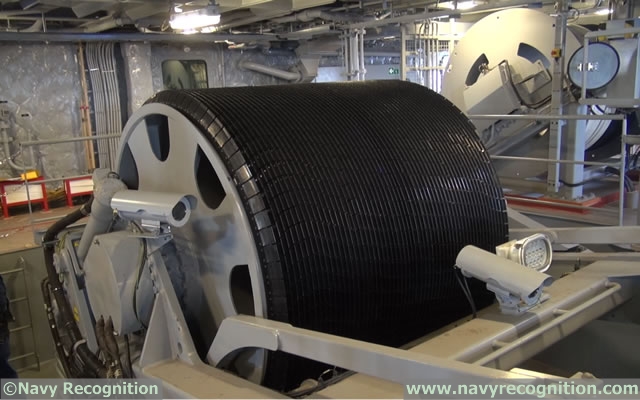
AN/SQR-20 Multi-Function Array (Thales CAPTAS 4):
 captas-4_vds_fremm_sna_2016_surface_navy_news_2
Photo: NavyRecognitionReeling system for the CAPTAS-4 Variable Depth Sonar tether aboard a French Navy FREMM Frigate (Aquitaine class).
If there is a submarine threat, we will need a sonar. Additionally passive towed arrays may be used as a targetting system for anti-ship cruise missiles. In peacetime, a towed array might also be to locate semi-submersibles.
The Thales CAPTAS-4 is one of the systems being considered for the LCS and its frigate derivative. The current version weighs 20.6 tons. The US version will probably be lighter since the Navy is looking for a lighter version for the LCS. Additionally there are lighter options made by Thales and others, so what ever might be chosen is going to be this weight or less. It would of course be mounted on the fantail.

Mk38 mod2/3 and Mk49 ROSAM: 

I will assume that the two Mk49 RO

SAM will be retained and the Mk38 mod2 (or mod3) will be relocated and a second Mk38 (1.15 tons) will be added.

Summary: 

The resulting additions would be:

  • Multi-Function Array (CAPTAS-4) (20.6 tons)
  • MH-60 (11.75 tons)
  • 8 x LRASM (30 tons)
  • 24 x ESSM (23 tons)
  • 2 x SeaRAM (22 missiles) (17 tons)
  • 57mm Mk110 gun w/1000 rounds (15.4 tons)
  • 2 x Mk38 mod2/3 (2.3 tons)
  • 2 x .50 cal. in Mk49 ROSAM (0.25 tons)

This totals 120.3 tons or 91.75 tons more than the planned outfit as built.

We don’t really know if the ship can take this much weight. Assuming it displaces 4,000 tons, which seems likely, this is about a 2.3% increase in displacement and much of the weight is relatively high.

Is it feasible?

There are things that can be done to counterbalance the effects of this additional weight. Some fuel tanks might have to be left permanently full or be converted to ballast tanks. Given the extreme range of the cutter, even half of the design range would be more range than most Navy combatants.

We know the ship is supposed to have some weight moment reservation for additional weapons but we don’t know how much. There is also the requirement that the ship be able to take on, feed and shelter 500 migrants on the foc’sle or flight deck. Those 500 people alone would amount to almost 40 tons of additional top weight.

There are alternatives that could provide a simlar outfit while moving the weight lower. A more extreme change would be to replace both the Mk56 VLS (23 tons) and the 57mm Mk110 (15.4 tons) with Mk41 VLS (33.6 tons) in place of the 57mm. We would loose the gun, but this would provide the additional capability of launching Anti-Submarine Rockets (ASROC) as well. That might be a good trade, but it would require more radical reconstruction.

In short, adding less weight in weapons than carried by the 255 foot Owasco Class cutters of WWII, the Offshore Patrol Cutter could be turned into an effect surface combatant comparable to many frigates. The same sort of alterations could also be appied to the National Security Cutters.

What Does It Take to Sink a Ship–the ex-USS Rentz Sink-Ex

Earlier I explored “What Does It take to Sink a Ship?” as a measure of what it takes to be absolutely sure you can stop one. Then the Japanese Tsunami gave us fishing vessel Ryou-Un Maru, a small vessel USCGC Anacapa attempted to sink with their 25mm gun. Anacapa ultimately resorted to coming along side and using a fire hose to fill the vessel with water, but it took over five hours.

Now the Navy provides us with information about another Sink-Ex. The former USS Rentz (FFG-46), a 4,200 ton, 453 foot long frigate, was the target. In spite of being hit by 22 missiles, she took five hours to sink. The last hit or hits were by Hellfire, and may not have been necessary, but not all the missiles were that small. The caption below appears to indicate at least two Harpoons were used.

harpoonlaunchrentzsinkex

Photo: US Navy. Guided-missile destroyer USS Benfold (DDG 65), foreground, and USS John S. McCain (DDG 56) fire Harpoons missiles as part of a sink exercise (SINKEX) during Valiant Shield 2016.

Reports also indicate that at least one JSOW C-1, an over 1000 pound guided gliding munition with both Infra-Red and Link-16 guidance, was used.

The caption on the photo below seems to indicate multiple AGM-65F were used. These are infra-red homing, Air to Surface Missiles, weighing over 600 pounds with a 300 pound warhead.

U.S. Navy sailors with Patrol Squadron 46 load a P-3 Orion aircraft with AGM-65F MAVERICKS Air to Surface Missiles prior to a sinking exercise (SINKEX) Sept. 13, 2016, at Andersen Air Force Base, Guam, during Valiant Shield 2016. SINKEX provided service members the opportunity to gain proficiency in tactics, targeting, and live firing against a surface target at sea. Valiant Shield is a biennial, U.S. -only field-training exercise with a focus on integration of joint training among U.S. forces. (U.S. Marine Corps photo by Sgt. Justin Fisher)

U.S. Navy sailors with Patrol Squadron 46 load a P-3 Orion aircraft with AGM-65F MAVERICKs, prior to a sinking exercise (SINKEX) Sept. 13, 2016, at Andersen Air Force Base, Guam, during Valiant Shield 2016.

When the video at the head of this post begins, it appears that the ship has already taken at least three major hits. I suspect these were two Harpoons and possibly the JSOW C-1. I suspect the four hits seen in the video were Mavericks launched from the P-8 that made the video.

The video below shows a Hellfire hitting what appears to be an already sinking hulk. It appears to me, the effects are clearly less than those seen in the video at the top of the post.

I would love to have a clearer idea of the sequence and effects of the individual hits, but one thing is clear. It took a lot of ordnance to put even this relatively small ship down. The Coast Guard’s 25 mm and 57 mm guns, with their five ounce and six pound projectiles, will not cut it.

American Made Patrol Boats for Qatar

NavyRecognition reports, “The State Department has made a determination approving a possible Foreign Military Sale to Qatar for Mk-V Fast Patrol Boats, equipment, training, and support. The estimated cost is $124.02 million.”

Based on the number of .50 calibers ordered, it appears that this will include four boats.

Looking back, in 2009 DefenseIndustryDaily reported the sale of ten of these craft to the Kuwaiti Navy under the Foreign Military Sales (FMS) Program for $61.6M. Saudi Arabia is also interested in these boats and is reportedly planning to buy 30 at an estimated $1.2B.

These are apparently an extended version of the US Navy Mk5 Speicial Operations Craft. The company web site has more information on both versions.

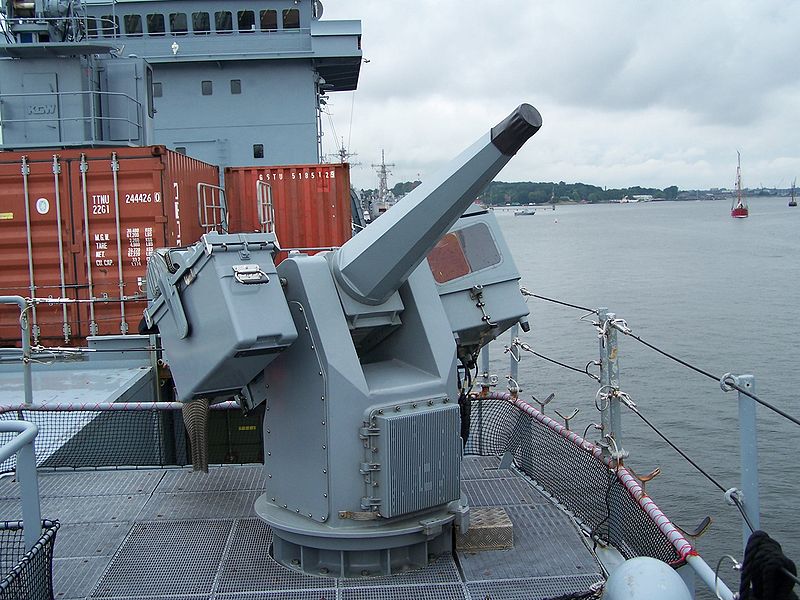
I don’t recognize the 27 mm reportedly included in the Qatar deal as a weapon in US service, but the Germans (Mauser, now Rheinmetall) do make a 27mm and this is the gun used on the Kuwati boats, and it appears to be gun used on the boats for Qatar.

 MLG27 onboard Elbe Class Tender Rhein at the en:Kiel Week 2007. Photo by Rebell18190

MLG27 onboard Elbe Class Tender Rhein at the en:Kiel Week 2007. Photo by Rebell18190

The size of the boat seen on the stern ramp in the video is not clear.

These 90 foot boats is clearly optimized more for speed than our 87 footers. They also have a shorter range and with water jets, are probably less manuverable at the slow speeds often required for SAR.

How Much Would it Cost to Add ESSM to NSC?

The US Naval Institute reports the Chilean Navy is planning to upgrade three of their British Built Frigates, with Evolved Sea Sparrow Missile (ESSM) replacing their existing Sea Wolf weapon systems. Since ESSM was planned as a possible upgrade for the National Security Cutter, I thought the information might be of interest.

The US is providing the equipment under a Foreign Military Sales contract valued at $140.1M that will include three sets of Tactical Length Mk41 VLS (vertical launch systems), 33 Evolved Seasparrow Missiles (ESSMs) Six Evolved Seasparrow Telemetry Missiles, “Ten (10) MK25 Quad Pack Canisters; Five (5) ESSM Shipping Containers; Five (5) MK-73 Continuous Wave Illumination Transmitters, One (1) Inertial Missile Initializer Power Supply (IMIPS); spare and repair parts, support and test equipment, publications and technical documentation, personnel training, U.S. Government and contractor engineering, technical and logistics support services, technical assistance, installation and integration oversight support, logistics, program management, packaging and transportation.”

These figures include only the additional equipment. They do not include the yard work necessary to prepare the ship for installation and the installation of the equipment. Still I think this constitutes most of the cost of the upgrade of the three ships.

I would note that it is not clear how many VLS cells will be installed on each ship, but they are always installed in groups of eight. If we assumed eight cells on each ship, then each ship could theoretically support 32 missiles since they can be “quad packed,” that is four missiles can be placed in each cell. Chile is buying only 33 “war-shot” missiles and ten quad pack canisters. That is barely more than enough to fully arm one ship with eight cells, so it appears there will be some cells either left empty or filled with other types of weapons, which might include ASROC which also fit the tactical length Mk41 VLS.

New South Korean Patrol Craft

According to the local news agency Yonhap, South Korea's Navy launched a new fast patrol boat to help counter North Korea's hovercraft force along its maritime demarcation line, the military said Thursday July 28, 2016.
An artist rendering of South Korea’s new Chamsuri-211 fast patrol boat
(Credit: Yonhap)

NavyRecognition is reporting the South Korean Navy will be getting the first of a new class of Patrol Craft in late 2017. It is a bit smaller than the Webber class at 44 meters in length and 210 tons. It is designed specifically to counter North Korean Hovercraft. It is armed with a 76 mm gun and a pair of remotely operated, radar controlled 12.7mm (.50 cal.) machine guns. The unusual weapon seen on the stern is a launcher for 130mm (5.1″) guided rockets (apparently twelve) . (I suspect these are actually guided versions of the 5″ Zuni rocket, much like the APKWS is a guided version of the Hydra rocket. )

The vessels is expected to have a max speed of about 40 knot and will apparently be powered by waterjets. I don’t see any boat on the artist impression above.

How About a Coast Guard Sink-Ex?

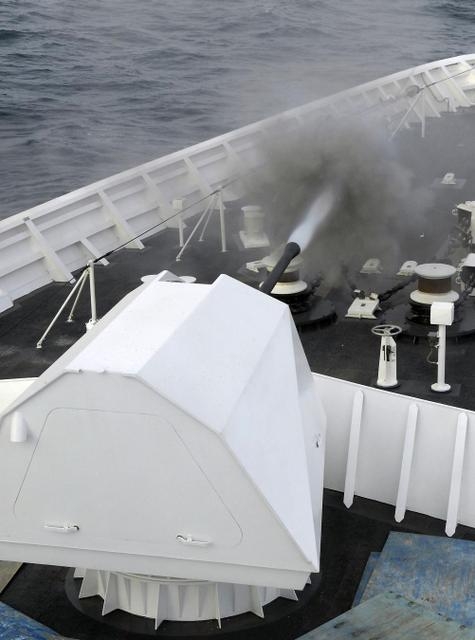
Test firing of the 57mm Bofors aboard USCGC Bertholf, photo by MMagaro

Test firing of the 57mm Bofors aboard USCGC Bertholf, photo by MMagaro

Are our weapons adequate for the Ports, Waterways, and Coastal Security Mission? Let’s find out.

The Navy Times is reporting that the Navy will have an unusually large number of ships available for “Sink-Ex” exercises in 2017.

The SINKEX fleet grew from five ships last year to seven ships available in 2017, including four frigates, the landing ship tank Racine and two attack cargo ships.

According to the source document, the Navy’s 30 year shipbuilding plan (pp 13/14), one of the stated purposes of a Sink-EX is weapons effectiveness evaluation. I think this might be a good opportunity for us to test out our weapons for the Ports, Waterways, and Coastal Security (PWCS) mission. This mission implies we must have the ability to forcibly stop a ship, regardless of its size. A Sink-Ex could be an opportunity to answer once and for all the question “Is the Coast Guard adequately armed for the mission?”  Personally I don’t think so, and what little evidence we have seems to indicate that is the case.

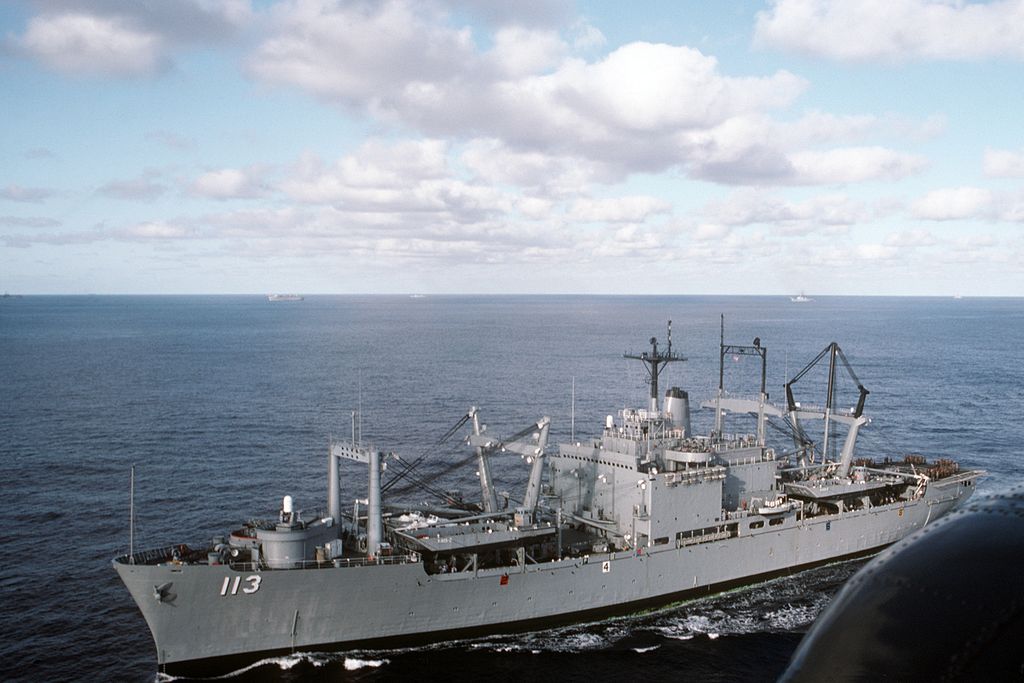
The two attack cargo ships are Charleston class LKAs, the ex-Durham (LKA-114) and ex-St. Louis (LKA-116), built in the late ’60s. These are medium sized auxiliary ships, 9,000 tons light and 18,500 tons fully loaded, 576 feet (176 meters) in length. Structurally they are not much different from merchant ships of the period. Unfortunately they don’t have the big diesel engines found on modern merchant ships, and the are far smaller than many current merchant ships but they are still, in most respects, representative of the target set the Coast Guard should be interested in.

USS_Charleston_(LKA-113)

Photo: USS Charleston (LKA-113)

We have four gun systems that might be tested. .50 cal., 25 mm, 57 mm, and 76 mm. The 25 mm and 57 mm are particularly important as the .50 cal is probably too small and short ranged and the 76 mm is going out of service. Still, we should still attempt to include the 76 mm because if the 57 mm proves inadequate, our next question should be, “Would the 76 mm have been successful?” Testing the 25, 57, and 76 mm guns would require use of at least two ships, a 378 for both the 76 and 25 mm, and a Bertholf class for the 57 mm. (Alternately an LCS might provide the 57 mm, a Bear class the 76 mm, and a 110 or Webber class the 25 mm.)

1280px-USCG_Gallatin_Mk_75_firing

This could be a CG R&D project, but of course it would require Navy assistance, perhaps a joint project. Because our objective is to at least stop the target, rather than sink it, loss of power or steering would constitute a success. To determine if this is the case, we need information about what is happening inside the hull when the we get a hit. Will the round penetrate not only the hull but also critical systems, the loss of which would result in loss of power or control of the ship? Because it would probably be dangerous to go back on board the target after it has been shelled, the target would need to be instrumented with sensors and the results broadcast back. Aside from putting cameras inside the spaces, a technique might be to seal up and pressurize equipment like boilers, turbines, and steering gear and have them instrumented to detect any loss of pressure that would indicate a breach.

We would also want to conduct the exercise at a reasonable ranges. Since the real targets might be equipped with weapons that might be typically available to terrorist organizations, including anti-tank missiles and Soviet era antitank and anti-aircraft guns,that might target critical systems on the cutter, I believe the cutter should stand off at least 4000 yards, but for the 25 mm, we would probably need to close to 3,000 yards. A logical sequence might be,

  1. 378 closes to 3000 yards engages with 25 mm then withdraws
  2. NSC closes to 4,000 yards and engages, then withdraws
  3. 378 closes to 4,000 yards and engages.

We would also want to fire a reasonable number of rounds, probably about 150 rounds of 25 mm, about 100 rounds of 57 mm, and about 80 rounds of 76 mm, basically shoot enough to exhaust the ammunition normally carried on the mount.

Realistically this would have to be part of a larger Sink-Ex with more than one target, but it might be reasonable to allow the Coast Guard a day to try their systems against one of the targets before the other firing units come on scene.

Should our current systems prove not up to the task, we would also want to know the results for possible candidate systems, so we might ask that these candidate systems be used against the target as well. These might include, APKWS, Griffin, Hellfire, the 5″ gun, and the light weight torpedo. I don’t think it has ever been tried, but with the right depth settings, is it possible to hit a deep draft surface target with our current light weight torpedoes?

Let’s at least find out if we have a chance of succeeding in this mission. 

ACERM–Another Light, Precise, Weapon to Hit Small Moving Targets

81mm50caloverunderCWOElmerLHicksUSCG

81mm mortar used by the Coast Guard during the Vietnam era

It seems technology is making hitting small, fast, maneuverable targets with precision not only easier, but also cheaper.

We have talked before about the possibility of using small guided missiles (Hellfire, Brimstone, Griffin, or 70 mm guided rockets like APKWS) to allow the Coast Guard to engage small, fast, highly maneuverable threats, while minimizing the chances of collateral damage that accompany the use of unguided rounds from machineguns or auto cannon. Now there seems to be another alternative, and it even has a history of use by the Coast Guard, the 81 mm mortar.

Popular Mechanics reports the Marines will be getting a guided 81 mm round called ACERM (Advanced Capability Extended Range Mortar) that will incorporate both a GPS, and potentially more importantly for the Coast Guard, a semi-active laser (SAL) guidance system that should provide a one meter circular error probability (CEP, that is 50% of the rounds will fall within one meter of where the laser is pointed). Additionally the round will have a range of about 18 kM, comparable to that of a 76 or 57 mm gun. Cost per round is expected to be about $10,000. That is more than the China Lake Spike, but range is much greater and the warhead is substantially larger.

The firecontrol computer/programmer is a two pound “Miniature Mission Setter,” in reality a rugged Android tablet.

ACERM

In addition to the Popular Mechanics post, I also found this power point presentation (pdf) that provides more detail.

The 81 mm mortars the Coast Guard used in the Vietnam era are all gone now, but they were hardly high tech, expensive, or difficult to produce.

Maybe we at least need the laser designator anyway:

Like some of the other systems considered, in addition to the mortar and mortar rounds, to use these effectively, we would need a laser designator. Based on a recent contract award, laser designators cost about $60,000 each.

Laser designators might be a good idea anyway. If we need to call in assistance from the Navy, Marine Corp, or particularly the Air Force or Army (who tend to be clueless about marine targets), one of the issues will be identifying the target, and a laser designator would be a good way to do that. Not only to identify the target, but also to show where we want them hit.

Limitations:

While the potential range of the 81mm mortar round may be over 18,000 yards, for our purposes, its effective range is probably limited by the range of the laser designator which can be further limited by atmospheric conditions like fog, rain, snow, smoke or sand storms (like might be encountered in the Persian Gulf). The Power Point brief does suggest that a small unmanned air system (sUAS) equipped with a designator, might be used to complement (and extend) the system.

Because this is a high angle weapon, with the projectile designed to strike the target in a vertical dive, and because the warhead uses “High Density Pre-Formed Fragments” that would presumably spread out horizontally, it probably would not be particularly effective against medium to large ships. It seems to be intended primarily as an antipersonnel weapon. The danger radius for fragments might even be an issue in some circumstances.

It is still a crew served weapon with the crew highly visible and exposed.

Advantages:

Unlike some missile in a box systems, this looks like a gun. It might have some deterrent value in some circumstances.

Reportedly it makes the 50 cal. mounted piggy back more accurate.

If we were in a situation like Market Time, where patrol boats might incidentally support troops ashore, this might be a good option.

Is it the “best” alternative?:

We have an array of possible systems to address the possibility of a maritime terrorist threats. Hellfire, Brimstone, Griffin, APKWS, the China Lake Spike, this smart 81 mm mortar round. All would probably be effective against smaller targets. None are likely to be fully effective against larger targets.

For the larger threats, I have been suggesting WPCs, and probably WPBs, be equipped with light weight torpedoes or even a variant of the anti-torpedo torpedo, to use as a ship stopper that could home on the target’s propellers,

LRASM might also be an alternative. Coordinating a long range LRASM strike is more complex and probably more expensive than the torpedo alternative. On the other hand, it would bring along with it a new naval wartime capability that would support the Navy’s “Distributed Lethality Initiative.”

We really need a set of capabilities that provide a high probability against any element of a spectrum of threats, because if any one element is not addressed, that is likely the element terrorists will select.

WHY THE COAST GUARD NEEDS LRASM IN PEACETIME–CIMSEC

This is an expanded version of an earlier piece that was posted here. I rewrote it for the CIMSEC blog in hopes it would find a larger audience. Hopefully it is a clearer than the original. 

The Coast Guard has a problem. It is not currently equipped to perform one of its missions, and it appears no other agency is prepared to cover the deficiency. The Long Range Anti-Ship Missile (LRASM) may be a possible solution.

The Mission

One of the Coast Guard’s peacetime missions is Ports, Waterways and Coastal Security (PWCS).

“The PWCS mission entails the protection of the U.S. Maritime Domain and the U.S. Marine Transportation System (MTS)…prevention and disruption of terrorist attacks… Conducting PWCS deters terrorists from using or exploiting the MTS as a means for attacks on U.S. territory, population centers, vessels, critical infrastructure, and key resources.”

The Shortfall

Implicit in this mission is that the service should have the capability to forcibly stop a non-compliant ship, any ship, of any size. If a crew is motivated by simple greed, a .50 caliber machine gun is probably enough to convince them to take their chances in court rather than resist, but if the crew is motivated by a fanatical, or even suicidal belief in a cause, they become much harder to stop.

Terrorist targets are limited only by their imagination. They might include something like the Mumbai attack, an assault on a bridge, an LNG tanker or facility, a nuclear power plant, a passenger ship, an SSBN departing on patrol, or they might use a vessel to bring in a nuclear weapon.

The Coast Guard is an armed force at all times, but it is certainly not heavily armed. In fact, in terms of stopping a recalcitrant merchant ship, the Coast Guard seems relatively less capable now than they were eighty years ago.

This is because of the rapid growth in the size of merchant ships. Even the largest cutters with their 57 mm and 76 mm guns are far less capable of stopping today’s over 100,000 ton merchant vessels than the cutters of the 1930s, with their 5″ guns were against ships that were typically well under 10,000 tons.

Worse yet, the units that would actually be on scene to attempt to stop and board a ship suspected of being under the control of terrorists is unlikely to include any of the larger cutters because they seldom remain near harbor entrance. Rather, they are frequently sent well off shore.

The Coast Guard simply does not have the capability to deal with a terrorist attack using a medium to large sized merchant ship, and it currently appears that there is no other organization capable of answering this threat in the 30 or more port complexes terrorists might find worthwhile targets.

Our Friends

Navy surface forces, in U.S. waters, are too geographically concentrated. Navy ships tend to be either in homeport, working up in specific geographic areas, deployed, or in transit to deploy. There are no Navy surface warships homeported in the Gulf of Mexico, on the East Coast north of the New Port News/Norfolk complex, in Alaska, or on the West coast between San Diego and Puget Sound with weapons equal to or better than those on cutters. For many ports, the nearest Navy surface vessel is hundreds of miles away.

Air Force, Navy, Marine, and Army Air are not on standby around the U.S. armed with anti-ship weapons. Of the Air Force, only some strategic aircraft are training for the anti-shipping mission. Fighters and attack aircraft do not. The author suspects the U.S. would not get a timely response from the Air Force to a no notice requirement to stop a maritime target. Units that are not trained for an anti-shipping role cannot be easily pressed into that mission.

A Possible Solution

LRASM, with an over 200 nautical mile range and the ability to strike selected locations on a target ship, could possibly provide an answer. If the U.S. fielded LRASM on all nine National Security Cutters (NSC) and 25 Offshore Patrol Cutters (OPC) currently planned, its over 200 mile range could cover virtually all of these ports, and likely have a weapon on target within 20 minutes of launch.

How It Might Work

The Coast Guard is developing a Maritime Domain Awareness system. Most likely, it will tap into the Navy’s system and over the horizon radars.

When the maritime domain awareness system detects the approach of a suspicious vessel, a small patrol vessel (WPB or WPC) is assigned to intercept it and conduct a boarding to determine the vessel’s nature and intent.

When the patrol vessel is assigned the intercept, a larger cutter that may be at some distance, but within range, would be directed to provide support in the form of a LRASM launch if necessary.

The patrol craft will transmit video, position, course, and speed during its approach which will allow the start of mission planning for an LRASM launch should it become necessary. The results of the patrol craft’s attempt to board will allow determination of hostile intent.

Once a determination of hostile intent has been made, and deadly force authorized, the supporting cutter can launch its weapon. The patrol craft will continually update the supporting cutter before and during the flight of the LRASM. Navy, Joint, and/or Allied procedures would be used to call for a strike, and should also work with other service’s assets if they are available.

LRASM_TSL_Concept_Lockheed_Martin
LRASM topside launcher concept. The size and weight are comparable to launchers for Harpoon. Photo: Lockheed Martin.

Is It Affordable?

It is likely cutters could be equipped to carry eight missiles, but for peacetime purposes, two per ship would almost certainly meet the Coast Guard’s needs. Since some ships will always be in maintenance with ammunition removed, and others may be deployed where carrying the weapons would be counterproductive. The Coast Guard is unlikely to ever require more than about 50 missiles to meet its peacetime needs. A very rough estimate of LRASM unit cost would be something on the order of $2M to $5M each. That means the total cost of the missiles is likely between $100M and $250M. Adding launchers, control systems, and installations to cost would almost certainly be less than $500M. These costs would be spread over several years. This gives only an order of magnitude estimate, but it is several orders of magnitude less than the cost of other systems being deployed to protect the U.S. from attack.

Since the missiles, their launchers, and control systems are Navy type/Navy Owned equipment, the Navy would be responsible for paying for them. The cost of adding another four missiles per year for the Coast Guard to the Navy’s buy for LRASM could be lost in the rounding errors in the Navy budget.

For the Coast Guard, the program would probably require no more than 150 additional billets ashore and afloat. Not insignificant, but doable.

Conclusion

If the LRASM performs as advertised, its combination of range, warhead, and intelligent targeting may allow the Coast Guard’s small, but widely distributed force to effectively cover virtually the entire U.S. coast.

LRASM_Surface_Launch_72617-300x233

Late addition, LRASM deck mount launcher successful test. 

New S. Korean Cutter

SKoreaLargestCutter

Jane’s 360 is reporting that the S. Korean Coast Guard has commissioned their largest and most heavily armed cutter.

Lee Chung-ho has a length of 150.5 m, a beam of 16.5 m, a loaded displacement of 6500 tonnes and a complement of 104 persons, although 140 persons can be embarked.

The hybrid propulsion system has four MTU 20V1163M94 diesels (each rated at 9,900 bhp) and two 750KW electric motors that are connected to the propellers.

How big is it?

The cutter, at 6,500 tons, is 44% larger than the Bertholf class. While its length and beam are almost identical to Japan Coast Guard’s two largest cutters, the displacement is reportedly far less. I have seen no info on the draft, so that is at least possible. In any case, it is definitely much smaller than the huge cutters the Chinese have built.

The post compares the new cutter to the slightly smaller Sambong-ho (pennant 5001), which entered service in 2002 and was previously the largest cutter in the S. Korean Coast Guard, stating it is three knots faster. That would indicate a top speed of 24 knots. The new cutter has a four diesel power plant compared to its predecessor’s two engine plant. In addition, the two 750 HP electric motors mounted on the shafts which should allow the cutter to slow cruise while the main diesels are cold iron.

Weapons: 

According to Wikipedia, S. Korean has 34 cutters over 1000 tons. All are armed with one or more 20 mm Vulcan Gatling Guns and .50 caliber machine guns. Fourteen have Bofors 40 mm guns, and one other also has a 76 mm. The 20 mm and 40 mm mounts are locally produced in S. Korea.

Looking at the armament, it may be an upgrade compared to the typical S. Korean cutter, but only slightly better armed than what appears to be, becoming a world wide standard for offshore patrol vessels–a medium caliber gun, 57 or 76 mm, and a pair of 20 to 30mm machineguns in remotely controlled weapon stations. It is really no better armed than the 1,150 ton PC-1005, the Hankang, smallest of S. Korea’s 34 cutters major cutters, commissioned in 1985.

All the weapons appear to have been recycled from previous installations. In the photo, an older model OTO Melara 76 mm, like those used on the FRAMed Hamilton class WHECs and Bear class WMECs is clearly visible on the bow. There is also a Vulcan 20 mm mount on the O-3 deck superfiring over the 76 mm mount forward of the bridge. It also appears to have a locally built twin Bofors 40 mm compact mount using an earlier version of the Bofors than the 70 caliber weapon currently offered, which appears to be atop the superstructure aft. She has no CIWS, missiles, or ASW capability.

What is it with these very large cutters?:

Japan, China, and S. Korea, have now each built two very large cutters. Why to they exist?

It is their size, not their weapons, that make them exceptional. The Russian Coast Guard has smaller, but much more heavily armed ships (Krivak III frigates and Grisha II class corvettes).

There has been a general trend for ships of all types to grow in size. Their crews are not exceptionally large, so the operating cost may not be that much more.

Still these are significantly bigger than other cutters built by the same coast guards, at the same time, apparently for the same missions.

None of these three nations has a patrol area as distant and demanding as Alaska.

Japan did have a reason for building the first of these. Shikishimacommissioned in 1992, was intended to escort plutonium transport ships between Europe and Japan, but I have seen no explanation for the ships that followed.

Is it prestige, just “keeping up with the Jones?”

Are they intended for a future shoving match? If so, they are giving up agility for presence.

Are they perhaps intended as flag ships for long term operations?

I would love to hear the reasoning from someone in the know.


China Lake Spike–the $5000 Missile

We have talked about the need for a small missile to deal with small, fast, highly maneuverable threats, with less chance of collateral damage than is inherent in using guns.  We have talked about Hellfire, Brimstone, Griffin, and guided 70mm rockets. Now it appears there is now an even smaller and much cheaper weapon that seems almost ideal for this end of the target spectrum. It has been in development for quite a while, but appears ready for production. Its range and precision appear to be much better than the machine guns we are currently using.

The Naval Air Warfare Center Weapons Division at China Lake has developed a very small missile called “Spike,” and the price is right–a marginal coast for each additional missile of only about $5000. This should not be confused with the Israeli missile family also called Spike. The following from the Wikipedia entry on the system:

Spike was designed by the U.S. Navy, with assistance from DRS Technologies, and is proclaimed to be “the world’s smallest guided missile.” Initially made to be carried by U.S. Marines, with three missiles and the launcher able to fit in a standard backpack, it weighs 5.4 lb (2.4 kg), is 25 in (640 mm) long, and 2.25 in (57 mm) in diameter. The warhead weighs about 1 lb (450 gr) and employs the Explosively Formed Projectile (EFP) effect, made to penetrate before detonating. It is powered by a small rocket motor that gives it a range exceeding 2 mi (3.2 km), making it safer and more accurate than rocket propelled grenades (RPGs). The missile is directed to its target by either an electro-optical (EO) or semi-active laser (SAL) seeker; the EO camera is similar to a basic cellphone camera, containing a 1-megapixel video camera that allows the shooter to select the area to engage in a fire-and-forget mode. The EO seeker cannot operate at night, so the SAL would have to be used. A third targeting mode is inertial, meaning the user can “snap and shoot” at a target without needing to lock on out to 200 meters. Both the Spike missile and reusable launcher each cost $5,000 and weigh 10 lb (4.5 kg) loaded, compared to 49 lb (22 kg) for a Javelin missile and fire control unit.

It has an unusual development history, being developed in house, quickly, at low cost, in response to a “rapid development capabilities” (RDC) program. Consequently the government now owns the design and can be assembled by contractors with no prior missile manufacturing experience and uses Commercial Off the Shelf (COTS) components.

It is included in the FY2017 Navy budget along with Griffin and Javalin as program element 3342: “Griffin Missile” intended to develop and deliver Counter-Swarm Small Boat defense capabilities for the Surface Fleet. (It is also interesting to see that this program still anticipates the use of the Griffin missile system (GMS) by the LCS even though the Long Bow Hellfire has already been selected to arm these ships.)

The missile is reportedly also effective against UAVs, helicopters, and some general aviation aircraft, so it should offer a degree of defense against attacks using these types of platforms.

Where should we have them? The six WPBs stationed in Bahrain and the two force protection units at King’s Bay and Bangor that escort SSBNs as they transit from homeport to deepwater come to mind as perhaps the highest priority, but we have at least 30 ports that need protection. Total distribution of the systems might be slightly more than 200 including ultimately one for each of the  37sectors, 58 Webber class WPCs, 73 Marine Protector class 87 foot WPBs, plus 34 larger ships.

If the reported costs are correct a unit might be outfitted with a shoulder launcher and three missiles for as little as $20,000. If so, 200 weapon sets would cost only $4M and they would presumably be paid for by the Navy over several years.

Of course, if we are going to use their semi-active laser homing capability at night, we will need to get past current restrictions on the use of lasers.

More info here (pdf).

SPIKEnavy-5-lb-missle-inline-660x660

U.S. Navy photo. Spike Missile Visual Demonstration by Lead Technician Jonathon Pooley