“USCG Leans In Towards First Polar Security Cutter” –Naval News

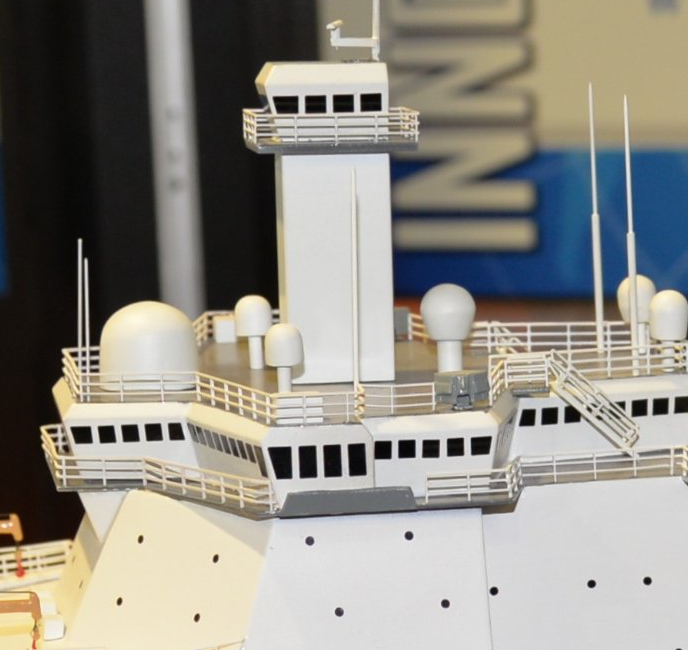
Photo of a model of Halter Marine’s Polar Security Cutter seen at Navy League’s Sea-Air-Space Exhibition have surfaced. Photo credit Chris Cavas.

Naval News reports on Coast Guard remarks about the Polar Security Cutter program at the Surface Navy Association annual symposium.

There is some good news. The Commandant says she is, “100% confident in the design…” The keel has not been laid, but “Welding work is commencing on three build units purchased for the first ship.” (That phraseology does sound a little strange to me.)

She goes on to say,

“I’m focused on fielding the Polar Security Cutters …. [and] getting that first one well into construction, with some predictability around when that ship will come to full operating capacity. We’re working hard with the yard, with the navy, and with the program office to bring some better certainty and clarity around that,” said Adm Fagan.

Which clearly means we do not yet have the predictability, certainty, and clarity the Commandant wants.

Explaining why this is not just an Icebreaker, Rear Admiral Chad Jacoby – USCG Assistant Commandant for Acquisition/Chief Acquisition Officer – told the symposium,

“The distinction there is the Polar Security Cutter is going to do way more than break ice. It will have National Security Cutter-level capabilities, sensors, and equipment on a hull that can go anywhere in the world in any season,” Rear Adm Jacoby continued. “So, we’re not just breaking ice, we’re not just having presence: we’re going to be able to execute almost all USCG missions up in the Arctic, down in the Antarctic, anywhere in the world.”

I look forward to learning what that actually means. It certainly isn’t in terms of installed armament. I don’t see an air-search radar on either the model presented (pictured above) or the illustrations I have seen.

Photo of a model of Halter Marine’s Polar Security Cutter seen at Navy League’s Sea-Air-Space Exhibition have surfaced. Photo credit Chris Cavas.

There do appear to be AN/SLQ-32 antennas on top of the bridge on the model (in gray). Could there also be a SCIF (Sensitive Compartmented Intelligence Facility) like there is on the National Security Cutter? There are also areas where containerized systems could be installed.

To me the most encouraging thing that has happened with regard to this class is that Bollinger took over the project when they purchased the shipyard that is building them. I wish them every success.

“The all-rounder – the 30mm Automated Small Calibre Gun in focus” –Navy Lookout

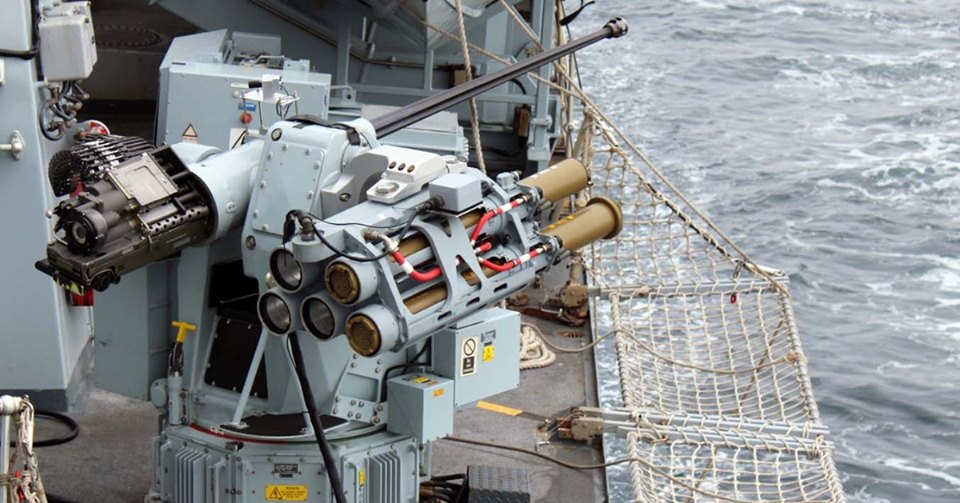
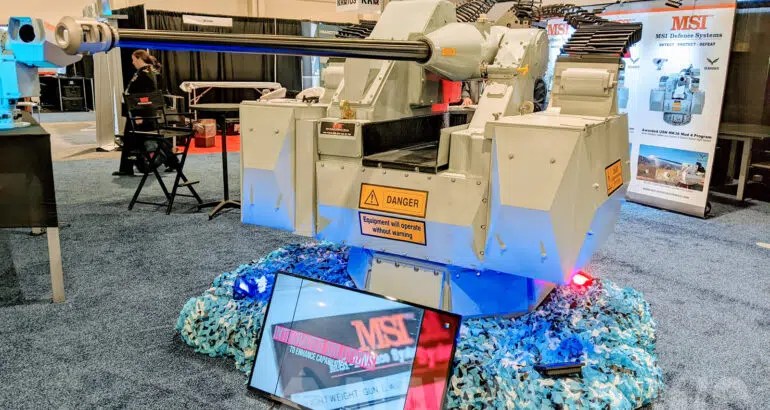
The new Mark 38 Mod 4 30mm naval gun system on display on MSI Defence stand at Sea Air Space 2022.  Photo: NavalNews

This is a three-year-old article, but Navy Lookout, a non-government news site focused on Royal Navy news and analysis, reports how the UK’s Royal Navy came to choose the MSI DS-30M MkII gun mount with the 30mm Bushmaster II Mk 44 chain gun that has also been chosen by the US Navy, under the designation Mk38 Mod4.

“SNA 2024: Adaptable Deck Launcher, MK 70 Missile Launcher, PAC-3 Missile and SPY-6 Radar” –Video

The video above is from Naval News via Youtube.

Just wanted to point out that, should a need arise to equip the NSCs, OPCs, or even icebreakers for combat, there are two options in the video above:

As to alternatives, on the NSCs, we know they were designed to be able to accept twelve MK56 VLS and could probably accept eight Mk41 VLS in their normal deck penetrating configuration. Using quad packed ESSMs this could allow them to carry up to 32 ESSMs or alternately perhaps 16 ESSMs and four vertical launch ASROC. (Since the latest versions of the ESSM are fire and forget weapons that no longer require an “illuminator,” it now requires less supporting electronics and can engage more than one target at a time.) 

I know of no information publicly available that suggests planned upgrades for the OPCs, although I did speculate, “What Might a Wartime OPC Weapons Fit Look Like?

The Mk70 would probably just be a temporary install on the flight deck to meet the requirements of a planned operation, but there is little doubt we could put at least four strike length four tube launchers, on NSCs, OPCs, or icebreakers.

For the OPC, the Adaptable Deck Launcher is a possible more permanent installation and would probably be mounted on the Focs’le. Weight and space requirements might mean a trade-off would be required. Loss of the 57mm in exchange for even four Mk41 tubes might be worthwhile, but we might also consider replacing the gun with eight deck penetrating Mk41 cells. If Strike length cells proved impossible, tactical length cells could still provide weapons with anti-air, anti-surface, and ASW capabilities we do not have with the 57mm.

Potential Mk41 VLS weapons load outs for tactical and strike length launchers.


“Anti-Ship Ballistic Missile Hits U.S.-Owned Container Ship In Gulf Of Aden” –The Drive

MV Gibraltar Eagle YouTube screencap

The Drive reports,

” A Marshall Islands-flagged, U.S. owned and operated container ship was struck by a Houthi anti-ship ballistic missile on Monday, U.S. Central Command said.

“There were no injuries or significant damage to the vessel, the M/V Gibraltar Eagle, which is continuing its journey. The vessel is a 200-meter long Ultramax container ship, according to its U.S. owner, Eagle Bulk Shipping.”

The Drive also offers an overview of the Houthi anti-ship capabilities, “The Anti-Ship Missile Arsenal Houthis Are Firing Into The Red Sea.

I believe this is the first time in history, a ship, underway, has been hit by a ballistic missile.

“No Injuries or significant damage”:

At about 200 meters in length, M/V Gibraltar Eagle, is not particularly large. I would say that it is medium sized.

This is one of those rare times like, the Tanker War, when we get to see how modern ships, at least merchant ships survive modern weapons.

So far, I don’t think any of these Houthi attacks has resulted in a mobility kill, much less a sinking.

Modern merchant ships are extremely resilient. A lot of their bulk is made up of non-critical space.

This has implication for the Coast Guard’s own Ports, Waterways, and Coastal Security mission. Explosions below the waterline, torpedoes and mines, remain the most effective way to forcibly stop a medium to large ship.

K-LOGIR, Korean Low cOst Guided Imaging Rocket and Launcher

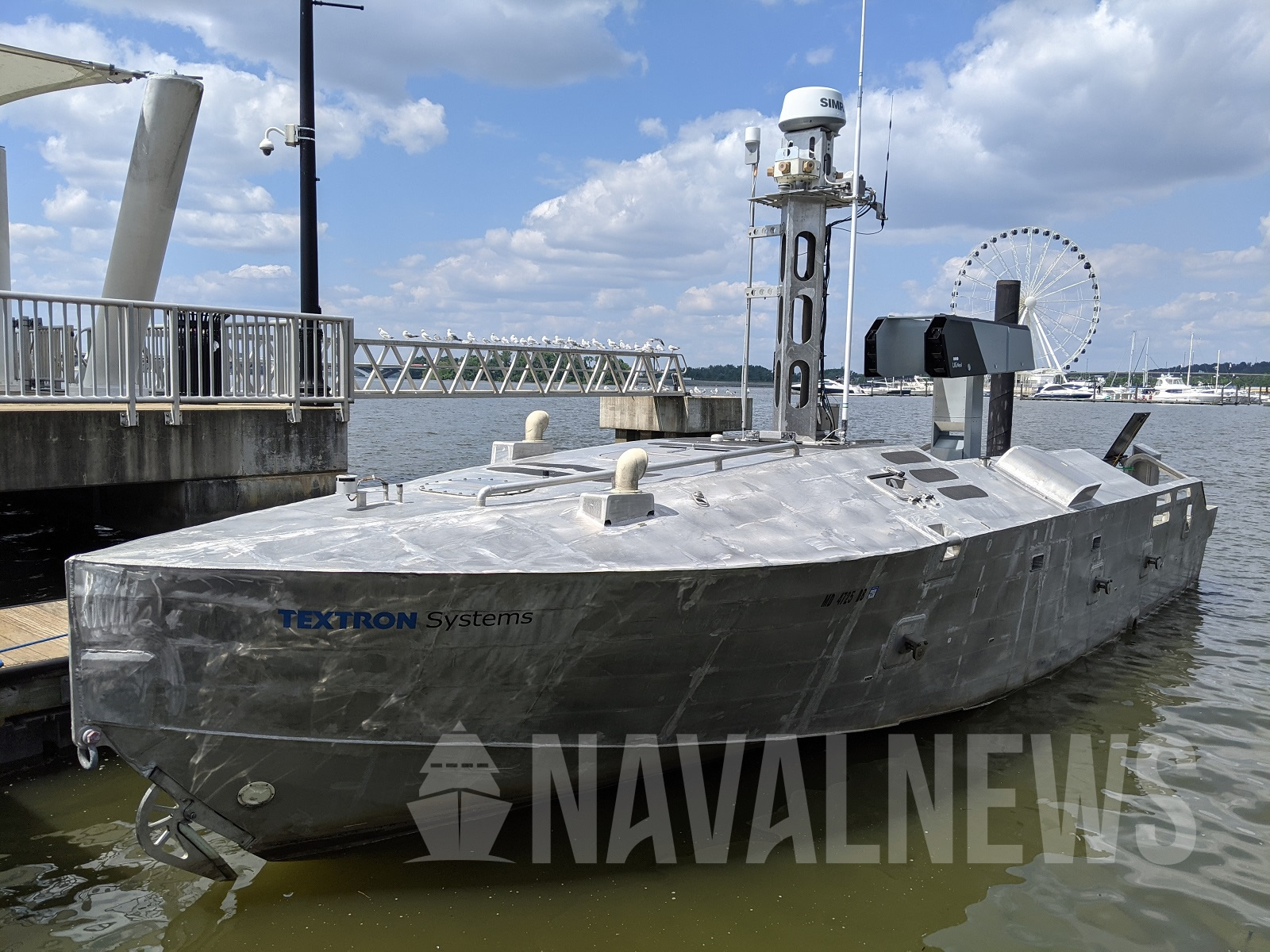
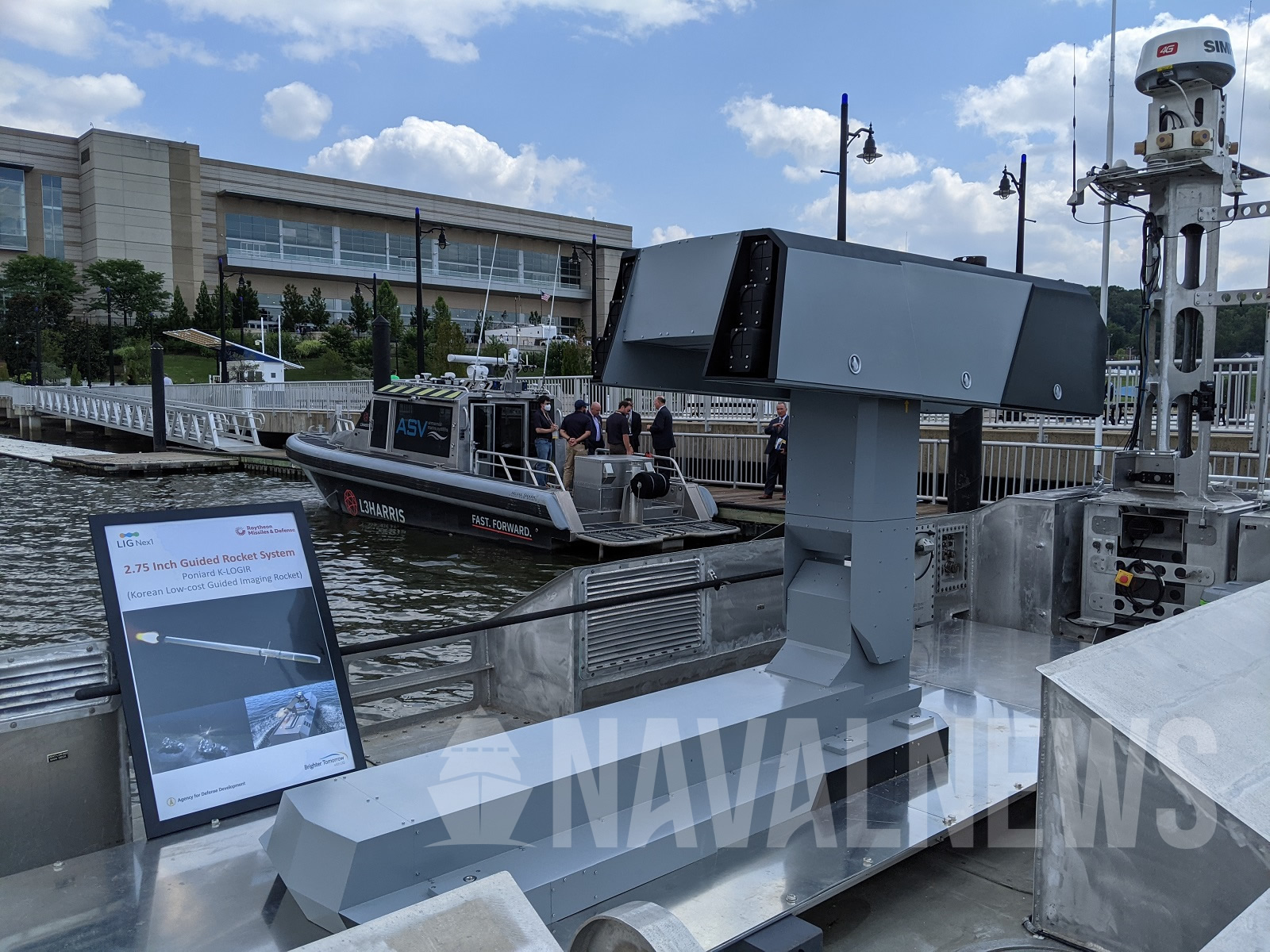
K-LOGIR launcher fitted on a Textron CUSV USV at Sea Air Space 2021. The system was showcased by Raytheon and LIG Nex1.

Naval News recently did a post highlighting a 4th Fleet live fire test combining a Korean developed fire and forget guided rocket system with the Common Uncrewed Surface Vessel (CUSV) cued to a target by a Radiosonde UAS for a fully uncrewed kill chain.

The “Poniard” Korean-Low cOst Guided Imaging Rocket (K-LOGIR) is closely related to the APKWS, both being based on the 70mm Hydra unguided rocket. Unlike the semi-active laser homing APKWS, the K-LOGIR is a fire-and-forget system allowing multiple simultaneous engagements.

Most of the reports I have read on this exercise are unclear if six missiles hit a single target or if six missiles hit six different targets, but this Defense Mirror report, “Textron’s Unmanned Boat Uses South Korean Weapon to Engage Multiple Targets.” makes it clear that multiple targets were engaged in a single salvo.

I don’t fully understand how they designate different targets for the missiles in the salvo, but it may be that they are sending them to different waypoints before they initiate their search.

The ability to engage several targets simultaneously makes this system attractive for countering surface swarm tactics like those that might be encountered by PATFORSWA, but for the Ports, Waterways, and Coastal Security mission, the APKWS’ semi-active laser homing might be a better solution, in that we are unlikely to have to engage numerous targets in a single salvo and we may want to target particular parts of an adversary’s vessel or perhaps engage low-level air targets such as UAS, helicopters, or general aviation aircraft. Presumably, APKS could be fired from the same launcher.

Textron USV fitted with LIG Next1’s Poniard guided rocket. Textron photo.

Take a look at the launcher above and below. Here it is mounted on an unmanned 39-foot boat. In the photo above you can see that it traverses and elevates. It appears to hold up to six rockets. It might be an appropriate way to arm Coast Guard patrol boats and larger cutters with APKWS, but “Vampire” might be even simpler.

K-LOGIR launcher fitted on a Textron CUSV USV at Sea Air Space 2021. The system was showcased by Raytheon and LIG Nex1.

I would really like to see 4th Fleet make more effort to publicize their experimentation efforts. I’m surprised I was not able to find a YouTube video that documented this test and I have seen no mention of it on the 4th Fleet website.

I am also curious to know if the Navy’s 39′ CUSV could be operated from the stern ramp of a National Security Cutter. Interoperability?

Very Interesting Questions: “Drone Warfare’s New Angle: Iran’s Shaheds Become Low-Cost Anti-Ship Missiles” –Covert Shores

Shahed-136One Way Attack Uncrewed Air Vehicle (), Source: Covert Shores

Covert Shores makes some interesting observations and asks pointed questions particularly in regard to the terminal homing phase of how the low-cost slow cruise missiles make their attacks on moving targets.

Hitting fixed target in Ukraine is very different from hitting a moving target hundreds of miles off the coast. Even an oil tanker is very small in the vastness of the ocean. The mission would need target location intelligence, and the drone would need targeting during its attack phase. The former is the same for any anti-ship weapon and can be achieved by patrol aircraft, fishing boats. Or, as possibly the case in the Chem Pluto attack, by the target broadcasting its position via AIS (automated information system).

The final phase targeting is more interesting. We do not know, at least in the public sphere, how the drones targeted the tankers. Whether it was a human-in-the-loop camera, or some form of automation.

Do they have satellite communications? Target recognition software? Home on AIS?

Presumably we have recovered at least one of the failed drones and can answer the question, but there is an even simpler solution.

Forward observers in one or more of the many Dhows that traffic the area, who call in a UAV when they have a target, and who can take over control of the drone when it arrives on scene, steering it into the target. This would be a continuation of what we saw with the Houthi remote control explosive motorboats, which unlike the USVs we are seeing in the Russo-Ukraine War, had no satellite link and were apparently steered by a second vessel within line of sight of the target and the attacking USV.  It is not unlikely the Iranians and Houthi have a network of such nondescript vessels. 

The slow speed of the UAVs does present something of a challenge in getting to the right place at the right time, but that is mitigated by the predictability of shipping lanes and the consistent speed of merchant vessels.

USCGC Diligence with SOAR Little Bird Attack Helicopter –Remembering Operation Prime Chance

USCGC Diligence recently completed a 52-day counterdrug patrol in the Caribbean Sea. Mostly it was a typically successful patrol, but they did do something a bit unusual.

“Diligence also conducted a joint training exercise with the Army’s 160th Special Operations Aviation Regiment (SOAR). During the exercise, the Diligence crew and pilots from SOAR completed daytime and nighttime helicopter landing evolutions.”

The Helicopters were AH-6s. The 160th SOAR has a history of flying off of floating units.

Between 1987 and 1989 the U.S. Army’s 160th Special Operations Aviation Regiment, also known as “The Night Stalkers,” flew Little Bird helicopters from barges and Navy frigates in the Persian Gulf. Operation Prime Chance paired the U.S. Army helicopters with Navy SEALs, Marines, and Special Boat Units in an undeclared war against Iranian Revolutionary Guards units harassing civilian shipping. Six Little Birds, both MH-6 utility and AH-6 attack versions equipped with SEAL snipers, rockets, and machine guns, flew patrols as low as thirty feet.

This might be a reminder that Army and Marine helicopters could be operated from Coast Guard Cutters for limited periods for Special Operations, particularly in areas where there are few Navy assets such as the high North and 4th Fleet.

Wikipedia’s report on Operation Prime Chance here.

More photos of Diligence’s operation with AH-6 here.

Thanks to Peter for prompting me to write about this. 

“Roadrunner Reusable Anti-Air Interceptor Breaks Cover” –The Drive

The Drive reports on a new sort of modular system that has a wide range of possible uses including as an anti-air weapon against threats from small drones to cruise missiles. It is small and relatively cheap. It can loiter. It can return and be refueled. It requires only minimal maintenance. It can be cued by a number of systems. It probably would work against surface targets too. It is jet powered, with high sub-sonic speeds.

NAVAIR Providing VAMPIRE APKWS Counter UAS System to Ukraine

The Drive has a new post, “Our Best Look At A VAMPIRE Counter Drone System For Ukraine.”

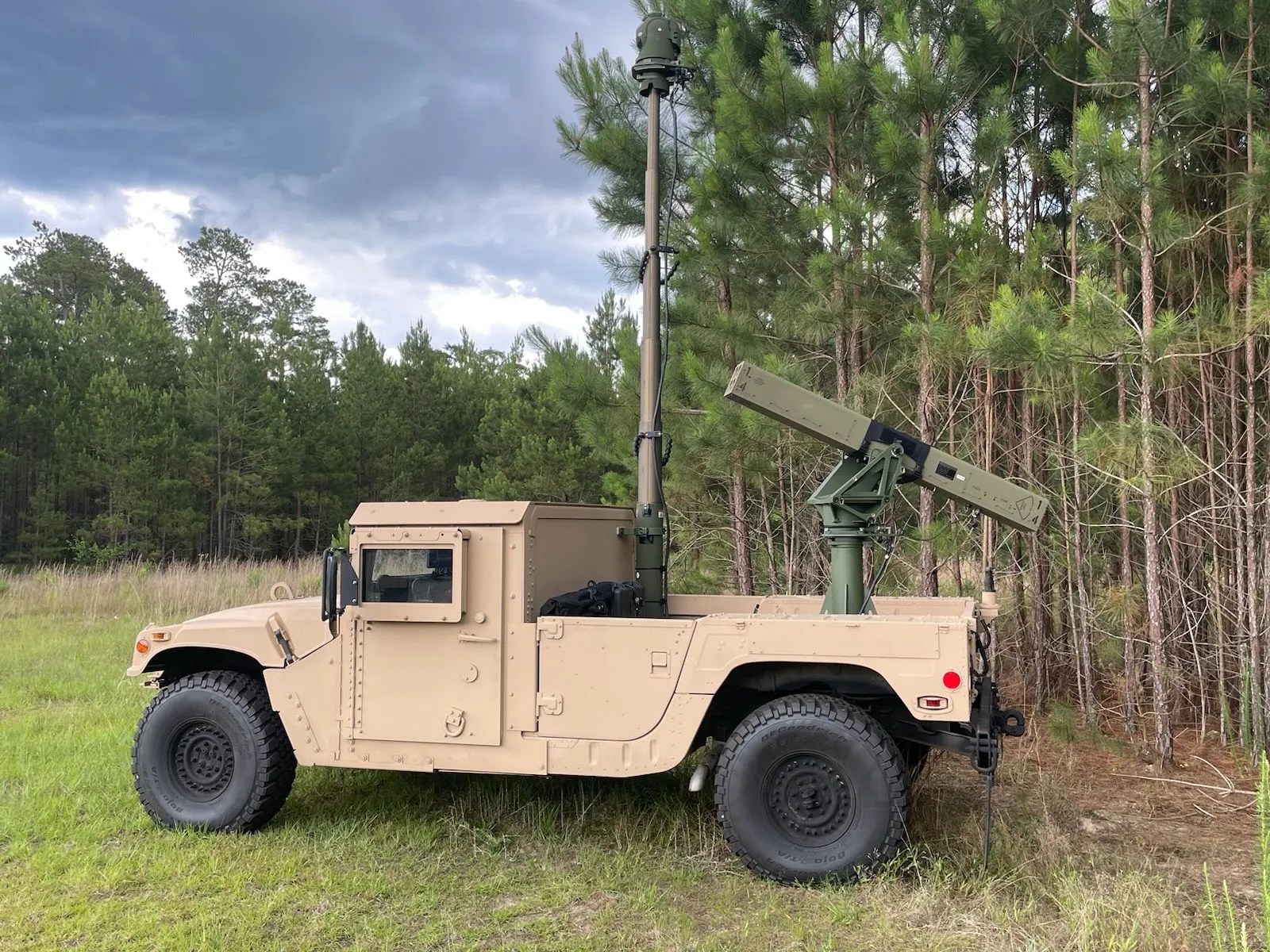
We have known for a while that APKWS was being used by Ukraine and that it was being mounted on vehicles along with Electro-Optic fire control systems to counter unmanned air systems (drones). (More here.)

What surprised me most in the new “The Drive” article was that the systems were developed my NAVAIR. That means this is a Navy developed system. Since the Coast Guard gets all of its weapons, other than small arms, from the Navy, that may mean the Coast Guard may be more likely to be able to get the system.

The Vampire combination of APKWS, Electro-Optic Sensors, and Firecontrol seems to be the easiest way for the Coast Guard to protect high value targets from potential air and surface suicide drone attacks without spraying bullets that may cause collateral damage. It is also flexible enough to be used against small, fast, highly maneuverable surface threats. It might even be useful against larger targets. It certainly seems to be exceptionally effective for its cost, weight, support requirements, and minimal footprint.

I would like to see them on all cutters, but getting this sort of capability for the cutters in PATFORSWA is most urgent.

APKWS for Counter Drone

At about $30,000 each APKWS is a low-cost way to provide a precision counter to a number of threats.

We have already seen reports of the 70mm APKWS guided rocket being used against relatively small Class 2 unmanned aerial systems.

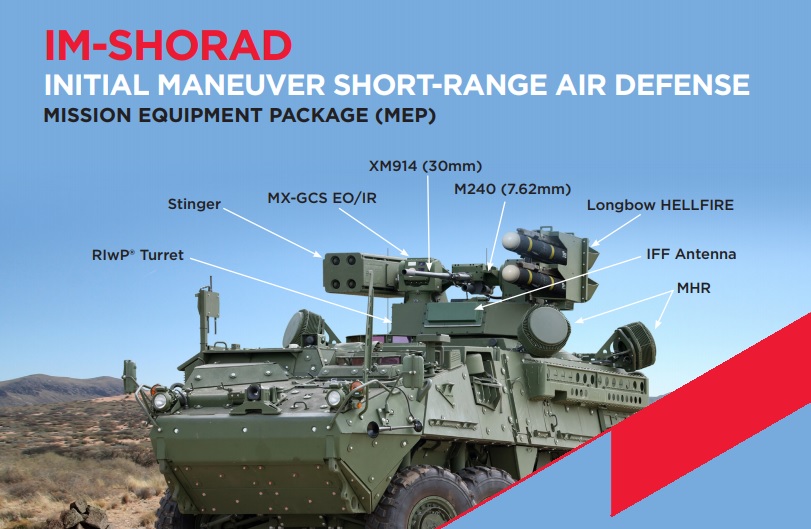
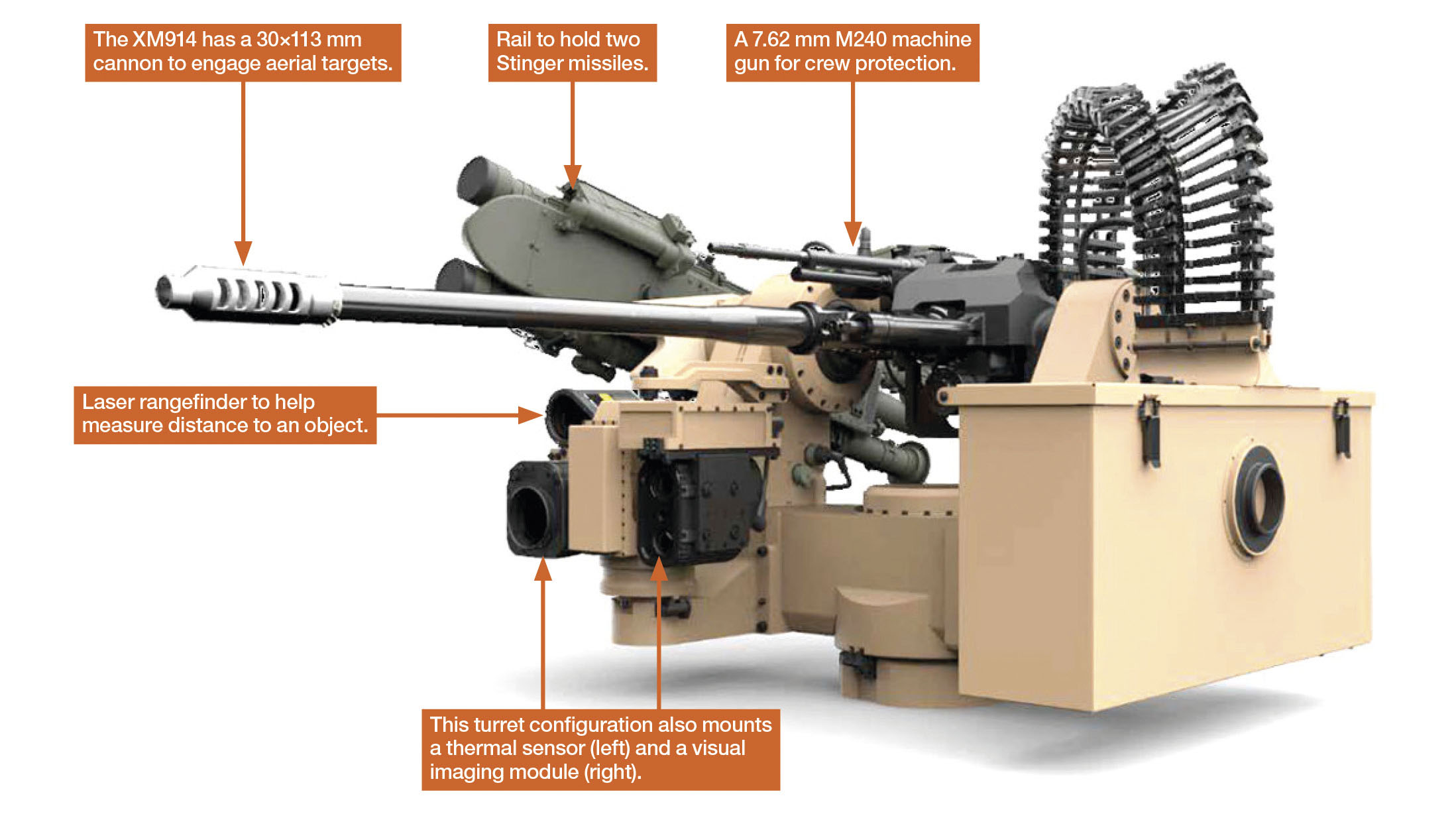
A close-up of the modified CROWS II, a small remote weapons system mount, fitted with the LAND-LGR4 launcher and the added sensor or other system (silver/gray rather than tan). US Army

Here we have a better picture of how the system might be deployed on the PATFORSWA Webber class patrol craft.

The PATFORSWA cutters already have the air search/detection or “hunter” part of a C-UAS system. Reportedly their Mk38 systems have been upgraded to 30mm capable of firing airburst munitions that can provide close in UAS kill capability. Adding a CROWS II RWS with LAND-LGR4 launcher and a laser designator mounted on the O-1 deck, above and behind the Mk38, would allow them to begin engaging UAS and other threats at triple the effective range of the 30mm.