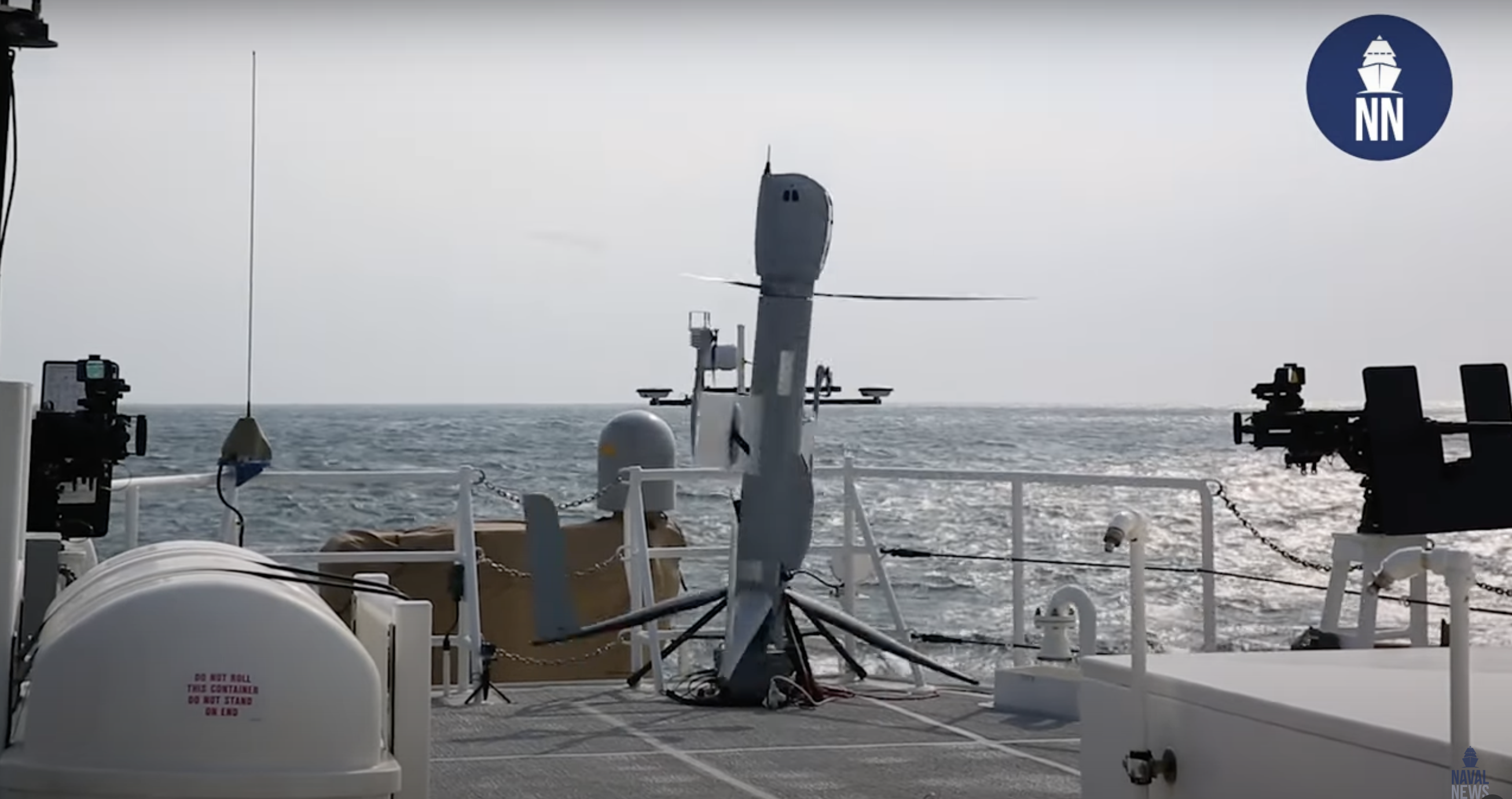
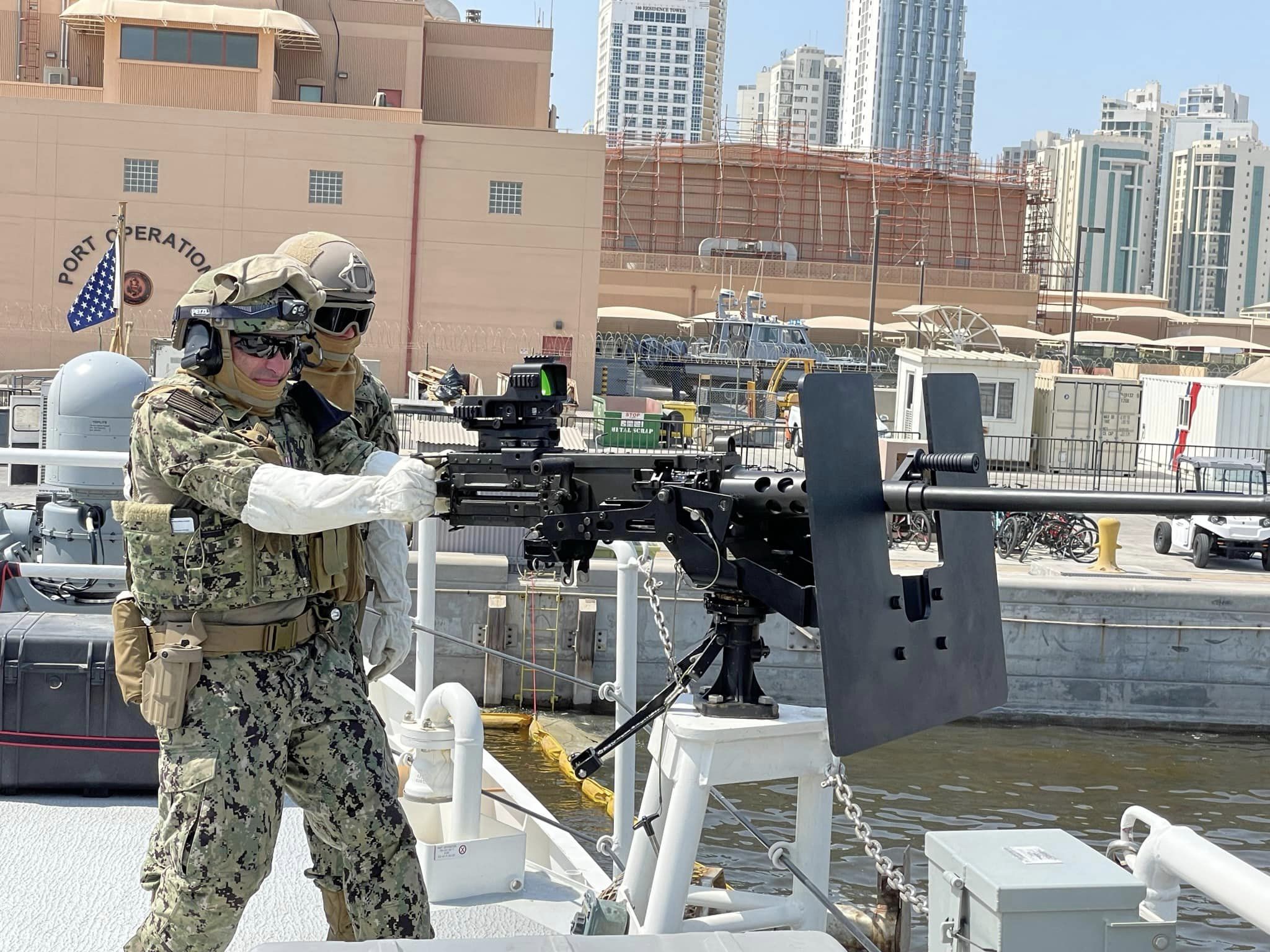
PATFORSWA has sophisticated gun sight on .50 cal.

I ran across the photo above on the PATFORSWA Facebook page. (The photo was posted in Oct. 2022.) For some time, I have been advocating for improvements over our existing crew served .50 caliber mounts, if not outright replacement, then at least better protection and greater accuracy. When I saw this photo, I was pleased to see this more sophisticated gun sight. I believe this is the sight I did a 2017 post about. The post was in reference to a report from Defense News. There is a night vision version of this sight.

I don’t have any knowledge about the extent of the use of this sight. It may have been a one-of-a-kind evaluation, but I found it encouraging. It is perhaps, something to look for. Would not hurt if these became standard on all cutters.

Late addition:

Screen grab. Flexrotor launching from USCGC Emlen Tunnell (WPC 1145). Also note the sight on the M2 .50 caliber machine gun mounts.


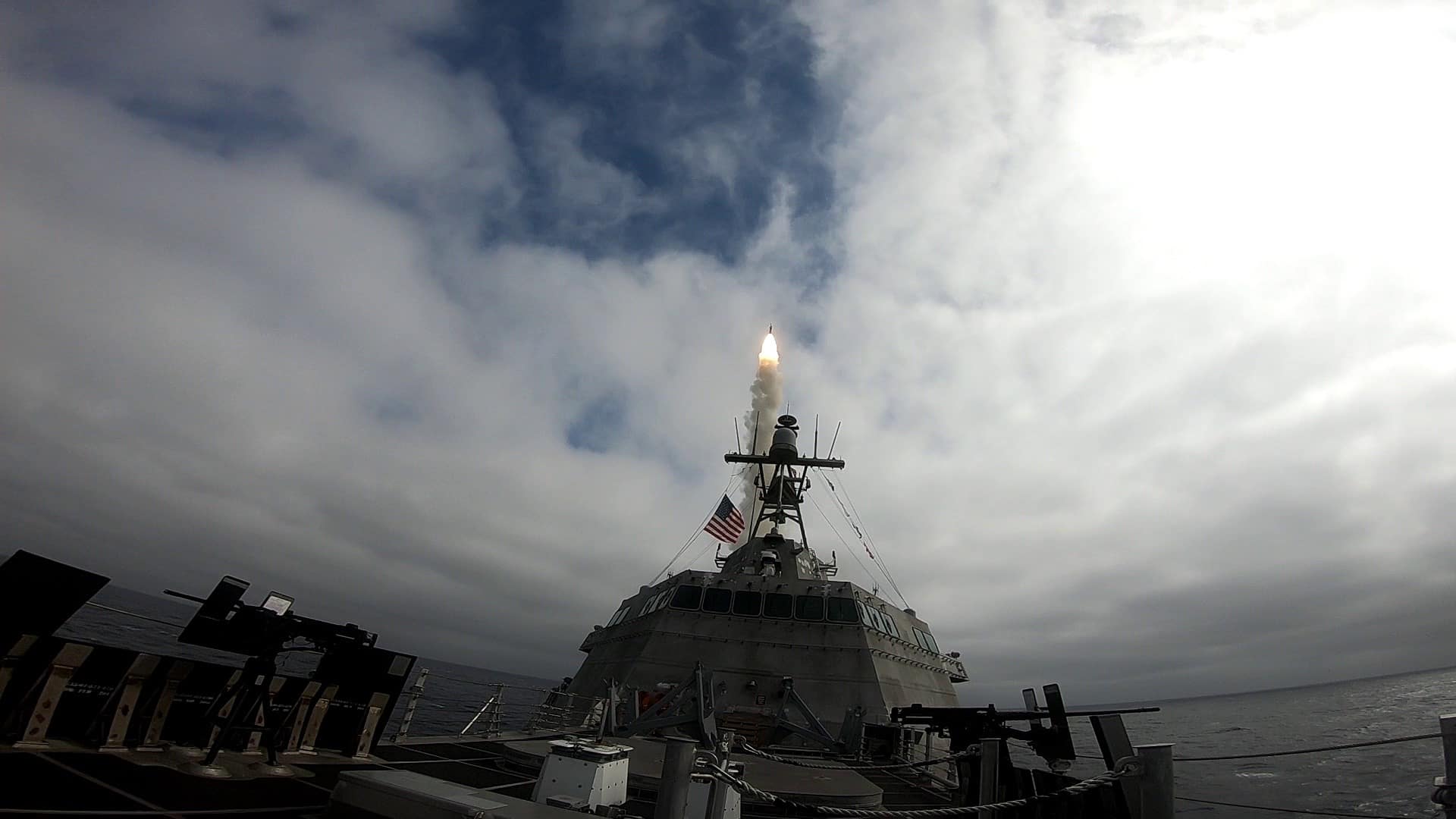
“US Navy LCS Successfully Fires SM-6 From MK 70 Payload Delivery System” –Naval News

“USS Savannah (LCS 28) conducts a live-fire demonstration in the Eastern Pacific Ocean utilizing a containerized launching system that fired an SM-6 missile from the ship at a designated target. The exercise demonstrated the modularity and lethality of Littoral Combat Ships and the ability to successfully integrate a containerized weapons system to engage a surface target. The exercise will inform continued testing, evaluation and integration of containerized weapons systems on afloat platforms.” (I note this LCS, unlike Coast Guard cutters, has ballistic protection for the crews of its .50 caliber machine guns)

Naval News reports,

US Navy Littoral Combat Ship USS Savannah (LCS 28) successfully launched an SM-6 missile from a MK 70 Mod 1 Payload Delivery System placed on the ship’s helicopter deck.

This is significant for the Coast Guard, in that this could just as easily been a cutter. In fact, in some respects the cutters are better equipped than the LCS. It could give Coast Guard cutters a wartime role that would not require a lengthy refit in the yard, assuming the Navy could provide the expertise to augment the cutter’s crew with the necessary expertise.

There are other considerations that might be limiting, but the flight decks on the National Security Cutters are 50 by 80 feet and those of the Offshore Patrol Cutters will be a similar size, so there is sufficient deck space to host several 40x8x8 foot Mk70 containers, each with four cells each of which can contain up to four missiles (ESSM and possibly others).

In this particular exercise, an SM-6 was used against a surface target. The SM-6 was originally intended to be used for long range anti-air warfare (AAW) including terminal phase ballistic missile defense. but it also has a proven capability against surface targets, including an anti-ship capability.

The Mk70 can launch any of the weapons that can be launched from Mk41 vertical launch systems, meaning they can be used against ships, aircraft, submerged submarines, or targets on land.

The system could certainly be used on cutters acting alone to attack fixed facilities ashore. Already installed sensors might permit short range use against ships and aircraft.

But perhaps more importantly, there is concern for the depth of magazines on Aegis combatants and the difficulty of underway rearming. Cooperative Engagement Capability would allow missiles mounted in Mk70 launchers on cutters and/or other vessels to be launched by Aegis capable combatants against any threat they can target. This would allow relatively unsophisticated ships armed with the Mk70 systems to serve as offboard magazines for the Aegis combatants. 

The Australians might also be looking at this for the Arafura class Offshore Patrol Vessels (OPVs) as well. In fact, it could be applied to virtually any allied OPV or ship with a flight deck more than 40 feet in length.

“First on CNN: US Navy warship near Yemen intercepts multiple missiles, US officials say”

USS Carney (DDG-64

CNN repoorts (one of several such reports):

Pentagon press secretary Brig. Gen. Pat Ryder confirmed that the USS Carney shot down three land attack missiles as well as several drones that were launched by Iran-backed Houthi forces in Yemen.

Presumably this refers to land based anti-ship cruise missiles.

USS Carney (DDG-64) is a Flight I Burke class guided missile destroyer. In 2016 Carney completed an upgrade with a SeaRAM rolling airframe missile launcher replacing her after Phalanx CIWS.

Reportedly Carney brought down three cruise missiles and 8 drones. Other reporting suggests Carney was in company with USS Bataan (LHD-5) which may have been the intended target.

This incident occurred in the Red Sea. PATFORSWA cutters also operate in this area.

UPDATE:

Military Times reports,

“We cannot say for certain what these missiles and drones were targeting, but they were launched from Yemen heading north along the Red Sea, potentially towards targets in Israel,” Ryder said in a Pentagon briefing. A U.S. official said they do not believe the missiles were aimed at the ship. That official spoke on condition of anonymity to discuss military operations that had not yet been announced.

Israeli Sa’ar 6 Corvette Conducts Shore Bombardment

The C-Dome air defense system mounted on Sa’ar 6 corvette includes a 40-round canister located at the front deck and loaded with vertically-launched Tamir surface-to-air missiles for 360-degree coverage. (Picture source NavalAnalyses.com)

Naval Technology reports that Israel had employed at least one newly commissioned Sa’ar 6 corvette to conduct shore bombardment with its 76mm gun.  We discussed this class earlier here, “Perhaps the Most Well Armed Cutter Sized Corvette in the World.”

Also found this video, which looks more like it was done by a 25mm (except the last 22 seconds), with some secondary explosions.

“Israel Navy takes out Hamas terrorists with grenades and machine guns after sinking boat” –Video

Felt I had to pass along this video, taken from what looks a lot like a Response Boat, Small. The accompanying narrative,

“An Israeli Navy patrol eliminates Hamas terrorists whose boat has been destroyed in this footage from the October 7 attacks. Soldiers from the Snapir harbour security unit throw grenades and open fire at Hamas fighters as they swim towards Zikim beach. Dvora class patrol boats had destroyed the terrorists’ inflatable boats. Several Hamas fighters made it to shore at Zikim and attacked a military training base and a Kibbutz. More than 1,000 Israelis died in the attacks.”

I would point out that following the Battle of the Bismarck Sea in March 1943, when US Army Air Corps and Allied aircraft sank eight loaded Japanese transports and four of their escorting destroyers, US Navy PT boats had a similar unpleasant task, killing the survivors in the water, rafts, and lifeboats so that they could not make it to Lae, a nearby island and their original intended destination, and continue the fight.

During the Vietnam War concussion grenades were also commonly used against combat swimmers.

There was also this video, apparently taken through the sighting system of a Remote Weapon Station, probably very similar to the Mk38 Mod2/3. This seems to be related to the incident in the video above.

The accompanying Narrative,

“On July 8, five Hamas terrorists infiltrated Israel from the sea near Zikim in order to carry out an attack. The IDF neutralized the terrorists through a combined effort of the ground, air and naval forces. This footage shows the Israel Navy targeting one of the terrorists on the beach.”

Greek Island Class Cutters to be Armed With Lionfish 20mm Remote Weapon Station

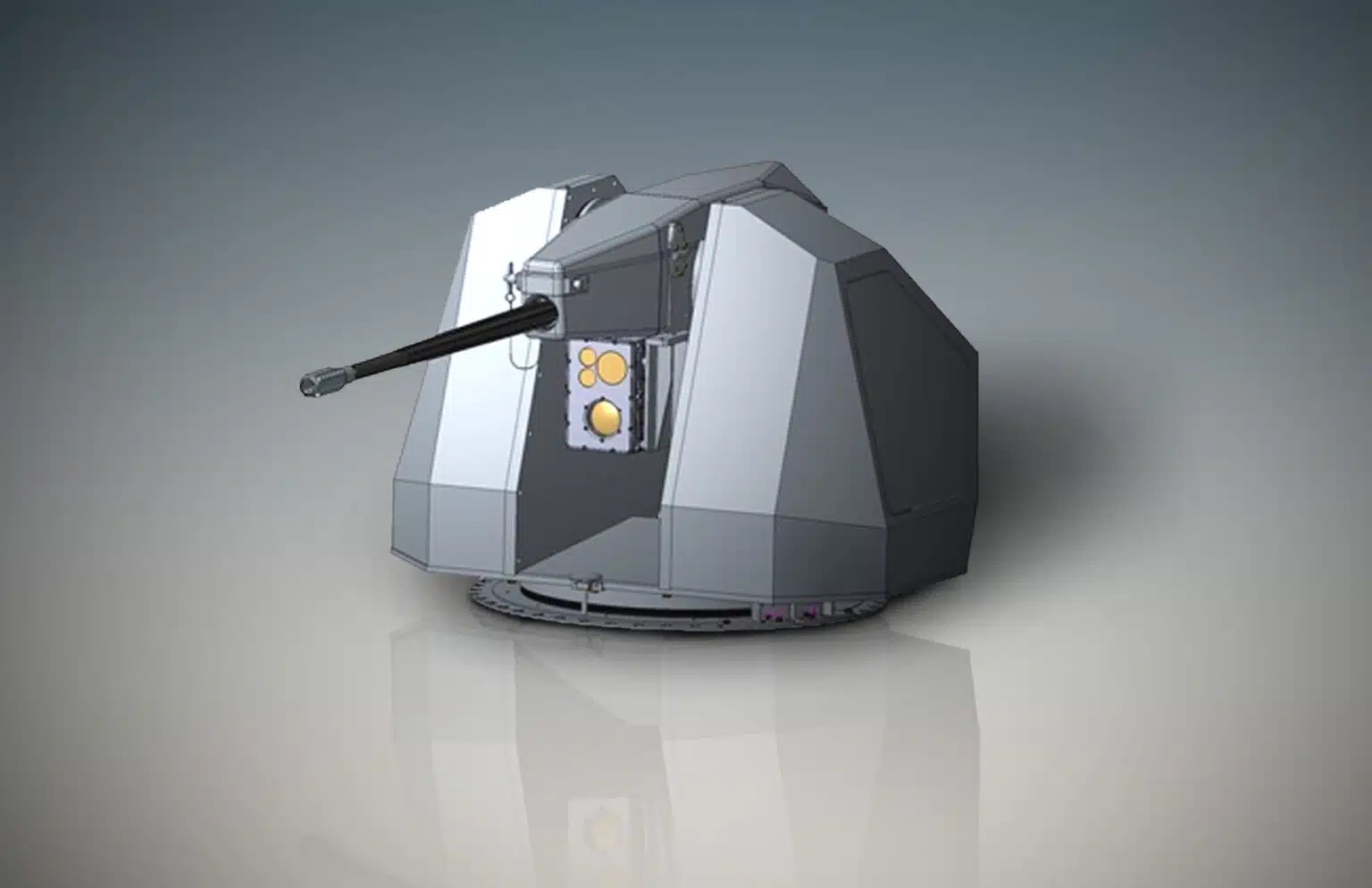
LIONFISH 20 RWS (Leonardo image)

Two separate reports from Naval News (here and here) that four Island class cutters being transferred to the Greek Navy will be equipped with the Leonardo Lionfish 20mm Remote Weapon Station.

The weapon has a reported rate of fire of up to 1000 rounds per minute with 250 rounds on the mount, and an effective range of at least 2000 meters.

Unlike the Mk38 Mod2/3/4 mounts, traversing the electro-optics also requires training the gun.

“Northrop Grumman to Develop New Guided Ammunition for the US Navy” (57mm) –News Release

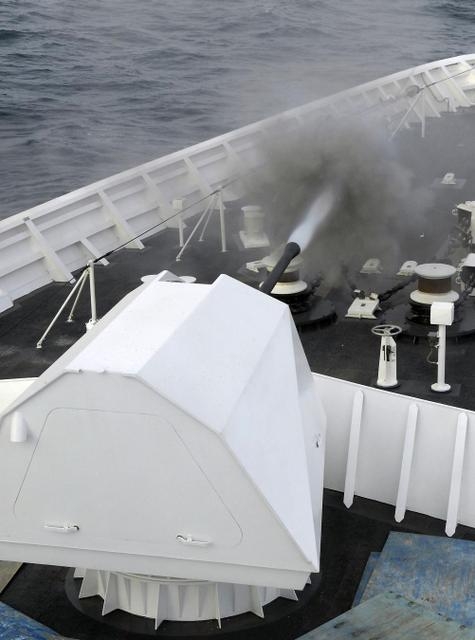
Test firing of the 57mm Bofors aboard USCGC Bertholf, photo by MMagaro

Below is a news release from Northrop Grumman. I have to ask what is going on? The L3 developed 57MM MK 332 Mod 0 (ALaMO) guided round, meant to address the same type targets the Northrop Grumman news release talks about, is already in service and available for export. Additionally, Raytheon was developing MAD-FIRES as a guided round to engage the more difficult cruise missile threat. I still have not heard anything that would indicate MAD-FIRES is in service.

Is this Northrop Grumman round cheaper? More capable? Or is the Navy just diversifying sources? The news release below does claim, “Utilizing seekers and an aft-maneuver system, the round provides continuous trajectory guidance no matter how often the target may pivot. (emphasis applied) That might be a difference.

My last post on ALaMO here.

(The 57mm Mk110 is mounted on both types of LCS, the National Security Cutters and will be mounted on the Offshore Patrol Cutters and the Navy’s new frigate)


PLYMOUTH, Minn. – Oct. 4, 2023 – The U.S. Navy has awarded Northrop Grumman Corporation (NYSE: NOC) a development contract for the company’s newly designed 57mm guided high explosive ammunition. Designated for use with the Mk110 Naval Gun Mount, the company will test and mature the munition for qualification.

The 57mm guided high explosive ammunition has the unique ability to continuously maneuver in-flight as it moves toward a designated target. Designed to defend against fast moving surface threats, drones and swarming threats, the guided 57mm ammunition features an on-board seeker to acquire moving targets and a fuze with the ability to self-select for either proximity or point-detonation mode to best engage and defeat the intended target.

“Our new 57mm guided ammunition is truly innovative in its ability to identify, track and guide itself to a target,” said Dave Fine, vice president, armament systems, Northrop Grumman. “The Navy will gain a greater capability to defend against moving threats and a new level of accuracy to defeat them.”

As the newest addition to Northrop Grumman’s advanced ammunition portfolio, the 57mm round leverages the company’s expertise in guided munitions, such as the Precision Guidance Kit. Utilizing seekers and an aft-maneuver system, the round provides continuous trajectory guidance no matter how often the target may pivot. This new guided ammunition will give the Navy greater stand-off range and a cost-effective solution against small, fast-moving threats, without any weapon system modifications.

Northrop Grumman is a leading global aerospace and defense technology company. Our pioneering solutions equip our customers with the capabilities they need to connect and protect the world, and push the boundaries of human exploration across the universe. Driven by a shared purpose to solve our customers’ toughest problems, our 98,000 employees define possible every day.

“MSI Defence Systems to supply MK 48 Mod 2 EOS to US Navy & US Coast Guard” –Navy Recognition

MK48 Mod2 EOS MSI-DS Electro-Optical Sight System. (Picture source: MSI Defence Systems)

Navy Recognition reports,

According to information published by the US DoD on September 29, 2023, MSI-Defence Systems has been granted a contract worth $29,263,267 for the supply of the MK 48 Mod 2 Electro-Optical Sight (EOS).

This electro-optic system is associated with the 30mm Mk38 Mod4 gun weapon system.

30mm Mk38 Mod4

As far as we know, the first Coast Guard ships to get the Mk38 Mod 4 will be the Polar Security Cutters. I am hoping we will see the weapon on some of the Offshore Patrol Cutters.

I found it interesting that this contract provides not only for the Navy and Coast Guard but also the Military Sealift Command, because, currently, none of their ships have installed weapon systems.

“This initiative is in line with the enhancement of the MK 38 Mod 4 Machine Gun System, which will benefit the Navy, Coast Guard, and Military Sealift Command.”

“U.S. Marine Corps And The New Long-Range Attack Munition” –Naval News

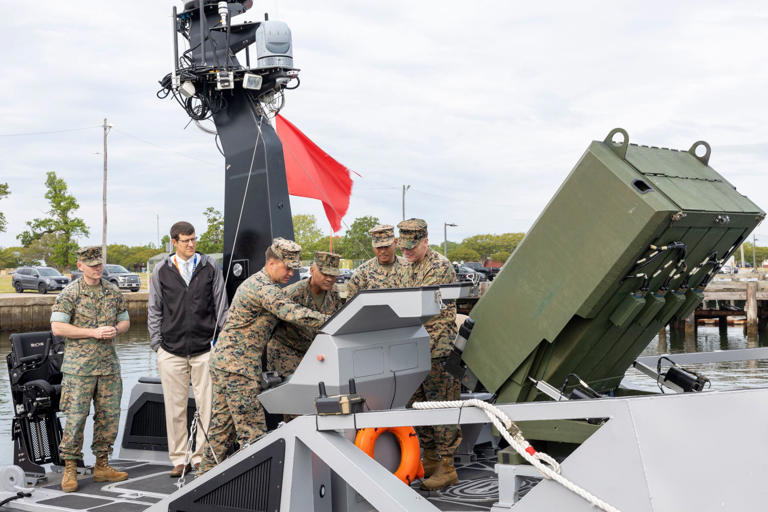
Not exactly the same, but you get the idea:   U.S. Marine Corps Lt. Gen. Brian W. Cavanaugh, the commanding general of Fleet Marine Force, Atlantic, Marine Forces Command, Marine Forces Northern Command, and Marines with 3d Marine Littoral Regiment, 3rd Marine Division, examine the manual controls to the Long Range Unmanned Surface Vessel, Joint Expeditionary Base Little Creek-Fort Story, Virginia, April 27, 2023. A LRUSV is an optionally manned vessel capable of extended travel and transporting loitering munitions that accurately track and destroy targets on sea or land. Metal Shark is designing, building, testing and implementing the LRUSV system under an other transaction authority aggrement with Marine Corps Systems Command to primarily serve as an intelligence, surveillance, and reconnaissance platform.
© Provided by The Drive

Naval News reports the Marines hope to develop a new long range loitering munition. It would take off vertically, be relatively inexpensive, be usable against both moving and fixed targets, on land or at sea, with a “minimum total payload weight capacity of 25 pounds (lbs) to include weapon seeker and warhead (but excludes fuel weight)” and have a range of about 150 nautical miles.

This might be something the Coast Guard could use. Single rounds should be effective against small, fast, highly maneuverable threats, while multiple hits might be effective against larger threats.  The relatively long range would mean it would not have to be widely distributed. A few, held as group assets, might be sufficient to deal with a terrorist threat.

Containerized SM-6 Launcher

The Navy Leagues on-line magazine, Seapower, has a recent post, U.S. Naval Forces Europe and Danish Defense Forces Train on SM-6 Missile Launcher Together.

Allies training together is routine, but there was a real surprise in the story,

The containerized configuration of the SM-6 launcher augments the U.S. Navy’s operational flexibility, facilitating rapid deployment and utilization in diverse theaters of operation, thereby underlining the commitment of the United States to ensure the security interests of itself and its allies.

—There is a containerized launch system for SM-6—

This means any ship with a good air search radar, sufficient deck space, and can handle the additional topside weight (like perhaps an NSC, OPC, or even an LCS) can have both a long range AAW missile system and a long range high supersonic anti-ship/anti-surface missile system.

As an Anti-Air system, the SM-6 incorporates an active radar seeker, so it does not require the radar illuminators that dominated the architecture of most AAW missile ships which used semi-active homing.

Quoting Wikipedia,

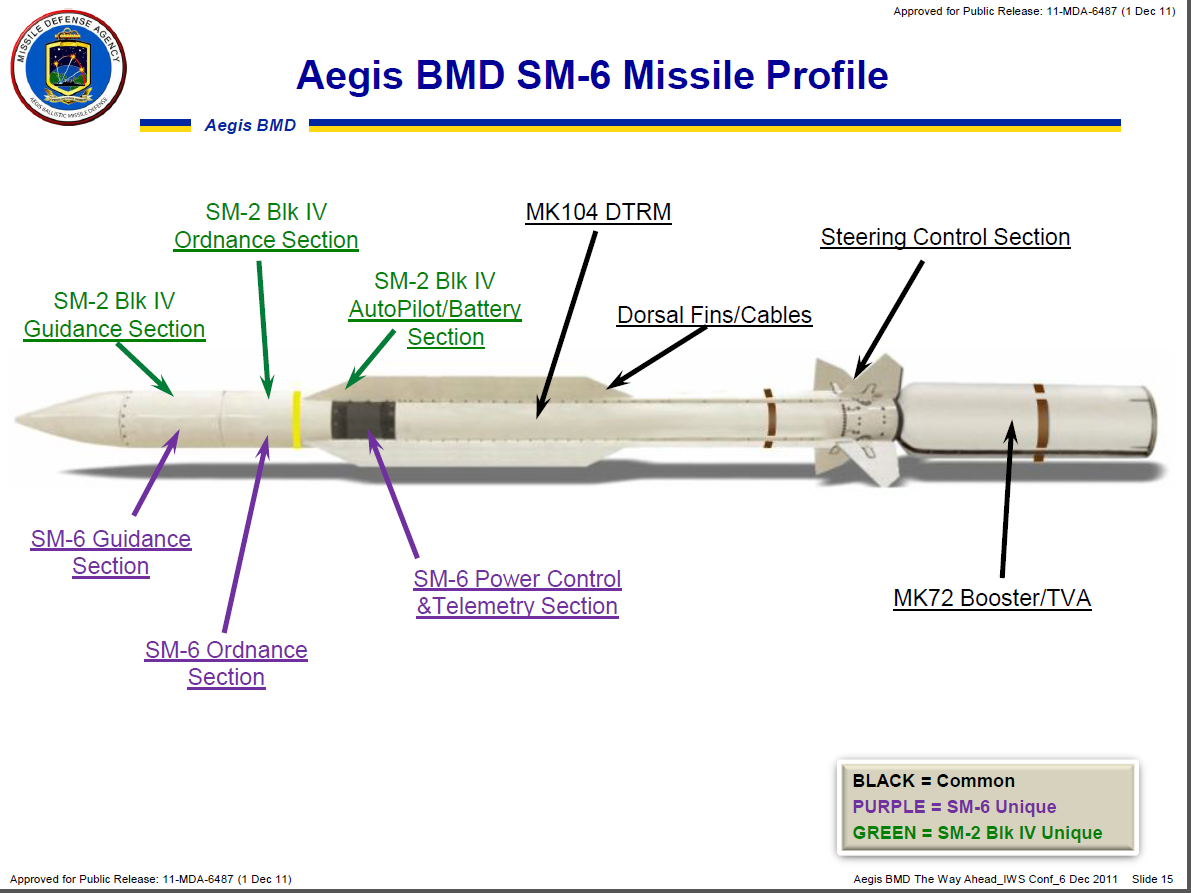
The RIM-174 Standard Extended Range Active Missile (ERAM), or Standard Missile 6 (SM-6), is a missile in current production for the United States Navy. It was designed for extended-range anti-air warfare (ER-AAW) purposes, providing capability against fixed and rotary-wing aircraft, unmanned aerial vehicles, anti-ship cruise missiles in flight, both over sea and land, and terminal ballistic missile defense. It can also be used as a high-speed anti-ship missile. The missile uses the airframe of the earlier SM-2ER Block IV (RIM-156A) missile, adding the active radar homing seeker from the AIM120C  AMRAAM in place of the semi-active seeker of the previous design. This will improve the capability of the Standard missile against highly agile targets and targets beyond the effective range of the launching vessels’ target illumination radars. Initial operating capability was planned for 2013 and was achieved on 27 November 2013.

I probably should not have been surprised by this since the army is planning on towed launchers for both Tomahawk and SM-6.

Presumably the launcher is based on the Mk41 VLS and if so, it should be able to launch a variety of weapons including ESSM, a shorter ranged, smaller, much cheaper missile that can be quad packed into the launcher, and vertical launch ASROC.