“Ex-US Coast Guard Cutter Steadfast Arrives In Malaysia” –Naval News

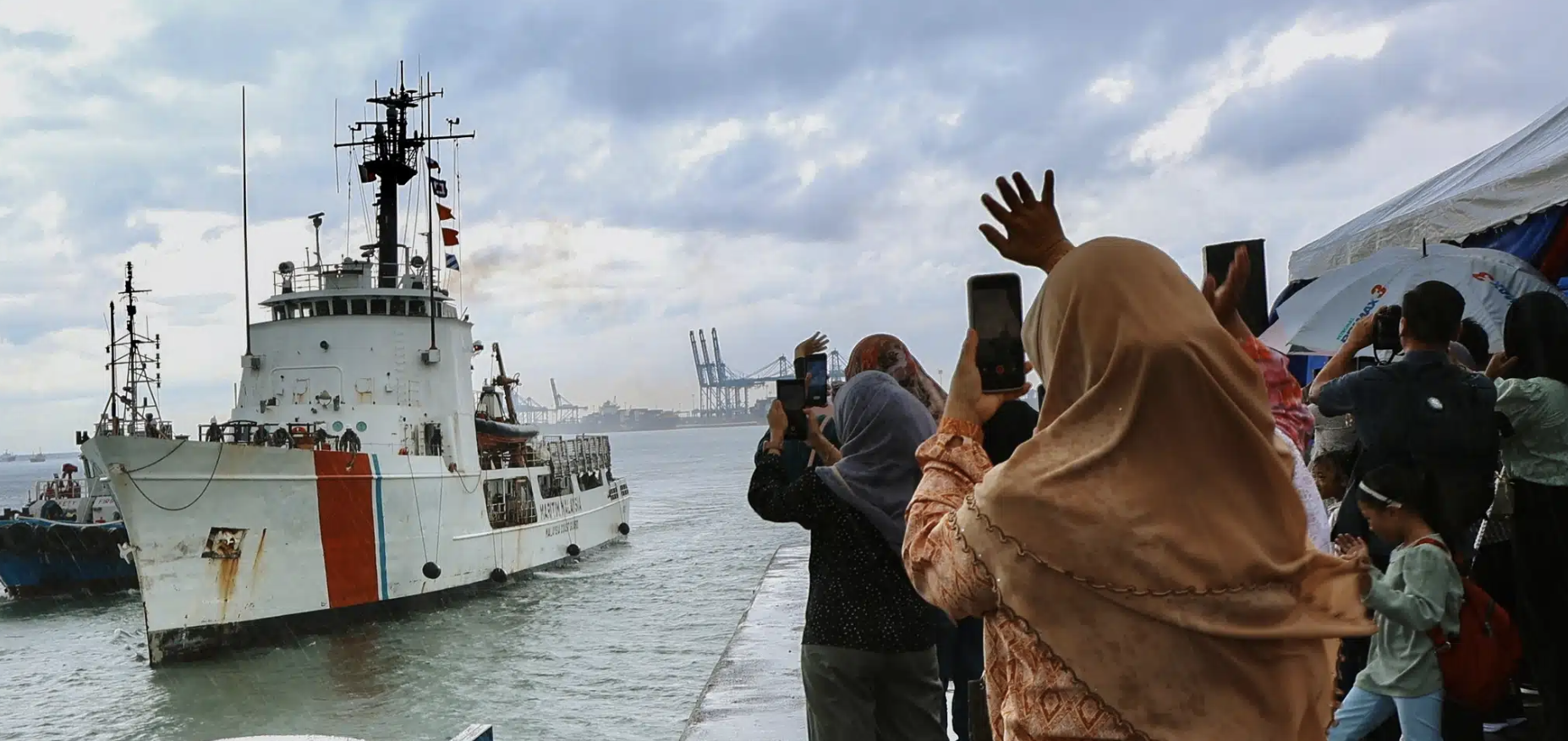
The ex-U.S. Coast Guard cutter Steadfast arriving at the National Hydrographic Centre, Port Klang on November 4, 2025 (U.S. Embassy Kuala Lumpur)

Naval News reports,

“The former United States Coast Guard cutter Steadfast arrived in Malaysia on 4 November, completing a 10,600 nautical mile journey from Baltimore to begin its service with Malaysia’s coast guard, the Malaysian Maritime Enforcement Agency.”

Look at the picture. This ship, the former USCGC Steadfast was commissioned 7 October,  1968. She is over 57 years old and her Malaysian crew has just completed a voyage from Baltimore, across the Atlantic, through the Straits of Gibraltar, across the Mediterranean, through the Suez Canal, down the length of the Red Sea, through the Gulf of Aden, across the Indian Ocean, and through the Strait of Malacca.

How did that happen? The Coast Guard has been recapitalizing its fleet and as a result a lot of vessels became excess property. Rather than incur the cost of scrapping these now over age ships, the Coast Guard has set up a command at Curtis Bay that works with the Coast Guard Yard to prepare these ships for transfer to the navies and coast guards of friendly nations making sure the ships are seaworthy and the crews are adequately trained.

The twelve Hamilton class cutters have been transferred to five different nations.

Two 210 foot Medium Endurance Cutters, Courageous and Durable, were decommissioned in September 2001. Courageous was transferred to Sri Lanka in 2004 and Durable was transferred to Colombia in 2003. Since March 2023 five more WMEC210s have been decommissioned or placed in “in commission, special” status. Steadfast is the first of these five to be transferred to another user.

“The United States announced at the end of October that it plans to provide another retired cutter to the Malaysian Maritime Enforcement Agency.”

22 of the Island class WPBs have been transferred to eight different nations including five to Ukraine where at least one was sunk in combat.

9 of the Marine Protector class 87 foot WPBs have been transferred to Lebanon (2), Uraguay (3), Malta (2), and Yemen (2).

I visited the Coast Guard Yard in August 2024 with the intention of writing a post. I was very impressed, but other priorities got in the way. I have regretted not telling their story ever since.

I was told that from March to July 2024 a decommissioned arrived at the yard every nine days.

This is an important story and it deserves more attention.
What a Former WHEC is Doing Now

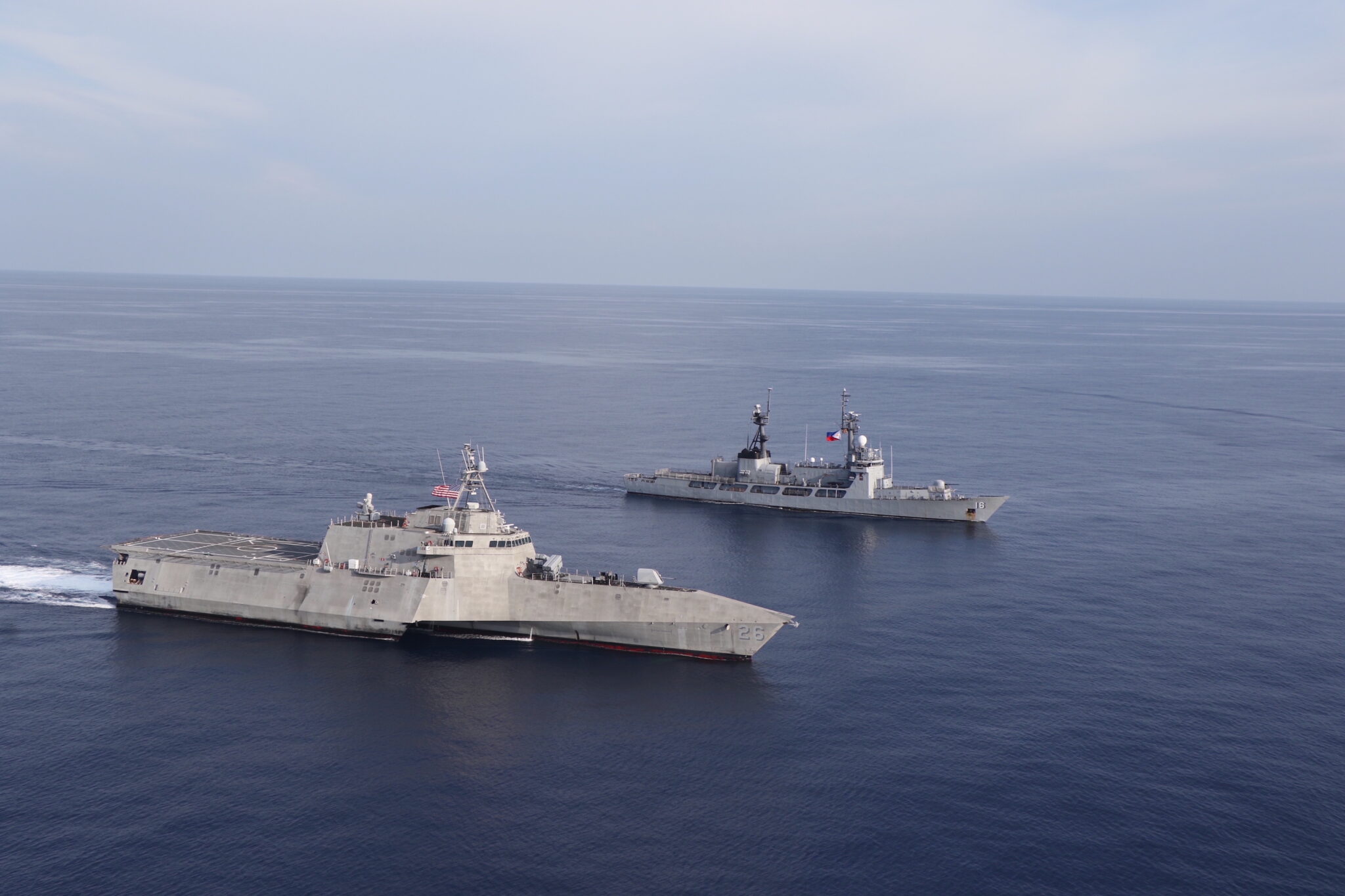
SOUTH CHINA SEA (July 31, 2024) – Independence-class littoral combat ship USS Mobile (LCS 26) conducts a Maritime Cooperative Activity with Philippine Navy’s Gregorio del Pilar-class patrol ship, BRP Ramon Alcaraz (PS 16), (former USCGC Dallas), in the South China Sea, July 31, 2024. Mobile, part of Destroyer Squadron 7, is on a rotational deployment operating in the U.S. 7th Fleet area of operations to enhance interoperability with allies and partners and serve as a ready-response force in support of a free and open Indo-Pacific region. (U.S. Navy photo by Naval Aircrewman Tactical Helicopter 2nd Class Diego Chavez)

US Naval Institute News reports,

U.S. and Philippine warships rendezvoused near a disputed South China Sea feature to conduct a joint maritime patrol on Wednesday.

USS Mobile (LCS-26) and BRP Ramon Alcaraz (PS-16) met off Leslie Bank, a maritime feature within Manila’s exclusive economic zone and Beijing’s 10-dash line claim. The littoral combat ship and ex-Coast Guard Hamilton-class cutter drilled in bilateral surface operations and communication, with a video released by the Armed Forces of the Philippines claiming that the two vessels took up a patrol formation.

Nice to see the LCS is apparently armed with Naval Strike Missiles.

Taiwan Coast Guard Vessel Arrives in Hawaii

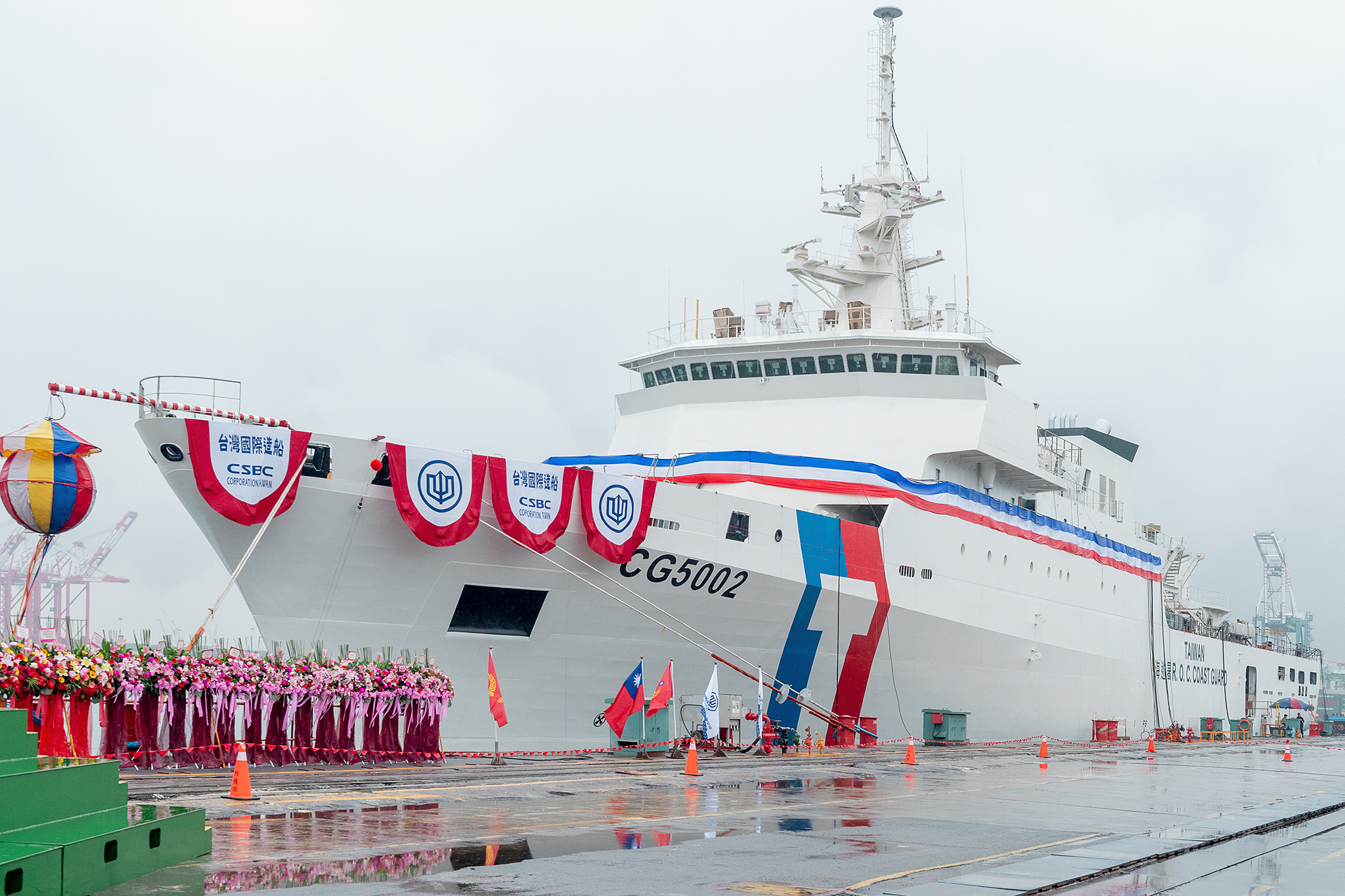
Patrol vessel of Coast Guard Administration CG 5002 Hsinchu at the launching ceremony. Official Photo by Makoto Lin / Office of the President, 28 April 2021

We have a report that a Taiwanese Coast Guard Cutter arrived in Hawaii on June 11. The vessel, Hsinchu (CG5002), one of a new class of four 5,044 ton cutters, was commissioned in December 2022.

This may be just a stop for supplies and liberty, but I suspect there will be some interaction with the US Coast Guard. Despite speculation, there was a denial that the ship would participate in RIMPAC scheduled June 26 to Aug. 2. Taiwan was not listed as a participant in a May 21 Third Fleet announcement of the exercise.

Reportedly the cutter will be engaged in fisheries management. This is well outside Taiwan’s EEZ, so I presume they will be policing and supporting the Taiwanese fishing fleet.

This background from Wikipedia,

In March 2021 the CGA and the US Coast Guard announced that they had signed a cooperation agreement, the agreement was promptly denounced by China. In May 2021 US President Joe Biden praised the cooperation agreement while speaking at the commencement of the United States Coast Guard Academy. The first bilateral meeting under the agreement occurred in August 2021.

“A Nautical Knife Fight” USCGC Spencer vs U-175 –USNI

US Coast Guard crew of cutter Spencer watched as a depth charge exploded near U-175, North Atlantic, 500 nautical miles WSW of Ireland, 17 Apr 1943. Photo by Jack January

The US Naval Institute’s April 2024 edition of Naval History magazine has an excellent article about USCGC Spencer’s destruction of U-175 on 17 April 1943, A Nautical Knife Fight, written by CPO William A. Bleyer, USCG. I have added the link to my heritage page.

I have read several accounts of this action, and this is the best and most detailed.

USCGC Spencer (WPG-36) in 1942 or 1943. Spencer sank U-175 with assistance of USCGC Duane, on April 17, 1943.

Spencer was the Coast Guard’s most successful ASW ship, sinking at least two U-boats (U-633 on March 1943 and U-175 17 April 1943) and possibly a third.

USCG Cmdr Harold S. Berdine of cutter Spencer talking with US Navy Capt Paul Heineman of the Escort Group A-3 after sinking German submarine U-175, North Atlantic, 500 nautical miles WSW of Ireland, 17 Apr 1943. US Coast Guard photo by Jack January

Spencer was one of seven 327 foot Secretary class cutters. As a class they were extremely successful. Unfortunately, one was lost 29 January 1942, after being torpedoed. Another of the class, USCGC Campbell, famously rammed and sank U-606 on 22 February 1943, after the U-boat was forced to the surface by the Polish destroyer Burza. I had the privilege of being XO on one of the class, USCGC Duane, which assisted Spencer in the sinking of U-175 and rescuing survivors.

Related:

“CUTTER 37: THE LAST SHIP STANDING” –Coffee or Die

USCGC Taney, probably early 1944, equipped with four 5″/38s. She was in this configuration less than a year before being converted to an amphibious force flagship.

Coffee or Die has an article published on Coast Guard Day about the former USCGC Taney (WPG/WHEC-37), the last US warship to have survived Japan’s December 7, 1941 attack on Hawaii (there may still be a tug as well). It may not be the most accurate history (“USS Constellation…one of the original six frigates of the US Navy” –no that was a different ship, there are minor errors as well), but it is entertaining, including some first-person accounts that convey why ships of this class were so loved.

Since we are now seeing long delays in our ship building, it’s worth noting that she was built in the Philidelphia Navy Ship Yard. Four 327 foot cutters, Campbell (32), Duane (33), Ingham (35), and Taney (37), were laid down in a dry dock on 1 May 1935. All four were launched simultaneously 3 June 1936, 13 months later. All four were commissioned less than 18 months after the keels were laid, Taney taking the longest. Campbell was commissioned only 412 days after being laid down.

About a thousand years ago (1982-84) I was XO on the Duane. I loved that ship. Twelve years ago, I did a post on the class: 327s–Why Were They So Successful?

There is also this post about a sister ship: How Spencer Became the Coast Guard’s Top U-Boat Killer, Thank You Royal Navy

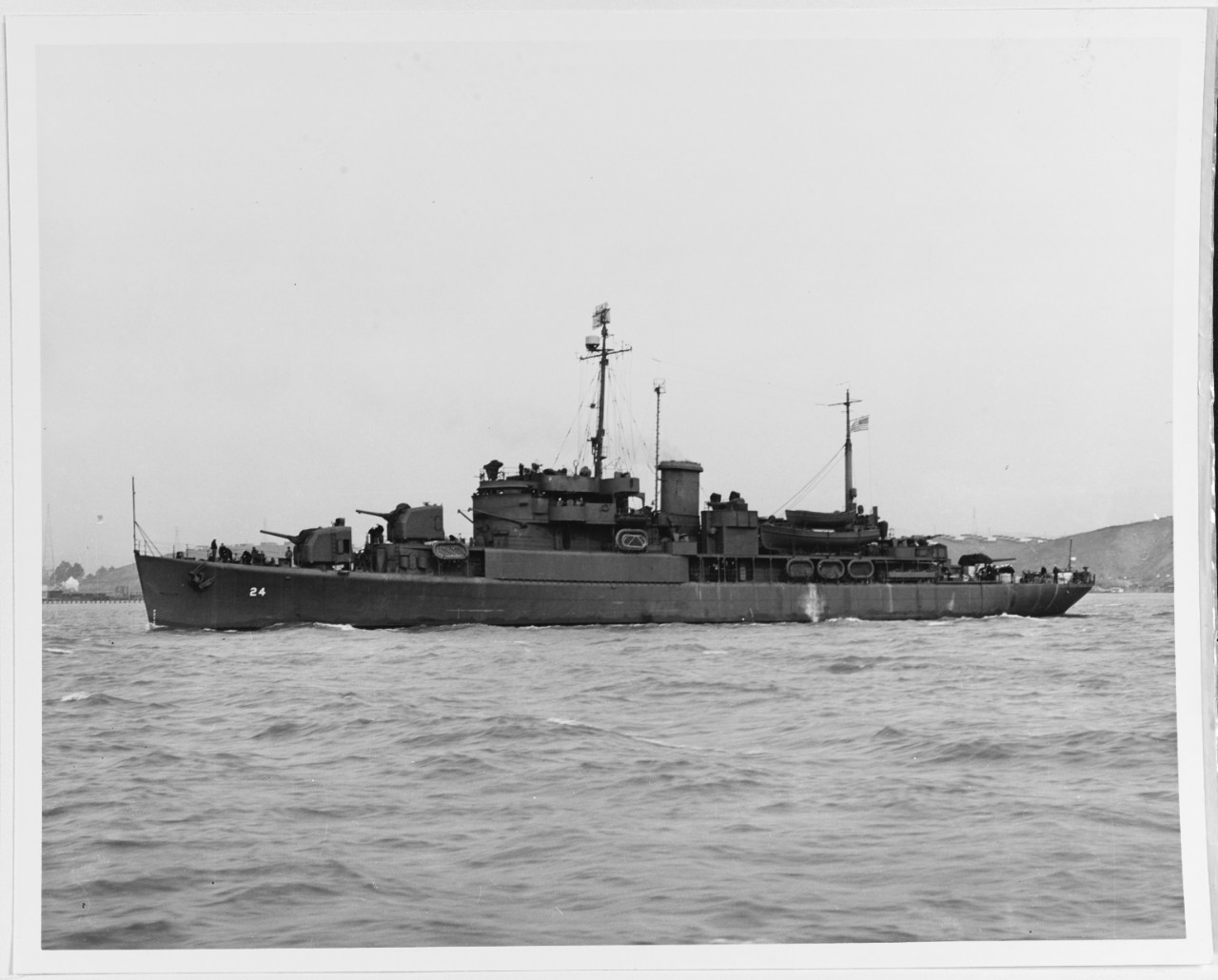
USS/USCGC Chincoteague (AVP-24/WAVP/WHEC-375)/RVNS Lý Thường Kiệt (HQ-16)/RPS Andrés Bonifacio (PF-7)

Title: USS Chincoteague (AVP-24) Photographed on 27 December 1943 off the Mare Island Navy Yard following repairs to severe battle damage incurred in July 1943. One of the four 5/38 guns in her original armament has been replaced by a quadruple 40mm mount. Photograph from the Bureau of Ships Collection  in the U.S. National Archives. Catalog #: 19-N-57482

Recently finished reading “USS Chincoteague the Ship That Wouldn’t Sink” by Frank D. Murphy. It is a small, large print book, the first-person story of a young sailor, then 19, and his first ship, a newly commissioned small seaplane tender, USS Chincoteague, that endured eleven air attacks 16-17 July 1943, only three months after she had been commissioned.

I had a personal interest because my first ship, USCGC McCulloch, the former USS Wachapreague, was also Barnegat class ship.

The attacks on Chincoteague were during a period when the US was moving up the Soloman Island Chain. The Allies had invaded New Georgia, but the fighting was heavy, and the Japanese were making a strong effort to push the allies off the island.

Consolidated PBY-5A Catalina. US Navy photo.

USS Chincoteague was anchored in Sabot Bay, Santa Cruz Islands, Southeast of the Soloman Islands, servicing a squadron PBY patrol planes when the attacks began. When an attack was expected she would get underway to maneuver. Between attacks she would return to service her brood of sea planes.

Attacks on the 16th caused only minor fragment damage. During attacks on the 17th, she received two damaging near misses that caused flooding and fires, then a direct bomb hit that wrecked the after engineroom killing ten crew members, followed by another near miss that dented the hull and knocked the remaining engines offline. Dead in the water, having taken on 663 tons of water, she had a negative GM, and was listing 12 to 18 degrees, it looked as if she would be sunk by the eleventh attack when four Marine Corsairs arrived splashing three of the attackers and driving off the fourth.

After repairs to the forward engineroom, which powered the starboard shaft, the ship got underway at 2350, but at 0245 on the 18th one of the engines was overheating. In an attempt to deal with the overheating, control of the engine was lost, and it ran away in spite of a closed throttle, causing a severe fire that forced the crew to abandon the engineroom.

The ship was taken in tow and, after temporary repairs at Espiritu Santo, was towed by to the West Coast where complete repairs were made including addition of eight 40 mm anti-aircraft guns and additional 20 mm guns. Ultimately, she would earn six battle stars.

You can read the full original damage report here.

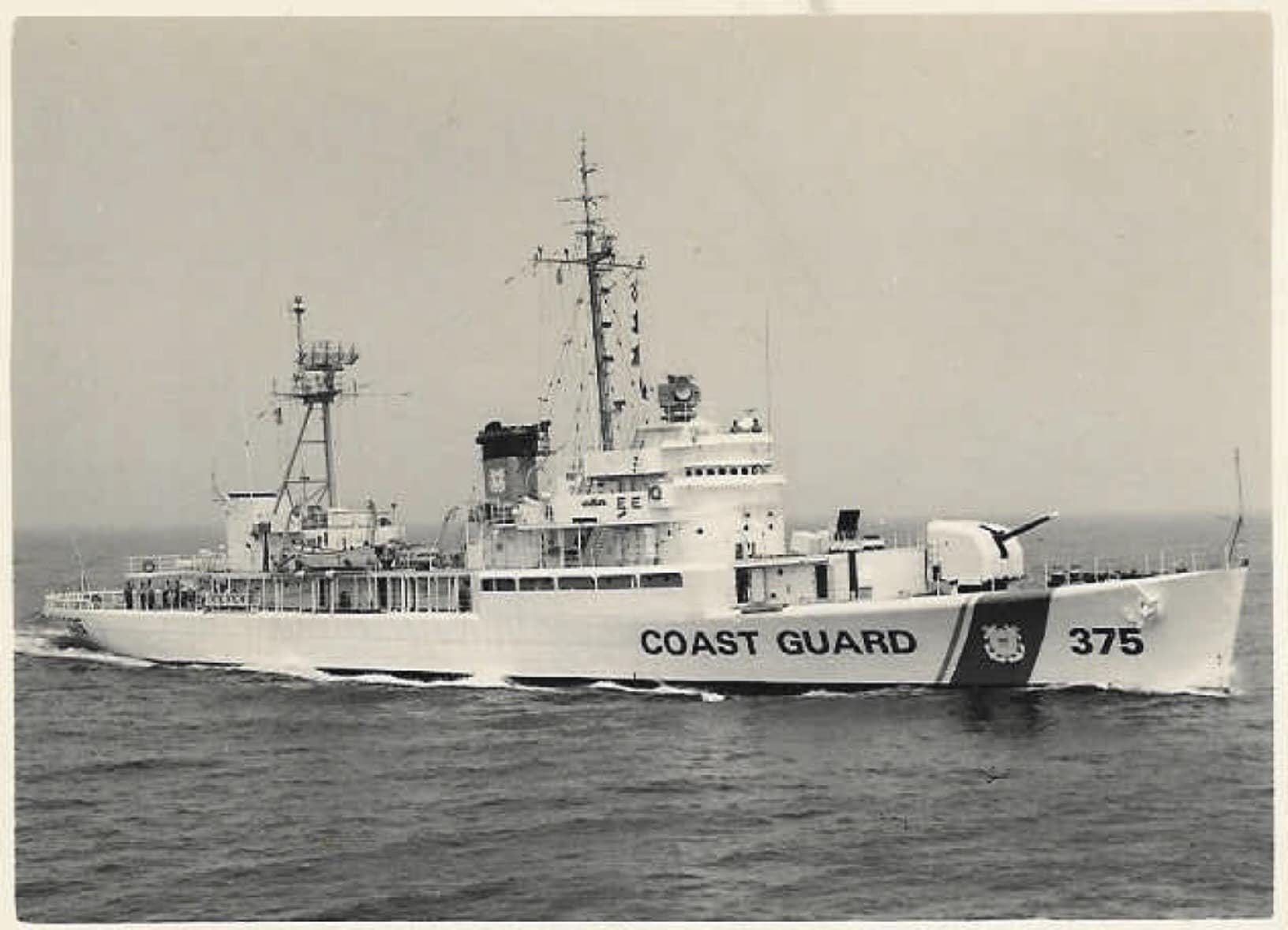
USCGC Chincoteague (WHEC-375) seen here late in her service with the Coast Guard, armed with a single 5″/38, Mk 56 Gun Fire Control System, torpedo tubes for ASW torpedoes, and Hedgehog ASW mortar.

In the 1940s Chincoteague and 17 of here sisters were transferred to the Coast Guard, where they primarily served as weather ships on a number of “Ocean Stations.” In Coast Guard service, these were referred to as the Casco Class.

As part of “Vietnamization” Chincoteague and six of her sister Coast Guard cutters were turned over to the South Vietnamese.

After being turned over to the South Vietnamese, the former Chincoteague, along with another former Coast Guard cutter of her class and two former US Navy ships fought the Chinese Navy in the “Battle of the Paracel Islands,” 16 January 1974.

RVNS Lý Thường Kiệt (HQ-16), the former USCGC Chincoteague

As the South Vietnamese government collapsed, the former Chincoteague along with five other ships of the class (the former Yakutat, Bering Strait, Castle Rock, Cook Inlet, and McCulloch) crowded with hundreds of refugees made their way to the Philippines. In 1976 these ships were turned over to the Philippine Navy as the Andrés Bonifacio class, with four of them commissioned and two (the former Yakutat and Cook Inlet) retained to provide spare parts. They remained in service until at least 1985.

The former USS/USCGC Absecon continued in service with the Vietnamese People’s Navy perhaps as late as 2000 and was probably the only Barnegat class ship ever armed with guided missiles, the SS-N-2 Styx and the SA-N-5 Grail.

“China Scales Down Rescue Effort as Hope Fades for Missing Crew of Capsized Fishing Vessel” –Marine Link

SLNS Vijayabahu (P627), the former USCGC Douglas Munro, on the scene of a capsized Chinese Fishing Vessel. Sri Lanka Navy photo.

Marine Link has the report. Tragic, but I would not normally posted concerning this case, but then I saw the accompanying photo and video which included the former USCGC Munro still doing SAR.

Last WHEC 378, Mellon, Finds a New Home

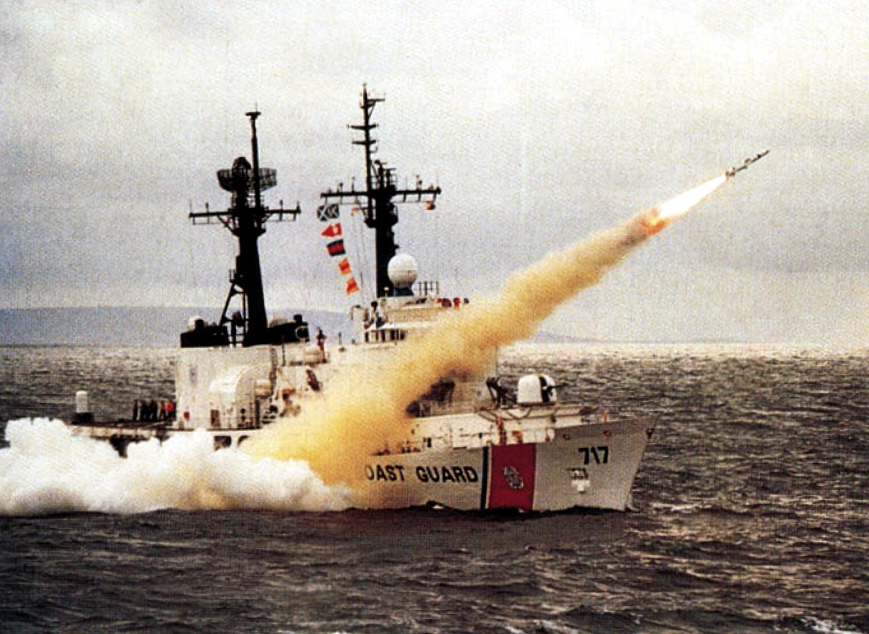
USCGC Mellon seen here launching a Harpoon anti-ship cruise missile in 1990.

After a long period in which she was expected to be transferred to Bahrain, the former USCGC Mellon is now expected to join two of her sisters in service with the Vietnam Coast Guard.

To recap, the twelve Hamilton class cutters, all over 51 years old, are now in service with five nations.

  • The Philippine Navy has three, former USCGC Hamilton (WHEC-715), Dallas (716), and Boutwell (719).
  • The Vietnamese Coast Guard has two, Morgenthau (722) and Midgett (726) and will get Mellon (717).
  • The Nigerian Navy has two, Chase (718) and Gallatin (721).
  • The Sri Lanka Navy has two, Sherman (720) and Munro (724).
  • The Bangladesh Navy has two, Rush (723) and Jarvis (725).

More info including new names here.

Thanks to Mark R. C. for bringing this to my attention.

Upgrades to the Philippine WHECs

BRP Ramon Alcaraz (former USCGC Dallas) equipped with new Sea Giraffe multi-mode radar in Cebu.

NavyRecognition reports, “China Coast Guard try to intercept Philippine Navy’s BRP Andres Bonifacio.” We talked about this incident earlier, but this report also includes information about the upgrades to the former US Coast Guard cutter. We did talk about upgrades earlier, but this has more specifics, particularly in regard to the sonar. All three of the Philippines’ former cutters are being upgraded.

The OPV is equipped with various sensors and processing systems, including the Naval Shield Baseline 2 Integrated Combat Management System, a Saab AB AN/SPS-77 Sea Giraffe AMB 3D air/surface search radar, a Furuno FAR3220BB 25KW X-band navigational radar, a Sperry Mk 92 Mod 1 Fire Control System, and an ELAC Hunter 2.0 hull-mounted sonar.

BRP Andres Bonifacio is armed with a Mk 75 Oto Melara 76mm Compact gun, two Mk 38 25mm autocannons, six M2HB Browning .50 caliber guns, and two USN-Mark 36 SRBOC (Super Rapid Blooming Offboard Countermeasures) mortar-type launching systems.

The combat management system, AN/SPS-77, sonar, and 25mm Mk38 Mod2/3s are all upgrades since the hand-over. I also found some additional information, that also mentioned Radar Electronic Support Measure (R-ESM), a new Identification Friend or Foe (IFF), and the SeaFLIR 230 electro-optical/infra-red (EO/IR) system.

The AN/SPS-77 is also used on Independence class LCS and will equip the US Coast Guard Offshore Patrol Cutter.

The sonar is by a German company and offers mine avoidance and torpedo detection as well as passive and active submarine and UUV detection capabilities. We don’t know which of the various sized transducers associated with this system was chosen. Transducers of 4 kHz to 30 kHz are available that span the range from low frequency long range systems to relatively short ranged high frequency systems. A medium frequency seems most likely.

Some of these upgrades, particularly the multimode radar, support helicopter operations. The Philippine Navy currently has two AW159 Wildcat helicopters with significant ASW and anti-surface capability. So far these are the only Philippine aircraft with an ASW capability and they may be based on other Philippine Navy warships.

The upgrades were done in South Korea. The Philippine military seems to have developed a relationship with South Korea. The Philippine Navy has purchased two 2600 ton light frigates from S. Korea and has contracts out for two 3200 ton corvettes and six 2400 ton 94.4 meter Offshore Patrol Vessels.

The three Philippine ships are probably now the best equipped of the 12 former US Coast Guard 378s currently serving in five different navies and coast guards, but there are still some desirable possible additions, including anti-ship cruise missiles (ASCM), close in weapon systems (CIWS), light weight ASW torpedoes, and towed array sonars.


“Sri Lankan CARAT 2023 Completed” –SeaWaves

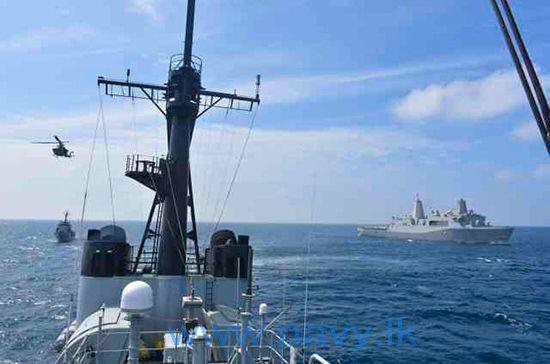
USS Anchorage seen from Sri Lanka’s SLNS Gajabahu. CARAT 2023

SeaWaves Magazine reports,

“Taking part in the sea phase of Cooperation Afloat Readiness and Training (CARAT) exercise 2023, SLNS Gajabahu and SLNS Samudura of the Sri Lanka Navy and ‘USS Anchorage’ of the U.S. Navy successfully conducted a series of naval exercises off Negombo on 22nd and 23rd January 2023.”

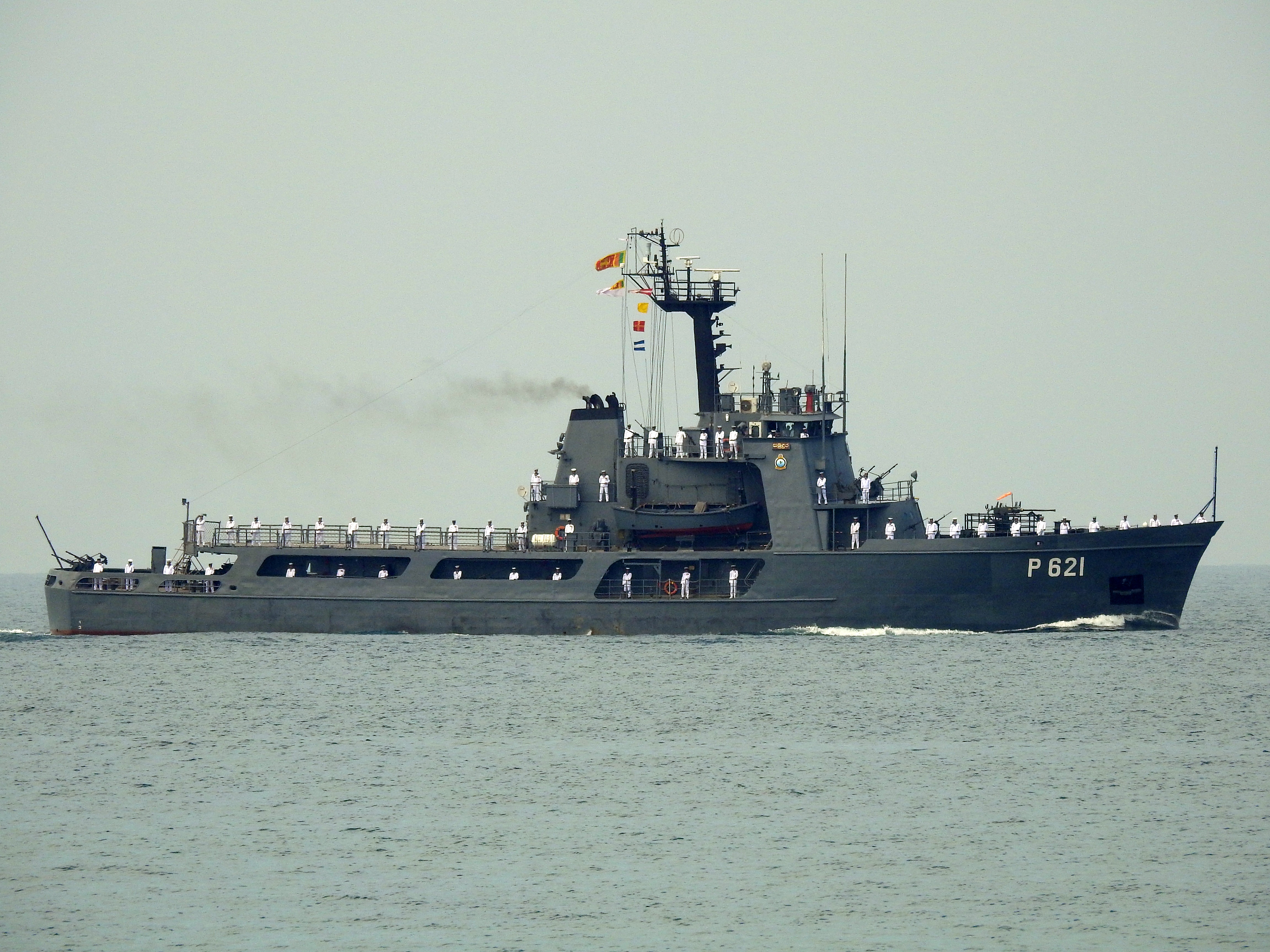
I had to point this out because both Sri Lankan ships mentioned are former US Coast Guard Cutters. SLNS Samudura is the former USCGC Courageous (WMEC-622) transferred to Sri Lanka in 2004 and SLNS Gajabahu is the former USCGC Sherman (WHEC-720) transferred to Sri Lanka in 2018.

Former USCGC Courageous, now SLNS Samudura P621. Photo by Rehman Abubakr

SLNS Gajabahu (P626), SLNS Sayurala (P623) and SLNS Sindurala (P624) during 2022 Colombo Naval Exercise. SLNS Samudura (P261) also visible in the distance. Photo defence.lk