“U.S. Coast Guard Cutter Polar Star completes Operation Deep Freeze 2023 mission, departs Antarctica” –PACAREA

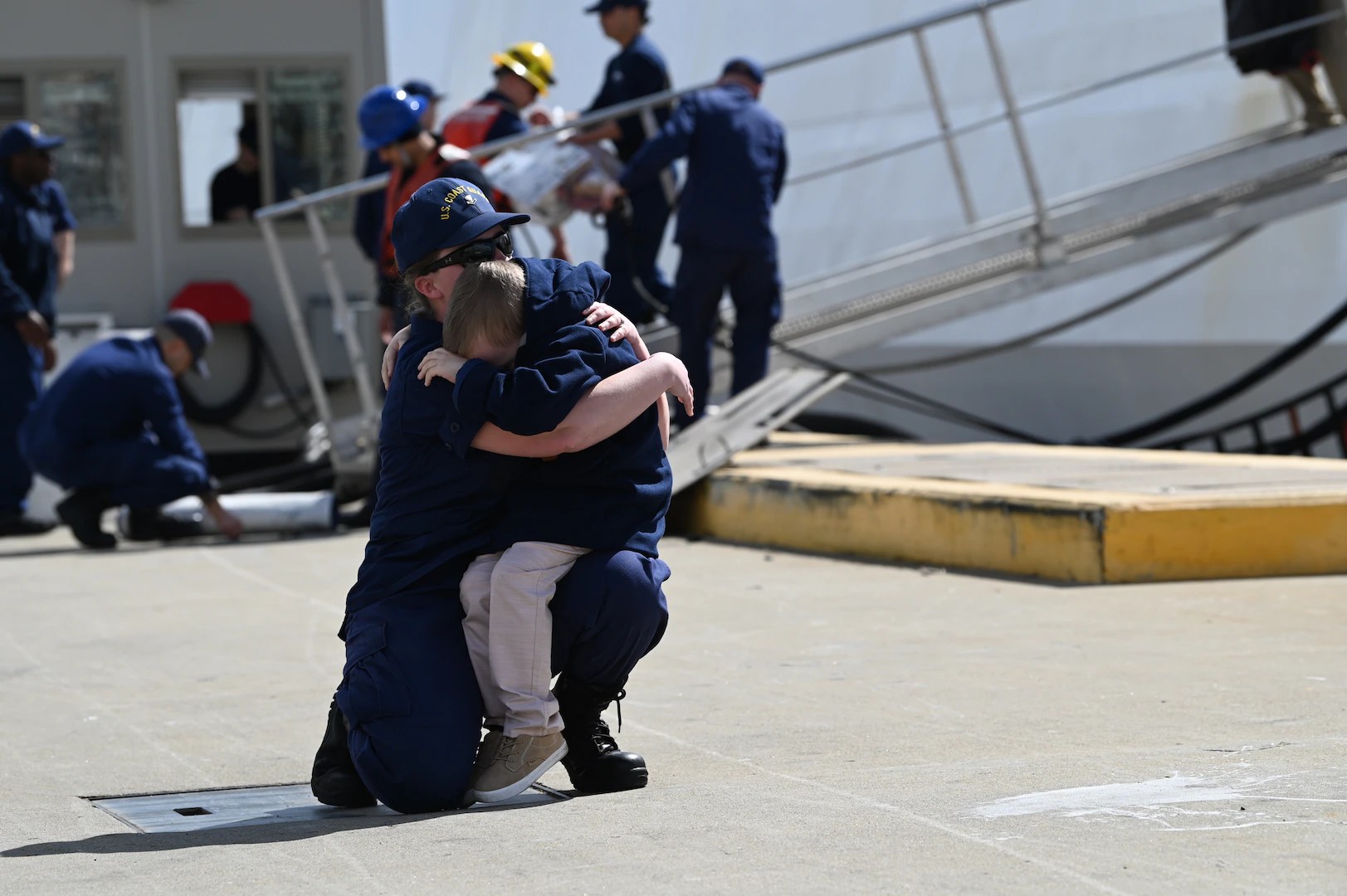
Coast Guard Cutter Polar Star (WAGB 10) visited Palmer Station, a United States research station on the Antarctic peninsula, March 3, 2023, after completing a successful deployment in support of Operation Deep Freeze 2023. This was the Coast Guard Cutter Polar Star’s first visit to Palmer Station in 35 years. Operation Deep Freeze is one of many operations in the Indo-Pacific in which the U.S. military promotes security and stability across the region. (U.S. Coast Guard photo by Petty Officer 3rd Class Aidan Cooney)

Below is a Pacific Area news release. You can also see it here. They do provide more photos. Note while Antarctic sea-ice is generally at a low level, at McMurdo it was unusually heavy.  

March 15, 2023

U.S. Coast Guard Cutter Polar Star completes Operation Deep Freeze 2023 mission, departs Antarctica

The U.S. Coast Guard Cutter Polar Star (WAGB 10) and crew departed the Antarctic region March 2, after 67 days below the Antarctic Circle in support of Operation Deep Freeze 2023.

The Polar Star and crew broke a 17-mile channel through fast ice and conducted over 1,600 hours of ice breaking operations to create a navigable route for cargo vessels to reach McMurdo Station. The Polar Star and crew executed more than 60 hours of ice escorts for cargo vessels through difficult pack ice conditions.

“Though sea ice around the Antarctic continent overall has been determined to be at one of the lowest in recent history, the sea ice in McMurdo Sound was observed to be at the highest concentration on record dating back to at least 2012,” said Lt. Cmdr. Don Rudnickas, the onboard ice analyst. “The pack ice conditions this year were difficult and made icebreaker support critical not only for establishing the fast ice channel, but for the close escort through pack ice of three of the four cargo vessels resupplying McMurdo Station.”

While operating in Antarctica, the Polar Star and crew made two logistical stops at McMurdo Station. After the first stop in McMurdo, the cutter and crew assisted in moving a 30,000-ton aging and degraded ice pier from Winter Quarters Bay to make way for a modular causeway system that was installed for the season. The cutter also provided an ice escort to motor vessel Ocean Giant and crew, who delivered the 65-ton MCS that was offloaded, assembled, and used as a pier to replace the traditional ice pier used for cargo operations.

“The Antarctic region is a harsh and challenging environment to operate in,” said Lt. Cmdr. Benjamin Litts, operations officer. “Despite the inhospitable conditions, our crew adapted and tirelessly performed at the highest level to ensure mission success.”

Before departing the Antarctic Region, the cutter also visited Palmer Station, the United States’ research facility located on the Antarctic Peninsula. Polar Star personnel went ashore to meet with the station manager and staff, tour the facility, and shared camaraderie in one of the most remote regions on the planet. This was the first visit from a U.S. Coast Guard icebreaker to Palmer Station since 1987.

“Ice breaking in Antarctica is a unique and dynamic mission requiring months of preparation and coordination among all our partners,” said Capt. Keith Ropella, commanding officer. “Mission success was a result of our crew working with fellow service members from the U.S. Air Force, Army, and Navy as a Joint Task Force to continue our proud support of the United States Antarctic Program.”

Operation Deep Freeze is the annual logistical support mission provided by the Department of Defense to the National Science Foundation (NSF) managed by the U.S. Antarctic Program (USAP). This includes coordination of strategic inter-theater airlift, tactical intra-theater airlift and airdrop, aeromedical evacuation support, search and rescue response, sealift, seaport access, bulk fuel supply, port cargo handling, and transportation requirements supporting the NSF. This is a unique mission demonstrating U.S. commitment to the Antarctic Treaty and to research programs conducted for the betterment of all humanity. The Polar Star and crew contribute to this yearly effort through icebreaking to clear the channel for supply vessels.

The Polar Star is the United States’ only asset capable of providing access to both Polar Regions. It is a 399-foot heavy polar icebreaker commissioned in 1976, weighing 13,500 tons and is 84-feet wide with a 34-foot draft. The six diesel and three gas turbine engines produce up to 75,000 horsepower.
“Coast Guard Cutter Kimball returns home following Western Pacific patrol” –CG News

Following is from the Coast Guard News Page. Not only does this show the increasing cooperation between the US and Japan coast guards, it also explains how a Barbers Point H-65 made it to Guam. (“U.S. Coast Guard, Guam Fire Department conduct rescue hoist training in Guam” –Forces Micronesia / Sector Guam)

March 14, 2023

Coast Guard Cutter Kimball returns home following Western Pacific patrol

HONOLULU — The Coast Guard Cutter Kimball (WMSL 756) and crew returned to their Honolulu homeport, Friday, following a 42-day, 10,000 nautical mile Western Pacific patrol.

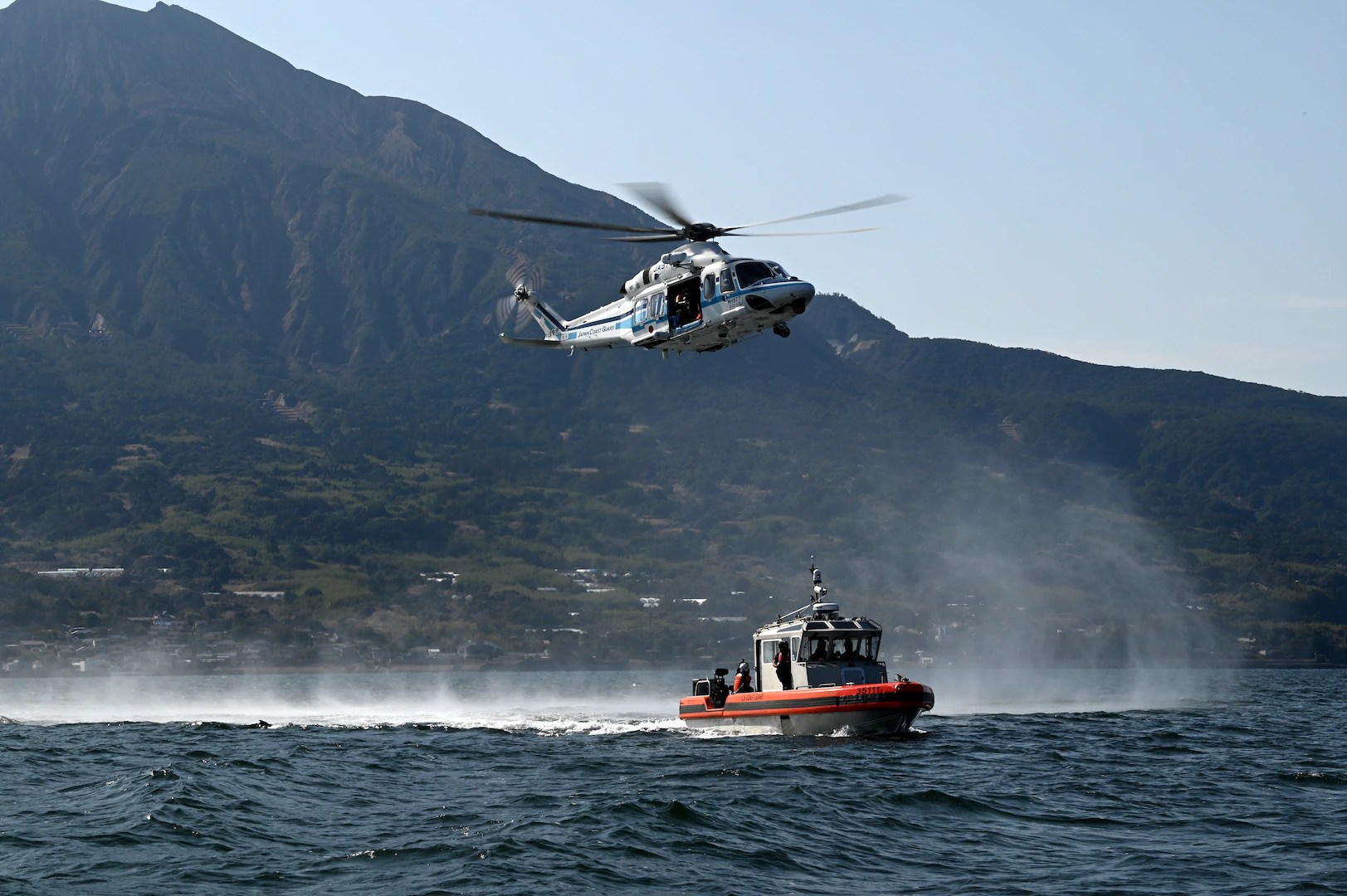
Kimball was the first U.S. military ship in recent history to visit the port city of Kagoshima, Japan, where the crew partnered with servicemembers from Japan Coast Guard’s 10th District to plan and conduct combined operations and search-and-rescue exercises.

Kimball’s crew met with Japan Coast Guard senior leadership and hosted Japan Coast Guard servicemembers, U.S. Consulate Fukuoka staff, community leaders and local media aboard the cutter during the port visit in support of Operation SAPPHIRE.

Operation SAPPHIRE is a joint agreement between the U.S. and Japan Coast Guards signed in 2022 for enhancing cooperation between the two sea services. SAPPHIRE is an acronym for the ‘Solid Alliance for Peace and Prosperity with Humanity and Integrity on the Rule of law-based Engagement.’

“By collaborating with Japan Coast Guard members and conducting evolutions that enhanced communication and inter-operability during the patrol, the crew continued to strengthen a solid foundation for the positive and productive relationship with the maritime service of a like-minded nation,” said Captain Tom D’Arcy, Kimball’s commanding officer.

Kimball’s crew demonstrated proficiency in the ship’s aviation program by working with an air operations inspection team to conduct a biennial Shipboard-Aviation Standardization Inspection (AVSTAN). By achieving their AVSTAN certification, Kimball can continue deploying with aviation detachments during future patrols.

Kimball also supported U.S. Coast Guard efforts to increase its presence in the Indo-Pacific. Kimball’s crew delivered a MH-65 Dolphin helicopter from Air Station Barber’s Point to Santa Rita, Guam, to enable forward operations that extend the service’s air coverage in the region.

During the patrol, the cutter’s engineering department was presented with the Rear Admiral R. S. Lucas Plaque Award for their outstanding contributions to the Coast Guard’s naval engineering program. Members from Kimball’s engineering department were cited for excellence and ingenuity during recent patrols and for completing three extensive industrial periods encompassing significant maintenance, contractual repair projects, and casualty repairs valued at over $4.4 million.

“I am extremely proud of our crew’s accomplishments,” said D’Arcy. “Kimball continues to remain on the front lines of the Coast Guard’s strategic plan. Our engagements in Japan strengthened our existing relationships with international partners who uphold good maritime governance. Kimball’s patrol re-affirmed the U.S. Coast Guard’s commitment to facilitating a free and open Indo-Pacific.”

Commissioned in 2019, Kimball is the Coast Guard’s seventh national security cutter and one of two homeported in Honolulu. National security cutters are 418-feet-long, 54-feet-wide and have a displacement of 4,500 long-tons. With a range of 12,000 nautical miles, the advanced technologies of Legend-class national security cutters are designed to support the national objective to maintain the security of America’s maritime boundaries and provide long range search-and-rescue capabilities.

Sea Air Space 2023

Photo of a model of Halter Marine’s Polar Security Cutter seen at Navy League’s Sea-Air-Space 2021 Exhibition have surfaced. Photo credit Chris Cavas.

The Navy League’s annual maritime exposition, Sea-Air-Space 2023, is scheduled for April 3-5, 2023, at the Gaylord National Resort & Convention Center. National Harbor, Maryland.

The Coast Guard will be well represented. In addition to featured presentations by the Commandant, LANTAREA, and RAdm Jay C. Vann, Commander of CG Cyber Command, CG-9 has a list of 14 Coast Guard presentations (scroll down the linked page) scheduled for the Coast Guard booth, #107, with additional descriptions. Topics, presenters and times are:

Monday, April 3, 2023

  • USCG Risk Mitigation through Sustainable Aviation Fuel, Julie Berens, Energy Reliability technical warrant holder, Sam Alvord, chief, Office of Energy Management, 10:30-11 a.m.
  • Oil Spill Response – Tech Efforts on the Horizon, Kirsten Trego
    Deputy, Office of Marine Environmental Response Policy, 11-11:30 a.m.
  • Evaluating Search Effectiveness: Keeping Pace with Technology? Cmdr. Matthew J. Mitchell, Chief, Office of Search and Rescue 11:30 a.m.-noon
  • Interview with the USCG Deputy Commandant for Mission Support, Vice Adm. Paul F. Thomas, Deputy Commandant for Mission Support, 1:30-2 p.m.
  • Robotic Process Automation, Dr. David F. Wiesenhahn, Modeling and Simulation domain lead, Office of Research, Development, Test & Evaluation and Innovation, 2-2:30 p.m.
  • Counter Unmanned Aircraft Systems, Capt. Eric M. Casper, Chief, Office of Specialized Capabilities, 2:30-3 p.m.

Tuesday, April 4, 2023

  • Interview with the USCG Commander of the Atlantic Area, Vice Adm. Kevin E. Lunday, Commander, Atlantic Area and Defense Force East, 9:30-10 a.m.
  • Interview with the USCG Commander of the Pacific Area, Vice Adm. Andrew J. Tiongson, Commander, Pacific Area and Defense Force West, 10-10:30 a.m.
  • USCG: A Globally Deployed Cutter Fleet, Capt. John J. Driscoll, Chief, Office of Cutter Forces, 10:30-11 a.m.
  • Data & Artificial Intelligence at Scale in the USCG, Capt. Brian C. Erickson, Chief Data Officer, 11-11:30 a.m.
  • The Coast Guard and the Future of Maritime Domain Awareness, Capt. Thom C. Remmers, Unmanned Systems Cross-Functional Team Lead, Assistant, Commandant for Capabilities, 11:30 a.m.-noon
  • Recapitalization of C5I Onboard USCG Cutters, Capt. Vincent J. Skwarek, Assistant Program Executive Officer for C5I and Chief of C5I Acquisitions, 1:30-2 p.m.
  • Coast Guard Requirements, Capt. Brad E. Apitz, Chief, Office of Requirements and Analysis, 2-2:30 p.m.
  • How to Partner with the Coast Guard Research and Development Center, Dr. Joseph Direnzo III, Director of Research Partnerships/Public Affairs Officer,
    2:30-3 p.m.


“‘Protect. Defend. Save’: Coast Guard Launches New Recruiting Initiatives to Attract Members” –Military.Com

(U.S. Coast Guard illustration)

Military.com has a post about the Coast Guard’s new recruiting initiative including the new logo above.

I really like the closing paragraphs,

To continue to provide a high level of operations, Fagan said, the service will need a 3% to 5% budget increase each year, which means, by 2033, the Coast Guard would be a “$20 billion a year organization.”

“I’m certain you will not find a better return on investment for the American people,” Fagan said.

Choice of words is important. Defend and perhaps protect, suggest to me, more emphasis on the Defense Readiness mission. Wonder if that was really the intention?

“U.S. Coast Guard Is Helping Southeast Asians Protect Their Seas” –Foreign Policy

U.S. Coast Guard Forces Micronesia Sector Guam Commander Capt. Nicholas R. Simmons and the Honorable Joses R. Gallen, Secretary of Justice, Federated States of Micronesia, signed an expanded shiprider agreement allowing remote coordination of authorities, the first of its kind aboard the USCGC Myrtle Hazard (WPC 1139) in Guam, on Oct. 13, 2022. The agreement will enable to U.S to act on behalf of the FSM to combat illicit maritime activity and to strengthen international security operations. (U.S. Coast Guard photo by Chief Warrant Officer Sara Muir)

Foreign Policy reports,

 “…the United States has increasingly looked to its Coast Guard as an option to assist regional states with their maritime challenges, advance security partnerships, and serve as a potent soft-power tool. As agencies focused primarily on law enforcement and safety, coast guards are perceived as an increasingly useful regional tool because they can assert national interests without being overtly militaristic and escalatory.”

The post is an excellent look at what the Coast Guard has been doing in the Western Pacific as well as the challenges of dealing with the tyranny of distance. There is not a lot here we have not heard, but there are several links to earlier documentation. This one is interesting, and we did not discuss it earlier, “Rebalance U.S. Coast Guard Cutters to Help Advance a ‘Free and Open’ Indo-Pacific.”

There is reference to the Medium Endurance Cutter to be deployed to the Western Pacific that may clarify its mission.

“The narratives surrounding these commitments have strongly focused on the deployment of Coast Guard cutters. One of the key announcements regarding the Coast Guard at the U.S.-ASEAN summit, for example, was that a Coast Guard vessel would be assigned to the region to operate as a “training platform,” providing multinational crewing opportunities and participating in cooperative maritime engagements.”

“Iran Reveals World’s First Air Defense Small Boat” –Covert Shores

Camera drone’s-eye view of IRGC boats on display, March 2023. A) The air defense boat. B) Light missile boat with Bladerunner hull. C) light missile boats on Interceptor hull. D) light missile boats on Interceptor hull (alternative design). E) Missile boat, with type of missile unclear. F) RIB, possibly explosive boat or uncrewed. G) RIB with lightweight anti-ship torpedoes, can be carried aboard a Shahid Soleimani-class missile corvette. H) Interceptor boat. I) Interceptor boat with new type of missile.

Covert Shore has a post about a new Iranian Revolutionary Guard Corps (IRGC) Navy boat armed with vertical launch anti-aircraft missile, believed to be the first such craft in the world, but I found the photo above and the accompanying caption particularly interesting.

These are far different from the familiar, prototypical IRGC boats armed with a single machine gun and a few unguided rockets.

“U.S. Coast Guard, Guam Fire Department conduct rescue hoist training in Guam” –Forces Micronesia / Sector Guam

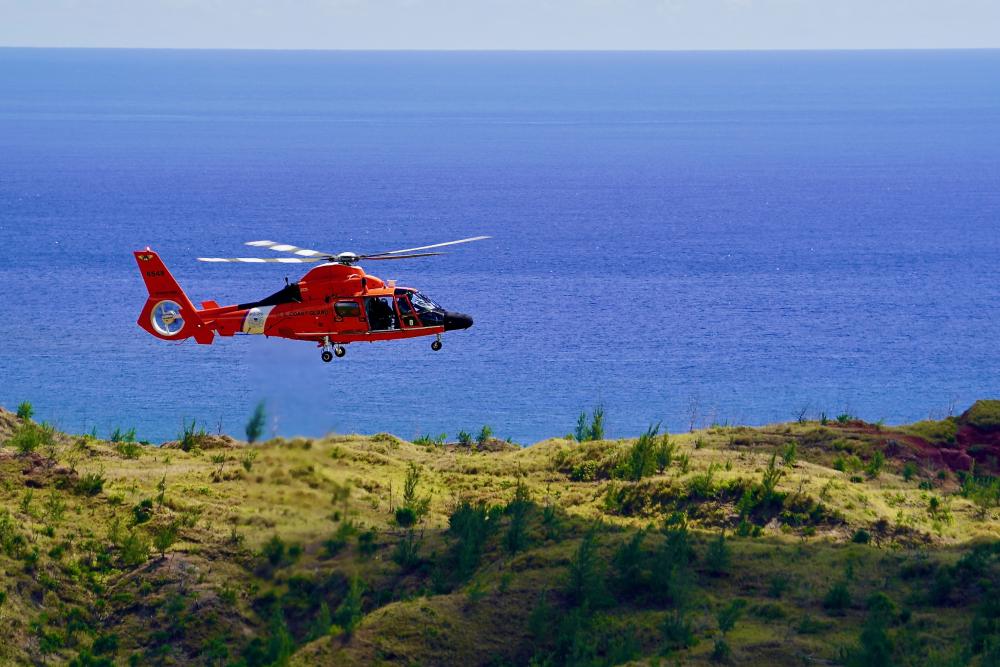
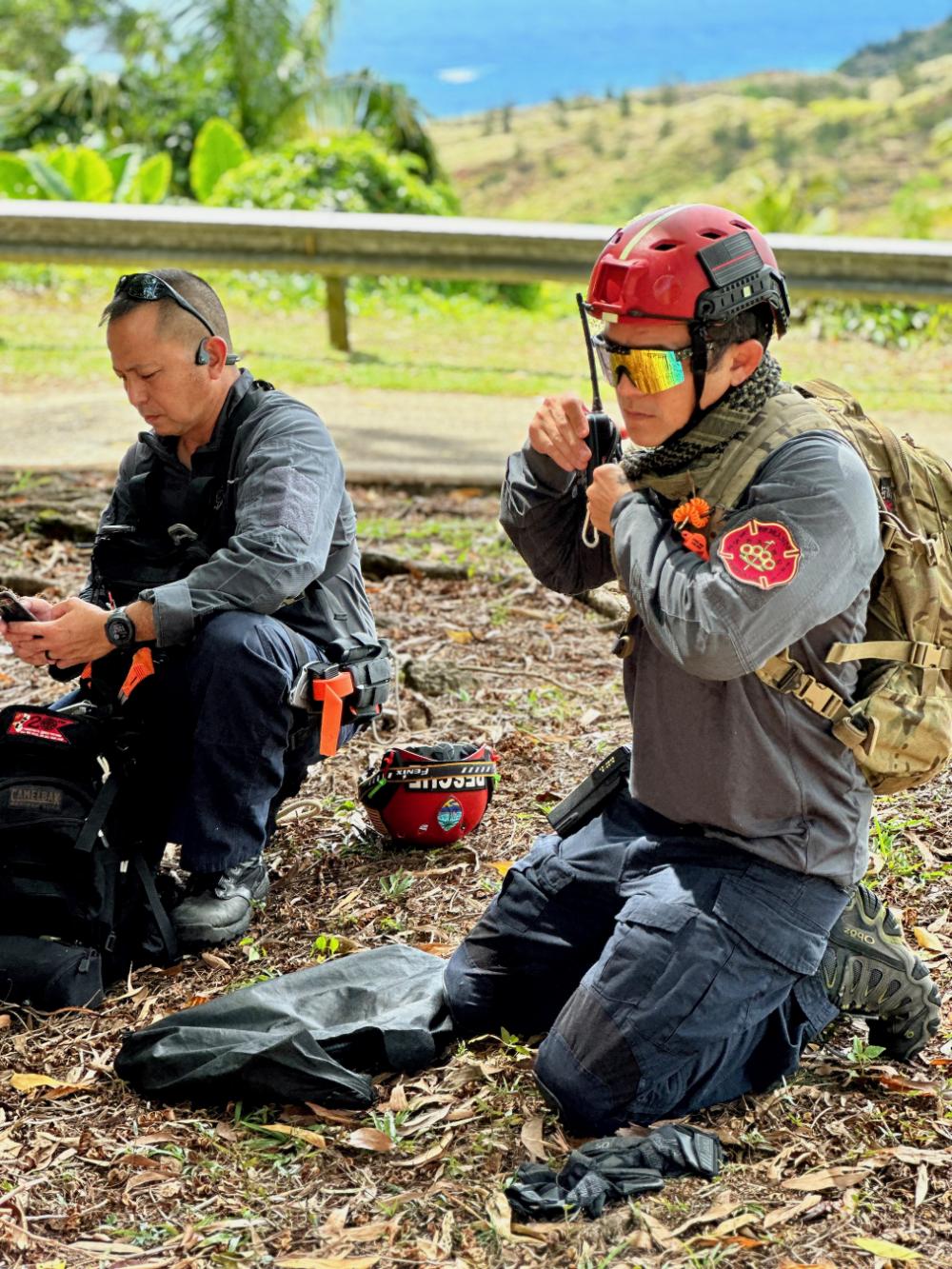
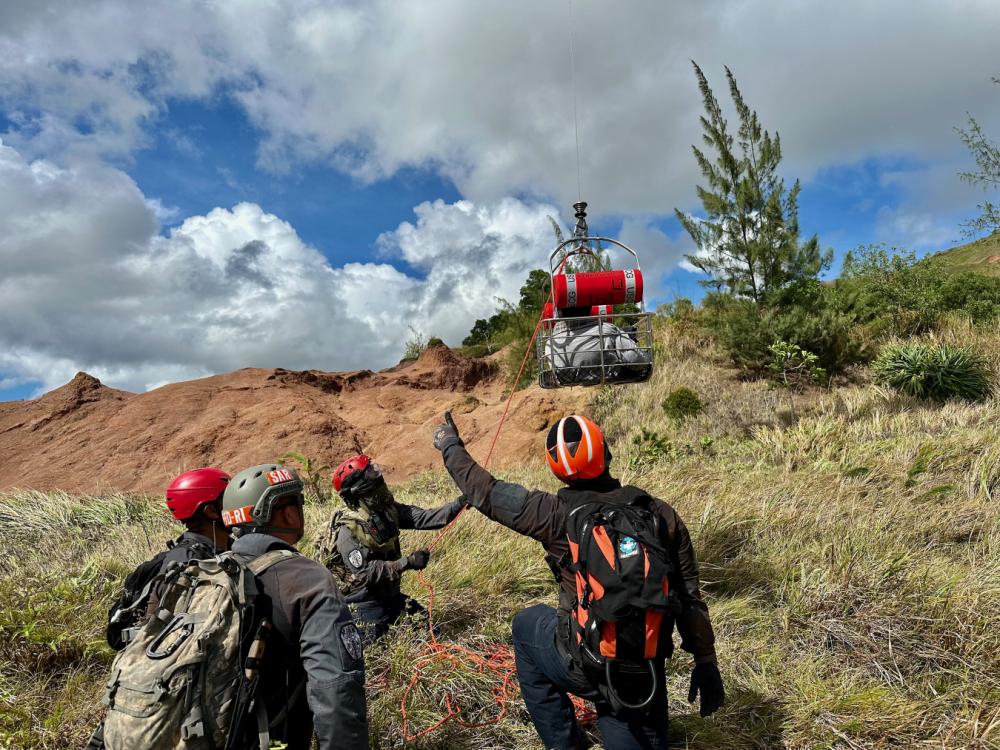
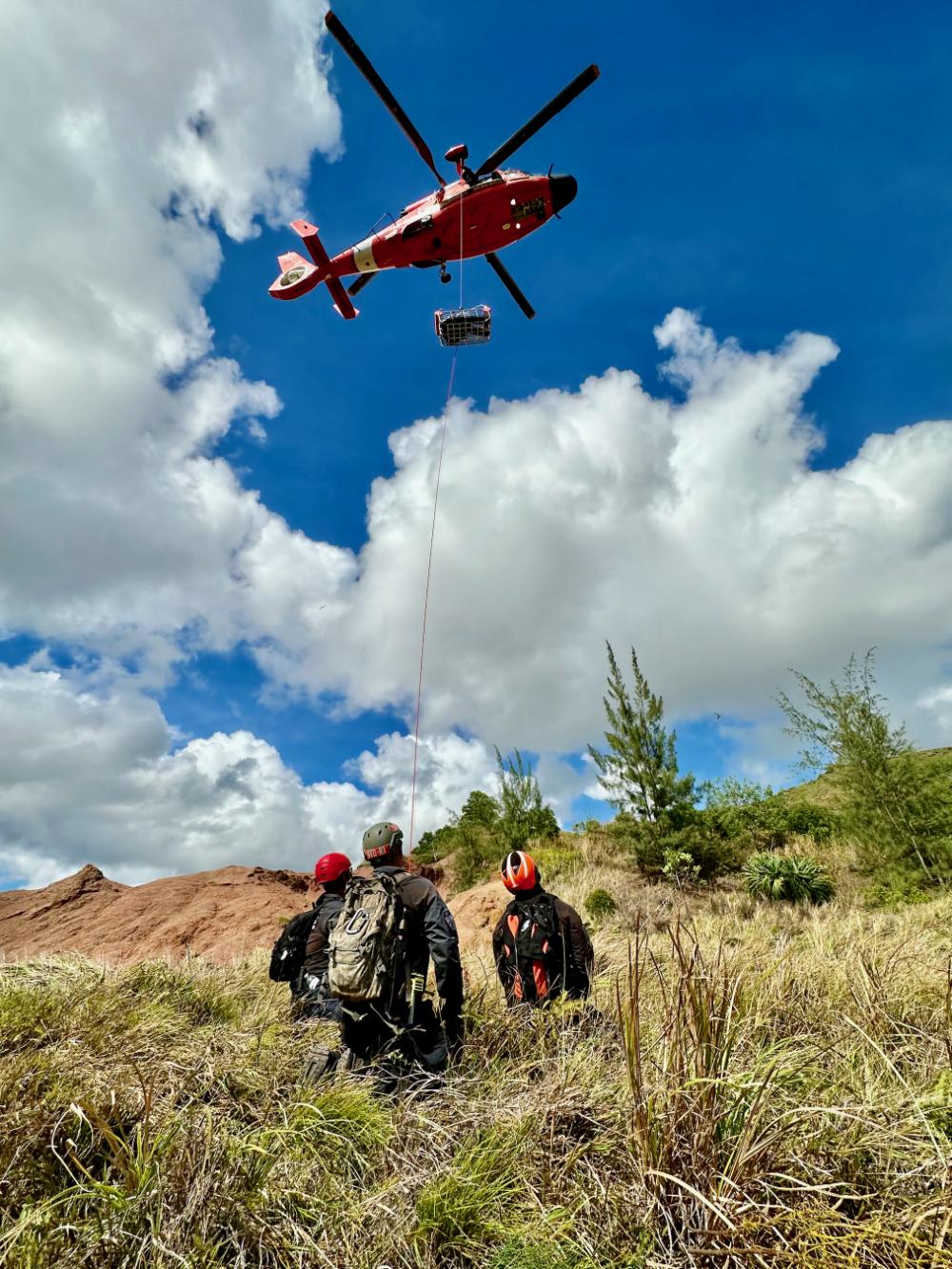
Guam Fire Department and U.S. Coast Guard members conduct rescue hoist training at Sella Bay Overlook in Guam on March 8, 2023. The exercise allowed the crews to assess the procedures each agency is familiar with and practice hoisting a rescue basket and a rescue swimmer from the aircraft. For the aircrew, it also served as an area familiarization to better understand the terrain and winds common on Guam’s southwest coast. (U.S. Coast Guard photo by Petty Officer 2nd Class Ethan Bray)

The news release below is surprising and raises some questions. A helicopter from Barbers Point, Hawaii conducts training with the Guam Fire Department. How did the Helicopter get there? There is currently no Coast Guard airstation in Guam. A Navy helicopter squadron provides SAR coverage for Guam, so what was the point? Is the Coast Guard going to establish an aviation facility of some kind in Guam?

News Release

U.S. Coast Guard Forces Micronesia / Sector Guam

U.S. Coast Guard, Guam Fire Department conduct rescue hoist training in Guam

An MH-65 Dolphin helicopter crew deployed to Guam from U.S. Coast Guard Air Station Barbers Point in Hawaii flies patterns to assess winds and terrain before conducting rescue hoist training at Sella Bay Overlook in Guam on March 8, 2023. Members of the Guam Fire Department prepare to hike down from Sella Bay Overlook for rescue hoist training in Guam with a deployed MH-65 Dolphin helicopter crew from Hawaii on March 8, 2023.  Guam Fire Department and U.S. Coast Guard members conduct rescue hoist training at Sella Bay Overlook in Guam on March 8, 2023.  Guam Fire Department and U.S. Coast Guard members conduct rescue hoist training at Sella Bay Overlook in Guam on March 8, 2023.

Editor’s Note: Click on the images above to view more or download high-resolution photos and b-roll videos.

SANTA RITA, Guam — Guam Fire Department and U.S. Coast Guard members conducted rescue hoist training at Sella Bay Overlook in Guam on March 8, 2023.

“We appreciate the ongoing strong relationship with Guam Fire and are eager to bring any capability to bear that benefits the people of Guam and our partners,” said Capt. Nick Simmons, commander of U.S. Coast Guard Forces Micronesia/Sector Guam. “As the U.S. Coast Guard continues to adapt our approach to service in the region, we are working closely with U.S. Coast Guard District 14 and the team from the Air Station at Barbers Point to find the best ways to employ our aircrews and increase the amount of organic aviation support we have for search and rescue and law enforcement missions here.”

Eight members of GFD’s Battalion A worked with the aircrew of an MH-65 Dolphin helicopter deployed to Guam from U.S. Coast Guard Air Station Barbers Point in Hawaii and personnel from the U.S. Coast Guard Forces Micronesia/Sector Guam response department. Guam Fire Department crews execute the majority of on-land search and rescue operations. They also maintain the best capability for on-land response with a wealth of experience regarding the terrain and conditions.

“Our partnership with the U.S. Coast Guard on Guam has expanded dramatically over the years. The increase in U.S. Coast Guard assets assigned to Guam extends our potential for positive outcomes in search and rescue missions benefiting our island community,” said Battalion Chief Roderick Meno, GFD rescue commander. “The opportunity to train together provided an avenue to test capabilities and share best practices. The U.S. Coast Guard helicopter’s availability gives us another valuable resource to conduct the diverse array of missions we perform here on Guam.”

The training allowed the crews to assess the procedures each agency is familiar with and practice hoisting a rescue basket and a rescue swimmer from the aircraft. For the aircrew, it also served as an area familiarization to better understand the terrain and winds common on Guam’s southwest coast. This training occurred near the location of a recent case of a missing hiker, a common place for foot traffic. The trail quickly descends from the trailhead into the jungle with steep ravines and many trip hazards, and it is very hot whether people are under tree cover or exposed to the sun. The conditions may easily overcome inexperienced hikers.

The MH-65 Dolphin helicopter is a short-range recovery helicopter used by the crew to perform search and rescue, law enforcement, and homeland security missions. It is certified for all-weather and night-time operations, except for icy conditions, and it routinely deploys aboard certified cutters providing manned airborne surveillance and interdiction capabilities. The airframe was first added to the Coast Guard inventory in 1984 and has undergone several upgrades.

In recent memory, these operations mark the first deployment of a Dolphin helicopter crew to Guam. The District 14 assigned aircraft are primarily used as a search and rescue platform in the Main Hawaiian Islands and as an augment aboard major cutters on deployment to extend their range for search and rescue, law enforcement, and surveillance while at sea. The aircrews frequently participate in community relations events and subject matter exchanges to build awareness for service capabilities and encourage interest in the aviation career field.

“This asset is not a replacement for any other agency but another resource to help us accomplish our missions and serve the people of Guam and the Commonwealth of the Mariana Islands,” said Simmons. “They are currently here on a six-week deployment as we field test the feasibility of their operating here in a greater capacity. This approach is an innovative way to employ aircrews in the Indo-Pacific for increased presence and value. We hope to get them out here more frequently and are pleased to have the support of the Air Station and the District 14 command.”

The operations have precedent. In 1947 the service established a Coast Guard air detachment consisting of one PBY-6A Catalina, an amphibious aircraft, and crew at the Naval Air Station in Agana, Guam, to provide aerial logistics support for LORAN stations in the southern Marianas and Western Caroline Islands. The Catalina was well suited to operations in the islands, able to haul cargo but also land in the shallow lagoons and offload to skiffs. The primary mission of the air detachment was to resupply the Marianas section LORAN stations, although they did assist in search and rescue missions when needed. The need for Coast Guard air support decreased as the LORAN mission shifted over time and commercial aviation services became more readily available. The Coast Guard air detachment, by then called an air station, was disestablished in 1972.

U.S. Coast Guard Forces Micronesia/Sector Guam comprises nearly 300 personnel throughout the response, prevention, administrative, and logistics departments supporting the Joint Rescue Sub-Center, three fast response cutters, a small boat station, and a marine safety detachment in Saipan. The unit provides a significant portion of the U.S. Coast Guard’s enduring regional presence serving the people of the Pacific by conducting our six major operational mission programs: maritime law enforcement, maritime response, maritime prevention, marine transportation system management, maritime security operations, and defense operations.

For more U.S. Coast Guard Forces Micronesia/Sector Guam news, visit us on DVIDS or subscribe! You can also visit us on Facebook or Instagram at @USCGForcesMicronesia or Twitter @USCGFMSG. 

“Coast Guard Commandant delivers her first State of the Coast Guard Address” –YOUTUBE

Above is a video of the Commandant’s State of the Coast Guard. It’s definitely worth a listen. I think I am becoming a fan.

Sounds like she is proceeding with procurement of a Great Lakes Icebreaker.

The Coast Guard is getting Coast Guard doctors (vs Public Health Service).

Three new teams are being stood up: a talent management task force, a data analytics team, and a West Coast cyber protection team.

Looking at the newly available option of passing going before a promotion board, when an officer has to make that decision, it would be good to know what instructions are being given to the promotion board.

In fact, why does failure to be promoted automatically mean you are out? Shouldn’t it be the service’s decision whether the officer should be retained. Perhaps an automatic continuation board for those who are not promoted with the option of permitting continued service.

A New Website on the Recommended Blog Page and Feedback for Coast Guard PAOs

It seems recently press releases from the Coast Guard have been coming out in a different format. There is a brief description of the story and a link to the full story on the “United States Coast Guard News” page.

The USCG NEWS page is not really new. Stories there go back to 31 August 2022, but somehow, I had not recognized its reemergence. I like it and have added it to my list of recommended blogs. It is searchable by keyword, region, and date.

I would like to make a comment on the format used on the news page. Got a news release pointing me to this story on USCGC Munro’s return to Alameda after a 105 day Winter Alaska Patrol. There are eleven photos that accompany the story, but when I down loaded the one above you will note, that there is no caption, no identification as a  “US Coast Guard photograph,” and no credit for the photographer.