The US Naval Institute’s News Service reports the availability of a new document, “Office of Naval Intelligence’s Chinese People’s Liberation Army Navy, Coast Guard. and Government Maritime Forces 2022-2023 Recognition and Identification Guide.
You cannot actually read much of it on the USNI site, but you can download a copy here. You’ll need to expand it to read much of the information.
From a Coast Guard perspective, there are a couple things to note.
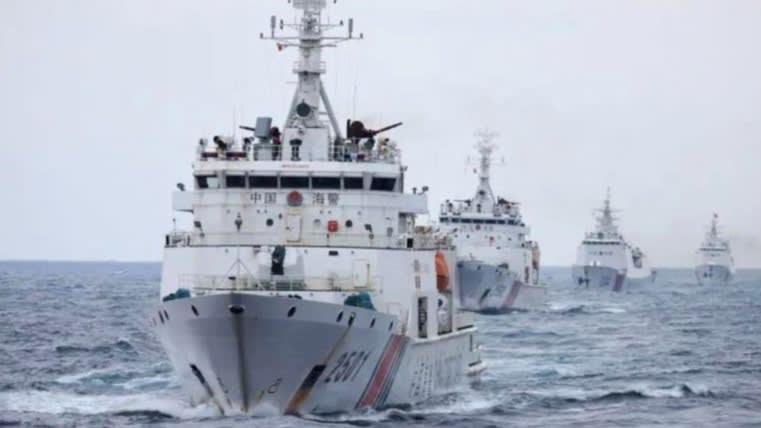
First is the sheer number of China Coast Guard cutters. China’s internationally recognized EEZ is less than 8.5% that of the US. Even if their expansive unrecognized claims were included, their total EEZ would be less than 20% that of the US. But according to the guide, they have over 200 cutters of 60 meters (197 feet) in length or greater (225 by my quick count). The US Coast Guard by comparison has 57: 37 patrol cutters, three icebreakers, 16 buoy tenders, and the barque Eagle.
Second, China has other agencies that apparently do coast guard work, that also have their own ships including the Sansha City Patrol, China, and the Maritime Safety Agency which, alone, has over 40 ships 60 meters or greater in length.
The Coast Guard had only a minor role in this incident, but it does concern deck seamanship.
It also seems, the Navy is not holding itself to Coast Guard established industry standards and consequently may be putting the passengers, staff, and crew in unnecessary danger.
The commentator on the video is well qualified so his comments should be taken seriously.
This class is now very old. It is probably time for it to be replaced with ships that are better thought out.
This weapon might have a place as a replacement for the big guns that once provided Naval Gun Fire Support. It also has potential as an anti-ship weapon.
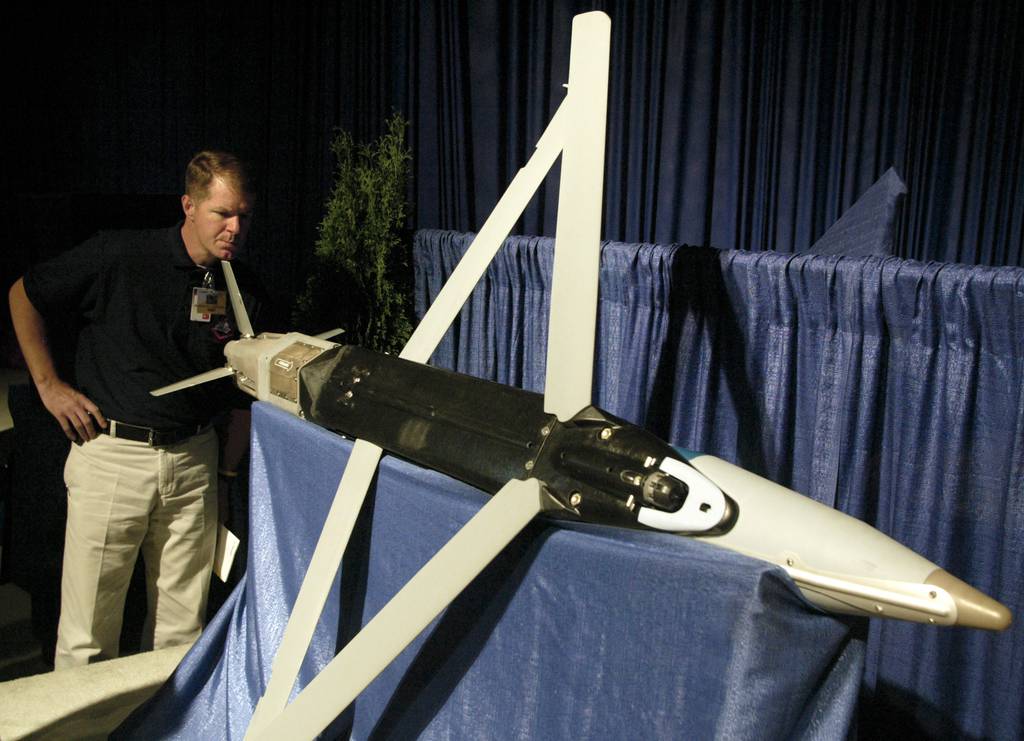
The system consists of a hybrid of a normally air launched, precision guided, winged bomb, the “small diameter bomb,” flung into the air by a rocket booster used in an early Multiple Launch Rocket System (MLRS) munition, the M26.
The M26 was the first rocket developed for the Multiple Launch Rocket System (MLRS). It is spin-stabilized by 4 fins, has a range of 32 km (20 miles) and is armed with 644 bomblets, anti-personnel/anti-materiel grenades. These bomblets have fallen out of favor because the dud rate creates potential for collateral damage that may occur long after the conflict that prompted their use. To create the Ground Launched Small Diameter Bomb, the grenades are replaced by a Small Diameter Bomb.
A guest inspects a new Boeing small-diameter bomb (SDB) in it’s flight configuration at the roll-out ceremony Monday, May 22, 2006, in St. Charles, Mo. (Tom Gannam/AP)
Small Diameter Bombs:
There are four different “Small Diameter Bombs”:
The Boeing GBU-39B which is guided to a known geographic location by a GPS-aided inertial navigation system. Weight: 285 lb (129 kg). Length: 70.8″ (1.8 m). Width: 7.5″ (190 mm). Cost: $39,000 (2021)
The GBU-39B/B Laser SDB which adds semi-active laser homing, the ability to home on a target identified by a laser designator.
The Raytheon GBU-53B SDB II “StormBreaker” which also includes a tri-mode seeker (millimeter wave radar, infrared homing, and semiactive laser guidance) that allows it to be used against moving targets in any weather. Weight: 204 lb (93 kg). Length: 69″ (1.76 m). Diameter 7″ (180 mm). Cost $195,000 (2021).
“The bomb can use GPS/INS to guide itself into the general vicinity of a moving target during the initial search phase, with course correction updates provided using a Link 16 over UHF data link…The weapon is capable of fusing the information from the sensors to classify the target and can prioritize certain types of targets as desired when used in semi-autonomous mode.”
How does it compare to Naval Guns?:
These are small bombs, developed to increase the number of precision munitions an aircraft can carry in a single sortie. Four of these replace a single 2,000 pound bomb.
SDBs are small bombs but compared to most naval guns, they pack a pretty big punch. Because of their precision, the relatively small bomb is still adequate to destroy many targets including tanks, aircraft shelters, bunkers, and strong points.
“Warhead penetration is 3 ft (1 m) of steel reinforced concrete under 3 ft of earth and the fuze has… selectable functions, including air burst and delayed options.”
The GBU-39’s 36 pound bursting charge is 50% larger than that of the last 8″ projectiles used by the US Navy and more than four and half times that of current 5″ projectiles. (The bursting charge in the 16″ High Cap projectiles fired by Iowa class battleships was only 153.6 lbs. (69.67 kg)).
Perhaps most importantly, this weapon out-ranges all existing naval guns with a range of 150 km / 81 nautical miles.
Why it will be difficult and expensive to shoot down:
Now anything can be shot down, from artillery and mortar rounds to ICBMs. Because these are glide bombs it might be assumed they would be easy to shoot down, but that is not necessarily the case. Their small size means they have a small radar cross section. Because they are a glide bomb, unlike aircraft or cruise missiles, they have little or no IR signature. That means they are not good targets for IR homing missile such as man portable air defense systems (MAPADS). Because the round is maneuverable, there may be opportunities to avoid heavy concentrations of AA.
It is probably going to require high quality AAW missiles to bring one of these down, meaning the cost exchange is likely to be favorable for the SDB. Being cheap they can be traded off against the more expensive missiles required to bring them down, depleting the enemies air defenses. That could result in making it safer for our manned aircraft.
Why not let Naval Air just drop the Small Diameter Bombs:
That is certainly an option, but if surface launched Small Diameter Bombs are available it can free aircraft for more demanding missions like air superiority and suppression of air defenses. Surface launched SDBs and aircraft could be complementary,
There is also the possibility that the carrier(s) may be called away or their flight deck might be damaged precluding air ops.
Where could we mount them?:
The video shows a six-tube launcher inside what is almost certainly a 20x8x8 foot container. That suggests that there are many options available including multiple launcher installations on Offshore Support Vessels, either manned or unmanned as well as many existing vessels.
As defensive weapons, the widespread use of 20x8x8 containers means that it is going to be very hard to single out those that mount these weapons. A “shell game” can make them very difficult to recognize and neutralize.
The Cost Exchange Ratio:
What makes these a game changer? It is the precision and range combined with its low price. The War in Ukraine has shown the rapid expenditure of munitions. There is a need for weapons with longer range and greater survivability, but they will cost much more. We cannot afford to expend weapons that cost millions on every target. There are times when it is necessary to expend an expensive weapon on a far less expensive target, but that can’t become the norm. We need weapons that can be produced in huge numbers at a reasonable cost.
Now About Taiwan:
If the Chinese are to invade Taiwan, it will be comparable in scope to the Normandy Invasion. The Chinese Navy can transport only a small percentage of the troops that would need to land on the first day of the invasion. They will need to mobilize a very large number of civilian craft including ferries and fishing boats to transport the number of troops that will be required.
If the Taiwanese are to stop the invasion, they are going to have to sink a very large number of craft as they transit the Taiwan Strait. (The Strait is 130km wide at its narrowest point.) Most of these craft will be relatively small and have little or no self-defense capability.
Using the GBU-53B, with its tri-mode seeker, the Ground Launched Small Diameter Bomb appears ideal for this purpose. Given the bombs, the Taiwanese could probably quickly devise an even longer-range booster and launcher.
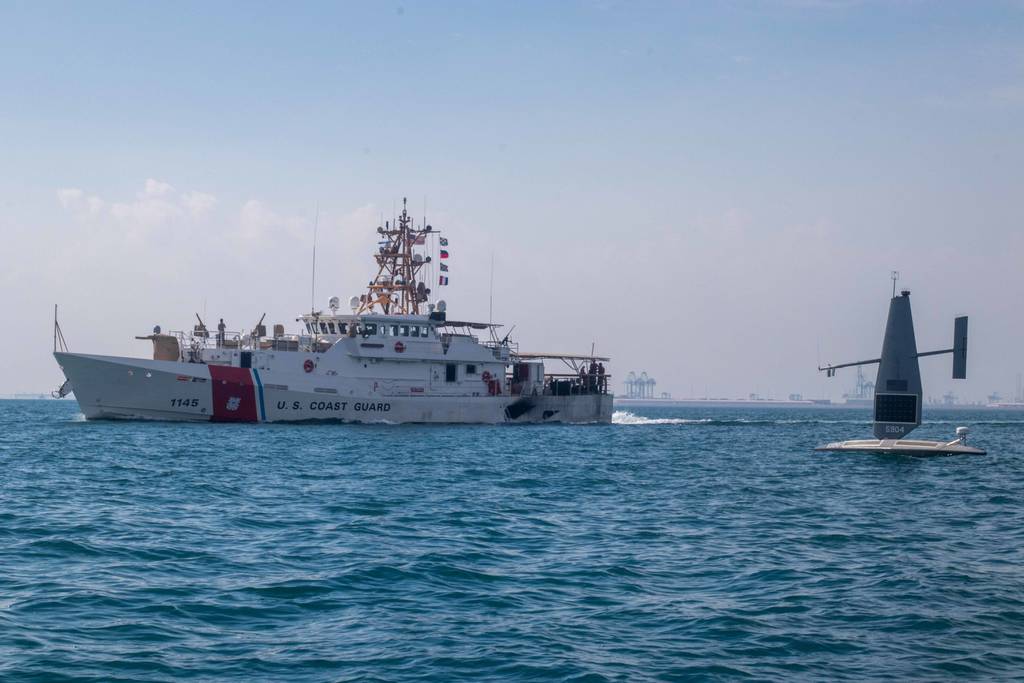
A Saildrone Explorer unmanned surface vessel operates alongside U.S. Coast Guard fast response cutter USCGC Emlen Tunnell (WPC 1145) in the Arabian Gulf, Nov. 29, during Digital Horizon 2022. (Sgt. Brandon Murphy/US Army)
“We have done a lot of work with AI previously, and we’ve done computer vision, we’ve done anomalous behavior detection, we’ve done AI-enabled [command and control], but we’ve done all of those separately,” the commodore explained. “At Digital Horizon, for the first time ever, we did that together on a single stack, and that’s all integrated on a single pane of glass.”
There is also confirmation here that a similar effort will be going into 4th Fleet (Latin American/Caribbean Waters); that it will involve partner nations; and that it will look at IUU fishing as well as drug interdiction.
Fortunately, it looks like Coast Guard personnel and assets have been intimately involved in this effort and it looks like it will benefit our Maritime Domain Awareness (MDA) efforts.
(Will the Coast Guard’s next class of ships be USV tenders?)
U.S. Coast Guard Cutter Munro and Japan Coast Guard Patrol Vessel Large Aso, transit together in formation during a maritime engagement in the East China Sea Aug. 25, 2021. U.S. Coast Guard members aboard the Munro deployed to the Western Pacific Ocean to strengthen alliances and partnerships and improve maritime governance and security in the region. (Photo courtesy of Japan Coast Guard)
“…With the Gray Zone, you can’t have enough [U.S.] Coast Guard forward,” said VADM Thomas responding to a question regarding partnering the U.S. Coast Guard with the U.S. Navy. “They’ve been great partners [the U.S. Coast Guard] and they’ve been pushing forward as much as they can, and I think it’s a capacity issue (but the right tool for the job)” since the U.S. Coast Guard works with the INDO-PACOM ally nations’ coast guards.
Defense News reports, on the convoluted process that has blocked Congress from getting a report from the Marine Corps regarding how much amphibious lift they think they need.
Apparently, the Congress has taken steps to ensure that they don’t get stonewalled and that they get an answer directly from the source.
This does not look Coast Guard related except that it seems the same thing is happening to Congressionally mandated reports from the Coast Guard.
There have been other mandated reports that seem to have been ignored, but there is one I think particularly important. The original Fleet Mix Study was completed in 2009 but was not made public until 2012 after a revision in 2011. For years the Congress has been asking for an update. Like in the case of the Marines need for amphibious lift, this is a force structure question, and the silence has been deafening.
We have not had a new evaluation of Coast Guard force structure for over eleven years. Considering how Coast Guard operations have changed in the last decade, the emergence of new threats (like unmanned systems), new opportunities (like unmanned systems), and the experience we have gained with the National Security Cutters and the Fast Response Cutter operation, is that wise?
Congress needs to be equally assertive about hearing what the Coast Guard needs to do its missions and insist that the result not be filtered by the Department.
Once the desired level is established, certainly, questions will be raised. Limitations will emerge. Study assumptions will be questioned. Affordability will have to be addressed, but we need to start with an attempt at an honest and comprehensive assessment of requirements. We saw the GAO critique the Coast Guard’s shipbuilding program as unachievable because the required budget was larger than it had been historically. That is certainly a factor, but it needs to be considered in the light of objectives and a history of neglect.
Force study evaluations should be an iterative process repeated at least every four years to inform the actions of succeeding administrations both within the service and within government.
Coast Guard Day in the South Pacific. The command from USCGC Walnut (WLB 205) conduct an exchange with peers on HMNZS Otago (P148) discussing mission, challenges and comparing shipboard life in the region while off Samoa Aug. 4, 2019. The Walnut and Otago crews are in the region combating illegal fishing, a part of promoting maritime governance and a rules based international order that is essential to a free and open Indo-Pacific. (Photo courtesy HMNZ Navy Lt. Samuel Murray/Released)
“Three of the Royal New Zealand Navy’s nine ships are now docked at the Devonport naval base indefinitely, due to insufficient personnel.”
Recruiting problems for the US have been in the news, but it is not uncommon. US Coast Guardsmen are helping to man Royal Navy frigates. Japan’s Maritime Self Defense Force is having trouble recruiting. US Navy ships are frequently shorthanded.
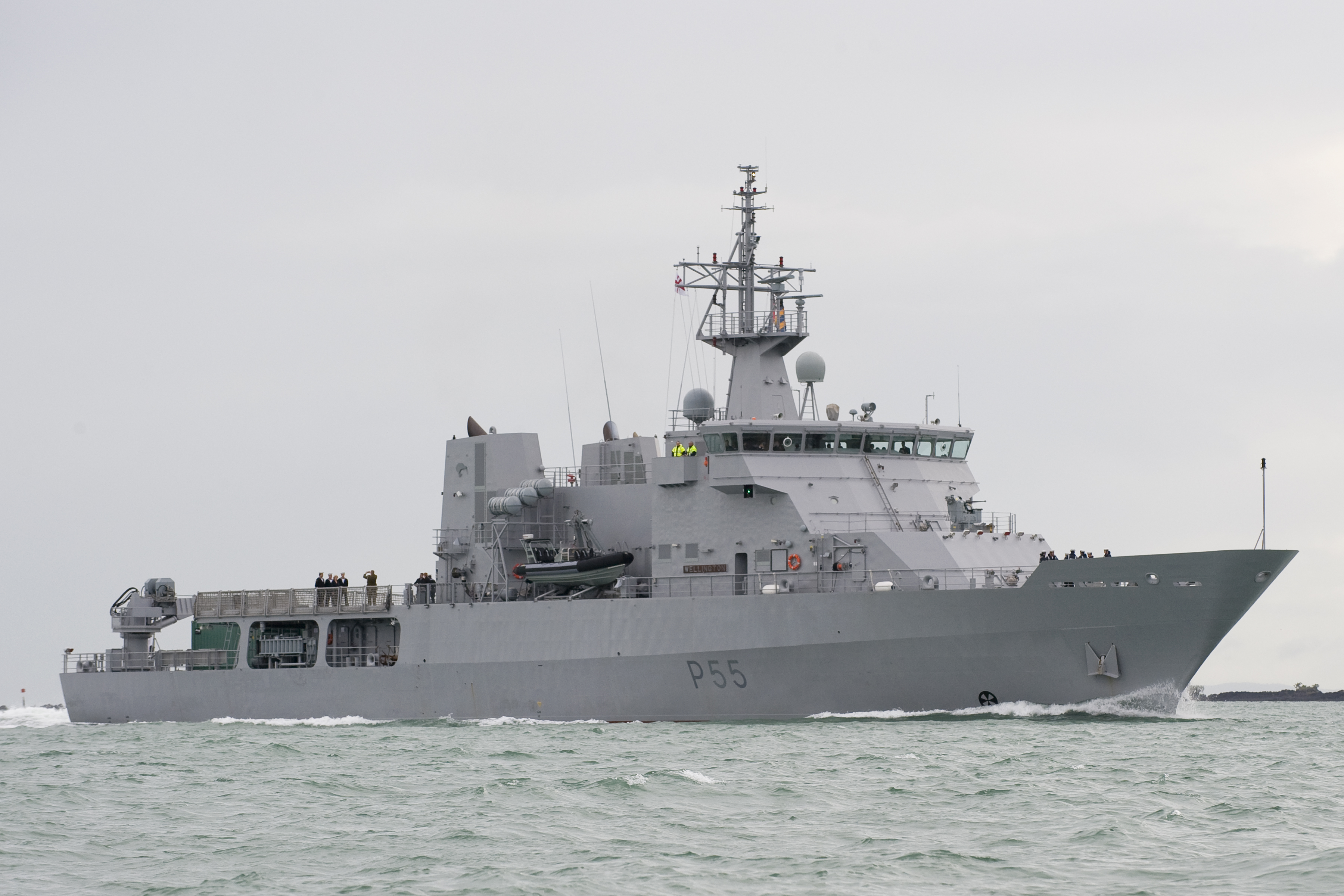
HMNZS Wellington first arrival into Devonport Naval Base
What struck me about the story was the choice of ships laid up. New Zealand has chosen to lay up three of its four patrol vessels, retaining only one of the least capable. The New Zealand Navy is small, and it does coast guard tasks as well as national defense. The entire fleet consist of nine ships:
Inshore patrol boat HMNZS Hawea (P3571) entering Otago Harbour, New Zealand, Aug. 2009. Photo credit: Benchill
New Zealand has been helpful to neighboring Pacific island nations in regard to Illegal, Unreported, and Unregulated fishing and disaster response. Hopefully they will continue in this role, perhaps using their multipurpose vessel and/or their underway replenishment ship which also provide unique capabilities.
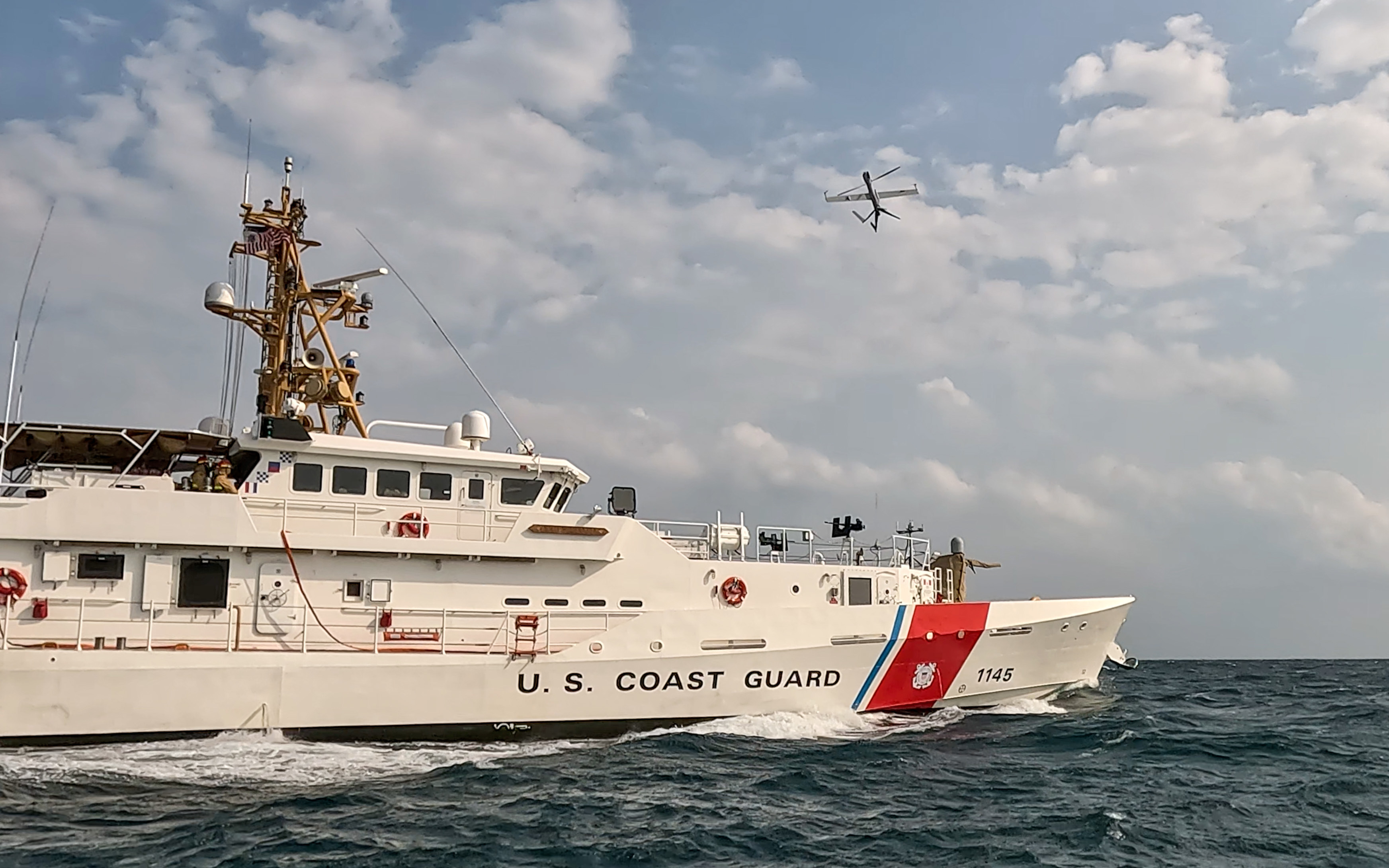
221207-N-NO146-1001 ARABIAN GULF (Dec. 7, 2022) An Aerovel Flexrotor unmanned aerial vehicle (UAV) takes off from U.S. Coast Guard fast response cutter USCGC Emlen Tunnell (WPC 1145) transiting the Arabian Gulf, Dec. 7. U.S. 5th Fleet’s Task Force 59 launched the UAV during Digital Horizon, a three-week event focused on integrating new unmanned and artificial intelligence platforms, including 10 that are in the region for the first time. (U.S. Navy photo)
Below is a December 07, 2022, news release by U.S. Naval Forces Central Command / U.S. 5th Fleet Public Affairs.
To me this is really exciting news. The Webber class has been doing some great work at surprising long distances, performing most of the functions of a medium endurance cutter. Their primary weakness as a patrol ship has been the lack of an organic search aircraft. I assume this UAS is operating from the area on the O-1 deck forward of the bridge that had been designated for vertical replenishment.
Boasting a flight endurance of more than 30 hours and a 120-kilometer communications range, this all-weather aircraft has operated in some of the harshest conditions on earth. Flexrotor is excellent for expeditionary missions. Needing only a 20’ by 20’ area for launch and recovery, it takes off and lands vertically and easily transitions into horizontal wing-borne flight. The STUAS flies completely automatically after takeoff, with no pilot intervention needed. Flexrotor quickly assembles for flight and can be boxed and stowed in minutes by a single person.
The Flexrotor is, in most respects, in the same class as the Scan Eagles that are currently being deployed on National Security Cutters. It is not as fast as Scan Eagle but apparently comparable or greater endurance and requires no launch or recovery equipment. These systems may actually constitute an improvement, compared to searches by manned helicopters, because of their much greater endurance and sensors like the VIDAR used on Coast Guard Scan Eagle UAS..
Task Force 59 Launches Aerial Drone from Coast Guard Ship in Middle East
By By U.S. Naval Forces Central Command / U.S. 5th Fleet Public Affairs | December 07, 2022
MANAMA, Bahrain —
A U.S. Navy unmanned task force in the Middle East launched an aerial drone from a U.S. Coast Guard vessel operating the Arabian Gulf, Dec. 7.
U.S. 5th Fleet’s Task Force 59 launched an unmanned aerial vehicle (UAV) from USCGC Emlen Tunnell (WPC 1145), marking a first for the task force with a U.S. Coast Guard vessel since the task force’s establishment in September 2021.
The launch also demonstrated close collaboration between the U.S. Coast Guard and Task Force 59 as U.S. 5th Fleet rapidly integrates unmanned systems and artificial intelligence to enhance monitoring of regional waters.
Task Force 59 is conducting Digital Horizon, a three-week event focused on integrating new unmanned and artificial intelligence platforms, including 10 that are in the region for the first time.
“Each day during Digital Horizon we have pushed to discover new capabilities, fast,” said Capt. Michael Brasseur, commodore of Task Force 59. “I am so proud of the team for their steadfast commitment to not only imagine new possibilities, but to deliver them.”
An Aerovel Flexrotor successfully took off and landed vertically aboard Emlen Tunnell, showcasing close collaboration between Navy, Coast Guard and industry partners to advance technology integration.
“We are so excited to be part of Digital Horizon and play a critical role by helping integrate new technologies into the fleet,” said Lt. Patrick Kelly, Emlen Tunnell’s commanding officer. “I am so proud of the crew for their dedication, commitment and professionalism, which made today’s success possible.”
The Flexrotor can support intelligence, surveillance and reconnaissance (ISR) missions day and night using a daylight or infrared camera to provide a real-time video feed.
In addition to providing ISR capability, UAVs like the Flexrotor enable Task Force 59 to enhance a resilient communications network used by unmanned systems to relay video footage, pictures and other data to command centers ashore and at sea.
U.S. 5th Fleet established Task Force 59 more than 14 months ago. Since its launch, the task force has deployed a suite of new unmanned systems while integrating artificial intelligence at operational hubs in Jordan and Bahrain.
Emlen Tunnell is one of the Coast Guard’s newest Sentinel-class fast response cutters forward-deployed to Bahrain where U.S. 5th Fleet is headquartered. The ship helps ensure maritime security and stability across the Middle East.
Covert Shores reported on new Iranian missile armed catamaran corvettes, but the report also included the photo above. What we are seeing is a boat suspended from the stern of the corvette. The boat is equipped with what appears to be a torpedo tube for a lightweight torpedo. Presumably there is a second tube on the other side. Diameter is likely to be the same as the NATO standard, 324mm or 12.75″. Unlike most lightweight torpedoes, this is unlikely to be intended for use against submarines. Almost certainly, it is intended for use against surface ships.
There is not a lot of public source information about Iranian torpedoes but their partners in crime, Russia and China, are both believed to have cloned the US made Mk46 torpedo and both passive and active acoustic and wake homing technology is readily available. Passive acoustic homing in the search phase, and wake homing in the terminal phase, seems likely. Range is probably at least 8,000 yards.
This means, these torpedoes can be launched from well outside the effective range of typical Close In Weapon Systems (CIWS) of 20 to 40mm.
We can’t take much comfort in the fact that the warhead of these torpedoes would be about 100 pounds. That is way less than the approximately 600 pounds of a heavy weight 21″ torpedo like the Mk48, but the effects of an underwater explosion are not linear. The effect of a 100-pound warhead is about half that of heavy weight torpedoes that we have repeatedly seen break ships in half. So, a lightweight torpedo, exploding under the keel, might not break a ship in half, but it is going to hurt.
I have long felt an anti-surface light weight torpedo like this would provide Coast Guard cutters a relatively low-cost way to forcible stop a medium to large vessel, regardless of size, a capability they do not currently have. Apparently, the Iranians think it will work.
This is a significant departure for the Islamic Revolutionary Guard Corps. Apparently, they have recognized that their naval swarm forces are vulnerable to attack from the air, and, I believe, particularly helicopters.
hIran Shahid Solemani class corvette top view
With its array of VLS AAW weapons, these corvettes constitute a serious threat to USN and allied helicopters that might be used to counter Iranian swarm tactics.
When engaged in force protection, if the force protection package includes aircraft, and one of this class shows up, a PATFORSWA Webber cutter class might be doing useful service, if they take station a couple hundred yards behind the corvette and maintain a fire control solution on that probably highly flammable and explosive collection of weapons in the center of the superstructure, behind the bridge–without pointing the gun, of course.
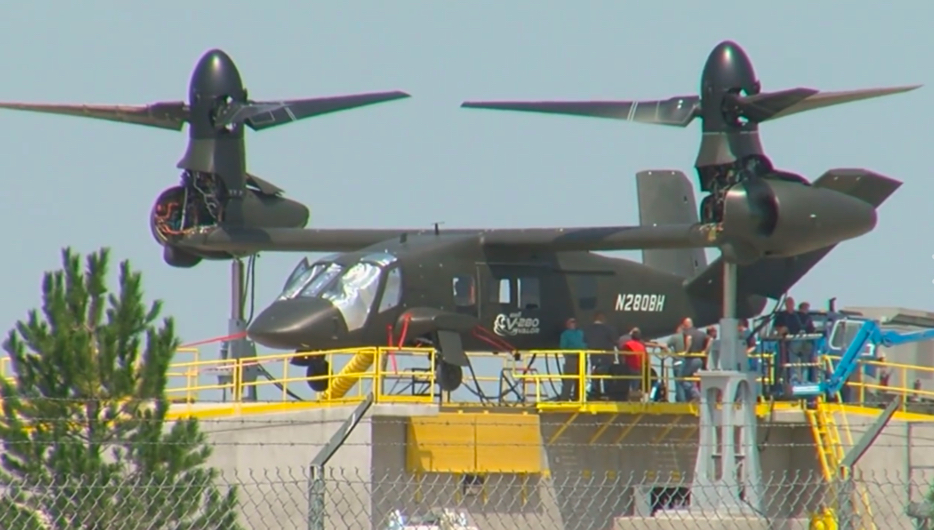
Defense News reports the winner of the Army’s “Future Long-Range Assault Aircraft” competion to find a replacement for the H-60.
With a demonstrated cruise speed of 305 knots, if it can do the SAR mission, this has real potential for the Coast Guard.
“The service wants FLRAA to be capable of traveling roughly 2,440 nautical miles (or 2,810 miles) without refueling, but also to be agile enough to maneuver troops into dangerous hot spots.”
1,725 nautical miles one way, was the threshold requirement.
Unless they add folding blades and a stowable wing like on the V-22, it really doesn’t look like it would be easily adaptable for shipboard use, but there is still another aircraft to be selected under the Future Vertical Lift program and it will be smaller. There are currently two competitors, The Bell Invictus and the Sikorsky Rader X. My money is on the Raider X compound helicopter. It also looks like it would require less modification to convert to civilian and Coast Guard use and seems to offer more improvement over existing aircraft.
I also don’t think we can assume the Sikorsky competitor for FLRAA will completely disappear.







 Chuck Hill's CG Blog