“SNA NEWS: Coast Guard Wants Budget ‘Booster Shot’” –National Defense

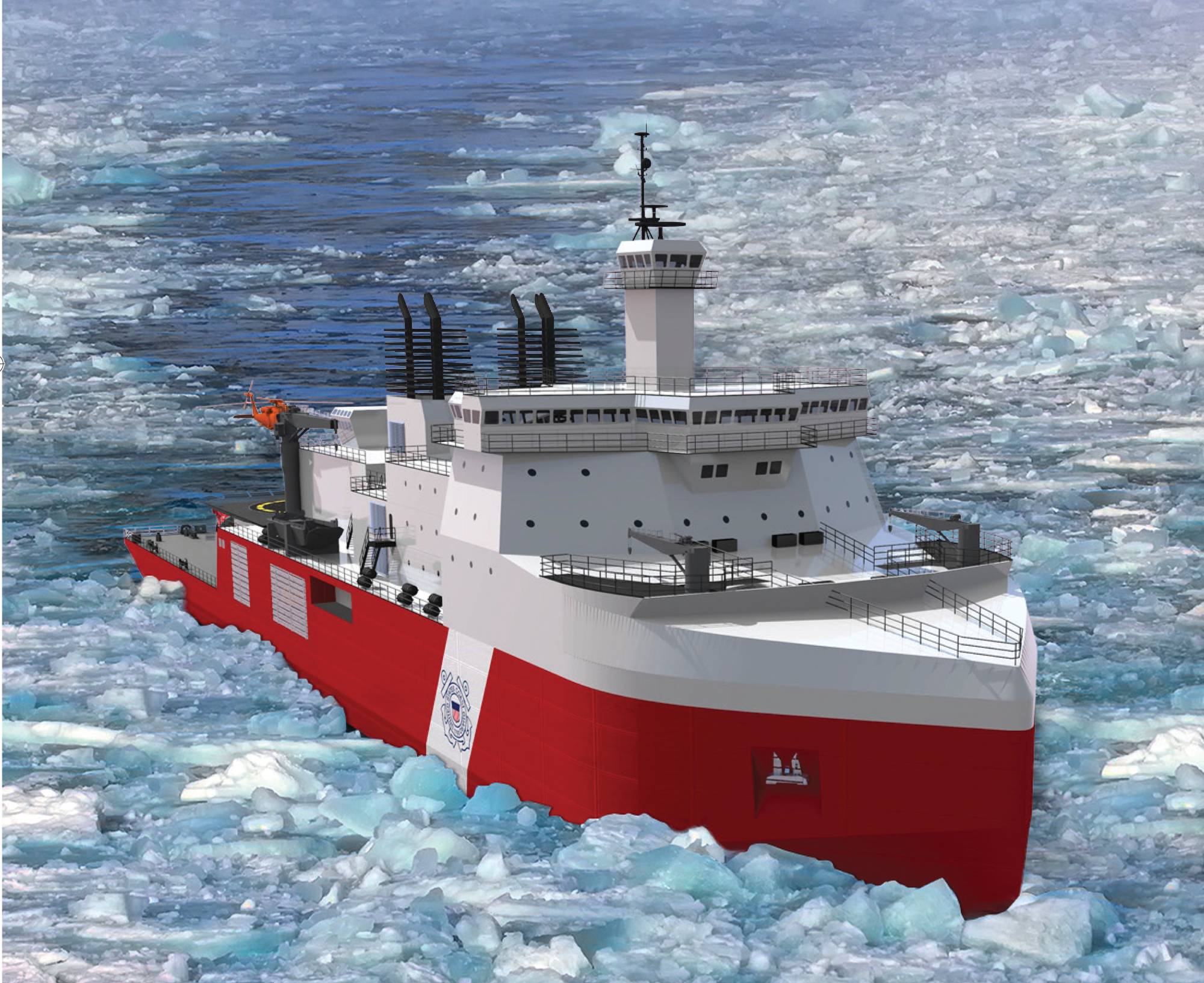
Polar Security Cutter. Image credit VT Halter Marine.

National Defense reports on the Commandant’s comments during the Surface Navy Association’s annual symposium.

The pitch is that the Coast Guard is playing catch-up and needs an infusion of money (“$900 million to $1 billion dollars”) to deal with the current demands, and continued growth of 3 to 5% per year for the next five years. Really, I think he is saying the budget needs a new higher base which would then be built upon, so the $900M to $1B addition would not be a one time thing.

There are some particular statements that caught my attention.

The U.S. Coast Guard will soon have 103 cutters of various types in its inventory, but is looking to add more to boost its capacity and capabilities. It is also pursuing upgrades to its information technology systems and other assets, as well as looking to bring on more personnel.

That 103 figure refers only to recent and ongoing construction projects. We already have many more cutters than that. It appears to refer to 3 PSCs,11 NSCs, 25 OPCs, and 64 FRCs, but he is saying we need more than that.

What are these additional ships?

  • Arctic Security Cutters (ASC): Certainly it includes the three Arctic Security Cutter medium icebreakers. These were among the recommendations of the High Latitude Study. There seems to be general agreement about the need for at least a total of six icebreakers. There have been suggestions that one or more of these might be replaced by additional polar security cutters, but that suggestion has been mentioned but has not been strongly seconded by the Commandant. These may be intended for the Atlantic side.
  • Fast Response Cutters (FRC): It probably means more Webber class FRCs as well. There is already talk of homeporting some in Palau (probably two or three) and of replicating the PATFORSWA type organization (six ships) in support of PACOM. These raise the possibility of up to eight additional FRCs.
  • Offshore Patrol Cutters (OPC): For the OPCs, I think it is more a matter of needing them sooner than currently planned. They are well behind in their delivery schedule. Moving to four ships a year, from two different yards, would dovetail nicely with the perceived need to maintain and build up US shipbuilding capacity. Even going to four per year would mean it will be many years before the Coast Guard could ask for the budget to build more than the 25 ship Program of Record.
  • Cutter X: Certainly no indication yet that the Coast Guard is considering an additional type of patrol cutter, but something of 1,500 to 2,500 tons, between the size of the OPC and the FRC would offer a way to procure a larger number of cutters with greater range, endurance, and seakeeping than the FRCs at perhaps half the cost of a similar number of OPCs. Building annually two in addition to one or two OPCs could speed the recapitalization process.
  • Polar Security Cutters (PSC): The quotation below suggest the Coast Guard may ultimately seek seek six PSCs as well as three ASCs.

“If resources were less constrained, the Coast Guard would like to have a fleet of nine icebreakers including potentially six polar security cutters and three Arctic security cutters, he noted.”

Sounds like we might continue building Polar Security Cutters beyond the three currently planned, but nuclear powered icebreakers are out.

“We have moved off the nuclear-powered” icebreaker, Schultz said. “The ability to operate that in the Coast Guard — that just doesn’t exist, and nor could we build out to that with all the demands on our plate.”
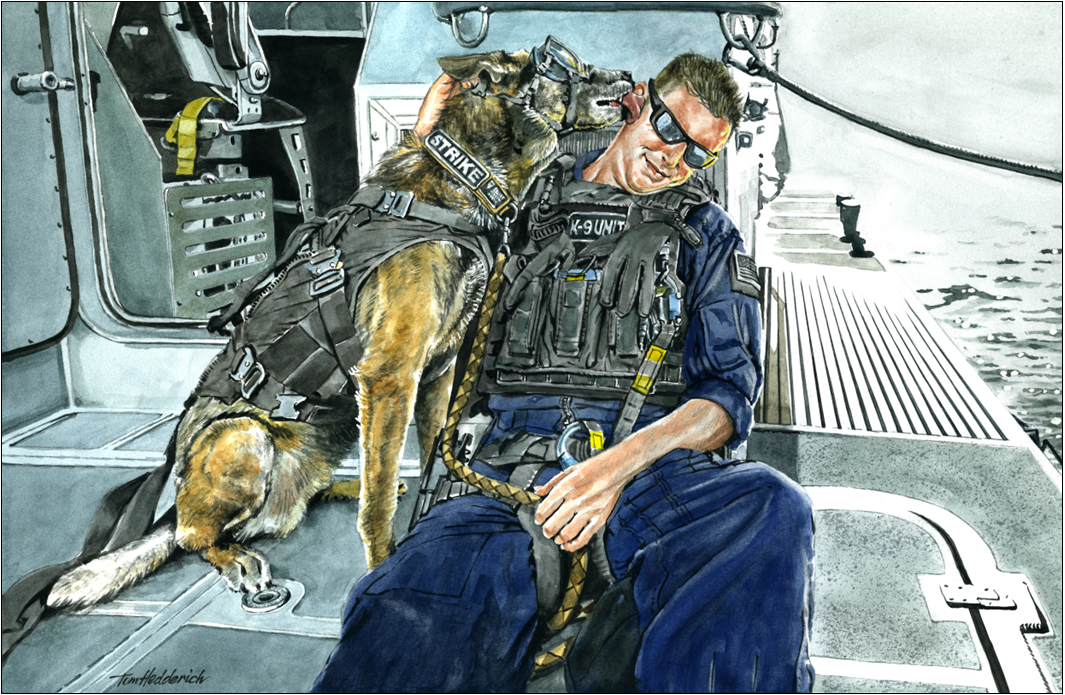

“Virtual Coast Guard art exhibit highlights service, missions” –News Release

Perfect Trust, Watercolor by Tom Hedderich

Below is a 8th District news release. Follow the link to four years of Coast Guard art. The four Coast Guard exhibits (2017, 2018, 2019, and 2020) are there along with other exhibits. You may have to page right, but once you enter one, at the bottom of the page you can link to the next or previous year, or use my individual links above. 

united states coast guard

 News Release

U.S. Coast Guard 8th District Public Affairs Detachment Texas
Contact: 8th District Public Affairs Detachment Texas
Office: 281-464-4810
After Hours: 832-293-1293
PA Detachment Texas online newsroom

Virtual Coast Guard art exhibit highlights service, missions

HOUSTON — The United States Coast Guard’s art collection now appears as an online exhibit at the Houston Maritime Education Center and Museum. The virtual exhibit offers the public the opportunity to explore four years of Coast Guard art and provides a fascinating look at the many ways in which the Coast Guard contributes to this nation. This is the largest exhibition of Coast Guard art ever to appear in one museum.

The full collection is available on the museum’s website and is publicly accessible at www.houstonmaritime.org/exhibits/.

The Coast Guard’s 11 statutory missions are highlighted in more than 130 works by nearly 60 Coast Guard Art Program (COGAP) member artists from around the country. Although the words “U.S. Coast Guard” often conjure images of rescue swimmers and orange helicopters or aid given to distressed boaters and fisherman, the missions and duties of this military service are far more numerous and versatile. They range from national defense to environmental protection, and from search and rescue to maintaining aids to navigation and port security.

“If a picture is worth a thousand words, this exhibit is a volume that tells the Coast Guard story as seen through the artists’ brushes and paints. COGAP art gives visual testimony to the unique contribution the Service makes to the nation in its multifaceted roles as a military, humanitarian and law enforcement organization,” said Rear Admiral Jon Hickey, director of Governmental and Public Affairs at Coast Guard Headquarters in Washington.

“This marks the first time ever we have been able to provide such an extensive body of work on the role of a military service virtually to our visitors,” said Leslie Bowlin, the Houston Maritime Museum’s CEO. “We were delighted to work with the Coast Guard in bringing this exhibition to our members and internet visitors safely, especially during this time of the pandemic.”

Coast Guard Art is exhibited at museums around the country. It is also displayed in offices of members of Congress, Cabinet Secretaries, senior government officials and other military services and Coast Guard locations nationwide. Coast Guard artists—a talented cadre of professional artists—donate their work to the program. Today, the collection comprises over 2,000 works showing the missions performed by the service’s force of 43,330 active duty members. This year marks the program’s 40th anniversary.

For more information about the Coast Guard Art Program, visit: www.uscg.mil/Community/Art-Program

For more information about the Houston Maritime Museum, visit: www.houstonmaritime.org.

USCG

USCGC Stone off Guyana, Plus a Drug Interdiction

Some photographs from USCGC Stone’s deployment to the Atlantic Coast of South America. Keep in mind, this is really a shakedown cruise. She still has not been commissioned.

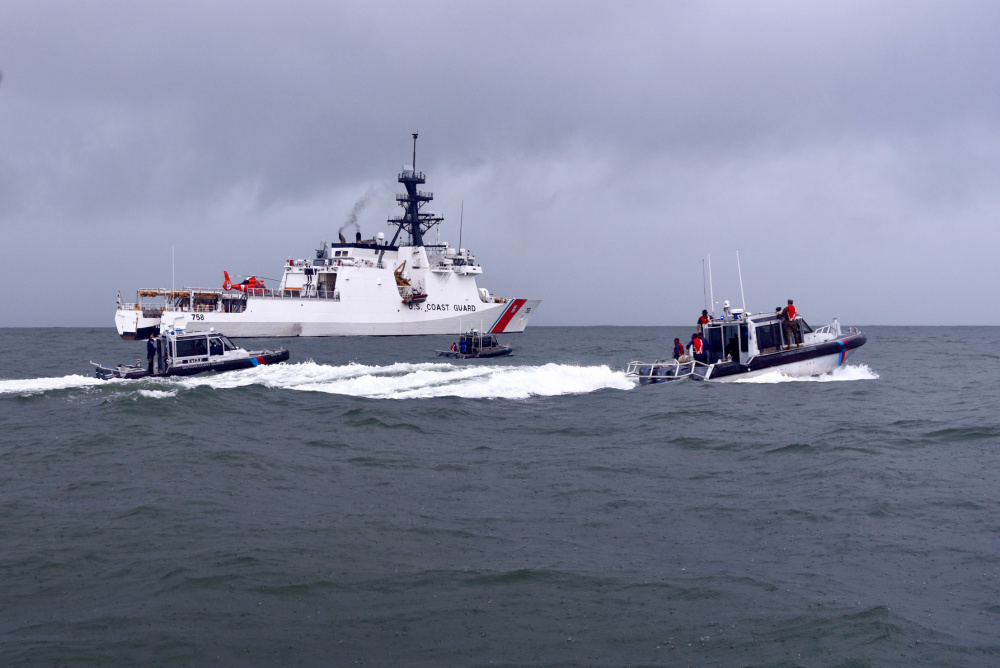
Guyana coast guard small boats patrol alongside the USCGC Stone (WMSL 758) off Guyana’s coast on Jan. 9, 2021. The U.S. and Guyana governments enacted a bilateral agreement on Sep. 18, 2020, to cooperatively combat illegal marine activity in Guyana’s waters. (U.S. Coast Guard photo by Petty Officer 3rd Class John Hightower)

U.S. Coast Guard Lt. Cmdr. Jason McCarthey, operations officer of the USCGC Stone (WMSL 758), bumps elbows, as a COVID mitigation, with a member of the Guyana coast guard off the coast of Guyana on Jan. 9, 2021, to celebrate the joint exercise. The U.S. Coast Guard and Guyana coast guard completed their first cooperative exercise in training to combat illicit marine traffic since the enactment of a bilateral agreement between the two on Sep. 18, 2020. (U.S. Coast Guard photo by Petty Officer 3rd Class John Hightower)

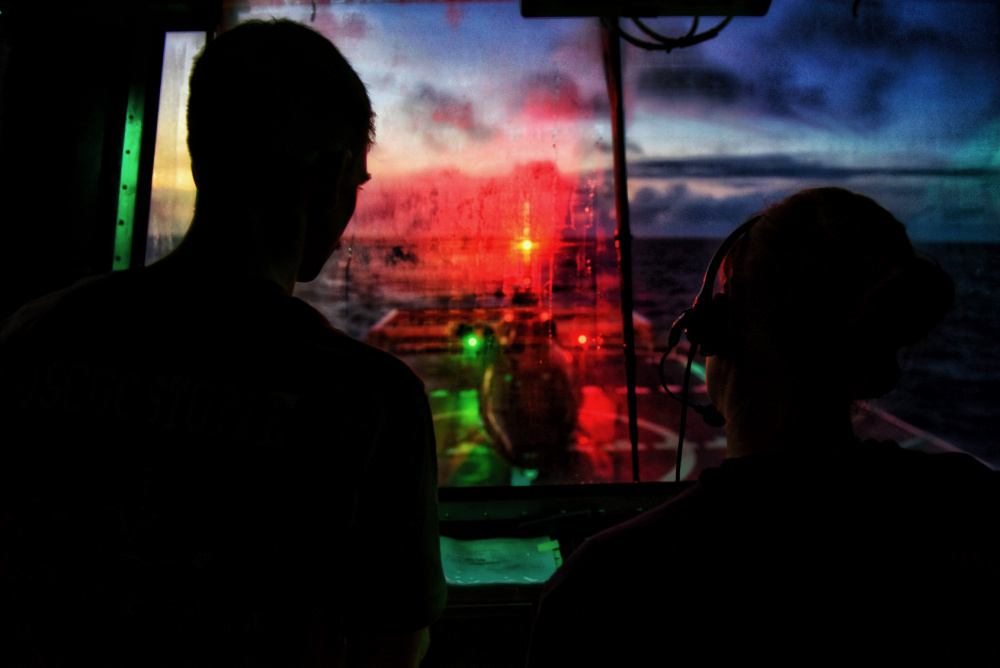
U.S. Coast Guard Lt. j. g. John Cardinal supervises Petty Officer 1st Class Pamala Jensen as she coordinates helicopter operations from the aviation tower of the USCGC Stone (WSML 758) in the Caribbean Sea on Jan. 7, 2021. Since the Stone began its first patrol on Dec 22, 2020, many of its crew trained in their new positions for the first time to become fully qualified. (U.S. Coast Guard photo by Petty Officer 3rd Class John Hightower)

U.S. Coast Guard small boats from the USCGC Stone (WMSL 758) and small boats from the Guyana coast guard patrol off the coast of Guyana on Jan. 9, 2021.  (U.S. Coast Guard photo by Petty Officer 3rd Class John Hightower)

Along the way, Stone managed to conduct a drug interdiction operation as well. LANT Area news release below:

united states coast guard

News Release

U.S. Coast Guard Atlantic Area
Contact: Coast Guard Atlantic Area Public Affairs
Office: (757) 398-6521
After Hours: uscglantarea@gmail.com
Atlantic Area online newsroom

On maiden voyage, USCGC Stone crew interdict narcotics in Caribbean

Stone launches small boat Stone stops suspect vessel

Editor’s Note: to view larger or download high-resolution images, click on the item above. 

PORTSMOUTH, Va. — While in transit to conduct joint operations off the coast of Guyana as part of Operation Southern Cross, USCGC Stone (WMSL 758) encountered and interdicted a suspected narcotic trafficking vessel south of the Dominican Republic Thursday.  
 
Having stopped the illicit activity, Stone handed off the case to the USCGC Raymond Evans (WPC 1110), a fast response cutter from Key West, Florida, and continued their patrol south. 
 
Early Thursday, acting on information from a maritime patrol aircraft, the Stone crew approached the vessel of interest and exercised U.S. Coast Guard authorities to stop their transit and interdict illicit maritime trade. 
 
The USCGC Raymond Evans arrived on the scene shortly after. A Coast Guard boarding team from the Raymond Evans conducted a law enforcement boarding, testing packages found aboard the vessel, revealing bales of cocaine estimated at 2,148.5 lbs (970 kgs) total.

Stone’s crew remained on scene during the search of the vessel to assist if need. Following the boarding, the Raymond Evans crew took possession of the contraband and detained the four suspected narcotics trafficking vessel members. They are working with the U.S. Coast Guard 7th District and Department of Justice on the next steps. 
 
Quotes 
“USCGC Stone is a highly-capable multipurpose platform and ready to conduct missions to save lives, support lawful activities on the high seas, and highlight and build Coast Guard partnerships with other nations.  I am not surprised that Stone interdicted drug smugglers – it is what the Captain, crew, and every U.S. Coast Guard member is prepared to do every day underway.  Stone’s crew is exhibiting the highest professional competence, reinforcing that Stone is well-suited to help our partners in the South Atlantic expose and address illicit activities in the maritime domain. These transnational criminal activities – be it illegal fishing or the trafficking of people, drugs, money, etc.  – challenge global security, and only together can we combat these threats.”
– Vice Adm. Steven Poulin, commander of U.S. Coast Guard Atlantic Area
 
 “I’m very proud of the crew for completing this evolution safely and making an immediate impact on our first patrol. This case illustrates that Stone is a competent partner, and our crew is ready for the front-lines. We look forward to our upcoming engagements, first with Guyana.”
– Capt. Adam Morrison, commanding officer of USCGC Stone (WMSL 758)

“Our teammates aboard USCGC Stone are helping keep our shared neighborhood – the Western Hemisphere- safe, successfully stopping illicit narcotics smuggling, while continuing their equally important mission to counter predatory and irresponsible IUU fishing, a growing threat to our partner nations’ sovereignty and our collective regional security.”

- Rear Adm. Andrew J. Tiongson, director of operations, U.S. Southern Command

 Quick Facts
 Mission
– Operation Southern Cross is a multi-month deployment to the South Atlantic countering illegal, unregulated, and unreported fishing while strengthening relationships for maritime sovereignty and security throughout the region.

– Stone’s patrol demonstrates the U.S. commitment to the established rules-based order while addressing illegal activity wherever a U.S. Coast Guard cutter is deployed.”

– Illegal, Unreported, and Unregulated fishing is a pervasive, far-reaching security threat. One in five fish caught worldwide likely originate from IUU fishing. 
 
 – Healthy fish stocks underpin the food security of coastal communities, maritime regions, and entire nation-states. 
 
 – The U.S. Coast Guard has been the lead agency in the United States for at-sea enforcement of living marine resource laws for more than 150 years. 

– The U.S. Coast Guard is uniquely positioned to combat IUU fishing and uphold the rule of law at sea. The Service is keen to share knowledge and partner with like-minded nations. 
 
 – The U.S. Coast Guard is recognized worldwide for our ability to perform diverse maritime missions over vast geographic areas. The U.S. Coast Guard’s value to the Nation resides in its enduring commitment to protect those on the sea, protect the United States from threats delivered by the sea, and protect the sea itself.

– As a military, law enforcement, regulatory, and humanitarian service, the U.S. Coast Guard relies upon various authorities and partnerships to enhance our capability and capacity throughout the maritime domain.
  
– Patrols like Stone’s support U.S. initiatives to strengthen and fortify effective governance and cooperation with our partner nations to address destabilizing influences – illegal narcotics and fishing that are high on that list. 
 
 USCGC Stone
 – The ship, one of the Legend-class, is named for the U.S. Coast Guard’s first aviator, Cmdr. Elmer “Archie” Fowler Stone.
 
 – Stone is the ninth National Security Cutter. They are a multi-mission platform — 418 feet (127 meters) long with a 54-foot beam and displace 4,500 tons with a full load. They have a top speed of 28 knots, a range of 12,000 miles, an endurance of 60 days, and a crew of around 120.

“Removable bow turns tugboat into icebreaker” –Marine Log

image description

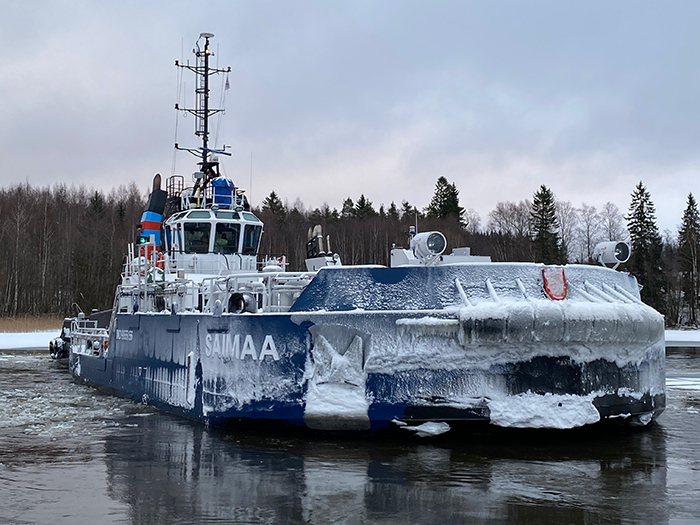
Motorized bow enables tugboat to break ice up to 70 cm (2.3 feet/27.6″) thick

MarineLog reports progress on this. We talked about this earlier, looks like this is happening. This description from the earlier report.

Danfoss Editron’s hybrid electric system will powering the removable bow with two generators, built as a DC system, and two propulsion systems. In addition, the company has provided a front supercapacitor so that peak powers can be efficiently controlled. The Editron software also cuts fuel consumption and delivers high efficiencies as the diesel-generators in the DC system can be driven at variable speeds.

Lake Saimaa, where it operates is not very large. Looks like it is about 40 miles from corner to corner. Note while the tug pushing it is not an icebreaker, it is ice strengthened.

Below is a comment on the earlier post by, Tups, a Finn, and our resident icebreaker expert.

“… the technology is easily scalable and, since you don’t have to worry about seakeeping during the open water season – you can go for a slightly more “extreme” icebreaking bow to increase the performance at the cost of slamming impacts in head seas. Perhaps this could be a solution for commercial (contracted) icebreaking in the Great Lakes?

“By the way, this relates to another post you published some time ago – the tug that pushes the removable bow is the one that was fitted with the new ice-strengthened bronze propellers.”

“Watch: PBS’s “The Codebreaker” premiers Monday, Jan. 11” –MyCG

MyCG reports that PBS will be airing a program about the namesake for the 11th National Security Cutter, codebreaker Elizebeth Smith Friedman.

If you would like to find the program, the post has a link I am duplicating below:

This is an episode of the series “American Experience.”

If you miss it on the 11th, it will be rebroadcast on Tuesday, Jan. 12, and Wednesday, Jan. 13.

“Is the US Losing the Fight for Arctic Dominance?” –Military.com

Military.Com’s  4 Jan., 2021 podcast, “Left of Boom,” has an interview with RAdm. Matthew Bell, Commander District 17, Is the US Losing the Fight for Arctic Dominance? | Military.com

It is a little over a half hour. If you don’t want to listen to the podcast, an edited transcript is provided. Just continue to scroll down below the audio (an unusual and appreciated addition).

Don’t think there are any real surprises here, but the discussion does remind us of how large the area is, how little infrastructure there is, and how few Coast Guard units are in the area.

When I was assigned to Midgett, we medivaced a South Korean fishermen. A purse seine wire had parted and, whipping across the deck. It took off a leg. We sailed to meet them well out the Bering Sea. Used our helicopter to bring him to the ship and then turned toward Dutch Harbor trying to get close enough to transport by helo to a hospital there. We lost him during the night still many hours from the launch point. 

The other things that stands out for me, are the importance of subsistence hunting and fishing and the cooperative relationship with the Russian Border Guard.

Thanks to the reader who brought this to my attention. Sorry I lost track of who it was.

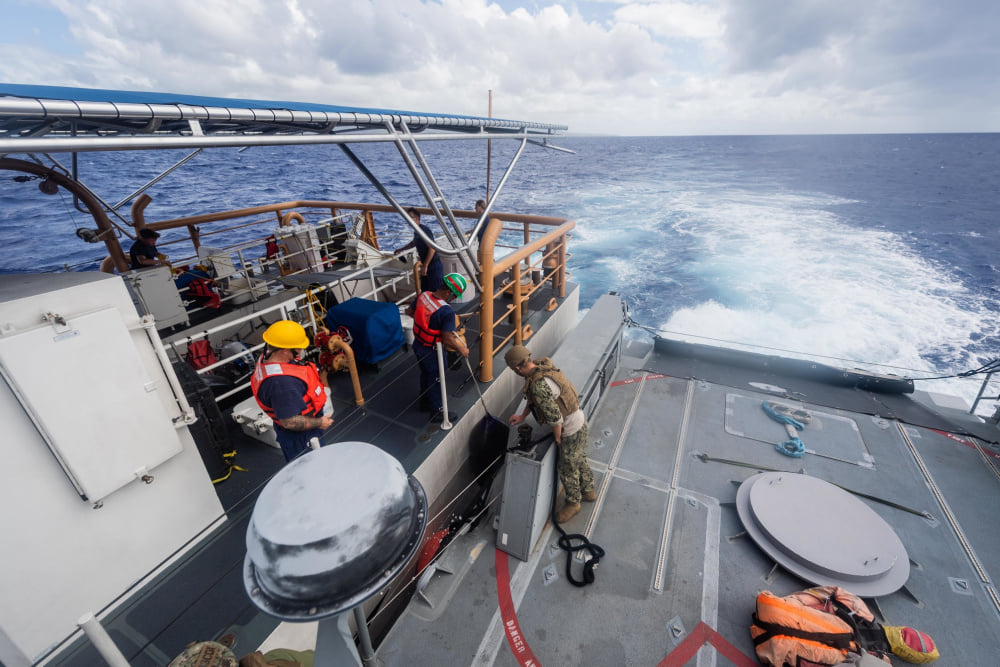
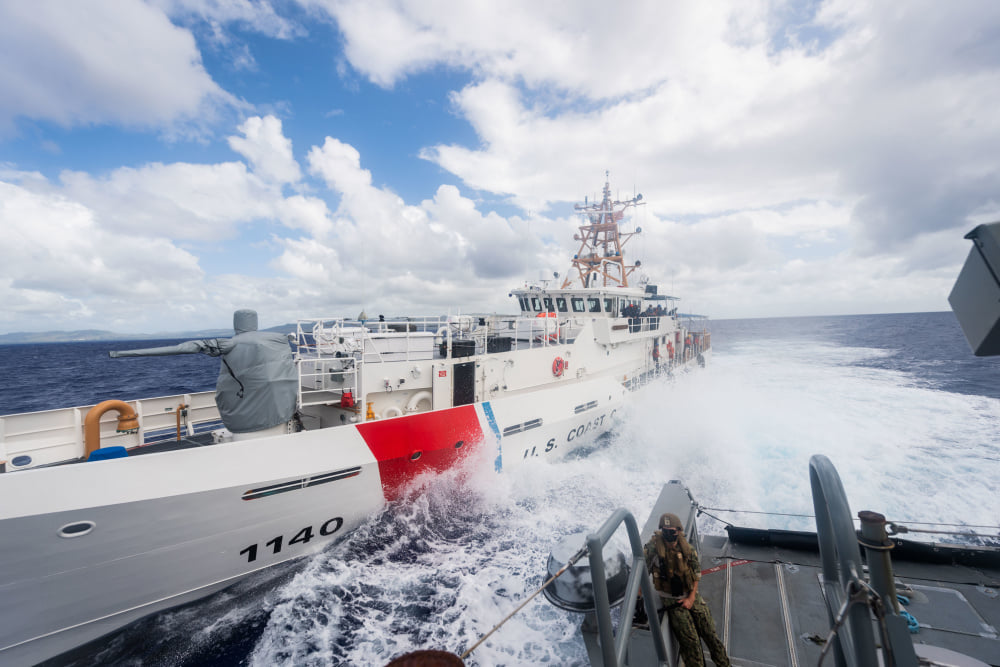
USCGC Oliver Henry, WPC-1140, Exercises with the Navy in the Philippine Sea

Some photos from Twitter,

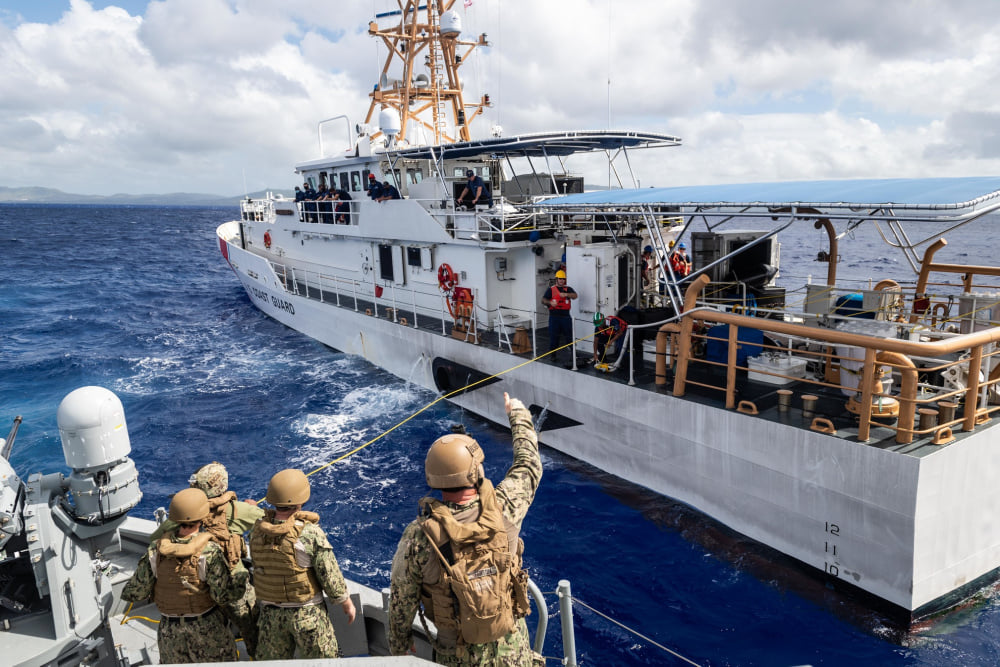
“The crew of USCG Cutter Oliver Henry participated in an integrated exercise alongside Navy Maritime Expeditionary Security Squadron TWO in the Philippine Sea last month under the direction of U.S. 7th Fleet.”

The Navy vessel is apparently a MkVI patrol boat.

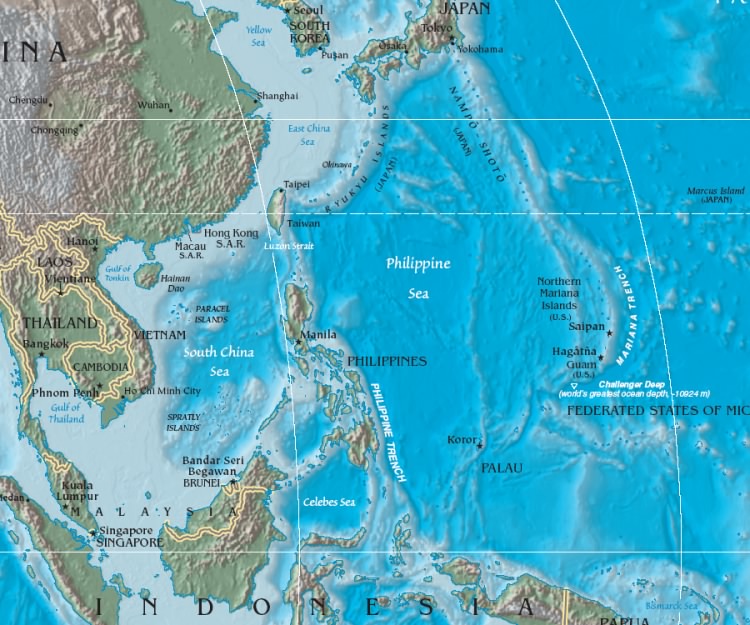
USCGC Oliver Henry is the second FRC to be homeported in Guam, so the Philippine Sea is practically just out the front door.

The location of the Philippine Sea. (Section of a world map from the CIA World Factbook)

Thanks to Walter for bring this to my attention. 

“A Blue Arctic, a Strategic Blue Print for the Arctic” –Dept. of the Navy

This map show the exclusive economic zones (EEZs) within the Arctic: Canada (purple), Greenland (orange), Iceland (green), Norway (turquoise), Russia (light blue), and USA (dark blue). As sea ice reduces there will be more opportunity for ice to drift from one EEZ to another, which has implications for the potential spread of pollutants.
Credit: DeRepentigny et al., 2020

Naval News has a short interview/critique of the new, 28 page, Navy publication, New U.S. Strategic Blueprint for a Blue Arctic is No Revolution – Naval News

 “Are the options outlined under “Build a More Capable Arctic Naval Force” enough to close the gap in your opinion?

“Timothy Choi – In short, no. No options are actually outlined. The document only serves to remind the navy that yes, Arctic conditions should be kept in mind when building future naval forces, without any indication on what kind of forces will be necessary. This is part of the problem with the “blueprint” – the Arctic is discussed in such general terms that it becomes impossible to give specific directions when it comes to force structure requirements and composition. For instance, the Russian submarine threat in northern Europe requires a very different set of capabilities than helping the coast guard monitor the EEZ off Alaska. Even worse, the USCG is only mentioned briefly even though any Arctic naval force development around North America would have to be done in close coordination with the USCG’s icebreaking capabilities. If a “blueprint” is supposed to describe in minute details the components of a completed ship design, this document is a long way from that and is closer to an initial Request for Information.”

The Naval News post includes a link or you can go directly to the document here: ARCTIC BLUEPRINT 2021 FINAL.PDF (defense.gov)