“Congressmen object to “crude” mnemonic in USCG training material” Marine Log

Marine Log reports that Congress has taken exception to the use of a Mnemonic in Coast Guard furnished training material.

DeFazio and Maloney wrote: “Within the USCG accredited captain’s license course offered by ‘Mariners Learning System,’ students are encouraged to use the mnemonic device ‘true virgins make dull company—just add whiskey’ to remember how to calculate compass error. We are sure you will agree that the use of this crude phrase in certification materials approved by the Coast Guard is unacceptable.”

They may have a point, but don’t we have more urgent issues?

“A Luncheon Cruise & Tour on the Coast Guard Icebreaker Healy” –Captnmike


USCGC Healy moored in Seattle. Photo Credit: Captnmike

One of our regular contributors, Captnmike, has a web site of his own. In response to the story about USCGC Healy’s propulsion casualty, in the comments, he provided a link to a post he published back in 2014. Was afraid it might be missed. Linking it here, as a separate post, should also make it easier to find if anyone looks for it in the future. Lots of photos from the ship.

“MYCG – MODERNIZING COAST GUARD ORGANIZATIONAL COMMUNICATIONS” –ALCOAST

Below is an ALCOAST quoted in its entirety. I have added a link to “MyCG,” the web site mentioned here, to my recommended blog page. It is right at the top.

united states coast guard

ALCOAST COMMANDANT NOTICE                                              CANCEL DATE 25 AUG 2021

R 260950 AUG 20
FM COMDT COGARD WASHINGTON DC//CG-092//
TO ALCOAST
UNCLAS//N05700//
ACN 098/20
SUBJ: MYCG – MODERNIZING COAST GUARD ORGANIZATIONAL COMMUNICATIONS
A. Coast Guard External Affairs Manual, COMDTINST M5700.13 (series)
1. Purpose: This ACN announces updates to the Coast Guard’s organizational
communications program, to include the launch of MyCG. MyCG is a publicly
available web interface that will serve as an authoritative source for
organizational news, announcements, and information. These changes will be
codified in the upcoming change 2 to REF (A).
2. Discussion. Over the past several years, Coast Guard senior leaders have
dedicated significant effort to advancing the readiness of our workforce.
MyCG is a continuation of this effort. In order to achieve the Commandant’s
vision of a mission ready total workforce, we must modernize our approach
to organizational communications to ensure that enterprise-wide initiatives
and program updates that are important to our people and their families are
clearly communicated via an easily accessible system and targeted to reach
intended audiences. With these goals in mind, the Coast Guard is restructuring
its organizational communications to improve personnel readiness and mission
execution, and to reinforce a world-class military service that empowers
people as our most crucial resource.
    a. To centralize, streamline, and enhance enterprise-wide organizational
communications through MyCG, COMDT (CG-092) will implement a communications
planning and execution process, and provide continual service-wide and regional
communications/updates via the MyCG platform. The MyCG site is intended to
reduce duplicative information from multiple sources; to centralize key
information into a common location; to provide that information in a way that
is easy to access; and to be interesting, timely, and relevant for our people.
    b. In order to maximize information accessibility, the MyCG site will be
available on the public web at: https://www.work.uscg.mil/mycg/, enabling
everyone’s access via mobile phone, personal computer, or work station. The
site will focus on news, features, and resources that support workforce readiness
and resilience.
    c. MyCG will serve as a centralized, authoritative source for enterprise-wide
organizational communications, to include announcements that impact the entire
Coast Guard workforce and their families.
3. Responsibility. COMDT (CG-0922) will manage MyCG, and coordinate the
organizational communications planning, development, and distribution process
for content shared via MyCG. Critical to the success of this initiative will be
integration of communications best practices, and sustained coordination between
COMDT (CG-0922) staff and communications liaisons designated by Headquarters,
Area, and District staffs.
4. Point of contact: Christie St. Clair, COMDT (CG-0922), 202-372-3021 or
Christie.E.StClair@uscg.mil.
5. Released by RDML Jon Hickey, Director, Governmental and Public Affairs.
6. Internet release is authorized.

“Coast Guard Cutter Healy suffers fire, propulsion failure en route to Arctic” –News Release

Below is a news release reproduced in its entirety.

united states coast guard

News Release

U.S. Coast Guard Pacific Area
Aug. 24, 2020
Contact: Coast Guard Pacific Area Public Affairs
Office: (510) 437-3375
After Hours: (510) 816-1700
D11-DG-M-PACAREA-PA@uscg.mil
Pacific Area online newsroom

Coast Guard Cutter Healy suffers fire, propulsion failure en route to Arctic

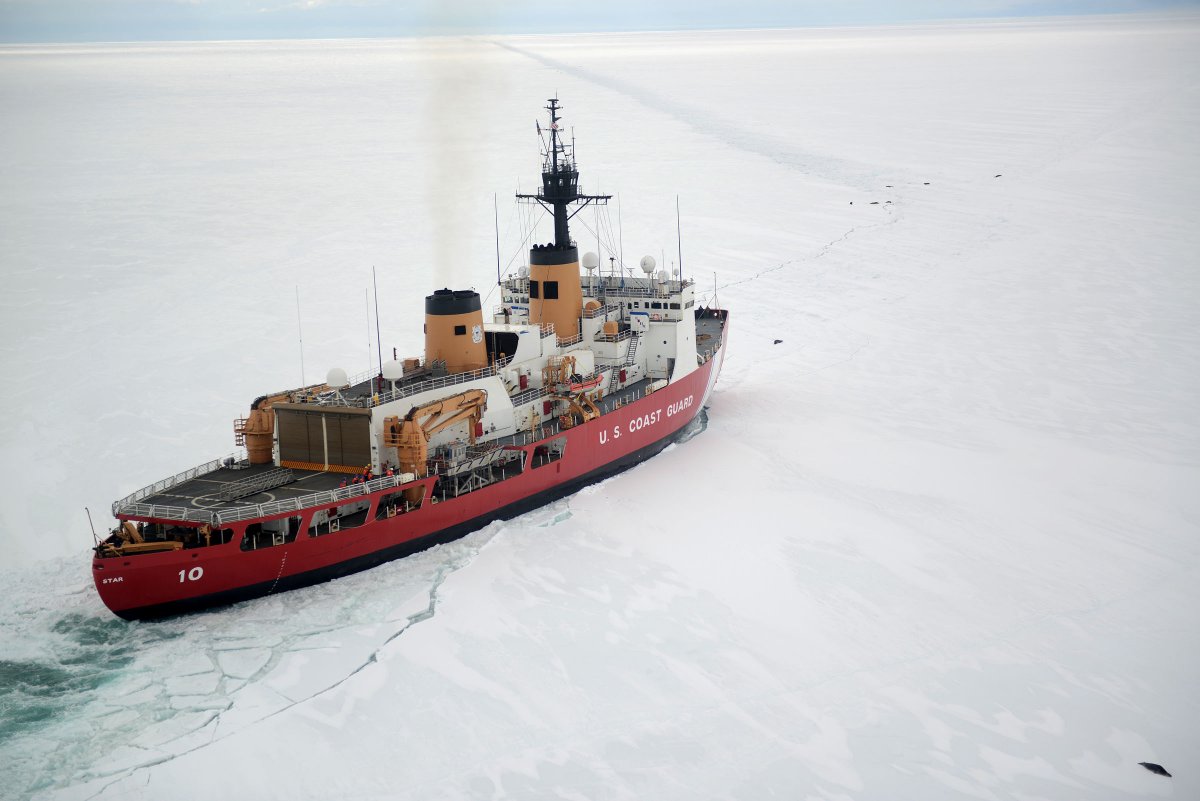
ARCTIC OCEAN – The U.S. Coast Guard Cutter Healy (WAGB-20) is in the ice Wednesday, Oct. 3, 2018, about 715 miles north of Barrow, Alaska, in the Arctic. The Healy is in the Arctic with a team of about 30 scientists and engineers aboard deploying sensors and autonomous submarines to study stratified ocean dynamics and how environmental factors affect the water below the ice surface for the Office of Naval Research. The Healy, which is homeported in Seattle, is one of two ice breakers in U.S. service and is the only military ship dedicated to conducting research in the Arctic. (NyxoLyno Cangemi/U.S. Coast Guard)


ALAMEDA, Calif. — The U.S. Coast Guard Cutter Healy (WAGB-20) suffered a fire in one of the ship’s main propulsion motors Aug. 18 while underway for operations in the Arctic.

No injuries were reported.

The Healy was 60 nautical miles off of Seward, Alaska, en route to the Arctic when an electrical fire was reported at 9:30 p.m.  A fire team disconnected the affected motor, and the fire was confirmed extinguished by 9:56 p.m.  The cause of the fire is currently unknown.

The propulsion motors are critical equipment that use the power generated by the ship’s main diesel engines to spin the shaft and propeller. This design protects the engines from variations in shaft speeds inherent to ice operations. 

Due to the fire, Healy’s starboard propulsion motor and shaft are no longer operational, and the ship is transiting back to its homeport in Seattle for further inspection and repairs.

Prior to the fire, the Healy completed a 26-day patrol in support of Operation Arctic Shield, demonstrating U.S. presence and influence in the Bering Sea, along the U.S.-Russian Maritime Boundary Line, and in the Arctic.

On Aug. 15, the Healy was in Seward and embarked 11 scientists before departing on Aug. 18 to ensure national security and conduct science operations in the Arctic.  As a result of the fire, all Arctic operations have been cancelled.

“I commend the crew of the Healy for their quick actions to safely combat the fire,” said Vice Adm. Linda Fagan, the Pacific Area commander.  “This casualty, however, means that the United States is limited in icebreaking capability until the Healy can be repaired, and it highlights the nation’s critical need for Polar Security Cutters.”

In April 2019, the Navy and Coast Guard awarded a contract to VT Halter Marine, of Pascagoula, Mississippi, for the detail design and construction of the Polar Security Cutter. The initial award includes non-recurring engineering, detail design and construction of the first Polar Security Cutter and has options for the construction of two additional hulls. Construction of the first Polar Security Cutter is scheduled to begin in early 2021 with delivery in 2024. The fiscal year 2021 President’s Budget requests full funding for the construction of the second Polar Security Cutter.

“The Nationalized Fleet? Is there any hope for the Navy–Coast Guard ‘National Fleet’ concept?” USNI

The Philippine Navy’s BRP Andres Bonifacio (PS 17), USS Germantown (LSD-42), USCGC Stratton (WMSL 752) and USNS Millinocket (T-EPF 3) break formation after steaming together this week in the Sulu Sea as part of Maritime Training Activity Sama Sama.

The US Naval Institute Proceedings has a short article about the history of a concept that originated in the Coast Guard more than 20 years ago.

Seemed like a good idea at the time. Still does, but not a lot has come of it. A good idea that has languished due to various parts laziness, inertia, fear, jealousy, and arrogance.

If this is ever going to happen, it will require Congress to push the idea.

An important first step would be to include Coast Guard ships in annual count of “Battle Force” ships that the Navy puts out. It currently includes unarmed MSC ships, including ocean going tugs, so National Security Cutters and Offshore Patrol Cutters would not be out of place.

Polar Star Completes Almost Four Months Away From Homeport in the Yard

As with previous Dry Docks, the three pitch propellers were removed, overhauled, and reinstalled. Photo: Official USCG Polar Star Facebook

Naval News reports on the recent availability for USCGC Polar Star.

Much as she has for the last several years, she went into the Mare Island Dry Dock in Vallejo, CA. She spent 16 weeks and two days there completing the first of five planned phased SLEP increments that are expected to keep her in service until service until the second Polar Security Cutter is completed in 2027. Unlike 2019, at least this year she got out of the yard on schedule.

If she is going to spend a majority of her in port time in the San Francisco Bay area, that really should be her homeport.

Customs and Border Protection Air and Marine Gets 16 New Helicopters

Dmitry Shulgin reports that,

Airbus Helicopters, Inc. (AHI) has delivered the first of 16 new H125 helicopters uniquely configured for U.S. Customs and Border Protection (CBP) Air and Marine Operations (AMO). AMO collaborated with AHI as part of a long-term fleet upgrade initiative, and the resulting configuration has led to one of the most advanced, high-tech law enforcement helicopters ever developed.

This light (Max takeoff weight: 2,250 kg (4,960 lb)), single engine helicopter, previously designated the AS350, has enjoyed great success with CBP. Wikipedia notes,

By 1999, the AS350 had become the prime helicopter being used by the United States Customs Service for light enforcement operations; by 2007, the agency had become the single largest operator of the type in the world.

Apparently these are being procured via GSA contract.

“The Coast Guard Needs to Listen—Acoustically” –USNI

Source: WOODS HOLE OCEANOGRAPHIC INSTITUTION

The US Naval Institute Proceedings has an article recommending that the Coast Guard exploit acoustics to enhance its Maritime Domain Awareness.

The author provides some examples of how acoustics have proven this capability in the past.

Using SOSUS,

“In 1961, the Navy successfully tracked the USS George Washington (SSBN-598) during her transoceanic voyage from the United States to the United Kingdom, demonstrating the ability to acoustically track vessels over global distances.”

It has found a limited application within the Coast Guard,

The Coast Guard already is using passive acoustic monitoring to autonomously detect critically endangered North Atlantic right whales and notify nearby mariners. Despite the program’s success, it has not expanded beyond the single Coast Guard facility in Woods Hole, Massachusetts. Leveraging this remote-sensing ability would allow the Coast Guard to reduce its reliance on expensive aircraft patrol hours while providing the same level of service:

It apparently could have been used to monitor fishing activity.

 “A series of experiments supported by the Navy, Coast Guard, and National Marine Fisheries Service were conducted from 1992 to 1995 that explored the possibility of using SoSuS to track vessels fishing illegally. The experiment was a resounding success—results showed that SoSuS could be used to detect, identify, and monitor (this link is to a 468 page pdf — I did not see the article in question–Chuck) individual driftnet and trawling fishing vessels in the Bering Sea and northern Pacific Ocean. Despite promising results, the service failed to move to an acoustic-based enforcement approach.”

While I can find fault with the article, the author’s main thrust that the Coast Guard is not exploiting a part of the spectrum that could help maintain a picture of what is happening offshore is certainly true. Because we no longer have sonar or ASW expertise, we no longer have a window into what acoustic sensors have to offer.

While probably true that the Coast Guard might be able to establish acoustic surveillance over limited areas of special interest, if we are going to have a comprehensive system, we would likely have to ride the Navy’s coat tails.

A Navy system that listens for submarines could also listen for trawlers. It could detect vessels that have turned off their AIS. It might cue us that a terrorist controlled vessel is headed for a US Port; or that a merchant or fishing vessel is laying mines; or that a vessel is doing clandestine monitoring of our submarine operations.

This is also another way to track and identify vessels that may be illegally dumping.

This could even help with SAR. When I was an 8th District RCC controller in the early 70s, we had a tanker explode offshore, only we did not know that it had happened for several days. The day it happened we got a report of smoke. I sent an aircraft to investigate, but we found nothing but the smoke. Smoke was not uncommon, given all the offshore oil wells that flared gas. A few days later we got a report of a missing tanker. We searched and ultimately found its mast above water. It had been cleaning tanks closer to shore than it should have been, and had had a catastrophic explosion that ripped through 25 of its 27 cargo tanks. An acoustic monitoring system would almost certainly have picked that up. Anytime a ship sinks, the collapsing of bulkheads as air filled compartments are crushed should also be heard.

As the author points out, and as we have mentioned many times here, towed arrays on cutters could help us locate low profile drug smuggling vessels (drug subs).


Navy Helo Operates from Munro, RIMPAC 2020

Seems like a lot of significant news releases today. Another one below.

We already know Munro is participating in RIMPAC 2020. What I found most interesting here is this paragraph.

Embarked aboard Munro is a detachment from U.S. Navy Helicopter Sea Combat Squadron 21, who completed over 40 hours of training on board prior to their integration in RIMPAC.

From Wikipedia: 

Helicopter Sea Combat Squadron 21 (HSC-21), nicknamed “Blackjacks”, is an aviation unit of the United States Navy based at Naval Air Station North Island. HSC-21 is made up of five expeditionary detachments that deploy aboard ships including Combat Logistics Force support ships, Hospital Ships and Amphibious Assault ships, among others. HSC-21 flies the Sikorsky MH-60S Seahawk helicopter.

Missions include:

Search and Rescue (SAR)
Logistical Support
Naval Special Warfare (NSW)
Anti-Surface Warfare (ASUW)
Vertical Replenishment (VERTREP)
Medical Evacuation (MEDEVAC)

The MH-60S can be armed with Hellfire, rockets, and forward firing weapons in addition to the door gun and is also expected to conduct mine countermeasures operations.

I am curious both, when and where the helicopter training was conducted and what role the cutter/helo combination will play in the exercise.

(In the previous post, you might have also noticed a photo of USCGC Tahoma doing flight ops with a Danish MH-60R ASW helicopter.)

united states coast guard

News Release

U.S. Coast Guard Pacific Area
Aug. 21, 2020
Contact: Coast Guard Pacific Area Public Affairs
Office: (510) 437-3375
After Hours: (510) 816-1700
D11-DG-M-PACAREA-PA@uscg.mil
Pacific Area online newsroom

Coast Guard Cutter Munro Joins RIMPAC Following 37-day Alaska Patrol

USCGC Munro Alaska Patrol (1) USCGC Munro Alaska Patrol (2)
The crew of the U.S. Coast Guard Cutter Munro conducts a boarding of a fishing vessel off the coast of Alaska.  Prior to their participation in RIMPAC, the Munro crew patrolled the maritime boundary line to prevent foreign fishing vessel incursions into U.S. waters.

Coast Guard Cutter Munro (WMSL-755) began participation Monday, August 17, in this year’s exercise Rim of the Pacific (RIMPAC) following a 37-day Alaska patrol.

Ten nations are participating in this year’s RIMPAC, the world’s largest international maritime exercise held biennially in the waters surrounding Hawaii. This marks the 27th iteration hosted by the United States in the series that began in 1971.

Twenty-two surface ships, one submarine, multiple aircraft and approximately 5,300 personnel from Australia, Brunei, Canada, France, Japan, New Zealand, Republic of Korea, Republic of the Philippines, Singapore, and the United States join forces from August 17 to August 31.

This year’s exercise includes multinational anti-submarine warfare, maritime intercept operations, and live-fire training events, among other cooperative training opportunities.

Prior to arriving in Hawaii for RIMPAC, the Munro crew deployed to the waters off Alaska, patrolling the maritime boundary line to prevent foreign fishing vessel incursions into U.S. waters. The crew conducted 11 living marine resource boardings, and oversaw the first Coast Guard operational deployment of an unmanned aerial system in the Bering Sea since 2018.

“I am incredibly proud of Munro’s crew and the work we accomplished in Alaskan waters,” said Capt. Blake Novak, Munro’s commanding officer. “We provided a Coast Guard presence, securing our border and protecting vital natural resources in the Bering Sea. We boarded fishing vessels as far north as the Arctic Circle and along the Aleutian Islands to ensure the U.S. fishing fleets continue to operate safely. Munro has transitioned and prepared to leverage our joint and combined capabilities in the Rim of the Pacific exercise.”

Embarked aboard Munro is a detachment from U.S. Navy Helicopter Sea Combat Squadron 21, who completed over 40 hours of training on board prior to their integration in RIMPAC.

The at-sea-only construct for RIMPAC 2020 was developed to ensure the safety of all military forces participating, and Hawaii’s population, by minimizing shore-based contingents, while striking a balance between combating future adversaries and the COVID-19 threat. RIMPAC provides a unique training opportunity designed to foster and sustain cooperative relationships that are critical to ensuring the safety of sea lanes and security on the world’s interconnected oceans.