I received the following from Homeland Security Today and have received permission to pass along the request.
Dear HSToday Readers,
I’ve been an advocate and supporter of critical infrastructure protection since well before serving as Assistant Secretary for Infrastructure Protection at the U.S. Department of Homeland Security. For all of us, securing and enhancing the resilience of our nation’s critical infrastructure assets is job one.
Since joining HSToday as a Visiting Editor, I have focused on issues related to resilience and critical infrastructure. I am thrilled to chair HSToday’s National Critical Infrastructure Protection & Resilience Month (NCISRM) coverage. NCISRM began in earnest while I was at the Department with the simple objective of building awareness and appreciation of the importance of critical infrastructure and reaffirming the nationwide commitment to keep our critical infrastructure secure and resilient.
I know that for many of you – a “month” isn’t really necessary. You are on the front-lines protecting our critical infrastructure every day, 24/7. You also know that awareness, vigilance, evolution and innovation in our security posture and resiliency practices is needed now more than ever.
That is why I’m reaching out to you today.
I invite you to share your advice and expertise here at HSToday for our focus on critical infrastructure in November.
I hope you have noticed that since Government Technology & Services Coalition acquired HSToday, its editorial content has been enhanced by contributions from experts in our field. Former government officials, practitioners, subject matter experts with the experience and understanding of the complexities faced by the professionals protecting our homeland in the various disciplines across the vast enterprise – are engaged with us.
I encourage you to reach out if you’d like to contribute a piece. We are looking for you to share your thoughts about the evolving threat landscape and/or a security solution that helped a company or agency save money, better secure assets or improve its resilience posture. We are looking for “lessons learned” from your experience – OR just your opinion about something going right, or wrong. We do not accept marketing pieces, but if you have an idea we are interested in hearing it. If you would preferred to be interviewed, we can make that happen as well.
Thank you for your service and your commitment to advancing the security and resilience of our nation’s critical infrastructure – AND thank you for being a loyal reader of HSToday. Please do not hesitate to reach out to us with ideas or suggestions.
Respectfully,
Caitlin Durkovich
Chair, HSToday National Critical Infrastructure Security & Resilience Month
Director, Toffler Associates
Former Assistant Secretary for Infrastructure Protection, U.S. Department of Homeland Security
Both of Panama City, FL, headquartered Eastern Shipbuilding Group’s shipyards have been damaged by Category 4 Hurricane Michael.
Just one indication of the severity of the storm: The 261-foot Alaska factory trawler North Star, which had been nearing completion at Eastern, was pictured resting on its starboard side in the waters of Saint Andrews Bay, FL, October 12, after being swept from its moorings.
Eastern was of course awarded a contract for detail design and construction of the first of the Offshore Patrol Cutters with options for eight more. No idea how this will affect the project.
As for the Coast Guard’s own use of the system, we have this press release from FLIR.
WILSONVILLE, Ore., October 16, 2018 – FLIR Systems, Inc. (NASDAQ: FLIR) announced today that it has been awarded a contract from the United States (U.S.) Department of Homeland Security (DHS) in support of the U.S. Coast Guard’s (USCG) Second Generation Automatic Identification System (AIS-2) program. The indefinite delivery indefinite quantity (IDIQ) contract has a ceiling value of $9.9 million to provide second generation Automatic Identification System (AIS) transponders, associated peripherals, and spare parts for nearly 1,774 boats and 282 cutters in the USCG’s active fleet.
The government anticipates the purchase of vessel class-specific kits and spare parts to equip all USCG vessels with AIS-2 over the next five years.
“We are pleased to provide AIS hardware and software technology to support the US Coast Guard’s mission,” said Jim Cannon, President and CEO at FLIR. “Our technology will provide enhanced levels of secure communication and coordination between Coast Guard boats, cutters, and shore stations (emphasis applied–Chuck). This award further extends our technology partnership with the Coast Guard, providing next-generation communication capabilities to complement their Raymarine SINS-2 navigation systems.”
I was a little surprised to see reference to secure communications in conjunction with AIS because I don’t associate those two things, but it is apparent we are finding new uses for the system, including as a blue force locator.
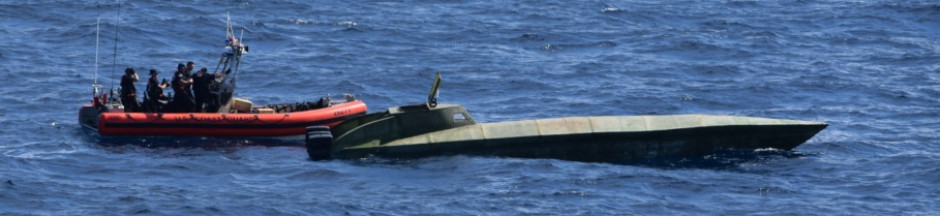
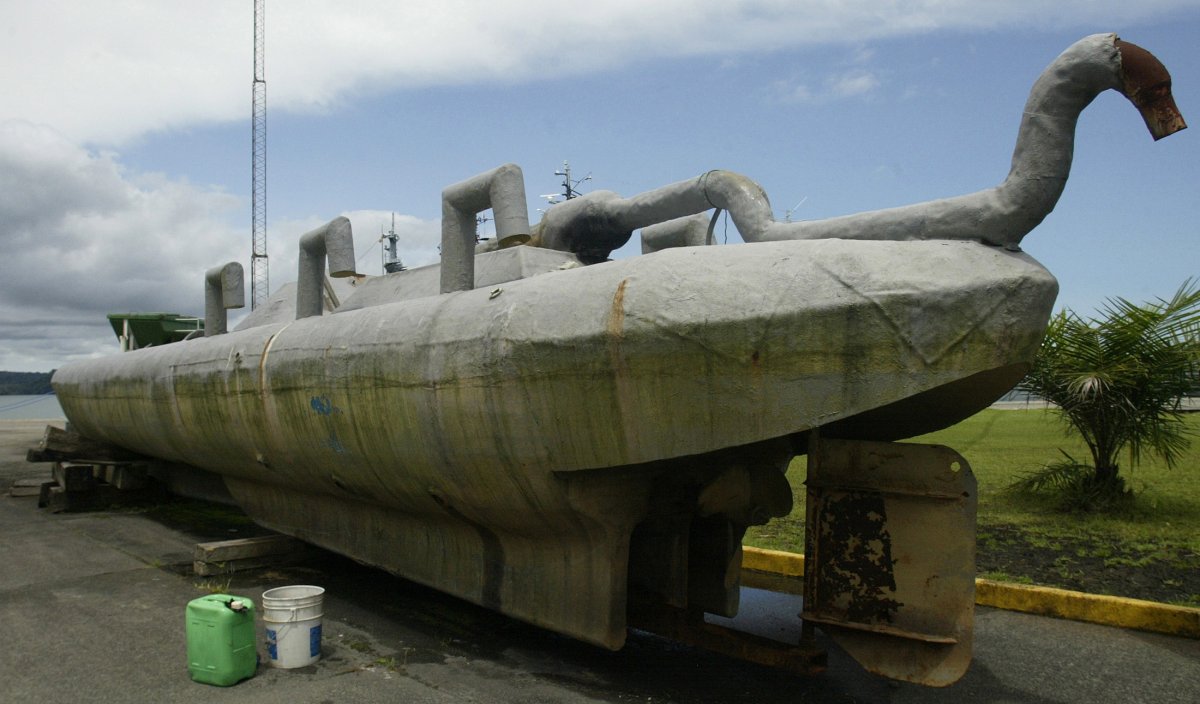
What is striking about the photos of the smuggling vessels is how similar they are, and how different from many of the preceding craft. They are not identical, so they are not being made on an industrial scale, but they are all of a common concept. The post calls them narcosubs, but they don’t have the extensive effort to minimize observability that earlier narcosubs had, and they don’t run decks awash. They have made some attempt at stealth, but the attempts to cool their exhaust to minimize Infrared signature are gone, along with the inboard diesel engines replaced by multiple outboards. They have more freeboard, and are probably a great deal faster. Looks like they have combined features from go-fasts, Very Slender Vessels, Low Profile Vessels, and semi-submersibles.
USCG Monomoy (WPB-1326) and Adak (WPB-1333), elements of PATFORSWA
The first two of the probably six Webber class WPCs that will replace the 110s in PATFORSWA have been funded. Before they go, there will likely be some changes in how they are equipped.
When the 110 were deployed they had some relatively minor changes:
During the delay in Hampton Roads, each of the WPBs received upgrades for overseas service. First, maintenance crews addressed all of the cutters’ mechanical problems. These crews also added two .50 caliber machine gun mounts aft of the pilothouse to supplement the firepower of the forward-mounted MK38 25mm gun. Most of the modifications fell within the area of communications, including new high-frequency transceivers, installation of satellite telephones and a number of improvements designed to reduce electromagnetic interference. Work crews installed new highstrength Kevlar lifelines around the decks and Forward-Looking Infrared Receivers (FLIR) on the cutters’ masts for nighttime operations. Each WPB also received night vision goggles; a translating bullhorn; and chemical, biological and radiological (CBR) gear.
Coast Guard planners also increased the patrol boats’ boarding capability. Each cutter received four Law Enforcement Detachment (LEDET) personnel to bring crew size up to full combat readiness. Coast Guard planners expected this crew augmentation to improve the WPBs maritime interception operations (MIO) capability, which would help the cutters to fulfill their primary mission in the Arabian Gulf. Work crews also added extra bunks in the aft berthing area of each WPB to provide for the war-time crew complement. Even so, certain crewmembers still had to practice “hot bunking,” with different watches sharing the same bunks
Now there is more time to plan and make upgrades. These ships also might serve as prototypes for equipment changes to the rest of the Coast Guard’s Webber class fleet either in response to the terrorist threat or in the future, in anticipation of an armed conflict.
In addition, the Navy’s Cyclone class patrol craft are coming to the end of their service life, and suitably modified Webber class might serve as a replacement.
Missions:
Originally eight Island class cutters were deployed in support of Operation Iraqi Freedom, four in the Mediterranean and four in the Persian Gulf. They were to provide force protection. In addition they participated in the capture of an Iraqi vessel attempting to clandestinely mine the Gulf. Later they escorted humanitarian relief supplies up the rivers. They protected Iraq’s off shore oil terminals. Now there are six stationed in Bahrain. In addition to continuing force protection duties, they provide training to Navy ships as they enter the area. They promote capacity building in the navies and coast guards of SW Asia and East Africa. They have conducted counter piracy operations off the Horne of Africa.
Threats:
Most of the duties these ships encounter are similar to those of continental US vessels, but there are some significant threats in the are we might want to consider.
The Navy of the Iranian Islamic Revolutionary Guard Corp has a force of about 1500 fast inshore attack craft ranging from simple rocket equipped speed boats to torpedo and missile boats. If there is a conflict, they are expected to be used in swarming attacks. My take is that the majority of these boats serve primarily as a distraction and screen to facilitate the attacks of the torpedo and missile armed craft, but some may be used as suicide improvised explosive devices.
Weapons:
None of these projected threats require large warhead weapons to deal with them, but they do require a short time critical, high probability of kill. The Iranian threat also means there is a need to deal with multiple threats, from multiple directions simultaneously. Attacks could be prolonged, so running out of ammunition could be problem.
The easiest change is to convert the four single .50 caliber mounts to twins. This doubles the ammunition on each mount and provides redundancy if a weapon jams. I think I may have seen that this was already done on the 110 in PATFORSWA.
We might want to replace some or all of the crew served .50 caliber machine guns with the more accurate, stabilized Mini-Typhoon Mk49 Mod1 ROSAM remote weapon station which is already on four Coast 87 foot cutters used for Force Protection of Fleet Ballistic Missile Submarines. This mount is also expected to be installed on the Offshore Patrol Cutters. Their electro-optic devices could also improve situational awareness, particularly at night.
They will need a laser target designator even if there are no laser guided weapons on the cutter, to allow it to designate targets for other US and allied platforms, perhaps provision for one mast mounted and one hand held.
To dispatch threats, quickly and effectively, these vessels really need small guided weapons in addition to guns.
The only small missile installations the Navy has made are Sea Griffin on the Cyclone Class patrol craft and a relatively large 24 round installation on the Littoral Combat Ships.
Sea Griffin lost out to the Hellfire Longbow for installation on the LCS. Hellfire and APKWS have been declared among six “preferred munitions” being procured at maximum production rates, literally thousands of rounds per year. With Sea Griffin falling in size between APKWS and Hellfire, this probably means Sea Griffin does not have a great future.
As a minimum I think our cutters need a number of APKWS, Hellfire may also be desirable for its longer range, greater hitting power, and fire and forget capability. It would be best if we could use either and trade them off. Unfortunately right now there is no system in the Navy inventory, other than perhaps Sea Griffin, that could readily be installed on our cutters.
The Israeli’s have attached missile launch tubes to their versions of both the Mk38 gun mount that we have on the Webber class and on their mini-Typhoon which is in USN and Coast Guard service as the Mk49 mod1. (Both systems are also expected to be on the OPC.)
Spike LR Missile launched from a Typhoon weapon station on an Israel Navy Super Dvora Mk 2. A similar configuration was recently tested by the US Navy, from an unmanned surface vessel (USV-PEM). Photo: RAFAEL
Rafael Mini Typhoon 12.7mm RWS (MK49 mod1 in USN) and Spike-ER missile launcher recently tested by the USN on an unmanned surface vessel. (photo : Rafael)
This looks doable:
I would suggest these little ships should be armed with a Mk 49 remote weapon station taking the place of, at least the two crew served .50 cal. mounts on the aft corners of the superstructure, perhaps the two forward as well. In addition, the Mk38 mod3 and the Mk49s should be modified to also support a pair of four tube APKWS launchers, similar to the one pictured below. (Perhaps seven or even 19 round launchers in the case of the Mk38.) Assuming we replace only after Mk49 mounts, and have two four round launchers on each mount, this would provide at least 24 guided rockets ready to launch.
Unfortunately, while the Navy has done a test with the Mk49 and has been talked about adding missiles to the Mk38, they have never followed through. We need to convince the Navy to rapidly push development of this additional capability. They should also have an interest in doing this, since Mk38s are mounted on their destroyers, Cyclone patrol craft, Mk VI patrol boats, and a number of other vessels. BAE should be all in, they make both the MK38 gun mount and the APKWS. Plus these modified Webber class may be the next Navy PC as well.
The Fletcher laser guided rocket launcher fires BAE’s 2.75 inch laser guided rockets known as the Advanced Precision Kill Weapon System. (Shawn Snow/Defense News Staff)
Other Options:
I have seen a mockup of small Hellfire Vertical Launch Systems that might it might be possible to mount on the outer superstructure bulkheads in the form of multiple single launch tubes. There are other launch systems like the one below that fit on vessels much smaller than the Webber class.
The Cyclone class have light weight EW systems including decoys, some of them have small unmanned air systems, and they have provision for employing Stinger man portable air defense systems.
A Link16 capability would be nice, even if read only.
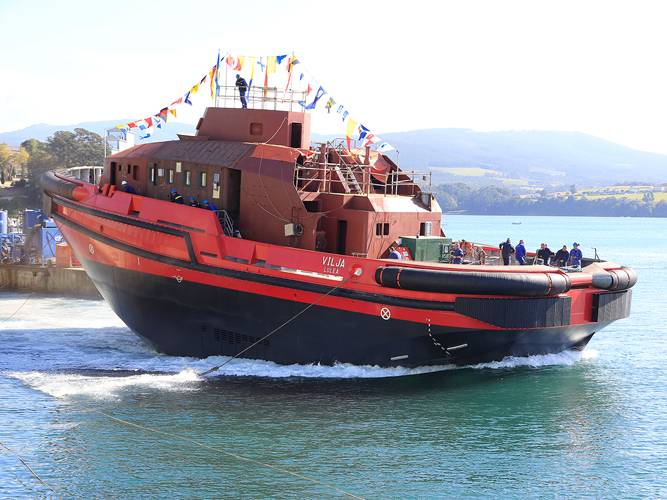
36 meter hybrid-electric icebreaking escort tug Vilja for Sweden’s Port of Luleå launched Oct 8, 2018 at GONDAN Shipyard in Figueras, Spain.
MarineLink reports the launch of a new icebreaking tug built in Spain for a Swedish port. At 36 meters (118 feet) they are a bit smaller than our nine Katmai Bay class 140 foot icebreaking tugs, but substantially larger than the eleven 65 foot tugs.
They claim an ability to break up to a meter of ice at three knots. That is more than the claim for the Katmai Bay class, but that does refer to fresh water which might be harder.
Reported missions are ice management, escort, ship assist, coastal towing, firefighting and navigation aids service duties.
The new tug is equipped with a hybrid propulsion system that will include two diesel main engines, shaft generators/motors and batteries for energy storage claimed to provide operational flexibility that will produce significant fuel, emissions and maintenance savings.
In addition, with an expected bollard pull of about 100 metric tons in diesel-mechanical mode when including battery boost capacity, this tug will be the most powerful icebreaking escort tug of this size in the world with hybrid/electrical propulsion.
Research, Development, Test and Evaluation Spotlight: Night vision devices evaluation
Posted by Diana Sherbs, Tuesday, October 9, 2018
Written by Loretta Haring Office of Strategic Planning and Communication Acquisition Directorate
A law enforcement team from Coast Guard Cutter Bertholf (WMSL-750) consisting of Petty Officer 1st Class Jordan Baptiste, Petty Officer 1st Class Asher Thomas, Petty Officer 2nd Class Jean Latimer, Lt. j.g. Kenji Awamura and Petty Officer 3rd Class Brandon Scott, man the cutter’s Over The Horizon (OTH) boat, Nov. 4, 2008, during law enforcement training. Team members train constantly to be proficient in their maritime law enforcement mission. U.S. Coast Guard photo by Petty Officer 3rd Class Henry G. Dunphy.
Since technology is constantly changing and improving, CG-731 asked the Coast Guard Research and Development Center to research capability improvements in the latest generations of commercial off-the-shelf night vision devices (NVD). Counterdrug and migrant interdiction operations sometimes require the ability to see in low-light or no-light situations, necessitating NVD use.
“We knew night vision capabilities had significantly improved in recent years,” said Lt. Tyson Finn, who is the program lead for this initiative within the Office of Boat Forces. “We wanted to see if the newer capabilities could provide increased performance and safety for our pursuit forces. Working with the RDC and the Deployable Specialized Forces community, we did exactly that.”
The RDC first issued a commercial request for information to determine the state of the NVD market and its new capabilities, said Michael Coleman, an RDC researcher and project manager for the NVD evaluation. Researchers also communicated with commercial entities and government and military agencies to get as much information as possible. They found advancements including field of vision, depth perception, amplification methods and performance characteristics. From that research, a group of NVDs was down-selected and an evaluation methodology developed for underway evaluations.
Limited user evaluations (LUE) to assess NVD capabilities based on specific missions sets using simulated tactics were conducted in both protected and open water in San Diego, and Charleston, South Carolina. NVDs were evaluated for performance, utility and ergonomics; boat evaluation platforms were modified by filtering lights and changing light bulbs to mitigate impacts on NVD use, Coleman said.
Coxswains involved in the limited user evaluations were excited by the increased capabilities of the NVDs.
“Extremely effective, I can see really well,” one coxswain told researchers.
“Looking through the NVD it seemed like a bright sunny day in the fog,” another remarked.
The newer NVD technology demonstrated increased field of view and improved depth perception as well as significant clarity and resolution improvements.
Based on the LUEs, the RDC provided recommendations to CG-731 on specific NVD capabilities and use, Coleman said. The Office of Boat Forces used the recommendations to develop policy on specific NVD use for certain mission sets and established a training and qualification process.
“In time as the cost for this technology decreases, we hope to further evaluate whether this newer NVD technology can be safely and effectively employed on additional platforms and other missions,” said Cmdr. Mike Keane, chief of the boat forces policy division.
Coleman said it is especially satisfying to see the RDC’s research transition to the workforce.
“These updated NVDs provide another tool for the coxswain to use that can be advantageous in completing their mission,” said Coleman.
“Having the ability to evaluate how advancements in technology and equipment can make Coast Guard Boat Forces more capable is key,” Finn said. “The RDT&E Program is an important tool we have available to help us advance how boat crews execute their missions safely and effectively; without their assistance this project would not have been as successful.”
“It is the RDT&E Program’s goal to transition meaningful and impactful projects to the field to enhance mission performance,” said Steve Hager, Surface Domain lead for the RDT&E Program. “This project is a fantastic representation of how partnering with the RDT&E Program can further capabilities in the fleet at the deck-plate level.”
BairdMaritime reports the French Ministry of Finance has awarded the OCEA shipyard a contract for construction of a new Customs patrol boat for the West Indies. There is also an option for a second vessel.
We might have an opportunity to work with this class in the Caribbean. At 31.2 meters (102 feet), it falls between Coast Guard 87 foot Marine Protector and 110 foot Island class cutters. The speed, at 27 knots, also falls between that of the 87 footers (25 knots) and 110s (29 knots). It will have accommodations for 16 and a crew of ten.
This might be about the size of the design chosen to replace the 87 foot WPBs. The design appears mostly unremarkable, an aluminum construction mono-hull.
What I find interesting is their boat handling arrangement. Rather than a stern ramp, it appears to carry a relatively large RHIB launched by davit over the starboard side. This is the same arrangement we see on smaller patrol boats built by OCEA for the Philippines. (see photo below.)
While stern ramps certainly allow rapid launch, recovery can be problematic in rough seas, and they require sacrifice of hull volume. Modern davit systems can be operated with no more personnel than a ramp system, are relatively quick, and impose minimal design penalties on the hull.
The smaller 24 meter (78.7 foot) OCEA FPB 72 provided to the Philippine Coast Guard, also with davit launched RHIB on the stern. This class is also used by Nigeria and Suriname
Aerial view of the Port of San Diego with three cruise ships in Port, from Oct. 4, 2012. Port of San Diego photo
As you may have heard, there was a cyber attack on the Port of San Diego, Sept 25, 2018. The port includes 34 miles of waterfront along Chula Vista, Coronado, Imperial Beach, National City, and San Diego.
“On Tuesday, September 25, the Port of San Diego reported a cybersecurity incident impacting port offices and some physical security aspects of Maritime Transportation Security Act regulated facilities. The local Coast Guard Captain of the Port along with other federal, state, and local partners, have been actively engaged in response efforts to ensure port safety and security. The cyber incident did not adversely impact Marine Transportation System operations.
“For the benefit of our readers, the Office of Port and Facility Compliance is sharing a Federal Bureau of Investigation public service announcement titled “Cyber Actors Increasingly Exploit the Remote Desktop Protocol to Conduct Malicious Activity,” found at the following link:
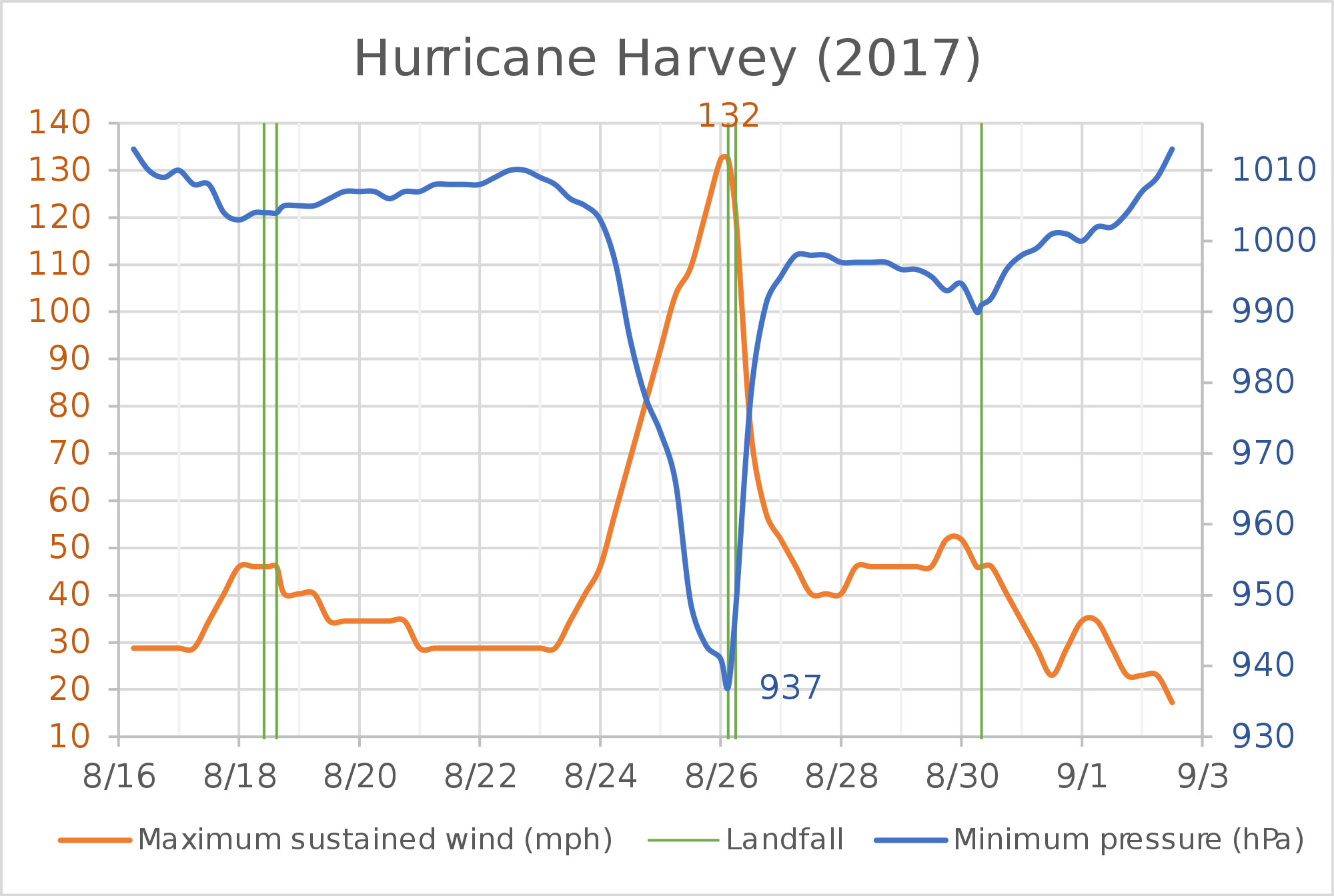
Maximum sustained wind speed and minimum pressure of Hurricane Harvey (2017), Data source: NATIONAL HURRICANE CENTER, TROPICAL CYCLONE REPORT, HURRICANE HARVEY, NOAA
The October US Naval Institute (USNI) Proceedings has what I think may be an important article, discussing the Coast Guard’s use of Social Media in response to Hurricane Harvey. The article is “Hurricane Ready: Coast Guard Adapts to the Social Media Storm,” by Cadet Evan Twarog, USCG. (Unfortunately for those of you who are not USNI members, it is behind the pay wall)
During Hurricane Harvey work with volunteer organizations and crisis mapping became critical. It is a remarkable story of cooperation and rapid innovation.
Not only does the article discuss the service’s use of social media during Harvey, it also talks about future use including standardization. Cadet Twarog points out, and to some extent answers, the following,. “Now the service needs to examine how to permanently and systematically monitor social media calls. To make this possible, four questions must be answered:
“How will the Coast Guard collect information?
“Who will be responsible for the information?
“How will it be distributed throughout the Coast Guard?







 Chuck Hill's CG Blog