Report to Congress on U.S. Coast Guard Polar Icebreaker Program, July 9, 2018

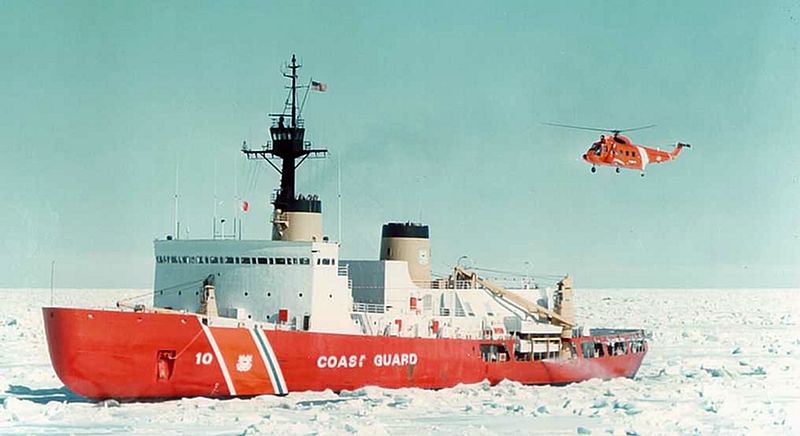
USCGC Polar Star. An old USCG photo, note the HH-52.

The Congressional Research Service has issued a new edition of its Report to Congress on U.S Coast Guard Polar Icebreaker Program by specialist in naval affairs Ronald O’Rourke, this one dated July 9, 21018. You can see it here. 

I have reproduced the summary immediately below.  

The Coast Guard polar icebreaker program is a program to acquire three new heavy polar icebreakers, to be followed years from now by the acquisition of up to three new medium polar icebreakers. The Coast Guard wants to begin construction of the first new heavy polar icebreaker in FY2019 and have it enter service in 2023. The polar icebreaker program has received about $359.6 million in acquisition funding through FY2018, including $300 million provided through the Navy’s shipbuilding account and $59.6 million provided through the Coast Guard’s acquisition account. The Coast Guard’s proposed FY2019 budget requests $750 million in Coast Guard acquisition funding for the program.

The acquisition cost of a new heavy polar icebreaker had earlier been estimated informally at roughly $1 billion, but the Coast Guard and Navy now believe that three heavy polar icebreakers could be acquired for a total cost of about $2.1 billion, or an average of about $700 million per ship. The first ship will cost more than the other two because it will incorporate design costs for the class and be at the start of the production learning curve for the class. When combined with the program’s $359.6 million in prior-year funding, the $750 million requested for FY2019 would fully fund the procurement of the first new heavy polar icebreaker and partially fund the procurement of the second.

The operational U.S. polar icebreaking fleet currently consists of one heavy polar icebreaker, Polar Star, and one medium polar icebreaker, Healy. In addition to Polar Star, the Coast Guard has a second heavy polar icebreaker, Polar Sea. Polar Sea, however, suffered an engine casualty in June 2010 and has been nonoperational since then. Polar Star and Polar Sea entered service in 1976 and 1978, respectively, and are now well beyond their originally intended 30-year service lives. The Coast Guard has used Polar Sea as a source of spare parts for keeping Polar Star operational.

A Department of Homeland Security (DHS) Mission Need Statement (MNS) approved in June 2013 states that “current requirements and future projections … indicate the Coast Guard will need to expand its icebreaking capacity, potentially requiring a fleet of up to six icebreakers (3 heavy and 3 medium) to adequately meet mission demands in the high latitudes….”

The current condition of the U.S. polar icebreaker fleet, the DHS MNS, and concerns among some observers about whether the United States is adequately investing in capabilities to carry out its responsibilities and defend its interests in the Arctic, have focused policymaker attention on the question of whether and when to acquire one or more new heavy polar icebreakers as replacements for Polar Star and Polar Sea.

On March 2, 2018, the U.S. Navy, in collaboration with the U.S. Coast Guard under the polar icebreaker integrated program office, released a request for proposal (RFP) for the advance procurement and detail design for the Coast Guard’s heavy polar icebreaker, with options for detail design and construction for up to three heavy polar icebreakers.

Issues for Congress for FY2019 for the polar icebreaker program include, inter alia, whether to approve, reject, or modify the Coast Guard’s FY2019 acquisition funding request; whether to use a contract with options or a block buy contract to acquire the ships; whether to continue providing at least some of the acquisition funding for the polar icebreaker program through the Navy’s shipbuilding account; and whether to procure heavy and medium polar icebreakers to a common basic design.
Coast Guard Kicks Off Arctic Technology Evaluation 2018–Acquisitions Directorate

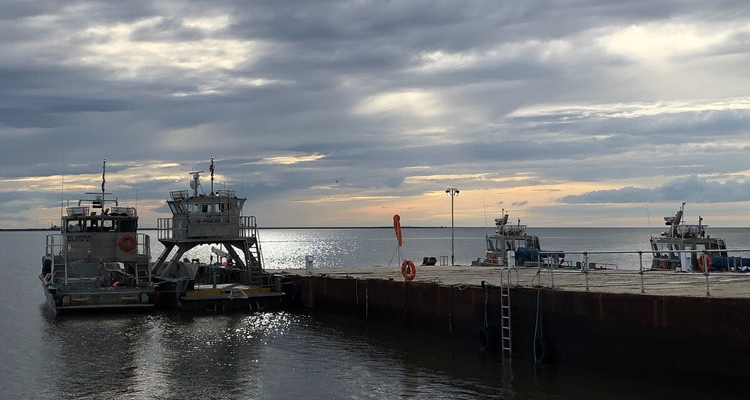
Members of the Coast Guard Research, Development, Test and Evaluation Program (CG-926) and the Research and Development Center are in Prudhoe Bay, Alaska, to test usage of unmanned systems in the Arctic in Arctic Technology Evaluation 2018. U.S. Coast Guard photo by Alexandra Swan.

The following is a quote from the Acquisitions Directorate (CG-9) Web Site:

Coast Guard Kicks Off Arctic Technology Evaluation 2018

July 25, 2018

The Coast Guard is conducting its 2018 Arctic Technology Evaluation July 21-Aug. 3, 2018, in Prudhoe Bay, Alaska.

This year’s Arctic research will focus on evaluating how unmanned aircraft systems (UAS), unmanned surface vehicles (USV) and an aerostat balloon can work together as a network. The Coast Guard’s Research, Development, Test and Evaluation (RDT&E) Program and Research and Development Center (RDC) are partnering with Alaska Clean Seas for this year’s activities.

The research team will conduct a number of search and rescue and environmental testing scenarios, including using the unmanned systems to detect a life raft and evaluating capabilities to detect and sample a simulated oil spill. The unmanned systems will be integrated with Persistent Systems Man Pack Unit 5 radios (MPU5) to test the potential communication relay. The research team will also compare UAS sensor performance at high latitudes with data gathered through the RDT&E Program’s Robotic Aircraft Sensor Program for Maritime.

For more information: Research, Development, Test and Evaluation Program page and Research and Development Center page

Original Music for the Coast Guard

Saw this on Facebook. Michael Harrington shared a link to the group: U.S. Coast Guard Retired. It was a year ago, but it resurfaced and thought I would pass it along. Below is the information that accompanied the video on YouTube.

An original musical and visual tribute to the Coast Guard written by Coast Guard veteran, singer/songwriter, Brad Fitch, Estes Park, Colorado. Music and photos © 2011 Brad Fitch. All rights reserved. Produced by Summertown Studios, Fort Collins, CO http://www.SummertownStudios.com Bob Buford, Producer

Rep. Courtney: U.S. Needs Comprehensive National Maritime Strategy Soon–USNI

A sailor explains the layout and functionality of Ford’s flight deck to Rep. Joe Courtney in 2016. US Navy Photo

The US Naval Institute news service reports the comments of Representative Joe Courtney (D-Conn) regarding the Nations lack of a comprehensive Maritime Strategy. He is apparently mostly talking about building more submarines in his home district.

There are a couple of points I think might be worth discussing that were brought up at the end of the post.

Asked if there were plans to build new icebreakers to compete with Russia and others who are moving into the Arctic, Courtney said the Seapower panel does not deal with the Transportation Department programs (emphasis applied–Chuck), which include the Coast Guard and its icebreakers. But he said they have encouraged the Navy to cooperate to help the Coast Guard get the icebreakers it needs.

However, he added, they just heard that in the 2019 appropriations bill, the Transportation Department “gets no money for icebreakers. Some of us will want to work on that.”

First, the fact that there is no money in the 2019 budget for icebreakers.

Second, that the Seapower Sub-Committee does not deal with Coast Guard programs, seems to be part of the problem. The Coast Guard has become an increasingly important part of American Sea power. The Coast Guard is the defacto low mix in American naval power’s high-low mix. We have virtually all the patrol boats. The Coast Guard now has about one eighth the number of personnel of the US Navy. It has more personnel than either the British or French Navies. That the Seapower subcommittee does not have the opportunity to consider relative low marginal cost add-ons that could significantly increase the military value of cutters (and perhaps aircraft) is a lost opportunity.

It seems the Navy does not want to look to the Coast Guard for any significant role in a major conflict, even though the need for additional ASW assets is abundantly clear. Maybe they think a stronger, more militarily competent Coast Guard would divert money from Navy programs. Maybe they are just deferring to the Coast Guard, “Well what do you want to do?” The Coast Guard does not seem to have much of a clue what they will do in the next major, war because their platforms are not equipped to do much in the way of military missions. Hopefully there is really more coordination and planning than is evident looking in from the outside, but given our history, I doubt it.

Note, we do have A Cooperative Strategy for 21st Century Seapower: Forward, Engaged, Ready,” but it is a strategy for maintaining the peace, not a strategy for maintaining Maritime dominance, which requires a healthy shipbuilding industry and merchant marine.

Having a healthy shipbuilding industry and a healthy merchant marine seem to be at odds. The merchant marine needs cheaper ships and cheaper crew costs, both likely to happen only if we allow some foreign shipbuilding and some foreign crewmen. A healthy shipbuilding industry seems to require buying ships made in America at costs above the going international rate. Some Western Countries seem to have cracked to code on how to have both high wages and healthy shipbuilding and merchant marines. Some of that is due to subsidies. I wish our leadership luck in coming up with a good maritime strategy. We did it once, during the run-up to WWII, and it may have saved the world from tyranny.  

(Sorry about the rant, is my frustration showing?)


Coast Guard Releases Request For Information For Polar Star Service Life Extension Project

The following is a quotation in full of a post from the Acquisition Directorate (CG-9)

Coast Guard Releases Request For Information For Polar Star Service Life Extension Project

July 19, 2018

The Coast Guard released a request for information (RFI) July 18 to gather market research for the Coast Guard Cutter Polar Star service life extension project (SLEP) as part of the In-Service Vessel Sustainment Program (ISVS). The SLEP effort will recapitalize a number of major systems – including machinery control and propulsion power distribution systems – and extend the service life of the cutter by four years. The work will include a six-month long lead time material procurement and detailed design phase, followed by a minimum of three annual repair execution phases between 2021 and 2024.

The RFI is available here.

Polar Star, the Coast Guard’s only active heavy icebreaker, was commissioned in 1976. The 399-foot ship is currently responsible for nine of the 11 Coast Guard statutory missions. Each winter, the cutter travels to McMurdo Station in Antarctica as part of Operation Deep Freeze, which supports the National Science Foundation-managed U.S. Antarctic Program.

“The SLEP for Polar Star is essential to maintain year-round access to the polar regions until new heavy polar icebreakers are delivered,” said Ken King, program manager for the ISVS program. “The challenge for this program will be to balance phased SLEP work with continued Polar Star operational deployments.”

The deadline to submit responses is Aug. 3, 2018 at 4 p.m. EDT.

For more information: In-Service Vessel Sustainment program page  

Narco-Subs–Covert Shores

Fiberglass four-man craft is typical of recent LPVs. Seized by Steadfast in the Eastern Pacific. Source: Dvids

The website “Covert Shores” has a couple of posts that purportedly show the latest fashion in drug smuggling vessels, here and here. Some great photos.

Might also find this interesting, “Narco Sub 101”

Covert Shores has been added to my “Recommended Blogs” list.

47-Foot Motor Lifeboat Service Life Extension Program

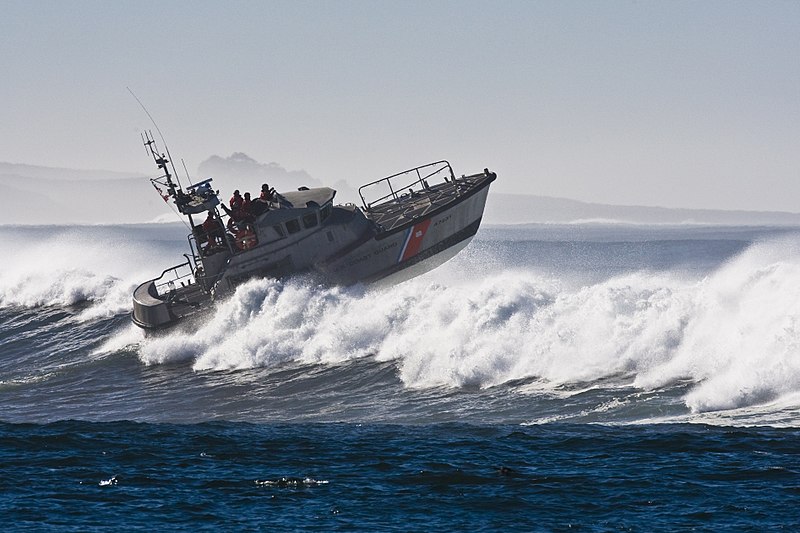
47-Foot Motor Life Boat (MLB) 47231 from Station Morrow Bay, 4 Dec 2007. Photo by Mike Baird

The following is a direct quote of a post on the Acquisitions Directorate (CG-9) web site.


Third Round of Industry Input Sought On 47-Foot Motor Lifeboat Service Life Extension Program

July 13, 2018

A request for information (RFI) was released by the Coast Guard on July 12 for the 47-foot motor lifeboat (MLB) service life extension program (SLEP) as part of the In-Service Vessel Sustainment (ISVS) program. The Coast Guard is providing industry with the latest draft of the statement of work and specification along with access to the majority of the MLB technical data – drawings and technical publications – while seeking industry comments before making a formal solicitation for the contract, which has an estimated value of over $100 million.

This is the third RFI for the MLB; the first was released in September 2016 and the second in November 2017.

The MLB is the Coast Guard’s primary search and rescue platform in surf and heavy weather conditions. The fleet of more than 100 MLBs is approaching the end of its planned 25-year service life, and operational availability has been limited by parts availability and obsolescence issues. The SLEP will extend the useful life of the MLB by 20 years. The original operational capabilities and characteristics of the MLB will effectively remain the same, while efforts to enhance human system integration will be made where practical.

“This RFI answers questions posed through prior industry engagement,” said Cmdr. David Obermeier, deputy program manager for boats acquisitions. “It also gives industry the opportunity to provide additional feedback on the latest draft statement of work and specification.”

The RFI can be found here. The deadline to submit responses is July 27, 2018, at 2 p.m. EST.

For more information: In-Service Vessel Sustainment program page

Hull Vane Experiment on 52 Meter OPV

“This project video shows the process from design to sea trials of a Hull Vane retrofit on the 52 m Offshore Patrol Vessel Thémis from the French Affaires Maritimes. The installation was done by CMN Cherbourg, which was also the builder of this vessel (delivered in 2004).”

I have posted on this particular innovation before, twice in fact, in 2017, “Hull Vane Claims Improved Performance,” and in 2015, “Hull Vane on an OPV,” but now we have another example and new information. This time the example is a mid-life up-grade on a vessel slightly larger but otherwise similar to the Webber class WPCs, the OPV Thémis from the French Coastguard (Affaires Maritimes) 409 tons, 6,310 HP, 52.5x9x2.27 meters (172.2×29.5×7.45 feet)

MarineLink reported this experiment, but I also found an excellent report with more photos here.

The results of this trial:

Comparison with the benchmark sea trials – conducted in January in exactly the same conditions – by CMN’s sea trial team showed a reduction in fuel consumption of 18 percent at 12 knots, 27 percent at 15 knots and 22 percent at 20 knots. The top speed increased from 19.7 knots to 21 knots.

The earliest post, “Hull Vane on an OPV,” reported the effects of applying the innovation to a 108 meter Dutch Holland class OPV, a ship very much like the Offshore Patrol Cutter (OPC).

  • They claimed a 12.5% reduction in fuel consumption, overall. Specifically they claimed. “…runs were done to determine the resistance at 5 knots, 12.5 knots, 17.5 knots and 22.5 knots, showing resistance reductions of 1.3%, 13.7%, 15.3% and 11.1% respectively.”
  • A 4% reduction in heave,
  • A 7%% reduction in pitch, and
  • A 13% reduction in vertical acceleration at the flight deck.

A comment on this earliest post, received from the Hull Vane team, noted.

“The performance is better however on the fuller-bodied and wider-transomed hull shapes like the typical US Coast Guard cutters, which we would very much like to do some work on.”

The Hull Vane web site has a number of publications, testimonials, and case studies, including a Nov. 2017 report on a 25 meter patrol boat. that claimed a 20% reduction in fuel consumption. It also noted  “RPA 8 is the eighth vessel to be equipped with a Hull Vane®, and ten other ships which will have a Hull Vane® are currently under construction.”

As the new ships enter service, we will probably see the Webber class using more fuel than the 110s, and almost certainly the OPCs will use more fuel than the 210s and 270s.

I would think we would want to check this out, starting with contacting the Dutch Navy and the French Affaires Maritimes to get their take on the tests. Did they think they were successful? Are they going to use Hull Vane on their own ships? If not, why not? That would cost us very little. If the responses are positive, it would make a great R&D project. Bollinger might welcome the opportunity to try one out on a new construction Webber class. The baseline capabilities of the class are already well documented.


“Marines Fuel Coast Guard Mission”–Military.com

“U.S. Marine Corps Sgt. Robert Parkes, Marine Medium Tilt Rotor Squadron (VMM) 774 V-22 crew chief, poses in front of a U.S. Coast Guard Air Station Atlantic City HH-65 Dolphin on Coast Guard Air Station Atlantic City, N.J., June 14, 2018. The Marines conducted a forward air-refueling point for the first time – refueling an HH-65 with a VMM-774 V-22 Osprey. (U.S. Air Force photo/Ariel Owings)”

Military.com has a report of an exercise in which a Marine V-22 refueled a CG H-65 on the ground.

My first reaction, is that this is a good exercise for the Marines, but I had a hard time imagining how the Coast Guard might use this capability. There were times when we had to call on the Air Force Aerospace Rescue and Recovery Service to fly very long missions out to sea because Coast Guard helicopters did not have an aerial refueling capability, but this would not help us in those cases. On the other hand this might be useful in the Arctic where fuel stops can be few and far between. There aren’t many Marine assets in Alaska, but the Air Force might have a similar capability.

Thanks to Lee for bringing this to my attention.