
CBS New had a June 14, report on the Coast Guard’s Maritime Security Response Team (MSRT). Their report includes a video of the exercise. The video of the same exercise, above is a bit different. It shows the exercise as a bit more complex. It included at least three boats and two helicopters. It also looks like both helicopters conducted fast roping.
As a former exercise planner I have a few observations and comments.
The Exercise:
First I would have to acknowledge that we don’t know how far along the teams are in their training or exactly what the training objectives were.
This may have been more PAO effort than training.
Only bad guys died, none of the good guys. Miles gear and a smart, well trained, agressive red cell would have made this much more meaningful.
These had to be the dumbest opposition forces in history. They made no coordinated effort to prevent the boarding.
There were no warning shots or other evidence of an effort stop the vessel and determine if the vessel and crew were in fact hostile. If the crew and vessel were known to be hostile, we probably should have shot it up before the boarding.
It looks like the “fast rope” boarding from the helicopter not only happened before the boarding from boats, it happened before the boats were in position to provide supporting fire to pen down the terrorists and prevent them from engaging the helicopter and the team fast roping from it. Members of the fast roping team were standing around on the stern waiting for the team from the RHIB while bad guys were still on the same deck hanging out forward.
I have to wonder why they used a Navy H-60 instead of a Coast Guard helicopter. I thought all Coast Guard helicopters were now capable of air-borne use of force. While there are certainly plenty of Navy H-60s in San Diego, that is not the case in other West coast ports.
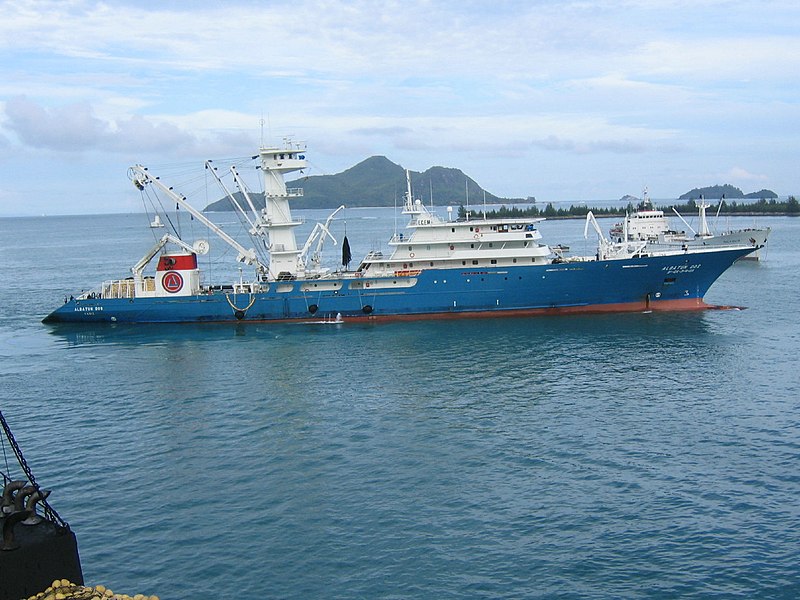
The vessel was unusually easy to board. A different configuration would have been much more challenging.
The Concept:
Unfortunately when you create an “elite team” there is a tendency to say that is their job, the rest of us don’t have to worry about it. Unfortunately the rest of the Coast Guard cannot simply go back to SAR and stop worrying about this terrorist stuff.
We have, I believe, only two Maritime Security Response Teams, while we have at least 30 ports that are potential terrorist targets. For rapidly developing threats the probability that an MSRT will be in the right place at the right time, or that they will be able to get there is slim.
During WWII both the Germans and the Japanese formed elite fighter squadrons that did extremely well but the concept was disastrous. What worked was what the US did. The US used its best fighter pilots to train others. It raised the general level of competence of the entire force.
The MSRTs could certainly be useful in a slow developing scenario like a cruise ship take-over, but perhaps their greatest role might be as OPFOR, training local units in how to respond, a sort of Red Flag/Top Gun role.
Thanks to Daniel for bringing this to my attention. The criticisms are mine not his.
 ortunities presented by the potential for an expanded role of the U.S. Coast Guard in Southeast Asia, and in particular a focus on the question of what role, if any, it should play in the South China Sea. Discussants will be announced shortly.

 Chuck Hill's CG Blog