Homeports, 2035

 An email discussion with a reader got me to thinking about how our cutters might be homeported in the future. It started with a simple question, where would NSC #11 be homeported? Turns out it is not a simple question because first we do not yet know where nine and ten will go, but it also kicked off a lot of thought about how changes of fleet capabilities, mission, and maintenance philosophy will effect the future lay down of assets.
 This is not going to be a definitive document, but rather an exploration of considerations and possibilities.
Why 2035? If the shipbuilding plans proceed as expected, we will not see the last Offshore Patrol Cutter (OPC) delivered until 2034.
Fleet Capabilities:
To provide I baseline, I will look back on the fleet of WHECs, WMECs and Island class WPBs as it existed before the new generation started arriving and before we lost eight Island class to the 123 foot conversion disaster and six more to a continuing commitment to South West Asia. My reference is a 2000-2001 issue of “Combat Fleets of the World” which includes a notation of cutter homeports.
In 2035 we can expect to have 35 large patrol cutters, 36 if we get NSC#11. The fleet in 2000 had 44. The new ships are certainly far more capable, but quantity has a quality all its own. Fortunately we have another way to make up for numbers.
The FRCs are much more capable than the 110s and approach the capabilities of the 210 foot WMECs. Additionally they will be more numerous than the 110s they are replacing. Only 49 Island class 110 foot WPBs were built, but the program of record includes 58 Webber class WPCs. The Webber class should be able to do many of the fisheries enforcement missions currently done by 210s. They have the same ship’s boat as the larger cutters and they are as seaworthy as most of the fishing vessels. The Webber class are expected to be underway for 2500 hours per year compared to 1500 hours for the Island class. The Webber class are not just “fast response cutter,” which was what the Island class were, they are at least part time, patrol assets.
If we compare what we had in 2000, 49 Island class available 1500 hours/year for 73,500 hours, with what we are projected to have, 58 Webber class available 2500 hours/year for 145,000 hours, that is an increase of 71,500 hours. If we assume optimistically that a dedicated patrol ship is available 24 hours a day for 185 days/year, that is 4,440 hours/day so the additional 71,500 hours is the equivalent of 16.1 patrol cutters. If we give due consideration to when and where they can be used and provide land based air support, this more than makes up for the lower number of larger cutters.
The Offshore Patrol Cutters will be far more seaworthy than the WMECs. In fact they will be at least equal to, and probably superior to the 378 foot WHECs, in terms of seakeeping. Their cruising speeds will higher than that of the 378s and their effective range of operations will be similar. Unlike the 270 and 210 foot WMECs they will be usable for Alaska Patrol.
Mission Changes: 
I don’t expect any of our current missions to go away, but there will inevitably be a change of emphasis.
The Eastern Pacific drug interdiction effort will likely continue, but the drug of choice may be changing from cocaine to synthetic opioids which enter the US by other routes. The Navy will also likely join the Coast Guard in Eastern Pacific drug interdiction, which may reduce the need for cutters.
The island nations of Melanesia, Micronesia, and Polynesia will be under stress as a result of sea level rise and the effects of illegal, unregulated, and unreported fishing. The Coast Guard is likely to be called upon to assist them.
There will be a need to assist other coast guards and coast guard like organizations, particularly in Africa and South East Asia where they have problems with piracy, drug and human trafficking and illegal, unreported, and unregulated (IUU) fishing, and the Coast Guard will be increasingly asked to provide capacity building assistance.
Maintenance Philosophy:
The Coast Guard seems to have embraced the idea that there are benefits to basing ships in clusters. Clusters of at least three almost guarantees that there will be at least one vessel in port to benefit from the support facilities there. I think we may see many of  those ports that are currently expected to host two Webber class get a third when more become available. I don’t think we will see many, or perhaps any ports, with only one Bertholf, OPC, or Webber class homeported there.
In the Past:
In 2000 ships were split between the Atlantic and Pacific in ways that reflected fundamental differences in the two theaters. Looking at the WHECs, WMECs, and 110 foot WPBs as surrogates for the NSCs, OPCs’ and FRCs; LANTAREA had 63 vessels (two WHECs, 26 WMECs, and 35 WPB110s), PACAREA had 30 vessels (ten WHECs, six WMECs, and 14 WPB110s). Those 93 vessels were distributed among 38 ports, 15 in PACAREA and 23 in LANTAREA.
The Ports: 
In an earlier post, “Ruminating on Homeports While Playing the Red Cell,” I identified 30 critical ports or port complexes that are likely targets for those hostile to the US (23 in LANTAREA and seven in PACAREA), including 23 military outload ports (17 in LANTAREA and six in PACAREA). Only five of these ports have a significant Navy surface ship presence. It makes sense for us to homeport vessels, particularly the Webber class, in, near, or on the approaches to those ports where there is no Navy surface ship presence. Fortunately some of these ports are in close proximity to each other. This list of ports is repeated below. I have indicated where current planning indicates NSCs and FRCs are or will be homported in bold. This accounts for eight NSCs and 43 FRCs. 
LANTAREA

CCGD1:

  • Bath, Me–Major Naval shipbuilder
  • Groton, CT–Submarine base
  • Hudson River complex, New York, NY/Elizabeth and Bayonne, NJ–a major cultural target, #3 US Port by tonnage, #2 Container port, #4 Cruise ship port (NYC) and #13 cruise ship port (Cape Liberty, NJ), Strategic Seaport (Elizabeth)

CCGD5–four FRCs

  • Delaware Bay–Strategic Seaport (Philadelphia) –two FRCs at Cape May
  • Chesapeake Bay Complex, VA–Base for aircraft carriers and submarines, Major naval shipbuilder, #14 port by tonnage, #7 container port; plus water route to Washington, DC (major cultural target) and Baltimore, MD–#9 port by tonnage, #10 container port, #12 cruise ship port, Strategic Seaport (Norfolk and Newport News)
  • Morehead City, NC–Strategic Seaport –two FRCs at near by Atlantic Beach
  • Cape Fear River–Strategic Seaport (Sunny Point and Wilmington, NC)

CCGD7–Two NSCs, 18 FRCs (six in Key West in addition to those indicated below)

  • Charleston, SC–#9 container port, #15 cruise ship port, Strategic Seaport –two NSCs
  • Savannah, GA–#4 container port Strategic Seaport
  • Jacksonville complex, FL (including Kings Bay, GA)–SSBNs, Navy Base Mayport, #14 cruise ship port, Strategic Seaport
  • Port Canaveral, FL–#3 Cruise Ship port
  • Port Everglades/Fort Lauderdale, FL–#13 container port, #2 Cruise Ship port
  • Miami, FL–#11 container port, #1 Cruise Ship port–six FRCs
  • San Juan, PR–#5 Cruise Ship port, #15 container port–six FRCs
  • Tampa, FL–#7 Cruise Ship port

CCGD8–Five FRC

  • Mobile, AL–major naval shipbuilder, #12 port by tonnage
  • Pascagoula, MS–major naval shipbuilder –two FRCs replacing Decisive.
  • Gulfport, MS–Strategic Seaport
  • Mississippi River Complex, LA–#14 container port,#10 Cruise Ship port (NOLA), #1 port by tonnage (South Louisiana), #6 port by tonnage (NOLA), #8 port by tonnage (Baton Rouge), #10 port by tonnage (Port of Plaquemines)
  • Lake Charles, LA–#11 port by tonnage
  • Sabine Pass complex (Beaumont/Port Author/Orange, TX)–#4 port by tonnage (Beaumont), Strategic Seaport (both Beaumont and Port Author)
  • Houston/Galveston/Texas City, TX–#2 port by tonnage (Houston),  #13 port by –tonnage (Texas City), #5 container port (Houston), #6 Cruise ship port (Galveston)–Three FRC going to Galveston when Dauntless departs.
  • Corpus Christi, TX–#7 port by tonnage, Strategic Seaport

PACAREA

CCGD11–Four NSCs, two (assumption) FRCs

  • San Diego–Base for aircraft carriers and submarines, major naval shipbuilder (NASSCO), Strategic Seaport
  • Los Angeles/Long Beach/Port Hueneme, CA–A major cultural target, #5 port by tonnage (Long Beach), #9 port by tonnage (Los Angeles), #1 container port (Los Angeles), #3 container port (Long Beach), #9 cruise Ship port (Long Beach), #11 cruise ship port (Los Angeles), Strategic Seaport (Long Beach and Port Hueneme) –FRC(s)at San Pedro
  • San Francisco Bay complex–A major cultural target, #6 container port (Oakland), Strategic Seaport (Oakland and Concord) –Four NSCs

CCGD13–Two FRCs planned for Astoria, OR

  • Puget Sound Complex, Seattle/Tacoma, WA–Base for aircraft carriers (Bremerton), SSBNs (Bangor), and submarines, major naval bases, #8 container port (Seattle), #10 container port (Tacoma), #8 Cruise ship port (Seattle), Strategic Seaport (Indian Island and Tacoma, WA)

CCGD14–Two NSCs, Six FRCs, Two in Honolulu, + Four planned

  • Honolulu/Pearl Harbor–Major Naval base, including submarines–Two NSC, Two there now, Two FRCs + a third planned
  • Apra, Guam–Submarine Base, Strategic Seaport–Three FRCs planned

CCGD17–Six FRCs, Two in Ketchikan, + Four more planned

  • Anchorage, AK–Strategic Seaport

Next we will talk about where the remaining NSCs and FRCs, and where all the OPCs might be going.

Bertholf Class National Security Cutters:

In 2000 the twel

ve 378s were distributed ten to the Pacific and two to the Atlantic. Homeports in 2000 were Charleston (2), Seattle (2), Alameda (4), and Honolulu (2). The program of record was for eight National Security Cutters, but ten have been funded and it appears there may be an eleventh. Homeports for the first eight include four in Alameda, CA, two in Charleston, SC, and two in Honolulu, HI. I don’t expect that there will be any other homeports assigned. It is likely that numbers nine and ten will go to Honolulu and Charleston, bringing them to three each. This will give LANTAREA more very long range assets both to support drug interdiction and capacity building in West Africa. 

Number eleven will probably go to the Pacific. Alameda could probably accept it, but I suspect a growing recognition of responsibilities in the Western Pacific will mean, if procured, it will go to Honolulu, if not initially, at least by 2035. . 

Offshore Patrol Cutters:

I don’t think OPCs will go to the same ports as the NSCs. Based on where other WHECs or multiple WMECs were based (and an unused naval base at Corpus Christi), likely homeports for OPCs include:

  • Boston, MA
  • Portsmouth, VA
  • Key West, FL
  • St. Petersburg, FL
  • Corpus Christi (Naval Station Ingelside), TX
  • San Diego, CA
  • Kodiak, AK

If we assume at least three ships in each, that accounts for 21. What of the remaining four? They could be added to the ports above or perhaps added to other ports.

I think a case can be made for putting a higher percentage of the large cutters in PACAREA. After all, less than 16.2% of the US Exclusive Economic Zone is in LANTAREA’s area of operation. 

Currently there are only four medium endurance cutters in the Pacific and 24 in the Atlantic. There are only 25 OPCs in the program of record. Obviously this will not be a one for one replacement 

In the year 2000 PACAREA had 16 large patrol cutters (10 WHECs and six WMECs), currently they have 13 (five NSCs, four WHECs, and four WMECs). Considering the apparent growing responsibilities of PACAREA, the projected maximum of no more eight NSCs, and the ability of the Webber class to assume some of the fisheries protection duties of the WMECs in the Atlantic, it is likely PACAREA WMECs will be replaced with OPCs on a better than one to one basis that would have left PACAREA with only 12 large patrol ships. I suspect PACAREA will be assigned at least six OPCs, and that it should have at least nine (17 of the total of 36 large ships (8 NSCs and 9 OPCs), if we get 11 NSCs homeported as above).

It is extremely likely at least two OPC will go to Kodiak to replace 378 foot WHEC Douglas Munro and 283 foot WMEC Alex Haley. It seems likely that this could ultimately grow to three OPCs. Locating them close to ALPAT areas.

San Diego was homeport to two 378s. It is closer to the Eastern Pacific drug transit zones than other Pacific ports, and it has both excellent training facilities and shipyards.

Seattle seemed a likely location for OPCs but since it is the likely homeport for three new Heavy Polar Icebreakers as well as USCGC Healy (and/or other medium icebreakers) it appears they may not have the room.

Assuming three OPCs in Kodiak and three in San Diego, if additional OPCs go to the Pacific where would they go? Additional ships in San Diego or nearby Terminal Island in San Pedro (Long Beach) appear likely.

This leaves 16 to 19 OPCs to be assigned to LANTAREA. Three each in Boston, MA, Portsmouth, VA, Key West, FL, St. Petersburg, FL, Corpus Christi (Naval Station Ingelside), TX would account for 15, leaving only one to four to find a home. One more port, perhaps Miami, or just add ships to the ports above. Certainly there is space in Portsmouth and Little Creek, VA.

I will assume six in San Diego and/or San Pedro (Long Beach), four in Portsmouth, VA and three each in Boston, Key West, FL, St. Petersburg, FL, Corpus Christi, TX, and Kodiak, AK.

Webber class WPCs:
The program of record includes 58 Webber class. As noted above homeports for 39 have been identified, of the remaining 19 four will go to Alaska. Lets look at each in turn.
CGD1
In 2000 there were seven Island class in the First district, two in Portand, ME, two in Woods Hole, MA, one at Glouchester, MA, and two in Sandy Hook, NJ. I would presume there will be Six Webber class in the First District.
In order to cover all the Critical port in the First District, we will probably put two in Sandy Hook, NJ to protect the Hudson River port complex, two in S. Portland, ME that would cover Bath ME and two at the East end of Long Island Sound that would protect the Sub base at Groton. Woods Hole might work, but I would hope they would be based closer either at Newport, RI or in New London.
CGD5
In 2000 there were only thee Island class in the Fifth district, one in Portsmouth, VA and two in Atlantic Beach, NC. We already have four Webber class going to the District, two in Cape May, NJ, and two in Atlantic Beach, NC.
CCGD7
In 2000 there were 23 Island class based in the Seventh district, six in Miami, seven in Key West, six in San Juan, one in Port Canaveral, and three in St. Petersburg. We already have 18 Webber class assigned to the Seventh District, six in Miami, six in Key West, and six in San Juan. Notably there are no Webber class on the Seventh District’s Gulf coast, so I would anticipate we will see three more homeported in St. Petersburg. 
CGD8
In 2000 there were only two Island class WPBs homeported in the Eighth district, one in Mobile, AL and one in Corpus Christi, TX. We already know two will go to Pascagoula, MS, and three will go to Galveston, TX.  We probably want at least two more in Corpus Christi, TX to cover that Strategic Port and the Western Gulf of Mexico.
CGD11
In 2000 there were three Island class in the Eleventh District. All three were homeported in San Diego. We already know one or more Webber class will go to San Pedro. I anticipate there will ultimately be two in San Pedro, CA. It seems likely there will also be two based in the San Francisco Bay complex to cover this strategic port and the Northern California coast.
CGD13
 In 2000 there were two Island class in the Thirteenth district, one in Port Angeles, WA and one in Coos Bay, OR. We already know two will go to Astoria, OR. I think we also need two in Port Angeles, WA to cover the Puget Sound port complex and the Washington coast.
CGD14
IN 2000 there were four Island class WPBs in the Fourteenth district, two in Honolulu, HI, one in Hilo, HI, and one in Guam. We already know there will be three Webber class in Honolulu and three in Guam. I don’t anticipate any more.
CGD17
In 2000 there were five Island class WPBs in the Seventeenth district, one each in Seward, Ketchikan, Auke Bay, Petersburg, and Homer. We already have two Webber class in Ketchikan, and we know the district will get four more. I anticipate we will see at least two somewhere in Cook Inlet to cover the strategic port of Anchorage, either in Homer or in Anchorage itself. The last two will probably go to Auke Bay, Juneau or add one more to Ketchikan and Cook Inlet. 
The Overview:
I think this is fairly close to the way we will end up in 2035.
CGD1…three OPCs…six Webber class
  • S. Portland, ME: …two Webber class
  • Boston, MA: …Three OPCs
  • East end of Long Island Sound (Woods Hole, MA, Newport, RI , or New London)…two Webber class
  • Sandy Hook, NJ:…two Webber class

CGD5…four OPCs…four Webber class

  • Cape May, NJ…two Webber class
  • Portsmouth, VA…Four OPCs
  • Atlantic Beach, NC…two Webber class

CGD7…three NSCs…three OPCs…21 Webber class

  • Charleston, SC…three NSCs
  • Miami, FL…six Webber class
  • Key West, FL…Three OPCs…six Webber class
  • San Juan, PR…six Webber class
  • St. Petersburg, FL…Three OPCs…three Webber class

CGD8

  • Pascagoula, MS…two Webber class
  • Galveston, TX…three Webber class
  • Corpus Christi (Naval Station Ingelside), TX…Three OPCs…two Webber class

CGD11

  • San Diego and/or San Pedro (Long Beach),… six OPCs…two Webber class
  • San Francisco Bay/Alameda Complex…four NSCs…two Webber class

CGD13

  • Astoria, OR…two Webber class
  • Port Angeles, WA…two Webber class

CGD14

  • Honolulu…four NSCs…three Webber class
  • Apra, Guam…three Webber class

CGD17

  • Ketchikan…two Webber class
  • Auke Bay (Juneau)…two Webber class
  • Kodiak, AK…Three OPCs
  • Cook Inlet (Homer or Juneau)…two Webber class

How does this square with the list of critical ports? It is a good start, but there are too many ports between Pascagoula and Galveston. and between Charleston and Miami. Either we need more Webber class or we need the smaller WPBs that will replace the 87 foot Marine Protector class WPBs to also be able to also protect these ports.

Having ships in the right place is not enough. As I’ve noted several times, I don’t think any of our ships are adequately armed to perform the Maritime Security role, meaning they need to be able to counter both small, fast, highly maneuverable craft and larger vessels. I don’t really think the guns we have now are capable of reliably doing either. Hopefully sometime before 2035 our vessels will be properly equipped for the Homeland Security mission.
 

“Arctic nations develop coast guard co-operation”–the Independent Barents Observer

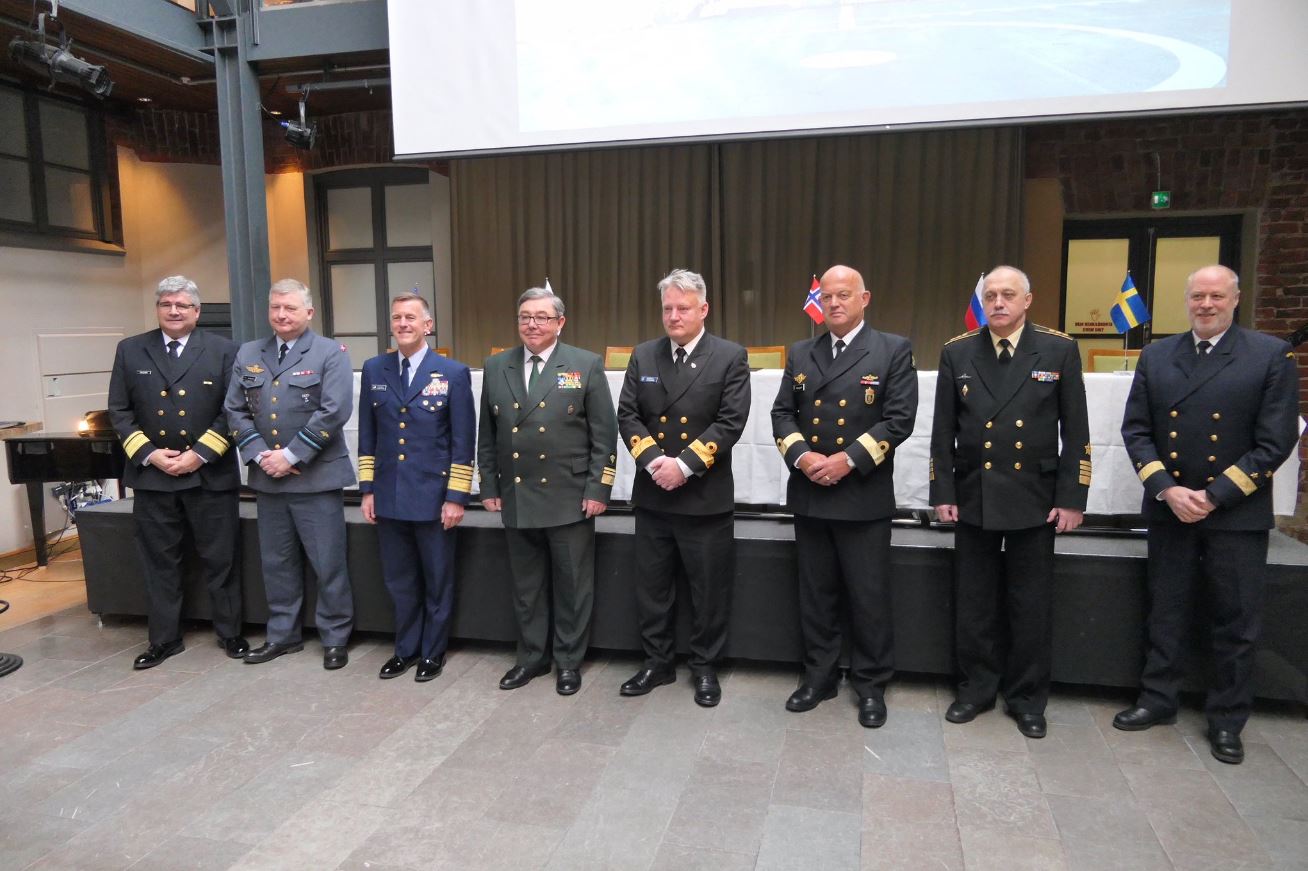
Representatives of the coast guards of Canada, Denmark, Finland, Iceland, Norway, Sweden, the Russian Federation and the United States, gathered in Oulu, Finland last week for a series of meetings of the Arctic Coast Guard Forum (ACGF) Experts and Principals. Photo: Finnish Border Guards/Twitter

A short story about the Arctic Council and Arctic Coast Guard Forum.

“It’s grown up, it’s no longer a new forum, it’s now entering fourth year and it’s got a live exercise under its belt, it’s got a couple of tabletop exercises, the delegations are now familiar with each other, there are strong relationships being built and I think that’s a sign of the forum maturing.”

Information for Coast Guard Veterans and Retirees Filing for Veterans Affairs Disability Compensation Due to Asbestos- and Lead-Related Health Effects—Office of Health Services

An instruction aimed primarily at active duty personnel who might have been exposed to asbestos and/or lead on cutters built prior to 1991 was discussed in an earlier post. Now we get some guidance for those who have left the service. Thanks to Vince Patton who posted this on his Facebook page. Retirees might want to follow him if you have Facebook.

If you were assigned to Coast Guard cutters that were constructed prior to 1991, you may have been exposed to very low levels of asbestos and lead. Recorded levels of exposure were well below the Occupational Safety and Health Administration (OSHA) levels that require medical surveillance examinations.

Routine exposure for asbestos and lead would include working on and berthing in a Coast Guard cutter where there may be small exposed areas of asbestos-containing thermal insulation, a number of torn asbestos-containing floor tiles, and lead dust from lead ballast ingots and lead-containing paint.

Exceptional exposures may have occurred during certain maintenance procedures (e.g. tearing up entire floor surfaces of asbestos-containing floor tiles and torching or sanding surfaces painted with lead-containing paint) without the use of personal protective equipment.

Asbestos- and Lead Related Health Effects
It is very difficult to link lead-related health effects to low level exposures on Coast Guard cutters. Routine exposures to asbestos on Coast Guard cutters could possibly be linked to the following medical conditions:

  • Mesothelioma
  • Asbestos-related cancers (lung, larynx, and ovary). (Note – the linkage for very low levels of exposure for these cancers is not clear.)

VA Disability Compensation Process
The VA has a mechanism for veterans to apply for compensation due to a disability that is the result of an injury, disease or an event in military service. If you experience a health effect believed to be due to exposure to asbestos or lead during military service and you desire to apply for VA disability compensation, you will need to provide evidence that supports the following:

  • There was an event in service that caused the injury or disease;
  • You have a current physical or mental disability; and
  • There is a relationship between your current disability and an event in service.

Additional assistance may be obtained through a VA employee at a VA National Facility or a Veteran Service Organization (VSO).

You should also look at https://www.benefits.va.gov/compensation/apply.asp.

Documentation of Exposure
Veterans and Retirees may document their exposure due to a permanent duty assignment on a Coast Guard cutter constructed prior to 1991 by providing the VA with the following information:

  • Orders for a permanent duty assignment on a Coast Guard cutter.

OR

A Career Summary list of all of permanent duty assignments (if you printed this out from Direct Access prior to separation).

OR

Documentation in your Coast Guard Service Treatment Records (medical records) which states that you had a permanent duty assignment on a specific Coast Guard cutter (if this was recorded).

OR

Military Service Records from the National Archives in St. Louis, Missouri (if you have separated from the Coast Guard prior to 10/1/2006). See https://www.archives.gov/veterans/military-service-records for additional information. Under Information and/or Documents Requested, you should request your entire Official Military Personnel File. The DD-214 will not include information on your permanent duty assignments.

OR

Military Service Records from the Coast Guard Military Records Section/ Personnel Service Center (if you have separated from the Coast Guard on or after 10/1/2006). See http://www.dcms.uscg.mil/PSC/BOPS/PSC-BOPS-C/PSC-BOPS-C-MR/PSC-BOPS-C-MR_PDR/ for additional information. In Section II “Information and/or Documents Requested” of the SF-180 you should request your entire Official Military Personnel File. The DD-214 will not include information on your permanent duty assignments.

Japan Coast Guard expands Liquid-Robotics’ Wave Glider Fleet–NavyRecognition

We have discussed the Liquid Robotics Wave Glider before, as a way to improve Maritime Domain Awareness, noting it is being used by the Brits for fisheries monitoring and by Boeing in support of the US Navy.

Now NavyRecognition brings us a report that the Japanese are using it to monitor the environment providing real time information

Certainly better information about surface currents could help us in search planning.

Relieving Commandant and Vice Commandant Nominees Announced.

The Following is a press release quoted in its entirety: 

Homeland Security Secretary Kristjen M. Nielsen announces selection
of the 26th Commandant of the U.S. Coast Guard

WASHINGTON — Homeland Security Secretary Kristjen M. Nielsen announced the nomination by President Donald J. Trump of Vice Adm. Karl L. Schultz to be the 26th Commandant of the U.S. Coast Guard Thursday.

Vice Adm. Schultz, the commander of the Coast Guard’s Atlantic Area, currently serves as the operational commander for all Coast Guard missions from the Rocky Mountains to the Arabian Gulf, spanning across five Coast Guard Districts and 40 states. Pending confirmation, he is expected to relieve Commandant of the Coast Guard Admiral Paul F. Zukunft in a change of command ceremony June 1, 2018, in Washington, D.C. Adm. Zukunft will retire following the change of command this summer.

“Vice Adm. Schultz will provide the sound leadership and steady hand needed to guide our global military service further into this dynamic and extraordinary era of our Nation,” said Adm. Zukunft.

Vice Adm. Schultz has selected and the president has nominated Vice Adm. Charles W. Ray, the current Deputy Commandant for Operations, as the Coast Guard’s 31st Vice Commandant. Pending confirmation, Vice Adm. Ray will relieve Adm. Charles D. Michel in a change of watch ceremony May 24, 2018, in Washington, D.C. Adm. Michel, the Coast Guard’s first four-star Vice Commandant, will retire following the change of watch.


Below are biographies link above for VAdm. Schultz and VAdm. Ray

Vice Adm. Karl L. Schultz, commander, Coast Guard Atlantic Area, speaks at the Coast Guard Cutter Benjamin Dailey commissioning ceremony in Pascagoula, Miss. Coast Guard Photo

Vice Admiral Schultz assumed the duties of Commander, Coast Guard Atlantic Area on August 4, 2016. He serves as the operational commander for all Coast Guard missions from the Rocky Mountains to the Arabian Gulf, spanning across five Coast Guard Districts and 40 states. In addition to his duties at Atlantic Area, he serves as Commander, Coast Guard Defense Force East, which provides Coast Guard mission support to the Department of Defense and Combatant Commanders. He concurrently serves as Director, DHS Joint Task Force – East, responsible for achieving the objectives of the DHS Southern Border and Approaches Campaign Plan throughout his Joint Operating Area, which covers the Caribbean Ocean and Eastern Pacific Region and Central America.

Vice Admiral Schultz reports to the Atlantic Area having recently served as Director of Operations (J3), U.S. Southern Command in Doral, Florida, where he directed joint service military operations across the Caribbean Basin, Central and South America. Prior flag officer assignments were Commander, Eleventh Coast Guard District, where he was responsible for multi-mission operations from California to Peru, and Director of Governmental and Public Affairs at Coast Guard Headquarters in Washington, D.C., where he was responsible for external engagement with Congress, the media, and inter-governmental entities.

Previous operational assignments include Sector Command in Miami, as well as command tours aboard Cutters VENTUROUS, ACACIA and FARALLON. Staff assignments include Chief of the Office of Congressional and Governmental Affairs; Congressional Liaison Officer to the U.S. House of Representatives; Liaison Officer to the U.S. Department of State, Bureau for International Narcotics and Law Enforcement Affairs; Assignment Officer at the Coast Guard Personnel Command, and Command Duty Officer in the Seventh Coast Guard District Operations Center in Miami.

Vice Admiral Schultz is a native of East Hartford, Connecticut and a 1983 Coast Guard Academy graduate, earning a Bachelor of Science degree in Civil Engineering. In 1992, he was awarded a Master’s Degree in Public Administration from the University of Connecticut, and in 2006 completed a one year National Security Fellowship at Harvard University’s Kennedy School of Government.

His personal awards include the Defense Superior Service Medal, four Legions of Merit, four Meritorious Service Medals, three Coast Guard Commendation medals, two Coast Guard Achievement Medals, and various other personal and unit awards.


Vice Admiral Charles W. Ray

Vice Admiral Charles W. Ray assumed the duties of the Coast Guard Deputy Commandant for Operations in August 2016. In this capacity, he is responsible for the development of operational strategy, policy, guidance, and resources that address national priorities. This oversight of Coast Guard missions, programs, and services includes: intelligence; international affairs; cyber; the maritime transportation system; commercial regulations and inspections; search and rescue; maritime security; law enforcement; defense operations; environmental response; contingency planning; and the operational capabilities of cutter, boat, aviation, shore, and deployable specialized forces.

Vice Admiral Ray’s previous Flag Assignment was as the Pacific Area Commander. Prior to that he held Flag Assignments as the Deputy Pacific Area Commander, the Fourteenth Coast Guard District Commander, service with U.S. Forces Iraq as Director of the Iraq Training and Advisory Mission for the Ministry of Interior, and as the Military Advisor to the Secretary of the Department Homeland Security.

Vice Admiral Ray is from Newport, Arkansas, and is a 1981 graduate of the Coast Guard Academy. After an assignment as a deck watch officer aboard Coast Guard Cutter ACUSHNET (WMEC167), he was selected for Naval Flight Training and earned his wings in 1984.

Vice Admiral Ray has served at six Coast Guard Air Stations from Alaska to the Caribbean. He was designated an Aeronautical Engineer in 1988 and has served as Engineering Officer at three stations and at the Aviation Logistics Center as the Program Manager for the development of the Coast Guard’s Aviation Logistics Management System. He commanded Coast Guard Air Station Borinquen, Puerto Rico from 2002 through 2005. During the course of his career he accumulated over 5,000 hours of helicopter flight time.

Vice Admiral Ray’s staff assignments include a tour as Chief of the Office of Performance Management at Coast Guard Headquarters followed by a tour as the Chief of Staff of the Fourteenth Coast Guard District. Vice Admiral Ray earned a Master of Science Degree in Industrial Administration from Purdue University and a Master of Science Degree in National Resource Strategy from the Industrial College of the Armed Forces in Washington, D.C.

Vice Admiral Ray’s personal awards include the Coast Guard Distinguished Service Medal, five Legion of Merit Medals, one Bronze Star Medal, two Meritorious Service Medals, one Coast Guard Air Medal, three Coast Guard Commendation Medals, and the Coast Guard Achievement Medal.


Greek and Turkish Coast Guards Collide

Greece and Turkey are both NATO, but they never gotten along very well. Apparently, they have been playing bumper boats and this 12 February 2018 incident is not the first time. The Turkish cutter is larger. We looked at her class earlier.  The Greek vessel was a Damen Stan Patrol 5509 (55 meters long and 9 metes of beam) offshore patrol vessel, which reportedly suffered significant damage to her hull. Here is a page that provides info on both classes,

As I said the Greeks and Turks have been going at each other for a while. The intentional collision below reportedly happened on January 17, 2018.

The video below was posted to YouTube May 8, 2016.

This incident occurred 24 Jan. 2014

Thanks to Luke for bringing this to my attention. 


Separation of the Philippine CG from the Navy

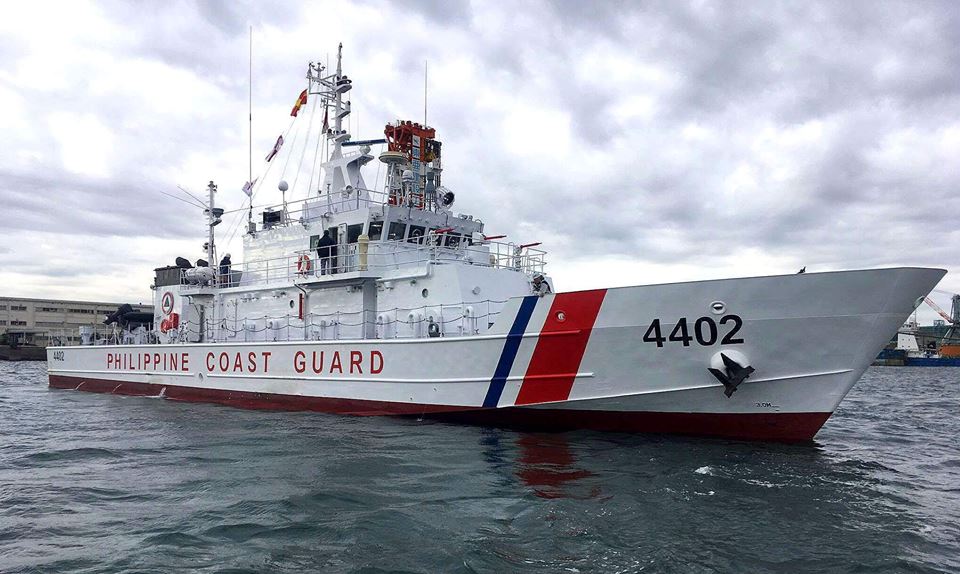
Japanese built Philippine Coast Guard cutter Malabrigo

There are many ways to structure coast guards. They may be military or civilian; part of the defense establishment or in a separate department; multi-mission or single purpose.

Here is a story of how the Philippine Coast Guard separated from its parent organization, the Philippine Navy. The narrative may be a bit self serving as it was posted by Fidel Ramos, who was President of the Philippines at the time, and who refers to himself in the third person, as FVR in the narrative.


Coast Guard, NOAA to include Navigation Rules in U.S. Coast Pilot–News Release

The following is a verbatim copy of a Coast Guard news release:

Coast Guard, NOAA to include Navigation Rules in U.S. Coast Pilot

WASHINGTON – The U.S. Coast Guard and National Oceanic and Atmospheric Administration (NOAA) have teamed up on a consolidated publication that will help mariners save time and money.

The Coast Guard Office of Navigation Systems and NOAA Office of Coast Survey will incorporate the amalgamated International Regulations for the Prevention of Collisions at Sea (72 COLREGS) and the Inland Navigation Rules into NOAA’s U.S. Coast Pilot publications.

To access Coast Pilot, visit https://www.nauticalcharts.noaa.gov/publications/coast-pilot/index.html.

The U.S. Coast Pilot publications already include the Coast Guard’s Vessel Traffic Service regulations.

“Adding the Navigation Rules into the Coast Pilot conveniently places three essential navigation safety publications into one easily available publication, available in either bound hard copy or electronic format,” said Capt. Mary Ellen Durley, the chief of the Coast Guard Office of Navigation Systems.  “The U.S. Coast Pilot will now provide a one-stop shop for these required publications.”

“Making essential navigational products readily available and convenient for the mariner is a priority for NOAA,” said Capt. James Crocker, the chief of NOAA Office of Coast Survey Navigation Services Division. “We are pleased to collaborate with the U.S. Coast Guard in making the Navigation Rules available in all nine volumes of the Coast Pilot — three required publications in one free download.”