Some how I missed this when it came out. Lots of topics covered.
Thanks to Luke for bringing this to my attention.
Some how I missed this when it came out. Lots of topics covered.
Thanks to Luke for bringing this to my attention.
The following from Bryant’s Maritime Consulting,
President Obama issued an Executive Order regarding Northern Bering Sea climate resilience. It provides that federal agencies regulating, overseeing, or conducting activities in the region coordinate those activities and do so with attention to the rights, needs, and knowledge of Alaska Native tribes, the delicate and unique ecosystem, the protection of marine mammals, fish, seabirds, and other wildlife, and with appropriate coordination with the State of Alaska. A Fact Sheet accompanies the Order. (12/9/16) [https://www.whitehouse.gov/the-press-office/2016/12/09/executive-order-northern-bering-sea-climate-resilience]. Note: Curiously, neither the US Coast Guard nor the Department of Homeland Security is named as members of the Bering Task Force even though shipping routing measures and reduction of pollution from vessels are mentioned as topics for consideration.
Mentioned or not. The Coast Guard certainly will have a role as we always have.

The Navy League’s Magazine, Seapower, has a nice update on Maritime Domain Awareness. This is an area where the Coast Guard is both an active participant and a user. It has also becoming an asset we can offer international partners. You can read the article here.
Nice to see that they both recognize the difficulties in creating a complete picture and that they seem to be making some progress.
The Dec. 2016 issue of US Naval Institute “Proceedings” has an article that may have important implications for the Coast Guard. Retired Adm. James G. Stavridis, chairman of the board of the U.S. Naval Institute, warns of a likely increase in the incidence of maritime hybrid warfare.
This is the use of clandestine attacks by forces with no visible connection to their sponsors, to achieve strategic effects while making definitive attribution of the actions difficult or impossible (the principle of plausible deniability).
Admiral Stavridis sees a role for the Coast Guard in countering these agents.
“Leverage the U.S. Coast Guard. Within the Sea Services, these challenges are an obvious zone of excellence for our unmatched U.S. Coast Guard. Involving it in a leadership role in combating maritime hybrid warfare is crucial. Many of its systems and platforms already contain the technologies to counter maritime hybrid warfare techniques, and its ethos and fighting spirit applied in this tactical arena would be powerful. In particular, the Coast Guard could be the nexus of a global maritime coalition approach that brings coast guards and coastal forces together to train. Fortunately, some of this already is being considered by the U.S. Coast Guard both unilaterally and with partners in the context of counternarcotics, counterpiracy, and counterterrorism operations at sea. What remains is to think through how to leverage it against a much more sophisticated, national-level opponent.”
FlightGlobal reports, after 14 years, Canada has selected the Airbus C-295 as their future Fixed Wing Search and Rescue Aircraft.
The deal means Airbus will supply 16 C295s to replace six de Havilland Canada CC-155 Buffalos and 13 CC-130H Hercules at four bases spread across Canada, providing search and rescue services from the Arctic to the southern border with the USA.
The article is not correct in saying, “The aircraft is in service with the US Coast Guard as the HC-144A, serving as a maritime patrol and rescue aircraft.” The HC-144 (max takeoff weight 36,380 lb (16,502 kg)) is based on the smaller C-235. The C-295 (max takeoff weight 51,146 lb (23,200 kg)) is a direct competitor of the C-27J (max takeoff weight 67,241 lb (30,500 kg)).

John Francis Kelly (born May 11, 1950, pictured here in 2012) is a retired United States Marine Corps general and the former commander of United States Southern Command.
The New York Times has reported that President-Elect Trump has chosen retired Marine General and former SOUTHCOM commander John Kelly to head the Department of Homeland Security.
General Kelly served as SOUTHCOM November 19, 2012 – January 16, 2016. That experience should make him extremely familiar with the Coast Guard. He has supported the Coast Guard in the past, and here.
As I understand it, he will need to have a waiver from the Senate to serve because he retired less than seven years ago, but it appears he will have broad bi-partisan support having received the endorsement of President Obama’s former Defense Secretary Leon Panetta.
In honor of the 75th anniversary of the attack, the Coast Guard Compass has an interesting post about how then Lt., later Captain, Frank A. Erickson‘s experiences during the attack on Pearl Harbor may have influenced the future development of the helicopter as a Search and Rescue tool.
They also provided the clip above.
Here are some of commemorative post marking this day:
There is also the Coast Guard history Pearl Harbor index.
CIMSEC has a new post that is worth the read, “Against the Growing Anti-ship Missile Threat, Are We Truly Semper Paratus?” It is the first of two parts.
Pointing toward the increasing ubiquity of anti-ship missiles, it suggests that we install the SeaRAM system in place of the Phalanx on the Bertholf class National Security Cutters (NSC), and that we also install the system on the Offshore Patrol Cutters (OPC) and the new icebreakers.
With the Commandant’s proposal, that the new administration send cutters to the Western Pacific to counter Chinese aggressiveness, better self-defense systems make more sense than ever.
Fitting the system to at least a couple of West Coast NSCs that might be available for WestPAC deployment should be relatively straight forward since the systems have much in common with the Phalanx system it would replace. SeaRAM would have the additional benefit of increasing the ships anti-surface capability as well.
“DECEMBER 2, 2016 — Wärtsilä EnergoProFin is now available for controllable pitch propellers (CPP) as well as fixed pitch propellers (FPP).”
“The specially designed propeller cap has hydrofoil-section fins on the downstream side of the propeller, creating fuel savings of up to five percent.”
They claim the addition pays for itself in one to two years.
From our perspective, it should also increase the range of the ship, and may very slightly increase maximum speed.
The Voice of America is reporting,
The top U.S. Coast Guard official is eyeing a unique role for his fleet in maintaining peace and stability in the East and the South China seas under the incoming presidential administration.
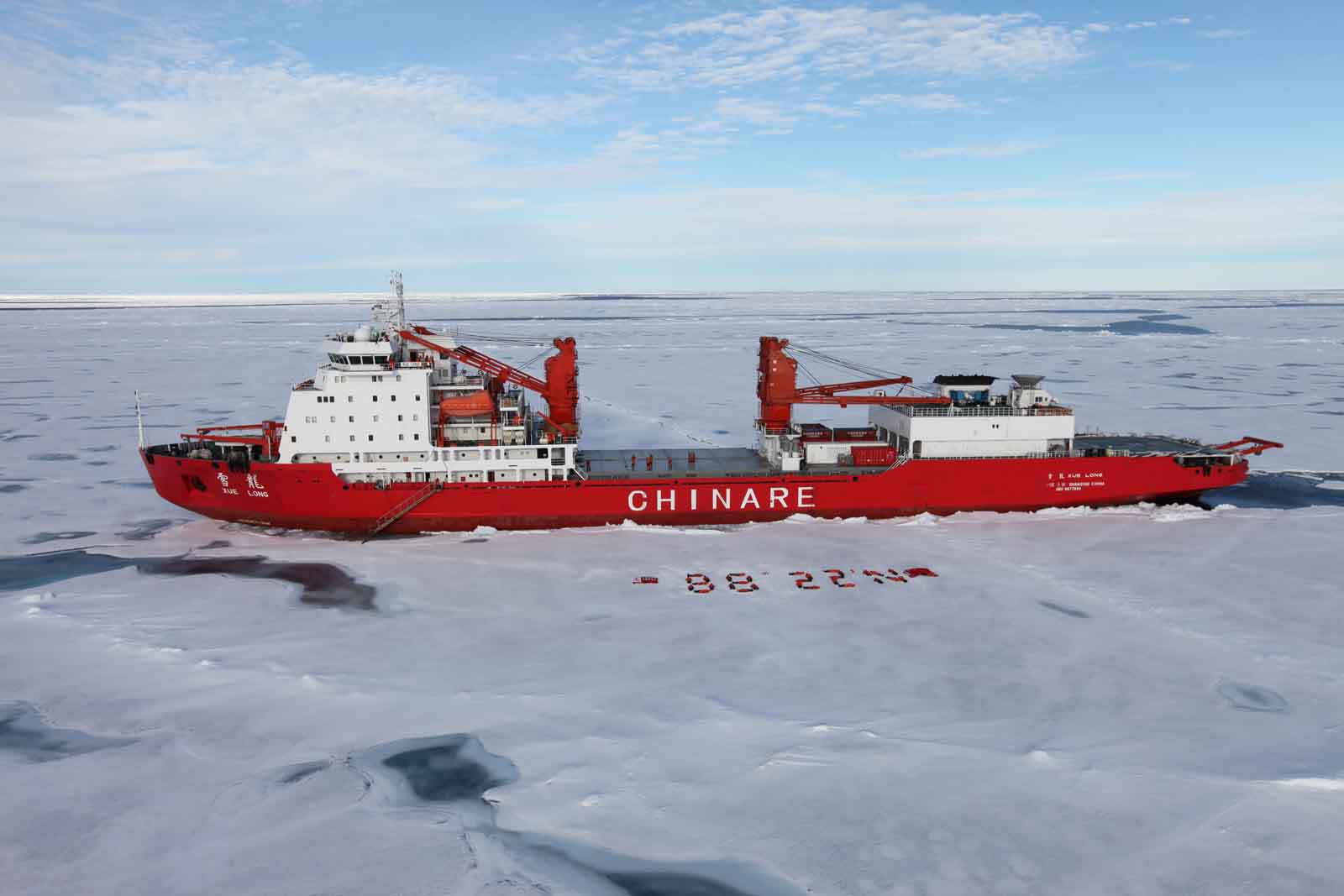
By mirroring the role of China’s Coast Guard in parts of the Asia-Pacific, said Coast Guard Commandant Admiral Paul Zukunft, the U.S. Coast Guard could be the face of U.S. military presence in disputed waters without appearing too threatening.
“When you look at the East and South China seas, look at China’s Coast Guard, it is really the first face of China,” he told VOA. “So I’ve proposed to the Department of Defense that if they were to leverage the U.S. Coast Guard, I would look at providing resources to provide the face of the United States behind a Coast Guard ship, and should that be a consideration for our approach to the East and South China seas with the next administration.”
The post has more background.
This is a major change to Coast Guard tasking and there should be no doubt it will require some trade-off against existing tasking. In all probability our contribution will be a National Security Cutter. Keeping one in the Western Pacific probably means one less in the Eastern Pacific.
Perhaps the Navy will compensate by putting a ship under SOUTHCOM.
Thanks to Luke S. for bringing this to my attention.