Icebreaker Bargain?

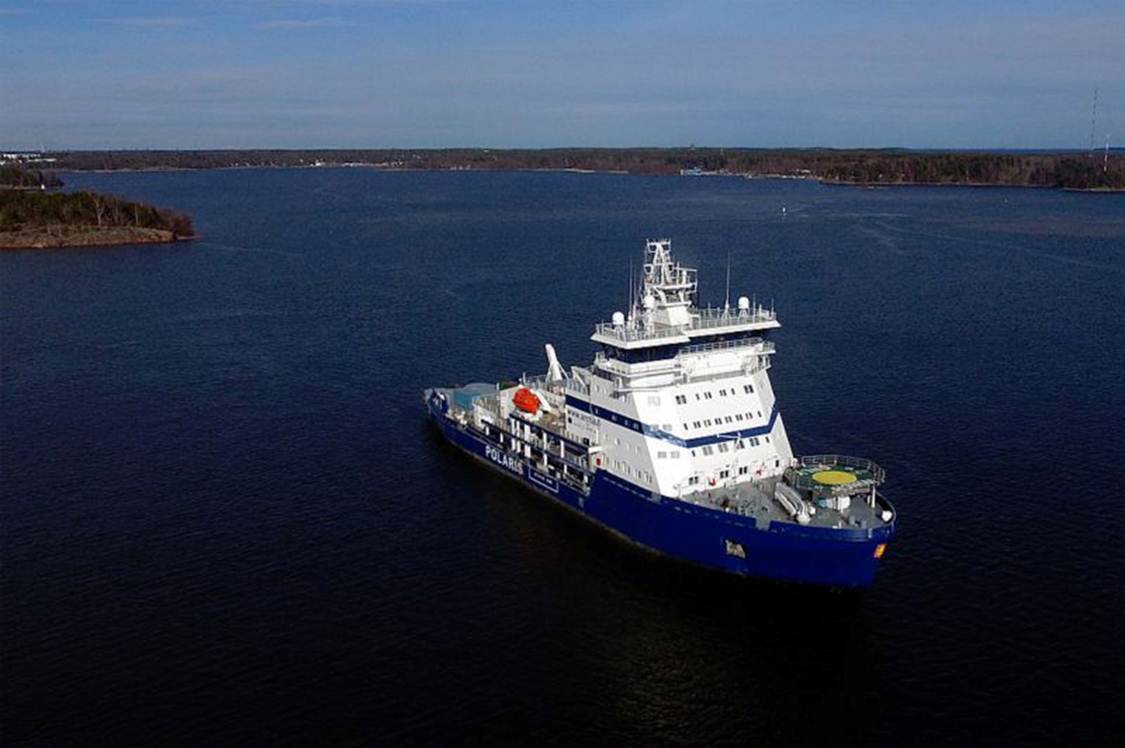
EdisonChouestOffshoreAHTSicebreaker

Through some comments, from Tups and Matthew Coombs CWO4 USCG (retired), on a previous post we have learned that construction on a medium icebreaker begun for Shell has apparently been suspended because Shell is no longer attempting to drill for oil in the Arctic.

This might be an opportunity for the Coast Guard to obtain one or two reasonably capable medium icebreaker in the near term on favorable terms.

Reportedly the ship was laid down in December so the design and much of the material has already been bought, costs Shell is responsible for.

The icebreaker should be pretty capable, it is reportedly Polar Class 3. Polar class 3 means “Year-round operation in second-year ice which may include multiyear ice inclusions.” My understanding is that the ship will have Four 5060 KW generators. If so it will have more horsepower (20,240 KW/27,131 SHP) than the diesel electric engines of the Polar class (18,000 HP), more than the Glacier (16,000 KW/21,000 SHP), and almost as much as the Healy (22,400 KW/30,027 SHP). It would also be more than twice as powerful as the Wind class breakers (12,000 SHP), the National Science Foundation’s leased M/V Nathaniel B. Palmer (9,485 kW/12,720 HP), or USCGC Mackinaw (6,800 KW/9,119 SHP). It would also be more powerful than all but one of Canada’s icebreakers, and powerful enough to lead a break in at McMurdo Sound.

Politically this might gets some traction because, I am sure the Louisiana delegation would love to see their people go back to work to finish the ship, and the Alaska Senators desperately want more icebreakers. This might even be a circumstance where leasing might make sense.

If Shell is truly abandoning attempts to exploit the Arctic, it is also likely that their other ice class vessels, including the icebreaker Aiviq, are also excess to their needs. Adding Aiviq and the ship under construction to the Healey, would meet the Coast Guard’s stated requirement for three medium icebreakers and provide the backup we need if one of the two existing breakers had a breakdown in the ice.


CG/Navy/Islander Partnership in the Western Pacific

USNS Lewis and Clark (T-AKE 1)

U.S. Navy photo by Mass Communication Specialist 2nd Class Edwardo Proano

Generally I feel the CG and the US in general is not paying enough attention to the US EEZ in the Western Pacific and to the island nations there, that we have a continuing relationship with. It is good to see some efforts to maintain good governance in these areas. Published below is a Navy news release. As you read it you note that maritime law enforcement efforts in this are a still very thin. Use of an MSC T-AKE for support of CG LEDETs is a welcomed innovation. Still the high sides of a T-AKE can not be the best for boat ops. Would love to see the T-AKE used as mother ship for WPBs or WPCs.

Story Number: NNS151026-13 Release Date: 10/26/2015 3:17:00 PM, By Grady Fontana, Military Sealift Command Far East

PACIFIC OCEAN (NNS) — Military Sealift Command’s (MSC) dry cargo and ammunition ship USNS Lewis and Clark (T-AKE 1) arrived at Tarawa, Republic of Kiribati, Oct. 24, as part of its continuing support of Exercise KOA MOANA (KM) 15-3.

Exercise KM 15-3 is a four-month international exercise allowing participants from the U.S. Marine Corps, U.S. Navy and U.S. Coast Guard (USCG) to work with host nation participants from various countries in the Pacific Island Nations of Oceania.

The first portion of the exercise was in Tahiti, followed by a leg in Fiji, where Marines conducted theater security cooperation (TSC) activities with host nation partners.

After Tarawa, the Lewis and Clark, which is also part of Maritime Prepositioning Ships Squadron (MPSRON) 2, will carry her personnel and cargo to Vanuatu for more TSC events, then finish off the exercise in Timor Leste in November. The Lewis and Clark is scheduled to return to its homeport in early December.

While training in Tarawa, the Marines will conduct military-to-law enforcement activities with local police. Members of the Navy and Coast Guard will participate in Oceanic Maritime Security Initiative (OMSI) operations, as they did in Fiji, in support of maritime law enforcement operations along with partners from the Police Maritime Unit Tarawa.

“While the Marines are training on the island with the host nation military or law enforcement agencies, the U.S. Coast Guard has taken this opportunity to use USNS Lewis and Clark, which is the platform for KOA MOANA 15-3, to conduct OMSI patrols with the nations these TSCs have been scheduled,” said Navy Capt. Paul D. Hugill, commodore, MPSRON-2.

OMSI is a Secretary of Defense program aimed to diminish transnational illegal activity on the high seas in the Pacific Island Nations of Oceania’s exclusive economic zones (EEZ) and enhance regional security and interoperability with partner nations.

The Coast Guard is responsible for patrolling the waters around the numerous islands associated with the U.S. throughout the region. Each of these islands has territorial waters stretching out to 12 miles from shore. Beyond that, stretching out 200 nautical miles are EEZs, an area defined by international law that allows each nation exclusive rights to the exploration and use of marine resources.

During the OMSI portion of KM 15-3, law enforcement agents from the Police Maritime Unit Tarawa, and Navy and Coast Guard personnel, will ride the Lewis and Clark and intercept and board commercial fishing vessels operating inside the Kiribati EEZ. The combined team will be looking for potential violations.

According to Taraa Teekea, vessel monitor system officer for Police Maritime Unit Tarawa, illegal, unreported and unregulated fishing has a significant negative effect on Kiribati’s economy.

Outside of KOA MOANA, the Police Maritime Unit Tarawa conducts their own operations about six to eight times a year. Their missions are typically 10 days at-sea, with boarding an average of 30 suspected fishing boats during each operation.

“We are looking for those who are conducting illegal fishing,” said Teekea. “Some of the common violations are invalid fishing license, no license to transit through our EEZ, over-fishing certain types of fish, and vessels with no [EEZ] entry and exit reports.”

The OMSI memorandum of understanding between the Department of Defense (DoD), the U.S. Coast Guard and the National Oceanic and Atmospheric Administration helps to deter and prevent various threats to maritime security and transnational crime, encourage mutually beneficial partnerships with Pacific Island Nations, promote interoperability, enhance maritime domain awareness and improve economic stability throughout Oceania.

The program leverages DoD assets transiting the region to increase the Coast Guard’s maritime domain awareness, ultimately supporting maritime law enforcement operations in Oceania.

According to USCG Lt. Lisa M. Hatland, OMSI liaison, U.S. Coast Guard District 14 out of Honolulu and on board the Lewis and Clark for KM 15-3, since the Coast Guard doesn’t have all the assets it requires in order to patrol this region as often as they would like or to enact all the bilateral ship rider’s agreements that they have with partner nations, the [memorandum of understanding] (MOU) with the Navy allows them to use naval vessels.

“Through OMSI, the Coast Guard exacts an MOU with the DoD in order to supplement Coast Guard cutter deployments with naval assets that are transiting across Oceania,” the lieutenant added. “The MOU allows us to put Coast Guard boarding teams on board DoD ships to conduct Coast Guard missions, and it also permits us to embark foreign maritime law enforcement agents so they can enforce laws in their own sovereign waters.”

Initiatives like OMSI help the U.S. to project a maritime law enforcement presence beyond what the U.S. Coast Guard can do alone.

KOA MOANA also serves as a test for the Lewis and Clark on how well cargo and ammunition ship platforms will perform in this type of mission. The exercise is the first time a dry cargo and ammunition ship is being used for a Coast Guard mission.

“The Lewis and Clark is performing well. During KOA MOANA, we’re doing everything that a [US combatant ship] can do with regards to command and control,” said Hugill. “The reasons the Lewis and Clark is a good platform are the abundance of space, the capabilities of the deck crew and the ability to carry out around the clock operations.”

Commander, Maritime Prepositioning Ship Squadron 2, currently embarked aboard USNS Lewis and Clark and operating in the Southern Eastern Pacific, maintains tactical control of the 10 ships that are forward deployed to Diego Garcia and carrying afloat prepositioned U.S. military cargo for the U.S. Marine Corps, the U.S. Army and the U.S. Air Force. The squadron’s mission is to enable the force from the sea by providing swift and effective transportation of vital equipment and supplies for designated operations.

MSC operates approximately 115 non-combatant, civilian-crewed ships that replenish U.S. Navy ships, conduct specialized missions, strategically preposition combat cargo at-sea around the world and move military cargo and supplies used by deployed U.S. forces and coalition partners.

Exercise KOA MOANA 15-3 is a Marine Forces Pacific-sponsored exercise designed to enhance senior military leader engagements between allied and partner nations with a collective interest in military-to-military relations, and to discuss key aspects of military operations, capability development and interoperability.

Swarming for SAR

Our friend at the British Defense blog ThinkDefence has a short post regarding some experiments being undertaken by the Naval Postgraduate School in Monterey, California. They have reportedly succeeded in having 50 small unmanned aircraft operating cooperatively all under the control of one man.

The thing that caught my eye was this statement, “There are also algorithms for search-and-rescue operations, in which the flight pattern resembles that of foraging bees.”

The linked post is about doing SAR post natural disaster on land, but perhaps there are some possibility for the Coast Guard here.


Keep a Camera on the Bridge

MarineLog passed along a recommendation that a good camera be regarded as essential bridge equipment.

Their advice:

…as a minimum:

  • a digital compact camera with at least 8X optical zoom, built-in flash and video function; camera image quality of at least 10 megapixels;
  • two 8GB or larger blank SD cards (preformatted) and checked for operation;
  • spare battery pack;
  • mains charger with ship-compatible plug

“The camera should be kept on the bridge, fully charged with an empty storage card. Most cameras have an internal clock which should be checked and set to UTC. This time-stamp is used when the image file is stored, essential when the chronology of events could be questioned,” says Mr. Harrison. (Mike Harrison of marine consultancy Solis Marine Consultants, Ltd.–Chuck)

Their focus is on insurance claims, and while that certainly applies to the Coast Guard, we have other reasons to want video documentation. Good video is useful for public information and for training. It can help with evaluating and passing along lessons learned. It can also become valuable evidence in criminal cases.

Lighter Than Air Maritime Domain Awareness with Chinese Characteristics

Popular Science reports the Chinese have begun testing a largely solar powered airship capable of carrying heavy loads to high altitude (20,000 meters/65,600 feet) and remaining aloft for up to six months.

The airship is expected to have a role similar to that envisioned for the US Army’s JLENS currently being tested with apparently limited success in the Washington DC area, but it would cover a much larger area than the JLENS aerostats.

From its high altitude it can theoretically maintain radar and visual surveillance over a hundred thousand square miles.

The prototype seen in the accompanying video looks much less impressive, but remember that the gas will expand many times, filling out the envelop.

Illegal Fishing

gCaptain has an interesting post on illegal fishing off Africa and how they hope to counter it.

“We are cutting away at the model. We’ll attack the insurance, the availability of supplies and crew, attack the landing ports and the markets they use. It is death by a thousand cuts,”

They report that globally illegal fishing is a $23B business.

Are we confident this is not a major problem in the under patrolled Western Pacific? It seems every time we actually patrol the area, we find some illegal activity.

“Opinion: Coast Guard Budget Reductions Puts U.S. at Risk”–USNI

The US Naval Institute has a nice opinion piece by a retired Navy Rear Admiral, advocating restoration of funding cut from the Coast Guard budget over the last few years, and not incidentally greater number of National Security Cutters (NSC) to replace the High Endurance Cutters.

This is not the Admiral’s first editorial advocating for the Coast Guard. Whatever his affiliation, his opinions are on point, and I would really like to see the Congress add a ninth NSC to the budget

Russia’s Plans for an Arctic Coast Guard

Photo: Russian Coast Guard Project 97P Border Patrol Vessel Volga (#183). The Russian Coast Guard is part of the Border Guard Service of Russia. This photo was taken by the crew of the USCGC Boutwell in Petropavlovsk, Russia during the North Pacific Coast Guard Forum in September 2007.

As is widely known Russia has plans to greatly expand use of the “Northern Sea Route,” the passage between the Atlantic and Pacific via the Arctic Ocean near Russia. To make this economical they are planning to greatly expand the presence of their Coast Guard in the Arctic. This includes a new class of ships.

“Efforts to build up an Arctic Coast Guard force have been ongoing since at least 2011, when the Federal Security Service (FSB) — the successor to the KGB, which oversees the Coast Guard and Border Guard services — ordered its first of a planned six “Ocean” patrol ships. The vessels, small ships with a displacement of 2,700 tons, are nevertheless built to withstand icy Arctic conditions.

The lead ship, known as “Polyarnaya Zvezda,” or North Star, has been completed and is undergoing final preparations for regular service in Kronstadt, near St. Petersburg. Two additional Ocean ships, known in Russia by their “Project 22100” designation, are under construction, and should be ready by 2019.

“Plans for new Arctic Coast Guard ships won’t stop with the completion of the Project 22100 class, according to Mikhail Barabanov, a naval expert at the Moscow-based Center for the Analysis of Strategies and Technologies (CAST).

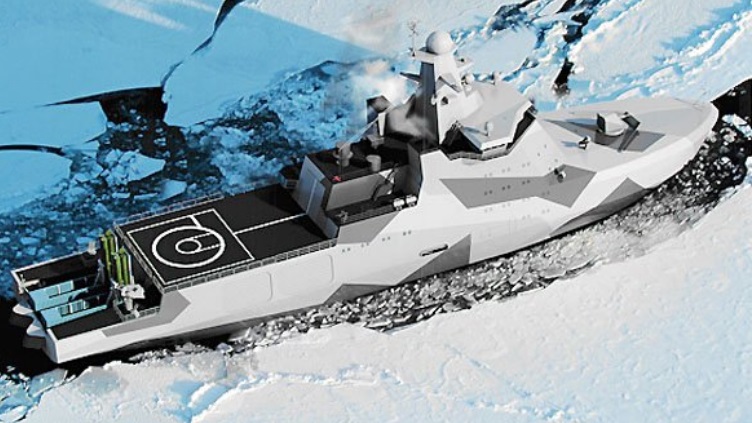
“‘Construction is planned for several larger Coast Guard patrol ships with a displacement of 6,000 to 7,000 tons,’ Barabanov said, adding that the ships will double as icebreakers. Several design bureaus are now competing for tenders to design the ships, he said.

“The Coast Guard is also expanding its infrastructure along the Arctic frontier with a chain of 10 Coast Guard stations. These stations will be used to launch search and rescue operations if ships run into trouble.”

The Project 22100 ships sound a bit like the Offshore Patrol Cutters. Specs found here indicated a displacement of 2700 tons, length of 91.8 meters/301.2 feet, beam of 14.8 meters/48.6 feet, speed of 20 knots, a range of 12,000 miles, a crew of 41, and an armament of one 76mm and two 14.5mm, and accommodations for a Ka-27 (a 12,000kg/26,455 pound helicopter). The German Navy blog Marine Forum reported on 10 October that first of class “POLYARNAYA ZVEZDA completes four days of sea trials in the Gulf of Finland.” The next two ships are not expected to be commissioned until 2019.

Document Alert: “Coast Guard Polar Icebreaker Modernization: Background and Issues for Congress”

ice-breakers-540688_1280

The US Naval Institute News Service has provided access to a report to Congress, “Coast Guard Polar Icebreaker Modernization: Background and Issues for Congress,”by Ronald O’Rourke, Specialist in Naval Affairs, September 25, 2015.

I am repeating here the last two paragraphs of the Summary. I think they explain quite clearly the sad state of our icebreaker fleet.

“On September 1, 2015, the White House issued a fact sheet in conjunction with a visit to Alaska by President Obama indicating that the Administration, in its own internal planning, had at some point over the past two years deferred procurement of a new polar icebreaker to FY2022, but that this has now been changed to FY2020. The newly announced procurement date of FY2020 is a two-year acceleration from the previously unpublicized date of FY2022, and a two-year deferral from the FY2018 date implied in the FY2013 and FY2014 budget submissions. The fact sheet states that the Administration will also “begin planning for construction of additional icebreakers” beyond the one that the Administration proposes to procure in FY2020.
“A polar icebreaker procured in FY2020 might enter service in 2024 or 2025. Polar Star has been refurbished and reentered service in December 2012 for an intended period of 7 to 10 years—a period that will end between December 2019 and December 2022. Consequently unless the service life of Polar Star is further extended (or unless Polar Sea is repaired and returned to service), there will be a period of perhaps two to six years during which the United States will have no operational heavy polar icebreakers. The issue for Congress is whether to approve, reject, or modify the Administration’s plans for sustaining and modernizing the polar icebreaking fleet.”