“Seaspan to Build Made-In-Canada Heavy Polar Icebreaker” –Seaspan News Release

Canadian Polar Icebreaker to be built by Seaspan

Below is a news release from Canadian shipbuilder, Seaspan.


March 7, 2025 – North Vancouver, BC – Today, Seaspan Shipyards (Seaspan) has been awarded the construction contract to build one of the Canadian Coast Guard’s (CCG) new heavy polar icebreakers.

The polar icebreaker will be built entirely in Canada at Seaspan’s Vancouver Shipyards, located in North Vancouver, British Columbia. With the contract now in place, Seaspan is ready to cut steel on this ship and begin full-rate construction on Canada’s newest vessel under the National Shipbuilding Strategy (NSS). Construction of this ship will support the work of a team of more than 1,000 local shipbuilders and a broad Canadian supply chain of over 800 Canadian companies contributing massive strategic value, innovation and economic benefits to Canada.

Building this complex and densely-outfitted multi-mission ship will mark the first time a polar icebreaker has been built in Canada in more than 60 years and will have more advanced capabilities than the CCG’s current heavy icebreakers. Once delivered, this made-in-Canada heavy polar icebreaker will be one of the most advanced and capable icebreakers in the entire world. It will be one of only a handful of Polar Class 2 ships in operation and will allow for the CCG to operate self-sufficiently year-round in the high-Arctic, down to temperatures at -50°C.

The new polar icebreaker will be the seventh vessel designed and built by Seaspan under the NSS. It will also be the fifth Polar Class vessel to be built for the CCG, and one of up to 21 icebreaking vessels overall that Seaspan is constructing.

Functional design of the polar icebreaker was completed in 2024 by Seaspan, prior to the start of construction. For this ship, Seaspan worked extensively to build out the largest marine design and engineering team in Canada, which includes Seaspan employees and Canadian partners, while simultaneously working alongside established Finnish companies who have extensive experience in designing Arctic-going vessels.

Seaspan is the only Canadian shipyard with the expertise, facilities, and domestic supply-chain to build polar icebreakers in Canada. Official start of construction for this new heavy polar icebreaker is scheduled for April 2025.

QUOTES

“Today’s contract signing is the next step in our journey of fulfilling the vision of the National Shipbuilding Strategy, which is to build ships for Canada, in Canada, by Canadians. The NSS is demonstrating that a made-in-Canada approach is not only possible, but also imperative to our security and sovereignty. We look forward to starting construction on this ship next month, and to building more Polar Class vessels for Canada and our Ice Pact partners.”

  • John McCarthy, CEO, Seaspan Shipyards

“The contract awarded to Seaspan’s Vancouver Shipyards for the build of a new polar icebreaker is a significant step forward for Canada’s economic and natural resource sectors. This advanced vessel will not only ensure safe and efficient navigation in our polar regions but also support the sustainable development of our natural resources. By enhancing our icebreaking capabilities, we are opening new opportunities for economic growth, scientific research and environmental stewardship. This project exemplifies our commitment to leveraging cutting-edge technology to benefit our economy and protect our unique polar environments for future generations.”

  • The Hon. Jonathan Wilkinson, Minister of Energy and Natural Resources and MP for North Vancouver

“Today marks a significant milestone in our commitment to enhancing our nation’s maritime capabilities. The contract awarded to Seaspan’s Vancouver Shipyards for the build of a new polar icebreaker underscores our dedication to ensuring safe and efficient navigation in Arctic regions. This state-of-the-art vessel will not only strengthen our icebreaking fleet, but will also support critical scientific research and environmental protection efforts, and ensure national security in the Arctic. We are proud to take this step forward in strengthening our maritime infrastructure for safeguarding Canada’s sovereignty in the Arctic.”

  • The Hon. Jean-Yves Duclos, Minister of Public Services and Procurement and Quebec Lieutenant

“The National Shipbuilding Strategy is providing the Canadian Coast Guard with its fleet of the future. The polar icebreaker to be built by Vancouver Shipyards will be able to operate in the Arctic year-round, further bolstering our ability to deliver crucial services to Northern communities and support Canadian sovereignty in the Arctic.”

  • The Honourable Diane Lebouthillier, Minister of Fisheries, Oceans and the Canadian Coast Guard

“Our partnership with Seaspan to construct a polar icebreaker underscores our government’s steadfast commitment to ensuring the Canadian Coast Guard can continue to protect Canada’s sovereignty and interests, while also revitalizing Canada’s shipbuilding industry, creating high-paying jobs and maximizing economic benefits across the country.”

  • The Honourable François-Philippe Champagne, Minister of Innovation, Science and Industry

QUICK FACTS

  • The polar icebreaker will be 158 metres long and 28 metres wide, with a design displacement of 26,036t.
  • Highlights of key design features, include:
    • IACS Polar Class 2 (PC2) Heavy Icebreaker
    • More than 40MW of installed power
    • Ice-classed azimuthing propulsion system
    • Complex, multi-role mission capability
    • Scientific Laboratories
    • Moon Pool (to allow for safe deployment of equipment from within the ship)
    • Helicopter flight deck and Hangar
    • Vehicle Garage and future Remotely Piloted Aircraft System (RPAS) capability
  • Seaspan has already gained significant experience designing and building Polar Class vessels including three offshore fisheries science vessels which are now in service with the CCG; an offshore oceanographic science vessel that will be delivered to the CCG in the coming months; and a class of up sixteen multi-purpose icebreaking vessels (also Polar Class) that is currently in Construction Engineering.
  • Seaspan is one of the most modern shipyards in North America, following its privately funded $200M+ shipyard modernization, development of a skilled workforce and state-of-the-art, purpose-built infrastructure to deliver large, complex vessels.
  • Under the NSS, Seaspan has become a major economic and job creation engine. According to an economic analysis conducted by Deloitte, Seaspan has contributed $5.7 billion to Canada’s GDP between 2012-2023, while also creating or sustaining more than 7,000 jobs annually.
  • Seaspan’s NSS supply-chain has now grown to ~800 Canadian companies from coast-to-coast, with more than half being SMEs.

Coast Guard Cutter Procurement: Background and Issues for Congress, Updated March 5, 2025 –Congressional Research Service

US Capital West Side, by Martin Falbisoner

The Congressional Research Service (CRS) has again updated their “Report to Congress on Coast Guard Cutter Procurement”. (This link will always take you to the most recent edition of the report.) My last post on this evolving document was in reference to the March 25, 2024 update. The report includes a nice one page summary if you are new to our current shipbuilding activities but the news is on pages 27 and 28, the last two pages of the report excluding the Appendixes, which I have reproduced below,

The Administration asked for two FRCs and the House Appropriations Committee has recommended four. This, in addition to the 67 currently funded, would bring the total number of FRC funded to 71 which is the requirement in the current program of record, 58 for domestic use, one lost to a fire in dry dock, six for PATFORSWA, and six for the Indo-Pacific.

It’s not clear to me if the six for the Indo-Pacific is just the six currently planned for Guam or does this refer to six in addition to the three originally planned for Guam that replaced two WPB110s? It has appeared the Coast Guard might also base FRCs in American Samoa. Looking at the numbers that appears to be the case.

It also appears another WMEC 270 that has gone through Service Life Extension Program (SLEP) will be headed for the Pacific.


FY2025 DHS Appropriations Act (H.R. 8752)

House

The House Appropriations Committee, in its report (H.Rept. 118-553 of June 14, 2024 on H.R. 8752, recommended the funding levels shown in the HAC column of Table 1. H.Rept. 118-553 states.

Fast Response Cutter (FRC).—The recommendation provides $335,000,000 to purchase four additional FRCs, economic price adjustments related to the rise in material and labor costs, and post-delivery missionization costs.

Offshore Patrol Cutter.—The recommendation provides the requested $530,000,000 to continue the program of record for these critical assets. The Committee directs the Coast Guard to continue to provide additional program and schedule details, as described in the explanatory statement accompanying Public Law 117–103, as part of the required quarterly major acquisition briefings. (Pages 53-54)

H.Rept. 118-553 also states

Engagement in the Indo-Pacific.—The Committee supports the Coast Guard’s efforts to help develop the maritime capabilities of partners and allies in Southeast Asia. To better assess these efforts, the Committee directs the Coast Guard to provide a briefing within 180 days of the date of enactment of this Act on its work in the Indo-Pacific, including current efforts, opportunities for expansion, and options for improving coordination with and leveraging capabilities with the DOD, especially U.S. Indo-Pacific Command (USINDOPACOM)….

Oceania Operations.—The Committee recognizes the importance of the Coast Guard in maintaining the U.S.’s posture in the Indo-Pacific. The Committee supports the Coast Guard’s efforts to expand its presence in the Indo-Pacific, especially through the ship rider program, and encourages the Coast Guard to continue its coordination with USINDOPACOM and partner and allied nations. To better evaluate these efforts, the Committee directs the Coast Guard to report to the Committee not later than 180 days after the date of enactment of this Act assessing the Coast Guard’s capabilities and operations in the Indo-Pacific. This report should include a list of current assets in the region, any assets and capabilities needed to address unfulfilled requirements, any areas where logistical support is needed, and any changes that must be taken to effectively implement the U.S. Indo-Pacific Strategy. To support the Coast Guard’s Indo-Pacific operations, the recommendation provides $3,000,000 for increased presence of regional Coast Guard Maritime Advisors, Liaison Officers, Attaches, and other foreign engagement positions throughout the Indo-Pacific, and $1,200,000 for Indo-Pacific workforce support including for housing, medical, and childcare access for Coast Guard personnel.

270′ WMEC Service Life Extension Program.—The Committee supports the Coast Guard’s efforts to counter aggression by the PRC in the Indo-Pacific. The recommendation includes $60,000,000 for a service life extension program for one Medium Endurance Cutter, enabling the Coast Guard to deploy an additional support cutter to the Indo-Pacific. The Coast Guard plays a vital role in the Indo-Pacific, but the vast distances in the region and limited resources hamper the Coast Guard’s ability to expand its presence. This Indo-Pacific support cutter will help the Coast Guard increase its activities and better support the U.S. mission in the Indo-Pacific. (Pages 50, 51, and 53)

“Pitch for ‘Arctic Security Cutter’ Part of FY 2025 Budget Negotiations”–USNI

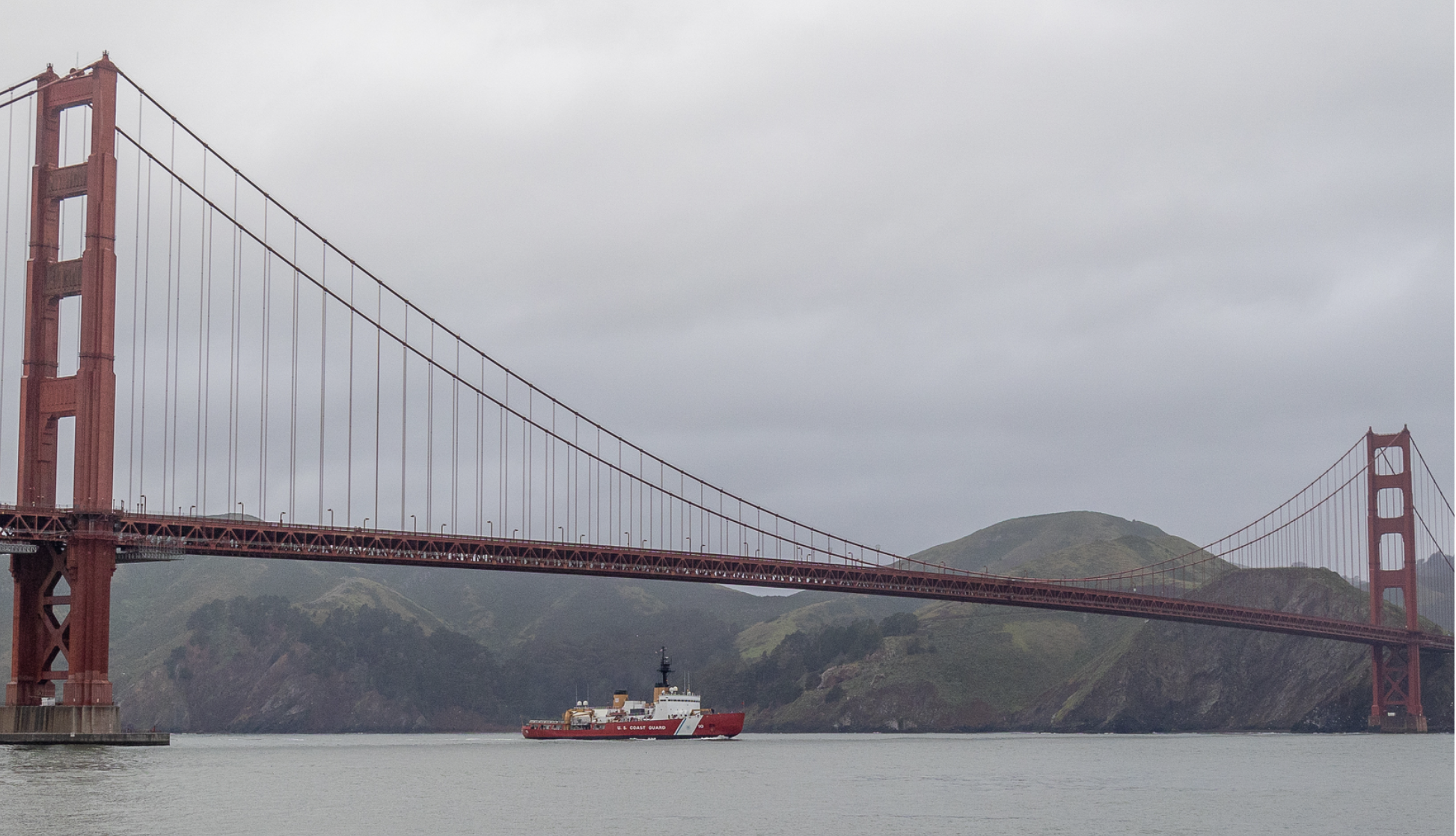
The Coast Guard Cutter Healy (WAGB 20), the Coast Guard’s only “medium icebreaker,” returns to Seattle following a two-month Arctic patrol, Aug. 16, 2024. The Healy is the United States’ largest Polar icebreaker and was commissioned in 2000. (U.S. Coast Guard photo by Petty Officer 2nd Class Taylor Tracy)

The US Naval Institute reports,

The final Fiscal Year 2025 spending bill could include a provision for a new Arctic Security Cutter that would operate in parallel with the ongoing Polar Security Cutter icebreaker program, according to two sources familiar with a draft version of the proposal.
The draft for the FY 2025 spending bill calls for up to three hulls in the reconciliation proposal that House and Senate Republicans are negotiating, the sources told USNI News.

At last it appears the procurement process for the class of medium icebreakers we know we need has begun.

Why “up to three” when we know we need at least four? Presumably any icebreakers in out  years would be options, unless they are considering a block buy, which is unlikely for a new class that may be as difficult as this one.

This Day in Coast Guard History, March 6

Based on the Coast Guard Historian’s timeline, https://www.history.uscg.mil/research/chronology/
With inspiration from Mike Kelso

March 6

1896  Secretary of the Treasury was authorized to detail cutters to enforce anchorage regulations on the St. Mary’s River.

1932  Five members of Station Atlantic City were lost in the line of duty when station personnel responded to the gas screw vessel Anna and a motor boat in distress off Atlantic City.  Two of the station’s boats were lost in the heavy seas: Picket Boat No. 2301 capsized outside the bar while responding to the original distress situation and then surfboat No. 2301 disappeared while proceeding to the assistance of the picket boat crew.  Lost were: Surfman David A. Barnett, Surfman William R. Garton, MoMM2c (L) William Graham, Surfman Harold Livingston, and BM2c (L) Marvin E. Rhoades.

11/30/1999 AT SEA–The Coast Guard Cutter Barracuda (WPB 87301) is the Coast Guard’s newly designed coastal patrol boat has several enhancements over the aging 82s, including improved mission sea keeping abilities (up to sea state 5), significantly upgraded habitability (allowing any gender mix for its 10 person crew, 11 berths max), 25 kt max speed, and compliance with all current and projected environmental protection laws. The CPB also employs an innovative stern launch and recovery system using an Aluminum hulled inboard diesel powered waterjet small boat. USCG photo by Cliff Fenton

1998  The Coast Guard commissioned CGC Barracuda (WPB 87301) on this date.  The new patrol boat was assigned to Eureka, California.  Barracuda was the first vessel of the new 87-foot Marine Predator class patrol boats built by Bollinger Shipyards for the Coast Guard to replace the venerable 82-foot Point Class patrol boats.

USCGC Midgett Visits Australia

Aerial view of His Majesty’s Australian Station, HMAS Kuttabul. Note the very large dry dock between the island and the city. I was not able to identify all the Australian Navy ships in the photo, but there appear to be eleven Visible in the photo are both Canberra class helicopter dock landing ships (LHD, uppep right); two ANZAC class frigates (FFG, foreground), HMAS Choules (L100, center fight). The photo was probably taken between 2015 and 2018–the ship anchored in the center appears to be HMAS Tobruk which was scuttled in 2018.

The Australian Customs patrol boat ACV Cape St George on Darwin Harbour in 2014, Photo by Ken Hodge

Below is a news release. The linked news release includes several photos of the people involved. Midgett was hosted by the Australian Navy but also interacted with the Marine Unit of the Australian Border Force, which performs some Coast Guard type missions. The Border Force was formed in 2015, the Marine Unit having come from their Customs service. Currently the Marine Unit includes one large former Offshore Support Vessel and eleven patrol craft.

There are suggestions that they may be given the Arafura class OPVs being built for the Australian Navy.

The Australian Border Force also has an aviation Coast Guard component operating a fleet of ten privately contracted Dash 8 aircraft which operate alongside the Royal Australian Air Force (RAAF) in the Maritime Border Command (a joint Border Force, Navy, and Air Force command under a Navy flag officer–Chuck).

Notably the Marine Unit of the Australian Border Force is not a SAR agency, but given the nature of their assets and patrols, they will be doing some SAR, just as the Revenue Cutter service did.

It seems probable the Marine Unit of The Australian Border Force will evolve in the direction of the USCG model.


March 4, 2025

U.S. Coast Guard cutter visits Australia, furthers collaboration and maritime security

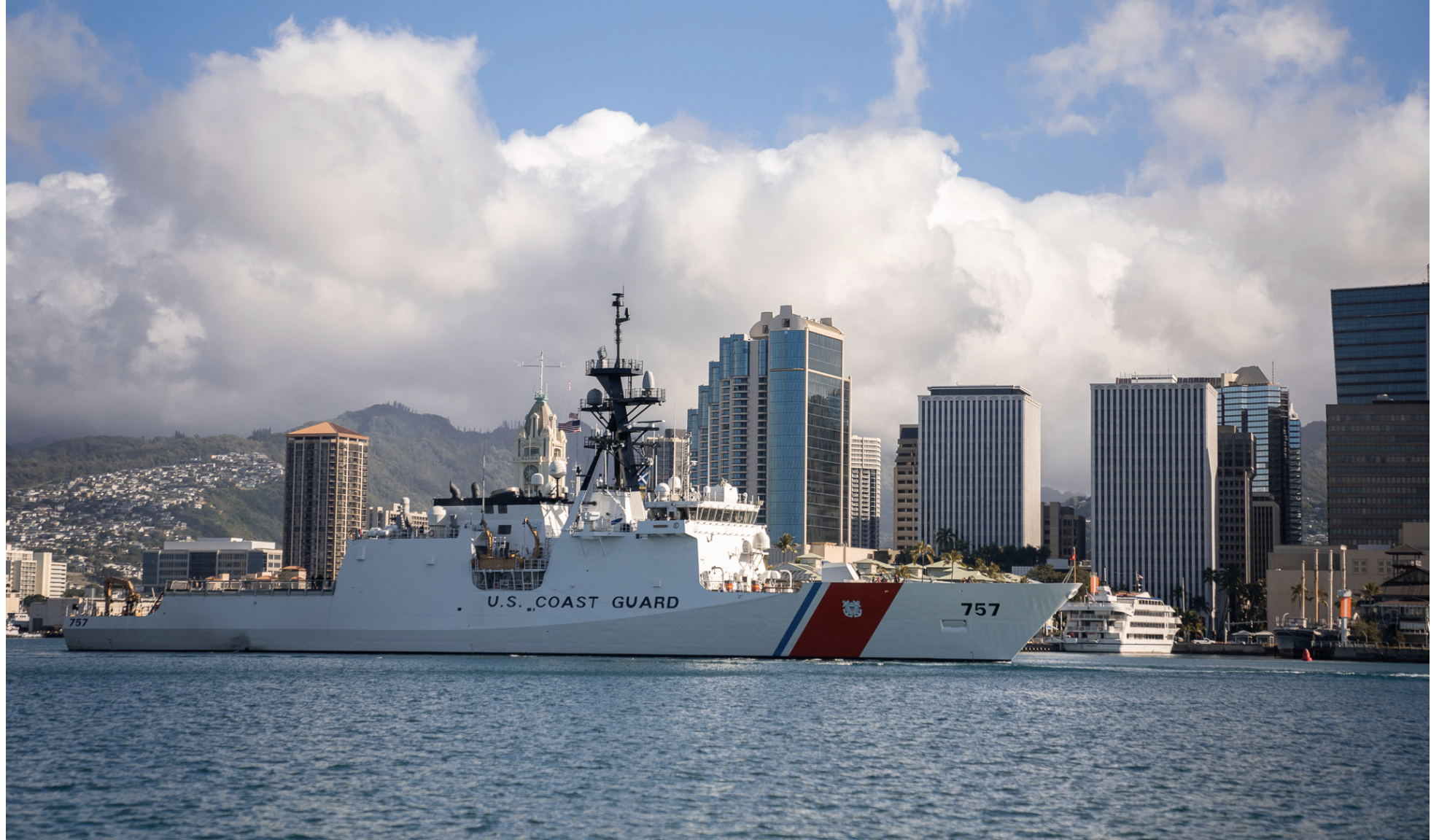
SYDNEY – The U.S. Coast Guard Cutter Midgett (WMSL 757) recently completed a port call in Sydney, Feb. 25, 2025, conducting several engagements with Australian partners that strengthened ties and furthered collaborative maritime security throughout Oceania. Reflecting the spirit of the Pacific Quadrilateral Defense Coordinating Group (Australia, India, Japan, and the US–Chuck), the U.S. Coast Guard continues its vital collaboration with Australian law enforcement to identify maritime vulnerabilities and cooperate on solutions that reduce risks to safety, health, and security throughout the region.

While in Sydney, Midgett hosted a law enforcement partnership event with Australian and United States stakeholders. Participants, including U.S. Consul General in Sydney Christine Elder, U.S. Coast Guard Attaché Capt. Amanda Ramassini, representatives from U.S. Homeland Security Investigations, U.S. Secret Service, and Australian law enforcement and maritime security partners, joined the crew for breakfast and roundtable discussions in the wardroom, followed by a tour of the cutter. Law enforcement partners received a briefing on Midgett’s capabilities and its current mission in the Pacific. Highlighting the close bond between the two nations and their agencies, Midgett’s Lt. Jake Behne recently deployed to the Torres Strait as an observer with the Australian Border Force (ABF) Fast Response Boat unit, and now an ABF Officer in Charge is set to sail aboard Midgett as an observer.

Separately, Sydney media outlets were invited aboard with the assistance of U.S. Consulate Sydney; the subsequent reporting on partnerships reached more than a million Australians.

Beyond official engagements, the crew of Midgett embraced the opportunity to experience Australian culture and history during a visit to the Australian National Maritime Museum.

“This visit to Sydney was more than just a port call; it was a chance to reinforce the vital link between the U.S. Coast Guard and our Australian counterparts,” said Capt. Matthew Rooney, Midgett’s commanding officer. “The support we received from HMAS Kuttabul was first rate and the warm welcome from our Royal Australian Navy shipmates made our time here truly memorable.”

The United States’ alliance with Australia remains a cornerstone of peace and stability in the Indo-Pacific region. The U.S. Coast Guard looks forward to continuing partnerships with Australia’s maritime and border forces to ensure a connected, prosperous, secure, and resilient Pacific.

Midgett, commissioned in 2019 and homeported in Honolulu, is the eighth Legend-class national security cutter. These 418-foot vessels are equipped with advanced technology, making them ideally suited to support a wide range of missions, including maritime security, law enforcement, and search and rescue operations.

“Coast Guard Cutter Valiant offloads $141 million in illicit drugs interdicted in the Caribbean Sea” –News Release

U.S. Coast Guard Cutter Valiant (WMEC 621) and French Navy Frigate FS Ventôse (F733) conduct joint exercises at sea, Sept. 29, 2024, while underway in the Windward Passage. The crew of Valiant conducted a 49-day migrant interdiction operations patrol in the region to protect life at sea and enforce U.S. maritime law. (Photo courtesy of FS Ventôse)

Below is a news release. It included no photos. I wanted to give some more credit to the other units and countries involved, so I have added photos of all four ships involved in the six interdictions. We get a lot of help from allies with territories in the Western Hemisphere–UK, France, and in this case Canada and the Netherlands.

USCGC Joseph Doyle (WPC-1133)

Netherlands OPV Groningen, 19 April 2017.

USCGC Richard Snyder (WPC 1127) participates in Operation Nanook in the Davis Strait on Aug. 4, 2021. Snyder worked alongside USCGC Escanaba (WMEC 907), the Royal Canadian Navy’s HMCS Harry Dewolf (AOPV 430), and HMCS Goose Bay (MM 707) in Operation Nanook to enhance collective abilities to respond to safety and security issues in the High North through air and maritime presence activities, maritime domain defense, and security exercises. (U.S. Coast Guard photo by USCGC Richard Snyder)


March 5, 2025

MEDIA ADVISORY: Coast Guard Cutter Valiant offloads $141 million in illicit drugs interdicted in the Caribbean Sea

MIAMI — Members of Coast Guard Cutter Valiant are scheduled to offload 12,471 pounds of illicit narcotics with a street value of more than $141 million.

WHO: Coast Guard Cutter Valiant, Seventh Coast Guard District

WHAT: The Coast Guard Cutter Valiant’s crew will offload 12,471 pounds of illicit narcotics with a street value of more than $141 million. Media are invited to interview a Coast Guard Cutter Valiant crew member in both Spanish and English.

WHEN: Thursday, March 6, at 9 a.m.

WHERE: Coast Guard Base Miami Beach, 100 MacArthur Cswy, Miami Beach, FL 33139

The offload is a culmination of six interdictions conducted by the crews of:

  • U.S. Coast Guard Valiant
  • U.S. Coast Guard Joseph Doyle
  • Royal Netherlands Navy HNLMS Groningen
  • Royal Canadian Navy HMCS Harry DeWolf
  • U.S. Coast Guard Tactical Law Enforcement Team Pacific
  • U.S. Customs and Border Protection Air and Marine Operations

Media are required to bring media credentials to get on Base Miami Beach. Media who do not have official credentials or do not RSVP will not be allowed entry. It is recommended to carpool due to space constraints. Plan to arrive at the front gate no later than 8:30 a.m. for escort to the pier.

Coast Guard teams deploy to American Samoa to patrol border, conduct boardings” –News Release

A boat crew assigned to U.S. Coast Guard Maritime Safety and Security Team Honolulu gets underway alongside an American Samoa Department of Homeland Security boat crew to conduct search and rescue training offshore Pago Pago, American Samoa, Feb. 24, 2025. MSST Honolulu and Coast Guard Sector Honolulu personnel deployed to American Samoa to train alongside agency partners, patrol the U.S. maritime border, and enforce U.S. laws and regulations. (U.S. Coast Guard photo, courtesy Maritime Safety and Security Team Honolulu)

Below is a District 14 news release. Link has short video of boats underway and a additional photo.

The long term answer to providing Coast Guard services to this part of the United States is to have a Coast Guard base in American Samoa. There are indications this will happen. I think we will ultimately base three Webber class WPCs there.


March 4, 2025

Coast Guard teams deploy to American Samoa to patrol border, conduct boardings

HONOLULU – Coast Guard Maritime Safety and Security Team Honolulu personnel and a boarding team from Coast Guard Sector Honolulu deployed to American Samoa from Feb. 10-27 to protect the U.S. maritime border, enforce U.S. laws and regulations, enhance maritime domain awareness and coordinate with agency partners.

During the deployment, team members boarded six U.S.-flagged commercial fishing vessels, six foreign-flagged commercial fishing vessels, and five recreational boating safety boardings, resulting in the termination of one recreational voyage due to deficient safety equipment.

Crews patrolled the U.S. territorial maritime border and the U.S. Exclusive Economic Zone surrounding American Samoa, which extends up to 200 miles offshore.

Additionally, MSST Honolulu and Sector Honolulu personnel conducted over 26 hours of training with the American Samoa Department of Homeland Security and American Samoa Marine Patrol, a law enforcement unit within the American Samoa Department of Marine and Wildlife Resources. Training primarily focused on boarding procedures and weapons proficiency.

“Working closely with partners in American Samoa heightens our awareness of any illicit activities in the area and hones our combined ability to safeguard the maritime border,” said Lt. Cmdr. Nic Iannarone, enforcement division chief, Sector Honolulu. “Teamwork is a key component of taking a stand against threats to our ports and waterways.”

In accordance with the President’s Executive Orders and direction from Adm. Kevin Lunday, the acting commandant of the Coast Guard, the Coast Guard is increasing cutter patrols and operations in American Samoa. The Coast Guard is surging assets to increase presence in key areas to protect America’s maritime borders, territorial integrity, and sovereignty.

Maritime Safety and Security Team Honolulu is a specialized unit of the Coast Guard dedicated to enhancing maritime security and safety in the Pacific region. With a highly trained personnel team equipped to conduct law enforcement operations, port security assessments, and emergency response activities, MSST Honolulu collaborates closely with local, state, and federal agencies to safeguard vital maritime infrastructure and natural resources.

Sector Honolulu serves a broad expanse of the Pacific that includes 200 nautical miles surrounding the State of Hawaii, the islands and atolls of the Hawaiian Island Chain and American Samoa. The sector’s primary missions include ensuring maritime security, conducting search and rescue operations, enforcing environmental protection laws, and facilitating law enforcement activities.

This Day in Coast Guard History, March 5

Based on the Coast Guard Historian’s timeline, https://www.history.uscg.mil/research/chronology/
With inspiration from Mike Kelso

March 5

1881  The crew of Life-Saving Station No. 10, Ninth District (Louisville), won acclaim with a dangerous rescue at the wreck of James D. Parker, a well-known river boat lost in the Indiana chute of the Ohio Falls.  She was a stern-wheel steamer of over 500 tons owned by the Cincinnati and Memphis Packet Company and bound from Cincinnati to Memphis.  Her crew numbered 50, including the captain, and she had 55 passengers on board, a number of whom were women and children.

From 1881 to 1972 “… the Louisville Lifeboat Station was in operation at Louisville, Kentucky.  The station was located just above the falls of the Ohio River and was authorized by an act of Congress on 2 March 1881.  It was the only permanently located floating lifeboat station in the world.

“During the floods of 1883-1884, the surfmen of the station ‘rescued and took to places of safety over 800 imperiled persons, men, women and children–among them many sick and infirm–and supplied food and other necessities to more than 10,000.’ [USLSS Annual Report, 1883]. “

This Day in Coast Guard History, February 4

Based on the Coast Guard Historian’s timeline, https://www.history.uscg.mil/research/chronology/
With inspiration from Mike Kelso

March 4

Algonquin, no caption/date; Neg. No. 148-2; Marine Photo Shop-Joe D. Williamson photo.

1907  Congress appropriated $30,000 for installing wireless telegraphs on not more than 12 revenue cutters.  USRC Algonquin as the first cutter fitted with the new technology with money appropriated from this act.

1915  Secretary of the Treasury was authorized by Congress to detail cutters to enforce anchorage regulations in all harbors, rivers, bays, and other navigable waters of United States.

USCGC Yamacraw, c. 1914.

1917  Ten crewmen of CGC Yamacraw perished in the line of duty while trying to rescue the crew of the grounded steamer Louisiana near Ocean City, Maryland.  The Treasury Department labeled their loss “the most disastrous incident of this kind ever recorded in the annals of the Coast Guard, or of either of its forbears, the Revenue-Cutter Service and Life-Saving Service.”  The Coast Guardsmen who gave up their lives were:  Gunner Ross Harris, Master-at-Arms R. J. Grady, Quartermaster M. L. Kambarn, Seaman G. V. Jarvis, Ordinary Seaman M. L. Austin, Ordinary Seaman D. Fulcher, Ordinary Seaman R. L. Garrish, Ordinary Seaman R. E. Simmons, Ordinary Seaman T. L. Midgett, and Boy First Class J. A. Dugger.

1925  An Act of Congress (43 Stat. L., 1261), for the first time, provided for disability retirement within the Lighthouse Service.

The U.S. Coast Guard SAR aircraft Arcturus (USCG)

1929  Congress appropriated $144,000 for seaplanes and equipment for Coast Guard.

1952  An air detachment consisting of three helicopters and necessary personnel established as the first unit of its type on a test basis (at AIRSTA Brooklyn) began operating in support of port security operations.

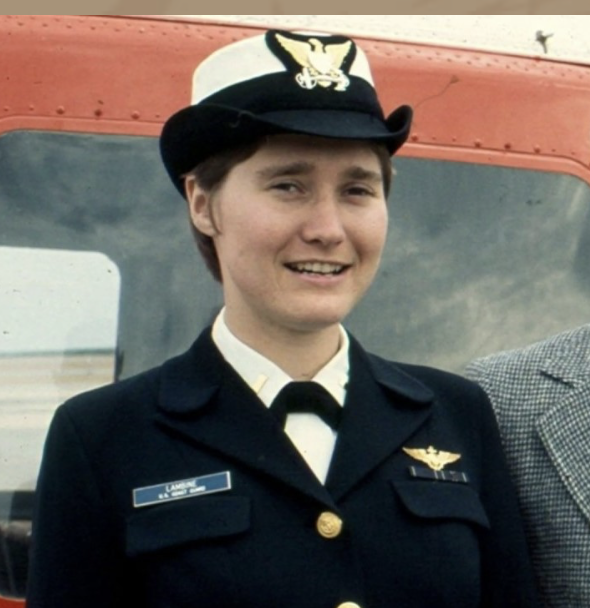
1977  ENS Janna Lambine, USCG, graduated from naval aviation training at NAS Whiting Field, Milton, Florida, becoming the first female pilot in the Coast Guard.