CG History from Bill Wells

Friend and frequent contributor, retired Master Chief Bill Wells has a historical piece about living conditions aboard 19th century revenue cutters in “Prologue,” a magazine published quarterly by the National Archives and Records Administration.

It is the cover article of the Fall 2014 issue and is entitled “Wet, Cold, and Thoroughly Miserable.” You can access it as a pdf at the magazine’s web site here.

Marine Inspection Failure in Adriatic Ferry Fire?

You have probably heard about the fire on the Ferry Norman Atlantic in the Adriatic between Greece and Italy, but there were a couple of particularly interesting notes in this CNN report that suggest a failure of marine inspection authorities.

In the first three hours of the fire, around 150 people were able to escape via the vessel’s lifeboats. But when the ferry lost power, the electronic arms were unable to function, leaving the rest of the boats dangling uselessly by its side.

It’s not known how the fire started, but it’s believed to have originated in the parking bay. A truck driver told the Greek news media that trucks filled with oil were “packed like sardines,” their cargo scraping the ceiling, which could have set off sparks in rough seas to start a fire, he surmised.

Poland Builds an OPV

NavyRecognition is reporting that Poland has floated out an OPV. This ship like the Israeli OPVs discussed in my previous post is a MEKO A-100 design. The NavyRecognition post includes a photo of the vessel in its current state and an artist’s concept of the finished product.

This project has had a long gestation period. The ship was laid down in 2001. It began as a project to build seven corvettes referred to as the Gowron class, but funding was not forthcoming, and the project was cancelled, leaving the first ship of the class on the ways, largely complete structurally but without its expensive weapons systems. Ultimately they made a decision to complete the ship as an OPV without the planned anti-ship and anti-aircraft missiles and anti-submarine systems.

There is more information and photos here.

“Standard displacement mass of the vessel is to be as much as 1800 tonnes, total length – 95.2 m (312.3 ft), width – 13.5 m (44.3 ft), height to the level of the board – 9.35 m, displacement – 3.6 m. The ship is to be able to operate autonomously for a period of 30 days.

“Mixed propulsion system consists of 2 main engines (power output: 2 x 3240 kW) and a turbine, maximum power of which is to be as much as 25 000 Kw. All that is to allow the ship to reach speeds of up to 30 knots. Range of the vessel – 2000 NM at at 18 knots and  4500 NM at 14 knots. Ship’s power plant is equipped with 4 generators, 600 kW each. Additional equipment includes bow azimuth thruster, which improves manoeuvrability, and active stabilizers, which improve comfort for the crew.”

The ship’s weapons will be:
» 1x Oto Melara 76mm main gun
» 2x Oto Melara Marlin WS 30mm remote weapon stations
» 4x GROM Short range surface to air missile launchers
» 4x 12.7 mm machine guns

This is typical OPV weaponry with the exception of the GROM missile systems which are relatively simple MANPADS (man portable air defense systems).

Germany to Build Four OPVs for Israel

Photo Credit: jimmyweee, Malaysian OPV Pahang, IMDEX2007

Photo Credit: jimmyweee, Malaysian OPV Pahang, IMDEX2007

DefenseNews is reporting that Germany will be building four Offshore Patrol Vessels for the Israeli Navy. Israel has seen a need for OPVs to protect its growing offshore energy industry.

Israel had previously considered the Lockheed “international” LCS design, but it was deemed too expensive. The design selected is a version of the MEKO A100. Two versions of this design are already in service, The Kedah class (pictured above) with the Malaysian Navy and the K-130 class corvettes of the German Navy.

It will be interesting to see how these ships turn out. They will be similar in size, perhaps a bit smaller than the Offshore Patrol Cutters.

A late addition:

Israel_Navy_Saar_6_MEKO_TKMS_1

Added Nov. 16, 2020.


Happy Holidays

It has been my pleasure to have a long association with people who have chosen a life of service to humanity and their country. This time of year helps to bring it all into focus. Hope you all have a wonderful holiday season and a Happy New Year!

Operation Mare Nostrum Influences Frigate Design

DefenseNews is reporting Adm. Giuseppe De Giorgi, chief of the Italian Navy says their experience with their massive migrant interdiction operation “Mare Nostrum,” that saved over 150,000, is influencing the design of future frigates.

“The experience of Mare Nostrum has helped shape the design of Italy’s new frigates, which are dual use and can engage in large-scale rescues. Openings on the sides of the vessels allow people to disembark from fishing boats as they would on a dock.

“These ships will have a large space under the flight deck which is wired and plumbed so containers with bathrooms or hospital facilities can be installed, not to mention sleeping quarters. We will also be able to store large inflatable boats for special forces, which can be used, alongside landing craft, to evacuate Italian nationals from conflicts where helicopters are vulnerable to man-portable air-defense systems.

“I think this is the future. Increasingly, I don’t think countries will be able to deploy separate naval forces for policing, civil use and military use. I believe a navy must be designed from the start to be as flexible as possible.

“There are other innovations on the new ships. We are aiming to use electric propulsion up to 10 knots and to use bio-fuel and liquid gas fuel. The fuel tanks are being designed to use regular fuel as well as liquid gas. I think we are the first to do this.

“Additionally, the frigates will be able to provide electricity and drinking water for a community of 6,000 hit by a natural disaster.

“We will also be able to carry sea-skimming robots to clear up pollution on the surface, with the polluted water then stored in the tanks of a new refueling ship we are also designing.”

Italy has both a Coast Guard and a maritime Customs Service, but neither has large patrol vessels (over 1,000 tons) like the USCG, so the Italian Navy performs some coast guard functions.

The next class of US Coast Guard cutter, the Offshore Patrol Cutter, includes a design requirement to hold, shelter, and feed up to 500 illegal immigrants on deck. There are still a number of unknowns, but there is reason to believe that the winning design may also include provision for support of containerized modules and a hybrid propulsion system even though neither were included in the specification.

Aside from the ability to provide electricity to communities ashore, the excess generator capacity of a hybrid propulsion system may also allow the vessels to support electrically powered weapons like lasers and rail-guns.

Budget According to American Society of Naval Engineers

An interesting Power Point (pdf)https://www.navalengineers.org/…/Documen…/Carnevale_2014.pdf about how the Federal Budget and Geopolitics influence Naval Shipbuilding from the American Society of Naval Engineers. Of course most of it is about Navy shipbuilding, but they do touch on Coast Guard programs and there are a couple of items worthy of note.

First on page 8, “Total Federal Spending, Who’s Spending the Money” one entry notes that over the three years between 2010 and 2013 the Dept. of Homeland Security spending has gone up 36%. While I seem to recall, Coast Guard spending has actually declined.

On page 33 is “FY15 USCG Vessels Appropriations Status.” It show the differences between the Administration request, and the House and Senate mark-ups. Most significantly, while the Administration asked for only two Webber class WPCs ($110M), the House included four ($205M), and the Senate six ($318M). In-service Vessel Sustainment was also bumped up. The Administration requested $24.5M, the House included $34.5M and the Senate $49M. There was another bump, Senate added $8M for Polar Icebreaker Preservation, which I presume was for the Polar Sea. The House cut the OPC program $10M and zeroed the Icebreaker program (-$6M).

The last thing of interest to me on this page was that while the Administration asked for $803M for Coast Guard vessels, the House requested a bit over $83M more ($884.347M), and the Senate $240.5M more ($1,043.5M). The FY2014 continuing resolution was $999M

US Coast Guard Retiree FEMA Reservist Initiative

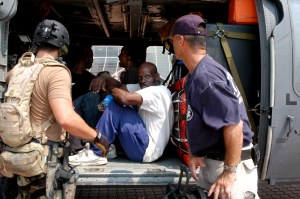
FEMA_-_14850_-_Photograph_by_Win_Henderson_taken_on_09-05-2005_in_Louisiana

I’m passing this along at the request of Retired Master Chief of the Coast Guard, Skip Bowen.

 US Coast Guard Retiree FEMA Reservist Initiative

Below you will find the Master Chief’s forwarding note and an extract from the “All Hands Coast Guard” Blog, written by him, that was published earlier this month (with some minor formatting changes).

——————————————————————————————————————-
Fellow CG Retirees, This is just a reminder that this is still an ongoing initiative. Our Retiree population has stepped up to the plate and we have about a hundred strong resumes in the system. However, the need is much greater and I hope that every CG Retiree fully or partially retired from their civilian occupation considers this opportunity. Besides serving your country in an active capacity again the FEMA Reservists are also paid for their time and travel while deployed. Deployments can either be for training or to a disaster. Please read the below and get in contact with FEMA if you have questions.

Yours in service,
Skip Bowen
——————————————————————————————————————-

As the co-chairs of the Commandant of the Coast Guard National Retiree Council, Retired Rear Adm. John Acton and I have been working with FEMA on an exciting opportunity for Coast Guard retirees.

Throughout my Coast Guard career, I took pride in the fact that the organization that I was a part of was a humanitarian service. Rescue and emergency response are the missions that initially attracted me to the Coast Guard and they are largely why I stayed with the Coast Guard for an entire career. Now I am retired and I am still interested in service to my fellow citizens. I believe that most of my fellow retirees are also. With that in mind we have worked with FEMA to create a unique and exciting opportunity for retirees called the U.S. Coast Guard Retiree to FEMA Reservist Initiative. you are semi-retired or fully retired and have a flexible schedule this part time opportunity may be for you.

FEMA Reserves serve as the bulk of the FEMA Response workforce during a disaster. FEMA Reserves are trained and qualified to perform a myriad of tasks during a disaster response. When deployed FEMA Reserves are reimbursed for travel and paid as intermittent FEMA employees. Currently FEMA is experiencing a critical shortage within its Reserve Program. Over 2,700 FEMA Reserve positions are vacant. Reservist positions are managed through FEMA Cadres and the skills needed to serve in most of them are generally equivalent to many Coast Guard ratings and officer specialties. CG retirees may already have experience in disaster response, rescue, first aid, ICS, hazardous material handling, survivor support, recovery ops and many other areas of expertise needed in the aftermath of a disaster.

Within the Coast Guard retiree population I believe that many former Coast Guard men and women will have the time, aptitude for volunteerism, and the skills necessary to become FEMA Reservists. This is an opportunity for retirees to still be of service, but on a flexible, part time basis.

Reaching out to Coast Guard retirees will serve as Phase 1 and “proof of concept” for a larger initiative targeting all military veterans. During Phase 2, FEMA with the help of CG Retire Council co-chairs will reach out to all retirees of the other four Armed Services. Phase 3 will entail a targeted effort toward all military veterans in general and wounded warriors in particular. For the Phase 1 effort, FEMA will work with the co-chairs of the Coast Guard Retiree Council to continue mapping out equivalent CG rating and officer specialties versus FEMA Cadre specialties.

FEMA has modified their website to include a section dedicated to the recruitment of Coast Guard retirees for this exciting program. The section includes CG retiree specific content, information on the application process, forms, and resumes.

To learn more, contact the FEMA Call Center at 855-377-FEMA (3362) or email the Incident Workforce Management Division (WMDFrontOffice@Fema.dhs.gov).
——————————————————————————————————————-

Maybe, it would not hurt to infuse FEMA with a bit more Coast Guard Spirit–Chuck