Tenth Webber Class WPC, Raymond Evans, Delivered

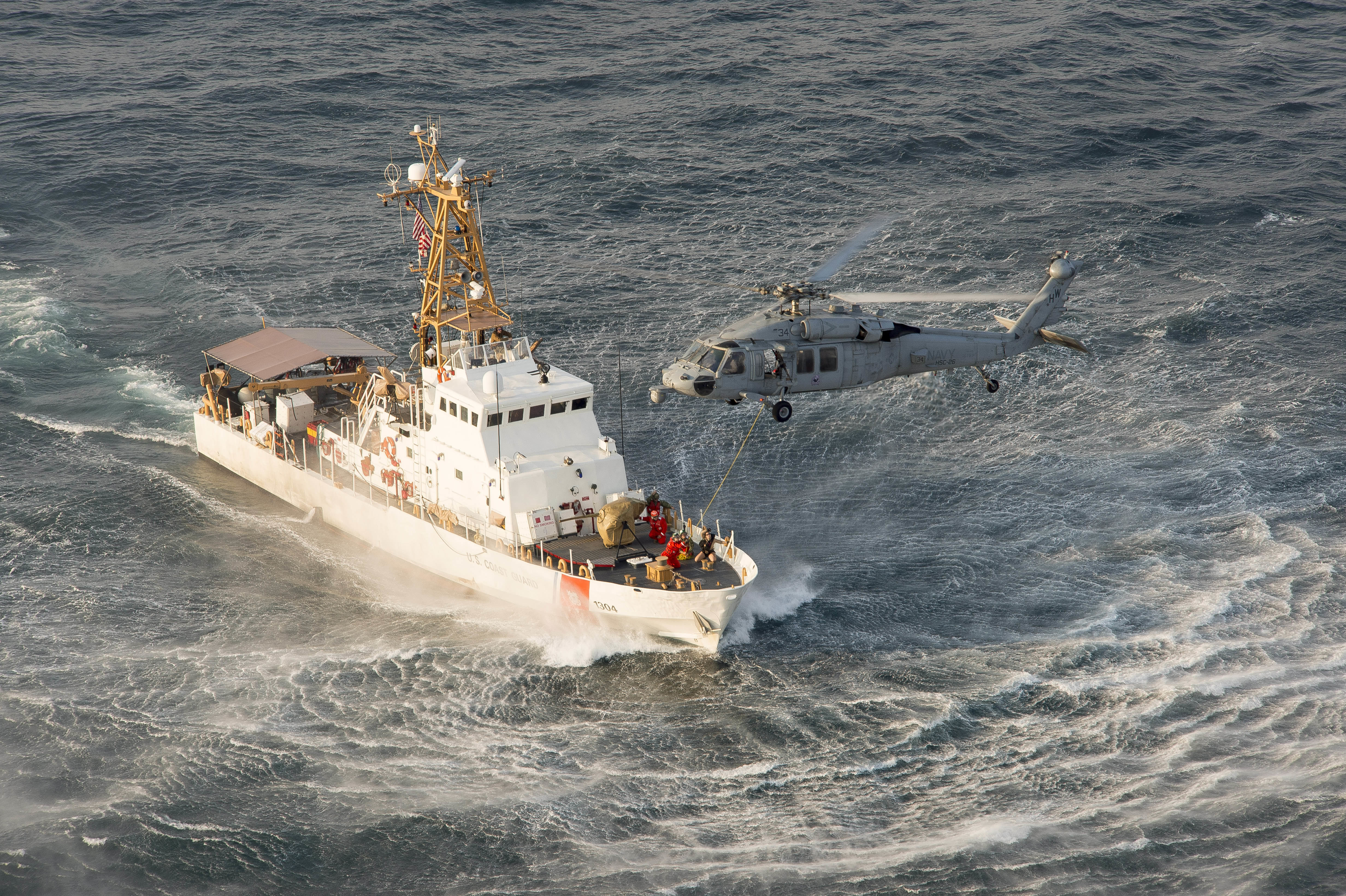
Some progress on recapitalization. MarineLog is reporting delivery of the tenth Webber class WPC (Fast Response Cutter) named for Raymond Evans. Evans was with Munro when largely Coast Guard manned boats pulled a Marine detachment out of a trap. More information:

http://www.uscg.mil/history/weboralhistory/EvansOralHistory.asp

http://www.uscg.mil/history/WEBORALHISTORY/Ray_Evans_Video_Interview.asp

Conduct for Unplanned Encounters at Sea (CUES)

The Naval Institute News Service has provided a copy of “the April, 2014 version of the multi-national Conduct for Unplanned Encounters at Sea (CUES) signed by 21 Pacific nations at the 14th Western Pacific Naval Symposium in Qingdao, China. CUES is a series of non-binding rules-of-the-road to prevent an escalation of tensions between different militaries at sea.”

This is similar to the old INSEA agreement between the Soviets and the US, designed to minimize the possibility of a unintentional incident escalating into a conflict. Particularly any ships operating in the South China Sea, East China Sea, western Pacific, or even the Indian Ocean ought to spend some extra time with this document. Good to see this document emerge, it was needed. Unfortunately it will not prevent intentional provocation, but it may make a determination of accidental or intentional easier.

GAO Decision on OPC Contract Protest Published

MarineLog is reporting the issue of the text of the GAO’s decision on the protest of the award of the OPC contract.

“Interestingly, the GAO decision includes a Coast Guard table that indicates that all five shipyards that responded to the RFP got “Superior” ratings for the soundness and mission effectiveness of the concept designs offered and also for their design approach. All were rated “Satisfactory” for organizational management and production capability. On past performance, though, differences emerged. Bollinger and Bath Iron Works were rated ‘Satisfactory,’ Eastern was rated ‘Superior,’ but both Huntington Ingalls and VT Halter got ratings of ‘Marginal.'”

New Propulsion System Suitable for Ice Environment

gCaptain has posted news of a new propulsion system developed by Caterpillar Marine in partnership with Odense Maritime Technology (OMT) and Scandinavian Marine Group (SMG) that is claimed to be more efficient, quieter, and suitable for icebreakers and other vessels operating in severe environment, while offering maintenance advantages in terms of accessibility. A more complete view of the system is here.

Australia Plans to Provide Patrol Boats to Pacific Island Nations

RSIPV_Tata_Pacific_Patrol_Boat
Photo credit: Angra at en.wikipedia: Royal Solomon Islands Police Vessel Lata in Townsville Harbour during a 2005 maintenance visit, one of the boats to be replaced

MarineLink is reporting that Australia is planning to reprise its earlier Pacific Patrol Boat Program of providing patrol boats to island nations in the Pacific. The Program will build over 20 steel hulled patrol boats.

“…the rugged Australian-made patrol boats are worth $594 million with through life sustainment and personnel costs estimated at $1.38 billion over 30 years.

“Replacement patrol boats will be offered to all current participating states including Papua New Guinea, Tonga, Solomon Islands, Fiji, Tuvalu, Kiribati, Samoa, Vanuatu, Federated States of Micronesia, Palau, Republic of Marshall Islands, Cook Islands and new member Timor-Leste.”

Of those 13 states the US has obligations to three of them, the Federated States of Micronesia (FSM), the Republic of the Marshall Islands (RMI) and the Republic of Palau, under the Compact of Free Association.

Characteristics of existing PPB as listed in Wikipedia:
Displacement: 162 tons full load
Length: 31.5 m (103 ft)
Beam: 8.1 m (27 ft)
Draught: 1.8 m (5.9 ft)
Propulsion: 2 Caterpillar 3516TA diesels, 2820 hp (2.1 MW), 2 shafts
Speed: 20 knots (37 km/h; 23 mph)
Range: 2,500 nautical miles @ 12 knots
Endurance: 10 days
Complement: 14-18
Furuno 1011 I band surface search radar

Given the expected price of the new patrol boats, I suspect the new boats may be larger, perhaps similar to the Australian Armidale class.

At the very least we can expect that the US Coast Guard may be involved in training for the crews of some of these boats. There is also a good possibility of cooperative operations.

Underway Time–Navy

Navy Times reports that eight types of surface ships including aircraft carriers, amphibs, command ships, cruisers, destroyers, frigates, and LCSs averaged 33.1% of the time underway during the years 2011 to 2013.

Wonder how figures for the Coast Guard compare? The Navy figure is almost certainly different from “Days Away From Homeport” although the article seems to equate it when they say, “Sailors…have seen more of the sea than they have of their families in the past three years.” How are they counting yard periods away from homeport (probably a rare event for them), or in port time way from homeport? Is a day underway for only a few hours counted the same as a 24 hour day?

No matter how these are counted, my impression is that the Coast Guard’s average would be higher in spite of the numerous mechanical breakdowns we are hearing about. If so, shouldn’t more people know it?

More Info on the Eastern OPC Proposal

IMG_4134

All photos credit Navy Recognition

Recently found a brochure for Eastern’s OPC reportedly from last year’s Sea, Air, Space Conference. Credit FCNoVA from this discussion group. We have discussed this class before and here, the comments may still be of interest.

Relative to the question does the design meet the “objective” criteria or only the minimums it looks like relatively good news, meeting or exceeding the objectives in terms of endurance, speed, aviation facilities, and accommodations. I presume since this design meets most of the objective criteria, the other two designs will also similarly exceed the minimums. I will provide some of the information provided in the brochure and then provide my comments.

You can read the brochure here: http://www.mnvdet.com/Other/Eastern%20OPC%20Scan.pdf

DIMENSIONS:
Length overall: 328ft
Length between perpendiculars: 297ft
Beam overall: 52ft
Beam waterline: 48.67ft
Depth: 24.5ft
Draft: 16.1ft

Commentary: Compared to the Treasury Class (327 ft) cutters, this is, of course only one foot longer, but the beam and draft are both substantially greater, greater in fact than the beam and draft of the 378s, so we can expect the full load displacement to be considerably greater than the 327s’ approximately 2500 tons, and close to the over 3,000 ton full load displacement of the 378s. Unless the vertical weight distribution is messed up, these are likely to be good riding, very seaworthy ships, a notable improvement on the 270s and 210s.

Accommodations:
126 total
20 commissioned officers
12 CPOs
94 E-6 and below
Also included are a 466 sq ft physical fitness area, a 20 seat training room, and a 48 seat crew’s lounge.

Commentary: Note these are the accommodations, not the expected crew which will be 15 officers, 89 enlisted, and detachments totalling 12 for a total of 116. The Coast Guard is avoiding the mistake made on the Littoral Combat Ship of assuming a small crew, limiting accommodations, and then finding they need a larger crew than the ship was designed for.

Performance:
Range 9,500 nmi @ 14 knots
Sustained speed: 24 knots
Sprint speed: 26 knots.

Commentary: This is an area I was afraid we would see the design compromised. For similar speeds, this range is comparable to the that of the 378s. At speeds above 18 knots, its all diesel power plant will give it greater range than the 378s.

Main Propulsion/Auxiliary Prop and thruster/Electrical:

Main Prop: Two 12,204 HP MAN geared diesels
Ship Service Generators: 4,1044 kW
Auxiliary Prop/thruster: 750 kW, 1005 HP

Commentary: I interpret this to mean four generators of 1044 kW or 4,176kW total. That is a lot of power generation potential. By comparison a 378’s total capacity is 1500 kW, the 270s have 1425 kW. This suggest that the ship will have a hybrid power plant with the generators used for driving electric cruise motors. Running only three generators, one could probably supply routine electrical requirements and the other two could propel the ship. Two generators would supply the equivalent of approximately 2800 HP, this might be enough to drive the ship at 14 knots. Certainly three generators supplying 4200 HP would be more than enough. This will allow the ship to cruise with the Main Diesel Engines shut down.

The combined horsepower of the main diesels, 24,408 HP is more power than the diesel engines of the National Security Cutters which we know provide a high cruising speed, and it is about three and a half times the power of those on the 378s or the 270s.

The thruster is apparently of the drop down trainable type, allowing it to be used as an emergency or loiter propulsion system. The available power is relatively high meaning the ship could probably make seven or eight knots on the thruster alone.

I expect what we will see is two main engine spaces, each with one main diesel and one or two generators. Hopefully the main spaces will be separated by more than a single bulkhead, perhaps by the engineering control room, so that damage at a single point cannot effect both engine rooms. Hopefully also, at least one generator will be outside the two main machinery spaces. If so, these ships will have extraordinary main propulsion redundancy with at least three different spaces and five different systems capable of moving the ship–two MDE, two motors on the main shafts, and the bow thruster.

Construction: Steel Hull with an Aluminum Superstructure. Commentary: No surprise, although I would have liked to see steel superstructure, but it is a reasonable compromise.

IMG_4132

Aviation Facilities:

Hangar: H-65/H-60R+UAS/UAV
Flight Deck: 3725 square feet

Commentary: Good news that the hangar will be large enough to accommodate both a Navy MH-60R and a UAS although I am a bit concerned that since the Navy has moved to a larger airframe for their Firescout, there is a chance that the UAS may not include the latest version of what is likely to become a standard system.

Apparently the Flight Deck is at least as large and probably larger than that of the 378s.

IMG_4129

Weapons:

57mm Mk110 mod X
Electro-Optic Sensor System
25mm Mk38 mod2
two .50 cal. ROSAM (stabilized mount) plus two .50 cal. in soft mounts
ESM system
Mk53 mod X ASCM decoy system

Commentary: No surprise in what was mentioned. The radar fire control system that was included in previous specifications was not mentioned. This may have been simply an omission, but the Electro-Optic System might also serve as a firecontrol system, although it would be decidedly inferior to a radar system against surface targets in low visibility and against air targets in all situations. Consequently I am a bit concerned that this system has been compromised in the interest of simplifying the design.

The excess generator capacity may make these ships suitable for use of energy intensive weapons that may be developed in the future.

Warship Tour–Frigate Normandie

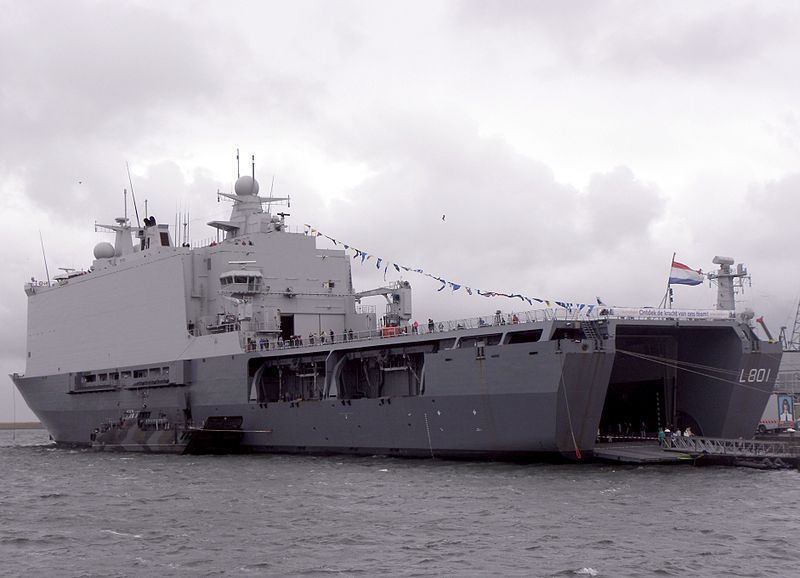
NavyRecognition has a video tour of the newly constructed French Frigate European Multi-Mission (FREMM) NORMANDIE. This is a relatively large frigate, a third again larger than the BERTHOLF class. It uses a single LM2500 gas turbine for high speed and electric motors for cruise up to 15 knots.


Early in the video you can see that the foc’sle deck looks very clear, no ground tackle or bollards, and no handrails. Frankly, it looks dangerous to walk around up there except in the most favorable conditions. At time 3:26 you see the foc’sle below the deck where these the fittings are located.

At time 5:06 you see the Combined Active and Passive Towed Array Sonar (CAPTAS)4. This system is being evaluated for the ASW module for the Littoral Combat Ship, and if we revived an ASW capability in the Coast Guard, it is likely this would be the sensor system used. There is a similar but smaller CAPTAS 2 by the same manufacturer.

At minute 5:55 you will see the MU-90 torpedo in the hangar and at minute 6:00 the surface vessel torpedo tubes that also launch the same torpedo. the MU-90 unlike US light weight ASW torpedoes (at least last I knew) has an anti-surface capability. I think is desirable.

At minute 6:58 you see the NATO frigate helicopter, NFH-90, a helicopter in the same class as the H-60 but with the advantages, relative to the existing shipboard versions of the H-60, of a cargo ramp in the rear and a shorter overall length without the complication of a folding tail.