“Canadian-Led CTF 150 Seize Nearly 2,000kg of Narcotics in Two Interdictions in a Single Day” –Combined Maritime Forces

Apr 14, 2024
ARABIAN SEA – 240410-N-NO146-1005 ARABIAN SEA (April 10, 2024) Bags of illegal narcotics seized from a vessel are stacked on the deck of the U.S. Coast Guard Sentinel-class fast-response cutter USCGC Clarence Sutphin Jr. (WPC 1147) in the Arabian Sea, April 10. Clarence Sutphin Jr. was operating under Combined Task Force 150, one of five task forces under Combined Maritime Forces, the largest multinational naval partnership in the world. CTF 150 focuses on maritime security operations outside the Arabian Gulf. Crimson Barracuda counters terrorist and criminal organizations’ use of the high seas to smuggle narcotics, weapons, and other illicit substances in the Indian Ocean, Arabian Sea and Gulf of Oman.

Below is a news release from Combined Maritime Forces Public Affairs.

I would note two things about this particular incident. The use of “Canadian space-based intelligence” to cue the cutter’s interdiction, and second, that you can see Long Range Acoustic Devices mounted on the cutter in the photo above. Below is a close-up.

Long Range Acoustic Device.


MANAMA, Bahrain —The Canadian-led Combined Task Force (CTF) 150 carried out two drug interdictions at sea in a single day as part of Focused Operation Crimson Barracuda in the Arabian Sea, April 10. The two interdictions resulted in the seizure of a combined total of nearly 2,000 kg of drugs.

The Royal Navy’s HMS Lancaster, a Duke-class Type 23 frigate, seized over 800 kg of hashish, 390 kg of methamphetamines and 110 kg of heroine from a stateless dhow in the Arabian Sea. This was the crew’s first day of deployment after completing a crew swap a few weeks before.

“I am exceptionally proud of the entire team in Lancaster executing this interdiction on the first day of our deployment,” said Royal Navy Cmdr. Chris Sharp, HMS Lancaster’s commanding officer. “Complex interdictions in such a challenging environment require true teamwork across the entire ship’s company. This success is shared with our partners in CTF 150 who provided essential support to the operation.”

Then, using Canadian space-based intelligence, the Sentinel-class fast-response cutter USCGC Clarence Sutphin Jr. (WPC 1147) seized 257 kg of methamphetamines, 92 kg of heroine, 17 kg of amphetamines, 296 kg of hashish, and 15 kg of marijuana from another dhow in the Arabian Sea. After weighing and documenting the hauls, the crew disposed of the narcotics.

Clarence Sutphin Jr is forward deployed to Bahrain as part of a contingent of U.S. Coast Guard ships under Patrol Forces Southwest Asia (PATFORSWA). PATFORSWA deploys Coast Guard personnel and ships alongside U.S. and regional naval forces throughout the Middle East.

“These two interdictions have made a significant dent in criminal and terrorist organizations’ ability to use drugs to fund their activities,” said Royal Canadian Navy Capt. Colin Matthews, Commander Combined Task Force 150. “The collaboration of our assets and personnel allowed us to become a precise and highly effective team that not only undermined the efforts of these organizations, but also nearly 2,000 kg of drugs from hitting the streets.”

Crimson Barracuda counters terrorist and criminal organizations’ use of the high seas to smuggle narcotics, weapons, and other illicit substances in the Indian Ocean, Arabian Sea and Gulf of Oman.

CTF 150 is one of five task forces under Combined Maritime Forces, the world’s largest international naval partnership. CTF 150’s mission is to deter and disrupt the ability of non-state actors to move weapons, drugs and other illicit substances in the Indian Ocean, the Arabian Sea and the Gulf of Oman.

Combined Maritime Forces is a 42-nation naval partnership upholding the international rules-based order by promoting security and stability across 3.2 million square miles of water encompassing some of the world’s most important shipping lanes.

Sea-Air-Space Graphics Available

As noted earlier, the Coast Guard made a number of presentations at the Navy League’s Sea-Air-Space exposition, April 8 and 9. Most of us were not able to attend, but we can still see some of the information provided. The Acquisitions Directorate (CG-9) webpage has links to the graphics that were used during most of the presentations.

“Navy Wants A Cheap Heavy Torpedo That Can Be Stockpiled Fast” –The War Zone

WWII surface torpedo launch

The War Zone reports,

Rapid Acquisition Procurable Torpedo, or RAPTOR…early in the testing stages…could provide the service with quick-delivery and inexpensive submarine munitions that may be transferable to other platforms as well. (Emphasis applied–Chuck) Capt. Chris Polk, the Navy’s program manager for undersea weapons, detailed the effort …The goal…was to have a torpedo that costs $500,000 or less, with all components acquired and produced within a year. For comparison, the current unit cost of a Mk 48 Mod 7 torpedo is approximately $4.2 million…”

Why would the Coast Guard care?:

For quite a while, I have contended that Coast Guard cutters do not have a capability implicit in their mission set, the ability to forcibly stop vessels regardless of size. Simply put, we need a ship stopper.

With the increase in vessel size, it has become extremely unlikely we would be able to stop even a medium sized vessel, manned by a determined crew, in anything like a timely manner, using the guns being installed on cutters.

To stop a ship, the logical targets are rudder, propeller, or engines. All three are mostly or completely below the waterline, making a torpedo the logical weapon of choice. The last time I looked, we had 31 critical ports that needed protecting. Distributing enough of the US Navy’s only, very expensive, Mk48 heavy weight torpedoes to protect 31 ports was a non-starter, so I have suggested that we use lightweight torpedoes (the Navy has a lot more of them) with the idea that cutters would generally just serve as another place to store them since, if we are lucky, they would never be used. Even if an attack occurred, most would go unused. The ones issued to the Coast Guard could come out of the reserve stock until the Navy decides they need them in wartime.

The US Navy has not introduced a totally new heavy weight torpedo in more than 50 years. Some foreign surface combatants still carry heavy weight torpedoes, but the US Navy has not built surface combatants with heavy weight torpedo tubes since the 1960s. (Brooke and Garcia class Destroyer Escorts–later frigates–were the last classes.)

If this new torpedo does cost less than $500,000, it would be less than the reported cost of the Mk54 light weight torpedo ($839,320 in 2014).

It seems, the Navy may have decided they need a way to sink ships, maybe a lot of ships, including large ships, that may not be top of the line combatants, without having to empty their magazines of expensive, exotic munitions.

If that is the case, hopefully they will make enough to allow placing some on cutters, including small cutters like the FRCs or the WPB replacement. FRCs are almost seven times larger than the PTs boats of WWII and the PTs carried four heavy weight torpedoes. I would be happy to see cutters carrying two.

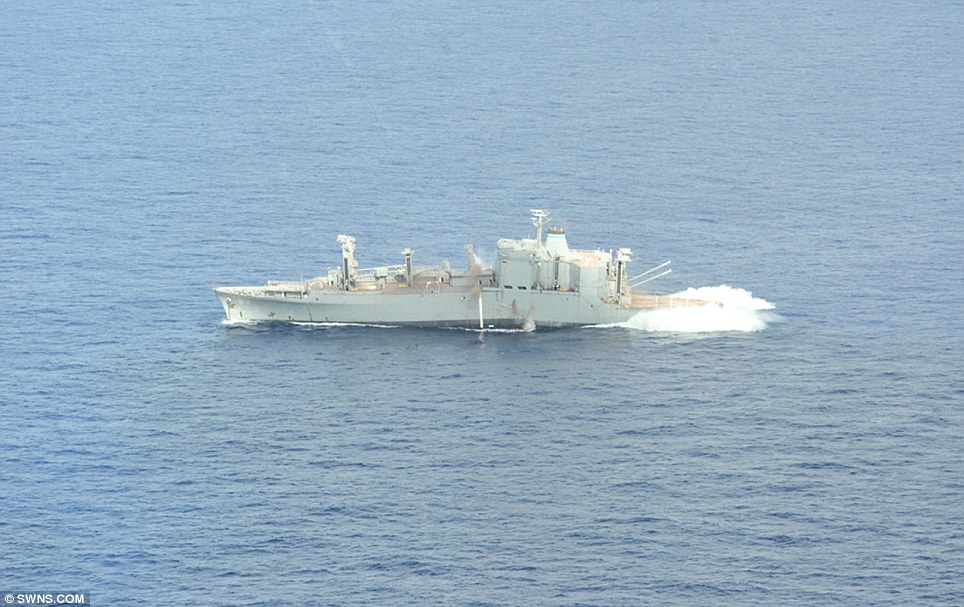
former USNS Kilauea breaks in half after being hit by the torpedo.

“Kongsberg Maritime to supply Promas propulsion systems for the United States Coast Guard’s new Offshore Patrol Cutter programme” –Kongsberg Maritime

Below is a news release from Kongsberg Maritime. This will maintain continuity with the four ships being built by Eastern.


Kongsberg Maritime has been selected by Austal USA to supply its Promas propulsion system to the latest ship in the United States Coast Guard’s new Offshore Patrol Cutter (OPC) Heritage Class programme.

This initial contract is to supply Kongsberg Maritime equipment for the fifth ship, Coast Guard Cutter Pickering, which is the first to be built by Austal USA at their yard in Mobile, Alabama.

The Coast Guard’s new OPC programme represents a significant investment in maritime capability and is expected to run up to 25 ships. The new vessels will replace the Coast Guard’s medium endurance cutters and meet the need for long-term offshore capability to maintain current and future mission effectiveness.

Promas combines rudder and controllable pitch propeller into one propulsion system which optimises the hydrodynamic properties of the ship and delivers increased efficiency and thrust while using less energy. For the OPC, as well as twin Promas, Kongsberg Maritime is contracted to supply steering gear, rudders, fin stabilisers and tunnel thrusters.

Björn ten Eicken, Kongsberg Maritime, Vice President – Naval, said: “Kongsberg Maritime has a proud history of supplying mission critical technology to United States Coast Guard programmes.

“We have supplied our propulsion systems for naval and governmental forces for more than 80 years, and we’re delighted to have developed an efficient and effective system specifically suited to the challenging and varied operations of these new ships. Our Promas systems typically deliver efficiency savings of around 6%, so vessels are able to extend their range, something which can be crucial on longer missions.

“We’re looking forward to working with the Coast Guard and Austal USA on delivering these highly-capable ships.”

The OPC vessels will be able to provide long range patrol capability. At 360 feet long, they will have a displacement of 3,700 long tons, maximum speed of 22.2 knots, and a range of 9,050 nautical miles at 14 knots.

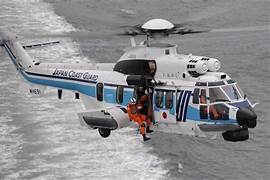
Japan Coast Guard H225 Helicopters

Japan CG Airbus H225 Helicopter

Below is an AirBus news release. The H225 is about the same size as the MH-60J despite the claims in the news release, Wikipedia reports that while the H225 has more power, the MH-60J has a higher speed and greater range.

Japan Coast Guard adds three H225s

Tokyo, 11 April 2024 – Japan Coast Guard (JCG) has placed an additional order for three H225 helicopters, taking its total H225 fleet up to 18. The largest Super Puma operator in Japan received three H225s in December 2023 and one in February 2024 for its growing fleet. The new helicopters will support territorial coastal activities, maritime law enforcement, as well as disaster relief missions in the country.

“The Japan Coast Guard has been an active operator of the Super Puma family helicopters for three decades. This follow-on order demonstrates the customer’s confidence in our products and the dedicated support to their fleet,” said Jean-Luc Alfonsi, Managing Director of Airbus Helicopters in Japan. “We believe the H225 is the perfect choice for JCG’s critical missions for law enforcement, as well as coastal and island protection, given its versatility in all weather conditions. We are committed to fully supporting its existing fleet, as well as its upcoming deliveries, ensuring high availability for its operations.”

JCG’s H225 fleet is covered by Airbus’ highly adaptive HCare Smart full-by-the-hour material support. This customised fleet availability programme allows the national coast guard agency to focus on its flight operations whilst Airbus manages its assets.

As the latest addition to the Super Puma family, the H225 is recognised for its high performance in challenging conditions as well as its outstanding range and payload capacity. The H225 has benefited from Airbus Helicopters’ continuous improvement policy. It is now equipped with new avionics including the largest screens available on the market and an innovative interface that, combined with its renowned autopilot, reduces pilot workload and enables them to focus on the mission at hand.

Offering the industry’s best range, speed, payload and reliability in the 11-ton-category twin-engine rotorcraft, the H225 offers outstanding endurance and fast cruise speed, and can be fitted with various equipment to suit a variety of roles.

24 H225s are currently flown in Japan by Japan’s Ministry of Defence or parapublic operators for various search and rescue missions, VIP, fire-fighting, as well as passenger and goods transportation.

A Window into what USCGC Frederick Hatch Has Been Doing

Lt. j.g. Mary Sims, executive officer of USCGC Frederick Hatch (WPC 1143), takes a photo with students touring the ship at the pier in Tacloban, Philippines, on Oct. 21, 2023. In a historic first, the USCGC Frederick Hatch (WPC 1143) visited Tacloban, Philippines, from Oct. 19 to 23, 2023, and the crew conducted engagements marking a significant milestone in the enduring relationship between the United States and the Philippines. (U.S. Coast Guard photo by Lt. j.g. Mary Sims)

Below is a news release from U.S. Coast Guard Forces Micronesia/Sector Guam. I don’t normally feature individual awards like this, but I think it gives a good sampling of what the patrol craft based in Guam are doing. Of course, we have heard about the fisheries enforcement and the capacity building, but there is at least one activity here that I don’t think has been commonly recognized. 

While serving as acting commanding officer, she showcased outstanding skills and tactical sense by spearheading the cutter effort in two complex nuclear missile submarine escorts with U.S. Navy Submarine Squadron 15.

The Coast Guard does have two Maritime Force Protection units dedicated to escorting Fleet Ballistic Missile Submarine as they operate on the surface, entering and exiting their homeports, but this is the first I have heard of this being done in Guam. Guam is a bit unique. There are four Los Angeles class SSNs based there as well as the only two submarine tenders in the US Navy, USS Emory S. Land (AS-39) and USS Frank Cable (AS-40). While I think the primary threat to the submarines transiting in an out of Puget Sound and Kings Bay is probably anti-nuclear protesters, Chinese fishing vessels operate close to Guam.


April 10, 2024

USCGC Frederick Hatch’s Lt. j.g. Mary Sims awarded for excellence in Pacific maritime operations

SANTA RITA, Guam — Aboard the USCGC Frederick Hatch (WPC 1143), Lt. j.g. Mary Sims sets an example of excellence on the vast waters of the Pacific Ocean. She was honored in March 2024 with the prestigious inaugural Sector Guam Officer Excellence Award for the second half of 2023 for her unwavering devotion to duty and outstanding leadership.

While she’s been doing incredible work for nearly two years, Sims serves as the executive officer and a boarding officer. She played an essential part in groundbreaking maritime operations, including the first-ever execution of enhanced maritime bilateral agreements with the Federated States of Micronesia (FSM) and the Republic of Palau. She also set an outstanding example as a boarding officer during 16 boardings of foreign-flagged fishing vessels, illuminating the issue of illegal fishing and capturing data on potential violations documented and turned over to the partner nation or regional fisheries management organization for further action. Her unwavering commitment to maritime law and steadfast support of good maritime governance represent the highest standards of professionalism and integrity.

While serving as acting commanding officer, she showcased outstanding skills and tactical sense by spearheading the cutter effort in two complex nuclear missile submarine escorts with U.S. Navy Submarine Squadron 15. Further demonstrating her diplomatic skills, Sims arranged a meeting between the Frederick Hatch crew and the BAP Unión crew, a Peruvian Navy tall ship voyaging around the globe and calling on Guam.

But her efforts go well beyond geopolitical concerns and tactical strategy. During the M/V Mama Loling towing operation, she showed resilience and fortitude in the face of hardship by expertly navigating the Frederick Hatch in eight-foot seas and hazardous weather to save five mariners and their damaged 39-foot research vessel in the Northern Mariana Islands threatened by an oncoming tropical cyclone. Her bravery and sound reasoning saved lives inspired the crew and honored the highest ideals of the U.S. Coast Guard.

Furthermore, Sims is an admirable contributor to community engagement and public service. During the cutter’s historic visit to Tacloban, Philippines, she led the organization of 14 community engagement activities over four days. This visit helped to build connections and improve diplomatic contacts with the local community and Philippine Coast Guard colleagues. On many occasions, Sims shared her experience with women and girls across the Pacific, which embodies the spirit of the Women, Peace, and Security (WPS) initiatives, as her presence not only showcases the importance of gender inclusivity within security operations but also serves as a potent symbol of empowerment, inspiring community resilience and fostering a more inclusive approach to regional peace and security efforts.

A native of Alabama, she has several siblings, including her sister Emma, who is also in the U.S. Coast Guard, assigned to USCGC Lawrence Lawson (WPC 1120) as the executive officer, out of Cape May, Jew Jersey. Sims is an avid runner, plays on a thriving local rugby team, and follows her faith.

In her upcoming assignment at U.S. Coast Guard Atlantic Area LANT-35, operations department maritime security enforcement, Sims will continue to excel and significantly contribute to the Coast Guard’s mission. Her transfer signifies the trust and confidence in her abilities to tackle new challenges and uphold the highest service standards as she concludes her tour here in Guam; her legacy of dedication, leadership, and commitment to excellence will continue to inspire her colleagues and leave an ever-lasting mark on the U.S. Coast Guard’s legacy! Bravo Zulu, Lt. j.g. Sims, and best wishes for continued success in your future endeavors.

-USCG-

U.S. Coast Guard Forces Micronesia/Sector Guam
The U.S. Coast Guard Forces Micronesia/Sector Guam team focuses on maritime safety, security, and stewardship in Oceania. With a primary presence in Guam and Saipan and over 300 members across Guam and the Commonwealth of the Northern Mariana Islands, the team maintains a strong U.S. presence in the Micronesia sub-region and adjacent areas, closely tied to local communities.

About USCGC Frederick Hatch (WPC 1143)
The Frederick Hatch is the 43rd 154-foot Sentinel-class fast response cutter named for a surfman and lighthouse keeper who was a two-time Gold Life Saving Medal recipient. The Service commissioned the ship along with its sister ships, Myrtle Hazard (WPC 1139) and Oliver Henry (WPC 1140), in Guam in July 2021.

Changes to the Fleet

USCGC Calhoun 759 arrives Charleston.

Below is a news release reporting USCGC Dependable has been place “in commission, special,” meaning she is to be placed in storage and her crew reassigned to fill shortages elsewhere. (photos of the ceremony at the link)

180430-G-G0211-1002
The Coast Guard Cutter Confidence is shown on a patrol in April 2018. The Confidence is a 210-foot medium endurance cutter homeported out of Cape Canaveral, Florida. (Coast Guard photo)

USCGC Confidence will also be placed in commission, special on May 2. USCGC Calhoun is to be commissioned April 20.

Not surprisingly the WMEC 210s are leaving the service before their Offshore Patrol Cutter (OPC) replacements are ready to relieve them. They should have been decommissioned 20 years ago.

Where does this leave us after Dependable and Confidence go into storage in the Coast Guard Yard? Of the original 16 WMEC210s, ten will still be in US Coast Guard service. We will also have ten NSCs, Alex Haley, and 13 WMC270s, for a total of 34 large patrol cutters. That is two less than the current projected end strength of eleven NSCs and 25 OPCs (36 total), but one more than the original program of record, eight NSCs and 25 OPCs (33 total).


The Coast Guard Cutter Dependable sits moored to the pier during a Heritage Recognition Ceremony in Virginia Beach, Virginia, April 9, 2024. The Heritage Recognition Ceremony celebrated the Dependable, its current and past crew members, and its accomplishments, before it was placed in commission, special status. (U.S. Coast Guard photo by Senior Chief Petty Officer Nick Ameen)

April 10, 2024

US Coast Guard Cutter Dependable celebrated for 56 years’ service during heritage recognition ceremony

Video from the day of the event is available here.

VIRGINIA BEACH, Va. — The Coast Guard held a heritage recognition ceremony Tuesday in Virginia Beach to honor the U.S. Coast Guard Cutter Dependable (WMEC 626) and its 56 years of service to the nation.

The ceremony, which served to celebrate the Dependable’s legacy, underscored the cutter’s reputational motto, “Count on Us – Credibility Built on Excellence,” in the presence of cutter leadership, current and former crew members, families, and friends.

The event also marked the ship’s exit from active-duty service for an indeterminate time, placing it in commission, special status. The 210-foot Dependable served as a Coast Guard Atlantic Area asset and was most recently homeported in Virginia Beach at Joint Expeditionary Base Little Creek – Fort Story.

The Dependable was commissioned in November 1968 and built by the American Shipbuilding Company in Lorain, Ohio. It is the first cutter to bear its namesake in U.S. Coast Guard history.

The Dependable spent its first 27 years serving in the Gulf of Mexico at two different homeports. While stationed in Panama City, Florida, Dependable and crew rescued recreational boaters, saved disabled vessels, and assisted with deadly oilrig fires.

Of note, the cutter interdicted 120 tons of marijuana from the M/V Heidi in 1978. Dependable earned the coveted Golden Marijuana Leaf in 1981, after making the seizure of over one million pounds of marijuana throughout its career. The Dependable also played a key role in the 1980 Mariel Boatlift, the mass Cuban Exodus, for which it earned the Humanitarian Service Medal. In 1992, it was briefly homeported in Galveston, Texas, where the ship conducted various missions from the Caribbean Basin to the North Atlantic Ocean.

After completing a two-year, Major Maintenance Availability upgrade in 1997, the Dependable relocated to Portsmouth, Virginia, for three years before heading to Cape May, New Jersey, in 2000. The cutter later underwent a Mission Effectiveness Project in 2005 to modernize select onboard systems, prolonging its lifespan.

In January 2010, the Dependable responded to the Haiti Earthquake. Between 2011-2016, the cutter supported Operation Atlantic Venture off New England, and also numerous law enforcement operations throughout the Caribbean and Eastern Pacific Ocean, interdicting thousands of pounds of cocaine and marijuana. In 2013, the Dependable made history by making the biggest drug bust in the Coast Guard First District area of responsibility. The bust was worth an approximate street-value of $20 million.

By 2016, the Dependable shifted homeports to Virgina Beach, where crews continued a varied mission set with a focus on narcotics smuggling during Operation Bahamas. The cutter also responded to Hurricane Florence in 2018, supporting response operations.

Most recently, in December 2023-February 2024, while taking part in Operation Vigilant Sentry, Dependable located and deterred four unlawful voyages with approximately 100 migrants aboard. During the same patrol, Dependable’s crew rescued 33 people aboard a 25-foot vessel in distress 6 miles off Haiti’s coast during heavy seas. Crewmembers conducted the search and rescue mission in 8-to-12-foot seas with winds gusting to 46 mph, saving all aboard the vessel.

“This is a fine ship, built long ago by American shipbuilders, tradesmen, and craftsmen,” said Vice Admiral Kevin Lunday, Commander, Coast Guard Atlantic Area. “But a ship doesn’t become a Coast Guard cutter because we paint it white and put a racing stripe on the side. It becomes a cutter when we breathe life into it by crewing it with the finest young women and men from across these United States, ensuring they are well led, well trained, and ready for the mission.”

The Dependable now transitions into an inactive shipyard status as part of the Coast Guard’s greater “AY24 Force Alignment Initiative,” a program to temporarily adjust operations to better reflect the approximate 10% shortage of enlisted members while the Service reassigns personnel and assets to ensure the essential mission readiness demanded by the American public.

This initiative will enable the Coast Guard to meet growing demands for the service’s unique capabilities and authorities during the workforce recruitment and retention challenges facing all U.S. military service branches.

“The Coast Guard cannot maintain the same level of operations with our current shortfall – we cannot do the same with less,” said Coast Guard Commandant Adm. Linda Fagan and Master Chief Petty Officer of the Coast Guard Heath Jones in a joint statement. “Conducting our missions is often inherently dangerous, and doing so without enough crew puts our members and the American public at increased risk.”

Once at the shipyard, Dependable’s current crew will transfer to new units, a step taken to help ensure the Coast Guard’s ability to prioritize lifesaving missions, national security, and protection of the Maritime Transportation System with no degradation to these critical services.

“I am proud and humbled to have served with and led the men and women of the Dependable,” said Cmdr. Kristopher Ensley, the cutter’s commanding officer. “These sailors represent everything that is right about our Coast Guard and our Nation: they have lived with honor, respect, and an absolute devotion to their duty. Over the past 10 months, I have seen them care for each other, care for our ship, and execute our missions – protecting America, enforcing our laws, and saving lives. They have lived up to the 56 years of legacy of Dependable’s history. They have lived up to the standard set by our motto: the Coast Guard and America have been able to ‘Count on Us.’”

Dependable is a 210-foot, Reliance-class medium endurance cutter with a crew of 76. Since commissioning in 1968, Dependable has executed counterdrug and migrant interdiction operations, enforced federal fishery laws, and conducted search and rescue missions in support of Coast Guard operations throughout the Western Hemisphere.

More information about the U.S. Coast Guard’s AY24 Force Alignment Initiative can be found here.

For information on how to join the U.S. Coast Guard, visit GoCoastGuard.com to learn about active duty, reserve, officer, and enlisted opportunities. Information on how to apply to the U.S. Coast Guard Academy can be found here.

“U.S. Set to Expand Naval Base in Papua New Guinea” –USNI

The USCGC Oliver Henry (WPC 1140) crew arrives in Manus, Papua New Guinea, on Aug. 14, 2022, from Guam as part of a patrol headed south to assist partner nations in upholding and asserting their sovereignty while protecting U.S. national interests. The U.S. Coast Guard is participating with partners to support the Pacific Islands Forum Fisheries Agency-led Operation Island Chief and the larger Operation Blue Pacific through patrols in the Western Pacific in August and September 2022. (U.S. Coast Guard photo by SW3 Victor Villanueva, NMCB-FOUR)

US Naval Institute News Service reports,

In an effort to push back China’s influence and expand its presence in Oceania, the U.S. is renovating Lombrum Naval Base on the Island of Los Negros in Papua New Guinea.

Los Negros is attached by bridge to the larger island of Manus. For information on the significance of Naval Base Manus during WWII, check this out.

Map of Manus and Los Negros during World War II. Source: Building the Navy’s Bases in World War II, Volume II.

Parts of the report suggest this may be of significance to the Coast Guard.

“The existing facilities at the base include a 410-foot wharf and a 278-foot wharf. While they’re insufficient to support most of the U.S. Navy’s surface combatants, they can accommodate U.S. Coast Guard vessels, such as Sentinel-class cutters based out of Naval Base Guam. (emphasis applied–Chuck) Larger ships can anchor in Lombrum Bay, a natural harbor.

A 410 foot wharf could probably also accommodate a 270 foot WMEC and maybe something larger.

“In its current form, the base is well situated to support joint law enforcement patrols (emphasis applied–Chuck) to counter Illegal, unreported and unregulated (IUU) fishing that has plagued the region, though it would need more investments to host many of Australia and America’s naval vessels.”

The project includes, “… a 7,556-square-foot Regional Maritime Training Center; a 7,351-square-foot small Boat Team and Boson Facility; and overhauling a 118-foot-long deteriorated small boat jetty.”


“U.S. Coast Guard cutter (Bertholf) returns home following 98-day Indo-Pacific deployment” –news release

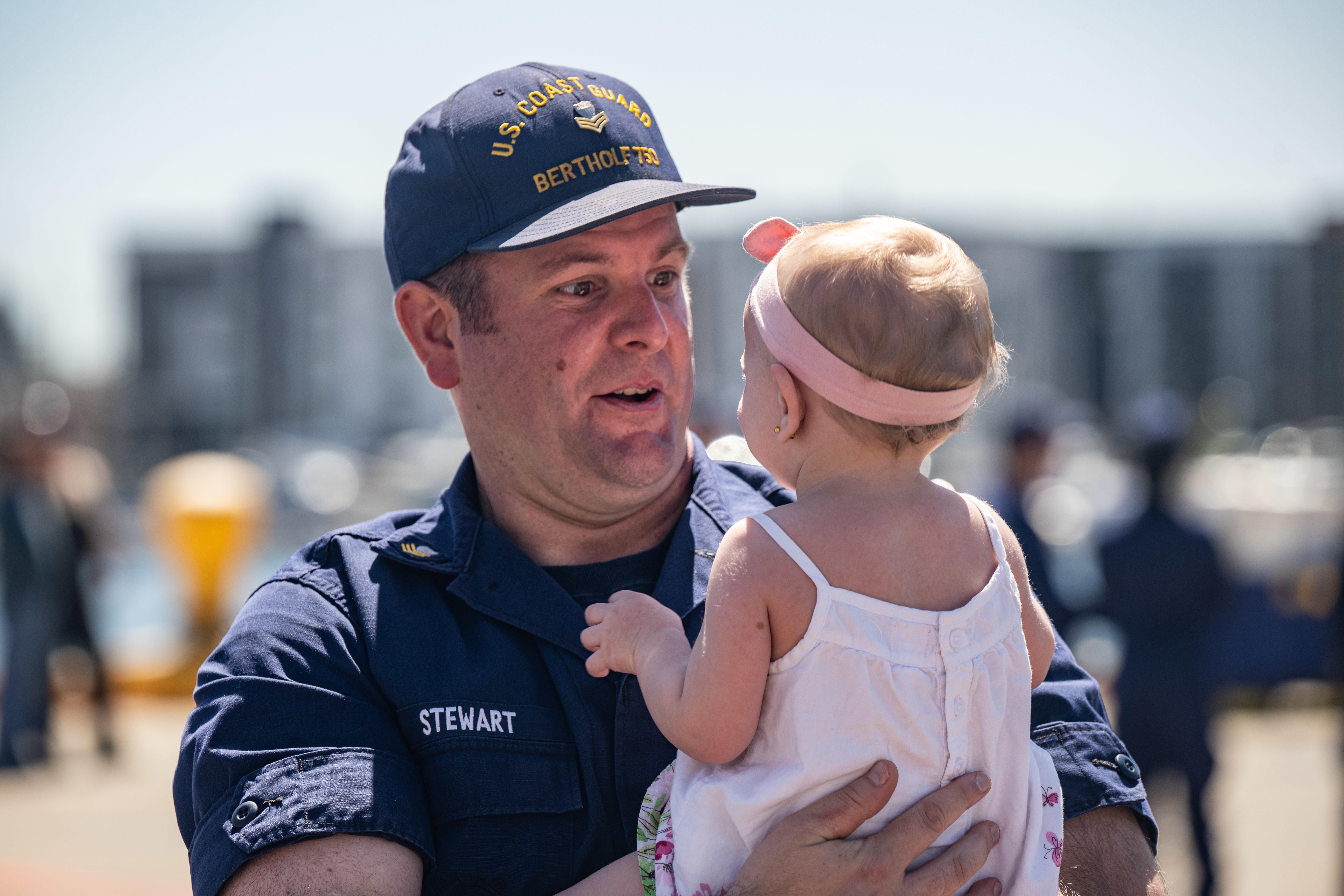
U.S. Coast Guard Petty Officer 1st Class Chase Stewart, an Electrician’s Mate assigned to the Coast Guard Cutter Bertholf (WMSL 750) greets his family at the cutter’s return to home port on Coast Guard Base Alameda, Calif., following a 98-day patrol in the Indo-Pacific region, April 8, 2024. The Cutter Bertholf deployed to the Indo-Pacific to advance relationships with ally and partner nations to build a more stable, free, open and resilient region with unrestricted, lawful access to the maritime commons.​ (U.S. Coast Guard Photo by Petty Officer 3rd Class Hunter Schnabel)

Below is a Coast Guard news release. Two things stand out for me. First that there will be more similar patrols this year,

Bertholf departed Alameda on Jan. 2 as the Coast Guard’s first of multiple national security cutter deployments to the Indo-Pacific this year.

and second that they made it all the way into the Indian Oceanj.


April 10, 2024

U.S. Coast Guard cutter returns home following 98-day Indo-Pacific deployment

ALAMEDA, Calif. — The U.S. Coast Guard Cutter Bertholf (WMSL 750) and crew returned home Monday following a 21,000-mile, 98-day Indo-Pacific deployment in support of U.S. Indo-Pacific Command and U.S. Navy’s Seventh Fleet.

Throughout the deployment, Bertholf led international engagements in the Republic of SingaporeMalaysia, and India, strengthening interoperability and maritime governance through joint at-sea exercises, professional engagements, and subject matter expert exchanges.

Bertholf departed Alameda on Jan. 2 as the Coast Guard’s first of multiple national security cutter deployments to the Indo-Pacific this year.

“The opportunities to work with our allies and partners throughout the Indo-Pacific increased our regional interoperability and greatly strengthened the bonds which we share as a seagoing service,” said Capt. Billy Mees, Bertholf’s commanding officer. “We greatly appreciated engaging in professional interactions, enhancing maritime capabilities, and reinforcing maritime governance in the area through promoting global connections, fostering unity, and advancing efforts to maintain an open and free Indo-Pacific region.”

While operating in the vicinity of Singapore, the crew of the Bertholf participated in multiple professional engagements and training exercises with members of the Republic of Singapore Navy, Singapore Police Coast Guard, and Malaysia Maritime Enforcement Agency (MMEA). Bertholf hosted U.S. Ambassador Jonathan E. Kaplan aboard for a tour and a chance for Bertholf’s crew to showcase the cutter’s operational capabilities.

Upon departure, Bertholf’s crew conducted at-sea exercises and subject matter expert exchanges with the Republic of Singapore Navy and MMEA, including a group sail through the Strait of Malacca.

Upon Bertholf’s service-first, historic arrival in Port Klang, Malaysia, the crew conducted several subject matter expert exchanges with the MMEA, Republic of Singapore Navy, Singapore Police Coast Guard, Japan Coast Guard, Korea Coast Guard, and Australian Border Force. The joint training included maritime law enforcement skills, small boat launch and recoveries, emergency rescue and carry procedures, and shipboard damage control tactics to bolster interoperability across the maritime domain of Southeast Asia. Bertholf hosted U.S. Ambassador Edgard D. Kagan and Malaysian dignitaries onboard for a U.S. Embassy reception on the cutter’s flight deck.

Bertholf’s final international port call was Port Blair, India, marking the first time a U.S. Coast Guard cutter has visited the Andaman and Nicobar Islands, a union territory of India situated between the Bay of Bengal and the Andaman Sea.

During the four-day engagement, Bertholf’s crew participated in sporting events and reciprocal tours, and Bertholf’s officers attended a formal reception at the India Coast Guard’s regional headquarters. Bertholf and India Coast Guard participated in the joint exercise ‘Sea Defender,’ with two days of at-sea exercises that included responses to shipboard drone and small boat attacks, shipboard damage control evolutions, pollution responses, counter drug interdiction and non-compliant vessel pursuit tactics, security boardings, flight operations, and an overnight group sail with the India Coast Guard across the Indian Exclusive Economic Zone to the Strait of Malacca.

Commissioned in 2008, Bertholf is one of four Coast Guard legend-class national security cutters homeported in Alameda. National security cutters are 418 feet long, 54 feet wide, and have a 4,600 long-ton displacement. They have a top speed of more than 28 knots, a range of 12,000 nautical miles, endurance of up to 90 days, and can hold a crew of up to 170.

The 7th Fleet is the U.S. Navy’s largest forward-deployed numbered fleet. It routinely operates with allies and partners to preserve a free and open Indo-Pacific region.

Coast Guard Pacific Area is responsible for Coast Guard operations spanning six of the seven continents, 71 countries, and more than 74 million square miles of ocean. It stretches from the shores of the West Coast of the United States to the Indo-Pacific, Eastern Pacific, Arctic, and Antarctic regions. Pacific Area strives to integrate capabilities with partners to ensure collaboration and unity of effort throughout the Pacific.

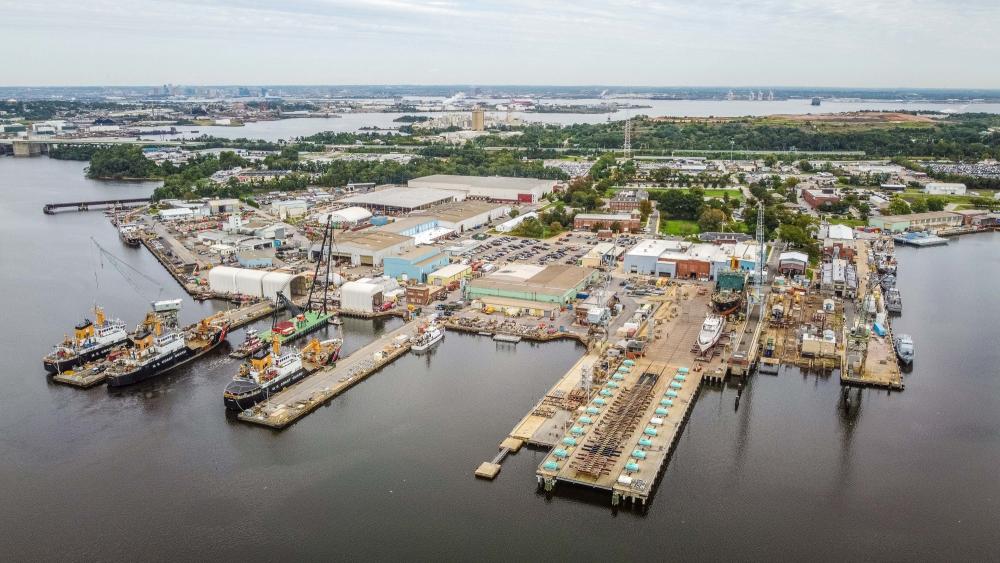
“2 Cutters Stuck in Coast Guard Maintenace Yard After Key Bridge Collapse” –USNI

The Naval Institute News Service reports,

Two Coast Guard cutters are stuck in the service’s Curtis Bay shipyard, with five others unable to get in for scheduled maintenance due to the Key Bridge collapse…there are five Coast Guard ships due for repair work in Curtis Bay between mid-April and mid-May that have been delayed…”

The two ships “stuck” are USCGC Hickory (WLB-212) and USCGC Diligence (WMEC-616). Diligence may be able to use one of the temporary channels.

The ships that have been delayed are USCGC Forward (WMEC-911), USCGC Diamondback (WPB-87370), USCGC Dependable (WMEC-626), USCGC Donald Horsley (WPC-1117), USCGC Confidence (WMEC-619)

Dependable was just decommissioned and Confidence will be soon (technically in commission special, but they are unlikely to return to US Coast Guard service). They were to go into the yard for storage. Diamondback and Donald Horsley should be able to use the temporary channel. Only Forward will have to wait for the reopening of the main channel. I suspect she is going in for “Service Life Extension.”

The bridge collapse has also made it difficult for many of the Yard’s workforce to get to work.