“US Coast Guard says boardings of Chinese fishing vessels in South Pacific legal” –Reuters

Australian Royal Navy personnel stand in formation on a pier as the U.S. Coast Guard Cutter Harriet Lane (WMEC-903) and crew prepare to moor at HMAS Cairns, Queensland, Australia, March 7, 2024. The Harriet Lane and crew had a five-day port call in Cairns during its inaugural 2024 Operation Blue Pacific patrol in Oceania. (U.S. Coast Guard photo by Petty Officer 2nd Class Ty Robertson)

Reuters reports,

The U.S. Coast Guard has rejected comments by a Chinese diplomat that its recent boardings of Chinese fishing boats in the Pacific Islands alongside local police are illegal, saying the joint patrols are at the behest of Pacific nations to protect coastal fisheries…In the letter, Wang (China’s Ambassador to New Zealand Wang Xiaolong–Chuck) claimed the agreements are not binding on China’s fishing fleet.

Does this mean Chinese Fishing Vessels will resist boardings originating from US Coast Guard vessels even if they are headed by agents of the coastal state? or when USCG officers are acting on behalf of the Coastal State?

“ADAPTING LAND-BASED SYSTEMS FOR EFFECTIVE LOW-COST ENGAGEMENT SOLUTIONS AT SEA” –L3 Harris

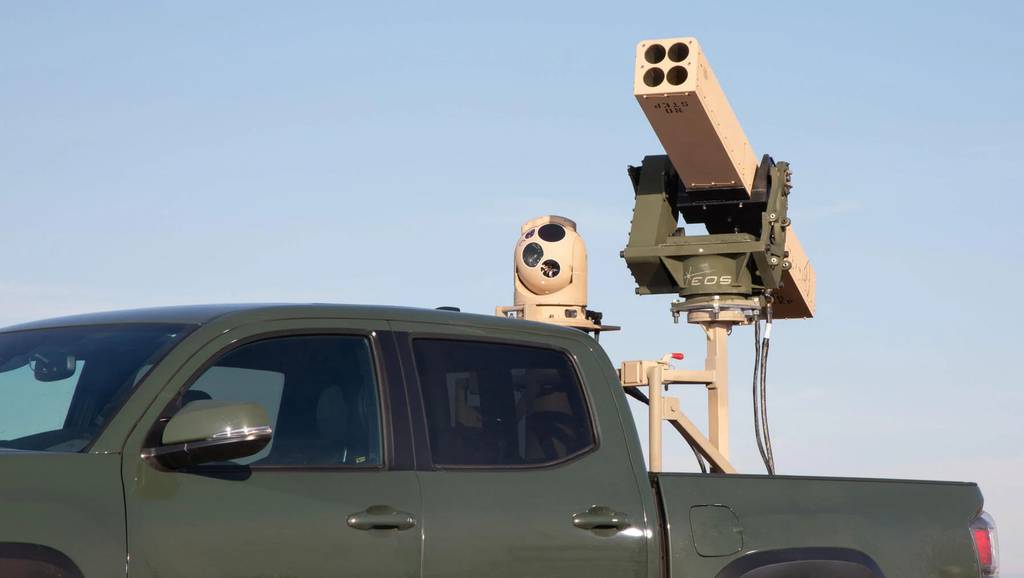
The VAMPIRE system can fit in almost any pickup or vehicle with a cargo bed. (Courtesy of L3Harris)

Below is an L3 Harris news release labeled as an editorial. If you are a regular reader of this blog, you know I have been a fan of APKWS since 2017. Tens of thousands of APKWS conversion kits are made annually. They are cheap at about $30,000. There is now a proximity fuse available. L3 Harris has integrated electro-optic sensors and fire control to create a complete system. It is combat proven against Unmanned Air Systems. It seems an almost ideal system for executing the Ports, Waterways, and Coastal Security mission against both surface and air asymmetric threats. Perhaps significantly, VAMPIRE is a Navy system.


While our Vehicle-Agnostic Modular Palletized ISR Rocket Equipment (VAMPIRE™) system has already proven its effectiveness with ground based missions, its adaptation for maritime use will revolutionize maritime surveillance and defense.

The VAMPIRE system, originally designed to address the emerging unmanned aerial systems (UAS) threat, has garnered acclaim for its precision and reliability in combat. Already proven on the ground in Ukraine, these effective, low-cost engagement capabilities can be extended to the seas, offering a transformative solution for maritime operations against UAS, fast inshore attack crafts and low-slow flyers.

The significance of the maritime system extends beyond its immediate capabilities. Its integration into naval operations redefines maritime security protocols, enhancing surveillance, reconnaissance, and deterrence capabilities. With the ability to swiftly detect and counter aerial and surface threats, naval forces can better safeguard maritime assets, ensure personnel safety, lower the weapons cost curve and maintain strategic superiority in contested environments.

The mission management system enables the integration onto manned and unmanned surface vessels featuring an advanced WESCAM MX™-10 MS targeting sensor with its weapons station, allowing a remote operator to engage targets quickly and accurately. Like its ground-based counterpart, maritime VAMPIRE employs the Advanced Precision Kill Weapon System (APKWS) paired with L3Harris’ proximity fuze to defend against surface and air threats, providing naval forces with an accurate, low-cost engagement capability.

The VAMPIRE system highlights L3Harris’ dedication to supporting the defense needs of nations across the globe. By extending this versatile solution to the maritime domain, L3Harris is providing naval forces with cost-appropriate options to adapt to evolving threats and safeguard waters effectively.

As the landscape of maritime security challenges undergoes constant evolution, forward-looking, full-scale production and low-cost solutions are needed to counter the wide range of dynamic challenges.  L3Harris is committed to innovation and adaptability in addressing evolving security threats by leveraging and adapting existing technology like VAMPIRE for maritime use.

RELATED CAPABILITIES

Norway to Build Dual Service (Coast Guard/Navy) Ships

The future fleet plan of the Royal Norwegian Navy. Click to enlarge.

Naval News reports,

The Norwegian government today announced their new long-term defence plan for the period 2025 to 2036. Under the name of The Norwegian Defence Pledge, the plan envisions significant growth which not only will see the country reach NATO’s target of 2 % of GDP to defence already this year, but also see that figure pass 3 % towards the end of the period.

Significantly for their Coast Guard,

A major standardization program is envisioned for the Coast Guard – a branch of the Navy – and non-surface warfare vessels of the Navy. The current seven classes of patrol vessels, corvettes, mine-countermeasure vessels, and auxiliaries will be replaced by two different standardized designs – a medium-sized platform for coastal waters and a large for offshore work – with modular weapons and sensor fits. A total of 18 medium and 10 large vessels are to be acquired.

Saying these will replace the corvettes means they will replace the Skjold class missile corvettes.

Norwegian Skjold class corvette Storm. From Wikipedia.

This program bears watching. The Norwegians may be showing us how to make Coast Guard cutter that can be quickly equipped to make a useful contribution in war time.

“CMF’s Combined Task Force 150 Seizes Nearly 400 Kilograms in Illegal Narcotics in the Arabian Sea”

Below is a news release from U.S. Naval Forces Central Command Public Affairs. USCGC Glen Harris has been busy. I know, she had at least seven successful drug interdictions since she joined PATFORSWA.


240404-N-NO146-1002 ARABIAN SEA (April 4, 2024) A Sailor removes illegal narcotics from the hull of a vessel seized by the U.S. Coast Guard Sentinel-class fast response cutter USCGC Glen Harris (WPC 1144) in the Arabian Sea, April 4. Glen Harris was operating under Combined Task Force 150, one of five task forces under Combined Maritime Forces, the largest multinational naval partnership in the world. CTF 150 focuses on maritime security operations outside the Arabian Gulf. Photo By: U.S. Coast Guard

MANAMA, Bahrain —April 08, 2024

A U.S. Coast Guard cutter, working in direct support of Combined Task Force (CTF) 150, of Combined Maritime Forces, seized nearly 400 kilograms of illegal drugs from a dhow in the Arabian Sea, April 4.

Crewmembers from the Sentinel-class fast response cutter USCGC Glen Harris (WPC 1144) discovered and seized 15 kilograms of heroin and 375 kilograms of methamphetamine aboard the dhow. After weighing and documenting the haul, the crew properly disposed of the narcotics.

“This is the second major interdiction of the USCGC Glen Harris and the CTF-150 team with a combined total of 1,160 kg of drugs seized to date, denying income to criminal and terrorist organizations from the profits of illicit narcotics,” said Capt. (N) Colin Matthews, commander of CTF-150. “This exceptional multinational cooperation between our two teams is an example of the impacts we can make when we work together.”

On March 5, Glen Harris, working in support of CTF 150, seized 770 kilograms of methamphetamines from a dhow in the Arabian Sea.

Glen Harris is forward deployed to Bahrain. The fast response cutter is part of a contingent of U.S. Coast Guard ships forward-deployed to the region under Patrol Forces Southwest Asia (PATFORSWA). PATFORSWA deploys Coast Guard personnel and ships alongside U.S. and regional naval forces throughout the Middle East.

CTF 150 is one of five task forces under Combined Maritime Forces, the world’s largest international naval partnership. CTF 150’s mission is to deter and disrupt the ability of non-state actors to move weapons, drugs and other illicit substances in the Indian Ocean, the Arabian Sea and the Gulf of Oman.

Combined Maritime Forces is a 42-nation naval partnership upholding the international rules-based order by promoting security and stability across 3.2 million square miles of water encompassing some of the world’s most important shipping lanes.

“How Fast Response Cutters Have Transformed Coast Guard Operations In Guam” –Naval News / What About Air Assets?

The crew of USCGC Oliver Henry (WPC 1140) arrives in Pohnpei, Federated States of Micronesia, on Feb. 1, 2024, to download supplies for delivery to the outer islands of the FSM to combat the effects of a current drought. The supplies included 2,000 lbs of rice, three medical kits, 70 gallons of bottled water, and boxes of paper products. (Photo courtesy of U.S. Embassy Kolonia)

Naval News has an excellent article reviewing the additional capabilities Webber class FRCs have provided. It also highlights the vast operating area and associated challenges including necessary maintenance.

U.S Coast Guard Forces Micronesia Sector Guam’s AOR is based on Guam Search and Rescue Region. (U.S Coast Guard Navigation Center) Around 3 million square kilometers or 1.9 million square miles and includes the entirety of Palau, the Federated States of Micronesia, and Republic of the Marshall Islands.

For scale, the distance from the bottom of the area above to the top is 1020 nautical miles. According to the post, “It’s [an area] two thirds the size of the continental United States that we patrol with three ships and 300 people,” (I suspect that was in reference to the Contiguous 48, but it’s a huge area.)

ASSETS:

Something that should not be missed is that the only normally available rotary wing assets in the area are a squadron of Navy MH-60S, and there are no fixed wing SAR or law enforcement assets in the region. If an extensive search is required for any reason, it usually means flying a C-130J over 3,400 nautical miles down from Coast Guard Air Station Barbers Point, Hawaii just to get to Guam.

Major Cutters do occasionally cruise these waters, but it is rare. There is also a 225 foot buoy tender homeported in Guam.

Hopefully these waters will see USCGC Harriet Lane frequently, but on her first Western Pacific patrol, it did not appear she deployed with a helicopter (I believe Barbers Point has only three). Being one of the first four 270s that were built by Tacoma Boat, her flight deck is not strong enough to support the Navy MH-60S so they could not even us her flight deck to extend their range, much less operate from the ship.

Most of the time, there will only be one Coast Guard surface vessel underway in this vast area. Assets are still too few to provide any degree of persistence as a deterrent to Illegal, Unreported, or Unregulated (IUU) fishing. Any vessels involved in IUU fishing would likely have a good idea where our cutters are operating and with no fixed wing search aircraft, our ability to search for IUU perpetrators is extremely limited.

In addition to more cutters, we really need good maritime domain awareness, probably meaning some kind of long-range search aircraft, manned or unmanned, operating routinely in this area. We might consider basing C-27Js in Guam. It is a long way from USCG support, but the Australian Air Force also flies C-27Js, so there might be some synergy there.

Coast Guard to participate in Sea Air Space 2024

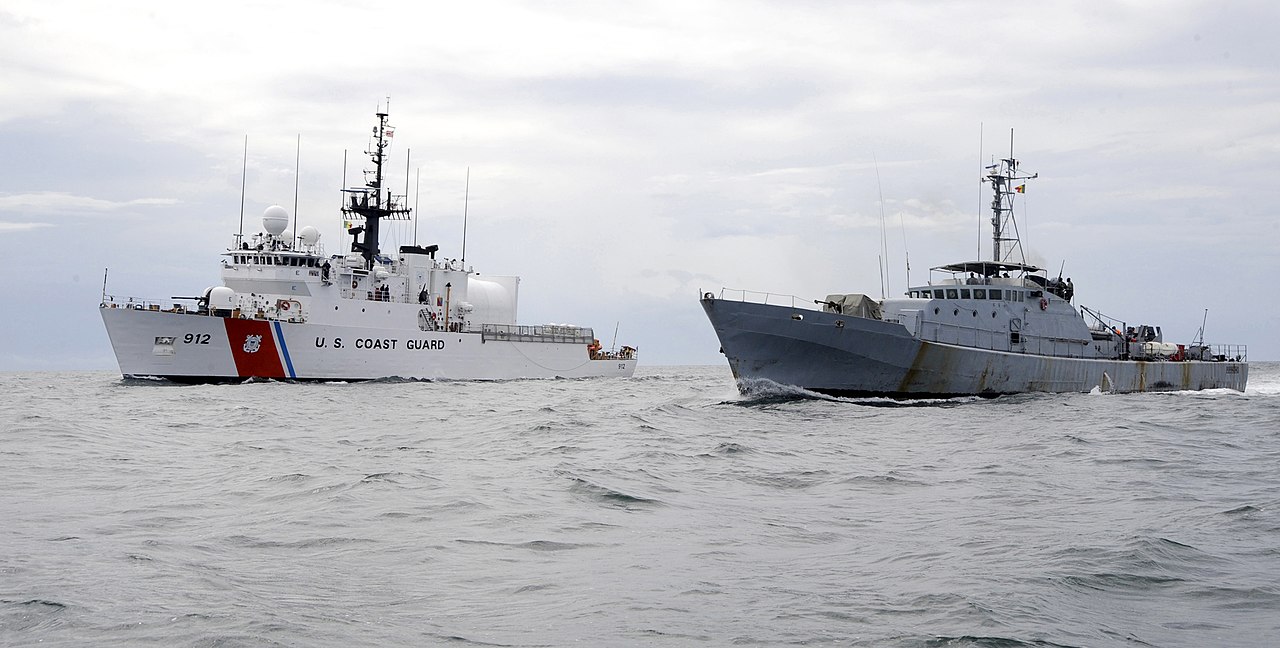
USCGC Legare (WMEC 912), left, patrols along side the Senegalese Navy vessel, Poponquine, during joint operations as part of the Africa Partnership Station. The Legare is deployed off the west and central coast of Africa for the six-day joint U.S/Senegalese operation, during which several Senegalese naval vessel boarding team members embarked aboard the Legare and participated in joint boarding and training exercises. (U.S. Coast Guard photo by Petty Officer 2nd Class Thomas M. Blue/ Released).

The Acquisitions Directorate (CG-9) lists Coast Guard presentations planned for the Navy League’s Sea-Air-Space 2024 Conference and Exposition, April 8-10. 2024. There are additional descriptions of the discussion on the CG-9 link.

Monday, April 8, 2024

10–10:30 a.m.  Interview with the USCG Commander of the Pacific Area, Vice Adm. Andrew J. Tiongson, Commander, Pacific Area and Defense Force West, U.S. Coast Guard

10:30–11 a.m. Modernizing Coast Guard Aviation, Cmdr. Peter Maloney, Deputy Chief, Office of Aviation Forces, U.S. Coast Guard

11–11:30 a.m.  U.S. Coast Guard Command and Control (C2) Modernization, Capt. Christian Hernaez, Chief, Office of C5I Capabilities, U.S. Coast Guard

11:30 a.m.–noon USCG Boats – The Soul of the Service, Capt. Jason C. Aleksak, Chief, Office of Boat Forces, U.S. Coast Guard, Chief, Office of Boat Forces, U.S. Coast Guard

1–1:30 p.m. Interview with the USCG Commander of the Atlantic Area, Vice Adm. Kevin E. Lunday, Commander, Atlantic Area and Defense Force East, U.S. Coast Guard

1:45–2:15 p.m. Overview of the new Polar Coordination Office and Arctic Strategic Outlook Implementation Plan, Mr. David Raboy, Arctic Policy Analyst, Polar Coordination Office, U.S. Coast Guard

2:30–3 p.m.  USCG: Maritime Sensing and Data Sharing Across DHS, Capt. Matt Fine, Chief, Office of Shore Forces, U.S. Coast Guard

Tuesday, April 9, 2024

10–10:30 a.m. IInterview with the USCG Assistant Commandant for Engineering and Logistics, Rear Adm. Amy Grable, Chief Engineer, U.S. Coast Guard

10:30–11 a.m. Interview with the USCG Commander of the Personnel Service Center, Rear Adm. Russell Dash, Commander, Personnel Service Center, U.S. Coast Guard

11–11:30 a.m. USCG: Ready Today, Preparing for Tomorrow, Capt. John J. Driscoll, Chief, Office of Cutter Forces, U.S. Coast Guard

11:30 a.m.–noon Coast Guard Unmanned Systems Experimentation & Lessons Learned, Capt. Thom C. Remmers, Unmanned Systems Cross-Functional Team Lead under the Assistant Commandant for Capabilities, U.S. Coast Guard

1–1:30 p.m. Combating Illegal, Unreported and Unregulated Fishing, Cmdr. Patricia Bennett, Chief, Coast Guard Fisheries Enforcement Policy (CG-MLE-4).

1:45–2:15 p.m. USCG Climate Framework and Implementation, Ms. Candace Nachman, Senior Ocean Policy and Program Adviser, Polar Coordination Office, U.S. Coast Guard

“Unified Response: Joint Naval Drills in South China Sea” –MSN

Vessels from Australia, the USA, the Philippines, and Japan navigate in formation. (AFP Photo)

MSN reports,

The United States, Japan, Australia, and the Philippines … have announced preparations to perform cooperative naval exercises to preserve freedom of navigation and the rule of law as a display of unity…The combined forces of the participating nations will conduct a series of exercises aimed at improving interoperability and cooperation on April 7 as part of the joint naval and air drills.

Notably, there don’t seem to be any coast guard assets from any nation involved in this exercise.

There has been a lot of speculation about the timing of this exercise being so close to that of the trilateral summit which begins April 11, but the exercise is actually pretty small, with only one ship each from the US, Australia, and Japan. The exercise involves no aircraft carriers, submarines, or amphibious assault ships.

The largest ship participating is the Japanese Destroyer Akebono (DD-108) which is not an Aegis ship, and it is one of their smaller destroyers at 6200 tons full load. The US representative is a Littoral Combat Ship, USS Mobile (LCS-26) at 3,104 tons full load.

“Austal leaves door ajar in takeover bid from Hanwha Ocean” –Defense News

Austal’s planned new assembly building and ship lift. Ships featured in the illustration

Defense News reports,

“Despite an initial rejection from Austal, South Korean firm Hanwha Ocean’s bid to buy out the Australian shipbuilder has some analysts pondering the benefits of such deal.”

This have anything to do with the US Coast Guard?

The prize of Austal USA, a supplier of U.S. Navy vessels, presumably enters Hanwha’s calculus, even if this subsidiary has relative autonomy from Austal Australia.

Austal won the recompete for the OPC with a contract including options for OPCs #5-15. South Korean shipbuilders are very competitive, so their experience might be beneficial, but so far, no real indication this is going to happen.

Still, it suggests they want an in on US military ship construction. If not Austal, perhaps some other yard.

“Media Advisory: U.S. Coast Guard Cutter Harriet Lane is scheduled to return to home port following inaugural Operation Blue Pacific Patrol in Oceania” –CG News

Australian Royal Navy personnel stand in formation on a pier as the U.S. Coast Guard Cutter Harriet Lane (WMEC-903) and crew prepare to moor at HMAS Cairns, Queensland, Australia, March 7, 2024. The Harriet Lane and crew had a five-day port call in Cairns during its inaugural 2024 Operation Blue Pacific patrol in Oceania. (U.S. Coast Guard photo by Petty Officer 2nd Class Ty Robertson)

Below is a Coast Guard News release. The release has some videos including interaction with children in Port Vila, Vanuatu (very cute).

One thing that caught my eye was the use of the plural in this statement, “The Coast Guard plans to use medium endurance cutters (emphasis applied–Chuck) for responsibilities in Hawaiian waters, as well as an increase Coast Guard presence throughout the Indo-Pacific and Oceania.”

Was this just a misstatement by the PAO or does this mean we will see more WMECs in 14th District?

I would also note that Harriet Lane apparently made this patrol without a helicopter. Barbers Point does fly H-65s, but last I heard, they only have three. Did the cutter at least have a Scan Eagle?


April 4, 2024

Media Advisory: U.S. Coast Guard Cutter Harriet Lane is scheduled to return to home port following inaugural Operation Blue Pacific Patrol in Oceania

Editor’s Note:  Media should RSVP by Monday, April 8 by 4 p.m. to Petty Officer 2nd Class Ryan Fisher at ryan.m.fisher@uscg.mil
Imagery of Harriet Lane’s patrol can be found here: Operation Blue Pacific 

Who: U.S. Coast Guard Rear Adm. Michael Day, commander U.S. Coast Guard Fourteenth District, and Cmdr. Nicole Tesoniero, commanding officer U.S. Coast Guard Cutter Harriet Lane (WMEC 903).

What: U.S. Coast Guard Cutter Harriet Lane and crew are expected to return to home port after their inaugural Operation Blue Pacific patrol in Oceania. Media are invited to watch Harriet Lane and crew moor at Pearl Harbor and families be reunited after being away for more than 70 days. Media will be able to hear remarks from Day and Tesoniero regarding Operation Blue Pacific and the increased Coast Guard presence in Oceania.

Where: Joint Base Pearl Harbor-Hickam, 1000 North Rd, Honolulu, Hawaii, 96860

When: Tuesday, April 9 at 10 a.m.  

Harriet Lane and crew partnered alongside allies and several Pacific Island countries from January to April 2024. Among those countries were Samoa, Fiji, Vanuatu, Australia, Papua New Guinea, Nauru and Marshall Islands. The focus was on advising and sharing best practices, along with bolstering our partners’ capabilities to promote and model good maritime governance in the region.

Harriet Lane and crew expanded U.S. Coast Guard presence in Oceania alongside Pacific Island countries exercising bilateral maritime law enforcement agreements with shiprider provisions to strengthen maritime domain awareness and support efforts to combat illegal fishing activities with partners with whom we have existing relationships.

The Harriet Lane is U.S. Coast Guard Pacific Area’s newest Indo-Pacific support cutter and spent more than 15 months in a Service Life Extension Program (SLEP) in Baltimore, Maryland, to prepare for the transition in missions and operations.

The Coast Guard plans to use medium endurance cutters for responsibilities in Hawaiian waters, as well as an increase Coast Guard presence throughout the Indo-Pacific and Oceania. The ship is especially suited for longer-range six-to-eight week joint operational and training patrols in the Pacific, taking pressure off shorter range Hawaii-based cutters more suited to service closer to home port.

Commissioned in 1984, Harriet Lane is a 270-foot medium endurance cutter homeported in Pearl Harbor, Hawaii, to support Coast Guard missions in the Pacific region. The service’s medium endurance cutter fleet supports a variety of Coast Guard missions including search and rescue, law enforcement, maritime defense, and protection of the marine environment.

U.S. Coast Guard Heavy Icebreaker Returns to the U.S. (but Not to Homeport) Following Completion of Antarctic Mission

The U.S. Coast Guard Cutter Polar Star (WAGB 10) sails under San Francisco’s Golden Gate Bridge after its 138-day deployment to Antarctica for Operation Deep Freeze 2024, March 31, 2024. The cutter will soon enter a Northern California drydock for phase four of its five-year service life extension program to prepare the cutter for the following year’s Operation Deep Freeze, which is the annual logistical support mission provided by the Department of Defense to the National Science Foundation, managed by the U.S. Antarctic Program. (U.S. Coast Guard photo by Seaman Autumn Riewestahl)

Below is a Coast Guard News release. Note that while Polar Star has returned to the US, she did not return to Seattle, her homeport. Once again Polar Star will spend much of her inport time, probably the majority, away from homeport. Last year, in 2023, it was 19 weeks. The year before that, 2022, it was at least 146 days. I couldn’t find the figure for 2021, but I am sure it was similar. The decision not to change the ship’s homeport to the Bay Area, when they knew how much time the ship would spend away from homeport seems to me, cruel and unusual. I hope we never do this again.


April 4, 2024

U.S. Coast Guard heavy icebreaker returns to the U.S. following completion of Antarctic mission

SAN FRANCISCO – The Coast Guard Cutter Polar Star (WAGB 10) and crew returned to the United States Sunday, following a 138-day deployment to Antarctica to support Operation Deep Freeze 2024.

This deployment marks the Polar Star’s 27th journey to Antarctica in support of Operation Deep Freeze, an annual joint military service mission to resupply the United States Antarctic stations, in support of the National Science Foundation (NSF) – the lead agency for the United States Antarctic Program (USAP). This year also marks the 64th iteration of the annual operation.

The Polar Star crew departed Seattle bound for Antarctica on Nov. 15, 2023, traveling more than 27,500 miles through the North Pacific, South Pacific, Indian, and Southern Oceans, as well as the Bering Sea and Gulf of Alaska, which included stops on four continents.

While en route to Antarctica, the Polar Star made three logistical stops in Pearl Harbor, Hawaii, Sydney, and Hobart, Australia. In Hobart, the cutter and crew hosted the U.S. Ambassador for Australia, Caroline Kennedy, Australian members of parliament, Australian and Tasmanian government representatives, and local industry partners.

After arriving in Antarctica, the cutter broke a 38-mile channel through fast ice up to 12 feet thick, creating a navigable route for cargo vessels to reach McMurdo Station. The Polar Star and crew executed three close-quarters ice escorts for cargo vessels through difficult ice conditions to guarantee the delivery of nine million gallons of fuel and 80 million pounds of cargo to advance scientific endeavors in the most remote region of the world. The cutter departed the Antarctic region on Feb. 14 after 51 days of operations in support of Operation Deep Freeze 2024.

On the return journey, the Polar Star evaded a severe bomb cyclone in the Southern Ocean and had stops in Auckland, New Zealand, Yokosuka, Japan, and Dutch Harbor, Alaska. The Polar Star’s stop in Yokosuka consisted of a media visit and formal reception hosted aboard the cutter, where the crew conducted professional exchanges with senior maritime representatives from the United States, Japan, Australia, and New Zealand, underscoring the importance of collaboration within the Indo-Pacific to promote security and stability across the region.

“The successful completion of this mission stands as a testament to the relentless commitment and selflessness exhibited by our crew,” said Capt. Keith Ropella, Polar Star’s commanding officer. “Despite adverse weather, difficult ice, and formidable mechanical challenges, the crew of Polar Star not only achieved their mission but did so with remarkable expertise and teamwork, proof of their devotion to duty and dedication to their shipmates.”

Operation Deep Freeze is the annual logistical support mission the Department of Defense provides to the NSF, which the USAP manages. This includes strategic and tactical inter-theater airlift and airdrop coordination, aeromedical evacuation support, search and rescue response, sealift, seaport access, bulk fuel supply, port cargo handling, and transportation requirements supporting the NSF. This unique mission demonstrates U.S. commitment to the Antarctic Treaty and scientific research programs. The Polar Star and crew contribute to this yearly effort by breaking the solid ice channel to clear the way for supply vessels.

The Polar Star is now in Vallejo, California, for phase four of its five-year Service Life Extension Project (SLEP). SLEP was awarded to Mare Island Dry Dock, LLC to recapitalize targeted systems, including the propulsion, communication, and machinery control systems, and conduct significant maintenance to extend the cutter’s service life. The Coast Guard will mitigate the risk of lost operational days due to unplanned maintenance or system failures by replacing obsolete, unsupportable, or maintenance-intensive equipment. Each phase is coordinated so that operational commitments, like Operation Deep Freeze missions in Antarctica, will still be met.

The Seattle-based Polar Star is the United States’ only asset capable of providing access to both Polar Regions. The cutter is a 399-foot heavy polar icebreaker commissioned in 1976. It weighs 13,500 tons, is 84 feet wide, and has a 34-foot draft. The six diesel and three gas turbine engines produce up to 75,000 horsepower.