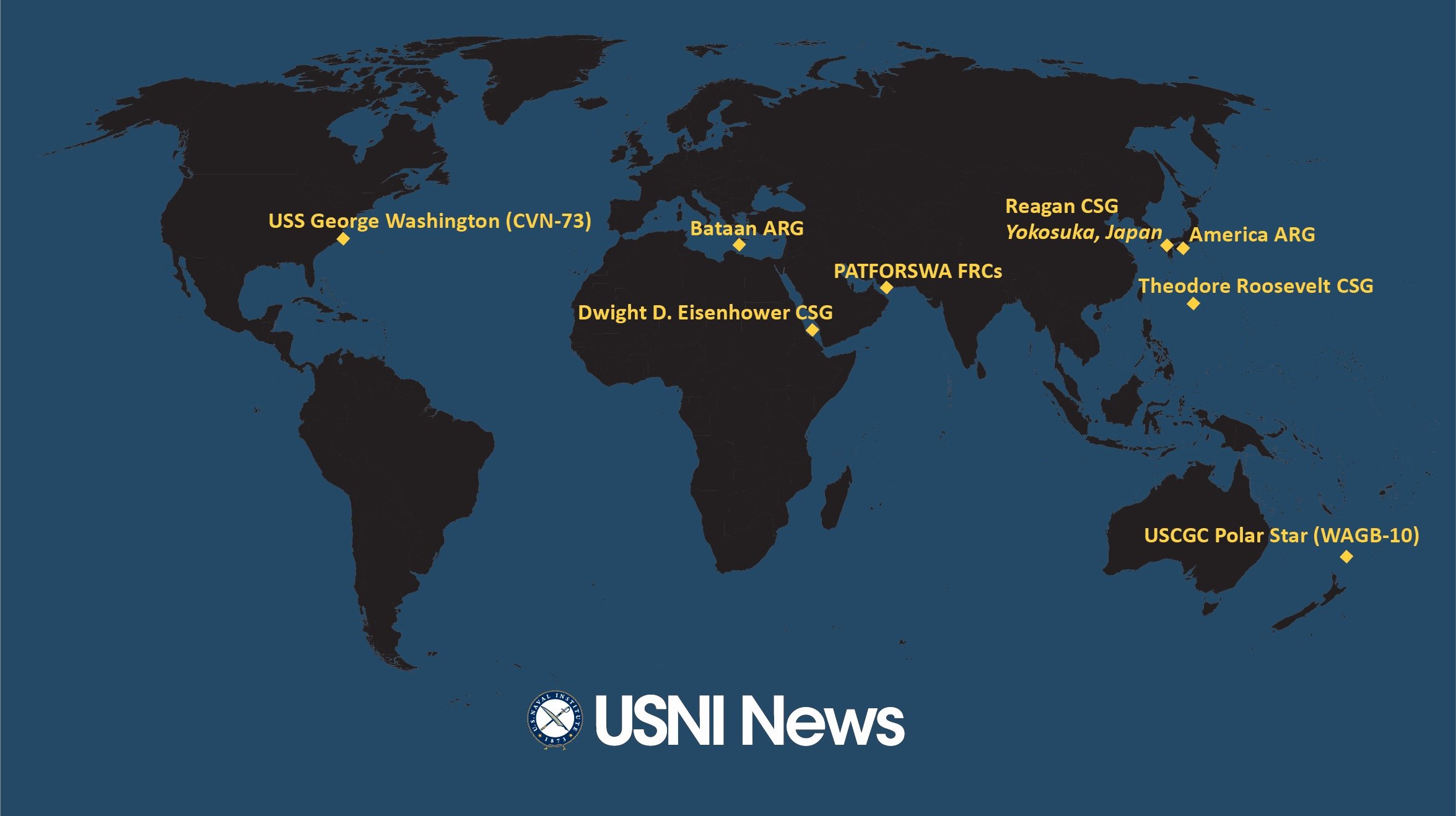
“USNI News Fleet and Marine Tracker: Feb. 26, 2024” –USNI

Looking at this week’s Fleet and Marine Tracker, as always, I am interested in how much of the fleet is deployed and/or underway because I compare these figures with what I know of Coast Guard cutters’ time underway.

  • 33.6% of the Battle Force was deployed.
  • 28.4% of the commissioned Battle Force was deployed.
  • 53.3% of MSC’s USNS Battle Force was deployed.
  • 19.2% of the Battle Force was underway.
  • 57.1% of the ships deployed were underway.
  • 9.3% of those not deployed were underway.

As noted earlier, a count how many ships are deployed in which fleets is no longer included in the tabular section.

There is an interesting note that, “USCGC Polar Star (WAGB-10) is en route Yokosuka, Japan after making a port visit to Auckland, New Zealand Feb. 19 to 25.”

“Coast Guard Cutter Alert returns home to Astoria for the last time” / Change of Homeport –News Release

02.02.2024, Crewmembers of the Coast Guard Cutter Alert (WMEC 630) stand behind cocaine bales seized from a drug smuggling vessel in Eastern Pacific waters during the cutter’s last patrol out of its current homeport of Astoria, Oregon, Feb. 7, 2024. The 4,950 kg of cocaine seized is estimated to be valued at more than $143 million. (U.S. Coast Guard photo)

Note, I made an error in my original commentary. USCGC Active is still in commission and homeported in Port Angeles, Washington. I have made corrections to the text. 

Below is a U.S. Coast Guard Pacific Area news release. The news release is significant because it demonstrates that 210s are still doing useful work, despite being almost 55 years old in this particular case.

But the news release also notes that, “… the cutter will shift homeport in June to be stationed in Cape Canaveral, Florida.” After the transfer, Pacific Area will have only three WMECs, USCGC Alex Haley in Kodiak, the newly arrived 270 USCGC Harriet Lane in Hawaii, and USCGC Active in Port Angeles, WA.

When I retired in 1991 PACAREA had ten WHECs and I believe seven WMECs. With Alert’s departure, they will be down to 9 large patrol cutters, 6 NSCs and three MECs.

The first four Offshore Patrol Cutters are expected to be assigned to the Pacific Area, but they have been substantially delayed.

The next two Fast Response Cutters USCGC David Duren (WPC-1156) and USCGC Florence Finch (WPC-1157) will be homeported in Alert’s old homeport of Astoria. I would expect that the first will arrive in Astoria about the same time Alert departs.


Feb. 26, 2024

Coast Guard Cutter Alert returns home to Astoria for the last time

ASTORIA, Ore. – The U.S. Coast Guard Cutter Alert (WMEC 630) and its crew returned to their homeport, Monday, after a 59-day counter-narcotics patrol in the Eastern Pacific Ocean.

This patrol is scheduled to be the cutter’s last patrol out of its current homeport of Astoria, Oregon.

During the patrol, the Alert’s embarked helicopter crew from, the Helicopter Interdiction Tactical Squadron (HITRON), based out of Jacksonville, Florida, sighted a suspected “go-fast” vessel driving on a northerly course and alerted the cutters crew. The crew responded and launched both of its small-boat pursuit teams. Due to the vessel’s refusal to stop when ordered, the HITRON helicopter disabled the engines of the “go-fast” and monitored until the pursuit crew gained control of the vessel. Simultaneously, the second small boat team recovered dozens of bales of cocaine jettisoned into the ocean by the suspected smugglers. The crew then worked tirelessly through the night to haul in and account for all 4,950 kg of cocaine, valued at more than $143 million.

The interdiction is among the Coast Guard’s largest single interdictions in the Eastern Pacific and represents a major blow to the criminal organizations attempting to smuggle illicit narcotics through the maritime domain. Additionally, it serves as the capstone in Alert’s time in Coast Guard Pacific Area, as the cutter will shift homeport in June to be stationed in Cape Canaveral, Florida as part of the larger Coast Guard Force Alignment Initiative.

“The crew worked in the margins, and we won big in the margins,” said Cmdr. Lee Crusius, commanding officer Coast Guard Cutter Alert. “The return on investment from the Coast Guard to the American people continues to be demonstrated by our ability to project capabilities and rule of law within the maritime domain. Day in and day out, the women and men of our service are doing important business, protecting vital international interests from those who wish to subvert order.”

The smuggling of cocaine represents a large threat to not only the health of nations and rule of law, but destruction of fragile ecosystems in its manufacturing and movement.

The cutter Alert was commissioned in 1969 and is the newest of three 210-foot Reliance-class Medium Endurance cutters stationed on the West Coast. It performs a variety of missions to protect Americans and American interests in the Northern and Eastern Pacific Ocean.

For information on how to join the U.S. Coast Guard, visit GoCoastGuard.com to learn about active duty and reserve, officer, and enlisted opportunities. Information on how to apply to the U.S. Coast Guard Academy can be found at USCGA.edu.

“Hawaii-based ‘Indo-Pacific Support Cutter,’ focused on Oceania, is on its first Pacific deployment”- Stars and Stripes

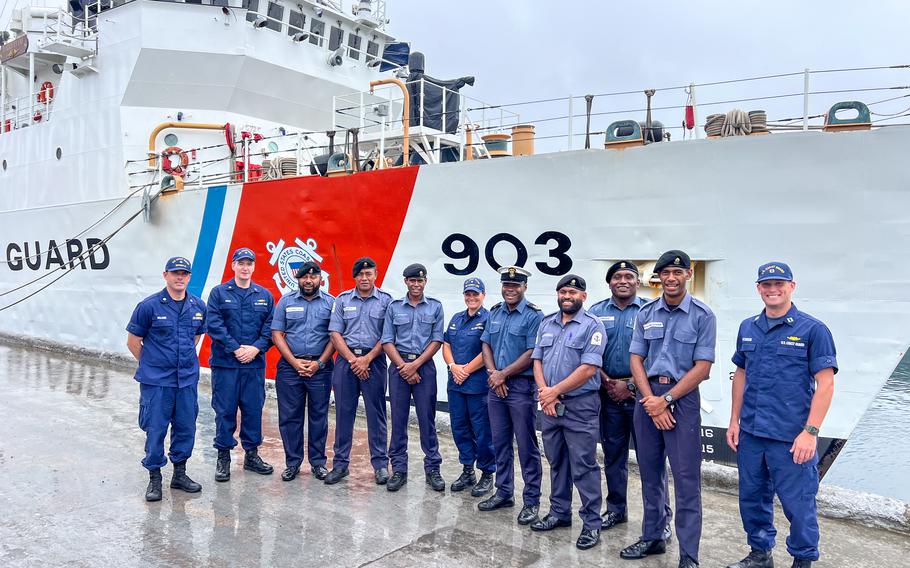
U.S. Coast Guard and Fiji Navy personnel stand in front of the U.S. Coast Guard Cutter Harriet Lane while moored in Suva, Fiji, Feb. 19, 2024. (Charly Tautfest/U.S. Coast Guard)

Stars and Stripes has a nice long article about USCGC Harriet Lane’s first Pacific deployment.

It also suggests we may have been pushing the Guam and Hawaii based Fast Response Cutters (FRS) beyond their limits for long term operation.

“But the small vessels are also limited in both how far and how long they can operate. While they can island hop, they struggle with sustained operations on the high seas, and a high operation tempo has strained the vessels. Some are in need of serious maintenance soon.” (emphasis applied–Chuck)

There is also no mention of the fact that frequently a buoy tender that is larger than Harriet Lane accompanies the FRCs on these expeditionary patrols.

While the article talks about getting new medium sized ships in the Pacific. “…Lane is a “stop gap“ until the service can send a newer, better medium-size ship to the Pacific,” the new Offshore Patrol Cutters (OPC) (more than twice as large as Harriet Lane) will not directly replace the 40 year old cutter in Hawaii. The OPCs are to be based in Long Beach and Kodiak. so rather, it will be that the OPCs relieve the two Hawaii based National Security Cutter of any need to do Alaska Patrols and frees them to do patrols in the Western Pacific.

(Forgive me for being nit picking, but the “Over the Horizon boats” are not “inflatable” even if we do call them RHIBs. For the uninitiated “inflatable” conjures up an entirely different picture.)

“U.S. Coast Guard Cutter Polar Star completes Operation Deep Freeze 2024 mission, departs Antarctica” –News Release

Below is a Pacific Area news release. I followed the link in the editor’s note and there are some great photos and interesting stories, including the fact that while in McMurdo Sound, divers went under the ice to repair a leaking shaft seal.  

ANTARCTICA, 02.03.2024,Photo by Petty Officer 2nd Class Ryan Graves
U.S. Coast Guard Lt. Cmdr. Don Rudnickas, the Coast Guard Cutter Polar Star (WAGB 10) operations officer, salutes Cmdr. Jayna McCarron, Polar Star’s executive officer, prior to a medal ceremony for Polar Star’s crew on the Ross Ice Shelf, Antarctica, Feb. 3, 2024. The U.S. military’s support of U.S. Antarctic research began in 1955. U.S. Indo-Pacific Command continues to lead the Joint Task Force-Support Forces Antarctica team in providing logistic support for the United States Antarctic Program. (U.S. Coast Guard photo by Petty Officer 2nd Class Ryan Graves)

Feb. 23, 2024

U.S. Coast Guard Cutter Polar Star completes Operation Deep Freeze 2024 mission, departs Antarctica

Editor’s Note: For more imagery of Operation Deep Freeze, click here. 

SOUTHERN OCEAN — The U.S. Coast Guard Cutter Polar Star (WAGB 10) and crew departed McMurdo Station, Antarctica, Feb. 12, after operating for 51 days below the Antarctic Circle in support of Operation Deep Freeze 2024.

The Polar Star and crew broke a 38-mile channel through fast ice to create a navigable route for vessels to reach McMurdo Station and escorted a cargo vessel and oil tanker through the ice to and from the station.

“This year, the fast ice in McMurdo Sound was exceptionally thick due to the winds and temperature at the end of last season” said Lt. Cmdr. Don Rudnickas, operations officer. “It challenged our ship and our crew in almost every way, but we met those challenges to achieve our ultimate concern – the resupply of McMurdo Station by sea.”

Before departing the Antarctic Region, the cutter also visited the Bay of Whales, where members from all three of the Coast Guard Regional Dive Lockers dove 90 miles south of the previously documented record for southernmost scuba dive. The crew also went ashore adjacent to the Ross Ice Shelf in the Bay of Whales where they conducted their Antarctica Service Medal ceremony and were able to walk up to the ice shelf.

“Operation Deep Freeze demands more than just breaking ice; it requires navigating the complexities of keeping a 48-year-old cutter operational while subjecting her to the most extreme conditions possible,” said Capt. Keith Ropella, commanding officer. “We rely on the crew’s technical expertise, teamwork, and their commitment to overcoming the relentless obstacles posed by time and nature. It’s also the collaboration of a Joint Task Force, comprised of servicemembers from the U.S. Air Force, Army, and Navy, that play a crucial role in mission success.”

Operation Deep Freeze is the annual logistical support mission provided by the Department of Defense to the National Science Foundation (NSF) managed by the U.S. Antarctic Program (USAP). This includes coordination of strategic inter-theater airlift, tactical intra-theater airlift and airdrop, aeromedical evacuation support, search and rescue response, sealift, seaport access, bulk fuel supply, port cargo handling, and transportation requirements supporting the NSF. This is a unique mission demonstrating U.S. commitment to the Antarctic Treaty and to research programs conducted for the betterment of all humanity. The Polar Star and crew contribute to this yearly effort through icebreaking to clear the channel for supply vessels.

The Polar Star is the United States’ only asset capable of providing access to both Polar Regions. It is a 399-foot heavy polar icebreaker commissioned in 1976, weighing 13,500 tons and is 84-feet wide with a 34-foot draft. The six diesel and three gas turbine engines produce up to 75,000 horsepower.

“Replacing a Legend: The Next Generation National Security Cutter” –USNI

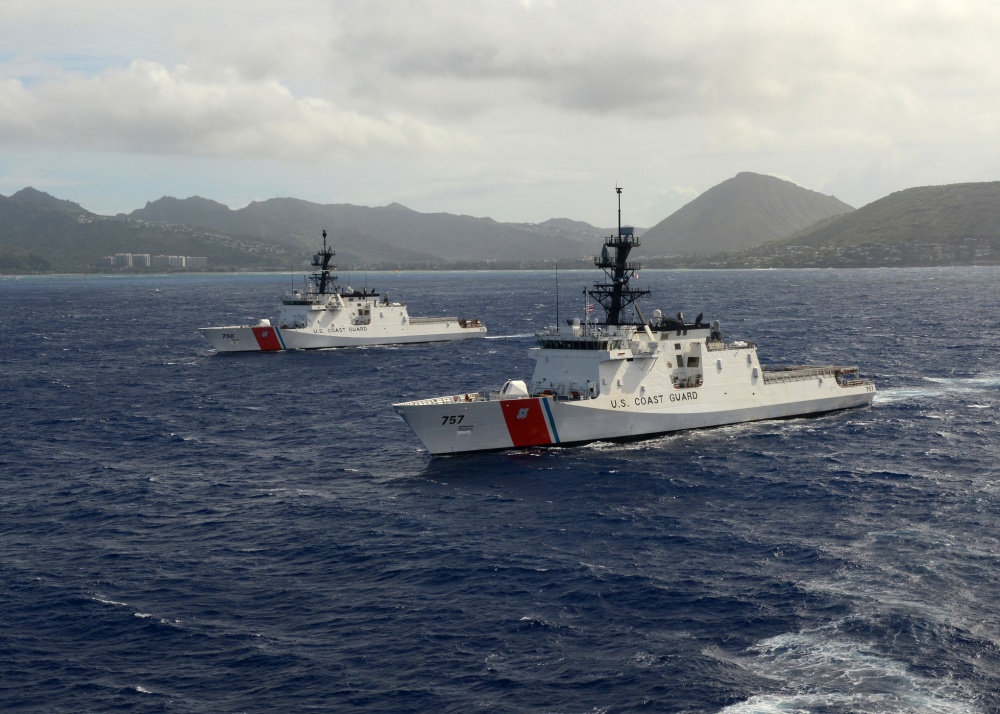
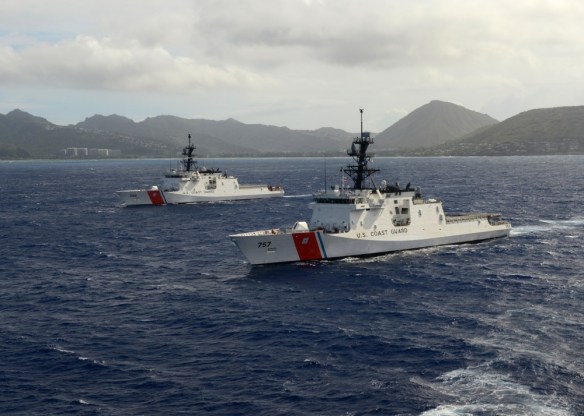
The crews of the Coast Guard Cutters Midgett (WMSL 757) and Kimball (WMSL 756) transit past Koko Head on Oahu, Hawaii, Aug. 16, 2019. The Kimball and Midgett are both homeported in Honolulu and two of the newest Coast Guard cutters to join the fleet. (U.S. Coast Guard photo by Petty Officer 3rd Class Matthew West/Released)

Sorry, this is late. I got bogged down in details. So, this is a streamlined commentary, but I hope still relevant. 

The December 2023 issue of US Naval Institute Proceedings has an article by Lieutenant Brian Adornato, U.S. Navy Reserve, suggesting it is time to consider designing a replacement for the Bertholf class National Security Cutters.

He points out that, based on the history of the Offshore Patrol Cutter and the Polar Security Cutter, it now typically takes 14 years from project initiation to commissioning.

“The Coast Guard began discussions with industry regarding the medium-endurance cutter replacement, the offshore patrol cutter (OPC), in 2010. The first OPC is scheduled to commission in 2024.2 The initial integrated product team for the next heavy ice breaker, the polar security cutter (PSC), was assembled in 2013, and the first ship is scheduled for delivery in 2028.3 The first NSC was commissioned in 2008 with a service life of 30 years, so the Coast Guard must start the process now to field the NSC(X) in 2038.

The Coast Guard is going to have to change its behavior if we are going to start replacing National Security Cutters (NSC) when they are “only” 30 years old. But even if we don’t, that doesn’t mean we should not be considering new cutter designs.

The first NSC was commissioned more than 15 years ago so its concept and requirements really originated more than 20 years ago and there is still one more ship that has not been delivered yet.

The OPCs’ concept was firmed up more than 10 years ago and the last is not expected to be delivered until 2038. That would be more than 25 years from concept to deployment of the last ship. I don’t think it will happen. I don’t think it should happen. It would be putting our collective brains on cruise control.

Instead, we should periodically reevaluate. One design may not be the most economical way to meet all our needs where weather, endurance, speed, and facilities vary from location to location. Trying to meet the most demanding requirements of every possible environment may preclude building enough ships to do all the missions well.

We know the Coast Guard has completed a new Fleet Mix Study. It has not been made public, but you can bet it suggests we need more large patrol ships. The original 2009 Fleet Mix Study indicated we would need 66 large cutters (NSCs and OPCs) to meet all our statutory mission requirements, and if anything, our commitments seem to have increased.

In 2000, when the program of record was being formulated, the Coast Guard had 44 patrol ships of six classes, each over 1000 tons full load. (12 x 378s, 13 x 270, 16 x 210, Alex Haley, Acushnet, and Storis).

Ships were distributed in recognition of their relative strengths and weaknesses. Stout, very sea worth, but relatively slow ships, Alex Haley, Acushnet, and Storis were based in Alaska to do fisheries patrol. 10 of 12 WHEC378s were assigned to the Pacific to take advantage of their long legs and seakeeping to conduct Alaska Patrol and deal with the great distances in the Pacific. 210s were generally assigned to where the weather was more benign, so that their small size was not a significant disadvantage. 270s, more seaworthy than the 210s, but not really suitable for Alaska Patrol, were generally assigned to more Northerly East Coast homeport from which they did fisheries and drug enforcement.

The original Program of record would have provided only two classes totaling 33 large patrol ships (8 NSCs and 25 OPCs). Congress has added three NSCs so it looks like we are working toward 36 (11 NSCs and 25 OPCs)

Once the announced decommissionings are completed, looks like we will have 33 (10 NSCs, 13 x 270s, Alex Haley, and 9 x 210s). I don’t expect any numerical increase as the last NSC and OPCs are completed and WMECs are decommissioned. Certainly, if we proceed as planned, we can’t expect to have even 36 until the completion of the OPC program in 2038.

The last Fleet Mix Study did not attempt to identify minimum requirements for different mission sets, rather it considered using only the NSC, OPC, and FRC as possible alternatives. This meant that the cutters might be “over qualified,” for specific missions and locations, because alternatives with different sets of characteristics were not considered. Being overbuilt may not sound like a bad thing, but if it means you can’t build as many ships as you need, it is.

The out years on the contracts we have are options. If the Coast Guard determines that it would be better served by contracting for a different design in the out years, the Coast Guard is free to do so, and, at this time, there are not even options for the last ten OPCs.

We know change is the only constant. Demands on the Coast Guard change. What the Coast Guard does changes. Technology options change. Threats change. I would argue the Defense Readiness mission has taken on increased urgency.

We need to reevaluate periodically. We really should have at least two broad classes of patrol cutters, the larger more capable ship that can operate in the most demanding environments and a second more numerous type to operate in the more typical circumstance. You can’t really say that is the case if we only have NSCs and OPCs, their size and capabilities are too similar. I am not a particular fan of the HEC/MEC designations, but it is a familiar construct that conveys the idea (why not WPL and WPM, Coast Guard Patrol Large and Patrol Medium).

Designs need to be reevaluated at least every ten years, we might decide to continue to build what we are building, but that should be a conscious decision, not just sleepwalking.

We could do it as rotating five year programs. I would suggest we need a true medium cutter than can be built in larger numbers than the OPC first and then look at designs for a new large cutter. That would still give us time to go through all the steps that seem to be necessary to design and contract for a ship.

The designs of the NSC and OPC were about ten years apart and it has now been more than ten years since the design of the OPC. We should not let our design and contracting skills atrophy. It is time to at least start the process to see if we cannot come up with a better design to address our changing requirements.

We should never stop building patrol cutters. I suspect we need more than 60. We really should be producing two per year, either one large patrol cutter and one medium patrol cutter or two medium patrol cutters every year.

Ukraine to Get Torpedo 47 and Combat Boat 90 from Sweden

ESSANEWS and MSN report,

“The announcement of the SLWT delivery was subtly made within the information that Sweden would support Ukraine with a weapons package worth $680 million. This includes, among other items, swift CB90 (Combat Boat 90) boats and ‘underwater’ weaponry…Ukrainian sources infer that the aforementioned ‘underwater weapon’ refers to the Torpedo 47.”

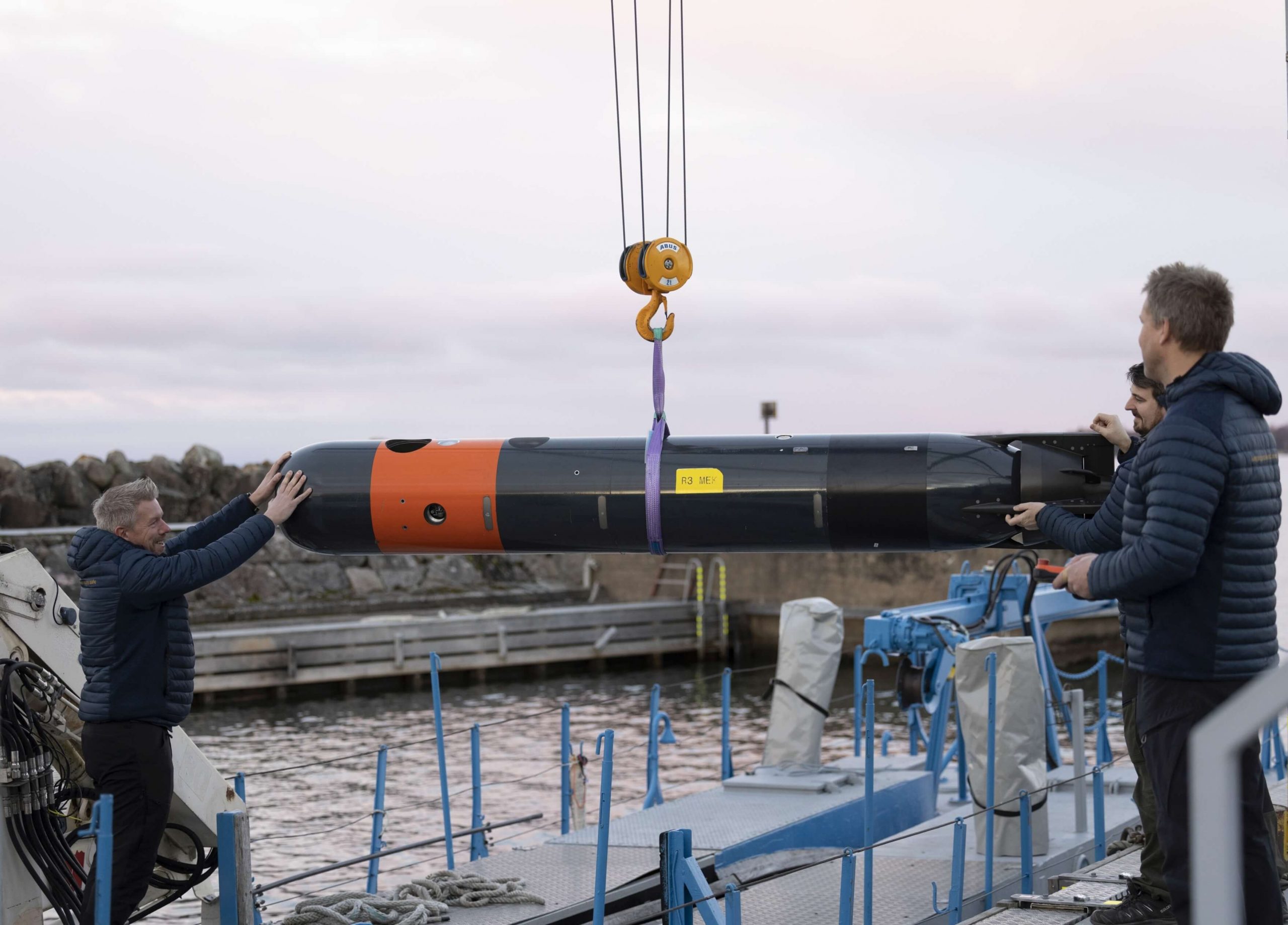
Torpedo 47 (Torped 47):

Torpedo 47 is considerably different from the lightweight torpedoes used by the US Navy. It is:

  • Wire Guided
  • Intended to use against surface vessels as well as submarines
  • Powered by a rechargeable battery
  • Larger and heavier that USN lightweight torpedoes (340 kg 748 lbs, 400mm 15.7″ in diameter, 2.85m 112″ long, with a 50 kg 110 lb warhead)

Torpedo Employment: 

The first thing that comes to mind is how will the torpedoes be employed? Ukraine has no submarines, no large surface combatants, and no helicopters or fixed wing aircraft with anti-submarine sensors.

On the Defense

The MSN article talks primarily about the Torpedo 47 in the context of its use against submarines, and essentially writes off the Russian surface threat. That may be premature.

The Ukrainians are unlikely to be able to find and engage submarines launching long range cruise missiles into Ukraine, but they do want to keep submarines (and surface ships) from attacking merchant ships transiting between the relative safety of Ukrainian ports and Romanian Territorial Waters. The torpedoes may have a role in that.

The package may include some bottom mounted sensors that would allow the Ukrainians to detect submarines approaching their coast and torpedoes could be launched from shore or from small craft directed by controllers ashore.

Torpedoes might be launched from the remaining 110-foot Island class cutters or from the Combat Boat 90s.

On the Offensive

The report suggests the torpedoes might be launched from unmanned surface craft. While this is certainly possible, it would require a new class of larger USVs and controlling a smart torpedo, the torpedo launcher, and the USV gets pretty complicated.

The Russians still have combatants based in Crimea. The Russians are also still apparently attempting to resupply through maritime deliveries to Crimea. Shipping carrying supplies to Crimea may be a target. The warhead is large enough to severely damage or sink the relatively small vessels the Russians seem to be employing for this purpose. There might also be an opportunity to employ the torpedoes in combination with kamikaze Unmanned Surface Vessels. The torpedo would most certainly immobilize or at least slow a target, even if it did not sink it outright. Then additional hit by USVs could insure its sinking.

During WWII the Soviets frequently fired torpedoes into ports to destroy port infrastructure as well as ships in port. These torpedoes might be used against port facilities as well.

Combat Boat 90:

These small ships are well adapted to support special forces. They can each transport half a platoon and can be intentionally run aground to discharge troops. They are likely to be used on Ukraine’s river system as well as offshore.

It might not be too difficult to equip them with these lightweight torpedoes.

Hopefully we will hear more about how the torpedoes and CB90s are used.

Is Cutter Maintenance Falling Behind?

Coast Guard Cutter Waesche prepares to refloat from drydock in Seattle, Wash., May 22, 2018. The Waesche is a 418-foot Legend-class National Security Cutter homeported in Alameda, California. US Coast Guard photo.

Have recently seen some indication that the Coast Guard is not keeping up with ship maintenance. Specifically, a statement that Surface Forces Logistics Center (SFLC) had a $250m shortfall last year. $350m this year, and that availability’s have been canceled and deferred.

Am asking those among the readership who have firsthand knowledge of this for comment.

Is it true, and if so, is this because of

  • unexpected problems, e.g. unplanned maintenance?
  • new ships are more maintenance intensive?
  • old ships are getting harder to maintain?
  • we have more hulls now than before?
  • shipyard costs are higher than expected?

In other words, what’s going on?

USCGC Clarence Sutphin Jr. May Have Intercepted Kamikaze Underwater Drone Parts Bound for Houthi

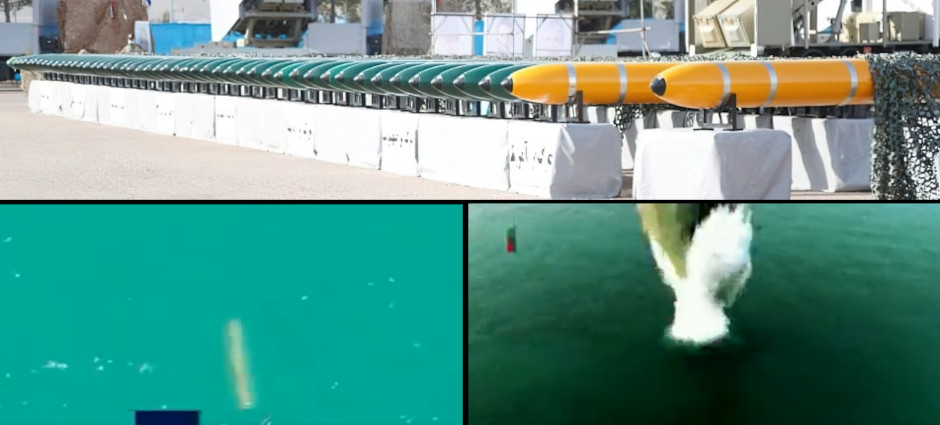
“US Coast Guard / CENTCOM released photo of weapons seized aboard an Iranian dhow…The seizure included UUV and USV components. The annotations, highlighting possible UUV parts, have been added.”

As reported earlier, on January 28,2023, USCGC Clarence Sutphin Jr. intercepted an arms shipment bound for Houthi controlled areas of Yemen. Somehow, I skipped over an aspect of the report.

 The boarding team discovered over 200 packages that contained medium-range ballistic missile components, explosives, unmanned underwater/surface vehicle (UUV/USV) components, military-grade communication and network equipment, anti-tank guided missile launcher assemblies, and other military components. (emphasis added–Chuck

H. I Sutton at “Covert Shores” amplifies on the story, identifying the likely UUV as a one-way attack system. An earlier post provides a bit more detail about the likely weapon.

It appears this weapon is slow, so it is more likely to be used against vessels that are anchored or moored. It might also be used against port infrastructure. It could be launched and/or controlled from any number of innocuous looking craft. Because the effects of an underwater explosion are amplified by the non-compressible nature of water, this weapon could cause very serious damage.

In addition to the Houthi, Iran and any of its client organizations may use this weapon.

“…acquisition of this shipyard will ensure the successful delivery of the Waterways Commerce Cutter (WCC) Program” –Birdon America


Below is a Birdon America press release. More money invested in American shipyards is always good news.

Thanks to Lee for bringing this to my attention.


Birdon Strengthens Portfolio with Acquisition of Metal Shark Boats Shipyard
5 February 2024

On 31 January 2023, Birdon America Inc. acquired Metal Shark Boats’ 32-acre shipyard in Bayou La Batre, Alabama. This acquisition brings a fully developed shipyard into Birdon’s growing portfolio of facilities throughout the US and will allow us to provide a further range of shipbuilding and repair services.

The acquisition of this shipyard will ensure the successful delivery of the Waterways Commerce Cutter (WCC) Program, a vital component of Birdon’s $1.187 billion contract to design and build 27 new vessels for the U.S. Coast Guard.

Birdon Group CEO, Jamie Bruce said, “The investment in this facility will not only ensure we deliver on our promise to the US Coast Guard, but it will also provide an opportunity for our subcontract partners in southern Alabama to build and install all components of these vessels in one location.”

“I am extremely grateful to Metal Shark CEO Chris Allard and his team for collaborating diligently with us, in a short period, to complete this deal,” he said.

As part of the acquisition, Metal Shark’s existing workforce will transfer to Birdon and will continue to execute the current order book of repair work. In the near term, Birdon plans to make significant capital outlays in the shipyard’s infrastructure as a further investment in the future. This will foster job creation, accelerate technological advancement, and provide positive growth to the region’s economy. A direct result will be the creation of 300 new jobs in the area over the next two years.

This is a fully developed shipyard fronting a dredged deepwater inlet. It includes five steel buildings for fully self-contained fabrication and construction work, with over 1,700′ of waterfront, a 660-ton Travelift, multiple cranes, and all required equipment for the construction of steel and aluminum vessels up to 300’ in length and 1,500 tons launch weight. The shipyard is situated just minutes from the Intracoastal Waterway with direct access to the Gulf of Mexico.

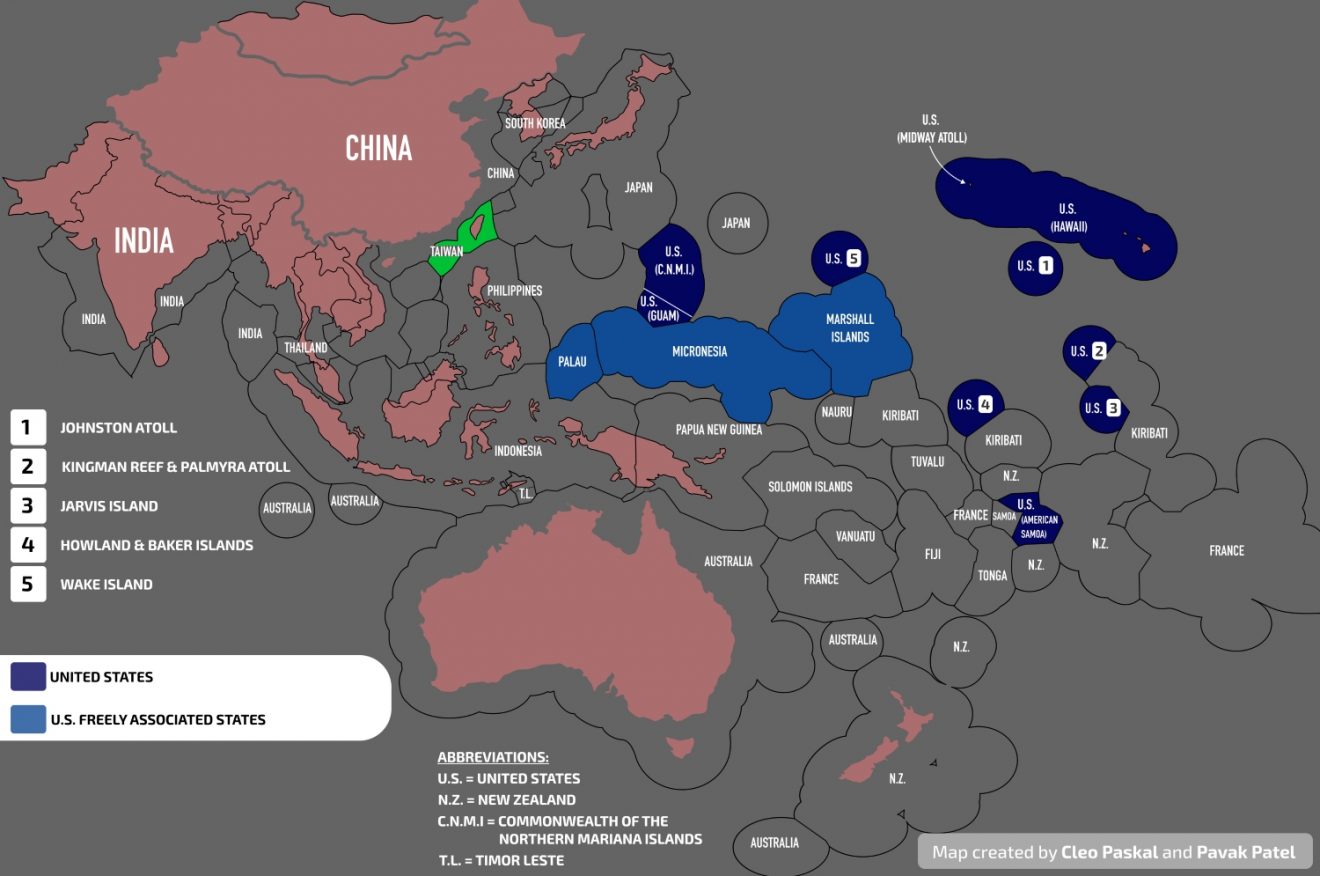
“Pacific Security Depends on Funding the New COFA Agreements with 3 Pacific Island Nations” –Japan Forward

Map of EEZs in the Central Pacific showing significance of Palau, Micronesia and the Marshall Islands. (© Cleo Pascal.)

Japan Forward reports,

American control of the Central Pacific depends on three treaties with three nations: Palau, the Federated States of Micronesia, and the Republic of Marshall Islands. They are known as Compacts of Free Association (COFA). These nations and their huge maritime territory comprise most of an “east-west corridor” from Hawaii to the western edge of the Pacific. That corridor is essential for American control and military operations in the region.

And it looks like we may be blowing it due to lack of attention and a penny-wise pound-foolish legislature.

Please read the linked article above and do what you can to convey a sense of urgency in approving these treaties.

I don’t think these three small Pacific Island nations want to depend on China but if we lose our current close relationship, we may never get it back.

Related:

Thanks to Lee for bringing this to my attention.