“Stuck in the middle with you: Resourcing the Coast Guard for global competition” –Brookings

Brookings contends that the Coast Guard, not the Navy, is the proper instrument to counter Chinese maritime “gray zone” operations. But it needs more money, something in the range of $200-500M more per year, a 1.7-4.2% budget increase.

Simply put, for a relatively meager influx of operations and maintenance funds, at least in DoD terms (where the unit cost of a single Fordclass aircraft carrier is more than the Coast Guard’s entire annual budget), the Coast Guard could provide substantially more services in the Pacific. Enhanced funding in the range of $200-$500 million would translate to improved readiness and availability of its National Security Cutter (NSC) fleet and other Coast Guard assets capable of operating deep into the Pacific theater. Importantly, this funding might actually save money for DoD. Using the Coast Guard to conduct joint military exercises and patrols, capacity building, and international training is far cheaper than using a higher-end Navy ship to perform the same missions. (emphasis applied–Chuck)

It goes on to suggest that the PATFORSWA model be replicated in the Western Pacific and suggests,

As a corollary, as the Coast Guard plans for its Offshore Patrol Cutter acquisition, it should consider whether it could optimize a sub-class of these vessels for these types of defense-flavored operations in the Pacific.

There is also a suggestion of overseas basing,

Finally, it may also be time for the Coast Guard to consider independent foreign basing options for the first time in recent memory, perhaps with America’s close ally and “Five Eyes” partner, Australia. A Coast Guard detachment in Australia would not only provide for an additional Pacific-centric staging area, besides existing Coast Guard locations in Hawaii and Guam, but would also assist with Coast Guard strategic icebreaking operations directed towards Antarctica, which is itself becoming more and more relevant in the era of great power competition.

Once we have our fleet of icebreakers, we might want to base one in Australia or New Zealand, but Guam still looks like a good place for our patrol ships, even if we might include OPCs in addition to the three Webber class FRCs currently planned. Patrolling our Western Pacific EEZ and that of friendly Micronesian states, we might want to replenish at Manus Island, Papua New Guinea, where Australia is developing a joint use base. At least for short term deployments, our ships and aircraft might also exploit the newly improved base at Wake Island 1,501 miles (2,416 kilometers) east of Guam, 2,298 miles (3,698 kilometers) west of Honolulu.
“Breaking the Ice: High Stakes in the High North” –RealClearDefense

Real Clear Defense offers a suggestion of how US policy regarding the Arctic should be shaped.

While some decry an “icebreaker gap”…, the real problem is that U.S. policy in the Arctic lacks direction. The United States needs a better approach – a new cooperative arrangement with Russia to protect the environment, maintain peace in the region, and box-out China.

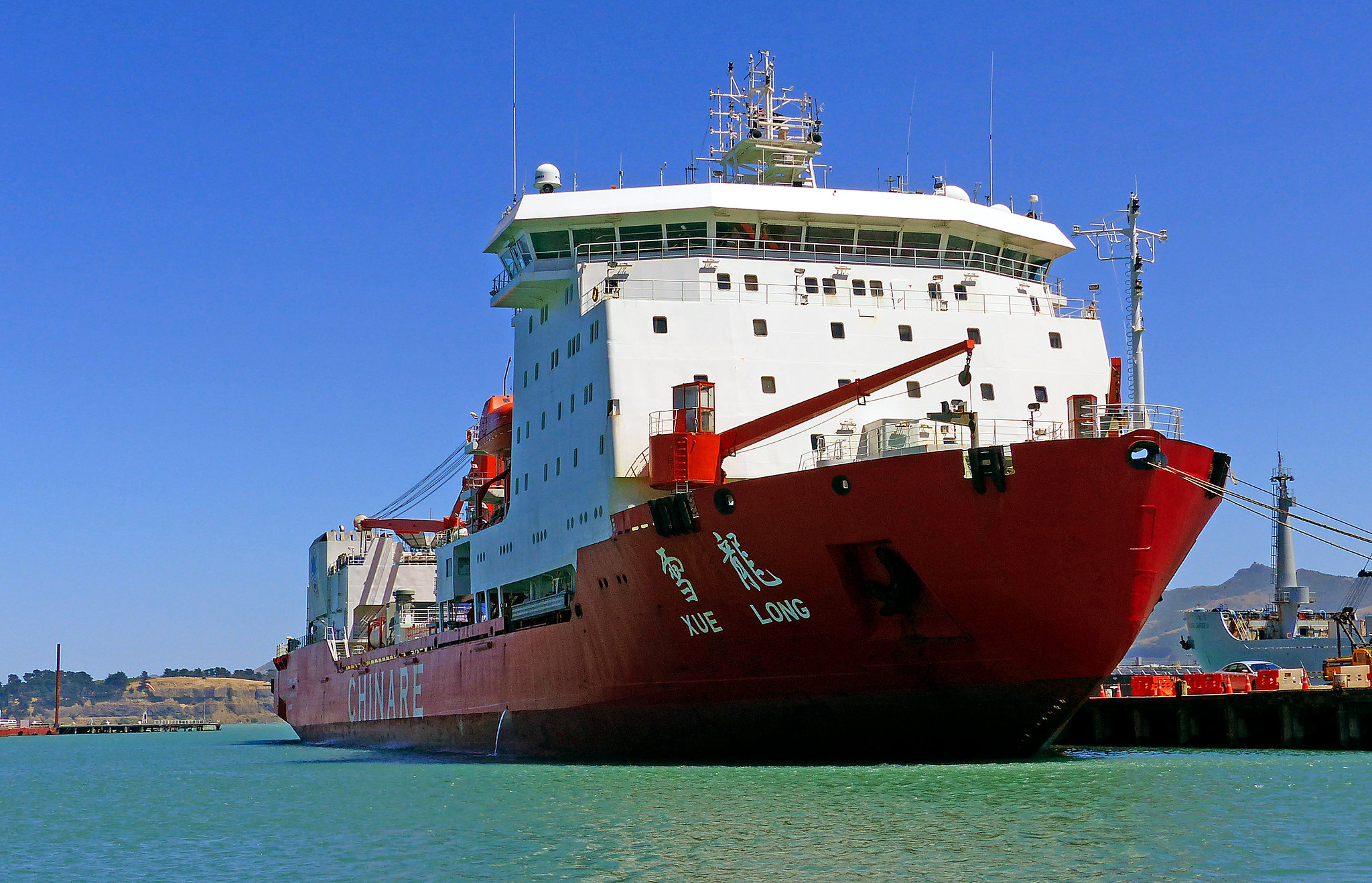
The Coast Guard does need more icebreakers. It does not need nearly as many as Russia. Our thinking needs to consider our access to Antarctica, which, however quiet it may be now, may not always be that way.

“Ding Ding, We Have a Winner – Eight Bells: A Celebration of Sea Service” –MyCG

MyCG announced Coast Guard Cutter Mellon as the Eight Bells multimedia contest winner. (No theirs is not the one I have included above. That one comes from Campbell and includes scenes from their exercise North of the Arctic Circle.)

You can see all the ten entries here.  All the entries are worth a look. Well Done.

“Coast Guard sets record for illegal fishing vessel interdictions” –District 8

Below are photographs and a news release from CCGD8’s public affairs detachment Sector/CGAS Corpus Christi. Would not normally report something like this, but there seems to have been a noteworthy change in either the behavior of the Mexican Fishing Fleet, or Coast Guard operations. Incidentally, there are no Webber class homeported in Sector Corpus Christi, but they do have four 87 foot WPBs. Three FRCs are to be assigned to the neighboring Houston/Galveston Sector.

A launch crew is interdicted by Coast Guard law enforcement crews for engaging in illegal fishing in federal waters off the coast of southern Texas April 6, 2020. Coast Guard crews consisting of air support, a small boat crew, and a cutter stopped three lanchas approximately 50 miles north of the Maritime Boundary Line, with a total of thirteen lanchamen were engaged in illegal fishing. Twelve miles of longline gear, illegal fishing equipment, as well as 2,020 lbs of illegally-caught Red Snapper were seized. (U.S. Coast Guard photo)

Coast Guard law enforcement crews count the catch of five Mexican lancha boat crews illegally fishing in federal waters off southern Texas at Station South Padre Island in South Padre Island, Texas, Nov. 16, 2019. A total of 6,186 lbs of red snapper and shark was onboard the lanchas. U.S. Coast Guard photo by Sector/Air Station Corpus Christi.

A Station South Padre Island law enforcement boat crew stops a lancha crew engaged in illegal fishing in federal waters in the Gulf of Mexico April 30, 2020. Coast Guard law enforcement crews seized approximately 5,000 lbs of Red Snapper, 450 lbs of shark, and illegal fishing equipment from five lancha crews. (U.S. Coast Guard photo by Station South Padre Island)

Coast Guard sets record for illegal fishing vessel interdictions

CORPUS CHRISTI, Texas — Coast Guard law enforcement crews interdicted a record-setting number of lanchas throughout the Gulf of Mexico for fiscal year 2020.

Since October 2019, Coast Guard assets and personnel detected a total of 326 lanchas and interdicted 136.

Since the first recorded lancha interdiction in the late 1980s, the Coast Guard has seen a significant uptick in the detection of the vessels, particularly in the past two years, recording 74 lancha interdictions in the previous fiscal year.

The Coast Guard utilizes a layered approach for operations through aircraft, small boats, and cutters, as well as improved technology on those assets, resulting in the drastic increase in lancha interdictions.

“This past year, we applied an unprecedented level of effort along the Maritime Boundary Line towards countering this threat to our natural resources, and the result speaks for itself,” said Lt. Cmdr. Joseph Prado, Coast Guard Sector/Air Station Corpus Christi enforcement chief. “However, we will not be content until we see an end to this affront on our maritime sovereignty. We will continue to leverage all available technology and partnerships to increase our effectiveness. The boating public can play a key role in assisting the Coast Guard. Successful interdictions are oftentimes the result of timely reports from the maritime community. We encourage all boaters to continue to report all suspected illegal fishing.”

A lancha is a fishing boat used by Mexican fishermen that is approximately 20-30 feet long with a slender profile. They typically have one outboard motor and are capable of traveling at speeds exceeding 30 mph. Lanchas pose a major threat, usually entering the United States’ Exclusive Economic Zone near the U.S.-Mexico border in the Gulf of Mexico with the intent to smuggle people, drugs, or poach the United States natural resources.

If you witness suspicious activity or illegal fishing in state waters (out to 9 miles offshore), please contact the Texas Parks and Wildlife Department’s “Operation Game Thief” at 1-800-792-GAME (4263). For all suspicious activity or illegal fishing occurring in federal waters (out to 200 miles offshore), please contact the U.S. Coast Guard at 361-939-0450.

For more information follow us on Facebook and Twitter.

“Defense Primer: Naval Forces” -CRS

US Capital West Side, by Martin Falbisoner

The Congressional Research Service has produced a very short over view of US Navy forces, it discusses the nature of both the Navy and Marine Corps as naval services, the aircraft that make up carrier air wings, naval nuclear weapons, and the Navy’s domestic and overseas home ports. Discussion of Navy and Marine aircraft is limited (covered here). There is no mention of the Coast Guard. The Coast Guard’s relationship with the Navy is covered here. Those interested in the USMC are directed to a different primer.

Its only two pages if you ignore the disclaimer, all pretty basic, but a good starting point if you have little prior knowledge of the way the Navy is organized. This is probably intended for the freshmen Congressmen expected in January.

Revision: Since this post was originally published, I have learned more about this particular form of briefing material. This lead to some changes above and a second post.

New OPV, “Malaysia evaluates options for second batch of Littoral Mission Ships” –Janes

Janes reports that “The Royal Malaysian Navy (RMN) has begun an initial process to evaluate possible vessel types for its second Littoral Mission Ship (LMS) project.”

Reportedly,

“The four proposals are namely a 70.7 m patrol boat concept from US shipbuilder Swiftships, a 68 m offshore patrol vessel (OPV) concept from Damen known as the Stan Patrol 6811, a 70.2 m patrol vessel from German shipbuilder Fassmer, and a 70 m patrol boat from Malaysian company Preston.

“Meanwhile, the proposal that has been forwarded by the joint venture between Damen and Destini is an 83 m vessel that is very similar to the OPV ordered for the Malaysian Maritime Enforcement Agency (MMEA)..”

The real surprise here is that they are not continuing to build additional units of the Chinese built batch 1 ships. (More recent photos here, including the two stern launch boat slips. Text is apparently in Indonesia, but there was an option for translation that worked reasonably well.)

“The RMN has awarded a contract to China Shipbuilder & Offshore International Co. Ltd. to build the first batch of four (4) Littoral Mission Ship based on a 68-metere design. The first ship, the KD Keris (111), was commissioned with the RMN on January 2020, while the second ship, Sundang (112) was launched in China on July 2019….Under its 15-to-5 Transformation Program, the RMN plans to have 18 Littoral Mission Ship, although the decision to look for a new design for the second batch of LMS means the RMN itself is diverting from its original plan to only have 5 classes of ships in its inventory. (emphasis applied–Chuck)

The Chinese built ships are reportedly,

“…68.8 meters long, with a beam of 9 meters and draft of 2.8 meters. It displaces at 700 tons full load, and with a maximum speed of 22 knots and range of 2,000 nautical miles at 15 knots.”

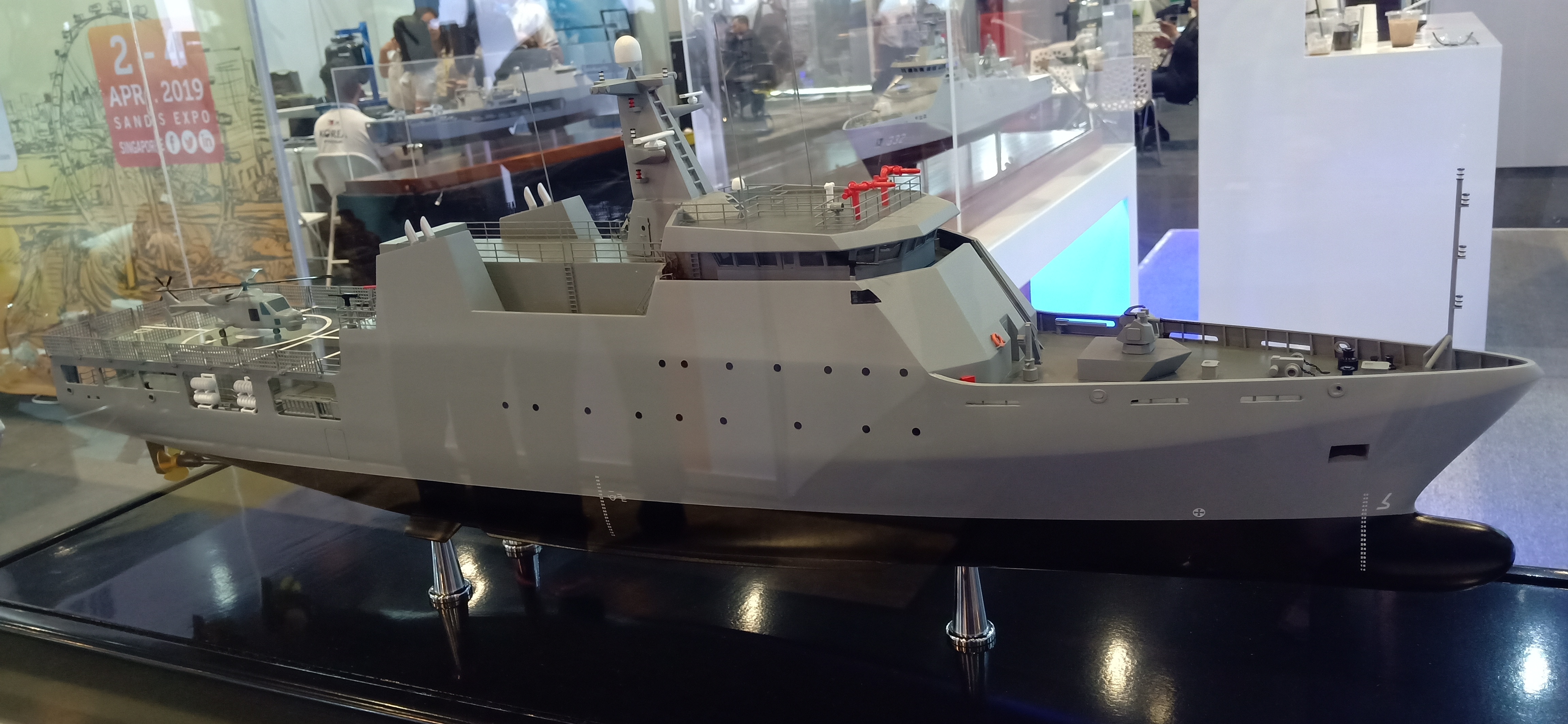
I have only really been able to pin down one of the proposed designs, That of the 83 meter Damen design (photo below) currently being built for the Malaysian Maritime Enforcement Agency (Coast Guard).

Front view of a scale model of an OPV-1800 vessel made by the Dutch company Damen. Photo taken during the 2018 Asian Defence and Security (ADAS) Trade Show at the World Trade Center in Pasay, Metro Manila. Photo by Rhk111 from Wikipedia

The Fassmer website talks about the 80 meter OPV we are familiar with, but there is no mention of a 70 meter design. Swiftships offers a 75 meter corvette, but no 70.7-meter design. Reportedly the Damen offer is a 68 meter stretched version of their 6211 design. It may be that they are referring to waterline length rather than overall.

There is not a lot of information about proposed capabilities. Sounds like they may have decided they need a flight deck for a helo or at least a UAV.

North Korea’s Ghost Fishing Fleet –It is worse than I thought

Sixty fishermen aboard this North Korean boat were rescued after it collided with a Japanese patrol vessel and sank off Japan’s Noto Peninsula in October 2019.

The Indo-Pacific Defense Forum reports on the extent of the disaster that has befallen North Korean fishermen since their government has sold fishing rights to the PRC.

“The so-called ghost ships come ashore on Japan’s coastline and increasingly along Russia’s coast, according to a mid-September 2020 report by Lenta.ru, a Russian-language online newspaper.

“Japanese authorities report that more than 500 ghost boats have landed on the nation’s coast in the past five years, with 158 in 2019, Lenta.ru reported. The unidentified bodies found aboard are buried in unmarked graves in Japanese and Russian coastal towns, the online report said.”

“Euronaval 2020: Black Scorpion small-size torpedo from Leonardo” –Navy Recognition

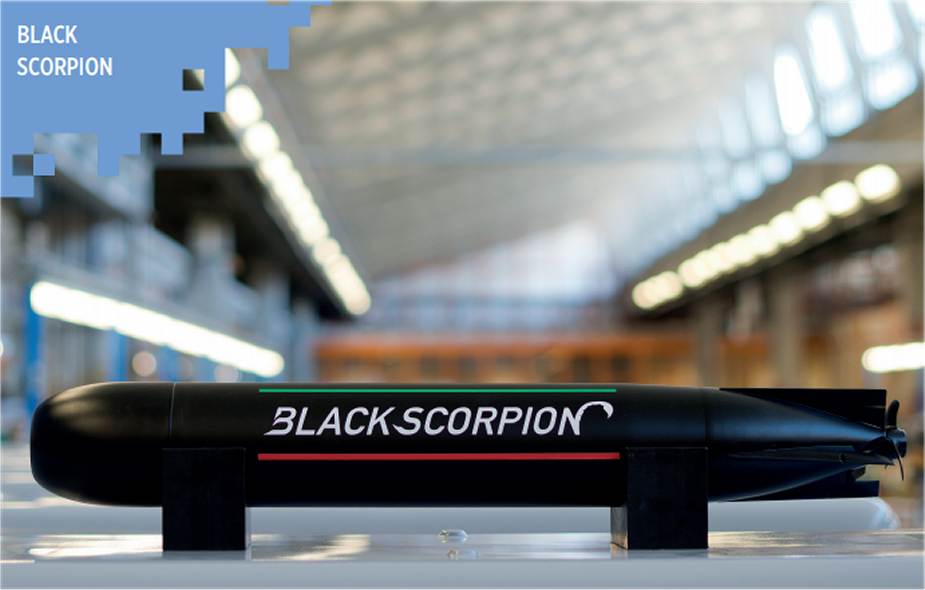
Black Scorpion small-size torpedo from Leonardo (Picture source Leonardo)

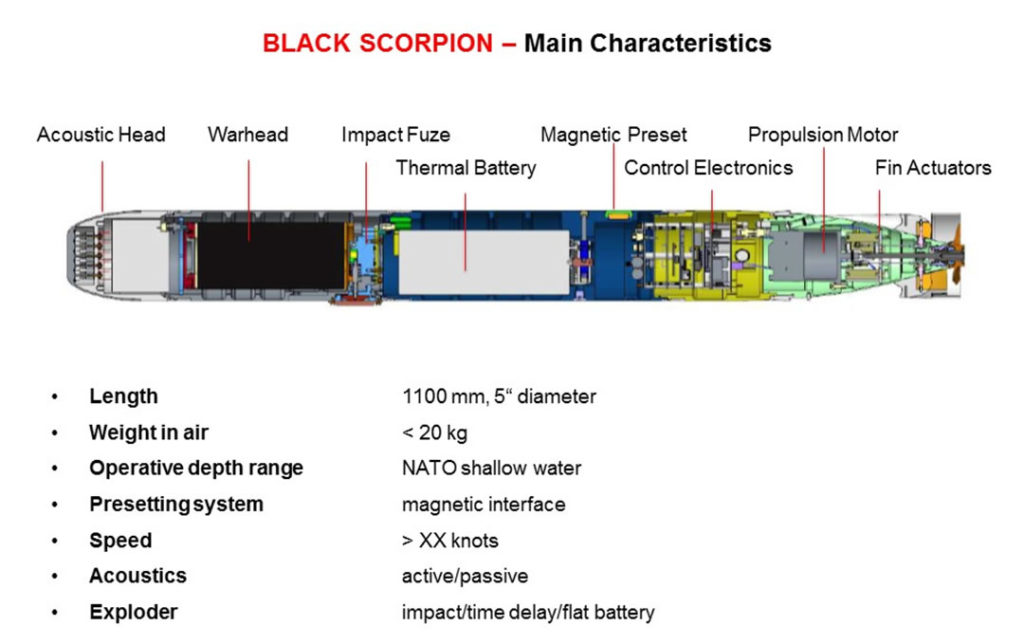
We saw this earlier but Navy recognition has another report on the Leonardo Black Scorpio, a truly very small torpedo, 127mm (5″) in diameter and 1.1 meters (43.3″) in length. The report provides a bit more insight into how it is expected to be used.

Much as I see the need for the Coast Guard to have a light weight torpedo, this may be too small to have anything more than very limited utility. A 21″ (533mm) heavy weight torpedo is 80-100 times heavier. A 12.75″ (324mm) light weight torpedo is 11 to 12 times larger. Even Grumman’s “Common Very Light Weight Torpedo” is five times as large.

But I am still curious. Range? Speed? Sensor range? Usable against surface ships? Midget submarines? Moored mines?

Graphic from Leonardo