Technical Difficulties

The blog has encountered some techical difficulties recently. At least in some cases photos have overlapped the text.

I have informed tech support at WordPress and hopefully a fix is in the works.

As a bandaid solution, I am adding a few extra line spaces below any photo in hopes of showing all the text.

Navy Bases MQ-4C in Mayport–LE Role?


NavyRecognition reports that high flying, fast, long endurance Triton MQ-4C Navy intelligence, surveillance, and reconnaissance data collection drones are being based at Mayport, FL.

Detachments will rotate to distant theaters, but they will of course fly missions out of Mayport if only to maintain proficiency. Hopefully we will see these used to support Coast Guard interdiction missions.

South Africa to Build Damen Design Offshore and Inshore Patrol Vessels

Damen 85 meter Offshore Patrol Vessel, 1800

Damen 85 meter Offshore Patrol Vessel, 1800

Naval today reports, 

On February 15, Armscor (the acquisition agency for the South African Department of Defence–Chuck) announced Damen Shipyards Cape Town as the preferred bidder for the construction of offshore and inshore patrol boats…”

Reportedly the project includes three Offshore Patrol Vessels (OPVs) and three Inshore Patrol Boats (IPBs) for the South African Navy.

The OPVs will be Damen’s Offshore Patrol Vessel 1800 Sea Axe, illustrated above, 85 meters in length, with a beam of 13.7 meters, and a speed of 26 knots.

The IPBs will be Damen’s FCS (STAN PATROL) 5009 design, illustrated below, which is also used by the Ecuadorian and Trinidad and Tobago Coast Guards. These are 50.2 meters (165 ft) in length, 9.32 meters (30.6 ft) of beam. The South African vessels are expected to make 30 knots. An unusual feature (aside from the bow) is the use of four propellers.

I talked to someone who has ridden on a 5009 patrol vessel and he reported that it did indeed significantly reduce pitching. The tradeoff was that it was very wet forward. This should not be surprising since the design minimizes the rise of the bow when it encounters a wave.  You can see that they have attempted to counter this tendency by making the bow high and providing high bulwarks.

On the second page of this description of the design you will see a diagram of the ship which indicates that it can be fitted with up to three boats and a twin 40mm mount.

The long and slender Sea Axe hull offers exceptionally low resistance, delivering excellent fuel efficiency at all speeds


UAE’s New, and very well Armed OPV

UAE offshore patrol vessel Arialah

UAE offshore patrol vessel Arialah (note the concept above is incorrect in that the gun is a BAE 57mm rather than the 76mm illustrated).

DefenseNews reports first impressions of a new Offshore Patrol Vessel (OPV) built for UAE’s Critical Infrastructure and Coastal Protection Agency (CICPA) shown at the NAVDEX (naval) portion of the IDEX international Defense Exposition in Abu Dhabi.

The ships are 67 meters (220 feet) in length, 11 meters (36 feet) of beam, and 5.4 meters (18 feet) of draft, with a speed of 20+ knots provided by four MTU engines driving four propellers.

Most of the armament is typical OPV, a 57 mm gun and two 30mm auto-cannon in remote weapon stations. What really sets it apart, is the Mk49 Rolling Airframe Missile launcher.

On the other hand, the UAE is just across the Straits of Hormuz from Iran and their shore based anti-ship cruise missiles.

https://i0.wp.com/upload.wikimedia.org/wikipedia/commons/2/2c/RIM-116_Rolling_Airframe_Missile_Launcher_3.jpg

Photo: Mk49 guided missile launch system for Rolling Airframe Missile

An earlier post provides a bit more detail on the program but it appears to have a couple of errors regarding the weapon systems (indicates a 76mm as seen in the first illustration vice 57mm and says the Mk49 launcher has 11 cells rather than the actual 21). There are to be two of this class, both to be delivered this year.

“The ships themselves will be delivered from Damen’s Galati shipyard in Romania in 2017; they will then go to ADSB’s facility in Abu Dhabi’s Mussafah industrial area for combat systems installation and integration prior to delivery to the CICPA.”

This looks like a straight forward adaptation of one of Damen’s designs for Offshore Industry Support Vessels with boats, helo deck, ESM/ECM, weapons and sensors added.

According to this older source, the Coast Guard was involved in the development of the SEA AXE Bow.

“Damen … has developed the sea axe bow design in partnership with the University of Delft, Royal Netherlands Navy, US Coast Guard and the Maritime Research Institute Netherlands.”

An Appreciation of Merchant Fleets

Top ten nations in value of their shipping from www.vesselsvalue.com

Top ten nations in value of their shipping from http://www.vesselsvalue.com

Marine Link brings us the graphic above. It does not come with explanation, but I presume this is “owned” rather than “flagged.” Otherwise I don’t think the US would be #4.

There are a couple of take-aways here:

  1. The overall tonnage has grown immensely, and
  2. The individual ships are far larger than they used to be.

For comparison the size of Japan’s not inconsiderable merchant marine in 1941, at the beginning of WWII was about 6 million tons. The fleets of Japan and China (#2 and #3 in value) are about 25 times larger.

During World War II the average merchant ship was roughly 5,000 tons. 10,000 tons was a big ship. The average Japanese ship is about 35,000 tons and the average Chinese ship is about 32,000. That is the new medium size. The US average is only a little over 23,000 tons. The new large size is larger than a USN nuclear powered carrier.

Something that does not show is that the crews are now much smaller.

Lets talk about the implications.

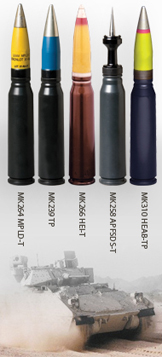
30mm “Swimmer” Round

30x173mm ammunition for Mk44 Bushmaster II

30x173mm ammunition for Mk44 Bushmaster II

Ran across an interesting new type of ammunition, the 30 mm Mk 258 mod 1 APFSDS-T, which appears to be designed specifically to counter Fast Inshore Attack Craft (FIAC). It uses a unique configuration to allow it to maintain high velocity after entering the water. Being an armor-piercing, fin stabilized, discarding sabot, tracer round, I suspect it might help us attack the engine rooms of larger ships. if we upgrade our Mk38 gun mounts to use the 30mm. Might be able to disable propellers and rudders as well.

In a test “…it destroyed a representative FIAC target travelling at 30kts at a range of 4.8km with the first shot.”

It would probably be good against radio controlled boats like the one in the recent attack off Yemen. General Dynamics is advertising that this “swimmer version” is currently available. This might explain why the Navy replaced the 57mm on the DDG-1000 class will 30mm guns. 

There is a bit more in the 2014 NAMMO Bulletin, on page 8 (5/13 on the pdf), under the title “The Navy’s Best Ammunition”;

The nose-shaped configuration was originally patented by the U.S. Navy and NSWC Dahlgren, but was never turned into functional ammunition. Nammo, NSWC Dahlgren and FFI (Norwegian Defense Research Establishment) carried out a comprehensive study that resulted in the final design configuration of the penetrator nose. Today, Nammo’s Mk258 mod 1 ammunition is used on board the LPD-17 and LCS class of U.S. Navy ships. This has significantly increased the fleet’s capability to defeat aerial and surface threats, as well as submerged threats like torpedoes and mines.

At the very least the 110s in Bahrain (or their Webber class replacements–whenever?) probably should have these. I’d like to see them on all the Webber Class WPCs.

Attack on Saudi Frigate was by “Drone Boat”


DefenseNews reports that the 30 January attack on the Saudi frigate, previously reported as a suicide attack, was actually done using unmanned, remote-controlled boat filled with explosives.

The story makes it sound like this is hard to do, but in fact it has become very simple just as has the use of hobby drones.

“Donegin is concerned “first that it is in the hands of someone like the Houthis. That’s not an easy thing to develop. There have been many terrorist groups that have tried to develop that, it’s not something that was just invented by the Houthis. There’s clearly support there coming from others, so that’s problematic.”

What does it require? I presume this boat had no real autonomy, that it was simply radio controlled (RC). Presumably it was supported and controlled by the boat from which the Houthi rebels filmed the attack.


Steering a collision course may be difficult from a half mile to a mile away, but it can be simplified by mounting a camera on the RC boat and broadcasting the picture back to the controlling boat. Then all you need to do is keep the target in your camera’s field of view and close the range to zero.

Theoretically it is relatively easy to disrupt the radio control and television links, but unless you anticipate the need it won’t happen.

We know these remote control boats are not easy to stop because the “swarming boat,” remote control targets we use take an awful lot of punishment and can seem impossible to stop.


If you are a terrorist, you can also make the boats very hard to sink by putting the explosives and critical components low in the boat and covering them with a steel plate. Laid near horizontal the steel plate would deflect small arms and resist fragment. Follow that up with liberal use of expanding foam filler to maintain flotation.

Unfortunately, it is just not that hard.


Blacks in the Revenue Cutter Service, Unrecognized

Bill Wells put this on his Facebook page. I am reproducing it here with his permission. 

Coast Guard Black History Gap:

The Revenue Cutter Ingham built by Colonel John Patterson at St. Mary’s, Georgia in 1831 was schooner rigged about 36 feet in length, 12-foot beam, and 5 feet 6 inches in depth and was of about 19 tons burthen. She was small and purposely so for her cruising grounds of the South Georgia waters from the South end of Cumberland Island to South end of Jekyll Island.

He first commander was the Inspector of the Revenue John Nicholson. His crew was one man at 30 dollars per month and two other men at 20 dollars. One of these men was a slave named Thomas Paine, the “property of the Collector of Customs Archibald Clark, also of St. Mary’s. Following Nicholson, a succession of commissioned USRCS officers were in command of the cutter including 1st Lt. Levy C. Harby, USRCS, one of the first Jews to serve in the USRCS.

Thomas Paine served as a seaman aboard and a constant factor. His knowledge of the cruising grounds was noted by the USRCS officers as was his skill in handling the vessel and other related jobs. Paine became the quintessential public servant and remained with the cutter until sold in the late 1840s. Unlike other cutters where there was a separation between officers and crew, this cutter’s size and accommodations only allowed close berthing. It was the first true racially integrated cutter.

Although a slave, like so many others of the period, Paine created for himself a position in the U. S. Revenue Cutter Service that endured. The fact that he was paid a salary showed the respect and trust held in him.

Bill added the following in a comment:

Nothing is presently known about his life other than his service aboard a cutter.

Maybe someone will pick up the mantel and find him.

There are also six revenue cutter seaman buried on the north end of Kiawah Island (South Carolina–Chuck) and three more on the south that the Coast Guard has ignored. The Coast Guard doesn’t bring them home.

Changes Ahead, Acquisition, Organization? and Again, Where is the Damn Unfunded Priority List?

Two new posts regarding the Coast Guard’s future, both from Defense News.

The first, “Commentary: US Coast Guard deserves military level funding,” by Representative Duncan D. Hunter (R-CA) is a plea for better funding of the Coast Guard. Its significance is less what it says, than who is saying it.

The second, “US Coast Guard urged to step up requirements,” by Christopher P. Cavas, quotes Representative Hunter and his chief of staff, Joe Kasper. It primarily encourages the Coast Guard to provide a comprehensive unfunded priority list, primarily with regard to icebreakers, Unmanned Air Systems, and, some what obliquely, the inland tender fleet, but it goes further, indicating Hunter will attempt to have the Coast Guard moved into the DOD and have our larger cutters better armed.

So who is Representative Hunter?  He is the son of long serving representative Duncan L. Hunter. He serves on the Armed Services, Education and the Workforce and Transportation and Infrastructure committees, and most importantly for us, he chairs the Transportation Subcommittee on Coast Guard and Maritime Transportation. He is a Marine Reserve Major. The day after the September 11 attacks, Hunter quit his job and joined the Corps. He served two tours in Iraq as an artillary officer and was recalled to duty for a tour in Afghanistan.

Perhaps significantly he and Rep. Chris Collins (R-NY) were the first members of Congress to endorse Trump.

I first became aware of him watching the video you can see here, “Coast Guard and Maritime Transportation Subcommittee Hearing on Coast Guard Arctic Implementation Capabilities 7/12/16.” I should have been paying more attention earlier when I included another video of a subcommittee hearing here, “Subcommittee on Coast Guard and Maritime Transportation: Examining Cutter, Aircraft, and Communications Needs.”

If you look, particularly at the first video from 2016, you will see his frustration with the Coast Guard leadership. This call for an “expansive” unfunded priority list seems to be an effort to teach the Coast Guard leadership how to “play the game.”

“We’re trying to instill some courage in the Coast Guard,” he added. “They’re taking on a bigger role, doing more things. We’re talking about the Arctic, about inland waterways. Until you ask for it, it is going to be increasingly difficult for us on the Hill to sound the need. There is no confusion around the Navy’s fleet size, there’s good awareness on where the Navy needs to be. The Navy knows how to play this game, to advocate for its needs.  Until you start getting out in front and making the case for where you need to be and not worrying about the effect on your budget, you’re never going to get what you need.”

I have expressed my own inability to understand why the Coast Guard will not provide an unfunded priorities list even when it is requested by Congress. Here in 2013, and again in 2014.

Hopefully we will see one this year.

Thanks to Luke for bringing these to my attention.


USCG Cooperative Research & Development Agreement w/British Diesel Outboard Developer, Cox Powertrain

cox-powertrain

MarineLink reports,

“The US Coast Guard has entered into a Cooperative Research and Development Agreement (CRADA) with British diesel engine innovator, Cox Powertrain. The CRADA will evaluate and test the advantages, disadvantages, required technology enhancements, performance, costs and other issues associated with diesel outboard engine technology.
 –
“There a been a big swell of interest in diesel outboards since NATO introduced its single fuel policy, with the military and naval forces of member countries keen to phase out petrol-fuelled outboards in favour of cleaner diesel alternatives.”
 –
Obvious advantages if we do not need to deal with two different fuels, in addition to the additional range advantage. Reading the rest of the post, sounds like this is close to realization.