“Coast Guard Cutter Bertholf returns home after 120-day Bering Sea patrol” –Coast Guard News

Aerial view of Kotzebue, Alaska, U.S. U.S. Army Corps of Engineers, photographer not specified or unknown

Below is a US Coast Guard News report. This was a “Bering Sea Patrol” or what we used to call an Alaska Patrol or ALPAT, but it actually went further North than the Bering Sea.

Northwest Arctic Borough Alaska incorporated and unincorporated areas Kotzebue highlighted. From Wikipedia by Rcsprinter123

When we used to do ALPATs, we spent a lot of time around Dutch Harbor and out toward Adak. We might have gone as far North as the Bering Strait but didn’t spend much time there. Going North of the Berring Strait, which is on the Arctic Circle, was very rare, and we made no port calls at Nome (just south of the Strait) or at any location North of the Strait.
In this case, Bertholf made a port call at Kotzebue (population about 3,100) which is not really in the Bering Sea, it is in the Chuckchi Sea, North of the Bering. Note Bertholf had to anchor out in the Sound. There was no place for them to moor. You can see virtually all of the town in the photo above. It is above the Arctic Circle. It is a tiny town, but it has become important for the Coast Guard as the location for a seasonally deployed Helicopter detachment. (I have not seen any report of a detachment being deployed to Kotzebue this year.)
Despite a lot of talk about the increasing importance of the Arctic, so far, US Navy Pacific Fleet surface ships operating North of the Aleutians, are very rare. They may have operated in the vicinity of Dutch Harbor during an exercise, but I think it is fair to say we are more likely to see Russian and Chinese warships. We did in 2021 and 2022.

Aug. 3, 2023

Coast Guard Cutter Bertholf returns home after 120-day Bering Sea patrol

ALAMEDA, Calif. – The Coast Guard Cutter Bertholf (WMSL 750) and crew returned to homeport, Thursday, to Coast Guard Island after a 120-day Bering Sea patrol in support of United States national security, U.S. fishing fleet safety and prosperity, and the protection of U.S. living marine resources.

While patrolling the Bering Sea, Bertholf’s crew members conducted 15 boardings of commercial fishing vessels, ensuring compliance with federal fisheries laws, and preserving the highly valuable U.S. living marine resources. These boardings also ensure that the U.S. fishing fleet have sufficient safety equipment to survive in the event of an at-sea emergency.

In a demonstration of the strong trusted partnership between Japan and the United States, Bertholf conducted major at-sea and shore side engagements with the Japan Maritime Self Defense Force (JMSDF) training ships Kashima and Hatakaze. During the at-sea engagement, Bertholf, Kashima and Hatakaze executed multiple formations, and during a farewell pass, the JMSDF personnel displayed a highly impressive drumline performance on their flight deck.

Afterward, the three ships moored up together in Dutch Harbor, Alaska, and continued to build relationships and shape partnerships. These engagements included reciprocal ship tours, a baseball game, a fun run up local mountain Ballyhoo, and a Dutch Harbor beach bonfire.

The next day, the Japanese and U.S. crews came together with the Unalaska community and officials from the Qawalangin Tribe during the 81st anniversary of the World War II Battle of Dutch Harbor ceremony to commemorate the lives lost, the community impacts, and to recognize the healing and partnership that has been built in the decades that followed. Rear Adm. Konno, JMSDF Training Squadron Commander, Rear Adm. Moore, commander of U.S. Coast Guard Seventeenth District, and Mayor Tutiakoff presided over the ceremony and exchanged official gifts.

Additionally, Bertholf crew guarded the boundary line between the U.S. and Russian Exclusive Economic Zone (EEZ), ensuring that the fish in U.S. waters were protected from illegal, unreported and unregulated fishing from foreign nations.

Later in the patrol, Bertholf and crew anchored in Kotzebue Sound and engaged in several events with the community members of Kotzebue, Alaska, including a color run and a softball game. In addition, Bertholf’s law enforcement operators engaged with local fishermen and fish processors to establish positive relationships and ensure awareness of boater safety regulations and salmon skiff exemptions in the region.

“Our accomplishments during this patrol would not have been possible without the amazing crew that we have aboard,” said Capt. Billy Mees, Bertholf commanding officer. The entirety of the crew and their families have my utmost respect for the sacrifices they make for their country.”

The Bertholf returned home on the eve of the 15th anniversary of its commissioning date; August 4th, 2008, which also coincides with the Coast Guard’s 233rd birthday. Since then, Bertholf has truly lived up to the storied past of her namesake, Commodore Ellsworth P. Bertholf, the first Commandant of the U.S. Coast Guard, and its motto, Legends Begin Here.
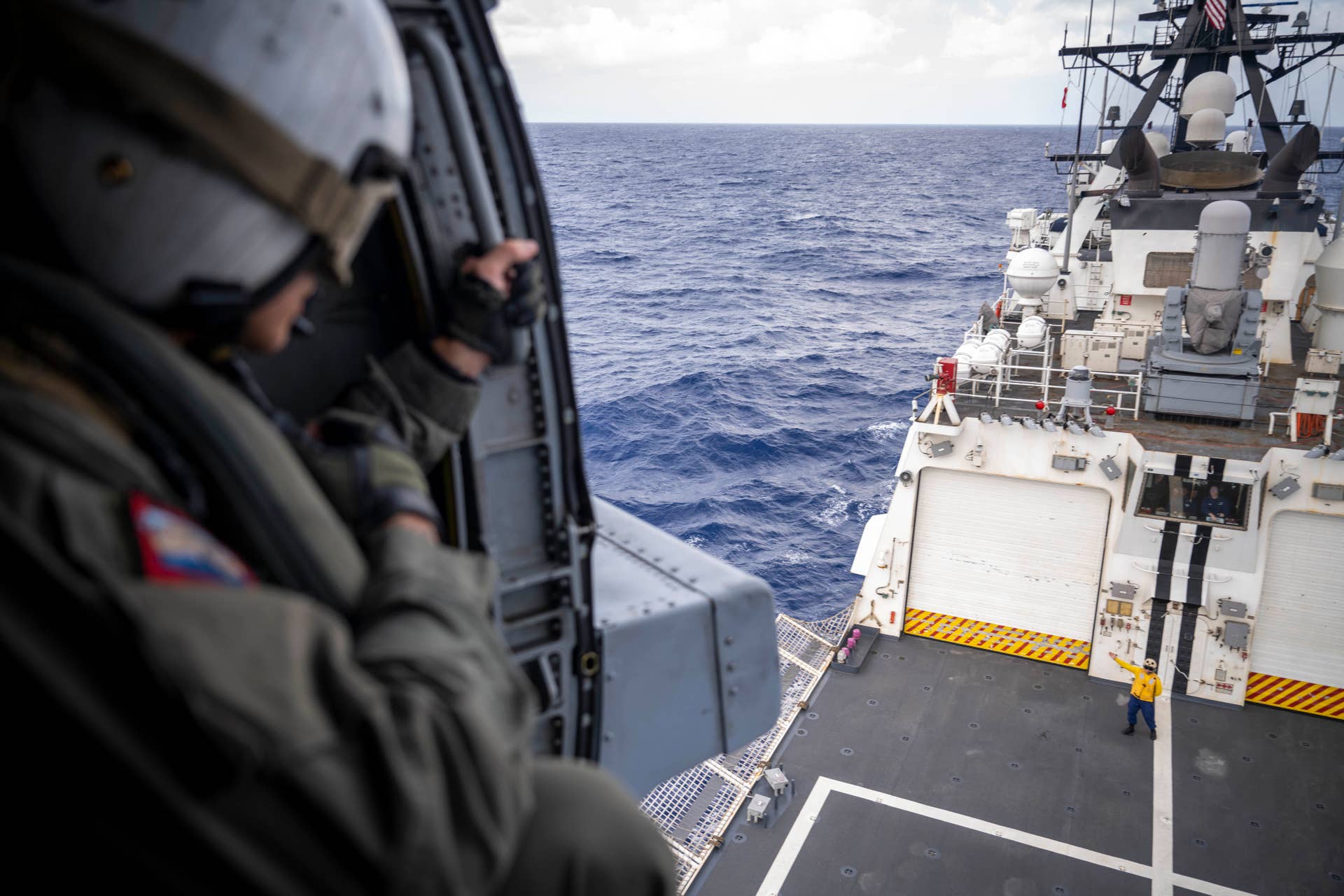
“Upgun Cutters to Meet Today’s Naval Threats” –USNI

PACIFIC OCEAN (July 30, 2022) U.S. Navy Petty Officer 1st Class Humberto Alba, a naval aircrewman tactical-helicopter, attached to Helicopter Maritime Strike Squadron (HSM) 37, deployed on U.S. Coast Guard Legend-class cutter USCGC Midgett (WMSL 757), looks down at a USCGC crewmember after taking off during flight operations during Rim of the Pacific (RIMPAC) 2022. (U.S. Coast Guard photo by Petty Officer 3rd Class Taylor Bacon)

This essay from the July 2023 issue of Proceedings, is featured on the US Naval Institute Proceedings web site. It won Second Prize in the Midshipmen & Cadets Essay Contest—Sponsored by the U.S. Naval Institute.

This is just one of many such articles that have been published repeatedly over the years. The logic is clear,

If more heavily armed, Coast Guard cutters could better support the Navy and enhance defense readiness.

At small marginal cost, cutters could make a significant contribution to our nation’s naval strength, but it has not happened in the last 30+ years. Why not?

It seems the Leadership of both the Navy and Coast Guard have other priorities, and there is no sponsor in a position of power to push the program.

The Navy is in trouble. The Navy has been shrinking over most of the last 34 years, from down from 592 Sept. 30, 1989, to 299 as of this week. It began with the collapse of the Soviet Union. I’m sure it seemed like good idea at the time, but the “peace dividend” meant there was not much reason to build new ships. Teams that had developed a long string of successful ship designs ceased to exist. Shipyards closed. As a result, they have had difficulty fielding new classes of ships. Their new generation shipbuilding programs have been plagued with problems, while the Chinese navy has been building ships at a furious pace.

The Coast Guard has had its own troubled recapitalization program, beginning with “Deepwater” and while the NSC and FRC programs seem to have been successful, if long delayed, the Offshore Patrol Cutter and Icebreaker programs are still having significant difficulties. But perhaps more importantly, Coast Guard leadership sees the conventional model of a combat ready Coast Guard as counterproductive to other Coast Guard priorities.

Personally, I feel fears that a more heavily armed Coast Guard would not be welcome in many parts of the world is overblown, but the fear does exist and the conventional model of permanently installed weapon systems operated and maintained by Coastguardsmen would require a diversion of assets unless the budget is increased and more assets are provided. There is a cost to the Coast Guard in terms of training and maintenance time for both units and individuals, even if the Navy pays for the systems.

I think there is an alternative that would address the fears of the Coast Guard leadership and create a powerful sponsor in the Navy. 

The Navy Reserve could be that sponsor. It is a reservoir of trained talent, but where do they go upon mobilization? There are only so many ships. Their crews, while they may have some shortages, are essentially at war time manning levels. There are only so many helicopter landing spots on Navy ships. Many Navy Reservists have no really appropriate place to serve upon full mobilization.

Coast Guard units can provide a place where they can be used effectively. Navy helicopters and their crews can fly from Coast Guard cutters. Modularized versions of towed array sonar systems could be operated and maintained by Navy reservists on large cutters.

Initially at least, these reinforced cutters would be best used in the board reaches of the Pacific, beyond the effective range of enemy land based and air-launched anti-ship missiles, where the primary threat would be submarines, protecting the logistics ships that are essential for prosecuting a war in the Western Pacific.

In 2012, Admiral Jonathan W. Greenert, U.S. Navy, advocated,

“We need to move from ‘luxury-car’ platforms—with their built-in capabilities—toward dependable ‘trucks’ that can handle a changing payload selection.”

If the Navy can provide payloads, the Coast Guard can provide some trucks.

“First US deep water port for the Arctic to host military, cruise ships” –Navy Times

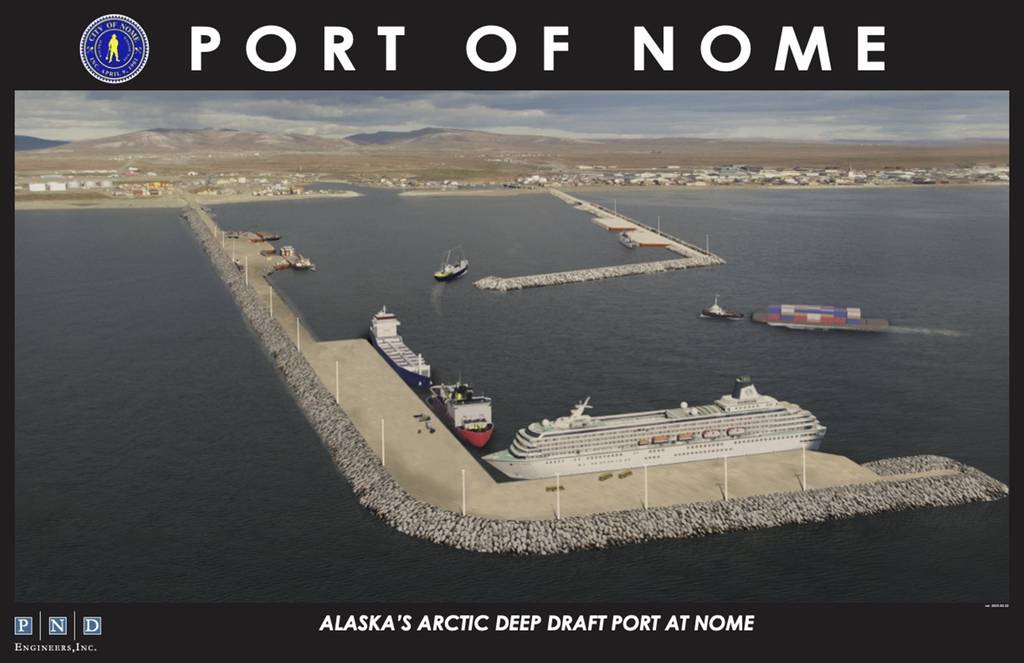
This rendering provided by the City of Nome shows how the Port of Nome, Alaska, will appear following an expansion project that will cost more than $600 million. Shipping lanes that were once clogged with ice for much of the year along Alaska’s western and northern coasts have relented thanks to global warming, and the nation’s first deep water Arctic port should be operational in Nome by the end of the decade. (PND Engineers Inc./City of Nome via AP)

Navy Times reports,

Workers will dredge a new basin 40 feet (12.2 meters) deep, allowing large cruises ships, cargo vessels, and every U.S. military ship except aircraft carriers to dock, Port Director Joy Baker said.

Nome in red. Adapted from Wikipedia’s AK borough maps by en:User:Seth Ilys.

We have been talking about a deepwater port in the area for some time,

Alaska and the Bering Strait

Nome isn’t actually in the Arctic, despite the fact that the US government defines the Arctic to include the Bering Sea. The Arctic Circle runs just a little North of Nome, essentially at the Bering Strait. The Bering Strait connects the Pacific with the Arctic Ocean and is about 44 nautical miles (82 kilometers) wide at its narrowest point. Whoever controls the Bering Strait can regulate traffic between the Pacific and the Arctic Oceans. Having a nearby deepwater port would certainly help, if it were desirable to regulate that traffic. Nome is within 160 nautical miles of the Russian side of the Strait.

Traffic through the Strait has increased and the possibility of a cruise ship disaster in the Arctic is probably a District 17 nightmare, but I think the probability is low that large numbers of CG units will be based at Nome. As noted earlier, I don’t think we will see either large patrol cutters (unless it is the Alex Haley) or FRCs based there but moving one of the Juniper class seagoing buoy tenders there, with its light icebreaking capability might make sense. A medium icebreaker might be a possibility, but that is a very long shot.

As I have noted before, the US Navy’s Pacific Fleet surface ships have not really shown much interest in operating in the Arctic. Their “Arctic” exercises have been in the Gulf of Alaska or little, if at all, North of the Aleutians.

We might see Air Force and Marines in the area in time of War. Airpower and/or shore based anti-ship missiles could control surface traffic through the Strait. Those forces would have to be supplied, which would mean logistics shipping to what we now know will be the deepwater port at Nome. The shipping would presumably require naval protection, air and/or surface.


Canada’s Multi-Purpose Vessels

Canadian CG MPV. Credit Aker Arctic.

Canada has a project to replace a large part of the Canadian Coast Guard fleet with up to 16 Multi-purpose Ships at an estimated cost of $14.2 billion (Canadian), with the first ship to be delivered in 2029.

There has not been a lot of reporting about this class, but frequent contributor Walter pointed me to two sources, Seaspan Shipyards and designer Aker Arctic. It appears they have very concrete ideas about what the class will look like.

Canadian CG MPV. Credit Aker Arctic.

MISSIONS:

According to Aker Arctic,

The MPVs will also perform cargo missions, bringing supplies to northern communities, carry out search & rescue and patrol missions, in addition to icebreaking. Most of their time will be spent on the St Lawrence River, the Great Lakes, and along the Canadian East Coast. Additionally, they will have a summer Arctic mission leaving from Victoria in British Columbia and travelling north around Alaska to the Canadian Arctic.

Due to the wide variety of tasks, the long-distance mission to the western Arctic, and the fact that some of the waterways have a limited depth, the vessel needed to be compact with a shallow draught, narrow beam, high endurance, and with a large cargo capacity.

CHARACTERISTICS:

  • Displacement: about 8,500 tons
  • Length, overall: 99.9 meters (328′)
  • Beam: 20.3 meters (66.7′)
  • Draft: 6.2 meters (20’4″)
  • Propulsion: diesel-electric; two azimuthing propulsion units

As is the case with all Canadian Coast Guard cutters, they have no fixed armament. It does look like it could host a medium sized helicopter and containerized systems, including perhaps below the hangar deck.

RANGE:

To me the most surprising characteristic of the ship is its range, 12,000 nautical miles. This was apparently driven by a summer Arctic mission from Victoria in British Columbia, north around Alaska to the Canadian Arctic.

ICE CLASS: 

These ships will be Canadian Ice Class 4, meaning they will have the capability to maintain a speed of 3 knots through ice 4 feet thick. The Canadian Coast Guard will consider these heavy icebreakers. We don’t have any figures on horsepower, but they probably will have less than 20,000 HP which, in the USCG system, would classify them as light icebreakers.

Compared to the US Coast Guard’s “heavy” Great Lakes icebreaker, Mackinaw (3,500 tons and 73m), these will be more powerful and more than twice as large. These might be a good design for the planned second USCG Great Lakes icebreaker.

IMPLICATIONS FOR THE USCG:

Aside from possible use of the design for Great Lakes icebreaker, these might be pretty close to what the USCG needs for their planned medium icebreakers. Certainly, consultation with Canadian counterparts will sharpen the focus of the US design effort. We might also have reasons to limit beam and draft.

“NATO, partners promote rules-based Arctic, free and open sea lines of communication” –The Indo-Pacific Defense Forum

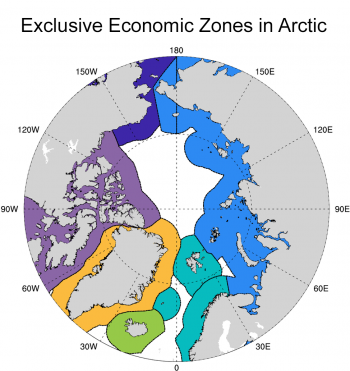
This map shows the exclusive economic zones (EEZs) within the Arctic: Canada (purple), Greenland (orange), Iceland (green), Norway (turquoise), Russia (light blue), and USA (dark blue).
Credit: DeRepentigny et al., 2020

The Indo-Pacific Defense Forum has a post which somewhat surprisingly talks about NATO concerns about the Arctic. I presume this is as a result of the recently concluded Shangri-La Dialog at which both the UK and Germany discussed future naval deployments to the Pacific. Canada pledged to increase its naval presence in the Pacific. Japan and S. Korea said they would put aside their differences and work more closely together. China also told “others” they should mind their own business and stay out of China’s backyard, defending their harassment of Western miliary units in the South China Sea.

We live in an interconnected world, and it appears the Arctic Ocean will become an important new connection between Europe and Asia. China, Russia, and Europe are particularly concerned about shaping the connection to their advantage and what that will mean in the long run is not yet clear.

An Arctic route could provide the US with an alternative to the Panama Canal for movement between the Atlantic and Pacific, but the US probably will not benefit as much from the opening of the Arctic Ocean as the Asians and Europeans. On the other hand, any traffic using the Arctic to pass between the Atlantic and Pacific will have to pass within about 32 nautical miles of the US at the Bering Strait and within less than 300 nautical miles of a US Aleutian Island. This puts the US in a good position to regulate any traffic using the Arctic for passage between the Atlantic and Pacific should we choose to do so.

The Indo-Pacific Forum post does not say much we have not heard before, but it did mention that the Chinese have, “…plans to build the world’s biggest icebreaker vessel.” Given the size of existing Russian nuclear powered icebreakers, that is going to be a very large ship.

There is a good possibility that Russian and Chinese aims in the Arctic may be in conflict. The Chinese are likely to want to transit the Arctic free of charge. The Russians will want them to pay for the privilege. The Chinese will want access to the resources of the Arctic while the Russians consider most of the Arctic to be Russian EEZ or continental shelf.

We have gotten along with the Russians pretty well in the Arctic, but we may be seeing an end to the Arctic as a zone of peace. Still, I don’t think the conflict will be between the US and Russia.

We should not forget that we may see that very large Chinese icebreaker in Antarctica.

New Units for Alaska, the Haley, and Nome

Northeast Russia and Alaska. Photo: Shutterstock

One of our readers sent me an article from the Alaska Beacon about the need for additional housing for the military that includes some insight into the Coast Guard’s future in Alaska.

The information about the Coast Guard is toward the end of the article. This seems to be confirmation that the two FRCs in Ketchikan will be joined by four more, two in Kodiak and one each in Sitka and Seward, and that their additional supporting infrastructure is being provided.

We already knew the third and fourth OPCs, Ingham (917) and Rush (918), will be going to Kodiak.

What About USCGC Alex Haley?:

The crew of the USCGC Alex Haley (WMEC 39) transfers custody of the detained fishing vessel Run Da to a People’s Republic of China Coast Guard patrol vessel in the Sea of Japan, June 21, 2018. The Alex Haley and PRC Coast Guard crews detained the Run Da suspected of illegal high seas drift net fishing. U.S. Coast Guard photo. Petty Officer 1st Class William Colclough

The Alex Haley is currently homeported in Kodiak. When I saw that two OPCs were to be homeported in Kodiak, my first assumption was that they would replace the Haley as well as USCGC Douglas Munro also based there, but perhaps that assumption was unwarranted.

Alex Haley is nominally a medium endurance cutter, but with a 10,000 nautical mile range and a 3,484 tons full load displacement, she is more of a high endurance cutter with the crew of a 270 foot WMEC.

She is an old ship, having been originally commissioned in 1971, but still younger than any of the 210 and considerably more capable. She is well suited to the Alaskan environment, so I don’t see her being moved outside the 17th District (Alaska). She is simple, meaning she is relatively easy to maintain, but with twin shafts and four engines, she also has redundancy.

She was extensively renovated, and her engines replaced before she was recommissioned into the Coast Guard in 1999, more than eight years after the last 270 was commissioned.

The second OPC to be based in Kodiak probably will not arrive before 2028. The last 210 will probably not be decommissioned until about 2033.

If the intention is to ultimately have three OPCs in Kodiak, as I believe may be the case, there is a good possibility that the Haley could hang on until that ship arrives.

What about Nome?:

USCGC Alex Haley moored in Nome, AK.

There is also mention of the planned port expansion in Nome with a suggestion that the Coast Guard may have units there.

One tight spot may be Nome, where there are plans to expand the city port into a deepwater, Arctic-service port which Moore called a “fantastic opportunity” for Coast Guard operations.

I don’t think we will see either large patrol cutters (unless it is the Alex Haley) or FRCs based there, but moving one of the Juniper class seagoing buoy tenders there, with its light icebreaking capability might make sense. I suppose a medium icebreaker might be a possibility, but that is a very long shot.

There will probably be a seasonal air detachment stationed in Nome.

Thanks to Paul for bringing this to my attention.

China Coast Guard in the Russian Arctic?

Chinese Coast Guard officials observed the April 25 anti-terror exercise conducted by FSB Coast Guard in the Kola Bay north of Murmansk. Photo: Murmanski Vestnik

The Barents Observer has an interesting article, “Russia’s Coast Guard cooperation with China is a big step, Arctic security expert says,” that seems to portend a China Coast Guard presence in the Arctic, perhaps shepherding their fishing vessels.

“The Russia-China memorandum signed in Murmansk opens for joint efforts to combat terrorism, illegal migration, fighting smuggling of drugs and weapons, as well as stopping illegal fishing. The deal was signed by top leaders with FSB Border Guards and the Chinese Coast Guard.”

It may be noteworthy that this meeting was not in Asia, in one of Russia’s Pacific ports. It was in Europe, in Murmansk, on the Kola Peninsula, home of the Russian Arctic Fleet.

This agreement may turn out to be a first step toward joint China and Russia exploitation of Russia’s, as yet unrecognized, extensive continental shelf claims in the Arctic extending all the way to the North Pole and beyond into areas also claimed by Canada and Denmark (from Greenland).

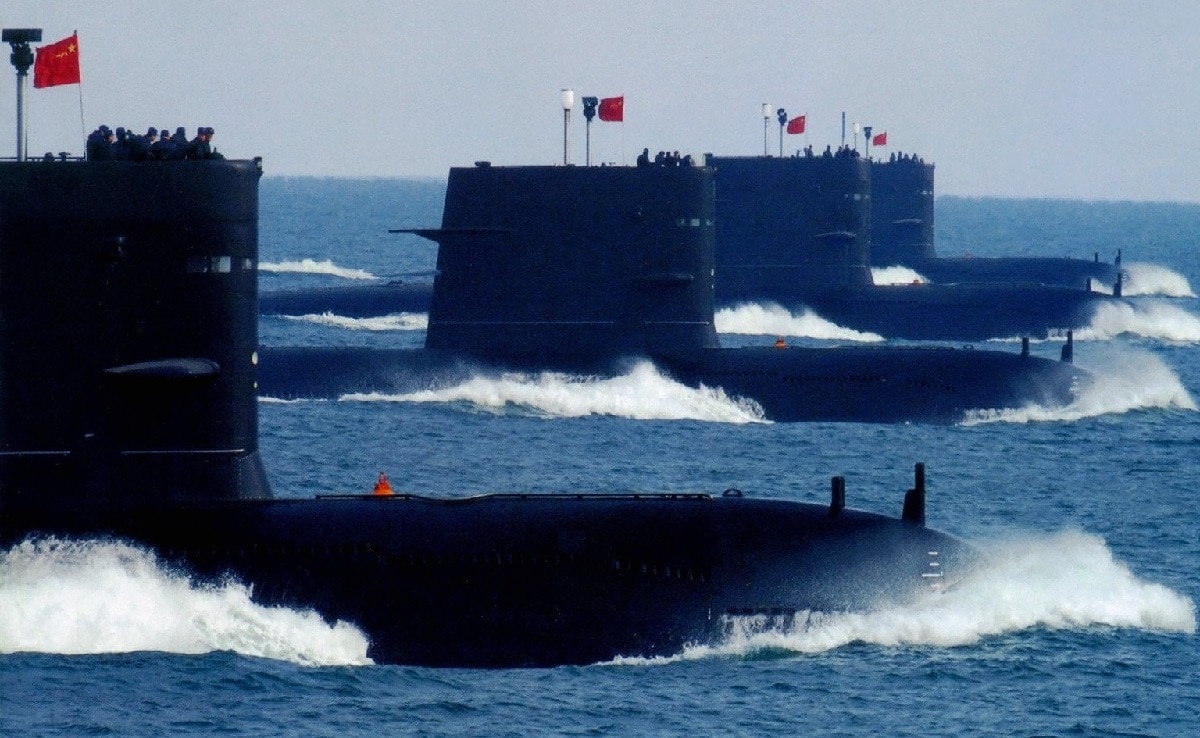
Chinese Navy Submarine and Major Surface Ship Order of Battle

Image: Creative Commons.

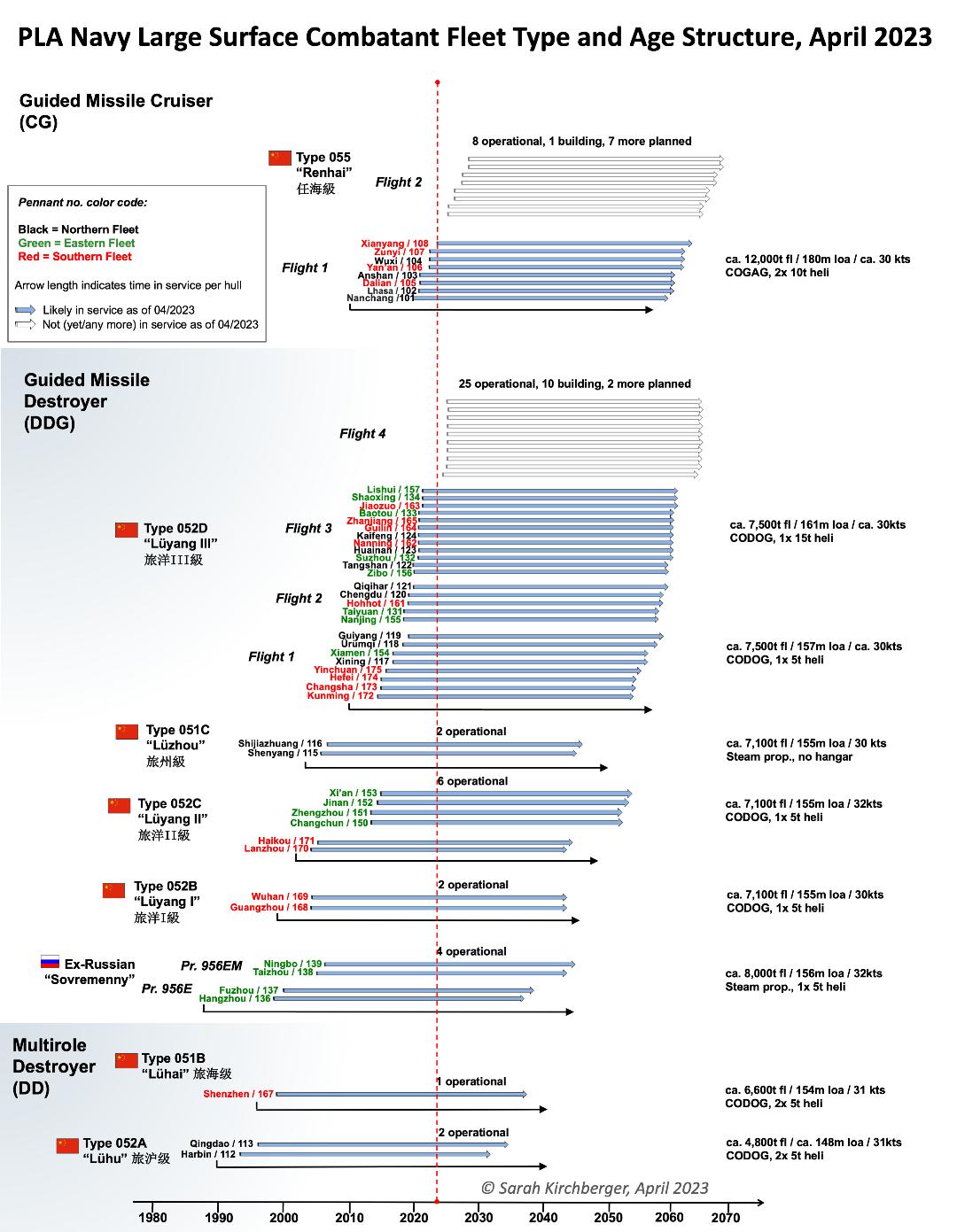
Below are some info-graphics provided by Sarah Kirchberger on the CIMSEC Internal Discussions Facebook page. I wanted to share them with you. (Not included in the listings are Chinese aircraft carriers, amphibs, and numerous frigates, corvettes, and other small combatants.) I have also provided her notes included with the three Facebook posts, but first some observations.

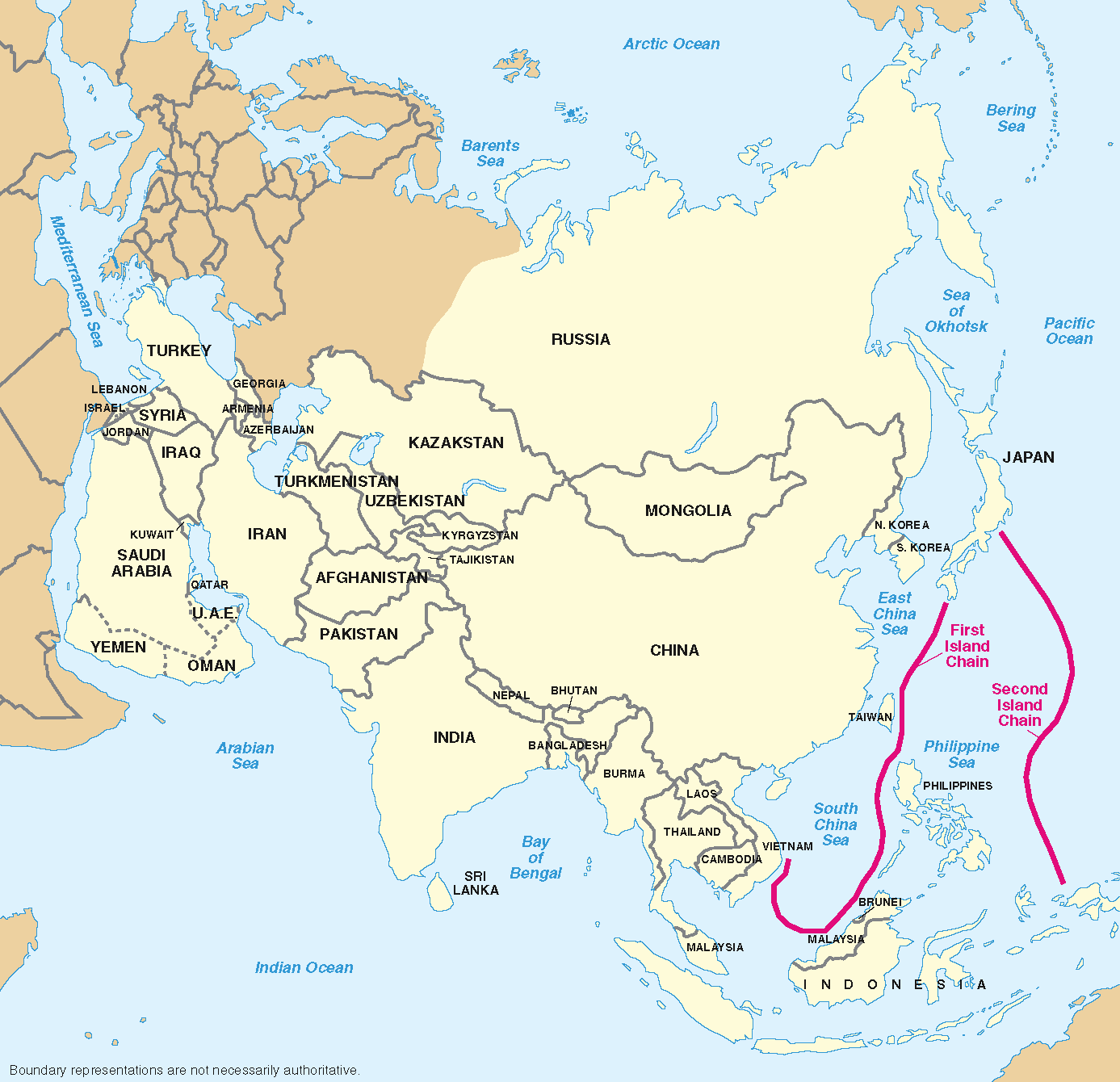
Geographic Boundaries of the First and Second Island Chains. Image:China Report 2006.pdf. DOD.

What does this have to do with the Coast Guard?

My expectation is that, if there is a major prolonged conflict with the Chinese, that the primary theater of operations will be inside and around the “First Island Chain” with Taiwan the critical center (Think Malta in the Mediterranean during WWII). The Chinese surface fleet is not likely to make significant operations outside this area. Chinese conventional submarines will also concentrate in this area but will also operate in the Straits that access the South and East China Seas.

The Chinese will make air and missile attack out to at least the “Second Island Chain,” including Guam.

The Chinese will want to attack US logistics and underway replenishment ships outside the Second Island Chain, both for the direct effect of reducing logistics available and for the secondary effect of drawing off units from the primary theater of action.

In the initial phase, the Chinese merchant and fishing fleets might be used to lay mines or even directly attack unarmed logistics and underway replenishment ships using containerized weapon systems supported by satellite targeting. (They might also launch cruise missiles into US ports as an opening salvo.) The Coast Guard Maritime Domain Awareness systems and cargo tracking programs will have a role in neutralizing the Chinese Merchant and distant fishing fleets.

The Chinese will operate at least some of their nuclear submarines (SSNs) (which would have difficulty dealing with USN SSNs) outside the Second Island Chain, perhaps as far East as the US West Coast. While MSC has been told not to expect escorts, the benefits of cutters with embarked Navy (probably Navy Reserve) ASW helicopters (and ultimately towed array systems) within effective helicopter range of a dispersed group of logistics ships to provide at least minimal ASW protection and rescue for the crews of the ships that are inevitably sunk, will quickly become evident. The cutters would hopefully be aided by Navy P-8 maritime patrol aircraft and any combatants making the transit trans-Pacific.

(None of the above reflects anything official, it is just the logic of the geography and the capability of the participants.)

Incidentally the format use below would be a good way for the Coast Guard to present its plans for major cutters.

Now to the Kirchberger posts:


After a long pause in making these info graphics, here is an overview of the *approximate* type and age structure of Chinese nuclear-powered submarines. I am decidedly less confident than with the surface fleet graphs about the accuracy of the information, which is why it took so long. Basically, I have decided to just visualize the data given in Manfred Meyer’s book ‘Modern Chinese Maritime Forces’ (March 2023 update) with some minor adjustments based on cross-checking with own research in Chinese newspaper reports. Despite the caveat, the graph might be useful to some, therefore posting it. I will periodically update as more information becomes available.

Blue arrow means boat is (most likely) in service as of April 2023, white means not yet or not any more in service, but may already be launched. Striped means: status unknown.

Feel free to use and republish (unaltered) with attribution. In case you find mistakes, I’d appreciate a note so I can make corrections during the next round!

Here is now also a visual overview of the PLA Navy’s conventionally powered submarine fleet. Blue arrow means boat is most likely in service as of April 2023, white arrow means not yet, or not any more, but may already be launched. The teal color indicates boats equipped with a (Stirling) AIP. Does not include test submarines (such as the Type 032), the unknown type sailless submarine, nor midget submarines.

Feel free to use and republish (unaltered) with attribution. In case you find mistakes, I’d appreciate a note so I can make corrections during the next round!

The speed of naval shipbuilding in China is such that it is easy to overlook that China has earlier this year commissioned the eighth and last of Flight 1 of its new cruiser, the Type 055 (never mind that the PLAN refers to it as a destroyer – at >12,000t full load, 180m length, and given its armament, it looks like a cruiser more than a destroyer).

Since the lead ship entered service in early 2020, China has commissioned altogether 8 of these Type 055 cruisers within a timespan of just 3 years! Further, 8 more are apparently already in the works, for a class of at least 16.
Here is an updated graphic overview of the type and age structure of China’s large surface combatants. Arrows indicate maximum time in service from commissioning until decommissioning – program start and build start is therefore not shown. 40 years per hull may be a bit long (30 years is common practice in most advanced navies), but in practice some navies have operated their surface combatants that long, so I choose to give the maximum conceivable length.
It is interesting to see how the arms embargo since 1989 initially disrupted naval shipbuilding, leading to multiple classes of just one or two hulls being built next to a Russian import, and how mass production finally took off from the Type 052D onward.
The Chinese official newspaper Global Times commented on the completion of the Type 055 class here: https://www.globaltimes.cn/page/202304/1289571.shtml
Feel free to use and reproduce this graph for non-commercial purposes (with attribution) and please let me know in case of mistakes so I can make corrections during the next iteration!

“Preserving Alaska’s living marine resources” –D17

USCGC Bertolf class National Security Cutter off Unimak Island, Aleutians, Alaska

Below is a summary of District 17’s Living Marine Resources conservation and management efforts. There is also information about the Magnuson-Stevens Fishery Conservation and Management Act (MSFCMA), 1976, that resulted in the expulsion of foreign fishing vessels from a 200 mile Exclusive Economic Zone even before the United Nations Convention on Law of the Sea and about the North Pacific Regional Fisheries Training Center (NPRFTC) (one of five such centers) that “teaches the enforcement of Conservation and Management Measures on behalf of four international fisheries commissions and 62 signatory nations across North and South America, Asia, Oceania, Europe, and Africa, covering over 80 percent of the Pacific Ocean​.”


April 20, 2023

Preserving Alaska’s living marine resources

ANCHORAGE, Alaska — Alaska supports some of the most abundant and diverse marine ecosystems in the world. With more than 46,000 miles of shoreline – more than all of the lower 48 U.S. states combined – the ocean is an integral part of Alaska’s ecosystems, economy, history and culture. According to National Marine Fisheries Service’s (NMFS) Fisheries of the United States 2020 report, U.S. commercial fisheries landed 8.4 billion pounds of seafood valued at 4.7 billion dollars, 199-million saltwater recreational fishing trips were taken, and recreational anglers caught one billion fish with 65 percent released alive. According to the 2019 report, commercial and recreational saltwater fishing supported 1.8 million. Alaska produces more than half the fish caught in waters off the U.S. coast, provides jobs and a stable food supply for the nation, and supports a traditional way of life for Alaska Natives and local fishing communities. Protection of the state’s 5.7-billion-dollar domestic fishery has never been more crucial.  

The living marine resources (LMR) mission is one of two missions focused on protecting fisheries in and outside U.S. waters. The Coast Guard is responsible for enforcing LMR regulations on domestic, commercial, recreational, and charter fishing vessels. Tasked with enforcing applicable fisheries laws in partnership with the NMFS, the Coast Guard’s goal is to provide the at-sea law enforcement presence necessary to reach national goals for LMR conservation and management. Vessel boardings are a critical component to accomplishing this mission providing an opportunity for teams to inspect a vessel’s catch, gear, and other items to ensure regulatory compliance as well as safety.

“The 17th Coast Guard District’s LMR mission is to promote a level playing field in Alaska’s extremely valuable commercial fisheries, protect resources, and ensure safety of life at sea,” said Lt. Cmdr. Jedediah Raskie, D17’s domestic fisheries enforcement chief. “The LMR enforcement mission is a complex operation requiring in-depth planning, multilateral partnerships and inter-agency collaboration. A continued at-sea presence is crucial, and this is only accomplished through dedication and teamwork with our enforcement partners.”

Those partners include:

Coast Guard – Coast Guard Cutters from Alaska, Washington, Hawaii, and California, Sector Anchorage, Sector Juneau, North Pacific Regional Fisheries Training Center, Maritime Safety and Security Teams (MSSTs)

State – Alaska State Troopers, Alaska Department of Fish and Game (ADF&G), local law enforcement

Other Federal – NOAA’s Office of Law Enforcement (OLE), Department of State, U. S. Drug Enforcement Administration, Customs and Border Protection (CBP)

Collectively in 2022, D17 patrolled 10,723 NMs, conducted 654 federal LMR enforcement boardings (11 on foreign-flagged vessels), detecting 30 violations on 26 vessels, and seizing catch on three fishing vessels. The top five fisheries violations include logbook discrepancies, no Individual Fishing Quota (IFQ) permit onboard, expired or no federal fisheries permit (FFP) onboard, sea-bird avoidance gear not onboard or improperly constructed, and improperly marked buoys on fishing gear.

“Right now, our teams are heavily involved with enforcement surrounding the opening of Pacific halibut and sablefish season,” said Lt. Cmdr. Jedediah Raskie. “The Pacific halibut and sablefish Individual Fishing Quota (IFQ) program is the largest catch share program in the U.S. and comprises 90 percent of D17’s total fisheries boardings.”

With the IFQ program, each fisherman has a catch quota that can be used during the open season from March to November. The North Pacific Fishery Management Council developed this program to address issues associated with the race-for-fish that had resulted from the open-access and effort control management of the halibut and sablefish fisheries. Top IFQ violations include: not having an official logbook onboard, no IFQ permit and/or FFP onboard, illegally retaining and/or mutilating halibut, and failure to retain and/or log retaining Pacific cod and rockfish.

Background

The Magnuson-Stevens Fishery Conservation and Management Act (MSFCMA) is the primary law governing mariner fisheries management in U.S. federal waters. The act’s keys objectives are to prevent overfishing, rebuild overfished stocks, increase long-term social and economic benefits, and ensure a safe and sustainable supply of seafood. Prior to the MSFCMA, waters beyond 12 NM were international waters and fished by fleets from other countries.

This 1976 law created eight regional fishery management councils responsible for the fisheries that require conservation and management in their region. The councils are charged with conserving and managing fishery resources from 3 to 200 miles off the coast while the State of Alaska manages fisheries that occur within 3 NM from shore. To learn more, visit  About the MSA — U.S. Regional Fishery Management Councils (fisherycouncils.org)).

The North Pacific Fishery Management Council (NPFMC) is one of the regional councils established to oversee fisheries in the 200-mile Exclusive Economic Zone (EEZ). With a jurisdiction of approximately 1,025,000 NM, the council manages more than 140 species within 47 stocks and stock complexes, primarily groundfish in the Gulf of Alaska, Bering Sea, and Aleutian Islands, targeting cod, pollock, flatfish, mackerel, sablefish, and rockfish species harvested by trawl, longline, jig, and pot gear. The council also makes allocation decisions for halibut in concert with the International Pacific Halibut Commission that biologically manages the resource for U.S.-Canada waters. Other large Alaska fisheries for salmon, crab, and scallops are managed jointly with the State of Alaska. More at North Pacific Fishery Management Council – Managing Our Nation’s Fisheries Off The Coast Of Alaska (menlosecurity.com).

To better enforce the fishery council’s management plans, the Coast Guard determined that region specific training was necessary to ensure boarding officers received adequate instruction in enforcing the increasingly complex laws that govern our nation’s living marine resources. The Coast Guard’s five fisheries training centers are dedicated to providing training in LMR and protected marine species law enforcement to eliminate natural resource degradation associated with recreational boating, recreational fishing, commercial fishing, and illegal incursions by foreign fishing vessels into our EEZ.

The North Pacific Regional Fisheries Training Center (NPRFTC) in Kodiak trains students operating across the vast and harsh environments of the Seventeenth Coast Guard District, to include the Arctic Ocean, Bering Sea, Aleutian Islands archipelago, Gulf of Alaska, and the Inside Passage, an area that encompasses 3,853,500 SQ NM of sea and more than 47,300 miles of coastline. NPRFTC also teaches the enforcement of Conservation and Management Measures on behalf of four international fisheries commissions and 62 signatory nations across North and South America, Asia, Oceania, Europe, and Africa, covering over 80 percent of the Pacific Ocean​. NPRFTC personnel provide instruction to surface and aviation law enforcement crews, command personnel and supporting staff, and deployable specialized forces units. Upon completion of the training, boarding officers are then charged with carrying out the LMR by performing at-sea boardings to ensure compliance.

The nation’s waterways and their ecosystems are vital to the country’s economy and health. The Coast Guard’s LMR mission is to assist in preventing the decline of marine proteced species populations, promote the recovery of marine protective species and their habitats, partner with other agencies and organizations to enhance stewardship of marine ecosystems and ensure internal compliance with appropriate legislation, regulations, and management practices.

“Media Advisory: Coast Guard cutter to return home following 97-day multi-mission Arctic deployment” –PACAREA

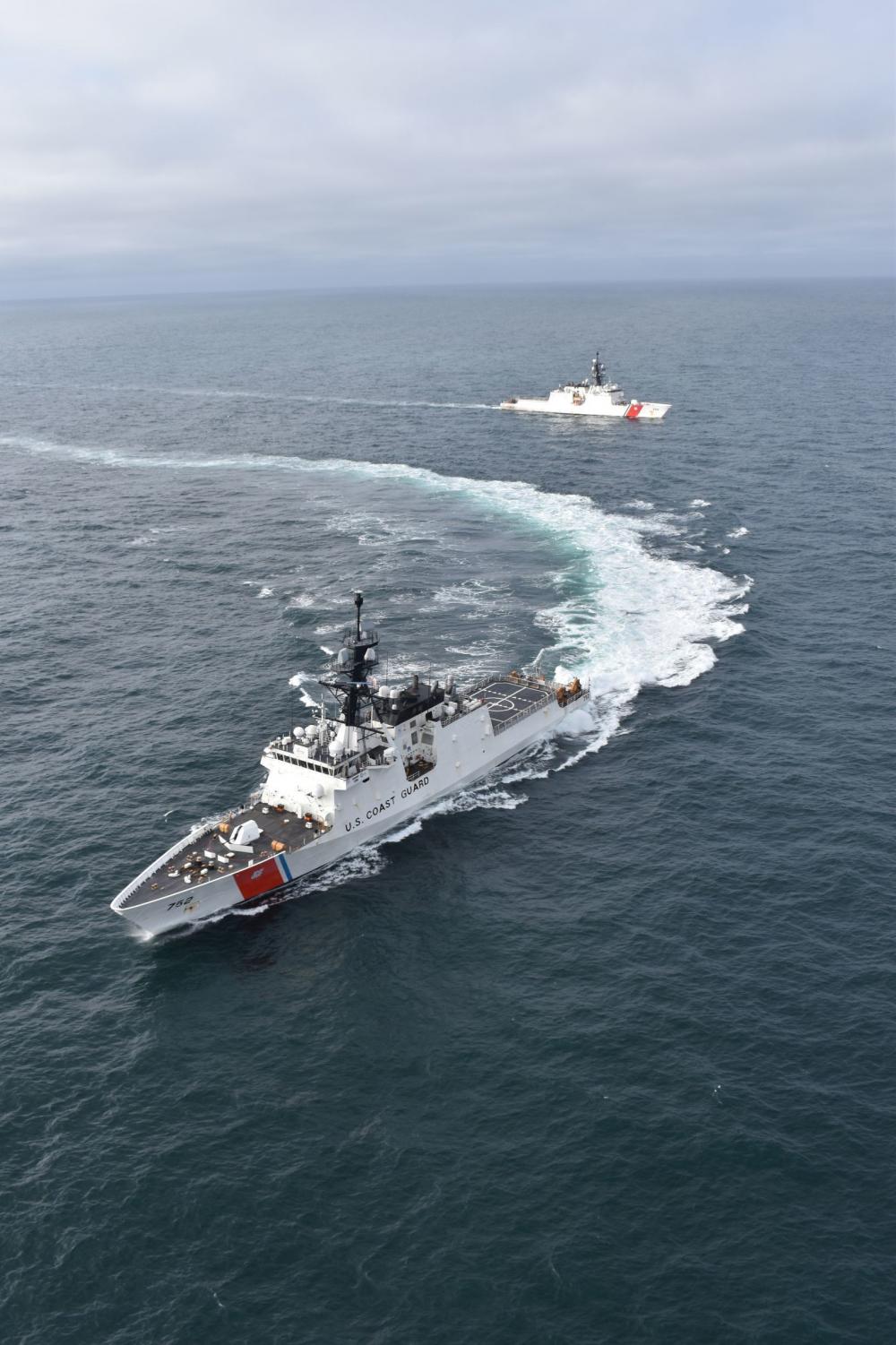
U.S. Coast Guard Cutters Stratton (WMSL 752) and Kimball (WMSL 756) steam in formation while patrolling the U.S.-Russian Maritime Boundary Line (MBL), in the Bering Sea, Sept. 26, 2022. This marked the first time two national security cutters jointly patrolled the MBL above the Arctic Circle. (U.S. Coast Guard courtesy photo).

This isn’t like the Alaska Patrols I went on, which concentrated on the Aleutians/Bering Sea and never went much North of the Arctic Circle. This patrol went across the top of Alaska and apparently, this is getting to be more common.

Media Advisory

Nov. 22, 2022
U.S. Coast Guard Pacific Area

Media Advisory: Coast Guard cutter to return home following 97-day multi-mission Arctic deployment

Coast Guard cutter returns home following 97-day multi-mission Arctic deployment

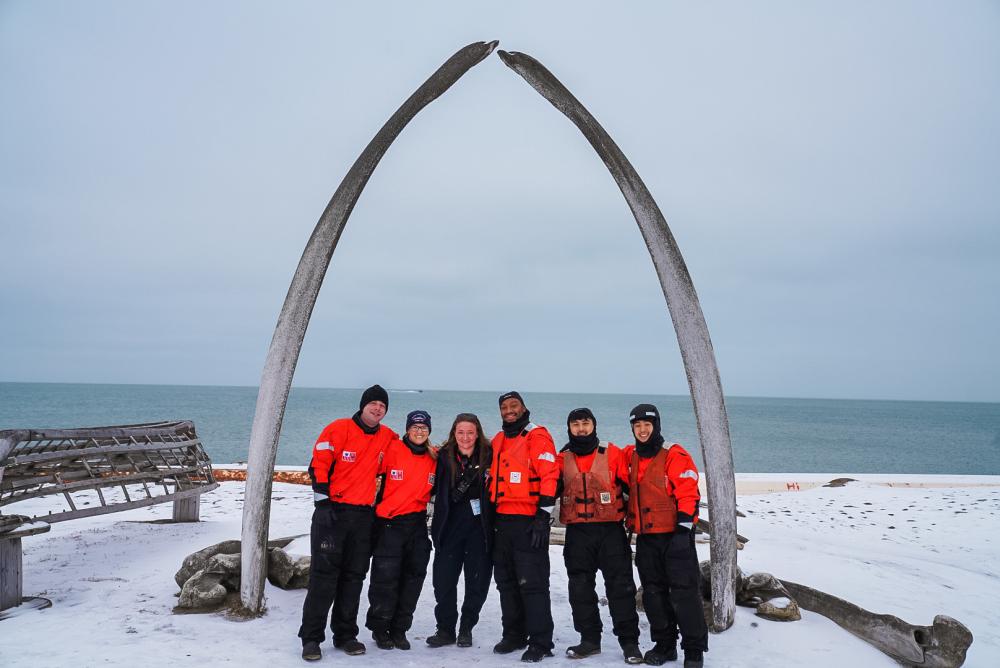
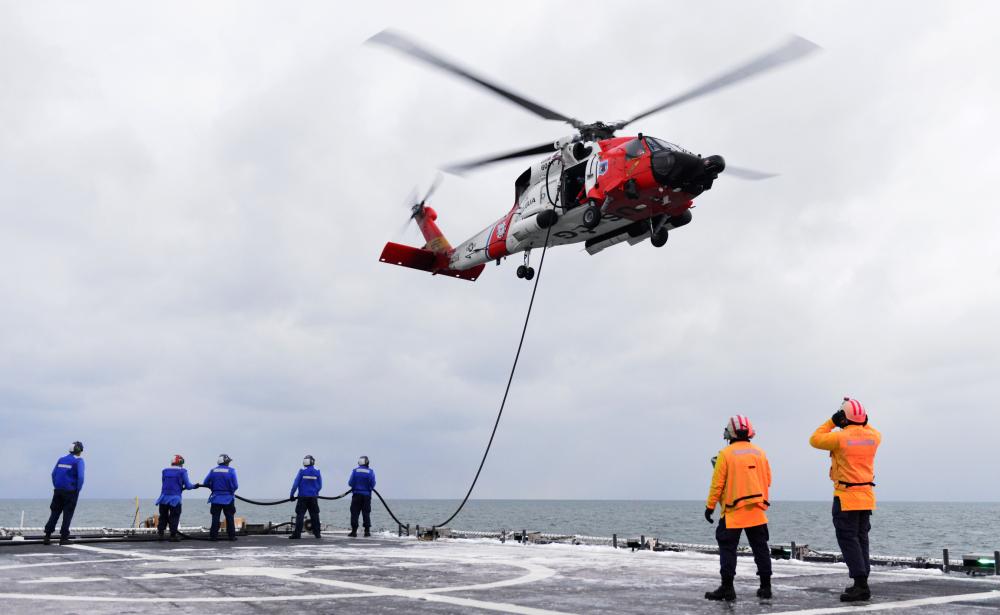
USCGC Stratton conducts operations offshore Little Diomede, Alaska Coast Guard cutter returns home following 97-day multi-mission Arctic deployment USCGC Stratton conducts flight operations while underway in Arctic Ocean

Editors’ Note: Click on images to download high resolution version.

Who: U.S. Coast Guard Cutter Stratton (WMSL 752) and crew

What: Return home from multi-mission Arctic deployment

When: Wednesday, Nov. 23, 2022 at 9 a.m.

Where: Coast Guard Base Alameda, 1 Eagle Rd., Alameda, CA, 94501

ALAMEDA, Calif. — The Coast Guard Cutter Stratton (WMSL 752) and crew are scheduled to return to Alameda, Wednesday, following a 97-day multi-mission deployment to the Arctic Ocean and Bering Sea.

The cutter and crew departed Alameda in August to project U.S. sovereignty throughout U.S. Arctic waters, provide search-and-rescue capabilities in the region, meet with Alaskan communities and conduct an Arctic search-and-rescue exercise with international partners.

Stratton operated along the length of the U.S.-Russian maritime boundary line (MBL) from the Diomede Islands to well above the Arctic Circle, while they patrolled within the U.S. Arctic zone. Stratton also patrolled the U.S.- Canadian MBL in the Beaufort Sea, providing Coast Guard presence in the distant regions of the Arctic.

“I’m extremely proud of this crew and all they have accomplished,” said Capt. Stephen Adler, Stratton’s commanding officer. “The U.S. Coast Guard provides the Nation’s most active and visible maritime presence in the high latitudes, and coordinates with our international partners through joint exercises and professional exchanges to maintain a safe and prosperous Arctic region. The Coast Guard remains ‘Always Ready’ to preserve and protect our northern shores and waters. As more ships and people move into the Arctic, the Coast Guard will be there to ensure safety of navigation and preserve our national sovereignty, as it always has. The crew has truly lived up to our ship’s motto of, ‘We Can’t Afford Not To’ throughout our patrol.”

Stratton is one of four 418-foot national security cutters (NSC) homeported in Alameda. National security cutters are capable of extended, worldwide deployment in support of homeland security and defense missions. These cutters and crews routinely conduct operations from South America to the Arctic, where the combination of range, speed, and ability to operate in extreme weather provides the mission flexibility necessary to conduct vital strategic missions.

Media are encouraged to contact Coast Guard Pacific Area Public Affairs at pacificareapublicaffairs@uscg.mil to arrange an escort on Base Alameda to attend the ship’s arrival. Adler and crew will be available for interviews following the ship’s arrival.