“Argentina’s Navy gets even closer to US Navy” –ArmyRecognition

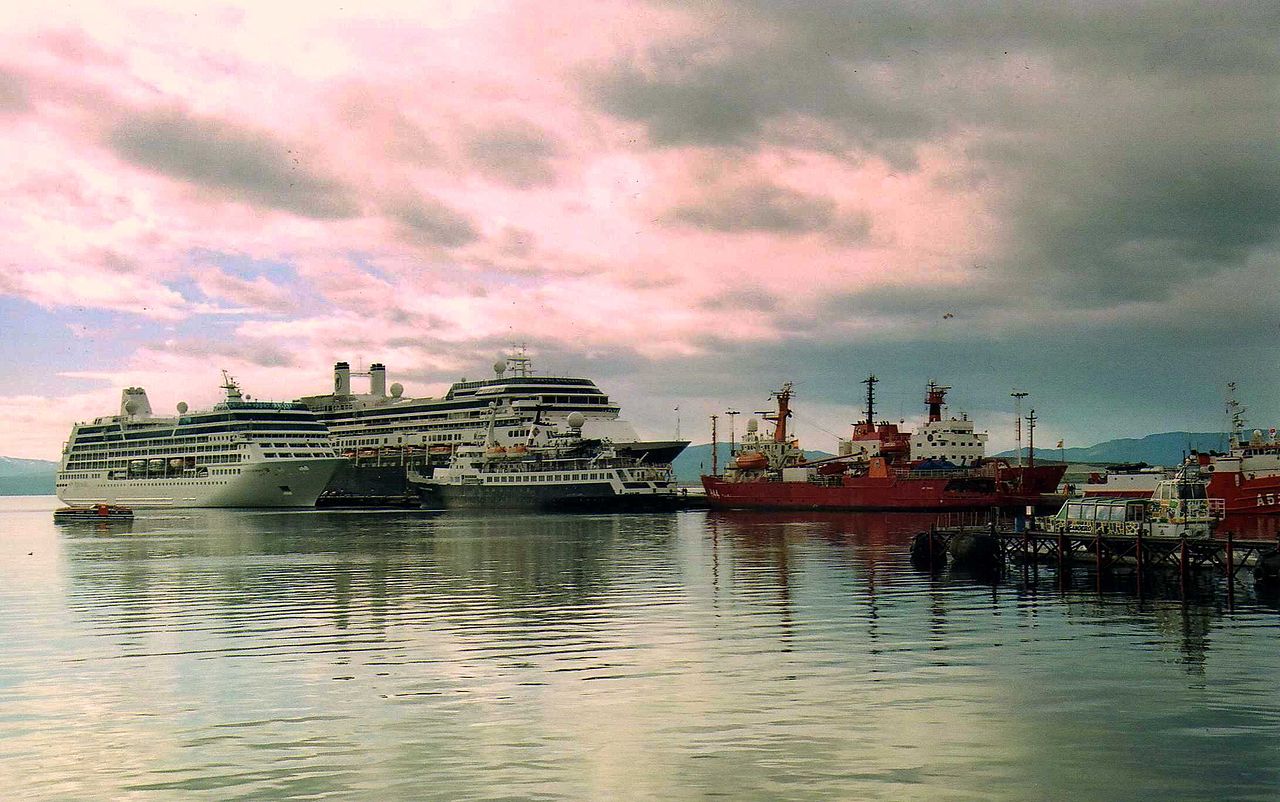
Cruise ships at dock, Ushuaia, Tierra del Fuego, Argentina. Photo Credit: Rodolfo Pace

Army Recognition reports interaction between the US and Argentine Navies as part of Exercise Southern Seas 2024, being conducted as USS George Washington (CVN-73) transits from the East Coast to her new Homeport in Japan.

There is a particularly interesting note here,

“A central aspect of this evolving partnership is the establishment of an integrated naval base in Ushuaia, the southernmost city in Argentina. This base is strategically important as it faces the Strait of Magellan and is close to Antarctica. The collaboration on this base is intended to enhance logistical capabilities for both countries and serve as a critical point for repair and resupply operations for commercial and military vessels. This move is part of a broader strategy to assert Argentina’s sovereign rights in Antarctica.”

This may suggest that the US is recognizing that the Southern Ocean and Antarctic may be an area of future conflict.

Aside from the obvious relevance of a new logistics base that US Coast Guard icebreakers may use for support of the US contingent in Antarctica, another Coast Guard asset, USCGC James, has been working with Argentina as well,

“Argentina has also agreed to joint naval training exercises with the U.S. Coast Guard to protect its fishing resources. This proposal includes allowing the U.S. Coast Guard Cutter James to patrol Argentine waters, a move that has sparked debate within the Argentine Congress regarding national sovereignty and the presence of foreign military forces​​.”

“US Coast Guard Cutter Seneca returns home after a two-month patrol in the Windward Passage and Florida Straits” –News Release

U.S. Coast Guard Cutter Seneca (WMEC 906) patrols off the coast of Haiti, April 13, 2024, during a deployment to the Windward Passage. The crew of Seneca completed a 58-day patrol in the Windward Passage and Florida Straits to deter illegal migration while supporting Homeland Security Task Force – Southeast (HSTF-SE) and Operation Vigilant Sentry (OVS). (U.S. Coast Guard photo)

Below is a District 7 news release. The unstated news here is that in spite of being almost two months in the area where migrants are expected to attempt to sail to the US, Seneca apparently made no intercepts. That is good news. The patrols, along with changes in immigration policy, are in fact discouraging attempts to migrate illegally by sea, at least in this area.

The ship also got to participate in Miami’s Fleet Week and was visited by the Secretary of the Navy. All good.


May 31, 2024

US Coast Guard Cutter Seneca returns home after a two-month patrol in the Windward Passage and Florida Straits

PORTSMOUTH, Va. — The crew of U.S. Coast Guard Cutter Seneca (WMEC 906) returned to their home port in Portsmouth, May 21, 2024, following a 58-day migrant interdiction patrol in the Windward Passage and Florida Straits.

Seneca’s crew deployed in support of Homeland Security Task Force – Southeast (HSTF-SE) and Operation Vigilant Sentry (OVS) while at sea in the Coast Guard Seventh District’s area of operations.

Patrolling off the coast of Haiti and southern Florida Straits, Seneca’s presence helped deter migrants from taking to the sea in unsafe vessels to ensure the safety of life at sea and protect the maritime borders of the United States.

While at sea, Seneca worked with a Coast Guard Air Station Miami HC-144 Ocean Sentry airplane crew and responded to an international search and rescue case involving an overboard passenger who fell from a cruise ship.

During the deployment, Seneca’s crew had the opportunity to attend the inaugural Fleet Week 2024 in Miami, Florida in early May. Crew members conducted nearly 1,000 public tours over a six-day period, showcasing the U.S. Coast Guard, cutter Seneca, and the service’s missions. Seneca hosted numerous VIPs aboard to include Secretary of the Navy Carlos Del Toro, local and state politicians.

“It’s been an honor leading Seneca and her crew, serving alongside the best and brightest women and men in the service,” said Capt. James F. McCormack, commanding officer of Seneca. “Seneca and her crew provided stability in the maritime environment of the South Florida Straits and represented the Coast Guard with distinction amongst the other U.S. maritime services at Fleet Week Miami. Seneca lived up to our motto, “Tradition of Honor, A Legacy of Action.””

While deployed, Seneca’s crew transited over 9,000 nautical miles.

Established in 2003, HSTF-SE is the Department of Homeland Security-led interagency task force charged with directing operational and tactical planning, command and control, and functions as a standing organization to deter, mitigate, and respond to maritime mass migration in the Caribbean Sea and Florida Straits.

OVS is the 2004 DHS plan that provides the structure for deploying joint air and surface assets and personnel to respond to irregular maritime migration in the Caribbean corridor of the United States. Its primary objectives are to protect life at sea while deterring and dissuading mass maritime migration alongside our federal, state, and local partners.

Seneca is a 270-foot, Famous-class medium endurance cutter. The cutter’s primary missions are counter drug operations, migrant interdiction, enforcement of laws and treaties, and search and rescue in support of U.S. Coast Guard operations throughout the Western Hemisphere.

For information on how to join the U.S. Coast Guard, visit www.GoCoastGuard.com to learn more about active duty and reserve, officer and enlisted opportunities. Information on how to apply to the U.S. Coast Guard Academy can be found here.

“Combating Transnational Drug Flows,” A Conversation with the Deputy Director of Joint Interagency Task Force –South

The US Naval Institute brings us this video from the Center for Strategic and International Studies.

The accompanying article provides a brief overview, but I really recommend watching the entire interview. It is excellent. It even touches on Illegal, Unregulated, Unreported fishing.

There is an acknowledgement that resources made available for interdiction have declined even while seizures are up (as is the traffic in illegal drugs), but there is also good news in the successes of partner nations.

Again, there is no substitute for watching the interview.

“US Coast Guard Cutter Eagle to Depart on Annual Summer Cruise” –Seapower

The Navy League’s online magazine, Seapower, reports the start of USCGC Eagle’s summer training program and their planned port calls.

“Eagle’s 2024 full summer schedule includes port visits to:   

  • May 11: Departs from New London 
  • May 25 – May 28: Santo Domingo, Dominican Republic 
  • June 4 – June 7: Cartagena, Colombia 
  • June 14 – June 17: San Juan, Puerto Rico 
  • June 24 – June 27: Bridgetown, Barbados 
  • July 7 – July 10: Hamiliton, Bermuda 
  • July 18 – July 21: Halifax, Nova Scotia 
  • July 26 – July 29: Portsmouth, New Hampshire 
  • Aug. 2 – August 5: Rockland, Maine 
  • Aug. 9 – August 12: Boston, Massachusetts 
  • Aug. 16: Returns to New London 

Eagle is scheduled to return to New London on Aug. 16. 

“Korea Coast Guard to transfer 3,000-ton ship to Ecuadorian Navy” –The Korea Time

Korea Coast Guard’s decommissioned KCG3001 vessel that will be transferred to the Ecuadorian Navy / Courtesy of Korea Coast Guard © Provided by The Korea Times

The Korea Times, via MSN reports,

“The Korea Coast Guard’s (KCG) first 3,000-ton vessel, which was deployed in 1994, will be transferred to Ecuador after completing 30-years of service in Korea.

The KCG signed a memorandum of understanding with the visiting Ecuadorian Defense Minister Giancarlo Loffredo on Thursday for the transfer of the decommissioned KCG3001 vessel at its headquarters in Incheon.

The Korean Navy has transferred a total of eight Pohang class corvettes and 13 Chamsuri class patrol boats to nine different navies/coast guards. This is the first incident I have seen where a Korean CG vessel has been transferred.

The South Korean Coast Guard reportedly has about the same number of large CG cutters as the USCG, despite having an EEZ only about 2.7% that of the US. The donated vessel is 30 years old. Currently the oldest S. Korean CG cutter is reportedly 36 years old. None of the others are over 28 years old.

The cutter being donated is identified as 3,000 tons, but that is only a rough category and reflects light displacement not full load.

Ecuador can certainly use the reinforcement. 


“U.S. Coast Guard Cutter Active returns home from Eastern Pacific patrol; one life saved, $50.8M worth of cocaine interdicted” –CG News Release

The USCGC Active (WMEC 618) crew rescue a solo sailor stranded on a disabled vessel in the Eastern Pacific Ocean near the Galapagos Islands, Apr. 13, 2024. Active’s crew diverted over 200 nautical miles at high speed to conduct the search and rescue operation for the sailor whose sailboat was disabled and adrift at sea after a pod of whales damaged the boat. U.S. Coast Guard photo by U.S. Navy Midshipman Caden Dale.

Below is a Coast Guard News Release. With the exception of the SAR case mentioned in the photo above, the cruise seems to have been pretty typical of an Eastern Pacific drug interdiction patrol, but I would point out that Active’s homeport, Port Angeles, is further away from the patrol area than the homeports of most other cutters that might have this assignment. It is counter-intuitive, but East coast ports are generally closer to the patrol area than West coast ports. For Example, Charleston is closer to the patrol area than San Diego, and much closer than Alameda or Port Angeles.

There is a troubling detail in this release.  Active was “the sole U.S. surface asset operating in the region for 28 days in support of Joint Interagency Task Force-South’s counter-narcotics campaign.”


May 3, 2024

U.S. Coast Guard Cutter Active returns home from Eastern Pacific patrol; one life saved, $50.8M worth of cocaine interdicted

PORT ANGELES, Wash. — The U.S. Coast Guard Cutter Active (WMEC 618) and crew returned home to Port Angeles Friday after completing a 54-day multi-mission patrol in support of a Joint Interagency Task Force-South (JIATF-S) counternarcotics patrol in the Eastern Pacific Ocean.

During the patrol, Active’s crew interdicted 3,858 pounds of cocaine worth an estimated $50.8 million in a coordinated effort involving both airborne and surface units, resulting in a safe and successful interdiction.

In addition to the cocaine interdiction, Active’s crew disrupted two other smuggling events while serving as the sole U.S. surface asset operating in the region for 28 days in support of Joint Interagency Task Force-South’s counter-narcotics campaign. Throughout the deployment, the cutter patrolled over 12,000 nautical miles, a distance roughly equivalent to five spans of the continental U.S.

“Any interdiction at sea is challenging, with a variety of factors at every step, and no two are ever the same,” said Cmdr. Adam Disque, Active’s commanding officer. “The cases we encountered on this patrol were particularly difficult, and the crew fought through obstacles at every turn, working extremely hard to accomplish this mission. I could not be more proud of the team as they fully embodied our cutter’s nickname, ‘The Li’l Tough Guy’.”

On April 12, Active received notification of a single-handed sailor in distress more than 300 nautical miles northeast of the Galapagos Islands. The sailor’s boat was disabled, and he was adrift at sea after reporting a pod of whales damaged his sailboat.

Active diverted over 200 nautical miles at high speed to conduct a search and rescue operation. Upon arrival, the crew safely embarked the mariner and brought him back to shore.

“This sailor was very fortunate that we happened to be in the area; he was far from normal shipping lanes and well out of range for any coastal rescue system,” said Petty Officer 3rd Class Gordon Smith, an Active crewmember who participated in the search planning. “It was fortunate that we were able to find him relatively quickly and get him on board before the weather or situation deteriorated.”

Active’s two pursuit boats were supplemented by an MH-65E helicopter and aircrew from the Helicopter Interdiction Tactical Squadron (HITRON) to respond in a multi-mission environment on the high seas. HITRON, based in Jacksonville, Florida, conducts airborne use of force to stop vessels suspected of breaking U.S. and international laws on the high seas.

During this patrol, specialized law enforcement members from the Coast Guard’s Pacific Tactical Law Enforcement Team and the Maritime Security and Response Team – West deployed aboard to support their mission and augment Active’s crew.

Active regularly patrols international waters off southern Mexico and Central America to combat transnational organized crime in the Western Hemisphere, specifically the smuggling of narcotics.

Active, a 57-year-old medium endurance cutter, is homeported in Port Angeles. The multi-mission cutter falls under the operational command of the Coast Guard Pacific Area Commander. Patrolling from the northernmost part of the contiguous United States to the equator, Active is critical in conducting search and rescue, counter-narcotics law enforcement, living marine resource protection, and homeland defense operations.

“US Coast Guard Cutter Dauntless returns home to Florida after 61-day Operation Vigilant Sentry patrol” –News Release

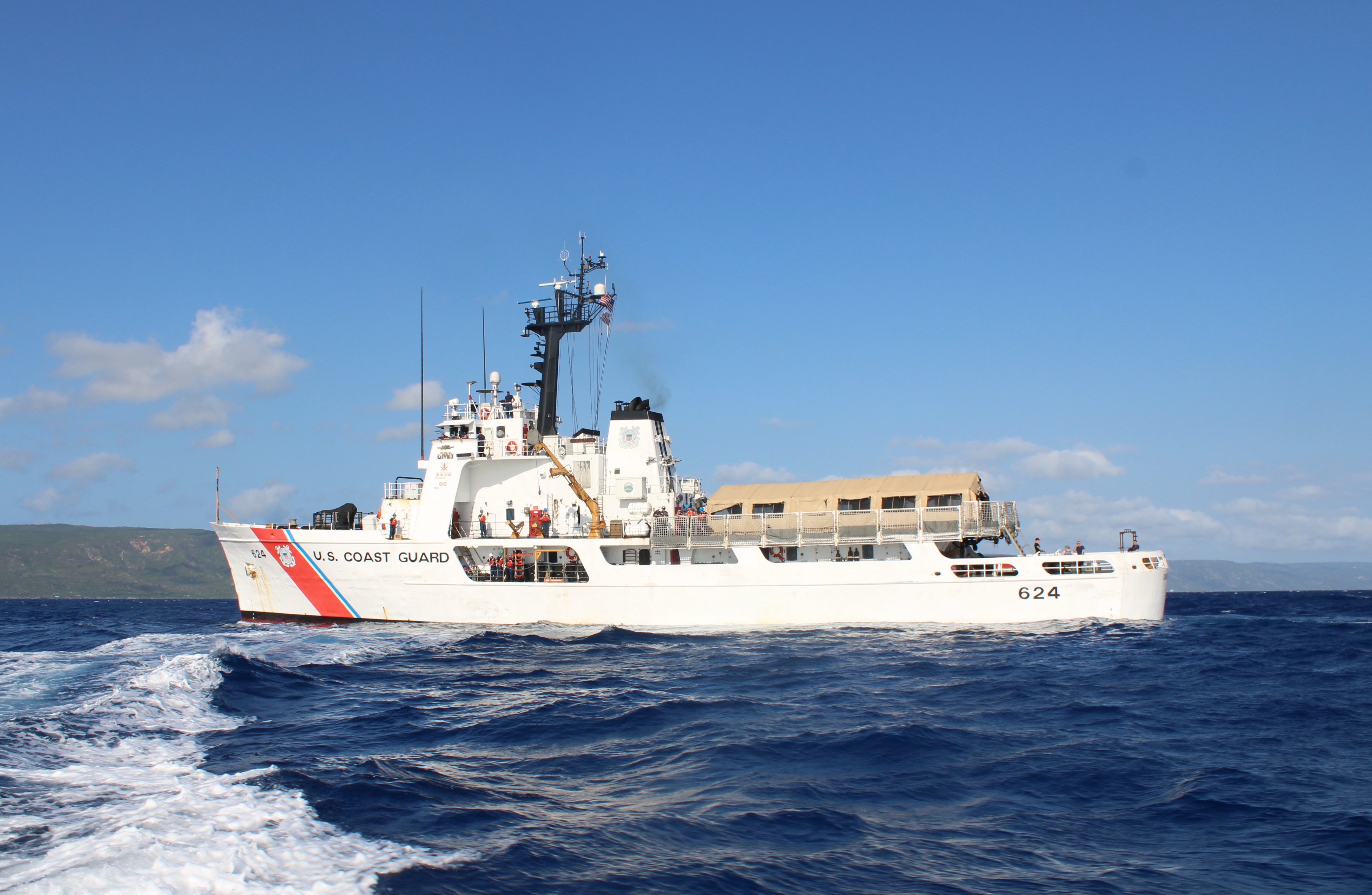
U.S. Coast Guard Cutter Dauntless (WMEC 624) and crew patrol, March 4, 2024, off the coast of Haiti. Dauntless deployed for two months to support Operation Vigilant Sentry while conducting maritime safety and security missions. (U.S. Coast Guard photo by Lt.j.g. Olivia Gonzalez) Note the shelter on the flight deck.

Below is a news release from Coast Guard News. Dauntless’s migrant interdiction patrol was fairly typical, but I wanted to call attention to the shelter, visible on her flight deck, in the photo above. Sheltering large numbers of migrants, 65 in this case, is always a challenge, and this is the first time I have seen this solution.

Of course, this shelter would preclude helicopter operations, but these operations are conducted in areas where fixed wing support is readily available.


 April 24, 2024

US Coast Guard Cutter Dauntless returns home to Florida after 61-day Operation Vigilant Sentry patrol

PENSACOLA, Fla. —  The crew of U.S. Coast Guard Cutter Dauntless (WMEC 624) returned to their home port in Pensacola, Wednesday, following a 61-day patrol in the Windward Passage and Florida Straits. While underway, crew members conducted maritime safety and security missions to protect life at sea and deter illegal migrant voyages bound for the United States.

Dauntless deployed in support of Homeland Security Task Force – Southeast (HSTF-SE) and Operation Vigilant Sentry (OVS) while patrolling in the Coast Guard Seventh District’s area of responsibility. While underway, Dauntless worked alongside other Coast Guard assets and units to dissuade unsafe maritime migration and enforce U.S. law on the high seas.

During the patrol, a good Samaritan on a sailboat reported a disabled vessel using VHF-FM channel 16. Dauntless’ crew received notification and conducted a search and rescue mission over several hours on a moonless night while searching for the unlit boat. Eventually, the crew located the overloaded and disabled sail freighter with 65 Haitian migrants aboard, including several children. All 65 migrants were safely evacuated and transferred aboard Dauntless, where they received food, water and basic medical care. Dauntless worked with multiple surface and air assets to successfully carryout the search, rescue and repatriation of the migrants.

Migrants attempting to reach the United States through nonlegal channels, or who land on U.S. shores without authorization, are subject to removal and repatriation to their country of origin or departure. Consistent with U.S. policy, those who bypass or attempt to circumvent lawful immigration pathways face consequences including the potential of being barred from future lawful entry in addition to risking their lives unnecessarily.

“This case was a prime example of the humanitarian lifesaving mission we remain always ready for,” said Cmdr. Aaron Kowalczk, commanding officer of Dauntless. “The crew’s ability to find the vessel and then safely complete the rescue in the dark of night is just another example of the utmost professionalism and skill they show every day and is indicative of 56 years of exemplary service by cutter Dauntless and her crews.”

Established in 2003, HSTF-SE is the Department of Homeland Security-led interagency task force charged with directing operational and tactical planning, command and control, and functions as a standing organization to deter, mitigate, and respond to maritime mass migration in the Caribbean Sea and Florida Straits.

OVS is the 2004 DHS plan that provides the structure for deploying joint air and surface assets and personnel to respond to irregular maritime migration in the Caribbean corridor of the United States. Its primary objectives are to protect life at sea while deterring and dissuading mass maritime migration alongside our federal, state, and local partners.

Dauntless is a 210-foot, Reliance-class medium endurance cutter originally built in 1967 and commissioned in 1968. The cutter’s primary missions are counter narcotics operations, migrant interdiction, living marine resources protection, and search and rescue in support of U.S. Coast Guard operations throughout the Western Hemisphere.

For information on how to join the U.S. Coast Guard, visit GoCoastGuard.com to learn about active duty, reserve, officer and enlisted opportunities. Information on how to apply to the U.S. Coast Guard Academy can be found here.

For more, follow us on Facebook, Instagram and Twitter.

Peru to Build OPV(s) With Aid From S. Korea’s HHI

Artist impression of the Frigate, Offshore Patrol Vessel (OPV) and two Landing Craft Units (LCUs) for the Peruvian Navy. HD HHI image.

Naval News reports, that Peruvian shipyard Servicios Industriales de la Marina (SIMA) will be building the first of a new class of Offshore Patrol Vessels (OPV) for the Peruvian Navy, along with a frigate and two LCUs. Korean Shipbuilder Hyundai Heavy Industries (HHI) will provide the design, equipment & material package, and technical support.

“The OPV ordered is based on HD HHI’s HDP-2200 OPV solution, which is 95 meters long, 14.3 meters wide, with a maximum speed of 20 knots and a range of 6,000 nautical miles, capable of operating medium-sized maritime operation helicopters. She is designed with space for two containerized mission modules enabling versatile capabilities.”

Another four OPVs of the class are planned. These Offshore Patrol Vessels appear to be closely related to six similar ships being built by HHI in Korea for the Philippine Navy.

Note, it appears at least some versions of this design have a stern launch system. The other versions of the design also claim to have a top speed of 22 knots, so this may apply to the Peruvian ships as well.

This will not be the first time SIMA has teamed with a South Korean shipbuilder. SIMA also built BAP Pisco (AMP-156), an 11,394 ton full load Makassar-class landing platform dock, designed by Daesun Shipbuilding & Engineering Co., Ltd. commissioned in 2018. They have reportedly launched a second. In the 1980s SIMA completed two Italian designed Lupo class Frigates.

“The huge, resource rich territory China will snatch while the West dithers” –The Telegraph

The Telegraph has an opinion piece by retired Royal Navy Commander and former CO of the Ice Patrol Vessel HMS Endurance, Tom Sharpe OBE.

He feels, as I do, that we are headed for conflict over claims to Antarctica. It is after all, the last land area on earth where no nation exercises sovereignty.

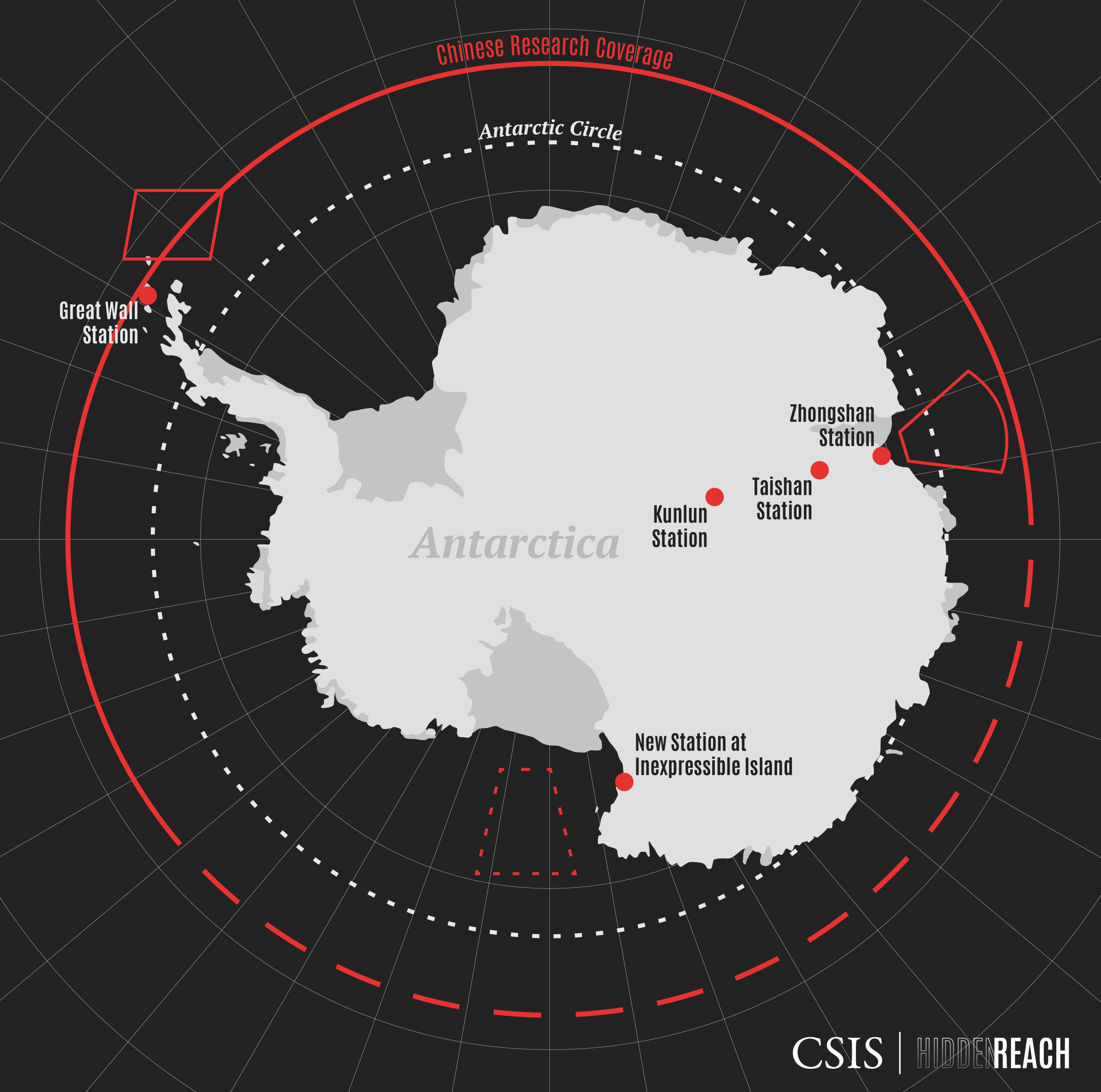
China’s presence in the Antarctic is growing rapidly and, as they have shown in the South China Sea, they may choose not to accept the decisions of international courts.

Adapted from a 2021 Chinese environmental evaluation report submitted to the Secretariat of the Antarctic Treaty. Source CSIS

What this boils down to is that, after courts make their decisions, we may have to fight in Antarctic to make those decisions stick.

We don’t seem to have given much thought to the possibility of combat in and around Antarctica, but I believe it is a real possibility, perhaps not soon, but beginning in 2048 when the Antarctic Treaty comes up for renegotiation. 24 years may seem to be a long way off, but we are building now the assets that will be available in 2048.

By then the rapidly growing Chinese presence in Antarctic, as well as their Navy are likely to be in a very strong position. We are already seeing the Chinese apparently establishing dual use (civilian and military) facilities in Antarctica.

In the interim, we can expect China and perhaps others to try to skirt the rules to strengthen their presence. We need to monitor and challenge any gray zone operations.

Command Structure:

These are the Unified Combatant Commander’s Areas of Responsibility.

There is an obvious reason that Antarctica does not seem to be on anyone’s radar. Looking at who is potentially responsible for operations in the Antarctic, it is a hodgepodge. Various parts of the Continent might fall under SOUTHCOM, AFRICOM, and INDO-PACOM.

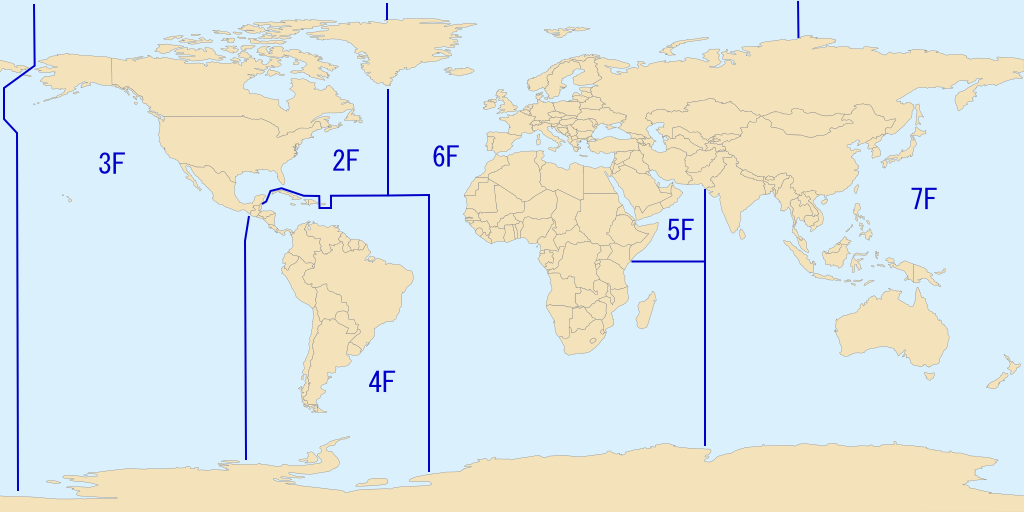
US Navy Fleet Organization

3rd Fleet, 4th Fleet, 6th Fleet, and 7th Fleet all have a nominal slice, but none of these commands consider the area their primary concern.

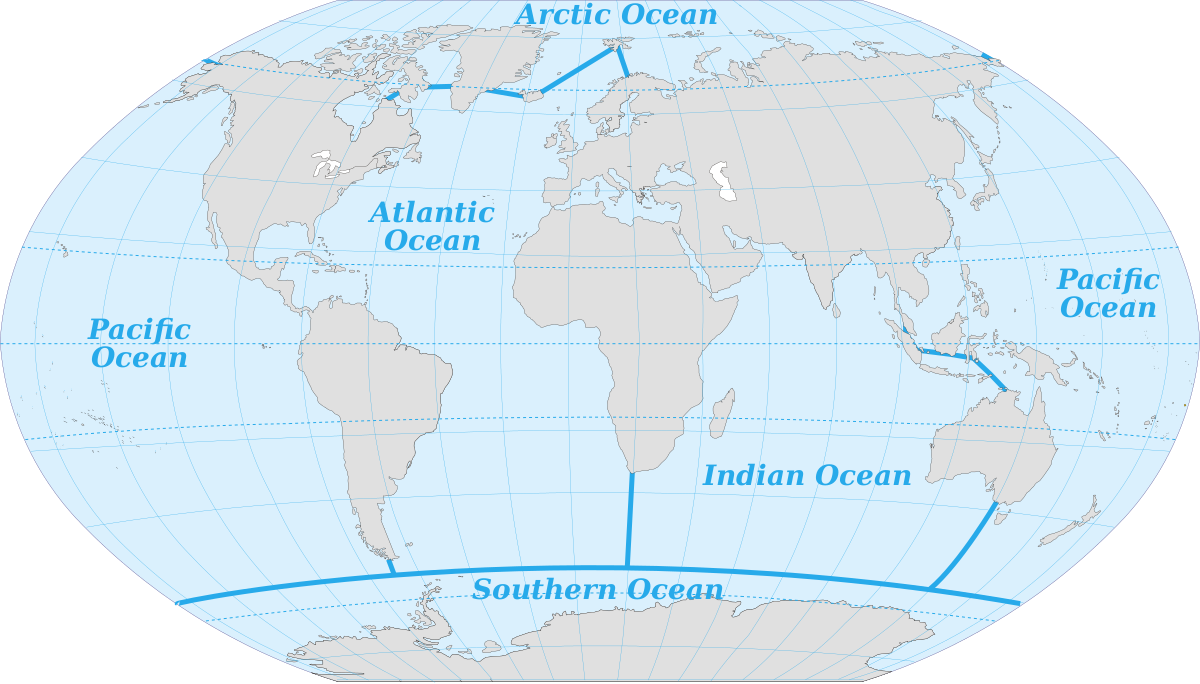
World map of oceans : English version. By Pinpin via Wikipedia.

There is no single national command authority that covers all of Antartica or the Southern Ocean. Really no one is in responsible for the area below 60 degrees South.

It seems likely that in the near term, Southern Ocean fisheries will require some protection. The only nation I have heard of doing fisheries protection in the Southern Ocean outside their own EEZ is New Zealand.

The Coast Guard currently operates the only US polar icebreakers. At some point the Coast Guard may become involved in fisheries protection in the Southern Ocean. If there is conflict in Antarctica, Coast Guard assets will likely be needed to gain access.

Related: 

“DHS Center for Countering Human Trafficking Year-in-Review” –MyCG

A Coast Guard Cutter Campbell law enforcement crew stopped a grossly overloaded, unsafe vessel near Turks and Caicos, May 9, 2022. (U.S. Coast Guard photo by Petty Officer 3rd Class Erik Villa-Rodriguez)

Below is a news release from MyCG regarding a new DHS report. 


March 19, 2024

DHS Center for Countering Human Trafficking Year-in-Review

By DHS Center for Countering Human Trafficking

In FY 2023, the Coast Guard screened 257 unaccompanied children for human trafficking after encountering them during migrant interdictions at sea. The children were then referred to interagency partners as part of our service’s efforts to address human trafficking in collaboration with the U.S. Department of Homeland Security (DHS)

You can learn more about these and similar efforts in the DHS Countering Human Trafficking: Year-in-Review, just released by the DHS Center for Countering Human Trafficking (CCHT). The report is designed to help readers understand DHS’s multifaceted work, and to use the many available resources to support their own counter-trafficking work.

Employees of DHS and its components work every day to end sex trafficking and forced labor through a wide range of efforts, including:

  • Identification and screening for victims of human trafficking
  • Victim protection and assistance
  • Criminal investigations of human trafficking crimes
  • Enforcement of laws related to the importation of goods produced with forced labor and
  • Training, outreach and engagement with law enforcement, government, industry, non-governmental organizations, and the public.

In 2023, approximately 13,000 Coast Guard personnel completed the DHS Blue Campaign Human Trafficking Awareness Training module to ensure they were prepared to identify potential indicators of human trafficking while conducting maritime operations.

Coast Guard Pacific Area went further during its third Forced Labor and Human Trafficking tabletop exercise. During this training, participants honed interagency response to the discovery of forced labor during inspection of a foreign fishing vessel outside of the U.S. Exclusive Economic Zone. The exercise included representatives from the National Oceanic and Atmospheric Administration, Department of State, Department of Justice, and DHS, and DOJ. Lessons learned from this exercise were leveraged to create a curriculum for a first-of-its-kind multinational maritime labor seminar.

Every year, nearly 25 million men, women, and children are trafficked worldwide – including here in the United States. DHS is a global leader in this fight and works with partners at every level to prevent this heinous crime, identify and protect victims, and bring perpetrators to justice.

The DHS Center for Countering Human Trafficking (CCHT) integrates the efforts of 16 Agencies and Offices within DHS that carry out our anti-trafficking mission. These efforts range from criminal investigations, victim assistance, and combating forced labor in exports destined for the United States to external outreach and public education, intelligence, and training.

All Coast Guard members are encouraged to read the report here.