Chuck Hill's CG Blog

Chuck Hill's CG Blog

“US to Deploy Coastguard Ship to Papua New Guinea” –The Defense Post

The USCGC Oliver Henry (WPC 1140) crew arrives in Manus, Papua New Guinea, on Aug. 14, 2022, from Guam as part of a patrol headed south to assist partner nations in upholding and asserting their sovereignty while protecting U.S. national interests. The U.S. Coast Guard is participating with partners to support the Pacific Islands Forum Fisheries Agency-led Operation Island Chief and the larger Operation Blue Pacific through patrols in the Western Pacific in August and September 2022. (U.S. Coast Guard photo by SW3 Victor Villanueva, NMCB-FOUR)

(Sorry, this is a couple of weeks old.)

The Defense Post reports,

US Defense Secretary Lloyd Austin on Thursday announced the deployment of a US Coastguard ship to Papua New Guinea, as Washington seeks to boost its military footprint in the region amid fierce competition for influence with China…“A US Coastguard cutter will be here in August,” Austin said as he became the first Pentagon boss to visit Papua New Guinea.

Again, the Coast Guard is being used as an instrument of foreign policy. That is not a bad thing, but it is a fact.

It is not like the Coast Guard has not been there before. The photo is from 2022, but the US and Papua New Guinea are seeking closer, mutually beneficial ties.

For Papua New Guinea this means improvements to dual use (military and civilian) infrastructure (ports and airfields), increased economic activity, and help with preventing IUU fishing.

For the US, the diplomatic activity is prompted by Chinese attempts to obtain influence in Oceania that seemed to have been demonstrated when the Soloman Islands failed to respond to a request for a routine replenishment stop for USCGC Oliver Henry (pictured above).

Thanks to Paul for bringing this to my attention. 

“TEXTRON SYSTEMS AWARDED UNCREWED AIRCRAFT SYSTEM (UAS) CONTRACTOR-OWNED/CONTRACTOR-OPERATED CONTRACT FOR THREE LITTORAL COMBAT SHIPS (LCS) BY U.S. NAVY” –Textron Systems

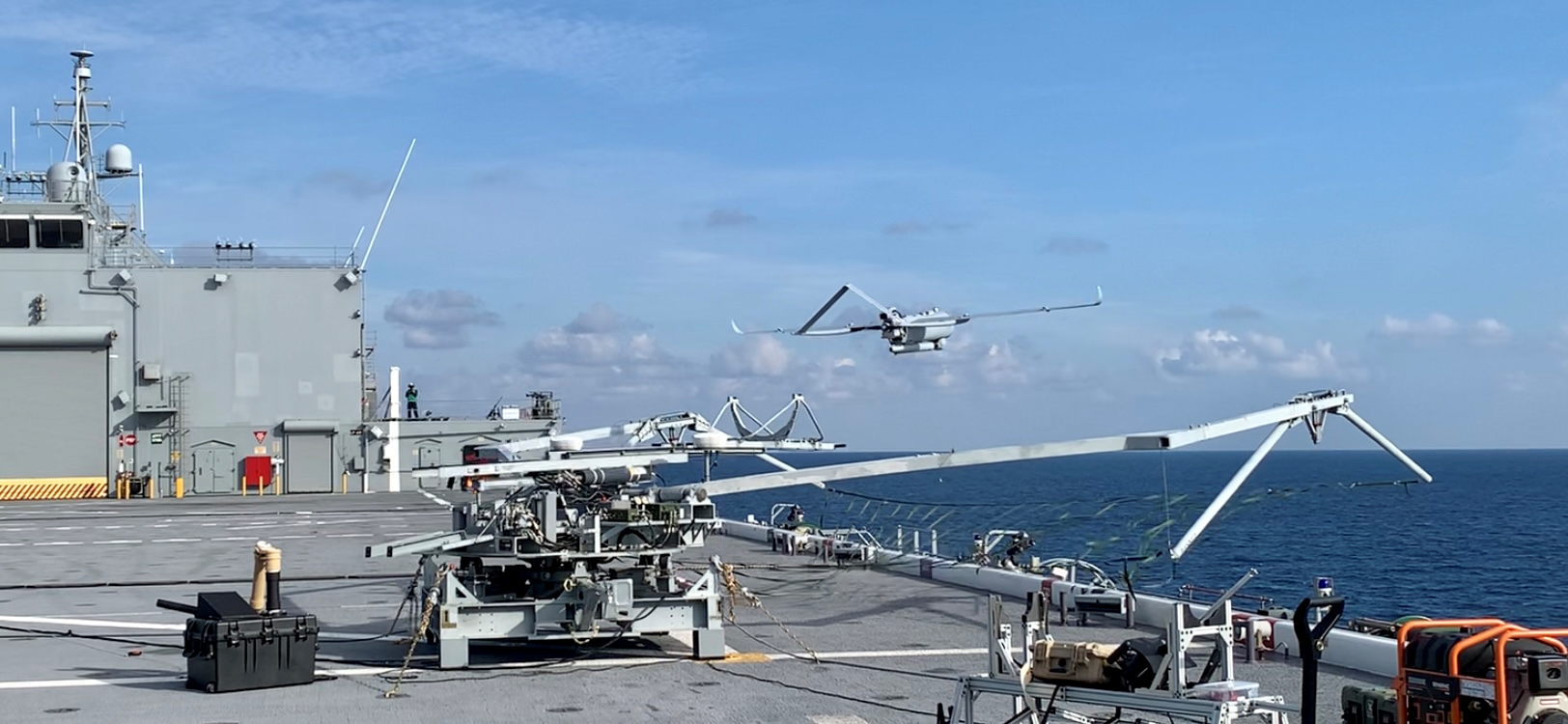
Aerosonde launch from USS Miguel Keith (ESB-5)

Below is a news release from Textron Systems.

It is not clear which version of Aerosonde is to be deployed on the LCSs. There are now hybrid quad versions that can take off and land vertically (see the video) without the supporting catapult and capture gear (top photo), but those with VTOL capability do sacrifice some endurance, speed, and payload as a result of greater weight and increased drag. It is likely the catapult launched version, which we know is on ESB-5, will also be used on the LCSs. Why did the Navy choose the Aerosonde over the Scan Eagle chosen by the Coast Guard? Let’s compare the two catapult launched UAS:

  • Type                                     Aerosonde Fixed Wing            Scan Eagle
  • Max Payload (pounds/kg):              20/9                                    11/5
  • Endurance (hours)                           14+                                     20+
  • Air Speed  (knots)                          45-65                                  60-80
  • Power (HP)                                        4                                        1.5

The Aerosonde’s only immediately apparent advantage is the greater payload. Perhaps the Navy has a sensor, or sensors that may be more capable but heavier that those included in the Coast Guard’s Scan Eagles, but if so, I can’t tell you what they are.

Incidentally, the payload capacity for the vertical takeoff and landing Hybrid Quad version of Aerosonde is 15 pounds, so it could presumably use the same sensor suite used on Coast Guard Scan Eagles.


AEROSONDE® UNCREWED AIRCRAFT SYSTEM (UAS) SUPPORTING SEVENTH U.S. NAVY SHIP WITH EXTENDED RANGE ISR SERVICES

Hunt Valley, Maryland, AUGUST 9, 2023 – Textron Systems Corporation, a Textron Inc. (NYSE:TXT) company, announced today that it has been awarded an initial contract valued at up to $19.5 million by the U.S. Navy’s Naval Air Systems Command (NAVAIR) to provide UAS operational support to two Independence Class LCS and one Freedom Class LCS variants. This award joins the Expeditionary Sea Base (ESB)-4 and ESB-5, as well as two DDG- class ships, bringing the total number of U.S. Navy ships supported by the Aerosonde® UAS system to seven.

Textron Systems will deploy its Aerosonde UAS to provide mission overwatch and extended intelligence, surveillance and reconnaissance (ISR) services with enhanced mission payloads as seen aboard the ESB-5.

“Contractor-owned/contractor-operated contracts like this support the Navy’s continued investments in uncrewed assets for their ships,” said Wayne Prender, Senior Vice President, Air Systems. “We’ve seen the benefits of our Aerosonde UAS for DDG and ESB- class ships already, and we’re honored to be expanding into this new ship class, allowing us to continue supporting maritime domain awareness and missions while delivering operational and logistical capabilities.”

The Aerosonde system continues to set the standard for mission readiness and ease of use, amassing more than 600,000 flight hours serving multiple U.S. customers and allies. It is designed for expeditionary land- and sea-based operations with both fixed-wing and vertical takeoff and landing (VTOL) options. Textron Systems has provided turnkey, UAS operations for customers around the world for more than 10 years.

NAVAIR Public Release 2023-538 Distribution Statement A – “Approved for public release; distribution is unlimited”

“Japan to supply 5 countries with free patrol boats to counter China” –Navy Recognition

Japanese Aso-class patrol vessel Dewa. (Picture source: Japanese government)

Navy Recognition reports,

For 2024, the OSA (Japan’s Official Security Assistance program–Chuck) has earmarked nations such as Vietnam, Indonesia, the Philippines, Papua New Guinea, Mongolia, and Djibouti. Notably, the first three have ongoing maritime disputes with China in the South China Sea…To strengthen its oversight of territorial waters and skies, Japan is considering equipping these nations with patrol boats, radar tech, drones, and communication tools.

While the US has transferred a lot of overage Coast Guard cutters, the Japanese generally supply new ships on very favorable financial terms. This helps maintain Japan’s shipbuilding capacity.

Japan has already supplied the Philippines with two large patrol cutters and ten smaller patrol craft. Japan has an agreement with Vietnam to build six cutters based on the Aso class pictured above. Japan has gifted at least one older cutter to Malaysia

It is not clear if the patrol boats mentioned in the title are actually free or if they refer to new or previously arranged programs.

Thanks to Lee for bringing this to my attention. 

“Philippine Armed Forces Resupply Mission Hit with Chinese Coast Guard Water Canons” –Video

Thought it worthwhile to pass this video along.

First thing, the Chinese are devoting a lot of resources to isolating this particular outpost, an ancient, badly corroded, grounded, but still commissioned former US LST.  There are three large modern China Coast Guard cutters visible in the video, 5201, 5305, and 4203. All three are about 100 meters in length or larger, all equipped with 76mm guns. We have seen 5201 before.

CRASH AVERTED This photo taken on April 23, 2023 shows BRP Malapascua (right) maneuvering as a Chinese coast guard ship cuts its path at Second Thomas Shoal in the Spratly Islands. AFP PHOTO

Second, the Philippines would have known what they were up against. Couldn’t they have used something faster and more maneuverable that could have gotten around these large cutters to make this supply run. I hope I am wrong, and I may not understand what it takes to reach this grounded LST, but it is almost as if they are failing on purpose.

The US has warned the Chinese against targeting the Philippine Coast Guard.

“Upgun Cutters to Meet Today’s Naval Threats” –USNI

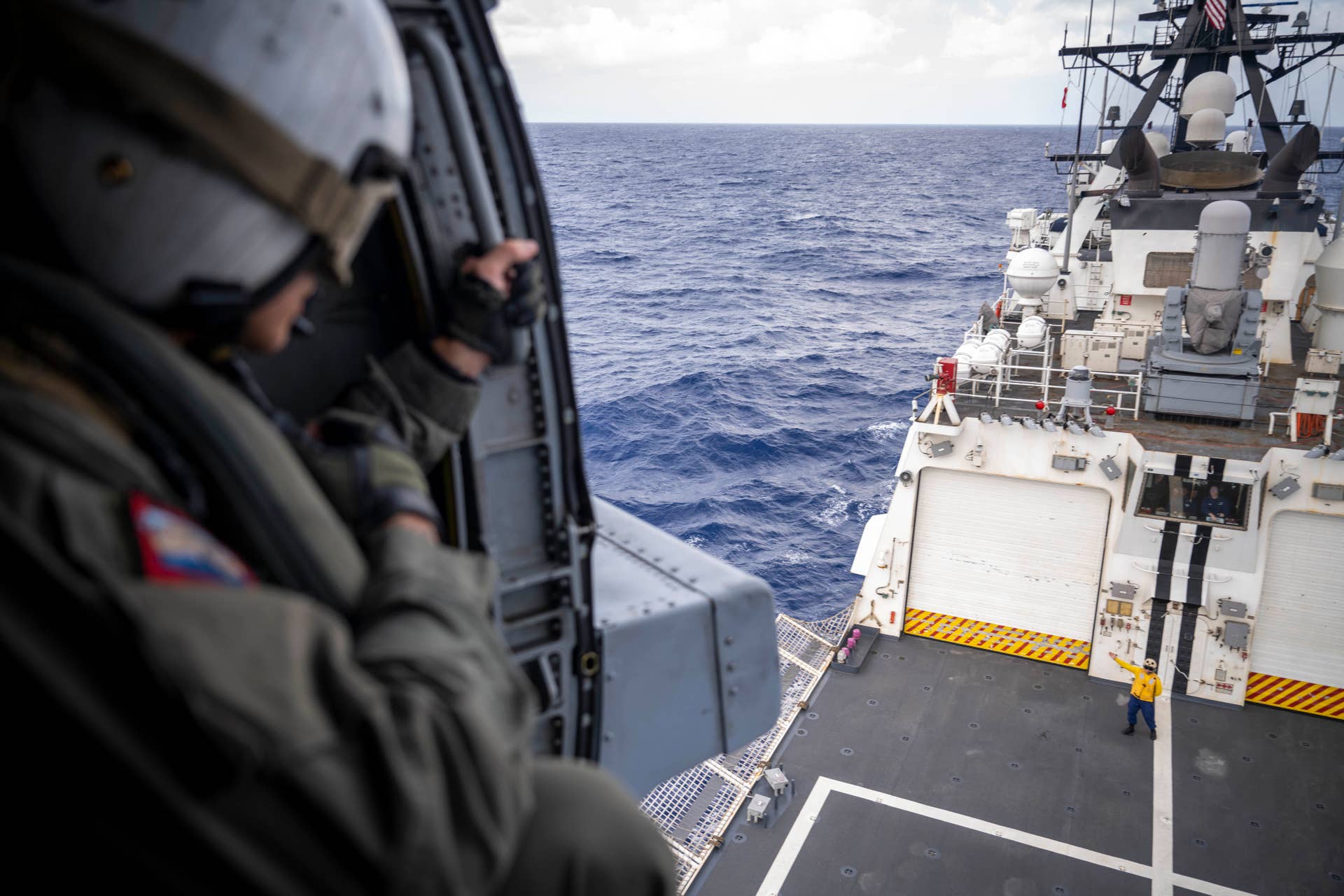
PACIFIC OCEAN (July 30, 2022) U.S. Navy Petty Officer 1st Class Humberto Alba, a naval aircrewman tactical-helicopter, attached to Helicopter Maritime Strike Squadron (HSM) 37, deployed on U.S. Coast Guard Legend-class cutter USCGC Midgett (WMSL 757), looks down at a USCGC crewmember after taking off during flight operations during Rim of the Pacific (RIMPAC) 2022. (U.S. Coast Guard photo by Petty Officer 3rd Class Taylor Bacon)

This essay from the July 2023 issue of Proceedings, is featured on the US Naval Institute Proceedings web site. It won Second Prize in the Midshipmen & Cadets Essay Contest—Sponsored by the U.S. Naval Institute.

This is just one of many such articles that have been published repeatedly over the years. The logic is clear,

If more heavily armed, Coast Guard cutters could better support the Navy and enhance defense readiness.

At small marginal cost, cutters could make a significant contribution to our nation’s naval strength, but it has not happened in the last 30+ years. Why not?

It seems the Leadership of both the Navy and Coast Guard have other priorities, and there is no sponsor in a position of power to push the program.

The Navy is in trouble. The Navy has been shrinking over most of the last 34 years, from down from 592 Sept. 30, 1989, to 299 as of this week. It began with the collapse of the Soviet Union. I’m sure it seemed like good idea at the time, but the “peace dividend” meant there was not much reason to build new ships. Teams that had developed a long string of successful ship designs ceased to exist. Shipyards closed. As a result, they have had difficulty fielding new classes of ships. Their new generation shipbuilding programs have been plagued with problems, while the Chinese navy has been building ships at a furious pace.

The Coast Guard has had its own troubled recapitalization program, beginning with “Deepwater” and while the NSC and FRC programs seem to have been successful, if long delayed, the Offshore Patrol Cutter and Icebreaker programs are still having significant difficulties. But perhaps more importantly, Coast Guard leadership sees the conventional model of a combat ready Coast Guard as counterproductive to other Coast Guard priorities.

Personally, I feel fears that a more heavily armed Coast Guard would not be welcome in many parts of the world is overblown, but the fear does exist and the conventional model of permanently installed weapon systems operated and maintained by Coastguardsmen would require a diversion of assets unless the budget is increased and more assets are provided. There is a cost to the Coast Guard in terms of training and maintenance time for both units and individuals, even if the Navy pays for the systems.

I think there is an alternative that would address the fears of the Coast Guard leadership and create a powerful sponsor in the Navy. 

The Navy Reserve could be that sponsor. It is a reservoir of trained talent, but where do they go upon mobilization? There are only so many ships. Their crews, while they may have some shortages, are essentially at war time manning levels. There are only so many helicopter landing spots on Navy ships. Many Navy Reservists have no really appropriate place to serve upon full mobilization.

Coast Guard units can provide a place where they can be used effectively. Navy helicopters and their crews can fly from Coast Guard cutters. Modularized versions of towed array sonar systems could be operated and maintained by Navy reservists on large cutters.

Initially at least, these reinforced cutters would be best used in the board reaches of the Pacific, beyond the effective range of enemy land based and air-launched anti-ship missiles, where the primary threat would be submarines, protecting the logistics ships that are essential for prosecuting a war in the Western Pacific.

In 2012, Admiral Jonathan W. Greenert, U.S. Navy, advocated,

“We need to move from ‘luxury-car’ platforms—with their built-in capabilities—toward dependable ‘trucks’ that can handle a changing payload selection.”

If the Navy can provide payloads, the Coast Guard can provide some trucks.

“US Coast Guard Seeks Bigger Role to Search, Board Vessels in Pacific” –gCaptain

The USCGC Oliver Henry (WPC 1140) crew arrives in Manus, Papua New Guinea, on Aug. 14, 2022, from Guam as part of a patrol headed south to assist partner nations in upholding and asserting their sovereignty while protecting U.S. national interests. The U.S. Coast Guard is participating with partners to support the Pacific Islands Forum Fisheries Agency-led Operation Island Chief and the larger Operation Blue Pacific through patrols in the Western Pacific in August and September 2022. (U.S. Coast Guard photo by SW3 Victor Villanueva, NMCB-FOUR)

gCaptain reports,

“The United States Coast Guard is in talks with Pacific Island countries to expand its maritime law enforcement role by allowing U.S. officers to board and search vessels suspected of illegal activity within their economic zones, officials said.”

This is about expanding and streamlining the shiprider program. In one case the Coast Guard already have permission to work with a national command center and act on behalf of another nation, Federated States of Micronesia, even if there is no shiprider physically aboard the cutter.

“More specifically, the agreement provides a coordinating mechanism and process for U.S. law enforcement personnel to work with the FSM National Police through command centers to receive approval from the FSM to act.”

Thanks to Lee for bringing this to my attention. 

“Probing Palau’s Waters: Chinese Ships Are Increasingly Active in the Pacific” –Real Clear Defense

The Republic of Palau on a map of the Pacific. Credit: Encyclopaedia Britannica/Universal Images Group via Getty Images

Real Clear Defense reports on Chinese incursions into Palau’s Exclusive Economic Zone.

None of the actions sighted appear to be illegal or that much different from what the US does in the South China Sea, but they are movements we want to watch. A more detailed understanding of what they are doing might reveal illegality such as tapping into undersea cables.

Seems like the Chinese are telling us we need to station some cutters in Palau, and maybe some land based UAS.

The nearest cutters are based in Guam. It is 700 nautical miles from Guam to Palau, further than the distance between Atlanta and New York City, 50 hours at 14 knots, so Guam really isn’t in the neighborhood.

The nearest Coast Guard fixed wing search aircraft are based in Hawai’i at Barbers Point, 4500 nautical miles away. Even the new C-130J would require two fuel stops just to get to Palau.

“Japan amplifies maritime security amid rising regional tensions” –Indo-Pacific Defense Forum

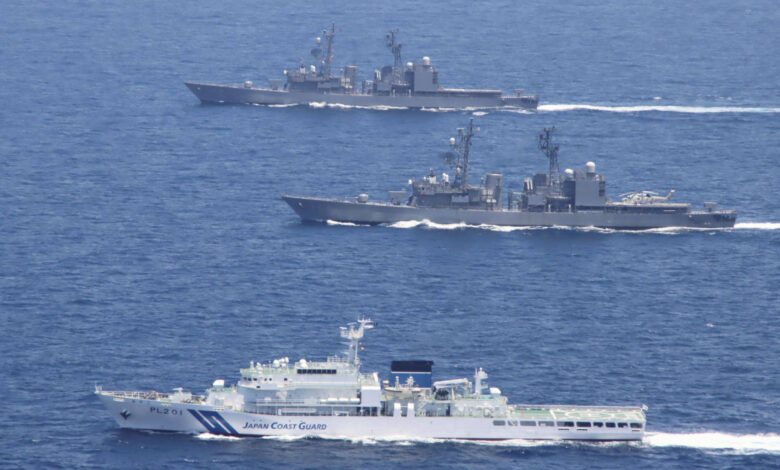
The Japan Coast Guard and Japan Maritime Self-Defense Force conduct a joint drill. IMAGE CREDIT: JAPAN COAST GUARD

Indo-Pacific Defense Forum reports Japan is attempting to increase coordination between their Maritime Defense Force (navy) and Coast Guard.

“Japan’s economic security is wedded to stable sea lines of communication (SLOC) that stretch through the East China Sea to waters around Taiwan, from the South China Seas to the Malacca straits into the Indian Ocean,” Stephen Nagy, professor at the Department of Politics and International Studies at the International Christian University in Tokyo, told FORUM. “The recently announced five-year ocean policy plan aims to bring stability to these SLOCs through more operational synergy between the [J]MSDF and Japan’s Coast Guard.”

There is little doubt this is in response to Chinese misbehavior. Still, until recently there has been little coordination between the two services.

The Japan Coast Guard has a long association with the US Coast Guard. From Wikipedia,

 “…in March 1946, USCG Captain Frank M. Meals was invited to consider the situation. Captain Meals suggested the establishment of a comprehensive coast guard organization based on the USCG. In response to this, the Maritime Safety Agency (MSA) was established as an external station of the Ministry of Transportation in 1948. Its English name was changed to Japan Coast Guard in April 2000.”

The Japan Coast Guard has never had the close association with the Maritime Defense Force that the US Coast Guard enjoys with the US Navy. It appears that is changing.

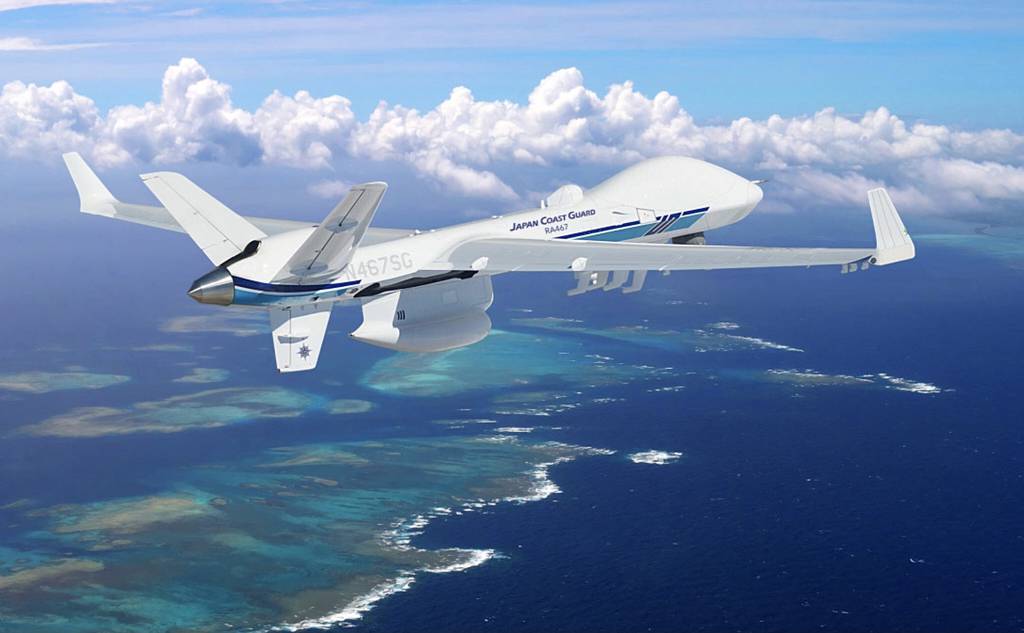
An artist’s rendering shows the Japan Coast Guard’s SeaGuardian drone. (General Atomics Aeronautical Systems)

As noted, the Japan Coast Guard has fielded MQ-9B long endurance, medium altitude, unmanned aircraft, a capability the Japan Maritime Self Defense Force does not yet have.

Seems the Japanese now view the Japan Coast Guard as a trip wire. That if the Chinese make an aggressive move, the Japan Coast Guard is likely to be the first to detect–and feel it.

“French, Canadian, U.S. Forces collaborate with local responders in successful rescue operation off Rota, CNMI”

French Air Force A400

Below is a U.S. Coast Guard Forces Micronesia/Sector Guam news release, I don’t normally pass along reports on SAR cases, but this one was extremely unusual. 

This probably does show another reason we need some Coast Guard fixed wing aircraft out there. 

July 11, 2023

French, Canadian, U.S. Forces collaborate with local responders in successful rescue operation off Rota, CNMI

SANTA RITA, Guam — French, Canadian, and U.S. Forces, with local responders, successfully conducted a search and rescue operation to save the operator and passengers of a distressed vessel off the coast of Rota, Commonwealth of the Northern Mariana Islands, on July 10.

Thanks to the coordinated efforts of local partnerships and the utilization of aircraft resources, all 11 people from the center console fishing vessel are safely in Rota.

At 5:05 p.m. on July 10, Watchstanders at U.S. Coast Guard Forces Micronesia/Sector Guam’s Joint Rescue Sub-Center Guam received a distress call on VHF channel 16 from the operator of the 21-foot vessel Full 20 Horizon, stating the vessel was disabled and adrift in 6-foot seas and 12 mph winds with 11 people aboard, approximately 30 nautical miles northwest of Rota. Due to the lack of GPS onboard and the inability to use a cell phone to acquire a GPS position, the situation became even more critical.

In response, the watchstanders promptly issued an Urgent Marine Information Broadcast, alerting mariners in the area to be aware of the distressed vessel. They also established a 15-minute communications schedule with the vessel operator and instructed the passengers to wear their flotation devices for safety.

Watchstanders initiated coordinated efforts with the CNMI Department of Public Safety in Rota, who launched their 27-foot vessel to aid in the rescue operation. Additionally, partnerships with the U.S. Air Force 36th Wing and U.S. Navy Helicopter Sea Combat Squadron 25 at Andersen Air Force Base proved invaluable in securing the assistance of multiple aircraft crews for the response.

Capt. Nick Simmons, commander of U.S. Coast Guard Forces Micronesia/Sector Guam, emphasized the importance of aircraft in search and rescue operations at sea, stating, “Aircraft crews play a crucial role in our efforts to save lives in challenging maritime situations. Using aerial assets, combined with our local partnerships, ensures a swift and effective response to distress calls, ultimately increasing the chances of a successful rescue.”

A French Air and Space Force A400 Atlas military transport aircraft and crew were the first aircrew to respond, launching from Andersen Air Force Base and locating the vessel at about 8 p.m. after running a search pattern. They worked to vector in the Department of Public Safety crew.

Unfortunately, the initial rescue attempt by the Department of Public Safety’s crew was hindered by severe sea conditions as winds increased to 18 mph and seas built to 8 feet, forcing them to abort the mission. However, the French Air and Space Force A400 crew remained on the scene and maintained visual contact with the disabled vessel. Recognizing the severity of the situation, the crew of USCGC Myrtle Hazard (WPC 1139), on a port call in Saipan, was recalled, and watchstanders reengaged with HSC-25 to address the evolving circumstances.

Watchstanders also requested additional overhead support from the U.S. Air Force 36th Wing, who offered a Royal Canadian Air Force HC-130 airplane and crew to replace the French crew due to fuel constraints. At 11:15 p.m., the Canadian crew then on scene informed watchstanders that the lights on the distressed vessel went out, but they maintained visual contact with its position.

The U.S. Navy MH-60 Nighthawk helicopter and crew launched to aid the rescue efforts further. After a swift transit, the Nighthawk crew arrived at approximately 1 a.m. and immediately commenced hoisting the operator and passengers. The aircrew transported those rescued to the Rota airport, where local emergency responders and law enforcement met them. The passengers did not report any injuries, and the aircrew did not observe any.

The Nighthawk and Canadian aircrews returned to Andersen Air Force Base at 2:40 a.m., successfully concluding their part in the rescue operation. Meanwhile, the Myrtle Hazard crew continued their search for the vessel relocating it around 10 a.m. Weather conditions improved, and they will take the vessel in tow to deliver it to Rota.

Nine of the 11 people rescued are reportedly citizens the People’s Republic of China. Local law enforcement in Rota is currently addressing these matters. The U.S. Coast Guard remains committed to working closely with local authorities to ensure the safety of those at sea and the security of our maritime borders.

Notably, the French and Canadian aircraft crews participating in Exercise Mobility Guardian 2023 are contributing their expertise to this successful rescue operation. Exercise Mobility Guardian, Air Mobility Command’s largest full-spectrum readiness exercise, involves seven participating countries and supports over 15,000 U.S. forces, Allied, and partner participants in the Indo-Pacific region.

For more information or media inquiries about the multilateral rescue operation, please contact CWO Sara Muir at 671-688-6096 or sara.g.muir@uscg.mil. For information about the vessel or the disposition of the those rescued, please contact the CNMI Department of Public Safety at (670) 664-9035 or pio@dps.gov.mp.

-USCG-

About U.S. Coast Guard Forces Micronesia/Sector Guam:
U.S. Coast Guard Forces Micronesia/Sector Guam is responsible for ensuring U.S. waters’ safety, security, and stewardship and enforcing maritime laws in the Pacific region. With a steadfast commitment to protecting lives at sea, preserving the marine environment, and promoting maritime safety, the Coast Guard collaborates closely with local, federal, and international partners to serve the community and safeguard our nation’s interests.

“Indian Navy’s INS Sunayna Pays Visit to Beira, Mozambique” –BNN

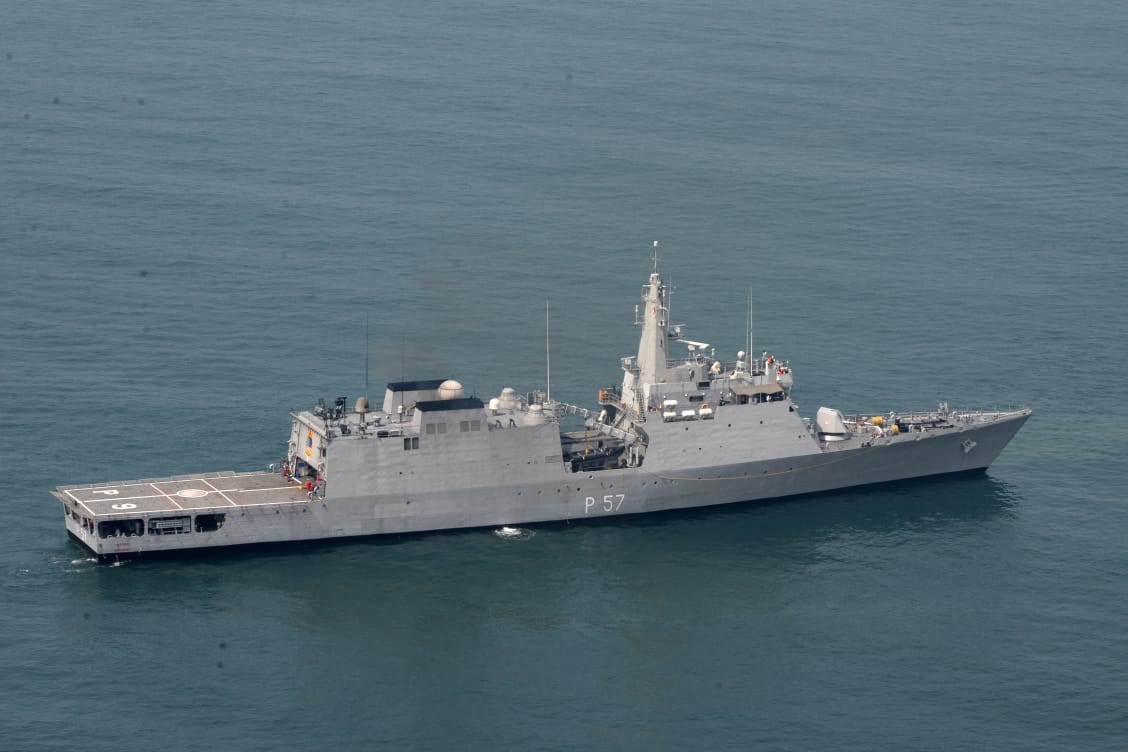
INS Sunanya (P57) at sea, 21 May 2020. Photo Credit: Indian Ministry of Defence.

BNN reports on the visit of the Indian Navy Offshore Patrol Vessel Sunayna to the Nation of Mozambique.

During the port call, personnel from the Indian Navy and the Mozambique Navy engaged in a variety of professional and training engagements, deck visits, and sporting events. Joint training sessions in navigation, fire fighting, damage control, VBSS, and asymmetric warfare were held as part of the maritime partnership exercise.

Sounds like they were engaged in the same sort of “capacity building” the US Coast Guard engages in. Fishing is an important part of the Mozambique economy so Illegal, Unregulated, and Unreported fishing is a problem for them.

There has been increasing cooperation between the US and India in response to Chinese aggressiveness. We might want to spend a little time with the Indian Navy/Coast Guard to gain their insights and benefit the efforts of both nations. Perhaps the Coast Guard should participate in the annual Malabar exercise.

INS Sunayna (P57) is a 105 meter (344 foot) Saryu class Offshore Patrol Vessel. May be worth noting that this visit was done by the Indian Navy rather than the Indian Coast Guard, though they have similar ships.